Back-Seat Baby Cameras vs Shatterproof Car Mirrors: Seeing a Rear-Facing Baby Safely
Baby car mirrors and back-seat cameras let you glance at a rear-facing baby. How they compare, how to mount them so they can't fly loose, and how to avoid…
On this page
- Why parents use mirrors and cameras
- How baby car mirrors work
- How back-seat baby cameras work
- Mirror vs camera: side by side
- Keeping it from becoming a projectile
- Avoiding distraction
- What you're actually checking for
- How to choose: checklist
- By age and stage
- Fitting a mirror, step by step
- Setting up a camera, step by step
- Never leave a baby in the car
- Advice by country
- Other ways to keep an eye on your baby
- Care and when to replace
- Common mistakes
- FAQ
- Sources
Short answer: When your baby rides rear-facing, you can't see their face from the driver's seat. A baby car mirror (a large, curved mirror strapped to the back-seat headrest) or a back-seat camera (a small camera with a screen on the dashboard) lets you take a quick look. Both can help you feel calmer. But both can distract you, and anything loose or badly mounted can fly around in a crash. If you use one, pick a light, shatterproof mirror or a camera that mounts firmly, keep glances short, and pull over if your baby needs you. A mirror is not a safety device. Correct car seat use is what keeps your baby safe.
Key points
- Keep your baby rear-facing for as long as the seat allows. Don't turn them forward just so you can see them.
- A mirror or camera is an add-on, not part of the car seat. Mount it firmly so it can't come loose.
- Transport Canada warns that items that didn't come with your child's car seat may not be safe to use. Never attach anything to the car seat itself unless the seat maker allows it.
- Choose shatterproof mirrors (acrylic or similar, not glass) and light, slim cameras.
- Look only in quick glances. If your baby is upset, find a safe place to stop.
- Check your local road rules about screens. Rules differ between states, provinces and countries.
Why parents use mirrors and cameras
Rear-facing is the safest way for babies and young toddlers to travel. Kidsafe's national guidelines in Australia, the American Academy of Pediatrics (AAP) and Transport Canada all recommend keeping children rear-facing for as long as their seat allows. UK law requires height-based seats to stay rear-facing until a child is over 15 months.
The downside is that you can't see your baby. New parents often worry: is the baby breathing? Has their head slumped? Are they choking on spit-up? A mirror or camera lets you check at a glance. Many parents say it makes driving alone with a baby less stressful.
That's a real benefit. A calmer driver is a safer driver. The trick is to get the benefit without adding new risks.
How baby car mirrors work
A baby car mirror is a large, curved (convex) mirror, often 25 to 30 cm across, in a padded frame. It straps around the headrest of the back seat your baby faces. You look in your rear-view mirror, which shows the baby mirror, which shows your baby's face.
- Convex shape: the curve gives a wide view, so you can see your baby's whole face and upper body. Things look smaller and further away than they are.
- Shatterproof material: good baby mirrors use acrylic or another shatter-resistant plastic, not glass, so they won't break into sharp pieces.
- Straps: usually two straps, one around the headrest posts and one around the headrest itself, to stop the mirror swinging.
- Adjustable pivot: lets you tilt the mirror to get a clear view.
Mirrors need no power and have nothing to break down. But they only work in daylight or with interior lights on, and the view can be small.
How back-seat baby cameras work
A back-seat camera clips to the headrest or sits on the rear shelf, and sends a picture to a small screen on the dashboard or to your phone. Many have infrared night vision, so you can see your baby in the dark.
- Power: most plug into the car's 12-volt or USB socket. Cables run from the back seat to the front.
- Screen: a small monitor fixed to the dashboard or windscreen, or an app on your phone.
- Night vision: infrared lights let the camera see in the dark without lighting up the car.
- Wired or wireless: wireless models reduce cables but may need batteries or charging.
Cameras give a bigger, clearer picture, especially at night. But they add a screen to look at, cables in the car and more weight on the headrest.
Mirror vs camera: side by side
| Feature | Shatterproof mirror | Back-seat camera |
|---|---|---|
| View in daylight | Good, through the rear-view mirror | Good, on a screen |
| View at night | Poor unless interior lights are on | Good with infrared night vision |
| Distraction risk | Glance in a mirror you already use | Extra screen to look at; can draw your eyes |
| Crash risk | Light; low risk if well strapped | Heavier parts and a front screen to secure |
| Cables | None | Usually, unless wireless |
| Power | None | Car socket or battery |
| Can stop working | Rarely | Yes (power, screen, connection) |
| Road rules | Rarely an issue | Screen placement may be covered by local rules |
| Cost | Usually low | Usually higher |
Baby Monitors worth a look
Real products from our catalogue. We don't show star ratings or review counts; check the current price, stock and reviews on Amazon before you buy.

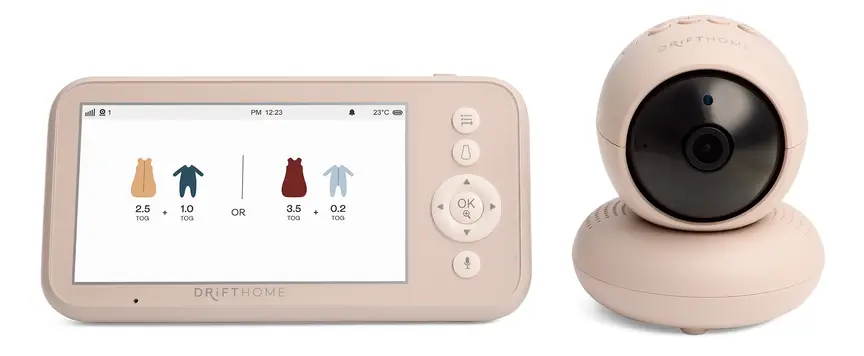
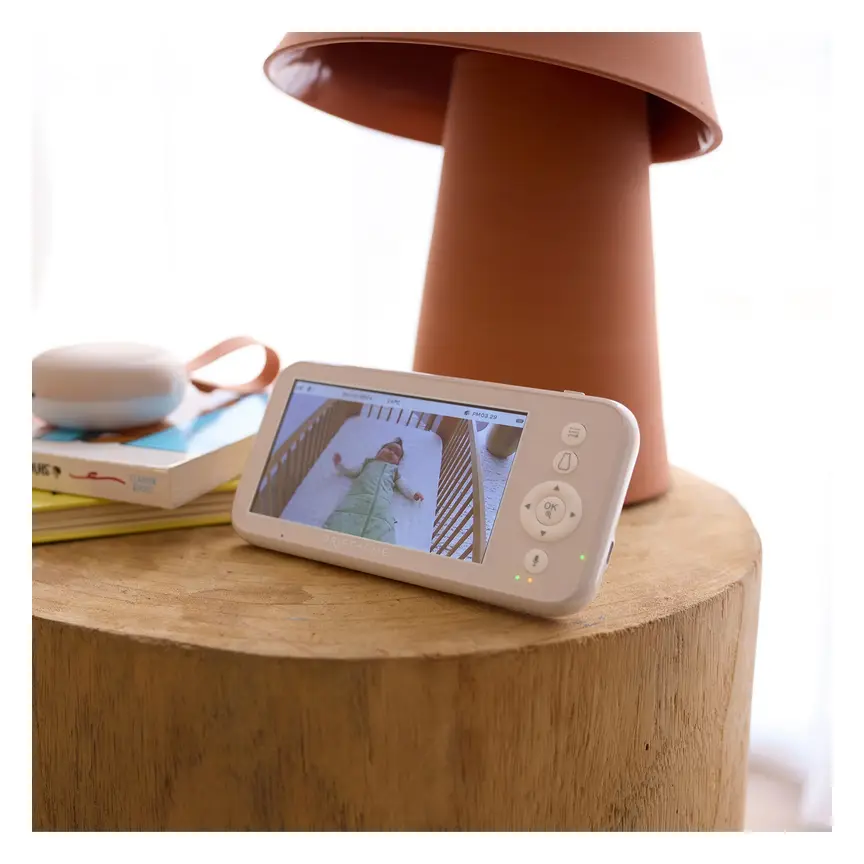
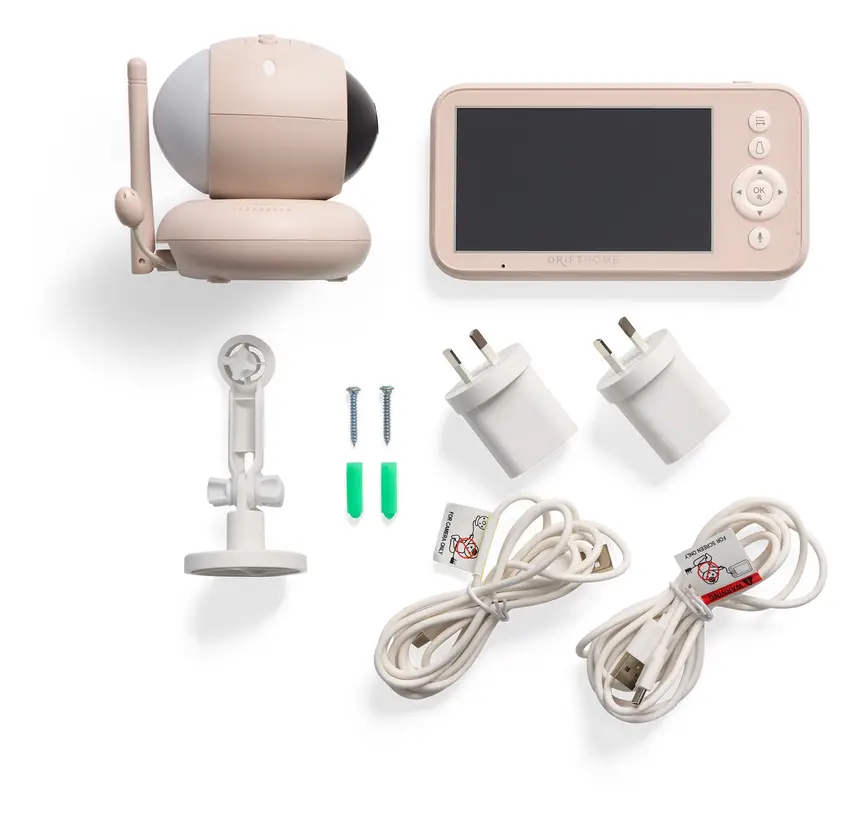
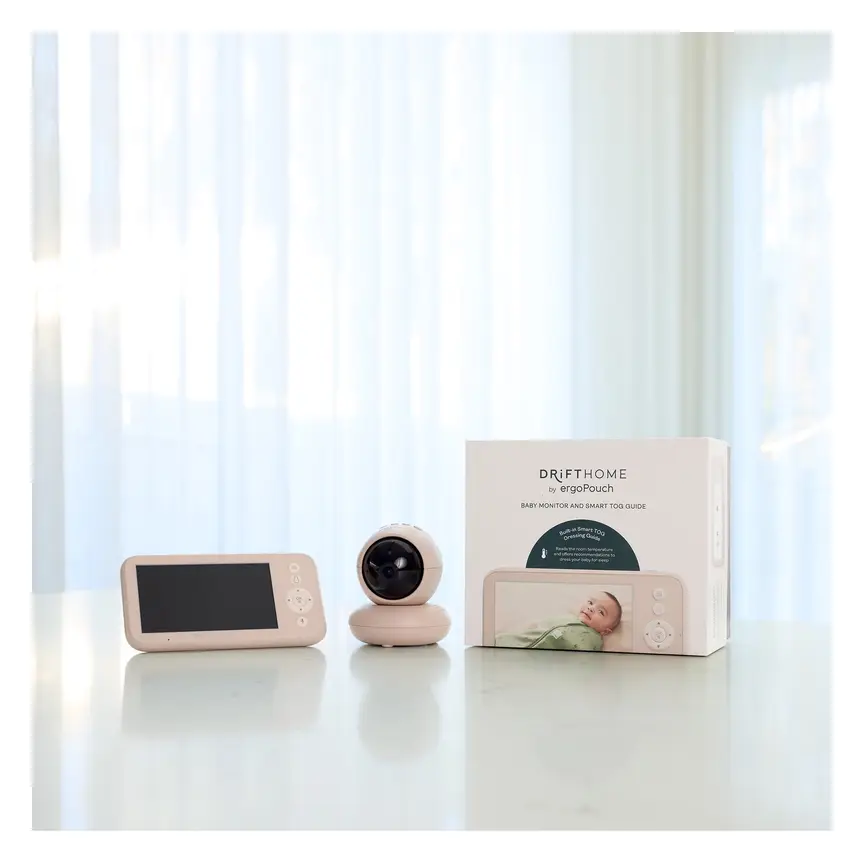

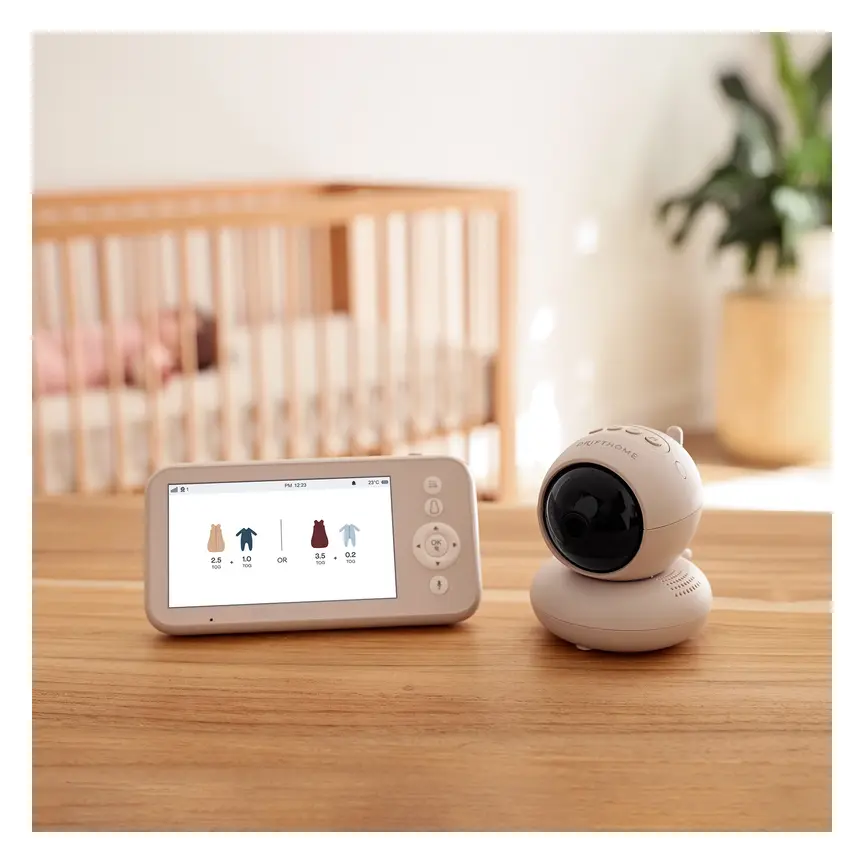

ergoPouch Drifthome Baby Monitor
A non-Wi-Fi monitor with a built-in TOG dressing guide and up to 300 m range.
Read our full review →

Eufy Baby Monitor E20
A monitor that works with or without Wi-Fi. You can share the app with up to 5 family members.
Read our full review →
Eufy Baby Monitor E21
The step-up Eufy monitor. It works with or without Wi-Fi and shares with up to 5 people.
Keeping it from becoming a projectile
In a crash, anything loose in the car keeps moving at the speed the car was travelling. Kidsafe's guidelines warn that an unsecured item, such as an empty child restraint, can become a projectile in a crash and seriously hurt people in the car. The same goes for mirrors, cameras, screens, tablets and bags.
- Choose light products. A light acrylic mirror is less dangerous than a heavy glass one.
- Strap it tight. Use both straps. Pull them until the mirror or camera can't swing or slide.
- Check it often. Straps loosen over time. Check every week and after anyone moves the headrest.
- Nothing on the car seat. Don't clip mirrors, cameras or toys onto the car seat's shell, handle or harness. Transport Canada and Product Safety Australia both warn against adding items that didn't come with the seat.
- Secure the front screen. A dashboard screen should be in a firm cradle, not resting loose or stuck with weak tape.
- Tuck the cables. Keep cables away from your baby's reach and out of the way of the harness and seatbelts.
- Keep the rest of the car tidy too. Put heavy bags and shopping in the boot.
Avoiding distraction
Looking away from the road, even for a couple of seconds, is risky. A mirror or camera only helps if you use it with a quick glance, the same way you check your rear-view mirror.
- Glance, don't stare. Look for a second, then eyes back on the road.
- Don't adjust while driving. Set up the mirror or camera before you leave.
- If your baby is upset, pull over. Stop somewhere safe before you reach back, pick up a dummy or comfort your baby.
- Don't use your phone as the screen while driving. Phone use laws are strict in all four countries. A phone showing a camera feed may break those rules, depending on where you live and how it's mounted.
- Check your local rules on screens. Australian states, UK law, US states and Canadian provinces each have rules about what screens a driver can see. A dedicated, fixed baby monitor screen may be treated differently from a phone. If you're not sure, ask your road authority or choose a mirror.
- Use a second adult. If someone else is in the car, they can sit in the back and watch your baby.
What you're actually checking for
Most of the time, a quick look shows a baby who is asleep or looking around. Things worth checking at a stop:
- Your baby's face is clear and uncovered.
- Their chin isn't slumped onto their chest. If it is often, check the recline angle of the car seat against the manual.
- The harness is still on their shoulders and snug.
- They aren't too hot. Don't cover a capsule or car seat with a cloth or blanket. Red Nose and Australian health services warn this traps heat and makes it hard to see your baby.
Red Nose also advises taking breaks at least every two hours on long trips and taking your baby out of the car seat when you stop. And never leave a baby alone in a parked car, even for a moment.
How to choose: checklist
For a mirror
- Shatterproof material (acrylic or similar), not glass.
- Light weight and a soft, padded frame.
- Two straps that fit your headrest.
- A pivot that holds its angle.
- No toys or lights that could come loose.
For a camera
- Light, slim camera with a strong headrest strap.
- A screen with a firm mount, small enough not to block your view of the road.
- Night vision that's clear without being bright.
- Screen auto-dimming at night, and an option to turn it off.
- Cables long enough to route neatly, or wireless with secure batteries.
- Electrical safety marks for your country.
By age and stage
Newborn months
This is when parents feel most anxious and when babies are most at risk if their head slumps. A mirror or camera can help you spot a problem, but it's no substitute for using the seat correctly: the right recline, the harness snug and the right insert. If you're worried about your baby's breathing or position, pull over and check.
About 6 months to 2 years
Babies grab things. Make sure anything they can reach is secured, soft and can't be pulled off. Some mirrors have toys built in; check these are firmly fixed.
Turning forward-facing
Once your child is forward-facing, you can usually see them in the rear-view mirror. Take the baby mirror or camera down if you don't need it, to reduce clutter.
Side by side: more baby monitors to compare
Real products from our catalogue. We don't show star ratings or review counts; check the current price, stock and reviews on Amazon before you buy.
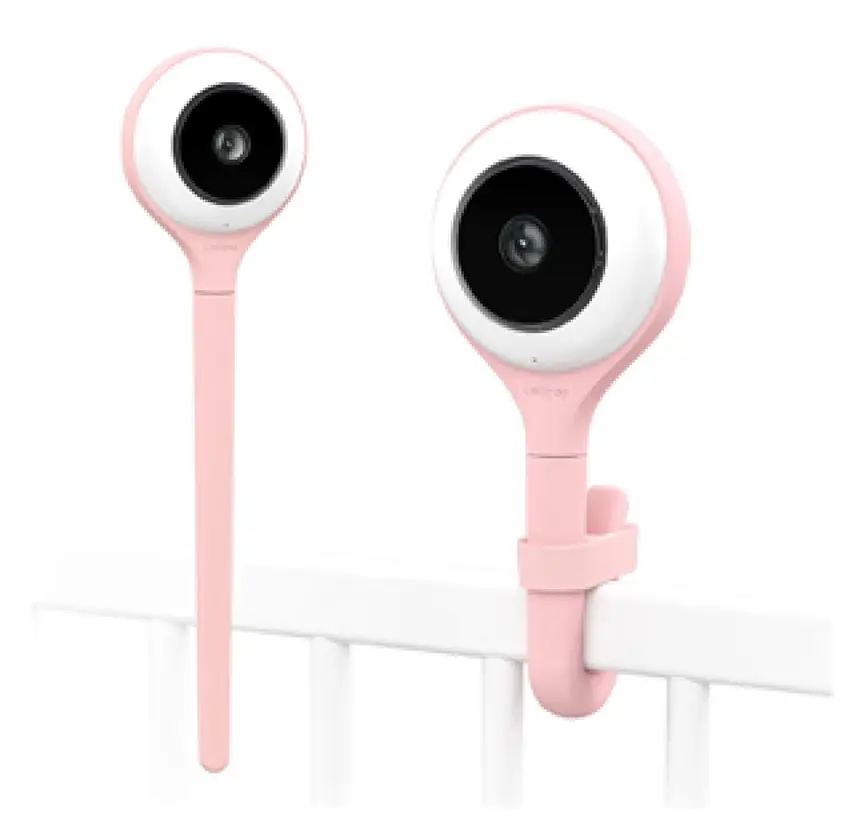
Lollipop Smart Baby Camera
A Wi-Fi camera with AI cry, noise and crossing alerts and 1080p video.
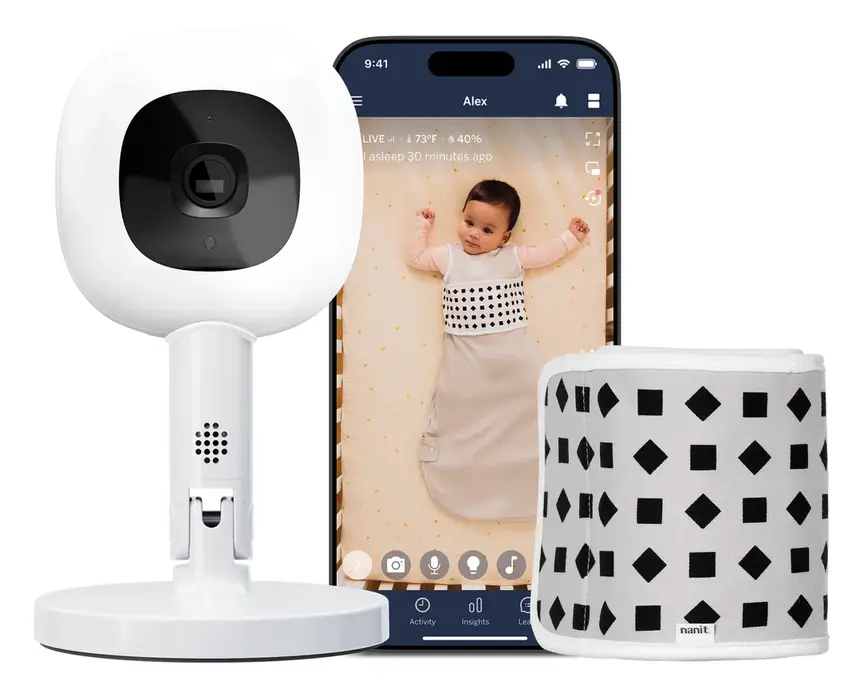 Reviewed
Nanit Pro Camera
Overhead 1080p Wi-Fi camera that tracks sleep and — with patterned Breathing Wear — breathing motion, without any electronics on the baby.
Read our full review →
Oricom Babysense7 Breathing & Movement Monitor
A sensor pad listed as a medical device on the Australian Register of Therapeutic Goods. It sounds an alarm if it stops sensing breathing movement.

Fitting a mirror, step by step
- Park somewhere safe with the engine off.
- Check the headrest your baby faces. It must be a removable or adjustable headrest with posts, so the straps can go around it. Some cars have fixed headrests; check the mirror fits.
- Loop the top strap around the headrest posts and the lower strap around the headrest itself.
- Pull both straps tight until the mirror can't swing or slide when you push it.
- Sit in the driver's seat and adjust your rear-view mirror as normal for driving.
- Angle the baby mirror so you can see your baby's face in your rear-view mirror without moving your head much. You may need someone to help.
- Test it on a short drive. If the view moves around a lot, tighten the straps.
Setting up a camera, step by step
- Mount the camera on the headrest your baby faces, using the maker's strap or bracket. Pull it tight.
- Route the cable along the side of the seat, under floor mats or along trim, well away from your baby, the harness, seatbelt buckles and pedals.
- Fix the screen in a firm cradle where it doesn't block your view of the road, airbags or controls. Many road authorities say devices shouldn't block the driver's view.
- Turn on night mode or auto-dimming, so the screen doesn't glare at night.
- Set the view before you drive, and don't fiddle with it while driving.
- Unplug it when you leave the car if it drains the battery, and check cables for wear.
Never leave a baby in the car
A mirror or camera can make it feel like you can "keep an eye" from outside the car. You can't. Cars heat up very quickly, even on mild days and with windows down a little. Never leave your baby or child alone in a parked car, even for a minute. Some parents worry about forgetting a quiet baby in the back. Simple habits help: put your bag, phone or wallet in the back seat next to your baby, and always open the back door when you park.
Advice by country
| Country | Who to check | What matters here |
|---|---|---|
| Australia | Kidsafe, Product Safety Australia, your state road authority | Rear-facing as long as possible; no accessories on the car seat; state rules on screens and phones |
| United Kingdom | GOV.UK, RoSPA, Highway Code | R129 seats rear-facing until over 15 months; strict phone laws; screens mustn't distract |
| United States | AAP, NHTSA, your state | Rear-facing as long as possible; state distracted-driving laws |
| Canada | Transport Canada, your province | Items not supplied with the seat may not be safe; provincial distracted-driving laws |
Other ways to keep an eye on your baby
- Sit someone in the back. On longer trips, a second adult next to your baby is the best "monitor".
- Plan stops. Stop every two hours or so to feed, change and check.
- Use sound. You'll usually hear if your baby is unhappy. Keep music low.
- Check before you leave. A correct harness and recline make problems on the road much less likely.
Care and when to replace
Car interiors get very hot in summer and cold in winter. Over time, straps stretch, plastic gets brittle and suction cups or adhesive pads fail. Check your mirror or camera every few weeks:
- Straps still tight and not frayed.
- Mirror surface not cracked, crazed or cloudy.
- Camera bracket not cracked.
- Screen mount still firm.
- Cables not pinched in seat runners or doors, and plugs not loose or hot.
Clean the mirror with a soft cloth and a little water. Strong cleaners can scratch or cloud acrylic. Replace anything that is damaged. If you sell or pass on a mirror or camera, include the straps and instructions.
More options, from budget to premium
Real products from our catalogue. We don't show star ratings or review counts; check the current price, stock and reviews on Amazon before you buy.

VTech BM2220 Digital Audio Baby Monitor
A low-cost sound-only monitor with two-way talk, a room temperature sensor and a night light.
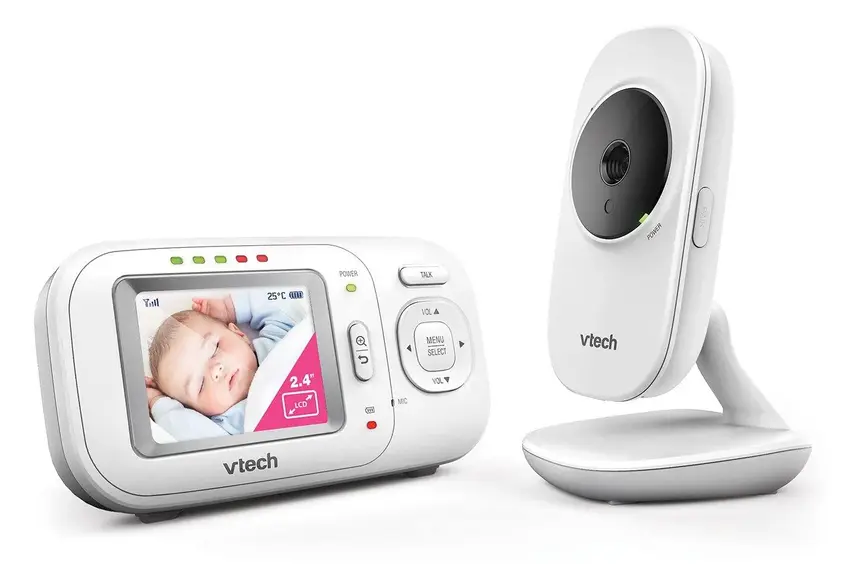
VTech BM2700 Video and Audio Baby Monitor
Non-wifi video monitor

VTech BM3350N Video Baby Monitor
Non-wifi video monitor
Common mistakes
- Using a heavy glass mirror or a bulky camera.
- Strapping it loosely so it swings or slides.
- Clipping things onto the car seat itself.
- Watching the screen instead of the road.
- Reaching back while driving.
- Draping a blanket over the car seat so the mirror can't see your baby, and so heat builds up.
- Turning a baby forward-facing early so you can see them.
FAQ
Are baby car mirrors safe?
A light, shatterproof mirror strapped firmly to the headrest is low risk. Avoid glass, avoid attaching it to the car seat, and only glance at it.
Is a back-seat camera better than a mirror?
It gives a clearer view, especially at night. But it adds a screen to look at, cables and more weight. Many parents find a mirror is enough in daylight.
Is it legal to have a baby monitor screen on the dashboard?
It depends on where you live. Rules on screens differ by state, province and country. Check with your road authority. Using a phone as the screen may break mobile phone laws.
Can a mirror hurt my baby in a crash?
Any object can move in a crash. That's why it should be light, shatterproof and strapped down tightly.
Do I need a mirror at all?
No. Many parents don't use one. Correct car seat use matters far more. If you're worried about your baby, stop safely and check.
Should the mirror go on the middle or side seat headrest?
On the headrest your baby faces, which depends on where the car seat is fitted. Follow your car seat and car manuals for the best seating position, then put the mirror in front of it.
Can I use a mirror with a capsule that has a canopy?
Yes, but fold the canopy back far enough for a clear view and good airflow. Never cover the capsule with a cloth.
Will a mirror stop my baby crying in the car?
Some babies like seeing their own face in the mirror, and it can keep them busy for a while. Others don't notice it. It's a nice extra, not a fix for an unhappy baby. If your baby cries a lot in the car, check they aren't hungry, too hot or uncomfortable at your next safe stop.
Do baby cameras record video?
Some do. If yours records or connects to an app, set a strong password and check where recordings are stored, just as you would with a home baby monitor.
Sources
- Product Safety Australia (ACCC) – Car seats guide
- Kidsafe – National best practice guidelines: safety of children in motor vehicles
- Transport Canada – Stage 1: rear-facing seats
- HealthyChildren.org (American Academy of Pediatrics) – Car seats: information for families
- Red Nose Australia – Keeping baby safe in the car
- GOV.UK – Child car seats: the law
Related guides
More Toys & Play →
Baby Car Mirrors and Car Cameras: How to Choose and Use Them Safely

Baby Car Cameras and Mirrors: Do They Help, and Are They Safe?

Baby Cameras and Safe Video Storage: SD Cards, Cloud Backups and Privacy