














Montessori Front-Facing Bookshelves: How to Choose, Set Up, and Anchor Them Safely
How to choose and set up a Montessori front-facing bookshelf safely, with wall-anchoring steps, age tips, and safety advice for AU, UK, US and Canada.
On this page
- Key points
- What a Montessori front-facing bookshelf is
- How to choose the right front-facing bookshelf
- Types of front-facing bookshelves compared
- Age stages: from baby to preschooler
- Wall mounting and anti-tip safety
- Safety rules in Australia, the UK, the US and Canada
- How to set up a cosy reading corner
- Common mistakes parents make
- Safety and buying checklist
- Frequently asked questions
- Sources
Short answer: A Montessori front-facing bookshelf holds books with their covers facing out. Toddlers can see the pictures and pick a book on their own. Pick a low, sturdy shelf with rounded edges and shallow slots. Anchor every freestanding shelf to the wall with anti-tip hardware, even if it looks short or heavy.
Safety groups in Australia (Product Safety Australia and Red Nose), the UK (RoSPA and OPSS), the US (CPSC and the American Academy of Pediatrics) and Canada (Health Canada and the Canadian Paediatric Society) all warn that unanchored furniture can tip over and hurt young children.
Key points
- Cover view: Front-facing shelves show book covers instead of thin spines. Babies and toddlers choose books by the pictures.
- Child height: Low shelves let your child reach books and put them back without help.
- Wall anchoring: Always secure freestanding shelves to a wall stud or brick wall. Do not rely on weight alone.
- Room placement: Keep bookshelves away from cots, toddler beds, windows, and blind cords.
- Small book sets: Display only 6 to 10 books at a time. Too many books make slots tight and hard for little hands to use.
- Safe materials: Look for smooth edges, rounded corners, and non-toxic finishes that are safe if a baby chews them.
What a Montessori front-facing bookshelf is
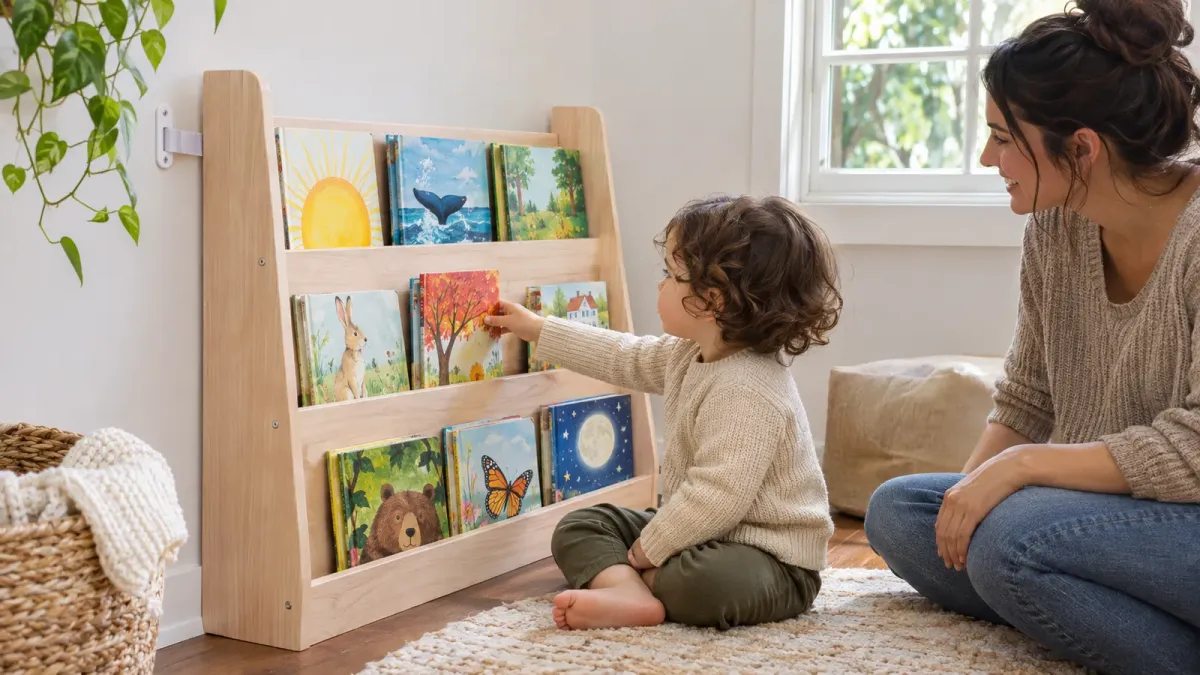
A front-facing bookshelf is a low rack or bookcase that displays books with the front cover facing forward. Most standard bookcases hold books sideways, showing only the thin spine. Adults can read titles on a spine, but babies and toddlers cannot.
When a young child sees a bright picture of a dog, a truck, or a friendly face, they want to touch it. They can point to the book they want or pull it out themselves. This simple layout turns a pile of hidden books into an open invitation to read.
The idea fits with the Montessori way of setting up a child's room. In a Montessori space, furniture is sized for the child, not the adult. Everything has a clear spot. The child does not need to ask a grown-up to reach high shelves or dig through a deep toy box.
Why front-facing shelves help independent reading
Seeing the cover helps toddlers make their own choices. Choosing a book builds early confidence and focus. It also makes tidy-up time much easier.
On a normal shelf, books fall over when one is pulled out. A toddler gets frustrated when they try to push a book back into a tight row. On a front-facing shelf, each book rests in its own open slot. Your child can slide a book back in with two hands and see it standing neatly again.
Why fewer books work better
Many parents think a bigger shelf with fifty books is better. In fact, a huge pile often overwhelms a toddler. They may pull every book onto the floor just to see what is underneath.
Holding back most of your books and showing just 6 to 10 at a time works better. Swap the books every week or two. Old books feel brand new again when they come back out.
Montessori & Sensory Toys worth a look
Real products from our catalogue. We don't show star ratings or review counts; check the current price, stock and reviews on Amazon before you buy.
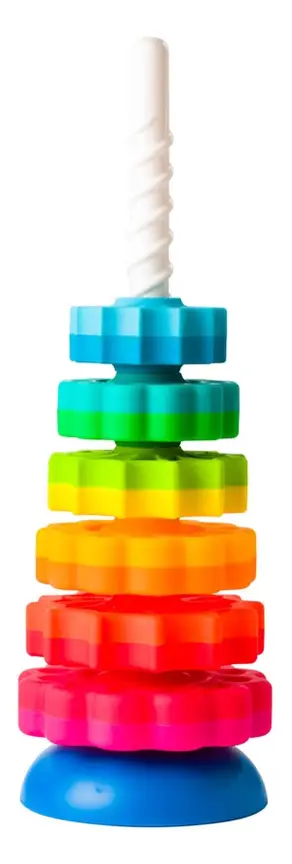
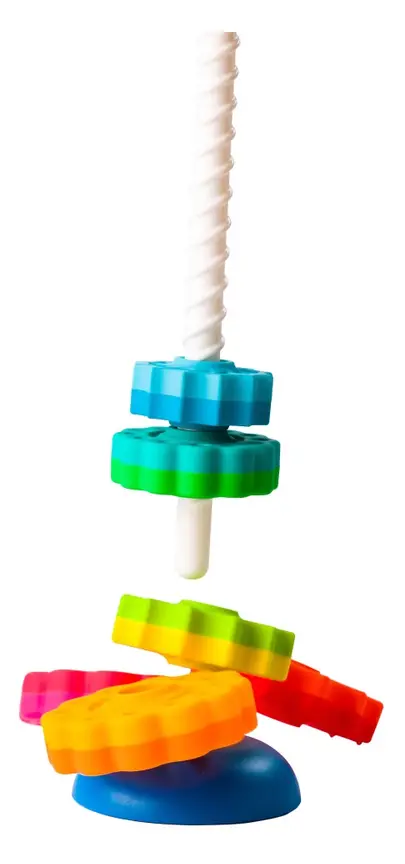


Fat Brain Spinagain
Coloured discs that spin down a pole. Babies stack them and watch them twirl.
Read our full review →

How to choose the right front-facing bookshelf
Not all front-facing bookshelves are built the same way. Some are sturdy and safe for rough toddler play. Others tip easily or have sharp edges. Check these features before you buy.
1. Height and reach
The top slot should sit at or below your child's chest height. For a sitting baby or young toddler, a shelf around 50 to 75 centimetres tall works well. If your child has to stand on tiptoes or climb the bottom lip to reach the top book, the shelf is too tall.
Wall-mounted ledges can be hung at any height. You can mount one low row for a baby and add a second row higher up as your child grows.
2. Base width and stability
Look for a floor shelf with a wide, deep base. A shelf that tapers slightly toward the top is more stable than a tall, narrow box. Even with a wide base, a toddler who pulls up on the top lip can tip an unanchored shelf onto themselves.
Check the back of the shelf too. Does it sit flush against the wall, or does your skirting board push it forward? Many homes have timber skirting boards along the bottom of the wall. A shelf with a notched back or a spacer kit sits closer to the wall and anchors more cleanly.
3. Slot depth and front lip
Each tier needs a front lip high enough to stop books sliding out. A lip that is too low lets thin paperbacks flop forward onto the floor. A lip that is too high hides small board books so your child cannot see the covers.
Also check the depth of each slot. A slot that fits two or three board books deep is handy. If slots are too narrow, thick board books will wedge tightly and frustrate your toddler.
4. Materials and finishes
Front-facing shelves come in solid timber, plywood, engineered wood (like MDF or particleboard), plastic, and fabric slings.
- Solid wood and birch plywood: Strong, heavy, and long-lasting. They hold screws well when you attach wall brackets.
- MDF and particleboard: Smooth and often cheaper, though heavy. Cheap particleboard can crumble around screws if bumped or over-tightened. Check that any engineered wood uses low-emission glues and is sealed on all sides.
- Fabric sling shelves: Wooden or metal side frames with canvas pockets. They are soft and hold lots of odd-sized books, though thin paperbacks can curl inside deep fabric slings.
- Paint and varnish: Babies put their mouths on furniture edges. Choose water-based, non-toxic paints and sealants with no strong chemical smell.
5. Edges, corners, and gaps
Run your hand along every corner, screw head, and slot edge. Sharp 90-degree corners can cut a toddler's head or face during a fall. Look for rounded corners and sanded edges.
Check that screw heads sit flush or are covered with flat caps. Small plastic screw caps can be a choking hazard if a baby can pry them off with their fingernails. Solid, recessed hardware without loose caps is safer for under-threes.
Types of front-facing bookshelves compared
Different homes and rooms call for different shelf styles. Here is how the four main types compare side by side.
| Shelf style | Best for | Tip-over risk | Floor space used | Cleaning and care | What to watch out for |
|---|---|---|---|---|---|
| Low wooden tiered shelf | Nurseries and playrooms with floor space | High if unanchored; low when anchored to a wall | Moderate footprint along a wall | Wipe with a damp cloth; dries fast | Sharp corners on cheap models; check skirting board gap |
| Wall-mounted book ledges | Small bedrooms and renters who can patch small holes | Zero tip-over risk when properly fixed to studs | None; keeps floor clear | Easy to dust; wipe with mild soap | Must hit wall studs or use heavy-duty anchors; check weight limit |
| Fabric sling bookshelf | Soft nurseries and lots of bulky board books | Moderate to high; very light frame tips easily if pulled | Small to moderate | Wipe frame; wash fabric slings if removable | Thin paper books bend and sag; frame still needs wall anchoring |
| Combo shelf with toy cubbies | Shared playrooms needing toy and book storage | High if unanchored; heavy unit can injure badly | Larger footprint | Wipe wood surfaces and fabric bins | Toddlers often climb into lower cubbies like steps |
Age stages: from baby to preschooler
Your child's needs and safety risks change fast between 6 months and 5 years. Adjusting how you use the shelf keeps it useful and safe at every stage.
| Age stage | What your child is doing | Best books to display | Key safety focus |
|---|---|---|---|
| 6 to 12 months | Sitting up, crawling, pulling up to stand | Chunky board books and cloth books | Anchor shelf; smooth corners; no loose caps or small parts |
| 12 to 24 months | Cruising, walking, climbing, mouthing objects | Sturdy board books and lift-the-flap books | Strong wall anchor; keep away from cots and windows; watch for climbing |
| 2 to 3 years | Choosing favourites, learning to tidy up | Mix of board books and sturdy picture books | Keep book count low (6 to 10); place at easy chest height |
| 3 to 5 years | Looking at longer stories, sorting by topic | Large picture books and early readers | Check shelf weight limit; keep heavy books on lower tiers |
6 to 12 months: sitting and pulling up
Babies start noticing bright pictures long before they can walk. You can place a low floor shelf or a bottom wall ledge at sitting height. Put soft cloth books and thick board books in the lowest slot.
Once your baby starts pulling up to stand, they will grab whatever is in reach. The front lip of a bookshelf is at the exact height a pulling baby grabs. If the shelf is not fixed to the wall, it can pull straight forward onto your baby.
12 to 24 months: walking and climbing
Toddlers love to climb. A tiered bookshelf looks like a small staircase to a curious one-year-old. They may step onto the bottom lip to reach the top row or climb up to look out a window.
Keep the shelf anchored and away from windows or high furniture. Choose board books with thick pages that can handle enthusiastic pulling and chewing.
2 to 3 years: independent choice and tidying
By age two, most toddlers know their favourite stories by the cover. Let them pick two books before naptime or bedtime. Teach them to slide one book back into a slot before taking another.
This is a good age to introduce a few simple paper picture books alongside board books. Keep the slots uncrowded so paper pages do not tear when slid in and out.
3 to 5 years: larger books and rotation
Preschoolers often read taller, heavier picture books. Check that your shelf slots are tall enough that large books do not flop over the top bar. Put heavier hardcover books on the bottom tier to keep the weight low.
If your child outgrows the low height, you can add a second wall-mounted ledge above the first one, or move the low shelf into a younger sibling's room.
Wall mounting and anti-tip safety
Furniture tip-overs are a serious home hazard for babies and toddlers. Even a short wooden bookshelf can cause severe head or chest injuries if it falls on a small child. A bookshelf loaded with heavy board books weighs much more than it looks when empty.
Product Safety Australia, the US Consumer Product Safety Commission (CPSC), RoSPA in the UK, and Health Canada all give the same core advice: anchor toppling furniture to the wall.
Why freestanding shelves are never safe unanchored
Many parents skip wall anchors because a Montessori shelf is only waist-high. That is a risky mistake. When a toddler pulls on the top edge, their body weight acts as a lever. The shelf tips toward them, and the books slide out on top of them.
Carpet makes tip-overs even more likely. Soft carpet and underlay let a shelf lean forward slightly, shifting its centre of gravity toward the child.
Step-by-step: how to anchor a bookshelf safely
Before you start, check what kind of wall you have. Most homes have plasterboard (drywall) over timber or metal studs, or solid brick and concrete walls.
- Pick the spot. Choose a wall away from cots, beds, windows, heaters, and curtain cords. Check for hidden pipes or wires behind the wall before drilling.
- Find the wall studs. On a plasterboard wall, use an electronic stud finder to locate the vertical timber or metal studs behind the plaster. Mark the stud centres lightly with a pencil.
- Check the hardware. Many shelves include basic plastic straps and tiny screws. If the included hardware looks flimsy, buy metal L-brackets or steel cable anti-tip kits from a hardware store.
- Attach to the shelf frame. Screw the bracket or strap into a solid wood or thick frame part of the bookshelf, not thin cardboard backing.
- Fix into the wall. Drill pilot holes and drive long wood screws straight into the wall stud. On brick or concrete walls, use a masonry drill bit and proper wall plugs sized for your screws.
- Test the hold. Give the top of the shelf a firm tug forward. It should not wobble, tilt, or pull away from the wall.
What if there is no stud where you need it?
If your shelf brackets do not line up with a wall stud, you have two safe options. First, you can use heavy-duty hollow-wall anchors (like metal toggle bolts) rated for furniture loads. Never use small, push-in plastic plugs in plain plasterboard for anti-tip straps, because they can tear straight through the plaster.
Second, you can screw a solid strip of timber horizontally across two wall studs, then screw the shelf brackets into that timber strip. This spreads the load safely into the studs.
Mounting floating wall ledges
If you choose wall-mounted book ledges instead of a floor unit, strong mounting matters even more. A floating ledge holds all its weight on the wall screws. Always screw at least one side—ideally both ends—directly into wall studs or solid masonry.
Mount ledges at a height where a walking toddler will not bang their forehead on a sharp bottom corner. Softening the bottom corners or placing a low floor shelf underneath can also help protect younger crawlers.
Side by side: more montessori & sensory toys to compare
Real products from our catalogue. We don't show star ratings or review counts; check the current price, stock and reviews on Amazon before you buy.
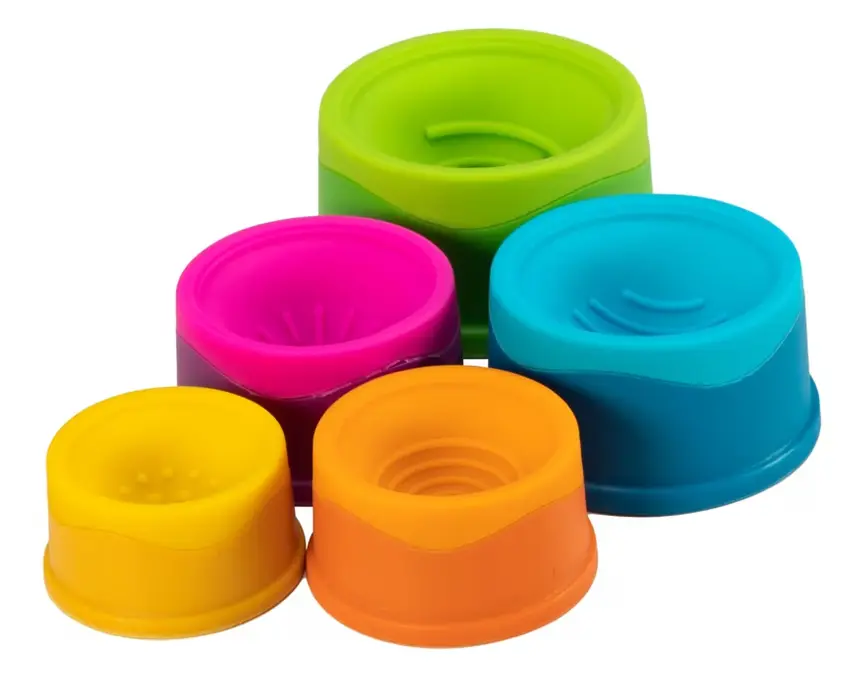
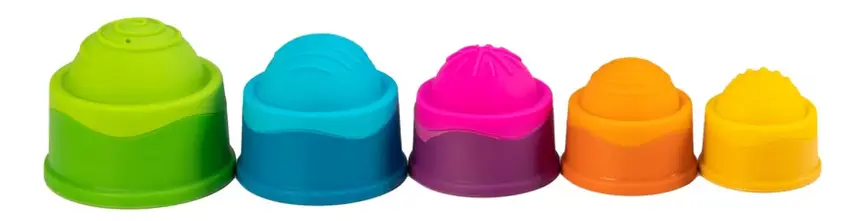
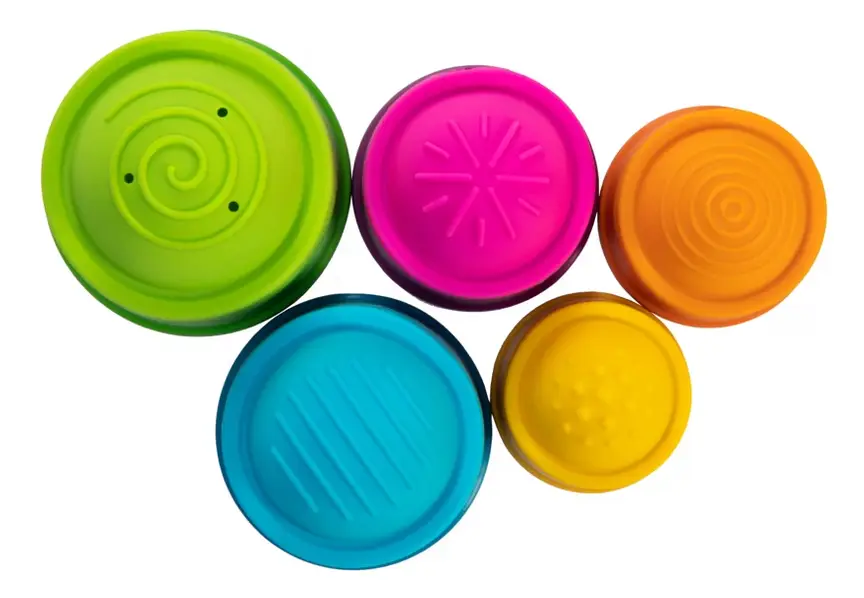
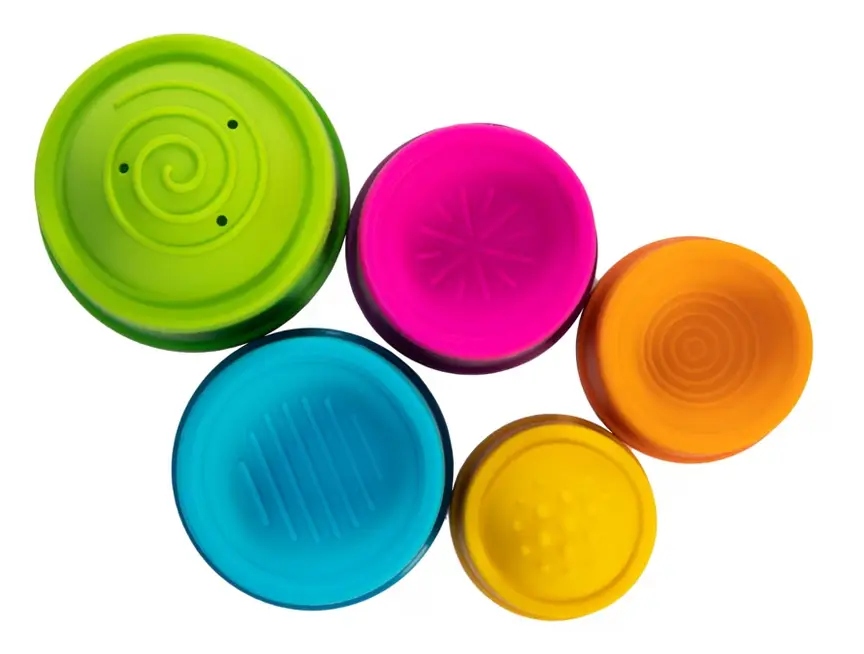
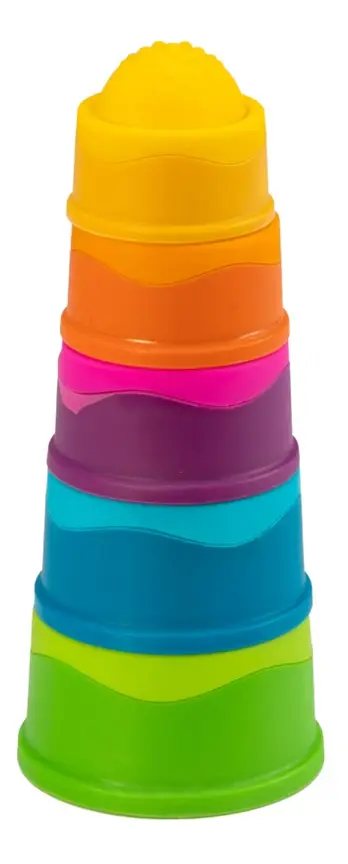
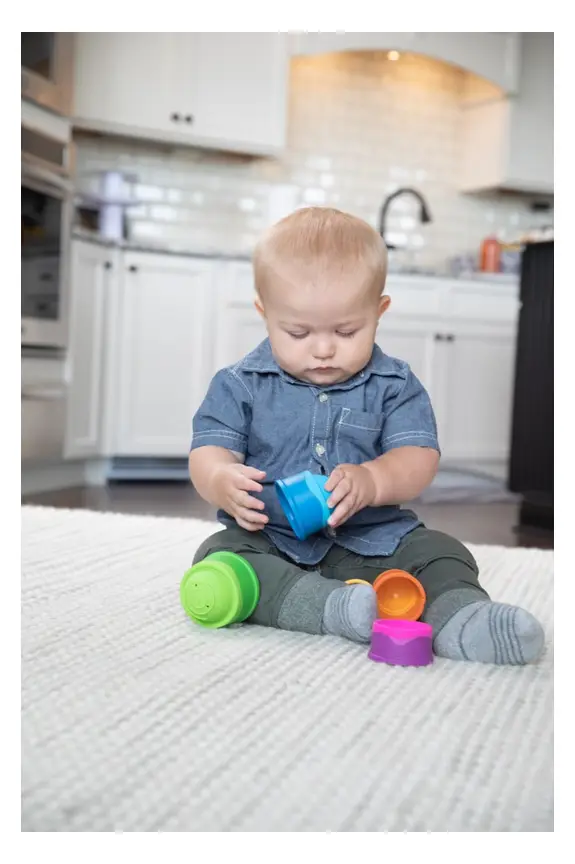
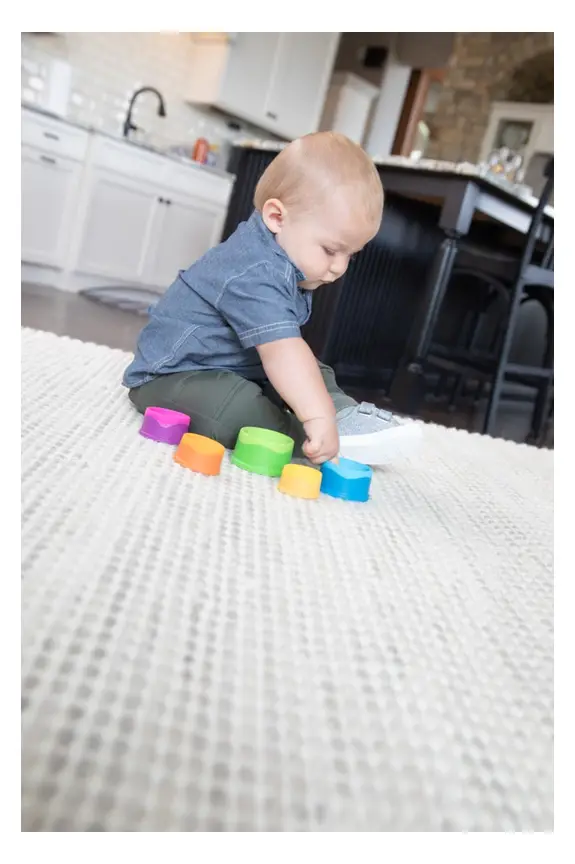
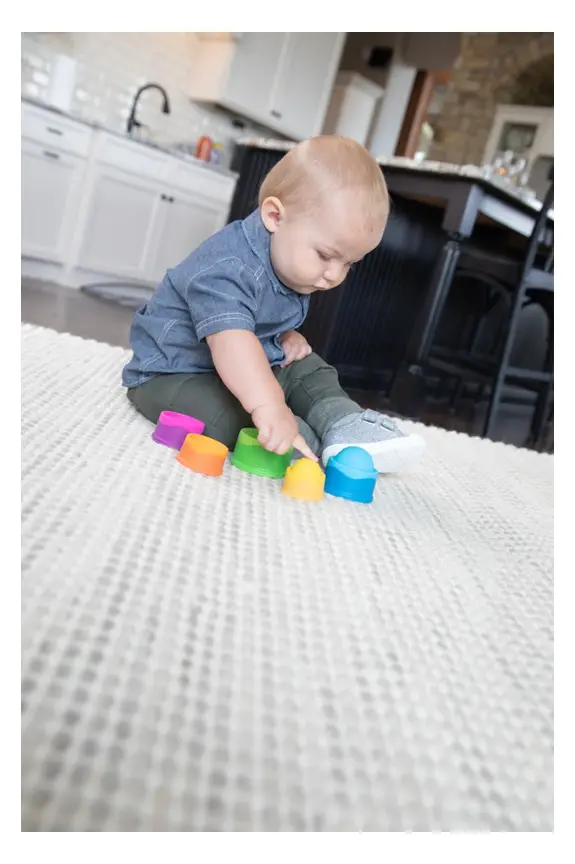
Fat Brain Dimpl Stack
Soft silicone stacking cups with poppable bubbles to push and feel.
Read our full review →

Fat Brain Playtab Essential Set
A set of activity tabs that click together into a busy board with things to spin, slide and press.
Read our full review →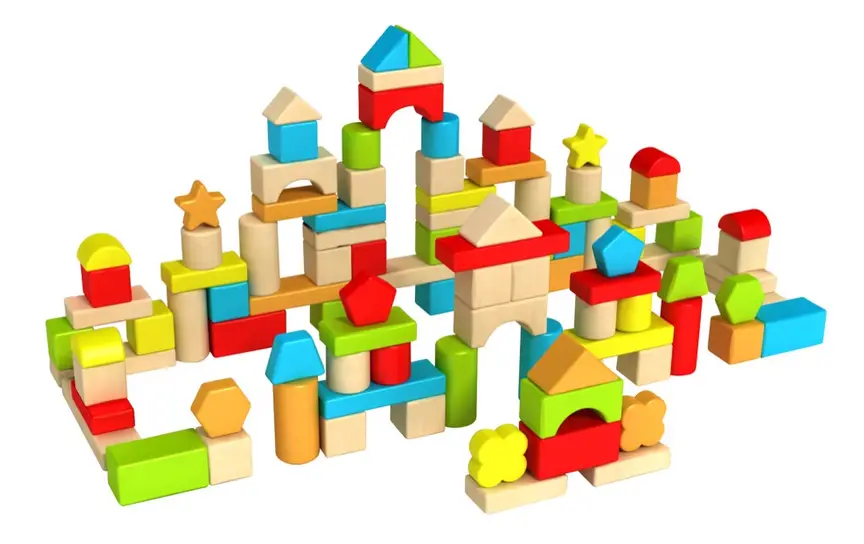


Fat Brain Wooden Timberblocks (100 pieces)
A 100-piece wooden block set for stacking and building.
Read our full review →


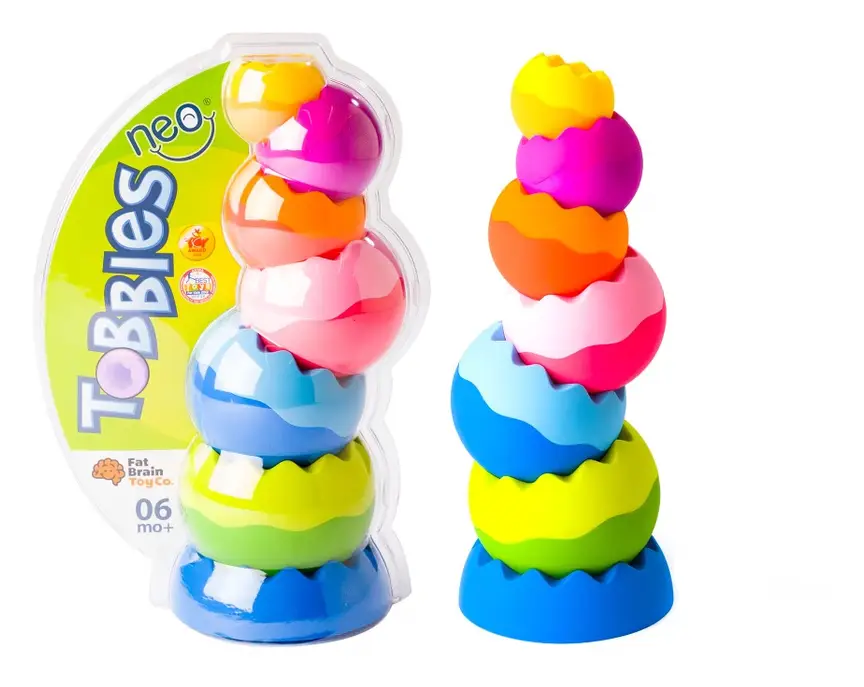


Fat Brain Tobbles Neo
Wobbly round pieces that stack, spin and tip but do not fall over easily.
Read our full review →Safety rules in Australia, the UK, the US and Canada
While front-facing bookshelves do not have their own separate toy standard, all four countries have clear official rules and safety advice on toppling furniture, childproofing, and recalls.
| Country | Main safety bodies | Key furniture and home safety rules |
|---|---|---|
| Australia | Product Safety Australia (ACCC), Red Nose Australia, Raising Children Network, Kidsafe | Mandatory information rules for toppling furniture require clear warning labels and anchoring advice. Red Nose and Kidsafe advise anchoring all low and tall furniture and keeping shelves away from cots and windows. |
| United Kingdom | Office for Product Safety and Standards (OPSS), RoSPA, UK Government | OPSS and RoSPA advise securing bookshelves and drawers to the wall with brackets or straps. UK Buy Safe guidance warns parents to buy from trusted sellers and check for product recalls. |
| United States | U.S. Consumer Product Safety Commission (CPSC), American Academy of Pediatrics (AAP) | The CPSC Anchor It! campaign urges families to anchor bookshelves, dressers, and TVs. Federal rules require stronger stability and warning labels on storage furniture. AAP advises anchoring furniture and keeping it away from beds and windows. |
| Canada | Health Canada, Canadian Paediatric Society (Caring for Kids) | Health Canada publishes furniture tip-over safety tips and tracks recalls on its Recalls and Safety Alerts site. Caring for Kids advises anchoring heavy or climbable furniture in child spaces. |
No matter which country you live in, check your national product recall website before buying secondhand furniture. Older shelves may lack anti-tip kits or use unsafe lead paint.
How to set up a cosy reading corner
A bookshelf works best when it is part of a calm, inviting reading spot. You do not need a huge room. Even a quiet corner of the living room or bedroom works well.
Pick the right spot
Choose a spot with good natural light during the day and a warm, gentle lamp for evening stories. Keep the reading lamp cord tucked behind the anchored shelf or inside a cord cover so your baby cannot pull it.
Avoid placing the reading corner right next to a cot or toddler bed. A child who wakes up early may use a nearby bookshelf to climb out of their cot, or pull books into the cot. Safe sleep groups like Red Nose and the Lullaby Trust advise keeping the sleep space clear and away from furniture they can climb.
Add a soft place to sit
Place a washable rug, a firm play mat, or a low floor cushion in front of the shelf. Babies and toddlers love sitting right on the floor to flip through pages. If you use beanbags or large soft cushions, keep them out of the bedroom for under-ones, or store them away when your baby is sleeping.
Rotate books to keep interest high
Store extra books out of sight in a cupboard or closet. Every week or two, swap out a few books on the shelf. Match them to the season, a new skill, or something your child saw that week—like a fire truck, a zoo trip, or rain.
Put your child's current favourite on the easiest middle slot. Put one or two new books right beside it. Toddlers love the mix of familiar comfort and fresh discovery.
Common mistakes parents make
Even thoughtful parents run into a few common traps when setting up a toddler bookshelf. Watch out for these six issues.
- Skipping wall anchors on short shelves: Parents often think a 60-centimetre shelf is too short to hurt a child. Any freestanding shelf can tip when a toddler hangs on the front lip. Always anchor it.
- Overfilling the slots: Cramming 25 books into three shallow slots makes them impossible for small hands to pull out. Keep it to 2 or 3 books per slot.
- Putting the shelf under a window: Toddlers climb shelves to reach window sills, latches, and blind cords. ACCC and CPSC both warn that loose blind cords and low windows are major hazards.
- Using weak plasterboard plugs: Small plastic wall plugs pushed into hollow drywall can rip out easily. Always aim for a wall stud or brick, or use heavy-duty metal anchors.
- Leaving the shelf on thick carpet without checking tilt: Thick carpet makes shelves lean forward. Check the level after anchoring and use a furniture wedge if needed so the base sits flat.
- Putting heavy toys on top: Never place heavy lamps, potted plants, glass frames, or big toy boxes on top of a bookshelf. If a child shakes the shelf, items on top can fall onto their head.
Safety and buying checklist
Use this quick checklist when shopping for a front-facing bookshelf or checking one you already own.
| Do | Don't |
|---|---|
| Anchor every freestanding bookshelf to a wall stud or solid brick | Leave a short or heavy bookshelf unanchored on the floor |
| Choose rounded corners and smooth, sanded wood edges | Buy shelves with sharp square corners at toddler head height |
| Display 6 to 10 books at a time with covers facing out | Pack slots so tightly that books wedge or rip |
| Place the shelf away from cots, beds, windows, and cords | Put the shelf right next to a cot or under a window |
| Use water-based, non-toxic paints and low-emission wood | Use old flaking paint or unsealed particleboard with strong fumes |
| Check wall brackets and screws every few months | Ignore a wobbly shelf or loose anti-tip strap |
More options, from budget to premium
Real products from our catalogue. We don't show star ratings or review counts; check the current price, stock and reviews on Amazon before you buy.


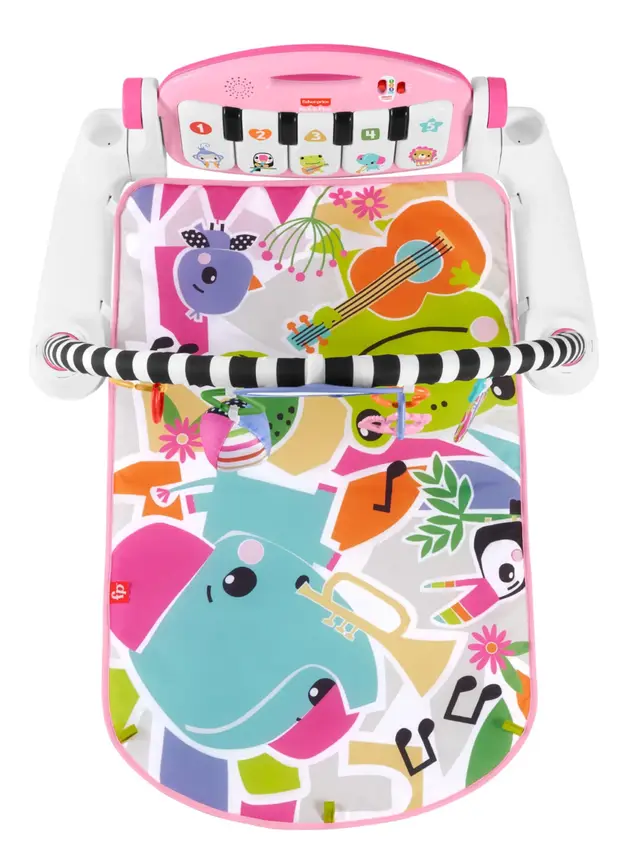
Fisher-Price Kick & Play Gym
A low-cost play gym with a small piano at the feet that plays when baby kicks.
Read our full review →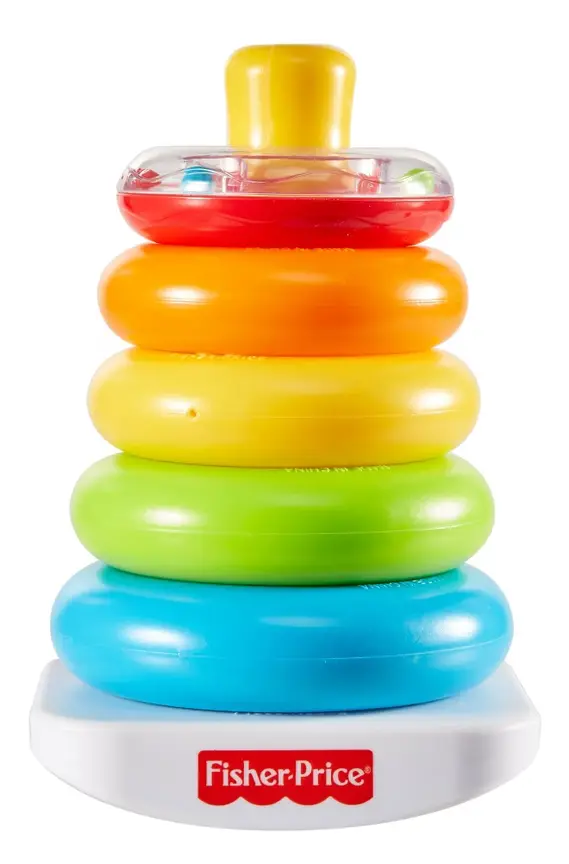


Fisher-Price Rock-a-Stack
The classic rings-on-a-cone stacking toy with a rocking base.
Read our full review →Frequently asked questions
Do low Montessori bookshelves really need to be anchored to the wall?
Yes. Even a low shelf can tip forward when a baby pulls up to stand or a toddler climbs the bottom lip. Books also add heavy weight near the front. Anchoring the shelf to a wall stud or brick wall takes a few minutes and removes the tip-over risk.
What age can a child start using a front-facing bookshelf?
You can set one up from around 6 months, once your baby can sit with support or reach for toys during floor play. Start with soft cloth books and thick board books on the lowest tier. Most children really start picking their own books between 12 and 18 months.
How many books should I put on a Montessori bookshelf?
Between 6 and 10 books is plenty for most babies and toddlers. Having fewer books keeps the covers clear and easy to see. It also stops the slots from getting jammed so your child can put books back on their own.
Are fabric sling bookshelves safe for babies and toddlers?
Fabric sling shelves can be safe if they are sturdy and anchored to the wall. Because the wooden or metal frame is very light, it tips over easily if a child pulls on the fabric pockets. Always anchor the frame to the wall, check for loose screw caps, and keep heavy hardcovers on the bottom pocket.
What if I rent my home and cannot drill into the walls?
Check your local tenancy rules first, as many places allow small holes for child safety anchors if you patch them when you leave. Ask your landlord or agent in writing for permission to anchor children's furniture. If drilling is strictly not allowed, stick to a very wide, low floor-level book box or basket with no height to tip over, rather than a tall tiered rack.
How high should a front-facing bookshelf be?
For babies and toddlers under three, keep the top shelf around 50 to 75 centimetres off the floor. Your child should be able to see and reach the top book cover while standing flat on both feet. If you mount wall ledges, hang the bottom ledge near floor level and keep higher ledges out of climbing reach until your child is older.
Sources
- Product Safety Australia – Toppling furniture and televisions guide
- Product Safety Australia – Toppling furniture mandatory information standard
- Red Nose Australia – How to prevent furniture accidents in the home
- RoSPA – Child safety at home
- UK Government – Buy safe, be safe
- CPSC (US) – Anchor It! furniture tip-over prevention
- HealthyChildren.org (AAP) – Childproofing your home
- Health Canada – Recalls and safety alerts
Related guides
More Toys & Play →
Baby Car Mirrors and Car Cameras: How to Choose and Use Them Safely

Toddler Aprons and Waterproof Art Smocks: How to Choose and Use Them

Play Mats Explained: XPE, EVA, TPU and PVC Foam, Chemical Concerns and How to Choose Safely
