














Baby Thermometers Compared: Forehead, Ear and Digital Readings
Compare forehead, ear and digital thermometers for children. Learn how to take a reading, spot fever, and know when to seek medical help.
On this page
- What a thermometer can tell you
- Choosing a thermometer for your family
- How the main thermometer types differ
- Using a non-contact forehead thermometer
- Using an ear thermometer
- Using a digital thermometer safely
- Fever and age: when to get help
- Common mistakes that can mislead you
- Keeping the thermometer clean and ready
- Guidance in Australia, the UK, the US and Canada
- Frequently asked questions
- Sources
Short answer: A thermometer can help you check your child’s temperature. The best method depends on your child’s age and the device instructions. A non-contact forehead thermometer is quick and does not touch the skin. Sweat, room conditions and how you hold it can affect the result. An ear thermometer can be hard to place in a young baby’s small ear. A digital thermometer may be used in different places, if the device allows it. Ask a health professional which method to use for a young baby. If your baby is under three months and may have a fever, seek urgent medical advice. Do not delay care while trying to get another reading.
A temperature reading is only one part of the picture. Your child’s age, breathing, alertness, drinking and other symptoms matter too. Contact a health professional if you are worried.
What a thermometer can tell you
A thermometer measures temperature. It cannot tell you what caused a fever. Fever is often part of the body’s response to illness. The number can help a health professional assess your child. It does not replace looking at how your child feels.
Different methods can show different numbers on the same person. This does not always mean one device is broken. The place you measure, how you hold the device and room conditions can affect the result. Follow the instructions for your thermometer. Do not add or subtract degrees to make one method match another.
Some thermometers read heat from the skin. Others read heat inside the ear or from a body opening. A non-contact forehead thermometer uses infrared energy to read skin heat. It does not shine a harmful beam at your child. Each model has its own directions for age, distance, placement and cleaning.
Use a device that you can use correctly. Read its guide before your child becomes unwell. Keep the guide with the thermometer or save it where you can find it. Ask a pharmacist, nurse or doctor if the instructions are unclear.
Choosing a thermometer for your family
Choose a thermometer you can use calmly when your child is unwell. Check the age guidance and the measurement method. Make sure the display is easy for you to read. A colour screen or alarm can be helpful, but it cannot diagnose an illness.
- For a quick check: a non-contact forehead model does not touch your child. A damp forehead or sudden room change may affect the result.
- For an older child who can sit still: an ear model may be simple to use when placed as directed. Check the maker’s age guidance first.
- For a reading at home: a digital thermometer may suit the method recommended for your child. Never force it into the bottom.
- For repeat checks: use the same device and method when possible. This makes changes easier to compare.
- For shared care: tell other carers which device and method you use. Clean it as directed after use.
Do not choose a thermometer because an advert says it can identify a disease. A home thermometer gives a temperature reading. A health professional must assess illness and its cause.
Health & Safety Gates worth a look
Real products from our catalogue. We don't show star ratings or review counts; check the current price, stock and reviews on Amazon before you buy.

Cherub Baby 4-in-1 Ear and Forehead Thermometer
2-in-1 thermometer

Cherub Baby Ear & Forehead Thermometer
Reads the ear or forehead in about 1 second, with a colour fever light and a fever alarm.

Dreambaby Rapid Response Digital Baby Thermometer
Digital thermometer
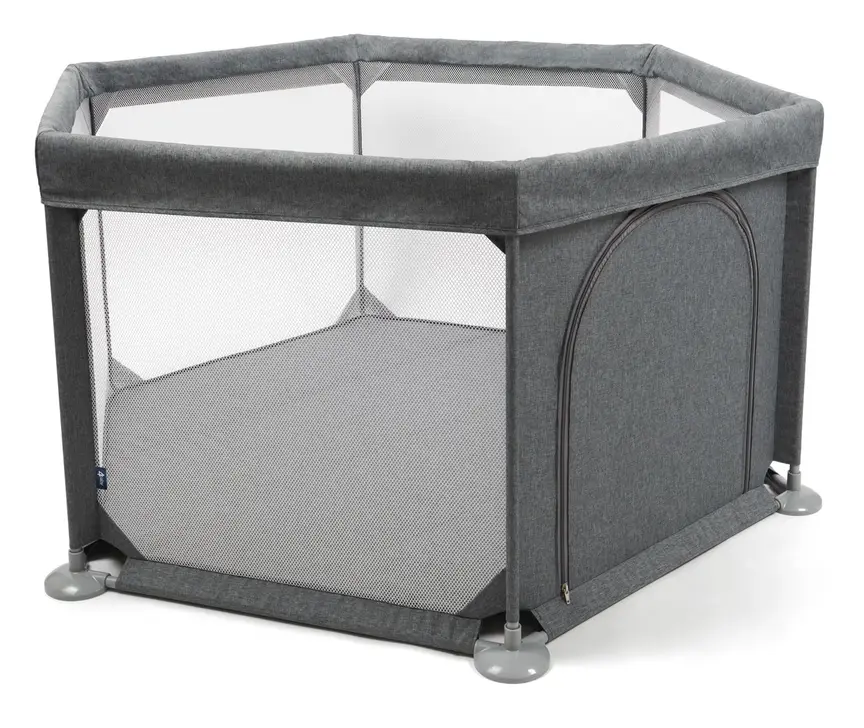
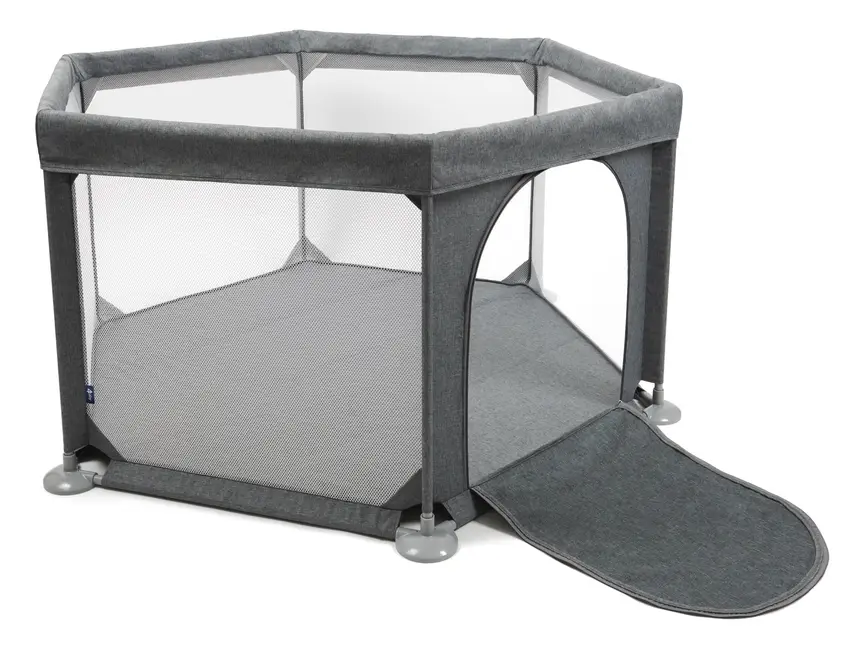
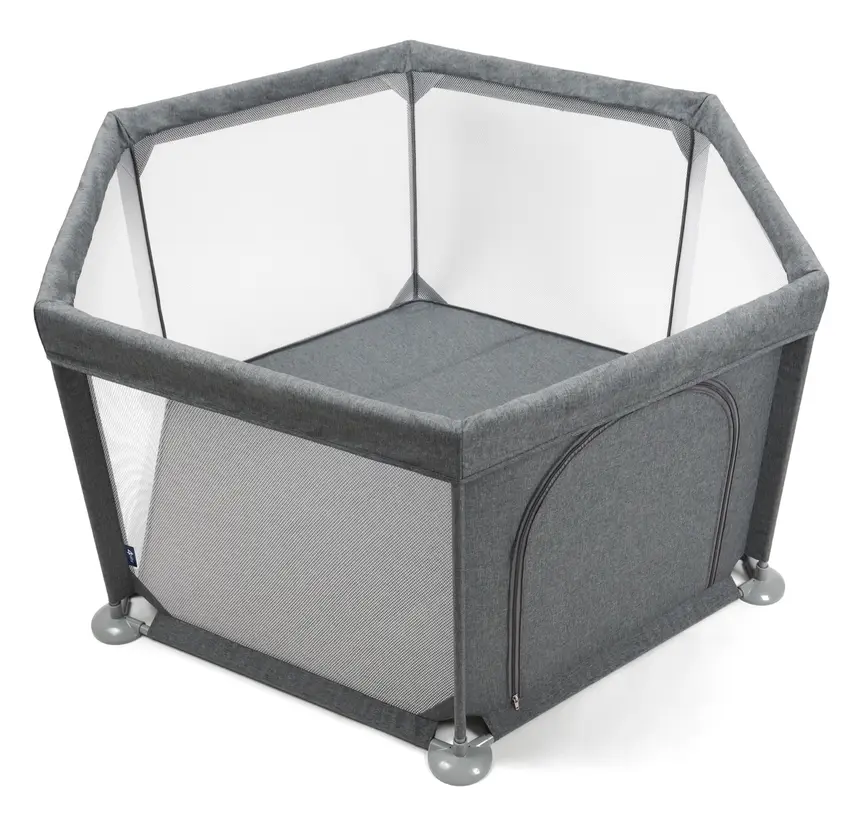
4baby Hex Playpen
A six-sided mesh playpen with a zip door. It packs into a carry bag.
Read our full review →How the main thermometer types differ
| Type | Where it reads | Possible benefits | Things to watch |
|---|---|---|---|
| Non-contact infrared forehead | Skin on the forehead | Fast, no skin contact, and may be used while a child sleeps | Distance, angle, sweat, drafts and recent outdoor activity can affect readings |
| Contact forehead | Skin on the forehead | Simple placement without using the ear or bottom | Follow the exact placement and wait time; skin readings can differ from other methods |
| Tympanic ear | Inside the ear | Quick when the tip is placed correctly | Small ears, wax or poor aim may affect the result |
| Digital thermometer used in the bottom | Rectum, the lower end of the bowel | Can give a useful body reading when used correctly | Needs gentle handling, cleaning and safe storage; never force it |
| Digital thermometer used under the arm | Skin in the armpit | Does not enter the body and may be easier with a young child | Correct placement and a still arm matter; readings may differ from other methods |
No single method suits every child or every situation. For a young baby, ask a doctor, nurse or health advice service which method to use. A clinician may choose a method based on age, symptoms and local practice.
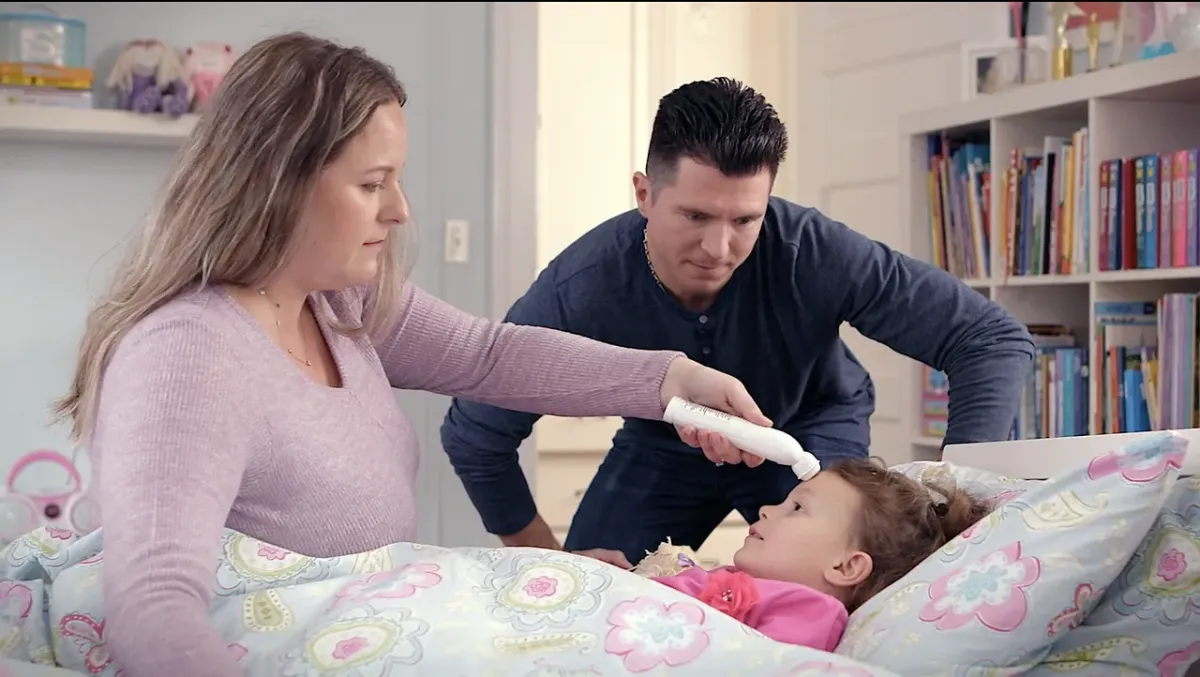
Using a non-contact forehead thermometer
Read the instructions for your exact model. Some devices measure the centre of the forehead. Others use a different spot. The correct distance also varies. Do not copy a distance from another device’s guide.
- Check if the instructions say to let the device and child adjust to the room.
- Make sure the forehead is dry. Hair, hats and creams can affect the result.
- Hold the thermometer at the distance and angle shown in its guide.
- Aim at the correct spot. Do not point at hair or clothing.
- Press the button once. Keep the device still until the reading appears.
- If the number seems unexpected, check your technique and the device guide. Repeat only as the guide allows.
- Clean the device as the maker says. Keep liquid away from the sensor unless the guide permits it.
A no-touch device is convenient. That does not mean every reading is correct. A cool draft, warm room, direct sun, sweaty forehead or wrong distance can change the result. If the number does not fit how your child looks, check your method. Get medical advice if you remain concerned.
Do not scan across the forehead unless the device instructions say to do this. Do not assume all models need the same distance or wait time. The guide for your device is the best source for its use.
Using an ear thermometer
An ear thermometer reads heat inside the ear. It must point towards the right part of the ear canal. A small change in angle can change the result. Follow the model’s instructions for your child’s age and for any covers.
Ear thermometers may be hard to use with a young baby. The ear canal is small, and the child may move. Some devices are not recommended for very young babies. Check the age guidance for your exact model.
- Use a clean cover if your model requires one.
- Do not push the tip into the ear.
- Follow the guide if it says to move the ear gently.
- Check the guide before use if your child has an ear problem.
- Ask a health professional for help if you cannot get a clear reading.
Do not compare an ear reading with a forehead reading as though they should match. Record which method you used. Tell the clinician if you changed methods during the illness.
Using a digital thermometer safely
A digital thermometer may be designed for one or more body sites. Check that your device allows the method you plan to use. Do not use a glass thermometer or a damaged device.
If a clinician recommends a bottom reading, ask them to show you how to do it safely. Use a thermometer made for that purpose. Use lubricant only if the device instructions advise it. Keep your child safe and hold the thermometer as directed. Insert only as far as the instructions say. Stop if there is resistance, pain or distress. Never force the tip.
Keep a thermometer used in the bottom separate from one used in the mouth or under the arm. Clean it as directed after each use. Store it out of children’s reach. Do not use it at another body site unless the maker says this is safe and it has been cleaned properly.
Underarm readings are often easier for parents. Place the tip against bare skin in the centre of the armpit. Hold the arm gently against the body until the device signals or the instructions say the reading is ready. A loose tip or moving arm can affect the result.
Do not put a thermometer in your child’s mouth unless it is designed for that use and your child can follow instructions. A young child may bite the device or move suddenly. Ask a health professional which method is right for your child.
Side by side: more health & safety gates to compare
Real products from our catalogue. We don't show star ratings or review counts; check the current price, stock and reviews on Amazon before you buy.

4baby Safety Gate
A low-cost pressure-mounted gate with a double lock. It opens both ways with one hand.

Braun Touchless and Forehead Thermometer
A forehead thermometer you can use with or without touching. It has a colour screen that changes with age.


Dreambaby Cosmopolitan Security Gate
A metal-and-timber pressure-fit gate that opens both ways and can stay open.
Fever and age: when to get help
A temperature of 38°C or above is commonly treated as a fever. A reading may be less clear if the method was not used correctly. If your baby is under three months and you think they may have a fever, seek urgent medical advice. Do not wait for a perfect reading if your baby seems unwell.
For older babies and children, look at the whole child. Contact a health professional if you are concerned, symptoms are getting worse, or you are unsure what to do. Follow local advice about urgent care.
Call emergency services if your child is very hard to wake, struggling to breathe, having a seizure, looking blue or grey, or seeming seriously unwell. Do not wait for another thermometer reading when these signs are present.
Offer fluids that suit your child’s age. Do not give medicine only to lower a number. Ask a doctor or pharmacist about medicines, doses and whether they suit your child. Do not give aspirin unless a doctor tells you to.
Healthdirect Australia advises seeking urgent medical help for a baby under three months with a temperature of 38°C or higher. Local care services can help you decide where to go. If you cannot reach your usual clinician and your baby seems unwell, use your local urgent care service.
Common mistakes that can mislead you
- Comparing different methods as if they match: forehead, ear, armpit and bottom readings can differ. Tell the clinician how you measured.
- Using the wrong distance: a non-contact device needs the distance stated in its own instructions.
- Measuring a sweaty forehead: dry it gently, then follow the device guide.
- Taking a reading just after a bath or outdoor play: let your child settle indoors for the time stated in the instructions.
- Changing the number yourself: do not add or subtract degrees to convert a reading.
- Taking many readings in a row: this can create more confusion. Check your method and ask for advice.
- Using an ear device outside its age guidance: check the instructions first.
- Forcing a digital thermometer: stop if there is resistance or pain.
- Trusting an alarm instead of your child: check the displayed number and your child’s condition.
- Delaying care to keep measuring: worrying symptoms need prompt help, whatever the reading.
Keeping the thermometer clean and ready
Follow the cleaning directions for the exact model. Some devices can be wiped. Some need a probe cover. Optical sensors may be damaged by liquid or a rough cloth. Do not submerge a thermometer unless its instructions clearly allow it.
Check the battery and display from time to time. Store the device in its case, away from heat and moisture. Keep it out of children’s reach. If it has been dropped, cracked or wet, check the maker’s advice before using it again. Replace a damaged device.
If you are monitoring your child, write down the time, reading, method and symptoms. This can help you explain what happened to a clinician. Do not let record keeping delay a call for help.
Guidance in Australia, the UK, the US and Canada
Trusted health services can give local advice. In Australia, Healthdirect Australia and Pregnancy, Birth and Baby provide health information. The Therapeutic Goods Administration (TGA) regulates medical devices in Australia. In the UK, the National Health Service (NHS) gives advice on fever in children. The Medicines and Healthcare products Regulatory Agency (MHRA) oversees medical devices. In the US, the Food and Drug Administration (FDA) oversees medical devices. The American Academy of Pediatrics (AAP) shares child health guidance through HealthyChildren.org. In Canada, Health Canada regulates medical devices. The Canadian Paediatric Society (CPS) shares parent information through Caring for Kids.
These organisations may give different advice about age, measurement methods and care pathways. Follow advice for your location and your child. If a clinician recommends a specific method, use it and say which device you used.
| Place | Official bodies and health groups | Useful next step |
|---|---|---|
| Australia | Therapeutic Goods Administration (TGA); Healthdirect Australia; Pregnancy, Birth and Baby | Use their health information and contact a health professional for advice. |
| United Kingdom | Medicines and Healthcare products Regulatory Agency (MHRA); National Health Service (NHS) | Read NHS fever advice and use NHS services for care guidance. |
| United States | Food and Drug Administration (FDA); American Academy of Pediatrics (AAP) | Use HealthyChildren.org for parent guidance and contact your child’s clinician. |
| Canada | Health Canada; Canadian Paediatric Society (CPS) | Use Caring for Kids and seek care through local health services. |
Health advice is different from product approval. A thermometer should have clear instructions and meet the rules where it is sold. Ask a pharmacist or clinician if you are unsure whether a device suits your child.
More options, from budget to premium
Real products from our catalogue. We don't show star ratings or review counts; check the current price, stock and reviews on Amazon before you buy.
 Reviewed
Dreambaby Freedom Security Gate
A low-cost metal gate that opens both ways. A stopper can make it open one way only, for stairs.
Read our full review →
Dreambaby Freedom Xtra-Wide Hallway Gate
A wide metal gate for hallways. It opens both ways and can stay open.

Dreambaby Freedom Glide N Hide Retractable Gate
A roll-away mesh gate that fits gaps from 60 to 140 cm and hides away when open.
Frequently asked questions
Which thermometer is best for a newborn?
Ask your doctor, midwife, nurse or health advice service which method to use. Newborns need prompt assessment when fever is suspected. Do not rely on a no-touch reading alone if your baby seems unwell.
Is a forehead thermometer accurate?
It can give a useful reading when used as directed. Sweat, drafts, room changes, distance and angle can affect it. Check an unexpected result with careful technique. Seek advice if you remain concerned.
Can I use an ear thermometer on a baby?
Check the age guidance for the exact model. Some ear devices are not suited to very young babies. Small ear canals and movement can also make placement difficult.
Should I take three readings and use the highest?
There is no rule that suits every device. Follow the thermometer instructions. If results vary, check your technique and ask a health professional what to do.
Can I use a forehead thermometer while my child sleeps?
Many no-touch models can be used without touching the child. Follow the device directions. Do not delay care if your child has worrying symptoms.
What temperature counts as a fever?
A reading of 38°C or above is commonly considered a fever. The method and your child’s age matter. For a baby under three months, seek urgent medical advice if fever is suspected.
Should I subtract a degree from an armpit reading?
No. Do not adjust the number yourself. Share the reading and say where you measured it. A health professional can interpret it alongside your child’s age and symptoms.
When should I call emergency services?
Call if your child is struggling to breathe, very hard to wake, having a seizure, looking blue or grey, or seeming seriously unwell. Follow your local emergency guidance.
Can I use one thermometer for different body sites?
Only if the maker says it is suitable for those sites. Clean it as directed. Keep a device used in the bottom separate from one used in the mouth or under the arm.
What should I tell a health professional?
Share your child’s age, symptoms, temperature, time and measurement method. Say which type of thermometer you used. Tell them if you repeated the reading.
Disclaimer: This article gives general information, not medical advice. It cannot diagnose or treat illness. Follow your thermometer instructions and contact a health professional when you are worried. If your child may be seriously unwell, seek urgent care.
Affiliate disclosure: BabyGearFinder may earn a commission from qualifying purchases. This does not change the price you pay.
Sources
Related guides
More Health & Safety Gear →
Non-Contact Forehead and Ear Thermometers: How to Take a Baby's Temperature Safely

Baby Nasal Aspirators: Electric, Bulb and Mouth-Suction Types Compared

Baby Bath Tubs with Thermometers and Newborn Slings: A Safe Bath Time Guide
