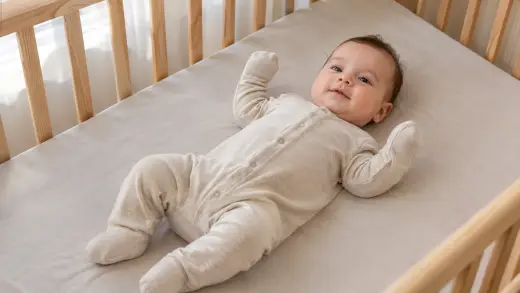
Organic Cotton vs Bamboo Viscose Babywear: Breathability, Temperature, and Eczema Care
Organic cotton vs bamboo viscose for babies: breathability, temperature control, eczema care, washing tips, and safe sleep advice.
On this page
- Key points
- What organic cotton and bamboo viscose actually are
- Breathability and keeping your baby at a safe temperature
- Organic cotton vs bamboo viscose: side-by-side comparison
- Caring for eczema-prone and sensitive baby skin
- Dressing your baby safely by age and stage
- Safe sleep and clothing rules in Australia, the UK, the US and Canada
- How to choose and wash baby clothes
- Common mistakes parents make
- Frequently asked questions
- Sources
Short answer: Both organic cotton and bamboo viscose are soft, breathable fabrics for babies. Organic cotton is strong, easy to wash hot, and great for daily wear. Bamboo viscose feels silky and cool, which many babies with dry or itchy skin like. Neither fabric cures eczema, and safe dressing matters more than the label.
Health groups in Australia, the UK, the US and Canada agree on the main rule. Dress your baby in light, breathable layers so they do not get too hot.
Key points
- Organic cotton: strong, soft, and easy to wash in hot water. It handles stains and frequent laundry well.
- Bamboo viscose: silky, stretchy, and cool to the touch. It pulls sweat off the skin fast, but needs gentler washing.
- Temperature: fabric thickness and room heat matter more than the plant on the tag.
- Eczema care: smooth, loose clothes stop rubbing and sweat build-up. They support skin care, but do not replace cream or medical advice.
- Safe sleep: keep your baby's head uncovered and avoid thick fleece or loose blankets.
What organic cotton and bamboo viscose actually are
Parents often see "organic cotton" and "bamboo" next to each other in baby shops. Both start as plants, but they are made in very different ways.
How organic cotton is made
Cotton is a natural plant fibre. It grows as fluffy white bolls around the cotton seed. Those fibres are cleaned, combed, and spun into soft yarn.
Organic cotton is grown without synthetic pesticides or artificial fertilisers. Many makers also use gentler dyes and skip harsh bleaches. The finished cloth is still cotton, just grown and finished with fewer farm and factory chemicals.
How bamboo viscose is made
Most "bamboo" baby clothes are actually bamboo viscose, also called bamboo rayon. Bamboo stalks are hard and woody, not fluffy like cotton. Factories crush the woody pulp and dissolve it in a chemical bath.
The liquid pulp is pushed through tiny holes to form long, smooth threads. Those threads are washed and spun into soft fabric. Because the thread is long and round, bamboo viscose feels smoother and shinier than cotton.
Some brands sell bamboo lyocell, which uses a closed-loop process that recycles water and solvents. Still, most babywear on shop shelves is standard bamboo viscose. Check the care tag inside the garment to see the exact fibre name.
Breathability and keeping your baby at a safe temperature
Babies cannot control their body heat as well as older children or adults. They heat up fast in a warm room or under heavy clothes. They also lose heat quickly in cold air.
Overheating is a known risk factor for sudden infant death. This is why Red Nose in Australia, The Lullaby Trust in the UK, the American Academy of Pediatrics (AAP) in the US, and Health Canada all warn against too many layers.
How breathability works
Breathable fabric has tiny spaces between the threads. Air can move in and out through those spaces. Warm air and damp sweat can escape instead of getting trapped next to the skin.
Both organic cotton and bamboo viscose breathe much better than polyester or nylon. Synthetic fabrics like polyester fleece trap heat and sweat. That trapped heat can make a baby sweaty, cranky, and unsafe during sleep.
How organic cotton handles heat and sweat
Organic cotton lets air flow freely when it is knitted or woven lightly. Think of a thin cotton singlet, muslin wrap, or jersey sleepsuit. Cotton also soaks up moisture very well.
One catch is that cotton holds onto that moisture for a while. If a baby sweats a lot in thick cotton, the damp cloth can feel cool or clammy against their skin later.
How bamboo viscose handles heat and sweat
Bamboo viscose also lets air move through easily. It pulls sweat away from the skin and lets it dry quickly. Many parents notice that bamboo viscose feels cool when you first touch it.
That cool feel can help babies who run warm or live in humid weather. Still, bamboo viscose is not magic air conditioning. A thick, double-layered bamboo sleepsuit will still make a baby too hot in a warm room.
Weight and weave matter most
Do not judge a garment by the plant name alone. Look at how thick the cloth is and how tightly it is knitted.
- Single jersey: light and stretchy, good for daily tops, onesies, and warm nights.
- Muslin: open, airy weave, great for swaddles and summer covers.
- Interlock or French terry: thicker knit, better for cool days and winter layering.
- Quilted or padded fabric: traps more heat, so only use in cold rooms.
Organic cotton vs bamboo viscose: side-by-side comparison
Here is how the two fabrics compare for everyday baby care. Both work well when you pick the right thickness for the weather.
| Feature | Organic cotton | Bamboo viscose |
|---|---|---|
| How it feels | Soft, matte, and familiar like a classic tee | Very smooth, silky, and cool to the touch |
| Airflow and breathability | High in light knits and muslin weaves | High in light knits; drapes softly over skin |
| Sweat and moisture | Absorbs sweat well, dries at medium speed | Pulls moisture off skin and dries fast |
| Warmth | Good all-rounder; layers easily in winter | Feels cooler at first; needs layers in cold weather |
| Eczema and sensitive skin | Gentle and breathable; wash well to stay soft | Very smooth surface reduces rubbing on sore patches |
| Washing and stains | Handles warm or hot washes and frequent laundry | Needs cool or warm gentle wash; can pill if washed rough |
| Wear and tear | Strong, keeps shape well, lasts for hand-me-downs | Stretches out faster and can snag on zips or velcro |
| Drying | Can go in a warm dryer if care tag allows | Best air-dried or dried on very low heat |
Caring for eczema-prone and sensitive baby skin
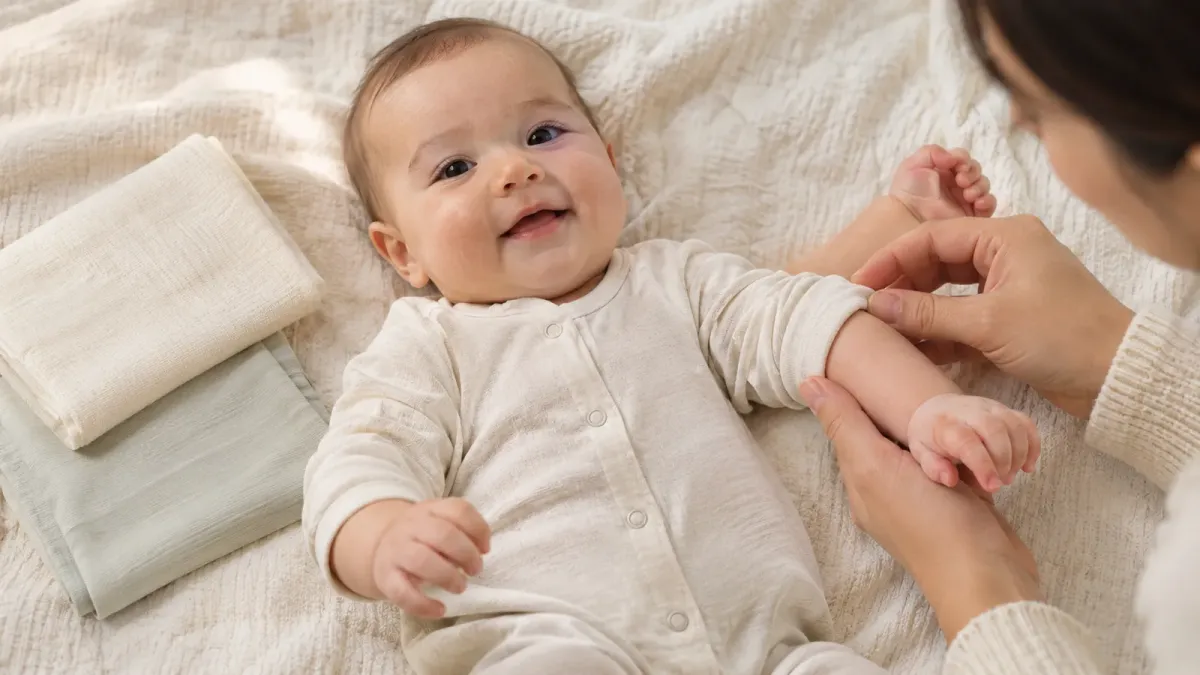
Eczema is common in babies. It makes the skin dry, red, rough, and very itchy. Flare-ups often happen on the cheeks, arms, legs, and behind the knees.
Clothing does not cause eczema, and no fabric can cure it. However, the wrong clothes can scratch tender skin and trap sweat. Sweat and heat are common eczema triggers.
Why smooth, breathable fabric helps
Rough fibres poke and rub against dry skin. Wool, stiff denim, and scratchy lace can quickly make a rash worse. Polyester and acrylic can trap heat and sweat, which adds to the itch.
Both organic cotton and bamboo viscose are gentle choices for eczema-prone skin. Bamboo viscose has very smooth, round threads, so it glides over dry patches with little friction. Light organic cotton also feels calm on the skin and lets air reach the rash.
Look past the fabric name
Even the softest cloth can irritate a baby if the garment is badly made. Check these details before you buy:
- Seams: thick inside seams can rub sore skin. Look for flat seams or put a soft singlet underneath.
- Tags: stiff neck tags scratch. Cut them off neatly or pick tagless prints.
- Cuffs and waistbands: tight elastic leaves red marks and traps sweat. Pick loose, soft bands.
- Zips: metal zips can feel cold or pinch skin. Choose covered zips with a fabric tab at the neck.
- Dyes and prints: heavy plastic chest prints stop air flow and feel stiff. Plain or lightly dyed cloth is kinder.
Daily skin care matters more than fabric
If your baby has eczema, clothing is only one small helper. Follow medical advice from your doctor, child health nurse, or pharmacist.
The NHS in the UK, Raising Children Network in Australia, and the AAP in the US share simple bathing tips for sensitive skin. Give short baths in lukewarm water, not hot water. Skip bubble bath and scented soap, as these dry out the skin. Pat the skin dry gently with a soft towel instead of rubbing.
Put on a plain, fragrance-free moisturiser while the skin is still slightly damp. Wait a few minutes for cream to soak in before dressing your baby. Light, breathable cotton or bamboo clothes over moisturised skin help lock comfort in without trapping heat.
Washing clothes for sensitive skin
Leftover soap on clothes can sting sensitive skin. Keep your laundry routine simple:
- Wash all new baby clothes before your baby wears them for the first time.
- Use a mild, fragrance-free liquid detergent. Liquid rinses out cleaner than powder.
- Use only the amount listed on the bottle. Extra soap stays trapped in the fabric.
- Run an extra rinse cycle if your baby has a bad flare-up.
- Skip fabric softeners and scented dryer sheets. They coat fibres with waxy fragrance that blocks breathability and can irritate skin.
Dressing your baby safely by age and stage
A baby's clothing needs change fast in the first year. What works for a sleepy newborn will not suit a crawling nine-month-old.
Newborn (birth to 3 months)
Newborns spend most of their time lying down and sleeping. They need soft, simple clothes that are easy to take on and off for nappy changes.
Two-way zip sleepsuits in light organic cotton or bamboo viscose make night changes quick. Avoid outfits with hoods, stiff collars, or big buttons on the back. Buttons on the back press into a baby who sleeps on their back.
In the first days, a newborn may need one more light layer than you are wearing. Always remove hats and beanies as soon as you come indoors and before sleep. Babies lose extra heat through their heads, so a hat indoors can make them overheat.
Younger baby (3 to 6 months)
At this age, babies kick their legs more and start trying to roll. Tight clothes can restrict hip and leg movement.
Choose roomy sleepsuits and stretchy leggings that let your baby bend their knees up and out freely. If your baby is showing signs of rolling, stop wrapping them for sleep. Move to a safe baby sleeping bag with the arms out.
Many sleeping bags come in organic cotton or bamboo viscose shells. Check the neck hole and armholes. They must be snug enough that your baby cannot slip inside the bag.
Older baby (6 to 12 months)
Babies at this stage sit, roll, crawl, and pull up to stand. Clothes now face floor friction, food spills, and constant movement.
Organic cotton often wins during the day here because it stands up to crawling on carpet and frequent hot washes. Bamboo viscose can snag or pill faster on rough floors, though it still works nicely for sleepwear.
Keep feet bare indoors when the floor is safe and warm. Bare feet help babies grip the floor as they learn to crawl and stand. If the floor is cold, use socks with non-slip grips on the soles.
Toddler (12 months and up)
Toddlers run, climb, and play outdoors. Breathable layers are still the best plan because active toddlers warm up fast.
Organic cotton tees and shorts handle rough play and food stains easily. Bamboo viscose pyjamas remain popular for warm nights or toddlers with itchy skin. For sleepwear, check that clothes fit safely and do not have long loose ties or ribbons.
Safe sleep and clothing rules in Australia, the UK, the US and Canada
Official safe sleep advice is very consistent across all four countries. You do not need to buy a special brand of clothing to meet these rules. You just need to dress your baby simply and keep the cot clear.
Here is what the leading bodies say:
- Australia: Red Nose, Pregnancy, Birth and Baby, and Product Safety Australia (ACCC).
- UK: The Lullaby Trust, the NHS, and the Office for Product Safety and Standards (OPSS).
- US: The American Academy of Pediatrics (AAP) and the U.S. Consumer Product Safety Commission (CPSC).
- Canada: Health Canada and the Canadian Paediatric Society (Caring for Kids).
| Safety topic | Australia | UK | US | Canada |
|---|---|---|---|---|
| Head coverings | No hats or bonnets for sleep | No hats indoors or for sleep | No hats indoors after first hours | No hats for sleep |
| Cot bedding | Clear cot; no loose blankets or pillows | Clear cot; firm flat mattress, no loose bedding | Bare crib; no loose blankets or bumpers | Clear crib; no blankets, quilts, or pillows |
| Room temperature | Dress for the room; avoid overheating | Aim for 16 to 20°C as a guide | Comfortable room for a lightly dressed adult | Comfortable room; do not overdress |
| Weighted sleepwear | Not recommended | Not recommended | AAP and CPSC warn against weighted sleepwear | Not recommended |
| Sleeping bags | Safe if fitted neck, no hood, right size | Safe if well fitted, no hood, right TOG | Wearable blanket preferred over loose covers | Safe sleep sack if fitted properly |
How to check if your baby is too hot or too cold
A baby's hands and feet often feel cool. That is normal because their circulation is still developing. Do not add more clothes just because their hands feel cold.
Instead, touch your baby's tummy, chest, or the back of their neck. Their skin there should feel warm and dry, not hot or sweaty. If your baby has damp hair, a sweaty neck, flushed cheeks, or rapid breathing, remove a layer right away.
Fire safety and drawstrings
All four countries also regulate children's nightwear and cords on clothing. Loose sleepwear can catch fire more easily near heaters or open flames, so many nightwear rules call for snug-fitting cotton or bamboo pyjamas or clear fire-hazard tags.
Avoid baby and toddler clothes with long drawstrings around the neck or waist. Cords can catch on cot corners, car seat clips, or playground gear. Check snaps and buttons often to make sure none are loose, as small parts are a choking hazard.
How to choose and wash baby clothes
You do not need a huge wardrobe. A small pile of well-chosen clothes in the right size is safer and easier to manage.
Reading the label
Look at the fibre mix on the tag. Many organic cotton and bamboo viscose garments include a small amount of elastane or spandex. A tiny bit of stretch helps pull sleeves over chubby arms and keeps a snug fit for pyjamas.
If your baby has very sensitive skin, check that the garment is mostly natural or plant-derived fibre, rather than mostly polyester. Also look for trusted textile safety labels that test for harmful dyes and finishes.
Understanding TOG ratings on sleepwear
Some sleeping bags and sleepsuits list a TOG number. TOG stands for Thermal Overall Grade. It is a simple measure of how much warmth a fabric holds.
- 0.2 to 0.5 TOG: very light, made for hot summer rooms.
- 1.0 TOG: light to medium, good for mild rooms.
- 2.5 TOG: padded warmth, made for cool winter rooms.
The fabric inside a sleeping bag can be organic cotton or bamboo viscose, while the filling is often cotton or polyester wadding. Always follow the maker's layer guide and still check your baby's chest or neck.
Washing organic cotton vs bamboo viscose
Babies make messy stains from milk, food, and nappy leaks. How you wash the clothes affects how long they last.
- Organic cotton: handles warm or hot water well. Hotter washes break down poo stains and germs better. Cotton can shrink a little on the first wash, so avoid buying it too small.
- Bamboo viscose: prefers a cold or warm gentle cycle inside a laundry bag. Zip up sleepsuits and fasten snaps before washing so they do not snag the soft cloth.
If a bamboo garment gets a stain, rinse it in cold water right away and rub in a plain soap bar before washing. High dryer heat can shrink or wear out bamboo viscose quickly, so hang it in the shade when you can.
Smart budget tips
Organic cotton and bamboo viscose often cost more than basic cotton. You can keep costs down without giving up comfort.
- Use bamboo viscose for sleepwear or base layers if your baby runs warm or has eczema.
- Use sturdy organic cotton or plain cotton for daytime outfits that get messy.
- Buy second-hand cotton clothes, which are already washed soft and cost much less.
- Skip outfits with lots of frills, bows, or fake pockets. Simple two-way zip suits get worn the most.
Common mistakes parents make
New parents often worry about their baby getting cold. That worry leads to the most common dressing mistakes.
1. Over-dressing indoors
Putting a singlet, a thick onesie, socks, a cardigan, and a heavy sleeping bag on a baby in a warm room is too much. A simple rule from health services is to dress your baby in about the same number of layers as you would wear, or one extra light layer for a newborn.
2. Judging warmth by hands and feet
Cold fingers do not mean a cold baby. Adding mittens and thick layers because of cool hands can push your baby's core temperature too high.
3. Leaving hats on for sleep
A beanie looks cute in newborn photos, but take it off before your baby sleeps. Hats can slip over a baby's face or trap too much heat.
4. Trusting "bamboo" or "organic" marketing blindly
Some items labelled "bamboo" are mostly polyester with only a small splash of bamboo viscose. Others are thick, fleece-lined suits that trap heat. Always read the full fibre breakdown on the care tag.
5. Using fabric softener on eczema clothes
Fabric softener makes towels and clothes smell fresh, but it leaves a chemical film on the cloth. That film reduces breathability and often triggers skin rashes.
6. Buying clothes too big for sleep
Loose necklines or oversized sleeping bags are unsafe. A baby can wriggle down inside an oversized neck opening and cover their face. Buy the right size for your baby's current weight and length.
Frequently asked questions
Is bamboo viscose better than organic cotton for eczema?
Both can work well, and neither cures eczema. Bamboo viscose feels smoother, so it rubs less on raw or dry skin. Organic cotton is easier to wash hot to remove creams and germs. Many parents try one of each to see which their baby's skin likes best.
Does bamboo viscose keep a baby cooler in summer?
Light bamboo viscose feels cool when you touch it and dries sweat fast. That helps in warm or sticky weather. Still, a thin organic cotton singlet or muslin wrap also breathes very well. Keep your baby in one light layer and out of direct sun.
Is bamboo babywear actually natural?
Bamboo starts as a natural plant, but turning hard bamboo into soft cloth takes chemical processing. The finished fabric is called bamboo viscose or bamboo rayon. It is a semi-synthetic fibre, not a raw plant fibre like cotton or linen.
Can I wash bamboo baby clothes in hot water?
Most bamboo viscose labels say to use cold or warm water on a gentle cycle. Hot water and high dryer heat can shrink the fabric and make it pill or lose its stretch. If you need hot washes for heavy messes, organic cotton holds up better.
How many layers should my baby wear to sleep?
Dress your baby for the room temperature, not the season outside. In a mild room, a light cotton or bamboo sleepsuit under a properly fitted sleeping bag is often enough. Feel your baby's chest or the back of their neck to check they are warm, not sweaty.
Are cotton and bamboo blends safe for babies?
Yes. Many baby clothes mix cotton and bamboo viscose, or add a small amount of elastane for stretch. This often gives you the softness of bamboo with the strength of cotton. Just check that the fabric still feels light and breathable.
Do I need organic cotton, or is regular cotton fine?
Regular cotton is also breathable, soft, and safe for most babies. Organic cotton is grown without synthetic pesticides, which some parents prefer for environmental reasons or very sensitive skin. Whichever you pick, wash new clothes before use with mild, fragrance-free detergent.
Sources
- Red Nose Australia – What is a safe sleeping environment
- Red Nose Australia – How to choose a safe sleeping bag
- Pregnancy, Birth and Baby – Babies in hot weather
- The Lullaby Trust – How to dress your baby for sleep
- The Lullaby Trust – Room temperature
- NHS – Washing and bathing your baby
- American Academy of Pediatrics (US) – A parent's guide to safe sleep
- Caring for Kids (Canadian Paediatric Society) – Safe sleep for babies
Related guides
More Health & Safety Gear →
Merino Wool vs Organic Cotton vs Bamboo Viscose Sleep Sacks: How to Choose
Managing Baby Eczema: Simple Skin Care, Helpful Tools, and When to Get Help

Non-Contact Forehead and Ear Thermometers: How to Take a Baby's Temperature Safely