














Non-Contact Forehead and Ear Thermometers: How to Take a Baby's Temperature Safely
How non-contact forehead and infrared ear thermometers work, which type suits your baby's age, how to get an accurate reading, and button battery safety.
On this page
- Key points
- What infrared forehead and ear thermometers are
- How to choose: forehead vs ear vs digital stick
- Which thermometer to use at each age stage
- What counts as a fever, and when to get medical help
- Understanding calibration, room acclimation and mode settings
- How to get an accurate reading, step by step
- Keeping the infrared sensor lens clean
- Safety standards, medical device rules and button batteries across AU…
- Smart fever tracking apps vs a simple paper log
- Seven common mistakes parents make with thermometers
- Frequently asked questions
- Sources
Short answer: A simple digital thermometer under the arm is the most reliable choice in the first months of life. Some doctors also suggest a rectal thermometer for young babies. Infrared ear thermometers are too big for tiny newborn ear canals. They are usually for babies over 6 months old. Non-contact forehead thermometers are handy for a quick check on a sleeping child. However, sweat, cold rooms and holding the device too far away can change the number. Always double-check an odd forehead reading with an underarm digital thermometer. Also check the battery door on any thermometer. If it uses a flat round button battery, a screw must hold the cover shut.
This guide brings together practical advice from health and product safety groups in four countries. In Australia, these are Healthdirect, Pregnancy, Birth and Baby, and Product Safety Australia (ACCC). In the UK, they are the NHS and the Office for Product Safety and Standards (OPSS). In the US, they are the American Academy of Pediatrics (AAP) and the Consumer Product Safety Commission (CPSC). In Canada, they are the Canadian Paediatric Society and Health Canada.
Key points
- Newborns under 3 months: A fever in a baby under 3 months old is an urgent medical sign. If their temperature is 38°C (100.4°F) or higher, see a doctor or go to hospital straight away.
- Best all-round tool: A plain digital stick thermometer used in the armpit is cheap and safe. It works from birth in every country.
- Ear thermometers: These are fast and popular for older babies, toddlers and kids. They are not reliable for newborns. They also fail when the ear is full of wax or sore from an ear infection.
- Non-contact forehead thermometers: These are great for checking a sleeping child without waking them. You can also check several family members without swapping probe covers. Treat the number as a first check, not the final word.
- Room and skin wait time: Keep the thermometer in the room where you use it. Wait 15 to 30 minutes after your child comes in from the cold, heat or a warm bath. Then read their forehead.
- Button battery danger: Many small thermometers use coin or button batteries. Swallowing one can cause life-threatening internal burns in two hours. Only buy devices with a screwed-shut battery door.
What infrared forehead and ear thermometers are
Every warm object gives off invisible heat waves called infrared energy. An infrared thermometer has a small lens inside the tip. This lens catches the heat energy. It turns that heat into a temperature reading on a screen in one or two seconds.
There are two common family styles:
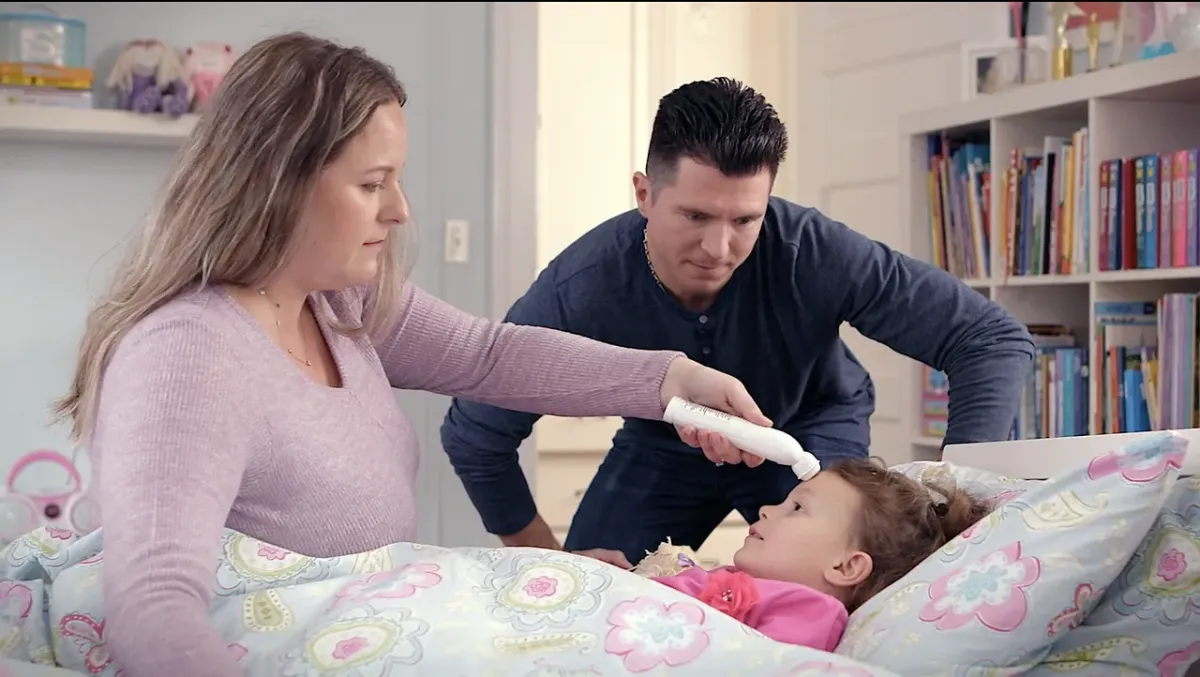
- Non-contact (touchless) forehead thermometers: You hold the sensor a few centimetres from the middle of your child's forehead or temple. A small sensor measures the heat coming off the skin above the temporal artery. This is a blood vessel that runs across the forehead.
- Infrared ear (tympanic) thermometers: You place a small cone-shaped tip gently inside the opening of the ear canal. The lens reads the heat coming from the eardrum. Medical staff call the eardrum the tympanic membrane. It shares a blood supply with the part of the brain that controls body temperature.
Both are different from a standard digital stick thermometer. A stick thermometer has a metal tip. The tip must touch the skin under the arm, under the tongue, or inside the bottom. You hold it there for 10 to 60 seconds so it warms up to the body's temperature.
A fourth type is a contact temporal artery thermometer. You swipe this thermometer gently across the skin of the forehead. It also uses an infrared sensor. Most of the care and accuracy rules in this guide apply to it too.
Types of thermometers you should never use
Health authorities in Australia, the UK, the US and Canada warn parents to avoid two older types of thermometers:
- Glass mercury thermometers: Glass can snap easily. Mercury is a poisonous liquid metal if breathed in or touched. Most countries have phased these out of shops.
- Plastic fever strips and dummy (pacifier) thermometers: Forehead colour-change strips only show skin warmth. They do not show true body temperature. Dummy thermometers take too long and fail if your baby opens their mouth. The NHS, Healthdirect and the AAP say not to rely on either type.
How to choose: forehead vs ear vs digital stick
Many parents keep two thermometers in the medicine cupboard. They use an infrared model for quick checks at night. They keep a basic digital stick thermometer to confirm the number if the child seems unwell. The table below compares the four main options side by side.
| Feature | Non-Contact Forehead | Infrared Ear (Tympanic) | Contact Forehead (Swipe) | Digital Stick (Underarm / Rectal) |
|---|---|---|---|---|
| How it works | Reads heat a few cm from the centre of the forehead. | Reads heat from the eardrum inside the ear canal. | Glides across the forehead skin over the blood vessel. | Metal tip touches skin in the armpit, mouth or bottom. |
| Reading speed | About 1 to 2 seconds. | About 1 to 2 seconds. | About 2 to 3 seconds. | About 10 to 60 seconds depending on the model. |
| Best age range | Any age for a quick check. Confirm with a stick thermometer in young babies. | 6 months and older. Newborn ear canals are too narrow. | 3 months and older, or as a quick first check. | Birth onwards. Use under the arm, or rectally if your doctor says to. |
| Wakes a sleeping child? | No, if you turn the beep off. | Often yes. You must gently pull the ear to aim the tip. | Sometimes, as the sensor touches the skin. | Usually yes. You must undo clothes and hold the arm still. |
| Extra ongoing costs | None. Just replace the batteries. | Disposable plastic probe covers on most models, plus batteries. | None. Wipe it clean between uses and replace batteries. | None. Wash with cool soapy water or an alcohol wipe. |
| What can throw the reading off | Sweat, hair, draughts, cold rooms, holding it too far away, or sun. | Earwax, a curved or tiny ear canal, an ear infection, or a warm pillow. | Sweat, skin creams, hair, or a very hot or cold room. | Underarm: loose hold or clothes in the way. Mouth: hot or cold drinks. |
| Best role in the home | Fast night check without waking a resting toddler or child. | Quick everyday reading for babies over 6 months and wriggly toddlers. | Gentle check for babies who dislike ear probes or underarm holds. | Reliable backup to confirm a fever before calling the doctor. |
Health & Safety Gates worth a look
Real products from our catalogue. We don't show star ratings or review counts; check the current price, stock and reviews on Amazon before you buy.

Cherub Baby 4-in-1 Ear and Forehead Thermometer
2-in-1 thermometer

Cherub Baby Ear & Forehead Thermometer
Reads the ear or forehead in about 1 second, with a colour fever light and a fever alarm.
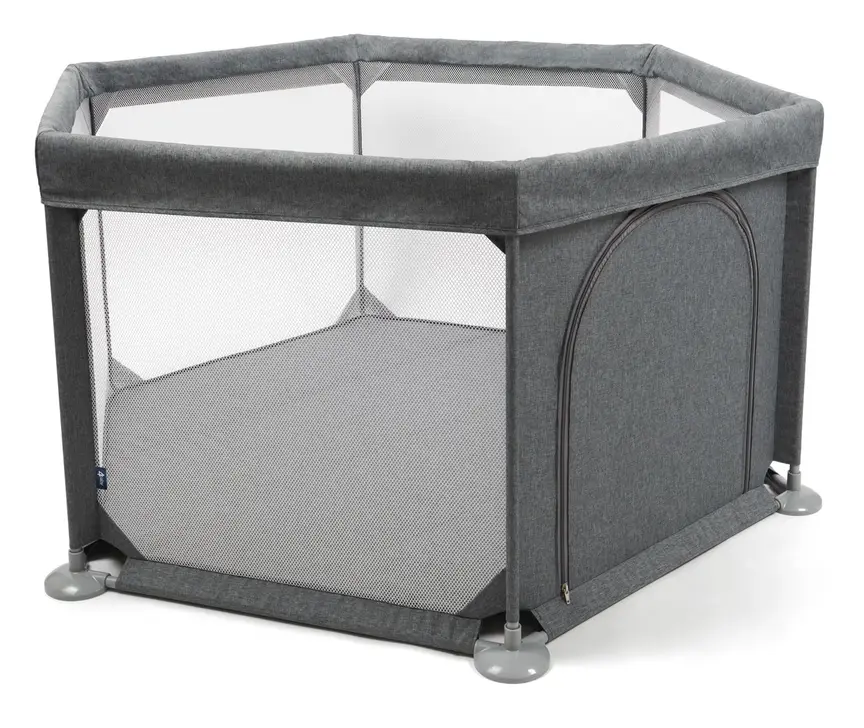
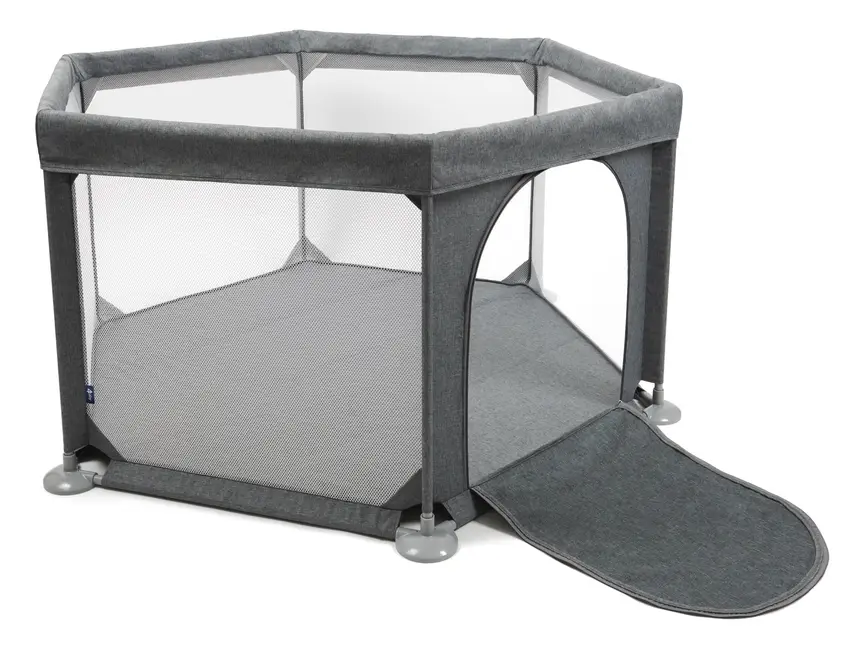
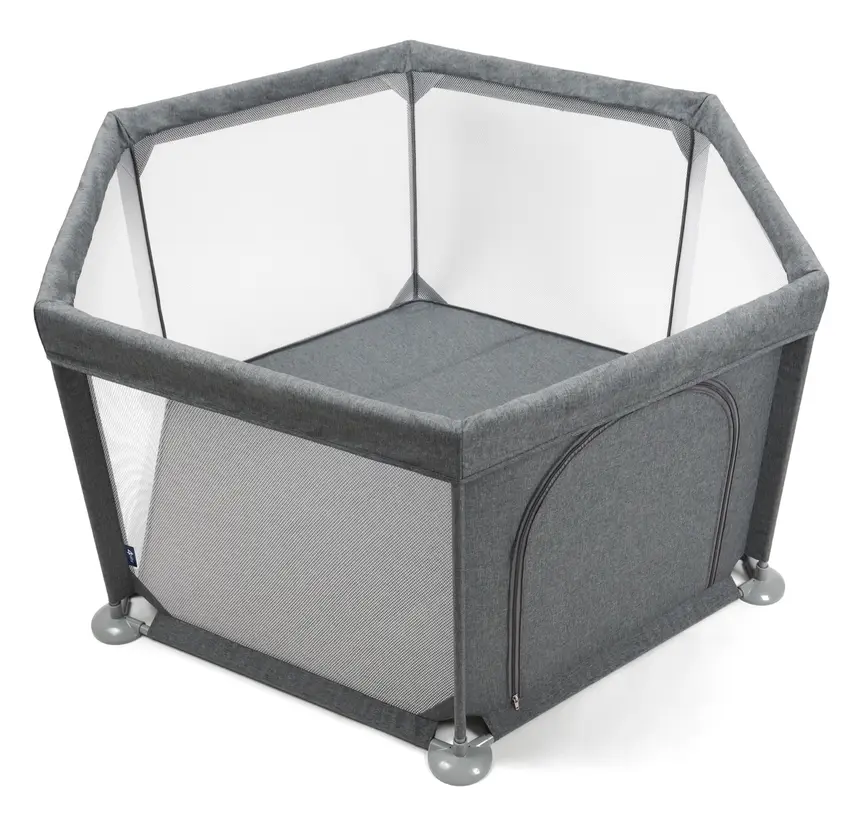
4baby Hex Playpen
A six-sided mesh playpen with a zip door. It packs into a carry bag.
Read our full review →
4baby Safety Gate
A low-cost pressure-mounted gate with a double lock. It opens both ways with one hand.
Which thermometer to use at each age stage
A baby's body and ear canal change fast in the first five years. Health services in different countries give slightly different advice for the first months. The main difference is whether parents use the armpit or the bottom. Here is how to match the method to your child's age.
Newborns: birth to 3 months
In the first three months, a baby's immune system is still brand new. Doctors need an accurate number. Any fever of 38°C (100.4°F) or higher needs a medical check right away.
- Australia and the UK: Healthdirect, Pregnancy, Birth and Baby, and the UK NHS recommend a digital thermometer in the armpit (axilla). It is safe and simple. It cannot hurt the baby.
- The US and Canada: The AAP and the Canadian Paediatric Society say a digital rectal thermometer gives the truest reading for babies under 3 months. They also allow an armpit check as a safe first option. Never use a rectal thermometer unless a nurse, midwife or doctor has shown you how. Label it clearly so nobody ever puts it in a mouth.
- What to avoid under 3 months: Do not rely on an ear thermometer. A newborn's ear canal is tiny and curved. The probe reads the cooler wall of the ear canal instead of the eardrum. Do not rely on a non-contact forehead thermometer alone either. If it looks high, check under the arm with a digital stick thermometer. Do the same if it looks normal but your baby seems unwell.
Babies: 3 to 6 months
At this stage your baby has stronger neck control. They start rolling and may push your hand away.
- Digital underarm thermometer: This is still the top choice in Australia and the UK. It is also widely used in the US and Canada. Tuck the tip high into the dry armpit against bare skin. Fold your baby's arm snugly across their chest.
- Forehead thermometers: These are useful for a night check while your baby sleeps in their cot. Take an underarm reading if the forehead number is near 38°C. Also check under the arm if your baby feels hot, looks flushed or acts grumpy.
- Ear thermometers: Most makers and health bodies say to wait until 6 months. By then, the ear canal is wide enough for the tip to point straight at the eardrum.
Older babies and toddlers: 6 months to 4 years
Once your baby passes 6 months, you have more choices. Toddlers often hate sitting still with an arm pinned down for 30 seconds. Speed matters at this age.
- Infrared ear thermometer: This is very handy from 6 months upwards. It takes about a second, so a wriggly toddler barely notices. Do not use the ear your child has been lying on against a warm mattress or pillow.
- Digital underarm thermometer: This is still reliable at any age. Sit your child on your lap for a cuddle while it reads.
- Non-contact forehead thermometer: This is handy for quick checks during the day or night. Keep the forehead dry and brush any hair back.
- Why not the mouth yet? Children under 4 or 5 years old struggle to keep a stick thermometer sealed under their tongue. They often bite it or open their mouth.
School-age children: 5 years and over
By around age 4 or 5, most children can hold a digital stick thermometer under the tongue. They must keep their lips closed while it reads. Ear, forehead and underarm readings all work well too. Has your child just had a warm drink or cold water? Wait at least 15 minutes before taking a mouth reading.
What counts as a fever, and when to get medical help
A normal body temperature in babies and children sits around 36.5°C to 37.5°C (97.7°F to 99.5°F). It changes a little through the day. It is often slightly higher in the late afternoon. In Australia, the UK, the US and Canada, doctors count a temperature of 38°C (100.4°F) or higher as a fever.
A fever itself is not an illness. It is the body's normal way of fighting off an infection. Most fevers come from a common virus like a cold. What matters most is your child's age and how they act.
When to see a doctor urgently
Healthdirect, the NHS, the AAP and the Canadian Paediatric Society all share clear warning signs. Seek urgent medical care if you spot any of these:
- Your baby is under 3 months old and has a temperature of 38°C (100.4°F) or higher. Go to a doctor even if they seem fine in every other way.
- Your baby is 3 to 6 months old and has a temperature of 38°C or higher with any other sign of illness. Also see a doctor if their temperature reaches 39°C (102.2°F) or higher.
- Your child of any age is very drowsy, limp, floppy or hard to wake up.
- Breathing is hard work: They breathe very fast, grunt, or flare their nostrils. Look to see if they suck in the skin under their ribs or at their neck.
- They have a rash that does not fade when you press a clear glass firmly against the skin.
- They have a fit or convulsion (febrile seizure). Also get help if they have a stiff neck, or if bright light hurts their eyes.
- They show signs of dehydration: Look for a dry mouth, no tears when crying, or far fewer wet nappies than usual. In babies, also check for a sunken soft spot (fontanelle) on top of the head.
- They have a high-pitched, unusual or non-stop cry and you cannot comfort them.
Trust your instincts. A thermometer might show a normal number while your baby still looks pale or blotchy. Their hands and feet might feel cold, or they might seem very unwell. If so, get them checked by a doctor right away. You can also call your national health helpline. Call Healthdirect on 1800 022 222 in Australia, or NHS 111 in the UK. Call your paediatrician in the US, or dial 811 in Canada.
Understanding calibration, room acclimation and mode settings
Many parents worry about "calibrating" an infrared thermometer at home. In plain words, calibration means checking that the sensor's maths matches a known temperature standard.
Can you calibrate a home thermometer yourself?
For almost all home forehead and ear thermometers, the factory sets the calibration inside the microchip. You cannot adjust the internal sensor with a screwdriver. However, parents often mix up three other things with calibration. These three steps make a huge difference to accuracy:
- Room acclimation (letting the thermometer match the room): Infrared sensors compare the heat of your child's skin with the temperature of the thermometer itself. Do not bring a thermometer straight from a cold bathroom cupboard, a hot car, or a chilly hallway into a warm bedroom. Its internal reference will be off. Leave the thermometer in the room where you will use it for 15 to 30 minutes before taking a reading.
- Body vs Surface (Object) mode: Most non-contact infrared thermometers have two modes. Body mode uses a built-in formula. It turns the cooler skin temperature of the forehead into an estimate of internal body temperature. Surface, Object or Bath/Milk mode shows the raw surface heat of bathwater, a room or a bottle. Sometimes parents leave the thermometer in Surface mode by mistake. If you point it at a child's forehead in Surface mode, it will often read 33°C or 34°C. You might think the thermometer is broken. Always check the screen icon says "Body" or shows a person symbol before checking a child.
- Oral / Rectal / Axillary offset settings: Some thermometers let you pick the display mode. You can choose an "oral equivalent" or "rectal equivalent" number. Read the manual once when you unpack the box. Leave this setting in one place so your family always compares like with like.
How to check if your thermometer has drifted
Have you dropped your thermometer on hard tiles or left it in a hot car boot? The tiny mirror or lens inside can shift out of place. You can do a simple check at home:
- Wait until you are healthy and have been resting indoors for 30 minutes. Take your own temperature using both your infrared thermometer and a simple digital stick thermometer.
- Take three readings in a row on the same spot. Wait 10 seconds between clicks. The three numbers should sit within about 0.2°C to 0.3°C of each other.
- Do the numbers jump wildly on a dry forehead at the same distance? For example, it might read 36.4°C, then 38.5°C, then 35.9°C. Clean the lens and put in fresh batteries. If it still jumps around, stop using it and buy a new one.
How to get an accurate reading, step by step
Infrared thermometers are fast, but they only read what the lens can "see". Small habits make the difference between a useful reading and a false alarm.
Step-by-step: non-contact forehead thermometer
- Wait after baths, feeds or outdoor play: Has your child been wrapped tightly, crying hard, or lying on one side of their face? Have they just had a warm bath or been outside in cold air? Wait 15 to 20 minutes in a normal room first.
- Clear the forehead: Brush any hair or fringe away. Gently pat away sweat, water or skin cream with a dry cloth. Sweat cools the skin as it dries. This can make a real fever look completely normal.
- Check the mode and lens: Make sure the screen is on Body mode. Check that the sensor window at the front is clean and free of fingerprints.
- Hold at the exact distance in the manual: Most touchless models must sit 1 to 5 centimetres from the centre of the forehead. That is about one to two finger-widths, just above the eyebrows. Holding it 15 centimetres away reads a much wider circle of cooler skin and room air. That pulls the number down.
- Aim straight on: Point the sensor flat at the skin, not at an angle. Hold the thermometer steady until it beeps or flashes.
- Take two readings: Do the two numbers differ by more than 0.3°C? Take a third reading, or check under the arm with a digital stick thermometer.
Step-by-step: infrared ear thermometer
- Use a fresh probe cover: Many models use disposable plastic caps. Put a clean, smooth cover on every time. These ear thermometers are set up to read through the thin plastic film. Using them without a cover gives the wrong number. A torn or dirty cover also gets earwax on the lens.
- Pick the right ear: Do not use an ear that has been pressed into a warm pillow or mattress for the last 20 minutes. Never use an ear that has fluid coming out or hurts when touched.
- Straighten the ear canal gently: The ear canal has a slight bend. For a baby between 6 and 12 months, gently pull the outer ear straight back. For a child over 1 year old, gently pull the top of the ear up and back. This opens a straight line of sight to the eardrum.
- Snug, gentle fit: Place the cone tip snugly into the entrance of the ear canal. This stops cold room air leaking around it. Point the tip slightly towards the opposite eye. Never force it deep into the ear.
- Press and hold until the beep: Keep your hand steady for the 1 to 2 seconds it takes to read.
Step-by-step: digital underarm thermometer (your reliable backup)
- Dry the armpit: Damp skin gives a lower reading.
- Skin-to-sensor contact: Place the silver tip right in the middle of the armpit against bare skin. Make sure no singlet fabric is trapped in between.
- Hold the arm down: Fold your baby's arm snugly across their chest or tummy. Cuddle them still until the thermometer beeps.
Side by side: more health & safety gates to compare
Real products from our catalogue. We don't show star ratings or review counts; check the current price, stock and reviews on Amazon before you buy.

Braun Touchless and Forehead Thermometer
A forehead thermometer you can use with or without touching. It has a colour screen that changes with age.


Dreambaby Cosmopolitan Security Gate
A metal-and-timber pressure-fit gate that opens both ways and can stay open.
 Reviewed
Dreambaby Freedom Security Gate
A low-cost metal gate that opens both ways. A stopper can make it open one way only, for stairs.
Read our full review →Keeping the infrared sensor lens clean
Sometimes a thermometer suddenly reads too low. The main cause is a tiny smear of earwax, skin oil or dust on the infrared lens. The sensor reads heat light. Even a thin film blocks part of the signal. This makes your child's temperature look lower than it really is.
- Before and after each illness: Look right into the sensor tip under a bright light. It should look shiny and clear.
- Use rubbing alcohol: Lightly dampen a cotton bud (swab) with rubbing alcohol (isopropyl alcohol). Gently wipe the tiny lens window inside the tip. Then wipe it dry with a clean, dry cotton bud.
- Let it dry for 5 minutes before using: Drying alcohol chills the sensor tip. It will cause low readings if you use the thermometer straight away.
- Keep it out of water: Never dunk an infrared thermometer in water. Do not hold the tip under a running tap, as water will ruin the electronics inside.
Safety standards, medical device rules and button batteries across AU, UK, US and Canada
A thermometer is both a medical tool and a home electronic gadget used near babies. Check two things when you buy one. First, make sure it is registered as a proper clinical thermometer in your country. Second, make sure the battery compartment is child-resistant.
| Country | Health Advice & Product Safety Bodies | What to Check Before You Buy |
|---|---|---|
| Australia | Healthdirect Australia, Pregnancy, Birth and Baby, Product Safety Australia (ACCC), and the Therapeutic Goods Administration (TGA). | Buy from a trusted pharmacy or baby shop so the thermometer is listed as a medical device in Australia. Mandatory Australian button battery laws from the ACCC require a child-resistant battery cover. Look for a captive screw or a cover that needs two separate movements to open. |
| United Kingdom | National Health Service (NHS), Office for Product Safety and Standards (OPSS), Lullaby Trust, and the Medicines and Healthcare products Regulatory Agency (MHRA). | Look for a UKCA or CE mark on the thermometer body and box. This shows it meets UK and European clinical thermometer rules. Follow OPSS and NHS advice to check the battery door is screwed shut. |
| United States | American Academy of Pediatrics (AAP / HealthyChildren.org), U.S. Consumer Product Safety Commission (CPSC), and the U.S. Food and Drug Administration (FDA). | Choose a clinical thermometer cleared by the FDA for medical use. Never use an unbranded hardware heat gun. Federal CPSC button battery safety rules require child-resistant battery compartments and warning labels. |
| Canada | Canadian Paediatric Society (Caring for Kids), Health Canada, and Public Health Agency of Canada. | Buy from a trusted Canadian pharmacy. Check Health Canada's recalls and safety alerts database. Make sure the battery compartment needs a tool like a screwdriver to open if it uses coin cells. |
Why button battery safety is critical for thermometers
Many slim digital stick thermometers run on flat, round lithium coin or button batteries. Some compact forehead or ear models use them too. Common sizes are CR2032 or LR44 cells. Product Safety Australia (ACCC), the US CPSC, the UK OPSS and Health Canada all warn about button batteries. They are one of the most dangerous hazards in a home with young children.
A baby or toddler might swallow a button battery. They might also push one into their nose or ear. When this happens, wet body tissue triggers an electrical current. This starts a chemical reaction. It can burn through a child's food pipe (oesophagus) or major blood vessels in as little as two hours. Even "flat" or old batteries still hold enough charge to cause severe burns.
- Prefer AAA or AA battery models: Many full-size ear and non-contact forehead thermometers run on two standard AAA batteries. These are much harder for a baby to swallow.
- Check the screw: Check the battery cover on every thermometer. Make sure a small screw holds it shut, or that you need a coin or tool to open it. Never use a thermometer with a loose or cracked battery door.
- Store out of reach: A thermometer is not a toy. Toddlers love copying parents. They will hold a thermometer to their doll's head or put it in their mouth. Put it back in a high, latched medicine cabinet right after every use.
- Dispose of old batteries immediately: Wrap sticky tape around both sides of a flat button battery as soon as you take it out. Put it straight into an outside bin or a battery recycling drop-off out of children's reach.
- Emergency action: Do you think your child may have swallowed or inserted a button battery? Go to the nearest hospital emergency department immediately. Do not wait for symptoms. Do not make them vomit or let them eat or drink until a doctor checks them.
Smart fever tracking apps vs a simple paper log
Some thermometers connect to a phone app with Bluetooth. Most standard models store the last 10 to 30 readings on their own screen. Neither feature is needed to care for a sick child. A paper notebook or a simple phone note works just as well.
A clear timeline helps a doctor or nurse when you call for advice. Write down these four things:
- Time of the reading and the exact number. For example, write "2:15 am – 38.4°C".
- Where and how you took it: Always tell the doctor "38.4°C under the arm" or "38.6°C in the ear". Never add or subtract a degree yourself.
- Other symptoms: Note how much fluid your child is drinking and how many wet nappies they have had. Watch their breathing and how alert they are.
- Medicine given: Write down the exact time and dose of any children's paracetamol (acetaminophen) or ibuprofen. This stops two tired parents giving a double dose by mistake in the middle of the night.
Do you use a Bluetooth thermometer with a phone app? Treat it like any other connected home gadget. Download the official app only and keep it updated. Follow basic smart-device security rules from the Australian Department of Home Affairs, the UK Product Security standards, the US FCC or Canada's Get Cyber Safe.
Seven common mistakes parents make with thermometers
- Adding or subtracting a degree to "adjust" an underarm reading: Years ago, people used to add half a degree to an armpit reading. Doctors and health helplines say not to do this. Write down the exact number on the screen. Then tell the doctor where you took it, such as "37.9°C under the arm".
- Checking a sweaty forehead or right after a warm bath: Drying sweat makes a forehead read too low. A hot bath or a warm beanie makes it read too high. Dry the skin and wait 15 minutes.
- Using a hardware-store laser thermometer: DIY infrared "heat guns" are sold for cooking or home repairs. They are not made for human skin. They also have a laser pointer that can harm a baby's eyes. Only use a clinical thermometer made for people.
- Holding a touchless thermometer too far from the forehead: Holding the sensor too far back mixes cool bedroom air into the reading. Stay within the 1 to 5 cm distance shown in your manual.
- Forgetting to mute the beep before a night check: Most non-contact and ear thermometers have a silent or night switch. This swaps the loud beep for a soft screen light. Learn where that button is before your baby gets sick.
- Reusing dirty disposable ear probe covers (or skipping them): Some ear models need plastic caps to work properly. Skipping the cap ruins the focus of the lens and pushes earwax onto the sensor.
- Treating the number on the screen instead of the child: Healthdirect, the NHS, the AAP and the Canadian Paediatric Society all agree on fever medicine. You do not need to give medicine just to bring a number down if your child is drinking fluids and resting comfortably. Medicine is there to help a miserable, aching child feel better. Never give fever medicine to a baby under 3 months old unless a doctor tells you to.
More options, from budget to premium
Real products from our catalogue. We don't show star ratings or review counts; check the current price, stock and reviews on Amazon before you buy.

Dreambaby Freedom Xtra-Wide Hallway Gate
A wide metal gate for hallways. It opens both ways and can stay open.

Dreambaby Freedom Glide N Hide Retractable Gate
A roll-away mesh gate that fits gaps from 60 to 140 cm and hides away when open.

Dreambaby Home Safety Essentials Kit (46 pieces)
A 46-piece starter kit of latches, socket covers and corner guards for baby-proofing a home.
Frequently asked questions
Are non-contact forehead thermometers as accurate as underarm or ear thermometers?
Non-contact forehead thermometers are handy for a quick check when your child is asleep. They do not touch the skin. However, they read surface heat from the skin rather than inside a body crease. Cold room air, sweat, hair or holding the device too far away can change the number. Health bodies such as the NHS and Healthdirect recommend a digital thermometer in the armpit for babies and young children. They also allow an infrared ear thermometer once a baby is over 6 months old. Does a touchless forehead reading look unusually high or low? Check again under the arm with a digital stick thermometer.
At what age can I use an infrared ear thermometer on my baby?
Wait until your baby is at least 6 months old. In newborns and babies under 6 months, the ear canal is very narrow and curved. The thermometer tip cannot get a clear view of the eardrum. This often causes a wrong reading. From birth to 6 months, use a digital stick thermometer in the armpit. In the US and Canada, your doctor or midwife may also show you how to take a rectal reading.
Why does my non-contact thermometer say "Lo" or read 34°C on my child?
Three things usually cause a very low reading on a healthy child. First, check the mode on the screen. Make sure it has not been switched into "Surface", "Object" or "Bottle" mode by mistake. Switch it back to "Body" mode. Second, check your distance. Hold the sensor 1 to 3 cm from the forehead, not 10 or 15 cm away. Third, make sure your child's forehead is dry. Also let the thermometer sit at normal room temperature for 15 minutes before you use it.
Do I need to have my home thermometer professionally calibrated?
No. Home thermometers do not need yearly lab checks for normal family use. The factory sets the sensor before you buy it. Instead, keep the tiny sensor lens clean by wiping it gently with a cotton bud and rubbing alcohol. Use fresh batteries. Leave the thermometer in the room for 15 to 30 minutes before taking a reading. Has the thermometer been dropped hard on the floor? If it gives wildly different numbers a few seconds apart on a dry forehead, replace it.
What should I do if my forehead thermometer and ear thermometer give different numbers?
Different parts of the body naturally sit at slightly different temperatures. The eardrum and bottom are slightly warmer than the skin of the armpit or forehead. If one reading seems off, check that the forehead is dry. Make sure the ear was not pressed against a warm pillow, and check that the lens is clean. When in doubt, take a careful underarm reading with a simple digital stick thermometer. Hold it snugly against dry bare skin. Always judge your child by how they look and act, not just the number.
Is a fever in a newborn baby always an emergency?
Yes. Health authorities in Australia, the UK, the US and Canada all agree on this rule. Does your baby under 3 months old have a temperature of 38°C (100.4°F) or higher? Take them to a doctor or hospital urgently, even if they have no other symptoms. Do not give paracetamol or ibuprofen to a baby under 3 months old before a doctor checks them.
Sources
- NHS – Fever in children
- Healthdirect Australia
- Pregnancy, Birth and Baby (Australia)
- Product Safety Australia – Button batteries guide
- UK Office for Product Safety and Standards
- HealthyChildren.org (American Academy of Pediatrics) – Home safety: tips for families with young children
- Health Canada – Recalls and safety alerts
- Caring for Kids (Canadian Paediatric Society) – Dehydration and diarrhea
Related guides
More Health & Safety Gear →
Baby Thermometers Compared: Forehead, Ear and Digital Readings

Baby Bath Tubs with Thermometers and Newborn Slings: A Safe Bath Time Guide

Nursery Thermometers and Hygrometers: Keeping Your Baby's Room Safe and Cool
