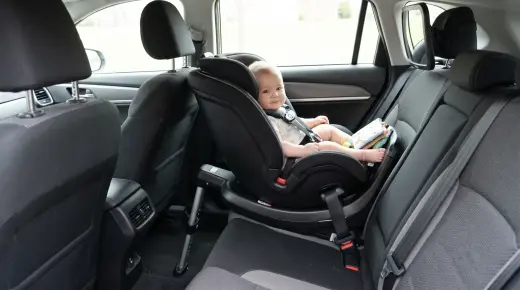
ISOFIX vs Seatbelt Car Seat Installation: Top Tethers, Support Legs and Anti-Rebound Bars Explained
ISOFIX and seatbelt installs are both safe when done right. How each works, why top tethers matter, what support legs and anti-rebound bars do, and how to…

On this page
- Why installation matters so much
- How ISOFIX works
- How seatbelt installation works
- ISOFIX vs seatbelt: side by side
- The top tether: the most-missed part
- Support legs and anti-rebound bars
- How tight is tight enough?
- Which seat in the car?
- Lower anchor weight limits
- Boosters and ISOFIX connectors
- Seven-seaters, utes and unusual seats
- Installation and harness: two separate jobs
- When to recheck the installation
- Choosing a seat with installation in mind
- Step-by-step: before every new installation
- Who can check your seat
- Common mistakes
- FAQ
- Sources
Short answer: There are two main ways to hold a car seat in your car. ISOFIX (called LATCH in the US and UAS in Canada) uses two rigid or strap connectors that clip onto metal bars built into the car between the seat cushion and backrest. A seatbelt installation uses the car's own seatbelt threaded through the car seat. Both are safe when done correctly. The American Academy of Pediatrics says the seatbelt and lower-anchor systems are equally safe. Extra parts, such as a top tether, a support leg or an anti-rebound bar, reduce how much the seat moves in a crash. Use exactly what your car seat's manual says.
Key points
- The best installation is the one you can do tightly and correctly every time in your car.
- A fitted seat should move no more than about 2.5 cm (1 inch) side to side or front to back at the belt path.
- Australian seats use a top tether strap, and in many models it's used rear-facing as well as forward-facing. Always follow the manual.
- Lower anchors (ISOFIX/LATCH) have a weight limit for the child plus the seat. The AAP notes lower anchors are rated to 65 lb (about 29 kg) combined, and the seat's own limit may be lower.
- Never put a rear-facing seat in front of an active airbag.
- Check your seat with an authorised fitter if you're unsure.
Why installation matters so much
A car seat protects your child by holding them and spreading crash forces over the strongest parts of their body. But it can only do that if the seat itself stays firmly attached to the car. A loose seat moves forward or sideways in a crash before it starts to slow down, which means more force on your child and more chance of hitting the car's interior. Fitters around the world say incorrect installation is one of the most common car seat problems they see.
How ISOFIX works
ISOFIX is an international system. Cars built with it have two small metal bars in each ISOFIX seating position, hidden in the gap between the seat cushion and the backrest. Car seats with ISOFIX have two connectors that click onto those bars.
- Rigid ISOFIX: metal arms that slide out from the seat and click on. Common in Europe and Australia.
- Flexible connectors: straps with hooks or clips, common in North America (LATCH or UAS).
- Indicators: many rigid ISOFIX seats show green when properly connected and red when not.
ISOFIX is popular because it makes a tight fit easier. You push the seat onto the anchors and it clicks, rather than tightening a belt by hand.
ISOFIX in different countries
- Australia: ISOFIX-compatible seats approved to AS/NZS 1754 are sold, and they must still use the top tether.
- UK and Europe: ISOFIX is standard in newer cars. R129 (i-Size) seats are often ISOFIX with a support leg or top tether.
- US: the LATCH system (Lower Anchors and Tethers for Children) uses flexible lower connectors plus a top tether.
- Canada: the UAS (Universal Anchorage System) is the same idea.
How seatbelt installation works
With a seatbelt installation, you thread the car's lap-sash belt through the belt path on the car seat (marked with colour-coded guides, often blue for rear-facing and red or orange for forward-facing), buckle it, then tighten it while pressing the seat down into the vehicle seat. Some seats have a lock-off clamp that holds the belt tight. In some cars you must lock the seatbelt itself so it doesn't loosen.
Seatbelt installation works in almost any seating position with a lap-sash belt, including centre seats that don't have ISOFIX. It's also the only option in older cars without ISOFIX anchors.
ISOFIX vs seatbelt: side by side
| Question | ISOFIX / LATCH / UAS | Seatbelt |
|---|---|---|
| Safety when done right | Equally safe | Equally safe |
| Ease of getting it tight | Usually easier | Takes practice and strength |
| Signs it's done right | Click and indicator on many seats | Check movement at the belt path |
| Which seats in the car | Only positions with ISOFIX anchors (often the two outer back seats) | Any position with a lap-sash belt |
| Weight limit | Yes: lower anchors have a combined child-plus-seat limit | Use to the seat's full limits |
| Moving between cars | Fast if both cars have ISOFIX | Works in more cars |
| Older cars | May not have anchors | Works with a lap-sash belt |
Don't use both the lower anchors and the seatbelt at the same time unless your seat's manual says you can. Most say to use one or the other.
Car Seats & Capsules worth a look
Real products from our catalogue. We don't show star ratings or review counts; check the current price, stock and reviews on Amazon before you buy.
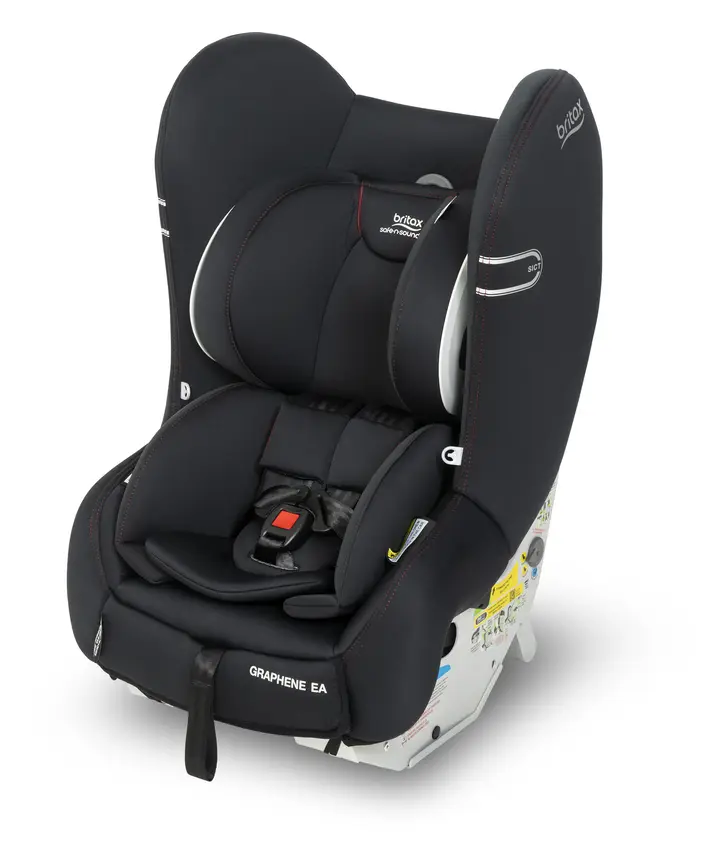
Britax Safe-n-Sound Graphene EA
Britax's Australian convertible seat with SICT side-impact technology, designed to reduce crash energy reaching your child's chest.

Britax Safe-n-Sound Hi Liner SG
A high-back booster for about 4 to 8 years. A clip keeps the seatbelt in the right place.

Britax Safe-n-Sound QuickFix Convertible Car Seat
Convertible car seat (ISOFIX)
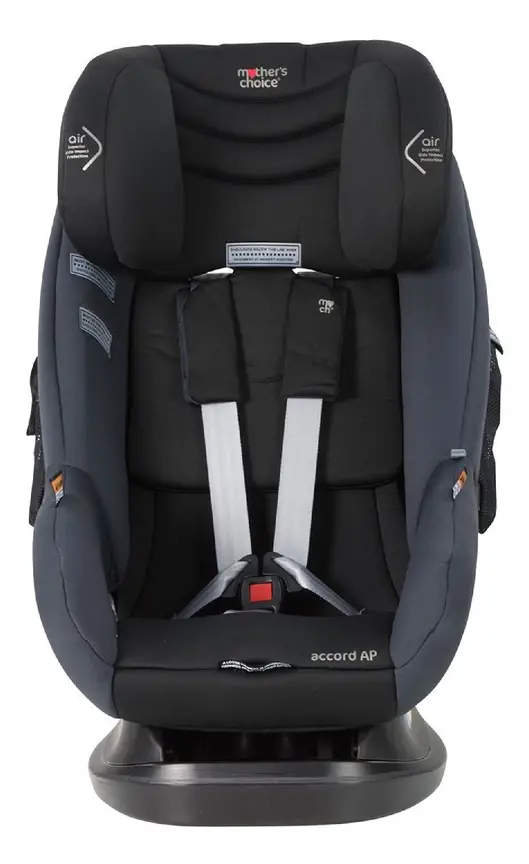
Mother's Choice Accord AP
A lower-cost convertible seat. It stays rear-facing to about 30 months and has ISOFIX connectors.
The top tether: the most-missed part
A top tether is a strap from the top of the car seat that clips to an anchor point in the car, usually on the back of the seat, the parcel shelf, the floor of the boot or the roof. It stops the top of the seat tipping forward in a crash, which reduces how far your child's head moves.
- Australia: forward-facing seats must be used with a top tether, and Australian rear-facing convertible seats often use one too. Booster seats over 2 kg must be anchored to an anchor point, according to NSW road rules.
- US and Canada: the AAP says always use the top tether for forward-facing seats when you can. Some rear-facing seats also use one.
- UK and Europe: many ISOFIX seats use a top tether or a support leg (not both) to stop rotation.
Common tether mistakes: not attaching it at all, clipping it to a cargo hook instead of a real anchor point, twisting the strap, or leaving it loose. Your car manual shows where the anchor points are.
Support legs and anti-rebound bars
Support leg (load leg)
A support leg is an adjustable leg that goes from the base of the car seat down to the car floor. In a frontal crash it stops the seat rotating downwards, which reduces forces on your child. Support legs are common on European R129 infant bases and some convertible seats. They must sit firmly on the floor, not on an underfloor storage lid unless the car manual allows it.
Anti-rebound bar
An anti-rebound bar is a bar at the foot end of a rear-facing seat that presses against the vehicle seat back. After a frontal crash, a rear-facing seat tends to "rebound" back towards the vehicle seat. The bar limits that movement. They're more common on North American and European rear-facing seats.
Which one do I need?
You don't choose. Each seat is designed and tested with its own system: a top tether, a support leg, an anti-rebound bar or a mix. Use exactly what came with your seat, set up as the manual says. Never add parts from another seat, and never remove parts that came with yours.
How tight is tight enough?
Hold the seat at the belt path (where the seatbelt or ISOFIX connectors attach) and push side to side and front to back with a firm handshake. It should move no more than about 2.5 cm (1 inch). The top of a rear-facing seat may move more, which is normal; test at the belt path, not the top. If it moves more:
- Kneel in the seat while pulling the belt or ISOFIX strap tight.
- Check the belt isn't twisted.
- Check the seat is using the right belt path for its mode.
- Check the recline is right; some seats tighten better at a different recline setting.
Which seat in the car?
The back seat is safest for children. NSW road rules (the same across Australia) say children under 4 must not sit in the front of a car with two or more rows, and children aged 4 to 7 can only sit in the front if the back seats are all taken by younger children. In the UK, if you fit a rear-facing seat in the front, you must turn off the front passenger airbag. The AAP says children under 13 should ride in the back.
The centre back seat is often furthest from a side impact, but it may not have ISOFIX anchors or a lap-sash belt. A tight, correct fit in a side seat is better than a loose fit in the centre. Check your car manual for which positions are approved for which seats.
Lower anchor weight limits
ISOFIX and LATCH anchors are designed for a limit that includes the child and the seat together. The AAP says lower anchors are rated to a maximum of 65 lb (about 29 kg) combined, and the seat maker's limit may be lower. When your child plus their seat reaches the limit, switch to a seatbelt installation (with the top tether) as the manual says. Many seat labels show the child weight at which to switch. In Australia, ISOFIX seats show their own limits on the label; follow them.
Boosters and ISOFIX connectors
Some booster seats have ISOFIX connectors or a top tether. In a booster, the car's seatbelt holds your child, not the booster's connectors. The connectors keep the booster in place when your child gets in and out, and stop an empty booster flying around in a crash. NSW road rules say booster seats heavier than 2 kg must be anchored to an anchorage point. Kidsafe's guidelines also warn that an unsecured restraint can become a projectile in a crash. So even when the booster is empty, keep it buckled in or connected.
Never use a booster with a lap-only belt. A booster needs a lap-sash (three-point) belt so the shoulder part can hold your child's upper body.
Side by side: more car seats & capsules to compare
Real products from our catalogue. We don't show star ratings or review counts; check the current price, stock and reviews on Amazon before you buy.

Babylove ezymove Booster
A very light, low-cost booster for about 4 to 8 years. It folds flat for storage.
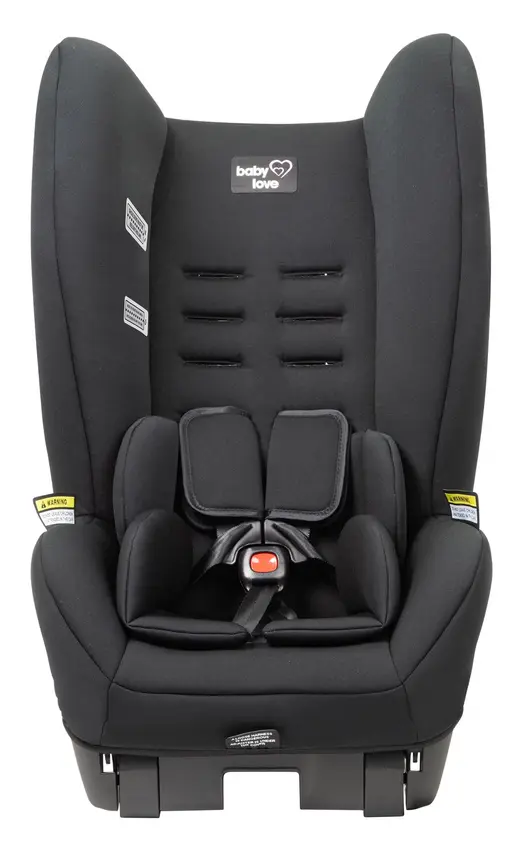
Babylove ezyone2
A very low-cost convertible seat. Rear-facing to about 12 months, then forward-facing to about 4 years.
 Reviewed
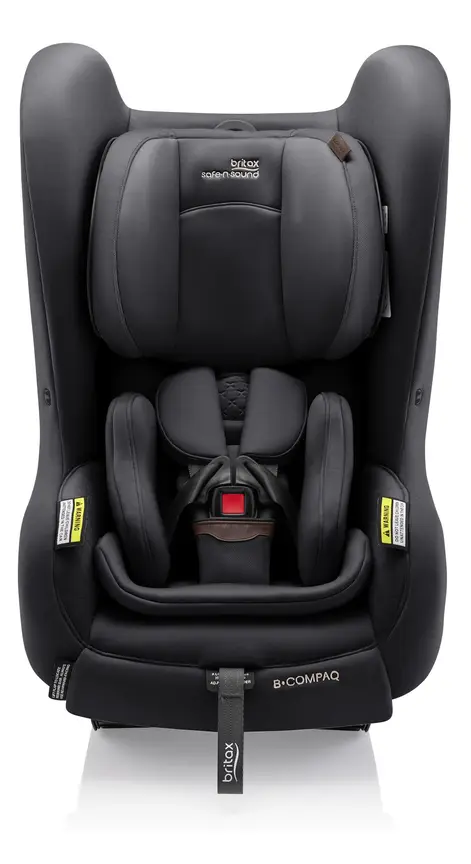
Britax Safe-n-Sound B-Compaq Lux
A convertible seat made for small cars with little room in the back.
Read our full review →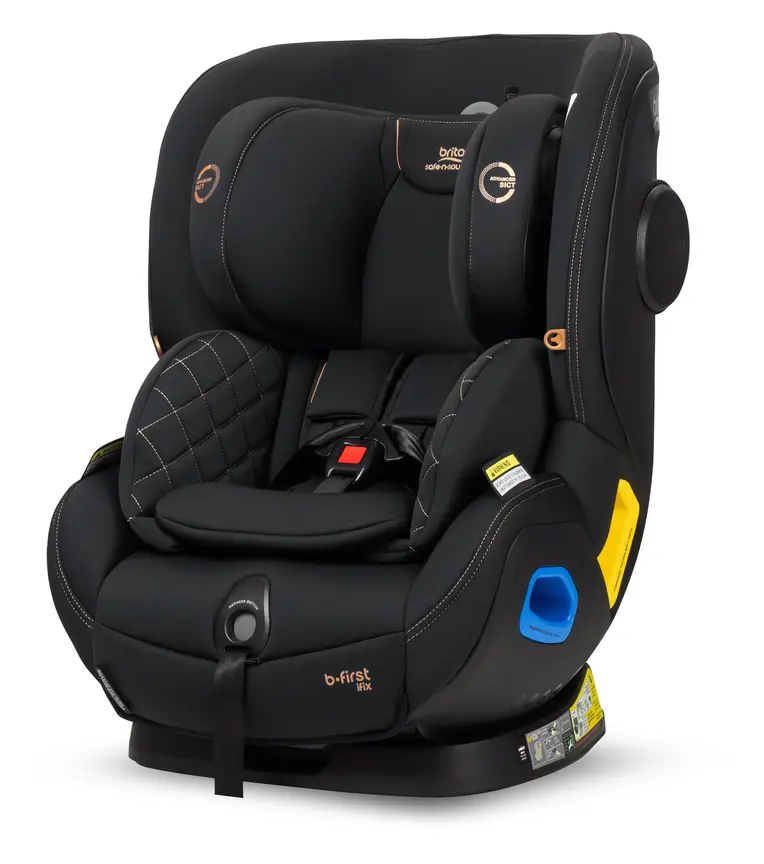
Britax Safe-n-Sound b-first+
Convertible seat from Britax's Australian Safe-n-Sound range with SICT deployable side-impact protection.
Seven-seaters, utes and unusual seats
- Third-row seats: check your car manual. Some third-row seats have no top tether point or ISOFIX, and some aren't approved for child seats at all.
- Folding or sliding seats: make sure the seat is locked in place before installing a car seat.
- Utes and single-cab vehicles: in Australia, children under 4 can only sit in the front if the vehicle has a single row of seats, and they must use an approved restraint. Any rear-facing seat must not be in front of an active airbag.
- Side-facing seats: UK rules say not to fit a child car seat in a side-facing seat.
- Older cars: some older cars have lap-only belts in some seats. These aren't suitable for boosters. Ask a fitter about options.
Installation and harness: two separate jobs
Getting the seat tight in the car is one job. Getting your child snug in the seat is another. Both need to be right. A rock-solid installation doesn't help much if the harness is loose, and a perfect harness doesn't help if the seat slides across the car.
- Installation: checked when you fit the seat, and every few weeks after that.
- Harness: checked every single trip. Product Safety Australia's pinch test is quick: if you can pinch the strap near the shoulder, tighten it.
- Bulky clothes: take off puffy jackets so the harness fits close to the body. Put a blanket over the buckled harness if needed.
When to recheck the installation
- After anyone moves, removes or reinstalls the seat.
- When you change the seat's mode (rear to forward, or to booster).
- When you change the recline.
- After the car has been serviced or cleaned inside.
- If you notice the seat moving more than before.
- After any crash: Transport Canada says to dispose of a seat that was in a crash, even if it was empty. Many makers say the same.
Choosing a seat with installation in mind
When you shop, think about how the seat will go into your car, not only how it looks in the shop.
- Check your car first. Find out which seats have ISOFIX anchors and where the top tether points are. Your car manual has a child seat section.
- Look for clear belt-path labels in colours that are easy to follow.
- Look for tension or lock-off systems that help you get a seatbelt installation tight.
- Check indicators on ISOFIX connectors and support legs that show green when correct.
- Try before you buy. Many retailers will let you test-fit a seat in your car.
- Check ease-of-use ratings. In Australia, the Child Car Seats program rates seats on how easy they are to install and use correctly, as well as crash protection.
- Consider other cars. If the seat will move between cars, a seat that installs well with both ISOFIX and a seatbelt gives you more options.
Step-by-step: before every new installation
- Read the car seat manual and the car manual sections on child seats.
- Choose a seating position approved for that seat.
- Set the seat to the correct mode and recline.
- Attach ISOFIX connectors or thread the seatbelt through the correct path.
- Press the seat down and back, and tighten.
- Attach the top tether or support leg as instructed, and tighten.
- Test for movement at the belt path.
- Check the recline indicator for rear-facing seats.
- Book an authorised fitter to check it, especially for a first seat.
Who can check your seat
| Country | Where to get help |
|---|---|
| Australia | Authorised restraint fitters (your state road authority lists them); Kidsafe |
| United Kingdom | Retailer fitting checks; Good Egg Safety; local road safety teams |
| United States | Certified child passenger safety technicians and inspection stations |
| Canada | Car seat clinics run by police, public health and safety groups; Transport Canada guidance |
More options, from budget to premium
Real products from our catalogue. We don't show star ratings or review counts; check the current price, stock and reviews on Amazon before you buy.

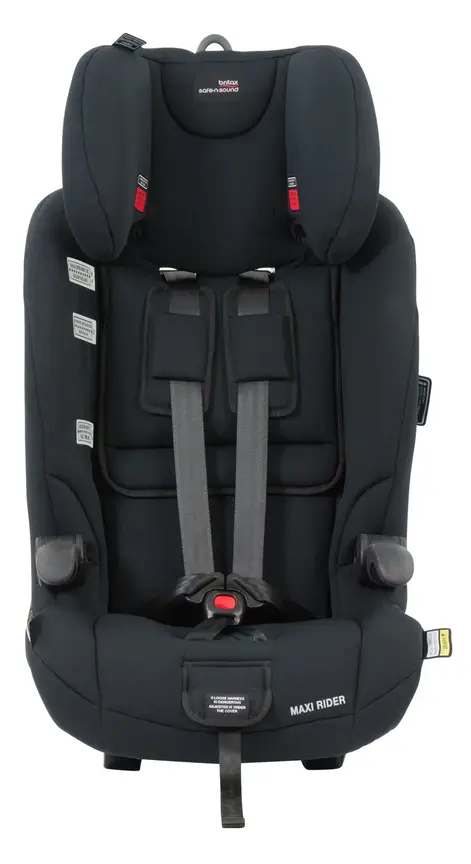
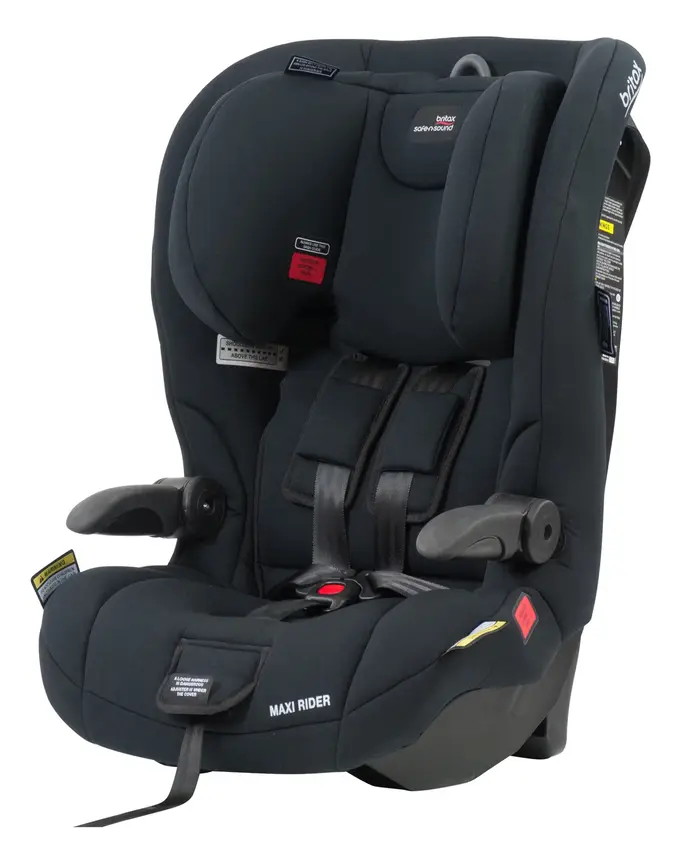
Britax Safe-n-Sound Maxi Rider
A seat with a harness from 12 months to about 4 years. Then it becomes a booster up to 6–8 years.
Read our full review →
Britax Safe-n-Sound Atlas-GRO II Harnessed Car Seat
Harnessed booster seat
Common mistakes
- Using ISOFIX and the seatbelt together when the manual says not to.
- Forgetting the top tether, or attaching it to a cargo hook.
- A twisted belt or tether.
- Testing for movement at the top of the seat instead of the belt path.
- Using lower anchors past their weight limit.
- Support leg resting on a storage lid or not touching the floor.
- A rear-facing seat in front of an active airbag.
- Using parts from a different seat.
FAQ
Is ISOFIX safer than a seatbelt?
Not when both are done correctly. The AAP says they're equally safe. ISOFIX often makes it easier to get a tight fit.
Do I still need the top tether with ISOFIX?
In Australia, yes for forward-facing seats, and often for rear-facing seats too. Elsewhere, use it whenever your seat's manual says to.
What does an anti-rebound bar do?
It limits how far a rear-facing seat swings back towards the vehicle seat after a frontal crash.
My car doesn't have ISOFIX. Is that a problem?
No. A correct seatbelt installation is just as safe. Choose a seat that installs well with a seatbelt.
How do I know my installation is right?
It should move no more than about 2.5 cm at the belt path, the recline should be right, and the tether or leg should be fitted as the manual says. Have an authorised fitter check it.
Can I use ISOFIX in the middle seat?
Only if your car has ISOFIX anchors in that position. Many cars only have them in the two outer back seats. Never "borrow" one anchor from each side seat.
Should the top tether be tight?
Yes. Pull out the slack so it's firm but doesn't lift the seat or pull it out of position. Check it isn't twisted.
Can I add a support leg or anti-rebound bar to my seat?
Only if the seat maker sells one designed and tested for your exact seat. Never add parts from another brand or a different model.
Is a rear-facing seat with a top tether normal?
Yes, especially in Australia, where many rear-facing convertible seats use a top tether. Follow your seat's manual on where the strap goes in rear-facing mode.
Sources
- Product Safety Australia (ACCC) – Car seats guide
- NSW Government – Child car seats (road rules)
- Kidsafe – National best practice guidelines: safety of children in motor vehicles
- GOV.UK – Child car seats: the law
- HealthyChildren.org (American Academy of Pediatrics) – Car seats: information for families
- Transport Canada – Stage 1: rear-facing seats
- Child Car Seats (Australian independent crash-test ratings)
- Transport Canada – Choosing a child car seat or booster seat
Related guides
More Car Seats & Travel →
ISOFIX (LATCH) vs Seatbelt Installation: Top Tether Rules and Fitment Checks
Seatbelt vs LATCH or ISOFIX: How to Install a Child Car Seat
Infant Car Seat Head and Body Support Inserts: Why Aftermarket Cushions Are Unsafe