Pram Tether Straps: Wrist Placement, Strap Strength, and Slope Safety
How to wear a pram tether strap on your wrist, check strap strength, and stay safe on hills, slopes, and footpaths with your baby.
On this page
- Key points
- What a pram tether strap is and why it matters
- How to wear a pram tether strap properly
- Strap materials, stitching, and strength
- Comparing pram tether strap types
- Slope, footpath, and incline safety
- Safety standards and official rules by country
- Age stages: from newborn bassinet to toddler stroller
- Common mistakes parents make
- Pram tether strap safety checklist
- Frequently asked questions
- Sources
Short answer: Put your pram tether strap around your wrist every time you push your baby. Adjust it so it sits snugly on your wrist, not loose on your fingers. Check the strap and stitching often for wear or damage. Always use the parking brake when you stop, even on flat ground.
A pram can roll away in seconds on a slope, a driveway, or a windy footpath. A tether strap keeps the pram connected to you if you trip or let go. In Australia, a tether strap is required by law under AS/NZS 2088. Health and safety groups in the UK, the US, and Canada also warn parents to keep control of strollers on hills and near roads.
Key points
- Wear it every time: slip the loop over your wrist before you start walking.
- Wrist, not fingers: a strap on your wrist stays put if you stumble or reach for something.
- Check the strap: look for frayed webbing, cracked plastic, or loose stitching before you go out.
- Strap plus brake: the tether strap catches a moving pram, while the brake holds a parked pram.
- Watch the slope: footpaths, driveways, and train platforms often slope more than they look.
- Keep bags off the handle: heavy bags on the handlebar can tip a pram backwards.
What a pram tether strap is and why it matters
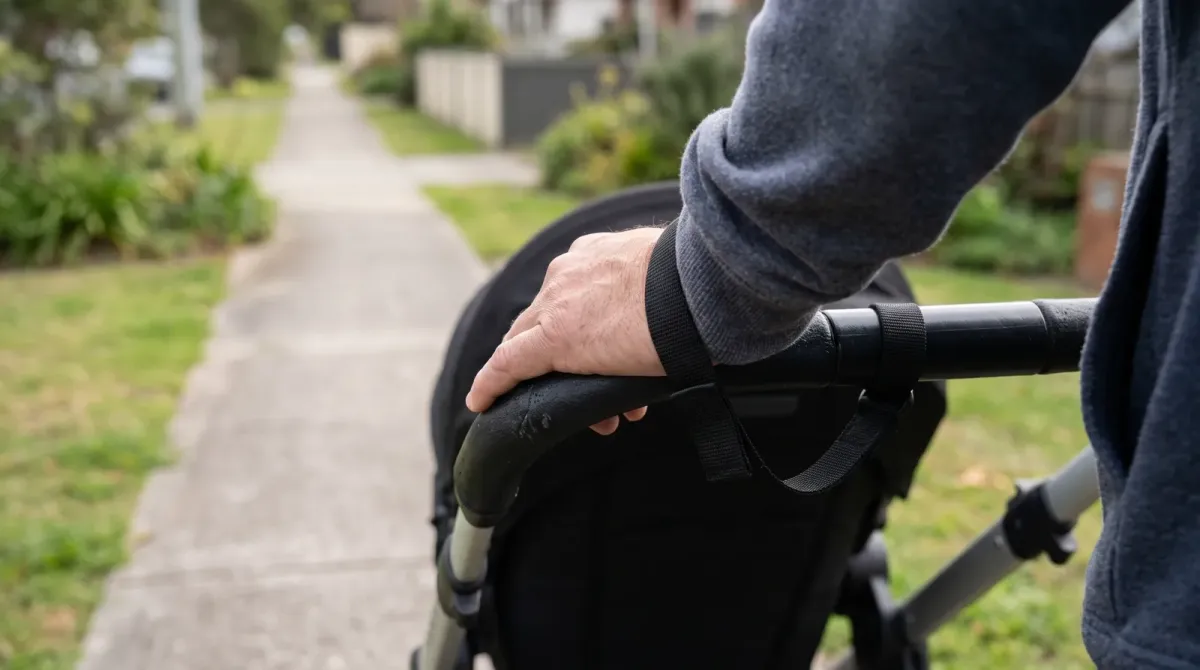
A pram tether strap is a short loop attached to the pram handlebar or frame. You slide your hand through the loop so it rests around your wrist while you push.
Its job is simple. If your hands slip off the handle, the strap stops the pram from rolling away from you. It acts like a safety leash between you and your child.
Many parents think they will never let go of the pram. In real life, hands come off the handle all the time. You might trip on an uneven footpath. You might reach down to pick up a dropped toy or grab a toddler's hand. You might step aside for a bike or dog, or get distracted at a crossing.
A strong gust of wind can also push an empty or lightly loaded stroller. Smooth ramps, wet tiles, and sloped kerbs make a pram pick up speed fast. Without a tether strap, a pram can roll into traffic, down steps, or off a train platform before you can catch it.
Tether strap vs parking brake
A tether strap and a parking brake do two different jobs. You need both to keep your baby safe.
- The tether strap works while you are moving. It keeps the pram attached to your wrist if you lose your grip.
- The parking brake works when you stop. It locks the wheels so the pram stays still when you let go.
Never rely on the tether strap to hold a parked pram on a hill. Never rely on the brake alone while you are walking. Use the strap while walking, and click the brake on every single time you stop.
Prams & Strollers worth a look
Real products from our catalogue. We don't show star ratings or review counts; check the current price, stock and reviews on Amazon before you buy.
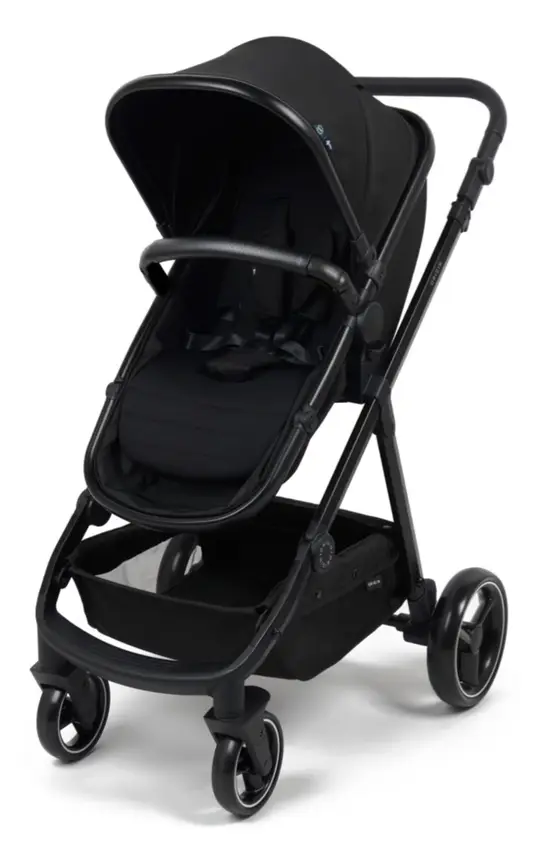
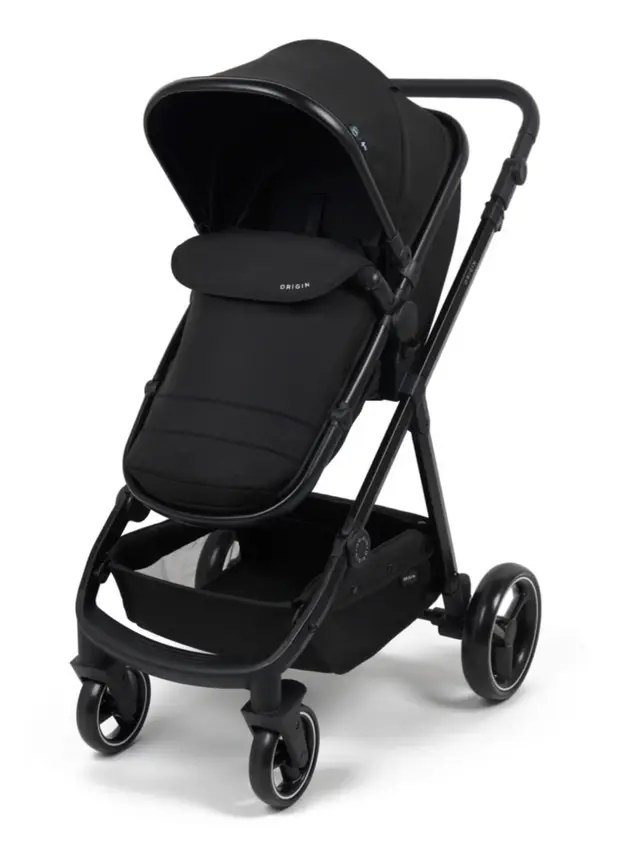
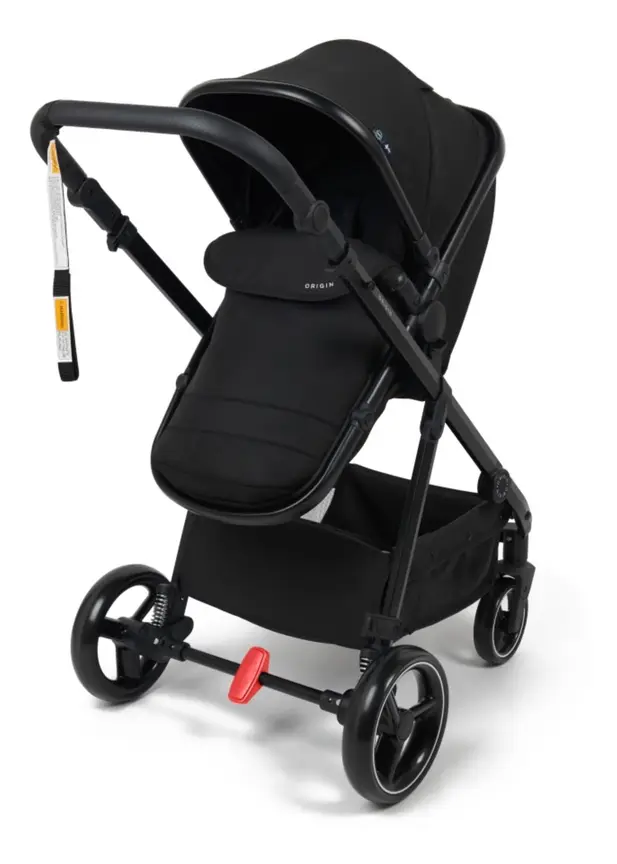
4baby Origin Stroller
A budget pram whose seat turns into a bassinet. The seat can face you or face the world.
Read our full review →
Baby Jogger City Mini GT2
Long-running, lighter all-terrain stroller with a famously simple one-hand strap fold.
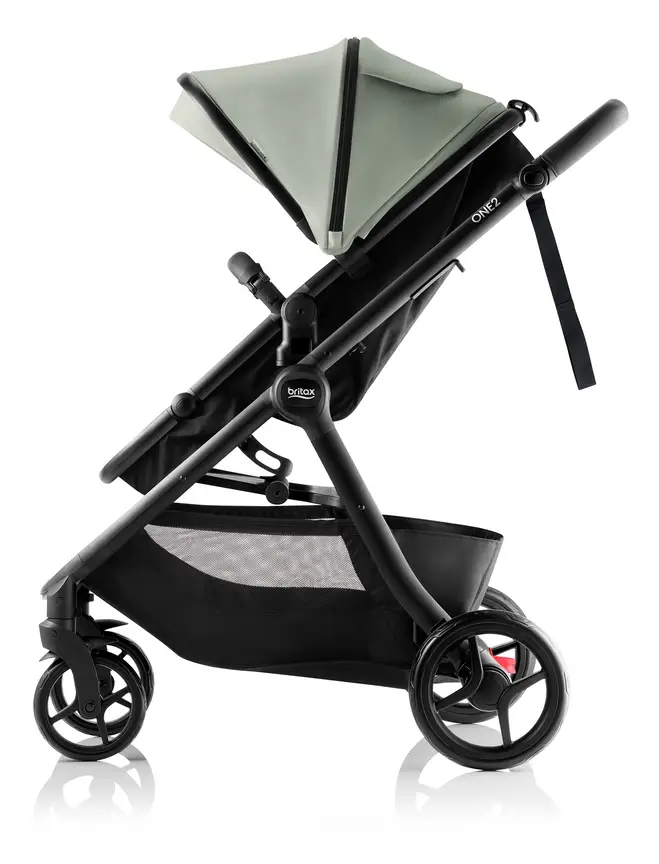
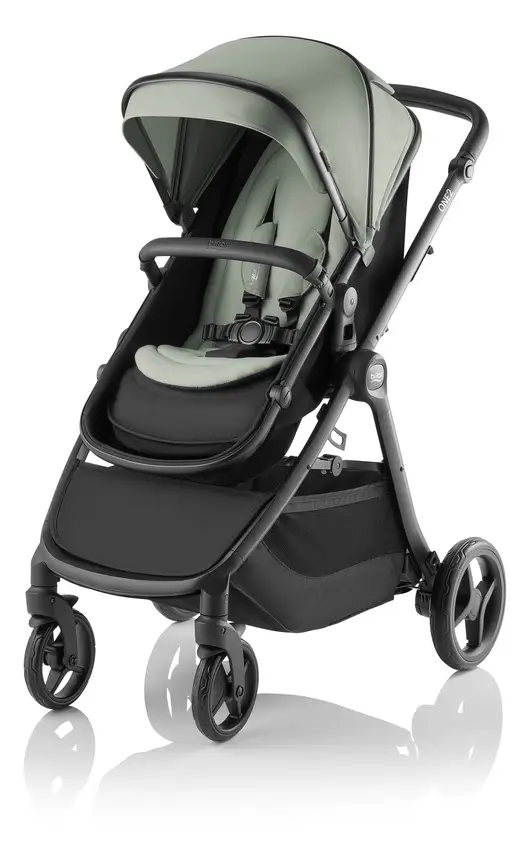


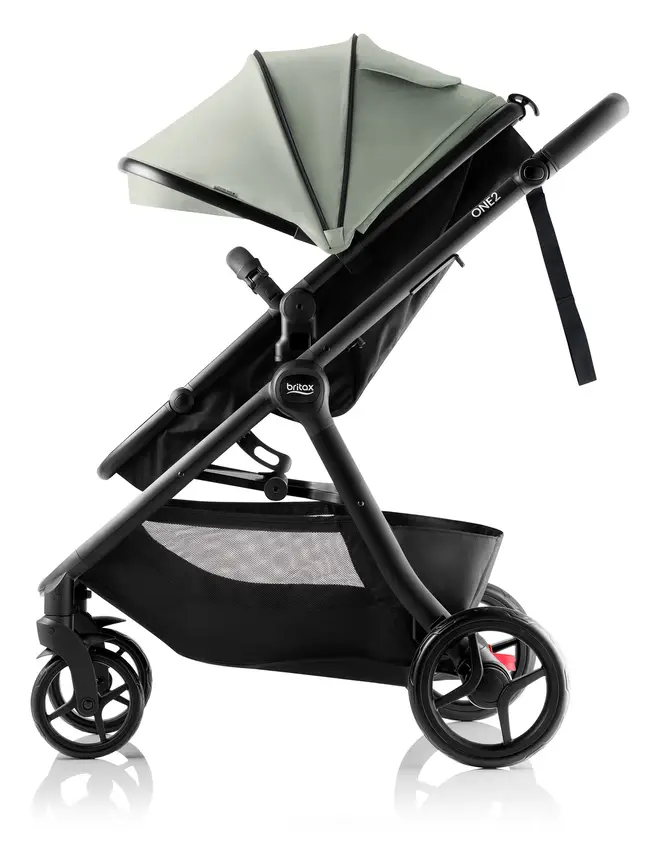


Britax One2
A pram that starts as a single and can take a second child. The seat turns into a lie-flat bassinet.
Read our full review →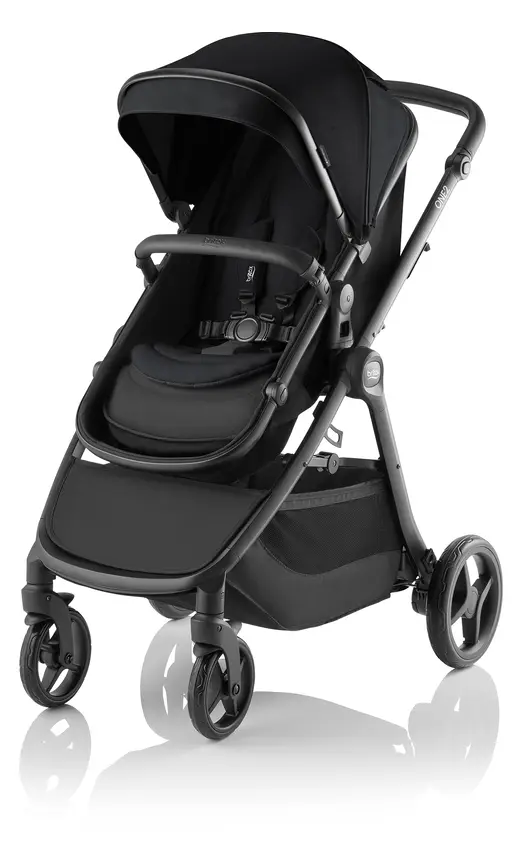
How to wear a pram tether strap properly
Wearing the strap the wrong way can make it useless. A loose loop can slide right off your hand during a fall. Follow these simple steps every time you head out.
- Check the anchor point. Make sure the strap is firmly looped or bolted to the pram handle or main frame.
- Put your hand through the loop. Slide your hand all the way in so the strap sits around your wrist bone.
- Tighten the slider. Pull the toggle or slider until the loop feels snug. It should not pinch your skin, but it should not slide over your knuckles either.
- Hold the handle as normal. Rest your hand on the handlebar with the strap staying around your wrist.
- Swap hands with care. If your wrist gets tired, click the brake on first. Then move the strap to your other wrist, or push with your strapped hand while resting the other.
- Take it off only after braking. When you stop, lock the foot brake before you slip your wrist out of the loop.
Wrist placement mistakes to avoid
Watch out for these common habits that reduce how well the strap works:
- Looping it around your fingers: if you trip, your fingers open up and the strap slips straight off.
- Leaving the toggle all the way open: a wide loop can slide over your hand when the pram pulls forward.
- Wrapping it around the handlebar: parents often wrap the strap around the bar to keep it out of the way. If you do that, it cannot catch the pram.
- Tucking it into the basket or cup holder: a hidden strap does nothing in an emergency.
- Clipping it to a nappy bag or belt: a clip on a bag can snap, and a belt loop can tear or pull you off balance.
What to do on stairs and escalators
Never push a pram up or down an escalator. A wheel can jam, or the pram can tip backwards. Use a lift or ramp instead.
If you must use stairs, take your baby out of the pram first. Carry your baby safely, and fold the pram to carry it separately, or ask someone to help. Do not rely on a wrist strap to hold a loaded pram on steps.
Strap materials, stitching, and strength
A tether strap does not look like much, but it has to handle real force. Think about the weight it may need to stop. You have the weight of the pram frame, the weight of a growing baby or toddler, and anything in the under-seat basket.
When a heavy pram starts rolling downhill, it pulls hard on the strap. A weak strap or poorly stitched join can snap or tear right when you need it most. That is why the material, stitching, and hardware all matter.
Common strap materials
- Woven nylon or polyester webbing: this is the most common material. Good webbing is thick, tightly woven, and resists stretching. It handles daily pulling well, though sun and rain can wear it down over years.
- Neoprene-lined straps: many prams add soft neoprene padding inside the wrist loop. This stops the webbing from rubbing your skin on long walks. Make sure the strong webbing still runs all the way through the loop, not just soft foam.
- Leather or faux-leather straps: some prams use leather-look loops to match the handle trim. Check these carefully. Thin faux leather can crack and peel in hot weather or sun.
- Coiled or stretchy cords: some aftermarket straps use a plastic coil or elastic cord. These can bounce or snap back, and thin elastic wears out fast in the sun.
Weak points to check
When a strap fails, it rarely breaks in the middle of clean webbing. It usually fails at a join or hardware piece. Check these four spots:
- The box stitch at the loop join: look for tight, neat stitching in a square or cross pattern. Loose threads are an early warning sign.
- The handlebar attachment: some straps loop through a fabric tab, while others screw into the metal frame or wrap around the tube. Make sure the join cannot slide off the end of the handle.
- Plastic sliders and buckles: cheap plastic can turn brittle in the sun and crack under sudden force.
- Metal clips or D-rings: if your strap has a metal clip, check that the gate shuts tightly and has no rust or bends.
How to inspect your strap at home
Take one minute once a month to check your tether strap. Do this before your first walk with a second-hand pram too.
- Look along the full length of the strap in good light.
- Check for frayed edges, cuts, or sun-faded spots.
- Pull firmly on the loop with both hands to test the stitching.
- Slide the toggle up and down to check that it grips the webbing and holds its place.
- Check where the strap meets the frame for rubbing or metal wear.
If you see frayed threads, cracked plastic, or a loose seam, stop using that strap and replace it right away. If you bought a used pram and the strap is missing or worn out, order a replacement part from the pram maker first. If they no longer sell parts, choose a strong woven replacement strap made for strollers, and loop it securely around a solid frame bar.
Comparing pram tether strap types
Different prams come with different strap styles. Here is how the four main types compare for everyday use.
| Feature | Built-in webbing strap | Padded neoprene strap | Coiled or stretchy strap | Universal clip-on strap |
|---|---|---|---|---|
| Best for | Everyday walks on paths and shops | Long walks and heavy toddlers | Light travel strollers on flat ground | Replacing a lost strap or older UK/US prams |
| Comfort on wrist | Basic; can rub in hot weather | Soft and gentle on bare skin | Can tug or bounce on the wrist | Depends on webbing width and padding |
| Strength and stretch | Strong, low stretch when well stitched | Strong if webbing runs through the loop | Stretches under load; elastic wears faster | Varies; check stitching and clip quality |
| Slip risk on handle | Very low when bolted or sewn in | Very low when built into the frame | Low if looped tightly onto the bar | Higher if Velcro or clip loosens |
| Care and checks | Check stitching and sun wear monthly | Wash sweat salt out; check inner webbing | Check for perished elastic or cracks | Check clip gate, Velcro, and seam often |
Slope, footpath, and incline safety
Many pram roll-aways happen on ground that looks almost flat. Local councils build footpaths and ramps to drain rainwater and help wheelchairs get around. Understanding how slopes work helps you stay in control.
Why footpaths slope sideways
Most council footpaths are not completely flat. They tilt gently sideways toward the kerb so rainwater drains into the gutter. This is called a cross-fall.
When you push a pram along a sloped footpath, gravity pulls the front wheels toward the road. You may feel the pram drifting to one side. Keep your wrist in the tether strap and hold the handle firmly with both hands near busy roads. If your pram has lockable front swivel wheels, locking them straight can stop the pram from veering sideways on long sloped paths.
Driveways and steep ramps
Where a driveway crosses a footpath, the concrete often dips steeply toward the street. The surface can also be smooth and slippery when wet, or covered in loose gravel and wet leaves.
Slow down before you reach a driveway dip. Keep your tether strap on your wrist. Look for reversing cars before you cross. Cars backing out of a driveway often cannot see a low pram behind them.
On steep ramps, such as car park ramps or park paths, councils follow accessibility rules that try to keep slopes gentle. Even so, older paths, hilly streets, and private driveways can be much steeper than standard council ramps.
How to push uphill
- Stand close to the handle: lean forward slightly so your body weight helps push the pram up.
- Use both hands: keep the tether strap on one wrist and hold the handle firmly with both hands.
- Lock swivel wheels on rough hills: if the path is bumpy or steep, locking the front wheels straight stops them from twisting.
- Take breaks safely: if you need to rest halfway up a hill, turn the pram slightly sideways against a flat spot or kerb if possible, keep a hand on the handle, and apply the brake.
How to walk downhill
- Slow right down: a heavy pram builds momentum quickly going down a slope.
- Hold back with both hands: keep your wrist in the tether strap and brace your arms as you walk down.
- Use a hand brake if you have one: some jogging and all-terrain prams have a bike-style hand brake to slow you down on hills. Test it before you start down a steep path.
- Never run with an everyday pram: only run with a stroller made for running, with fixed front wheels and a strong wrist tether.
- Turn backwards on very steep drops: if a short ramp is very steep, it can feel safer to turn around and walk down backwards, pulling the pram slowly behind you while keeping your wrist in the strap. Watch behind you so you do not trip.
Kerbs, crossings, and train platforms
Always stop a few steps back from a kerb before crossing a road. Never let the front wheels hang over the edge while you wait for traffic. Lock the brake if you are waiting at lights.
Train and tram platforms are another high-risk spot. Platforms often slope slightly toward the track or away from the edge, and passing trains create strong wind gusts. Stand well back behind the safety line. Keep the tether strap around your wrist, turn the pram parallel to the track rather than facing the edge, and put the brake on right away.
Side by side: more prams & strollers to compare
Real products from our catalogue. We don't show star ratings or review counts; check the current price, stock and reviews on Amazon before you buy.
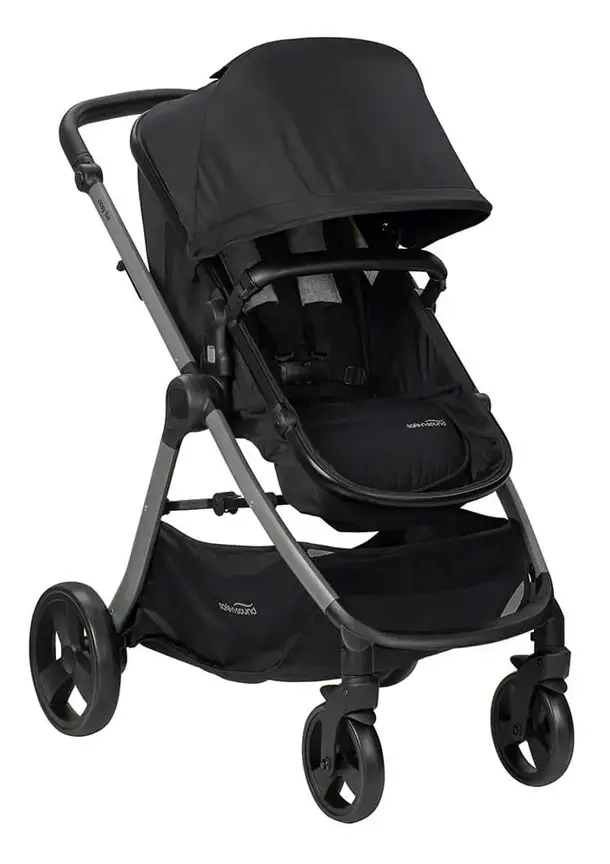

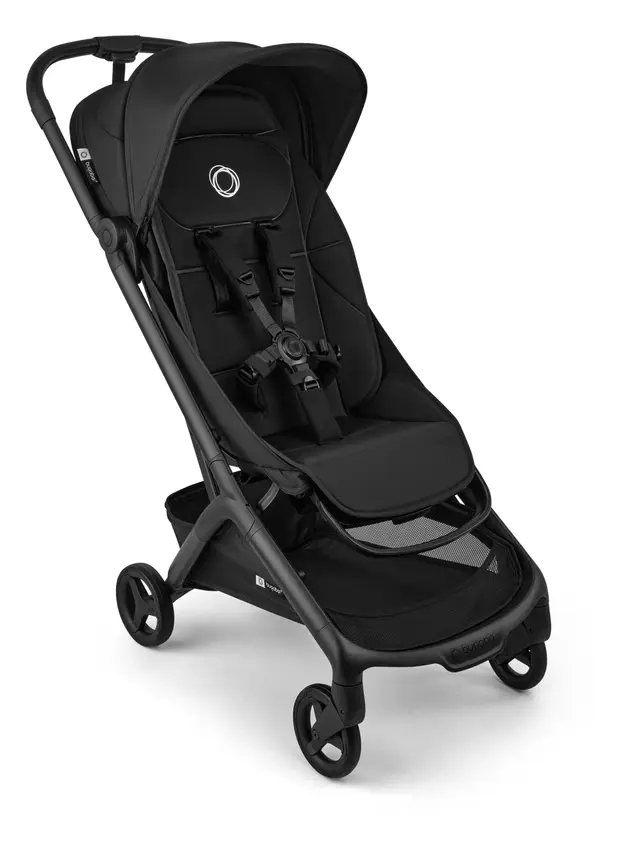
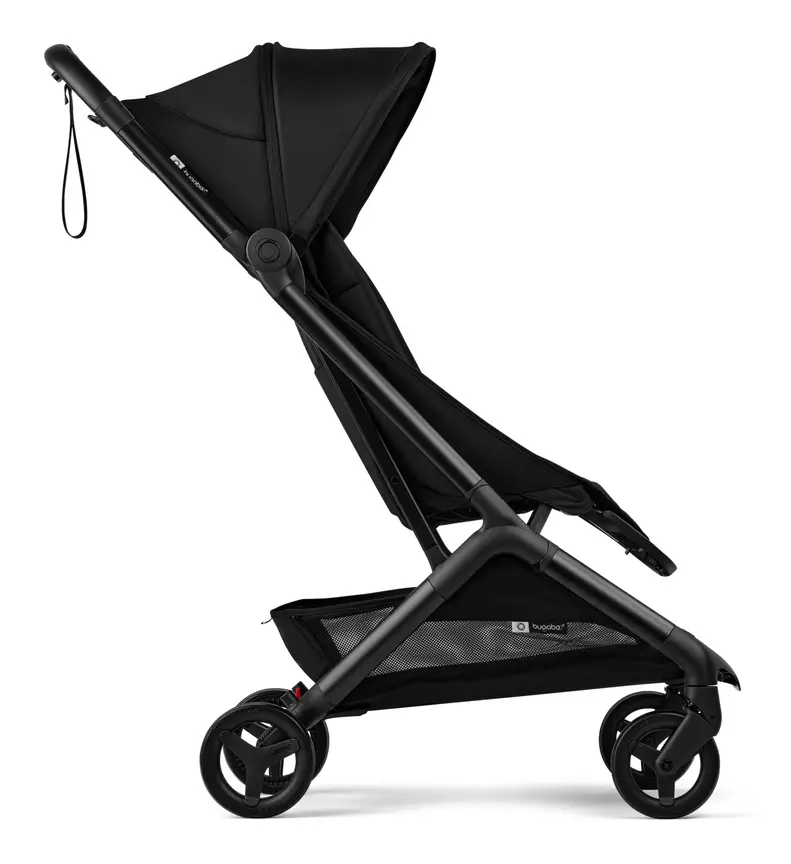


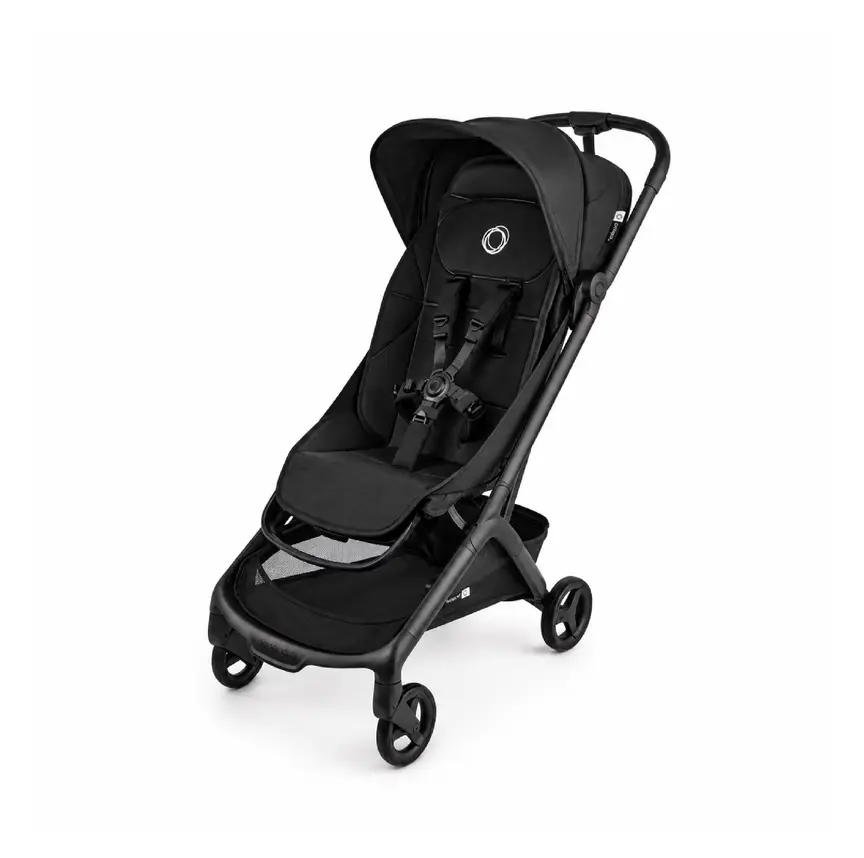
Bugaboo Butterfly
Bugaboo's cabin-friendly compact stroller with a one-second fold — the travel partner to a Fox, not a replacement for it.

Bugaboo Donkey 5
Converts from single to side-by-side double (siblings or twins) by widening the frame.

Bugaboo Dragonfly
Bugaboo's city pram: smaller footprint and lighter than the Fox, built for footpaths, lifts and car boots rather than bush tracks.
Safety standards and official rules by country
Rules for pram tether straps differ around the world. Knowing what applies where you live helps you know what to check when buying new or second-hand.
- Australia: Product Safety Australia (part of the ACCC) enforces the mandatory pram and stroller standard, AS/NZS 2088. Under this standard, prams and strollers sold in Australia must have a tether strap attached to the handle or frame so the parent can keep hold of the pram. They must also have clearly marked red parking brakes and clear safety warnings. Kidsafe Australia and the Raising Children Network also remind parents to use the wrist strap and brakes every time.
- United Kingdom: The Office for Product Safety and Standards (OPSS) oversees product safety, and RoSPA gives injury prevention advice to families. Prams and pushchairs in the UK follow BS EN 1888. This standard checks frame strength, brakes, and harnesses, though a wrist tether strap is not fitted to every standard UK pushchair. If your pushchair does not have one, adding a strong universal strap is a smart move for hills and public transport.
- United States: The Consumer Product Safety Commission (CPSC) sets federal stroller safety rules based on ASTM F833, and the American Academy of Pediatrics (AAP) shares safe gear advice for parents. US rules focus on brakes, wheel strength, frame locks, and five-point harnesses. Tether straps are common on jogging strollers and many travel systems, though not required on every standard stroller.
- Canada: Health Canada enforces Canadian stroller safety regulations and runs the national recalls and safety alerts database, while Caring for Kids (from the Canadian Paediatric Society) shares family safety advice. Canadian rules test brakes, stability, and latches. As in the US and UK, not every stroller comes with a wrist strap, so parents in hilly or snowy areas often add one.
No matter which country you live in, check your national recall list before using a second-hand pram. Always register a new pram with the maker so they can contact you if there is ever a safety recall.
| Country | Official bodies | Main standard | Tether strap rule | Key tip for parents |
|---|---|---|---|---|
| Australia | ACCC (Product Safety Australia), Kidsafe, Raising Children Network | AS/NZS 2088 | Mandatory on prams and strollers sold in Australia | Check that second-hand or overseas prams meet local rules |
| UK | Office for Product Safety and Standards (OPSS), RoSPA | BS EN 1888 | Not fitted to every standard pushchair | Add a sturdy wrist strap if your model lacks one |
| US | Consumer Product Safety Commission (CPSC), American Academy of Pediatrics (AAP) | ASTM F833 | Common on jogging strollers; optional on some standard models | Use both the wrist strap and five-point harness on slopes |
| Canada | Health Canada, Canadian Paediatric Society (Caring for Kids) | Canadian stroller regulations | Optional on some models; common on jogging strollers | Check Health Canada recalls and use a strap on icy or sloped paths |
Age stages: from newborn bassinet to toddler stroller
Your baby grows fast, and the way your pram handles on slopes changes at each stage. Keep using the tether strap from day one right through the toddler years.
- Newborn to 6 months (bassinet or lie-flat seat): a newborn needs a flat surface so their head does not slump forward and block their airway. A bassinet sits higher on the frame, which raises the centre of gravity. On bumpy paths or slopes, a top-heavy pram can feel tippy. Keep your wrist in the strap and take kerbs slowly.
- 6 to 12 months (upright seat): once your baby sits up, they start leaning forward or reaching sideways to look at things. That sudden shift in weight can rock the pram or pull it off course on a sloped footpath. Always buckle the five-point harness as well as wearing your wrist strap.
- 1 to 3 years (toddlers): toddlers are heavy. A bigger child plus a nappy bag and groceries makes the pram carry real weight on a downhill path. Toddlers also try to climb in and out. Put the brake on before you unbuckle them, and keep the tether strap on your wrist whenever the pram is moving.
- Double prams and twins: pushing two children doubles the load. Side-by-side and tandem double prams gain speed fast going downhill. Make sure the tether strap stitching is in top shape and never push a double pram on steep hills with one hand.
Common mistakes parents make
Even careful parents slip into habits that make a pram less safe on slopes. Watch out for these common traps:
- Hanging heavy bags on the handlebar: shopping bags, handbags, or heavy nappy bags on the handle pull the pram backwards. Even if your wrist is in the tether strap, a pram can tip backwards onto the handle if you let go. Put heavy items in the under-seat basket instead.
- Skipping the strap for short trips: many roll-aways happen in car parks, on driveways, or right outside shops. Put the strap on even for a two-minute walk from the car.
- Parking on a slope: never leave a pram parked facing downhill or sideways on a steep ramp, even with the brake locked. Always find flat ground, lock the brake, and keep a hand on the frame.
- Using a sun-damaged strap: prams left in hot cars or outdoors in strong sun can suffer weak webbing and brittle plastic toggles. Inspect the strap regularly.
- Forgetting the child harness: if the pram stops suddenly because the tether strap catches it, an unbuckled child can pitch forward and fall out. Always buckle the seat harness on every walk.
Pram tether strap safety checklist
Use this quick checklist before you leave the house.
| Do | Don't |
|---|---|
| Slide the tether strap all the way onto your wrist | Hook the strap loosely around your fingers |
| Tighten the slider so it fits snugly | Leave the loop wide enough to slip off your hand |
| Use the tether strap on every walk, even short ones | Wrap the strap around the handlebar out of the way |
| Apply the parking brake before removing your wrist | Rely on the wrist strap to hold a parked pram |
| Put bags in the under-seat basket | Hang heavy shopping bags from the handlebar |
| Check stitching, webbing, and plastic toggles monthly | Keep using a frayed, cracked, or sun-faded strap |
| Use lifts or ramps instead of escalators | Push a pram onto an escalator or down stairs |
More options, from budget to premium
Real products from our catalogue. We don't show star ratings or review counts; check the current price, stock and reviews on Amazon before you buy.
 Reviewed
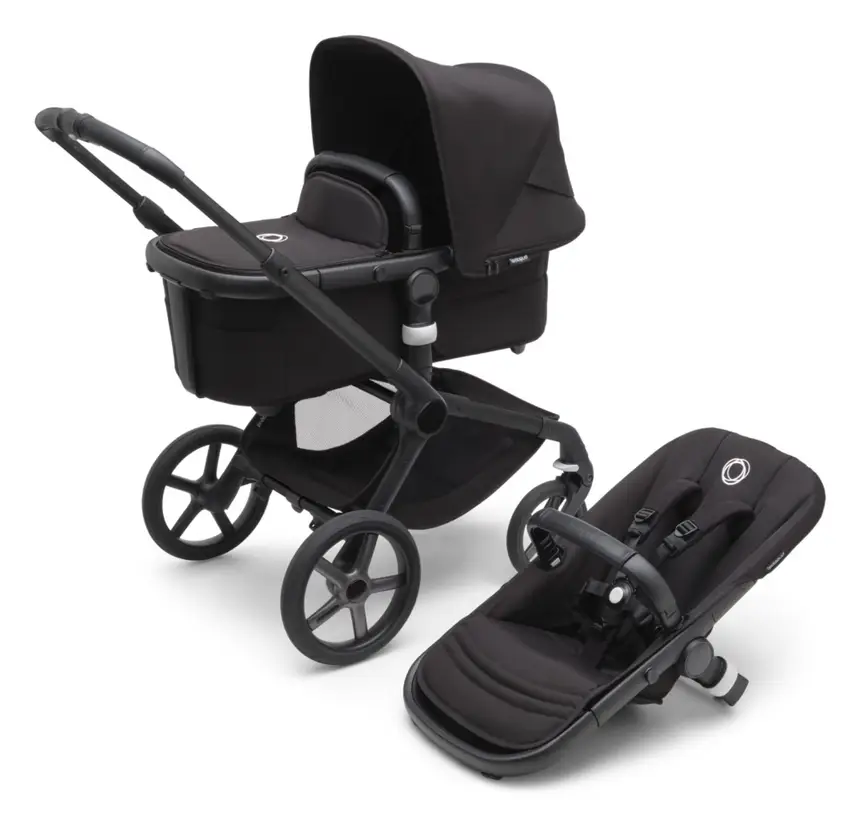
Bugaboo Fox 5
Bugaboo's flagship all-terrain pram: big-wheel suspension ride, one-piece fold, bassinet from birth and a seat rated to 22 kg.
Read our full review →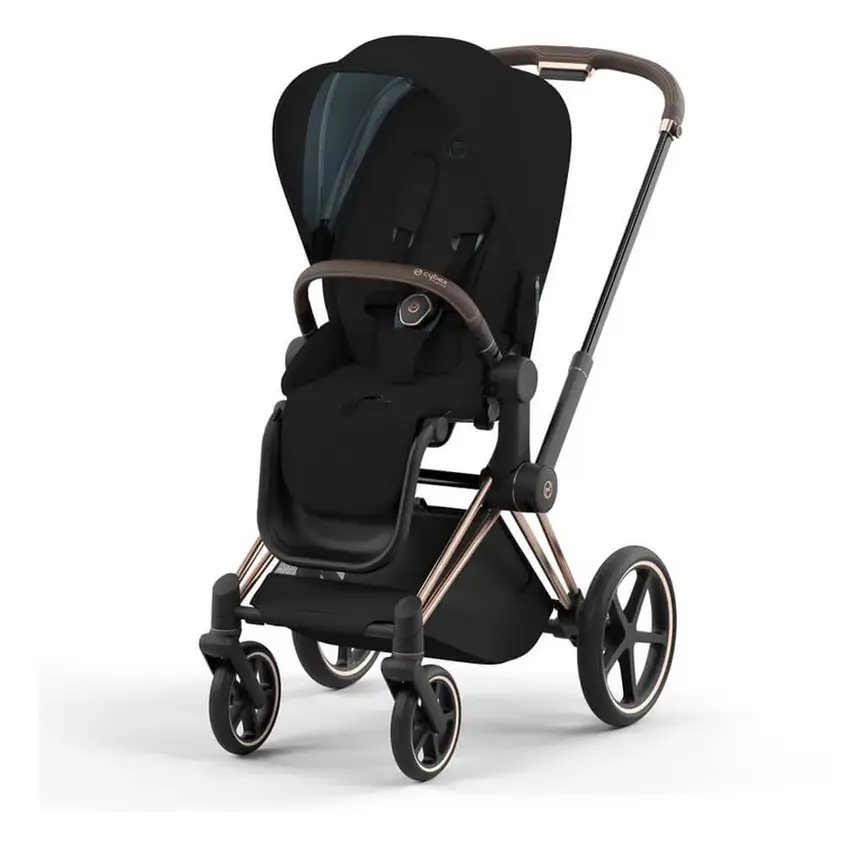
Cybex Priam
Fashion-forward luxury pram with interchangeable seat/bassinet units and an all-terrain option.

Maxi-Cosi Zelia 3
A mid-price pram with a carrycot that changes into a seat, so one frame covers birth to toddler.
Frequently asked questions
Do all prams come with a tether strap?
In Australia, yes. All new prams and strollers sold in Australia must have a tether strap under AS/NZS 2088. In the UK, US, and Canada, jogging strollers usually come with one, while some everyday or compact travel strollers do not. Always check the handle before you buy.
Can I add a tether strap to a stroller that did not come with one?
Yes. If your stroller did not come with a strap, you can buy a universal stroller wrist strap. Choose one made from thick woven webbing with strong stitching and a snug wrist toggle. Loop it tightly around a solid part of the frame or handlebar so it cannot slide off the end of a foam grip.
Which wrist should I put the pram tether strap on?
Put it on whichever wrist feels most natural and secure for you. Many parents use their stronger hand. If your pram has a hand brake on one side, it can feel easiest to wear the strap on the other wrist so both hands stay comfortable. Just make sure the strap is always on one wrist while you walk.
Should I still use the tether strap if my pram has a hand brake?
Yes. A hand brake only works while your hand is squeezing it. If you trip, faint, or let go in shock, you let go of the hand brake too. The tether strap stays around your wrist and catches the pram even when your hands leave the handle completely.
Is it safe to hang bags from the pram handle if I use a tether strap?
No. A tether strap stops the pram from rolling away, not from tipping backwards. Heavy bags on the handle shift the weight behind the back wheels. When you take your weight off the handle, the pram can flip backwards with your baby inside. Always store bags low in the under-seat basket.
When should I replace a pram tether strap?
Replace the strap right away if you see frayed edges, loose threads at the stitching, sun-bleached fabric, or cracks in the plastic slider. Also replace a strap if it has been stretched in a hard fall or sharp tug. If you buy a second-hand pram, check the strap before your first walk and replace it if it looks worn.
Are coiled or stretchy tether straps safe?
A rigid, low-stretch woven webbing strap is usually a safer choice than a stretchy cord. Stretchy or coiled straps can let a heavy pram roll further before stopping it, and elastic cords wear out faster in heat and sun. If you use a universal strap, pick flat woven nylon or polyester webbing with solid stitching.
Sources
- Product Safety Australia – Prams and strollers mandatory standard
- Product Safety Australia – Prams and strollers guide
- Raising Children Network – Falls prevention: babies and young children
- Kidsafe Australia – Falls
- RoSPA – Preventing accidents to children
- UK Office for Product Safety and Standards
- HealthyChildren.org (American Academy of Pediatrics) – Home safety: tips for families with young children
- Health Canada – Recalls and safety alerts
Related guides
More Car Seats & Travel →
Portable White Noise Soothers for Prams and Car Seats: Volume, Placement and Safety

Toddler Safety Backpacks and Wrist Tethers: How to Choose and Use Them

Pram Travel Bags: How to Protect Your Stroller and Check Airline Rules