Baby Travel Gear: What You Need for Safer, Easier Trips
Choose useful baby travel gear for car trips, walks and flights. Learn what to pack, check safety and meet your baby’s needs at each age.
On this page
- What counts as baby travel gear?
- Plan around the trip, not a product list
- Car seats: the first travel priority
- Prams and strollers for walks
- Baby carriers and slings
- Travel cots and sleep away from home
- Feeding and changing supplies
- Weather, comfort and simple extras
- Compare common travel items
- What babies may need at each age
- Safety advice across four countries
- Common mistakes to avoid
- Frequently asked questions
- Sources and official guidance
- Sources
Short answer: You do not need lots of special gear to travel with a baby. Start with a correctly fitted car seat for car journeys. A pram or carrier can help on walks. Pack the usual feeding and nappy supplies. Choose items that suit your baby’s age, size and needs. Follow each product’s instructions. Keep sleep safe wherever you travel.
Official advice comes from Product Safety Australia and Red Nose in Australia; the Office for Product Safety and Standards and NHS in the UK; the Consumer Product Safety Commission and American Academy of Pediatrics in the US; and Health Canada and the Canadian Paediatric Society in Canada. Rules can differ between countries. Check local advice before travel.
What counts as baby travel gear?
Baby travel gear includes items that help you care for your child away from home. Some items are needed for safety. Others make a trip easier or more comfortable.
A car seat is essential when your child travels in a car. It must suit your child and vehicle. A pram, stroller or carrier can help on walks. A travel cot can give your baby a sleep space away from home. A changing mat, spare clothes and feeding supplies can help with daily care.
Many products are optional. A travel bottle warmer, baby monitor, sound machine or organiser may suit some families. These items do not replace adult care or safe sleep rules. Think about where you will go, how long you will be away, and what you already own.
Plan around the trip, not a product list
Before buying anything, picture a usual outing. Consider the route, weather, transport and places to stop. A short walk near home needs less gear than a day of flights and transfers.
- For a car trip: use a suitable car seat and plan safe breaks. Pack nappies, wipes, spare clothes and feeding supplies.
- For public transport: consider stairs, crowds and space for a pram. A carrier may help where a pram is awkward.
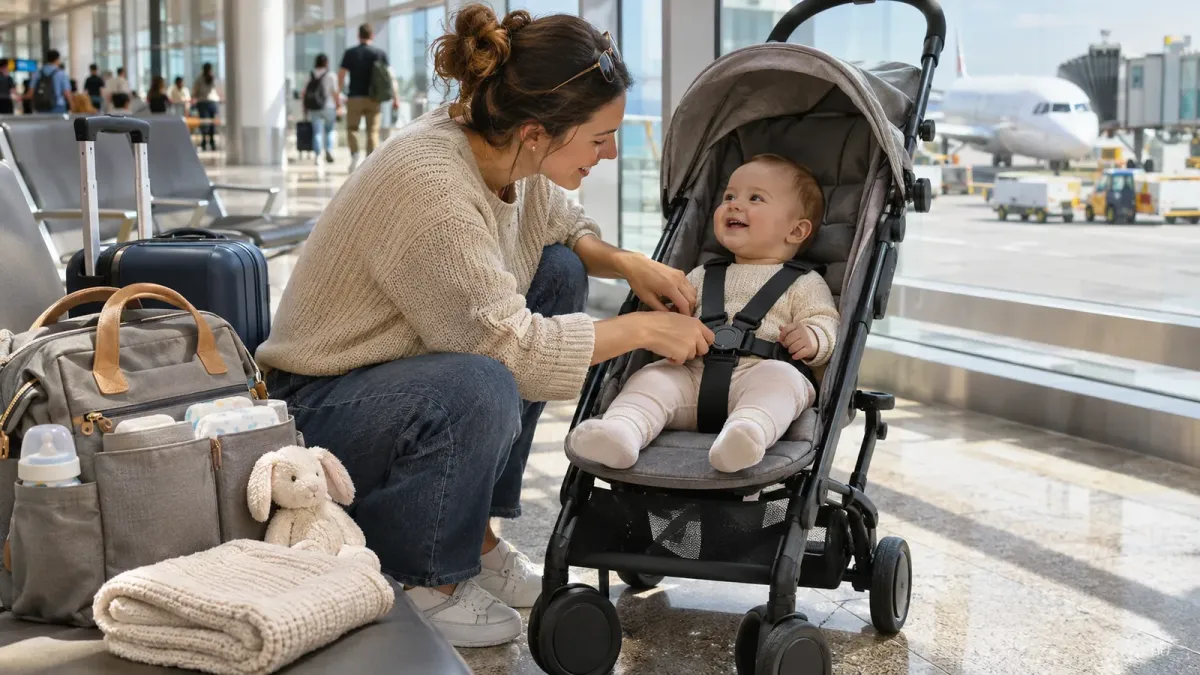
- For a flight: check airline and airport rules before packing. Rules for seats, liquids and baby food can vary.
- For an overnight stay: arrange a firm, flat sleep surface made for babies. Do not assume a hotel or relative has a safe cot.
- For hot or cold weather: pack layers and plan shade or warmth. Check your baby often so they do not get too hot or cold.
Write a short packing list and change it for each trip. This helps you avoid buying gear for rare situations. It also makes it easier to leave bulky items at home.
Car seats: the first travel priority
Use a car seat approved for the country where it will be used. Match it to your child’s height, weight and stage. Follow the seat maker’s instructions and your vehicle manual.
Install the seat as directed. If you are unsure, seek help from a trained local car-seat adviser or fitting service. Check that the seat moves no more than the instructions allow. Make sure the harness lies flat and fits snugly. Do not add padding or accessories unless the seat maker allows them.
Keep your baby rear-facing for as long as the seat’s limits allow. Babies grow at different rates. Use the seat’s height and weight limits. Do not turn a child forward-facing just because they have reached a certain age or seem bored.
Take breaks on long journeys. When you stop safely, take your baby out of the seat. A car seat is for travel. It is not a routine sleep space outside the car. If your baby falls asleep, move them to a safe, flat sleep space when you arrive.
Never leave a child alone in a parked car. A car can become dangerously hot, even when the weather seems mild. Keep the keys with you. Check the back seat before leaving the vehicle.
Prams and strollers for walks
A pram or stroller should match your child’s age and development. Some models suit newborns only when used flat or with an approved carrycot. Check the maker’s age and weight limits before use.
Before each outing, check the brakes, frame, wheels, harness and folding locks. Use the harness every time. Keep fingers clear when folding the frame. Do not hang heavy bags from the handles. A heavy load can make the pram tip backwards.
Keep children seated while the pram moves. Do not let them stand on the footrest. Use the brake when you stop, even on level ground. Keep your baby in sight. Do not cover the pram with a blanket. A cover can reduce airflow and trap heat.
A pram seat is not a planned sleep space. If your baby falls asleep, follow safe sleep advice. Move them to a firm, flat surface when practical. Do not add pillows, soft toys or loose blankets around your baby.
Baby carriers and slings
A carrier can help on stairs, public transport and uneven paths. Pick one that fits both the adult and the child. Check the maker’s age, size and weight guidance. Some carriers need a specific fit or insert for newborns.
Keep your baby’s face visible and uncovered. Their chin should not rest on their chest. Support their back and head as the instructions describe. Check often that they can breathe freely and are not too warm.
Follow the carrier’s instructions for putting it on and taking it off. Practise over a bed or with another adult nearby until you feel sure. Do not cook over a hot stove or do anything that could cause a fall while wearing your baby.
For long walks, consider your own comfort too. A carrier that hurts your back or shoulders may not work for you. Adjust the straps and take breaks. Ask a health professional for advice if your baby has special medical needs.
Travel cots and sleep away from home
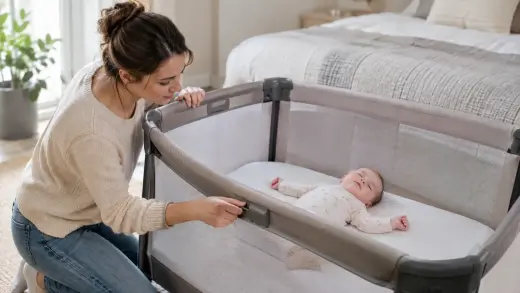
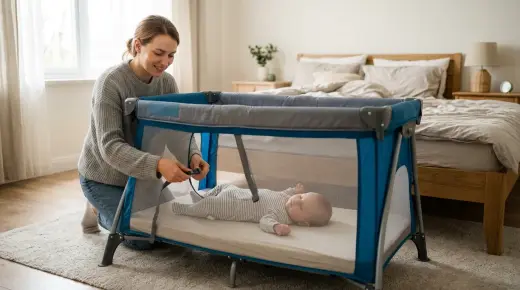
Plan a safe sleep space before an overnight trip. Use a cot or portable cot made for infant sleep. Set it up exactly as the maker shows. Use only the mattress supplied or approved for that model.
Check that the cot locks are engaged and the fabric is not torn. Keep the sleep space clear. Do not add another mattress, pillow, bumper, nest or soft toy. These can create gaps or cover a baby’s face.
Place your baby on their back for every sleep. Keep their head uncovered and dress them for the room temperature. Do not use a portable cot that is damaged, missing parts or subject to a recall.
A pram, car seat, sofa or adult bed is not a safe planned sleep space. If your baby falls asleep while travelling, move them to the cot when you can do so safely. Red Nose advises taking a sleeping baby out of the car seat after reaching home.
Feeding and changing supplies
Pack what your baby usually needs, plus a little extra for delays. This may include nappies, wipes, a change mat, spare clothes, bags for dirty clothes and hand-cleaning supplies.
If you breastfeed, you may need only a comfortable place. A cover is optional. If you use expressed milk, carry it in a clean, sealed container. Keep it at a safe temperature. Follow trusted local advice for storing and using milk.
If you use formula, plan how to prepare it safely. Powdered formula is not sterile. Follow the product instructions and health advice where you live. Do not make bottles in advance unless local guidance explains how to store them safely. Before flying, check airport rules for milk, formula and baby food.
For solid food, bring foods your baby already handles well. Pack a clean spoon and a way to store food safely. Sit your baby upright and watch them while they eat. Do not feed a baby while the car is moving.
Use a clean, stable place for nappy changes. Never leave a baby alone on a raised surface, even briefly. Keep one hand on your baby while reaching for supplies. A portable change mat is useful, but it does not make a high surface safe.
Weather, comfort and simple extras
Use shade, light clothing and regular checks in hot weather. Babies can overheat. Do not cover a pram with a blanket to block the sun. Choose a shade made for the pram and keep air moving.
Use sun protection that suits your baby’s age and local health advice. Clothing, a wide-brimmed hat and shade can help. Keep young babies out of direct sun where possible. Ask a health professional about sunscreen for a young baby.
In cold weather, use layers that can be removed. Bulky coats can stop a car-seat harness from fitting closely. Put a blanket over the harness after buckling your child, if needed. Keep the face clear.
A small toy or book can help an older baby or toddler pass time. Choose items without loose parts, sharp edges or button batteries. Check toys for damage. Keep small objects away from babies who put things in their mouths.
Travel organisers, bottle bags and portable fans are optional. Choose them only if they solve a real problem. Keep cords, straps and battery parts out of your baby’s reach. Do not let a gadget distract you from watching your child.
Compare common travel items
| Item | When it helps | Key check | Needed for every family? |
|---|---|---|---|
| Car seat | Every car journey | Approved locally, fits child and vehicle, installed as directed | Yes, for car travel |
| Pram or stroller | Walks and longer outings | Age suitability, working brakes, harness and locks | No |
| Baby carrier | Stairs, crowded places or hands-free walks | Baby’s face stays clear; fit follows maker’s guidance | No |
| Portable cot | Overnight trips and visits | Intact frame, correct mattress, safe set-up | Only when a safe sleep space is needed |
| Changing mat | Changing away from home | Use on the floor or keep a hand on baby on a raised surface | No |
| Travel bottle warmer | May suit some feeding plans | Does not replace safe milk or formula handling | No |
| Baby monitor | May help hear a child in another room | Keep cords and small parts out of reach | No |
What babies may need at each age
Newborn to around three months
Newborns need frequent feeds, nappy changes and close care. Keep outings simple and allow time to stop. Use a car seat that fits your newborn. Check the harness and head support according to the seat instructions.
For walks, use a pram set-up approved for newborns or a suitable carrier. Keep your baby’s face visible in a carrier. Arrange a safe cot for sleep at your destination. Do not use a car seat or pram as the planned sleep place.
Around three to six months
Your baby may become more alert and move more. Keep checking the fit of the car seat, carrier and pram as they grow. Follow each product’s limits. Do not change settings until your baby meets the instructions.
Bring a familiar toy that is safe for your baby’s age. Keep it away during sleep unless the product instructions and safe sleep advice allow its use. Offer floor time when you can stop somewhere clean and safe.
Around six to twelve months
Many babies begin eating solid foods and sitting with support during this stage. Pack suitable food and a way to clean hands. Feed your baby upright and watch them closely.
Babies may crawl or pull themselves up. Use the stroller harness and apply the brake when stopped. Check that the sleep space remains suitable as your child becomes more active.
Toddlers
Toddlers may want to walk, climb and explore. Give clear, simple reminders near roads, car parks and platforms. Hold their hand in busy areas. A stroller can help when they are tired, but keep using its harness.
Pack water and familiar snacks where suitable. Plan quiet breaks and time to move. Keep small toys, cords and battery parts away from younger children travelling with you.
Safety advice across four countries
The same basic checks matter in every country. Use gear as directed, check for damage and recalls, and choose items that fit your child. Local rules and product labels may differ.
| Country | Official bodies to check | Useful travel guidance |
|---|---|---|
| Australia | Product Safety Australia (ACCC), Red Nose, Pregnancy, Birth and Baby | Check pram, carrier and car-seat guidance. Follow safe sleep advice away from home. |
| United Kingdom | Office for Product Safety and Standards, NHS, The Lullaby Trust | Check local product safety advice, car-seat rules and safer sleep guidance. |
| United States | Consumer Product Safety Commission (CPSC), National Highway Traffic Safety Administration (NHTSA), American Academy of Pediatrics (AAP) | Check product recalls, car-seat fit and safe sleep advice. |
| Canada | Health Canada, Transport Canada, Canadian Paediatric Society | Check seat requirements, recalls and infant travel safety advice. |
When crossing a border, do not assume a product accepted in one country meets another country’s rules. Check the label and local guidance. Look up recalls before buying second-hand gear. Keep the model name and product number for that search.
Common mistakes to avoid
- Buying too much: start with trips you actually take. Borrow or rent an item if you need it once.
- Using gear beyond its limits: check your child’s height, weight and stage against the maker’s instructions.
- Adding unapproved items: extra inserts, straps or padding can affect how a seat or carrier works.
- Leaving a baby unattended on a change surface: use the floor when possible. Keep a hand on your baby on raised surfaces.
- Letting a baby sleep in sitting gear: move them to a firm, flat sleep surface when practical.
- Covering a pram: blankets can reduce airflow and trap heat. Use shade made for the pram.
- Ignoring wear or recalls: inspect second-hand gear and check official recall pages.
- Forgetting breaks: plan stops on long drives. Take your baby out of the car seat when you stop safely.
- Assuming gadgets keep a baby safe: monitors and alarms do not replace adult supervision.
Frequently asked questions
What baby travel gear do I need first?
For car travel, start with a suitable, correctly installed car seat. For other trips, pack feeding and nappy supplies. Add a pram, carrier or travel cot only when your plans need one.
Can my baby sleep in a car seat after we arrive?
A car seat is made for travel, not routine sleep outside the car. When you arrive, move your baby to a firm, flat sleep surface when it is safe to do so.
Is a pram or a carrier better?
It depends on your route and comfort. A pram can carry supplies and suit longer walks. A carrier can help on stairs or crowded transport. Check age guidance and fit for either one.
Can I use a second-hand travel cot or stroller?
Only if it is complete, works as intended and has no recall that affects it. Check the model and instructions. Do not use missing parts or an unapproved mattress.
What should I pack for a flight with a baby?
Pack feeding supplies, nappies, spare clothes and any comfort item your baby needs. Check airline and airport rules for seats, milk, formula and baby food before travel.
Do I need a baby monitor when travelling?
No. A monitor is optional. It may help you hear your baby in another room, but it does not replace checking on them. Keep cords and small parts away from your child.
How can I keep my baby cool in a pram?
Choose shade, light clothing and good airflow. Do not drape a blanket over the pram. Check your baby often and move out of direct sun when you can.
How often should I check travel gear?
Check it before each use. Look at brakes, straps, buckles, seams, wheels and locks. Follow the maker’s care and inspection instructions. Check official recall notices.
Sources and official guidance
- Product Safety Australia (ACCC): Car seats guide
- Product Safety Australia: Prams and strollers guide
- Red Nose Australia: Take your sleeping baby out of their car seat when you get home
- GOV.UK: Child car seats, the rules
- The Lullaby Trust: Safer sleep on holiday
- NHTSA: Car seats and booster seats
- American Academy of Pediatrics: Flying with baby
- Transport Canada: Child car seat safety
This article provides general information only. It is not medical advice. Follow local safety guidance and ask a health professional about your child’s needs. Some links may be affiliate links. BabyGearFinder may earn a commission if you buy through them, at no extra cost to you.
Sources
- Product Safety Australia (ACCC) – Car seats guide
- Product Safety Australia – Prams and strollers guide
- Red Nose Australia – Take your sleeping baby out of their car seat when you get home
- GOV.UK – Child car seats: the rules
- The Lullaby Trust (UK) – Safer sleep on holiday
- NHTSA (US) – Car seats and booster seats
- AAP HealthyChildren.org – Flying with baby
- Transport Canada – Child car seat safety
Related guides
More Car Seats & Travel →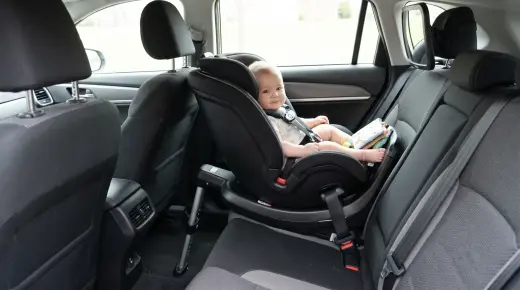
Anti-Rebound Bar vs Load Leg in Car Seats: What Each One Does for Your Baby
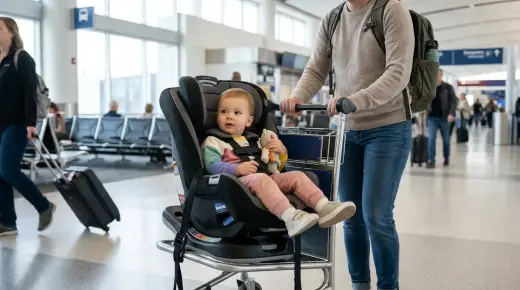
Travel Car Seat Carts and Backpacks: Moving Through Airports Without Carrying Heavy Gear
How to Choose a Safe Travel Cot for Your Baby