Backless Booster vs High-Back Booster Seat: Belt Guides, Side Wings and Which Is Safer
Backless booster vs high-back booster: how belt guides and side wings work, when each is OK, and the booster rules in Australia, the UK, the US and Canada.

On this page
- What a booster seat does
- Backless booster (booster cushion)
- High-back booster
- Side by side
- The shoulder belt guide (sash guide): why it matters
- Side-impact wings: what they do and don't do
- Booster rules in Australia, the UK, the US and Canada
- When is a child ready for a booster?
- When can a child stop using a booster? The 5-step test
- How to choose a booster
- Common mistakes
- Carpools, taxis and travel
- FAQ
- Sources
Short answer: A high-back booster is the safer choice for most children. It has a back and side wings that help protect your child's head if a car hits the side, and its belt guides keep the shoulder part of the seat belt in the right spot, even when your child falls asleep. A backless booster (also called a booster cushion) only lifts your child up. It can be fine for older, taller children in cars with a good headrest, but Kidsafe in Australia says high-back boosters are better than booster cushions, and the UK no longer allows new booster cushion models for children under 125 cm or 22 kg.
Key points
- A booster seat lifts your child so the car's adult seat belt sits on the strong parts of their body: low across the hips and over the middle of the shoulder.
- Kidsafe's national guidelines say high-back boosters are better than booster cushions, because the back and wings protect the head in a side crash and keep the belt in place.
- The "shoulder belt guide" (also called a sash guide or positioning clip) holds the top part of the belt across the middle of the shoulder, away from the neck. Always use it.
- Most children need a booster until about 10 to 12 years old, says Kidsafe. The AAP in the US says until about 145 cm (4 feet 9 inches) tall.
- Never use a booster with a lap-only belt. Boosters need a lap and shoulder (lap-sash) belt.
What a booster seat does
Seat belts are made for adults. On a small child, the lap part of the belt rides up over the soft tummy, and the shoulder part cuts across the neck or slips off the shoulder. In a crash, this can cause serious injuries to the tummy, spine and neck.
A booster seat fixes this by lifting your child up and guiding the belt into the right place:
- The lap part goes low across the hip bones, touching the tops of the thighs.
- The shoulder part (called the sash in Australia) goes across the middle of the shoulder and chest.
Kidsafe explains that booster seats reduce the risk of serious injuries by putting the belt over the bony parts of the shoulder and hips instead of the neck or tummy.
Unlike a car seat with a harness, a booster doesn't hold your child by itself. The car's seat belt does. The booster is there to make the belt fit.
Backless booster (booster cushion)
A backless booster is a firm cushion, usually with two armrests or hooks that guide the lap belt. Your child sits on it and leans back against the car's own seat.
Good points:
- Small and light, so it's easy to move between cars and pack for trips.
- Usually cheaper.
- Older children often like them because they look less "babyish".
Weak points:
- No side wings, so no extra head protection in a side crash.
- No built-in shoulder belt guide, so the shoulder belt can sit on the neck or slip off, especially on a short child.
- When a child falls asleep, they can slump sideways and slide out of the belt.
- The car's own seat and headrest must be high enough to support your child's head.
Transport Canada says if you use a booster without a back, the car seat or headrest must reach at least the top of your child's ears. The AAP in the US says backless boosters can be used safely in cars with headrests and high seat backs.
High-back booster
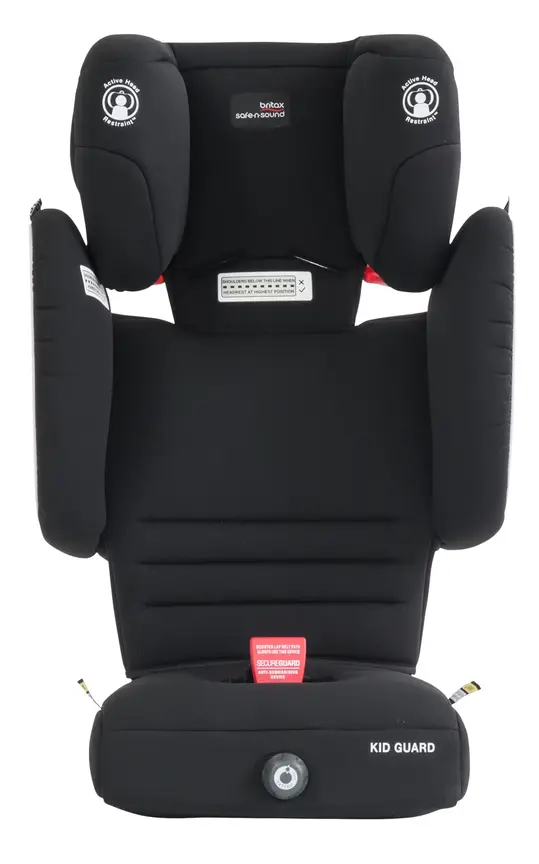
A high-back booster has a seat, a tall back, and side wings around the head (and sometimes the body). Near the top, there is a slot or clip that the shoulder part of the belt goes through. This is the shoulder belt guide. On most models, the headrest and belt guide move up as your child grows.
Good points:
- Side wings help protect your child's head in a side crash.
- The belt guide keeps the shoulder belt in the right spot.
- Supports your child's head and back if they fall asleep, so they stay upright and in the belt.
- Works in cars with low seat backs or no rear headrests.
Weak points:
- Bigger, heavier and dearer.
- Harder to fit three across in a small back seat.
- Some don't fit well against the car's seat back if the car headrest pushes them forward.
Kidsafe's guidelines say high-back boosters with side wings give more protection for the head in a side crash, and are better at keeping the belt in the correct position, even if a child falls asleep.
Car Seats & Capsules worth a look
Real products from our catalogue. We don't show star ratings or review counts; check the current price, stock and reviews on Amazon before you buy.

Britax Safe-n-Sound Hi Liner SG
A high-back booster for about 4 to 8 years. A clip keeps the seatbelt in the right place.
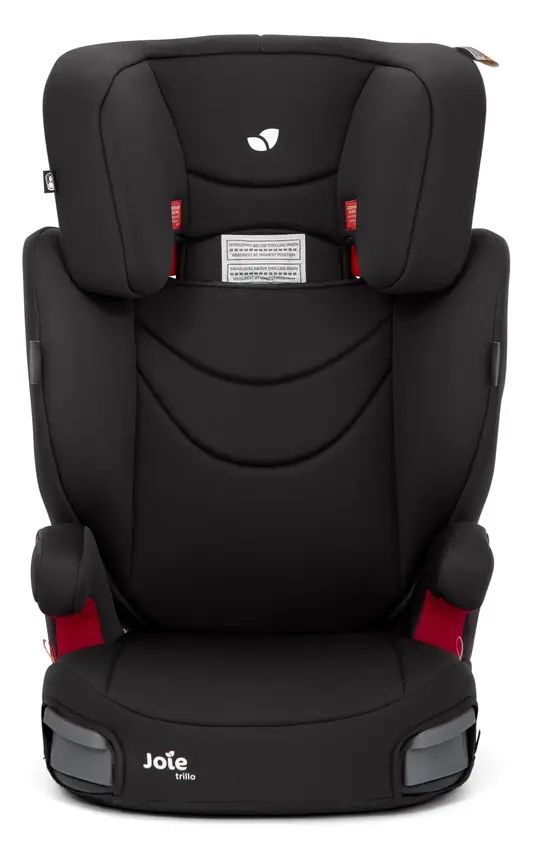
Joie Trillo
A high-back booster with a 7-position headrest that grows with your child.

Babylove ezymove Booster
A very light, low-cost booster for about 4 to 8 years. It folds flat for storage.

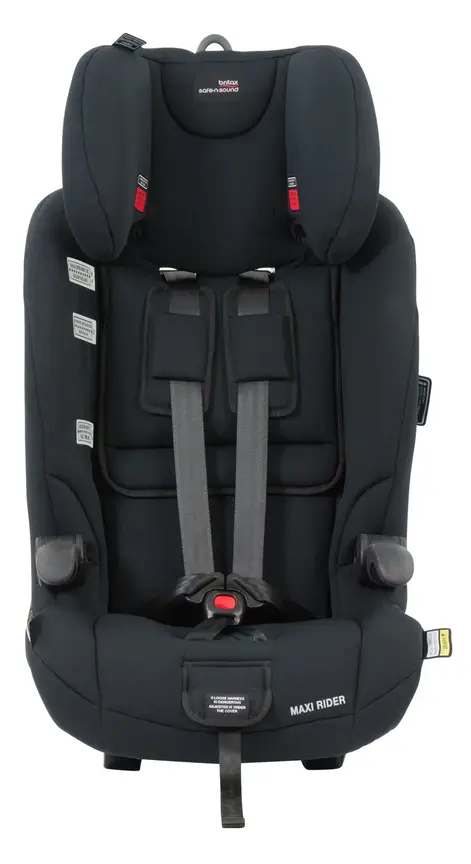
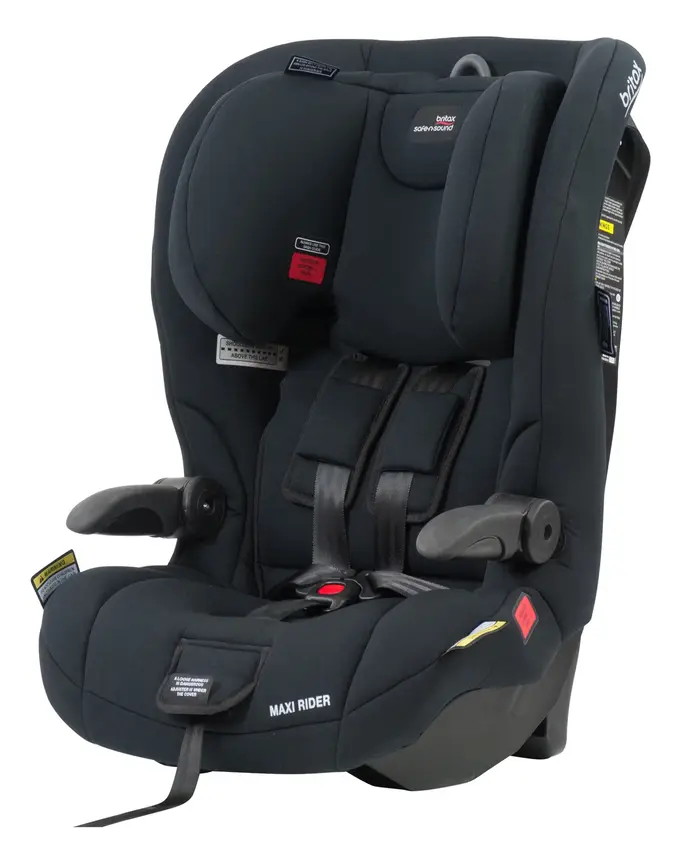
Britax Safe-n-Sound Maxi Rider
A seat with a harness from 12 months to about 4 years. Then it becomes a booster up to 6–8 years.
Read our full review →Side by side
| What to compare | Backless booster | High-back booster |
|---|---|---|
| Lifts child so lap belt sits on hips | Yes | Yes |
| Shoulder belt guide | Usually no (a few come with a separate clip on a strap) | Yes, built in and height adjustable |
| Side protection for the head | No | Yes, side wings |
| Helps a sleeping child stay upright | No | Yes |
| Needs a car headrest at ear height | Yes | No, the booster has its own headrest |
| Easy to move and carry | Very easy | Harder |
| Best for | Older, taller children in cars with high seat backs and headrests; car-pooling and short trips | Most children from leaving a harness seat until they pass the 5-step test |
The shoulder belt guide (sash guide): why it matters
The shoulder belt guide is a small slot, hook or clip. It sits beside your child's shoulder. The shoulder part of the seat belt goes through it. Its job is to pull the belt down and in, so it crosses the middle of the shoulder instead of the neck or the edge of the arm.
Kidsafe's guidelines say any part made to position the belt, such as armrests, clips and guides, should always be used, and the belt path given by the maker should be followed exactly. If the belt goes the wrong way, it can't protect your child properly.
Here is how to check it:
- Sit your child all the way back in the booster.
- Pull the belt across and put the shoulder part through the guide. Buckle it.
- Look at your child's shoulder. The belt should sit across the middle, about halfway between the neck and the edge of the shoulder.
- Move the headrest up or down until the belt sits in that spot. On most high-back boosters, the guide moves with the headrest.
- Check the lap belt goes under the armrests or through the lap guides, low over the hip bones.
Some backless boosters come with a separate clip on a strap that hooks onto the booster and holds the shoulder belt down. If yours came with one, use it as the manual shows. Don't buy a different brand's clip and add it. Only use parts that came with your booster.
Side-impact wings: what they do and don't do
In a side crash, a child's head can swing sideways and hit the door, window or another passenger. The side wings on a high-back booster are padded panels that sit beside the head. They help keep the head inside the booster and soak up some of the force.
A few things to know:
- Side wings don't replace the car's own curtain airbags. They work alongside them.
- The wings should sit beside your child's head, not above or below it. Move the headrest as your child grows.
- Some boosters have extra pads or pods marketed for side impact. A "side impact" label in a shop is a claim from the brand. Check whether your country's standard or an independent crash test program actually tested it. In Australia, the Child Car Seats website (the Child Restraint Evaluation Program) publishes independent ratings for boosters.
- Kidsafe also says to arrange children so one child's booster wings don't push into another child's space.
Booster rules in Australia, the UK, the US and Canada
| Country | Legal minimum | Best practice advice | Booster cushions |
|---|---|---|---|
| Australia | Children aged 4 to 7 must use a forward-facing car seat with a harness or a booster seat (state and territory road rules). | Kidsafe: stay in a booster until your child passes the 5-step test. Most children need one until 10 to 12 years old. | Kidsafe says booster cushions are being phased out, except ones built into cars. High-back boosters are preferred. |
| United Kingdom | Children must use a child car seat until they are 12 years old or 135 cm tall, whichever comes first. | Use a seat that fits your child's height or weight, approved under R129 or R44. | Since 9 February 2017, new booster cushion models can only be approved for children taller than 125 cm and heavier than 22 kg. |
| United States | Set by each state. | AAP: booster until the adult belt fits, usually at about 145 cm (4 feet 9 inches) and 8 to 12 years old. All children under 13 in the back seat. | Allowed. Backless is fine in cars with headrests and high seat backs; high-back is needed in cars without them. |
| Canada | Set by each province and territory. | Transport Canada: booster for children who have outgrown their forward-facing seat and weigh at least 18 kg (40 lb). | Allowed if the car seat or headrest reaches at least the top of your child's ears. |
Only use a booster approved for the country you drive in. In Australia, boosters must meet the Australian standard (AS/NZS 1754). In the UK, look for the "E" mark with R129 or R44. In the US and Canada, check the label for FMVSS 213 or CMVSS 213.
Side by side: more car seats & capsules to compare
Real products from our catalogue. We don't show star ratings or review counts; check the current price, stock and reviews on Amazon before you buy.

Britax Safe-n-Sound Atlas-GRO II Harnessed Car Seat
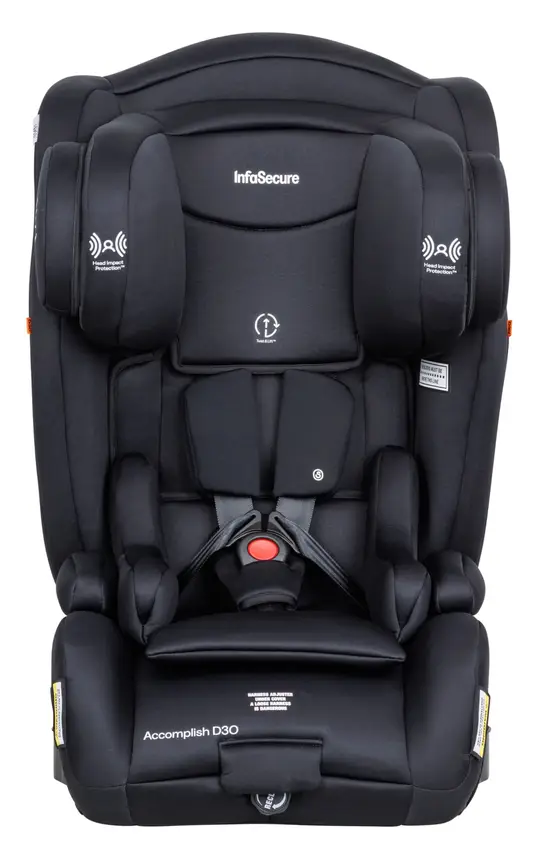
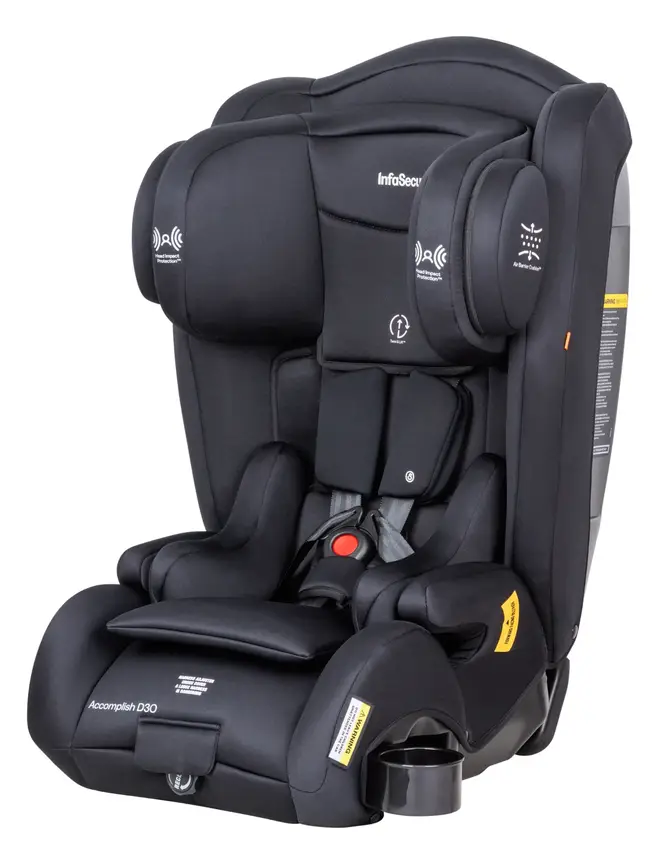
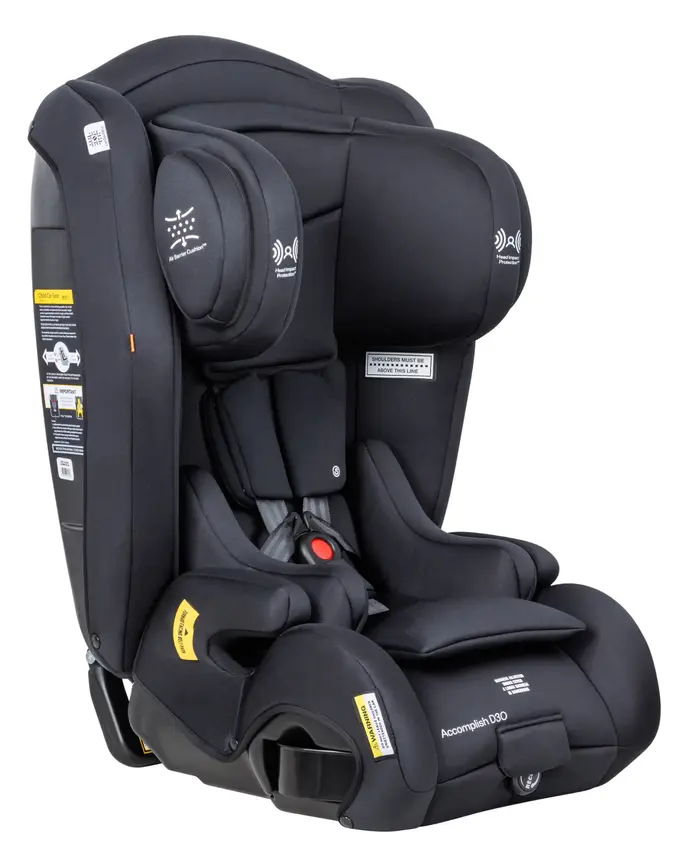
Harnessed booster seat

InfaSecure Accomplish D30
A seat with a built-in 6-point harness that can be used up to a large 8-year-old.
Read our full review →When is a child ready for a booster?
Don't rush it. Kidsafe says keep each child in their current seat until they outgrow it. A forward-facing seat with a built-in harness spreads crash forces better than a booster can.
Your child has outgrown a harness seat when:
- their shoulders are above the top shoulder height marker on the seat (on Australian seats made since 2010), or
- they are over the height or weight limit in the manual.
Even then, check whether a different harness seat in the same group would fit them for longer. Kidsafe advises using every option in the current stage before moving up.
When can a child stop using a booster? The 5-step test
Age alone doesn't tell you. The adult belt has to fit your child in your car. Kidsafe's 5-step test asks:
- Back: Can your child sit all the way back against the car seat?
- Knees: Do their knees bend comfortably over the front edge of the seat?
- Lap belt: Does the lap belt sit low across the hip bones, touching the thighs?
- Shoulder belt: Does the shoulder belt sit across the middle of the shoulder, not on the neck or out near the arm?
- Stay: Can your child stay sitting like this for the whole trip?
If the answer to any question is no, they still need a booster. Kidsafe says children who still fit a booster can have up to 3.5 times the risk of serious injury if they ride without it. A child may pass in one car and fail in another, so check each car they ride in.
How to choose a booster
- Start with a high-back booster unless you have a clear reason not to.
- Check it will last. Kidsafe warns that some boosters are outgrown before a child is ready for an adult belt. Look for a tall top height setting.
- Try it in your car. Kidsafe and Transport Canada both say to try a booster in your car before you buy. It should sit flat and the back should rest against the car seat without big gaps.
- Check the belt guides. Make sure the shoulder belt guide moves high enough and is easy to use.
- Look at the buckle. Your child needs to reach the car's buckle easily, and you need to be able to undo it fast in an emergency.
- Tether or clips? Some boosters can clip to the car's ISOFIX or LATCH points or attach to a tether. This keeps an empty booster from flying around in a crash. Kidsafe notes boosters without tethers are the biggest worry when left loose in the car.
- Check independent ratings where they exist, such as the Child Car Seats ratings in Australia.
Common mistakes
- Shoulder belt under the arm or behind the back. Kidsafe and the AAP both warn against this. It leaves the upper body with no protection and puts all the force on the tummy.
- Skipping the belt guide. The belt then cuts across the neck or slips off the shoulder.
- Lap belt over the armrests. It should go under them, low on the hips.
- Using a booster with a lap-only belt. Never do this. Boosters need a lap and shoulder belt.
- Moving to a booster too early. Keep your child in their harness seat until they outgrow it.
- Leaving an empty booster loose. Buckle it in or clip it to the car when it's empty.
- Taking the back off too soon. Some high-back boosters turn into cushions. Keep the back on for as long as it fits. The UK Child Car Seats site says it is far better to keep the back on.
- Thick coats. A puffy coat lifts the belt off the body. Take bulky jackets off before buckling up.
- Sitting in the front seat. Kidsafe says children 12 and under are safest in the back seat.
Carpools, taxis and travel
A light backless booster can seem handy for carpools and trips. If you use one, make sure the car's headrest is at least ear height and the shoulder belt sits mid-shoulder. Kidsafe says children should use the right restraint for their size in taxis, ride-share and hire cars too, even if the law doesn't require it there. Some families keep a high-back booster in the main car and a travel booster only for short, occasional trips.
More options, from budget to premium
Real products from our catalogue. We don't show star ratings or review counts; check the current price, stock and reviews on Amazon before you buy.

InfaSecure Roamer II Convertible Booster Seat
Harnessed booster seat

Mother's Choice Kin AP Convertible Booster Seat
Harnessed booster seat
 Reviewed
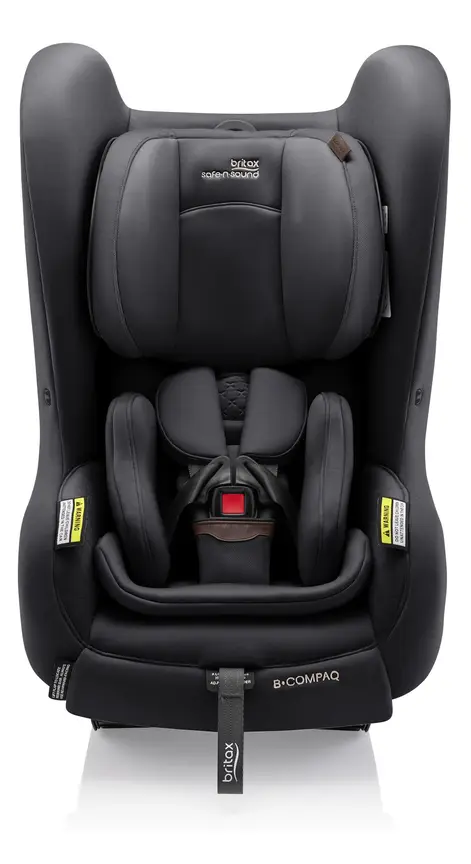
Britax Safe-n-Sound B-Compaq Lux
A convertible seat made for small cars with little room in the back.
Read our full review →FAQ
Is a backless booster legal?
In most places, yes, if it is approved for your country and suits your child's size. In the UK, new booster cushion models have only been approved for children over 125 cm and 22 kg since February 2017. In Australia, Kidsafe says booster cushions are being phased out and high-back boosters are preferred.
What age should my child move to a high-back booster?
Go by size, not age. Move up when your child outgrows their harness seat's top height marker or weight limit. In Australia, children aged 4 to 7 must use either a harness seat or a booster by law.
Can I use a booster in the middle seat?
Only if that seat has a lap and shoulder (lap-sash) belt. Never use a booster with a lap-only belt. Kidsafe says the middle seat is safer in a side crash, but having a lap-sash belt matters more.
The shoulder belt touches my child's neck. What do I do?
Raise or lower the headrest so the shoulder belt guide puts the belt across the middle of the shoulder. If it still touches the neck, try a different booster or a different seat position. Don't let your child put the belt behind them.
Do boosters expire?
Many do. Check the label or manual. Product Safety Australia advises not to use a second-hand car seat that is more than 10 years old, has been in a crash, or doesn't come with instructions.
Is a high-back booster safer than a forward-facing harness seat?
No. For children who still fit a harness seat, the harness gives better protection. Kidsafe says to stay in the harness seat until your child outgrows it.
Should a booster be clipped in with ISOFIX or LATCH?
It's helpful if your booster has this feature, mainly so the booster stays put when empty and is more stable. The seat belt is still what holds your child. Follow the manual.
Can my child fall asleep in a booster?
Yes, but a high-back booster is better for this, because it helps keep their head and body in the belt. Kidsafe encourages children to sit upright with their head back against the seat, but says not to try to reposition a child while driving.
Sources
- Kidsafe Australia / NeuRA – National best practice guidelines for the safety of children in motor vehicles
- Product Safety Australia (ACCC) – Car seats guide
- GOV.UK – Child car seats: the law
- Child Car Seats (UK, RoSPA) – Types of seat, including the booster cushion rule change
- AAP HealthyChildren.org – Car seats: information for families (booster seats)
- Transport Canada – Stage 3: booster seats
- Transport for NSW – Child car seats
Related guides
More Car Seats & Travel →
Booster Seats for Children Aged 4 to 8: Sash Guides, Side-Impact Tests and How Ratings Work
Infant Seat, Convertible Seat or Booster? Choosing the Right Car Seat for Each Stage

Dining Table Booster Seats: Chair Straps, Child Harnesses and Non-Slip Bases Explained