Travel Car Seat Carts and Backpacks: Moving Through Airports Without Carrying Heavy Gear
How to choose and use travel car seat carts, backpacks and wheeled bags at the airport. Compare options and check safety rules in AU, the UK, US and Canada.
On this page
- Key points
- What travel car seat carts, backpacks and bags are
- Why you should not carry a heavy car seat on your hip
- Side-by-side comparison of airport car seat carriers
- Age and car seat stages at the airport
- How to choose a cart, backpack or travel bag
- Official guidance and rules: Australia, the UK, the US and Canada
- Step-by-step: getting through the airport with your car seat
- How to protect your car seat when you must check it
- Common mistakes to avoid
- Airport car seat checklist
- Frequently asked questions
- Sources
Short answer: A car seat is heavy and awkward to carry through a long airport terminal. You have four main ways to move it. You can use a folding car seat cart, a padded car seat backpack, a wheeled car seat bag, or a luggage strap. If you plan to use the seat on the plane, pick a compact cart or backpack. Make sure it fits in the overhead locker when folded. If you check the seat at the gate or bag drop, use a thick padded bag. Always check the seat for hidden damage before you drive.
Aviation and road safety bodies agree on flying with children. This includes the Civil Aviation Safety Authority (CASA) and Product Safety Australia (ACCC) in Australia. In the UK, it includes the Civil Aviation Authority (CAA), the Office for Product Safety and Standards (OPSS), and RoSPA. In the US, it includes the Federal Aviation Administration (FAA), the Transportation Security Administration (TSA), and NHTSA. In Canada, it includes Transport Canada and CATSA. All of these groups say to bring your own familiar car seat when you fly. They also say to use an approved car seat on the plane whenever you can.
Key points
- Best place on a flight: Buckle the car seat into a paid plane seat. Check that the seat is approved for planes in your country and accepted by your airline.
- Second best option: Gate-check the seat at the boarding bridge. Put it inside a thick, padded backpack or wheeled bag. It will ride on fewer conveyor belts this way.
- Least safe option: Checking the seat at the main ticket desk in a thin plastic sack. Heavy suitcases can crush the frame or crack the foam inside.
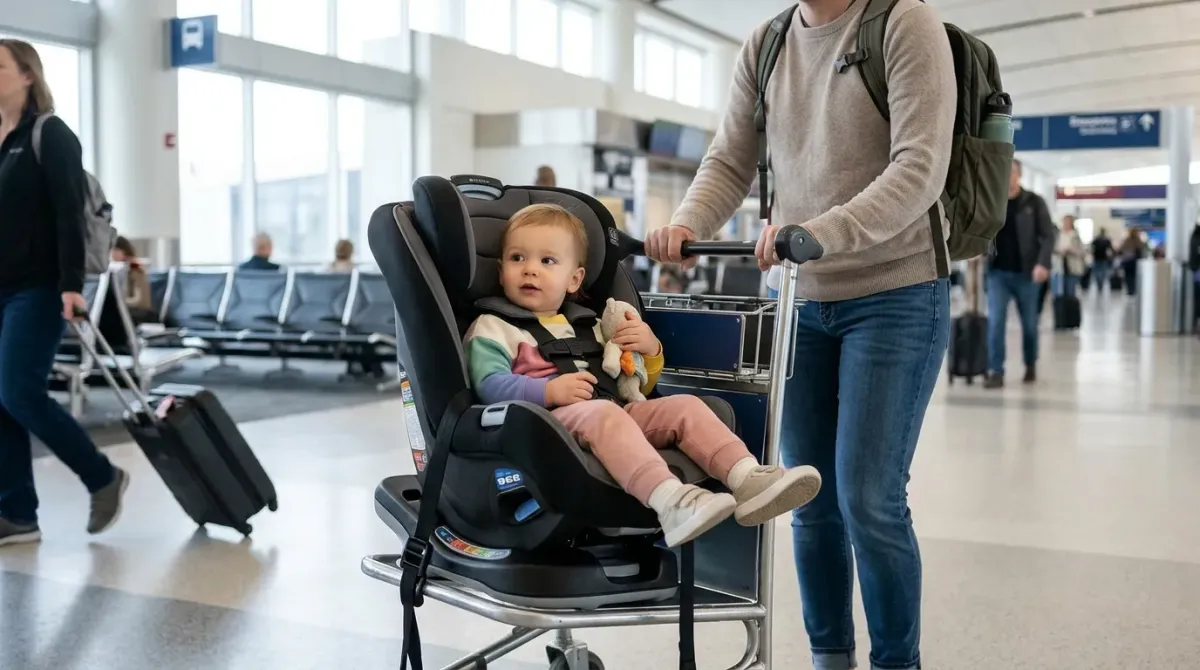
- Carts vs backpacks: A wheeled cart lets you roll the seat down the hall. Some carts let your toddler ride in the seat while you pull it. Always check the cart manual first. A backpack keeps both hands free. You can push a pram or hold a child's hand.
- Car safety rule: Never use a travel bag, carry strap, or cart inside a car. Travel gear is only for walking through the airport.
- Look after your back: Carrying a heavy seat on one hip twists your spine. Roll the load on wheels instead. Or wear it evenly on two padded shoulder straps.
What travel car seat carts, backpacks and bags are
An infant capsule is small and light. It has a carry handle and often clips straight onto your pram frame. Travel gets much harder once your child outgrows the capsule. Next, they move into a convertible car seat or a harnessed booster. These bigger seats have wide plastic shells and steel bars inside. They also have deep side wings. They cannot clip onto a pram. They are also far too heavy to carry under one arm for a long walk.
Parents use five types of airport gear to move a big car seat from the car park to the plane door.
1. Folding car seat cart (dolly or trolley)
A car seat cart is a small, flat metal or plastic frame. It has two or four wheels at the bottom and a long pull handle. You sit your car seat on the flat base. Then you strap it down tightly. Some carts use built-in belts. Other carts clip onto your car seat's lower anchor bars. When you reach the plane door, you unclip the car seat. The cart folds flat in seconds. It is small enough to slide into the overhead locker or under the plane seat in front of you.
2. Padded car seat backpack
A car seat backpack is a giant zip-up bag shaped like a car seat. The walls are lined with thick foam padding. On the back, it has two padded shoulder straps, a chest clip, and a waist belt. You place the car seat inside, zip the bag shut, and wear it on your back like a hiking pack. Both of your hands stay completely free. You can push a stroller, hold boarding passes, or hold a toddler's hand. You can use a backpack to carry the seat to the gate. You can also leave the seat inside the bag when you gate-check it.
3. Wheeled car seat bag
A wheeled car seat bag looks like a padded backpack. However, it has a stiff bottom board and two or four roller wheels on the base. You pull it behind you by a top handle, just like a rolling suitcase. Many wheeled bags also have hideaway backpack straps. You can roll the bag on smooth floors and wear it on your back on stairs. Because the base has rigid parts and wheels, these bags do not fold down as small as soft backpacks. Most parents check the wheeled bag along with the car seat at the boarding gate.
4. Unpadded gate-check sack
A gate-check sack is a thin nylon or polyester bag. It usually comes in bright red, orange, or black with a big "Gate Check" label printed on the side. It has no foam padding at all. It folds into a tiny pouch that fits in your nappy bag. Its only job is to keep airport dirt, grease, and rain off your car seat cover. It also keeps loose straps tucked inside so they do not catch on baggage belts. A thin sack will not protect your car seat if it is dropped.
5. Luggage tether strap
A luggage strap is the smallest and simplest tool. It is a strong nylon belt with a heavy buckle. You thread the strap through the belt path on the back of your car seat. Then you loop it around the top handle of your rolling carry-on suitcase. Your car seat hangs against the front of your suitcase. Your suitcase wheels carry the weight as you walk. When you reach the plane, you unbuckle the strap, roll it up, and put it in your pocket. This works best with a light car seat and a sturdy four-wheel or two-wheel cabin bag.
Why you should not carry a heavy car seat on your hip
Airport walks are much longer than they look on a terminal map. Think about the whole trip. You walk from the car park or bus stop to the check-in desk. Then you stand in the bag drop queue. Next, you walk through security screening. Finally, you walk down long corridors to a distant departure gate. You might walk and stand for thirty minutes or more before you sit down.
Convertible car seats are heavy and wide. Even a basic travel seat feels awkward because the weight sits far out from your body. When you hook a car seat over one arm or prop it on one hip, your spine bends sideways. One shoulder hikes up while your lower back twists to hold the load.
Physiotherapists warn against this kind of uneven lifting. Groups like the American Physical Therapy Association (ChoosePT) and UK NHS postnatal physiotherapy teams (Pelvic, Obstetric and Gynaecological Physiotherapy, or POGP) give clear advice for parents. Carrying heavy loads on one hip strains your lower back, neck, shoulders, and wrists. It also puts heavy downward pressure on your pelvic floor.
This is extra important in the first year after giving birth. Pregnancy hormones keep your ligaments and joints softer for months after delivery. Your tummy muscles and pelvic floor are still healing. Lifting a bulky car seat onto one hip can trigger back pain before your holiday even starts. Using wheels or a two-strap backpack with a waist belt spreads the load evenly. It keeps your spine straight. It also leaves your hands free to catch a toddler who runs toward a busy walkway.
Car Seats & Capsules worth a look
Real products from our catalogue. We don't show star ratings or review counts; check the current price, stock and reviews on Amazon before you buy.

Babylove ezymove Booster
A very light, low-cost booster for about 4 to 8 years. It folds flat for storage.
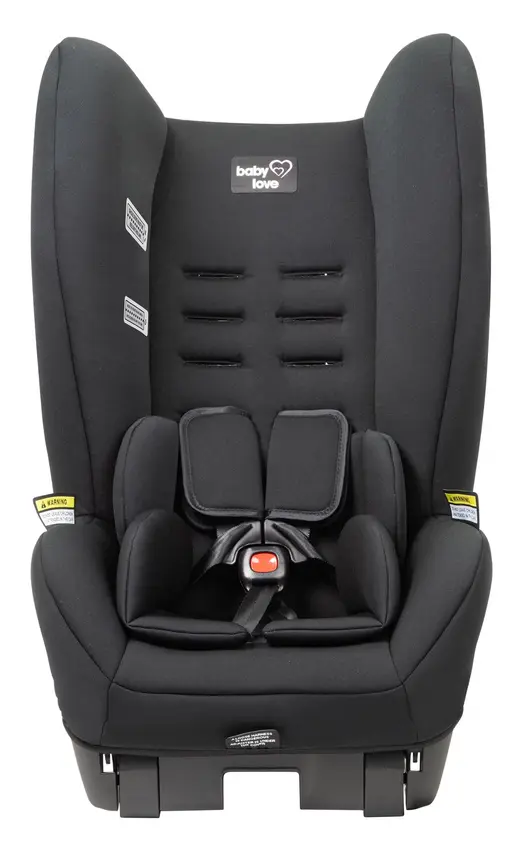
Babylove ezyone2
A very low-cost convertible seat. Rear-facing to about 12 months, then forward-facing to about 4 years.
 Reviewed
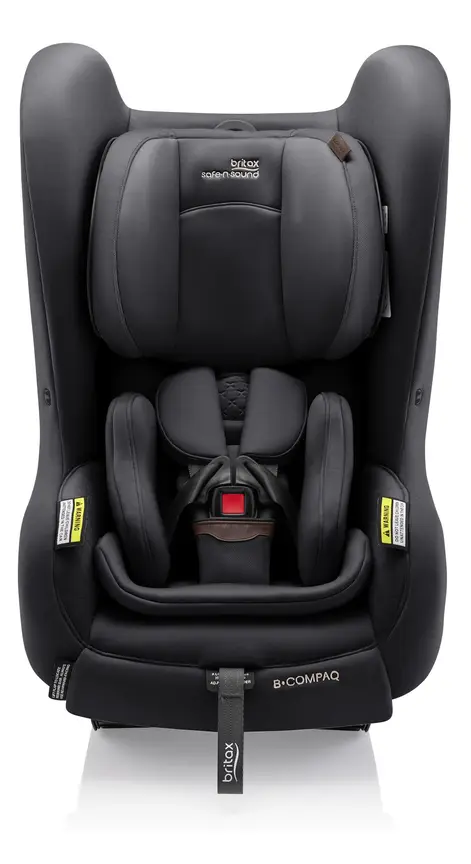
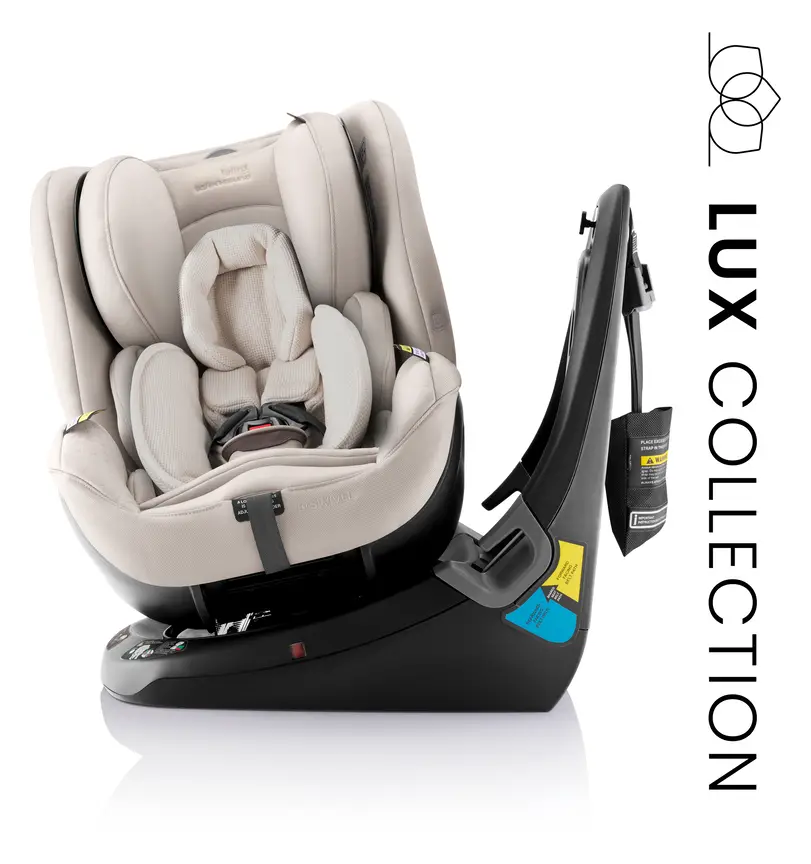
Britax Safe-n-Sound B-Compaq Lux
A convertible seat made for small cars with little room in the back.
Read our full review →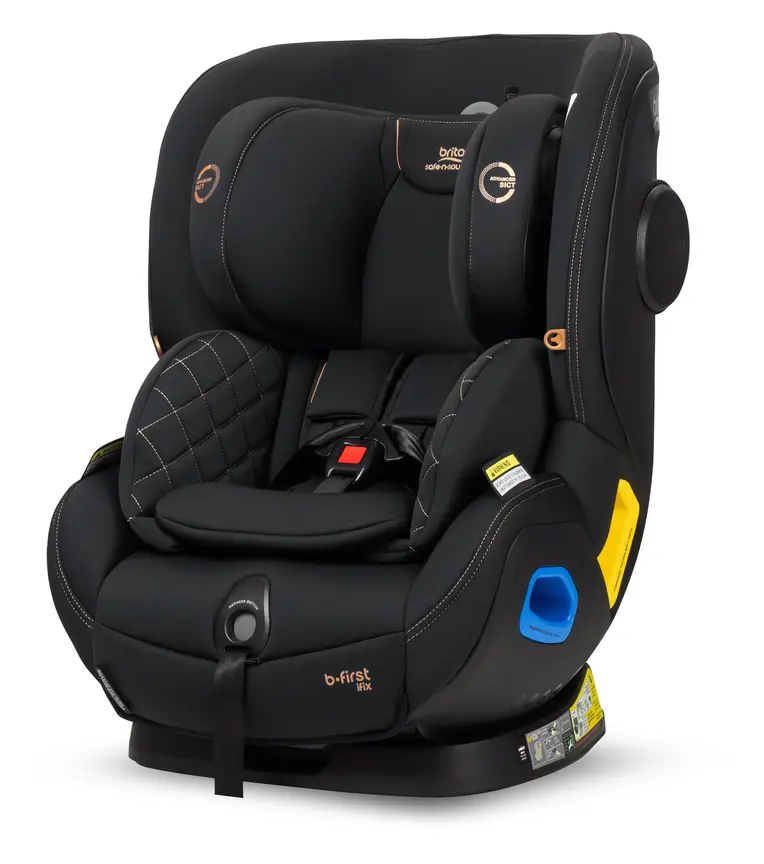
Britax Safe-n-Sound b-first+
Convertible seat from Britax's Australian Safe-n-Sound range with SICT deployable side-impact protection.
Side-by-side comparison of airport car seat carriers
Each carrying method solves a different travel problem. Think about how your family travels before you buy. Are you flying alone with your child, or with another adult? Are you bringing a pram as well? Will the car seat go onto the plane seat, or into the cargo hold? Use the table below to compare the five main options.
| Carrier type | How it moves the seat | Drop and bump protection | Hands free? | Where it goes on the plane | Best for |
|---|---|---|---|---|---|
| Folding car seat cart | Rolls on wheels behind you. | None. The seat is open unless bagged at the gate. | One hand pulls the handle. | Folds into overhead bin. Seat goes on plane seat or is gate-checked. | Using the car seat on the plane, or solo parents without a pram. |
| Padded car seat backpack | Worn on both shoulders. | Good against scrapes and light knocks. Does not stop crushing. | Both hands stay completely free. | Folds flat in overhead bin, or stays on a gate-checked seat. | Parents pushing a pram or holding two children's hands. |
| Wheeled padded bag | Rolls on built-in bag wheels. | Good foam padding plus a stiff base plate. | One hand pulls the bag. | Stays on the car seat when checked at the gate or bag drop. | Heavy all-in-one seats when you cannot carry weight on your back. |
| Thin gate-check sack | Short grab handle or simple strap. | Dirt and grease protection only. Zero impact padding. | Needs one or two hands to carry. | Stays on the car seat in the cargo hold. | Carrying the seat on a pram to the gate, then covering it at the door. |
| Luggage tether strap | Clips the seat to your rolling carry-on bag. | None. | One hand pulls suitcase and seat together. | Fits in your pocket. Seat goes on the plane seat. | Light packing when you already roll a sturdy cabin bag. |
Age and car seat stages at the airport
The carrier you need changes as your child grows. Road safety authorities in Australia, the UK, the US, and Canada divide car seats into three main stages. Each stage works differently at the airport.
Stage 1: Newborn and infant capsules (rear-facing)
Most families do not need a separate car seat cart or giant backpack for an infant capsule. A baby capsule has a built-in carry handle. It usually clicks straight onto your pram frame using small plastic adapters. At the airport, you push your baby in the pram all the way to the boarding gate. If you bought a plane seat for your baby, you unclip the capsule at the plane door. Then you fold the pram frame for the ground crew and carry the capsule on board by its handle.
Remember safe sleep rules while waiting at the airport. Red Nose Australia, The Lullaby Trust in the UK, the American Academy of Pediatrics (AAP), and Caring for Kids in Canada all share the same warning. Car seats and capsules are for safe transport, not for long sleeps outside the car. A young baby has a heavy head and weak neck muscles. In an angled capsule, their head can flop forward so their chin presses on their chest. This can narrow their breathing pipe. If your flight is delayed, do not leave your baby sleeping in the capsule for hours. Take them out regularly. Hold them in your arms, lay them flat in a bassinet pram, or wear them safely in a baby carrier with their face clear and chin up.
Stage 2: Convertible car seats and harnessed forward-facing seats
This is the hardest stage for airport travel. Once your baby outgrows their capsule, they move into a convertible seat. They use this seat rear-facing first, and later forward-facing with a built-in 5-point or 6-point harness. These seats do not clip onto prams. They are tall, wide, and heavy.
A folding car seat cart, wheeled bag, or padded backpack makes a huge difference at this stage. If your convertible seat fits down the plane aisle and is approved for flight use, pick a folding cart or a luggage strap. You can wheel the bare seat right to your plane row. If you are gate-checking the seat, pick a padded backpack or wheeled bag. It protects the plastic shell and foam liner. It also keeps the long top tether strap and lower anchor belts safely inside the bag so they cannot jam in airport machinery.
Stage 3: High-back boosters and backless boosters
Older children use a booster seat with the car's adult lap-and-shoulder seatbelt. Travelling with a booster is much easier, but there is one strict flight rule to know first. You cannot use a booster seat on an aeroplane seat during a flight. Aviation regulators—including CASA in Australia, the CAA in the UK, the FAA in the US, and Transport Canada—ban standard belt-positioning boosters in flight. Plane seats only have a lap belt. A booster seat needs a shoulder belt to hold your child in place.
You still need the booster seat for the rental car, taxi, or family car when you land. If you bring a high-back booster, carry it to the gate in a padded backpack and gate-check it. Many high-back boosters have a backrest that unclips from the base, so both pieces fit flat inside a padded bag. If your child uses a simple backless booster cushion, it is light and small. You can pack it inside a large suitcase, clip a carry strap to it, or bring it into the cabin to store in the overhead locker.
How to choose a cart, backpack or travel bag
Not every travel bag or cart fits every car seat. Check these six points before you spend your money.
1. Measure your car seat first
Never guess your car seat's size. Convertible car seats vary a lot in height, width, and depth. Seats with big side-impact cushions, wide cup holders, or anti-rebound bars are much wider than slim travel seats. Lower your car seat's headrest all the way down. Put the recline foot in its most upright or folded position. Then use a tape measure to check the height, width, and depth at the widest points. Compare your numbers with the inside measurements of the backpack or the base plate of the cart.
2. Check how the cart attaches to your car seat
Car seat carts hold the seat in one of two ways. Some carts have metal bars built into the base. You clip your car seat's lower anchor connectors (called ISOFIX in Australia and the UK, LATCH in the US, and UAS in Canada) onto those metal bars. That works well in the US and Canada, where almost every convertible seat has flexible lower anchor straps under FMVSS 213 and CMVSS 213.
However, check your seat carefully in Australia and the UK. In Australia (under AS/NZS 1754), many seats install with the car seatbelt and a top tether strap only, with no ISOFIX connectors at all. In the UK (under UN R129 and UN ECE R44), many toddler seats have rigid metal ISOFIX arms or a heavy attached base leg that will not line up with a small US-style cart. If your car seat does not have flexible lower anchor straps, buy a universal cart that secures the seat with strong wrap-around tie-down belts instead.
3. Check wheel quality and stability
Small, hard plastic wheels rattle loudly and get stuck in floor cracks, carpet edges, and lift doors. Look for a cart or wheeled bag with larger rubber or polyurethane wheels and smooth bearings. A wider wheelbase is much harder to tip sideways when you turn a sharp corner.
Some folding carts are advertised as "ride-on" carts. They let your toddler sit buckled inside the car seat while you pull them through the airport like a stroller. Only do this if the cart manufacturer clearly states the cart is tested and rated to carry both the weight of the seat and the weight of your child. Never put a child into a car seat strapped onto a standard luggage trolley or a rolling suitcase. It will tip over backwards.
4. Look closely at backpack straps and stitching
A basic nylon bag with thin shoulder straps is painful to wear when loaded with a heavy car seat. Thin straps dig into your neck and can rip away from the top seam when you lift the bag. If you choose a backpack, look for features found on good hiking packs:
- wide, curved shoulder straps with thick foam padding;
- a chest strap (sternum strap) that clips across your front to stop the shoulder straps slipping off;
- a padded waist belt that shifts weight off your shoulders and onto your hips;
- reinforced box-stitching where the straps join the bag body;
- strong grab handles on the top and front so you can lift the bag onto security belts with two hands.
5. Check fabric strength and padding thickness
Airport baggage chutes, cargo floors, and concrete tarmac are rough on fabric. Thin polyester tears easily when slid across a cargo hold. Look for heavy-duty water-resistant canvas or thick woven nylon (often listed as 600D or higher). Check that the foam padding covers the side wings and the back of the seat, not just the front. Raised plastic skid bars on the bottom of the bag also stop the fabric from wearing through when you set it down on the pavement.
6. Check the folded size and weight
Remember what happens once you take the car seat out of the bag or off the cart at the plane door. If you are installing the car seat in the cabin, you have to bring the folded cart or empty backpack onto the plane with you. Check the folded measurements before you buy. A good cart folds flat enough to fit in a standard overhead locker or under the seat in front of you. A soft padded backpack should fold in half or roll up secured with its own straps.
Official guidance and rules: Australia, the UK, the US and Canada
Car seat carts, backpacks, and gate-check bags do not have their own crash-test standard. That is because they are luggage accessories for walking through the terminal. They are never used during a car ride or a flight. However, strict national rules apply to the car seat inside the bag, how it is screened at airport security, and whether you can legally use it when you land.
| Rule or body | Australia | United Kingdom | United States | Canada |
|---|---|---|---|---|
| Road safety standard | AS/NZS 1754 (mandatory under Product Safety Australia / ACCC). | UN R129 (i-Size) or UN ECE R44 (GOV.UK, OPSS, and RoSPA). | FMVSS 213 (regulated by NHTSA). | CMVSS 213 (regulated by Transport Canada). |
| Aviation safety body | Civil Aviation Safety Authority (CASA). | Civil Aviation Authority (CAA). | Federal Aviation Administration (FAA). | Transport Canada (Civil Aviation). |
| Airport security body | Department of Home Affairs (TravelSecure). | Department for Transport / UK airport security. | Transportation Security Administration (TSA). | Canadian Air Transport Security Authority (CATSA). |
| Child sleep safety body | Red Nose Australia. | The Lullaby Trust and NHS. | American Academy of Pediatrics (AAP). | Health Canada and Canadian Paediatric Society (Caring for Kids). |
| Using a foreign seat on local roads | Not allowed. Road rules require the AS/NZS 1754 label. | Only seats approved to UN R129 or UN ECE R44 are legal on UK roads. | Requires FMVSS 213 label. Check state rules for short visits. | Requires the CMVSS 213 National Safety Mark on Canadian roads. |
Crucial warning for international trips
Before you pack a heavy car seat for an overseas holiday, check the road laws of the country you are visiting. A car seat that is legal at home is often illegal to use in a car in another country:
- Travelling to Australia: Product Safety Australia (ACCC), Kidsafe, and state road bodies like Transport for NSW state that every car seat used in an Australian vehicle must carry the AS/NZS 1754 certification tick. Australian rules require a top tether strap on all baby capsules and harnessed seats. Car seats bought in the US, the UK, Europe, or Canada almost never have the AS/NZS 1754 label. Visitors cannot legally use them in Australian cars.
- Travelling to Canada: Transport Canada states that car seats used on Canadian roads must have the Canadian National Safety Mark showing they meet CMVSS 213. If you visit from outside Canada, check Transport Canada rules or arrange a locally approved seat at your destination.
- Travelling to the United Kingdom: GOV.UK and RoSPA state that only child car seats approved to UN R129 (i-Size) or UN ECE R44 may be used on UK roads. US, Canadian, and Australian seats without a UN approval label do not meet UK road law.
- Travelling to the United States: NHTSA regulates car seats under FMVSS 213. Foreign visitors should check local state laws or arrange an FMVSS 213 seat for road trips.
Using your car seat on the plane vs checking it
In the United States, the FAA and the American Academy of Pediatrics (HealthyChildren.org) strongly advise parents to buy a plane ticket for infants and young toddlers. They recommend buckling your child into an approved car seat on the plane rather than holding them on your lap. Transport Canada gives the same advice for Canadian flights. CASA in Australia and the CAA in the UK also allow approved child car seats to be used on board when you book a seat for your child.
Using your car seat in the plane cabin does two great things at once. First, it keeps your child safely strapped in during take-off, landing, and sudden air turbulence. Second, it keeps your car seat out of the baggage hold. That means baggage handlers cannot lose it or drop heavy suitcases on it.
Look at the stickers on the side of your car seat before you go to the airport. In the US, look for red lettering that says the restraint is certified for use in motor vehicles and aircraft. In Canada, look for the CMVSS 213 National Safety Mark (Transport Canada accepts harnessed seats with this mark on planes). In Australia and the UK, check your airline's website. They list which AS/NZS 1754, UN R129, or UN ECE R44 labels and seat widths fit their aircraft seats.
What if you are flying with a lap infant or your car seat is too wide for the plane seat? Then gate-checking is much better than checking the seat at the main bag drop desk. When you gate-check, you wheel or carry the seat to the plane door. Staff carry it down to the cargo hold after the main luggage is loaded, and they bring it back to the plane door when you land. It avoids the long, fast automated conveyor belts in the main baggage system.
Side by side: more car seats & capsules to compare
Real products from our catalogue. We don't show star ratings or review counts; check the current price, stock and reviews on Amazon before you buy.
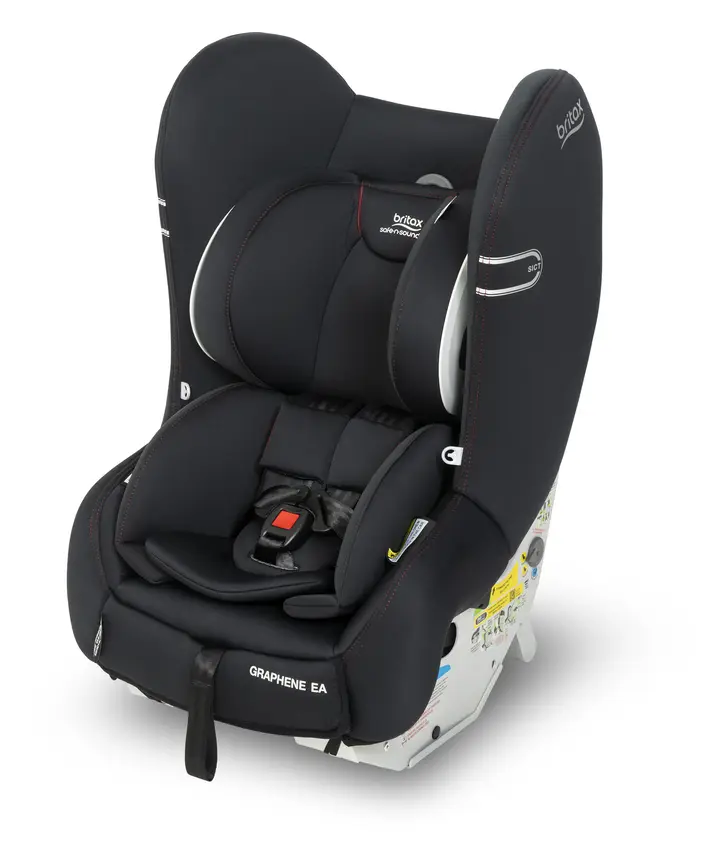
Britax Safe-n-Sound Graphene EA
Britax's Australian convertible seat with SICT side-impact technology, designed to reduce crash energy reaching your child's chest.

Britax Safe-n-Sound Hi Liner SG
A high-back booster for about 4 to 8 years. A clip keeps the seatbelt in the right place.

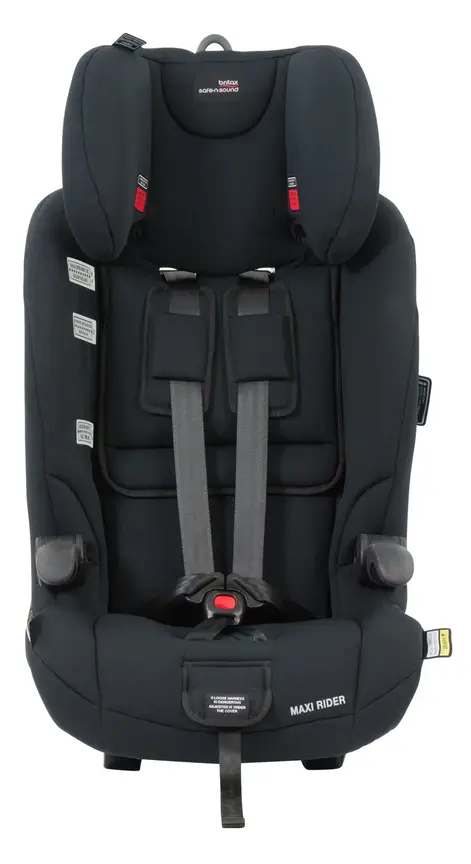
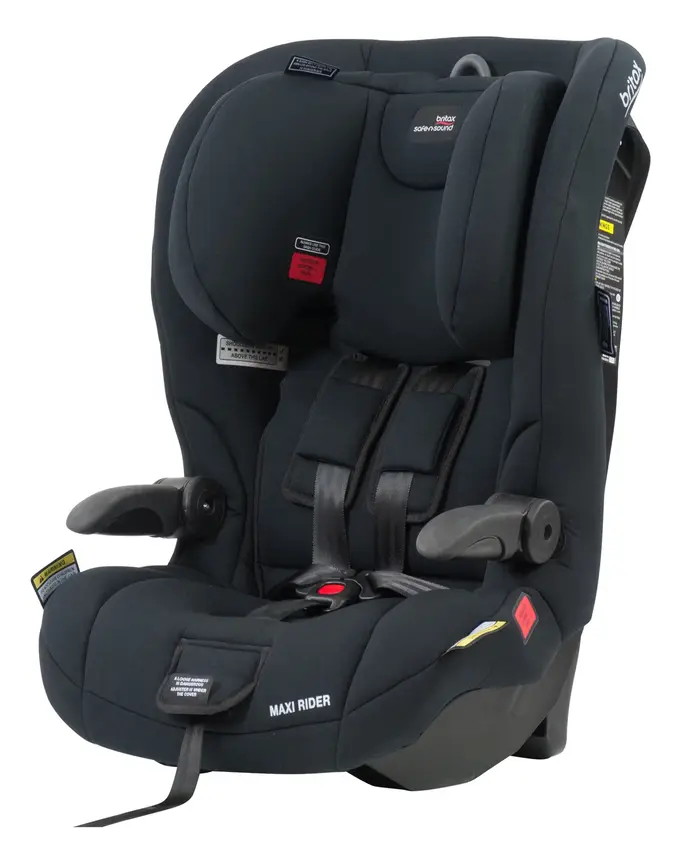
Britax Safe-n-Sound Maxi Rider
A seat with a harness from 12 months to about 4 years. Then it becomes a booster up to 6–8 years.
Read our full review →Step-by-step: getting through the airport with your car seat
A little preparation at home saves a lot of stress in a crowded terminal. Follow these seven steps on travel day.
Step 1: Strip off loose parts at home
Before you leave for the airport, take off anything that can snap off or go missing. Remove clip-on cup holders, snack trays, sun canopies, and dangling toys. If your child has outgrown the newborn head pillow or body insert, leave those at home too. Pack the cup holders inside your main hard suitcase so they do not get crushed.
Step 2: Buckle and tighten every strap
Long webbing straps love to catch on cart wheels, door hinges, and conveyor belts. Do up the chest clip and the main crotch buckle on the car seat harness. Pull the tightening strap so the harness sits flat against the seat pad. Next, clip the top tether hook and the lower anchor connectors onto their storage hooks on the plastic shell. If your seat does not have storage hooks, tuck the straps neatly behind the fabric cover.
Step 3: Lower the headrest and fold the base
Slide the adjustable headrest down to its lowest setting. This makes the car seat shorter so it fits easily inside a backpack and through X-ray machines. It also braces the headrest wings against the main body of the seat so they cannot bend during handling.
Step 4: Get your gate-check tag early
If you plan to gate-check your car seat, tell the staff member at the check-in desk or at the gate counter as soon as you arrive. They will print a paper tag and loop it onto your car seat or travel bag. Always put a luggage tag with your name and phone number on the car seat itself, AND a second tag on the outside of the travel bag. If the bag tag rips off, staff can still find your name inside.
Step 5: Passing through airport security
Security rules are similar at TravelSecure checkpoints in Australia, TSA lanes in the US, CATSA lanes in Canada, and UK airport security. Every car seat, folding cart, and travel bag must be screened.
- Take your baby or toddler out of the car seat or pram before you reach the X-ray belt. Carry your child in your arms as you walk through the metal detector.
- If your seat is on a folding cart, unbuckle the seat from the cart. Fold the cart flat and lay it on the X-ray belt.
- Place the car seat onto the X-ray conveyor belt. Most infant capsules and slim convertible seats fit through the X-ray tunnel when laid on their side.
- Do not force a wide convertible seat into the tunnel if it looks too tall. It can jam on the rubber curtains inside. Simply tell the security officer that the seat is too big for the tunnel. They will take it around the side and do a quick hand and swab check instead.
Step 6: At the boarding gate
Ask the gate staff if families with young children can board first. Early boarding gives you quiet time to deal with the car seat before the aisle fills up with other passengers.
- If using the car seat on the plane: Take the car seat off the cart or out of the backpack while you are still in the gate waiting area. Fold the cart or roll up the backpack right away. Walk down the narrow plane aisle carrying the car seat high above the seat armrests, or carry it upside down in front of you. Put the car seat in the window seat (airlines require car seats to go by the window so they do not block the row exit). Slide your folded cart or bag into the overhead locker.
- If gate-checking the car seat: Put the car seat into your padded backpack or wheeled bag in the gate area. Zip the bag shut all the way. Fasten the backpack straps together or tuck them inside their zip pocket so they cannot dangle. Leave the bagged seat at the spot shown by the crew on the jet bridge.
Step 7: Inspect the car seat when you land
If your car seat rode in the plane's cargo hold, open the bag as soon as you pick it up. Do a two-minute safety check before you install it in a rental car or taxi:
- Look over the hard plastic shell for cracks, dents, or white stress lines (plastic turns white when it bends sharply).
- Lift the edge of the fabric cover around the head wings and feel the foam liner underneath. Make sure the foam is not cracked or snapped in two.
- Buckle the harness and pull the adjuster strap to make sure it tightens and releases smoothly.
NHTSA, Transport Canada, RoSPA, and Product Safety Australia all warn that a cracked or damaged car seat may not protect your child in a crash. If the airline damaged your seat, report it at the airline baggage service desk before you leave the airport terminal, and ask them for a loan seat while they sort out a replacement.
How to protect your car seat when you must check it
Sometimes you have no choice but to check a car seat. Maybe your seat is too wide for a small regional plane, or you are travelling with two car seats and only one adult. You can add extra protection inside your padded backpack or wheeled bag using simple household items.
- Protect the side wings: Cut a clean cardboard box or a foam pool noodle and place it over the top of the headrest wings before sliding the seat into its padded bag. This helps absorb bumps if another bag slides against it in the hold.
- Pad the belt path and recline foot: Wrap a soft baby blanket or a clean bath towel around the plastic base and recline lever.
- Never pack hard or heavy objects inside the bag: Do not put shoes, tins of formula, books, wipes boxes, or metal water bottles inside the car seat bag. If the bag is dropped, a heavy object inside the bag acts like a hammer against the car seat's foam liner.
Common mistakes to avoid
- Using a car seat bag as a sneaky extra suitcase. Many parents stuff nappies, coats, and holiday clothes into the empty space inside a car seat backpack. First, heavy items can press against the harness and crack the safety foam inside the seat. Second, airlines know this trick well. Check-in staff often ask parents to unzip the bag. If they see clothes and gear packed inside, they can charge you a full oversized baggage fee on the spot.
- Leaving a travel bag or strap attached inside a car. Never install a car seat in a car or plane while it is sitting on a folding cart or wrapped in a travel bag. Nothing may sit between the car seat and the vehicle seat unless the car seat maker approves it.
- Taking a car seat cart or wheeled bag onto an escalator. A heavy car seat makes a cart top-heavy. On an escalator step, the wheels can roll off the edge and tip the whole load down the metal stairs. Always use the airport lift (elevator), especially when you have a child with you.
- Letting a child ride on a cart that is not built for riding. Standard luggage trolleys and suitcase straps are only meant to move an empty car seat. Only let your child sit in the car seat while rolling through the airport if the cart maker specifically tests and approves the cart for child riding. Even then, keep your child buckled in the 5-point harness and keep your hand on the handle every second.
- Leaving shoulder straps loose when checking a backpack. Dangling shoulder straps, chest clips, and waist belts get caught in baggage rollers and cargo doors. That can rip the strap off your bag or damage the car seat inside. Tuck all straps behind the bag's cover flap, or buckle them tightly across the flat side of the bag before handing it over.
- Dragging a backpack without wheels across the car park. Even thick canvas wears through fast if you drag a heavy car seat across rough concrete. Lift a non-wheeled backpack by its handles until it is on your back, or buy a wheeled bag with plastic skid rails on the base.
- Waiting until you reach the airport to test the fit. Do a dry run in your living room a few days before your flight. Practice strapping the car seat onto the cart or sliding it into the backpack. Make sure the zips close easily and you know how to fold the cart with one hand.
Airport car seat checklist
| Do | Don't |
|---|---|
| Use an approved car seat on the plane seat whenever possible. | Check a car seat at the main desk in a thin plastic bag if you can avoid it. |
| Measure your car seat's height, width, and depth before buying a bag or cart. | Assume a "universal" backpack will fit a wide all-in-one car seat. |
| Remove cup holders and clip-on accessories before leaving home. | Leave cup holders attached where they can snap off in transit. |
| Buckle the harness and stow the top tether and lower anchor straps flat. | Let long webbing straps trail on the floor near wheels or escalators. |
| Use lifts (elevators) at the airport when rolling a cart or pram. | Take a car seat cart, wheeled bag, or stroller onto an escalator. |
| Check that your car seat is legal to use on the roads at your destination. | Use a foreign car seat on roads where local safety labels are required by law. |
| Inspect the plastic shell and foam liner after any flight in the cargo hold. | Pack shoes, tins, or heavy gear inside your car seat travel bag. |
More options, from budget to premium
Real products from our catalogue. We don't show star ratings or review counts; check the current price, stock and reviews on Amazon before you buy.

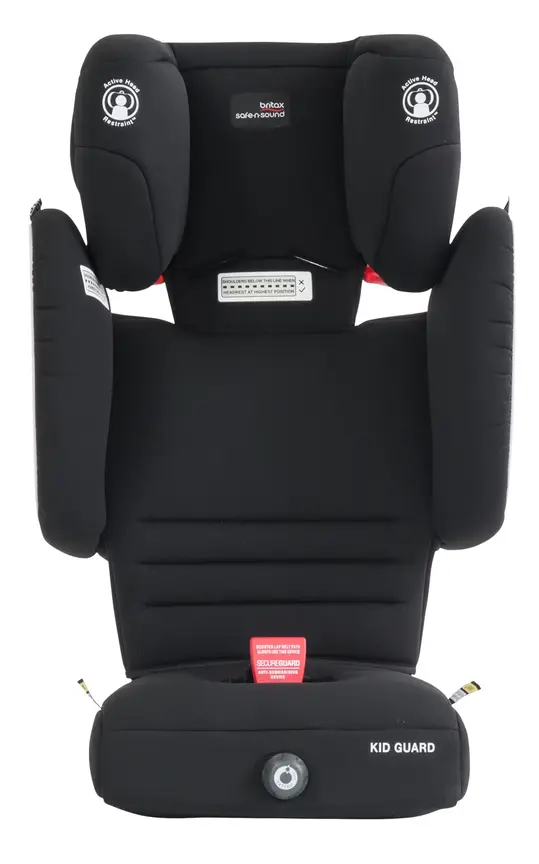
Britax Safe-n-Sound Atlas-GRO II Harnessed Car Seat
Harnessed booster seat

Britax Safe-n-Sound QuickFix Convertible Car Seat
Convertible car seat (ISOFIX)
Frequently asked questions
Is it better to buy a car seat cart or a car seat backpack?
It depends on how you plan to board the plane and what else you are carrying. Pick a folding car seat cart if you are installing the car seat on the plane seat, or if you want wheels to take the weight off your back and shoulders on smooth terminal floors. Pick a padded car seat backpack if you plan to gate-check the seat at the boarding door, or if you need both hands completely free to push a pram and hold a child's hand.
Do airlines charge extra to check a car seat in a travel backpack or wheeled bag?
Most airlines in Australia, the UK, the US, and Canada let families travelling with a baby or young child check one car seat for free. You can usually check it at the bag drop desk or at the boarding gate. However, the travel bag must hold only the car seat. If you pack clothes, nappies, or shoes inside the bag, the airline can treat it as normal luggage and charge an extra bag fee. Always check your airline's family baggage rules before you fly.
Will a padded car seat backpack stop my car seat from getting damaged in the hold?
A padded backpack or wheeled bag protects the seat cover from dirt, grease, and rips. It keeps straps from snagging on belts, and the foam walls soften light knocks. However, soft foam cannot stop heavy crushing damage if a heavy crate falls on the bag in the cargo hold. The FAA, NHTSA, and Transport Canada all say the safest place for a car seat on a plane is buckled into a cabin seat. If you must check the seat, gate-checking it in a padded bag is safer than checking it at the main ticket desk.
How do I take a car seat cart and car seat through airport security?
Airport security agencies—including TravelSecure in Australia, TSA in the US, CATSA in Canada, and UK airport security—screen all baby gear. Before you reach the X-ray machine, take your child out of the car seat. Unstrap the car seat from the folding cart, fold the cart flat, and put both pieces onto the X-ray belt. If your car seat is too tall or wide to fit through the X-ray tunnel, do not force it. Ask a security officer to do a hand inspection instead.
Can I use my own car seat in a rental car when I fly to another country?
Often, no. Road laws are strict about local safety labels. In Australia, car seats used on the road must have the AS/NZS 1754 label and a top tether strap. In Canada, seats must carry the CMVSS 213 National Safety Mark. In the UK, seats must meet UN R129 or UN ECE R44. In the US, seats must meet FMVSS 213. Check the road rules of your destination before hauling a heavy car seat overseas. You may need to hire or buy a locally approved car seat when you arrive.
Can I strap my car seat onto my rolling carry-on suitcase instead of buying a cart?
Yes, if your car seat is fairly light and your carry-on suitcase is stable. A simple luggage tether strap loops through the car seat's belt path and clicks around your suitcase handle. This lets you roll both pieces with one hand and folds into your pocket on the plane. However, never let your child sit in the car seat while it is strapped to a regular suitcase. A normal suitcase is not balanced for a child's weight and can easily tip over.
Sources
- Product Safety Australia (ACCC) – Car seats guide
- Australian Department of Home Affairs – What you can and can't bring through airport security
- GOV.UK – Child car seats: the rules
- The Lullaby Trust (UK) – Car seats
- FAA (US) – Flying with children
- TSA (US) – Traveling with children
- AAP HealthyChildren.org – Flying with baby
- CATSA (Canada) – Families
Related guides
More Car Seats & Travel →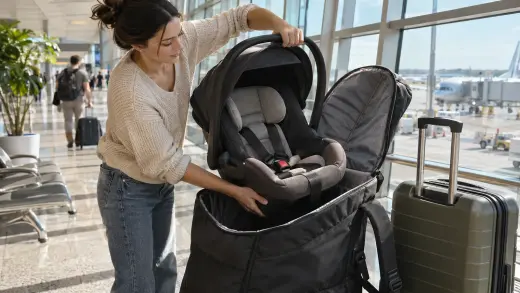
Car Seat Travel Bags and Backpacks: How to Protect Your Seat on Trips
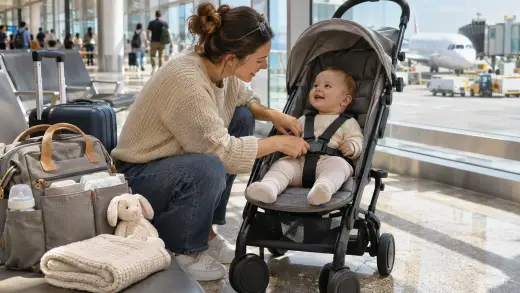
Baby Travel Gear: What You Need for Safer, Easier Trips

Travelling with Kids: How to Choose and Use a Convertible Travel Car Seat