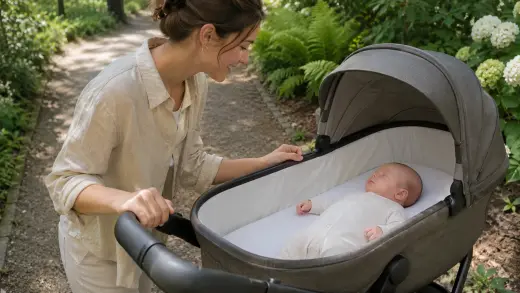
Bassinet Strollers: What They Are, How They Help New Parents, and How to Use One Safely
What a bassinet stroller is, how it helps with a newborn, how to choose one, and the safety rules that matter, with advice from AU, UK, US and Canadian…

On this page
- Key points
- What a bassinet stroller is
- How a bassinet stroller can make life easier
- What a bassinet stroller does not do
- Safe sleep and the pram bed
- Bassinet stroller or other choices: a side-by-side look
- Safety rules and standards in four countries
- How to choose a bassinet stroller
- Using a bassinet stroller safely every day
- Heat, cold and weather
- Bassinet stroller by age: what to expect
- Common mistakes to avoid
- Cleaning and care
- Cost and when to buy
- Who should think twice
- Tips for the first weeks
- Frequently asked questions
- The bottom line
- Sources
Short answer: A bassinet stroller is a pram with a flat, firm bed for a young baby. It lets your newborn lie flat while you walk. It helps most in the first months, when a baby cannot sit up yet. It can make outings easier. But it is a ride, not a bed. For sleep at home, your baby should be in a cot or bassinet that is made for sleeping, on their back, in your sight.
Health and safety groups agree on this in Australia (Product Safety Australia and Red Nose), the UK (the Office for Product Safety and Standards and The Lullaby Trust), the US (the Consumer Product Safety Commission and the American Academy of Pediatrics) and Canada (Health Canada and the Canadian Paediatric Society).
Key points
- Flat bed: a young baby needs to lie flat, so the bassinet part should be firm and flat.
- Short use: most families use the bassinet for the first six months or so. Check the maker's label for the age and weight limit.
- Safety first: use the brakes, use the harness and keep your baby in view.
- Not a cot: a pram bed is for rides and short rests. Use a proper cot or bassinet for sleep at home.
- Standards: look for proof that the pram meets the rules where you live.
- Fit your life: think about your car boot, your stairs, your footpaths and your height.
What a bassinet stroller is
A bassinet stroller gives a newborn a safe place to lie flat while you move. Some people call it a pram. Some call it a carrycot stroller. The names change from country to country, but the idea is the same.
The bed is a shallow basket or shell. It has a firm base and sides that sit up around your baby. Most have a hood that pulls over to block sun and wind. Some have a cover for cold or wet days.
There are a few common types. They look alike in shops, so it helps to know the difference.
Pram with a separate bassinet
This has a frame with wheels. The bassinet clips on top. Later, you swap it for a seat. Many families like this style. The bassinet is often larger and flatter than other choices.
Stroller seat that lies flat
Here the seat reclines all the way to a flat position. There is no separate bed. It is lighter and cheaper to store. But check that it really goes flat and that the base is firm. A seat that only leans back is not the same thing.
Travel system
A travel system has a frame that takes a car seat (often called a capsule) and sometimes a bassinet too. You can click the car seat on the frame and walk. This is handy for short trips. But a car seat is not a good place for a baby to stay for long. More on that below.
Convertible or all-in-one prams
These grow with your child. The same frame holds a bassinet, then a seat, and sometimes a second seat. They can be good value if you plan more than one child. They are often heavy and large.
How a bassinet stroller can make life easier
The old post for this page listed many perks. Some were real. Some were just sales talk. Here are the ones that hold up.
Your baby can lie flat
A newborn has weak neck muscles. Their back is soft and still forming. A seat that holds them upright can slump them forward. That can squash the chest and the airway. A flat bed avoids this problem. This is the main reason a bassinet stroller exists.
You can move a sleeping baby without waking them
Many babies drift off when a pram rocks gently. With a bassinet, you can lay your baby down, tuck them in and head out. When you arrive, you do not have to lift them. Some bassinets lift off the frame and carry like a basket. That can help, but only if the carry handles are strong and you follow the maker's rules.
You get out of the house
Fresh air and a walk help many tired parents. They can lift your mood. A pram that is easy to push makes you more likely to go out. That matters in the early weeks when you feel stuck at home.
You can see your baby
Many bassinets face you. You can see your baby's face and check on them. You can talk and smile. This is better than a seat that faces away, where you cannot see if your baby is okay. In the first months, being able to see your baby matters most.
You can carry your things
Most prams have a basket below. It holds a nappy bag, shopping and a jacket. This saves your back and arms. Do not hang heavy bags on the handles, though. They can tip the pram over.
It protects against sun, wind and rain
A hood and a cover give shade and shelter. Still, a hood does not make the sun safe. Cancer Council Australia and other groups say young babies need shade, and that a pram cover is not a full answer. In hot weather, covers can trap heat. We cover that later.
It can grow with you
Some bassinet prams turn into a seat stroller. You buy one frame and use it for years. That can save money. But a cheaper plan may be to buy a simple, light stroller later.
What a bassinet stroller does not do
Sales pages sometimes claim too much. A bassinet stroller will not make a baby sleep better. It will not stop crying. It will not replace a cot. And a more costly pram is not always a safer pram.
The old post also talked about cup holders and snack trays. Those are for older children in seats. A newborn does not eat snacks. Those features matter later, if at all.
The old post also said a bassinet can be used for 'sleeping' in the same way as a cot. That is not safe advice. A pram is made to move. A cot is made to sleep in. The rules for each are different.
Prams & Strollers worth a look
Real products from our catalogue. We don't show star ratings or review counts; check the current price, stock and reviews on Amazon before you buy.
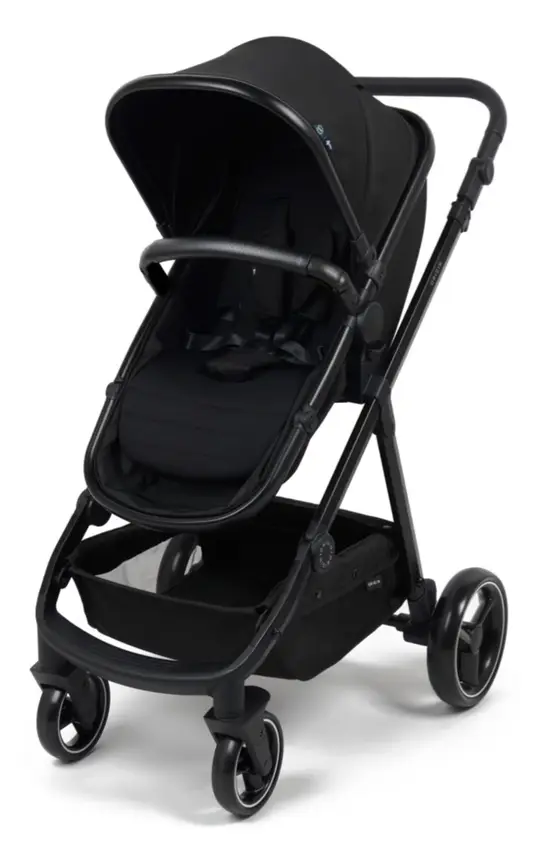
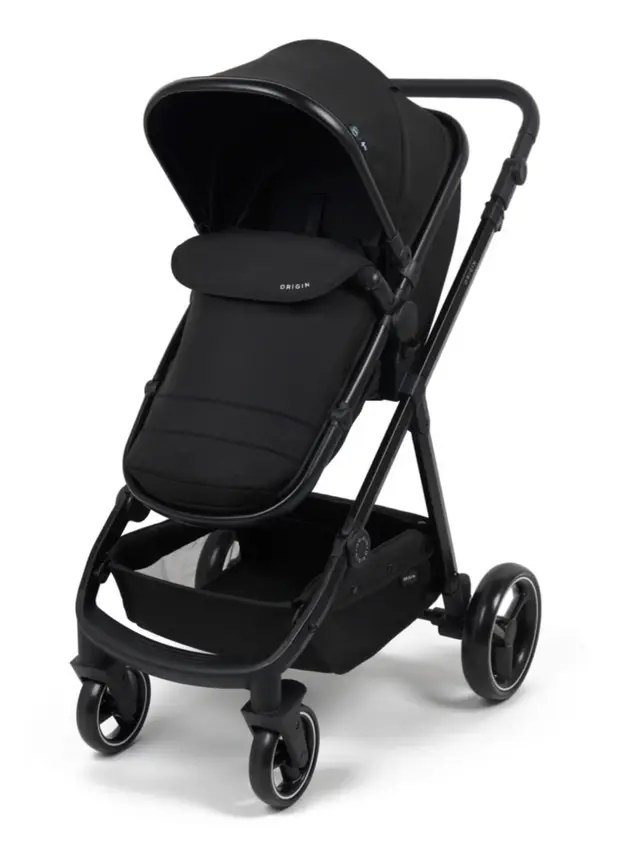
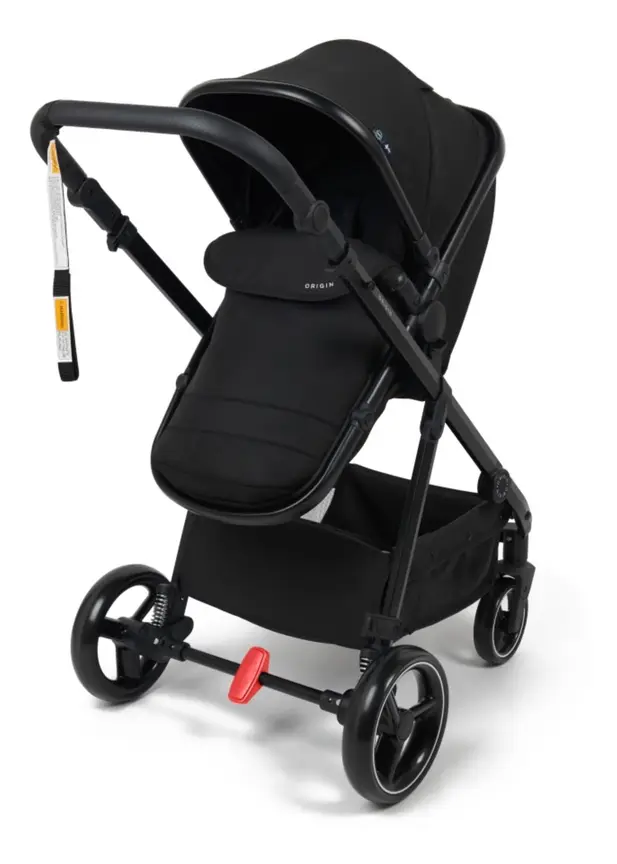
4baby Origin Stroller
A budget pram whose seat turns into a bassinet. The seat can face you or face the world.
Read our full review →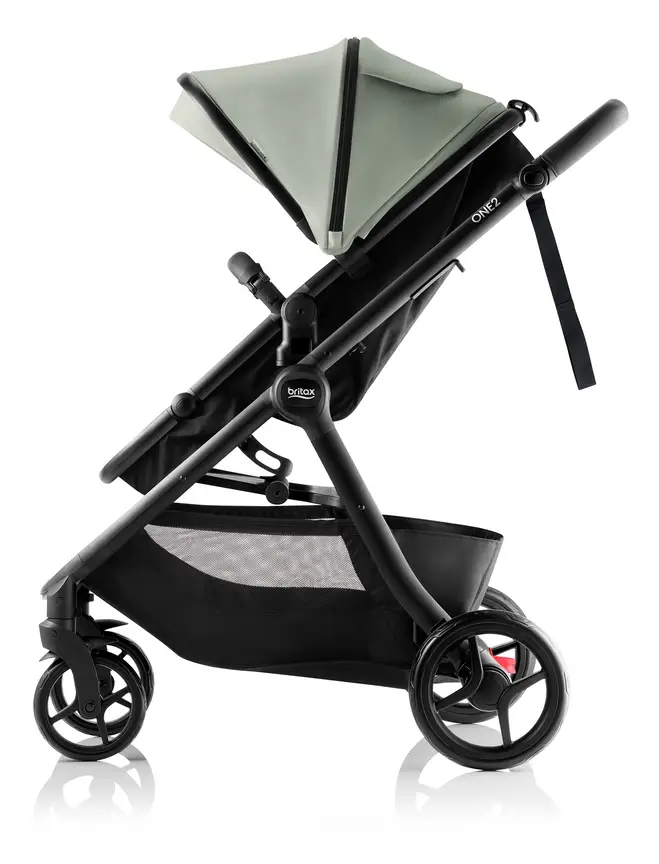
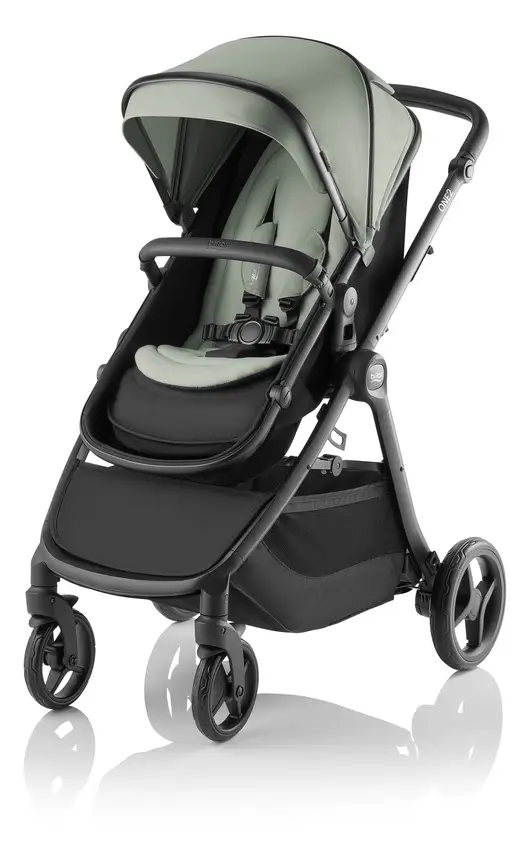


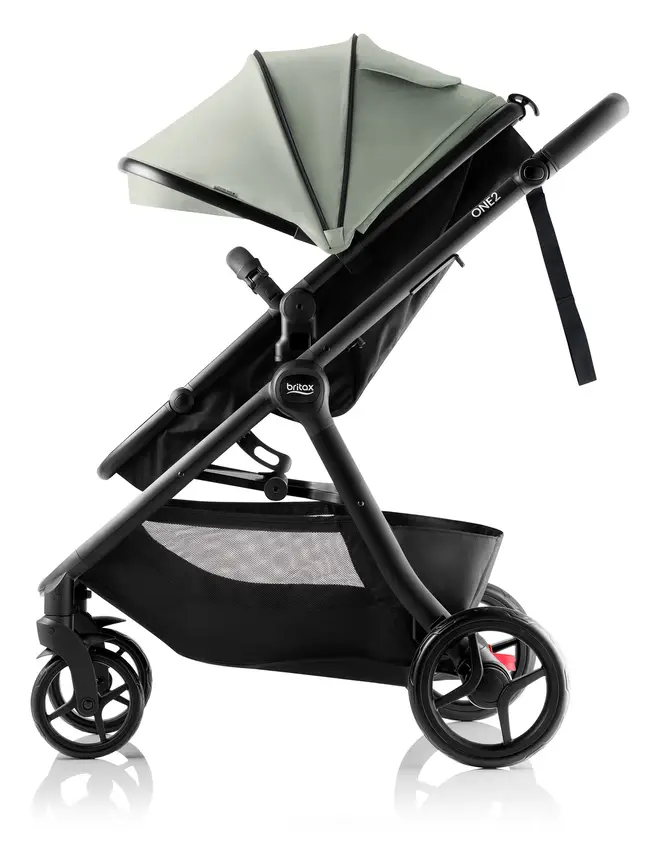


Britax One2
A pram that starts as a single and can take a second child. The seat turns into a lie-flat bassinet.
Read our full review →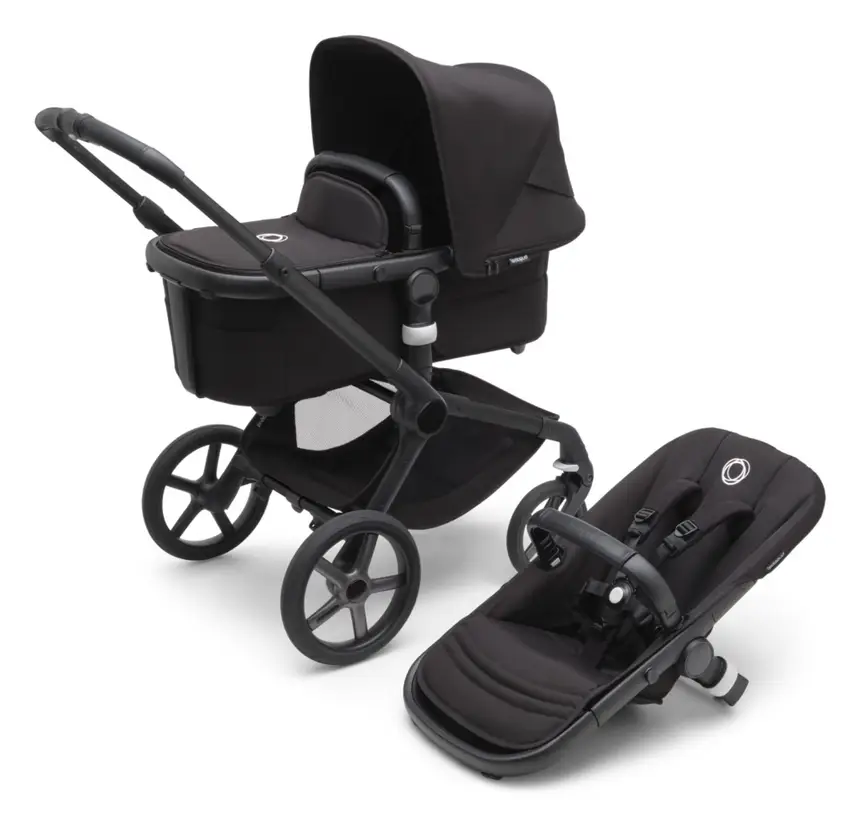 Reviewed
Bugaboo Fox 5
Bugaboo's flagship all-terrain pram: big-wheel suspension ride, one-piece fold, bassinet from birth and a seat rated to 22 kg.
Read our full review →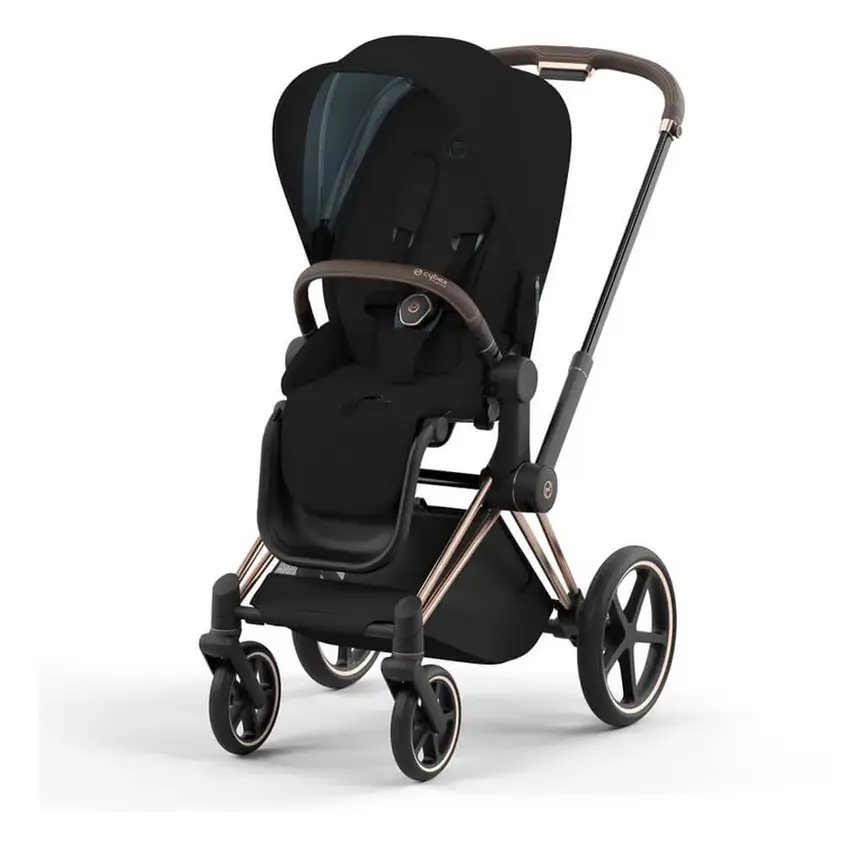
Cybex Priam
Fashion-forward luxury pram with interchangeable seat/bassinet units and an all-terrain option.
Safe sleep and the pram bed
Safe sleep rules are the same for all babies. They come from groups such as Red Nose in Australia, The Lullaby Trust in the UK, the American Academy of Pediatrics in the US and the Canadian Paediatric Society.
- Put your baby on their back to sleep.
- Use a firm, flat sleep surface.
- Keep the face and head uncovered.
- Keep soft items out of the bed. That means pillows, soft toys and loose blankets.
- Share your room with your baby, but not your bed.
- Keep your baby smoke-free before and after birth.
A pram bassinet can be a safe spot for a baby who falls asleep on a walk. The base must be flat and firm. Your baby must be on their back. You must be near and able to see their face. Do not leave a sleeping baby alone in a pram.
At home, move your baby to a cot or bassinet made for sleeping. If your baby sleeps in the pram bed on a walk and you reach home, lift them out. Do not leave them to sleep on in the pram inside the house while you do other things.
Do not add padding
Some parents add pillows, rolled towels or extra mattresses to make a bassinet feel cosier. Red Nose has warned about social media hacks with baby gear. Adding padding can cover the face or change how safe the product is. Use only the mattress that came with the bassinet, and only what the maker says is fine.
Tummy time is not for the pram
Tummy time is good for babies. But it should happen on a firm floor with you watching. It should not happen in a pram or a car seat. A baby on their tummy in a soft or tilted place can get stuck with their face down.
Do not let your baby sleep in a car seat when you are not driving
A baby in a car seat, or a car seat clipped on a pram frame, is not lying flat. The head can fall forward. That can make breathing harder. Red Nose and other groups say a car seat is only for travelling in the car. Take your baby out as soon as you get where you are going. Use the car seat on a frame for short, supervised trips only, and move your baby to a flat bed as soon as you can.
Bassinet stroller or other choices: a side-by-side look
This table shows how the main options compare for a newborn. Prices and brands vary a lot, so we do not list them here. Always check the label of any product you buy.
| Choice | Lies flat? | Good for | Watch out for |
|---|---|---|---|
| Pram with separate bassinet | Yes, usually the flattest | Newborns. Long walks. Parents who want to see their baby. | Bigger and heavier. You may need a second seat later. |
| Stroller seat that reclines flat | Yes, if it goes fully flat | Small homes. One product for years. | Some do not go fully flat. The base may be soft. Check this in the shop. |
| Travel system with car seat on the frame | No, a car seat holds a baby in a curved shape | Short trips from car to shop. | Not for long stays or for sleep. Move your baby to a flat bed. |
| Baby carrier or sling | No, but baby is held upright and close | Close contact. Crowded places. Stairs. | Must be worn correctly so the baby's airway stays clear. |
| Convertible all-in-one pram | Yes in bassinet mode | Families who may have more than one child. | Heavy. Costly. Large to fold. |
There is no best choice for every family. A parent who lives up three flights of stairs may want a light frame. A parent with a big boot and a long walk to the shops may want a larger pram.
Safety rules and standards in four countries
Prams and strollers are covered by rules in each country. The rules are not the same everywhere. The idea is the same: make prams stable, with working brakes and a harness, and with no parts that can trap or hurt a child.
| Country | Who sets or explains the rules | Standard you may see | What to do |
|---|---|---|---|
| Australia | Product Safety Australia (run by the ACCC) | AS/NZS 2088 for prams and strollers. It is a mandatory standard. | Read the Product Safety Australia prams and strollers guide. Check for recalls. |
| UK | Office for Product Safety and Standards (OPSS) | BS EN 1888 for strollers. BS EN 1130 for carrycots. | Buy from a trusted seller. Read the label and the manual. |
| US | Consumer Product Safety Commission (CPSC) | ASTM F833 for carriages and strollers. | Check recalls on the CPSC site. Follow the maker's age and weight limits. |
| Canada | Health Canada | There are national rules for carriages and strollers. We describe them in words here. | Check Health Canada's recalls and safety alerts page. |
A code on a label is a good sign, but it is not a promise that every product is perfect. Some products are faked or sold with false labels. Buy from known sellers. Keep the manual. Register your product with the maker if you can, so they can tell you if there is a recall.
What the rules cover
These rules generally look at things like:
- how stable the pram is, so it does not tip easily;
- how well the brakes hold it still;
- the harness that keeps a child in;
- gaps and hinges where fingers or heads could get caught;
- how the pram folds, so it does not close on a child by accident;
- small parts that could come off.
For a bassinet or carrycot, the rules also look at the bed itself. They look at how deep the sides are, how firm the base is and how well the bed attaches to the frame.
Second-hand prams
Many families buy second-hand. That can save money. But take care. An old pram may not meet today's rules. Parts may be worn or missing. Brakes may be weak. The harness may be frayed. Check recalls with the product safety body in your country. Ask for the manual. Test the brakes and the folding lock. If anything feels loose, do not use it.
How to choose a bassinet stroller
Do not buy online without thinking. If you can, go to a shop. Push the pram. Fold it. Lift it. Here is a plain checklist.
Check the bed
- Is the base flat and firm?
- Is the mattress snug, with no gaps at the sides?
- Are the sides high enough to keep your baby in?
- Is there a harness or other way to hold your baby?
- Does the bed lock firmly to the frame? Tug it to check.
- Can you take the bed off and carry it? Is the handle sturdy?
Check the brakes and frame
- Does the brake stop all the wheels, or just the rear ones?
- Can you apply it with your foot, and in sandals?
- Does the pram feel steady when you let go on a gentle slope?
- Does the frame feel solid, with no wobble?
- Is there a wrist strap or tether? Use it, especially on hills.
Check how it fits your life
- Weight: can you lift it into your car on your own?
- Folded size: will it fit in your boot, hallway or cupboard?
- Handle height: can the handle be set to suit your height? Pushing with a bent back hurts.
- Wheels: big, air-filled wheels cope with grass and rough paths. Small plastic wheels are fine for smooth city footpaths.
- Turning: can you steer it in a tight shop aisle?
- Folding: can you fold and open it with one hand? You will often hold a baby in the other.
Check how long it will last
- What age or weight does the bassinet go up to? Read the label, not the advert.
- Does the frame take a seat after the bassinet?
- Can you buy spare parts, like wheels and covers?
- Does it take a car seat, if that matters to you?
Check the extras
- Does the hood give real cover? A bigger hood gives more shade.
- Is there a rain cover that is made for the pram? Do not buy a cover that does not fit.
- Is there a mesh panel for air flow in hot weather?
- Is the basket big enough, and can you reach it with the bassinet on?
Using a bassinet stroller safely every day
A good pram is only safe if you use it well. These habits matter.
- Read the manual first. Keep it somewhere you can find it. It tells you the age and weight limits.
- Set up the bed properly. Click it in. Pull on it to check that it is locked.
- Use the harness. Even in the bassinet, if there is a harness, use it as the maker says.
- Put your baby on their back. Keep the face clear. Do not tuck blankets above the chest.
- Apply the brakes when you stop. Do this every time, even on flat ground.
- Do not hang heavy bags on the handle. They can make the pram tip back.
- Keep your hands and your baby's hands clear when you fold. Look before you click.
- Watch your baby. Check their face often. Make sure they are not too hot or too cold.
- Never leave your baby alone. Not even for a minute at the shop door.
- Stop using the bassinet when your baby outgrows it. Signs are rolling, pushing up on hands and knees, or reaching the maker's limit.
Curbs, hills and crowds
Take care at kerbs. Tip the pram back and lift the front wheels. Do not push it fast down a slope. On a hill, use the wrist strap. In crowds, keep the pram close to your body.
Public transport and lifts
Put the brakes on when you stop on a bus, tram or train. A moving vehicle can roll a pram away. Use lifts where you can. Escalators are not safe for prams. Do not take a pram on one.
Heat, cold and weather
Babies cannot control their body heat as well as adults. A pram can get hot or cold fast.
In hot weather
- Keep your baby in the shade.
- Do not drape a cloth or muslin over the pram. It blocks air and can raise the heat inside. Use the pram's own hood and mesh instead.
- Dress your baby in light clothes.
- Walk in the cooler parts of the day.
- Check your baby's neck or chest. If it feels hot or sweaty, cool them down.
- Offer feeds more often. Breastfed and formula-fed babies get fluids from milk.
Sun is a big risk in Australia, but also in sunny parts of the US, the UK in summer, and Canada. Cancer Council Australia, the NHS, the American Academy of Pediatrics and Caring for Kids in Canada all say very young babies should be kept out of strong sun. Shade is the first choice. Hats and clothes help. Ask your doctor or nurse about sunscreen for young babies.
In cold weather
- Dress your baby in thin layers, then add or remove them as needed.
- Do not use thick coats or snowsuits under a harness. They can leave the harness loose.
- Check your baby's chest or back. If it is cold, add a layer. If it is damp or hot, take one off.
- Hands and feet may feel cool even when your baby is fine.
In rain and wind
Use the rain cover made for your pram. It should have air holes or a clear opening. Never seal your baby in a cover with no air. Check often. Take the cover off when you go indoors.
Side by side: more prams & strollers to compare
Real products from our catalogue. We don't show star ratings or review counts; check the current price, stock and reviews on Amazon before you buy.

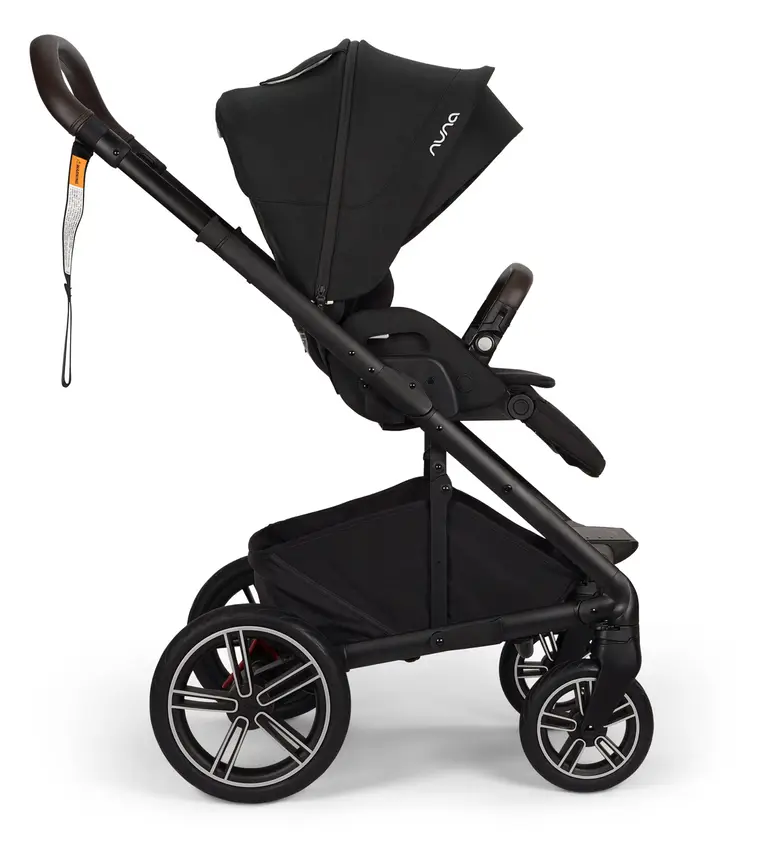
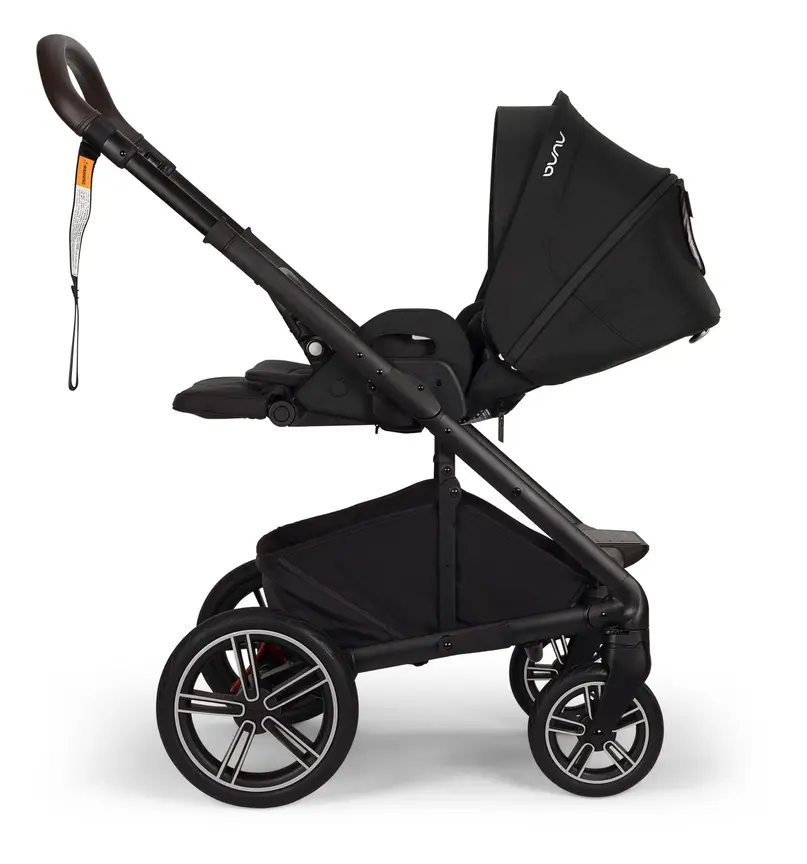
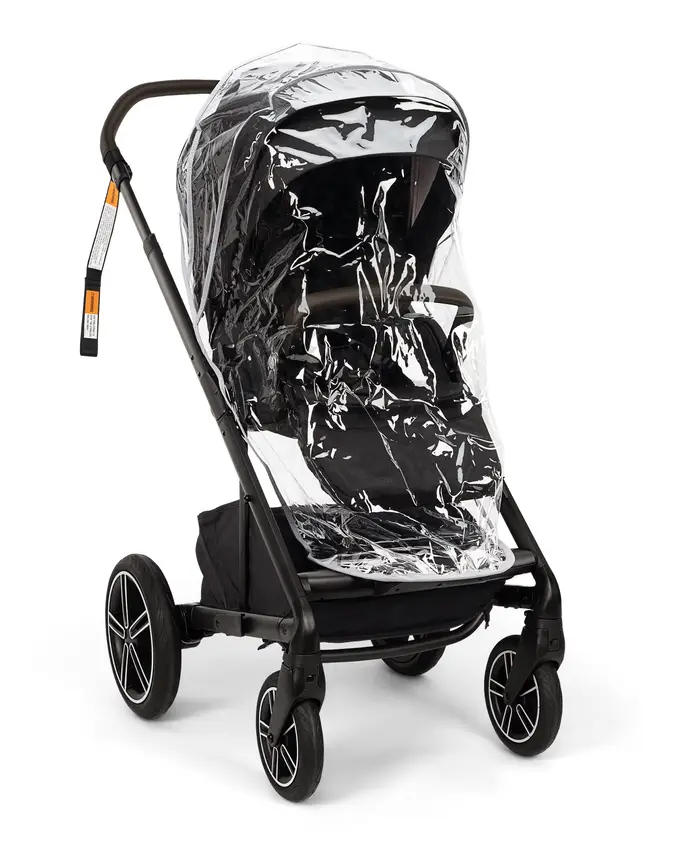

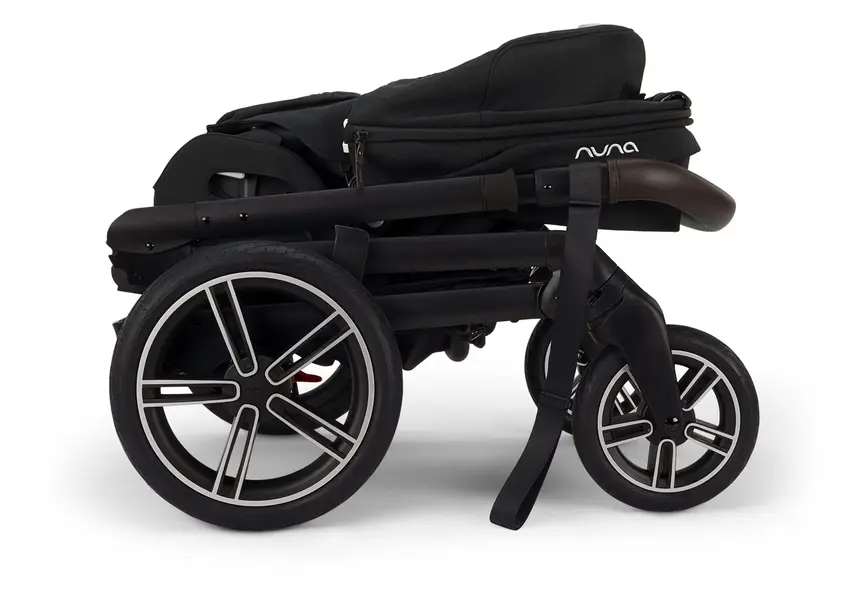

Nuna MIXX Next
A full-size pram with four ways to ride: capsule, bassinet, parent-facing seat or world-facing seat.
Read our full review →
Baby Jogger City Mini GT2
Long-running, lighter all-terrain stroller with a famously simple one-hand strap fold.
 Reviewed
Baby Jogger City Tour 2
A 6.5 kg stroller with a near-flat recline. It folds small and comes with a carry bag.
Read our full review →
Bassinet stroller by age: what to expect
| Age (roughly) | What your baby can do | What to do with the pram |
|---|---|---|
| Newborn to 2 months | Sleeps a lot. Cannot lift their head well. | Use the flat bassinet. Keep outings short. Check often. |
| 2 to 4 months | Gains head control. Looks around more. | Keep using the bassinet. Face your baby toward you if the pram allows. |
| 4 to 6 months | May start to roll. May reach for things. | Watch the harness and sides. Check the bassinet's age and weight limit. |
| 6 months and up | Sits with help, then alone. Pushes up. | Most families move to the seat. Check the maker's guide for when the seat is fine to use. |
Every baby grows at their own pace. Some babies roll early. If your baby is trying to sit up or push up in the bassinet, it is time to move on.
Common mistakes to avoid
- Letting baby sleep in the pram at home. A pram is not a cot. Use a cot or bassinet made for sleep.
- Using a car seat as a bed. It is for the car. Take your baby out when you stop.
- Adding pillows or extra padding. It can cover the face or change how the bed works.
- Draping a blanket over the pram. It cuts air flow and can cause overheating.
- Skipping the brakes. Prams can roll even on gentle slopes.
- Hanging bags on the handle. This can tip the pram.
- Using it too long. A baby who can roll or sit up needs the seat.
- Buying for looks. Pick for fit, safety and daily life. Not just for colour.
- Ignoring recalls. Check your product safety site now and then.
- Using a pram that does not fit your car or home. Test it before you buy if you can.
Cleaning and care
Babies spill, leak and spit up. A pram that is easy to clean saves time.
- Check if the fabric can be removed and washed. Follow the care label.
- Wipe the frame with a damp cloth. Dry it so it does not rust.
- Check the wheels for dirt and hair. Wipe or clean them often.
- Look at the harness and brakes every few weeks. Replace worn parts.
- Store the pram somewhere dry. Damp can cause mould.
- Use only the maker's spare parts.
Cost and when to buy
A pram is a big purchase. Prices range a lot. We do not give price numbers here, because they change often and differ by country. Here are plain tips.
- Decide on your needs before you look at brands.
- Think about how long you will use the bassinet. It may be only a few months.
- A simple, safe pram is better than a fancy one with features you will not use.
- Buying one frame that grows with your child can save money. But only if you will use the features.
- Ask friends and family if they have one to lend or sell. Check it carefully.
- Buy before your baby is born if you can. The last weeks of pregnancy can be tiring.
- Keep your receipt and read the return rules.
Affiliate note: this page has links to products on Amazon. We may earn a small fee if you buy through them. It does not change your price. We do not show star ratings or review counts. Check current price, stock and reviews yourself before you buy.
Who should think twice
A bassinet stroller is not right for everyone.
- If you have a very small home or no car boot space, a big pram may be a pain. A fully flat reclining stroller or a light carrier might be easier.
- If you walk on rough ground a lot, small wheels will struggle. Look at bigger wheels.
- If you only plan short trips, you may not need a bassinet. A fully flat seat could be enough.
- If you want to carry your baby close, a carrier may suit you better. Use one that is safe, and wear it as the maker says.
- If your baby was born early or has health needs, ask your doctor or nurse what is best. Some babies need a specific kind of support.
Tips for the first weeks
- Try the fold and unfold before the baby arrives.
- Practise clicking the bed on and off.
- Wash the fabric if the label says it is fine to do so.
- Take a short walk the first few times. See how your baby reacts.
- Keep a spare muslin cloth in the basket for spills. Do not use it to cover the pram.
- Pack nappies, wipes, a change of clothes and a hat.
- Lock the brakes whenever you stop to pick up your baby.
- Ask for help on stairs. Do not carry a baby and a pram together.
More options, from budget to premium
Real products from our catalogue. We don't show star ratings or review counts; check the current price, stock and reviews on Amazon before you buy.
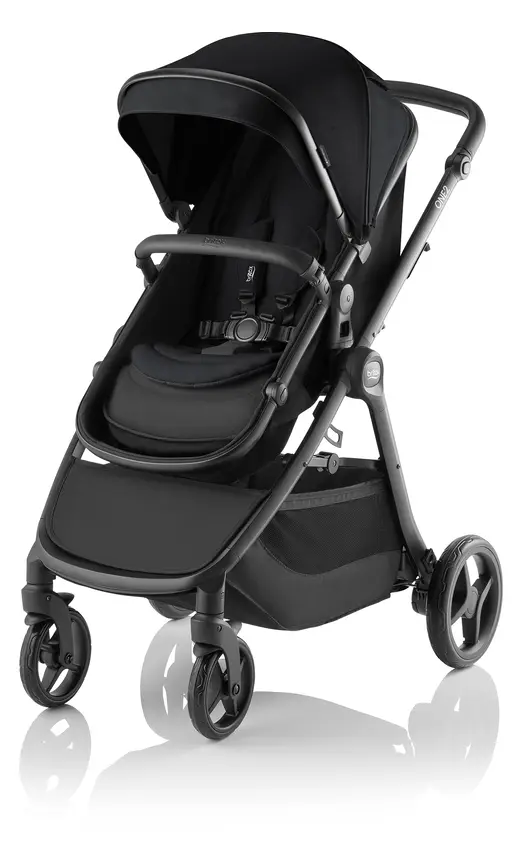
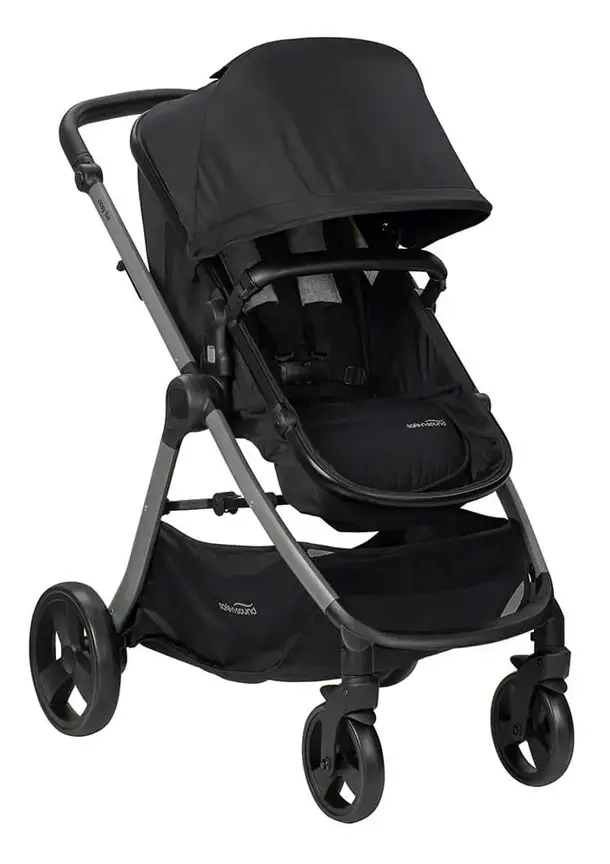

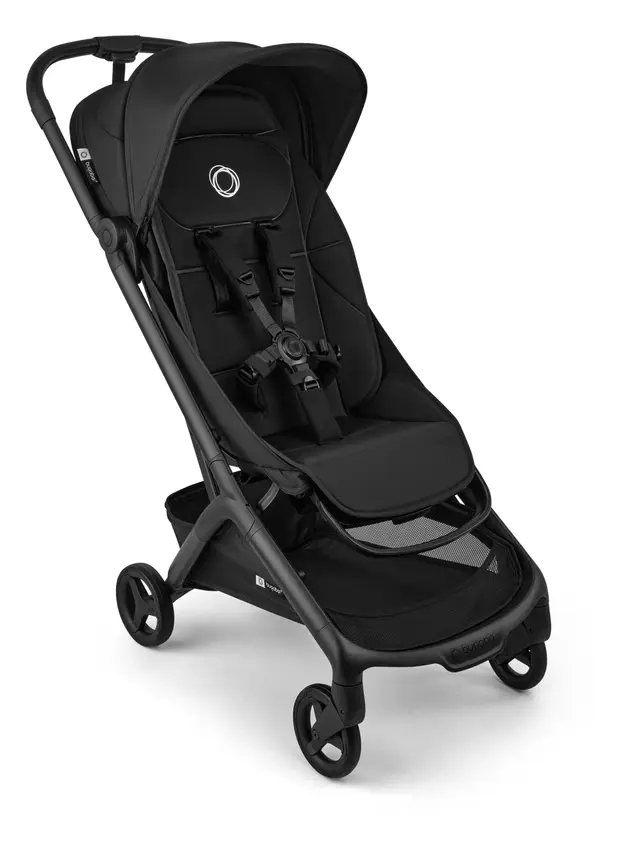
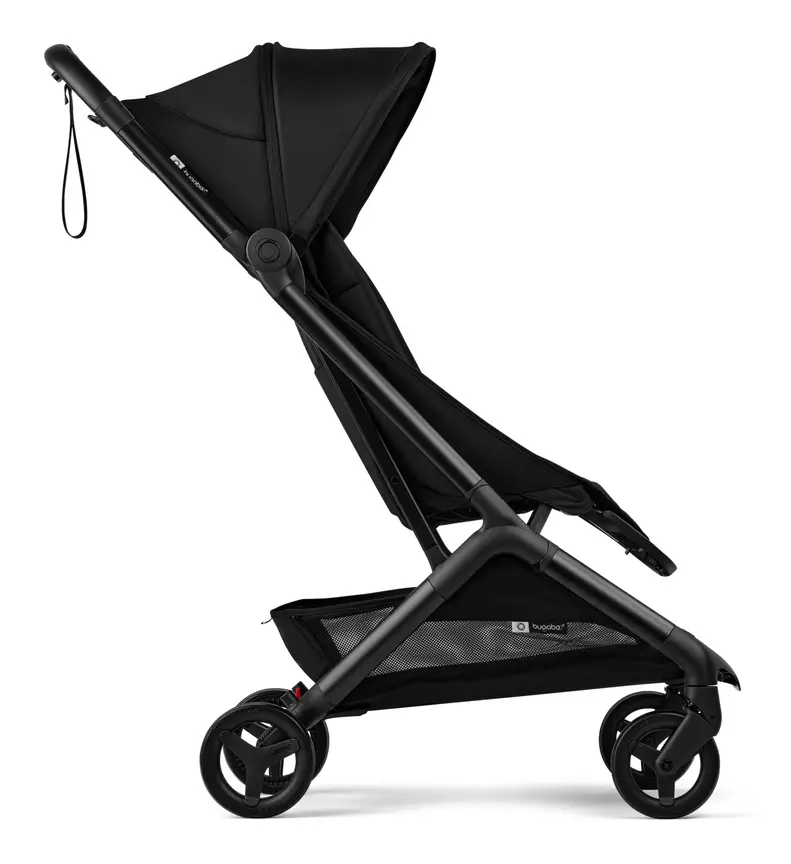


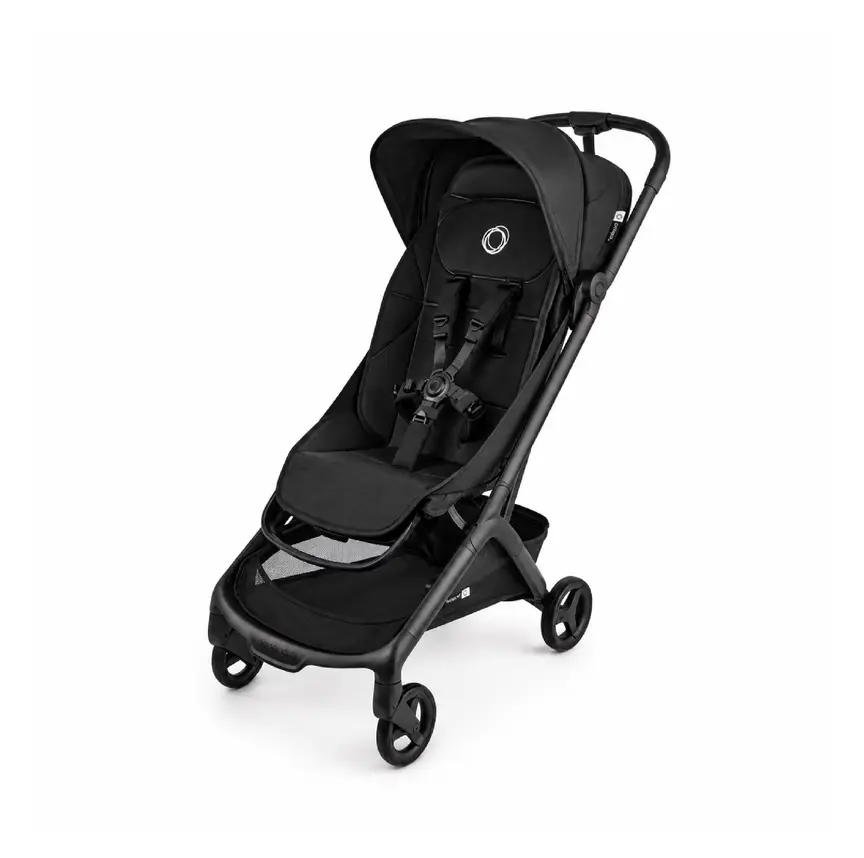
Bugaboo Butterfly
Bugaboo's cabin-friendly compact stroller with a one-second fold — the travel partner to a Fox, not a replacement for it.
Frequently asked questions
How long can a baby use a bassinet stroller?
It depends on the product. Most bassinets are made for babies in the first six months or so. Many have a limit on age, weight or both. Some babies outgrow them sooner, when they start to roll or push up. Always follow the maker's label and manual.
Can my baby sleep in a bassinet stroller overnight?
No. A pram bed is made for rides and short rests. It is not made as an overnight sleep space. Use a cot or a bassinet that is made for sleep, and follow safe sleep advice from Red Nose, The Lullaby Trust, the American Academy of Pediatrics or the Canadian Paediatric Society.
Is it okay for my baby to nap in the pram?
On a walk, a nap in a flat pram bed is usually fine. Your baby should be on their back, with their face clear. You should be able to see them. Do not leave a sleeping baby alone in a pram. When you get home, move them to a proper cot or bassinet.
Do I need a bassinet stroller if I have a car seat frame?
A car seat on a frame is fine for short trips. But a baby in a car seat is not lying flat. Groups like Red Nose say babies should not stay in car seats for long outside the car. A flat bassinet or fully flat seat is better for longer walks.
What is the difference between a bassinet stroller and a regular stroller?
A bassinet stroller has a flat, firm bed for a young baby. A regular stroller has a seat. Some seats recline, but not all go fully flat. For a newborn, you need a flat bed or a seat that goes fully flat.
Is a second-hand pram safe?
It can be. But you must check it carefully. Make sure it has all its parts and a manual. Test the brakes, harness and folding lock. Check for recalls with the product safety body in your country. If it is old or damaged, do not use it.
Can I use a pram cover or blanket to keep out sun?
Do not drape a blanket or cloth over the pram. It cuts air flow and the pram can get very hot. Use the pram's hood, a shade made for your pram, and shady places. Keep young babies out of strong sun.
When should I move my baby from the bassinet to the seat?
Move when your baby reaches the maker's limit, or starts to roll or push up. Also move when they can sit with help and have good head control, if the seat says it is fine for their age. Check the manual for the right age.
How do I know if a pram meets safety standards?
Look at the label and manual for the standard code. In Australia, prams and strollers must meet AS/NZS 2088. In the UK, look for BS EN 1888 or BS EN 1130. In the US, look for ASTM F833. In Canada, check Health Canada's rules and recall list. Always buy from a seller you trust.
The bottom line
A bassinet stroller can make your first months easier. It gives your baby a flat place to lie. It lets you get outside. It keeps your things in one spot. But it only helps if it is safe, it fits your life and you use it well.
Pick a pram that meets the rules where you live. Test it before you buy. Use the brakes and harness every time. Keep your baby on their back. Do not use the pram as a cot. And check recalls now and then.
If you are unsure, ask your child health nurse, doctor or midwife. They can help you with choices that suit your baby.
Sources
- Product Safety Australia – Prams and strollers guide
- Product Safety Australia – Prams and strollers mandatory standard
- Red Nose Australia – Warning on social media hacks for baby capsules
- UK Office for Product Safety and Standards
- The Lullaby Trust – Safer sleep overview
- American Academy of Pediatrics (US) – A parent's guide to safe sleep
- Caring for Kids (Canadian Paediatric Society) – Safe sleep for babies
- Health Canada – Recalls and safety alerts
Related guides
More Prams & Strollers →
Bassinet Attachments for Strollers: How to Choose and Use One Safely

Smart Monitors and High-Tech Strollers: What Tech Actually Helps Parents
City vs Suburban Strollers: Are They Really Built Differently?