














Wheeled Bassinets: How to Move One Safely Around Your Home
Learn how to choose and use a wheeled bassinet safely, check its locks, manage floor changes, and follow safe sleep advice in four countries.

On this page
- What a wheeled bassinet is
- Safe sleep comes before convenience
- Check the bassinet before the first sleep
- How to use wheel locks
- Moving between rooms and across floor changes
- Choosing a model for your home
- Age and development stages
- Cleaning and routine checks
- Common mistakes to avoid
- Safety guidance in four countries
- Frequently asked questions
- Sources
Short answer: A wheeled bassinet can help keep your newborn nearby during the day. It is still a sleep space, so safe sleep comes first. Use it only as its maker directs. Lock every wheel before leaving your baby in it. Keep it on a flat, clear floor. Move it slowly, with your baby inside only if the manual allows this. Never pull it over a rug edge, threshold, cord, or uneven floor with your baby inside. If it rocks, tips, or catches, lift your baby out and move them separately.
In Australia, check Product Safety Australia and Red Nose. In the UK, check the Office for Product Safety and Standards and The Lullaby Trust. In the US, check the Consumer Product Safety Commission and the American Academy of Pediatrics. In Canada, check Health Canada and the Canadian Paediatric Society. Their advice supports a firm, flat sleep surface and a clear space around your baby.
What a wheeled bassinet is
A wheeled bassinet is a small sleep space on a stand with wheels. The wheels may be called casters. Some models have locks on all wheels. Others use fewer locks or a different design. Check the manual and frame before use.
Some bassinets are made to move around one room. Others are designed for room-to-room movement. Do not assume you can push a product while your baby is inside. The maker's instructions must say when and how to move it.
A bassinet is not a pram. It is not a car seat. It is not a sofa, changing table, or playpen. Use it only for the purpose shown in its instructions. If it changes into another product, follow the separate directions for each setup.
Wheels can make a stand easier to move on smooth floors. They also add parts that need regular checks. A lock can reduce movement while the bassinet is parked. It cannot make an uneven floor safe or prevent every tip or collision.
Safe sleep comes before convenience
Put your baby on their back for every sleep. Use a firm, flat, level mattress made for that bassinet. Keep the sleep space clear. Do not add pillows, loose blankets, positioners, toys, or padded liners.
Keep your baby's head and face uncovered. Use clothing or a suitable sleep bag for warmth. Follow local safe sleep advice and the bassinet instructions. If you are unsure, ask a health professional or your country's product safety body.
Do not raise one end of the mattress unless the maker directs this for an allowed setup. Do not place wedges, folded towels, or other objects under it. These can make the surface sloped or uneven.
Stay close enough to hear and check your baby. A monitor does not replace care and supervision. Do not use a moving bassinet to soothe your baby while you leave them unattended.
Room sharing means your baby sleeps in your room on a separate sleep surface. A bassinet can support room sharing if it fits safely beside your bed and the maker permits that position. Do not attach, tie, or wedge it against your bed unless it is made for that use.
Keep other household items outside the bassinet. A blanket, toy, or cushion can cover a baby's face. Check the sleep space again after feeding or settling. Remove anything that does not belong before you leave your baby to sleep.
Cots, Bassinets & Bedside Sleepers worth a look
Real products from our catalogue. We don't show star ratings or review counts; check the current price, stock and reviews on Amazon before you buy.


Bugaboo Stardust Plus
A pop-up portacot with a bassinet, for naps at home or away.
Read our full review →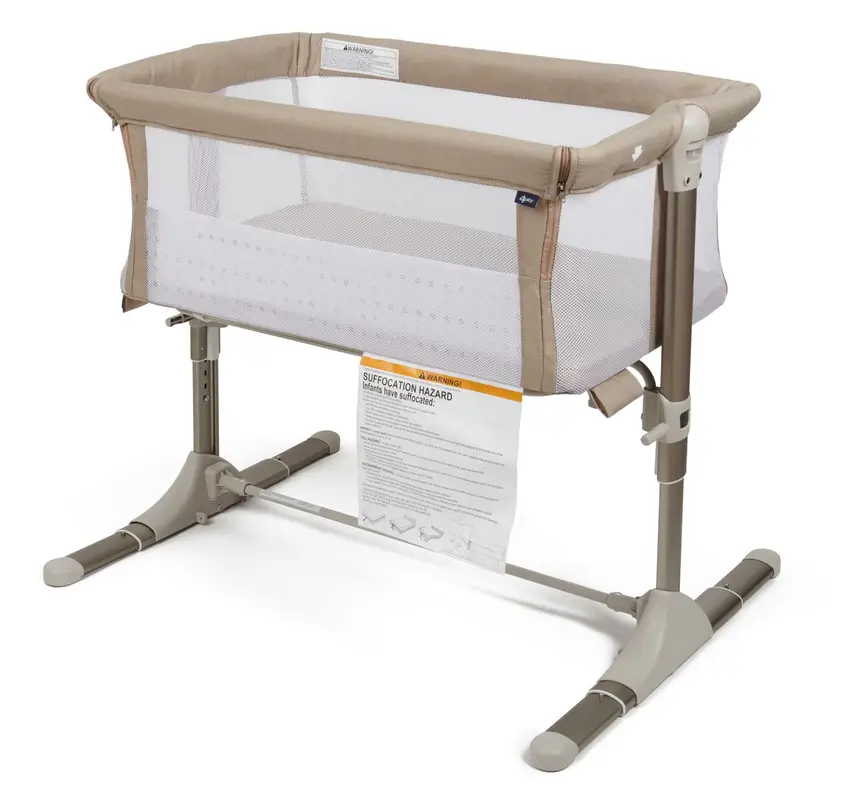
4baby Snuggle Cuddle Bedside Sleeper
A low-cost bassinet that turns into a bedside sleeper, with 4 heights and mesh sides.
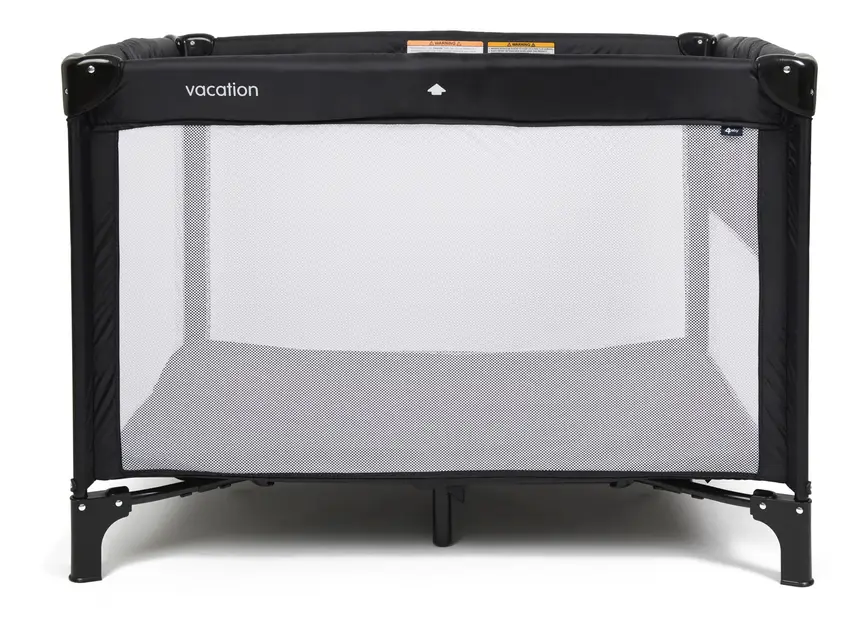
4baby Vacation Portacot
A low-cost portacot with a padded mattress and mesh sides.
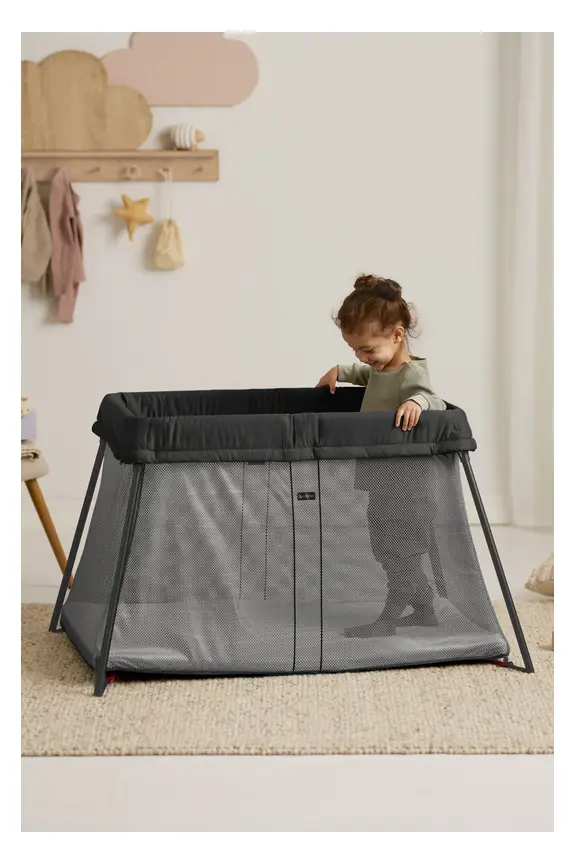
Compare all cots, bassinets & bedside sleepers in our reviews →
Check the bassinet before the first sleep
Read the full manual before assembly. Keep it where you can find it later. Assemble the stand on a level floor. Use every part supplied by the maker. Do not replace screws, washers, mattress pads, or wheel parts with other items.
- Check the frame for cracks, bends, loose joints, and missing parts.
- Check that the mattress fits as the manual describes and lies flat.
- Make sure fabric and mesh are firmly attached.
- Find every wheel lock. Learn how it works.
- Test the locks before putting your baby in the bassinet.
- Confirm that the bassinet cannot fold or detach during use.
- Check for a product label, model details, and maker contact information.
- Look up recalls through your country's official product safety service.
Do not use the bassinet if a wheel is loose, a lock is broken, or the frame feels unstable. Contact the maker for the right repair or replacement part. Do not tape, glue, or tie a faulty part in place.
Second-hand bassinets need careful checks. Ask for the manual and all original parts. Check the model and recall history. Do not use one with an unknown history, missing instructions, damage, or a mattress that did not come with the product.
Check that the stand is assembled as shown. A wheel fitted on the wrong side or a missing fastener can affect how it sits. If any step is unclear, ask the maker before using it. Do not guess how the frame should lock.
How to use wheel locks
Before putting your baby in the bassinet, park it where you want it to stay. Set every lock required by the manual. Push the frame gently from more than one side. The wheels should not roll freely. Check that the bassinet stays level and does not rock.
Do this check each time you move it. Locks can be missed or bumped. Some models lock two wheels. Others use one linked control. Learn your model's design instead of guessing.
Keep the locks on while your baby is in the bassinet. Do not rely on a wall, bed, rug, or furniture to stop it moving. Do not park it on a slope. Keep it away from stairs, heaters, open flames, cords, curtains, and furniture your baby could later reach.
Locks are not brakes for moving down a ramp. Do not use them to hold a bassinet on a slope. If your home has sloping floors, choose a stable, level place for sleep.
Some pedals may be hard to see beneath the frame. Learn where they are while the bassinet is empty. Check that each lock has engaged. Do not place your foot where it could push the stand or tip it.
A locked wheel does not make the bassinet fixed to the floor. Keep it away from edges and open stairs. Do not leave a sibling or pet leaning on the frame. If the bassinet shifts during your gentle check, move it to a safer place.
Moving between rooms and across floor changes
First, check the manual. If it does not clearly allow moving the bassinet with your baby inside, take your baby out before moving it. Even when the maker allows this, use only smooth, level routes. Keep a hand on the frame.
Plan the route before you move. Pick up loose toys, bags, cords, and clothing. Open doors fully. Check that the path is clear and has room to turn. Keep pets and other children away while moving.
Stop before a rug edge, doorway lip, cable cover, or change in floor height. Do not jerk the handle or tilt the bassinet to force it across. A wheel may catch while the frame keeps moving. This can tip the stand or jolt your baby.
At a rug or threshold, lift your baby out first. Then move the empty bassinet over the obstacle. Set it down on a flat area and lock the wheels again. Check the frame, mattress, and locks before putting your baby back.
Hardwood floors can be slippery. Rugs can bunch or slide. Neither surface makes a bassinet safe to move without care. Use a clear route. Move slowly. Stop if the wheels do not roll evenly.
Do not push the bassinet while carrying a hot drink, phone, laundry, or another child. Keep both hands free if the manual says to use them. Ask another adult for help with narrow doorways or heavy models.
Do not pull the stand by its canopy, fabric, or mattress. Use only a handle or frame point named by the maker. If the product has no safe grip for moving, take the baby out and move the empty stand carefully.
Keep the route away from stairs and steps. Do not lift a bassinet with a baby inside unless its instructions clearly allow it. If you need to move between floors, carry your baby separately and ask for help with the empty bassinet.
When you reach the next room, place the stand on a firm, level patch of floor. Lock it again. Check the mattress remains flat and the frame has not shifted. Then put your baby down on their back.
Choosing a model for your home
Start with the route between the rooms where you plan to use it. Measure doorways and the bassinet's full width, including handles and wheels. Check that it fits beside your bed without blocking a safe path.
Check your floors and the changes between them. A small wheel may catch on a thick rug or raised edge. A larger wheel may need more room to turn. Ask the maker how the product is meant to move. Do not judge safety by wheel size alone.
Compare the features that affect daily use:
- Locks: Can you reach and check each lock easily?
- Stability: Does the stand stay firm on your usual floor?
- Space: Will it fit through doors without scraping walls?
- Handle: Is there a proper place to hold while moving?
- Mattress: Is the supplied mattress firm, flat, and correctly fitted?
- Cleaning: Can you clean the cover as the maker directs?
- Storage: Can you store it safely when you are not using it?
- Limits: Are the age, size, and movement limits easy to find?
Do not choose by a weight limit alone. Follow the exact stopping point in the manual. Many bassinets must stop being used when a baby can push up, roll, or reach another stated limit. A baby may reach a movement limit before reaching the weight limit.
Look for clear instructions in a language you can read. You should be able to find the model name, maker, parts list, setup steps, and cleaning directions. If the seller cannot identify the maker or model, choose another option.
Think about where you will park the bassinet during sleep. It should not block a doorway or narrow the path you use at night. It should stay away from blinds, curtains, heaters, and shelves. Leave enough room to reach your baby without leaning over obstacles.
Some bassinets have extra features, such as storage baskets, rocking parts, or canopies. These do not replace a safe sleep setup. Check whether the maker permits each feature during sleep. Keep stored items out of the bassinet and away from the wheels.
| Feature | What to check | Why it matters |
|---|---|---|
| Wheel locks | Each wheel locks as the manual describes. | Helps stop the parked stand from rolling. |
| Floor route | Doors, rugs, and floor changes are manageable. | Wheels can catch, or the frame can tip. |
| Sleep surface | Firm, flat mattress made for that model. | Supports the intended safe sleep setup. |
| Frame | No wobble, cracks, loose joints, or missing parts. | A damaged stand may not stay steady. |
| Manual | Clear directions for sleep, movement, locks, and limits. | Models differ in what they allow. |
| Room fit | Enough space around it and a clear exit path. | Reduces bumps and keeps walkways open. |
| Maker details | Model name and contact details are easy to find. | Helps you check recalls and ask questions. |
Side by side: more cots, bassinets & bedside sleepers to compare
Real products from our catalogue. We don't show star ratings or review counts; check the current price, stock and reviews on Amazon before you buy.
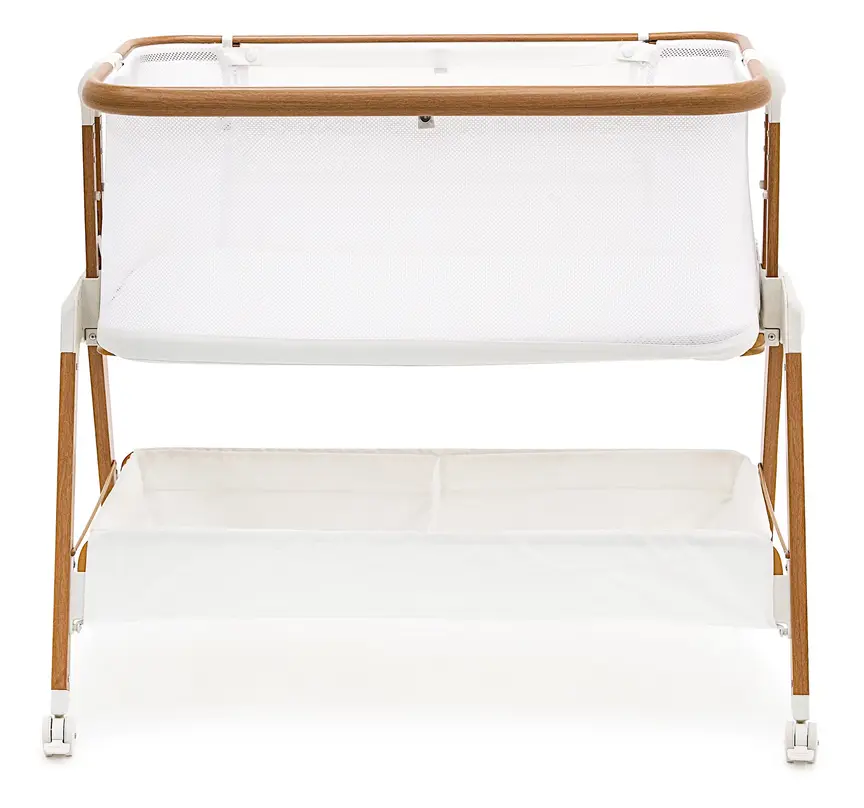
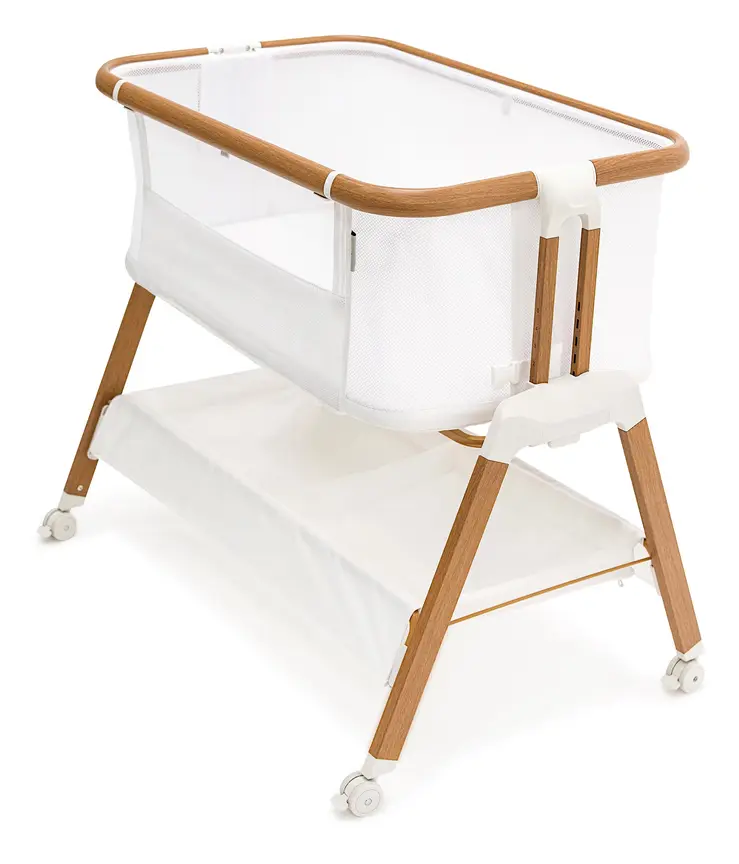
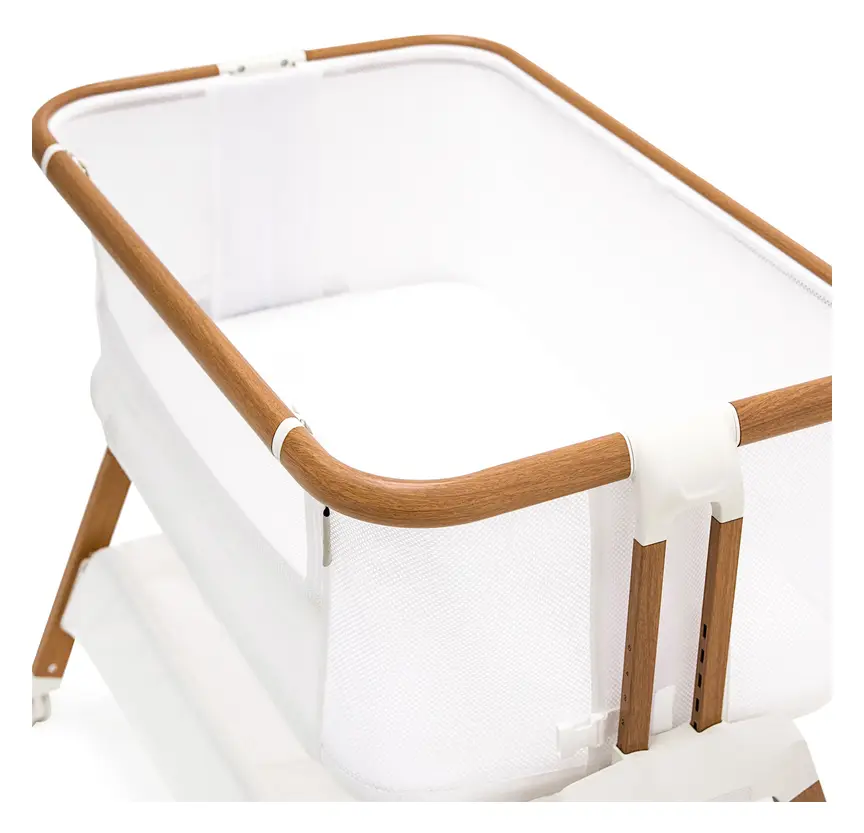
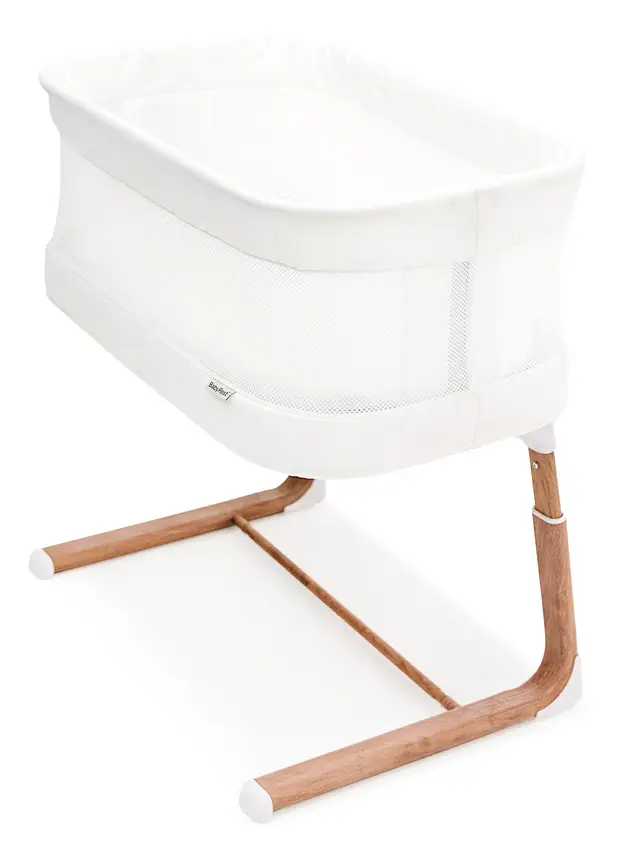
BabyRest Alfie2 Bedside Bassinet
A bedside bassinet with 5 heights, a drop-down side, wheels and an insect net.
Read our full review →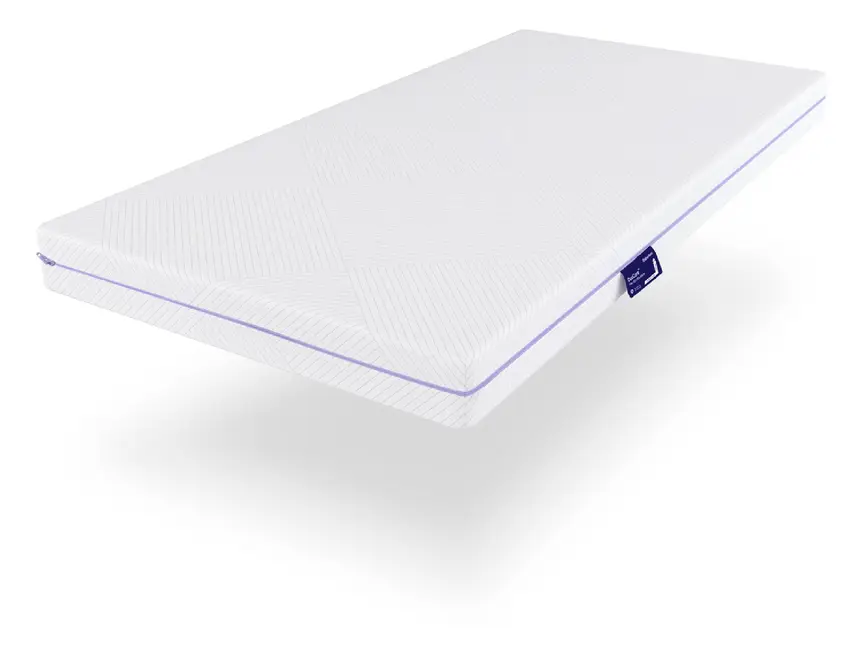
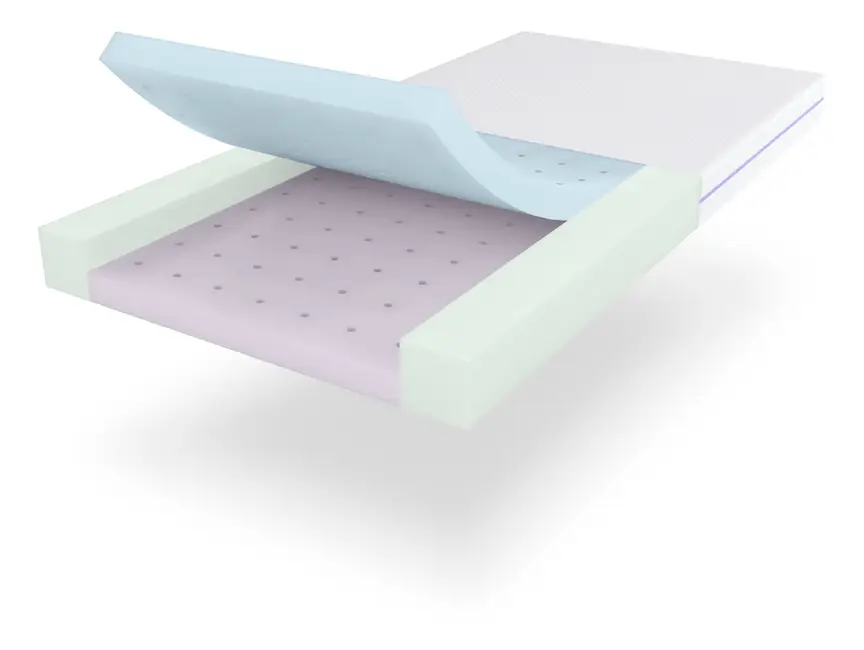

BabyRest Duocore Bamboo Cot Mattress
A two-sided mattress: a baby side to 12 kg and a toddler side from 12 kg to about 4 years.
Read our full review →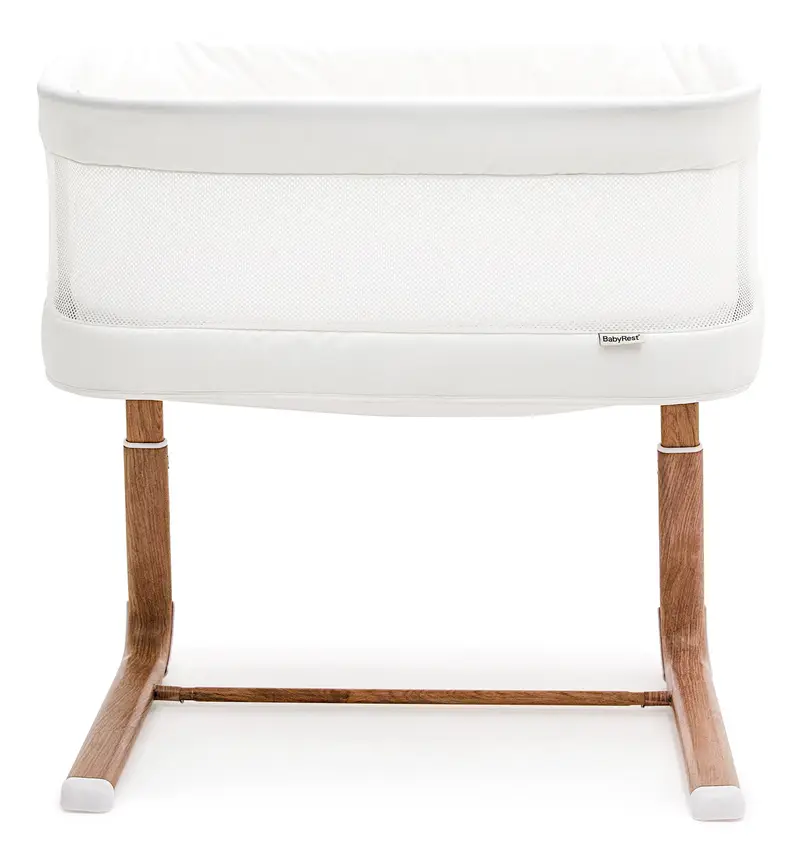


BabyRest Swan Smart Bassinet
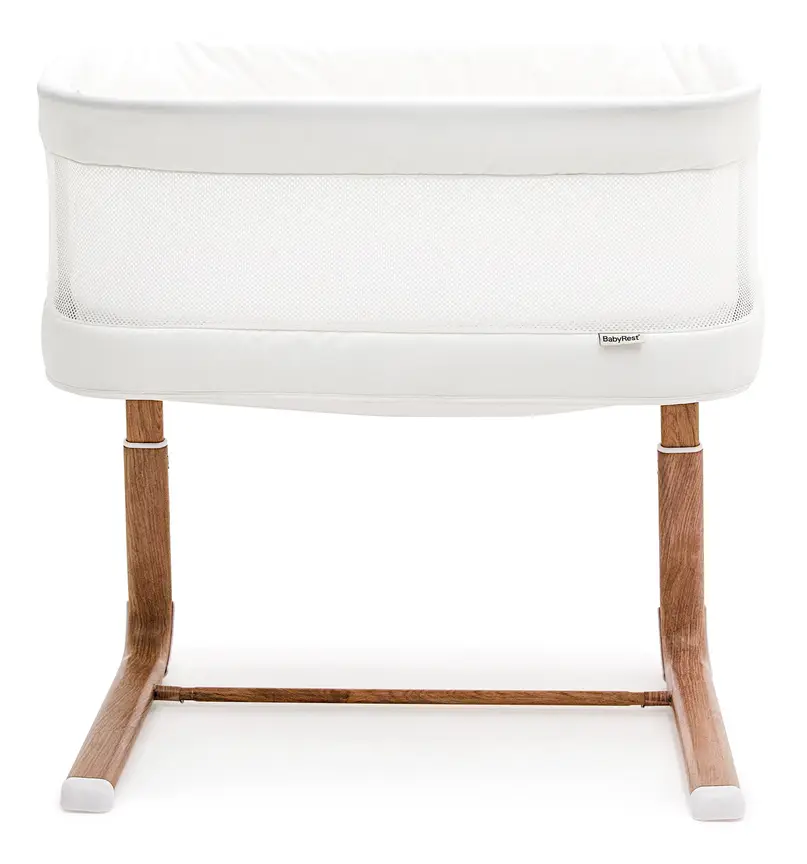
A bassinet that rocks by itself when baby stirs, with 3 rocking levels, lullabies and a remote.
Read our full review →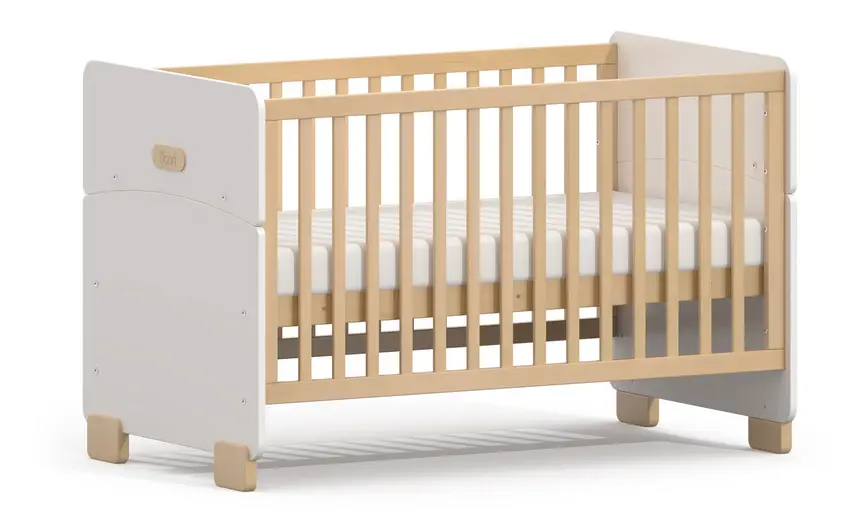

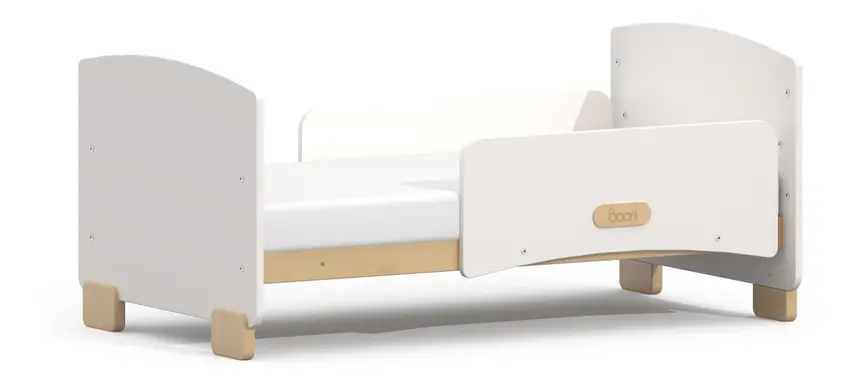

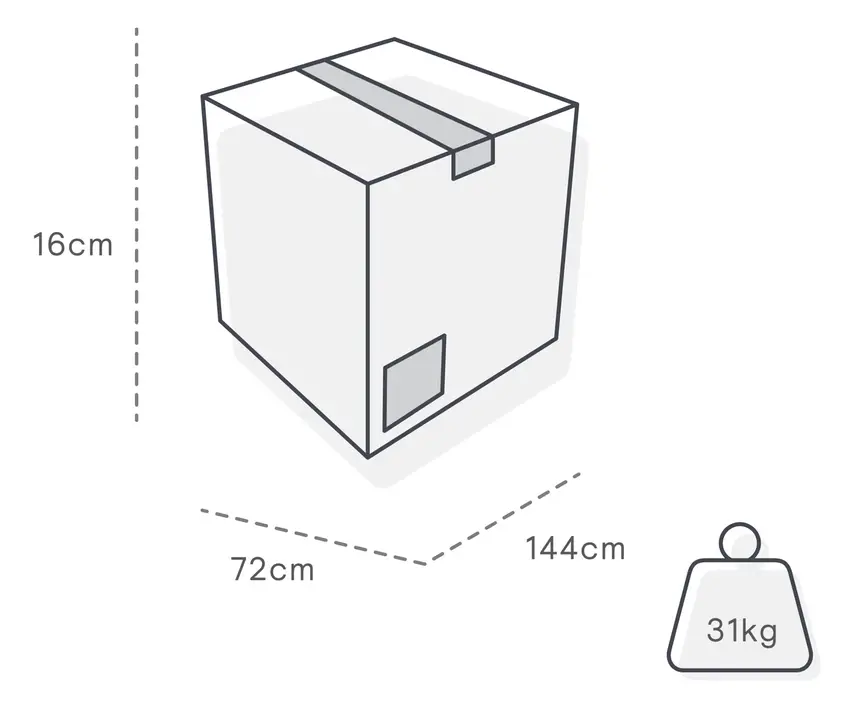
Boori Matilda Cot Bed
A cot that turns into a toddler bed using its own end panels. No extra kit needed.
Read our full review →Compare all cots, bassinets & bedside sleepers in our reviews →
Age and development stages
Newborns need a safe, separate sleep space for every sleep. A bassinet may be suitable from birth when its manual says so. Use only the mattress and parts made for that model.
Babies learn new movements at different times. Watch for rolling, pushing up, or reaching a limit set by the maker. Stop using the bassinet at the first limit your baby reaches. Move them to a suitable cot or other safe sleep space.
Do not wait for a planned age check if your baby reaches a movement limit. Do not keep using the bassinet just because your baby still fits the mattress. A child who can move more may tip it or climb out.
Once your child can stand or pull at nearby objects, keep the bassinet away from cords, curtains, shelves, and furniture. Do not let an older child push or climb on it.
Age labels are only one part of the instructions. Your baby's skills and the maker's limits matter too. Check the manual often as your baby grows. If you are unsure whether a new movement means the bassinet is no longer suitable, stop using it and contact the maker.
Do not use a bassinet as a place for unsupervised play. It is designed for the use named by its maker. A baby who kicks, rolls, or pushes against the sides can change how the stand behaves.
Cleaning and routine checks
Follow the maker's cleaning steps. Use only the cleaning products and washing methods listed for the fabric and frame. Let parts dry fully before putting them together and using them.
Do not add a soft mattress topper to make the bassinet more comfortable. Do not use extra padding, a nest, or a head support. These can change the sleep surface and create gaps or soft areas.
Before each sleep, check that the mattress is flat and the sheet fits snugly. Check that the bassinet is assembled, level, and locked. Remove anything that does not belong in the sleep space.
Check the wheels and locks regularly. Look for hair or thread wrapped around an axle. Clean it only as the manual allows. If a wheel sticks, wobbles, or will not lock, stop using the bassinet until it is fixed with an approved part.
After moving the bassinet, check for loose parts and fabric caught near a wheel. Make sure the mattress has not shifted. If the stand bumped a wall or door, inspect it before using it again.
Keep the manual, model label, and maker's contact details. You may need them for a repair or recall check. Do not use an unapproved replacement mattress, sheet, wheel, or fastener.
Common mistakes to avoid
- Assuming every wheel locks: find and test each lock on your model.
- Moving over a threshold with baby inside: take baby out unless the manual clearly allows it.
- Pulling by the canopy or fabric: use only the frame or handle named in the instructions.
- Leaving locks off: lock the wheels whenever the bassinet is parked.
- Parking on a slope: choose a flat, level floor.
- Adding a thicker mattress: use only the mattress made for the bassinet.
- Using it past a movement limit: stop when your baby reaches the first limit.
- Using an unknown second-hand model: check its history, parts, manual, and recall status.
- Leaving hazards nearby: move cords, curtains, heaters, and furniture away.
- Treating locks as a guarantee: stay nearby and check the setup each time.
- Forcing a wheel over a rug edge: lift your baby out before moving the empty stand.
- Using the bassinet on an uneven floor: find a flat, stable place for sleep.
It can be tempting to make a quick fix when a wheel sticks. Do not wedge it, tie it, or add a homemade brake. A repair that changes the frame may create a new problem. Stop using the bassinet until the maker advises you.
Safety guidance in four countries
Product rules differ by country. A label from one country does not prove that a product meets another country's rules. Buy from a seller who can identify the maker, model, and local safety information.
| Country | Official bodies to check | Useful guidance |
|---|---|---|
| Australia | Product Safety Australia (ACCC) and Red Nose | Check the bassinet guide, recalls, and safe sleep advice. |
| United Kingdom | Office for Product Safety and Standards and The Lullaby Trust | Check product safety notices and safer sleep guidance. |
| United States | Consumer Product Safety Commission and American Academy of Pediatrics | Check infant sleep product guidance and safe sleep advice. |
| Canada | Health Canada and Canadian Paediatric Society | Check recalls and safe sleep guidance for babies. |
In Australia, Product Safety Australia gives advice about bassinets and cradles, plus product recalls. Red Nose explains safe sleep basics. In the UK, the Office for Product Safety and Standards shares product safety information. The Lullaby Trust gives safer sleep advice.
In the US, the Consumer Product Safety Commission covers infant sleep products and recalls. The American Academy of Pediatrics gives safe sleep guidance. In Canada, Health Canada shares recalls and safety alerts. The Canadian Paediatric Society explains safe sleep for babies.
These sources do not mean every wheeled bassinet is safe for every use. Follow the manual for your exact model. Check official recall notices before buying and while you use it.
In Australia, the ACCC works through Product Safety Australia to share consumer product advice. Check that service for current recalls and guidance. In the UK, the product safety office handles product safety matters. The Lullaby Trust focuses on safer sleep advice for families.
In the US, the CPSC provides product safety information. The AAP gives health guidance for families. In Canada, Health Canada's recall service lists safety alerts. The Canadian Paediatric Society offers health information for parents and carers.
Use the advice from the country where you live and bought the product. If a product came from another country, check whether it meets local rules. Ask the seller or maker for clear details. Do not rely only on a sales page or social media post.
More options, from budget to premium
Real products from our catalogue. We don't show star ratings or review counts; check the current price, stock and reviews on Amazon before you buy.

Boori Oasis Oval Cot
A curved solid beech cot on lockable wheels, with two base heights.
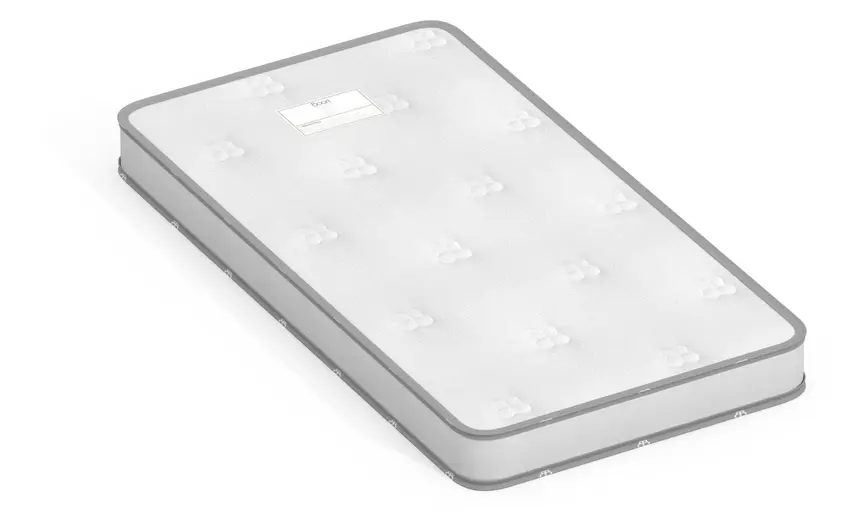
Boori Pocket Spring Mattress (standard cot)
A pocket spring cot mattress that comes rolled. Let it expand for up to 24 hours.
Compare all cots, bassinets & bedside sleepers in our reviews →
Frequently asked questions
Can I move a bassinet with my baby inside?
Only if the manual clearly says this is allowed. Move slowly on a smooth, level floor. Lock the wheels as soon as you park. Take your baby out before crossing a threshold or rug edge.
Should I lock every wheel?
Lock each wheel named in the manual. Some models use one linked control. Test the locks before each sleep and after moving the bassinet.
Can a wheeled bassinet stand on a rug?
Only if the stand stays flat and stable, and the maker allows it. A thick or uneven rug may make wheels catch or the stand rock. Move it to a firm, level spot if it feels unstable.
Can I use the bassinet beside my bed?
Yes, if the maker allows that position and it fits safely. Keep it on its own stand and sleep surface. Do not attach it to your bed unless it is made for that setup.
When should I stop using a bassinet?
Follow the manual's age, movement, and size limits. Stop at the first limit your baby reaches. This may be when your baby begins rolling, pushing up, or sitting.
Can I add a soft liner or a different mattress?
No. Use the mattress and parts supplied or approved for that model. Extra padding can create an unsafe surface or gaps around your baby.
What if the wheel lock does not work?
Do not use the bassinet for sleep until the fault is fixed. Contact the maker for an approved repair or part. Do not try a homemade fix.
Are wheeled bassinets safe on hardwood?
Hardwood can be slippery, so lock the wheels while parked. Move slowly and keep the route clear. If the bassinet slides or wobbles, take your baby out and choose another sleep space.
Can I use any sheet that fits?
Use a sheet made for the bassinet or approved by its maker. It should fit snugly and stay in place. Do not tuck loose fabric around the mattress.
What should I do if the bassinet rocks?
Take your baby out and move the empty bassinet to a level floor. Check the setup and locks against the manual. Do not use it if it still rocks or feels unstable.
Can I carry the bassinet up stairs with my baby inside?
Do not do this unless the manual clearly allows it. The safer approach is to carry your baby separately. Move the empty bassinet with help if needed.
Disclaimer: This guide gives general information, not medical or product-specific advice. Follow your bassinet's manual and local safe sleep guidance. Ask a health professional or product safety body if you need help. Some links may be affiliate links. BabyGearFinder may earn a commission if you buy through them, at no extra cost to you.
Sources
- Product Safety Australia – Bassinets and cradles guide
- Red Nose Australia – Six safe sleep recommendations
- UK Office for Product Safety and Standards
- The Lullaby Trust – Safer sleep overview
- CPSC (US) – Infant sleep products business guidance
- American Academy of Pediatrics (US) – A parent's guide to safe sleep
- Health Canada – Recalls and safety alerts
- Caring for Kids (Canadian Paediatric Society) – Safe sleep for babies
Related guides
More Prams & Strollers →
Wall-Mounted Stroller Hooks and Over-the-Door Hangers: How to Store a Pram Safely

Mosquito Nets for Strollers and Bassinets: Fit, Access and Safe Use

Stroller Snack Trays and Bumper Bars: How to Choose and Use Them Safely
