













Theme Park Stroller Size Rules (31 x 52 Inch Max): Why Wagons Are Banned and How to Prep
Theme park stroller size rules explained: why the 31 by 52 inch limit exists, why wagons are banned, and how to measure and prep your stroller safely.

On this page
- Key points
- What the 31 by 52 inch stroller rule means
- Why theme parks ban wagons and stroller wagons
- Single, double, or travel stroller: side-by-side comparison
- How to measure your stroller at home before you travel
- Safety standards and official guidance across four countries
- Choosing and prepping a stroller by child age
- How to prep your stroller for a long park day
- Common mistakes parents make with park strollers
- Frequently asked questions
- Sources
Short answer: Most major theme parks, including Disney parks, cap stroller size at 31 inches (79 cm) wide by 52 inches (132 cm) long. Almost all parks also ban stroller wagons, even if you push them. Measure your stroller at home with every bag and cup holder attached. Prep it for heat, rain, and fast folding before you travel.
Safety rules for prams and strollers also matter on holiday. Official bodies in Australia (ACCC), the UK (OPSS), the US (CPSC), and Canada (Health Canada) all set clear rules on brakes, harnesses, and stability. Checking both park size limits and stroller safety keeps your trip smooth and your child safe.
Key points
- Max size: 31 inches (79 cm) wide by 52 inches (132 cm) long at Disney parks. Other parks set similar limits.
- Wagons: Push and pull wagons are banned at most major parks, unless approved for medical needs.
- Measure at home: Measure the widest and longest points when the stroller is fully open.
- Heat safety: Never drape a blanket or muslin wrap over the hood. Heat builds up fast inside.
- Tipping risk: Never hang heavy bags on the handlebar. Put weight in the under-seat basket.
- Parking rules: Do not lock your stroller to a fence or pole. Staff often move parked strollers.
What the 31 by 52 inch stroller rule means
Major theme parks see huge crowds every day. Walkways, shops, and ride queues can get very tight. If strollers are too wide or too long, people cannot walk past safely. Emergency crews also need clear paths at all times.
To keep paths clear, Disney parks set a strict size limit. A stroller must be no wider than 31 inches (79 centimetres). It must be no longer than 52 inches (132 centimetres). Many other large theme parks around the world use the same or very similar limits.
How gate staff check your stroller
Security and gate staff often check strollers before you enter. Many parks have a marked box painted on the ground near the entrance. Some have a metal frame or tape measure at the bag check.
Your whole stroller must fit inside that space. Staff look at the widest point, which is often the back wheels. They also check any side pockets, cup holders, or snack trays that stick out.
For length, staff measure from the front wheel or footrest to the back of the handle. If your handle extends out, push it in to see if that helps. If your seat reclines flat and sticks out the back, that counts toward the length too.
What happens if your stroller is too big
If your stroller does not fit, staff will not let it inside the park. You will have to take it back to your car or hotel room. If you cannot do that, you may need to rent a smaller stroller at the gate.
That can cost extra money and waste an hour of your morning. Worse, a rental stroller may not recline for a baby or toddler nap. Checking the rules before you leave home saves a lot of stress.
Always check each park before you go
Park rules can change from year to year. Water parks, zoos, and smaller local parks sometimes have different limits. Some parks allow small wagons, while others ban all wheeled carriers except single or double strollers.
Visit the official website of every park on your list before you pack. Look for the page on park rules, accessibility, or stroller guidelines. If you are unsure, email or call guest services and keep their reply.
Prams & Strollers worth a look
Real products from our catalogue. We don't show star ratings or review counts; check the current price, stock and reviews on Amazon before you buy.
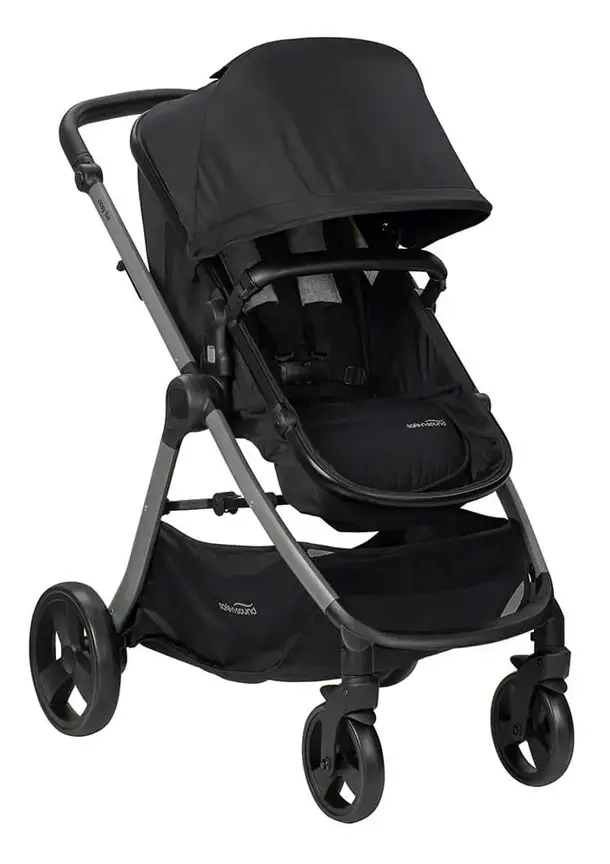
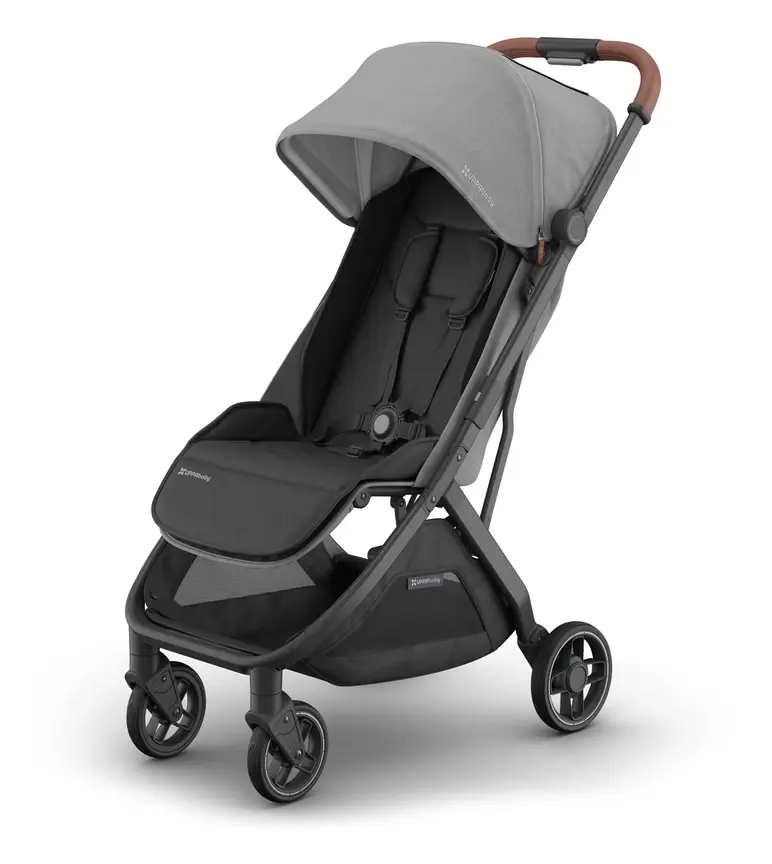


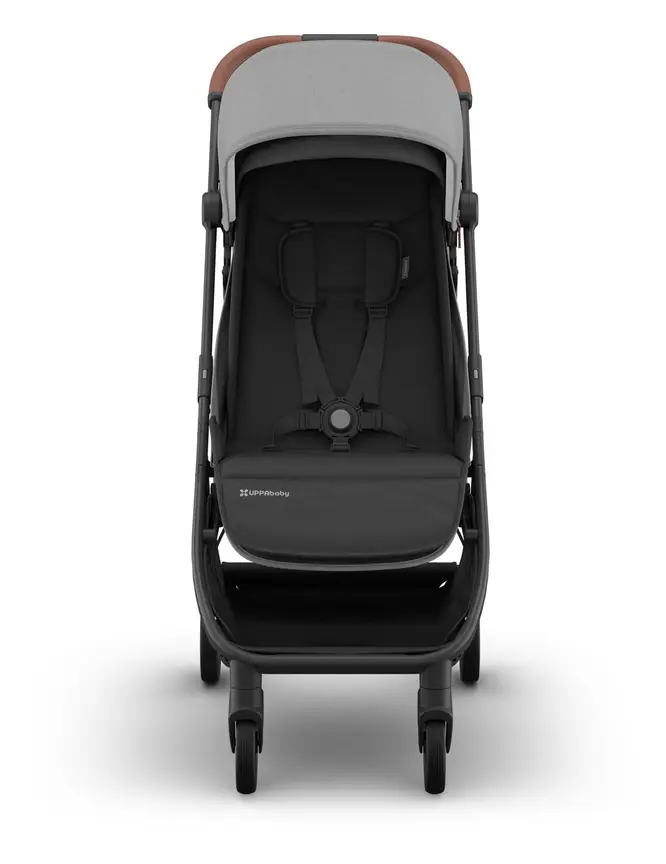


UPPAbaby Minu V3
A slim travel stroller that folds with one hand, stands on its own and is sized for plane overhead lockers.
Read our full review →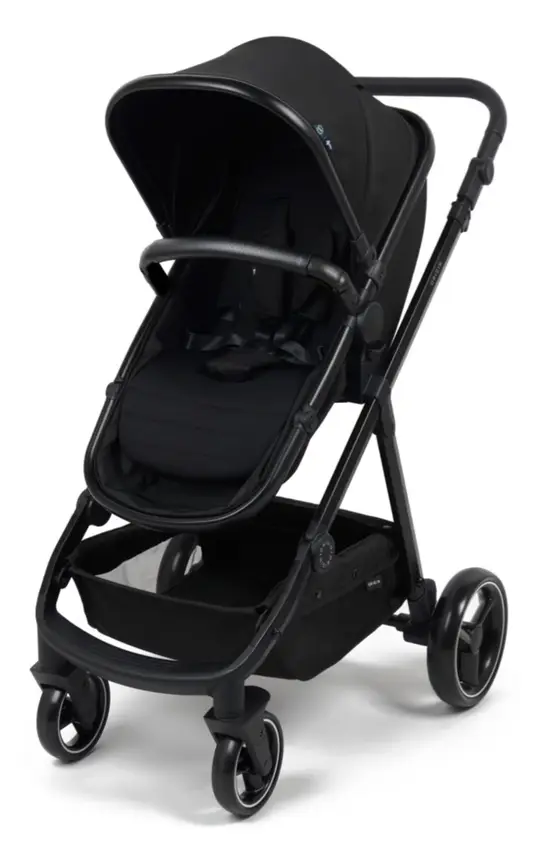
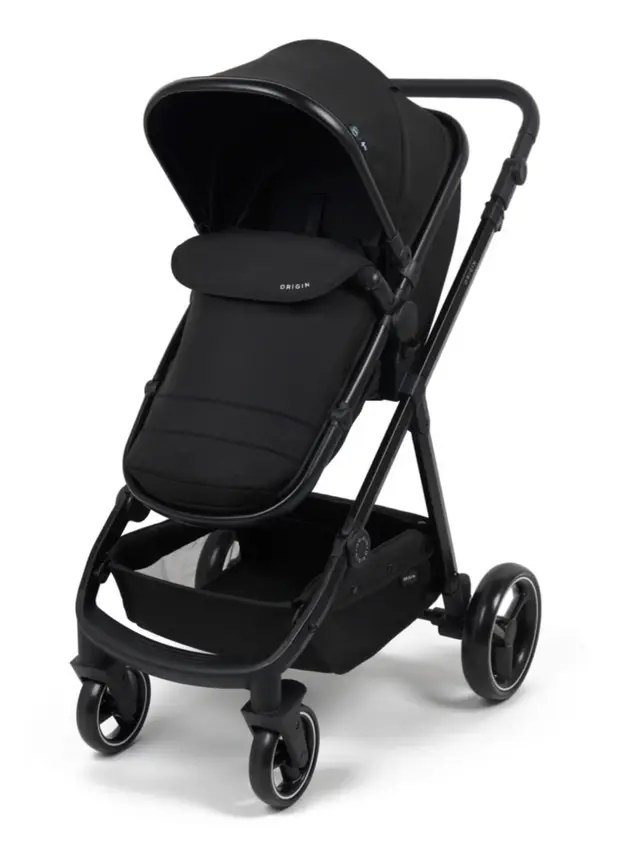
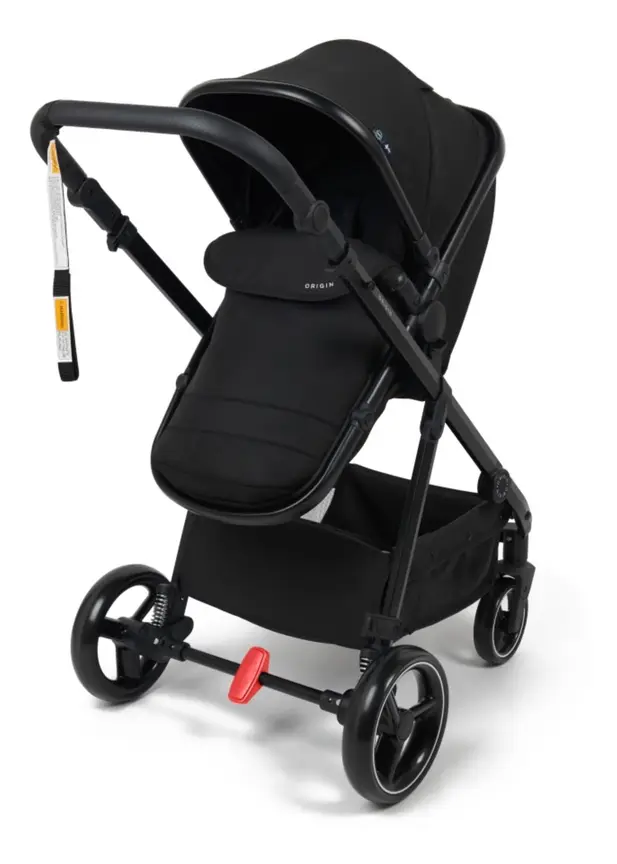
4baby Origin Stroller
A budget pram whose seat turns into a bassinet. The seat can face you or face the world.
Read our full review →
Baby Jogger City Mini GT2
Long-running, lighter all-terrain stroller with a famously simple one-hand strap fold.
Why theme parks ban wagons and stroller wagons
Many families love stroller wagons for everyday outings. They hold two kids, snacks, and bags with ease. So it often surprises parents when theme parks turn wagons away at the gate.
Disney and several other major parks banned all wagons and stroller wagons several years ago. This rule applies whether you pull the wagon behind you or push it from the back like a pram.
Space and turning in crowds
Wagons take up more floor space than most single or tandem strollers. Many wagons are wider than 31 inches when you count the wheels. Even narrow wagons have a wide turning circle.
In a packed walkway or gift shop, a wagon is hard to turn. It can block doors, ramps, and queue lines. Staff need guests to move smoothly through tight spaces, especially at fireworks or closing time.
Trip hazards from pull handles
Pull-along wagons have a long handle in front of the parent. In a busy crowd, other guests walking past cannot always see that handle. People can trip over the bar or get their feet caught under the frame.
Push-style stroller wagons fix the front handle problem. Even so, parks still ban them to keep the rule simple at the gate. Security staff do not have time to inspect every wagon brand and model.
Braking and slope control
Theme parks are rarely flat. They have hills, bridges, tram ramps, and wet paths after rain or water rides. Traditional wagons often lack strong parking brakes or wrist tether straps.
A heavy wagon loaded with two children and gear can roll away fast on a slope. Standard strollers built to safety codes must pass strict brake and stability tests.
Medical and disability exceptions
Some children cannot sit safely in a standard stroller due to a medical condition or disability. Many major parks allow a stroller wagon if it is used as a wheelchair or mobility aid.
You usually need to speak with guest services or accessibility services first. Often, staff will place a special tag on the wagon at the entrance. Contact the park ahead of your visit to ask what paperwork or steps they require.
Single, double, or travel stroller: side-by-side comparison
Choosing the right stroller for a theme park depends on how many children you have and how you travel. Big everyday prams feel comfortable, yet they are heavy to lift onto buses and trams. Tiny travel strollers fold fast, yet they may have small baskets and less shade.
The table below compares the five main options against theme park rules and daily comfort.
| Type | Fits 31 x 52 inch rule? | Folds fast for buses and trams? | Steering in crowds | Park rule risk |
|---|---|---|---|---|
| Compact travel stroller | Yes, easily fits well under the limit | Yes, often folds with one hand | Very easy in tight shops and paths | Very low |
| Single everyday stroller | Almost always fits, check wide wheels | Medium, often bulky in a tram aisle | Easy, good turning circle | Low |
| Side-by-side double stroller | Many fit, but some exceed 31 inches wide | Medium, wide when folded | Harder through narrow doors and queues | Medium, must measure width |
| Tandem (in-line) double stroller | Usually fits width, check 52 inch length | Often heavy and needs two hands | Easy width, longer turning circle | Medium, must measure length |
| Stroller wagon | Often wider than 31 inches | Usually heavy and bulky | Wide turns, blocks tight aisles | High, banned at Disney and many parks |
If you have two young children, look closely at your double stroller. A side-by-side double often sits right around 29 to 31 inches wide. Adding a clip-on cup holder can push it over the limit.
A tandem double sits one child behind the other. It stays narrow for doorways, yet it can stretch close to 52 inches long when the front footrest is out or the rear seat reclines. Always measure before you go.
Another choice for two kids is two light single strollers. Two adults can each push one. You can split up when one child wants a nap and the other wants a ride. Each single stroller also folds small for buses and planes.
How to measure your stroller at home before you travel
Do not trust the size printed on a shopping website alone. Brands sometimes list the frame width without the rear wheels or hubcaps. A quick home check takes five minutes and gives you the true size.
- Find a flat floor. Park your stroller on hard flooring, like tiles or wood. Lock the parking brake so it stays still.
- Open it all the way. Set the handlebar to the height you use when walking.
- Recline the seat. If your child will nap in the park, recline the seat now. Some seats stick out further at the back when tilted down.
- Put on every attachment. Clip on your cup holders, phone holder, snack tray, and side organiser bag.
- Measure the width. Hold a tape measure across the widest part from left to right. Check the outer edges of the back wheels, the frame, and any side pockets. Make sure it is 79 cm (31 inches) or less.
- Measure the length. Measure straight along the floor from the very front edge to the very back edge. Include the front bumper bar, footrest, and the tip of the handle. Make sure it is 132 cm (52 inches) or less.
- Check the folded size too. Fold the stroller down and measure it. Make sure it fits your rental car boot and meets your airline's gate-check rules.
If your stroller is only half an inch too wide because of a clip-on cup holder, take the cup holder off. If the wheels themselves are wider than 31 inches, leave that stroller at home and pick a slimmer one.
Safety standards and official guidance across four countries
A theme park stroller gets heavy use. You will push it over kerbs, ramps, gravel, and wet paths for hours every day. It needs to meet real safety standards, not just park size rules.
Baby gear safety rules are set by national bodies in Australia, the UK, the US, and Canada. Their stroller standards differ in test details, yet all four focus on the same core hazards. They test brakes, frame locks, harness strength, wheel attachment, and finger traps.
| Country | Main safety bodies | Stroller safety standard | Key checks for parents |
|---|---|---|---|
| Australia | ACCC (Product Safety Australia), Red Nose Australia, Kidsafe Australia | AS/NZS 2088 | Red parking brake, wrist tether strap, five-point harness, dual frame locks |
| United Kingdom | Office for Product Safety and Standards (OPSS), The Lullaby Trust, NHS, RoSPA | BS EN 1888 | Five-point harness, working brakes, clear airflow for naps, secure folding locks |
| United States | U.S. Consumer Product Safety Commission (CPSC), American Academy of Pediatrics (AAP) | ASTM F833 | Five-point harness, stable frame, safe brake test, no pinch points |
| Canada | Health Canada, Canadian Paediatric Society (Caring for Kids), Parachute Canada | National carriage and stroller safety rules | Harness use on every ride, brake lock on slopes, never hang bags on handles |
Product Safety Australia (part of the ACCC) requires prams and strollers sold in Australia to meet AS/NZS 2088. That standard requires a red parking brake so anyone can spot it fast. It also requires a tether strap (wrist strap) so the stroller cannot roll away if you let go on a hill.
In the UK, the Office for Product Safety and Standards (OPSS) oversees product safety, and strollers are tested to BS EN 1888. In the US, the U.S. Consumer Product Safety Commission (CPSC) enforces the mandatory standard ASTM F833. In Canada, Health Canada enforces strict national safety rules for carriages and strollers, and checks for recalls on its public recall site.
Why these safety features matter in a theme park
Theme parks are full of distractions. You might look at a map, grab a ticket, or reach for a dropped toy. If you let go of the handle on a ramp without the brake on, the stroller can roll into traffic or down steps.
Use the parking brake every single time you stop. Even on flat ground, a bump from a passerby can send an unbraked stroller rolling. If your stroller has a wrist tether strap, slip it around your wrist on hills, bridges, and crowded paths.
Always buckle the five-point harness. Tired toddlers often try to stand up or lean out to see characters and parades. A buckled waist and shoulder harness stops falls onto hard concrete.
Recall checks before you buy or borrow
If you borrow a travel stroller from a friend or buy a second-hand one for your trip, check for recalls first. Search the brand and model on Product Safety Australia, the UK OPSS recall list, the US CPSC website, or Health Canada's recall database. Check that the brakes click firmly and the folding hinges lock with no wobble.
Side by side: more prams & strollers to compare
Real products from our catalogue. We don't show star ratings or review counts; check the current price, stock and reviews on Amazon before you buy.
 Reviewed
Baby Jogger City Tour 2
A 6.5 kg stroller with a near-flat recline. It folds small and comes with a carry bag.
Read our full review →
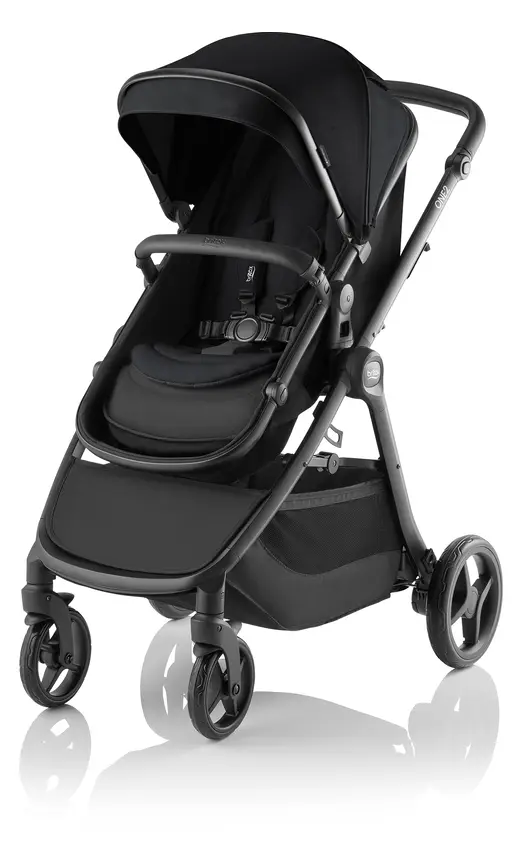

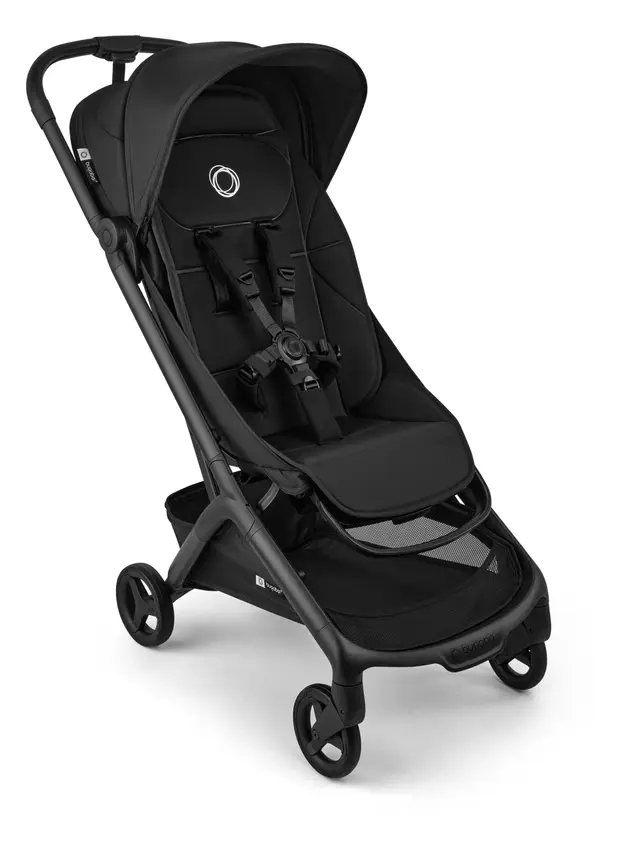
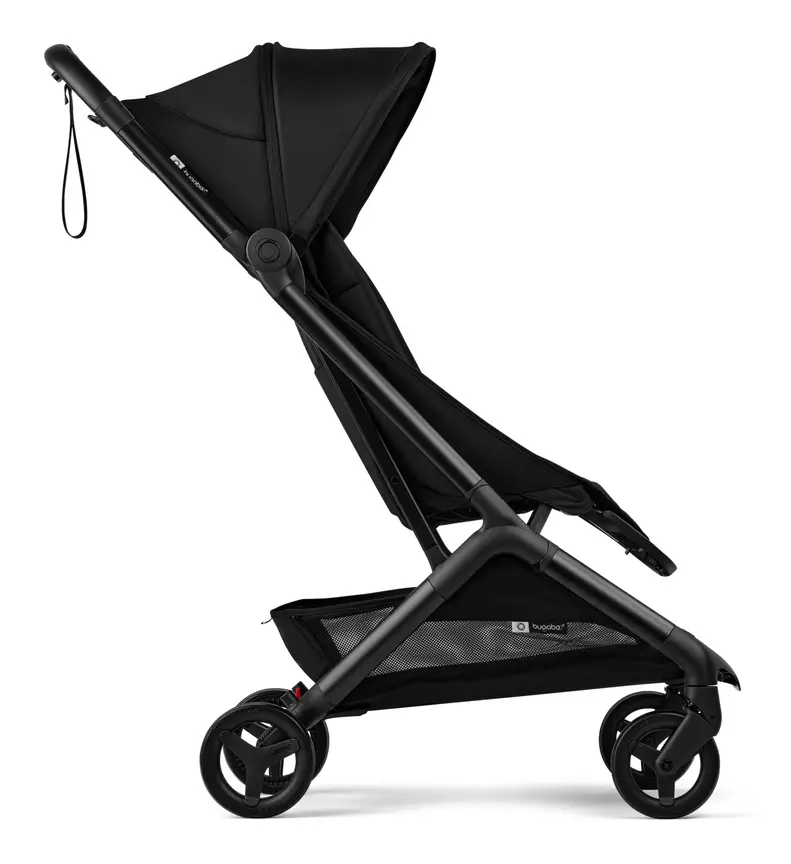


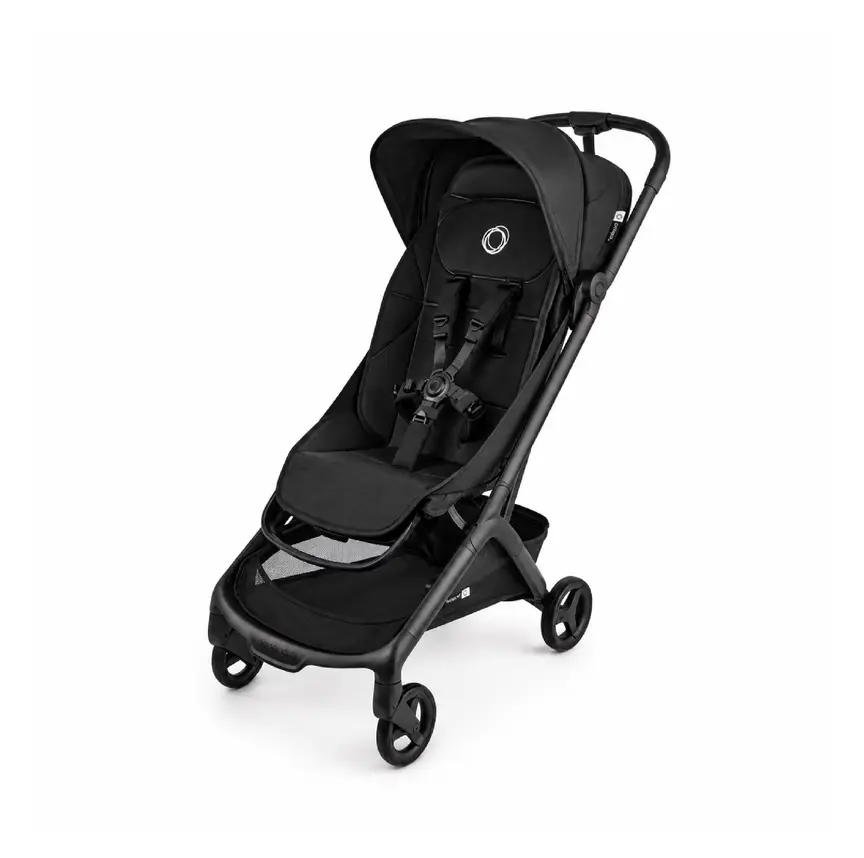
Bugaboo Butterfly
Bugaboo's cabin-friendly compact stroller with a one-second fold — the travel partner to a Fox, not a replacement for it.
Choosing and prepping a stroller by child age
What your child needs from a theme park stroller changes fast as they grow. A newborn needs a flat, supportive bed. A four-year-old just needs a shady seat when their legs get tired.
| Age stage | Main needs in a park | What to look for | Key safety rule |
|---|---|---|---|
| Newborn to 6 months | Flat support, shade, steady airflow | Bassinet or full flat recline, breathable mesh | Flat back-sleep position; keep face clear |
| 6 to 12 months | Sitting up, safe snacks, good naps | Five-point harness, multi-position recline | Buckle every time; watch heat inside hood |
| 1 to 3 years | Easy climb in and out, nap comfort | Sturdy footrest, large basket, quick fold | Lock brake when loading; no heavy bags on handle |
| 3 to 5+ years | Rest for tired legs, sun shade | Higher seat weight limit, tall backrest | Check max weight on label before the trip |
Newborn to 6 months
Young babies cannot hold their heads up on their own. Their airways can narrow if their chin drops onto their chest. Health groups including Red Nose Australia, The Lullaby Trust in the UK, the AAP in the US, and the Canadian Paediatric Society all warn against letting young babies sleep slumped upright.
For a baby under 6 months, choose a stroller with a flat-lying bassinet or a seat that reclines flat. Avoid leaving a baby in a car-seat capsule clipped onto the stroller frame for hours on end. Take regular breaks so your baby can stretch out on a flat surface.
6 to 12 months
Older babies want to look around at lights, music, and crowds. A seat that sits upright for awake time and reclines back for naps works well. Make sure the harness straps sit snug over both shoulders and between the legs.
Many babies start solid foods in this stage. If you use a snack tray, check that it does not widen the stroller beyond 31 inches. Wipe crumbs away often so ants and birds do not swarm the seat while you are on a ride.
1 to 3 years
Toddlers love to walk, then suddenly refuse to take another step. A light stroller with a quick fold makes life much easier when you hop on and off park trains or buses. Look for a wipe-clean seat pad for spilled drinks and melted ice cream.
A deep recline still matters at this age. Many toddlers nap in the afternoon right in the park. A supportive footrest stops their legs from dangling while they sleep.
3 to 5 years and older
Children who no longer use a stroller at home often still need one at a huge theme park. Walking all day in warm weather tires out little legs fast. Before you pack an old stroller, check the weight limit sticker on the frame.
An overloaded stroller is hard to steer and can tip or break a wheel mid-trip. If your older child is near the weight limit, consider a higher-capacity single stroller or a park rental for the day.
How to prep your stroller for a long park day
Once you know your stroller fits the size rules and passes safety checks, a few simple prep steps make the whole day smoother.
Sun and heat protection
Theme parks often mean hours outdoors with little natural shade. Babies and young children heat up much faster than adults. Health groups such as Pregnancy, Birth and Baby in Australia, the NHS in the UK, the AAP in the US, and the Canadian Paediatric Society all stress keeping babies cool and out of direct sun.
Never drape a blanket, towel, or muslin wrap over the front of the stroller canopy to block the sun. Even a thin cloth stops fresh air from moving through. Tests and health warnings show that covering a stroller traps hot air inside and can quickly make a baby dangerously hot.
Instead, use the stroller's built-in canopy and open any mesh air vents on the back or sides. You can also clip on a small, soft-blade battery fan pointed gently across the seat, well out of your child's reach. Dress your child in light, loose cotton clothes, a wide-brim hat, and sun-safe swimwear or UPF-rated clothing (such as fabrics tested to AS/NZS 4399 in Australia) when needed. Offer breastmilk, formula, or water often.
Rain and wet rides
Afternoon storms happen fast in many theme park areas. Pack a fitted plastic rain cover made for your exact stroller model. Make sure it has proper air holes on the sides so your child can breathe fresh air comfortably.
Do not leave a rain cover on once the sun comes back out. A plastic cover turns into a hot greenhouse in minutes. Keep a small towel and a spare set of dry clothes in a zip-top bag inside the basket.
Stroller parking and spotting your pram
You cannot take strollers into most ride queues, shows, or indoor restaurants. Parks set aside large stroller parking zones outside each ride. Often, hundreds of similar black or grey strollers sit side by side.
Tie a bright ribbon, luggage tag, or colourful band to the handle so you can spot yours in seconds. Write your name and mobile number on a waterproof tag tucked inside a pocket in case a stroller gets moved far away.
Never lock your stroller to a fence, bench, handrail, or tree. Cast members and park staff regularly shift parked strollers to keep walkways open and make room for new guests. If you lock it to a railing, staff may cut the lock. Never leave wallets, phones, cameras, or passports in the stroller basket when you park it.
Weight balance and storage
A theme park day packs in a lot of gear: nappies, wipes, water bottles, spare clothes, snacks, and sunscreen. It is tempting to hang a big backpack from the handlebar hooks.
Do not hang heavy bags on the handle. When your child climbs out, the weight on the back can tip the whole stroller backward onto the ground. Put heavy items low down in the under-seat basket instead. If you bring a backpack, wear it on your back or set it in the basket while you walk.
Air travel and transport prep
If you are flying to the theme park, check your airline's stroller rules early. Agencies like the US FAA note that families can usually check a stroller at the ticket counter or at the boarding gate. Gate-checking means you can push your child through the busy airport terminal.
Use a padded stroller travel bag if you check it into the cargo hold. Loose straps and wheels can snag on baggage belts. Remove clip-on cup holders and toys before folding, so they do not snap off in transit.
Common mistakes parents make with park strollers
Even experienced parents get caught out by theme park rules and long park days. Watch out for these common mistakes.
- Assuming a push wagon is allowed: Many parents buy a push-style stroller wagon thinking only pull wagons are banned. Most major parks ban both push and pull wagons.
- Measuring without attachments: A stroller that measures 30 inches wide at the wheels can hit 32 inches once you snap on a cup holder or side caddy.
- Covering the hood with a blanket: Draping a muslin wrap over the opening blocks airflow and traps dangerous heat around your baby.
- Loading the handlebar: Heavy shopping bags or nappy backpacks on the handle make the stroller tip backward the moment your child steps out.
- Locking the stroller to park property: Staff move strollers all day to keep paths safe. A stroller locked to a fence breaks park rules.
- Bringing a brand-new stroller untested: A new travel stroller with stiff brakes or a narrow seat can cause blisters and meltdowns. Take it for a few long walks at home first.
- Forgetting a rain cover: Leaving a stroller parked outdoors during a sudden downpour leaves the seat soaked for the rest of the day.
More options, from budget to premium
Real products from our catalogue. We don't show star ratings or review counts; check the current price, stock and reviews on Amazon before you buy.
Bugaboo Butterfly 2
The newer Butterfly. It folds in about one second, has a lay-flat seat and a bigger basket with a back pocket.
Read our full review →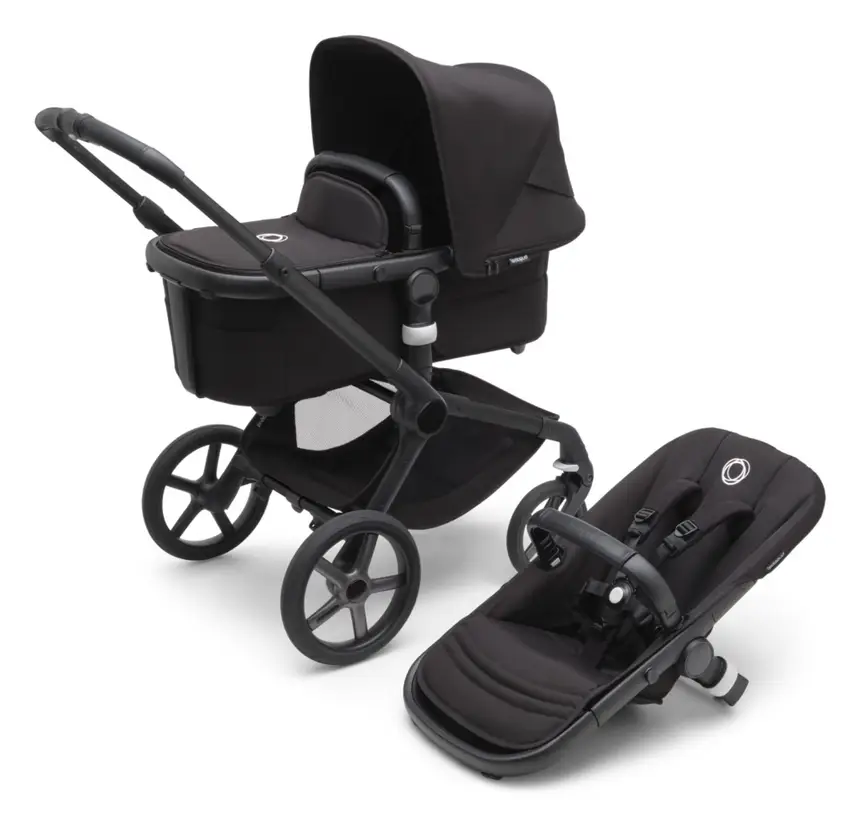 Reviewed
Bugaboo Fox 5
Bugaboo's flagship all-terrain pram: big-wheel suspension ride, one-piece fold, bassinet from birth and a seat rated to 22 kg.
Read our full review →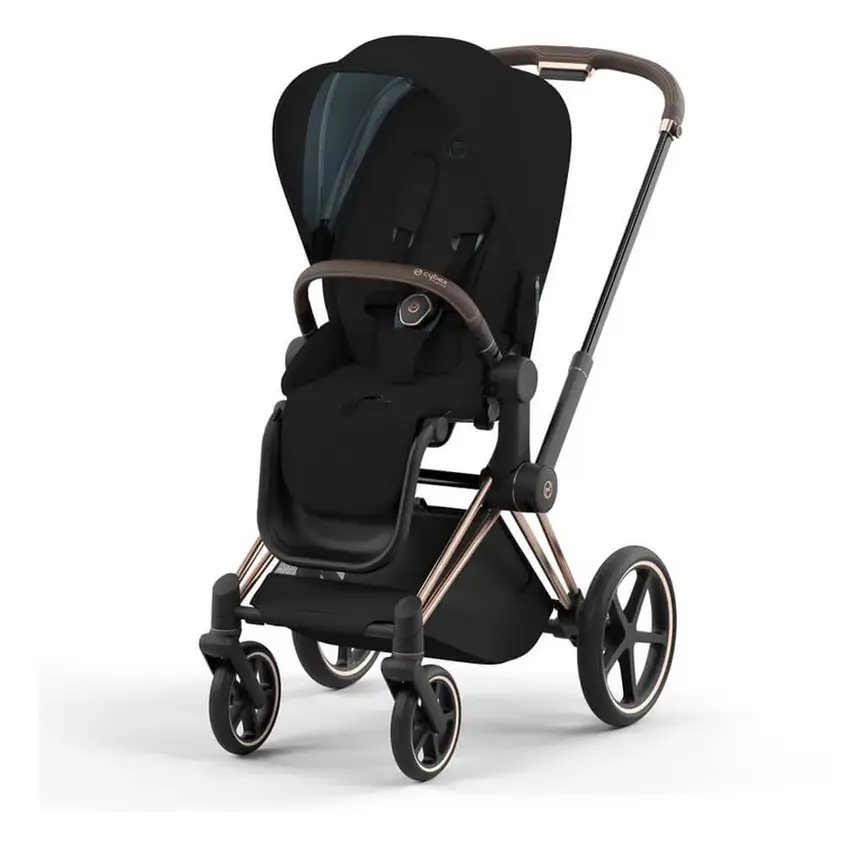
Cybex Priam
Fashion-forward luxury pram with interchangeable seat/bassinet units and an all-terrain option.
Frequently asked questions
Can I bring a push stroller wagon if it fits under 31 by 52 inches?
At Disney parks and many other major theme parks, no. The ban covers both pull wagons and push stroller wagons, even if the frame is smaller than 31 by 52 inches. The main exception is when a guest has a medical or disability need and gets approval from guest services.
Do theme parks measure strollers with the sun canopy and cup holders attached?
Yes. Gate staff measure the total space your stroller takes up as you push it through the gate. If a clip-on cup holder, snack tray, or side bag pushes the width past 31 inches (79 cm), take it off before you reach the check point.
Are double strollers allowed at Disney and other major theme parks?
Yes, both side-by-side and tandem double strollers are welcome as long as they fit within the 31 by 52 inch limit. Many side-by-side doubles are designed to sit right under 31 inches wide. Measure yours at home to be sure.
Can I lock my stroller to a fence or railing inside a theme park?
No. Theme parks forbid locking strollers to fences, poles, benches, or railings because staff must be able to move strollers to keep walkways clear. If you want extra security, use a small cable lock through the back wheels only, so staff can still tip and roll the front wheels if needed. Never leave valuables inside.
Is it safe for a baby to sleep in a stroller all day at a theme park?
Short naps in a flat-reclining stroller are fine if you watch your baby closely and keep airflow clear. Do not let a young baby sleep curled upright in a capsule or upright seat for long stretches. Keep the canopy vented, never cover the opening with a blanket, and take your baby out for regular breaks.
Should I bring my own stroller or rent one at the park?
Bringing your own stroller is usually better for babies and toddlers under three. Your own stroller reclines, has a five-point harness, and helps you walk from the car, bus, or hotel back to bed at night. Park rentals are hard plastic or simple seats that work better for older kids who only need a rest between rides.
Sources
- Product Safety Australia – Prams and strollers guide
- Product Safety Australia – Prams and strollers mandatory standard
- Pregnancy, Birth and Baby – Sun and heat protection for babies and kids
- UK Office for Product Safety and Standards
- NHS – Heatwave: how to cope in hot weather
- HealthyChildren.org (American Academy of Pediatrics) – Sun safety and protection tips
- FAA (US) – Flying with children
- Caring for Kids (Canadian Paediatric Society) – Sun safety
Related guides
More Prams & Strollers →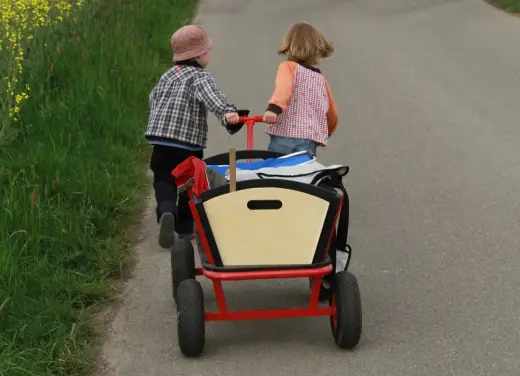
Stroller Wagons vs Double Strollers: How to Choose for Daily Trips and Theme Parks

Triple and Quad Strollers and Stroller Wagons: Stadium Seats, Harnesses and Kerbs
Anti-Theft Stroller Locks and Hidden Trackers for Theme Parks, Museums and Cafes
