














Neck Wallets for Travel: How to Choose and Use One Safely
Learn how to choose and use a neck wallet while travelling with children, including safer ways to carry passports, cash and everyday essentials.
On this page
- What a neck wallet can and cannot do
- Choosing a neck wallet
- Neck wallet, money belt or bag pocket?
- Using a neck wallet in busy places
- Travelling with babies and young children
- Keeping travel documents organised
- Comfort, clothing and care
- Planning airport screening with children
- Official travel guidance by country
- Common mistakes to avoid
- A simple travel check before leaving
- Frequently asked questions
- Sources and further guidance
- Sources
Short answer: A neck wallet is a small pouch worn on a cord around the neck. It can hold travel papers, cards or cash. It may keep those items close in a crowd. It cannot stop theft, and it is not a safety product for children. Choose a comfortable pouch that stays covered under your clothes. Keep it away from babies and young children, who may pull its cord or mouth its parts.
Travelling with children means carrying many things. You may need passports, tickets, payment cards and contact details. A neck wallet can keep some small items together. Think of it as one part of a simple travel plan. Keep a separate way to pay, and store copies of key details securely.
What a neck wallet can and cannot do
A neck wallet is usually a fabric pouch with one or more pockets. A cord or strap hangs it around the wearer’s neck. Some people wear it under a shirt or jacket. Others wear it outside their clothes for easier access.
The pouch can help you keep small items in one place. It may reduce the chance of dropping a card or leaving a passport on a counter. It can also make documents easier to find during check-in or border checks.
A neck wallet does not make valuables theft-proof. Someone may see or reach an exposed pouch. A cord can be pulled, caught or cut. A zip or clasp can fail. Treat the wallet as a handy holder, not as a guarantee of security.
It does not protect a child from harm. It does not replace close supervision, a child’s travel documents, or safe travel arrangements. Never attach a neck wallet to a baby carrier, pram, car seat or child’s clothing.
Choosing a neck wallet
Start with what you plan to carry. A passport and a few cards need less space than several documents and a phone. A pouch that is too full can bulge under clothing and feel uncomfortable. A pouch that is too large may swing when you move.
- Size: Check that your passport fits without bending. Allow room to close the pocket without force.
- Pockets: Separate pockets can help keep cards, cash and papers apart. Make sure you can tell which pocket holds each item.
- Fastener: Try the zip or closure several times. It should open and close smoothly. It should stay shut when the pouch moves.
- Cord: Check that it feels comfortable against your neck. Avoid a long cord that swings or catches easily.
- Fabric: Look for fabric that feels comfortable against your skin. Check the care label and whether it can be cleaned as needed.
- Access: Think about how often you will need the contents. Frequent access may be easier with a pouch kept in a secure bag pocket.
- Wear: Try it over a light shirt before travel. Check whether it rubs, slips or shows clearly under your usual clothes.
- Colour and shape: Pick a style that works with your clothes and routine. A flat pouch may sit more comfortably under a shirt. Dark colours may show less through some fabrics.
- Care: Check whether the pouch can be washed or wiped clean. Do not assume every fabric can go in a washing machine.
There is no need to pay for claims you cannot check. Words such as “unpickable”, “theft-proof” or “military-grade” do not prove that a pouch is secure. Read the actual product details and return terms. Avoid claims about radio protection unless you understand which cards or devices the feature covers.
Neck wallet, money belt or bag pocket?
There is no single best way to carry travel items. Your route, clothing, weather and comfort matter. Compare the options before you leave home. You can also use more than one method, such as a pouch for documents and a separate payment card in a bag.
| Option | What it can suit | Things to consider |
|---|---|---|
| Neck wallet | Small papers or cards kept close to the body | The cord can rub, show or catch. It may feel warm under clothing. |
| Money belt | Flat items worn at the waist under clothing | It can feel uncomfortable when sitting. Access may take time. |
| Zipped bag pocket | Items you need to reach often | Keep the bag closed and close to you in busy places. |
| Cross-body bag | Items you need during the day, such as tissues or snacks | Wear it in front in crowds. Keep the strap and fasteners in good condition. |
| Hotel safe or secure storage | Items you do not need to carry that day | Check how access works. Keep a backup plan for essential papers and money. |
Try your chosen method at home before travelling. Put in the items you plan to carry. Walk, sit, bend and reach for something. Check whether the pouch shifts or presses against you. If it gets in the way, choose another storage method.
Do not put every payment method and all travel papers in one pouch. If it goes missing, you could lose everything at once. Keep a backup card or small amount of cash somewhere separate. Store copies of important details securely, away from the originals.
Using a neck wallet in busy places
Before leaving your accommodation, decide what you truly need that day. Carrying fewer valuables makes them easier to keep track of. Keep the rest in secure storage, if available.
- Place the pouch under clothing if that feels comfortable and does not affect movement.
- Keep the cord inside your clothes when possible, so it does not dangle.
- Close every pocket after use. Check the fastener before moving away from a desk or counter.
- Take out only the card, paper or cash you need. Put it away before walking on.
- Do not leave the pouch on a table, pram, restaurant chair or changing surface.
- When seated, check that the pouch is not trapped under a belt or chair edge.
- At security checks, follow staff directions. Take the pouch off if asked.
- Keep the pouch in the same place when you put it away. This makes it easier to check that you still have it.
- Choose a calm spot before checking documents or counting money.
Keep your attention on your surroundings, especially while supervising children. Avoid sorting through documents in the middle of a busy path. Find a calmer place to check tickets or payment details.
In a crowd, stay aware of your belongings and the people around you. Do not let a pouch distract you from a child walking beside you. If a child needs help, put the pouch away before using both hands. A small cross-body bag or zipped pocket may suit some outings better.
Travelling with babies and young children
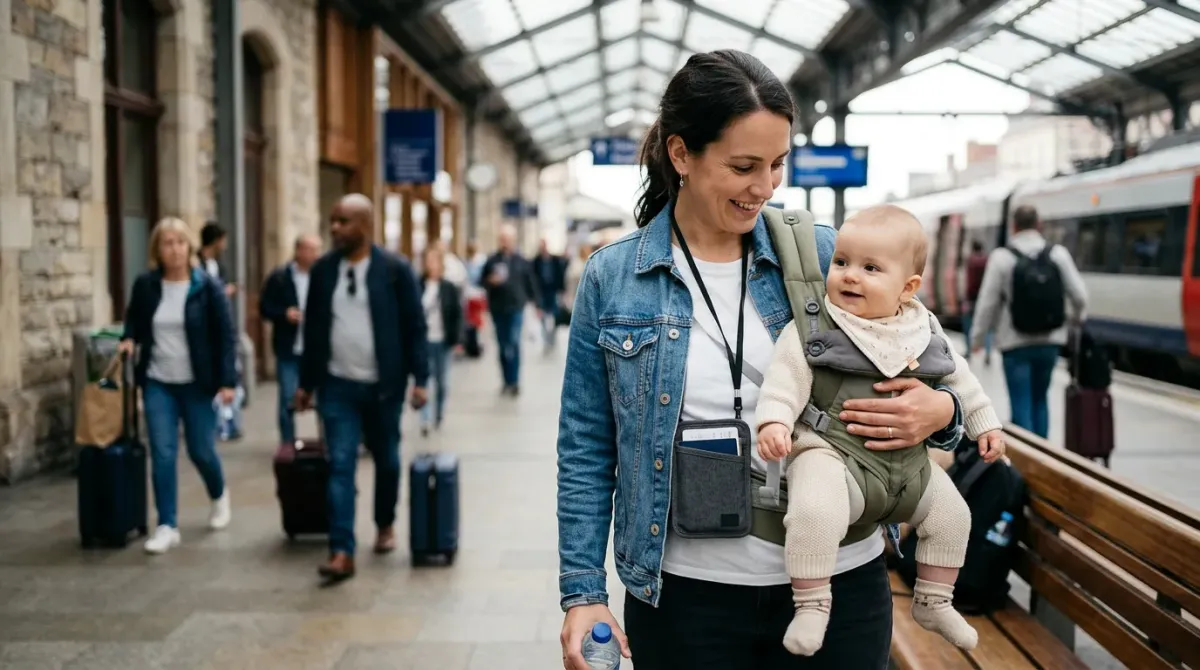
A neck wallet is for the adult carrying it. Babies and young children should not wear one. A cord around a child’s neck can catch or tighten. Small parts may also come loose and become a choking hazard.
Keep the wallet out of a child’s reach when you take it off. Do not leave it in a cot, pram, car seat or play area. Do not hang it from a pram handle. A child could grab it, or it could catch while folding.
Use a separate, child-safe plan for a child’s travel details. Keep the child’s passport and documents with the responsible adult. If an older child needs contact details, use a method suited to their age and understanding. Make sure they know which adult to approach if separated.
When travelling with a baby, pack essential care items where an adult can reach them. A neck wallet is usually too small for nappies, wipes, food or spare clothes. Keep those items in an organised bag. Check airline and border rules before packing liquids, food or other restricted items.
Keep a child’s routine in mind when planning where you store things. A hungry or tired child may need your attention quickly. Place nappies, wipes, a change of clothes and feeding items in a bag you can open easily. Keep important papers separate from items that may leak.
Do not put a passport or small card loose in a baby’s bag pocket. An adult may not notice when it falls out during a change. Check the bag after each stop. Keep documents in a closed pocket that stays with the adult.
Keeping travel documents organised
Before your trip, check that each traveller’s documents are valid for the journey. Keep passports dry and avoid folding or bending them. Put tickets and booking details somewhere you can reach without opening every pocket.
Make a secure backup of key information. This may include passport details, travel insurance contacts and accommodation details. Keep the backup separate from the originals. Do not leave an unprotected copy where other people can see it.
Plan what to do if a document or wallet goes missing. Know how to contact your bank and travel provider. Keep emergency contact details somewhere separate. If a passport is lost, contact the relevant embassy or consulate and follow its instructions.
At an airport, follow instructions from security staff. Pack liquids and other items according to the rules for your route. Rules can differ by country and airport. Check official travel guidance before leaving.
Keep documents you need for the next step easy to reach. For example, you may need a passport at check-in, security or border control. Put it back in its usual pocket once staff return it. Avoid handing several papers to a child to hold.
When travelling by car, do not leave important documents in plain view. Take them with you or place them in secure storage. Never leave a child unattended in a vehicle while you retrieve or check belongings.
Comfort, clothing and care
A pouch worn against the body can feel warm or rub during a long day. Test it at home before travel. Wear it for a short walk and while sitting. Adjust the position if the cord pulls or the pouch presses against you.
Choose clothing that lets you reach the pouch without twisting or pulling hard. Do not put it where it limits your breathing, movement or ability to hold a child. If it becomes uncomfortable, move the items to a secure pocket or bag.
Check the wallet after travel. Empty it and look for wear at the seams, cord and fastener. Clean it according to the care label. Let it dry fully before storing documents inside. Replace it if the cord is frayed or the closure no longer works well.
In hot weather, a pouch under clothing may feel uncomfortable. Take breaks in a cool place when needed. Drink water and dress for the weather. If the pouch gets damp from sweat or rain, remove documents and let it dry.
In cold weather, check that the pouch remains easy to reach. Thick layers can make it harder to access. Do not pull sharply on a cord trapped under a coat. Take the pouch off first if you need to remove clothing.
Planning airport screening with children
Airport screening can feel busy when you are caring for a child. Prepare before you reach the screening area. Keep documents and items needed for checks in a known place. Listen to staff and follow their directions.
Some airports ask travellers to remove items or place them in a tray. A neck wallet may need to come off. Keep a hand on it while you follow instructions. Do not leave it behind in a tray or seat.
Plan for your child while you handle screening. If another adult is travelling with you, agree who watches the child. If you are travelling alone, keep the child close and use a safe place for your bags. Do not ask a young child to watch your belongings.
Airport rules can change. They can also differ by country, airport and route. Check the official advice for your departure airport before packing. Ask airport staff if a rule is unclear.
Official travel guidance by country
Travel rules depend on the airport, airline and destination. In Australia, the Department of Home Affairs provides airport security guidance. In the UK, GOV.UK explains hand luggage rules for baby food and milk. In the US, the Transportation Security Administration gives advice for families. In Canada, the Canadian Air Transport Security Authority offers family travel advice.
| Country | Official body or service | Useful point |
|---|---|---|
| Australia | Department of Home Affairs | Check current airport screening rules before packing. |
| UK | GOV.UK | Check hand luggage rules, including guidance for baby food and milk. |
| US | Transportation Security Administration (TSA) | Check advice for families travelling through US airport security. |
| Canada | Canadian Air Transport Security Authority (CATSA) | Check family travel and screening guidance before your flight. |
These bodies explain travel and screening rules. They do not certify neck wallets as theft-proof. Follow the advice for your departure airport and destination. Check again close to your trip, because rules may change.
Common mistakes to avoid
- Carrying everything in one place: Split payment options and keep a backup separate.
- Trusting a product claim: A label cannot promise that theft will not happen.
- Wearing the pouch where everyone can see it: A visible pouch may draw attention. Choose a position that feels comfortable and discreet.
- Overfilling it: A stuffed pouch can bulge, strain its seams and feel awkward.
- Leaving it loose: A dangling cord can catch on a handle, seat or other object.
- Letting a child play with it: Keep cords and small parts away from young children.
- Checking documents while walking: Stop somewhere calm before opening the pouch.
- Skipping a trip check: Check your documents, payment options and official baggage rules before departure.
- Putting a pouch on a pram: Keep it with an adult. Do not hang it from a handle or frame.
- Using a damaged wallet: A worn cord or broken zip may let items fall out. Move items to another secure place.
A simple travel check before leaving
A short check can help you leave with the items you need. Do it before leaving your room or home. Keep the process simple, especially when travelling with children.
- Check that passports and tickets are with the responsible adult.
- Check that you have more than one way to pay, stored separately.
- Carry only the documents and money needed for that day.
- Close each wallet pocket and check the fastener.
- Put baby care items in a separate bag that is easy to reach.
- Check the official rules for your airport and route.
- Agree who will watch each child during busy stops.
This check does not need special equipment. You can use a note on your phone or a paper list. Keep the list free of sensitive personal details. Review it before each trip, since each journey may need different items.
Frequently asked questions
Does a neck wallet prevent pickpocketing?
No. It may keep small items close, but it cannot prevent theft. Keep the pouch covered if comfortable. Stay aware in crowds. Avoid carrying every valuable in one place.
Should my child wear a neck wallet?
No. Do not put a corded pouch around a baby’s or young child’s neck. Keep it with the responsible adult and out of children’s reach.
Can I wear a neck wallet through airport security?
Screening rules depend on the airport and staff instructions. You may be asked to remove it or place it with your belongings. Check official guidance for your route and follow staff directions.
What should I put in a neck wallet?
Carry only small items you need that day, such as a travel document or payment card. Keep backup money and another payment method separately. Avoid carrying unnecessary personal papers.
Is a neck wallet better than a money belt?
Neither is best for everyone. A neck wallet may be easier to reach, while a money belt sits at the waist. Try the fit and consider your clothing, comfort and route.
Should I buy an RFID-blocking wallet?
Choose based on your needs and reliable product details. Do not treat this feature as a substitute for keeping cards secure or checking your bank account activity.
How do I keep passports safe while travelling?
Keep passports dry and with a responsible adult. Use secure storage when you do not need them. Keep a separate, secure backup of key details. Know who to contact if one goes missing.
Can I attach the wallet to a pram or baby carrier?
No. Do not attach it to a pram, carrier, car seat or child. A loose cord can catch, and a child may pull or mouth it.
Can I wear a neck wallet while holding my baby?
You can decide whether it feels comfortable, but keep the cord and pouch away from your baby’s face and hands. Do not let the pouch press against the baby. Move it if it gets in the way.
What if the wallet gets wet?
Take documents out as soon as you can. Dry the pouch as its care label advises. Let it dry fully before using it again. Keep damp paper away from other travel documents.
Where should I keep a backup payment card?
Keep it somewhere separate from the neck wallet. Choose a closed pocket or another secure place you can remember. Do not carry every payment option in the same pouch.
Sources and further guidance
- Australia: Department of Home Affairs – What you can and can’t bring through airport security
- UK: GOV.UK – Hand luggage restrictions: baby food and baby milk
- US: TSA – Traveling with children
- Canada: CATSA – Families
- Australian Department of Home Affairs – Travelling with powders, liquids, aerosols and gels
- CATSA (Canada) – Liquids, non-solid food and personal items
This article is general information, not personal travel or security advice. Check current official rules for your route and destination. BabyGearFinder may receive a commission from some links, at no extra cost to you. We do not provide medical advice.
Sources
- Australian Department of Home Affairs – What you can and can't bring through airport security
- GOV.UK – Hand luggage restrictions: baby food and baby milk
- TSA (US) – Traveling with children
- CATSA (Canada) – Families
- Australian Department of Home Affairs – Travelling with powders, liquids, aerosols and gels (fact sheet, 2025)
- CATSA (Canada) – Liquids, non-solid food and personal items
Related guides
More Car Seats & Travel →
Infant Travel Cribs and Portacots: How to Choose and Use One Safely
Portable Travel Changing Mats: How to Choose and Use One Safely
Portable Travel Cribs: Benefits, Safety Checks, and How to Choose One
