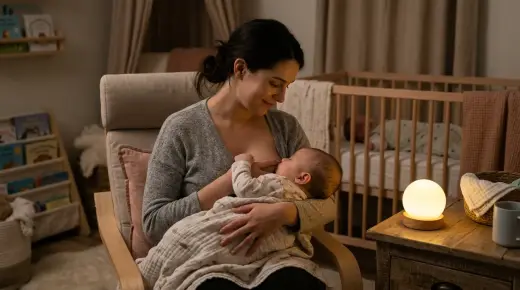
Smart Nursery Sound Machines and Toddler Clocks: Safe Volume, Red Light and App Schedules
How to choose and use a smart nursery sound machine and toddler clock safely: volume caps, red night light, app schedules, cords and batteries.

On this page
- Key points
- What a smart sound machine and toddler clock is
- How sound affects baby and toddler sleep
- Red light, blue light, and your child's body clock
- Time-to-rise toddler clocks and app schedules
- Comparing smart sound machines and basic models
- What to look for by age stage
- Safety standards and official guidance around the world
- How to set up and place the machine safely
- Common mistakes to avoid
- Frequently asked questions
- Sources
Short answer: A smart nursery sound machine with a time-to-rise clock can help babies settle and teach toddlers when to stay in bed. Place it across the room, well away from the cot. Keep the sound gentle, never at full blast. Pick a dim red or warm amber night light. Keep all power cords out of reach, and lock your Wi-Fi and app account.
Health and safety groups in Australia (Red Nose, Raising Children Network, ACCC), the UK (The Lullaby Trust, NHS, OPSS), the US (American Academy of Pediatrics, CPSC) and Canada (Canadian Paediatric Society, Health Canada) all share the same core advice. Keep sleep spaces clear, keep noise low, and keep cords and button batteries away from children.
Key points
- Placement: Put the machine on a stable shelf or dresser across the room. Never place it inside the cot or clipped to the cot rail.
- Sound limit: Use a gentle, steady sound level. Test it where your child's head rests before bedtime.
- Night light: Choose dim red, orange, or warm amber light at night. Bright white or blue light can wake the brain up.
- Time-to-rise cues: Colour wake-up cues work best from around age two or three, not for babies.
- Cords and batteries: Tuck power cords behind heavy furniture or out of reach. Check that any battery door needs a tool to open.
- App safety: Use a strong, unique password for the app. Make sure the machine still runs its saved schedule if the Wi-Fi drops out.
What a smart sound machine and toddler clock is
This device puts two nursery tools into one small box. The first part is a sound machine. It plays steady background noise, such as white noise, rain, or soft lullabies. The second part is a time-to-rise clock. It glows one colour when it is time to sleep, and another colour when it is okay to get up.
The word "smart" means the device connects to your phone over Wi-Fi or Bluetooth. You use an app to set sleep and wake times. You can also turn the light up or down, or change the sound, without walking into the room.
Why parents buy a two-in-one unit
Many families start using a sound machine in the newborn months. Later, when their child moves to a toddler bed, early wake-ups often start. Having the toddler clock built into the same unit saves space on the shelf. It also means your child already knows the machine as part of their bedtime routine.
What "smart" adds, and what it does not
An app makes it easy to tweak schedules from the hallway. You do not have to tiptoe past a creaky floorboard to press a button. Still, a smart machine cannot fix every sleep problem on its own. Babies wake for feeds, comfort, and nappy changes. Toddlers wake early for many reasons, such as too much daytime sleep or hunger.
How sound affects baby and toddler sleep
Steady background sound works by masking sudden noises. A barking dog, a flushing toilet, or an older sibling in the hall can wake a light sleeper. A soft, even sound smooths out those sharp jumps in noise.
Raising Children Network in Australia notes that gentle background noise can help some babies settle. At the same time, loud noise can harm a baby's hearing. A 2014 study in the journal Pediatrics tested infant sleep machines. The researchers found that many machines could play loud enough to risk hearing damage if placed close to a baby's ears or set too high.
Understanding sound limits (decibels)
Sound loudness is measured in decibels, often written as dB. Everyday quiet room noise is very low. A loud hairdryer or vacuum cleaner is much higher. Many smart sound machines include a volume cap in the app. A volume cap lets you set a top limit so nobody can turn the sound up too high by mistake.
Even with a cap in the app, always check the sound with your own ears. Stand or kneel next to the cot where your baby's head will be. The sound should feel soft and calm, like a quiet shower in the next room. If you have to raise your voice to talk over it, it is too loud.
White noise, pink noise, and nature tracks
Most machines offer several sound types. Here is what the common terms mean in plain words:
- White noise: Sounds a bit like static from an old radio or a steady fan. It has all sound pitches mixed evenly.
- Pink noise: Sounds deeper and softer than white noise, more like steady rain or wind in trees. Many parents find it easier on the ears.
- Brown noise: Deeper again, like a low rumble or distant waterfall.
- Heartbeats and shushing: Rhythmic sounds that mimic the womb. Some babies like these in the early weeks.
- Lullabies: Short tunes that repeat. Watch out for sudden changes in pitch or volume between tracks.
Pick a sound that stays even from start to finish. Some nature tracks have bird chirps or thunderclaps that can startle a sleeping child. Loop tracks should also blend smoothly without a loud click when they restart.
When to give your child quiet time
Do not run a sound machine all day while your child is awake. Babies and toddlers need to hear normal speech, household sounds, and quiet rooms during the day. Hearing voices clearly helps them learn language. Turn the sound machine on for naps and night sleep, and switch it off when your child wakes up.
Red light, blue light, and your child's body clock
Light sends a strong signal to the human brain. Morning daylight tells the body clock it is time to be alert. Darkness tells the brain to release a sleep hormone called melatonin. Melatonin helps the body wind down and stay asleep.
Research published in 2018 on PubMed Central looked at children exposed to blue-enriched white LED light at night. It found that this bright, cool-toned light suppressed melatonin and lowered sleepiness in children. In plain words, bright white or blue light tricks a child's brain into thinking it is still daytime.
Why red and warm amber light are better at night
Red, orange, and warm amber light sit at the warm end of the colour range. They have far less blue light than cool white bulbs or phone screens. A very dim red or warm amber glow gives you just enough light to check a nappy or feed safely, without telling your child's brain to wake up.
Some machines advertise "red sleep wavelengths". You do not need to get lost in science jargon. Just check two simple things in a dark room:
- Is the light truly warm red or deep amber, rather than pinkish-white?
- Can you dim it right down to a very soft glow?
Even a red light can bother sleep if it shines like a floodlight. Turn the brightness down to the lowest level that still lets you see safely. If your baby sleeps fine in total darkness, you do not need a night light running all night. You can turn the light on only when you go in for a feed or check.
Using the light safely during night feeds
If your smart machine lets you tap the top or tap your phone to bring up a dim warm light, that is handy at night. You avoid turning on the main ceiling light. Keep the machine angled away from your baby's eyes so the glow bounces softly off a wall instead.
Time-to-rise toddler clocks and app schedules
A time-to-rise clock uses simple colours to show sleep time and wake time. Toddlers cannot read numbers on a digital clock yet. They can, however, learn a clear colour rule. For example, red or amber means stay in bed, and green or soft yellow means it is morning.
Most smart machines let you build several schedules in the app. You can set one plan for bedtime and morning wake-up. You can set another plan for a daytime nap. Some apps also let you set a slightly later wake time on weekends.
How to teach a toddler the colour rule
Start simple. Pick just two colours at first. One colour means sleep. Another colour means wake up. Tell your toddler about the rule during the day when they are happy and rested. Show them the light changing colour so they see how it works.
If your child wakes up at 5:30 am and the clock is set for 6:30 am, a whole hour is too long for a toddler to wait. Start by setting the wake colour just five or ten minutes after their usual wake time. When they succeed, praise them right away. Then slowly move the wake time forward by a few minutes every few days.
Helpful app schedule features to look for
- Sunrise fade-in: Some clocks slowly brighten from dim warm light to a gentle morning glow over ten or fifteen minutes. This is softer than a sudden bright flash.
- Fade-out timer: You can set the sound or light to slowly fade off after your child falls asleep.
- Offline memory: The schedule should live inside the clock itself, not only on your phone. That way the wake light still changes on time if your home Wi-Fi drops out.
- Child lock: A toggle in the app that turns off the physical buttons on the machine. This stops curious hands from turning the sound up or changing the colour.
Watch out for subscription traps
Some smart nursery brands lock extra sleep sounds, stories, or advanced app schedules behind a paid monthly plan. Before you buy, check what works for free out of the box. Basic white noise, red night light, and at least two daily schedules should never require an ongoing fee.
Comparing smart sound machines and basic models
You do not have to buy a smart combo unit. A plain sound machine or a simple plug-in toddler clock may suit your family better. The table below compares the three main types side by side.
| Feature | Basic sound machine | Basic toddler clock | Smart sound machine and toddler clock |
|---|---|---|---|
| Sound options | Usually 5 to 20 built-in sounds like white noise and rain. | Often none, or just a simple wake-up chime. | Many built-in sounds, custom mixes, and sometimes audio stories. |
| Volume control | Physical dial or plus and minus buttons on the unit. | Basic alarm volume switch or none. | Fine volume steps in the app, often with a parent volume cap. |
| Night light colours | None, or a single warm white glow. | Two or three set colours for sleep and wake. | Full colour range, including dim red and warm amber, plus brightness sliders. |
| Time-to-rise cues | No clock or wake-up colour cues. | Simple screen icons or colour change at one set time. | Multiple daily schedules for naps, weekdays, and weekends. |
| App and Wi-Fi | No app and no Wi-Fi needed. Works anywhere straight away. | No app and no Wi-Fi needed. Set with buttons on the clock. | Uses Bluetooth or Wi-Fi for phone control. Needs setup and password care. |
| Power and travel | Often runs on USB, wall power, or standard batteries. | Usually plugs into a wall socket, some use AA batteries. | Most need wall power. Some have a backup battery for short outages. |
| Best age stage | Newborn through toddler years if you only need sound. | Toddlers from around age two to five. | Newborn to school age, growing from sound machine to wake clock. |
If you travel a lot or stay in hotels with tricky Wi-Fi, a simple non-Wi-Fi machine can be much less fuss. If you want one device that stays on the shelf from birth to age five, a smart combo unit makes sense.
What to look for by age stage
Your child's needs change fast from the newborn days to preschool. The features that matter most also change at each stage.
| Age stage | What your child is doing | How to use the machine safely |
|---|---|---|
| Newborn to 6 months | Sleeps in your room in a cot or bassinet. Wakes often for feeds. | Keep the machine across the room. Use low, steady sound and dim red light for night feeds. Do not use wake-up colours yet. |
| 6 to 18 months | Starts sitting, crawling, and pulling up to stand. Reaches for cords and buttons. | Check that the power cord is completely out of reach from the cot. Turn on the button child lock. |
| 18 months to 3 years | May move to a toddler bed and climb out. Early morning waking is common. | Start simple time-to-rise colours around age two or when they understand simple rules. Keep the machine up high on a shelf. |
| 3 to 5 years | Understands routines and rules better. May ask for a dim night light for comfort. | Use the wake clock for morning habits. Lower the sound volume or fade it out if they no longer need it. |
Newborn to 6 months
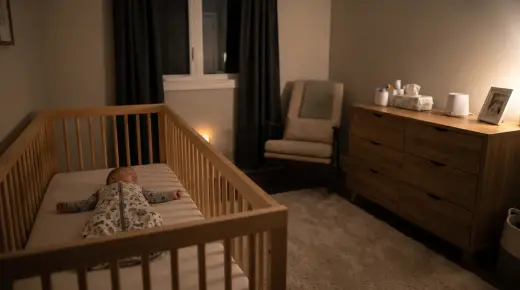
In the first six months, safe sleep groups recommend sharing a room with your baby, with the baby in their own clear cot or bassinet. Keep the sound machine on a dresser across the room, not next to the bassinet. Use the dim red light only when you need to see for a feed or nappy change. Babies this young have no idea what a clock colour means, so leave time-to-rise schedules off.
6 to 18 months
Once your baby can sit and pull up, they will grab anything within reach. A power cord near the cot is a serious strangulation hazard. Move the cot away from wall sockets and cords, or route the cord safely behind heavy furniture. This is also the age when babies love pressing glowing buttons, so turn on the child lock in the app.
18 months to 3 years
When your child moves into a toddler bed, they can walk around the room. Make sure the shelf or chest of drawers holding the machine is anchored to the wall so it cannot tip over. Now is the right time to introduce a simple two-colour wake rule. Keep expectations realistic, as many two-year-olds still need time to learn patience.
3 to 5 years
Older toddlers and preschoolers often enjoy picking their sleep colour or helping tap the machine at bedtime. You can also use a "getting ready for bed" colour ten minutes before lights out. This gives them a clear visual warning that playtime is ending.
Safety standards and official guidance around the world
There is no single global safety rule written only for nursery sound machines. Instead, several official bodies cover sleep safety, electrical and battery safety, and smart device security. The rules match closely across Australia, the UK, the US, and Canada.
| Safety area | Australia | United Kingdom | United States | Canada |
|---|---|---|---|---|
| Safe baby sleep | Red Nose Australia & Raising Children Network | The Lullaby Trust & NHS | American Academy of Pediatrics (AAP) | Caring for Kids (Canadian Paediatric Society) & Health Canada |
| Product, cord & battery safety | ACCC / Product Safety Australia | Office for Product Safety and Standards (OPSS) | Consumer Product Safety Commission (CPSC) | Health Canada |
| Smart device & Wi-Fi security | Australian Department of Home Affairs | UK Government (PSTI smart device rules) | Federal Communications Commission (FCC) | Get Cyber Safe (Government of Canada) |
Safe sleep environment
Red Nose Australia, The Lullaby Trust in the UK, the American Academy of Pediatrics, and the Canadian Paediatric Society all stress keeping the cot clear. Nothing should sit inside the cot with a baby, including travel sound machines, plush toys with speakers, or sleep aids strapped to the cot bars. Keep the sleep space firm, flat, and clear.
Button batteries and small parts
Some portable sound machines and remote controls use coin-shaped button batteries. If swallowed, a button battery can cause severe internal burns in just two hours. Product Safety Australia (ACCC) enforces strict mandatory rules for products with button batteries, requiring child-resistant compartments secured with a screw or similar tool. Always check that any battery cover on a nursery device screws shut tightly. Better yet, choose a unit with a sealed internal battery or wall power only.
Power cords and electrical safety
The US Consumer Product Safety Commission (CPSC), Product Safety Australia, OPSS, and Health Canada all warn about loose cords near cots and toddler beds. Babies and young children can get tangled in cords. Always place corded devices at least one metre away from the cot or bed, and hide extra cord length behind furniture or inside a cord cover. Only use the power plug that came in the box, and check that it carries your country's local electrical approval mark.
Smart device security and privacy
Because smart sound machines connect to your home Wi-Fi, they are small internet devices. Both the UK Government (through its Product Security and Telecommunications Infrastructure rules) and the Australian Department of Home Affairs have introduced rules requiring smart devices to avoid weak default passwords and to support security updates. In the US, the FCC runs the Cyber Trust Mark program, and in Canada, Get Cyber Safe offers clear tips for baby gear.
Follow these quick steps to protect your home network:
- Change any default password straight away and use a strong, unique password for the app.
- Turn on two-step verification if the app offers it.
- Install app and firmware updates when prompted, as these often fix security gaps.
- Avoid buying cheap unbranded smart devices from unknown online sellers that never issue software updates.
- If the machine has a built-in microphone or baby monitor feature you do not use, switch it off in the app.
How to set up and place the machine safely
A few minutes of care during setup keeps your nursery safe and saves you trouble at 2:00 am. Follow this step-by-step checklist before your child's first sleep with the machine.
- Pick a high, steady spot. Place the machine on a dresser or wall shelf that is anchored to the wall. Keep it across the room from the cot or toddler bed.
- Secure the power cord. Run the cord straight down behind the dresser to the wall socket. Make sure there is no slack loop hanging down where a toddler could pull it.
- Connect to your home Wi-Fi. Most smart nursery machines only work on a standard 2.4 GHz Wi-Fi band. Check your router settings if the app fails to pair at first.
- Set a parent volume cap. Open the app settings and limit the maximum volume. Then test the sound while standing beside the cot.
- Set a dim red or amber night light. Keep the brightness low. Check the room at night with the main lights off to see how bright it looks.
- Turn on the child lock. Lock the buttons on the unit so a toddler cannot turn off the schedule or blast the sound.
- Test a power or Wi-Fi drop. Unplug your Wi-Fi router for a minute or turn off Wi-Fi on your phone. Check that the machine keeps playing its sound and keeps its clock time.
Common mistakes to avoid
Even careful parents can slip into habits that make sleep harder or less safe. Watch out for these common mistakes:
- Putting the machine inside or on the cot: Never tuck a sound machine under the mattress, inside the cot, or on the cot rail. It puts loud noise right next to your baby's ears and adds an unsafe object to the sleep space.
- Running the volume too high: Some parents turn the volume up to drown out crying. Loud sound can stress a baby and put their hearing at risk. Keep it gentle and steady.
- Using bright blue or white light all night: Cool white, green, or blue night lights can slow down melatonin and lead to lighter, shorter sleep. Save bright colours for the morning wake cue only.
- Expecting a baby to follow a wake clock: Babies under 18 months do not understand colour rules. Using a wake light too early only frustrates parents.
- Letting the wake colour shine too early or too late: Set the morning colour to a realistic time your child can actually reach. Gradually shift it by five minutes every few days if you want a later morning.
- Leaving loose cords near the bed: Toddlers love to tug on wires. Always keep cords tucked away out of sight and out of reach.
- Ignoring battery doors: If you use a portable travel machine or a remote control with button batteries, check the screw on the battery door every month.
Frequently asked questions
Do babies need a sound machine to sleep?
No. Many babies sleep well in a quiet room with normal household noise in the background. A sound machine is just an optional tool. It can help if your home is noisy, if you live near a busy road, or if older siblings wake the baby. If your baby sleeps fine without one, you do not need to buy one.
Is red light really better than white or blue light at night?
Yes. Studies show that blue and bright white LED light at night can suppress the sleep hormone melatonin in children. Dim red, orange, or warm amber light has much less effect on the body clock. Keep any night light as dim as possible, and turn it off if you do not need it to see safely.
At what age can a child understand a time-to-rise clock?
Most children start to understand simple colour rules between two and three years old. A few ready toddlers pick it up closer to 20 months, while others need until age three. Before then, your child does not connect a light colour with waiting in bed. Keep things fun and low-pressure while they learn.
Can I put a sound machine inside the cot or clip it to the rail?
No. Safe sleep bodies in Australia, the UK, the US, and Canada all say to keep the cot completely clear. Putting a sound machine inside the cot or clipped to the rail puts loud sound too close to your baby's ears. It also creates a risk of the device falling into the cot or a baby reaching cords and buttons. Always place it across the room.
What happens if the Wi-Fi drops out overnight?
On a well-designed smart machine, the saved schedule and sound settings stay stored inside the device memory. If your Wi-Fi drops out, the sound keeps playing and the light still changes colour at wake-up time. You just lose remote control from your phone until Wi-Fi comes back. Always check that a model has onboard memory before you buy.
How do I stop my toddler from changing the buttons or volume?
First, place the machine on a high, wall-anchored shelf where your toddler cannot reach it. Second, turn on the child lock in the app so the physical buttons on the machine stop working. Third, set a safe maximum volume cap in the app so the sound can never be turned up too loud.
Sources
- Raising Children Network – Light, noise and baby sleep: frequently asked questions
- Product Safety Australia – Button batteries guide
- The Lullaby Trust – Safer sleep overview
- UK Government – Security rules for smart devices (PSTI)
- Hugh et al. – Infant sleep machines and hazardous sound pressure levels, Pediatrics 2014 (PubMed)
- Melatonin suppression and sleepiness in children exposed to blue-enriched white LED lighting at night (2018), PubMed Central
- Caring for Kids (Canadian Paediatric Society) – Healthy sleep for your baby and child
- Get Cyber Safe (Government of Canada) – Cyber security tips for your baby gear
Related guides
More Sleep & Nursery →
Infant Sound Machines and White Noise: Safe Volume, Placement, and Sleep Tips
Baby Sound Machines and Pink Noise: Safe Volume Limits and Cot Distance

Bluetooth Speakers at Toddler Bath Time: Safe Placement, Sound and Battery Care