














Baby Sound Machines and Pink Noise: Safe Volume Limits and Cot Distance
Learn how to use baby white noise and pink noise machines safely. Check safe volume levels, cot distance rules, cord safety, and advice for parents.
On this page
- Key points for safe sound machine use
- What baby sound machines do, and why parents use them
- What the research says about infant sleep machines
- White noise, pink noise, and brown noise explained
- Comparing baby sound machine types
- Official safety guidance in Australia, the UK, the US, and Canada
- How to set up a sound machine safely, step by step
- Using a sound machine by age stage
- How to wean your baby off a sound machine
- Battery, electrical, and travel safety
- Common mistakes to avoid
- Frequently asked questions
- Sources
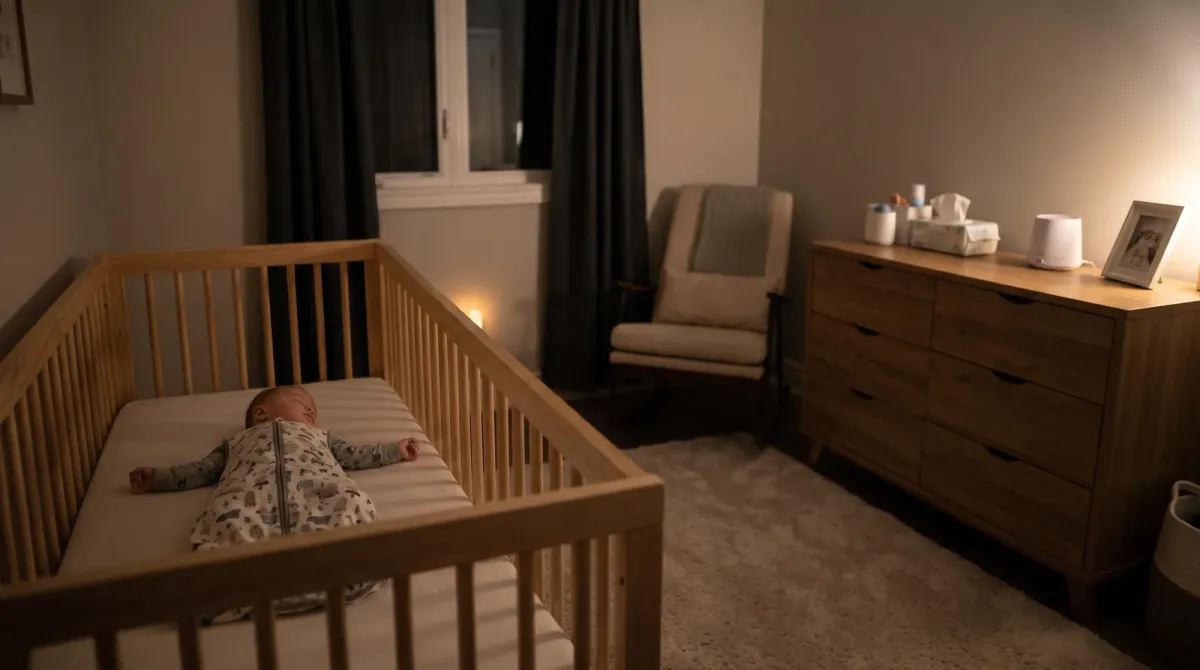
Short answer: A baby sound machine can help mask sudden household noises. Still, you must use it carefully. This protects your baby's ears and keeps the sleep space safe. Place the machine at least two metres (about seven feet) from the cot. Set the volume low. It should be no louder than a soft shower or a quiet talk. That is under 50 decibels. Never put a sound machine inside the cot. Do not hang it on the cot rail or near your baby's head. Keep all power cords at least one metre away from the cot. Turn the machine off once your baby is asleep. You can also use a timer so it does not play all night.
This advice matches child health and safety bodies in four countries. In Australia, these are Red Nose, Raising Children Network, and the Australian Competition and Consumer Commission (ACCC). In the United Kingdom, they are The Lullaby Trust, the NHS, and the Office for Product Safety and Standards (OPSS). In the United States, they are the American Academy of Pediatrics (AAP) and the Consumer Product Safety Commission (CPSC). In Canada, they are Health Canada and the Canadian Paediatric Society (CPS).
Key points for safe sound machine use
- Keep the volume low: Sound at your baby's cot should stay below 50 decibels (dB). That sounds like gentle rain or a quiet talk in the next room.
- Place it far from the cot: Put the unit at least two metres (seven feet) away from the sleep space.
- Never put it in the cot: Keep the cot bare. Do not put speakers, soft toys with sound boxes, or phones inside the cot.
- Keep cords out of reach: Any mains power cord or USB cable can strangle a child. Keep cords at least one metre (three feet) away from every part of the cot.
- Do not run it loud all night: Use a shut-off timer. Or turn it off when your baby falls asleep. Babies also need quiet time to hear normal family voices.
- Follow safe sleep rules first: A sound machine does not make an unsafe sleep space safe. Always place your baby on their back on a firm, flat mattress in a clear cot.
What baby sound machines do, and why parents use them
A baby sound machine is a small speaker made for a nursery. Many parents call it a white noise machine. It plays a steady background sound. Common sounds include rushing air, steady rain, ocean waves, or a gentle hum.
Parents use these machines for one main reason. A steady sound helps cover up sudden noises in the house. A dog might bark outside. A car door might slam in the street. A floorboard might creak. An older child might play loudly in the hallway. Any of these sharp sounds can startle a sleeping baby. When a quiet background hum plays, those sharp noises do not stand out as much.
Raising Children Network in Australia explains this simply. Some babies settle more easily with a steady, gentle background sound. Other babies prefer a quiet room. Every baby is different. You do not need a sound machine for your baby to sleep well.
How sound is measured in decibels
Sound loudness is measured in units called decibels. We write this as dB. A decibel scale does not go up in tiny, equal steps like a ruler. Instead, a small rise in the number means the sound energy is much stronger.
Here is what everyday sounds feel like in simple words:
- Quiet whisper or rustling leaves: Very soft. It is gentle on the ears.
- Quiet library or soft rain: Around 40 dB. This feels calm and restful.
- Soft shower or quiet talk at home: Around 50 dB. This is the upper safe limit for a hospital nursery.
- Normal talking close up or a busy office: Around 60 dB. This is too loud for a baby to hear near their head all night.
- Vacuum cleaner, hairdryer, or loud traffic: Much louder again. Sounds at this level can harm tiny ears if played for a long time.
A baby's inner ear is still growing. Tiny hair cells inside the ear pick up vibrations. They send sound signals to the brain. What happens if a sound machine plays too loudly? What if it sits too close to your baby's head for hours every night? It can stress or damage those delicate cells.
What the research says about infant sleep machines
In 2014, doctors at the Hospital for Sick Children in Toronto studied infant sleep machines. The team included Dr Blake Papsin and Dr Sarah Hugh. Their study was published in the medical journal Pediatrics.
The team tested popular infant sound machines sold in shops. They turned each machine up to its top volume. Then they measured the loudness at three distances that parents often use:
- At 30 centimetres away. This is like putting the machine inside the cot or hanging it on the cot rail.
- At 100 centimetres (one metre) away. This is like putting the machine on a table right next to the cot.
- At 200 centimetres (two metres) away. This is across the room on a dresser or shelf.
The results gave a strong warning to families. At top volume, almost all the machines were louder than the 50 dB hospital nursery limit. That was true even from two metres away. At 30 centimetres from the cot, several machines were as loud as a noisy factory floor. Playing noise that loud for hours each night is risky. It can harm a baby's hearing. It can also affect how a baby's brain learns to process speech sounds.
Because of this study, doctors and child safety experts in Canada, the US, the UK, and Australia give three clear rules:
- Place the machine as far from the cot as you can. Keep it at least two metres (seven feet) away.
- Set the volume as low as it will go while still gently masking sudden house noises.
- Turn the machine off once your baby is asleep. Or use an automatic timer so it does not play all night.
Cots, Bassinets & Bedside Sleepers worth a look
Real products from our catalogue. We don't show star ratings or review counts; check the current price, stock and reviews on Amazon before you buy.
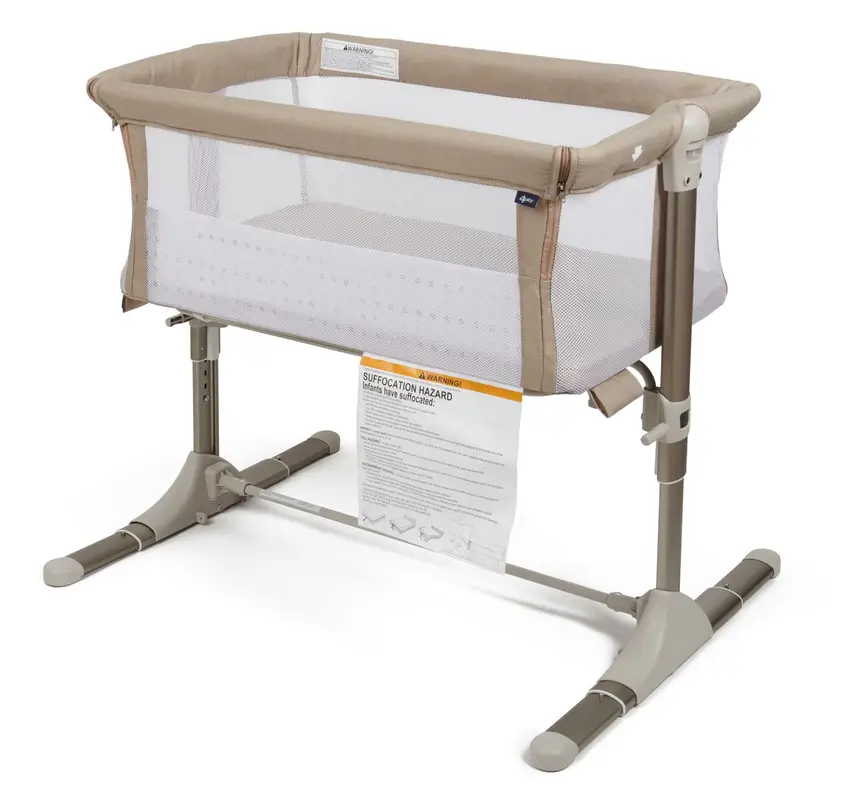
4baby Snuggle Cuddle Bedside Sleeper
A low-cost bassinet that turns into a bedside sleeper, with 4 heights and mesh sides.
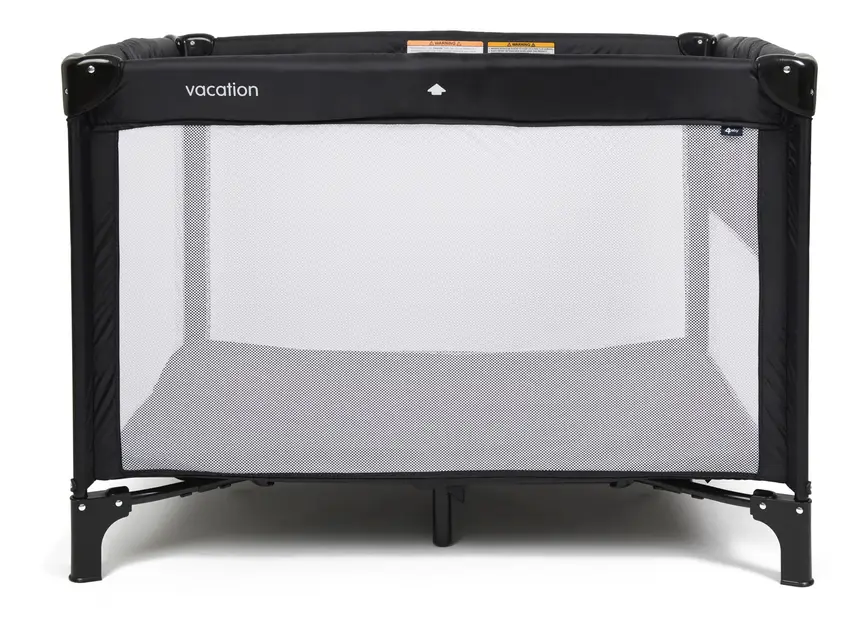
4baby Vacation Portacot
A low-cost portacot with a padded mattress and mesh sides.
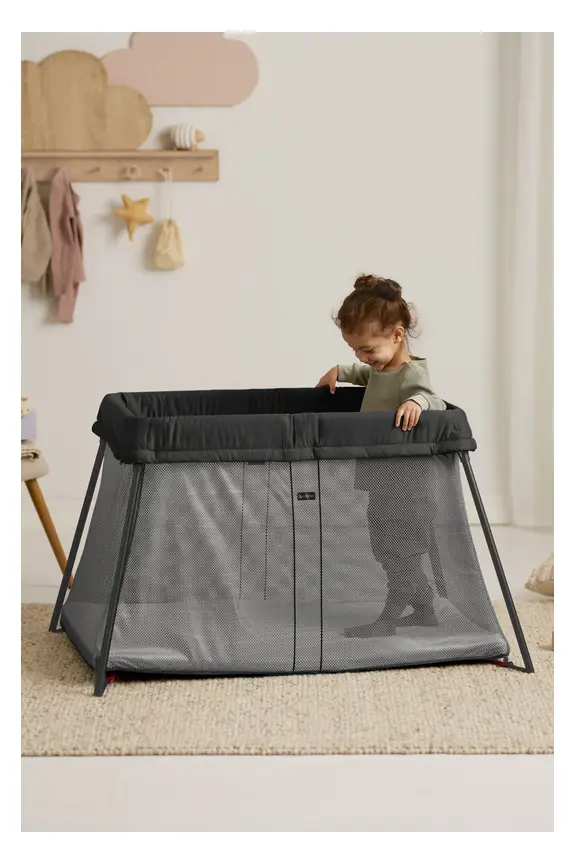
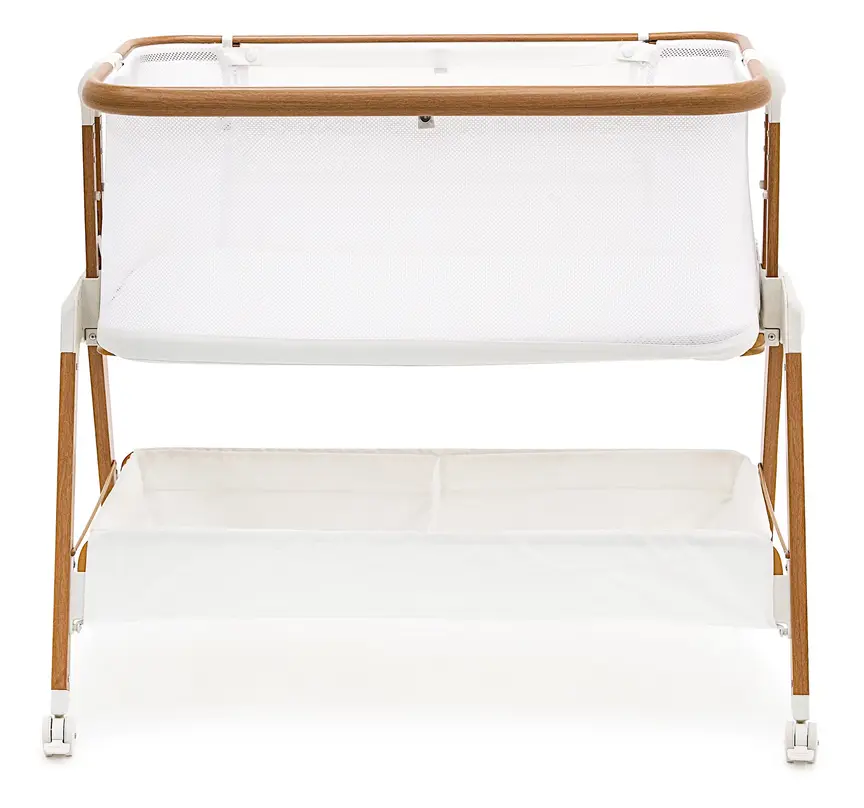
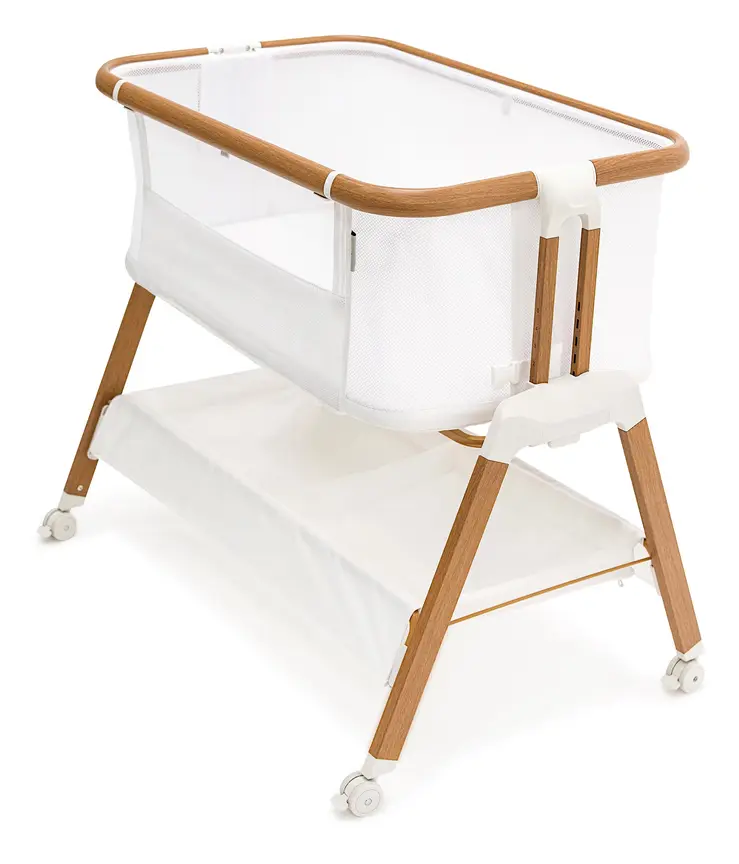
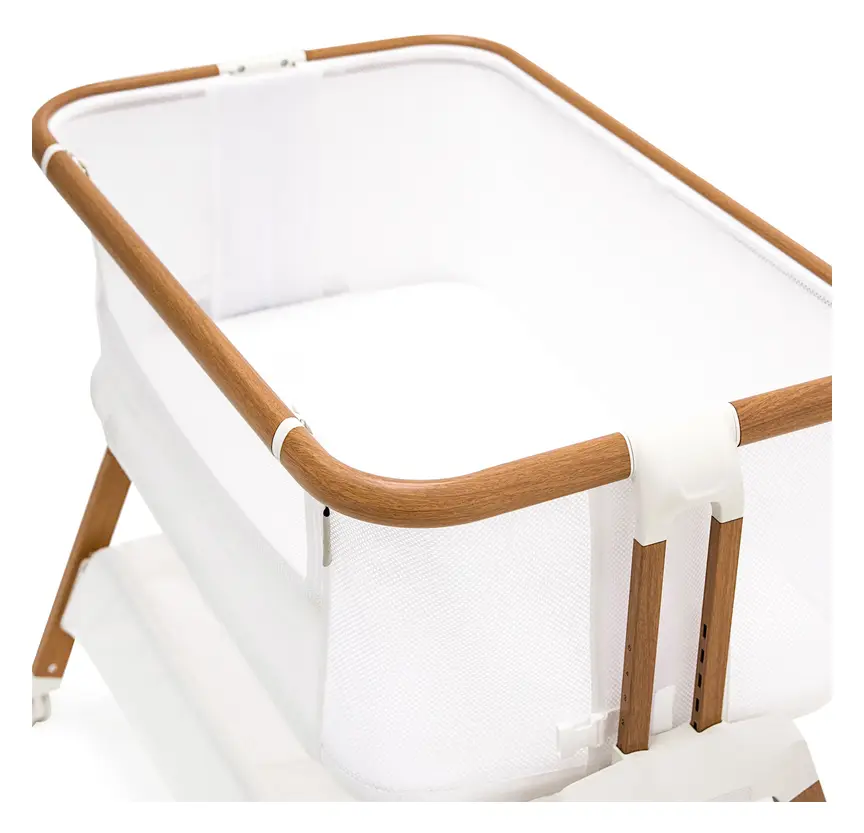
BabyRest Alfie2 Bedside Bassinet
A bedside bassinet with 5 heights, a drop-down side, wheels and an insect net.
Read our full review →Compare all cots, bassinets & bedside sleepers in our reviews →
White noise, pink noise, and brown noise explained
When you shop for a sound machine, you will see boxes that name different noise colours. They talk about white noise, pink noise, and brown noise. Brown noise is sometimes called red noise. These names sound fancy, but the idea is very simple. White light is a mix of different light colours. In the same way, these sounds mix high, middle, and low notes together.
White noise
White noise plays low, middle, and high notes at equal strength. Human ears are very sensitive to high notes. Because of this, true white noise sounds quite bright and hissy. It sounds like an untuned radio or television static. Some babies and parents find true white noise a bit harsh in a quiet bedroom.
Pink noise
Pink noise turns down the high, hissy notes. It keeps more energy in the lower and middle notes. Each step up in pitch is softer than the step below it. To the human ear, pink noise sounds much warmer and deeper than white noise. It feels more balanced. Steady rain on a roof sounds like pink noise. Wind rustling through leafy trees and gentle heartbeats are also close to pink noise. Most modern machines that say "white noise" on the box actually play pink noise. They do this because pink noise is softer to listen to.
Brown noise
Brown noise turns the high notes down even further. It focuses on deep, low rumble notes. It sounds like a distant waterfall or low rolling thunder. It also sounds like the deep hum inside an aeroplane cabin. It feels very low and steady, with no sharp hiss.
Nature sounds, fan sounds, and lullabies
Many machines also play recorded loops of nature or music. You might hear ocean waves, rainforest birds, cricket chirps, or musical lullabies. Simple, steady sounds like rain or a fan usually work best for sleep. Busy melodies or bird calls do not work as well. Sudden high notes can catch a baby's attention. Obvious gaps where a short recording repeats can also wake a light sleeper.
No matter which colour of noise you pick, the safety rules are the same. Pink noise is not safer at high volumes than white noise. Low volume and safe distance are what protect your baby's hearing.
Comparing baby sound machine types
Shops sell several kinds of nursery sound machines. The table below compares the main styles side by side. Use it to see how each style fits safe sleep and safe hearing rules.
| Feature or safety check | Plug-in tabletop sound machine | Mechanical fan sound machine | Portable clip-on travel unit | Plush toy with a built-in speaker | Smart nursery machine (Wi-Fi or Bluetooth) |
|---|---|---|---|---|---|
| How it makes sound | Plays digital sound tracks through a small speaker. | Spins a real fan inside a plastic case with air vents. | Plays digital sound loops using a rechargeable battery. | Hides a battery sound box inside a soft stuffed toy. | Runs via a phone app. Often includes a coloured nightlight. |
| Best safe spot in the room | On a shelf at least 2 metres from the cot. Secure the cord. | On a firm shelf or floor spot at least 2 metres from the cot. | Outside a pram canopy on walks, or across the room at home. | Outside the cot on a high shelf. Never inside the cot. | On a shelf at least 2 metres from the cot. Keep away from rails. |
| Sound quality and looping | Good units have smooth loops. Cheap ones may click when repeating. | Makes natural rushing air with zero digital loop gaps. | Simple digital tracks. Small speakers can sound tinny if loud. | Often plays short tunes or heartbeat sounds on a short timer. | Wide choice of pink noise, brown noise, and rain via the app. |
| Volume control | Usually has many fine button steps from very soft to loud. | Uses a two-speed switch and twisting outer vents. | Often has fewer steps. Check that the lowest step is truly soft. | Switch is inside the fabric pouch. Keep it on the lowest setting. | Can be adjusted finely from outside the room on your phone. |
| Main safety hazards to watch | Long mains cord can strangle if within 1 metre of the cot. | Mains power cord. Also watch for finger gaps if the case cracks. | Easy to clip on the cot rail right near your baby's ears. | Suffocation risk if placed inside a baby's cot or bassinet. | Mains cord hazard. Bright blue light can also disturb sleep. |
Official safety guidance in Australia, the UK, the US, and Canada
There is no single product standard code made only for baby white noise volume. However, national health groups, safe sleep charities, and product safety regulators in all four countries give clear rules. These cover the sleep space, cot safety, cords, and toys.
Australia
In Australia, Red Nose and the Raising Children Network lead safe sleep and settling education. The Australian Competition and Consumer Commission (ACCC) via Product Safety Australia regulates consumer goods.
- Safe sleep space: Red Nose says a baby should always sleep on their back. Use a firm, flat mattress in a cot that meets the mandatory household cot standard AS/NZS 2172. Folding cots must meet AS/NZS 2195. Keep the cot free of soft toys, bumpers, pillows, and loose items. Never put a plush sound machine toy inside the cot with a sleeping baby. Red Nose advises keeping the sleep space clear right through infancy.
- Noise and settling: Raising Children Network notes that gentle, steady background sound can help some babies settle. Still, loud or constant noise is not needed. Keep nursery noise low and respond to your baby's cues.
- Button battery rules: The ACCC enforces strict mandatory standards for products with button or coin batteries. Does your portable sound unit or remote control use button batteries? Then the battery door must have a screw or need two separate moves to open. This stops a child from opening it and swallowing the battery.
- Toy safety: Is the sound machine shaped like a toy, or meant for a child to hold? It must meet the Australian toy safety standard AS/NZS ISO 8124. This standard checks for small choking parts and safe sound limits.
United Kingdom
In the UK, The Lullaby Trust and the National Health Service (NHS) give safe sleep advice. The Office for Product Safety and Standards (OPSS) oversees product safety laws.
- Clear cot rule: The Lullaby Trust stresses that a baby's cot or Moses basket must stay clear. Keep out all toys, teddies, sleep positioners, and gadgets. Any sound aid must stay outside the cot. Full-size cots should meet BS EN 716. Cribs and cradles should meet BS EN 1130.
- Cords and monitors: The Lullaby Trust warns about electrical devices in the nursery. Keep baby monitors and mains-powered sound machines well away from the cot. Fix cords to the wall or keep them out of reach. A baby must never be able to pull a cord into the cot.
- Toy sound limits: Is the device sold as a plush sleep toy? UK law says it must pass the toy safety standard BS EN 71. This standard checks for choking hazards, strong seams, and safe sound levels for toys held near the ear.
United States
In the US, the American Academy of Pediatrics (AAP) gives clinical safe sleep and hearing advice on HealthyChildren.org. The U.S. Consumer Product Safety Commission (CPSC) regulates nursery products and recalls.
- Hearing protection: After the 2014 Pediatrics study, the AAP gave clear advice on infant sound machines. Place them at least seven feet (about two metres) from the baby's sleep space. Keep the volume below 50 dB. Also limit how long the machine runs.
- Bare crib rule: The AAP and the NICHD Safe to Sleep campaign state that a crib must be bare. Use a crib that meets ASTM F1169 for full-size cribs, or ASTM F406 for smaller cribs and play yards. Only put a fitted sheet on a firm, flat mattress. Soft plush sound machines and clip-on speakers do not belong in or on the crib.
- Cord strangulation warnings: In CPSC Publication 5066, the CPSC warns that babies and toddlers can strangle in power cords near a crib. The CPSC rule is simple. Keep all cords and corded devices at least three feet (one metre) from every part of the crib.
- Toy safety standard: Toy-style sound units sold in the US must meet mandatory toy standard ASTM F963. This sets limits on toy sound levels. It also tests for small parts and safe battery doors.
Canada
In Canada, Health Canada and the Canadian Paediatric Society (CPS) through Caring for Kids give official sleep and safety rules.
- Safe sleep space: Health Canada and Caring for Kids advise placing babies on their backs in a bare crib, cradle, or bassinet. The bed must meet Canadian safety rules. Keep it free from toys, loose bedding, and cords.
- Protecting infant hearing: Canadian paediatric experts share the Toronto Hospital for Sick Children findings. Keep sleep machines at least two metres from your baby's head. Use the lowest volume that works. Switch the machine off once your baby is asleep.
- Blind and electrical cords: Health Canada warns parents to keep cribs far away from window blind cords and electrical wires. Curious babies can reach through crib slats and pull cords inside.
How to set up a sound machine safely, step by step
Setting up a sound machine takes only a few minutes. Follow these seven steps to keep the room safe for sleep and hearing.
- Measure the distance from the cot. Pick a flat, sturdy dresser or shelf. Make sure it is at least two metres (two big adult steps, or seven feet) from the nearest rail of your baby's cot or bassinet.
- Check the power cord path. Plug the machine into a wall socket far from the cot. Let the cord hang behind the dresser where little hands cannot reach it. Keep every part of the cord at least one metre from the cot.
- Pick a steady, gentle sound. Choose soft pink noise, brown noise, or steady rain. Avoid tracks with sudden loud crashes, gull cries, shrill whistles, or high-pitched bells.
- Do the quiet talk test. Stand right next to your baby's cot while the machine runs across the room. Speak in a normal, quiet voice. Do you have to raise your voice to be heard over the machine? If yes, the machine is far too loud.
- Compare it to a soft shower. Listen from right beside the cot. The sound reaching the cot should be no louder than a gentle shower heard from a few steps away. It should sound like light rain outside a closed window.
- Set the shut-off timer. Set the timer for 20 to 45 minutes. The machine will fade out once your baby is in a deep sleep. Does your unit have no timer? Switch it off yourself before you go to bed.
- Check the room as your baby grows. Soon your baby will sit up, pull to stand, or climb out of a toddler bed. Check again that they cannot reach the machine or its cord.
Can you use a smartphone decibel app to check the volume?
Many parents download a free sound meter app on their phone. They hold the phone inside the empty cot to see if the number stays under 50 dB. This can give you a rough guide. It also shows you how much the sound drops when you move the machine across the room.
However, do not trust a phone app as an exact lab tool. Phone microphones are built for voice calls, not scientific testing. Two phones in the same room can read several decibels apart. Always use your own ears as the final check. Keep the machine at least two metres away. Turn it down to the softest level that masks hallway noise.
Side by side: more cots, bassinets & bedside sleepers to compare
Real products from our catalogue. We don't show star ratings or review counts; check the current price, stock and reviews on Amazon before you buy.
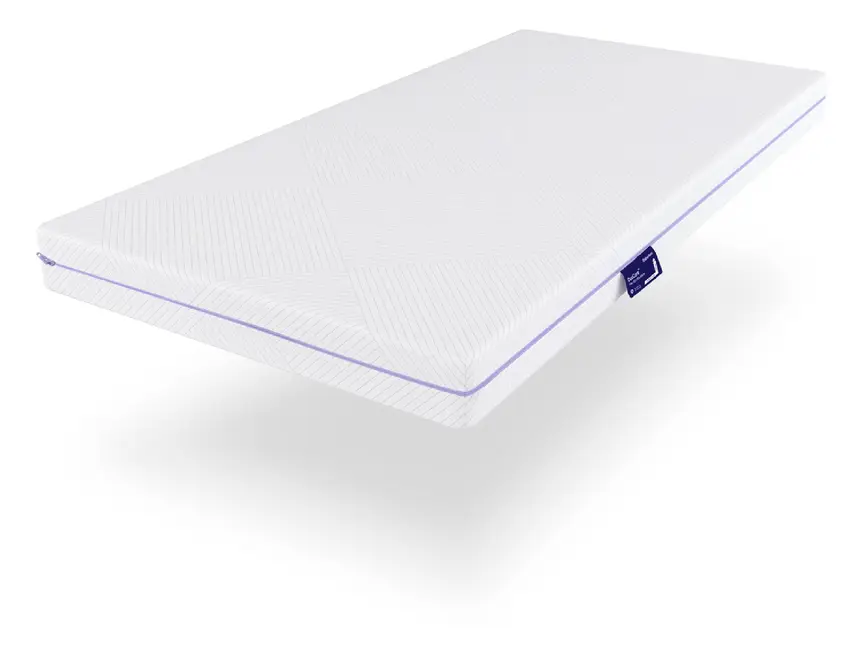
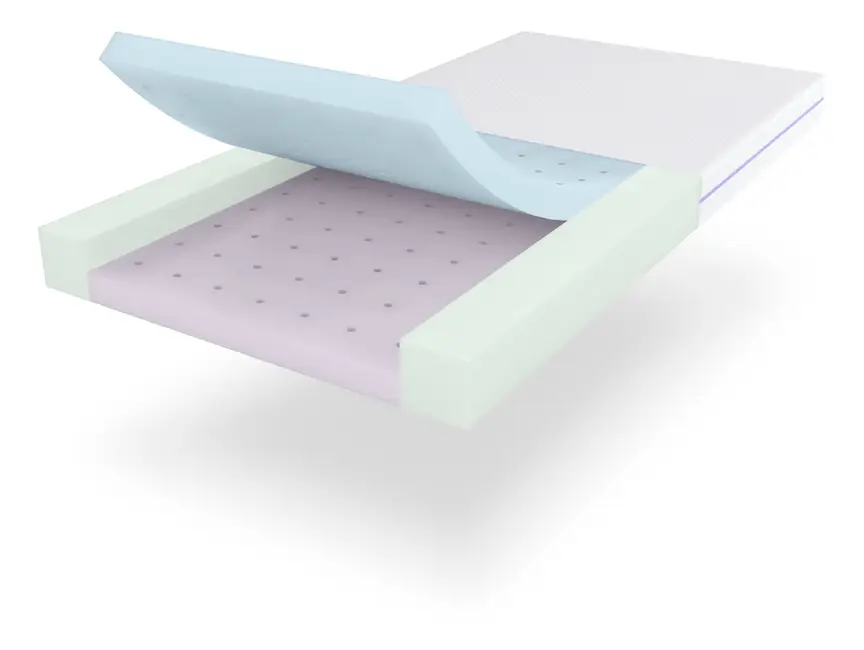

BabyRest Duocore Bamboo Cot Mattress
A two-sided mattress: a baby side to 12 kg and a toddler side from 12 kg to about 4 years.
Read our full review →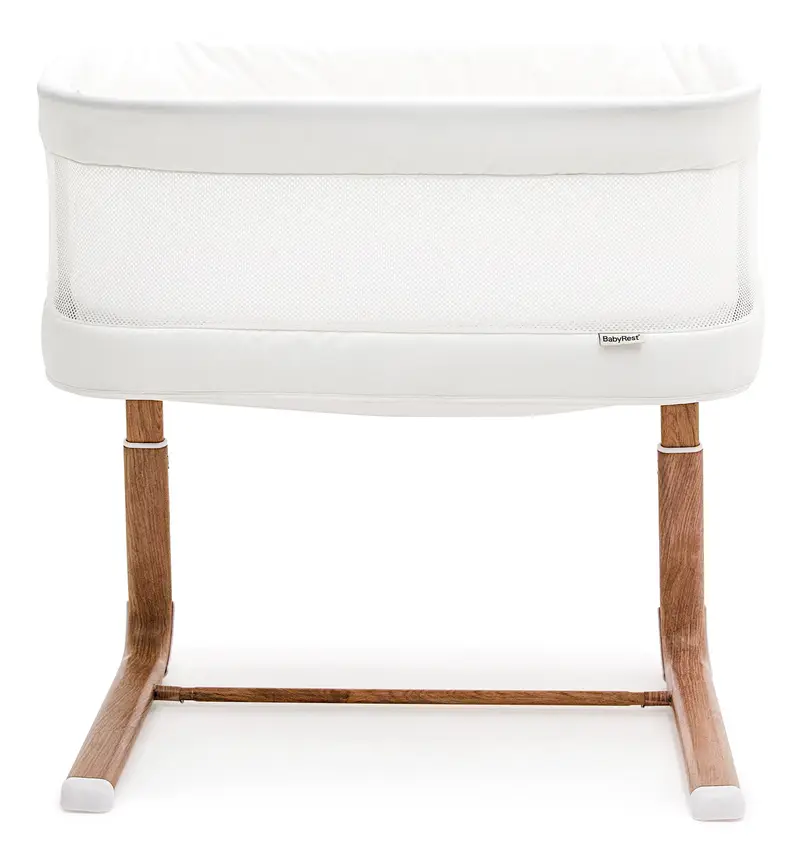
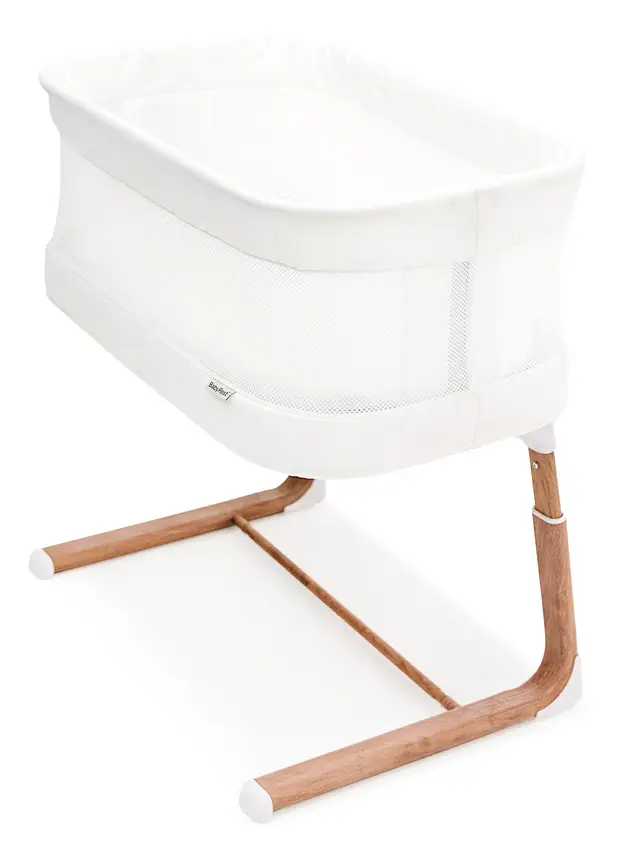


BabyRest Swan Smart Bassinet
A bassinet that rocks by itself when baby stirs, with 3 rocking levels, lullabies and a remote.
Read our full review →
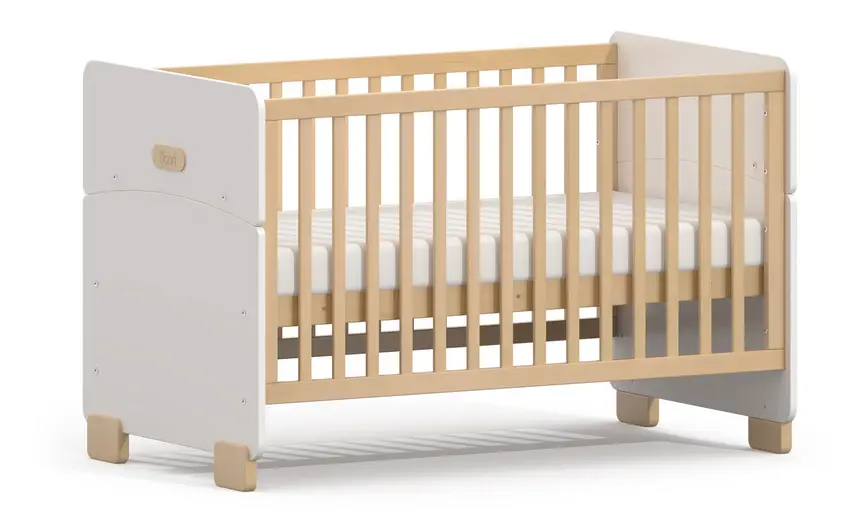

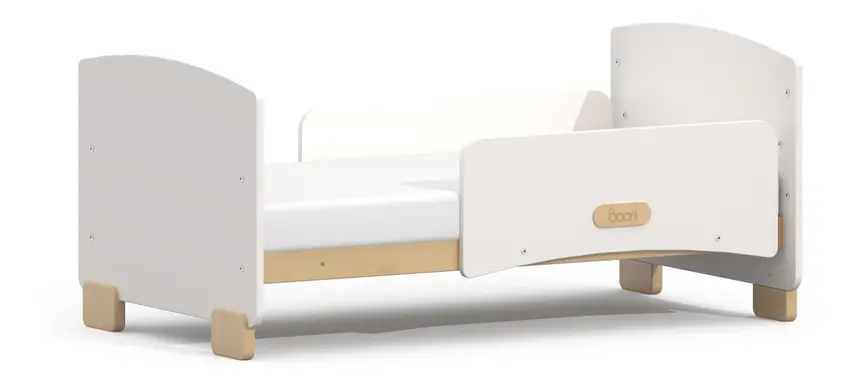

Boori Matilda Cot Bed
A cot that turns into a toddler bed using its own end panels. No extra kit needed.
Read our full review →Compare all cots, bassinets & bedside sleepers in our reviews →
Using a sound machine by age stage
Your baby's sleep needs and body skills change fast in the first two years. Here is how to adjust your routine at each stage.
Newborns (birth to 3 months)
Newborns wake often for feeds day and night. Their ears and brains are still getting used to the outside world. For the first six to twelve months, Red Nose, The Lullaby Trust, the AAP, and the CPS all advise room-sharing. That means your baby sleeps in their own safe cot or bassinet inside your bedroom.
Do you use a sound machine in your bedroom? Put it on the far side of the room, at least two metres from the bassinet. Keep it whisper-soft. You must be able to hear your baby stir, grunt, or cry for a feed. Never turn a sound machine up to drown out your baby's cries.
Babies (3 to 6 months)
Around this age, babies start to tell day and night apart more clearly. They may wake briefly between sleep cycles when a dog barks or a truck passes. A low pink noise or rain sound on a 30-minute timer can help at the start of naps and bedtime. It acts as a calm cue that it is time to rest.
At the same time, give your baby plenty of quiet awake time during the day. Turn the machine off when your baby is awake. Babies learn to talk by hearing clear human voices, songs, and everyday house sounds without background static.
Older babies (6 to 12 months)
Between six and twelve months, babies roll, sit, crawl, and pull up on cot rails. They love grabbing things through the cot bars. At this age, cord strangulation risks rise sharply.
Check that your sound machine, baby monitor, and nightlight are all more than one metre from the cot. Move the cot mattress down to its lowest base setting before your baby can sit or pull up. Never leave a clip-on speaker hanging on the cot rail. Your baby can pull it in and chew on it.
Toddlers (12 months and up)
Toddlers in a low bed can walk around their room when you are asleep. Do you keep a sound machine in a toddler's room? Put it on a high shelf fixed to the wall. Tuck the power cord inside a hard plastic wall cord cover.
Many families also wean off the sound machine in the toddler years. This helps a child fall asleep easily anywhere, such as at daycare or a grandparent's home.
How to wean your baby off a sound machine
Has your baby grown used to falling asleep with a sound machine? If you want to stop using it, you do not have to stop all at once. A slow step-down over two weeks works well for most children.
- Days 1 to 3: Turn the volume down by one click every night.
- Days 4 to 6: Move the machine a bit further from the cot, such as near the bedroom door. Lower the volume another notch.
- Days 7 to 10: Switch from non-stop play to a 30-minute shut-off timer. Your child will then wake between sleep cycles in a quiet room.
- Days 11 to 14: Turn the machine off completely. Keep the rest of your bedtime routine the same. Do your usual bath, sleeping bag, book, and cuddle.
Battery, electrical, and travel safety
Many families buy a small battery sound machine to clip onto a pram or pack for trips. Portable gadgets need extra safety checks around babies and young children.
Pram and car travel rules
- On the pram: Never put a portable speaker inside the pram bassinet near your baby's head. Clip it to the outside of the pram frame instead. Put it low near the basket or high on the parent handlebar. Keep the volume very low. Street traffic is already loud. Turning a speaker up loud to beat traffic noise only adds more noise to your baby's ears.
- In the car: Do not clip a hard plastic sound machine onto a car seat handle or headrest above your baby. In a sudden stop or crash, a loose plastic gadget can fly off and hit your baby.
Lithium-ion rechargeable batteries
Most portable clip-on sound machines use built-in lithium-ion batteries. They charge with a USB cable. Fire and Rescue NSW gives clear safety rules for lithium-ion devices. Aviation bodies like the Civil Aviation Safety Authority (CASA), the US Federal Aviation Administration (FAA), and Transport Canada share similar advice:
- Use the charging cable that came with the unit. Plug it into a wall adaptor that has your country's safety approval mark.
- Charge the unit during the day on a hard, clear surface like a kitchen bench. Never charge a battery sound machine on a soft bed, under a pillow, or inside a cot.
- Check the case often. Stop using the unit right away if the plastic swells, feels hot, smells strange, or cracks after a drop.
- When flying, pack rechargeable battery gadgets in your carry-on bag. Do not pack them in checked luggage.
Button batteries
Some sound machines come with a small flat remote control. These remotes often use a coin or button battery. Button batteries are deadly if swallowed. Within two hours, a stuck button battery can cause severe burns inside a child's throat. Pick a sound machine that does not use a remote control at all. If yours has a remote, check that the battery door is screwed shut. Store the remote high out of reach, or get rid of it safely.
Nightlights built into sound machines
Many nursery sound machines also have a built-in nightlight. Sleep studies show that bright white or blue LED light at night can block melatonin. Melatonin is the body's natural sleep hormone. Bright light can wake a baby up more during night feeds. Does your sound machine have a light? Turn the light off while your baby sleeps. If you need a dim light for a night nappy change, pick a warm red or amber glow. Switch it off once your baby is back in the cot.
Common mistakes to avoid
- Putting the machine in the cot or on the rail: This puts the speaker right by your baby's ears. It also breaks the bare-cot safe sleep rule.
- Using an old phone or tablet in the cot: Never put a phone in the cot to play a white noise app. Phones have lithium batteries that can get warm. They also have bright screens and loud speakers at close range.
- Turning the volume up when your baby cries: Loud static does not fix hunger, a wet nappy, wind, or a need for a cuddle. Turning a machine up high to calm crying puts your baby's hearing at risk.
- Leaving the machine loud all night and day: Babies need quiet stretches to rest their ears. They also need quiet time to hear clear family speech.
- Placing the machine within arm's reach of the cot: A newborn cannot reach a cord today. Still, a six-month-old can roll and grab a cord through the cot slats. Set the unit two metres away from day one.
- Pointing a household fan straight at the baby: Do you use a real fan for background hum? Never point the breeze straight at your baby's face. Keep the fan and its cord far out of reach.
More options, from budget to premium
Real products from our catalogue. We don't show star ratings or review counts; check the current price, stock and reviews on Amazon before you buy.

Boori Oasis Oval Cot
A curved solid beech cot on lockable wheels, with two base heights.
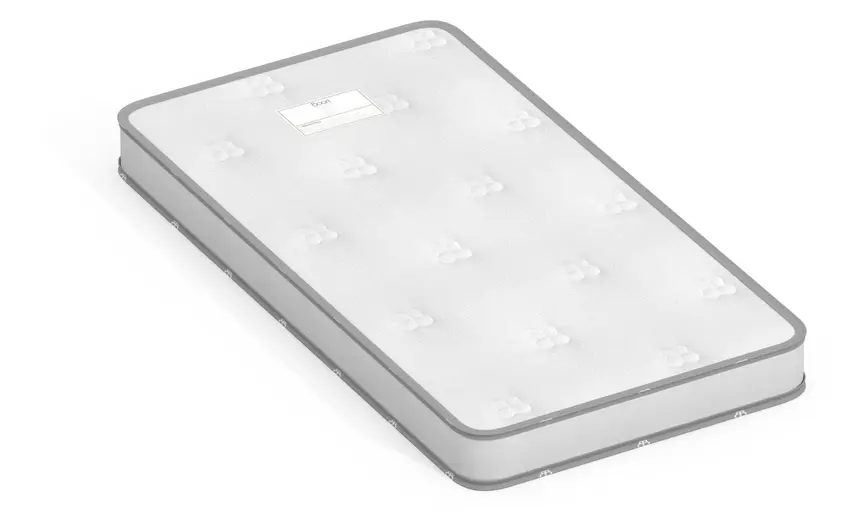
Boori Pocket Spring Mattress (standard cot)
A pocket spring cot mattress that comes rolled. Let it expand for up to 24 hours.


Bugaboo Stardust Plus
A pop-up portacot with a bassinet, for naps at home or away.
Read our full review →Compare all cots, bassinets & bedside sleepers in our reviews →
Frequently asked questions
Is pink noise better for babies than white noise?
Pink noise has softer high notes than true white noise. It sounds like gentle rain or wind in trees instead of harsh radio static. Many parents and babies find pink noise calmer and nicer to hear. Still, both must follow the exact same safety rules. Keep the volume below 50 dB (like a soft shower). Place the machine at least two metres from the cot.
How far away should a sound machine be from my baby's cot?
Place the sound machine at least two metres (about seven feet) from the nearest edge of your baby's cot or bassinet. Never put it inside the cot. Never clip it to the cot slats or put it near your baby's head.
Can I leave a baby sound machine on all night?
Child health and hearing experts say to turn the sound machine off once your baby is asleep. You can also use a 20 to 45 minute shut-off timer. Running a machine all night gives your baby's growing ears too much sound exposure.
Are plush stuffed animals with white noise boxes safe for newborns?
They are only safe if they stay outside the cot or bassinet. Safe sleep bodies in Australia (Red Nose), the UK (The Lullaby Trust), the US (AAP), and Canada (Health Canada) all agree. Soft toys must never go in the sleep space with a baby. Soft items near the face can cause suffocation.
How loud is 50 decibels without a sound meter?
Fifty decibels sounds like a quiet talk at home or light rain. It is as soft as a bathroom shower heard from a few steps away. Stand by your baby's cot while the machine is on. If you have to raise your voice above a soft tone to be heard, turn the volume down.
Do all babies need a sound machine to sleep well?
No. A sound machine is optional. Many babies sleep very well in a normal quiet room without any gadget. It is only a tool to soften sudden house noises in a busy home.
Sources
- Hugh et al. – Infant sleep machines and hazardous sound pressure levels, Pediatrics 2014 (PubMed)
- Raising Children Network – Light, noise and baby sleep: frequently asked questions
- Red Nose Australia – What is a safe sleeping environment
- The Lullaby Trust (UK) – Baby monitors
- The Lullaby Trust (UK) – Keeping a clear cot
- American Academy of Pediatrics (US) – A parent's guide to safe sleep
- U.S. Consumer Product Safety Commission – Infants and toddlers can strangle in baby monitor cords (Publication 5066)
- Caring for Kids (Canadian Paediatric Society) – Safe sleep for babies
Related guides
More Sleep & Nursery →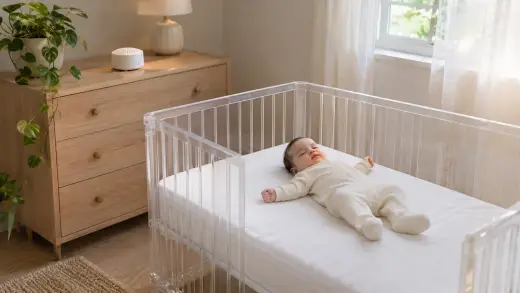
Infant Sound Machines and White Noise: Safe Volume, Placement, and Sleep Tips

Smart Nursery Sound Machines and Toddler Clocks: Safe Volume, Red Light and App Schedules

Baby Noise Machines: How to Choose One and Use It Safely
