














How to Set Up a Safe Sleep Environment with a Bedside Bassinet
Learn how to set up a safe sleep environment with a bedside bassinet. Clear rules on mattress fit, room temperature, lighting, and official safety standards.

On this page
- Key points at a glance
- What is a bedside bassinet, and how does it work?
- Comparing newborn bedside sleep options
- Step-by-step guide: setting up your bedside bassinet safely
- Creating a safe bedroom environment around the bassinet
- Getting the room temperature, clothing, and bedding right
- Light, sound, and air quality in your bedroom
- How to test mattress firmness at home
- Official safety standards across Australia, the UK, the US, and Canada
- Age stages and when to move your baby out of a bassinet
- How to keep your bedside bassinet clean and hygienic
- Buying second-hand or borrowing a bassinet: a safety checklist
- Common bedside bassinet mistakes to avoid
- Frequently asked questions
- Sources
Short answer: Keep your bedside bassinet completely bare, flat, and firm. Lock all four sides up before you go to sleep. Only use the thin mattress that came in the box. Cover that mattress with one tight fitted sheet. Place your baby on their back for every single sleep. Keep the bassinet far away from windows, blind cords, heaters, and electrical wires. Dress your baby in a safe sleeping bag or a light cotton wrap. Never use loose blankets or soft pillows.
Health groups around the world give the exact same advice. In Australia, follow Red Nose and the ACCC (Product Safety Australia). In the UK, follow The Lullaby Trust, the NHS, and OPSS. In the US, follow the American Academy of Pediatrics (AAP) and the CPSC. In Canada, follow Health Canada and the Canadian Paediatric Society. All four countries recommend room-sharing for at least the first six months. Having your baby sleep in a safe bassinet beside your bed lowers the risk of sudden infant death.
Key points at a glance
- Back to sleep: Always put your baby down on their back. The sleep surface must be flat and level.
- Bare bassinet: Keep the sleep space completely empty. Never add pillows, bumpers, sheepskins, sleep pods, soft toys, or loose blankets.
- Firm mattress: Use only the original pad made for that exact model. Never add a second mattress or extra padding on top.
- Side rails up: Many bedside sleepers have a drop-down side. Lock that fourth wall up whenever you go to sleep.
- Safe placement: Keep the bassinet at least one metre away from blind cords, curtains, monitor wires, and heaters.
- Watch for rolling: Move your baby into a full-size cot as soon as they start trying to roll over.
What is a bedside bassinet, and how does it work?
A bassinet is a small bed made for newborns and very young babies. It sits on legs or a stand at adult bed height. Because it has a small footprint, it fits easily next to a parent's bed. This makes room-sharing simple during the first few months at home.
Parents usually pick between two main styles of bedside sleep spaces. Knowing how each one works helps you set up your bedroom safely.
Standalone bedside bassinet
A standalone bassinet has four fixed walls that do not move. At least two walls should be made of breathable mesh. Ideally, all four walls have mesh panels so air flows freely around your baby. You place the bassinet near your bed, leaving a clear gap between them. This gap stops your heavy blankets and pillows from falling into the bassinet. You simply reach over the top rail to pick up your baby for feeds.
Bedside sleeper (co-sleeper)
A bedside sleeper is a bassinet with one side that zips or slides partway down. It comes with long straps that loop around your adult bed frame. These straps pull the bassinet tight against your mattress so no gap can open up.
A drop-down side can make lifting your baby easier after birth. This is especially helpful if you are healing from a caesarean birth. However, Australian safety regulators (the ACCC) and Red Nose warn about drop-down sides. Leaving a side down while you sleep brings extra hazards. Your pillow or doona can drift across into the baby's space. A baby can also roll into the join between the two beds and get trapped. The safest rule is simple. Treat a bedside sleeper as a four-sided standalone bassinet whenever you sleep. Zip and lock all four mesh walls all the way up before you close your eyes.
Why room-sharing is safer than bed-sharing
Room-sharing means your baby sleeps in your bedroom, but on their own separate sleep surface. Bed-sharing means bringing your baby into the adult bed to sleep with you. Adult beds are not made for babies. Adult mattresses are much softer than baby mattresses. Adult beds also have heavy quilts, soft pillows, and gaps near the headboard. Keeping your baby in their own bassinet right beside you gives you the best of both worlds. You can hear every little sound and feed them quickly. At the same time, your baby stays safe on a firm, flat, clear surface of their own.
Comparing newborn bedside sleep options
Before you set up your bedroom, compare your four main choices. You can use a standalone bassinet, a drop-side bedside sleeper, a full-size cot, or a portable folding cot.
| Feature | Standalone Bassinet | Bedside Sleeper (Drop-Side) | Full-Size Household Cot | Portable Folding Cot |
|---|---|---|---|---|
| Floor space needed | Very small; fits narrow bedrooms easily. | Small; must sit tight against the adult bed. | Large; check if it fits through your bedroom door. | Medium to large; heavier than a bassinet. |
| Age or milestone limit | Birth until baby starts rolling (around 3 to 5 months). | Birth until baby starts rolling (around 3 to 5 months). | Birth to around 2 to 3 years of age. | Birth until the weight limit printed in the manual. |
| Side wall design | Four fixed walls; choose four mesh sides. | Three fixed walls plus one sliding or zipping wall. | Four fixed walls with vertical slats. | Four fixed mesh walls on a folding frame. |
| Main safety focus | Wide stable base, tight mesh, firm thin pad. | Lock the fourth wall up for every sleep; check straps. | Must meet mandatory cot standard (like AS/NZS 2172). | Lock all four top rails before pushing the floor down. |
| Long-term value | Short use window; you must buy a cot next. | Short use window; you must buy a cot next. | Best value; one bed lasts from birth to toddlerhood. | Great for travel; a real cot is better for daily home use. |
If your bedroom has enough floor space, a full-size cot is a great choice from day one. You do not have to buy a bassinet first. A baby can sleep safely in a full-size cot right from birth. Families usually choose a bassinet only because it takes up less space beside the bed.
Cots, Bassinets & Bedside Sleepers worth a look
Real products from our catalogue. We don't show star ratings or review counts; check the current price, stock and reviews on Amazon before you buy.
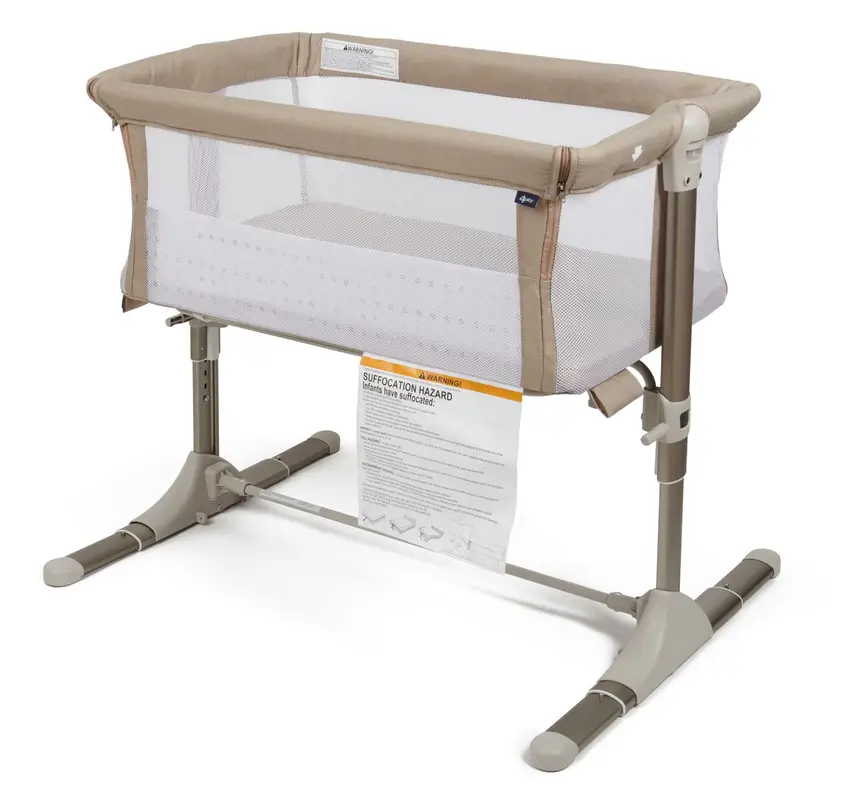
4baby Snuggle Cuddle Bedside Sleeper
A low-cost bassinet that turns into a bedside sleeper, with 4 heights and mesh sides.
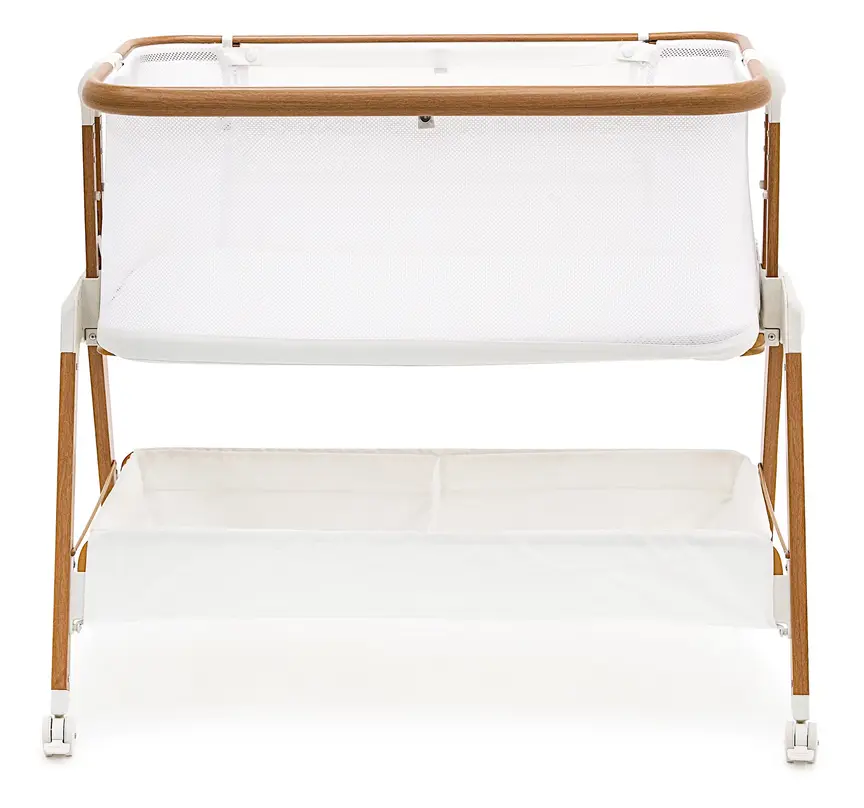
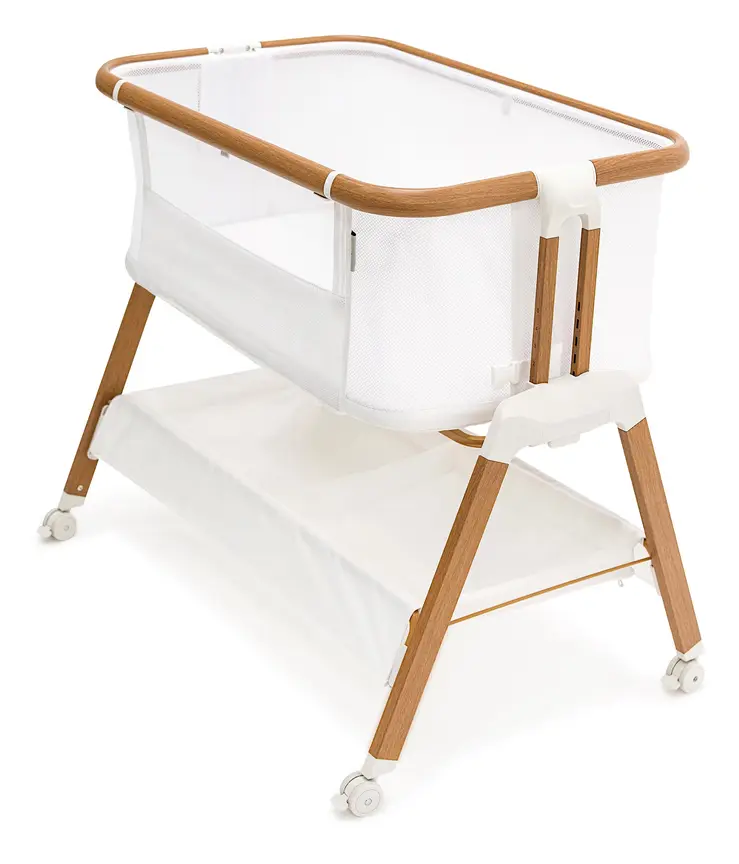
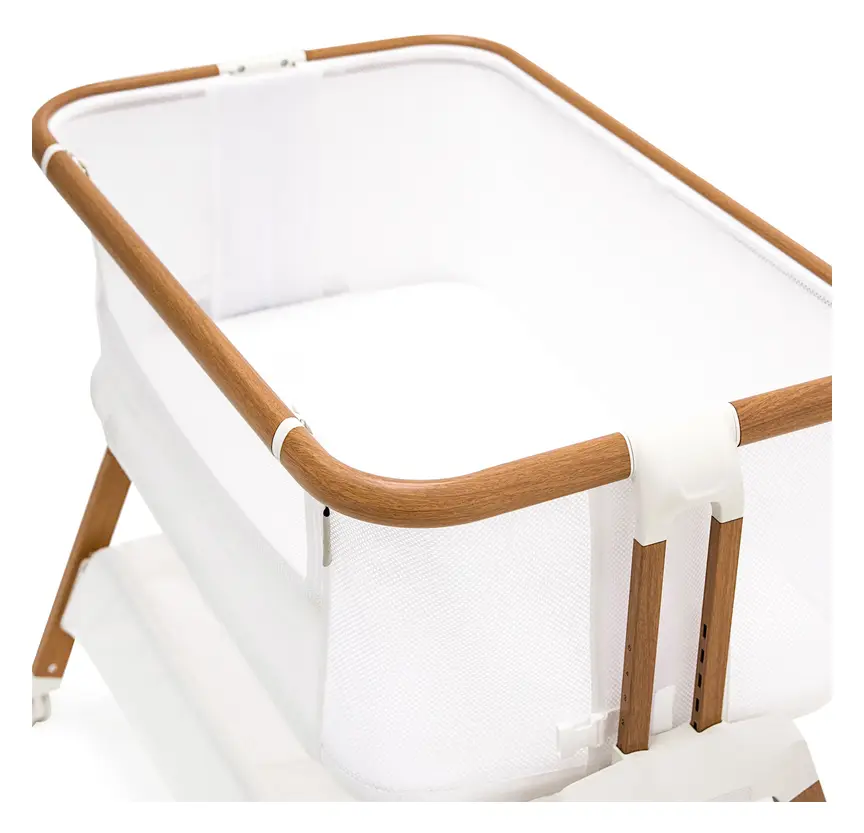
BabyRest Alfie2 Bedside Bassinet
A bedside bassinet with 5 heights, a drop-down side, wheels and an insect net.
Read our full review →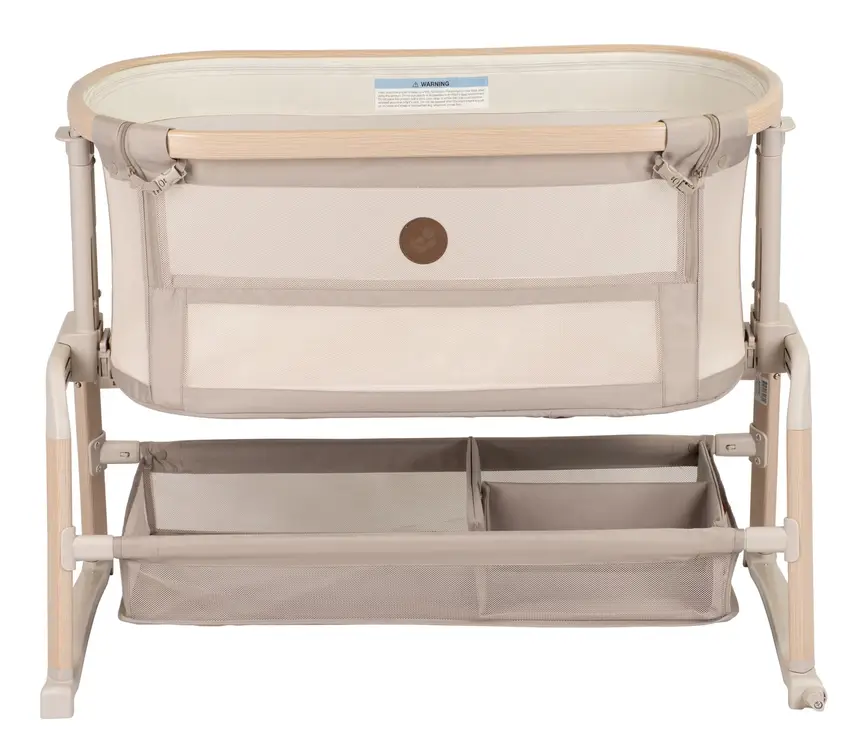 Reviewed
Maxi-Cosi Iora Lux
A bedside bassinet with 4 heights and 3 slide positions, with a 2-year warranty.
Read our full review →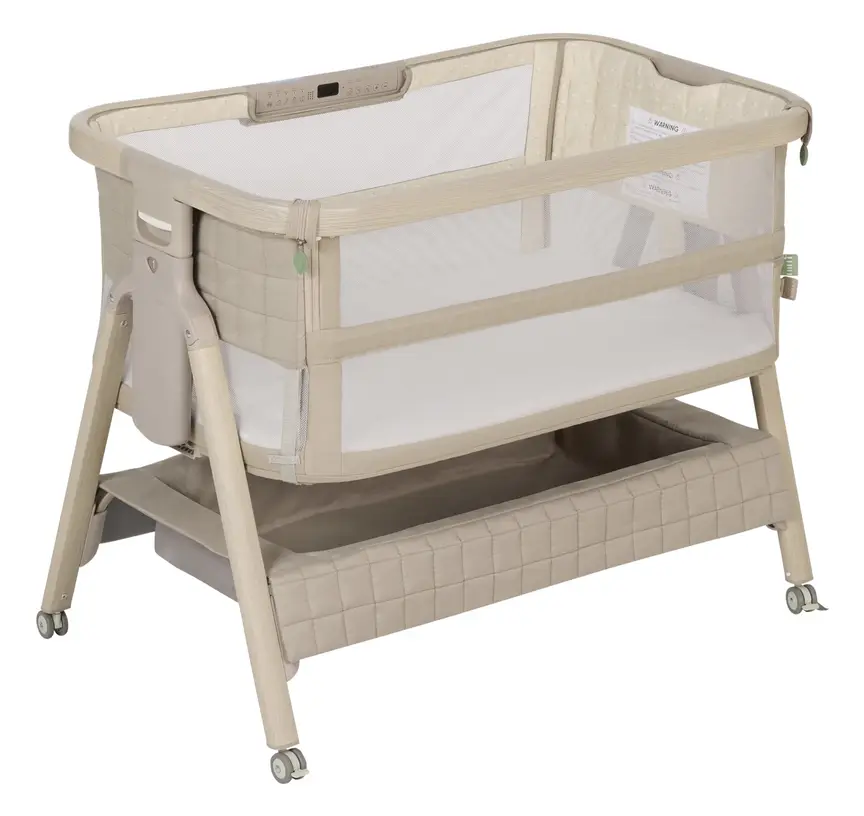
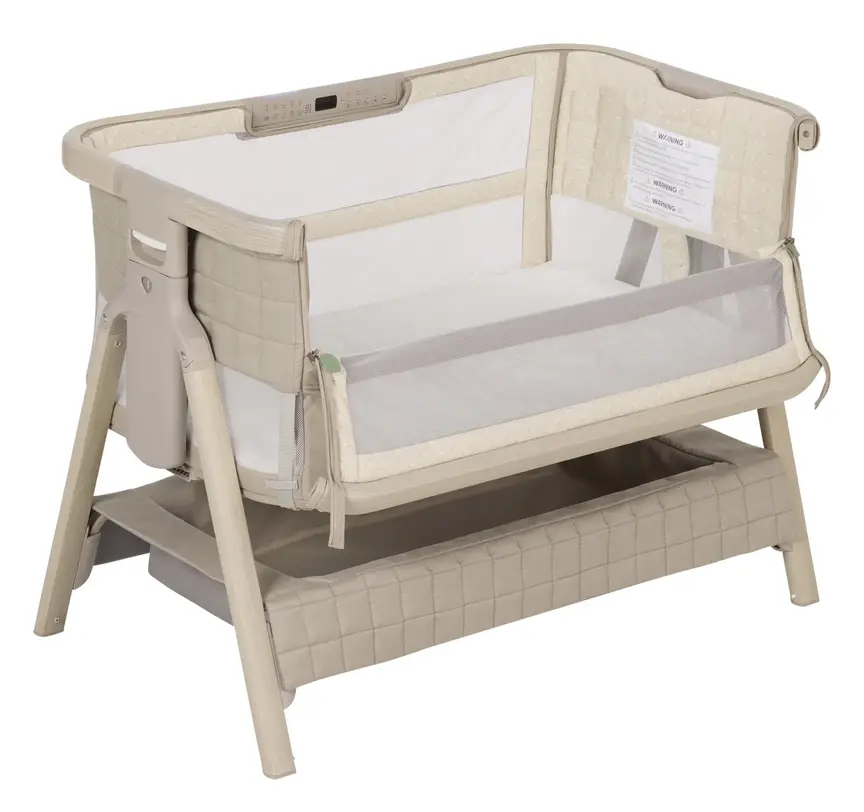


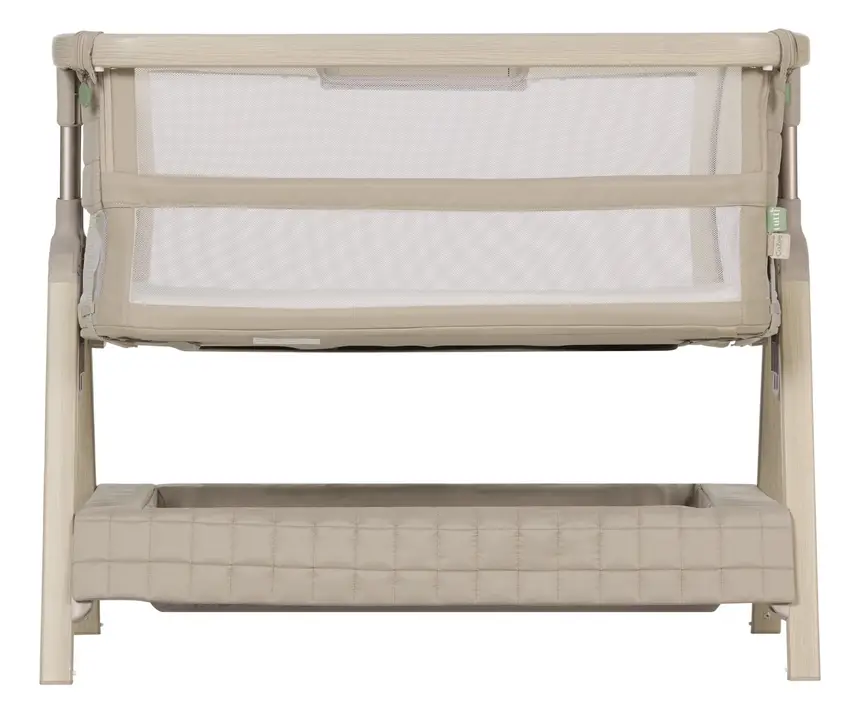


Tutti Bambini CoZee Sense
A bedside bassinet with a sensory bar for supervised awake time.
Read our full review →Compare all cots, bassinets & bedside sleepers in our reviews →
Step-by-step guide: setting up your bedside bassinet safely
Build and check your bassinet a few weeks before your baby arrives. Doing this early gives you plenty of time to check every part without rushing. Follow these steps in order.
1. Build the frame strictly by the manual
Open the box and lay out every screw, leg tube, and fabric panel on the floor. Count the parts against the list in the instruction booklet. Read the whole manual from start to finish before you join anything together. Push every click-lock pin until it snaps right through its hole. Tighten every bolt firmly with the tool provided. Never change the frame, leave parts out, or use random screws from your shed. Keep the manual taped under the bassinet base or in a drawer so you can check it later.
2. Check stability and lock the wheels
Many bedside bassinets have small wheels or castors on the legs. These wheels help you roll the frame out of the way when you vacuum. Once the bassinet is in its sleeping spot, press the brake pedals down on every wheel. Next, put both hands on the top rail and give the frame a firm shake. The legs should sit wide and flat on the floor. The frame must not tip, sway, or rock dangerously.
3. Lock out any rocking or swinging modes
Some bassinets have curved feet or a pendulum hinge that lets you rock the basket by hand. Never leave a bassinet unlocked in a rocking mode while your baby sleeps unattended. If your baby wiggles to one side, an unlocked rocking basket can tilt at an angle. That tilt can press your baby's face right against the side wall. Always push the locking pin in so the basket stays completely still and level for sleep.
4. Inspect the mesh walls
Run your hands along the inside of all four bassinet walls. The mesh fabric must be pulled tight across the frame. Check that all zippers, press-studs, and velcro strips are fastened all the way along. Look closely for any small rips, loose threads, or fabric flaps. A loose flap of cloth could cover your baby's nose or mouth. Avoid old cradles with solid fabric walls or padded quilted liners. Mesh walls let fresh air move through easily. They also stop exhaled air from getting trapped near your baby's face.
5. Set both ends to the exact same height
Most bedside bassinets let you raise or lower the legs to match your bed height. Look at the numbered markings on both leg posts. Set the left side and the right side to the exact same number. Use a spirit level or a ruler if you are unsure. The mattress base must be completely flat and horizontal.
Never tilt one end higher than the other, even if your baby has reflux or a cold. Health authorities in Australia, the UK, the US, and Canada all warn against tilted sleep surfaces. On a slope, a newborn's heavy head can flop forward onto their chest. This chin-to-chest position can pinch their tiny windpipe shut and stop them breathing. A tilted surface also makes it easy for a baby to slide down or roll onto their tummy.
6. Test the mattress fit (the two-finger check)
Place the original mattress pad flat inside the bassinet base. Check the underside of the mattress first. Many models have velcro straps underneath that thread through slots in the hard baseboard. Fasten these straps tightly so the pad cannot slide around. Next, push the mattress hard into one corner of the bassinet. Try to slide two fingers between the mattress edge and the opposite wall. You should not be able to fit two fingers in that space. Any gap wider than a tiny sliver can trap a baby's face, fingers, or limbs.
7. Put on one tight fitted sheet
Bassinet mattresses come in many shapes, including oval, rectangle, peanut, and hourglass. Buy fitted sheets made for the exact measurements of your mattress. Pull the elastic hem right under all four corners of the pad. Make sure the sheet is not so small that it bows the mattress corners upward. At the same time, make sure it is not loose or baggy. Brush your open hand firmly across the middle of the sheet. It should stay smooth and flat without bunching up.
Creating a safe bedroom environment around the bassinet
Even the safest bassinet can become dangerous if you put it in the wrong spot. Look closely at everything above, beside, and underneath the bassinet in your bedroom.
Keep away from windows, curtains, and blind cords
Hanging blind and curtain cords are a deadly strangulation hazard for babies and young children. In Australia (ACCC), the US (CPSC), the UK (OPSS and RoSPA), and Canada (Health Canada), regulators issue strict warnings about window cords. Never place a bassinet or cot near a window. Even if your newborn cannot reach a cord today, babies learn to reach and grab very suddenly. A breeze or a pet can also blow a looped cord into the bassinet. Window spots are bad for temperature control too. Glass windows let in cold draughts at night and hot sun during the day.
Keep clear of adult pillows and doonas
When a bassinet sits right beside your mattress, watch your own bedding closely. When you turn over in the night, your heavy doona, duvet, or pillow can slide off your bed. If it lands inside the bassinet, it can cover your newborn's face in seconds. Leave a clear gap of at least 30 centimetres between a standalone bassinet and your bed. If you use a bedside sleeper clipped to your bed, lock the fourth mesh wall all the way up before you sleep. That mesh wall acts as a barrier to keep your blankets out.
Secure all electrical cords and baby monitors
Parents usually have phone chargers, bedside lamps, sound machines, and baby monitors near their bed. Never run any cord over, under, or right beside the bassinet frame. Keep all electrical cords, power boards, and monitor cameras at least one metre (three feet) away from the bassinet. The US CPSC has recorded tragic strangulation deaths where babies pulled baby monitor cords into their sleep space. Never clip a camera onto the rim of a bassinet.
Keep the walls and space above completely clear
Look up at the wall and ceiling above the bassinet. Take down any framed pictures, heavy mirrors, floating shelves, or pot plants. A bump to the wall can knock an object straight down into the bassinet. Do not hang canopies, mosquito nets, bunting, fairy lights, or dangling mobiles over the sleep space either. Babies can pull fabric drapes or strings down around their necks as soon as they start reaching.
Protect your baby from pets and toddlers
Cats and dogs love warm, cosy places. A cat can easily jump into an open bassinet and curl up on a baby's chest or face. A dog can jump up with its front paws and tip a lightweight bassinet frame over. Both the RSPCA in Australia and the UK, as well as the ASPCA in the US, say to never leave a baby unattended with a pet. Keep pets out of the bedroom whenever anyone is sleeping, and shut the bedroom door.
If you have an older toddler at home, teach them safe rules around the bassinet too. Toddlers often try to be kind by throwing their own blankets, pillows, or small toys in to share with the baby. A toddler can also pull on the side of a bassinet and tip it over. Always check that the bassinet is empty before laying your baby down.
Getting the room temperature, clothing, and bedding right
Getting too hot (overheating) is a major risk factor for sudden infant death (SIDS). Newborns cannot control their own body heat well. They also cannot kick off heavy covers if they get too warm. How you dress your baby and manage the room temperature matters a great deal.
What room temperature is safest?
In the UK, The Lullaby Trust and the NHS give a clear target range. They advise keeping the room where your baby sleeps between 16°C and 20°C (60°F to 68°F). You can use a simple room thermometer (without button batteries) to check the air temperature near the bassinet.
In Australia, Red Nose takes a slightly different approach. Red Nose does not set one required room temperature because Australian homes vary so much across climates. Instead, Red Nose says to dress your baby for the room temperature you have. Add or take away light layers of clothing so your baby stays comfortable, never hot or sweaty.
How to check if your baby is too warm or too cold
Never judge your baby's warmth by touching their hands or feet. It is completely normal for a baby's hands and feet to feel cool to the touch. Instead, slip two fingers gently inside their collar to feel their chest, tummy, or the back of their neck:
- Warm and dry skin: Your baby is just right. Leave their layers as they are.
- Hot, damp, or sweaty skin: Your baby is too warm. Take off a layer of clothing or switch to a lighter sleeping bag right away.
- Red face or rapid breathing: These are also signs a baby may be too hot. Cool the room down and check if they are unwell.
- Cool skin on the chest or back: Your baby is a little chilly. Add one light cotton layer underneath their sleeping bag.
Why an infant sleeping bag is safer than blankets
Loose blankets can slip over a baby's head or bunch up around their nose and mouth. The safest way to keep a baby warm in a bassinet is a safe infant sleeping bag. Some countries call this a wearable blanket or a sleep sack. For a very young newborn who is not rolling yet, you can also use a thin cotton or muslin wrap.
- Check the neck and armholes: Pick a sleeping bag with a snug collar and fitted armholes or sleeves. If the neck hole is too wide, your baby can slip down inside the bag.
- Size for your baby today: Buy the size that fits your baby's current weight and length. Never buy a huge bag for them to grow into.
- No hoods: Never use a sleeping bag or sleep suit that has a hood attached.
- Check the TOG rating: Many sleeping bags have a TOG number on the tag. TOG measures how warm the fabric is. Use a low TOG (such as 0.2 to 1.0) in warm weather, and a higher TOG (such as 2.5) in cold rooms.
- Never use weighted sleep products: Do not buy weighted sleeping bags, weighted swaddles, or weighted blankets. The AAP, the CPSC, Red Nose, and Health Canada all warn against them. Heavy beads or pads press down on a baby's ribcage. This makes it harder for a baby to breathe deeply or wake up if their airway is blocked.
- Keep the head bare: Always leave your baby's head and face uncovered indoors and during sleep. Babies let out extra body heat through their heads. Putting a beanie, bonnet, or hat on a sleeping baby can make them overheat quickly.
How to use a light blanket safely (feet to foot rule)
A safe sleeping bag is the easiest way to avoid loose bedding. However, if you choose to use a thin cotton or muslin blanket instead, follow the "feet to foot" method taught by Red Nose and The Lullaby Trust:
- Lay your baby on their back with their feet touching the bottom end of the bassinet. Because their feet are already at the bottom wall, they cannot wriggle further down under the blanket.
- Use only a lightweight, breathable cotton or cellular blanket. Never use a thick doona, quilt, duvet, fleece throw, or lambskin.
- Bring the top edge of the blanket up to your baby's chest only, sitting neatly under their armpits. Never pull a blanket up near their chin or face.
- Tuck the blanket in firmly under the bottom and both sides of the bassinet mattress so it cannot come loose.
Light, sound, and air quality in your bedroom
Small changes to the lighting, sound levels, and air in your bedroom help your baby settle safely between feeds.
Daylight vs night-time lighting
Newborns do not know the difference between day and night when they are born. Their internal body clock (circadian rhythm) takes several months to develop. You can help their body clock form by keeping day and night very different.
During the day, open the curtains and let normal daylight into the room for naps. Keep everyday household noises going too. At night, keep the bedroom dark, calm, and quiet. When you wake for a night feed or nappy change, avoid switching on bright overhead white lights or staring at bright phone screens near your baby. Research shows that bright blue-toned white light at night suppresses melatonin, the hormone that helps us sleep. If you need to see in the dark, use a very dim warm red or amber nightlight placed far away from the bassinet.
Using white noise machines safely
Many parents use a white noise machine to block out street noise or older children playing. However, sound machines must be used carefully. A well-known study published in the journal Pediatrics tested popular infant sleep machines. The researchers found that many machines played loud enough to damage a baby's delicate hearing when placed near the cot. Follow three simple rules if you use one:
- Keep it far away: Place the machine at least two metres (about six to seven feet) away from the bassinet. Never put a sound machine inside the bassinet or hang it on the frame.
- Keep the volume low: Set the volume no louder than a quiet conversation or a soft shower (under 50 decibels).
- Give their ears a rest: Turn the machine off once your baby falls asleep, or run it on the lowest setting.
Keep the air 100% smoke-free and vape-free
Every health department in Australia, the UK, the US, and Canada highlights smoke-free air as vital for baby safety. Exposure to cigarette smoke—both during pregnancy and after birth—greatly increases the risk of SIDS. Never let anyone smoke tobacco or use e-cigarettes (vapes) inside your home, car, or bedroom. Second-hand smoke and third-hand smoke (the chemical residue left on clothes, hair, and skin) are harmful to a newborn's lungs. If someone smokes outside, they should wash their hands and put on a clean shirt before holding the baby.
Heaters, fans, air purifiers, and humidifiers
- Heaters: Never put a portable space heater, oil column radiator, or fan heater near the bassinet. Never point warm air directly at your baby. Do not use electric blankets, hot water bottles, or wheat bags in a baby's bed either.
- Fans: In hot weather, a ceiling fan or floor fan keeps air moving in the bedroom. Make sure the fan is out of reach, its cord is tied back safely, and it does not blow straight onto your baby's face.
- Air purifiers: If you live in an area with bushfire smoke or heavy pollen, the US EPA and Australian health departments recommend a portable air cleaner with a true HEPA filter. Avoid ionisers or ozone generators, which can irritate young lungs.
- Humidifiers: If dry winter air gives your baby a stuffy nose, the Mayo Clinic advises using a cool-mist humidifier only. Never use a warm-mist steam vaporiser near children. A tipped steam unit can cause severe hot-water burns, and the steam makes the bedroom too warm. Empty, wash, and dry a cool-mist tank every day so mould and bacteria do not grow inside it. Note that humidifiers only add moisture; NSW Health reminds parents that humidifiers do not remove bushfire smoke particles from the air.
How to test mattress firmness at home
A safe bassinet mattress must feel very firm and flat. New parents often press a bassinet pad with their hand and worry that it feels too hard and thin. That makes some parents want to fold a soft blanket, towel, or lambskin under the sheet to make it softer. Never do this.
A newborn's airway is tiny and soft. If a baby rolls onto their tummy or side on a soft surface, the padding moulds up around their nose and mouth. This creates a small pocket that traps the carbon dioxide they breathe out. The baby then breathes that stale air back in instead of fresh oxygen. A thin, firm mattress stays flat under your baby's weight, keeping their nose and mouth clear.
The Australian firmness standard (AS/NZS 8811.1)
Standards Australia developed a specific test method for infant mattress firmness called AS/NZS 8811.1. Under Australia's mandatory infant sleep product rules, all bassinet and cot mattresses sold must pass strict firmness testing.
If you already own a bassinet or are checking a second-hand mattress, you can test it yourself at home. The Consumers' Federation of Australia publishes a step-by-step home test based on that exact standard. It uses everyday items you already have in your kitchen:
- Take two unopened 1-litre rectangular cartons of milk or long-life juice (each weighs about 1 kilogram). You also need a ruler or a standard CD case to mark a line.
- Follow the exact diagram on the Consumers' Federation of Australia website to stack the cartons on the mattress edge and centre.
- If the cartons sink down deeply so the overhanging edge touches the ruler mark, the mattress is dangerously soft.
- You can also do a quick hand check right now. Press your open palm hard into the middle and edges of the pad. It should barely sink at all. When you lift your hand, the surface must spring back flat immediately. If it feels spongy like memory foam or leaves a dip, stop using it at once.
Side by side: more cots, bassinets & bedside sleepers to compare
Real products from our catalogue. We don't show star ratings or review counts; check the current price, stock and reviews on Amazon before you buy.


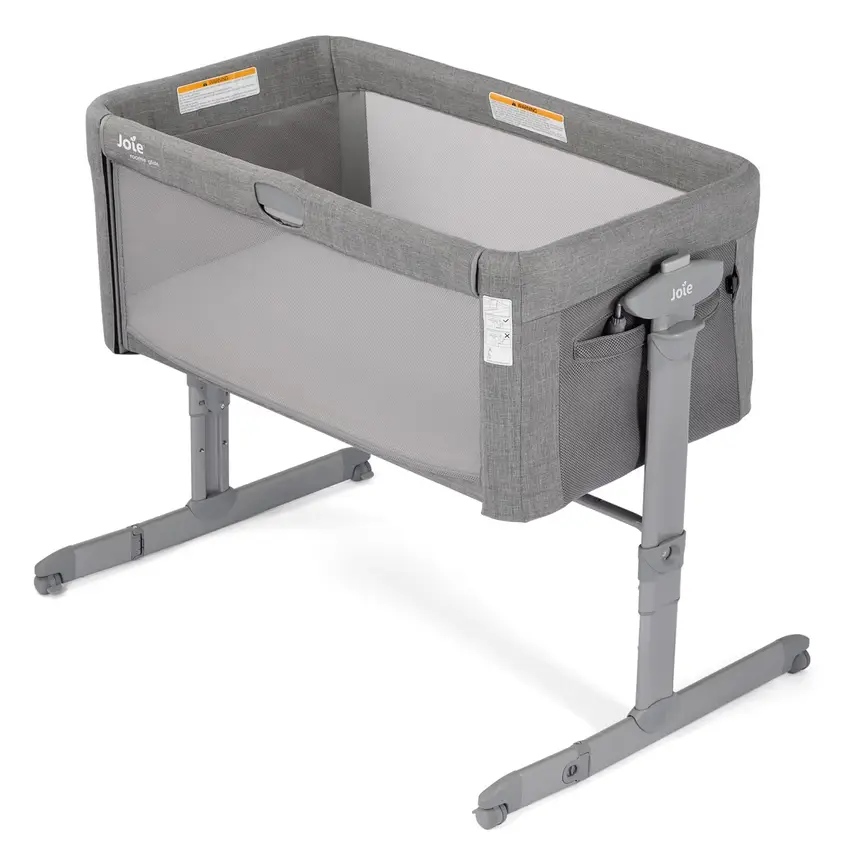
Joie Roomie Glide
A bedside sleeper that glides with one hand and has a gentle tilt.
Read our full review →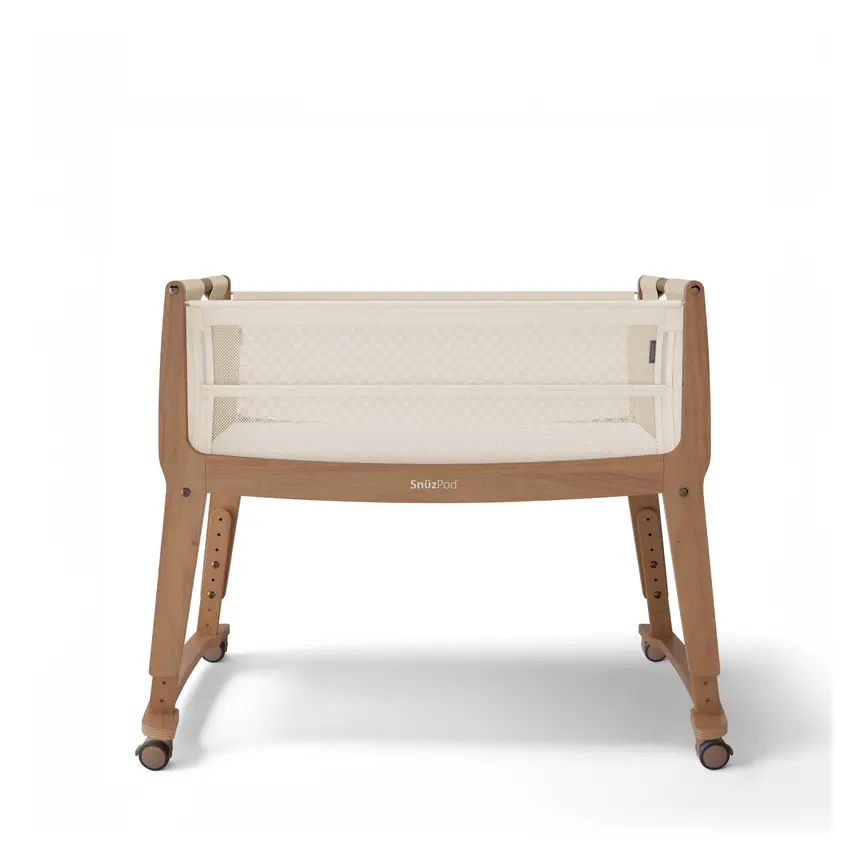 Reviewed
SnuzPod Studio
A bedside crib for night sleeps and naps, with panoramic mesh and a zip-down wall.
Read our full review →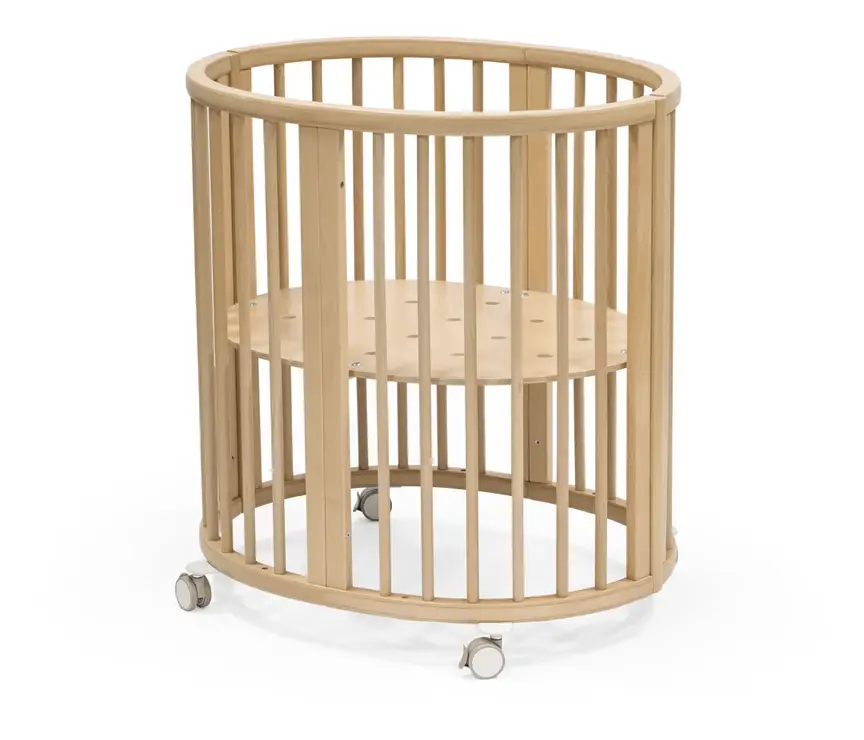


Stokke Sleepi Mini
A beech wood oval crib for newborns, with rods and a holed base for airflow.
Read our full review →
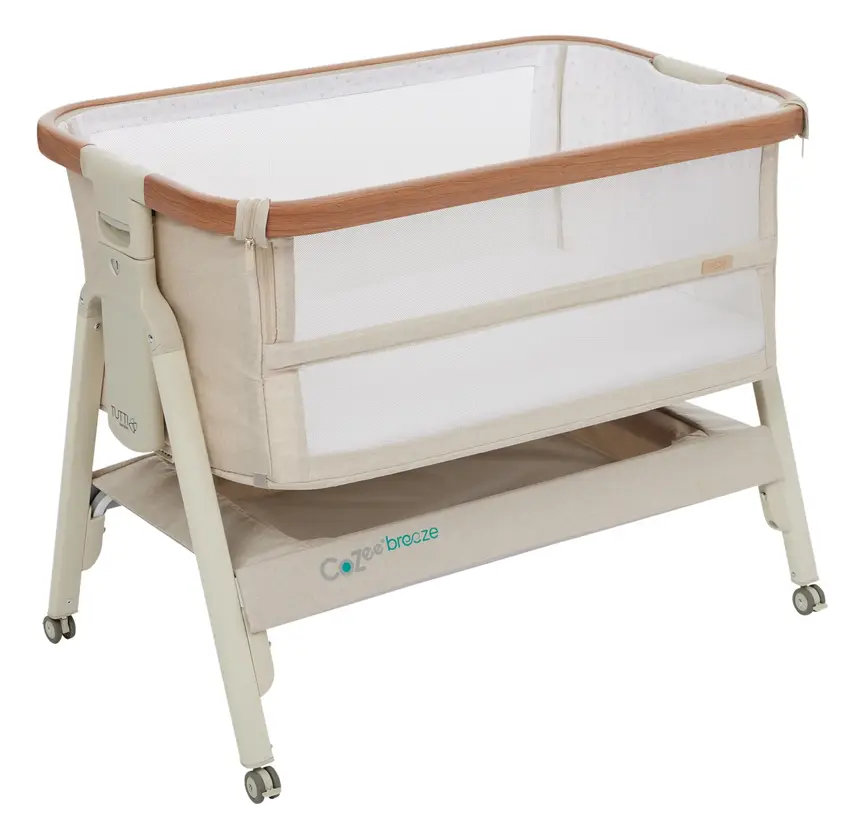
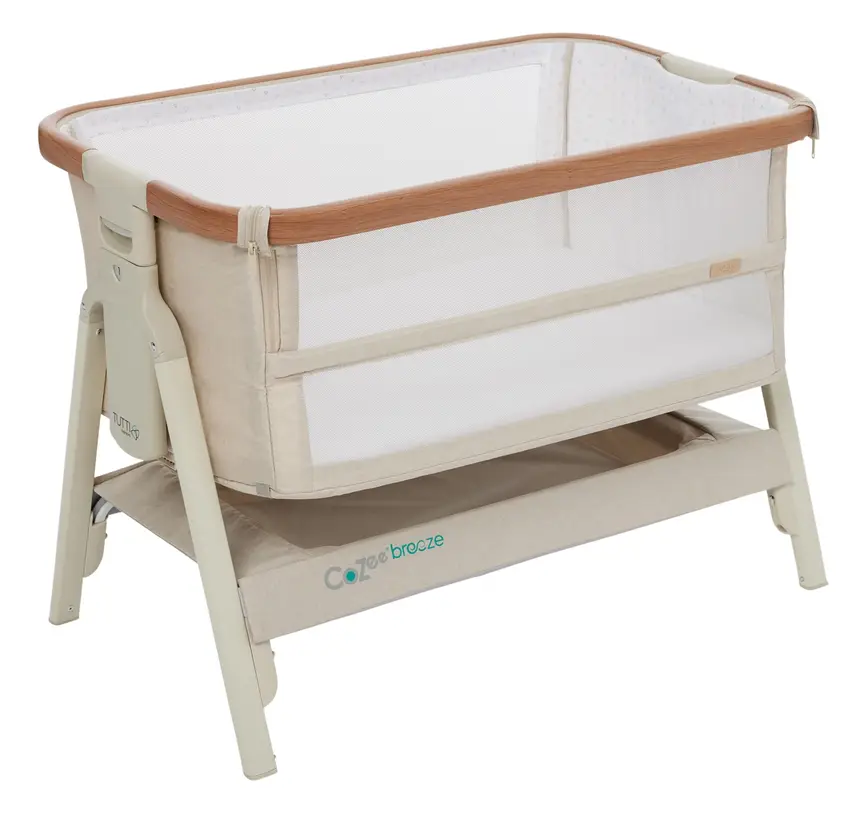
Tutti Bambini CoZee Breeze Lite
A bedside sleeper that opens or folds in about 30 seconds, with mesh sides and a travel bag.
Read our full review →Compare all cots, bassinets & bedside sleepers in our reviews →
Official safety standards across Australia, the UK, the US, and Canada
Product safety laws for bassinets and bedside sleepers have changed a lot in recent years. Before you buy or borrow a bassinet, check the compliance label stitched onto the fabric or printed on the baseplate. Here is how the rules work across all four countries.
| Country | Official Regulators & Peak Bodies | Standards & Rules for Bassinets and Bedside Sleepers |
|---|---|---|
| Australia | ACCC (Product Safety Australia) & Red Nose Australia | Australia introduced mandatory safety and information standards for infant sleep products in July 2024 (mandatory for all suppliers from January 2026). Previously, bassinets had no specific mandatory Australian standard. Now, bassinets and bedside sleepers must meet strict structural rules (drawing on international standards like ASTM F2194 or European standards), have a flat sleep surface (incline no more than 7 degrees), and pass AS/NZS 8811.1 firmness testing. Household cots must meet AS/NZS 2172, and folding cots must meet AS/NZS 2195. |
| United Kingdom | Office for Product Safety and Standards (OPSS), The Lullaby Trust & NHS | Domestic cribs, cradles, and bedside sleepers should meet British and European standard BS EN 1130. Full-size cots and cot beds use BS EN 716, and cot mattresses use BS EN 16890. The Lullaby Trust advises parents to check for the BS EN 1130 mark and ensure any drop-side locks securely in the raised position. |
| United States | Consumer Product Safety Commission (CPSC) & American Academy of Pediatrics (AAP) | All bassinets and cradles sold in the US must meet the mandatory federal safety rule incorporating ASTM F2194. Under the federal Infant Sleep Products Rule, any sleep product that is not a crib, bassinet, play yard, or bedside sleeper must also meet ASTM F2194. Inclined sleepers and padded in-bed loungers are banned under the Safe Sleep for Babies Act. Full-size cribs must meet ASTM F1169, and play yards/non-full-size cribs must meet ASTM F406. |
| Canada | Health Canada & Canadian Paediatric Society (Caring for Kids) | All cribs, cradles, and bassinets sold or given away in Canada must meet Health Canada's strict federal Cribs, Cradles and Bassinets Regulations. Traditional drop-side cribs are banned in Canada. Health Canada warns that bedside sleepers with a lowered side that attaches to an adult bed are only legal if the lowered wall still meets the full minimum height required for a standalone bassinet or cradle. |
Age stages and when to move your baby out of a bassinet
Bassinets have shallow walls compared to a full-size cot. That makes them easy to reach into, but it also means your baby will outgrow the bassinet quickly. Watch your baby's physical milestones closely rather than waiting for a certain birthday.
| Age or Milestone Stage | What Your Baby is Doing | What to Do with the Sleep Space |
|---|---|---|
| Newborn (0 to 8 weeks) | Waking often for feeds day and night; strong startle reflex; cannot roll over. | Use the bare, flat bassinet next to your bed. Put baby on their back. Use a light cotton wrap or a snug newborn sleeping bag. |
| Early movement (around 2 to 3 months) | Kicking legs hard, wiggling around the mattress, rocking onto their side, or trying to roll. | Stop wrapping with arms inside right away. Switch to an arms-free sleeping bag. Build your full-size cot now so it is ready. |
| Rolling or pushing up (often 3 to 5 months) | Rolling from back to side or tummy, pushing up on hands, or hitting the bassinet weight limit. | Stop using the bassinet immediately. Move your baby into a full-size cot (or a compliant portable cot when travelling). |
| 6 to 12 months | Rolling both ways, sitting up, and pulling up to stand on the rails. | Sleep in a full-size cot with the mattress base dropped to the lowest level. Keep the cot in your bedroom until at least 6 to 12 months if it fits. |
Crucial safety rule: Never wait until your baby can sit up or kneel before moving them out of a bassinet. As soon as a baby can roll onto their side or push up on their hands, a shallow bassinet is no longer safe. A rolling baby can press their face against the frame or tip the bassinet over. Also check the maximum weight limit printed inside the bassinet fabric. Many bassinets have a weight limit of 8 kg or 9 kg. If your baby hits that weight before they start rolling, move them to a cot right away.
How to keep your bedside bassinet clean and hygienic
Newborns spit up milk and have leaky nappies almost every day. Keeping the bassinet clean keeps the air fresh and protects the mattress from mould, without needing harsh chemicals.
- Keep 3 or 4 spare fitted sheets on hand: When a sheet gets wet at 3:00 AM, strip it off and put a fresh, dry sheet straight on. Never lay a towel over a wet patch to save changing the sheet.
- Wipe the mattress pad properly: Most bassinet pads have a wipe-clean waterproof cover built in. Wipe it with a damp cloth and mild soap, then dry it completely with a towel before putting a clean sheet on. Never soak a foam or fibre pad in the bath unless the manual says it is washable. Trapped moisture inside a mattress breeds mould.
- Check the rule on mattress protectors: Many parents want to put a thick waterproof mattress protector under the sheet. Be very careful. Red Nose and the Lullaby Trust warn that extra padding under the sheet can make the surface too soft or reduce airflow. Only use a thin, tightly fitted protector if the bassinet manufacturer specifically makes and approves it for that exact model. Never put plastic bags or crinkly plastic wrapping under a sheet.
- Wash the mesh fabric by the label: Most bassinet fabric covers unzip from the metal frame for hand washing or a gentle machine wash. Always let the fabric air-dry completely before zipping it back onto the frame. Do not tumble dry mesh covers on high heat, as shrinkage can warp the frame or stop the zippers closing properly.
Buying second-hand or borrowing a bassinet: a safety checklist
Because babies only use a bassinet for three to five months, many families borrow one from a friend or buy one second-hand. That can save money, provided you check it carefully first. Before putting your baby in a pre-loved bassinet, run through every point on this checklist:
- Check official recall lists first: Look up the exact brand and model name on the ACCC Product Safety Australia recalls website, the US CPSC recalls page, the UK OPSS alerts list, or the Health Canada recalls database. If the bassinet has been recalled, do not use it.
- Demand the original instruction manual: You need the manual to see how the locks work, how to attach straps, and what the maximum weight limit is. If the seller lost the paper copy, check that you can download the official PDF manual from the brand's website before buying.
- Check all four walls for breathable mesh: Skip antique wooden cradles with wide slat gaps, wicker baskets with loose weave or ribbon ties, and older fabric bassinets with padded solid cloth walls.
- Inspect the frame, hinges, and bolts: Put the frame together and check that no screws, locking pins, or plastic clips are cracked, bent, or missing.
- Inspect or replace the mattress: A used mattress must be clean, dry, completely flat, and firm. Check the seams for any tears, stains, or sagging foam. If you need a replacement mattress, buy the genuine replacement pad directly from the original manufacturer for that exact model. Never cut your own piece of foam to fit.
Common bedside bassinet mistakes to avoid
Social media photos and exhausted middle-of-the-night habits can lead to unsafe setups. Watch out for these common mistakes:
- Putting a baby nest, pod, or lounger inside the bassinet: Soft padded nests and loungers have puffy fabric bumpers around the edge. If a baby turns their face into that padded rim, they can suffocate. Never place a pod, nest, pillow, or sleep positioner inside a bassinet to make it feel cosier.
- Leaving the drop-down wall lowered while you sleep: If you fall asleep with the side down, your heavy adult blankets can spill inside. A gap can also open up between your mattress and the bassinet if the frame shifts. Lock all four mesh walls up before you go to sleep.
- Buying a thick aftermarket mattress: Parents sometimes buy a thick foam mattress online because the original pad feels thin. Bassinet pads are thin (usually under 3.8 cm or 1.5 inches thick) on purpose so a baby cannot sink in. A thicker mattress also makes the side walls dangerously low and often leaves gaps around the corners.
- Moving the bassinet with your baby inside: Even if your bassinet has wheels or is light to lift, never carry it down stairs or push it over bumps while your baby is inside. Always pick your baby up in your arms first, move the bassinet, lock the brakes, and lay your baby back down.
- Leaving nappies, wipes, or nappy sacks inside the bassinet: When changing your baby in the dark, it is easy to leave a packet of wipes, a burp cloth, or plastic nappy sacks in the corner of the bassinet. The UK's RoSPA warns that thin plastic nappy sacks have caused infant suffocation deaths because static electricity makes the thin plastic cling to a baby's nose and mouth. Keep all changing supplies on the bottom storage shelf or in a drawer.
- Using car capsules or pram bassinets as a bedside bed: Car seats are built to protect your baby in a car crash, not for overnight sleep at home. Red Nose and The Lullaby Trust stress that you should take your sleeping baby out of their car capsule as soon as you get home and lay them flat on their back in their bassinet or cot. Similarly, most pram carrycots are made for supervised walks, not unmonitored overnight sleep, unless specifically tested and certified for overnight use.
More options, from budget to premium
Real products from our catalogue. We don't show star ratings or review counts; check the current price, stock and reviews on Amazon before you buy.
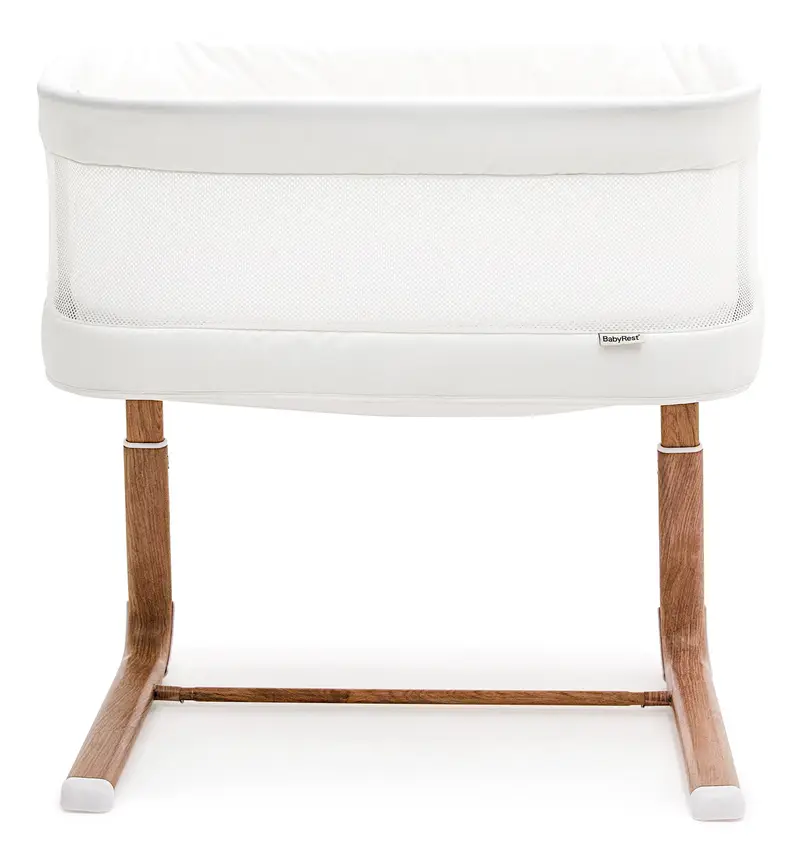
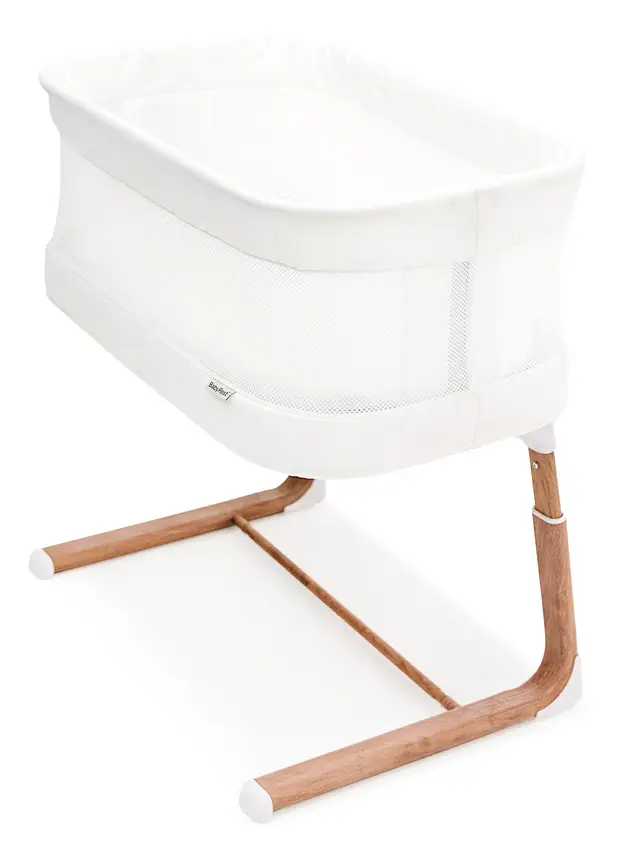
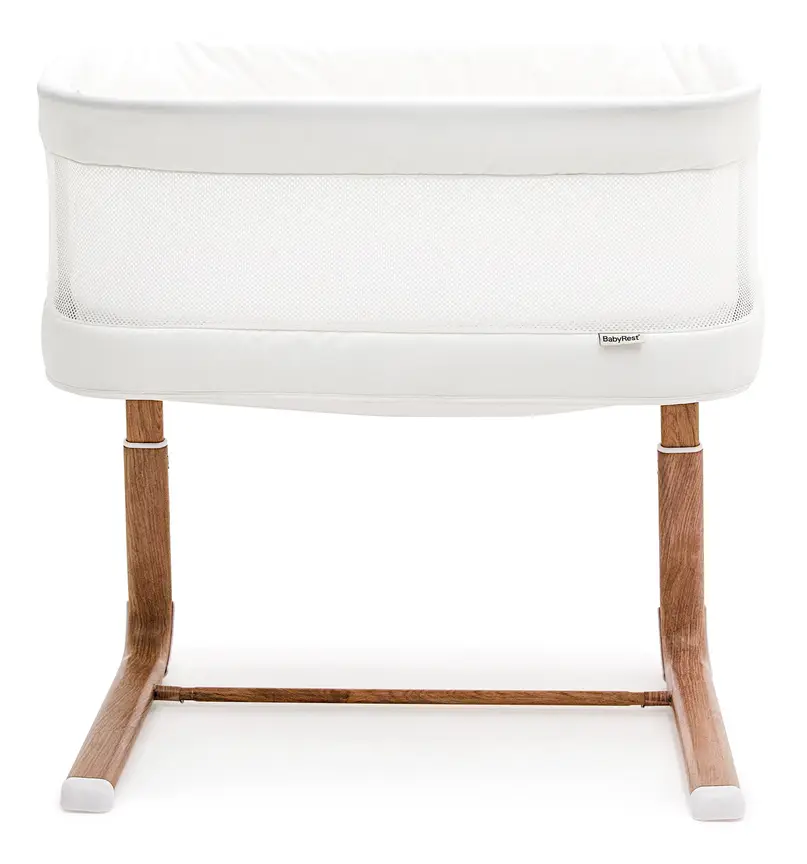


BabyRest Swan Smart Bassinet
A bassinet that rocks by itself when baby stirs, with 3 rocking levels, lullabies and a remote.
Read our full review →


Bugaboo Stardust Plus
A pop-up portacot with a bassinet, for naps at home or away.
Read our full review →
Jengo Voyager 3-in-1 Portacot
A portacot with a newborn bassinet level and a changer on top.
Compare all cots, bassinets & bedside sleepers in our reviews →
Frequently asked questions
Can I put a thicker mattress in my bedside bassinet so my baby sleeps longer?
No. Never replace the thin pad that came with your bassinet with a thicker mattress. Never add a second mattress, folded blanket, or foam topper on top of it either. Bassinet mattresses are made thin and firm on purpose. This stops your baby's face from sinking into the surface if they turn their head or roll. A thicker mattress also reduces the safe barrier height of the side walls and can create entrapment gaps around the edges.
Is it safe to leave the drop-down side of a bedside sleeper down all night?
In Australia, Red Nose and the ACCC advise against sleeping with a drop-down side lowered. When a wall is lowered, adult pillows and blankets can easily drift into the baby's space. If the frame shifts away from the adult bed, a baby can also get trapped in the gap between the two mattresses. In Canada, bedside sleepers with lowered sides are not permitted unless the lowered wall still meets the full four-wall height rules for a standard bassinet. In every country, the safest practice is to raise and lock all four mesh walls whenever you go to sleep.
How long can my baby sleep in a bedside bassinet?
Your baby can sleep in a bassinet from birth until they show the very first signs of rolling over, pushing up on their hands and knees, or reaching the maker's weight limit (often around 8 kg or 9 kg). For most babies, this happens somewhere between 3 and 5 months of age. As soon as your baby hits whichever milestone comes first, move them out of the bassinet and into a full-size cot immediately.
Can I prop up or tilt one end of the bedside bassinet if my baby has reflux or a cold?
No. Always keep the bassinet completely flat and level. Red Nose, the AAP, The Lullaby Trust, and the Canadian Paediatric Society all state that tilting a sleep surface does not safely stop reflux. Instead, a tilted mattress makes it much easier for a newborn's head to flop forward onto their chest, which can block their breathing. It also makes it easier for a baby to slide down under bedding or roll onto their tummy. If your baby is struggling with reflux, talk to your GP or child health nurse.
Do I need a breathing or movement monitor mat inside the bassinet?
No. Red Nose, the AAP, and The Lullaby Trust all state that there is no scientific proof that home breathing monitors, sensor pads, or smart socks prevent SIDS in healthy babies. Research published in JAMA and guidance from the Children's Hospital of Philadelphia show that consumer monitors often give false alarms or false reassurance. If you use a standard audio or video monitor to hear your baby cry, keep the camera and all power cords at least one metre away from the bassinet.
What should my baby wear to sleep in a bedside bassinet?
Dress your baby for the room temperature so their chest feels comfortably warm, never hot or sweaty. A simple cotton singlet and a light all-in-one suit underneath a well-fitted infant sleeping bag (or a thin cotton wrap for a young newborn who cannot roll) keeps them warm without any loose blankets. Always keep your baby's head uncovered during sleep, with no hats, beanies, or hoods.
Sources
- Product Safety Australia – Bassinets and cradles guide
- Red Nose Australia – What is a safe sleeping environment
- The Lullaby Trust (UK) – Room sharing
- The Lullaby Trust (UK) – Sleeping products
- CPSC (US) – Infant sleep products business guidance
- American Academy of Pediatrics (US) – A parent's guide to safe sleep
- Caring for Kids (Canadian Paediatric Society) – Safe sleep for babies
- Consumers' Federation of Australia – At-home test to identify dangerously soft baby mattresses
Related guides
More Sleep & Nursery →
Bedside Co-Sleepers With Drop-Down Sides: Flat Surfaces, Safe Sleep Rules and Firm Mattresses

How to Set Up a Safe Bassinet Sleep Space for Your Newborn
Mesh Bassinet Walls: How Airflow Works, What They Do, and Safe Sleep Rules
