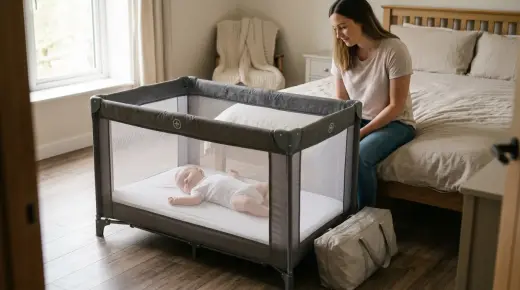
Portable Travel Bassinets and Pop-Up Infant Domes: Safe Sleep, Floor Insulation, Sun Canopies, and Packing
How to pick and pack a safe folding travel bassinet or pop-up infant dome, with floor insulation, UV mesh airflow, and AU, UK, US and Canada safety rules.

On this page
- Key points
- What portable travel bassinets and pop-up infant domes are
- Floor draft insulation and cold floors
- UV mesh canopies and airflow
- Comparing your travel sleep options
- How to choose a safe travel bassinet or pop-up dome
- Age stages: when to start and when to stop
- Safety standards in Australia, the UK, the US and Canada
- Suitcase packing, flying, and hotel setup
- Common mistakes parents make
- Frequently asked questions
- Sources
Short answer: A folding travel bassinet or pop-up infant dome can give a young baby a flat, firm place to rest away from home. It must have a firm, flat mattress, breathable mesh sides, and a sturdy frame. Never add soft blankets under your baby to block floor cold. Instead, put a thin mat under the whole unit, or dress your baby in a safe sleeping bag. Always place the unit on a flat floor, never on a bed or couch. Stop using it as soon as your baby starts to roll.
This advice follows official safe sleep guidance from Australia (Red Nose and Product Safety Australia), the UK (The Lullaby Trust and NHS), the US (American Academy of Pediatrics and CPSC), and Canada (Health Canada and the Canadian Paediatric Society).
Key points
- Firm and flat: Your baby needs a firm, flat base with no tilt or incline.
- Clear space: Keep the inside empty. No pillows, bumpers, toys, or loose blankets.
- Floor cold: Insulate underneath the unit, not inside it. Never stack extra pads inside.
- Sun and airflow: Use UV mesh for shade, but never drape towels or wraps over the top.
- Floor placement: Put travel bassinets and domes on the floor, away from cords and heaters.
- Age limit: Stop using shallow bassinets and domes at the first sign of rolling.
What portable travel bassinets and pop-up infant domes are
Parents often use two kinds of small travel sleepers. They look alike, but they work in different ways. Knowing the difference helps you pick the right one for your trip.
Folding travel bassinets
A folding travel bassinet has a rigid frame made of metal or hard plastic. The frame locks open to hold fabric or mesh walls upright. Some models sit directly on the floor. Others sit on short folding legs.
Inside, there is a thin, firm pad made to fit that exact model. Most folding bassinets pack down into a flat carry bag. Many are built to meet official bassinet safety rules for overnight sleep.
Pop-up infant domes
A pop-up infant dome uses flexible spring wire sewn into fabric sleeves. When you take it out of its bag, it springs open into a small tent shape. Most pop-up domes sit right on the floor.
They usually have mesh sides and a zip-up roof or sun canopy. Some pop-up domes are made for supervised daytime shade outside. Only some models are tested and sold as safe overnight sleep spaces. Always check the label before you let a baby sleep in one unattended.
What they are not
A pop-up infant dome is not the same as a soft baby nest or lounger. Soft nests have padded fabric walls and squishy bases. Health bodies in Australia, the UK, the US, and Canada warn that soft nests are unsafe for sleep. A baby's face can press into the soft edge and block their airway.
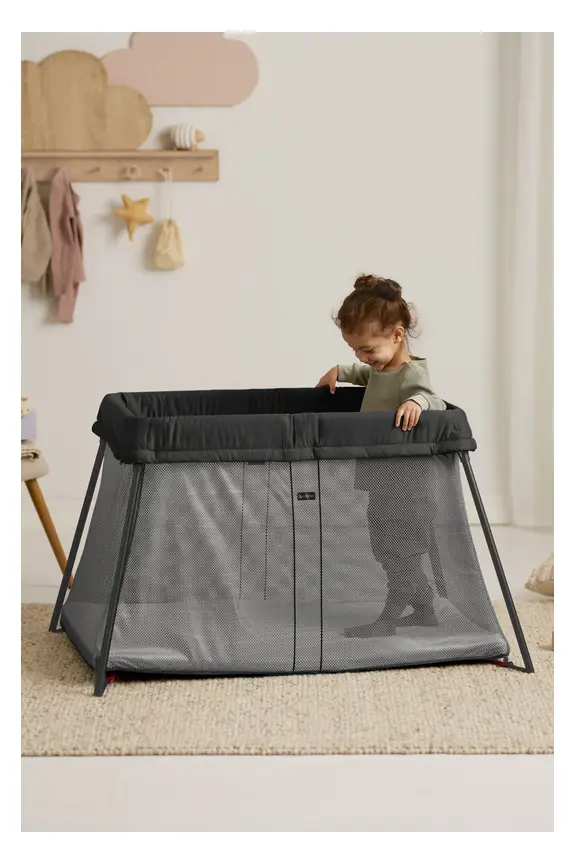
A pop-up dome is also smaller than a portacot (also called a travel cot or play yard). A portacot is taller, heavier, and lasts until toddler age. A travel bassinet or dome is only for young babies.
Cots, Bassinets & Bedside Sleepers worth a look
Real products from our catalogue. We don't show star ratings or review counts; check the current price, stock and reviews on Amazon before you buy.

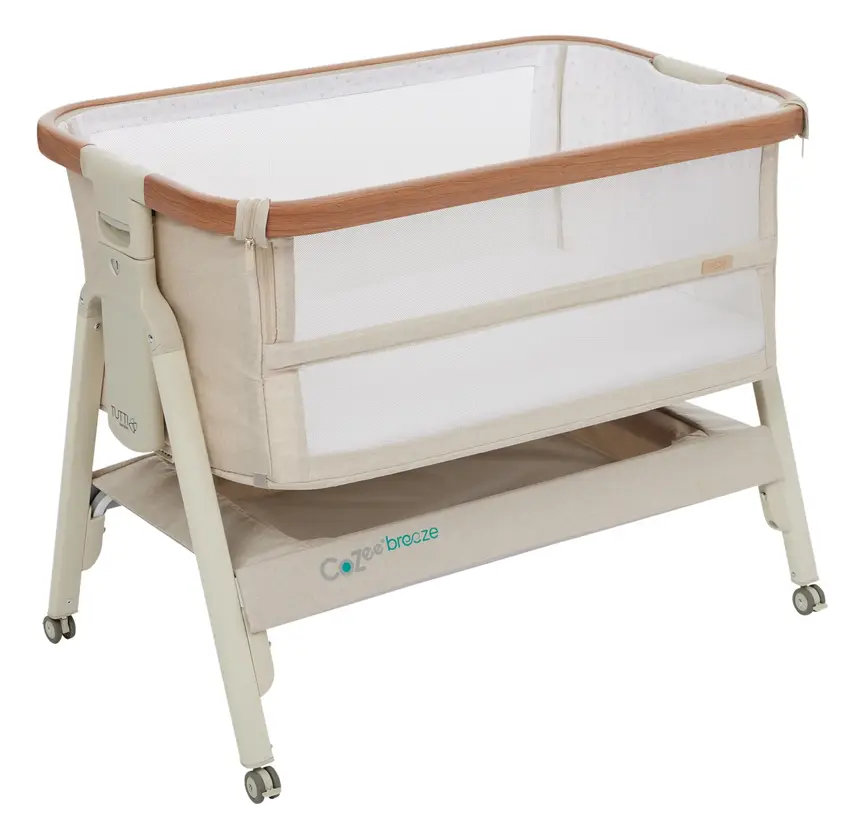
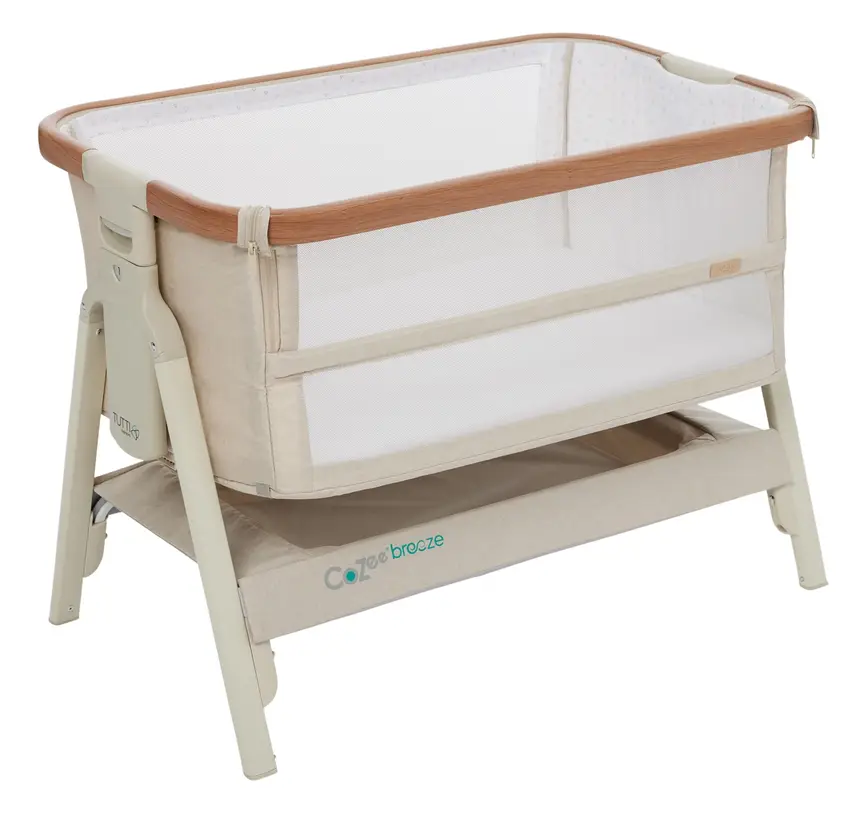
Tutti Bambini CoZee Breeze Lite
A bedside sleeper that opens or folds in about 30 seconds, with mesh sides and a travel bag.
Read our full review →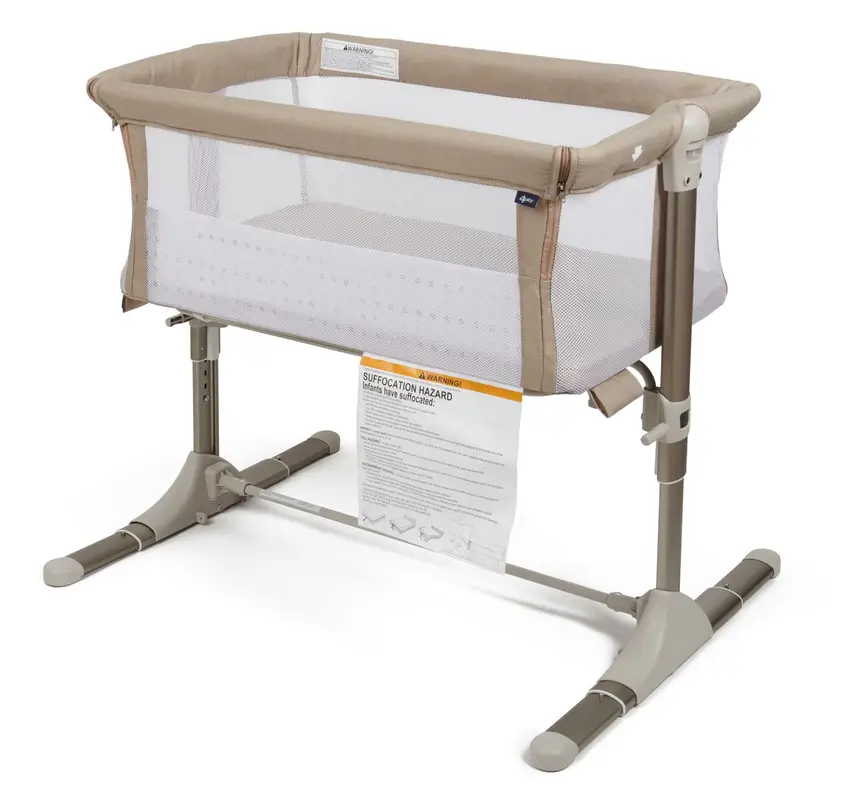
4baby Snuggle Cuddle Bedside Sleeper
A low-cost bassinet that turns into a bedside sleeper, with 4 heights and mesh sides.
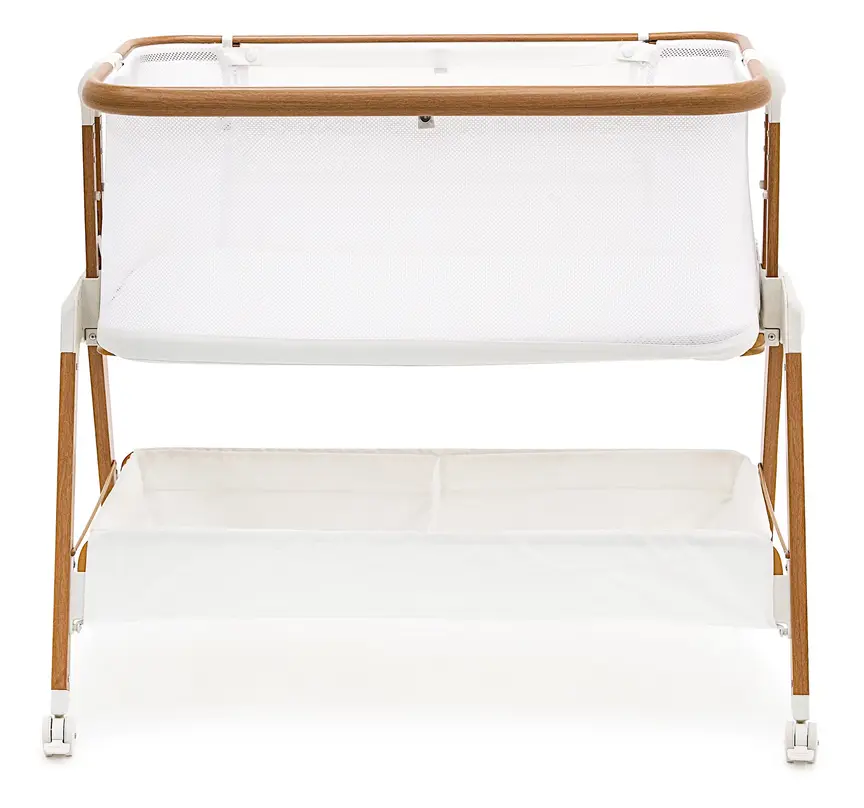
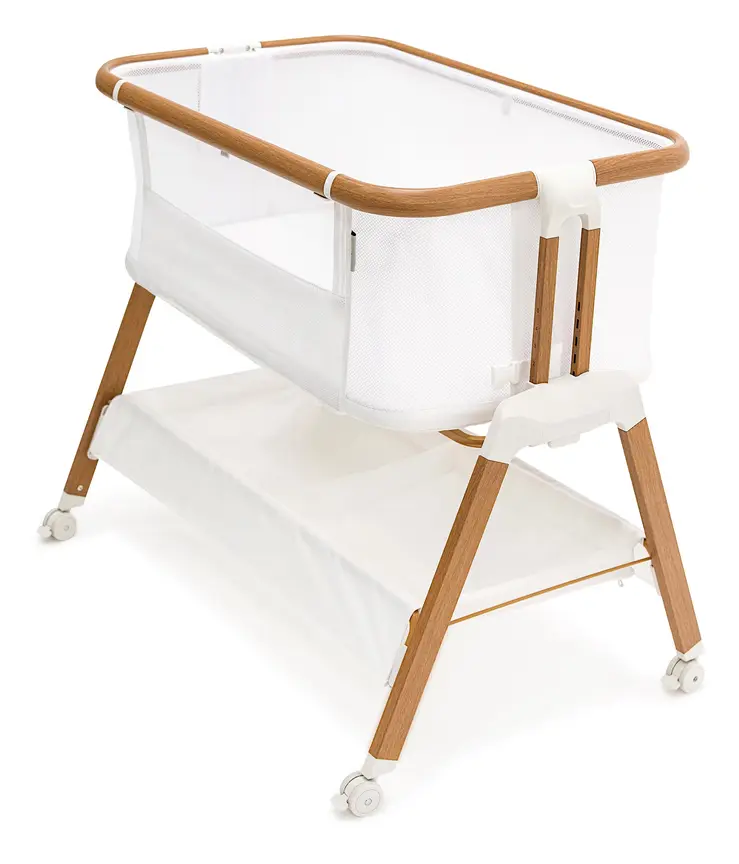
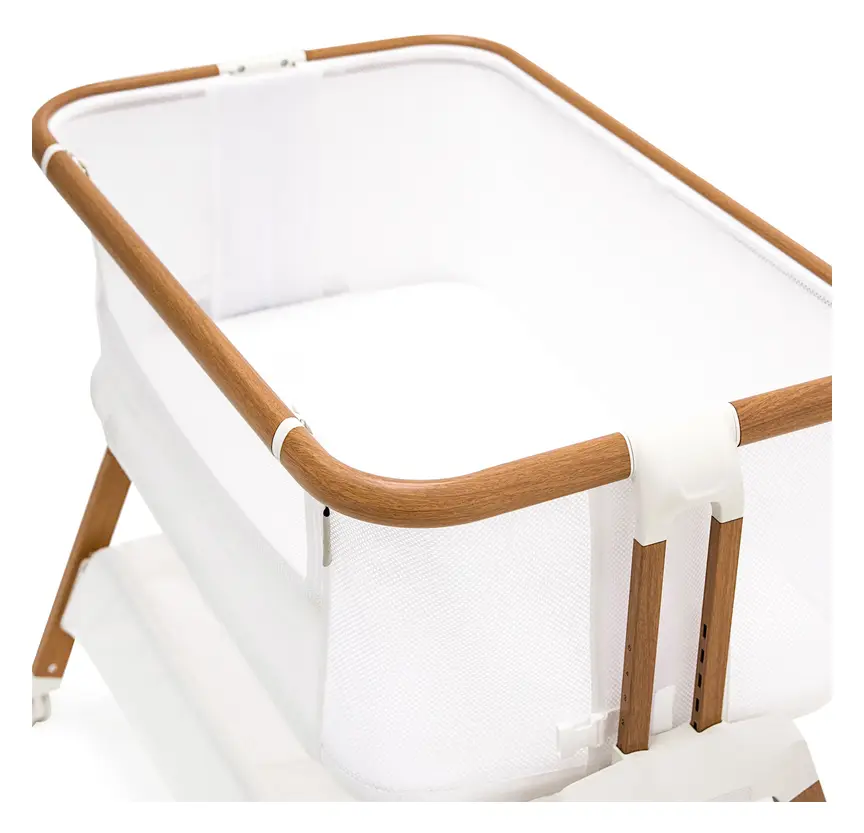
BabyRest Alfie2 Bedside Bassinet
A bedside bassinet with 5 heights, a drop-down side, wheels and an insect net.
Read our full review →Compare all cots, bassinets & bedside sleepers in our reviews →
Floor draft insulation and cold floors
Most travel bassinets and pop-up domes sit directly on the floor. That brings a common problem when you travel. Floors can be very cold, especially in winter or in rooms with tiles, concrete, or bare timber.
Why floor temperature matters for babies
Cold air sinks to the lowest part of a room. The air at floor level is often cooler than the air at bed height. Babies also lose body heat much faster than adults do.
If your baby lies on a thin pad right over cold tiles or tent groundsheets, the floor draws heat away from their body. At the same time, making a baby too warm is also unsafe. Overheating raises the risk of sudden infant death.
How to block floor cold safely
Many parents feel tempted to fold a thick blanket or towel inside the bassinet to make it warmer and softer. Do not do this. Red Nose, The Lullaby Trust, the American Academy of Pediatrics (AAP), and Health Canada all warn against soft bedding under a sleeping baby.
Extra blankets, doonas, sheepskins, or thick foam pads inside the sleep space create a suffocation risk. If a baby turns their face down, soft layers can block their nose and mouth. Soft layers can also make the baby too hot.
Use these safe steps instead:
- Insulate under the unit: Place a folded blanket, yoga mat, or camping foam mat on the floor first. Then put the travel bassinet or dome on top of it. Make sure the surface is still flat and level, with no lumps or tipping.
- Use a model with a built-in insulated base: Some floor bassinets have a waterproof outer bottom and a firm, closed-cell base layer beneath the mattress pad. This slows heat loss without making the sleep surface soft.
- Dress your baby for the room: Put your baby in a fitted baby sleeping bag (sleep sack) suited to the room temperature. The Lullaby Trust suggests keeping a baby's room around 16 to 20°C.
- Check your baby, not just the room: Feel your baby's chest or the back of their neck. Their skin should feel warm, not sweaty or cold. Hands and feet often feel cool and do not show core warmth.
- Watch for floor draughts: Keep the bassinet away from gaps under outside doors, sliding glass doors, and floor air vents.
Camping and tent floors
If you are camping, tent floors get cold fast overnight. Red Nose notes that camping makes it harder to control temperature and keep a safe sleep space. Never place a baby on an adult air mattress or inside an adult sleeping bag.
Put a firm camping mat under the outside of a safety-checked travel cot or bassinet. Dress your baby in warm, fitted layers and a safe sleeping bag with no hood. Check on your baby often through the night.
UV mesh canopies and airflow
Many pop-up infant domes come with a built-in sun canopy and fine insect mesh. These features are handy for parks, beaches, and backyard naps. Still, a canopy can turn unsafe if it traps heat or blocks fresh air.
Sun protection rules for babies
Cancer Council Australia advises keeping babies under 12 months out of direct sunlight when UV levels are high. The AAP and Canadian Paediatric Society advise keeping babies under 6 months out of direct sun as much as possible. A baby's skin is thin and burns fast.
A pop-up dome with a UV-rated canopy blocks direct rays from above. In Australia, sun-protective textiles are tested under standard AS/NZS 4399, which gives a UPF rating. A UPF 50+ fabric blocks most direct UV rays. Remember that UV still bounces off sand, water, and concrete from the side.
The heat trap danger
Shade does not mean cool air. Small enclosed tents heat up fast in warm weather. Dark nylon roofs absorb heat from the sun. If the sides have tiny air holes or solid fabric panels, hot air stays trapped inside.
This is the same danger as covering a pram with a cloth. Never drape a muslin wrap, towel, or blanket over a travel dome or bassinet to block sunlight. Even a thin cotton cloth cuts airflow and makes the space inside much hotter.
What to look for in a canopy
- Large mesh windows: Look for open mesh on at least two or three sides so a breeze can pass straight through.
- Light-coloured outer fabric: Pale or reflective outer panels stay cooler in the sun than black or navy fabric.
- Removable or roll-up flaps: Zip-down privacy flaps are useful for light control, but keep them rolled up in warm weather so air moves freely.
- Fine insect mesh: Small holes keep mosquitoes and flies out while letting air in. Check that mesh seams are strong and have no loose threads.
- Active supervision outdoors: Never leave a baby alone inside an outdoor pop-up tent. Wind can shift light tents, and sun angles move quickly.
Comparing your travel sleep options
Different trips call for different gear. A weekend flight with carry-on luggage only is not the same as a road trip to a holiday house. The table below compares the four main options parents look at.
| Feature | Folding travel bassinet | Pop-up infant dome | Portacot / travel cot | Soft baby nest / pod |
|---|---|---|---|---|
| Best use | Overnight sleep and naps for young babies | Daytime shade, outdoor rest, or sleep if certified | Overnight sleep from birth up to toddler age | Never safe for sleep |
| Floor insulation | Good if raised on legs; fair if flat on floor | Low; needs a mat underneath on cold floors | Good; base is usually raised off the floor | Not designed for safe floor sleep |
| Airflow and shade | Mesh sides; some have a light canopy | Often has UV roof and full mesh walls | High mesh walls; rarely has a sun canopy | Thick padded sides trap heat |
| Suitcase packing | Fits checked bag; some fit large carry-on | Very light; folds into a flat disc | Heavy and long; usually checked separately | Bulky and does not fold flat |
| Sleep safety notes | Check for a firm mattress and locking frame | Check if approved for unattended sleep | Must meet local folding cot standards | Linked to suffocation risks; avoid for sleep |
If your main goal is safe overnight sleep on trips over the first year, a portacot is often the longest-lasting choice. If you need something tiny for a flight with a newborn, a certified folding travel bassinet or sleep-approved dome is much easier to pack.
How to choose a safe travel bassinet or pop-up dome
Before you buy any travel sleeper, check five basic safety points. Ignore marketing words like "womb-like" or "cozy". Safe infant sleep gear should be firm, flat, and plain.
1. Firm, flat mattress
The mattress pad must be firm and flat. In Australia, cot and bassinet mattresses can be checked with the firmness test in AS/NZS 8811.1. A soft pad lets a baby's head sink in, which can block their nose and mouth if they turn.
The pad must also fit tightly inside the base. There should be no gap between the pad edge and the side wall where a baby's face or limb could get trapped. Never swap the supplied pad for a thicker aftermarket mattress.
2. Zero incline
The sleep surface must lie completely flat. Do not buy any travel sleeper that props the baby's head up at an angle. When a baby sleeps on an incline, their heavy head can slump forward onto their chest. That bends their windpipe and makes it hard to breathe.
Australia, the US, the UK, and Canada all warn against inclined infant sleep products. If a travel bassinet has legs, check that all four legs lock at the same height.
3. Breathable mesh walls
Look for mesh panels along the sides down near mattress level. Mesh lets air move through and lets you see your baby easily. Avoid thick, padded fabric walls around the lower edges.
Make sure the mesh is tight and strong. Loose or baggy mesh can sag inward and create pockets.
4. Safe frame and locks
If the bassinet has a folding metal or plastic frame, test the locks. A safe folding frame uses dual-action locks so a bump or a baby's movement cannot fold it shut. All hinges should be covered so tiny fingers cannot get pinched.
For pop-up domes, check the sleeves that hold the spring wire. The stitching should be double-stitched and thick. If a wire ever pokes through the fabric, stop using the dome right away.
5. Clean, cord-free design
Babies spit up and leak nappies on trips. Pick a travel bassinet with a wipe-clean base and a removable cover or fitted sheet that goes in the washing machine. Check that any fitted sheet stays tight on the pad and never bunches up.
Also check for dangling cords, long carry straps, or loose zip pulls inside the sleep space. Anything longer than a few centimetres near a baby's neck is a strangulation hazard. Tuck carry straps underneath or clip them outside.
Side by side: more cots, bassinets & bedside sleepers to compare
Real products from our catalogue. We don't show star ratings or review counts; check the current price, stock and reviews on Amazon before you buy.


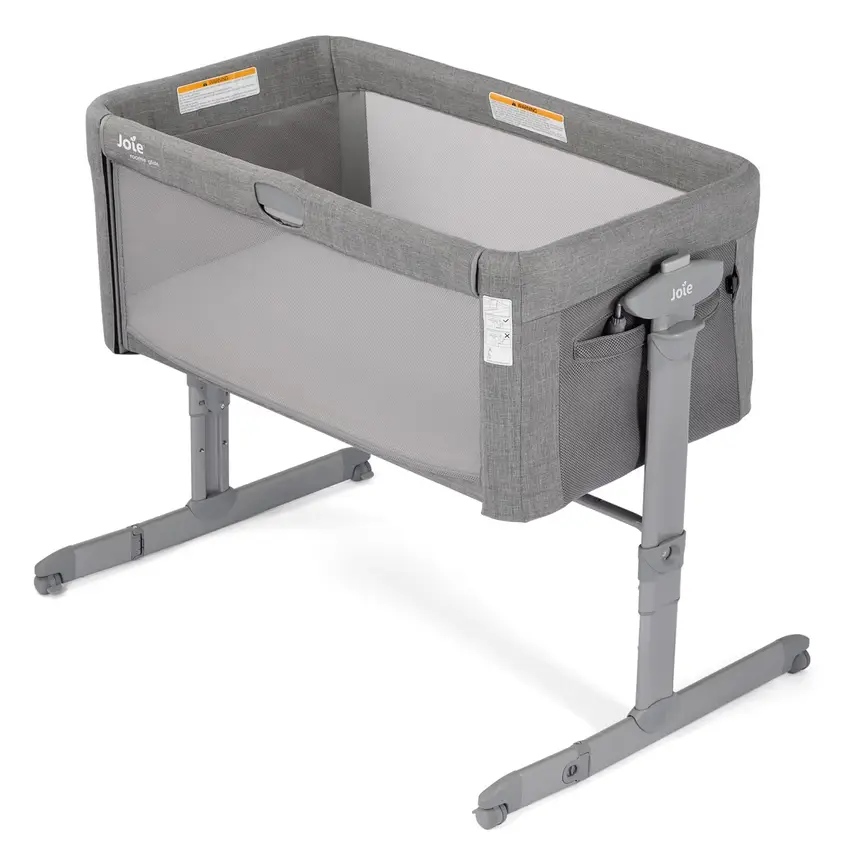
Joie Roomie Glide
A bedside sleeper that glides with one hand and has a gentle tilt.
Read our full review →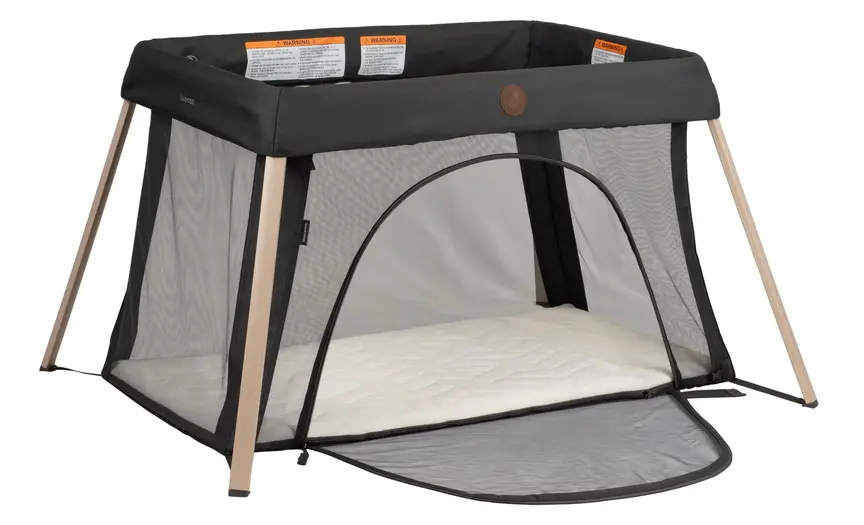
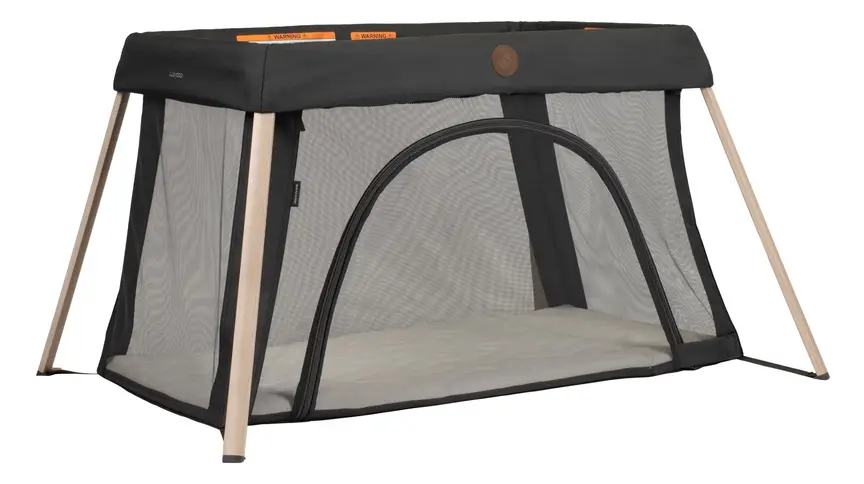

Maxi-Cosi Calao Light Travel Cot
A light travel cot with a newborn level and a toddler level, a side zip and a travel bag.
Read our full review →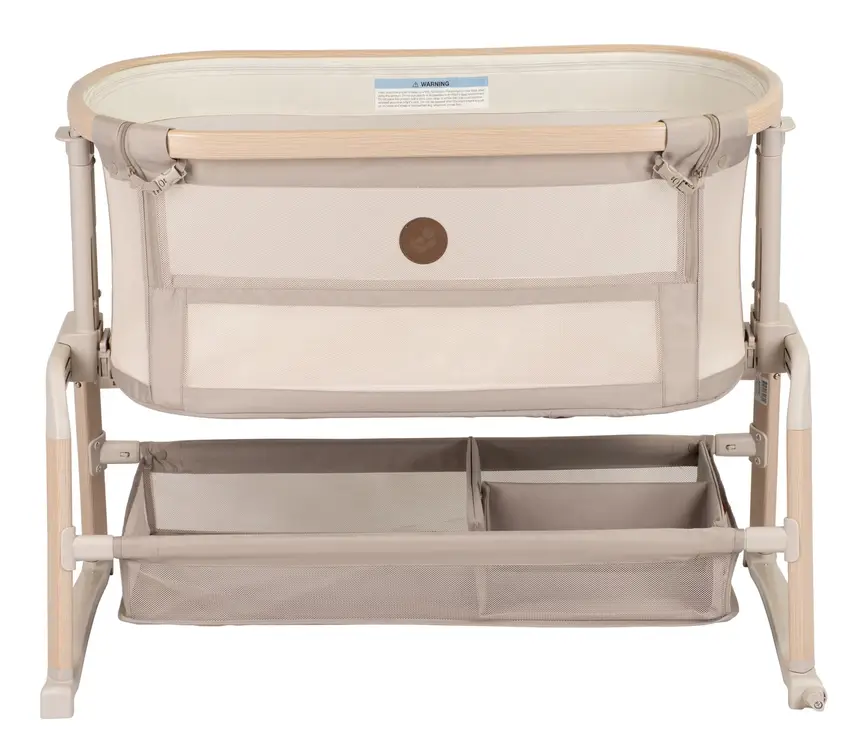 Reviewed
Maxi-Cosi Iora Lux
A bedside bassinet with 4 heights and 3 slide positions, with a 2-year warranty.
Read our full review →
Compare all cots, bassinets & bedside sleepers in our reviews →
Age stages: when to start and when to stop
Travel bassinets and pop-up domes have a short window of use. Babies grow fast and learn to move sooner than many parents expect. Always follow both the weight limit on the label and your baby's physical skills.
| Age stage (rough guide) | What your baby is doing | What to use on trips |
|---|---|---|
| Newborn to 3 months | Sleeps flat on back; cannot roll yet | Travel bassinet or sleep-certified dome works well |
| 3 to 5 months | May rock side to side, push up, or roll | Stop using shallow bassinets at first rolling sign |
| 6 to 12 months | Rolls, sits up, and pulls on sides | Use a full-depth portacot or travel cot only |
| 12 months and up | Stands, climbs, and walks | Portacot until child reaches height or weight limit |
Do not wait for your baby to hit the maximum weight on the box. Once a baby starts trying to roll over, push up on hands and knees, or sit up, a shallow travel bassinet or dome is no longer safe. A rolling baby can tip a lightweight dome over or climb out over a low edge.
Safety standards in Australia, the UK, the US and Canada
Rules for travel bassinets and infant sleep gear differ by country. A cheap unbranded dome bought online from overseas may not meet any of these safety laws. Check the label and buy from a trusted seller in your region.
| Country | Main safety and health bodies | Rules and standards to look for |
|---|---|---|
| Australia | ACCC (Product Safety Australia), Red Nose, Standards Australia | Mandatory safety rules for infant sleep products and folding cots; AS/NZS 2172 for household cots; AS/NZS 8811.1 mattress firmness test; AS/NZS 4399 for UV shade |
| UK | Office for Product Safety and Standards (OPSS), The Lullaby Trust, NHS | BS EN 1130 for cribs and bassinets; BS EN 716 for folding cots; BS EN 16890 for mattresses |
| US | Consumer Product Safety Commission (CPSC), AAP, NICHD Safe to Sleep | ASTM F2194 for bassinets and cradles; ASTM F406 for play yards; federal rules banning inclined sleepers and padded bumpers |
| Canada | Health Canada, Canadian Paediatric Society (Caring for Kids) | National safety rules for cribs, cradles, and bassinets covering side height, mattress fit, and warning labels |
In Australia, Product Safety Australia also sets strict rules for infant sleep products so they lie flat and carry clear safe sleep warnings. In the US, federal rules require any product sold for infant sleep to meet crib, bassinet, cradle, or play yard safety standards. That is why many older sleep domes and loungers were pulled from sale or relabelled as daytime-only mats.
Before you borrow or buy a secondhand travel bassinet, check the official recall list in your country. You can search recalls on Product Safety Australia, the UK OPSS site, the US CPSC site, or Health Canada.
Suitcase packing, flying, and hotel setup
Packing baby sleep gear well saves space and stops damage during travel. A bent frame or torn mesh can ruin a bassinet before your holiday even starts.
Packing in a suitcase
- Check folded size first: Pop-up domes usually fold into a flat circle. Measure your suitcase width before you buy. Many large circles only fit diagonally or inside a larger checked bag.
- Protect spring wires: Never fold or bend a pop-up dome tighter than its storage bag allows. Place it flat against the hard shell of your suitcase, cushioned by clothes.
- Shield the mesh: Put the bassinet inside its zip bag before packing. Exposed mesh catches easily on suitcase zips, velcro, and shoe buckles.
- Pack fitted sheets separately: Bring two spare fitted sheets in a clean zip bag so you are ready for night-time spills.
Flying with a travel bassinet
Most airlines let you check a travel cot or bassinet, often as part of a baby gear allowance. Rules change between airlines, so check your ticket details before you leave home. If you check a framed bassinet at the bag drop, put it inside a padded travel bag. Baggage belts can snap exposed plastic joints.
On long flights, do not rely on bringing a floor dome to use in the aircraft aisle. Cabin crew must keep aisles clear for safety, and airline bassinets are fixed to bulkhead walls with weight and age limits.
Setting up in a hotel or holiday rental
When you reach your room, take two minutes to do a safety check before putting your baby down.
- Inspect the frame: Open the bassinet and pull gently on each corner to make sure all locks clicked into place. Check pop-up seams for any tears from the flight.
- Pick a flat floor spot: Put the bassinet on a clear patch of floor near your bed. Keep it within arm's reach or in the same room. Red Nose, The Lullaby Trust, the AAP, and Health Canada all advise sharing a room with your baby for at least the first 6 months.
- Clear the area around it: Stay well away from dangling curtain cords, blind cords, lamp cables, and power boards. Keep away from radiators, fan heaters, and direct air-conditioning drafts.
- Check the floor surface: Make sure the floor is clean, dry, and level. If the floor is cold tile, lay a flat rug or folded blanket underneath the whole bassinet base, not inside it.
- Keep hotel bedding out: Never put hotel pillows, spare sheets, or cushions inside the bassinet.
Common mistakes parents make
Even careful parents can slip into unsafe habits when they are tired on a trip. Watch out for these common mistakes.
- Putting the bassinet on a hotel bed: A baby's movement can shift a lightweight dome right off the edge of a bed. Even a short fall onto a floor can cause a head injury. Always use the floor.
- Adding a folded blanket inside for warmth: Soft padding inside the sleep space raises the risk of suffocation. Put insulation under the unit and dress your baby in a sleeping bag.
- Covering the canopy for darkness: Draping a towel or shawl over a dome traps hot air and blocks fresh oxygen. If the room is bright, dim the room lights or use safe blackout blinds without loose cords.
- Using a beach tent for overnight sleep: Beach shade tents are built for sun protection, not safe sleep. They often have thin, slippery bases, loose fabric, or no safety lock on the frame.
- Keeping a rolling baby in a dome: Once your baby rolls, a shallow dome cannot hold them safely. Switch to a portacot with high mesh walls.
- Trusting unlabelled online imports: Cheap pop-up domes from random online marketplaces often skip safety testing. Stick to products that clearly state which local safety standard they meet.
More options, from budget to premium
Real products from our catalogue. We don't show star ratings or review counts; check the current price, stock and reviews on Amazon before you buy.
 Reviewed
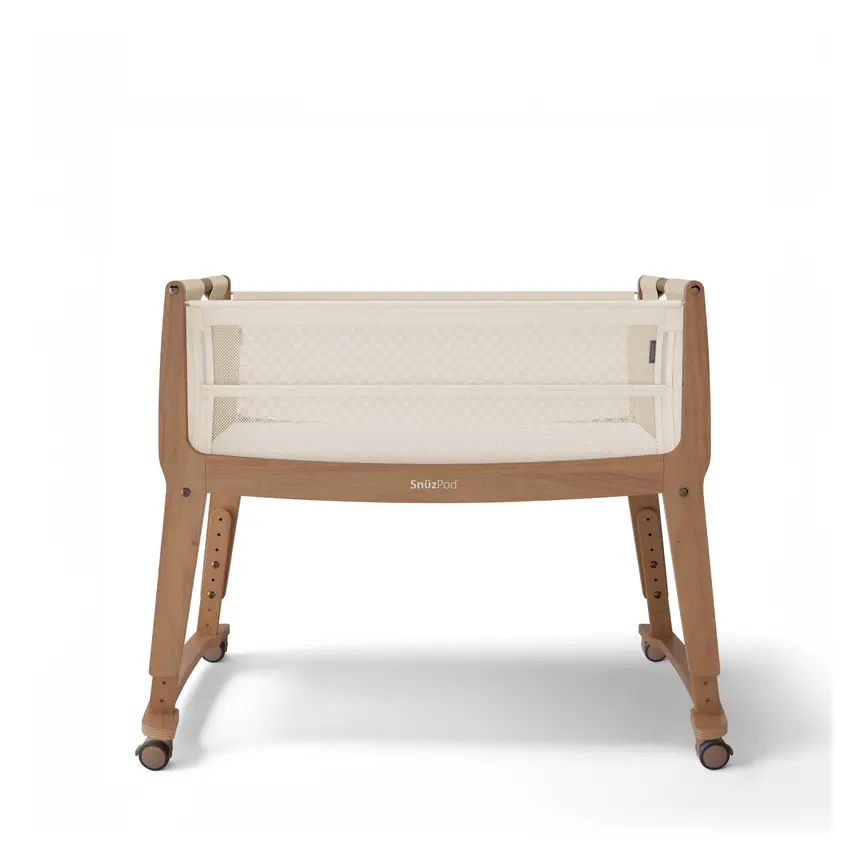
SnuzPod Studio
A bedside crib for night sleeps and naps, with panoramic mesh and a zip-down wall.
Read our full review →
Stokke Sleepi Mattress
A firm mattress with breathable mesh layers, made to fit the Stokke Sleepi bed.
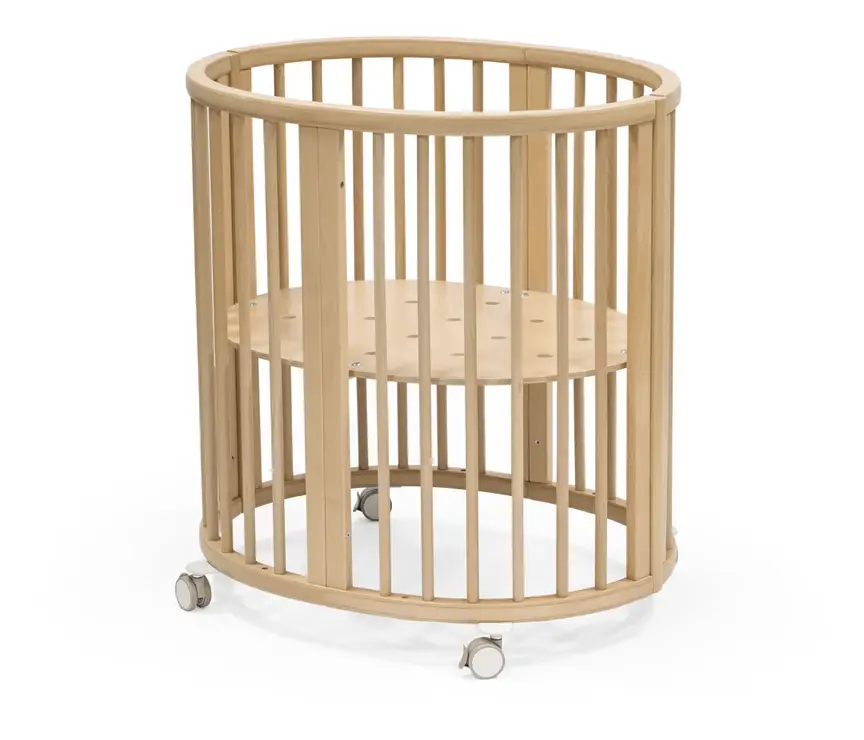


Stokke Sleepi Mini
A beech wood oval crib for newborns, with rods and a holed base for airflow.
Read our full review →Compare all cots, bassinets & bedside sleepers in our reviews →
Frequently asked questions
Can a newborn sleep overnight in a pop-up infant dome?
Only if the dome is clearly labelled and tested as a safe infant sleep product under your country's rules. It must have a firm, flat pad with no gaps, breathable mesh sides, and no soft padding or incline. Many pop-up tents sold for the beach or park are for supervised daytime shade only. When in doubt, use a folding travel bassinet or portacot that meets local sleep standards.
How do I stop cold coming through the floor without adding soft bedding?
Put an insulating layer underneath the outside of the bassinet, not inside it. A flat camping mat, yoga mat, or folded towel under the base blocks cold from tiles or timber while keeping the inside mattress firm and flat. Then dress your baby in an extra layer of fitted clothing or a warmer sleeping bag suited to the room temperature.
Is a UV mesh canopy enough to keep my baby cool outside?
No. A UV canopy blocks direct sunlight, but heat still builds up inside a small tent. Always set the dome up in natural shade when you can, open mesh panels for cross-breezes, and never cover the dome with a blanket or wrap. Check your baby's chest or neck often and move indoors if they feel hot or sweaty.
When should I stop using a travel bassinet or dome?
Stop as soon as your baby shows signs of rolling over, pushing up on hands and knees, or reaching the weight or age limit on the label. For many babies, this happens between 3 and 5 months. After that, move your baby to a full-depth portacot or standard cot.
Can I put a travel bassinet on a hotel bed?
No. Never place a travel bassinet or pop-up dome on an adult bed, couch, table, or bench. Adult mattresses are too soft and can tip a lightweight sleeper, and a baby can wriggle the unit off the edge. Always place it on a clear, flat spot on the floor near your bed.
Will a folding travel bassinet fit inside a normal suitcase?
Many pop-up domes and compact folding travel bassinets fit inside a medium or large checked suitcase. Some very small pop-up domes even fit in carry-on bags. Check the folded measurements in centimetres before you buy, and pack the unit flat with clothes around it so the frame does not bend in transit.
Sources
- Red Nose Australia – Portable and folding cots
- Red Nose Australia – Safe sleep while camping
- Product Safety Australia – Bassinets and cradles guide
- The Lullaby Trust (UK) – Safer sleep on holiday
- American Academy of Pediatrics (US) – A parent's guide to safe sleep
- CPSC (US) – Infant sleep products business guidance
- Caring for Kids (Canadian Paediatric Society) – Safe sleep for babies
- Cancer Council Australia – Fact sheet: Sun protection and babies
Related guides
More Car Seats & Travel →
Overnight Sleep-Approved Stroller Bassinets: Breathable Bases, Stands, and Travel Safety

Portable Pram Rockers: Safe Use, Travel Rules, and Better Alternatives

How to Choose a Safe Travel Crib or Portable Cot for Your Baby