














Dome Canopy Bassinets for Homes with Cats and Pets: Are Zip-Shut Covers Safe?
Should you use a dome canopy bassinet for cats and pets? Learn the safety risks, airflow rules, official advice, and safer ways to protect your baby.
On this page
- Key points
- What is a dome canopy bassinet?
- Why pets are drawn to baby bassinets
- Are zip-shut pet nets safe for sleep?
- What to check before buying a dome bassinet
- Built-in dome bassinet vs add-on pet net vs closed nursery door
- How to keep pets out of the bassinet safely
- Age stages: when to stop using a bassinet
- Safety standards and rules in Australia, the UK, the US and Canada
- Common mistakes parents make
- How to set up your sleep space step by step
- Frequently asked questions
- Sources
Short answer: A built-in zip-shut dome bassinet can help keep bugs and curious cats out of your baby's bed. However, it is never a full substitute for watching your baby or keeping pets out of the room. Loose add-on nets that tie or stretch over a normal bassinet are not safe for sleep. A heavy cat can collapse a weak net onto your baby's face.
Safe sleep groups give the same core advice in Australia (Red Nose and Product Safety Australia), the UK (The Lullaby Trust and NHS), the US (American Academy of Pediatrics and CPSC) and Canada (Health Canada and the Canadian Paediatric Society). Keep your baby's sleep space clear, flat, firm and free of loose fabric.
Key points
- No net replaces supervision: Never leave a baby alone in a room with a cat or dog, even with a zip-shut cover.
- Skip loose add-on nets: Elastic or tie-on nets can sag, tear or trap a baby.
- Check frame strength: A bassinet must not tip over if a cat jumps onto the side or top.
- Keep airflow clear: The mesh must let air move freely and let you see your baby clearly.
- Flat and firm mattress: Your baby needs a firm, flat mattress with no tilt and no loose bedding.
- Close the door first: A shut bedroom door or tall pet gate is safer than relying on mesh alone.
What is a dome canopy bassinet?
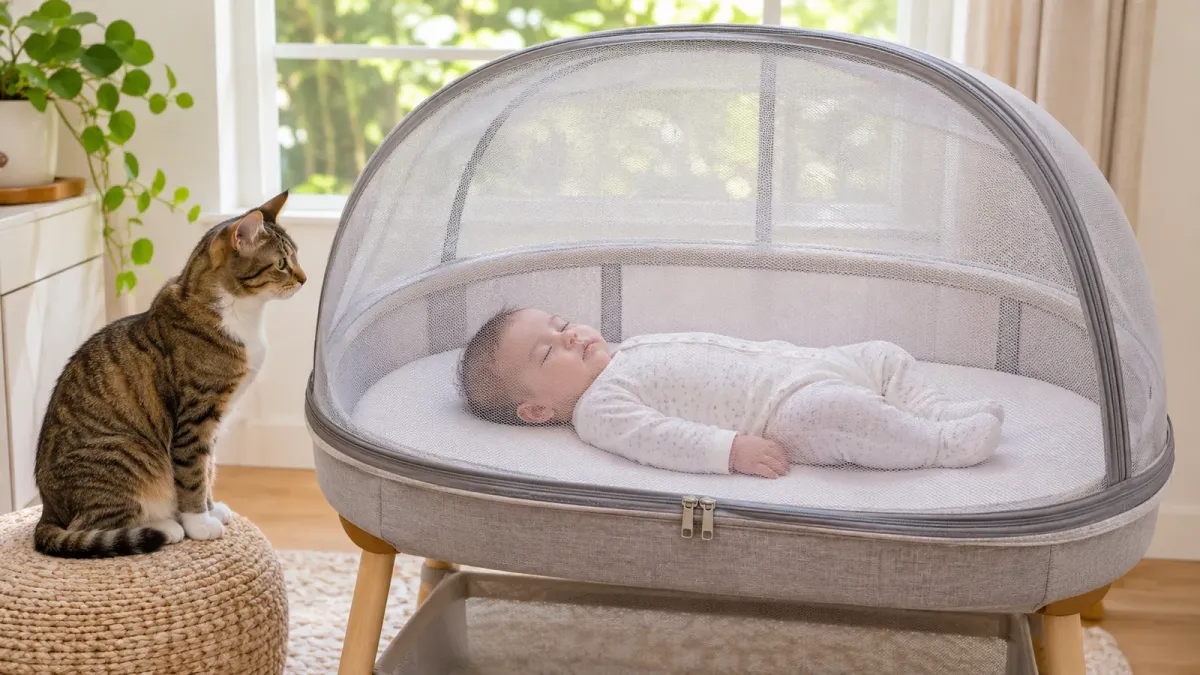
A dome canopy bassinet is a small baby bed with a curved mesh hood that zips shut over the top. Some people call it a mosquito net bassinet or a pet-proof bassinet. When zipped up, the mesh forms a closed tent over the sleep space.
There are two very different types on the market. It is important to know which one you are looking at.
- Built-in dome bassinets: The curved hood is part of the main frame. Rigid poles or hoops hold the mesh well above the mattress. The zip attaches directly to the bassinet rim.
- Add-on dome nets: These are separate fabric covers bought on their own. They stretch over an existing bassinet with elastic, ties or clips.
Many parents buy these covers to stop flies and mosquitoes in summer. Others buy them because they live with indoor cats or curious dogs. While a rigid built-in dome can block insects, pets are heavier and stronger than bugs. That changes the safety picture a lot.
Why pets are drawn to baby bassinets
Even the calmest family cat or dog can be drawn to a newborn's bed. Understanding why helps you stop the habit early.
- Warmth and softness: Bassinets sit in quiet rooms and look like cosy nests. Cats love small, raised spaces where they can curl up.
- Interesting new smells: A baby brings new scents like milk, soap and lotions. Pets explore new things with their noses and paws.
- High vantage points: Cats like to perch up high to watch the room. A bassinet at waist height looks like a great lookout spot.
- Attention: Pets quickly notice that parents spend lots of time near the bassinet. They may jump up just to be near you.
The real risks pets pose near a sleeping baby
Most cats do not mean to harm a baby. Still, accidents can happen fast. A cat that curls up inside a bassinet can press against a newborn's chest or face. Young babies cannot push a heavy animal away or roll their head clear.
Dogs and cats can also scratch a baby by mistake if they get startled. Pet hair and dander can build up on sheets too. Keeping pets completely out of the sleep space is the safest rule for every family.
Cots, Bassinets & Bedside Sleepers worth a look
Real products from our catalogue. We don't show star ratings or review counts; check the current price, stock and reviews on Amazon before you buy.
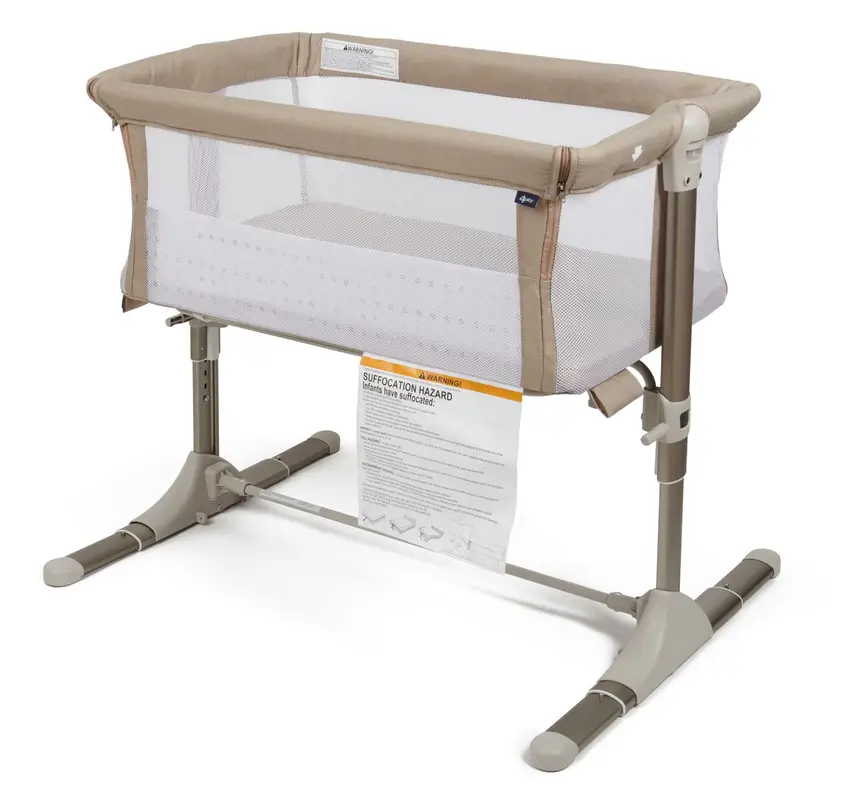
4baby Snuggle Cuddle Bedside Sleeper
A low-cost bassinet that turns into a bedside sleeper, with 4 heights and mesh sides.
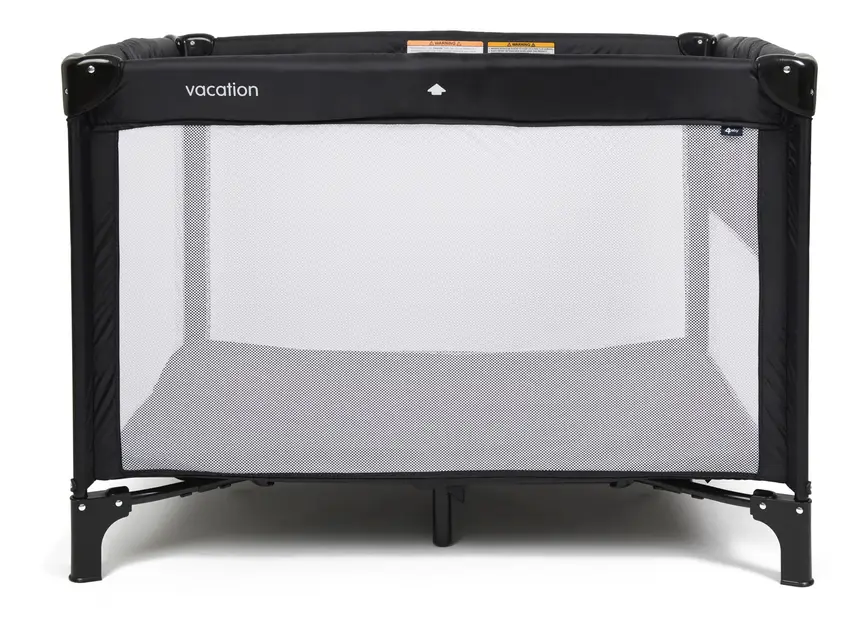
4baby Vacation Portacot
A low-cost portacot with a padded mattress and mesh sides.
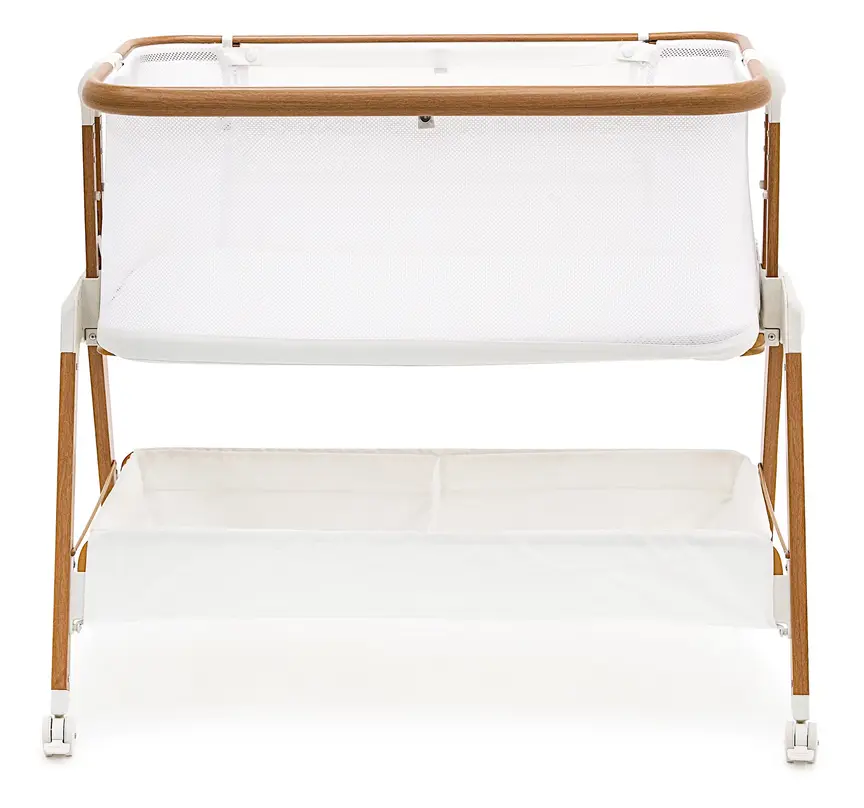
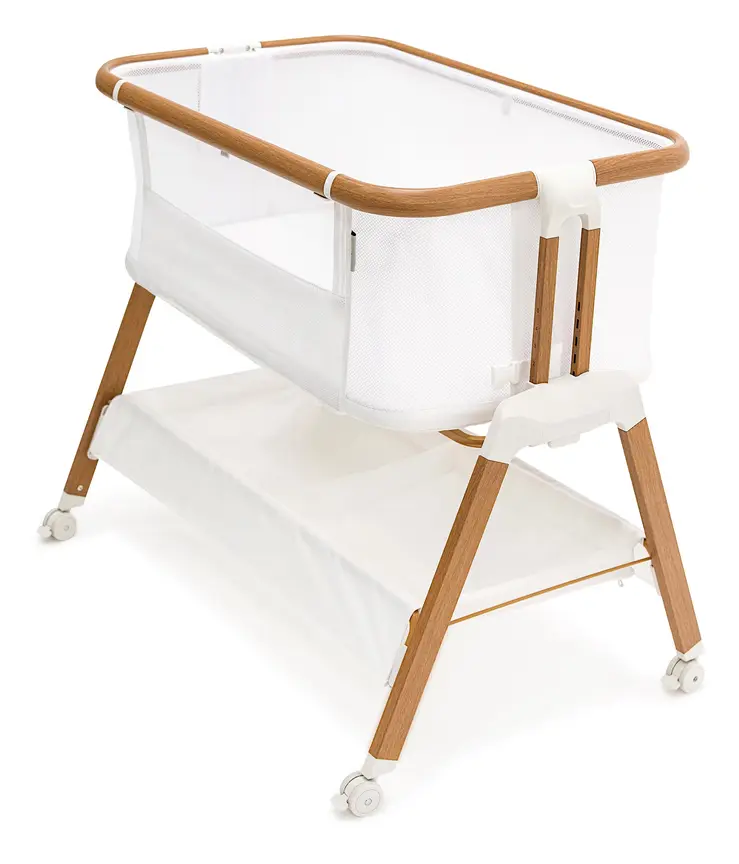
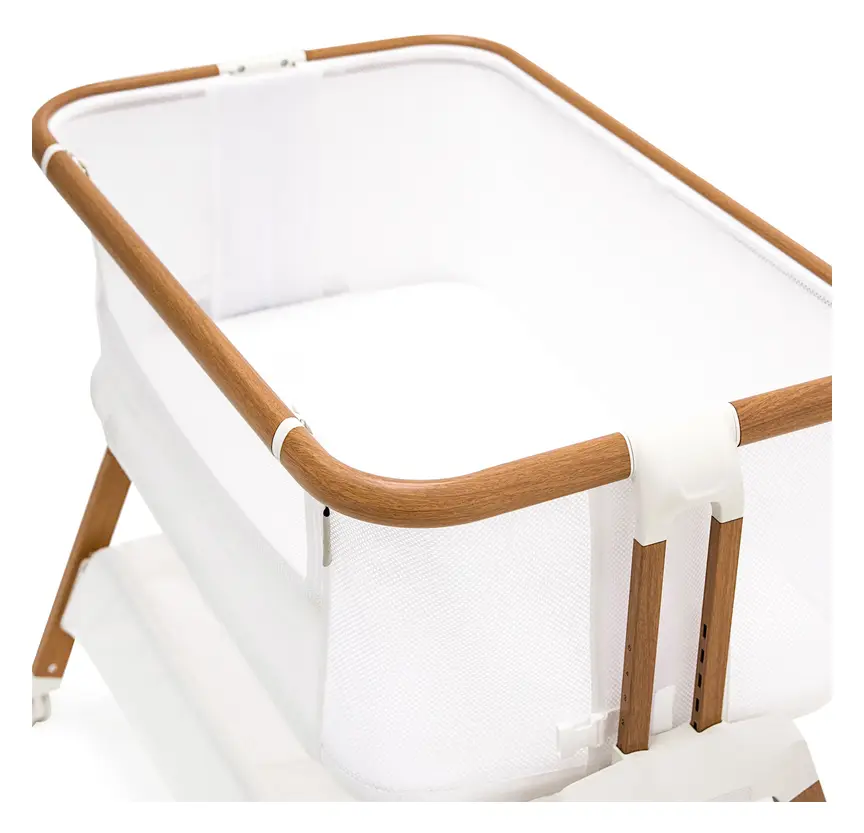
BabyRest Alfie2 Bedside Bassinet
A bedside bassinet with 5 heights, a drop-down side, wheels and an insect net.
Read our full review →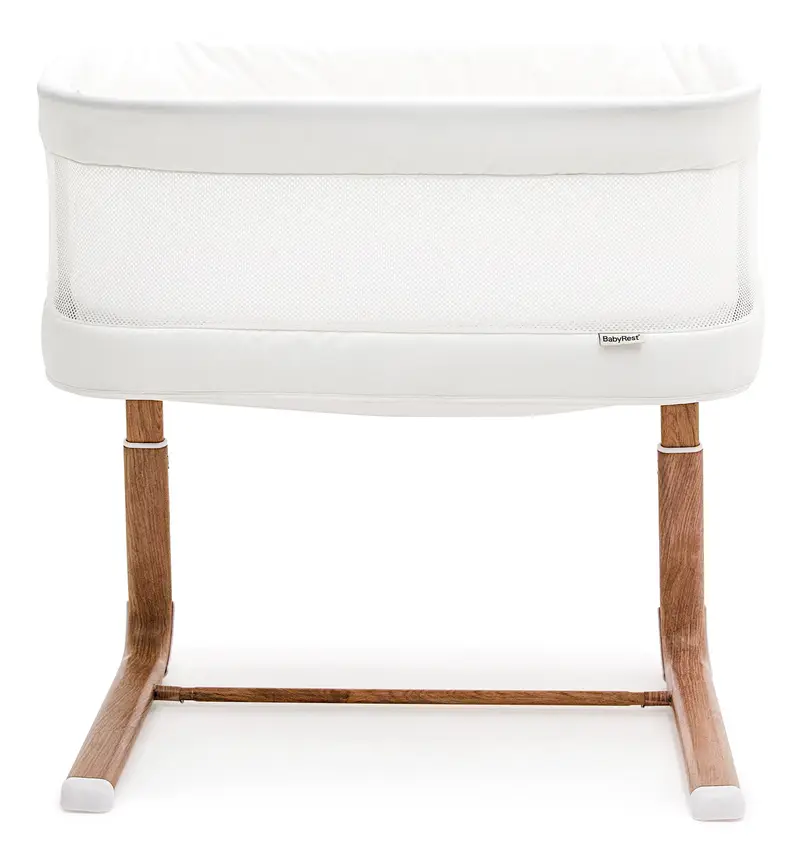
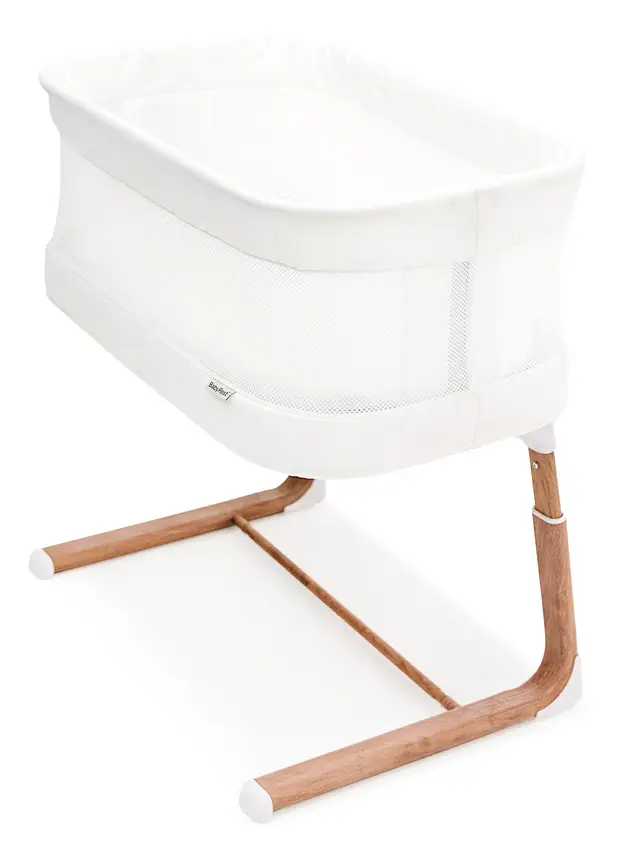
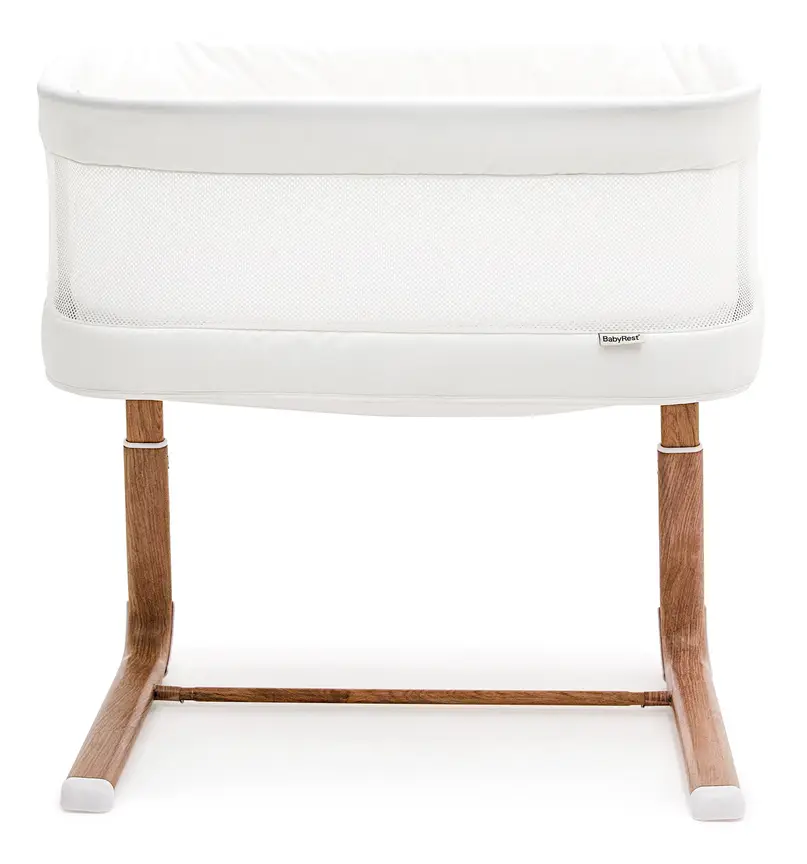


BabyRest Swan Smart Bassinet
A bassinet that rocks by itself when baby stirs, with 3 rocking levels, lullabies and a remote.
Read our full review →Compare all cots, bassinets & bedside sleepers in our reviews →
Are zip-shut pet nets safe for sleep?
A zip-shut canopy is only as safe as its frame and its mesh. Official sleep bodies warn against putting anything loose near a sleeping baby. Here are the main hazards to check before you use any dome cover.
1. Sagging and collapse under a cat's weight
A standard insect net is built to stop light flies, not a full-grown cat. If a cat leaps onto a soft mesh roof, the fabric can bow down into the bed. In a worst case, the poles can bend or snap. The cat and the net can land straight on top of your baby.
2. Entrapment and suffocation from loose add-on nets
Add-on nets with elastic edges can slip off the rim when a baby kicks or a pet paws at them. If the net comes loose inside the bed, it acts like a loose blanket or sheet. A baby can get tangled in the fabric or have their nose and mouth covered. Health groups in Australia, the UK, the US and Canada all warn against loose covers in a baby's bed.
3. Reduced airflow and heat build-up
Babies get hot much faster than adults do. Fine mesh slows down air movement inside the bassinet, especially in warm weather. Heavy fabrics, solid panels or rain-style covers trap heat even more. Your baby should always have fresh air flowing through the sides and top.
4. Zip, cord and tear hazards
Check every zip and seam. Long zip pulls, ties, ribbons or dangling cords are strangulation risks if a baby can reach them. Tiny buttons or plastic clips can snap off and become choking hazards. Torn mesh can also leave sharp edges or loose threads.
5. Blocking your view of your baby
Dark mesh or thick fabric hoods make it harder to check your baby at night. You need to see your baby's chest, skin colour and breathing easily from your bed.
What to check before buying a dome bassinet
If you want a bassinet with a built-in zip-shut dome for insects or light pet deterrence, inspect it carefully. Never rely on marketing words like "pet-proof" on a box.
- Sturdy, wide base: Push gently on the top rim. The bassinet should not wobble, slide or tip. A heavy cat jumping onto the edge must not knock the bed over.
- Rigid canopy hoops: The dome frame should hold its shape firmly when you press down lightly with your hand. Flimsy wire hoops bend easily.
- Taut, tear-resistant mesh: The mesh should stay tight when zipped shut. It should not sag inward.
- Breathable sides all round: Look for open mesh walls on the bassinet body too, not just on the roof.
- Firm, flat mattress: Press the middle of the mattress with your hand. It should feel firm and spring back fast. It must lie flat with zero tilt. In Australia, check that mattresses pass the firmness test under AS/NZS 8811.1.
- Tight mattress fit: There should be no gap around the edges where a baby's head or hand could wedge.
- Safe zips and fastenings: Zips should run smoothly from the outside only. There should be no loose strings, Velcro tabs or toggles inside the sleep area.
- Clear safety label: Look for compliance with recognised bassinet standards, such as ASTM F2194 in the US or BS EN 1130 in the UK and Europe.
Built-in dome bassinet vs add-on pet net vs closed nursery door
Parents often ask which option gives the best protection. The table below compares the three main ways people keep pets out of a baby's bassinet.
| Feature | Built-in dome bassinet | Add-on elastic pet net | Standard bassinet + closed door or pet gate |
|---|---|---|---|
| Stops insects? | Yes, when zipped shut | Often yes, if edges seal | Only if windows have fly screens |
| Stops a cat jumping in? | Helps deter light cats, but strong cats may push or tear mesh | No. Often collapses or slips off under pet weight | Yes. A solid door blocks cats and dogs completely |
| Risk of loose fabric in bed? | Low if frame is rigid and zip stays closed | High. Elastic can slip off and fall onto baby | None |
| Airflow | Fair to good, if mesh is open and wide | Varies. Fine nets can restrict air | Best. Nothing sits above the baby |
| View of baby | Slightly filtered through top mesh | Often cloudy or bunched at edges | Clear and unobstructed |
| Cost and hassle | Zipping and unzipping for every night feed | Hard to fit cleanly each time | No net to zip at 2 am |
A closed bedroom door or a tall, solid barrier is always the most reliable pet block. A built-in dome bassinet works best as a second layer of protection, or for keeping flies and mosquitoes away during daytime naps when you are right there.
How to keep pets out of the bassinet safely
Good habits protect your baby far better than any zip cover. Pet welfare charities like the PDSA in the UK, RSPCA Australia and the ASPCA in the US all suggest preparing pets before your baby comes home.
1. Set up the bassinet early
Put the bassinet together a few weeks before your due date. Let your cat or dog sniff around it while it is empty. If your cat jumps in, calmly lift them out every time. Reward them when they stay on the floor or go to their own bed. Do not wait until the baby arrives to set rules.
2. Make the bassinet boring or off-limits
Keep the nursery door shut when you are not in the room. For rooms without a door, a tall pet gate works for dogs, though most cats can jump over standard gates. Some parents place a flat sheet of aluminium foil inside the empty bassinet before the baby is born. Many cats dislike the sound and feel of foil and stop jumping in. Remove the foil completely before your baby ever uses the bed.
3. Give your pet a better spot nearby
Cats often jump into bassinets because they want to be warm and close to you. Put a soft cat bed or cosy blanket on the floor or on a nearby chair. Reward your pet with treats when they choose their own bed.
4. Keep the bassinet away from launch pads
Never place a bassinet right next to a tall dresser, bookshelf, headboard or windowsill. Cats love to leap down from high furniture. If a cat lands from a height onto a dome canopy, the impact is much harder than a gentle hop from the floor.
5. Practice room sharing safely
Health bodies recommend sleeping your baby in a bassinet or cot in your own bedroom for the first 6 to 12 months. If your pets normally sleep on your bed at night, start training them to sleep outside your bedroom before birth. Shutting the bedroom door at night keeps pets out while you sleep.
6. Manage pet hair and hygiene
Wash bassinet sheets regularly in hot water. Vacuum around the sleep area often. If you have a cat, wash your hands well after cleaning litter trays or touching outdoor soil. Pregnant women and parents should avoid contact with cat faeces because of toxoplasmosis, an infection that can harm an unborn baby.
Side by side: more cots, bassinets & bedside sleepers to compare
Real products from our catalogue. We don't show star ratings or review counts; check the current price, stock and reviews on Amazon before you buy.

Boori Oasis Oval Cot
A curved solid beech cot on lockable wheels, with two base heights.


Bugaboo Stardust Plus
A pop-up portacot with a bassinet, for naps at home or away.
Read our full review →
Jengo Mila Cot
A timber cot with two base heights and teething rails.

Jengo Voyager 3-in-1 Portacot
A portacot with a newborn bassinet level and a changer on top.
Compare all cots, bassinets & bedside sleepers in our reviews →
Age stages: when to stop using a bassinet
A dome canopy bassinet is only for tiny babies. Once your baby grows and starts moving, both the bassinet and the canopy become unsafe.
| Stage | What your baby is doing | What you should do |
|---|---|---|
| Newborn to around 3 months | Sleeps on back. Cannot roll over or push up yet. | Use a firm, flat bassinet in your room. Keep pets out of the room at night. |
| Signs of rolling (often 3 to 5 months) | Rocks side to side, rolls, or pushes up on hands. | Check the bassinet maker's weight and milestone limits. Prepare to move to a full-size cot. |
| Rolling, sitting or pulling up (around 4 to 6 months+) | Can reach up, grab mesh walls or pull on canopy zips. | Stop using the bassinet and dome net right away. Move to a standard cot with no canopy. |
Never leave a dome canopy on a bed once your baby can push up onto their hands and knees, sit up or pull on the mesh. A strong baby can pull the frame down, trap a limb or tear the fabric. At that stage, move your baby into a standard household cot that meets AS/NZS 2172 (Australia), BS EN 716 (UK and Europe) or ASTM F1169 (US).
Do not move a canopy net onto a full-size cot either. Once a baby can stand, cot tents and canopies become serious climbing and entrapment hazards.
Safety standards and rules in Australia, the UK, the US and Canada
Bassinet rules differ slightly between countries, though the safe sleep advice is nearly identical. Here is how official bodies approach bassinets and sleep canopies in each region.
| Country | Main safety and health bodies | Standards and key rules |
|---|---|---|
| Australia | ACCC (Product Safety Australia), Red Nose, Standards Australia | Australia has mandatory national safety rules for infant sleep products, plus the AS/NZS 8811.1 mattress firmness test. Cots must meet AS/NZS 2172. Red Nose advises a clear, flat sleep space on the back with no loose fabric. |
| UK | Office for Product Safety and Standards (OPSS), The Lullaby Trust, NHS | Cribs and bassinets are checked against BS EN 1130, and full-size cots against BS EN 716. The Lullaby Trust advises a clear cot with a firm, flat waterproof mattress and no loose drapes or hoods over the baby. |
| US | Consumer Product Safety Commission (CPSC), American Academy of Pediatrics (AAP), NICHD Safe to Sleep | Bassinets and cradles must meet federal safety rules based on ASTM F2194. Full-size cribs must meet ASTM F1169. Inclined sleepers are banned. The AAP advises a bare, flat sleep surface with nothing soft or loose nearby. |
| Canada | Health Canada, Canadian Paediatric Society (Caring for Kids) | Health Canada sets strict rules for cribs, cradles and bassinets, including limits on side heights, mattress firmness and gaps. It warns against aftermarket sleep accessories that are not sold as part of a tested bed. |
Notice a clear pattern across all four countries. Regulators test complete products, not aftermarket add-ons. If you attach an unbranded net from an online marketplace to a certified bassinet, that setup has never been tested for safety.
Common mistakes parents make
Even careful parents can slip up when trying to juggle a newborn and family pets. Watch out for these common traps.
- Using a loose mosquito net for a cat: Thin bug nets are not built to hold animal weight. A cat jumping onto one can bring the whole net down onto your baby.
- Leaving the zip half-open: A half-zipped dome lets a curious cat squeeze inside, and then get stuck or panic next to your baby.
- Putting toys, pillows or blankets inside: A zip-shut net does not make soft bedding safe. Keep bumpers, stuffed toys, quilts and wedges out of the bassinet.
- Trusting a baby monitor instead of a closed door: A camera lets you watch your baby, but it cannot stop a fast pet from jumping in before you reach the room.
- Using a tilted or rocker dome: Some travel domes have curved, soft bases or an incline. Babies must always sleep flat on their backs on a firm surface.
- Waiting too long to move to a cot: Keeping an active, rolling baby under a mesh dome increases the chance of them grabbing the hoops or tipping the bed.
- Buying unverified imports: Cheap beds sold online from unknown sellers may skip basic stability, gap and chemical checks.
How to set up your sleep space step by step
Follow these simple steps to make your baby's room safe for both your newborn and your pets.
- Pick a solid room barrier: Choose a room with a well-fitting door that latches shut. Check that your cat cannot push it open with a paw.
- Check the bassinet frame: Place the bassinet on a flat floor away from curtains, blind cords and tall furniture pets could jump from.
- Inspect the mattress: Make sure it is firm, flat and fits snugly with a single fitted sheet.
- Test any built-in dome: Zip it shut and press lightly on the top. Check that the mesh stays tight and the frame does not wobble.
- Watch the room temperature: Keep the room comfortable and dress your baby for the weather. Never drape extra blankets or towels over the dome to block light.
- Keep pets out during all sleep: When you are asleep or out of the room, close the door so pets cannot enter.
More options, from budget to premium
Real products from our catalogue. We don't show star ratings or review counts; check the current price, stock and reviews on Amazon before you buy.

Jengo Zuri Cot
A lower-cost timber cot with two base heights.


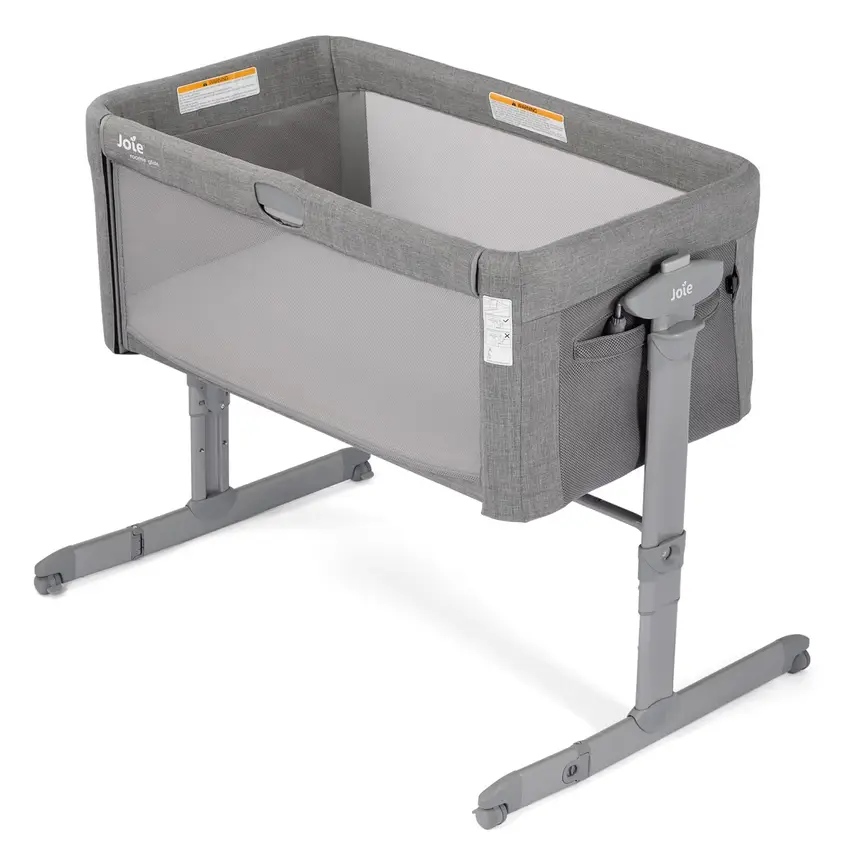
Joie Roomie Glide
A bedside sleeper that glides with one hand and has a gentle tilt.
Read our full review →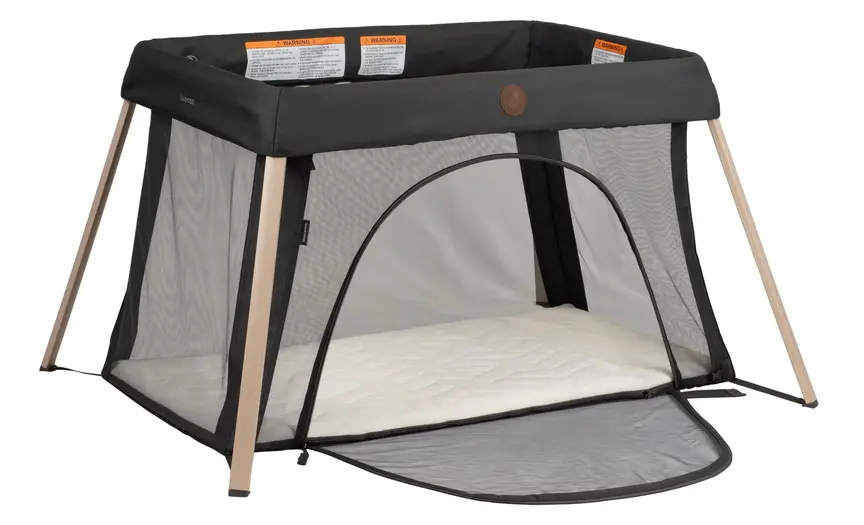
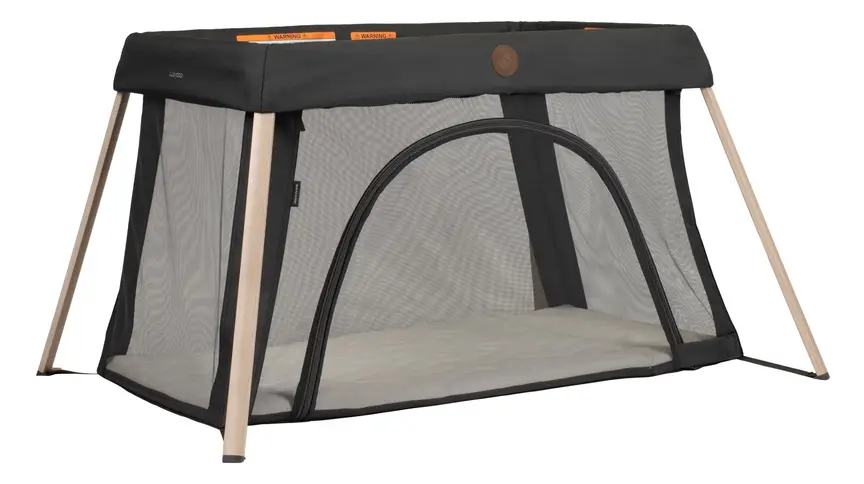

Maxi-Cosi Calao Light Travel Cot
A light travel cot with a newborn level and a toddler level, a side zip and a travel bag.
Read our full review →Compare all cots, bassinets & bedside sleepers in our reviews →
Frequently asked questions
Can a dome canopy bassinet really stop a cat from jumping in?
A rigid, built-in zip-shut dome can stop a cat from climbing directly onto the mattress while the zip is closed. However, a heavy or determined cat can still jump onto the top of the canopy, scratch through mesh or tip a lightweight frame. Always keep the bedroom door shut when you are not watching the room.
Are add-on elastic pet nets safe to stretch over a normal bassinet?
No. Loose add-on nets can slip off the rim, sag down under a cat's weight or fall into the sleep space. This creates a suffocation and entanglement risk. Only use a canopy that is built into the bassinet frame by the maker and meets local safety standards.
Do zip-shut mesh covers block airflow for a newborn?
Wide-weave mesh lets air pass through much better than solid fabric. Still, any cover over a bassinet slows airflow slightly compared with an open bed. Keep the room cool, never cover the dome with a blanket or sheet, and check that your baby does not feel hot or sweaty on the chest or back of the neck.
How do I keep my cat out of the baby's bed if we live in an open-plan home?
If your sleeping area has no door, place the bassinet in your bedroom if that has a door, and keep pets outside at night. For daytime naps, stay in the same room with your baby. You can also use a sturdy, built-in dome bassinet while you are awake and nearby, and place it away from couches or tables that cats can jump from.
When should I stop using a dome canopy bassinet?
Stop using it as soon as your baby shows signs of rolling, pushes up on their hands or reaches the weight limit set by the maker. Most babies outgrow a bassinet between 4 and 6 months of age. Once your baby moves to a cot, do not put any tent or canopy over the cot.
Is a bassinet with a dome safe for overnight sleep?
A bassinet with a built-in, rigid dome is safe for overnight sleep only if the bassinet itself meets safety standards, has a firm flat mattress, stays stable and lets air flow freely. Even then, keep pets out of the bedroom overnight. If you are unsure about your dome's strength or airflow, use an open bassinet behind a closed door instead.
Sources
- Product Safety Australia – Bassinets and cradles guide
- Red Nose Australia – What is a safe sleeping environment
- The Lullaby Trust (UK) – Sleeping products
- NHS – Reduce the risk of sudden infant death syndrome (SIDS)
- American Academy of Pediatrics (US) – A parent's guide to safe sleep
- CPSC (US) – Safe sleep: cribs and infant products
- Caring for Kids (Canadian Paediatric Society) – Safe sleep for babies
- PDSA (UK) – Pets and babies: helping pets prepare for a new arrival
Related guides
More Sleep & Nursery →
Bassinets with Storage Baskets: Night-Time Nappy Changes Made Easier and Safer

Bedside Co-Sleepers With Drop-Down Sides: Flat Surfaces, Safe Sleep Rules and Firm Mattresses

How to Set Up a Safe Sleep Environment with a Bedside Bassinet