














Which Water Is Safe for Baby Formula? Tap, Bottled, Filtered, Fluoride and Boiling Rules
What water to use for baby formula: boiled tap water, when bottled or filtered water is OK, what fluoride means, and how the boiling rules differ by country.

On this page
- Why the water for formula matters
- What each country says
- Step by step: making formula with tap water
- Tap, bottled, filtered and reverse osmosis water compared
- Reverse osmosis water: what you need to know
- Fluoride and formula
- When boiling is not enough
- How to read a bottled water label
- Cleaning and sterilising bottles
- Night feeds, outings and travel
- Common mistakes to avoid
- Age stages
- FAQ
- Sources
Short answer: for most families, the safest water for baby formula is fresh tap water that you boil and then use as your country's health service says. In Australia, you boil it and let it cool to lukewarm before adding powder. In the UK, the NHS says to add powder while the water is still at least 70°C. In the US and Canada, normal safe tap water is usually fine, with boiling advised for very young or sick babies. Bottled water and filtered water (including reverse osmosis) can be used in some cases, but they don't replace boiling, and mineral or sparkling water should never be used.
Key points
- Tap water is the normal choice in Australia, the UK, the US and Canada, as long as your local supply is safe to drink.
- Boil it if your country's advice says so (Australia and the UK say so for all babies under 12 months). Boiling kills germs. It doesn't remove chemicals.
- Never use sparkling, mineral, soda or artificially softened water.
- Bottled or filtered water is not sterile. If you use it, follow the same boiling steps.
- Fluoride: health bodies say fluoridated tap water is fine for formula. Ask your doctor if your water is naturally very high in fluoride.
Why the water for formula matters
Babies drink a lot for their size. If formula is their only food, the water you mix it with makes up most of what they drink each day. That's why health services give clear rules about it.
There are two kinds of worry:
- Germs. Bacteria in water, on bottles, or even in the powder can make a young baby very sick. Babies' immune systems (the body's defence against germs) are still weak. Boiling water kills most germs.
- Things dissolved in the water. These include salts, minerals, fluoride and, in some places, chemicals like nitrate or lead. Boiling does not remove these. In fact, boiling water for a long time, or boiling it again and again, can make salts and minerals stronger as water steams away.
So "safe water for formula" means water that is free of germs and doesn't have too much of anything dissolved in it.
What each country says
| Country | Who says it | Water to use | Boil? | Temperature when you add powder |
|---|---|---|---|---|
| Australia | Pregnancy, Birth and Baby; Raising Children Network; NHMRC | Fresh tap water. Fresh plain bottled water is also OK. | Yes, until 12 months | Cooled to room temperature or lukewarm |
| United Kingdom | NHS | Fresh tap water, at least 1 litre | Yes | At least 70°C (cool no more than 30 minutes after boiling) |
| United States | CDC | Safe tap water; bottled water is an option | Advised for babies under 2 months, born early, or with weak immune systems | Let boiled water cool for about 5 minutes, then mix |
| Canada | Health Canada | Tap water or bottled water (not mineral or carbonated) | Follow your local public health advice | Follow your formula label and public health advice |
Why the different temperatures? The UK follows the World Health Organization's method. Water at 70°C or hotter kills bacteria that may be in the powder itself, not just in the water. Australia's method uses cooled boiled water and relies on careful hygiene and using each feed straight away. Both are official advice in their own countries. Follow the advice where you live, and always read the instructions on your formula tin.
Step by step: making formula with tap water
The Australian method
- Wash your hands and use a clean, sterilised bottle.
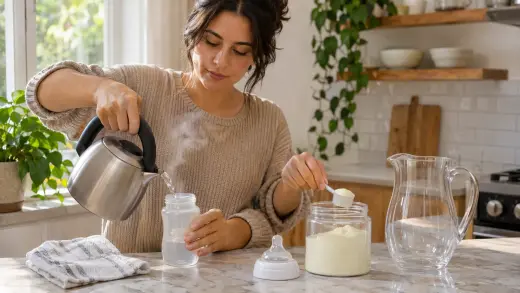
- Boil fresh tap water in a kettle or on the stove.
- Let it cool to room temperature or lukewarm. Raising Children Network says this takes at least 30 minutes.
- Pour the right amount of water into the bottle first.
- Add the exact number of level scoops from the tin, using the scoop that came with it.
- Put the lid on and shake until mixed.
- Check the temperature on the inside of your wrist. It should feel warm, not hot.
- Throw away any formula left after an hour.
Pregnancy, Birth and Baby says you can keep sealed bottles of boiled and cooled water in the main part of the fridge for up to 24 hours. Add the powder just before each feed.
The UK (NHS) method
- Boil at least 1 litre of fresh tap water. Don't use water that has been boiled before.
- Leave it in the kettle for no more than 30 minutes, so it stays at 70°C or more.
- Pour the water into the bottle first, then add the powder.
- Shake to mix, then cool the bottle under cold running water with the lid on.
- Test on your wrist before feeding.
- Make each feed fresh, and throw away anything left after the feed.
Be very careful with hot water near babies and toddlers. Burns from kettles and hot drinks are common in young children.
Tap, bottled, filtered and reverse osmosis water compared
| Water type | OK for formula? | Good points | Things to watch |
|---|---|---|---|
| Boiled tap water | Yes, the standard choice | Cheap, easy, tested by your water supplier | Old lead pipes in some older homes; private wells need testing |
| Plain still bottled water | Yes in Australia, the US and Canada; only when needed in the UK | Handy for travel or when tap water isn't safe | Not sterile, so boil it. The NHS says some may have too much sodium (salt) or sulphate |
| Mineral or sparkling water | No | — | Too many minerals and salts for a baby's kidneys |
| Artificially softened water | No | — | Softeners can add sodium |
| Jug or tap filter water | Yes, if boiled | May improve taste or reduce some things, like chlorine | Filters can grow bacteria if not changed; still boil |
| Reverse osmosis (RO) water | Usually yes, if boiled | Removes many dissolved things, including much of the fluoride | Not sterile; tanks and filters need care; removes fluoride that helps teeth |
| Distilled or "purified" water | Yes, if boiled | Very low in minerals and fluoride | Not usually needed for most families |
Reverse osmosis water: what you need to know
Reverse osmosis (often called RO) is a type of home water filter. It pushes water through a very fine layer that lets water through but holds back most of the dissolved things in it. That includes salts, many minerals, and much of the fluoride.
Some parents choose RO water because they want "pure" water for their baby. Here's what to think about:
- It is not sterile. RO systems usually have a storage tank and filters. If these aren't cleaned and changed on time, germs can grow. So you still need to boil RO water before using it for formula, the same as tap water.
- Formula already has the minerals your baby needs. Infant formula is made to give babies all their nutrients when mixed with plain water. You don't need minerals from the water.
- It removes fluoride. That's fine for the bottle, but it means your child may get less fluoride for their teeth later on, when they drink water. Talk to your dentist or child health nurse if your whole family drinks RO water.
- It's not needed for most families. No health body in Australia, the UK, the US or Canada says you must use RO water for formula. Safe, boiled tap water is what they recommend.
RO can be useful if your water has a known problem, such as high natural fluoride or nitrate from a private well. In that case, test your water and ask your local health department what to do.
Fluoride and formula
Fluoride is a natural mineral. Many towns add a small amount to tap water because it helps protect teeth from decay. Health bodies in all four countries support this.
What about babies who drink only formula? The US CDC explains that babies fed only on formula mixed with fluoridated water may have a higher chance of mild dental fluorosis. Fluorosis shows up as faint white marks or lines on the adult teeth. Mild fluorosis doesn't hurt and doesn't harm the teeth's health. It's a look thing only.
The CDC says you can keep using fluoridated tap water for formula. If you're worried, you can sometimes use low-fluoride bottled water, labelled "purified", "distilled", "demineralised" or "deionised". Ready-to-feed formula also has little fluoride.
Health Canada says tap water and bottled water are fine for formula, except carbonated or mineral water. If your tap water is naturally high in fluoride (more than 1.5 mg per litre), Health Canada suggests using lower-fluoride water for formula.
In Australia and the UK, health services recommend tap water for formula, and fluoridated water is part of normal tap water in many areas.
When boiling is not enough
Boiling kills germs. It does not fix water that has chemicals in it. In these cases, ask your local water supplier or health department, and use safe bottled water until you know:
- A "do not drink" notice. If your water supplier says don't drink the water, don't use it for formula, even boiled.
- A "boil water" notice. Boil all water for formula and for washing bottles, exactly as the notice says.
- Old lead pipes. Some older homes have lead pipes or fittings. Run the cold tap for a short time before using it, and use only cold water from the tap for drinking and formula. Ask your water supplier about testing.
- Private wells, bores or rainwater tanks. These aren't tested by a water company. They can carry germs, nitrate or other things. Get the water tested before using it for a baby.
- Floods and emergencies. Use bottled water, or ready-to-feed formula, until your supply is safe again.
How to read a bottled water label
If you need bottled water, the label tells you a lot. Look for these things:
- "Still" not "sparkling". Bubbles mean it has gas added. Never use it for formula.
- Not "mineral water". Mineral water has extra minerals and salts. It's fine for adults, but not for babies' formula.
- Sodium (salt). The lower the better. The NHS warns that some bottled water has too much sodium for babies.
- Sulphate (sometimes spelt sulfate). Again, lower is better.
- Fluoride. Some labels list it. "Purified", "distilled", "demineralised" or "deionised" water usually has little or none, unless fluoride is listed as added.
- A sealed cap. Don't use a bottle that has been opened and left out.
Some bottled water is sold as "baby water" or "nursery water". It is still not sterile, so boil it before use unless your doctor tells you otherwise.
Cleaning and sterilising bottles
Safe water is only half the job. Germs can also live on bottles, teats and scoops. Health services in Australia and the UK say to clean and sterilise feeding equipment for the first 12 months.
- Rinse bottles and teats in cold water straight after a feed, so milk doesn't dry on.
- Wash them in hot soapy water with a bottle brush. Squeeze water through the teat hole.
- Rinse well.
- Sterilise them by boiling (fully covered in water for the time your bottle maker says), with a steam steriliser, or with a cold-water sterilising solution. Follow the instructions for your method.
- Wash your hands before you take them out. Store them covered, or leave them in the steriliser until you need them.
Use the same safe water for rinsing and cold-water sterilising as you would for drinking. During a boil water notice, use boiled water for this too.
Night feeds, outings and travel
Making formula at 2 am, or at the park, is harder. A few simple ideas help you keep it safe:
- At night (Australian method): keep sealed bottles of boiled, cooled water in the fridge (up to 24 hours) and a measured amount of powder in a clean, dry container. Mix just before the feed.
- At night (UK method): the NHS suggests making each feed fresh. A flask of hot water can be used if it's freshly boiled and still at 70°C or more.
- Out and about: take boiled water in a clean bottle and powder in a separate container. Mix when your baby needs a feed.
- Travel: ready-to-feed liquid formula is the easiest option where tap water may not be safe. It doesn't need any water.
- Formula machines: the NHS says the water must reach at least 70°C when it meets the powder. Check with a food thermometer and follow the maker's instructions.
Common mistakes to avoid
- Boiling the same water again and again. This makes minerals stronger. Use fresh water each time.
- Using hot water from the hot tap. Hot water systems can pick up more metal from pipes. Use cold tap water and boil it.
- Using mineral, sparkling or softened water. These have too much salt or minerals for babies.
- Thinking bottled water is germ-free. It isn't sterile once opened, and sometimes before. Boil it.
- Adding extra powder or extra water. Always use the exact amount on the tin. Too much powder can make your baby thirsty and sick. Too little means they don't get enough food.
- Heating bottles in the microwave. Microwaves heat unevenly and can make hot spots that burn your baby's mouth.
- Keeping leftover formula. Throw it away after the feed (or after an hour in Australia).
Age stages
Newborn to 3 months
This is when babies are most at risk from germs. Follow your country's method exactly, sterilise bottles, and make feeds fresh. Babies born early or who are unwell may need extra care. Ask your hospital or doctor.
3 to 12 months
Keep boiling water for formula in Australia and the UK until 12 months. The NHMRC Infant Feeding Guidelines also say that, apart from breast milk or formula, cooled boiled tap water is the only other drink a baby under 12 months needs.
12 months and older
Most children move from formula to plain cow's milk or another suitable milk around 12 months. From then, normal safe tap water is fine as a drink. Fluoridated tap water helps protect their growing teeth.
FAQ
Do I really need to boil tap water for formula?
In Australia and the UK, yes, until your baby is 12 months old. In the US, the CDC advises boiling for babies under 2 months, babies born early, or babies with weak immune systems. In Canada, follow your local public health advice.
Can I use bottled water for formula?
Plain still bottled water can be used in Australia, the US and Canada. The NHS in the UK says bottled water isn't usually recommended, except when tap water isn't available or safe. Either way, boil it first, and never use mineral or sparkling water.
Is reverse osmosis water better for babies?
Not for most families. It isn't sterile, so it still needs boiling, and formula already has the minerals your baby needs. It can help if your water has a known problem, like high natural fluoride.
Is fluoride in tap water safe for my baby's formula?
Health bodies say yes. The CDC notes a higher chance of mild white marks on teeth if a baby only drinks formula made with fluoridated water. If that worries you, you can sometimes use low-fluoride bottled water.
Can I make bottles ahead of time?
In Australia, you can keep sealed bottles of boiled and cooled water in the fridge for up to 24 hours, then add powder when you need it. The NHS says to make each feed fresh.
Can I use water from a filter jug?
Yes, as long as you boil it first and change the filter on time.
What if we're travelling and the tap water isn't safe?
Use plain still bottled water and boil it, or use ready-to-feed liquid formula, which doesn't need water at all.
Sources
- Pregnancy, Birth and Baby (Australia) – Feeding your baby with formula
- Raising Children Network – Baby formula: how to make and store it
- NHMRC – Infant Feeding Guidelines
- NHS – How to make up baby formula
- CDC – Infant formula preparation and storage
- CDC – Community water fluoridation FAQs
- Health Canada – Fluoride and oral health
- World Health Organization – Safe preparation, storage and handling of powdered infant formula: guidelines
Related guides
More Parental Tips →
Newborn Bath Time Safety: Sponge Baths, Cord Care and Safe Water Temperature
How to Make Powdered Baby Formula Safely: The 70°C Rule and the 24-Hour Pitcher Method

Tummy Time by Age: Safe Ways to Help Your Baby Build Strength
