














Formula Prep Machines and Dispensers: Safe Water Temperature, Filters, and Cleaning
How formula prep machines and dispensers work, why 70°C water matters for killing germs, filter care, and official advice from AU, UK, US and Canada.
On this page
- Key points
- What formula dispensers and prep machines are
- Why water temperature matters for baby formula
- Water filters, tanks, and hidden germ traps
- Comparing your bottle prep options side by side
- How to choose a safer machine or dispenser
- Age stages: from newborn to 12 months
- Official advice in Australia, the UK, the US and Canada
- Daily cleaning, filter care, and descaling
- Common mistakes parents make
- Frequently asked questions
- Sources
Short answer: Formula prep machines save time at night, but many do not keep water hot enough to kill germs in powdered formula. Powdered formula is not sterile. Health bodies like the World Health Organization (WHO) and the UK NHS say you should mix powder with water that is at least 70°C. Always check your machine's real water temperature, change filters on time, and clean every part that touches water or powder.
Feeding rules vary slightly by country. Australia, the UK, the US and Canada all agree on clean water, sterile bottles, and careful cooling before feeds.
Key points
- Powder is not sterile: Dry baby formula can hold harmful germs.
- Heat kills germs: Mixing powder with 70°C water kills germs like Cronobacter.
- Hot shots vary: Some machines squirt a small hot shot, then add cool water. The mix may drop below 70°C too fast.
- Filters are not sterilisers: Water filters trap bits and minerals. They do not kill bacteria.
- Steam causes clumps: Damp powder clogs funnels and changes how much formula drops into the bottle.
- Simple pots are safest: Plastic travel dispensers hold dry scoops with zero water tanks to clean.
What formula dispensers and prep machines are
Parents use the name "formula dispenser" for three very different things. Knowing which type you have helps you use it safely.
1. Manual formula powder dispensers
These are small plastic or silicone pots with sections or stacked tubs. You measure dry formula scoops into each section before you leave home. When your baby is hungry, you tip the dry powder into a bottle of safe water and shake.
Manual dispensers have no plugs, no water tanks, and no filters. You wash and sterilise them just like baby bottles. They are cheap, light, and easy to pack.
2. Warm-water dispensers
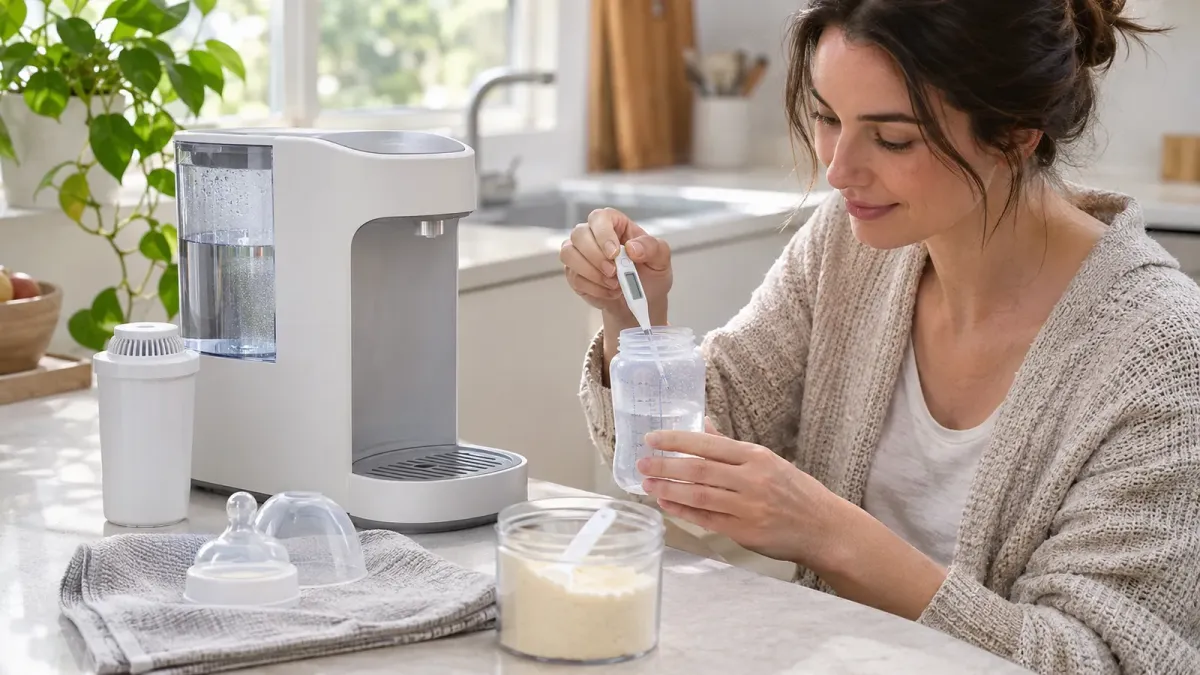
A warm-water dispenser sits on your kitchen bench like a small kettle. It holds a tank of water at a set warm temperature, often near body warmth (around 37°C to 40°C). When you press a lever, warm water pours into your bottle. You then scoop and shake the powder by hand.
These machines do not measure powder for you. They also raise a big question about germs. Water held warm for hours can grow bacteria if it is not boiled first or changed often.
3. Automatic bottle prep machines
An automatic prep machine holds both water and dry formula powder inside one unit. You press a button and choose the bottle size. The machine drops powder from a top hopper and mixes it with water into your bottle.
Different brands heat water in different ways. Some heat a small burst of hot water first, then top up with cooler water. Others heat the whole amount to a warm drinking temperature. Very few home machines keep the full mix at 70°C and then cool it down for you.
Why water temperature matters for baby formula
Many parents think sealed tins of baby formula are completely germ-free. They are not. Dry powdered formula cannot be heated to high levels in the factory without ruining the nutrients.
Because of this, powdered formula can sometimes carry bacteria. The two main germs of concern are Cronobacter sakazakii and Salmonella. Both can make young babies very sick. Premature babies and babies under two months old face the highest risk.
How 70°C water protects your baby
The World Health Organization (WHO) and the UK NHS give clear advice on water heat. They say to boil fresh tap water, then let it cool for no more than 30 minutes. At that point, the water is still at least 70°C.
When you pour 70°C water onto the formula powder, the heat kills Cronobacter bacteria. Next, you put the lid on and cool the bottle fast under cold running tap water. You can also stand the bottle in a bowl of cold or iced water. Always test a drop on your wrist before feeding so it does not burn your baby.
The problem with "hot shot" prep machines
Many automatic prep machines claim they use a hot shot of water to kill germs. They pour a small amount of hot water onto the powder, pause, and then add room-temperature water to cool the drink.
This sounds smart, but it has limits. First, the hot shot is small. When hot water hits cold plastic and dry powder, the temperature drops right away. Second, the UK NHS warns that it is not clear if prep machines keep water at 70°C or higher during mixing. Third, some machines dispense water at only 37°C to 45°C, which is far too cool to kill bacteria.
If your baby is under two months, was born early, or has a weak immune system, do not rely on warm-only machines. Use ready-to-feed liquid formula, or mix powder with water at 70°C or hotter and cool it by hand.
Checking the bottle before every feed
Never trust a machine's screen blindly. Heating parts wear out over time, and limescale coats sensors. Before you feed your baby, swirl the bottle well so there are no hot pockets.
Shake a few drops onto the inside of your wrist. It should feel lukewarm or cool, never hot. If it feels hot, run the sealed bottle under cold tap water for another minute.
Water filters, tanks, and hidden germ traps
Automatic prep machines need water inside them to work. That means water sits in tanks, tubes, and filters inside your kitchen. Warm, wet plastic is an ideal place for germs to grow.
What a water filter actually does
Most prep machines use a small filter cartridge inside the water tank. These filters usually hold activated carbon and resin beads. They help remove chlorine taste, bad smells, and some hard-water minerals.
Here is the catch: standard machine filters do not sterilise water. They do not kill viruses or bacteria. In fact, a dirty filter can trap germs and push them straight into your baby's bottle.
Biofilm inside pipes and tanks
Biofilm is a thin, slimy layer of germs that sticks to wet surfaces. You may have felt it inside an old pet water bowl or a garden hose. Inside a formula machine, biofilm can grow on the tank walls, inside narrow silicone hoses, and around the spout.
Once biofilm forms, a quick rinse with cold water will not remove it. You need hot soapy washes, regular descaling, and fresh filters on schedule. If a machine has sealed internal pipes you cannot reach, old water stays trapped inside between cleans.
Steam and powder clumping
Automatic machines drop dry powder through a plastic funnel right above the hot water spout. As hot water pours into the bottle, steam rises straight up into that funnel.
Moisture makes formula powder sticky. Sticky powder builds up on the funnel walls and clogs the measuring wheel. Over a few days, a clogged funnel can drop too little powder or a big lump of powder into the bottle.
Why exact powder ratios matter
Baby formula needs the exact mix of water and powder shown on the tin. Too much powder makes the feed too strong. A strong feed can cause constipation and dehydration, and puts extra strain on tiny kidneys.
Too little powder makes the feed weak. Your baby gets too much water and not enough energy or nutrients. Over time, weak feeds can slow growth. That is why you should check the funnel every day and weigh or test a dispensed feed if you see clumps.
Comparing your bottle prep options side by side
Every family has different needs, sleep levels, and budgets. This table compares the four main ways to prepare formula at home or on the go.
| Feature | Kettle and bottle by hand | Manual powder pot + kettle | Warm-water dispenser | Automatic prep machine |
|---|---|---|---|---|
| Water heat control | High. You know when water boiled and how long it cooled. | High. You boil and cool the water yourself. | Low to medium. Holds water warm, often below 70°C. | Varies. Many do not hold full feeds at 70°C. |
| Germ risk inside gear | Very low. Only a kettle and bottle to wash. | Very low. Pots wash and sterilise easily. | Medium to high if water sits warm for hours. | High if filters, pipes, or funnels are neglected. |
| Powder accuracy | High. You level each scoop by hand. | High. Pre-measured scoops drop straight in. | High. You add scoops to the bottle yourself. | Medium. Steam clumps can alter the powder drop. |
| Cleaning effort | Low. Wash bottles and descale kettle now and then. | Low. Wash and dry pots after each trip. | Medium. Tank needs daily emptying and frequent descaling. | High. Daily funnel wipe, weekly deep clean, filter swaps. |
| Travel and power outages | Works with any stove or camp kettle. | Great for outings. Needs no power. | Home bench only. Stops in a blackout. | Home bench only. Heavy and needs mains power. |
| Best suited for | Newborns, preterm babies, and budget-minded homes. | Day trips, outings, and night-time feeds by the bed. | Older healthy babies when boiled water is refreshed daily. | Healthy older babies when parents commit to strict cleaning. |
How to choose a safer machine or dispenser
If you decide to buy a formula dispenser or prep machine, look past shiny marketing words. Focus on safety, cleaning access, and clear temperature facts.
What to check before buying
- True temperature specs: Read the manual online before you buy. Check if the machine heats water to 70°C or higher, or if it only warms water to drinking temperature.
- Removable parts: Pick a machine where the water tank, lid, funnel, and spout lift off with no tools. If you cannot take a part off, you cannot scrub it clean.
- Clear water tank: A see-through tank lets you spot slime, cloudy water, or floating bits right away.
- Clean-cycle alert: Good machines remind you when to run a cleaning cycle, descale, and swap the filter.
- Food-safe, BPA-free materials: Check that every part touching water or powder is food-grade and free from BPA and phthalates.
- Local electrical safety compliance: Buy from trusted local stores so the plug, voltage, and wiring meet your country's electrical safety rules.
- Easy-to-find filters: Make sure replacement filters are sold locally and not only from one overseas seller.
What to avoid
- Cheap grey imports: Machines bought from unverified overseas sites may use the wrong voltage or skip local safety checks.
- Second-hand prep machines: You cannot see what grew inside the hidden pipes of a used machine. Mould and limescale may already block the heater.
- Machines with tiny, sealed spouts: Narrow tubes trap damp powder and sour milk splashes.
- Tinted or dark hoppers: You need to see if powder is clumping or running low.
Age stages: from newborn to 12 months
Your baby's immune system grows stronger every month. What is safe for a nine-month-old may be risky for a newborn. Adjust how you prep bottles as your baby grows.
| Age stage | Germ risk level | Safest way to prepare formula |
|---|---|---|
| Newborn to 2 months (or preterm / low birth weight) | Highest. Immune system is still developing. | Use ready-to-feed liquid formula if advised by your doctor, or mix powder with boiled water at 70°C+ and cool fast. Sterilise all bottles and manual dispensers. |
| 2 to 6 months (healthy, full-term) | Moderate. Still needs sterile bottles and boiled water in many countries. | Follow your national health advice. Keep sterilising bottles. If using a prep machine, check water heat, clean funnels daily, and never skip filter swaps. |
| 6 to 12 months | Lower, as baby starts solid foods and drinks tap water in some regions. | Continue sterilising bottles until 12 months in Australia and the UK. Check powder funnels for clumps and descale machines often. |
| Over 12 months | Low for healthy toddlers. | Most healthy toddlers switch from infant formula to plain full-cream cow's milk or fortified soy milk in a cup. Pack away the prep machine. |
If your baby was born early or has a health condition, ask your doctor or child health nurse before using any automatic machine.
Official advice in Australia, the UK, the US and Canada
Health advice on making formula is very similar across Australia, the UK, the US and Canada, with one key difference in water temperature. Here is how official bodies compare side by side.
| Rule | Australia | UK | US | Canada |
|---|---|---|---|---|
| Lead health bodies | NHMRC, Raising Children Network, Pregnancy Birth and Baby | NHS | CDC, American Academy of Pediatrics (AAP) | Health Canada, Canadian Paediatric Society (Caring for Kids) |
| Water boiling rule | Boil fresh tap water and cool to lukewarm before mixing, or follow tin steps. | Boil fresh tap water and cool for no more than 30 minutes so it stays at 70°C+. | For babies under 2 months, preterm, or at risk, use 70°C+ water or liquid formula. | Use boiled water cooled to at least 70°C for babies under 2 months, preterm, or at risk. |
| View on prep machines | Follow manufacturer steps carefully and keep all parts clean. | NHS warns it is unclear if machines keep water at 70°C+ to kill bacteria. | CDC notes powder is not sterile; hot water mixing kills Cronobacter. | Health Canada advises 70°C+ water for high-risk babies to kill germs. |
| Bottle sterilising | Sterilise bottles and teats until 12 months of age. | Sterilise all feeding gear until at least 12 months old. | Sanitise daily for babies under 2 months, preterm, or weakened immune systems. | Sterilise bottles and parts at least until 4 months, or per local nurse advice. |
| Product safety body | ACCC / Product Safety Australia | Office for Product Safety and Standards (OPSS) | U.S. Consumer Product Safety Commission (CPSC) | Health Canada Recalls and Safety Alerts |
Notice why Australia's advice differs slightly from the UK's. In Australia, the National Health and Medical Research Council (NHMRC) advises cooling boiled water to lukewarm before adding powder for healthy full-term babies. This lowers the risk of burning your baby and protects heat-sensitive nutrients, as long as feeds are made fresh and used right away. Meanwhile, the UK NHS, WHO, and US CDC (for young or at-risk infants) focus on 70°C mixing to kill any bacteria hiding in the powder.
Whichever rule your country follows, never mix formula with unboiled warm water straight from the hot tap. Hot tap water can pick up lead or copper from home pipes and holds more dissolved metals.
Daily cleaning, filter care, and descaling
A clean machine keeps your baby safe. Follow this simple routine if you use an automatic prep machine or warm-water dispenser.
Every day
- Wipe the powder funnel: Take off the funnel and nozzle. Wash them in hot, soapy water, rinse well, and let them air dry completely on a clean towel. Never put a damp funnel back on the machine.
- Check the spout: Wipe away any milk splashes or crusted powder around the outlet.
- Refresh the water tank: Tip out leftover water from the day before. Wash the tank with warm soapy water, rinse, and refill with fresh cold tap water.
Every week
- Empty the powder hopper: When the tin runs low, take off the powder container. Wash it in hot soapy water and let it dry overnight so zero moisture stays inside.
- Run a hot clean cycle: Follow your manual to run the machine's hot flush cycle. This clears stale water from internal hoses.
- Check seals and rings: Look at any rubber gaskets for dark spots of mould. Scrub gently with a clean bottle brush.
Every month (or when the light flashes)
- Change the water filter: Swap the filter cartridge on time. If you live in a hard-water area, you may need to change it sooner. Never reuse an old filter by boiling it.
- Descale the heater: Limescale builds up on heating coils and stops water reaching the right temperature. Use plain white vinegar or a food-safe descaler as shown in your manual, then flush twice with fresh water.
Cleaning manual powder dispensers
Manual travel pots are much simpler. After each outing, wash every compartment and lid in hot soapy water. Sterilise them using steam, boiling water, or cold-water sterilising solution if your baby is still in the sterilising stage. Dry them fully before adding fresh formula powder, or the powder will stick to the sides.
Common mistakes parents make
Even careful parents slip up when they are tired at 3:00 AM. Watch out for these common traps.
- Using unboiled tap water for newborns: Tap water is safe for adults, but young babies have delicate stomachs and weak immune systems. Boil water first according to your local health rules.
- Adding extra scoops for "hunger": Never pack down scoops or add an extra half scoop to help a baby sleep longer. Concentrated formula can dehydrate your baby.
- Leaving mixed bottles in a warmer: A warm bottle sitting on the bench is a fast-growing zone for germs. Use freshly made formula within two hours at room temperature, or one hour once your baby starts drinking from it.
- Forgetting the wet scoop rule: Always keep the measuring scoop dry. Putting a wet scoop back into the main formula tin spreads moisture and germs through the whole tin.
- Using softened water: Home water softeners add extra sodium (salt) to tap water. Too much salt is harmful to a baby's kidneys.
- Topping up the tank instead of emptying it: Adding fresh water on top of old water leaves yesterday's germs at the bottom of the tank. Always tip, wash, and refill.
Frequently asked questions
Are automatic formula prep machines safe for newborns?
Health bodies urge caution for newborns, especially babies under two months old or born early. The UK NHS notes that prep machines may not keep water at 70°C or higher to kill bacteria in formula powder. For young or high-risk babies, ready-to-feed liquid formula or hand-mixed feeds using 70°C water are safer choices.
Do water filters in prep machines sterilise tap water?
No. The carbon filters in formula prep machines remove bad tastes, chlorine, and some minerals. They do not kill bacteria or viruses. If a filter is left in too long, germs can actually grow inside the wet filter media and wash into your baby's bottle.
Can I use bottled water in a formula prep machine?
Check the label first. Plain, still bottled water can be used if it is low in minerals and sodium, though it is still not sterile unless labelled sterile. Never use sparkling water, mineral water with high salt levels, or spring water without boiling it first for young babies.
Why does formula powder clump in an automatic machine?
Steam from the hot water spout rises up into the powder funnel. That damp air turns dry formula into sticky paste. Clumps can block the outlet and change how much powder drops into the bottle. Wash and fully dry the funnel every day to stop this.
How long can a mixed bottle sit out before a feed?
Once you mix powdered formula, use it within two hours at room temperature. If your baby has started drinking from the bottle, throw away any leftover milk after one hour. Bacteria from your baby's mouth grow quickly in warm milk. Never reheat a half-finished bottle.
What is the simplest, safest way to prep bottles at night?
You do not need an expensive gadget for fast night feeds. Keep pre-measured dry powder in a clean, dry manual dispenser pot by your bed. Keep a thermos flask of freshly boiled water (or cooled boiled water, depending on your country's guidelines) next to sterile bottles. When your baby wakes, pour the water, tip in the powder, swirl, cool if needed, and test on your wrist.
Sources
- World Health Organization – Safe preparation, storage and handling of powdered infant formula
- NHS – How to make up baby formula
- NHS – Sterilising baby bottles
- Raising Children Network – Baby formula: how to make and store it
- Pregnancy, Birth and Baby – Feeding your baby with formula
- CDC – Infant formula preparation and storage
- Caring for Kids, Canadian Paediatric Society – Feeding your baby in the first year
Related guides
More Feeding & Baby Food →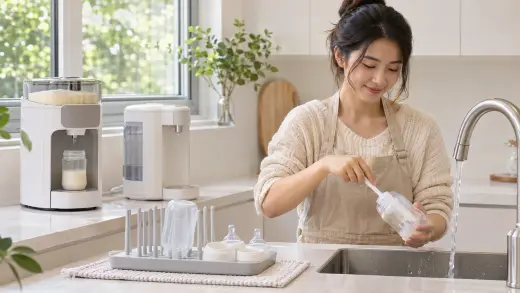
Automatic Formula Machines vs Warm-Water Dispensers: Safe Use and Cleaning
Baby Formula Dispensing Machines: Convenience, Limits and Safe Feeding

Portable Bottle Warmers: Water-Free Heating, Temperature Control and Battery Capacity
