














The Car Seat 2-Hour Rule for Newborns: Planning Safe Road Trips and Preventing Positional Asphyxia
What the car seat 2-hour rule really means, why newborns can slump in a capsule, and how to plan breaks, positioning and checks for safe family road trips.

On this page
- What is positional asphyxia, and why are newborns at risk?
- Where does the "2-hour rule" come from?
- The rules in Australia, the UK, the US and Canada
- How to plan a road trip with a newborn
- Capsules on prams, travel systems and arrival
- Extra care for premature and low-birth-weight babies
- Comparison: what helps and what doesn't
- Common mistakes to avoid
- FAQ
- Sources
Short answer: the "2-hour rule" is a widely used guideline, mostly from car seat manufacturers and child safety groups, that young babies should not stay in a car seat for more than about two hours at a time. And that you should take them out for a break at least that often. It is not a law and there is no single study that sets the number. But it reflects a real risk: newborns have weak neck muscles and can slump so their chin drops to their chest, which can narrow the airway. A car seat is the safest place for a baby while the car is moving. The aim is to keep journeys broken up, keep the baby correctly positioned, and never use the seat as a bed once you've arrived.
Key points
- Always use a correctly fitted, rear-facing restraint for every car trip, however short. You should never skip this.
- Plan to stop at least every 1.5 to 2 hours on long trips and lift your baby out to stretch, feed and change on a flat surface.
- For newborns and premature babies, many experts suggest shorter stretches still, and someone in the back seat to watch them.
- When you arrive, take a sleeping baby out of the car seat and put them on their back in a cot or bassinet (Red Nose, AAP).
- Don't add head-hugger cushions, inserts or neck pillows that didn't come with the seat, and keep thick coats off under the harness.
- Check the recline angle and harness fit before every trip: a seat that is too upright or straps that are too loose let the baby slump.
What is positional asphyxia, and why are newborns at risk?
Positional asphyxia (also called postural asphyxia) happens when a baby's body position stops them breathing properly. In a sitting or semi-upright device, the main concern is the head falling forward so the chin rests on the chest. A newborn's airway is narrow and soft, and flexing the neck can partly close it. Unlike an older child, a young baby doesn't yet have the neck strength or the reflexes to lift their head and fix the problem. The baby may simply breathe less effectively without making any noise.
Red Nose Australia has highlighted research into infants who died while sleeping in car seats and other sitting devices outside the car. Most of those deaths happened when the seat was being used for something it was never designed for: as a place to nap at home, at a relative's house or in a pram after arriving at the destination. The American Academy of Pediatrics gives the same advice: car seats, strollers, swings and other sitting devices are not recommended for routine sleep. And if a baby falls asleep in one, they should be moved to a firm, flat sleep surface as soon as practical.
Several things raise the risk of slumping:
- Age and size. Newborns, especially premature or low-birth-weight babies, have the least head control.
- Recline angle. Rear-facing infant seats are designed to sit at a set recline. If the seat is installed too upright, the head can tip forward.
- Loose harness. Slack straps let a baby slide down and curl forward.
- Bulky clothing. Puffer jackets and thick snowsuits compress in a crash and also stop the harness fitting snugly.
- Aftermarket products. Head supports, body inserts and padding that weren't supplied or approved by the seat manufacturer can push the head forward and change how the seat performs in a crash.
- Use outside the car. When a capsule sits on the floor, a soft bed or a sofa, or is clipped onto a pram, its angle may be more upright than when it's installed in a vehicle.
Where does the "2-hour rule" come from?
You will see the 2-hour guideline in many car seat instruction booklets, especially from European manufacturers. And it is repeated by baby and road safety organisations in the UK and elsewhere. It isn't written into road law in Australia, the UK, the US or Canada, and it isn't an exact medical limit. It is a practical rule of thumb that does two jobs:
- It makes parents break up long journeys, which gives babies time out of a semi-upright position, a chance to feed. And a check on how they're doing.
- It reminds parents that the car seat is for travel, not for long stretches of sleep or sitting at the destination.
Some experts suggest shorter limits for very young babies, for example 30 minutes or so per stretch for babies in the first few weeks, while others point out that some trips are unavoidable. The honest summary is that the shorter and less frequent long car trips are for a newborn, the better. And that when a long trip is needed, frequent stops and an adult watching the baby reduce the risk. Always read your seat's manual, because it may include its own guidance on time limits.
The guideline is not a reason to take a baby out of their seat while the car is moving, or to drive without a restraint. In a crash, an unrestrained or held baby is at very high risk. Rear-facing seats spread crash forces across the baby's back, head and neck, which is why every country requires them for young babies.
Car Seats & Capsules worth a look
Real products from our catalogue. We don't show star ratings or review counts; check the current price, stock and reviews on Amazon before you buy.
 Reviewed
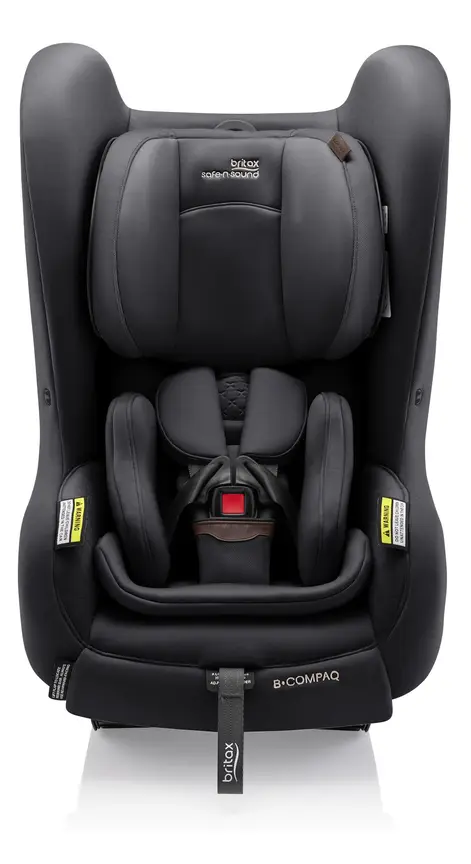
Britax Safe-n-Sound B-Compaq Lux
A convertible seat made for small cars with little room in the back.
Read our full review →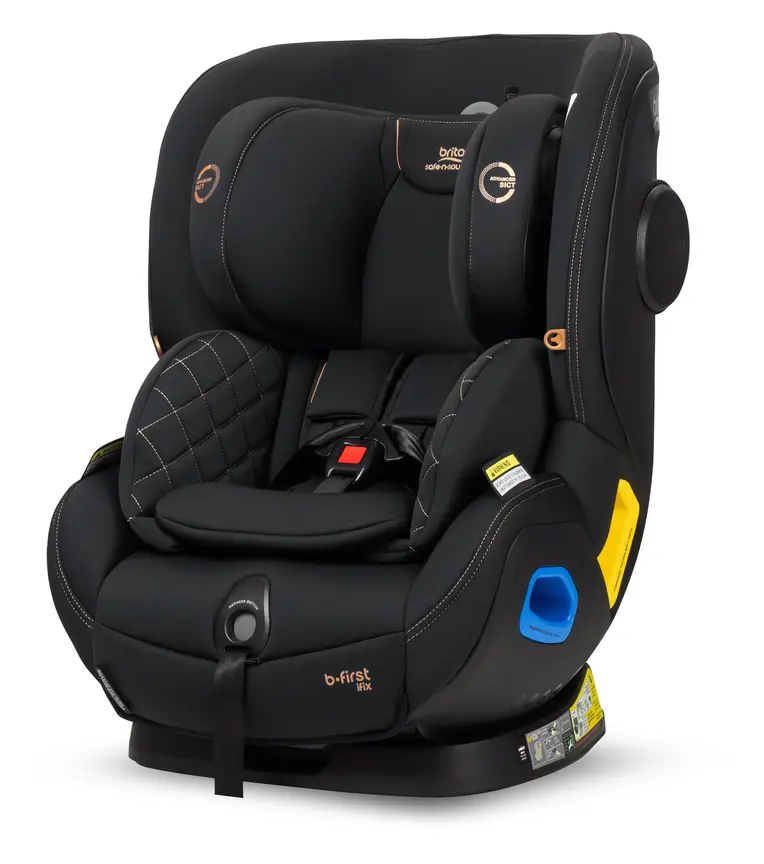
Britax Safe-n-Sound b-first+
Convertible seat from Britax's Australian Safe-n-Sound range with SICT deployable side-impact protection.
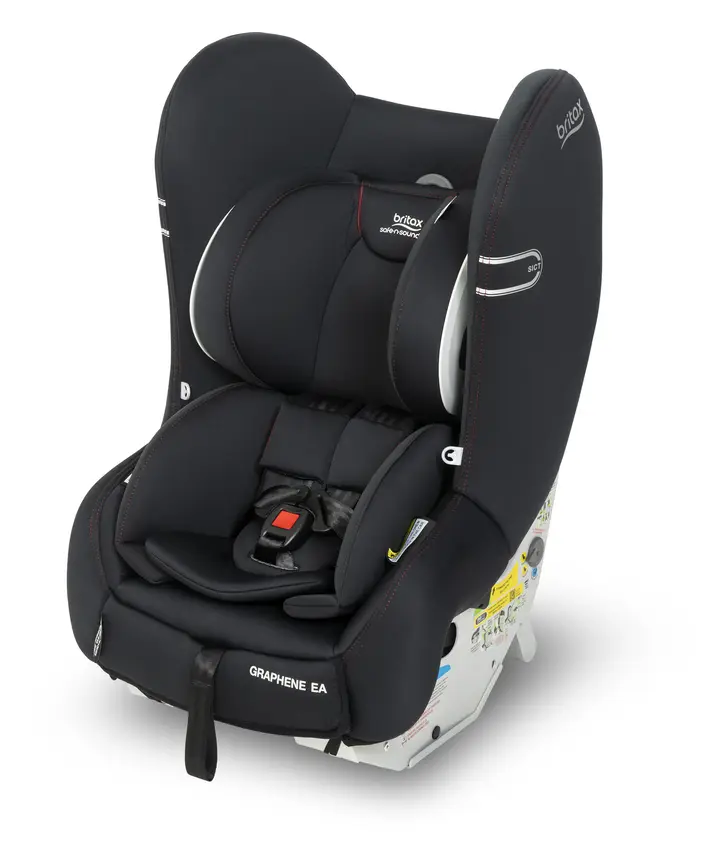
Britax Safe-n-Sound Graphene EA
Britax's Australian convertible seat with SICT side-impact technology, designed to reduce crash energy reaching your child's chest.

Britax Safe-n-Sound Hi Liner SG
A high-back booster for about 4 to 8 years. A clip keeps the seatbelt in the right place.
The rules in Australia, the UK, the US and Canada
Road rules and restraint standards differ by country, but every one of them requires young babies to travel rear-facing in an approved restraint.
| Country | Legal minimum for babies | Standard to look for | Where to check |
|---|---|---|---|
| Australia | Rear-facing approved restraint until at least 6 months; then rear-facing or forward-facing with an inbuilt harness until at least 4 years | AS/NZS 1754 sticker on the seat | Product Safety Australia car seats guide; your state road authority; Kidsafe fitting services |
| UK | Approved seat until 12 years old or 135 cm; height-based i-Size seats must be rear-facing until at least 15 months | "E" label for UN R44 or UN R129 (i-Size) | GOV.UK child car seat rules; RoSPA |
| US | State laws vary; AAP advises rear-facing as long as possible, until the seat's rear-facing height or weight limit | FMVSS 213 label | NHTSA car seat finder and inspection stations; AAP HealthyChildren.org |
| Canada | Provincial laws; Transport Canada advises rear-facing until the child reaches the seat's rear-facing limits | National Safety Mark (CMVSS 213) | Transport Canada child car seat safety; provincial ministries |
Only use a seat that meets the standard for the country you're driving in. Australian law, for example, requires restraints that comply with AS/NZS 1754, and most overseas seats can't legally be used here. If you're hiring a car or bringing your own seat on holiday, check the local rules first.
How to plan a road trip with a newborn
Before you leave
- Check the installation. The seat should be tightly secured (it shouldn't move more than a couple of centimetres at the belt path) and set at the recline the manual specifies. Many seats have an angle indicator. Kidsafe and many local councils, road authorities and fitting stations offer professional checks.
- Use the newborn insert only if it came with the seat and only within the weight range the manual gives.
- Dress your baby in thin layers. Put a blanket over the harness after buckling if the car is cold, never under it.
- Plan your stops. Map rest areas, towns or family visits every 1.5 to 2 hours, and less for a very young or premature baby. Build in extra time: stops with babies take longer than you expect.
- Travel at good times. Some families leave around a feed or start in the early evening so the baby sleeps through the first stretch. That's fine as long as you still stop for breaks and watch the baby.
On the road
- Put an adult in the back seat next to the baby whenever you can, especially with a newborn. A mirror on the headrest helps the driver glance at the baby, but it's not a substitute for an adult watching closely.
- Watch for slumping. If your baby's chin is dropping towards their chest, or their breathing sounds noisy or laboured, pull over safely and reposition them. Don't try to fix it from the front while driving.
- Never feed while the car is moving. Bottles and breastfeeding both require the baby out of the restraint or in a position the seat isn't designed for. Pull over to feed.
- Keep the car comfortable. Avoid overheating; car interiors heat up quickly even with air conditioning, and a sunshade on the side window helps. Never leave a baby alone in a parked car, even briefly.
At each stop
- Take your baby fully out of the seat.
- Lay them flat on their back on a change mat or blanket for a nappy change and a stretch.
- Feed them, burp them and give them some time lying flat before you set off again.
- Check the harness again when you put them back in: the straps should be at or just below the shoulders for rear-facing seats, snug enough that you can't pinch any slack at the collarbone. And the chest clip (where fitted) at armpit level.
Capsules on prams, travel systems and arrival
Travel systems that let you click an infant capsule straight onto a pram frame are convenient for short transfers, such as from the car to a shop. Red Nose and other bodies warn that they shouldn't become a place where babies spend hours. On a pram frame, the capsule may sit at a different angle from the car, and the baby keeps the same curled position.
- Use the capsule-on-pram setup for short periods only. And switch to a lie-flat bassinet or a fully reclined seat suitable from birth for longer outings.
- When you arrive at your destination, take a sleeping baby out of the capsule and put them on their back in a safe sleep space. It is tempting to leave a sleeping baby where they are. But the research Red Nose highlights shows this is exactly the situation in which deaths happen.
- Never put a capsule containing a baby on a bed, sofa or other soft surface, where it can tip over or the angle can change. Never leave the harness undone with the baby inside.
- If you're staying away from home, bring or arrange a safe sleep space: a portable cot that meets your country's standard, with a firm, well-fitting mattress and no extra padding.
Side by side: more car seats & capsules to compare
Real products from our catalogue. We don't show star ratings or review counts; check the current price, stock and reviews on Amazon before you buy.

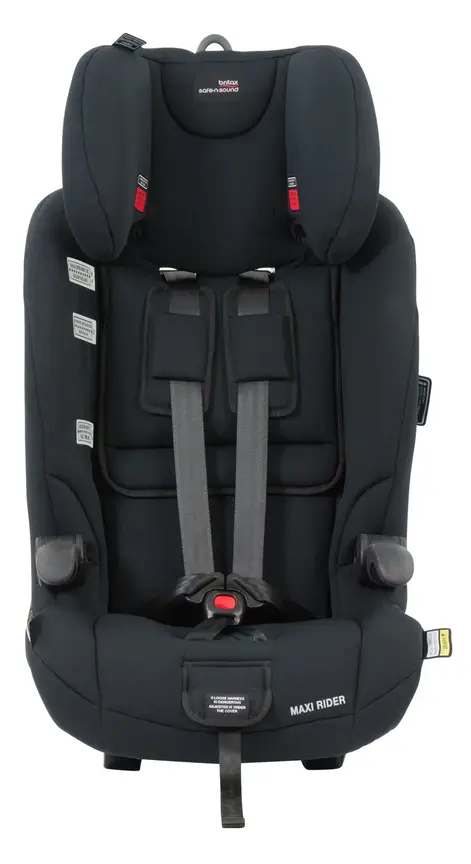
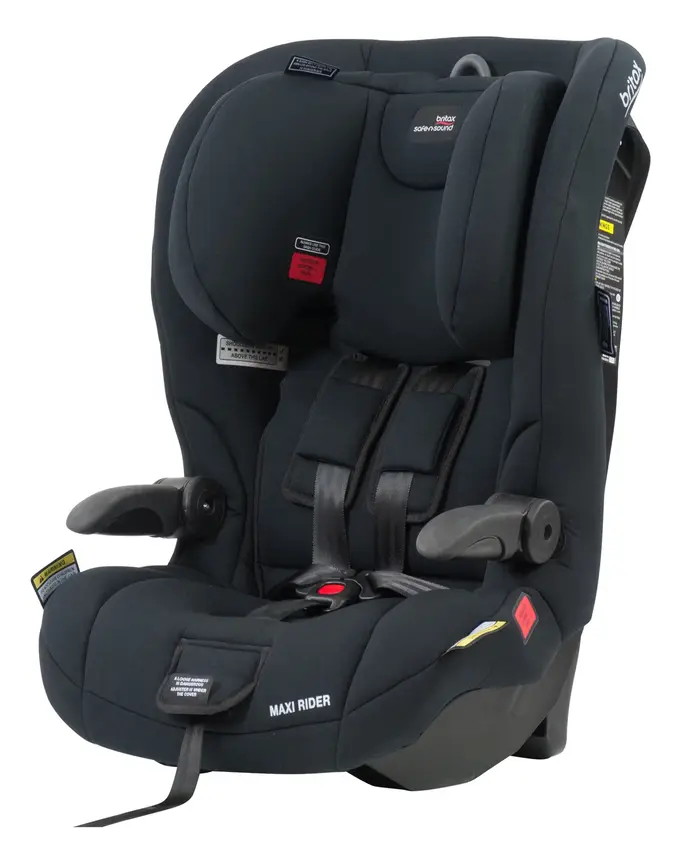
Britax Safe-n-Sound Maxi Rider
A seat with a harness from 12 months to about 4 years. Then it becomes a booster up to 6–8 years.
Read our full review →
Britax Safe-n-Sound Atlas-GRO II Harnessed Car Seat
Harnessed booster seat
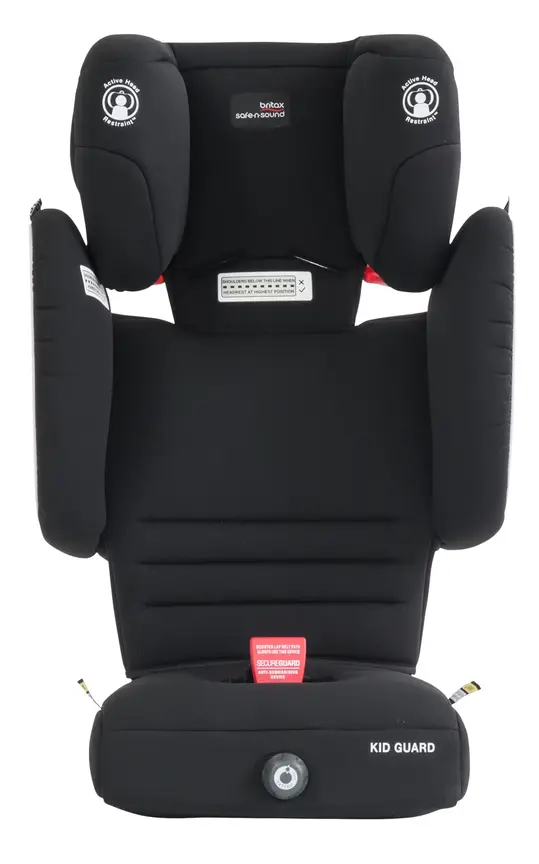

Britax Safe-n-Sound QuickFix Convertible Car Seat
Convertible car seat (ISOFIX)
Extra care for premature and low-birth-weight babies
Babies born early or small may have less head control and less ability to cope with being semi-upright. In the US, the AAP recommends that babies born before 37 weeks have a period of observation in their car seat before going home from hospital, sometimes called a car seat challenge or car seat tolerance screen, to check that their breathing, heart rate and oxygen levels stay stable. Hospitals in other countries may do a similar check depending on the baby's needs.
If your baby was premature, had breathing problems after birth, or has a condition that affects muscle tone, ask your neonatal team or paediatrician:
- Which seat suits your baby's size, and whether your seat's lower weight limit fits them.
- How long your baby can safely travel at a stretch.
- Whether a special car bed or a different restraint is needed for medical reasons.
Don't improvise with rolled towels, homemade padding or products bought online unless your seat manual or medical team specifically says they're allowed.
Comparison: what helps and what doesn't
| Practice | Helps | Why |
|---|---|---|
| Stopping every 1.5–2 hours and taking baby out | Yes | Time lying flat, feeds, checks |
| Adult in the back seat watching the baby | Yes | Spots slumping or breathing changes early |
| Seat set at the manufacturer's recline | Yes | Keeps the head back and airway open |
| Snug harness, thin clothing | Yes | Stops sliding down and curling forward |
| Aftermarket head huggers and neck pillows | No | Can push the head forward and affect crash performance |
| Letting baby keep sleeping in the capsule at home | No | Linked to sleep deaths outside the car |
| Taking baby out of the seat while driving to settle them | No | Huge injury risk in a crash |
| Driving through the night without stops to "use the sleep" | No | Long unbroken stretches and a tired driver |
Common mistakes to avoid
- Treating the 2-hour figure as a safe limit for sleep outside the car. The safest place for sleep is always a cot or bassinet, flat on the back.
- Installing the seat too upright because it fits the car better or gives more legroom to the front passenger.
- Loose straps, often because the baby is wearing a thick jumpsuit or the straps were loosened for a previous child.
- Buying second-hand without checking the history. A seat that's been in a crash, is past its expiry date, or is missing parts or instructions shouldn't be used. Check the recall list for your country.
- Hanging toys from the carry handle or adding mirrors and accessories that weren't crash-tested. They can become projectiles.
- Skipping breaks because the baby is asleep. Stop anyway. Babies resettle, and you need a break too.
- Driving while exhausted. New parents are often short on sleep. Share the driving and rest at every stop.
More options, from budget to premium
Real products from our catalogue. We don't show star ratings or review counts; check the current price, stock and reviews on Amazon before you buy.

Babylove ezymove Booster
A very light, low-cost booster for about 4 to 8 years. It folds flat for storage.
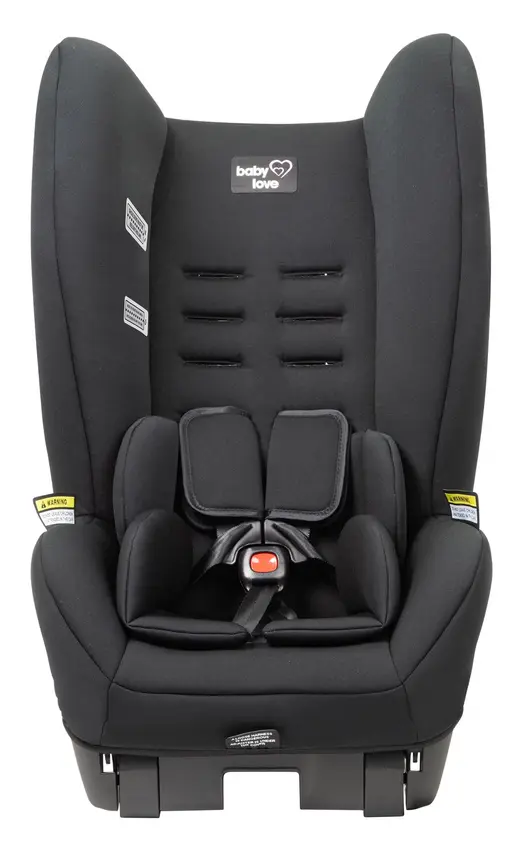
Babylove ezyone2
A very low-cost convertible seat. Rear-facing to about 12 months, then forward-facing to about 4 years.
FAQ
Is the 2-hour rule a law?
No. It's guidance from manufacturers and safety organisations. The law in each country requires an approved, correctly used restraint, not a time limit. Following the guideline is still a sensible way to plan journeys.
Does the clock reset after a short stop?
The idea is to give your baby real time out of the seat, lying flat, and to check on them. A two-minute stop without taking them out doesn't do that. Aim for a proper break of at least 15 to 30 minutes on long trips.
What about long-haul drives where stopping is hard?
Plan stops anyway, even if they're at roadside rest areas, and travel with another adult if possible. If the trip simply can't be broken up, talk with your child health nurse, health visitor or GP about the safest approach for your baby.
My baby screams when we stop and take them out. Should I just keep driving?
It's common for babies to protest at being woken. Take the break anyway, feed and change them, and let them settle again before you continue.
Can my baby nap in the car seat in the car while I'm parked and sitting next to them?
Brief naps while you're watching closely are lower risk than unsupervised sleep. But the advice from Red Nose and the AAP is to move a sleeping baby to a flat, safe sleep surface as soon as you can.
When can my baby stay in the car seat for longer?
As babies grow and their head and neck control improves, slumping becomes less of a concern. Breaks every couple of hours are still sensible for children of every age on long trips, for comfort and for the driver's alertness.
Where can I get my seat checked?
In Australia, Kidsafe and many state road authorities list restraint fitting services. In the UK, local councils and some retailers offer checks. In the US, NHTSA lists inspection stations and certified technicians. In Canada, Transport Canada and provincial road safety organisations list car seat clinics.
Sources
- Red Nose Australia – Take your sleeping baby out of their car seat when you get home
- Red Nose Australia – Keeping baby safe in the car
- Red Nose Australia – Research on risks of infants sleeping in car seats
- Product Safety Australia (ACCC) – Car seats guide
- Kidsafe – National best practice guidelines: safety of children in motor vehicles
- Pregnancy, Birth and Baby – Car travel with babies and children
- GOV.UK – Child car seats: the rules
- RoSPA – Child car seats
- HealthyChildren.org (AAP) – Car seats: information for families
- HealthyChildren.org (AAP) – A parent's guide to safe sleep
- Transport Canada – Child car seat safety
Related guides
More Parental Tips →
Road Trips with Babies and Toddlers: Car Seat Breaks, Feeding Stops and Keeping Kids Happy

Preventing Hot Car Tragedies: Backseat Habits, Car Seat Sensors, and How Cars Heat Up

Baby and Toddler Car Sickness: What Parents Can Try on Road Trips
