Microwave Steam Steriliser Bags: How to Sterilise Baby Gear Safely
How to use microwave steam steriliser bags safely for baby bottles, teats and pump parts. Step-by-step guide, what fits, safety tips and common mistakes.
On this page
- Key points
- What microwave steam steriliser bags are
- Why sterilising baby gear matters
- What can and cannot go in a steam bag
- How to use a microwave steam bag, step by step
- How microwave bags compare to other sterilisers
- When to start and when to stop sterilising
- Official guidance in Australia, the UK, the US and Canada
- Burn safety and microwave checks
- Common mistakes to avoid
- Frequently asked questions
- Sources
Short answer: Wash your baby gear in hot soapy water first. Rinse it well. Put the clean parts into the microwave steam bag. Add the exact amount of water shown on the bag. Seal the zip and heat for the time listed for your microwave power. Wait for the bag to cool before you open it. Steam from the bag kills harmful germs without chemicals.
Health groups in Australia, the UK, the US and Canada agree on the main rule. Always wash feeding gear with soap and water before you sterilise it. Steam cannot clean away dried milk or dirt.
Key points
- Wash first: Scrub bottles, teats and pump parts with hot soapy water and a clean brush.
- Measure the water: Too little water can melt the bag. Too much water slows down the steam.
- Check the wattage: Higher-power microwaves need less time. Follow the chart on the bag.
- Never put metal inside: No metal rings, foil or wired brushes. They can spark and start a fire.
- Watch for hot steam: Let the bag cool for a few minutes. Point the steam vent away from your face.
- Track each use: Most bags can be reused a set number of times. Tick the box on the bag after each cycle.
What microwave steam steriliser bags are
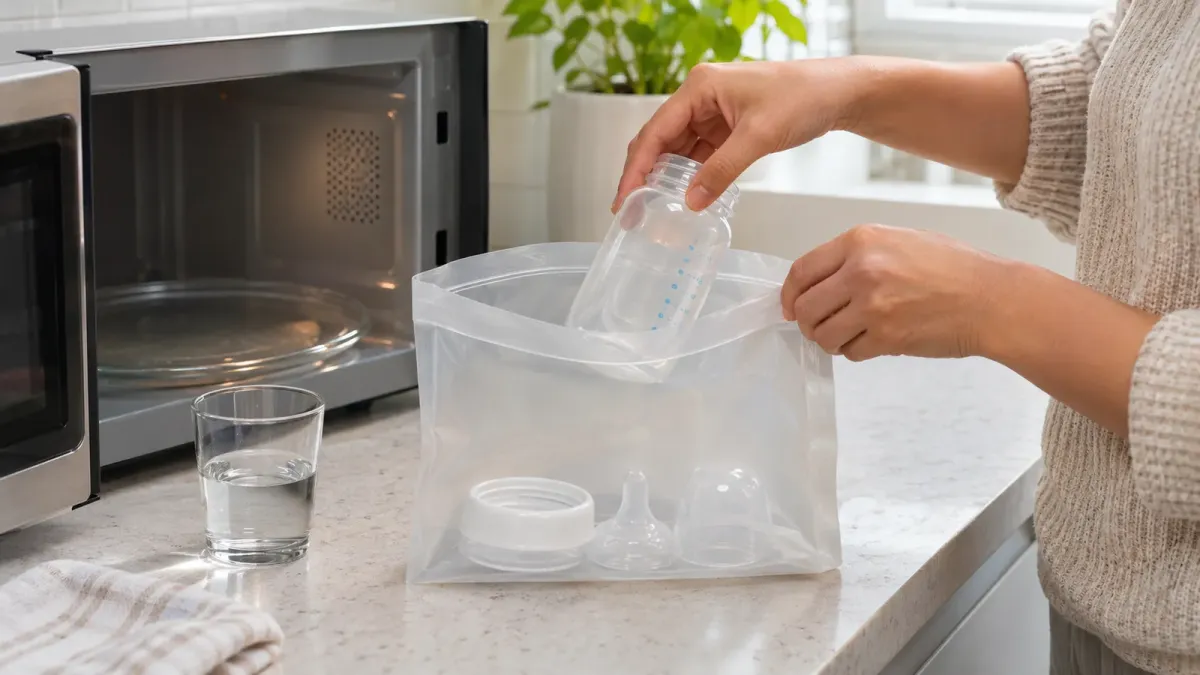
A microwave steam steriliser bag is a thick, heat-safe plastic pouch. You put clean baby items and a small splash of water inside. When the microwave heats the water, it turns into hot steam. The steam fills the pouch and kills germs on the gear inside.
Most bags have a zip lock at the top to trap the steam. They also have a small steam vent on the side. The vent lets extra pressure escape so the bag does not burst. Many bags have a cool-touch grip area and a pour spout for draining hot water.
Parents like these bags because they are light and flat. You can pack them in a nappy bag or suitcase. They take up almost no space in a small kitchen. You do not need a bulky machine on your bench.
How many times can you use one bag?
Most reusable steam bags last for around 20 to 30 uses. The exact limit is printed on the bag. Many bags have numbered checkboxes on the front. You can mark a box with a pen each time you run a cycle. Throw the bag away once you reach the limit, or sooner if it looks worn.
Why sterilising baby gear matters
Newborn babies have immune systems that are still growing. Their bodies cannot fight off germs as easily as older children or adults. Milk is rich in nutrients, which means bacteria grow fast in leftover drops.
If germs build up inside a bottle or teat, your baby can get a tummy bug. This can cause vomiting, diarrhoea and fluid loss. In young babies, losing fluids can become serious very quickly.
Washing with hot soapy water removes milk fat and food bits. Sterilising goes one step further. High heat kills the tiny germs that soap and water can leave behind. This extra step is most important in the first months of life.
What about plastic and heat?
Many parents worry about heating plastic baby bottles. Food safety bodies in Australia (Food Standards Australia New Zealand), the UK, the US (Food and Drug Administration) and Canada (Health Canada) watch chemical rules for baby gear. Most modern baby bottles are made without bisphenol A (BPA). BPA is a chemical once used to harden clear plastic.
Even with BPA-free plastic, very high heat can wear plastic down over time. Replace plastic bottles and teats if they look cloudy, cracked or scratched. Scratches can also trap tiny bits of milk and germs.
What can and cannot go in a steam bag
Not every baby item is safe for a microwave steam bag. Always check the care label on each item before you put it in. If an item melts or warps, throw it out.
Items that are usually safe
- Plastic baby bottles: Polypropylene and other heat-safe feeding bottles.
- Glass baby bottles: Check the bottle label first. Do not put cold glass straight into hot steam.
- Bottle teats and collars: Silicone teats, screw rings and travel caps.
- Breast pump parts: Shields, valves, membranes and collection bottles made without metal.
- Dummies (pacifiers): One-piece silicone dummies that are marked as steam-safe.
- Nipple shields: Silicone shields used during breastfeeding.
Items you must keep out
- Anything with metal: Metal weights in straw cups, foil seals, metal springs or wired bottle brushes. Metal sparks in a microwave.
- Breast pump motors and power cords: Water and steam will ruin electrical parts.
- Breast pump tubing: Most tubing is thin and can melt or trap water inside. Check your pump manual first. Most brands say to wipe the outside of tubing only.
- Soft teethers filled with gel or water: The gel can overheat and burst the teether.
- Wooden or bamboo spoons and toys: Steam makes wood swell, crack and grow mould.
- Items not marked microwave-safe: Some clear plastics melt or bend in high steam heat.
How to use a microwave steam bag, step by step
Follow these steps every time you sterilise. Skipping a step can leave germs behind or cause a burn.
- Wash your hands. Use soap and warm water for at least 20 seconds. Dry your hands with a clean towel or paper towel.
- Take every item apart. Pull the teat out of the collar. Take valves and membranes off breast pump parts. Germs hide in tight joins.
- Wash everything in hot soapy water. Use a clean bottle brush and teat brush. Keep these brushes just for baby gear. Do not use the same sponge you use for raw meat or dirty dishes.
- Rinse well with clean water. Wash off all soap suds. Soap left on parts can upset a baby's tummy.
- Check the bag for damage. Look for holes, split seams or a loose zip seal. If the bag is damaged, use a new one.
- Measure the water. Check the instructions printed on the bag. Most bags need a small amount of water, often around 60 millilitres (about 2 ounces). Pour it into the empty bag first.
- Load the clean gear. Place bottles upside down or on their side so steam can reach inside. Do not pack the bag tight. Leave small gaps between parts so steam can move around.
- Seal the bag. Press the zip track shut from end to end. Leave the built-in steam vent open if the bag has a tear-off tab or open side slot. Never cover the vent.
- Check your microwave wattage. Look inside the microwave door or on the back label for the watts. Set the timer based on the chart on your bag. Lower-power microwaves need a bit more time.
- Place the bag in the centre. Make sure the bag stands flat on the glass turntable. Check that it can spin freely without hitting the walls.
- Run the cycle and stay nearby. Watch the bag through the door if you can. Stop the microwave if the bag tips over or swells too much.
- Let the bag cool down. Wait at least two to three minutes after the beep. The water and steam inside are boiling hot right when the cycle ends.
- Hold the cool-touch zone. Use oven mitts or a folded tea towel if the bag still feels very warm. Keep the steam vent pointed away from your face and hands.
- Drain the extra water. Tip the bag gently over the sink using the pour spout. Hot water can splash out fast, so pour slowly.
- Take the gear out with clean hands or tongs. Place the parts on a clean drying rack or clean paper towel. Let them air dry, or use them right away if needed.
How microwave bags compare to other sterilisers
Steam bags are one of several safe ways to sterilise baby gear. The table below shows how the main methods compare for daily life and travel.
| Method | How it works | Speed | Best for | Watch out for |
|---|---|---|---|---|
| Microwave steam bag | Water turns to steam inside a sealed pouch | A few minutes | Travel, small kitchens, pump parts | Hot steam burns; needs a microwave; small space inside |
| Electric steam steriliser | Heats water in a base unit with a lid | About 6 to 12 minutes | Full-time bottle feeding at home | Takes up bench space; needs descaling |
| Boiling in a pot | Submerge gear in boiling water on a stove | About 5 to 10 minutes of boiling | Backup at home with no extra gear needed | Easy to burn hands; wears down plastic and teats faster |
| Cold water tablets or liquid | Soak gear in a safe sanitising mix | About 15 to 30 minutes | Power cuts, camping, places with no microwave | Parts smell faintly of chlorine; must replace mix daily |
| Dishwasher sanitise cycle | High-heat wash and dry cycle | 1 to 2 hours | Older babies when full sterilising is no longer needed | Not all dishwashers reach true sterilising heat; small parts can flip |
No single method is best for every family. Many parents use an electric steriliser on the kitchen bench at home. They keep a pack of microwave steam bags in the nappy bag for trips and visits.
When to start and when to stop sterilising
Health advice on when to stop sterilising varies a little around the world. Check the stage your baby is at and ask your doctor or child health nurse if your baby was born early.
| Baby's age or stage | What health groups say | What to do with steam bags |
|---|---|---|
| Premature, newborn or unwell baby | Immune system is very young. Sterilising is strongly advised. | Wash and sterilise all bottles, teats and pump parts after every use. |
| Birth to 3 months | Highest risk from tummy bugs and milk bacteria. | Sterilise all feeding gear before each use, especially for formula. |
| 3 to 6 months | Australia, the US and Canada often say thorough hot washing is enough for healthy full-term babies after 3 months. The UK says keep sterilising until 12 months. | Keep sterilising if you use formula, or follow your local health nurse's advice. |
| 6 to 12 months | Babies put toys and hands in their mouths now. UK NHS still advises sterilising milk gear until 12 months. | Wash everything well in hot soapy water. Steam-bag bottles and teats if you prefer extra peace of mind. |
| Over 12 months | Most healthy toddlers have stronger immune systems and drink from open cups. | Hot soapy water or a hot dishwasher cycle is enough. No need to steam bags daily. |
Always sterilise brand-new bottles, teats, dummies and pump parts before the very first use. Factories and shop shelves are not germ-free. One steam cycle before first use clears away dust and packing residue.
Official guidance in Australia, the UK, the US and Canada
Advice on cleaning and sterilising baby feeding gear is very similar across these four countries. The main difference is how long each country suggests you keep sterilising.
| Topic | Australia | UK | US | Canada |
|---|---|---|---|---|
| Health bodies | NHMRC, Raising Children Network, Pregnancy, Birth and Baby | NHS (National Health Service) | CDC (Centers for Disease Control), AAP (American Academy of Pediatrics) | Health Canada, Canadian Paediatric Society (Caring for Kids) |
| Product safety bodies | ACCC / Product Safety Australia | OPSS (Office for Product Safety and Standards) | CPSC (Consumer Product Safety Commission), FDA | Health Canada |
| Wash before sterilising? | Yes, always | Yes, always | Yes, always | Yes, always |
| Microwave steam bags okay? | Yes, if used as directed | Yes, follow maker's rules | Yes, microwave steam is listed as a sanitising method | Yes, follow maker's instructions |
| How long to sterilise? | Until 12 months for formula bottles (NHMRC) | Until at least 12 months (NHS) | Daily sanitising for babies under 2 months, premature, or weak immune system (CDC) | First 4 months at least, or longer if advised (Canadian Paediatric Society) |
You may notice that the US CDC focuses on daily sanitising for babies under 2 months old. Meanwhile, the NHS in the UK and NHMRC in Australia suggest sterilising formula bottles for the full first 12 months. Both approaches aim to protect babies from tummy infections. If you live in an area with unsafe tap water, or your baby has health needs, keep sterilising for longer.
Checking product recalls
Product safety agencies in all four countries track unsafe baby gear. You can check recall lists at Product Safety Australia (ACCC), GOV.UK (OPSS), CPSC in the US and Health Canada. Check recalls before you buy secondhand bottles, pumps or microwaves.
Burn safety and microwave checks
Steam burns happen fast and can be deep. Most accidents with microwave steam bags happen when a parent is tired and in a hurry. A few simple habits keep your hands and face safe.
Keep the microwave clean
Wipe out the inside of your microwave before you sterilise baby gear. Old food splashes heat up fast and can burn onto the outside of the bag. Food bits can also create hot spots that melt a hole in the plastic pouch.
Check the turntable and space
The bag must sit upright or flat as shown on the pack. If your microwave is small, the corners of the bag might catch on the side walls. When a bag stops spinning, one side gets far more microwave heat than the other. This can scorch the plastic or boil the water dry.
Handle with care after the beep
- Wait before opening: Leave the microwave door closed for a minute or two, or let the bag sit on the bench.
- Use the grip tab: Most bags have a clear corner or top edge marked as a cool grip. Hold there, not on the wet middle part.
- Open away from your body: Steam rises fast. Never lean your face over the top of the bag when you peel the zip open.
- Keep babies away: Never hold your baby in one arm while taking a hot steam bag out of the microwave.
Watch out for trapped water inside gear
Teats, pump valves and bottle caps can hold pools of boiling water. Shake each piece gently over the sink with tongs before you touch it. Always test the temperature of milk on your wrist before feeding, even if you only just cooled the bottle.
Common mistakes to avoid
Even careful parents slip up during late-night feeds. Watch out for these common mistakes.
1. Skipping the soap-and-water wash
Steam kills germs, but it does not dissolve milk fat. If dried milk stays inside a teat or pump valve, germs can hide underneath the milk film. Heat can even bake old milk onto the plastic. Always wash with hot soapy water and rinse first.
2. Guessing the water amount
Some parents pour water straight from the tap without measuring. Too little water boils away before the timer ends. This leaves the bag dry and can melt the plastic or ruin your gear. Too much water stays cool longer, so the bag may not make enough steam in the set time. Use a measuring cup or the fill line on a baby bottle.
3. Packing too many items in one bag
It is tempting to cram six bottles into one pouch to save time. When parts touch tightly or stack inside each other, steam cannot reach every surface. Leave space around each bottle and teat. Run two smaller loads instead of one crowded load.
4. Guessing the microwave time
Microwaves vary a lot in power. An office or hotel microwave may be much stronger than your microwave at home. Running a 1,100-watt microwave for a 600-watt time can overheat the bag and warp your bottles. Check the wattage sticker inside the microwave door every time you use a new machine.
5. Drying gear with a tea towel
A kitchen tea towel looks clean, but it often carries germs from hands and dishes. Wiping freshly steamed bottles with a cloth puts bacteria right back onto them. Let the parts air dry on a clean rack, or shake off extra drops and put the bottle together right away.
6. Leaving wet gear sealed in the bag
Once the cycle ends and the bag cools, take the gear out or drain the water. Leaving wet bottles inside a closed, warm plastic bag for days creates a damp spot where mould and bacteria can grow.
7. Reusing a bag past its limit
Plastic weakens every time it is heated to steam temperature. Over time, the zip seal can stop closing properly, or tiny pinholes can form in the base. Stick to the reuse count on the pack and throw away any bag that looks cloudy, stiff or cracked.
Frequently asked questions
Can I use tap water in a microwave steam steriliser bag?
Yes, clean drinking tap water works fine in most homes. If your area has very hard water with lots of minerals, you may see white chalky spots on your bottles. Using filtered or distilled water stops those white marks from building up.
How many times can I reuse one steam steriliser bag?
Most brands allow about 20 to 30 uses per bag. Check the instructions printed on your exact bag. Mark the checkbox on the bag after every cycle so you do not lose count.
Do I need to dry baby bottles after steaming them?
No, you do not have to dry them. A few drops of clean sterile water inside the bottle are harmless. If you want to dry them, set them upside down on a clean drying rack and let them air dry. Never wipe them with a cloth tea towel.
How long do items stay sterile inside the bag?
If you leave the bag sealed, items stay clean for a short time, often up to 24 hours if the zip is tight. However, water sits at the bottom of the bag. Once you open the zip, air and germs can enter right away. The NHS and CDC advise putting clean, dry bottles together with clean hands and storing them in a clean, covered container.
Can I put breast pump tubing in a microwave steam bag?
Usually no. Most breast pump tubing is not made for microwave steam and can melt or shrink. Water trapped inside thin tubing is also very hard to dry and can grow mould. Check your pump manual first. Most closed-system pumps do not need their tubing washed or steamed unless milk gets inside.
What if my microwave does not have a turntable?
You can still use a steam bag in a flat-bed microwave without a turntable. Place the bag right in the middle of the oven floor. Check the bag halfway through if you are unsure, or follow the exact time for your wattage. Keep an eye on it so it does not scorch in one spot.
Is it safe to sterilise plastic bottles in the microwave?
Yes, as long as the bottles are labelled as microwave-safe and BPA-free. Modern baby bottles made from polypropylene or silicone are built to handle steam heat. Replace any plastic bottle that turns cloudy, warps or develops deep scratches inside.
Can I sterilise formula powder scoops in a steam bag?
Check the scoop first. Many formula scoops are thin plastic and can warp in high microwave heat. Most health groups say to keep the scoop dry and store it in the formula tin. Wash your hands before touching the scoop, and never put a wet scoop back into dry formula powder.
Sources
- NHS – Sterilising baby bottles
- Raising Children Network – Baby formula: how to make and store it
- Pregnancy, Birth and Baby – Feeding your baby with formula
- CDC – Infant formula preparation and storage
- Caring for Kids, Canadian Paediatric Society – Feeding your baby in the first year
- NHMRC – Infant Feeding Guidelines
- Food Standards Australia New Zealand – Bisphenol A (BPA)
Related guides
More Feeding & Baby Food →
UV-C LED Sterilisers vs Steam Microwave Bags for Baby Bottles: How They Work and Which to Choose
Baby Bottle Drying Racks: How to Choose and Use One Safely

How to Freeze and Store Homemade Baby Food Safely