














Automatic Formula Machines vs Warm-Water Dispensers: Safe Use and Cleaning
Compare formula machines with warm-water dispensers. Learn safe preparation, cleaning, clump prevention, and what to check in Australia, the UK, the US and…
On this page
- What these machines do
- How to choose between them
- Safe formula preparation comes first
- Funnel cleaning and daily care
- How to reduce powder clumps
- Age stages and changing needs
- Storage, leftovers, and travel
- Safety checks before buying or using
- Common mistakes to avoid
- Official guidance across four countries
- When to ask for help
- Frequently asked questions
- Sources and further guidance
- Sources
Short answer: Both types of machine can save time. Neither removes the need to prepare formula safely. Follow the instructions on your formula tin and the machine manual. Use clean hands and clean equipment. Measure the powder and water as directed. Clean every part that touches formula. If a funnel or mixing part is dirty, damp, or blocked, stop and clean it before making another feed.
Automatic formula machines measure water and powder, then mix them. Warm-water dispensers heat or hold water, but you add and mix the powder yourself. The second type gives you more control over each step. The first may reduce measuring work, but its parts need careful cleaning and checking.
In Australia, check guidance from Pregnancy, Birth and Baby and the NHMRC. In the UK, check the NHS. In the US, check the CDC. In Canada, check Health Canada and the Canadian Paediatric Society. Advice can differ by product and location. Ask your child health professional if your baby was born early, has health needs, or needs a special formula.
What these machines do
An automatic formula machine usually has a water tank, a powder container, and a mixing or dispensing path. You choose a serving size. The machine releases water and powder, then mixes them or dispenses them into a bottle. The design differs between models. Read the exact manual before use.
A warm-water dispenser holds or heats water. Some dispense a set amount. Others let you choose the amount or temperature. You then add formula powder by hand and mix it. Some products are made for baby feeds. Others are general water heaters. Do not assume that a general hot-water machine is suitable for preparing infant formula.
Neither machine decides which formula your baby needs. Neither should change the powder-to-water ratio. You must use the product label and any advice from your health professional. A feed that is too concentrated or too diluted can harm a baby.
These products are optional. You can prepare formula without either machine. A clean kettle, a bottle, and the steps on the formula label may be enough. Choose the method you can use safely and repeat correctly, even when tired.
How to choose between them
Start with your baby’s feeding needs, your kitchen space, and the cleaning work you can manage. Then check the machine’s manual. Confirm that the product is meant for the formula and bottle routine you use. Check whether the maker gives clear steps for setup, cleaning, descaling, and testing the water volume.
Think about what happens when the machine is empty, unplugged, or due for cleaning. Can you prepare a feed safely by hand? Can another caregiver understand the steps? A machine should not become the only way your household can feed the baby.
Look for clear labels and simple controls. The machine should show the selected amount in a way you can check. You should be able to see whether the water tank needs filling. You should know when the funnel, nozzle, or mixing part needs cleaning. Avoid relying on a setting you cannot explain or verify.
Consider noise and light at night, too. A bright screen or loud motor may wake others. These are comfort issues, not proof of safety or performance. Avoid claims that a machine guarantees better sleep, prevents illness, or makes feeds safer by itself.
| Feature | Automatic formula machine | Warm-water dispenser |
|---|---|---|
| Main job | Measures and dispenses water and powder, or mixes them | Heats or dispenses water; caregiver adds powder |
| Caregiver steps | Set the amount, check the result, and clean the parts | Measure water and powder, then mix by hand |
| Cleaning focus | Powder funnel, mixing parts, outlet, bottle contact points | Water tank, outlet, bottle, scoop and mixing tools |
| Clump risk | Can occur if parts are damp, blocked, or poorly mixed | Can occur if powder is not added and mixed as directed |
| Control over steps | Some steps are machine controlled; settings must be checked | Caregiver controls measuring and mixing |
| Power needed | Usually yes; check the manual and backup plan | Often yes for heating; some can hold warm water |
| Best fit | Caregivers who can keep up with the exact cleaning routine | Caregivers who prefer to measure and mix each feed |
This table describes common designs. A specific model may work differently. Read its manual and check the formula instructions before choosing.
Safe formula preparation comes first
Powdered formula is not sterile. Germs can be present in the powder, even when the tin is sealed. Safe preparation lowers risk, but no home machine can make powder sterile. The right steps can depend on the baby’s age, health, local advice, and the formula type.
Wash and dry your hands before preparing a feed. Clean the work surface. Use a clean bottle and teat. Follow the formula tin exactly. Use the scoop supplied with that tin. Do not pack the powder down or add extra scoops. Do not guess the amount.
Follow the water temperature and mixing steps given by your health authority and formula maker. Guidance is not identical in every country. For example, the NHS advises using freshly boiled water that has cooled for no more than 30 minutes, so it remains at least 70°C when mixed with powder. The CDC gives advice on preparation and storage for the US. Use the guidance for your location and ask a clinician when your baby has extra health needs.
Do not use a machine setting just because it sounds close to the recommended temperature. Check whether the machine’s instructions fit the guidance where you live. If they conflict, pause and ask your health professional or the machine maker. Do not serve a feed if you are unsure how it was prepared.
After mixing, check the feed as directed. Never heat a bottle in a microwave. It can create hot spots that burn a baby’s mouth. If you need to cool a bottle, follow official local advice. Keep the bottle away from dirty water and surfaces.
Funnel cleaning and daily care
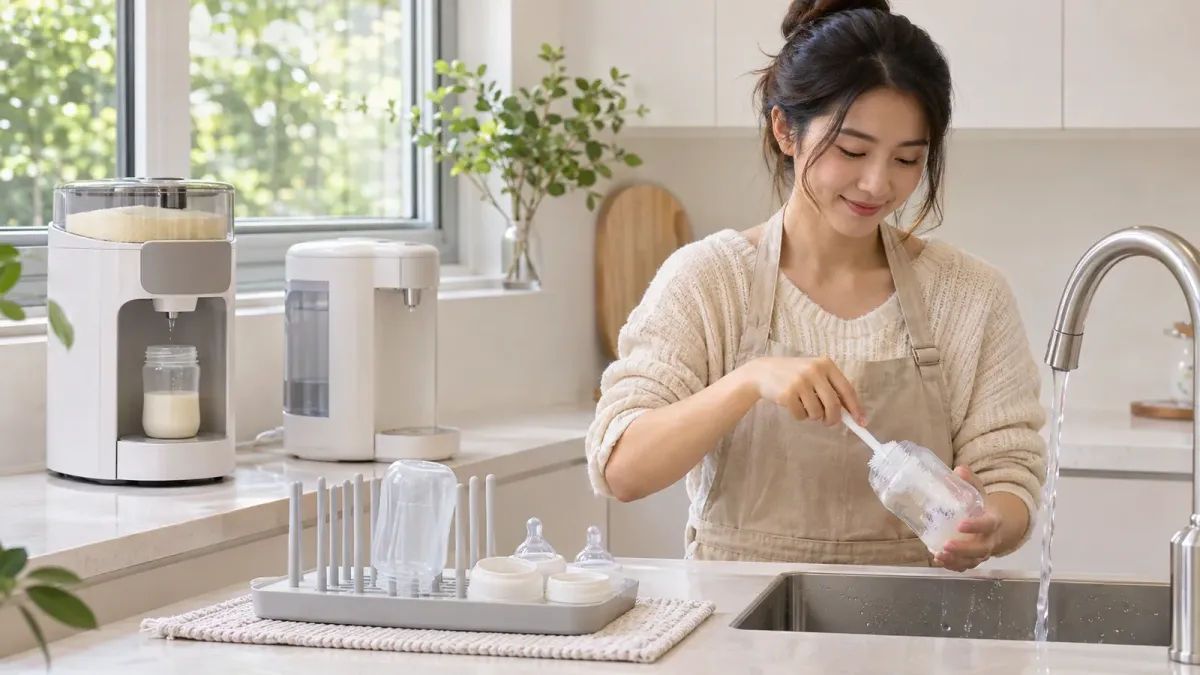
The funnel is the part that guides powder into the mixing area. Powder can stick to it. Steam or water can make powder damp. Damp powder may cake, block the path, or stay behind for the next feed. A machine can look clean from the outside while powder remains inside.
Follow the model’s cleaning schedule every time. Some makers require the funnel to be removed and cleaned after each feed. Others give a different routine. Do not invent a schedule or use a cleaning shortcut. If the manual is missing, find the official manual for the exact model before using it.
- Switch off and unplug the machine before cleaning, if the manual says to do so.
- Let hot parts cool before touching them.
- Remove the funnel or removable mixing parts as instructed.
- Wash parts that need washing, using the method in the manual.
- Rinse away soap if the instructions call for rinsing.
- Dry parts fully before putting them back or adding powder.
- Wipe the outside and the area around the outlet as directed.
- Check for stuck powder, damp patches, or a blocked opening.
Do not put an electrical base, cord, or part marked “do not immerse” in water. Do not use bleach, abrasive pads, or a dishwasher unless the manual allows them. A cleaning method that damages a part can change how it fits or works.
Keep the powder container closed between uses. Store formula as the tin directs. Do not top up old powder with new powder. Wash and dry a scoop if its instructions say to do so. Keep the scoop clean and dry between feeds.
Descaling is different from cleaning formula residue. Descaling removes mineral build-up from a water-heating part. Use only the method and timing in the machine manual. Rinse and flush the machine as directed before preparing a feed. Never use a feed until you are sure no cleaning solution remains.
How to reduce powder clumps
Clumps can form when powder meets water unevenly or when powder has become damp. They can also point to a blocked funnel or a mixing problem. A few visible lumps do not tell you whether the feed has the right amount of powder. Do not try to fix a suspect feed by adding extra water or powder.
Use dry hands and a dry scoop. Keep the tin closed. Make sure the funnel and powder path are clean and fully dry. Add the powder in the order and amount shown on the tin or machine instructions. Mix the bottle using the method recommended for that formula.
If a machine dispenses powder and water separately, check the result before feeding. Look for an unusual amount of powder left behind, a very watery feed, or a machine alert. If the output looks wrong, discard that feed and prepare a fresh one by a method you know is safe. Do not pour the feed back into the machine.
Never shake or tap a machine in a way its maker forbids. Do not push tools into the funnel or outlet. A spoon, pin, or cloth can damage a sensor or leave dirt behind. Follow the troubleshooting steps in the manual instead.
If clumps keep appearing, stop using the machine until you find the cause. Clean it as directed. Check that all parts are dry and fitted correctly. Contact the maker if the problem continues. Use another safe preparation method while you wait.
Age stages and changing needs
Formula preparation is not based on a machine’s age setting. It is based on the baby’s formula, health, and the instructions for safe preparation. Babies may need a different formula or feeding plan for medical reasons. Ask a health professional before changing formula or altering how it is made.
| Stage | What to consider | Care step |
|---|---|---|
| Newborn period | Newborns are very young and may need extra care with feeds | Ask your midwife, doctor, or nurse which preparation guidance applies |
| Young infant | Feed amounts and frequency may change | Keep using the tin’s ratio and the local preparation guidance |
| Older infant | Some babies begin other foods when developmentally ready | Do not change formula mixing steps or add cereal without advice |
| After a change in health | Illness, prematurity, or special formula can affect care | Ask the baby’s clinician before relying on a machine routine |
As babies grow, caregivers may prepare feeds in different places. Keep the same safe steps at home, at childcare, and when visiting family. Write down the model’s cleaning routine for other caregivers. Make sure they know how to prepare a feed without guessing.
Storage, leftovers, and travel
Follow the storage times and steps from your local health authority and formula label. Prepared formula does not keep indefinitely. Do not leave a bottle sitting out and assume it remains safe. Discard leftovers according to local guidance and the formula instructions.
Do not store a used bottle in the machine. Do not pour leftover formula back into the water tank or powder container. Keep prepared bottles separate from clean water and unused powder. Label feeds when another caregiver needs to know when they were made.
For travel, check how to carry formula safely. You may use ready-to-feed formula if it suits your baby and is available. Follow the package directions. If using powder, plan for clean hands, safe water, clean bottles, and a way to measure correctly. A warm-water dispenser may not be practical away from home.
During a power cut, stop using a machine that needs power. Use a safe backup plan. Do not assume water in a warm tank stays at a safe temperature. Check the manual and local advice. If you cannot prepare a feed safely, contact your health service for help.
Safety checks before buying or using
Check the product label, maker, model, and support information. Look up recalls through the product safety service where you live. In Australia, Product Safety Australia lists recalls and safety alerts. In Canada, Health Canada provides recalls and safety alerts. For the UK and US, check the relevant government product safety agency or the maker’s recall page.
Use the machine only for the purpose its maker describes. Do not modify it. Keep cords away from the baby and from water. Place the machine on a stable, dry surface. Keep hot water and hot parts out of reach. Do not leave a bottle balanced where it can fall.
Check the machine before each use. Look for cracks, loose parts, damaged cords, leaks, or a blocked outlet. Stop using it if it is damaged. Do not use it if the water tank, funnel, or mixing part cannot be cleaned as directed.
Keep the manual. Save the model number and maker’s contact details. If you buy second-hand, make sure all parts are present and the manual applies to that exact model. Check for a recall and ask the maker whether the machine has had required servicing.
Common mistakes to avoid
- Trusting a setting without checking it. Confirm that the amount and preparation steps match the formula instructions.
- Skipping funnel cleaning. Powder left in a damp part can build up or block the machine.
- Reassembling wet parts. Let parts dry fully when the manual requires it.
- Changing the powder ratio. Never add extra water or powder to change thickness.
- Using the wrong scoop. Use the scoop that belongs to the formula tin.
- Using a general water heater as a formula machine. Check that it suits the safe preparation steps you need.
- Ignoring a strange feed. If the amount or mix looks wrong, do not feed it to the baby.
- Using an old manual for another model. Cleaning steps can differ between models.
- Assuming all countries give identical advice. Follow local health guidance for water temperature and storage.
- Thinking convenience means sterilisation. Powdered formula is not sterile, even when a machine mixes it.
Official guidance across four countries
Use the official guidance for your country. The key sources are Australia’s NHMRC and Pregnancy, Birth and Baby; the UK’s NHS; the US Centers for Disease Control and Prevention; and Canada’s Health Canada and Canadian Paediatric Society. These bodies explain formula preparation, hygiene, and storage. Their instructions may vary, so do not combine steps from different places without asking a health professional.
| Country | Official bodies to check | Useful guidance |
|---|---|---|
| Australia | NHMRC; Pregnancy, Birth and Baby | Infant feeding and safe formula preparation |
| United Kingdom | NHS | Making up formula and sterilising bottles |
| United States | CDC | Formula preparation and storage |
| Canada | Health Canada; Canadian Paediatric Society | Infant feeding and local health advice |
These are health guidance sources, not endorsements of a particular machine. A machine’s sales claims do not replace medical advice or safe preparation steps. Ask your local health service if instructions are unclear.
When to ask for help
Ask a midwife, nurse, doctor, or child health service if you are unsure which water temperature to use. Ask before using a machine for a baby born early or with a health condition. Ask if your baby has been prescribed a special formula or needs a feeding plan.
Contact the machine maker if a funnel repeatedly blocks, a part cracks, the machine leaks, or the measured output seems wrong. Stop using it until you understand the problem. Keep the model details ready when you call.
If your baby seems unwell or is not feeding as usual, seek medical advice. Do not try to solve a health concern by changing the formula concentration or machine settings.
Frequently asked questions
Are automatic formula machines safe?
They can be used only when the exact model’s instructions fit your formula and local health guidance. Keep every powder-contact part clean and dry. Check each feed before offering it. If you cannot confirm the output is right, prepare a new feed another safe way.
Does a warm-water dispenser kill germs in powdered formula?
Do not assume it does. Powdered formula is not sterile. Water temperature advice differs by country and baby health needs. Follow your local health authority’s steps and ask a clinician if your baby needs extra protection.
How often should I clean the funnel?
Use the schedule in the manual for your exact model. Some machines require cleaning after each feed. Never rely on a general schedule from another model. Clean and dry the funnel as directed before using it again.
Why does formula clump in the machine?
Powder may be damp, the funnel may be blocked, or the parts may not be fitted correctly. Stop using the machine and follow its cleaning and troubleshooting steps. Do not add extra water to a clumpy feed.
Can I use a kettle instead?
Yes, if you follow the formula label and official guidance where you live. A kettle does not remove the need for clean hands, clean bottles, correct measuring, and safe storage.
Can I leave formula powder in the machine?
Only if the maker’s instructions say how to store it there. Keep powder dry and protected. Do not top up old powder or use powder that has become damp or contaminated.
What should I do if the machine dispenses the wrong amount?
Do not feed that bottle. Discard it safely and prepare a fresh feed using steps you can check. Clean and inspect the machine. Contact the maker if the problem happens again.
Can different caregivers use the same machine?
Yes, if each caregiver knows the manual, cleaning schedule, and formula steps. Show them how to check settings and what to do if a part is dirty or the output looks wrong.
Is a warm-water dispenser enough on its own?
No. It supplies water only. You still need to measure the water and powder, mix them correctly, and clean the bottle and tools.
What if local advice and the machine manual disagree?
Pause before using the machine. Ask your health professional and the machine maker how to use it safely with your formula. Do not guess which instruction to follow.
Sources and further guidance
- Pregnancy, Birth and Baby – Feeding your baby with formula
- NHMRC – Infant Feeding Guidelines
- NHS – How to make up baby formula
- NHS – Sterilising baby bottles
- CDC – Infant formula preparation and storage
- Caring for Kids (Canadian Paediatric Society) – Feeding your baby in the first year
- Product Safety Australia – Recalls
Disclaimer: This article is general information. It does not replace advice from your doctor, midwife, nurse, or child health service. Follow the formula label, machine manual, and health guidance for your location. Affiliate links may earn BabyGearFinder a commission at no extra cost to you.
Sources
- Pregnancy, Birth and Baby – Feeding your baby with formula
- NHMRC – Infant Feeding Guidelines
- NHS – How to make up baby formula
- NHS – Sterilising baby bottles
- CDC – Infant formula preparation and storage
- Caring for Kids, Canadian Paediatric Society – Feeding your baby in the first year
- Product Safety Australia – Recalls
Related guides
More Feeding & Baby Food →
Formula Prep Machines and Dispensers: Safe Water Temperature, Filters, and Cleaning

Baby Formula Dispensing Machines: Convenience, Limits and Safe Feeding

Water-Bath and Steam Bottle Warmers: How to Warm Breast Milk Safely
