Baby Formula Dispensing Machines: Convenience, Limits and Safe Feeding
Learn what formula machines can and cannot do, how to prepare bottles safely, and what to check before buying or using one at home or away.

On this page
- What a formula dispensing machine does
- Could a machine make feeding easier?
- Powdered formula needs careful preparation
- How to assess a machine before buying
- Compare a machine with other ways to prepare feeds
- Cleaning and care are part of feeding
- Check every bottle before feeding
- Age and feeding needs change over time
- Using a machine when away from home
- Advice from official bodies in four countries
- Common mistakes to avoid
- When to ask for help
- Frequently asked questions
- Sources
Short answer: A formula dispensing machine may save time at home. It can measure water and powder, mix them, and dispense a bottle. But it does not make powdered formula sterile. It cannot replace careful cleaning, correct preparation, or checking the bottle before feeding. Follow the formula label and current advice from your local health service. If your baby was born early, has a weak immune system, or needs special formula, ask a health professional before using a machine.
A machine is optional. A clean bottle, safe water, formula, and careful hands are enough to prepare a feed. Some families like machines for repeated feeds. Others prefer preparing each bottle by hand. The right choice depends on your routine, your baby’s needs, and how well you can clean and check the device.
What a formula dispensing machine does
People use different names for these devices. Some are called formula makers, formula preparation machines, or bottle makers. Their features vary. One machine may heat and dispense water. Another may add powder and mix it. Some only warm a bottle that you have already prepared.
Read the exact model’s instructions. Do not assume that every machine works in the same way. A device may need a particular bottle, formula type, water setting, or cleaning routine. Check whether its maker explains how it measures powder and water. Check whether the instructions tell you how often to clean each part.
A machine can make a task feel quicker. It cannot decide whether your baby is hungry. It cannot check whether your baby is feeding well. It cannot confirm that a bottle is safe if a part is dirty, blocked, or set up incorrectly. An adult still needs to prepare, inspect, and offer every feed.
What it cannot do
- It cannot make powdered infant formula sterile.
- It cannot replace the preparation steps on the formula label.
- It cannot judge how much your baby wants or needs at a feed.
- It cannot confirm that a bottle is the right temperature for your baby.
- It cannot replace a health professional’s advice for a baby with special needs.
- It cannot guarantee that a bottle is safe just because it was made by a machine.
Could a machine make feeding easier?
For some families, a machine can reduce repeated measuring. It may help when caregivers share feeds and use the same method. A prepared bottle may also be easier to make during a busy moment at home. That convenience matters only if the device is used as directed and cleaned well.
Think about the whole task, not only the button press. You must still buy the right formula, keep it dry, wash bottles, clean the machine, refill its water tank, and check each feed. A machine can add new tasks, such as replacing a filter or cleaning a mixing part. Include that work in your decision.
Some parents find that hand preparation is simpler. It needs fewer parts and works away from home. Others prefer a machine for regular feeds at home and prepare bottles by hand when out. Either approach can work when it follows safe preparation advice.
Convenience is not proof of accuracy
A machine may claim to measure or mix a feed. Treat this as a feature to check, not a reason to skip the label. Follow the maker’s set-up instructions. Use only the formula and bottle types allowed by the machine’s instructions. Measure the finished feed as directed. If the result looks unusual, do not feed it until you have checked what went wrong.
Do not change the powder-to-water ratio to make a feed thicker, thinner, or last longer. Too much water or too little water can harm a baby. Use the scoop supplied with that formula. Follow its label. Do not use a scoop from another tin.
Powdered formula needs careful preparation
Powdered formula is not sterile. Germs can sometimes be present in the powder. Clean handling and the right preparation steps lower risk, but they cannot make powder sterile. This is why a machine should not be described as sterilising formula unless reliable official advice and the exact product instructions support that claim.
Follow the formula label and guidance for your country. Advice can differ between places and products. It can also depend on a baby’s age and health. The NHS gives specific steps for making powdered formula in the UK. Australian families can follow Pregnancy, Birth and Baby or Raising Children Network guidance. The CDC provides US guidance. Canadian families can ask their health provider and consult the Canadian Paediatric Society’s feeding advice.
The World Health Organization also publishes guidance on safe preparation, storage, and handling of powdered infant formula. Do not combine steps from different guides without checking. If you are unsure which advice applies to your formula or baby, ask a doctor, nurse, midwife, or health visitor.
General habits that help keep feeds safe
- Wash your hands before preparing a feed.
- Use clean bottles, teats, and preparation tools.
- Keep formula powder dry and store it as its label says.
- Use the correct amount of water and the correct scoop of powder.
- Follow the label’s order for adding water and powder.
- Use water and temperatures advised by the product label and local health guidance.
- Prepare only as much as needed for that feed, unless official guidance says otherwise.
- Follow safe storage and discard rules. Do not keep a feed beyond the stated time.
These are broad habits, not a full recipe. The exact steps matter. Read your formula label and the official instructions for your country before preparing a bottle.
How to assess a machine before buying
Start with the cleaning instructions. Can you take apart every part that touches water, powder, or formula? Can you reach the mixing area? Can you wash and dry those parts as directed? If the cleaning steps are unclear, hard to follow, or depend on hidden areas, consider another method.
Next, check how the device measures. The instructions should explain the allowed formula, scoop, water, bottle, and settings. They should explain what to do after a failed cycle or a power cut. They should also say how to check the machine before using it again.
Check the cost beyond the purchase. Some devices may need filters or other parts. Some need regular replacement parts. Find out how to order them and how often the maker says to replace them. Do not assume a part lasts for a certain time unless the instructions say so.
Think about where it will sit. The surface should be stable and away from the edge. Keep cords away from the baby and from places where someone may catch them. Keep hot water and hot parts out of reach. Do not leave a baby alone near the machine.
Questions to ask before you choose
- Does the device’s manual explain every step in plain language?
- Can you clean and dry every part that touches formula or water?
- Does it work with your baby’s formula and bottles?
- Does it need a filter, cartridge, or other part?
- Can you still prepare a feed safely if the machine stops working?
- Can you check the amount and condition of every prepared bottle?
- Is there clear help from the maker if the device gives an error?
- Can you keep the device, its cord, and any hot water away from children?
Compare a machine with other ways to prepare feeds
There is no single method that suits every family. Compare the work, cleaning, and flexibility involved. The table gives a general view. Follow the instructions for your formula and local health advice whichever method you choose.
| Method | What may help | What to consider | Useful for |
|---|---|---|---|
| Formula dispensing machine | May reduce repeated measuring steps at home. | Needs cleaning, correct set-up, checks, and compatible formula. It still needs an adult to inspect each bottle. | Families who want a device at home and can follow its care instructions. |
| Hand preparation, one feed at a time | Uses common feeding items and does not depend on a machine. | Needs careful measuring, clean hands, and time during each feed. | Families who want a simple method or need flexibility. |
| Prepared formula from a sealed container | Can avoid measuring powder when the product is suitable and available. | Follow the package instructions after opening. Check storage and discard directions. | Families whose health professional recommends it or who choose it for their situation. |
| Prepared bottles carried from home | Can help when away, if prepared and stored as official advice directs. | Needs careful timing, safe storage, and a plan for the trip. | Short outings or travel when home preparation is not possible. |
| Warm water and powder kept separate for later mixing | Can let a caregiver prepare a feed when needed. | Follow local guidance on water, containers, and preparation. Keep powder dry and clean. | Some trips, if this method suits the formula and official advice. |
These options are not medical advice for every baby. A clinician may recommend a different plan for a baby who was born early, has a health condition, or needs a special formula. Ask before changing the feeding method.
Cleaning and care are part of feeding
A machine has parts that can collect old powder, drops of milk, or water. Follow its manual for taking it apart, washing, drying, and putting it back together. Do not clean only the parts that are easy to see. Check the manual for hidden channels, mixing parts, nozzles, seals, and water tanks.
Use only cleaning products and methods allowed by the maker. Do not guess that a part can go in a dishwasher or steriliser. Heat can damage some parts. A damaged part may not fit or work as intended. Replace it as the maker directs.
Wash bottles and teats using the method advised by your health service. Sterilising advice varies by country, baby, and equipment. Follow local guidance, especially for newborns or babies with health needs. A formula machine does not clean the bottle after a feed.
Let cleaned parts dry fully if the manual tells you to air-dry them. Store them somewhere clean and dry. Do not put damp parts away if the instructions say they must be dry. Keep the formula container closed and away from moisture.
Keep a simple care routine
- Read the manual before the first use.
- Write down the cleaning steps where caregivers can find them.
- Check parts for damage, residue, or a blocked opening.
- Clean the device at the times stated by its maker.
- Use fresh water as directed by the manual.
- Keep scoops and preparation areas clean and dry.
- Stop using the device if a part is cracked, missing, or not working correctly.
Check every bottle before feeding
An adult should stay with the baby during feeds. Before offering a bottle, check that the teat and bottle are clean and assembled correctly. Check that the feed looks as expected. Follow the label and local advice about temperature. If you warm a bottle, mix it as directed and check its temperature before feeding.
Do not use a microwave to warm a bottle. It can heat unevenly and leave hot spots. A bottle can feel cool outside while part of the milk is too hot. Follow a safe warming method from your health service or formula maker.
Hold your baby close and watch their cues. Let them pause. Do not prop a bottle or leave a baby alone with it. A machine does not make a feed responsive. Your baby’s signals still matter.
If your baby refuses a feed, seems unwell, or has a feeding problem, contact a health professional. Do not alter the formula mixture to solve a problem unless a clinician tells you to.
Age and feeding needs change over time
A machine may be used for a short part of a family’s feeding journey. Babies change quickly. Their feeding pattern, health, and amount taken can change. There is no machine setting that replaces advice based on your baby.
| Stage | What caregivers may need | How to think about a machine |
|---|---|---|
| Newborn weeks | Frequent feeds, careful preparation, and support while learning. | Ask a health professional about the safest method for your baby. Check every step before relying on a new device. |
| Early months | Caregivers may share feeds and settle into a routine. | A device may help with repeated tasks, if cleaning and checks fit your routine. |
| Later infancy | Feeding patterns can shift as the baby grows and begins other foods when ready. | Do not use a machine to set a rigid schedule or decide how much your baby should drink. |
| When formula is no longer needed | Families follow age-based advice about milk and food. | Stop using the device when it no longer suits your child’s feeding plan. |
These stages are broad. Babies do not all feed in the same way. Ask your health provider for advice if you are worried about intake, growth, or feeding cues.
Using a machine when away from home
A home machine may not be practical for a day out. It can be heavy, need power, or need cleaning parts. A device also does not remove the need to carry formula safely. Plan how you will prepare feeds before you leave.
For travel, check the formula label and official travel guidance. Think about clean water, hand washing, storage, and how long a prepared feed can be kept. Use a clean, sealed container for powder if you carry it separately. Keep it dry. Do not use a machine if you cannot clean it as its instructions require.
When staying away, ask your host about a clean place to prepare a feed. Take the bottle and cleaning items you need. If you are travelling across a border, check local rules and health guidance. A machine does not make travel preparation automatic.
Advice from official bodies in four countries
Official guidance comes from different health bodies in each country. Australia’s Pregnancy, Birth and Baby service and Raising Children Network explain formula feeding and preparation. In the UK, the NHS gives steps for making formula. In the US, the Centers for Disease Control and Prevention (CDC) provides preparation and storage advice. In Canada, the Canadian Paediatric Society shares infant feeding guidance through Caring for Kids. The World Health Organization offers guidance on powdered formula preparation and handling.
Use the guidance for where you live. Follow the formula label too. If the advice appears to differ, ask a health professional which steps apply to your baby and product. Advice may be different for a baby with special health needs.
| Country or body | Where to look | How it helps |
|---|---|---|
| Australia | Pregnancy, Birth and Baby; Raising Children Network | Information about formula feeding, preparing feeds, and safe storage. |
| United Kingdom | National Health Service (NHS) | Steps for making up powdered formula and caring for bottles. |
| United States | Centers for Disease Control and Prevention (CDC) | Information about preparing and storing infant formula. |
| Canada | Canadian Paediatric Society, through Caring for Kids | Information about feeding a baby during the first year. |
| International | World Health Organization (WHO) | Guidance on safe preparation, storage, and handling of powdered formula. |
This topic is about feeding equipment and food handling. Cot, pram, and car seat standards do not tell you whether a formula machine prepares a feed safely. Check the machine’s own instructions and official feeding guidance.
Common mistakes to avoid
- Assuming a machine sterilises powder: powdered formula is not sterile. Follow safe preparation steps.
- Trusting a setting without checking: make sure the formula and water amounts follow the label.
- Using the wrong scoop: use the scoop that belongs with that formula tin.
- Adding extra water or powder: never change the mix unless a health professional directs you.
- Skipping cleaning: residue can collect in parts that are hard to see.
- Mixing different manuals: follow the instructions for your exact device and formula.
- Assuming every bottle is ready: inspect each feed and check its temperature as advised.
- Leaving a bottle out too long: follow the formula label and local storage guidance.
- Using a damaged machine: stop if a part is cracked, blocked, missing, or faulty.
- Leaving a baby alone with a bottle: stay close and watch the baby while feeding.
- Using the machine to set a schedule: respond to your baby and follow professional advice.
- Forgetting a backup plan: know how to prepare a feed safely if power or the device fails.
When to ask for help
Ask a doctor, nurse, midwife, or health visitor before changing formula or preparation methods for a baby with special needs. This includes a baby born early, a baby with a weak immune system, or a baby who needs a prescribed formula. Ask for help if your baby struggles to feed or you are worried about their growth.
Ask the machine’s maker about unclear instructions, cleaning, errors, or replacement parts. Do not guess when a machine gives an error. Do not feed a bottle if you cannot confirm how it was prepared. Use a safe method you understand, and ask for advice.
Frequently asked questions
Does a formula machine make powdered formula sterile?
No. Powdered formula is not sterile. A machine cannot change that fact. Use the preparation and storage steps on the formula label and in official guidance for your country.
Is a formula dispensing machine necessary?
No. It is optional equipment. Families can prepare formula by hand, following safe instructions. Choose a machine only if its cleaning and use steps suit your home.
Can I use any formula with any machine?
No. Check the device manual and formula label. Some machines may only suit certain types or forms of formula. Do not use a product in a way its instructions do not allow.
Can I leave a prepared bottle in the machine for later?
Do not assume that you can. Follow the machine manual, formula label, and local storage advice. If you cannot confirm the safe storage time, prepare a fresh feed when needed.
Can a machine decide how much my baby should drink?
No. It can only follow its settings. It cannot read your baby’s hunger or fullness cues. Ask a health professional if you are unsure how much your baby needs.
Can I use a machine for a baby born early?
Ask your baby’s care team first. A baby born early may need individual feeding advice. Do not rely on a general machine setting for a special feeding plan.
Can I warm a bottle in a microwave?
No. A microwave can heat milk unevenly and create hot spots. Follow safe warming advice from your health service or formula maker. Check the bottle before feeding.
What should I do if the machine seems to mix the wrong amount?
Do not feed that bottle. Check the manual and contact the maker if needed. Prepare another bottle using a method you can follow and check. Ask a health professional if your baby may have received an incorrect feed.
Can I take the machine on a trip?
Possibly, if the device can be used and cleaned safely where you are going. Plan for power, clean water, storage, and washing. Hand preparation may be easier away from home.
How do I decide whether buying one is worthwhile?
Compare the time it may save with its cleaning, cost, and space needs. Check whether it works with your formula and bottles. Make sure you can still prepare feeds safely if it stops working.
Remember: A formula machine can make one part of feeding easier for some families. Safe feeding still depends on the right formula, clean equipment, careful preparation, and an adult who checks each bottle. Follow your product label and local official advice.
This article offers general information, not medical advice. Follow your health professional’s advice for your baby. BabyGearFinder may earn a commission from qualifying purchases. This does not affect our content or recommendations.
Sources
- Pregnancy, Birth and Baby – Feeding your baby with formula
- Raising Children Network – Baby formula: how to make and store it
- NHS – How to make up baby formula
- CDC – Infant formula preparation and storage
- Caring for Kids, Canadian Paediatric Society – Feeding your baby in the first year
- World Health Organization – Safe preparation, storage and handling of powdered infant formula
Related guides
More Feeding & Baby Food →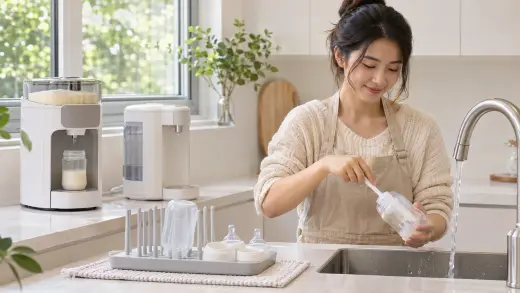
Automatic Formula Machines vs Warm-Water Dispensers: Safe Use and Cleaning
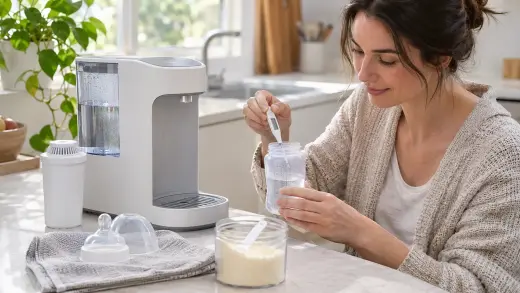
Formula Prep Machines and Dispensers: Safe Water Temperature, Filters, and Cleaning

How to Choose a Safe, Easy-to-Clean High Chair for Your Baby