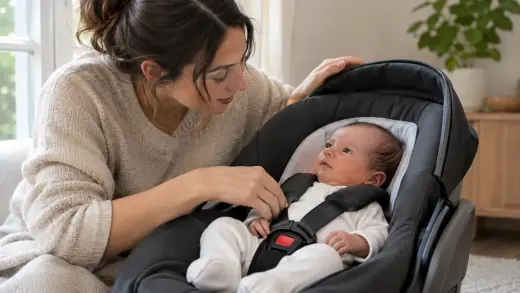
How Packing Cubes Can Simplify Travelling with a Baby
Learn how packing cubes can sort baby clothes, nappies and travel supplies, with simple packing tips for flights, car trips and stays away.

On this page
- What packing cubes do
- Choose a simple packing plan
- How to sort baby items
- Pack for the journey and the stay
- How many cubes should you use?
- Comparison: ways to organise travel items
- Choose materials and sizes
- Pack with your baby's age and needs in mind
- Safety while travelling
- Food, milk, and clean supplies
- Common packing mistakes
- Four-country travel and safety guidance
- A simple packing checklist
- Frequently asked questions
- Sources and further guidance
- Sources
Short answer: Packing cubes can group your baby's travel items by use. Put spare clothes in one cube, nappies in another, and feeding items in a third. Keep the things you need soon near the top of your bag. Cubes can make items easier to find. They do not make travel safer by themselves, and they do not replace careful packing.
Pack for your baby's needs, your route, and the place you will stay. Keep urgent items in a small day bag. Put clean items apart from used or wet ones. Check airline rules before flying. Keep medicines, documents, and feeding supplies easy to reach. Australia’s Product Safety Australia, the UK’s Office for Product Safety and Standards, the US Consumer Product Safety Commission, and Health Canada publish product safety information. For travel rules, check the transport and airport authorities where you travel.
What packing cubes do
A packing cube is a soft bag with a zip. It sits inside a suitcase, backpack, or larger travel bag. Some have mesh panels. Some have a water-resistant lining. Others are simple fabric bags.
Cubes divide the inside of a bag into smaller groups. One cube can hold clothes for your baby. Another can hold nappies and wipes. You can also use a small pouch for spare dummies or a clean bib.
The main benefit is sorting. You can look for one group of items without moving everything else. A cube can also help you keep clean clothes away from used clothes. The benefit depends on how you pack and label each cube.
Packing cubes do not always save space. A full cube still takes up space. Some cubes add weight. Compression cubes can press clothes into a smaller shape, but they may make bags heavy or harder to close. Avoid squeezing items that need careful handling.
Choose a simple packing plan
Start with your trip details. Think about how long you will be away, the weather, and how often you can wash clothes. Consider how you will travel. A car gives you different storage options from a train or plane.
Write a short list before packing. Separate items by what they are for. Then choose a cube or pouch for each group. You do not need a cube for every item.
- Clothes: pack outfits together, or group tops and bottoms.
- Nappy changes: keep nappies, wipes, and a change mat together.
- Feeding: group clean bottles, bibs, and other feeding supplies.
- Sleep: pack familiar sleep clothes or a sleeping bag, if used.
- Wet items: use a separate washable or water-resistant bag.
- Small items: use a small pouch for socks, dummies, or hair ties.
Keep some items outside the main suitcase. You may need a nappy, a clean outfit, a cloth, or a feed during the journey. Put those items in a day bag or the top pocket of your travel bag.
How to sort baby items
Choose groups that match how you will use the items. Sorting by purpose can be easier than sorting by colour or size. A person helping you can also find items more quickly when the groups are clear.
Clothes by outfit
Pack each outfit together if changing your baby often takes time. You might include a top, bottoms, socks, and a clean nappy. A small labelled pouch can hold one spare outfit for the journey.
Another option is to group clothes by type. Put tops in one cube and bottoms in another. This can suit longer trips where you will unpack at your destination. Choose one method that you can remember.
Nappy supplies
Keep a few nappies and wipes in a pouch that you can reach quickly. Store the rest in your main bag. Include bags for soiled clothes or nappies if you normally use them.
Do not store used nappies beside clean clothes. A sealed, separate bag helps contain odours and dampness. Empty it when you can. Keep all small bags away from your baby's reach.
Feeding items
Keep clean feeding items together. The exact supplies depend on how your baby feeds. You may need a bib, a cloth, a clean bottle, or other items your family uses.
Follow safe preparation and storage advice for expressed milk or formula. Do not assume a cube keeps food cold or clean. Use a suitable insulated bag and cold source when needed. Keep feeding items clean and separate from dirty items.
For airline travel, check current rules for milk, formula, food, and liquids. Rules can differ by airport and route. Carry what you need for the trip, and allow extra time for screening.
Sleep items
A cube can hold sleep clothes or a sleeping bag. It cannot turn an unsafe sleep space into a safe one. Check the sleep space at your destination before your baby sleeps.
Use a suitable cot or travel cot with its correct mattress. Follow its instructions. Keep the sleep area clear of loose items. Do not put spare blankets, toys, or packed items in the cot.
Pack for the journey and the stay
Think about when you will need each item. Put journey items where you can reach them. Put items for later in the suitcase. This can save you from opening every cube during a stop.
For a car trip, keep essentials within an adult's reach after the car is parked. Do not place loose bags where they can distract the driver or block a view. Secure luggage so it cannot move around. Never reach for an item while driving.
For a flight or train trip, consider what you can carry at once. A heavy bag can be hard to lift while holding a baby. Keep documents, medicines, and urgent supplies in a small bag you can carry yourself.
At your destination, unpack only what you need. Place clean clothes in a drawer or leave them in their cube. Keep used clothes apart. Store cubes and bags where your baby cannot pull them down or chew on them.
How many cubes should you use?
There is no required number. Start with one or two. Use more only if they make your bag easier to use. Too many small cubes can make it harder to find things.
Try a simple layout: one cube for clothes, one pouch for nappy supplies, and one bag for wet items. Keep feeding supplies in a separate, clean section. Add another cube only when a real need appears.
For a short outing, a single organiser pouch may be enough. For a longer holiday, a few cubes can keep different types of items apart. The best setup is the one you can use without stopping to think.
Comparison: ways to organise travel items
| Option | Useful for | Limits | Simple tip |
|---|---|---|---|
| Packing cube | Grouping clothes or other dry items | Adds a layer and may take up space | Use one clear group per cube |
| Small pouch | Items needed during an outing | Can become crowded if overfilled | Keep it in an easy-to-reach pocket |
| Washable wet bag | Separating damp or soiled clothes | Needs washing and drying after use | Keep it apart from clean items |
| Insulated food bag | Keeping food or milk at the needed temperature | Needs suitable cold storage when required | Follow food safety advice |
| Large suitcase compartment | Storing larger items together | Small items can shift around | Put urgent items elsewhere |
| Plastic or reusable bag | A quick spare bag for dirty items | May tear or leak, and needs safe storage | Keep it away from children |
These options do different jobs. A packing cube is for sorting. A wet bag helps separate damp items. An insulated bag helps with food storage when used correctly. No bag should be treated as a safety device.
Choose materials and sizes
Pick cubes that fit your bag. A cube that is too wide may waste space. A cube that is too small may be hard to use. Check the measurements before buying, if you are buying one.
Light fabric may be easier to carry. Mesh can help you see what is inside. But mesh does not keep contents private or dry. A water-resistant lining may help with small spills. It does not guarantee a bag will not leak.
Look for a zip that opens and closes smoothly. Check seams for loose threads. Avoid damaged cubes with sharp parts or broken zips. Wash the cube before use if its care label allows.
Keep cubes away from your baby's sleep space. A cube, drawstring, handle, or zip pull can be a hazard if left in a cot or within reach. Store them out of reach when unpacking.
Pack with your baby's age and needs in mind
Babies need different things as they grow. Your trip plan should match your own baby's needs. Age alone does not tell you every item to bring.
Newborns
Newborns may need frequent feeds and nappy changes. Keep clean clothes, nappies, and feeding supplies close at hand. Bring extra clothing for the baby and, if useful, for the adult carrying them.
Newborns also need a safe place to sleep. Check the cot or travel cot before the trip. Keep the baby's face clear during sleep. Ask your health professional if you need advice for a baby with extra health needs.
Older babies
Older babies may start solids, crawl, or make more mess. Pack feeding items that match your baby's stage. Bring a bib and a cloth if you use them at home.
Keep small items, cords, and plastic bags out of reach. Babies explore with their hands and mouths. Do not leave a cube open where your baby can pull out unsafe items.
Toddlers
Toddlers may want to choose their own clothes or carry a small bag. You can put a few safe items in a small pouch for them. Keep medicines, sharp objects, and small choking hazards with an adult.
A familiar book or toy may help on a long journey. Keep it easy to reach. Check that it is suitable for your child's age and has no damaged parts.
Safety while travelling
Packing is only one part of safe travel. Use the right child restraint for your child and vehicle. Follow the restraint instructions and the road rules where you travel. Do not place bags or other items around a child in a way that affects the restraint.
Keep your baby in the correct restraint during the journey. Do not feed a baby while the vehicle is moving if this means removing them from their restraint. Plan stops when your baby needs care.
When flying, check whether your airline permits your child to use an approved seat. Ask about the rules for a car seat, pushchair, and carry-on bag. Requirements can vary between airlines and countries.
At airports and stations, keep bags under control. Do not hang heavy bags from a pram handle if this could make it tip. Follow the pram maker's instructions. Keep your baby secured whenever the pram is moving.
Food, milk, and clean supplies
Food and milk need more care than ordinary clothes. A packing cube does not chill food or stop germs from growing. Use safe containers and follow advice from a health authority.
For expressed breast milk, follow guidance from a trusted health service. Use clean containers. Mark them if needed. Keep milk at a safe temperature during travel.
For formula, follow the product instructions and health guidance for making and storing feeds. Do not prepare feeds in advance unless the guidance says how to store them safely. Ask your baby's health professional if you are unsure.
Keep used bottles separate from clean ones. Wash and sterilise them as advised for your baby's age and situation. Do not put clean feeding items in a pouch that held dirty clothes.
For airport security, check the official rules before leaving. Tell screening staff if you carry milk or baby food. Pack these items so they are easy to remove if asked.
Common packing mistakes
- Packing too much: extra items make bags heavier. Plan outfits around the trip and laundry options.
- Putting everything in one cube: you may need to empty it to find one item. Use a few clear groups.
- Hiding urgent supplies: keep the day’s essentials easy to reach.
- Mixing clean and used items: separate damp clothes and used items in a suitable bag.
- Assuming cubes save space: cubes can help with order, but may add bulk.
- Using a cube for cold storage: use the right insulated bag and cooling method instead.
- Leaving bags near the baby: store them away from sleep spaces and small children.
- Forgetting local rules: check airline, airport, and road rules for your route.
- Packing medicines at the bottom: keep medicines with an adult and follow storage instructions.
Four-country travel and safety guidance
Travel rules can vary by country, airport, airline, and route. Check current official advice before leaving. Product safety bodies can help you check recalls and safe use. They do not set every airline's baggage rules.
| Place | Useful official body | What to check |
|---|---|---|
| Australia | Product Safety Australia and the Civil Aviation Safety Authority | Product recalls, safe use, and air travel items such as batteries |
| United Kingdom | Office for Product Safety and Standards and GOV.UK | Product safety information and hand luggage rules |
| United States | Consumer Product Safety Commission and Federal Aviation Administration | Product safety, child travel advice, and items allowed on aircraft |
| Canada | Health Canada and the Canadian Air Transport Security Authority | Product recalls, airport screening, and family travel information |
For safe sleep advice, consult a trusted health body in your country. Australia has Red Nose. The UK has The Lullaby Trust and the NHS. The US has the American Academy of Pediatrics. Canada has the Canadian Paediatric Society.
For car travel, use your local road authority and restraint guidance. Australian families can check Product Safety Australia and Pregnancy, Birth and Baby. UK families can check GOV.UK. US families can check the National Highway Traffic Safety Administration. Canadian families can check Transport Canada.
A simple packing checklist
Use this as a starting point. Change it to suit your baby, trip, and usual care plan.
- Clean clothes for the journey and stay.
- Nappies, wipes, and a change mat.
- A separate bag for wet or soiled items.
- Feeding supplies for the journey.
- Any medicines your baby needs, stored as directed.
- Sleep clothes and the baby's usual sleep bag, if used.
- A familiar comfort item that is safe for your child's age.
- Important documents and contact details.
- A small pouch with items needed during the trip.
- Any travel items required by your airline or transport provider.
Before leaving, check that the car restraint or pram is ready. Check the weather. Check that feeding items are stored safely. Put your phone, keys, and documents where you can find them.
Frequently asked questions
Do packing cubes make a suitcase smaller?
Not always. They can keep items grouped and stop clothes from spreading through a bag. Some cubes add bulk. Compression cubes can reduce the space taken by soft clothes, but they can make a bag heavier or harder to close.
How many packing cubes do I need for a baby?
There is no set number. Try one cube for clothes and a separate pouch for urgent supplies. Add another only if it helps you find things. A small trip may need no cubes at all.
Should I pack nappies in a cube?
You can keep spare nappies in a cube or pouch. Keep a few in an easy-to-reach day bag. Store used nappies apart from clean clothes and feeding supplies.
Can I use a packing cube for baby bottles or milk?
Use a cube to carry clean, dry items if it stays clean. It does not keep milk cold. Use suitable cold storage and follow official advice for milk or formula.
Are packing cubes safe to leave in a cot?
No. Keep cubes, bags, and luggage out of the cot. A cot should have a clear sleep space. Store bags where your baby cannot reach them.
What should go in the day bag?
Pack the items you may need before you reach your destination. This often includes a nappy, wipes, a change of clothes, a feeding item, and any medicine your baby needs. Choose items based on your trip.
Should I use compression cubes?
They can press soft clothes into a smaller shape. They do not reduce the weight of those clothes. Use them only if your bag still closes easily and you can reach what you need.
Can cubes help keep clean clothes clean?
They can help keep clothes grouped, but a cube is not sterile. Keep clean clothes away from used items, food spills, and damp items. Wash cubes when they become dirty.
What should I check before flying with a baby?
Check your airline's rules for baggage, child seats, prams, milk, and baby food. Check the airport security rules for your route. Official rules can change, so review them before each trip.
Do I need special cubes for a short trip?
No. A reusable bag or small pouch may be enough. Choose a setup that is simple to carry and easy to open. The goal is to find items quickly.
Sources and further guidance
- Product Safety Australia (ACCC) – Car seats guide
- GOV.UK – Hand luggage restrictions: baby food and baby milk
- Federal Aviation Administration (US) – Flying with children
- CATSA (Canada) – Families
- Red Nose Australia – What is a safe sleeping environment
- The Lullaby Trust (UK) – Safer sleep on holiday
- American Academy of Pediatrics – Flying with baby
- Canadian Paediatric Society – Car seat safety
Disclaimer: This article gives general information. It is not medical advice. Ask your child's health professional about your baby's needs. Check current official travel, product safety, and transport advice for your route. Some links may be affiliate links. If you buy through them, BabyGearFinder may earn a commission at no extra cost to you.
Sources
- Product Safety Australia (ACCC) – Car seats guide
- GOV.UK – Hand luggage restrictions: baby food and baby milk
- FAA (US) – Flying with children
- CATSA (Canada) – Families
- The Lullaby Trust (UK) – Safer sleep on holiday
- AAP HealthyChildren.org – Flying with baby
- Caring for Kids (Canadian Paediatric Society) – Car seat safety
Related guides
More Car Seats & Travel →
Travelling with Kids: How to Choose and Use a Convertible Travel Car Seat

Travelling with Kids: How to Choose and Use a Travel Stroller

Travelling with a Toddler? How to Choose and Use a Portable Potty Seat