Twin Newborns: How to Choose Bassinets and a Double Stroller (Side-by-Side or Tandem)
Plain guide to gear for newborn twins: safe bassinet sleep, side-by-side or tandem double strollers, how to measure, what to check, and common mistakes to…
On this page
- Key points
- What "twin bassinet packs" and "double stroller set-ups" mean
- Safe sleep for newborn twins
- Side-by-side or tandem: how they differ
- What a newborn needs from a double stroller
- Measure before you buy
- Weight, handling and daily use
- Safety rules and official bodies
- Strollers by age and stage
- Two bassinets, one pack, or one bigger cot
- Common mistakes with twin gear
- Buying second-hand and checking recalls
- A simple buying checklist for twin parents
- Looking after yourself too
- Frequently asked questions
- Final thoughts
- Sources
Short answer: Newborn twins need two safe places to sleep and a double stroller that lets both babies lie flat. A side-by-side stroller is easier to push in a straight line and easy for both babies to see you. It is wider, though. A tandem stroller (one seat in front of the other) is narrow and fits through most doors. It is longer and harder to turn. Neither type is better for every family. Measure your doors, your boot and your car seats first. Then pick the one that fits your daily life.
The basic rules are the same in Australia (Product Safety Australia and Red Nose), the UK (the Office for Product Safety and Standards and the Lullaby Trust), the US (the Consumer Product Safety Commission and the American Academy of Pediatrics) and Canada (Health Canada and the Canadian Paediatric Society). A stroller is for rides. A bassinet or cot is for sleep. Babies sleep on their back, on a firm flat surface, with nothing soft around them.
Key points
- Sleep: each baby needs a safe, flat sleep space. Check the advice on twins sharing a space with your midwife or child health nurse.
- Lie-flat seats: a newborn needs a stroller seat or bassinet that lies fully flat. Many newborns cannot hold their head up yet.
- Width: side-by-side strollers are wider. Measure your front door, hallway and lift before you buy.
- Length: tandem strollers are longer. Check they fit in your car boot with the wheels on or off.
- Safety marks: look for the label that says the product meets your country's safety rules.
- Not for sleeping overnight: a stroller is not a bed. Move a sleeping baby to a cot or bassinet when you get home.
- Do not overload: heavy bags on the handles can tip a stroller over.
What "twin bassinet packs" and "double stroller set-ups" mean
Shops use many names for twin gear. The names can be confusing. Here is what they usually mean in plain words.
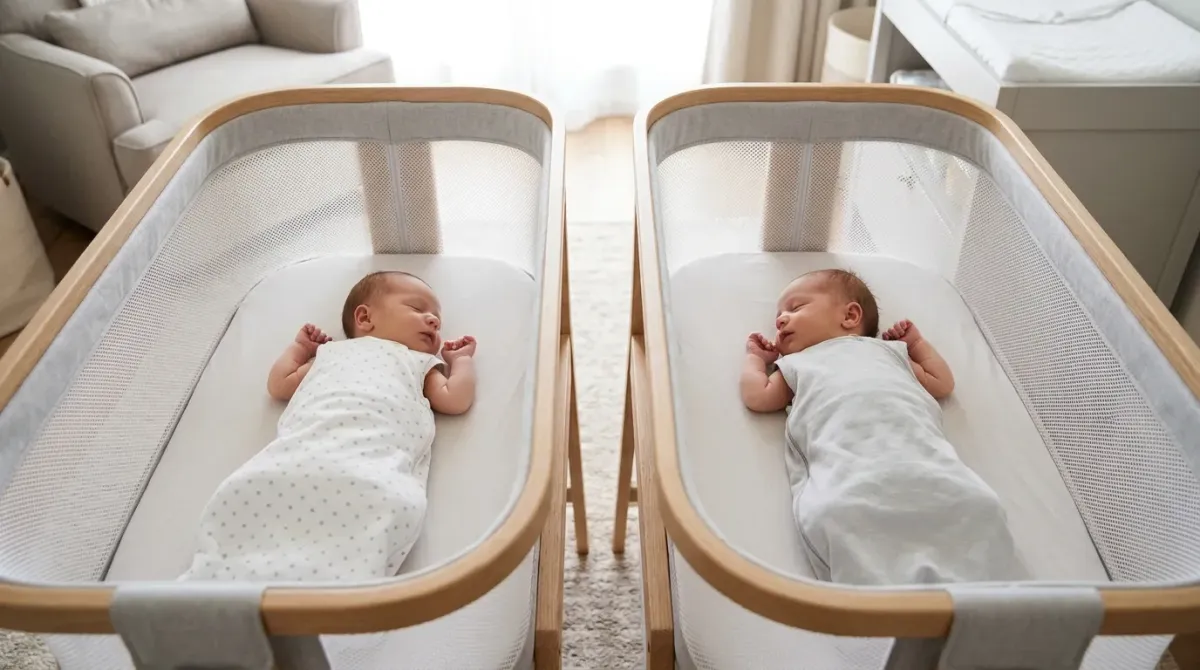
A bassinet is a small, raised bed for a newborn. It is used in the first few months. Babies outgrow it fast. Some bassinets rock. Some sit on a stand. Some sit beside your bed.
A twin bassinet pack is not a standard product name. It usually means one of two things. It may be two bassinets sold together. Or it may be a pack with a double stroller and two lie-flat carry cots (small bed-like shells that sit on the stroller frame). Check what is really in the box before you buy.
A double stroller carries two children. A side-by-side double has two seats next to each other. A tandem (also called in-line or stacked) double has one seat in front of the other. Some tandem strollers have seats at two heights, so one child sits higher than the other.
A travel system is a frame that holds a baby car seat (called a capsule in Australia). For twins, you need a frame that holds two. Some double frames hold two car seats at once. Others hold one car seat and one seat.
Safe sleep for newborn twins
Sleep safety comes before any stroller choice. Newborn babies spend most of the day asleep. Safe sleep rules protect them from sudden infant death and from suffocation.
Red Nose in Australia has six safe sleep recommendations. In short, they say to put baby on the back, keep the face uncovered, keep baby smoke-free, use a safe cot and mattress, sleep baby in their own safe space in the same room as you, and breastfeed if you can. The Lullaby Trust in the UK, the American Academy of Pediatrics in the US and the Canadian Paediatric Society give very similar advice.
What a safe bassinet looks like
- It is sturdy and does not wobble.
- The base is wide enough that it will not tip over if bumped.
- The mattress is firm and flat. It fits the bassinet with no gaps.
- The mattress is the one made for that bassinet. Do not add a second mattress or a soft topper.
- There are no soft bumpers, pillows, toys or loose blankets inside.
- It carries a label showing it meets the safety rules in your country.
In Australia, bassinets and cradles must meet a mandatory safety standard. In the UK, a cradle or crib should follow a European standard such as BS EN 1130 or similar rules. In the US, bassinets must meet federal safety rules. In Canada, bassinets and cradles must meet Health Canada rules. Do not rely on a shop's word alone. Look for the label and the instructions.
Should twins share one bassinet?
This is a common question. Most bassinets are made for one baby. They have a weight limit that is too low for two newborns. They are also too small. Do not put two babies in a bassinet made for one.
For a larger cot, advice on twins sharing can differ between health services and countries. Some say a very early, short period of sharing may be fine for twins. Others say each baby should have their own sleep space. Ask your midwife, child health nurse or doctor. Also read the Red Nose and Lullaby Trust pages on twins and safe sleep. If you are unsure, the simplest safe plan is two separate sleep spaces.
Sleeping in the same room
Red Nose, the Lullaby Trust, the American Academy of Pediatrics and the Canadian Paediatric Society all suggest that babies sleep in the same room as a parent for the first months. With twins, that means two bassinets in your room. A pair of bassinets can be tight in a small bedroom. Measure the floor space before you buy.
Keep both sleep spaces clear. Keep cords, curtains and blind cords well away. Keep the room a comfortable temperature. A baby should not feel hot to touch on the chest or back.
Sleeping in the stroller or car seat
Babies often fall asleep on a walk. That is fine for a short time if you watch them. The rules for stroller sleep are these.
- Use a seat or carry cot that lies flat for a newborn.
- Keep the baby's face clear. Do not cover the stroller with a blanket. A cloth over the top can block air and trap heat.
- Stay close and check your baby often.
- When you arrive home, move the baby to a bassinet or cot.
Red Nose has also warned about social media "hacks" for baby capsules and for tummy time in strollers. Use gear only as the maker says. Do not use a car seat as a bed. A car seat holds a baby in a sitting position. A newborn's head can fall forward and block their breathing. Take a sleeping baby out of the car seat when you reach your destination.
Side-by-side or tandem: how they differ
Both types can work well with newborns. The right one depends on where you live, what car you have and how you will use it.
Side-by-side strollers
The seats sit next to each other. The two babies are the same distance from you. They can see each other. They share the same view.
- Good: the weight is balanced from left to right. It is easy to push on flat paths. Both babies get the same shade and airflow.
- Not so good: the frame is wide. It may not fit through some doors, shop aisles or lifts. Wide frames can be harder on narrow footpaths.
- Best for: wide paths, parks, shopping centres with large aisles, and homes with wide doors.
Tandem (stacked) strollers
One seat sits in front of the other. Or one seat sits above the other. The frame is about as wide as a single stroller.
- Good: narrow, so it fits through most doors and tight spaces. It is easier on busy footpaths.
- Not so good: it is long. It can be harder to turn. In some models the back seat has less space or a smaller view. In some models you cannot recline the back seat fully if the front seat is in the way.
- Best for: cities, older homes, narrow doors and busy streets.
Side-by-side and tandem compared
| Feature | Side-by-side | Tandem (stacked) |
|---|---|---|
| Width | Wide. May not fit some doors. | Narrow. Fits most doors. |
| Length | Short to medium | Long |
| Pushing and turning | Steady on straight paths. Wide turns. | Easy in narrow spots. Long to turn. |
| Fairness for both babies | Both have the same view and space | Front seat often has the better view |
| Newborn lie-flat option | Check each seat lies fully flat | Check the back seat lies flat with the front seat in place |
| Car boot fit | Often wide. Check the folded width. | Often long. Check the folded length. |
| Public transport | Hard on buses, trams and trains in busy hours | Easier, but still long |
| Shop aisles | Tight in small shops | Usually fine |
| Weight shifts | Even from left to right | Weight is front-to-back. It can feel nose-heavy. |
| Best for | Wide paths, suburbs, large homes | Cities, narrow doors, small homes |
This table gives a general guide. Models differ a lot. Always check the maker's details for the exact stroller you plan to buy.
Prams & Strollers worth a look
Real products from our catalogue. We don't show star ratings or review counts; check the current price, stock and reviews on Amazon before you buy.
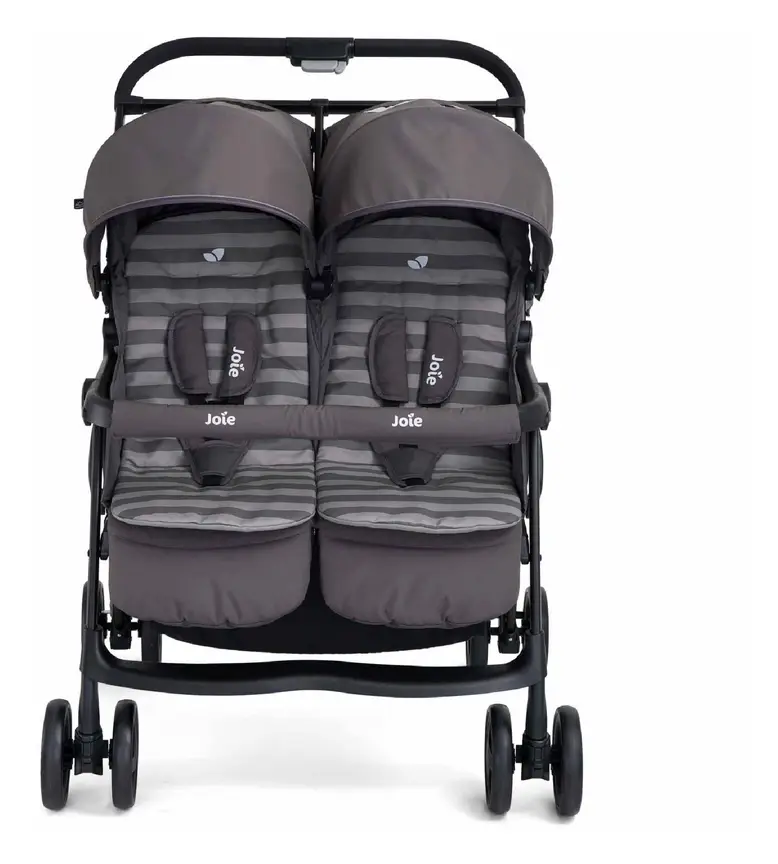
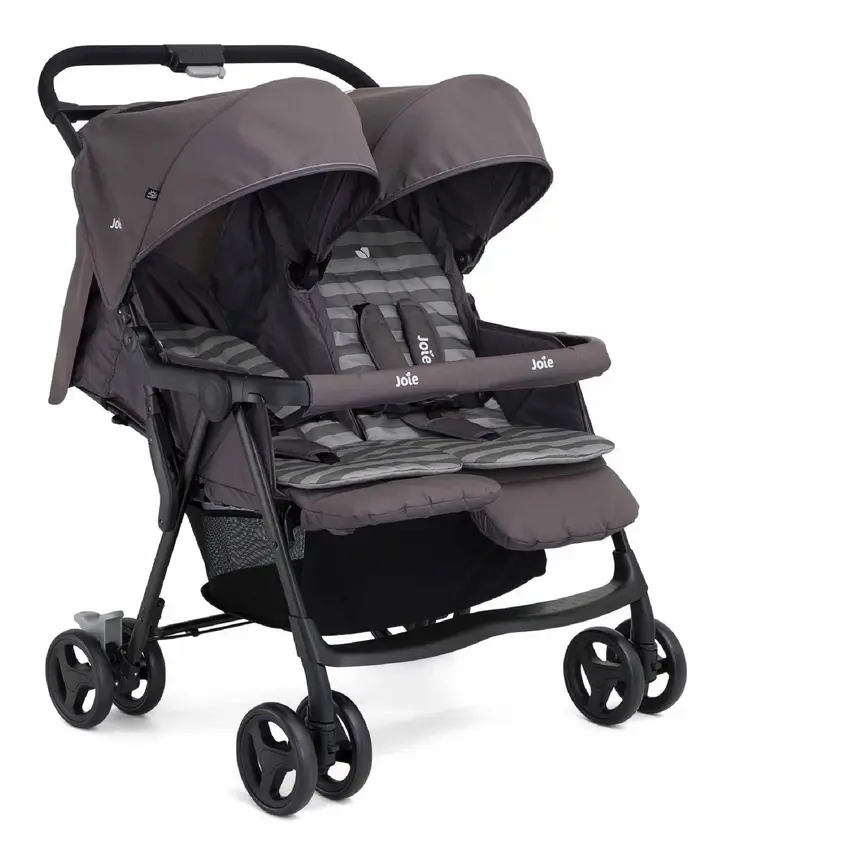

Joie Aire Twin
A lower-cost side-by-side double. Each seat lies flat and reclines on its own.
Read our full review →
Bugaboo Donkey 5
Converts from single to side-by-side double (siblings or twins) by widening the frame.
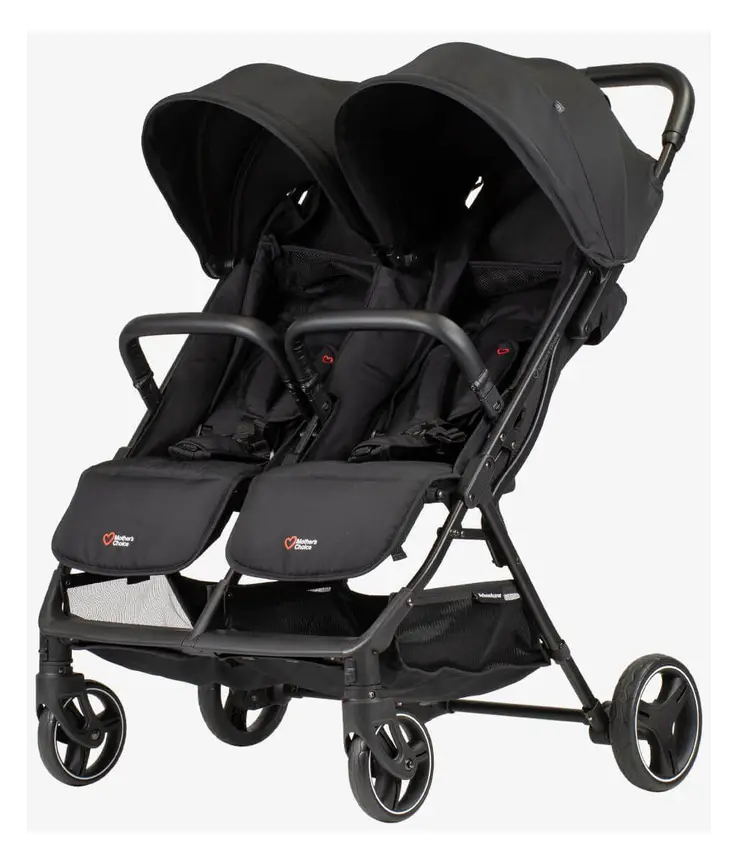
Mother's Choice Adventurer Side-by-Side Double Stroller
Side-by-side double stroller

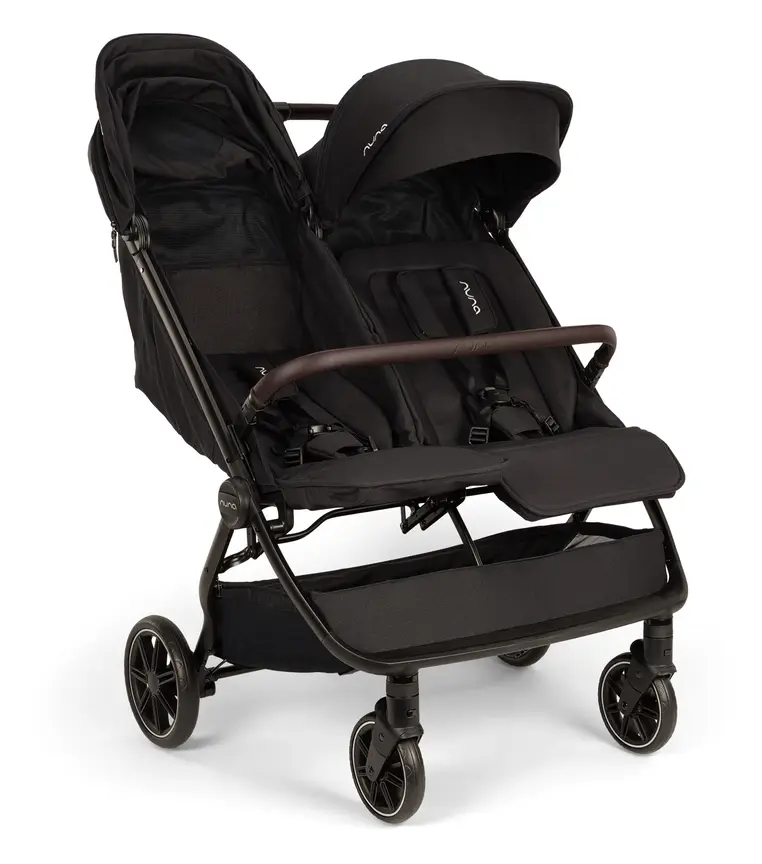
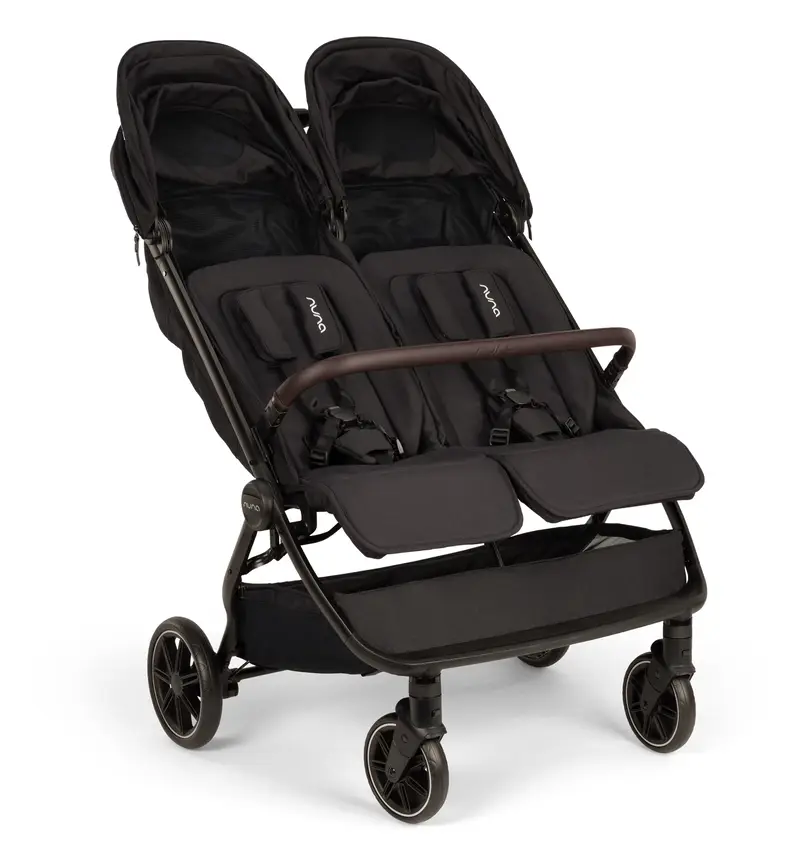
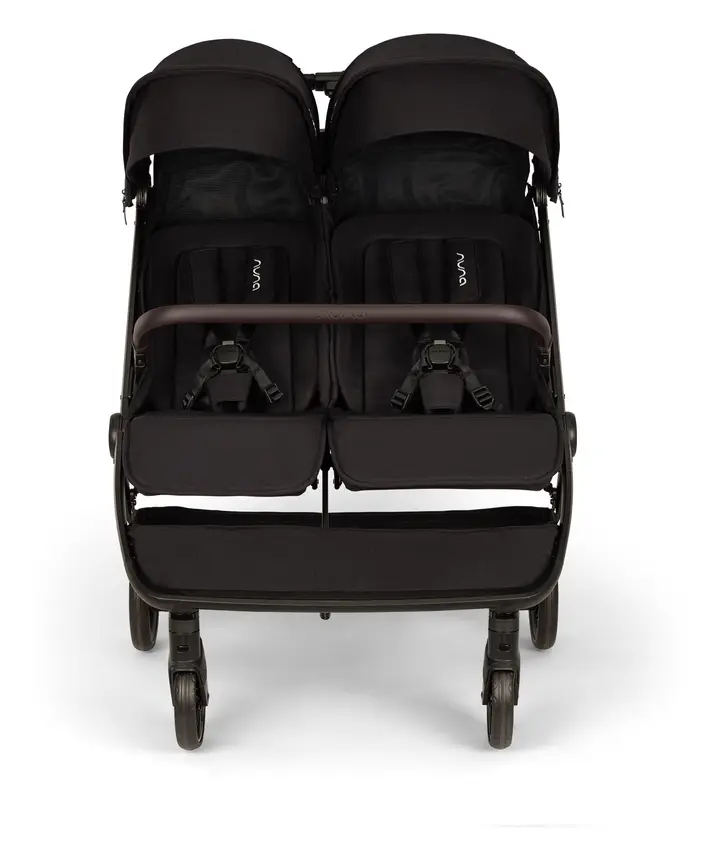
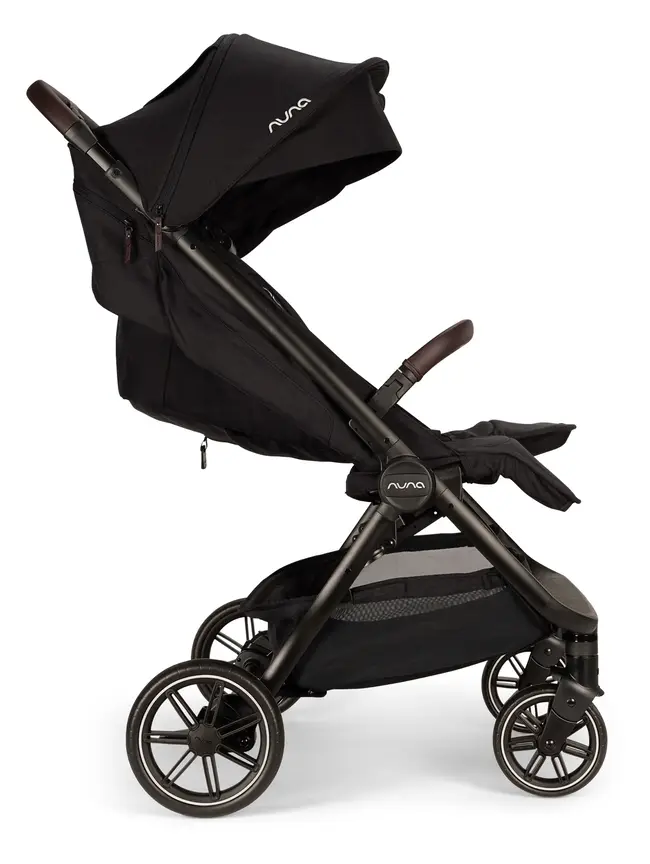
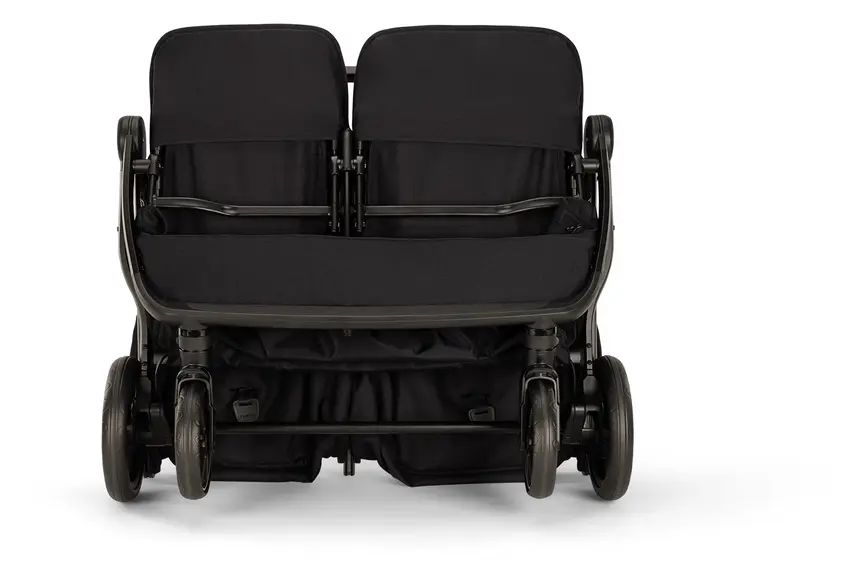
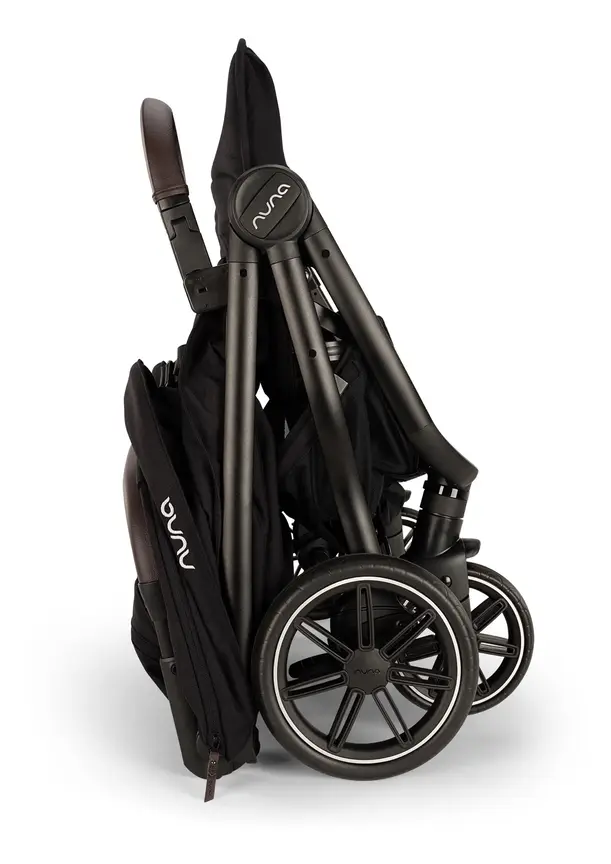
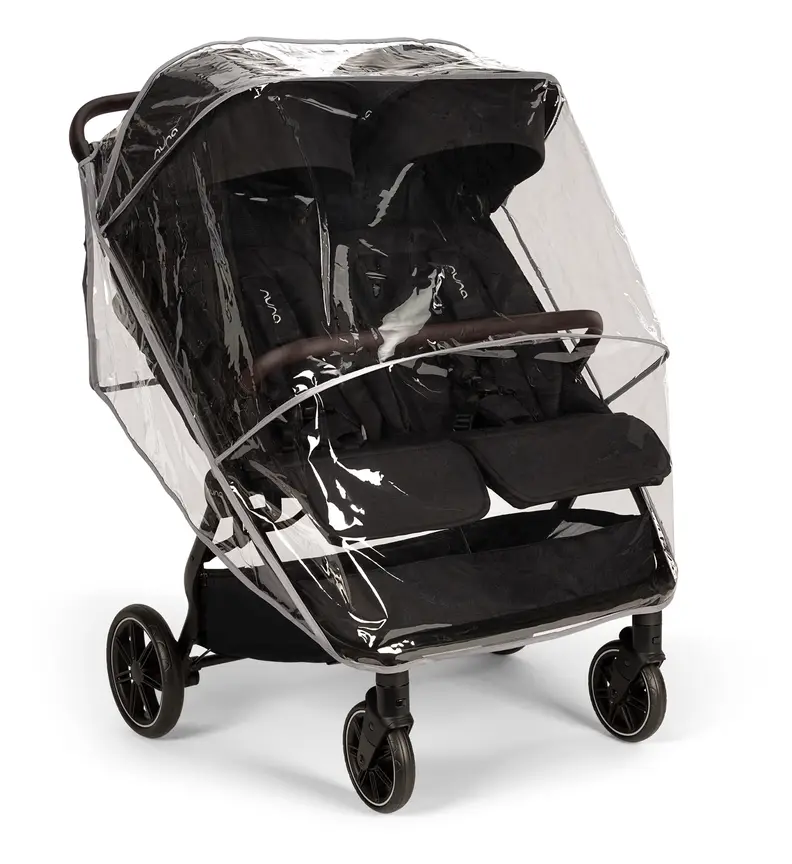
Nuna TRVL Dubl
A side-by-side double that folds with one hand and stands up. Each seat holds up to 22.7 kg.
Read our full review →What a newborn needs from a double stroller
A newborn is not like an older baby. Their neck is weak. Their back is soft. They cannot sit up. This changes what a stroller must do.
A fully flat seat or a carry cot
Many health groups say a newborn should lie flat when they are in a pram or stroller. A flat surface keeps the airway open and supports the back. Look for one of these.
- A seat that reclines to a fully flat position.
- A carry cot (a bassinet-style shell) that clips onto the frame.
- A frame that holds a car seat. Use this only for short trips, not long walks.
With twins, you need this for both babies. Some double strollers lie flat in only one seat. Others lie flat in both seats only with extra parts. Ask the shop to show you both seats lying flat with a doll or a heavy bag.
A five-point harness
A harness keeps a baby secure in the seat. A five-point harness has straps at both shoulders, both hips and between the legs. Check that:
- there is a harness for each seat;
- the straps adjust easily as the babies grow;
- the buckles are easy for you to use but hard for a child to open.
Always use the harness. Even when a baby is asleep and the stroller is only moving a short way.
Brakes that hold
A stroller must have a brake that holds the wheels. Test the brake on a slope in the shop. A good brake should be easy to apply with a foot. Many double strollers have a link between the rear wheels so one push locks both. Always put the brake on when you stop. Never leave a stroller with babies in it on a slope, even with the brake on.
Good shade and airflow
Babies get hot fast. They also get sunburnt easily. Look for:
- a canopy for each seat that covers the baby's head and body;
- mesh panels or vents for airflow;
- a canopy that does not need a cloth thrown over it.
Do not cover a stroller with a blanket to block sun. It stops air flow. Use the canopy, and move to shade instead.
Measure before you buy
Twin gear is big. Many parents buy a stroller and then find it does not fit. A few minutes with a tape measure can save a lot of trouble.
- Measure your front door and back door. Measure the narrowest point, not the frame.
- Measure hallways and tight corners. Check any place where you must turn the stroller.
- Measure your lift or any steps. Note whether you need to carry the stroller up or down.
- Measure your car boot. Check the width, depth and height. Fold the stroller in the shop, then check its folded size.
- Check the stroller's width. The maker lists the width on the box or website.
- Find out where you will store it. A double stroller takes up room, even folded.
Take the stroller out of the box, if the shop lets you. Try folding it with one hand while holding a heavy bag. Try lifting it. A heavy stroller is hard to lift into a car when you also hold a baby.
Check the car seats too
Twin parents often need two car seats in the back seat. That takes space. Check that two child car seats fit side by side in your car before you buy a car seat frame. In Australia, child car seats must meet the Australian standard AS/NZS 1754. In the UK and Europe, seats follow rules such as UN R129 (also called i-Size) or UN R44. In the US, seats follow FMVSS 213. In Canada, seats follow CMVSS 213. Never buy a car seat from a stranger if you do not know its history. A seat that has been in a crash may be damaged in ways you cannot see.
Weight, handling and daily use
A double stroller with two babies is heavy. The whole load may be two babies, two cushions, a baby bag and shopping. Think about daily use.
- Steering: try pushing it with one hand. You may need the other to hold a door.
- Wheels: bigger wheels roll better over bumps, grass and kerbs. Small wheels do well on smooth floors.
- Handle height: the handle should suit your height. If you and your partner differ a lot in height, look for an adjustable one.
- Folding: practise the fold and unfold at home. Some folds need two hands.
- Basket: a large basket helps. But be careful not to overload it. Check the basket's weight limit.
- Parent tray or cup holder: handy, but keep hot drinks away from the babies.
Do not hang bags on the handle
This is a very common mistake. A heavy bag on the handle can tip a stroller backwards, especially with a baby in a lie-flat seat. Put bags in the basket under the seat. If you must hang something light, check what the maker allows.
Safety rules and official bodies
Safety laws differ between countries. The basic goals are the same. Gear should not tip, trap, pinch or collapse. It should hold a baby securely. It should be made of safe materials.
| Country | Who sets rules or gives advice | What to look for |
|---|---|---|
| Australia | Product Safety Australia (run by the ACCC), Red Nose, Standards Australia | Prams and strollers must meet a mandatory standard (AS/NZS 2088). Bassinets and cradles also have a mandatory standard. Check Product Safety Australia recalls. |
| United Kingdom | Office for Product Safety and Standards, the Lullaby Trust, RoSPA | Pushchairs should follow BS EN 1888. Look for UKCA or CE marks and a clear maker's name and address. |
| United States | Consumer Product Safety Commission (CPSC), American Academy of Pediatrics | Strollers follow a voluntary standard (ASTM F833). Bassinets must meet a federal safety rule. Check CPSC recalls. |
| Canada | Health Canada, Canadian Paediatric Society (Caring for Kids) | Strollers and bassinets must meet Health Canada rules. Check the Health Canada recalls list. |
A standard is a set of tests a product must pass. A mandatory standard is the law. A voluntary standard is a set of rules makers agree to follow. Either way, a label is a good sign. It is not a promise that a product is perfect. You still need to read the manual and use the gear well.
What the Australian pram rules cover
Product Safety Australia explains that the mandatory standard for prams and strollers covers things like brakes, harnesses, stability, and parts that could trap fingers or heads. It also requires clear warnings and instructions. If a stroller has no instruction manual or warning labels, do not buy it.
Imported and online buys
Online shops and marketplaces sell strollers made for other countries. These may not meet your country's rules. The seller may not give a safety label, instructions or a way to contact them. If something goes wrong, you may find it hard to get help. Buy from sellers who list the safety standard and who have a local address.
Strollers by age and stage
Twin babies grow fast. What suits at birth may not suit at six months. Plan for change.
| Age (roughly) | What babies can do | What to use |
|---|---|---|
| Birth to 3 months | Cannot hold up the head. Sleep most of the day. | Fully flat seats or two carry cots. Short outings. Car seats on a frame for short trips only. |
| 3 to 6 months | Stronger neck. Starting to look around. | Flat or slightly reclined seats. Watch for signs a baby is outgrowing the carry cot. |
| 6 to 12 months | Sit with help, then alone. Very curious. | Upright seats with a harness. Reclined for naps. Shade and sun protection for each baby. |
| 12 months and up | Climb, wriggle, lean out of seats. | Strong harness every time. Check weight and height limits. |
Always check the weight and height limits on the label. The limit for a carry cot is often lower than the limit for a seat. Your twins may grow out of a carry cot sooner than you expect, especially if one is bigger.
If one twin is bigger than the other
Twins often differ in size. One may be heavier or longer. In a tandem stroller, you might want the bigger baby in the stronger seat. Check the maker's weight limits for each seat. Some strollers have different limits for the front and back seat.
If your twins were born early
Twins are often born early. Early babies may be very small. Some standard seats may not fit them well. Ask the hospital team before you go home. They can tell you how your babies should travel in a car and in a stroller. They can also tell you if your babies need extra head support.
Side by side: more prams & strollers to compare
Real products from our catalogue. We don't show star ratings or review counts; check the current price, stock and reviews on Amazon before you buy.
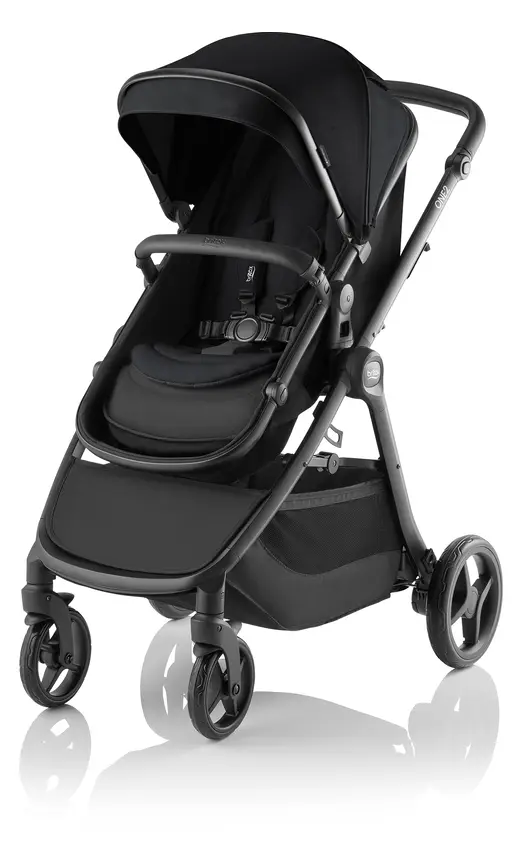
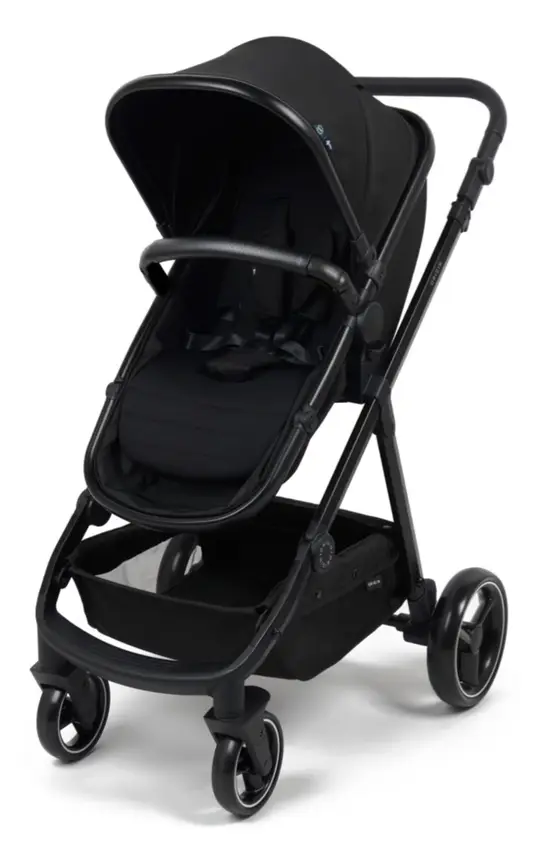
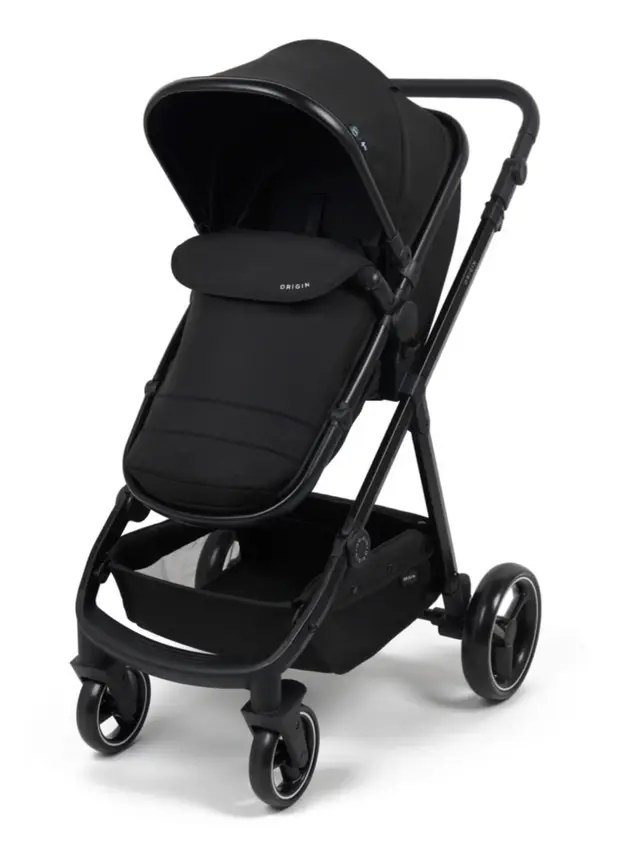
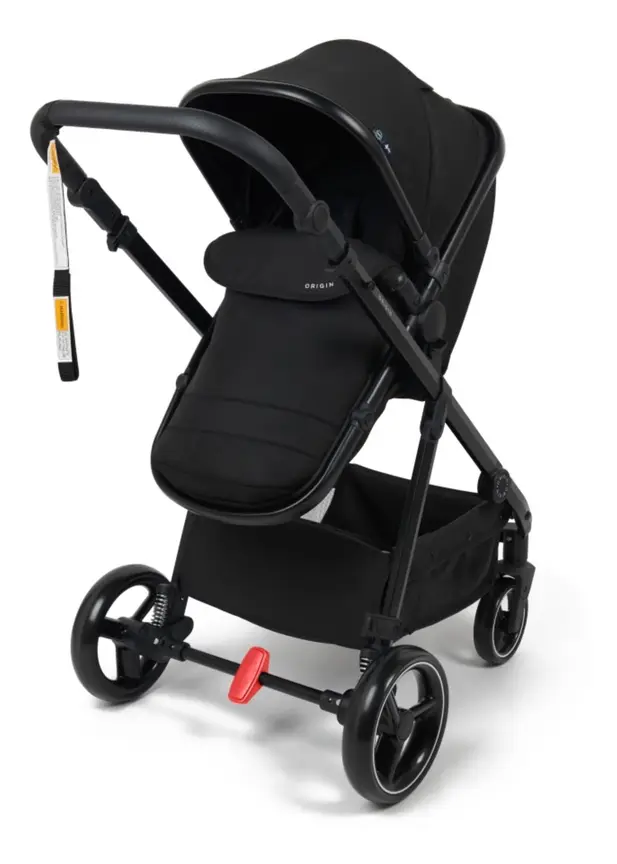
4baby Origin Stroller
A budget pram whose seat turns into a bassinet. The seat can face you or face the world.
Read our full review →
Baby Jogger City Mini GT2
Long-running, lighter all-terrain stroller with a famously simple one-hand strap fold.
 Reviewed
Baby Jogger City Tour 2
A 6.5 kg stroller with a near-flat recline. It folds small and comes with a carry bag.
Read our full review →Two bassinets, one pack, or one bigger cot
You have a few options for sleep gear. Here are some things to think about for each.
Two separate bassinets
This is the easiest to understand. Each baby has their own safe space. If one baby is unwell or restless, you can move that bassinet to another room. The cost is space. Two bassinets take up a lot of floor in a small bedroom.
A bassinet that attaches to the bed
Some bassinets sit right beside your bed. Make sure any attached bassinet meets safety rules and is made to be used that way. Follow the instructions about how to attach it. Do not use a bassinet in a way the maker does not allow.
Two portable cots
Some families skip bassinets and use two portable cots (portacots) from birth. Red Nose notes that a portable cot must meet the mandatory standard and have a firm mattress that fits. Use only the mattress that comes with the cot. Do not add extra padding. Portable cots can be heavy and take up floor space too.
Switching from bassinet to cot
Most babies move from a bassinet to a cot when they outgrow it. Read the label for the limits. Common signs include the baby starting to roll, push up on their hands, or reach the weight limit. Move them before they can tip or climb out. With twins, one baby may reach this point earlier than the other. That is fine. Move each baby when they are ready.
Common mistakes with twin gear
- Buying before measuring. The stroller does not fit the door or the boot.
- Using a seat that does not lie flat. A newborn needs a flat surface.
- Letting babies sleep long in car seats. Car seats are for the car only.
- Covering the stroller with a blanket. This blocks air and traps heat.
- Hanging bags on the handles. The stroller can tip.
- Skipping the harness. A baby can slip, climb or fall out in seconds.
- Using the stroller as a bed at night. Move babies to a safe cot or bassinet.
- Putting two babies in one single-baby bassinet. It is not made for that.
- Adding soft padding or inserts. Only use the parts that came with the product.
- Buying a second-hand stroller without checking it. Check for recalls, damage and missing parts.
- Ignoring weight limits. Two growing babies add up fast.
- Not practising the fold. Learn it at home, not in a car park with two crying babies.
Buying second-hand and checking recalls
Twin gear is costly. Many families look for second-hand items. That can be fine if you are careful.
- Check for recalls. Use Product Safety Australia (recalls page), the UK government's product recalls, the US CPSC recalls list or Health Canada's recalls and safety alerts. Search by the brand and model.
- Check for damage. Look for cracks, bent frames, torn fabric, worn straps and missing screws.
- Check the brakes and harness. Test them. They must work well.
- Check all labels. A missing safety label is a red flag.
- Check the manual. Ask for it, or find it online from the maker.
- Be careful with bassinets and mattresses. A used mattress may be worn or soft. Red Nose and the Lullaby Trust both advise a new, firm mattress where possible.
- Do not buy a used car seat unless you know its full history.
A simple buying checklist for twin parents
- Do both seats lie fully flat, or do I have two carry cots?
- Does it fit my doors, lift and car boot?
- Can I fold it with one hand and lift it?
- Does each seat have a five-point harness?
- Do the brakes hold on a slope?
- Is there a canopy and mesh for each baby?
- What are the weight limits for each seat?
- Does it carry the safety label for my country?
- Is there a manual and a local contact for the maker?
- Is there a recall on this model?
- Are there two safe sleep spaces ready at home?
Looking after yourself too
Caring for twins is hard work. You may feel tired much of the time. That is normal. Good gear helps, but it does not do everything.
- Ask family and friends for help with carrying and shopping.
- Take short, easy outings at first.
- Use a stroller you find easy to push. A hard stroller can strain your back and arms.
- Talk to your child health nurse, doctor or midwife if you feel low or overwhelmed.
- Many areas have twin parent groups. Peers can share tips and spare gear.
More options, from budget to premium
Real products from our catalogue. We don't show star ratings or review counts; check the current price, stock and reviews on Amazon before you buy.

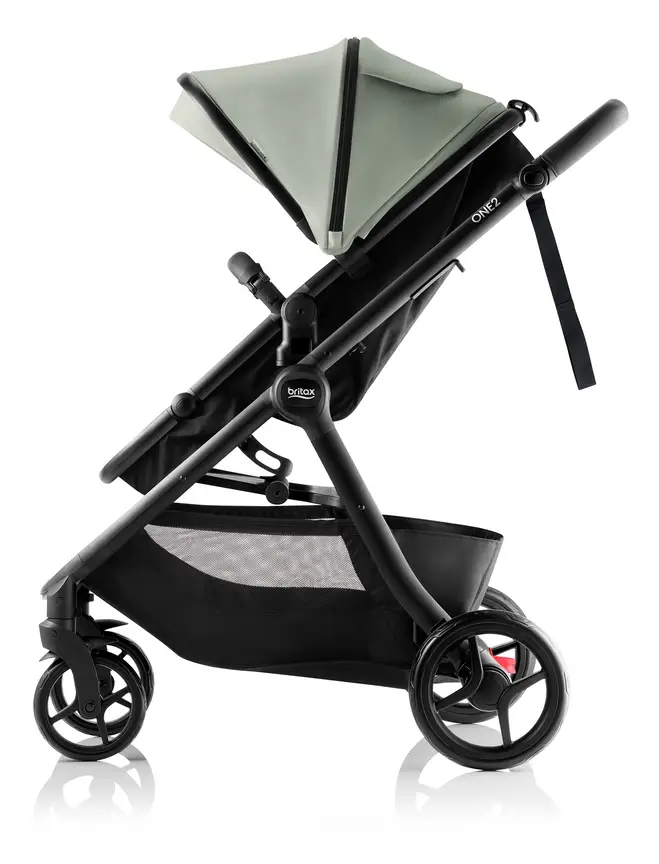
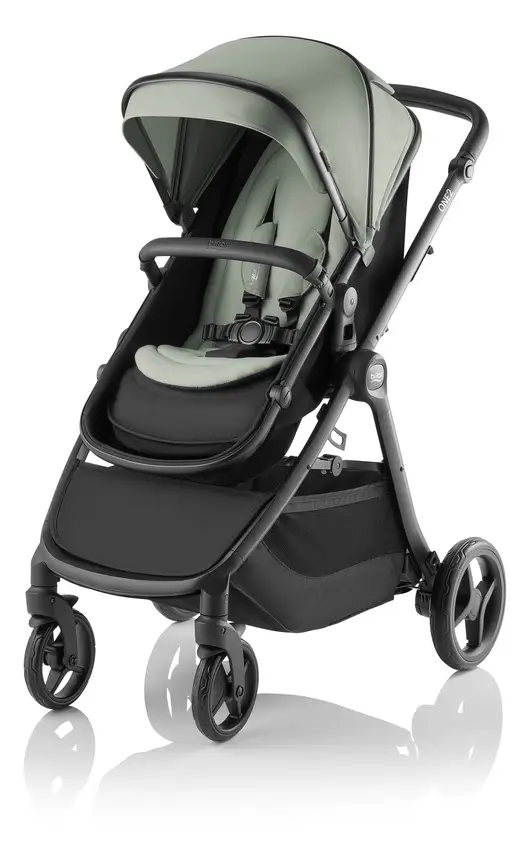


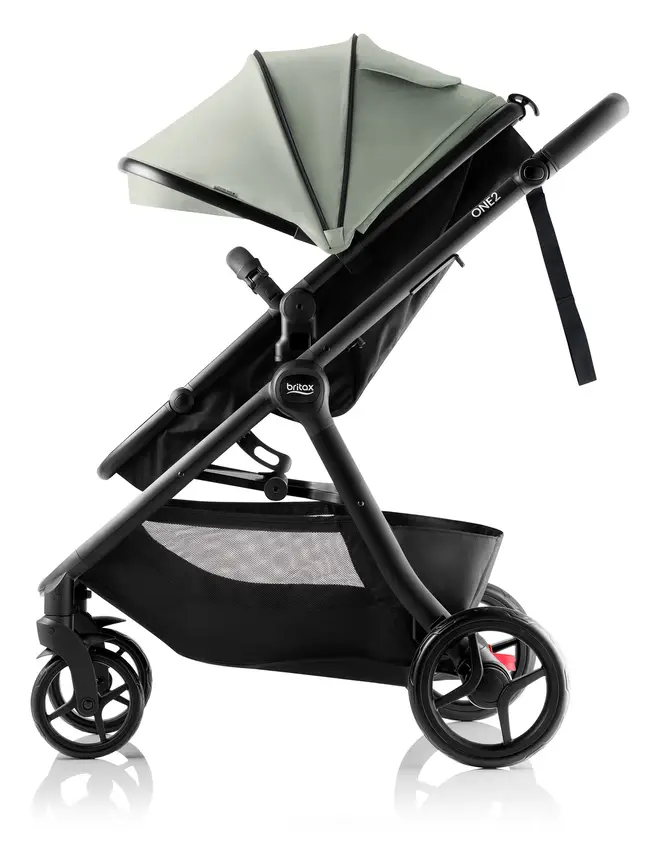


Britax One2
A pram that starts as a single and can take a second child. The seat turns into a lie-flat bassinet.
Read our full review →
Frequently asked questions
Is a side-by-side or tandem stroller better for newborn twins?
Neither is better for every family. Side-by-side is steady and fair for both babies. It is wide. Tandem is narrow and fits tight places. It is long. Check that both seats lie fully flat for your newborns. Then measure your doors and car boot. Pick the one that fits your home and your daily trips.
Can two newborn twins sleep in one bassinet?
Most bassinets are made for one baby. Do not put two babies in a single-baby bassinet. For a larger cot, advice on twins sharing can differ. Ask your midwife or child health nurse. Read the Red Nose and Lullaby Trust guidance. The simplest safe plan is a separate safe sleep space for each baby.
Can my twins sleep in the stroller?
A short nap in a flat stroller seat is fine if you watch them. Keep their faces clear. Do not cover the stroller with a blanket. Move them to a cot or bassinet when you get home. A stroller is not a safe bed for overnight sleep.
Can I put baby car seats on a double stroller?
Some double frames take two car seats. Use car seats on a frame only for short trips. A car seat holds a baby in a sitting position. That can be hard on a newborn's breathing if they stay there too long. Check that the car seat and the frame are made to work together.
When should my twins stop using bassinets?
Check the weight and height limits on the label. Also watch for signs like rolling, pushing up on hands or looking like they are nearly too big. Move each baby to a cot before they outgrow the bassinet. One twin may be ready earlier than the other.
What age can twins sit upright in a double stroller?
Babies usually sit upright in a stroller seat when they can hold their head steady and sit with some help. This often happens at around six months, but each baby is different. Ask your child health nurse if you are unsure. Check the maker's guide for the minimum age and the lie-flat advice.
Do I need to buy a stroller made for twins, or can I use two singles?
Two single strollers are hard for one adult to push. A double stroller is made to carry two babies safely with one adult. If you are alone often, a double is a better choice. If two adults go out together, two singles may work, but it is less common.
How do I know a stroller is safe?
Look for the safety label that fits your country. Check that there is a manual, brakes, a harness and clear warnings. Search for recalls on the model. Buy from a seller with a local contact. Use the stroller only as the maker says.
Final thoughts
Twin gear can seem huge and costly. Take it in small steps. First, set up two safe sleep spaces. Then choose a stroller that lies flat for both babies and fits your doors and car. Learn how to fold it, brake it and use the harness. Follow the safe sleep advice from Red Nose, the Lullaby Trust, the American Academy of Pediatrics and the Canadian Paediatric Society. If a rule is unclear, ask your midwife or child health nurse. Your babies need safe gear and a rested parent more than they need the fanciest set-up.
Sources
- Product Safety Australia – Prams and strollers guide
- Product Safety Australia – Prams and strollers mandatory standard
- Product Safety Australia – Bassinets and cradles guide
- Red Nose Australia – Six safe sleep recommendations
- Red Nose Australia – Warning on social media hacks for baby capsules
- The Lullaby Trust – Safer sleep overview
- American Academy of Pediatrics (US) – A parent's guide to safe sleep
- Caring for Kids, Canadian Paediatric Society – Safe sleep for babies
Related guides
More Prams & Strollers →
Side-by-Side vs Inline Tandem Double Prams: Doorways, Kerbs, and How to Choose

Tandem vs Side-by-Side Double Prams: Choosing for Doorways and Shops

Double Tandem vs Side-by-Side Prams for Twins: Weight Balance, Lifting, and Boot Fit