Stroller Wagons vs Double Strollers: How to Choose for Daily Trips and Theme Parks
Compare stroller wagons and double strollers by age, steering, storage, safety and travel rules. Choose the right ride for your children and daily trips.

On this page
- What is the difference?
- Start with your children's ages and needs
- Push and pull: what feels different?
- Seats, footwells and shared space
- Storage, folding and daily travel
- Comparison table: stroller wagon or double stroller?
- Safety checks before every trip
- Age stages and changing needs
- Theme parks, events and venue rules
- Safety advice in Australia, the UK, the US and Canada
- Common mistakes to avoid
- How to make a practical choice
- Frequently asked questions
- Sources and official guidance
- Sources
Short answer: A double stroller is usually easier for everyday walks, shops and public transport. A stroller wagon can suit older children who can sit upright and follow instructions. It may offer more room for bags and shared seating. Both types vary widely. Check the exact model's age, weight and height limits before use. A wagon is not a car seat, cot or safe place to sleep.
There is no single best choice for every family. Think about your children's ages, the places you go, storage at home, and who will push or pull it. Try the model with the children and belongings you expect to carry. Check local rules before taking it into a theme park or venue.
What is the difference?
A double stroller has two child seats on a wheeled frame. Seats may sit side by side or one behind the other. Each seat might recline separately. Some models accept a newborn with a suitable carrycot or approved infant seat. The maker's instructions decide which setups are allowed.
A stroller wagon has a large, open-sided body, usually with two or more seats or benches. Many models have a handle at one end. Some also have a handlebar for pushing. The child space may have a footwell or a flat floor. Designs differ, so do not assume every wagon has the same features.
The names can be confusing. A product called a wagon may not be made for babies. A product with a push handle may still be intended for pulling. Read the manual. Check whether the maker says the product is a stroller, a wagon, or both. Follow the instructions for the exact model.
Start with your children's ages and needs
Age labels are only a starting point. Children develop at different speeds. Use the maker's stated minimum age, maximum weight and maximum height for each seat. Check whether the limit applies to one child or the whole product.
For a young baby, head and body support matter. Use only a seat or carrycot the maker approves for that model. A newborn must not ride in a seat that requires them to sit upright. Do not add a pillow, liner or other insert unless the maker approves it.
Some double strollers allow a baby and an older child to ride together. The baby may need a separate carrycot or infant seat. Check that the full combination is approved. A car seat attached to a stroller is for travel. It is not a regular sleep space. Move a sleeping baby to a safe, flat sleep space when practical.
Many wagons have seats that expect a child to sit upright without added support. Some makers set a minimum age. Others give a limit based on the child's ability to sit unaided. Follow that model's wording. Do not put a young baby in a wagon just because a cushion or car seat seems to fit.
Older toddlers may prefer seeing each other and sharing a space. They may also argue over room, toys or leg space. A divided double stroller can help keep each child in a defined seat. A wagon can make it easier for children to sit together, but it may also invite climbing and standing. Supervise closely.
Consider each child's needs. A child who naps on walks may need a proper reclining seat. A child who likes to get in and out may need a safe, low step and a clear rule about when to climb. Children with mobility or health needs may need advice from a health professional and a product that supports those needs.
Push and pull: what feels different?
Most double strollers are designed to be pushed from behind. The handle height, shape and position affect comfort. A handle that is too low or too high can make a long walk tiring. If several adults will use it, check whether the handle adjusts.
Some wagons can be pushed, pulled, or both. Pulling changes how the load moves. The wagon follows behind and may be harder to watch. Pushing can make it easier to see children, but only if the model is designed for that use. Use the handle the maker says to use. Do not attach a homemade strap or tow it with a bicycle.
Before buying, walk with the empty product. Turn it in a tight space. Try a kerb ramp if safe. Then test with the children and a normal load. See whether the handle stays comfortable and whether you can see the children. A heavy load can make steering and stopping harder.
Think about hills, uneven paths, doorways and crowds. Small wheels may work well on smooth floors, but can struggle on rough paths. Larger wheels may handle bumps better, but add size and weight. Wheel size alone does not prove that a product is suitable for a particular surface.
Check the brakes. Find out how to set them and whether they lock the wheels. Practise before you use the product near traffic or on a slope. Do not leave children unattended, even with the brake set. Keep one hand on the handle when the product is stopped.
Prams & Strollers worth a look
Real products from our catalogue. We don't show star ratings or review counts; check the current price, stock and reviews on Amazon before you buy.
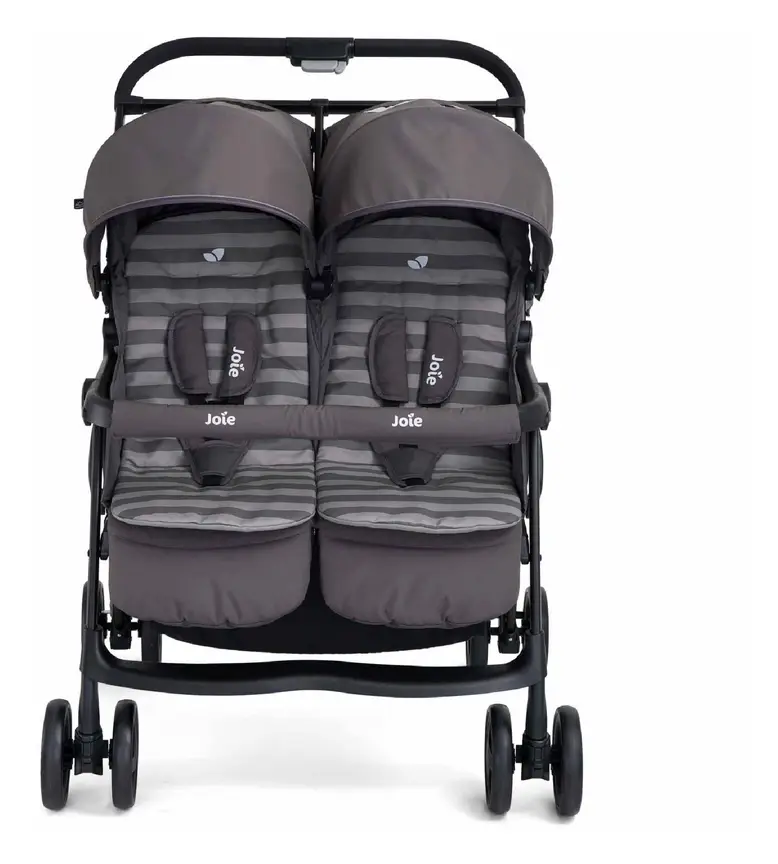
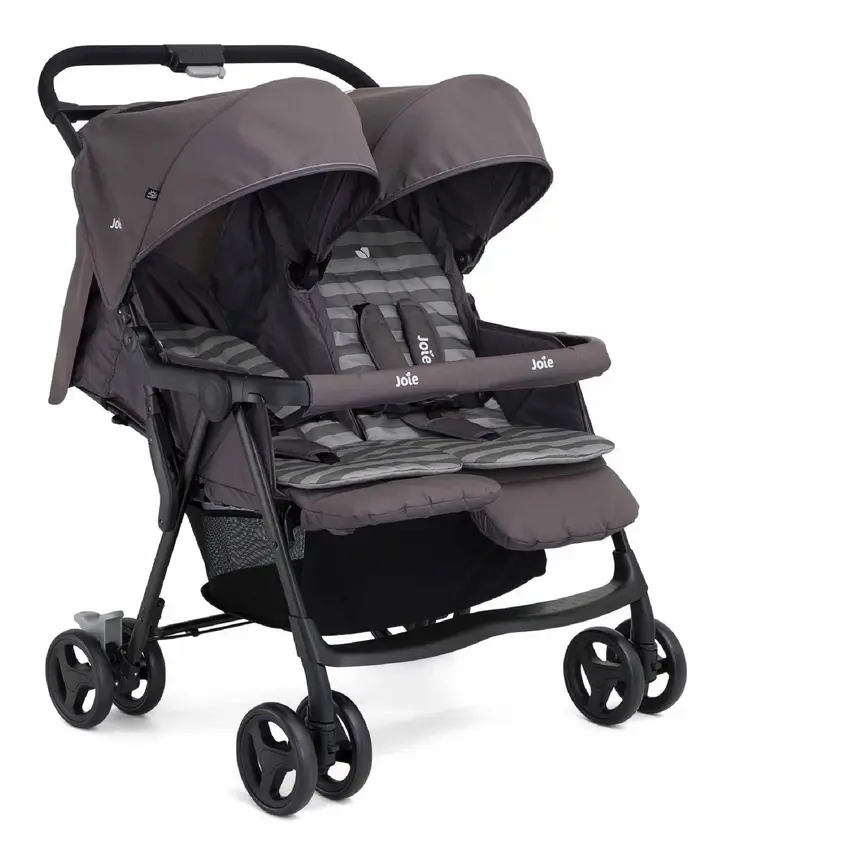

Joie Aire Twin
A lower-cost side-by-side double. Each seat lies flat and reclines on its own.
Read our full review →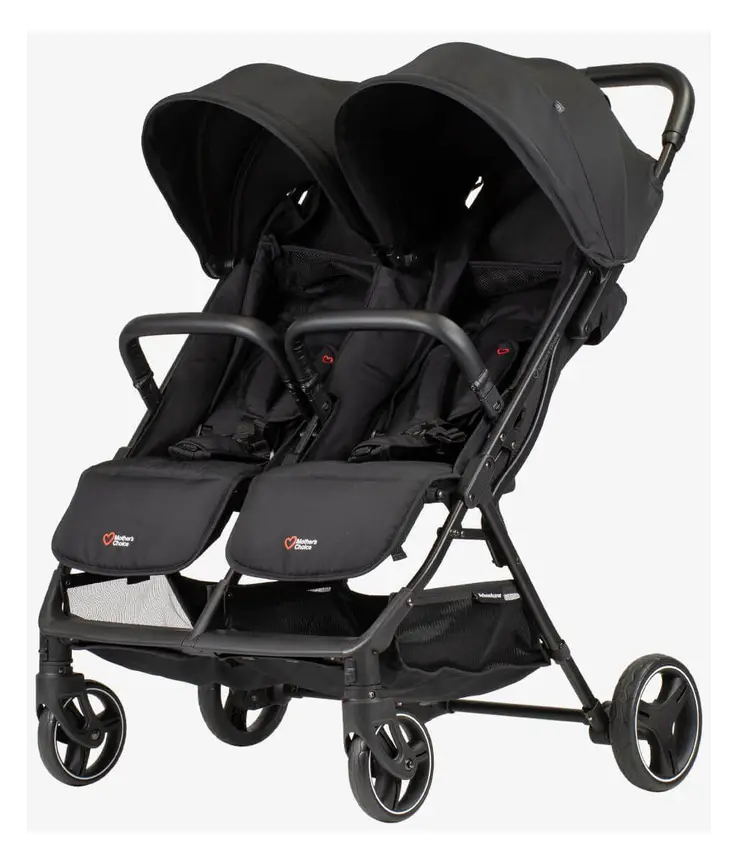
Mother's Choice Adventurer Side-by-Side Double Stroller
Side-by-side double stroller

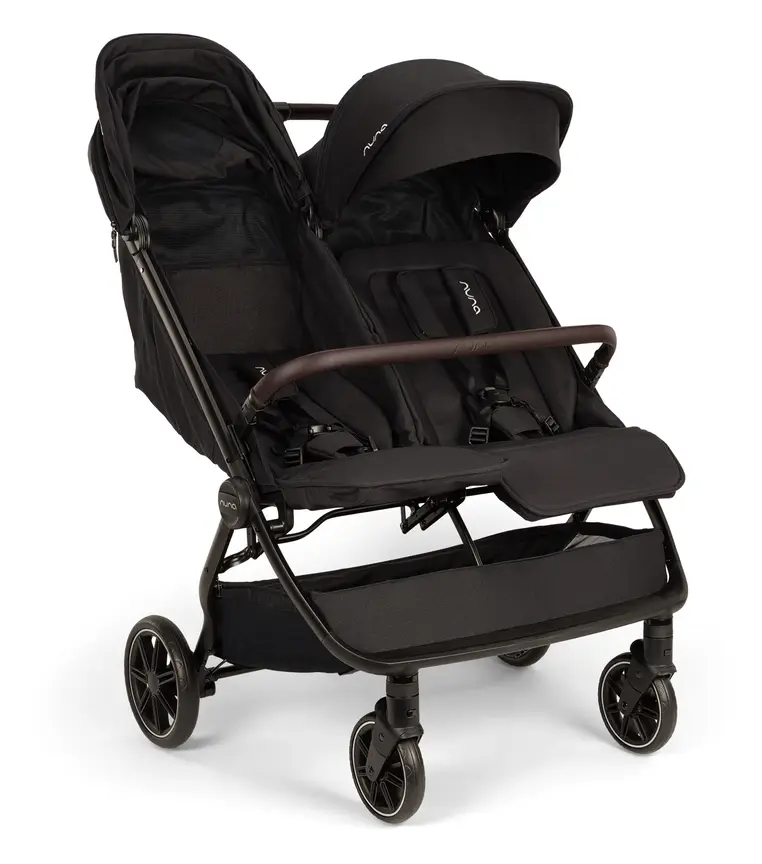
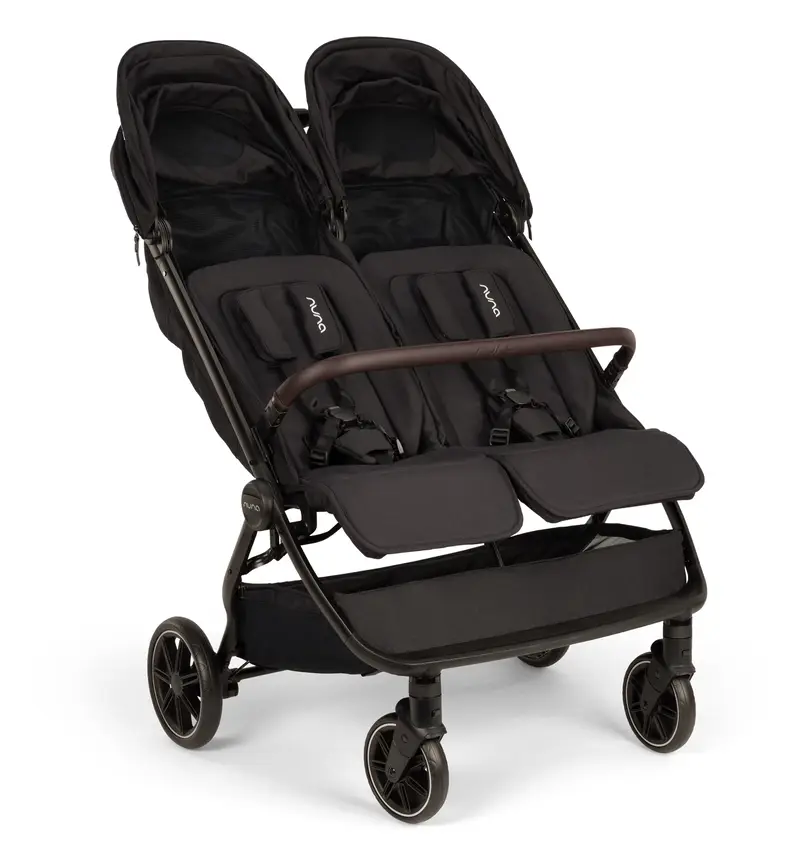
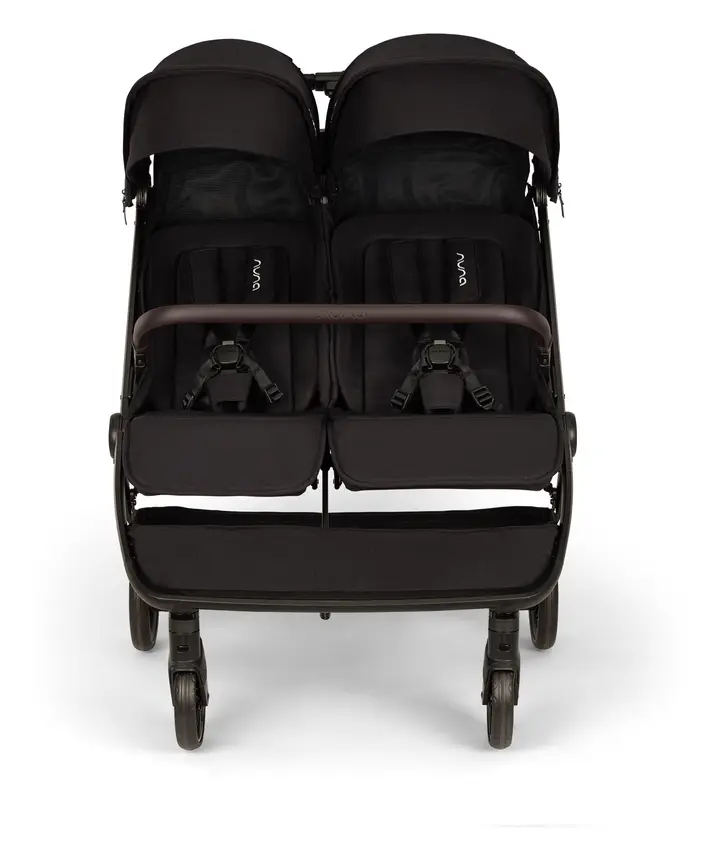
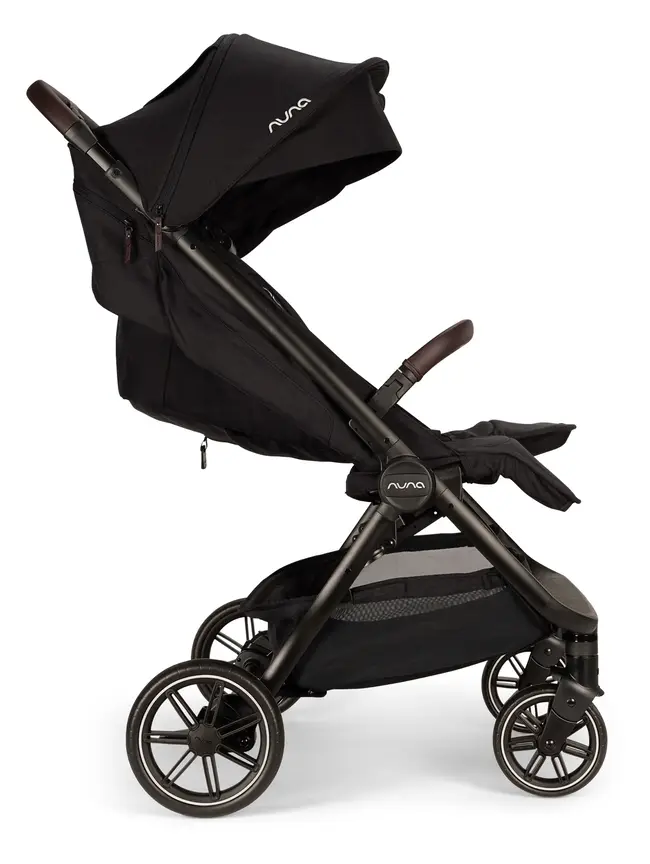
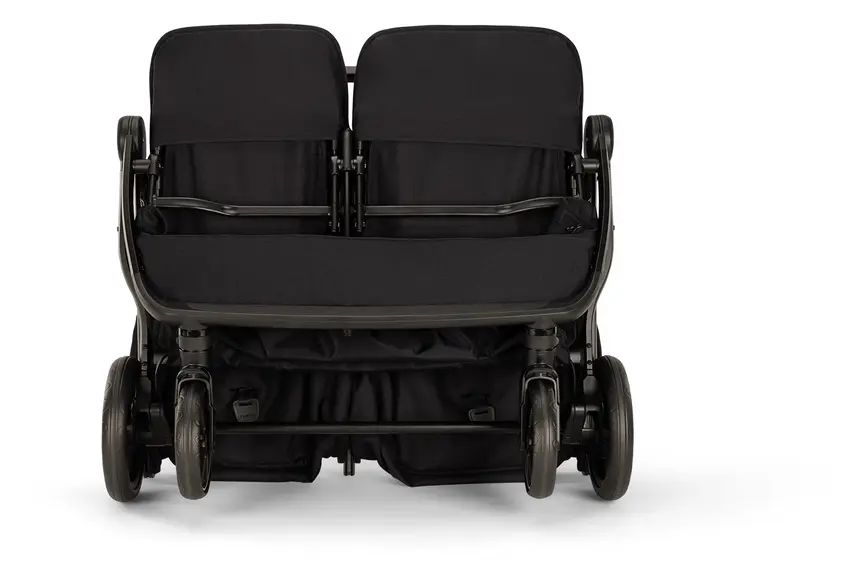
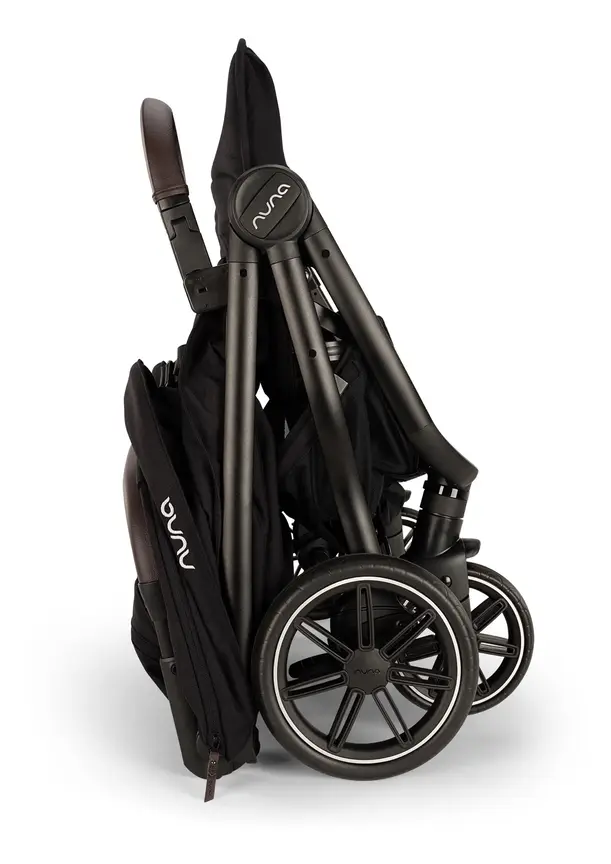
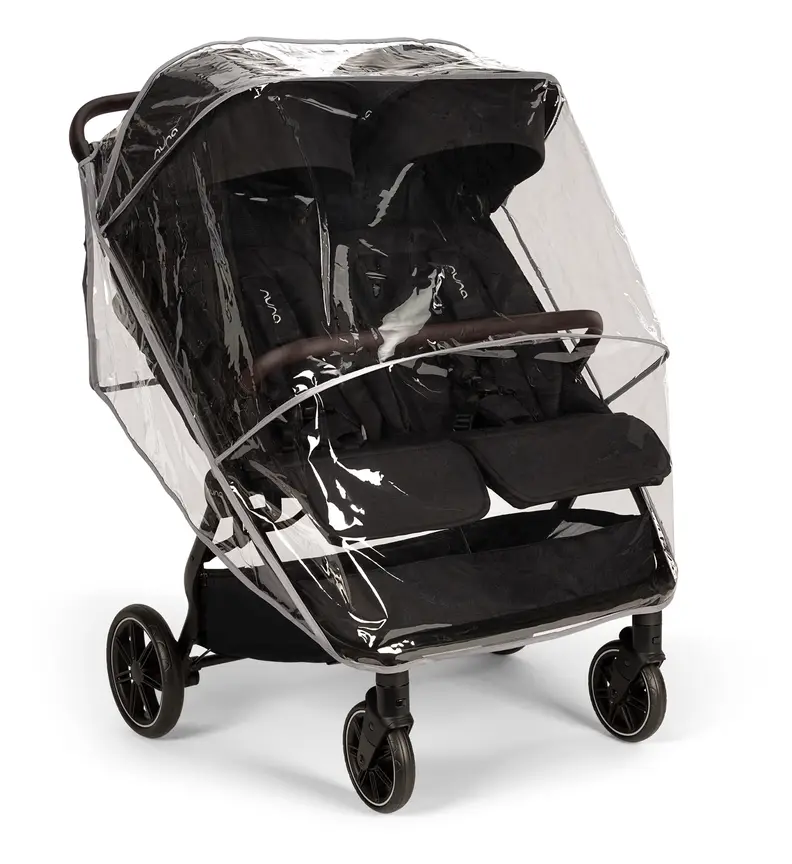
Nuna TRVL Dubl
A side-by-side double that folds with one hand and stands up. Each seat holds up to 22.7 kg.
Read our full review →Seats, footwells and shared space
A double stroller gives each child a defined seat. Side-by-side seats make it easier for children to see each other. They can also make the product too wide for some doors or paths. Measure the folded and open width against the spaces you use often.
With a front-and-back stroller, the child behind may have less space or a different view. Check both seats in person. See whether each child can get in and out safely. Check whether one seat has a lower weight limit or a different recline range.
A wagon's open body can feel roomy. Some models have a footwell, which lets children's legs sit lower. This can make shared seating more comfortable for some children. It also creates an area where dropped snacks, toys or small objects can collect. Clear the floor before each trip. Check that nothing blocks the child's feet or the frame's moving parts.
Do not assume a footwell is a storage compartment. Use it only as the maker intends. Keep bags and loose items in the proper storage area. Loose items can shift when the wagon turns or stops. Keep small objects away from babies and young children who may put them in their mouths.
Check seat belts and buckles. Use every restraint the maker requires. Fasten each child as instructed, even for a short trip. A belt that is loose, twisted or clipped incorrectly may not hold the child as intended. Do not let children stand or kneel while the product is moving.
Storage, folding and daily travel
Measure your car boot, hallway, lift and storage cupboard. Check the product's folded size and weight. A wagon can be long or wide when folded. A double stroller can also take up a lot of space. Confirm that you can lift it safely and store it without blocking an exit.
Try folding and unfolding the model before you buy. Keep children's hands away from hinges and locks. Check that the frame locks open before placing children inside. When folding, remove children and loose items first. Follow the manual's steps.
Storage baskets and pockets are useful, but they change the load. Stay within the maker's limits. Do not hang heavy bags on the handle unless the manual allows it. A hanging load can affect balance and may make the product tip.
For buses, trains and busy pavements, a compact double stroller may be easier to move. A wagon may need more room to turn and park. Local transport operators can set their own rules. Check before you travel, especially during busy times.
For long outings, consider shade, water breaks and access to toilets. A canopy can provide shade, but it does not make hot weather harmless. Keep air flowing. Never cover the product with a blanket or cloth that blocks ventilation. Follow local health advice in hot weather.
Comparison table: stroller wagon or double stroller?
| Feature | Double stroller | Stroller wagon | What to check |
|---|---|---|---|
| Child position | Separate seats, side by side or front and back | Shared body, bench seats or other layout | Can each child sit safely in the intended place? |
| Young babies | Some models allow an approved carrycot or infant seat | Many models expect children to sit upright | Read the exact age and setup instructions |
| Steering | Usually pushed from behind | May be pushed, pulled or both | Use only the handles and method approved by the maker |
| Foot space | Seat footrests vary by model | May have a shared floor or footwell | Keep feet and loose items clear of moving parts |
| Width and turning | Side-by-side models can be wide | Some models are long and need room to turn | Measure doors, lifts, paths and storage areas |
| Folding | Size and fold vary | Can fold wide or long, depending on model | Try the fold and check the boot before buying |
| Storage | Often has a basket or pockets | May have a larger storage area | Keep within the maker's load limits |
| Best fit | Daily walks, shops and trips needing separate seats | Some outings with older children who can sit upright | Match the product to your routes and children's needs |
Safety checks before every trip
Read the manual before the first use. Keep it where you can find it. Check the product's age, weight and height limits. Confirm that the seats and accessories match the model. A part that looks as if it fits may not be approved.
- Check the frame, wheels, tyres, handles and brakes for damage.
- Make sure the frame is fully open and locked before use.
- Fasten the child restraints as the manual shows.
- Keep fingers away from hinges and folding parts.
- Use the brake when loading or unloading children.
- Keep children seated while moving. Do not let them stand or climb.
- Do not overload the seats, basket or handle.
- Keep small toys and loose straps away from babies.
- Do not leave children alone in the product.
- Check recalls and safety alerts for the model and country where you live.
Keep children away from roads and steep edges while getting them in or out. Use a safe, level place. Hold the product steady. Do not rely on a child to hold the frame still.
Clean food and drink spills promptly. Follow the care label and manual. Check for worn fabric, loose stitching, cracked plastic or damaged buckles. Stop using the product if a safety part is broken. Contact the maker or seller for approved repairs or replacement parts.
Second-hand products need extra care. Find the manual and check that the model has not been recalled. Make sure all parts are present and work correctly. Do not use a product with unknown damage, missing restraints or a frame that does not lock securely.
Age stages and changing needs
| Stage | What matters most | What to consider |
|---|---|---|
| Newborn | Head and body support, suitable position | Choose only a model and setup approved for a newborn |
| Baby who cannot sit alone | Supported seat or carrycot | Do not use an upright wagon seat unless the maker allows it |
| Baby learning to sit | Secure restraint and suitable seat angle | Follow the manual's age and development limits |
| Mobile toddler | Restraints, clear rules and close supervision | Prevent standing, climbing and sudden exits |
| Older child | Comfort, space and limits | Check weight and height limits; plan for walking breaks |
These are broad stages, not permission to use a product. A child may be ready for one seat but not another. The manual for that exact model is the guide.
Side by side: more prams & strollers to compare
Real products from our catalogue. We don't show star ratings or review counts; check the current price, stock and reviews on Amazon before you buy.
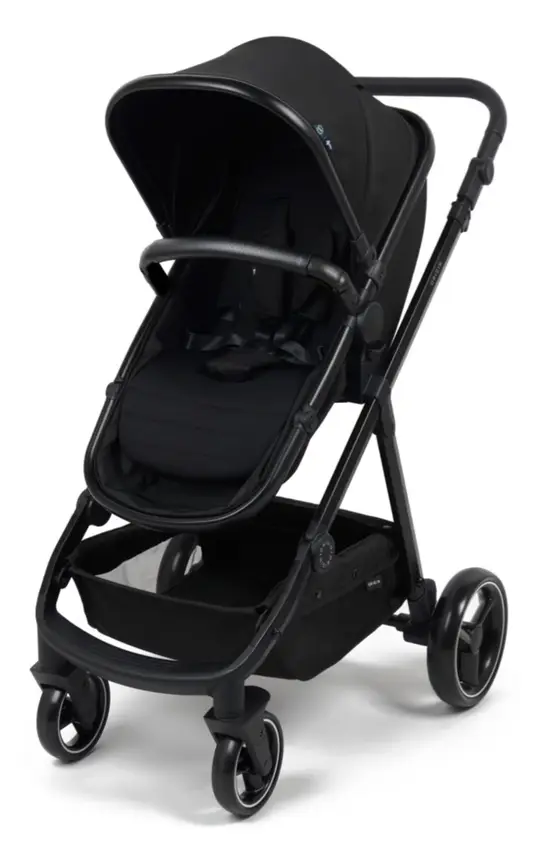
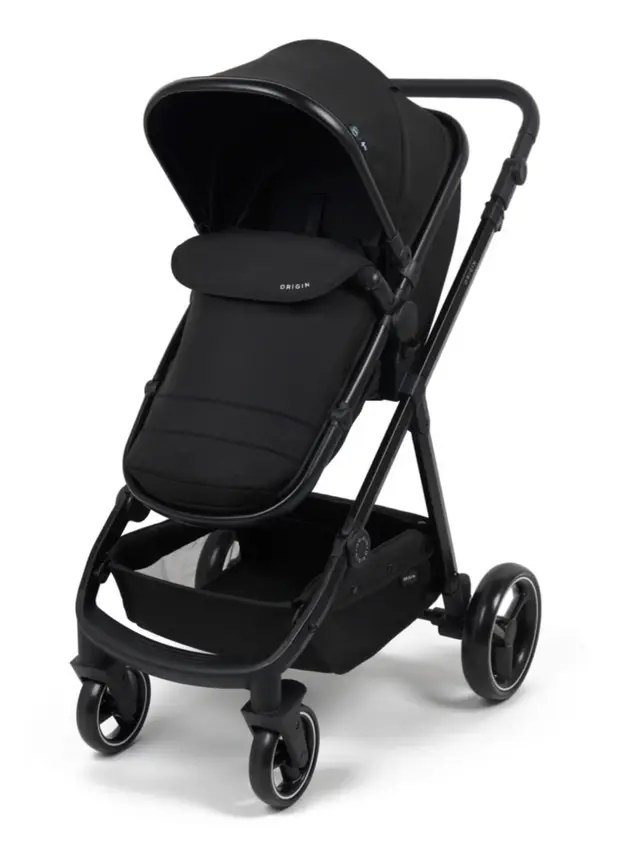
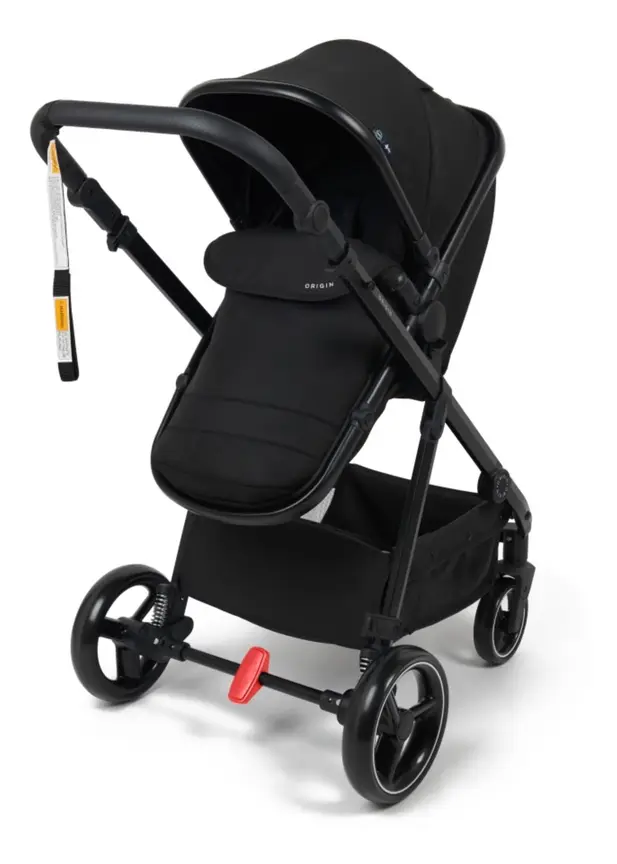
4baby Origin Stroller
A budget pram whose seat turns into a bassinet. The seat can face you or face the world.
Read our full review →
Baby Jogger City Mini GT2
Long-running, lighter all-terrain stroller with a famously simple one-hand strap fold.
 Reviewed
Baby Jogger City Tour 2
A 6.5 kg stroller with a near-flat recline. It folds small and comes with a carry bag.
Read our full review →
Theme parks, events and venue rules
There is no single theme park rule for wagons or double strollers. Each venue sets its own entry and parking rules. Rules can change. Check the venue's current website or contact its visitor service before leaving home.
Look for rules about wagon-style products, size, width, length, motorised parts and where products can be parked. Some venues may limit certain types or ask visitors to leave them outside. Do not assume that a product is allowed because it is sold as a stroller.
Measure the product in its normal use position. Include handles and attached accessories. Ask whether a folded wagon can be stored somewhere. Plan for queues, narrow paths and crowded areas. A wide product may be difficult to turn or park even when allowed.
At the venue, keep children seated when moving through crowds. Do not use a wagon to carry children on escalators unless the venue and maker allow it. Use lifts where needed. Keep the brake on when stopped, and stay with the children.
Make a simple plan for tired children. Agree who watches each child when the group stops. Keep the children close in crowded spaces. A stroller or wagon does not replace adult supervision.
Safety advice in Australia, the UK, the US and Canada
Product rules differ between countries. The official bodies below can help you check local advice and recalls. They do not all perform the same role. Read the label and manual for the product sold in your country.
| Country | Official body or source | Practical step |
|---|---|---|
| Australia | Product Safety Australia and the Australian Competition and Consumer Commission | Read the pram and stroller safety guide. Check local recalls and instructions. |
| United Kingdom | Office for Product Safety and Standards | Check current product safety advice and alerts for your model. |
| United States | U.S. Consumer Product Safety Commission | Search recalls and follow the product maker's warnings. |
| Canada | Health Canada | Check recalls and safety alerts. Follow the manual supplied with the product. |
Australia has mandatory requirements for prams and strollers. Product Safety Australia explains consumer safety steps. In other countries, use the relevant official body and check the rules that apply locally. A foreign safety mark does not prove that a product meets local rules.
Do not rely on broad claims such as “certified safe” without clear details. Check the model name, manufacturer, warning labels and instructions. If the seller cannot provide these, choose another product.
Common mistakes to avoid
- Choosing by name alone. “Wagon” and “double stroller” cover many different designs. Compare the actual model.
- Putting a young baby in an upright seat. Check the maker's minimum age and position rules.
- Assuming a push handle means pushing is allowed. Follow the model's instructions for pushing or pulling.
- Ignoring the folded size. Measure the car, home and usual routes first.
- Loading the handle with bags. Extra weight can affect balance. Use only approved storage.
- Letting children stand while moving. Keep them seated and restrained as directed.
- Using a footwell for loose storage. Items can shift or get caught. Keep the area clear.
- Skipping the brake. Set it before loading or unloading, and hold the product steady.
- Assuming a venue will allow the product. Check current rules before visiting.
- Using a damaged or incomplete product. Stop and find an approved repair or replacement part.
How to make a practical choice
Write down the trips you make most often. Include school or childcare runs, shops, parks, public transport and travel by car. Then list each child's age, size and needs. This makes it easier to compare products on useful points.
- Check fit. Confirm each child can use the seat within its limits.
- Check routes. Think about doorways, kerbs, lifts, paths and crowds.
- Check handling. Try turns, brakes, pushing and pulling with a realistic load.
- Check storage. Measure the folded product against your boot and home space.
- Check setup. Practise opening, locking and folding it safely.
- Check local rules. Look up recalls, product advice and venue restrictions.
If possible, try both styles in a shop. Bring the children if the shop allows it. Take the measurements you made at home. A product that feels easy in an empty shop can feel different with two children and bags.
Choose the product that fits your regular life. You may not need a wagon for every trip. Some families use a double stroller for daily travel and walk with older children on other outings. The right setup is the one you can handle safely and use as intended.
Frequently asked questions
Are stroller wagons safe for babies?
Some models may allow a baby in a maker-approved setup. Many are designed for children who can sit upright. Check the exact manual and minimum age. Do not add an unapproved car seat, pillow or insert.
Can I use a stroller wagon for a newborn?
Only if the maker clearly allows that model and setup for a newborn. A flat-looking floor does not make it a safe sleep surface. Use a suitable carrycot or seat only when the instructions approve it.
Is a double stroller easier than a wagon?
It depends on the model and your route. A double stroller may be easier through shops or on public transport. A wagon may suit some open spaces and older children. Try both with a realistic load.
Can I push a stroller wagon?
Only if the maker says that model can be pushed. Some wagons are made for pulling. Others allow both. Use the correct handle and follow the manual.
Do stroller wagons have footwells?
Some do, and others have a flat floor or different seat layout. Check the product itself. Keep the footwell clear of loose objects and follow the maker's instructions.
Can I take a stroller wagon to a theme park?
Rules depend on the venue and can change. Check the venue's current policy before your visit. Look for limits on product type and size, plus parking rules.
Can children nap in a stroller wagon?
Do not treat a wagon as a cot or regular sleep space. Follow the maker's directions for recline and supervision. If a baby falls asleep, move them to a safe, flat sleep space when practical.
What should I check when buying second hand?
Find the manual and model details. Check recalls, frame locks, brakes, wheels, fabric, buckles and restraints. Make sure all required parts are present. Do not use it if damaged or incomplete.
Which is better for two children of different ages?
Compare the approved setup for the younger child first. Some double strollers allow different seats or an approved carrycot. Many wagons need children to sit upright. The manual decides what is suitable.
More options, from budget to premium
Real products from our catalogue. We don't show star ratings or review counts; check the current price, stock and reviews on Amazon before you buy.
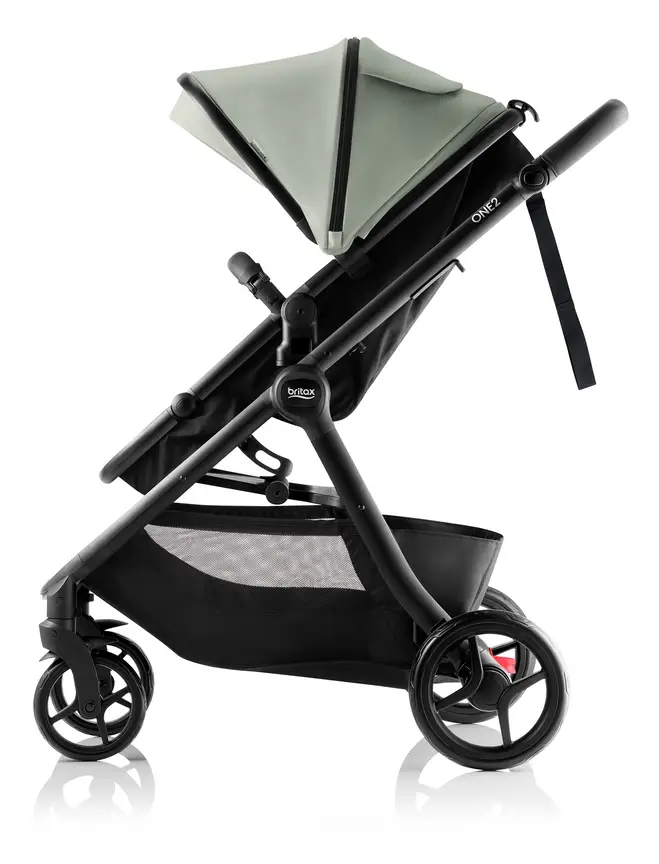
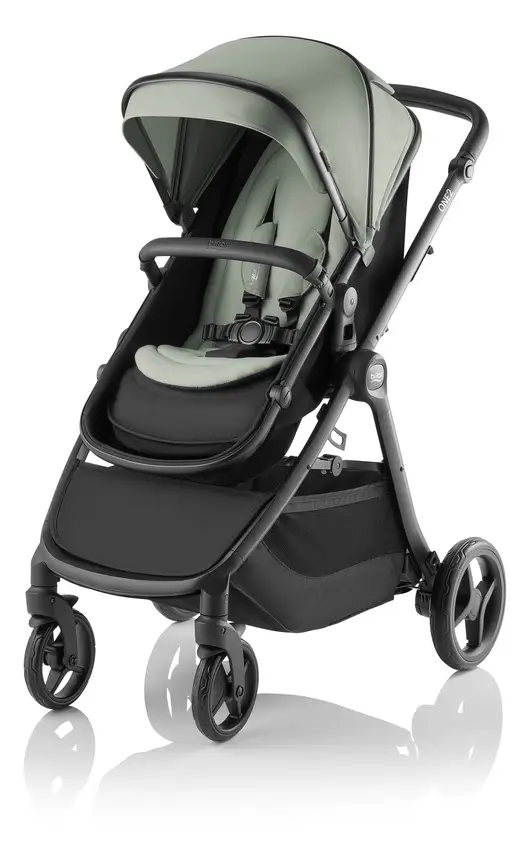


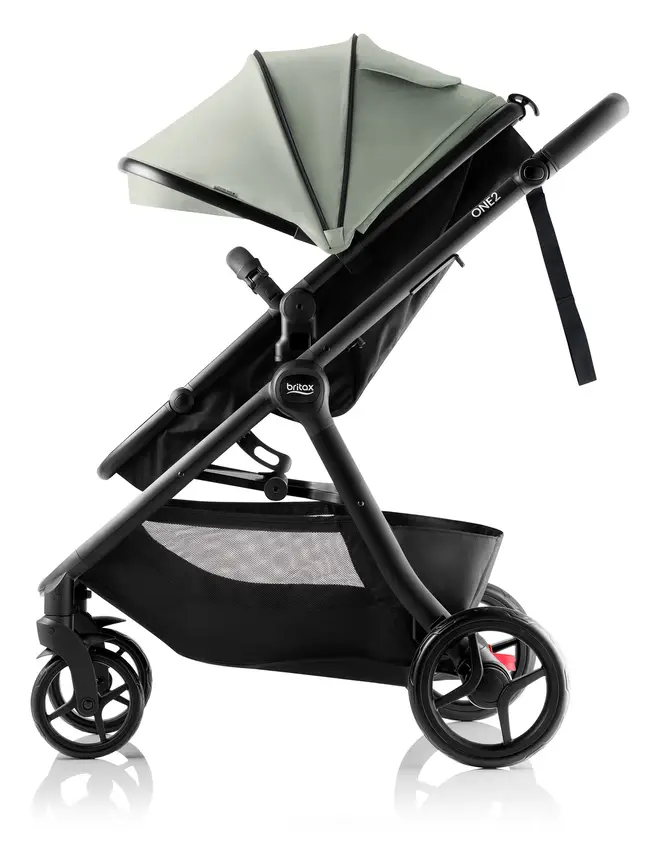


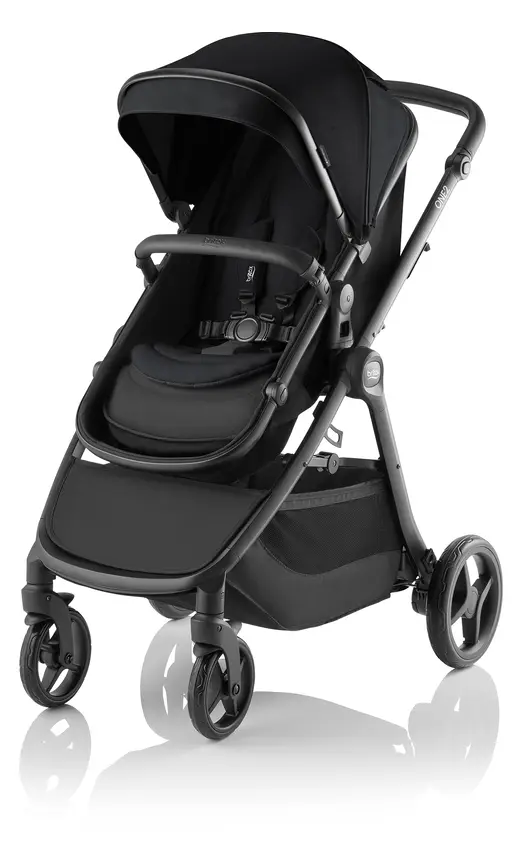
Britax One2
A pram that starts as a single and can take a second child. The seat turns into a lie-flat bassinet.
Read our full review →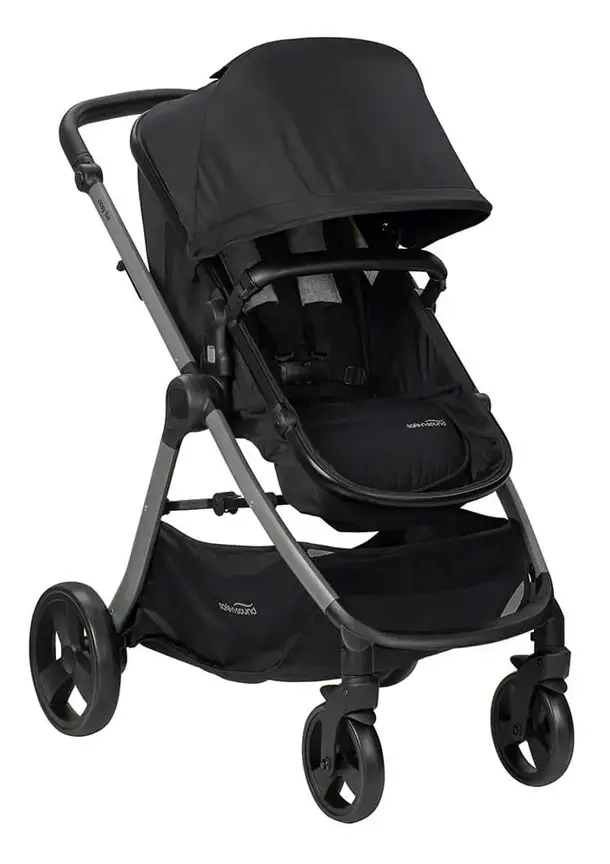

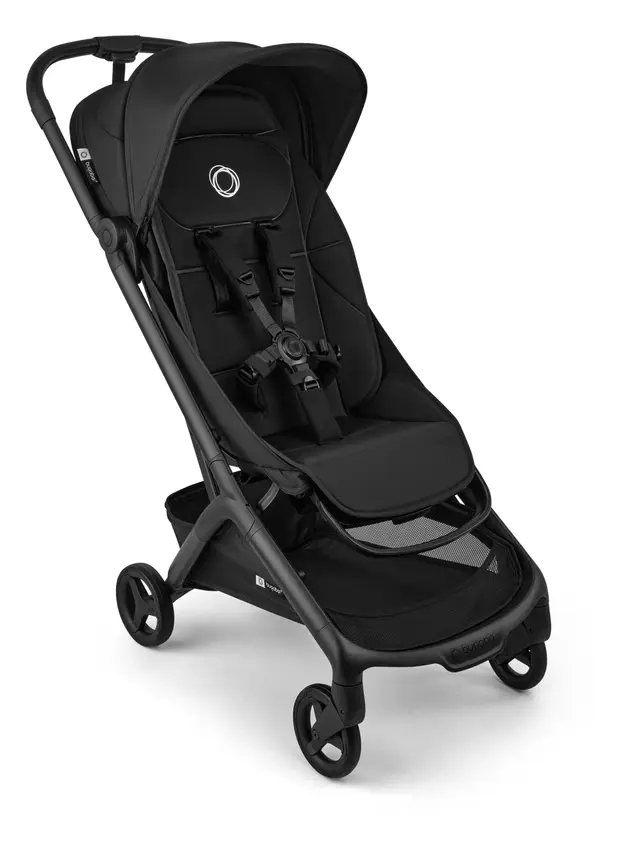
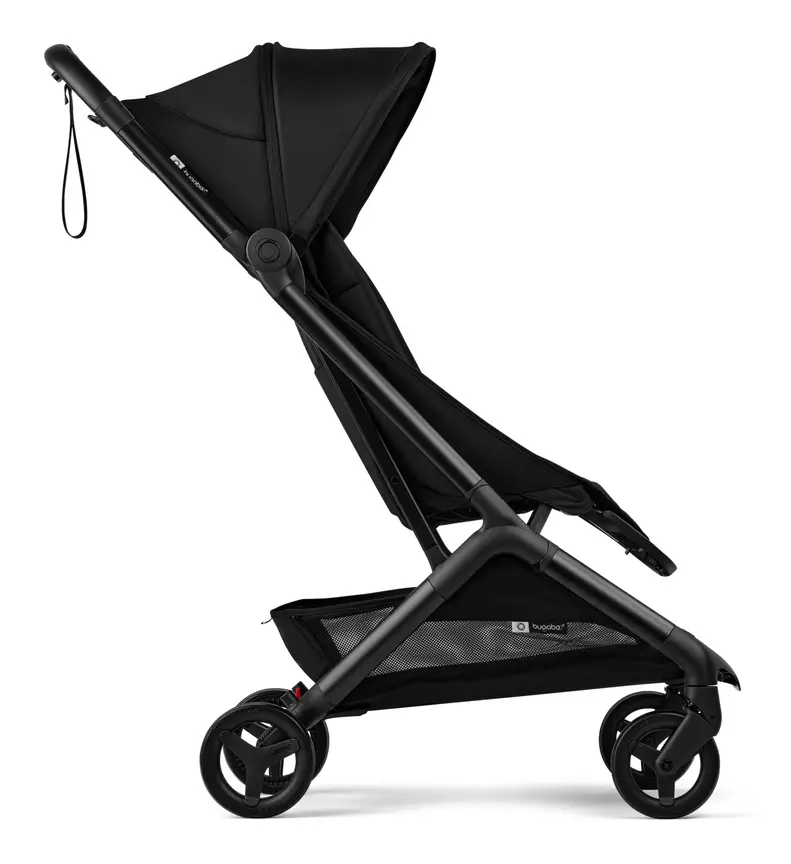


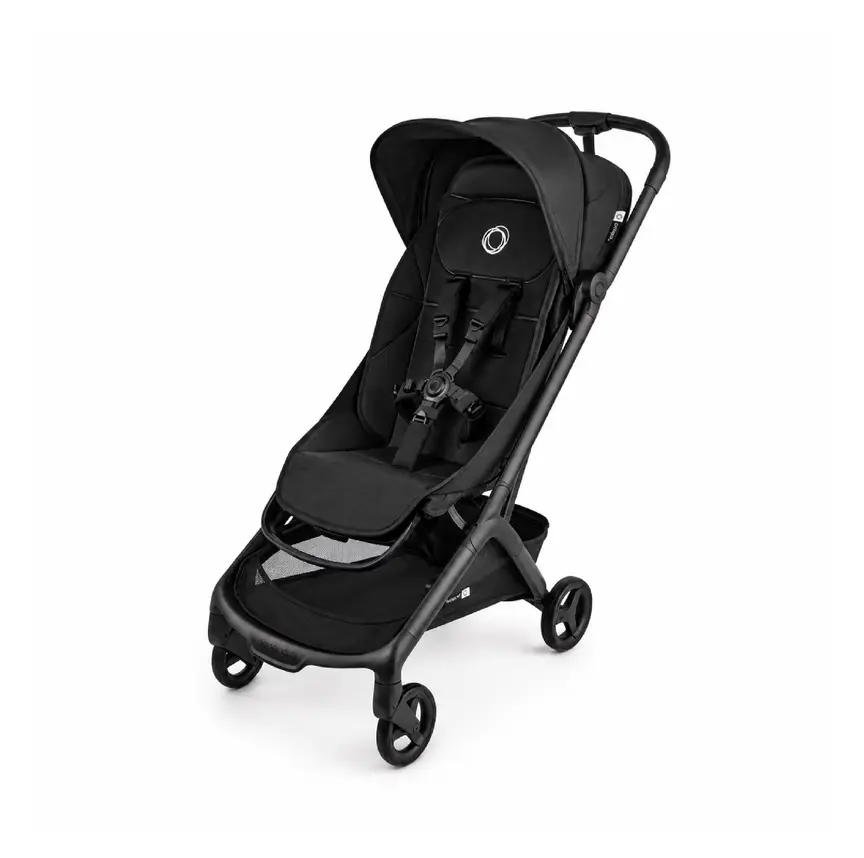
Bugaboo Butterfly
Bugaboo's cabin-friendly compact stroller with a one-second fold — the travel partner to a Fox, not a replacement for it.
Sources and official guidance
- Australia: Product Safety Australia – Prams and strollers guide
- Australia: Product Safety Australia – Prams and strollers mandatory standard
- United Kingdom: Office for Product Safety and Standards
- United States: U.S. Consumer Product Safety Commission – Safe sleep and infant products
- Canada: Health Canada – Recalls and safety alerts
This article provides general information, not personal medical or legal advice. Follow the product instructions and local rules. Affiliate links may earn BabyGearFinder a commission at no extra cost to you.
Sources
Related guides
More Prams & Strollers →
Twin Newborns: How to Choose Bassinets and a Double Stroller (Side-by-Side or Tandem)
Anti-Theft Stroller Locks and Hidden Trackers for Theme Parks, Museums and Cafes

Triple and Quad Strollers and Stroller Wagons: Stadium Seats, Harnesses and Kerbs