













Stroller Weight Limits and Tall Toddler Headroom: How to Measure Seat-Back Height and Canopy Space
How to check stroller weight limits, seat-back height and canopy space for a tall toddler, plus safety rules for Australia, the UK, the US and Canada.
On this page
- Key points
- What stroller weight capacity really means
- Why tall toddlers outgrow a stroller before the weight limit
- How to measure seat-back height and canopy clearance
- Comparing stroller types for tall toddlers
- Stroller fit by age and growth stage
- Safety standards and official rules in Australia, the UK, the US and …
- Common mistakes parents make with tall toddlers
- Frequently asked questions
- Sources
Short answer: Most tall toddlers outgrow a stroller by height before they hit the weight limit. Look for a seat-back height of at least 50 cm (20 inches). Also check that there is clear space between your child's head and the open canopy. For weight, a limit of 22 kg (about 50 lb) to 29 kg (about 65 lb) gives most families plenty of room as their child grows.
Safety rules for strollers are overseen by Product Safety Australia (ACCC) in Australia, the Office for Product Safety and Standards (OPSS) in the UK, the Consumer Product Safety Commission (CPSC) in the US, and Health Canada in Canada.
Key points
- Height matters first: A tall child can hit the canopy long before they reach the maximum weight.
- Seat-back target: Aim for a seat back of 50 cm (20 inches) or taller for older toddlers.
- Canopy space: Measure from the seat base up to the lowest bar or fabric of the open hood.
- Weight limits: Standard seats often hold 15 kg to 22 kg (33 to 50 lb). Heavy-duty frames can hold 25 kg to 29 kg (55 to 65 lb).
- Total load: Remember that the basket limit is separate from the seat limit.
- Safety first: Always use the five-point harness and check that the stroller stays steady when you push or recline it.
What stroller weight capacity really means
Every stroller has a weight limit set by its maker. That number tells you how much weight the frame, wheels, and fabric can safely hold. Going over it can bend the frame, wear out the brakes, or make the stroller tip.
Many parents look at one number on the box and stop there. That can lead to a mistake. Strollers actually have more than one weight limit.
Seat weight limit
The seat weight limit is for the child alone. In Australia, the UK, the US, and Canada, common everyday strollers often hold 20 kg to 22 kg (about 44 to 50 lb). Some lighter travel strollers stop at 15 kg (about 33 lb). Bigger three-wheel or heavy-duty strollers may hold 25 kg to 29 kg (about 55 to 65 lb).
Remember to count what your child wears. Heavy winter coats, wet clothes, and boots add extra weight. A child near the top limit in summer may pass it in winter.
Under-seat basket limit
The basket under the seat has its own limit. Many baskets hold 4 kg to 10 kg (about 9 to 22 lb). Putting heavy groceries or a full nappy bag in the basket adds strain to the frame. It does not raise the seat limit, and it still counts toward the total load on the wheels.
Handlebar hooks and bags
Do not hang heavy bags from the handlebar. Product Safety Australia warns that bags on the handle can make a stroller tip backwards. This risk is even higher with a lighter child or a reclined seat. Always put bags in the basket underneath instead.
Second seats and ride-on boards
If you use a double stroller, check the limit for each seat. On many tandem strollers, the main seat holds more weight than the second seat. A ride-on buggy board also adds weight to the back axle. Check the manual before adding a board or a second seat.
Prams & Strollers worth a look
Real products from our catalogue. We don't show star ratings or review counts; check the current price, stock and reviews on Amazon before you buy.
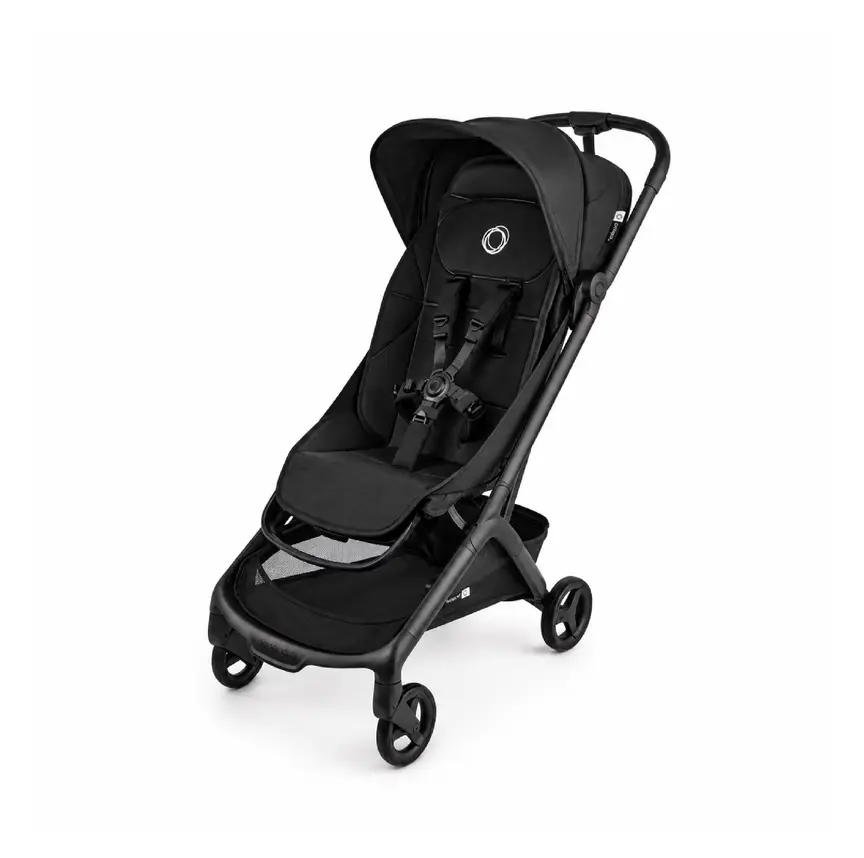
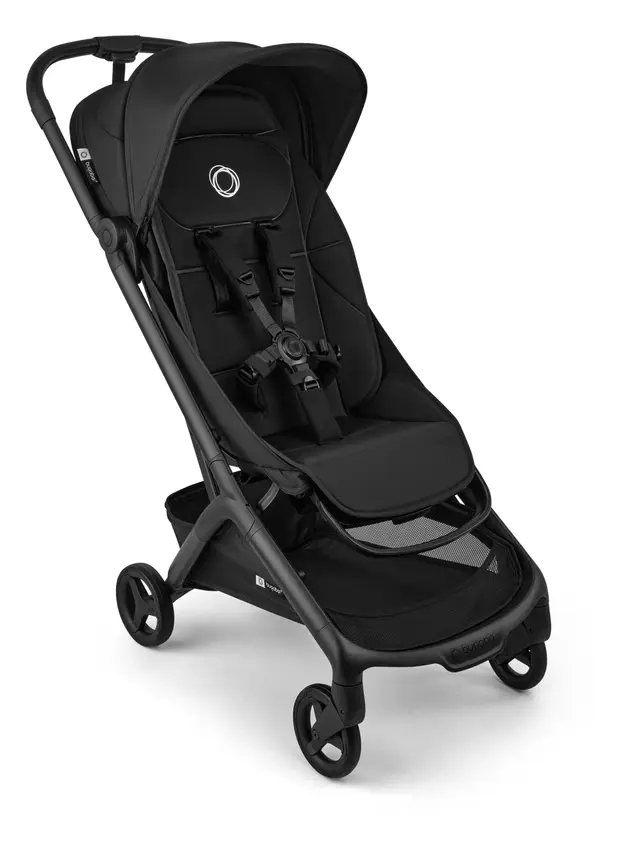
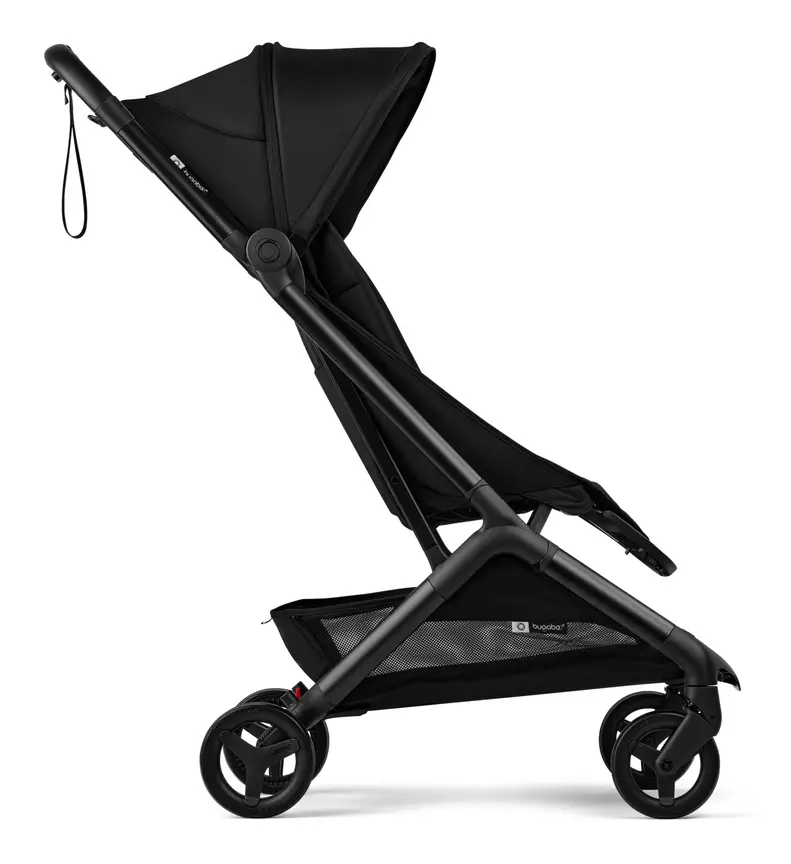


Bugaboo Butterfly 2
The newer Butterfly. It folds in about one second, has a lay-flat seat and a bigger basket with a back pocket.
Read our full review →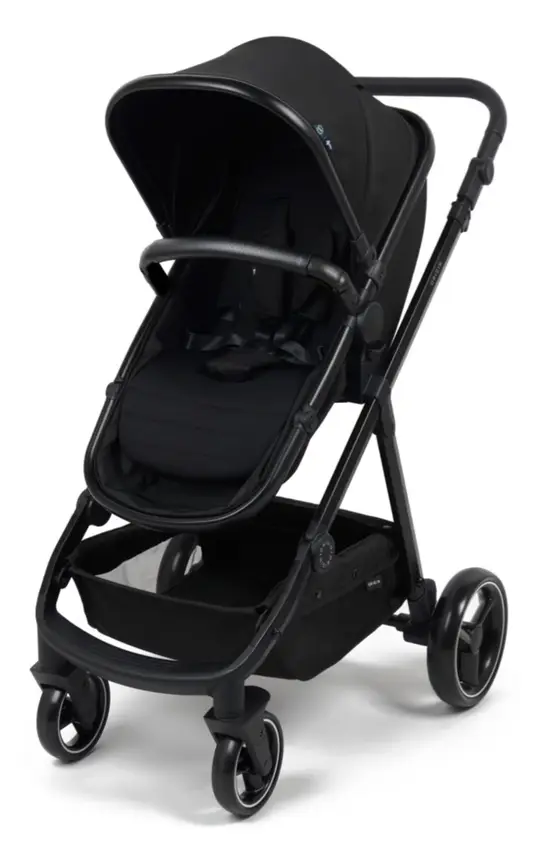
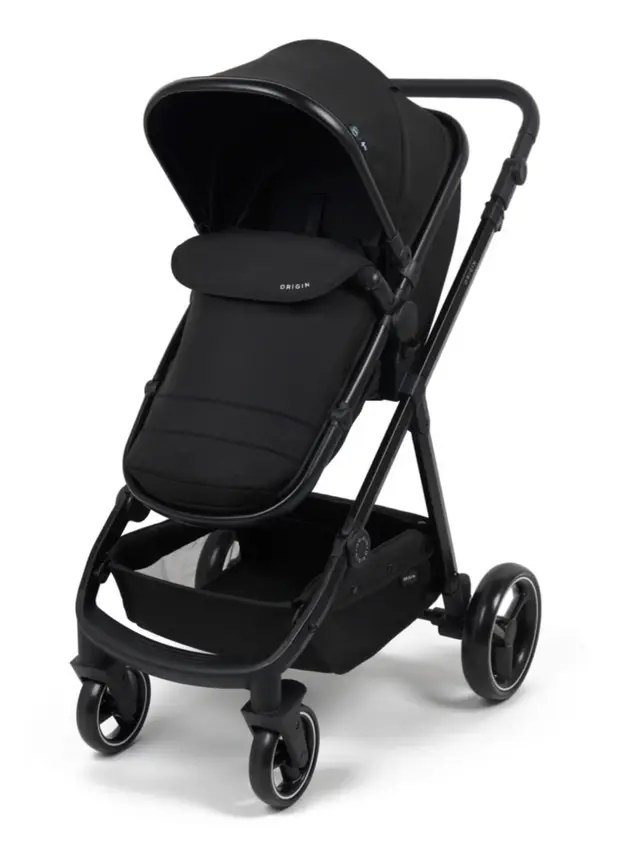
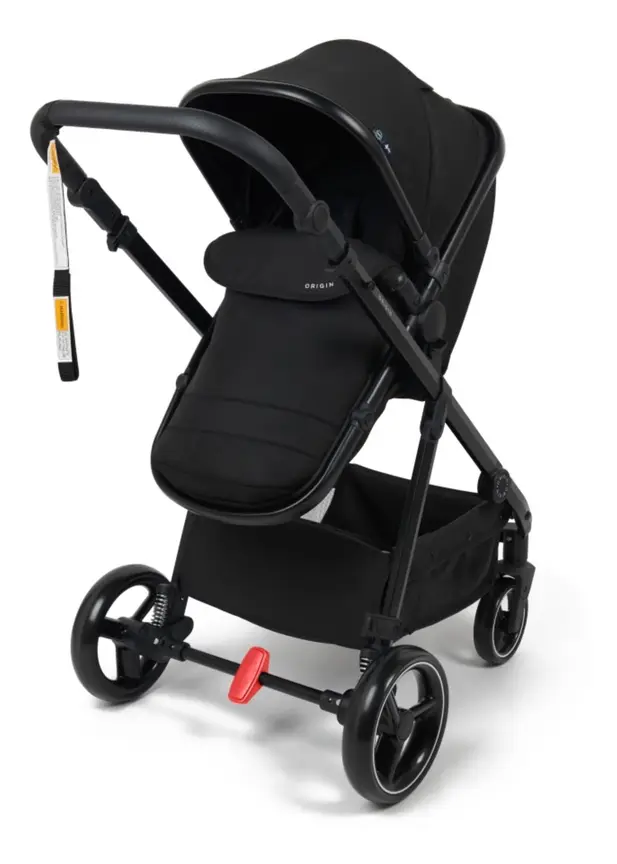
4baby Origin Stroller
A budget pram whose seat turns into a bassinet. The seat can face you or face the world.
Read our full review →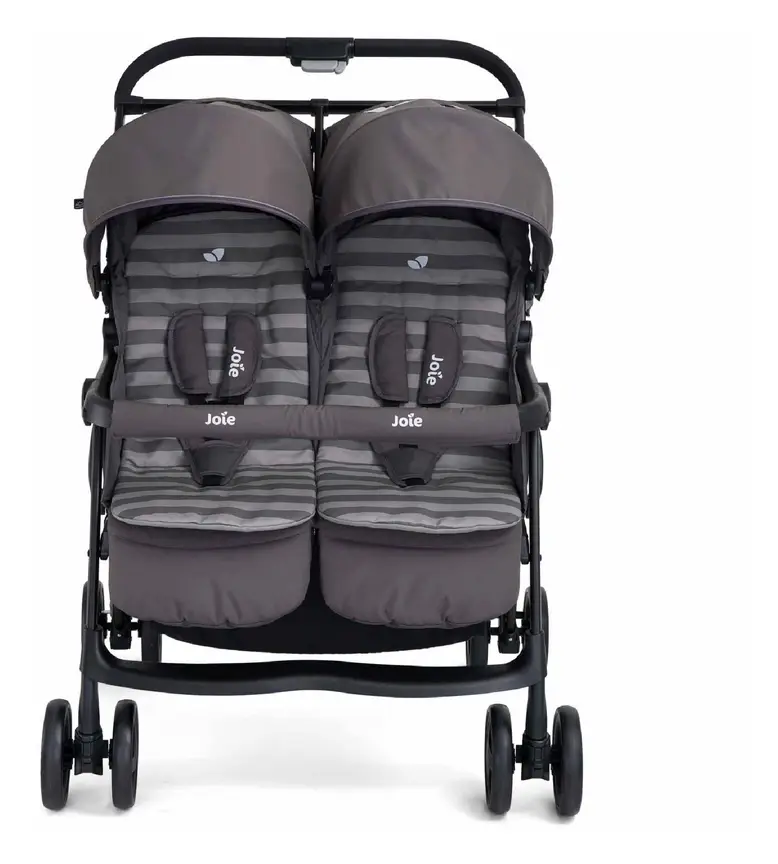
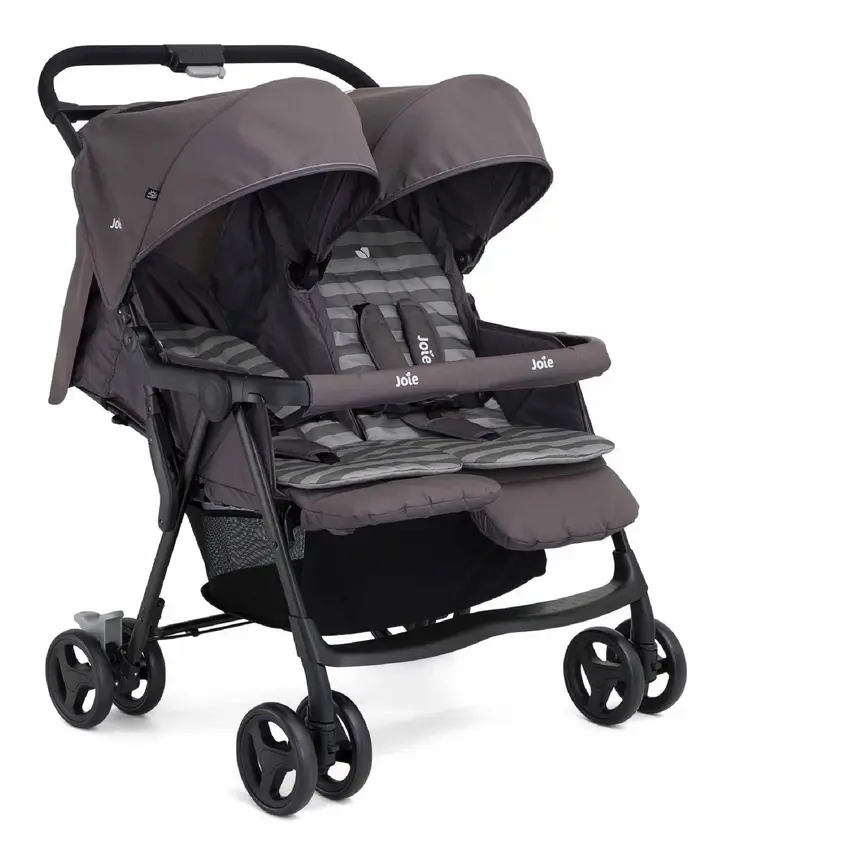

Joie Aire Twin
A lower-cost side-by-side double. Each seat lies flat and reclines on its own.
Read our full review →
Maxi-Cosi Zelia 3
A mid-price pram with a carrycot that changes into a seat, so one frame covers birth to toddler.
Why tall toddlers outgrow a stroller before the weight limit
A stroller box might say "up to 22 kg" or "up to 50 lb". That sounds like it will last until age four or five. For a tall child, that is often not true.
Toddlers grow fast in length. Some children have a long body (torso). Others have long legs. Both can make a stroller feel cramped well before the child is heavy.
What happens when the seat back is too short
If the seat back ends below your toddler's shoulders, they lose upper-back support. When they fall asleep, their head has nowhere to rest. Their neck may flop sideways or backwards.
Short seat backs also mean the shoulder straps sit too low. The harness can pull down on your child's shoulders. That feels uncomfortable and makes it harder to buckle them in properly.
What happens when canopy clearance is too low
Canopy clearance is the space between the seat and the hood. If the hood sits too low, it bumps your child's head every time you pull it forward for shade. Some children refuse to sit back because the hood touches their hair or ears.
On a sunny day, you need to pull the canopy out to block UV rays. If the canopy cannot open over your child's head, you lose sun protection when you need it most.
Long legs and foot space
Tall toddlers also need legroom. If the seat pan is very shallow, their thighs hang over the edge. If the footrest is too close to the seat, their knees push up toward their chest. Look for a solid footrest near the front frame so their feet have a steady place to rest.
How to measure seat-back height and canopy clearance
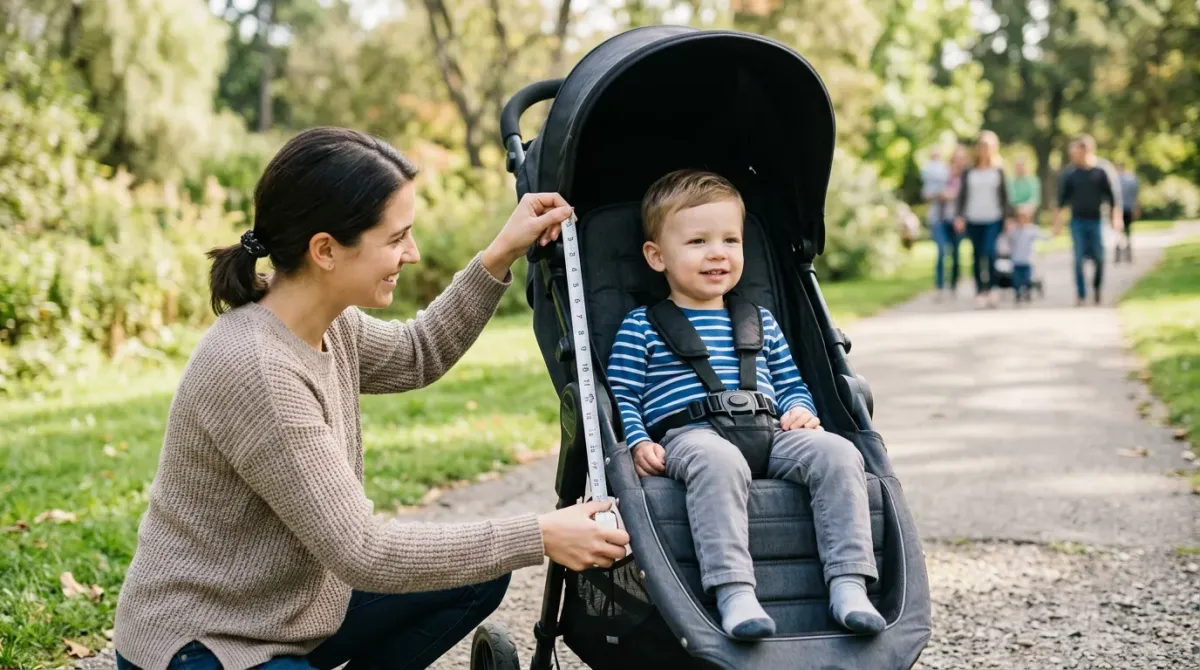
Do not trust marketing words like "tall seat" or "fits big kids". Bring a soft tape measure to the shop. You can also measure the stroller you already own at home.
Step 1: Measure your child's sitting height
- Have your child sit on a hard floor. Ask them to sit up straight with their back against a wall.
- Measure from the floor to their shoulders. Write this number down. It shows how high the top harness slots need to be.
- Measure from the floor to the top of their head. This is their sitting height.
- Add 5 cm (2 inches) for growth. This gives you the minimum canopy clearance you want right now.
Step 2: Measure the stroller seat-back height
- Set the seat fully upright. Most tall toddlers ride upright when awake.
- Find the seat crease. Push your fingers into the fold where the seat cushion meets the backrest.
- Measure straight up the centre of the backrest. Stop at the top edge of the firm backrest board or frame.
- Check for 50 cm (20 inches) or more. A seat back of 50 cm to 55 cm (20 to 22 inches) suits most tall toddlers well.
Be careful with padded head pillows. Soft fabric at the top does not count as real support if there is no firm board behind it.
Step 3: Measure the canopy clearance
- Open the canopy all the way. Lock any zip-out sun panels in place if you plan to use them.
- Place the tape on the flat seat base. Put the end right where your child's bottom sits.
- Pull the tape straight up to the lowest point of the hood. Look for plastic ribs, metal bows, or fabric seams hanging down.
- Check the gap. Compare this number to your child's sitting height. You want at least 5 cm (2 inches) of spare space above their head.
Some strollers have a canopy that slides up and down on the frame. That feature can add several centimetres of headroom as your child grows.
Step 4: Measure harness height, seat depth, and legroom
- Measure to the highest shoulder slot. Start at the seat crease and measure up to the top harness slot. If it is lower than your child's shoulders, the harness may feel tight.
- Measure seat depth. Measure from the seat crease out to the front edge of the seat. Deeper seats (around 23 cm to 28 cm, or 9 to 11 inches) support longer thighs better.
- Measure down to the footrest. Measure from the front edge of the seat down to the fixed footrest. Make sure your child's heels will not drag on the front wheels.
Comparing stroller types for tall toddlers
Different stroller shapes give very different amounts of space. A big frame does not always mean a tall seat. Likewise, a few compact strollers have surprisingly tall backs.
The table below compares the four main stroller styles. These are typical patterns, so always measure the exact model you plan to buy.
| Stroller type | Typical seat-back height | Canopy space | Typical weight limit | Best for |
|---|---|---|---|---|
| Full-size everyday stroller | 48 cm to 53 cm (19 to 21 in) | Medium to high; some canopies slide up | 20 kg to 22 kg (44 to 50 lb) | Daily walks, errands, and naps |
| Three-wheel / all-terrain stroller | 50 cm to 56 cm (20 to 22 in) | Often high and roomy | 22 kg to 29 kg (50 to 65 lb) | Tall toddlers, rough paths, long use |
| Compact travel stroller | 42 cm to 48 cm (16.5 to 19 in) | Often low and tight | 15 kg to 22 kg (33 to 50 lb) | Short trips, cars, planes, light toddlers |
| Double or tandem stroller | Main seat: 46 cm to 52 cm; second seat often shorter | Varies; lower seat often has less headroom | 15 kg to 22 kg per seat | Two young children |
Full-size everyday strollers
Full-size strollers offer good padding, strong frames, and big baskets. Many have seats that face you or face the street. Check the canopy height in both directions. Sometimes the hood sits lower when the seat is reclined or facing a certain way.
Three-wheel and all-terrain strollers
Three-wheel strollers often have the tallest seat backs and highest weight limits. Many use a sling-style fabric seat stretched over a wide frame. Because the seat hangs slightly into the frame, there is often extra height up to the canopy. These frames also steer well when a heavier child sits inside.
Compact travel strollers
Travel strollers fold small to fit in car boots and plane cabins. To fold that small, makers often use shorter seat backs and lower canopies. A few travel models do hold up to 22 kg (50 lb), so check the height carefully. Even if the frame is strong enough, a tall three-year-old may hit the hood.
Double and tandem strollers
On an inline (front-and-back) tandem stroller, one seat sits lower down. That lower seat often has less headroom and a shorter footrest. Side-by-side doubles usually give both children the same seat height, though each seat is narrower. Measure both seats before you buy.
Side by side: more prams & strollers to compare
Real products from our catalogue. We don't show star ratings or review counts; check the current price, stock and reviews on Amazon before you buy.

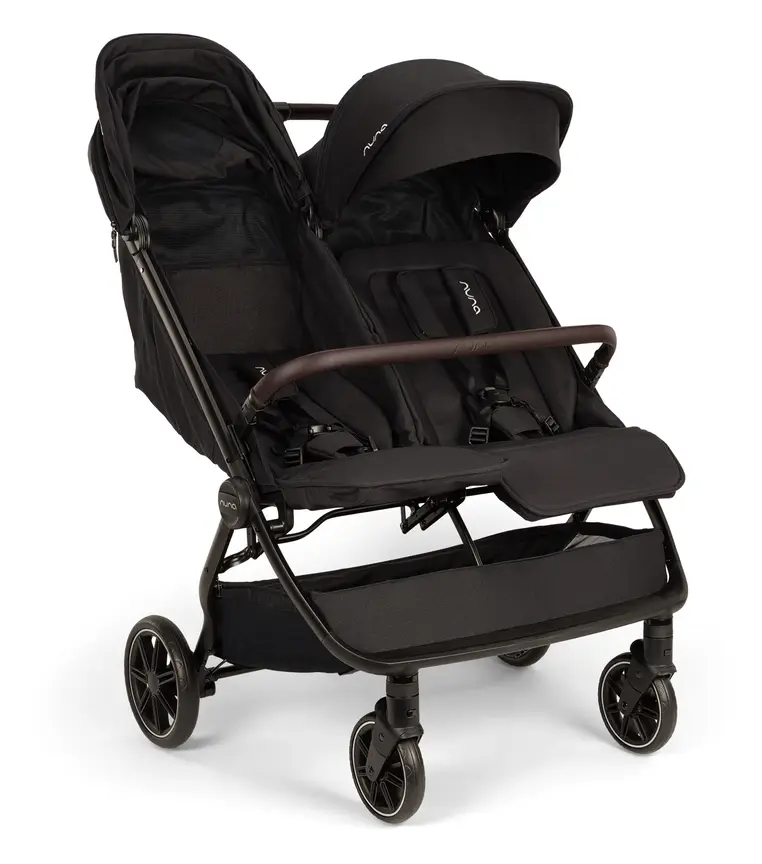
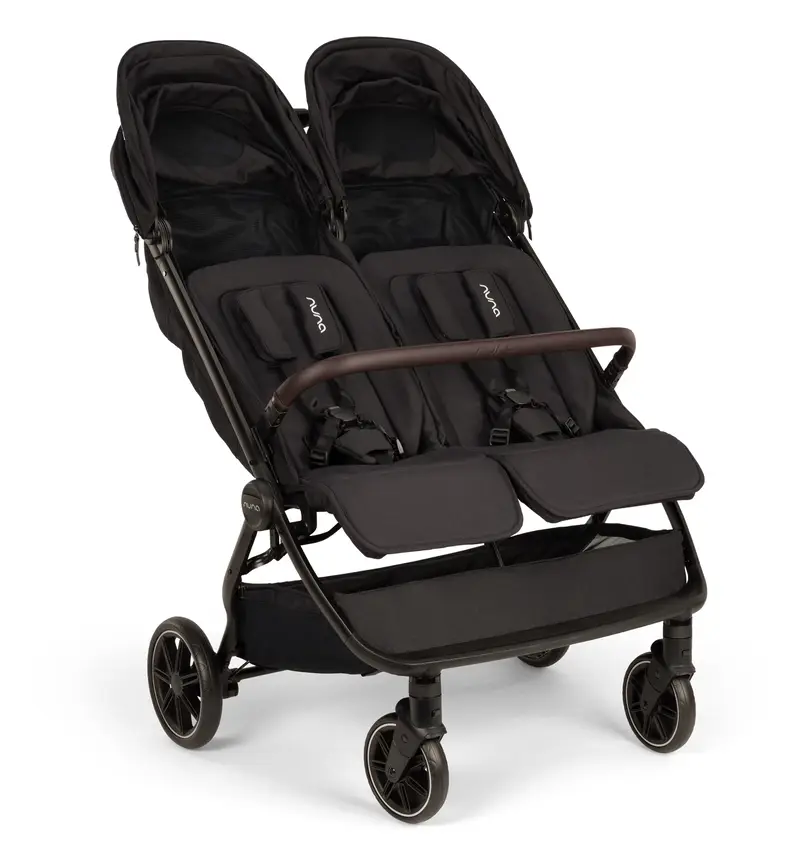
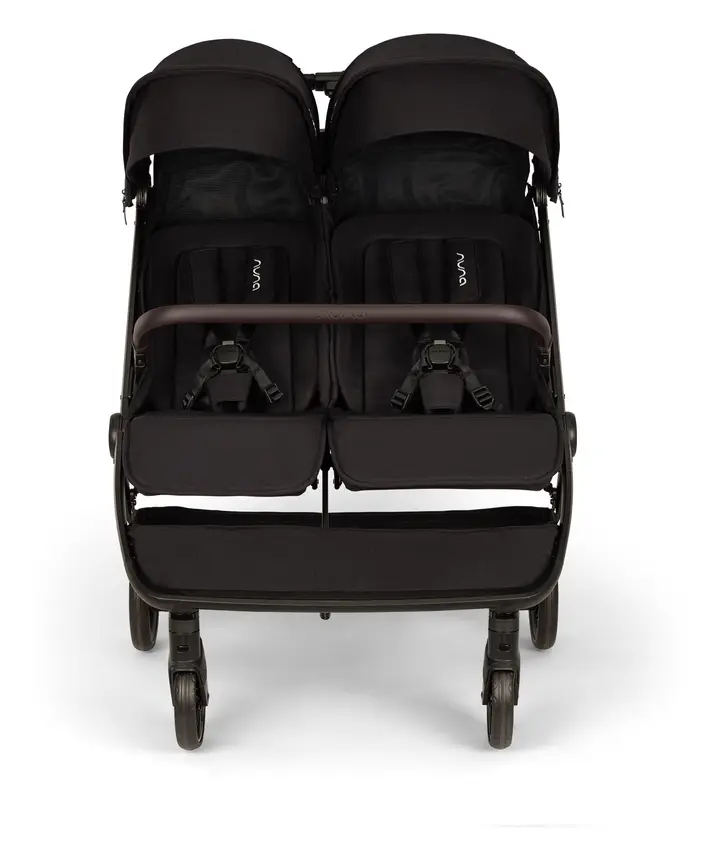
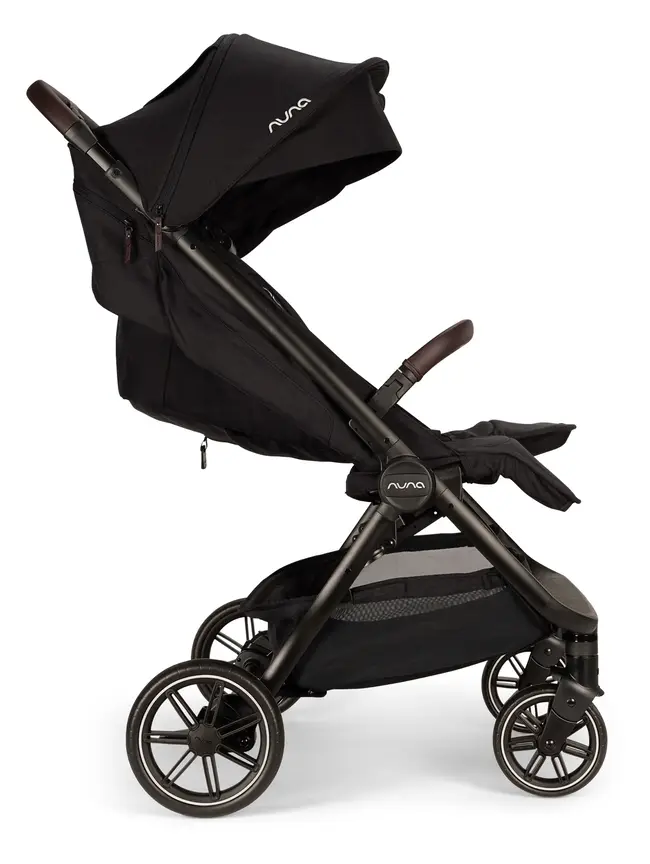
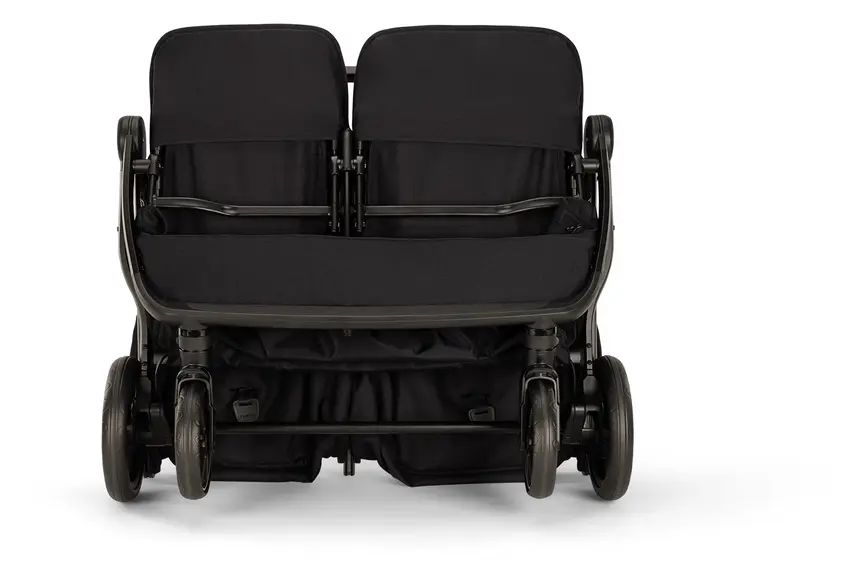
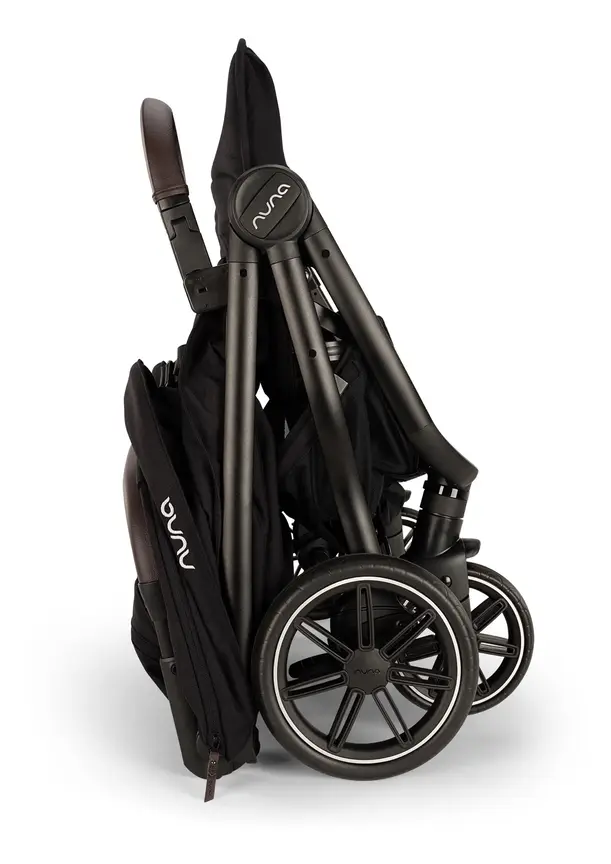
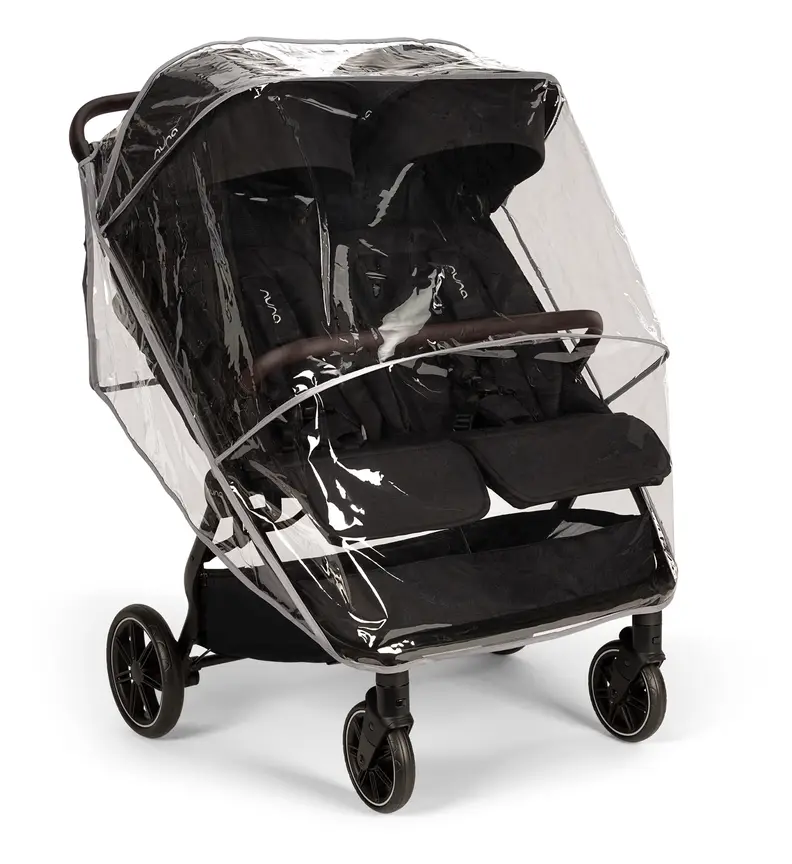
Nuna TRVL Dubl
A side-by-side double that folds with one hand and stands up. Each seat holds up to 22.7 kg.
Read our full review →


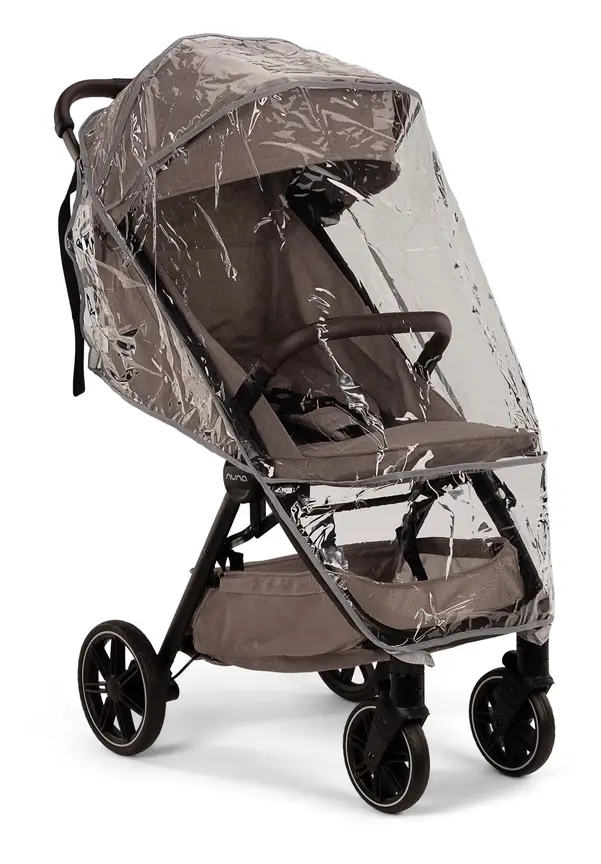

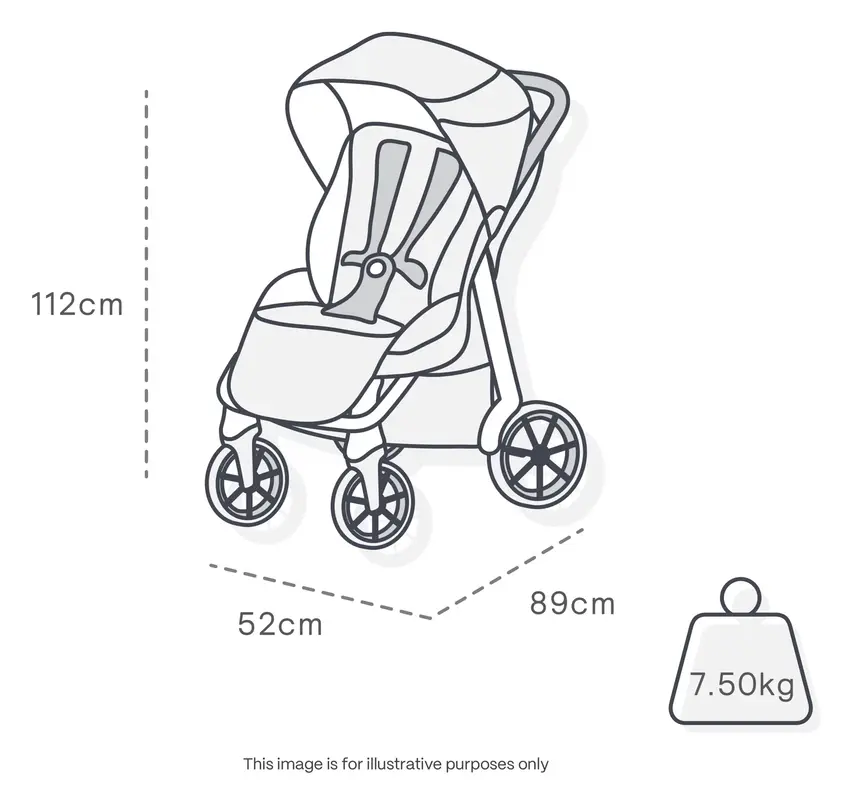
Nuna TRVL LX
A premium compact stroller with a lie-flat seat. It takes the Nuna KLIK Plus capsule on the armbar.
Read our full review →
Baby Jogger City Mini GT2
Long-running, lighter all-terrain stroller with a famously simple one-hand strap fold.
 Reviewed
Baby Jogger City Tour 2
A 6.5 kg stroller with a near-flat recline. It folds small and comes with a carry bag.
Read our full review →Stroller fit by age and growth stage
Your child's needs change fast from birth to age four. A stroller that fits a newborn may feel very different when that same baby becomes a tall two-year-old.
| Age stage | What is happening | What to check on the stroller |
|---|---|---|
| Birth to 6 months | Babies cannot hold their head up well. They need a flat lie. | Use a bassinet or a full lie-flat seat. Keep the airway clear and straight. |
| 6 to 12 months | Babies sit up and look around. They grow fast in length. | Move to an upright seat with a five-point harness. Check shoulder strap height. |
| 1 to 2 years | Toddlers walk more but still tire quickly. Naps in the stroller still happen. | Check canopy clearance with a sun hat on. Make sure the seat back supports the head when reclined. |
| 2 to 4 years+ | Tall toddlers test weight and height limits. Legs get much longer. | Check for 50 cm+ seat back, sturdy footrest, and easy steering under full weight. |
Why steering matters with a heavier child
Push the stroller with weight in the seat before you buy. Ask a shop worker if you can test it with a weighted bag, or let your toddler climb in. A stroller that glides smoothly when empty can feel heavy and hard to turn with 20 kg inside. Good bearings and larger rear tyres make a big difference on kerbs and uneven paths.
Safety standards and official rules in Australia, the UK, the US and Canada
Every country has rules to keep strollers safe. Buying a stroller that meets your local standard helps protect your child from tipping, trapped fingers, and weak brakes.
| Country | Official bodies | Stroller standard or rule | Key things to look for |
|---|---|---|---|
| Australia | ACCC / Product Safety Australia, Standards Australia | AS/NZS 2088 | Red parking brake, five-point harness, wrist tether strap, warning labels |
| United Kingdom | Office for Product Safety and Standards (OPSS), RoSPA | BS EN 1888 | Five-point harness, two-step fold lock, tested brakes and stability |
| United States | Consumer Product Safety Commission (CPSC), AAP | ASTM F833 | Restraint system, parking brake, frame locking, pinch and gap checks |
| Canada | Health Canada | Federal carriages and strollers rules | Tested brakes, harness strength, frame locks, stability and labelling |
Key safety checks in every country
- Five-point harness: Use the shoulder, waist, and crotch straps every single time. Tall toddlers can stand up and fall out in seconds if only the waist strap is buckled.
- Parking brakes: Step on the brake and try to push the stroller. It should hold firm on a slope, even with a heavy toddler inside.
- Wrist tether strap: In Australia, AS/NZS 2088 requires a tether strap on the handle. Slip your wrist through it so the stroller cannot roll away on hills or near roads.
- Dual-action fold locks: The frame must need two separate steps to fold. This stops the stroller from collapsing if a child leans or pulls on a lever.
- Stability when reclined: Some strollers pass tip tests upright, but feel light at the front when fully reclined with a heavy toddler. Always test the recline with your child seated.
- Recall checks: Before buying new or second-hand, search the recall list at Product Safety Australia, the UK OPSS, the US CPSC, or Health Canada.
Using a stroller safely in hot sun
Tall toddlers often sit with their face closer to the front edge of the canopy. Use the canopy for shade, along with a sun hat and sunscreen on exposed skin. Never drape a blanket, muslin wrap, or towel over the open front of the stroller. Covering the opening traps hot air inside and stops airflow, which can quickly overheat your child.
Common mistakes parents make with tall toddlers
Even careful parents can get caught out by stroller sizing. Watching out for these common mistakes can save you money and keep your child comfortable.
Buying by weight limit alone
A 25 kg (55 lb) weight limit looks great on paper. Yet if the seat back is only 45 cm (17.7 inches) tall, a tall two-year-old may still outgrow it. Always check both the weight limit and the seat-back height together.
Measuring with the canopy folded back
A seat can look roomy when the hood is pushed down. Once you pull the hood forward in bright sun or rain, the lower bar may hit your child's head. Always measure canopy clearance with the hood fully open.
Ignoring shoulder strap slots
On some strollers, the top harness slots sit several centimetres below the top of the fabric seat back. If your child's shoulders are higher than the top slot, the straps will dig down and curve their posture. Check where the straps actually come out, not just where the fabric ends.
Letting a child climb in without the brake on
Heavy toddlers often want to climb into the stroller by themselves. If the brake is off, the stroller can roll away and tip as they step on the footrest. Always lock the brake and hold the handlebar steady while they climb in.
Overloading the handlebar or back pocket
Putting a heavy drink bottle, phone, and nappy bag on the handle shifts the centre of balance backwards. When a tall toddler leans back or the seat reclines, the stroller can tip straight over. Keep heavy items low in the under-seat basket.
Using a worn-out second-hand frame
Second-hand strollers can be great value. Still, heavy use wears down hinges, brake teeth, and fabric stitching. Check every seam around the crotch strap and seat frame before putting a heavy toddler inside. If the frame wobbles or the brake slips, do not use it.
More options, from budget to premium
Real products from our catalogue. We don't show star ratings or review counts; check the current price, stock and reviews on Amazon before you buy.

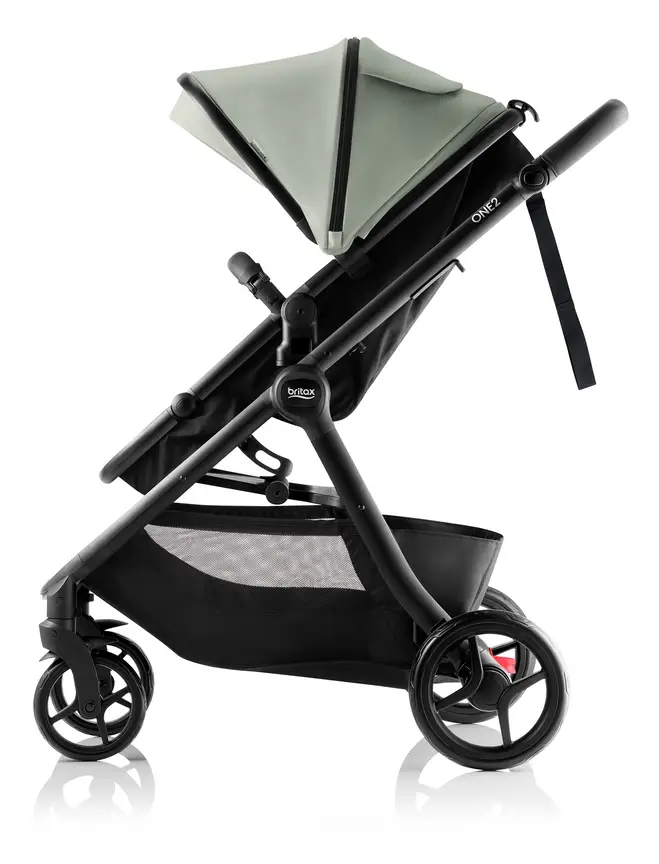
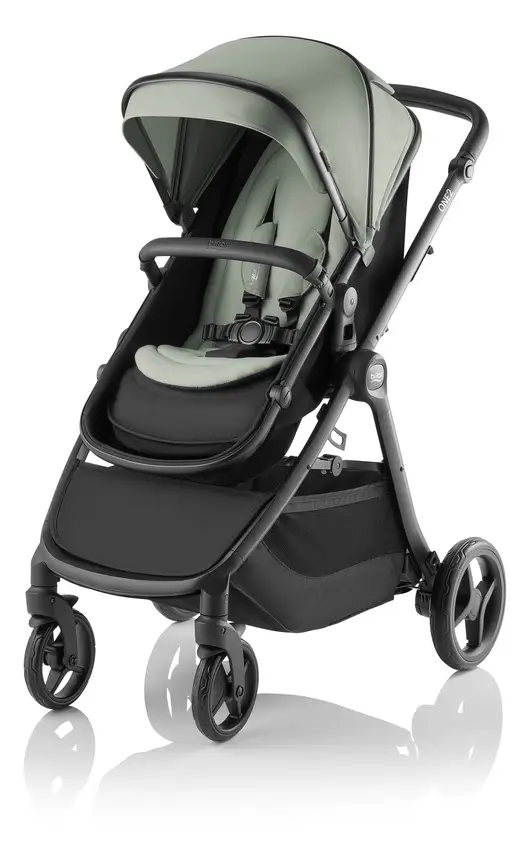


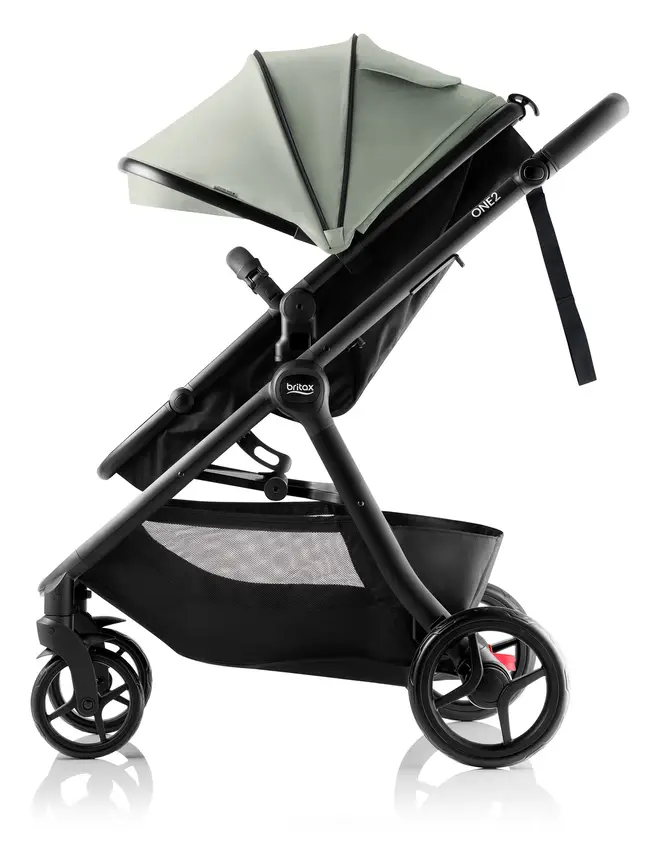


Britax One2
A pram that starts as a single and can take a second child. The seat turns into a lie-flat bassinet.
Read our full review →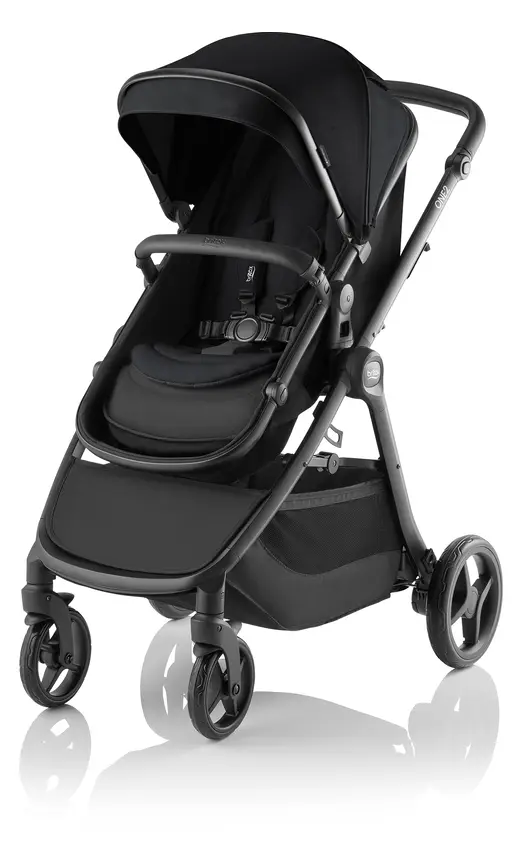
Frequently asked questions
What seat-back height is good for a tall toddler?
Look for a seat-back height of at least 50 cm (20 inches). Heights between 52 cm and 56 cm (20.5 to 22 inches) give even more room for long torsos. Pair that with a canopy clearance of at least 55 cm (about 21.5 inches) so your child's head does not touch the hood.
Is a 22 kg (50 lb) weight limit enough for a 3-year-old?
For most families, yes. Many three-year-olds weigh between 14 kg and 18 kg (about 30 to 40 lb). A 22 kg (50 lb) limit usually covers them well into age four. If your child is already near 20 kg at age two, look for a frame rated to 25 kg or 29 kg (55 to 65 lb).
Can I still use the stroller if my toddler's head touches the canopy?
It is usually fine for short walks if the seat back still supports their shoulders and the harness fits well. However, if the hood frame presses hard on their head or forces their neck forward, they will be uncomfortable. You may also need to keep the hood folded back and use a sun hat instead. If they cannot sit comfortably, it is time for a taller stroller or more walking.
Do compact travel strollers fit tall toddlers?
Some do, but many do not. Travel strollers focus on a tiny fold, which often means shorter seat backs and lower hoods. A few models have tall backs around 49 cm to 51 cm (19 to 20 inches) and higher canopies. Always measure a travel stroller in person with your child before a big trip.
Why do strollers tip more easily as toddlers get heavier?
A taller, heavier toddler sits higher up in the seat. When they lean back, reach sideways, or kick out, they shift more weight away from the centre of the wheels. Reclining the seat moves that weight even further back. Keeping heavy bags off the handlebar and inside the lower basket helps keep the stroller steady.
How do I check if a second-hand stroller is still safe for a heavy toddler?
Start by checking the maker's label for the weight limit and compliance mark, such as AS/NZS 2088, BS EN 1888, or ASTM F833. Search the model name on your national recall website. Next, test the brakes on a slight slope, tug the harness straps firmly, and check that the frame locks snap shut with no wobble.
Sources
- Product Safety Australia – Prams and strollers guide
- Product Safety Australia – Prams and strollers mandatory standard
- Product Safety Australia – Recalls
- UK Office for Product Safety and Standards
- RoSPA – Child safety at home
- AAP HealthyChildren.org – Safety for your child: 2 to 4 years
- Health Canada – Recalls and safety alerts
- Raising Children Network – Falls prevention: babies and young children
Related guides
More Prams & Strollers →
Under-Seat Stroller Basket Capacity: Weight Limits, Access Panels, Grocery Fit, and Tipping Safety

Single-to-Double Strollers: Upper vs. Lower Seat Weight Limits Explained
How to Deep Clean a Muddy or Mouldy Stroller: Seat Fabrics, Wheels, Lubricant and Frame Care