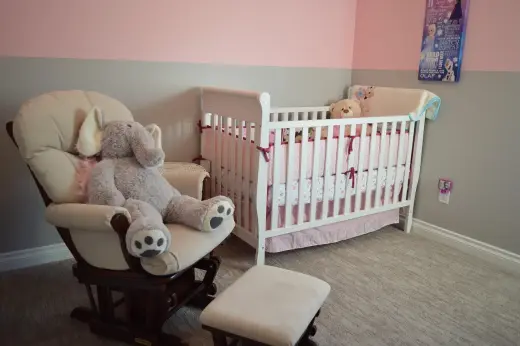
How to Organise a Shared Closet for a Baby and Toddler
Set up a shared baby and toddler closet with clear zones, safe storage, easy labels and a simple outfit routine for calmer mornings.
On this page
- Start with a simple plan
- Make separate zones for each child
- Would a second hanging rod help?
- Choose bins, baskets and drawers that fit your family
- Prepare outfits without creating more work
- Keep the closet safe for a baby and toddler
- Adjust the setup as children grow
- Compare common closet storage choices
- Official guidance across four countries
- Common mistakes to avoid
- A quick routine for busy mornings
- Frequently asked questions
- Sources and further guidance
- Sources
Short answer: Give each child a clear space in the closet. Keep daily clothes within easy reach for adults. Store clothes that do not fit, spare bedding and small items separately. A second hanging rod, labelled bins and a short outfit routine can help. Check that shelves and furniture are secure. Keep cords, bags and small objects away from children.
A shared closet does not need a costly makeover. Start with the space you have. Sort clothes by child, size and use. Make the setup easy for the adults who dress the children. Let an older toddler help with simple choices, while keeping small or unsafe items out of reach.
Start with a simple plan
Before buying organisers, look at what the family already owns. Empty one section at a time. Check every item for fit, comfort and condition. Make piles for each child, then sort those piles by size and type.
Put aside clothes that are too small, damaged or uncomfortable. Store clean hand-me-downs that may fit later. Pass on or recycle items your family no longer needs, where local options allow.
Measure the closet before buying rods, drawers or bins. Check the width and depth. Note where doors, drawers, shelves and hanging rails open. A storage item that blocks a door or sticks out into a walkway can make mornings harder.
Decide what needs to stay in the closet. Daily clothes may belong there. Toys may work better in a play area. Keep medicines, cleaning products, button batteries and other hazards in secure storage away from children.
Agree on the purpose of each area
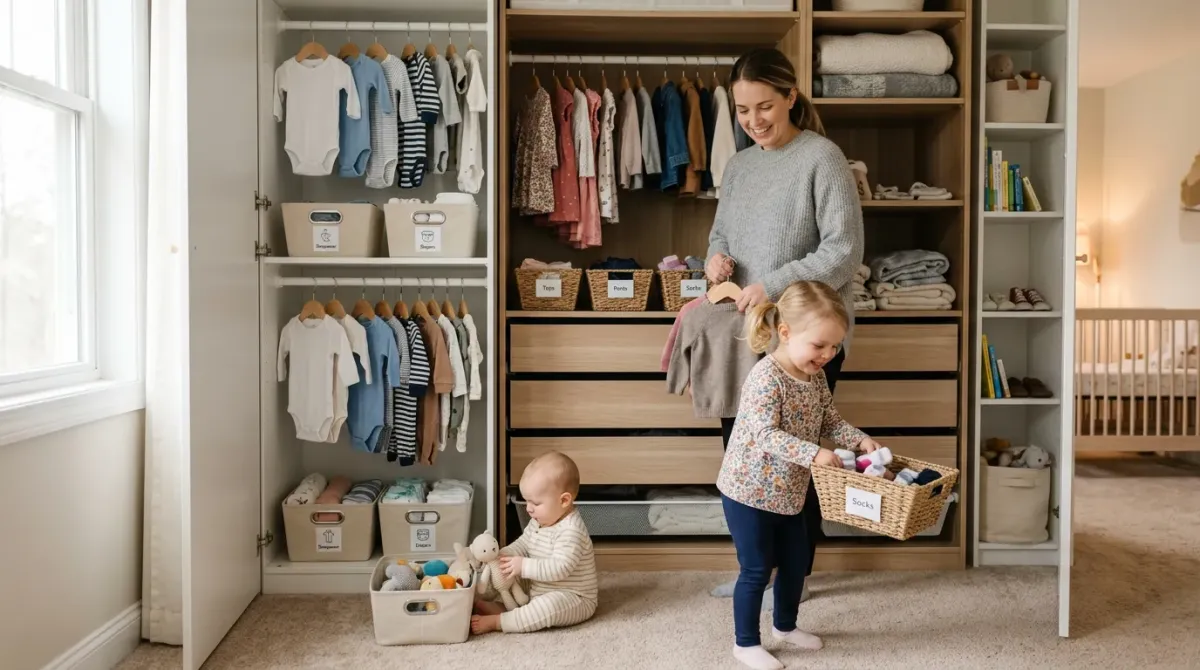
A shared closet works best when every area has one clear job. For example, one rail can hold the toddler's daily clothes. A lower drawer can hold the baby's sleepwear. A labelled box can hold clothes for the next size.
Use a plan that fits your home. You do not need one fixed system. If a child has more clothes, give that child more space. If the closet is small, store out-of-season clothes elsewhere.
Make separate zones for each child
Keep each child's clothes in a clear zone. You can use separate sides, shelves, drawers or labelled bins. Choose the layout that is easiest to see and reach.
Use names, simple words or clear pictures on labels. A label such as “baby tops” is easier to understand than a colour code alone. Pictures can help a toddler who cannot yet read. Adults and other carers should be able to follow the labels too.
Keep the most-used clothes at the easiest height for the adult who dresses the children. This is often the middle of a shelf or rail. Put spare and next-size clothes higher up or elsewhere. Store heavy items low, where they are less likely to fall from a height.
Do not make the toddler responsible for reaching a high shelf. Toddlers may climb to reach something they want. Keep items that interest them at a safe height, and secure furniture that could tip.
Sort clothes by size and type
Within each child's zone, group similar clothes together. Keep tops with tops and trousers with trousers. Keep sleepwear separate from daytime clothes if that helps your routine.
Use size labels from the clothing, but check the fit on your child. Labels differ between brands and countries. One size may fit differently from another. Move an item when it stops fitting, rather than relying only on the printed age.
Keep the current size easiest to reach. Store the next size in a separate labelled container. Mark the size clearly. This avoids searching through clothes that are too large during a busy morning.
Would a second hanging rod help?
A second hanging rod can make use of vertical space. It may suit short clothes, such as tops, small dresses or trousers folded over a hanger. It may not work well for long clothes or a closet with little height.
Check how the rod attaches and what it can safely hold. Follow the maker's fitting instructions. Do not hang a rod from a shelf or rail unless it is designed for that use. Do not let a child pull on it.
A toddler may be able to reach a lower rail. That can help them choose between two outfits with an adult. It can also invite climbing or pulling. Keep the rail secure and avoid placing furniture beneath it as a climbing step.
Use child access only if the setup remains safe. Keep the toddler's choices small. Put fragile, sharp or unsafe items elsewhere. An adult should still handle dressing and check that clothes suit the weather and activity.
Choose bins, baskets and drawers that fit your family
Bins can hold small clothes, socks, bibs or spare items. Baskets may be quick to fill, but an open basket can be harder to keep sorted. Drawers hide items from view, but labels can help everyone find them.
Look for storage that fits the shelf or floor space without blocking doors. Smooth edges can reduce scrapes. Avoid containers with lids that could trap little fingers. Keep plastic bags and dry-cleaning bags away from children because they can cause suffocation.
Use small containers for adult-managed items, such as socks or hair accessories. Keep tiny objects away from babies and toddlers. Young children often explore by putting things in their mouths. Check bins often for loose buttons, broken fasteners or other small parts.
Do not stack heavy bins high. A child may pull one down. If you use a tall drawer unit or storage cabinet, secure it to the wall using the maker's instructions and suitable fittings. Keep heavier items in lower drawers.
Use labels that are easy to keep current
Labels should match the contents. A simple word or picture is enough. Avoid labels that promise more than the bin can hold. If a bin changes use, change the label too.
Do not rely on colour alone. Not everyone sees colours in the same way. Words and pictures make the system easier for visiting carers and family members.
Prepare outfits without creating more work
Preparing clothes ahead can save time. Choose a small number of suitable outfits for the next day. Check the weather, planned activities and any clothing needs from childcare or school.
Keep a spare outfit for each child in a place adults can find quickly. A nappy change, spill or muddy play may call for clean clothes. Check spare outfits now and then so they still fit and suit the season.
For the baby, include what you usually need for dressing, such as a clean nappy and suitable clothes. Keep the baby on a safe, flat changing surface while changing. Stay within reach. Never leave a baby unattended on a raised surface.
For the toddler, let them choose between two options if they enjoy choosing. Both options should be suitable for the weather and the day's plans. Too many choices can slow the routine. Keep the choice calm and brief.
Do not place outfits on a cot or in a sleep space. Keep the baby's sleep area clear and follow safe sleep guidance from your local health service. Clothes belong in the closet, drawer or a nearby adult-managed basket.
Keep the closet safe for a baby and toddler
Closet organisation can affect safety. A child may pull a drawer, climb a shelf or reach for a dangling cord. Look at the room from a child's level. Remove tempting hazards and secure furniture.
- Attach tall drawers, wardrobes and shelving to the wall as directed by the maker.
- Keep heavy items low and avoid unstable stacks.
- Keep blind and curtain cords well away from children.
- Store small items, button batteries, medicines and cleaning products securely.
- Keep plastic bags and garment covers out of reach.
- Do not use a shelf, drawer or hanging rod as a step or climbing aid.
- Check that doors and drawers do not create a trap or pinch point.
- Keep the floor and walkway clear to reduce trips.
Check for recalls if you buy second-hand furniture or storage. Product Safety Australia maintains recall information. The UK Office for Product Safety and Standards, the US Consumer Product Safety Commission and Health Canada also share product safety information for their markets.
For furniture that could tip, the Australian consumer regulator advises families to anchor it. In the US, the Consumer Product Safety Commission runs the Anchor It! campaign. In the UK, the Office for Product Safety and Standards provides product safety guidance. In Canada, check Health Canada's recalls and safety alerts.
Keep cords out of reach. The ACCC in Australia warns about loose blind and curtain cords. If a cord is near the closet, secure it using suitable fittings and follow local advice.
Adjust the setup as children grow
A baby's needs change quickly. Clothes may move from folded storage to hanging storage as they grow. Keep the setup flexible. Review it when a size changes or the daily routine shifts.
| Stage | What may help | Safety focus |
|---|---|---|
| Newborn and young baby | Keep daily clothes and nappies easy for adults to reach. Store later sizes separately. | Keep small items away. Use a safe changing surface and stay with the baby. |
| Baby who reaches and rolls | Move tempting items out of reach. Keep the floor clear for dressing and movement. | Secure furniture. Keep cords, bags and small objects away. |
| New walker or toddler | Offer a small choice between suitable outfits. Use simple words or picture labels. | Expect climbing and pulling. Anchor furniture and keep heavy items low. |
| Older toddler | Invite help with simple tasks, such as placing clothes in a basket. | Keep adult-only items secure. Supervise around drawers and rails. |
These are broad stages, not strict age rules. Children develop at different rates. Change the setup when your child can reach, pull or climb in new ways.
Compare common closet storage choices
There is no single best storage choice. Pick what fits the space, the clothes and the people using it. A mix can work well.
| Storage choice | Useful for | Things to check |
|---|---|---|
| Existing wardrobe rail | Hanging outfits and keeping clothes visible. | Do not overload it. Keep the rail secure and clothes out of the walkway. |
| Second hanging rod | Making more hanging space for short garments. | Check fitting instructions, height and stability. Keep children from pulling it. |
| Open bins | Quick access to small clothes or laundry. | Use clear labels. Keep small items and plastic bags away from children. |
| Drawers | Keeping clothes contained and reducing visual clutter. | Anchor tall units. Watch for finger traps and climbing. |
| High shelf | Storing spare or next-size clothes for adults to manage. | Keep heavy items low. Do not let children climb to reach it. |
| Outfit basket | Holding a prepared set for the next day. | Keep it outside the baby's sleep space and away from hazards. |
Official guidance across four countries
Closet organisation is mostly a household task. There is no special closet standard needed for sorting clothes. Furniture and product safety advice still matters. Follow the instructions for each item and check local guidance.
| Country | Relevant official bodies | Useful focus |
|---|---|---|
| Australia | Product Safety Australia and the ACCC; Kidsafe Australia; Red Nose | Furniture tip-over risks, blind cords, recalls and safe sleep practices. |
| United Kingdom | Office for Product Safety and Standards; RoSPA; NHS | Product safety, child safety at home and advice for babies and toddlers. |
| United States | U.S. Consumer Product Safety Commission; American Academy of Pediatrics | Furniture anchoring, home safety and child development guidance. |
| Canada | Health Canada; Canadian Paediatric Society | Recalls, product safety alerts and child health guidance. |
These bodies do not all publish closet-specific instructions. Their general advice helps families spot risks from furniture, cords and unsafe products. Check the current advice for your area when a product or rule is involved.
Common mistakes to avoid
- Buying organisers before measuring: Measure the closet and check door clearance first.
- Mixing both children's clothes: Separate zones make it easier to find the right size.
- Storing every size together: Keep current clothes easy to reach and later sizes apart.
- Putting heavy items high: Store heavier items low to reduce the risk of a falling object.
- Leaving furniture unsecured: Anchor tall or unstable furniture according to its instructions.
- Using tiny objects as labels or decorations: Babies and toddlers may put them in their mouths.
- Making a toddler reach high: Keep child choices low and supervise them.
- Preparing too many outfits: A small set of choices is easier to manage.
- Using the cot as a storage area: Keep the baby's sleep space clear.
- Keeping a system that no one follows: Make labels and zones simple for every carer.
A quick routine for busy mornings
A short routine can make the closet easier to use. It does not need to happen at a fixed time. Choose a moment that works for your household.
- Check the next day's weather and plans.
- Choose suitable clothes for each child.
- Put each outfit in its own labelled area or basket.
- Check for a spare outfit if the children need one.
- Return clean clothes to the right child and size zone.
- Put worn clothes in the laundry basket.
Keep the routine short. If it takes too long, reduce the number of steps. The goal is to make clothes easy to find, not to create another chore.
Frequently asked questions
Should siblings share one closet?
They can, if the space allows clear zones for each child. Separate shelves, rails or bins help prevent mix-ups. If the closet is too small, use a dresser or labelled storage elsewhere.
Is a second hanging rod safe?
It can be suitable when fitted as the maker directs. Check that it is stable and made for the closet. Keep children from pulling or climbing on it. Do not use a loose or improvised rod.
What should go in a toddler's reach?
Only items that are safe for the toddler to handle with an adult nearby. A small choice of clothes may work. Keep small parts, cords, bags, medicines and cleaning products out of reach.
How do I keep baby clothes separate from toddler clothes?
Give each child a clear zone. Use labels with simple words or pictures. Sort clothes by type and size inside each zone. Keep the current size easiest to reach.
How often should I reorganise the closet?
Review it when clothes stop fitting, seasons change or the routine changes. Remove damaged items and check stored clothes before using them. There is no need for a fixed schedule.
Can a toddler help choose an outfit?
Yes, if you offer a small choice between clothes that suit the weather and plans. Keep adult supervision. The toddler should not climb to reach clothes or use drawers as steps.
Where should I keep spare outfits?
Keep one where an adult can find it quickly. It may be in a labelled drawer or basket. Keep it outside the cot or other sleep space, and away from cords or plastic bags.
Do I need special labels or matching bins?
No. Simple labels and containers you already own may be enough. Choose a system that fits the space and that all carers can understand.
Sources and further guidance
- Australia: Product Safety Australia, Toppling furniture and televisions guide.
- Australia: ACCC, Warning about loose blind and curtain cords.
- United Kingdom: Office for Product Safety and Standards, Product safety information.
- United Kingdom: RoSPA, Child safety at home.
- United States: U.S. Consumer Product Safety Commission, Anchor It! furniture tip-over prevention.
- United States: American Academy of Pediatrics, Childproofing your home.
- Canada: Health Canada, Recalls and safety alerts.
Keep this area simple and safe. Separate each child's clothes, make everyday items easy for adults to reach, and secure furniture. Review the setup as your children grow.
This article provides general information only and is not a substitute for advice from a qualified health professional or your local safety authority. BabyGearFinder may earn a commission from qualifying purchases. This does not affect the price you pay.
Sources
- Product Safety Australia – Toppling furniture and televisions guide
- ACCC – ACCC warns of dangers of loose blind and curtain cords
- UK Office for Product Safety and Standards
- RoSPA – Child safety at home
- CPSC (US) – Anchor It! furniture tip-over prevention
- HealthyChildren.org (AAP) – Childproofing your home
- Health Canada – Recalls and safety alerts
Related guides
More Toys & Play →
Baby and Toddler Play Mats: How to Choose a Safe Mat for Floor Time

Toddler Aprons and Waterproof Art Smocks: How to Choose and Use Them

Toddler Rain Suits and Muddy Buddy Overalls: Fit, Seams and Puddle Play