Nappy Bag Hacks: Clever Ways to Organise, Save Space and Pack Safely
Simple ways to organise a nappy bag: what to pack by age, pouch systems, space-saving tricks, and safety tips for nappy sacks, medicines and batteries.
On this page
- Start with the right bag
- The pouch system: organise by job
- Space-saving hacks
- What to pack by age
- Feeding on the go, safely
- Safety: what to keep out of reach
- Nappy changes away from home: step by step
- A grab-and-go packing checklist
- Two children, or twins?
- Babywearing and a nappy bag
- Cloth nappies on the go
- Hanging bags on prams
- Packing for different outings
- Keeping the bag clean
- A restocking routine
- The car backup kit
- Getting older children to help
- Nappy bag safety in the car
- Common mistakes to avoid
- FAQ
- Sources
Short answer: the easiest way to organise a nappy bag (called a diaper bag in the US and Canada) is to group things into small pouches by job: changing, feeding, clothes, health and "grab" items like keys and phone. Pack only what you need for the outing plus a little extra, restock as soon as you get home, and keep a ready-to-go change kit you can pull out on its own. A few safety habits matter too: keep nappy sacks, medicines, hand sanitiser and anything with button batteries out of your baby's reach, and never leave nappy sacks near a cot or pram.
Key points
- Pouch system: one small pouch per job makes things fast to find.
- Pack light: enough for the outing plus a spare, not everything you own.
- Restock straight away when you get home, so the bag is always ready.
- Safety: RoSPA warns thin nappy sacks are a suffocation risk for babies. Keep them, medicines and button batteries out of reach.
- Feeding: carry formula powder and water separately, or ready-to-feed formula, and keep breast milk cold.
Start with the right bag
You don't need an expensive "nappy bag". A backpack, tote or messenger bag can work well. Look for:
- A wide opening so you can see everything.
- A wipe-clean lining for leaks and spills.
- Outside pockets for things you grab often, like wipes and your phone.
- Two straps (backpack style) to keep your hands free and spread the weight across your back.
- Pram clips or straps to hang the bag on the pram handle, but check the pram doesn't tip with the weight.
- A light bag to start with. Every gram counts when you're carrying a baby too.
| Bag style | Good for | Watch out for |
|---|---|---|
| Backpack | Hands-free; spreads weight | Harder to reach into while wearing it |
| Tote | Easy to open and see inside | Heavy on one shoulder |
| Messenger / cross-body | Quick access while walking | Can swing and bump your baby in a carrier |
| Small clutch or pouch | Quick trips, older babies | Not much room |
The pouch system: organise by job
Small zip pouches, wet bags or clear packing cubes turn a messy bag into a tidy kit. Use different colours so you know which is which.
| Pouch | What goes in it |
|---|---|
| Change kit | Nappies, wipes, a fold-up change mat, nappy cream, nappy sacks or a wet bag |
| Feeding | Bottle, formula in a dry container, water, bib, burp cloth, snacks for older babies |
| Clothes | Spare outfit, spare socks, a light top or cardigan; a spare top for you |
| Health | Any medicines your child needs (in a child-resistant container), thermometer, plasters, hand sanitiser |
| Sun and weather | Sun hat, sunscreen for older babies, a light wrap or rain cover |
| Play | A couple of small, safe toys or board books |
| Grab pouch | Keys, phone, wallet, tissues |
The change kit is the most useful. Keep it ready so you can take just the kit to the change room and leave the big bag with your pram.
Space-saving hacks
- Roll, don't fold. Rolled clothes take less space. Roll a whole outfit (bodysuit, leggings, socks) into one bundle.
- Travel packs of wipes instead of the big tub.
- Decant creams into small travel tubs.
- Use a change mat with pockets that holds a couple of nappies and a mini wipes pack.
- Pre-measured formula in a container with sections, one per feed.
- A muslin cloth works as a burp cloth, a sunshade for the pram (not over the face), a change mat or a cover for feeding.
- Clip things outside with a carabiner, like a wet bag or a cup, so they don't take space inside.
- One "just in case" item per category, not three.
What to pack by age
Newborn to 6 months
- One nappy for every 2 hours out, plus 2 extra.
- Wipes and a change mat.
- Two spare outfits (blow-outs happen).
- Muslin or burp cloths.
- Feeding gear if bottle feeding.
- A light wrap or cardigan for temperature changes.
- A dummy and a spare, if your baby uses one.
Babies under 6 months should be kept out of direct sun. Most health services say sunscreen isn't recommended for babies this young; use shade, clothing and a hat instead.
6 to 12 months
- Nappies, wipes, change mat.
- One spare outfit.
- Snacks suitable for their age and a spoon if needed.
- A bib and a cup of water.
- Small toys or books.
- Sun hat and sunscreen (for small areas of skin, as advised for older babies).
Toddlers
- Nappies or spare undies and pants if toilet training.
- Wipes, spare outfit.
- Snacks and a water bottle.
- A small activity, like crayons and paper.
- A portable potty seat liner if toilet training.
Feeding on the go, safely
Feeding gear needs the most care, because milk can grow germs quickly when warm.
- Formula: carry the powder in a clean, dry container and the water separately in a clean bottle. Mix just before the feed. Raising Children Network explains how to take formula out safely.
- Ready-to-feed formula is the easiest option for outings.
- Expressed breast milk: carry it in an insulated bag with an ice pack.
- Leftovers: throw away any milk left after a feed. Pregnancy, Birth and Baby says to throw away formula your baby hasn't finished after an hour.
- Snacks: choose foods that suit your child's age and aren't choking risks, like soft fruit pieces, and give them while your child is sitting down.
Safety: what to keep out of reach
Babies love to explore bags. A nappy bag on the floor is a treasure chest of things they shouldn't have.
Nappy sacks
RoSPA in the UK warns that thin plastic nappy sacks can cling to a baby's nose and mouth and cause suffocation. Babies under one are most at risk, because they grab things and put them in their mouths. Deaths have happened when sacks were stored near a baby's cot. RoSPA and the NHS advise:
- never leave nappy sacks in or near a cot, pram or change area where your baby can reach;
- keep them in a closed pocket or container in the bag;
- throw used sacks away straight away;
- consider a reusable wet bag instead.
Medicines and creams
Keep medicines in their child-resistant containers and in a zipped pocket. Children can swallow medicines, nappy creams and hand sanitiser quickly. If your child swallows something, call your Poisons Information Centre (13 11 26 in Australia), NHS 111 (UK), Poison Control (1-800-222-1222 in the US) or your provincial poison centre (Canada).
Button batteries
Some small gadgets, toys, car keys and baby thermometers use button batteries. Product Safety Australia warns that swallowed button batteries can cause serious injury or death within hours. Check that battery covers are screwed shut, keep spare batteries out of the bag, and seek urgent medical help if you think your child has swallowed one.
Small objects
Coins, lids, hair clips and pen caps can be choking hazards. Keep them in a closed pouch.
Nappy changes away from home: step by step
- Find a safe spot. Use a baby change room if there is one. If not, the floor on a mat is safer than a high bench, because your baby can't roll off.
- Take just the change kit. Leave the big bag on the pram, out of your baby's reach.
- Lay down your mat and have a clean nappy, wipes and a nappy sack or wet bag open and ready before you start.
- Keep one hand on your baby at all times on any raised surface. Public change tables often have straps; use them, but don't rely on them.
- Change, clean and dress your baby.
- Bag the dirty nappy and throw it straight into a bin. Keep nappy sacks away from your baby while you do this.
- Wipe the change mat and wash or sanitise your hands.
Change tables in public places vary. Check that the table is clean, stable and locked open before you put your baby on it.
A grab-and-go packing checklist
| Category | Short trip (1–2 hours) | Day out |
|---|---|---|
| Nappies | 2–3 | 6–8 |
| Wipes | Travel pack | Full travel pack plus spare |
| Clothes | 1 spare outfit | 2 spare outfits, plus a layer |
| Feeding | 1 feed | Feeds for the whole day plus 1 extra |
| Snacks (older babies) | 1–2 | Several, plus water |
| Health | Any regular medicine | Medicine, plasters, thermometer |
| Comfort | Dummy, small toy | Dummy, toys, books, a muslin |
| Weather | Hat | Hat, sunscreen (older babies), layer, rain cover |
Two children, or twins?
With two little ones, organisation matters even more.
- Use a different pouch colour for each child, especially if they wear different nappy sizes.
- Pack one shared change mat and wipes, but separate nappies and clothes.
- A large backpack keeps your hands free for two children.
- Older toddlers can carry a tiny backpack with their own snack and toy, which they love.
Babywearing and a nappy bag
If you carry your baby in a sling or carrier, a backpack-style bag can clash with the carrier straps. Options include a cross-body bag worn to the side, a small hip pack for essentials, or hanging the main bag on a pram you push alongside. Make sure the bag doesn't bump your baby or press on their face, and keep the TICKS checks for safe babywearing in mind: tight, in view, close enough to kiss, keep chin off chest, supported back.
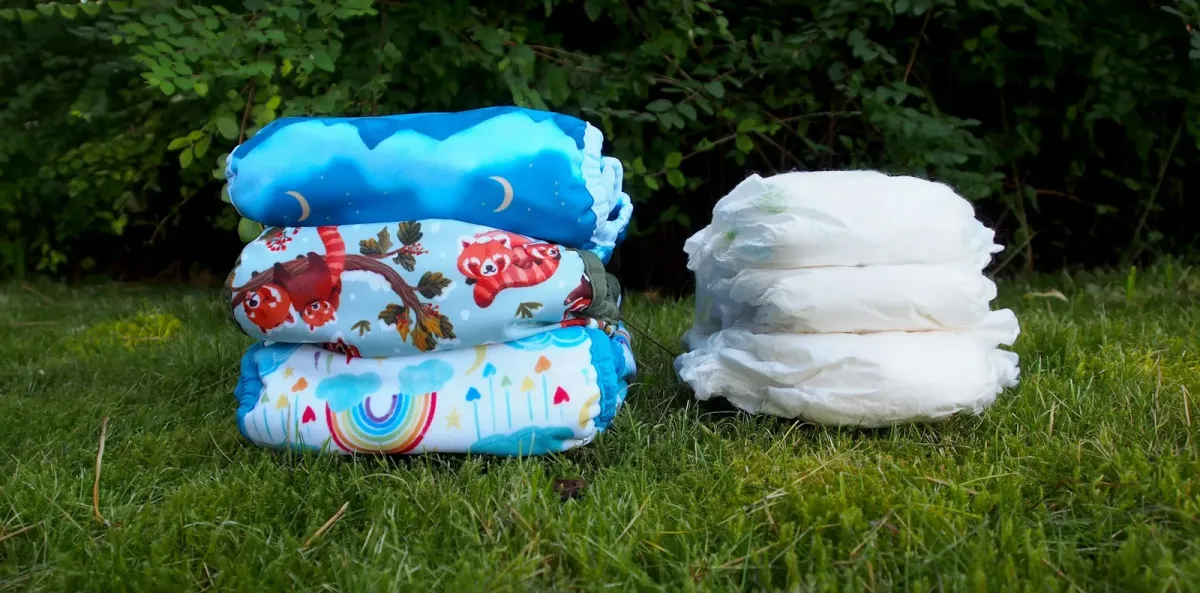
Cloth nappies on the go
Families using cloth nappies need a little extra:
- A waterproof wet bag with a zip for used nappies.
- Enough clean cloth nappies and covers for the outing.
- Reusable or disposable wipes.
- Flushable liners, if you use them, to make poo easier to deal with.
Wet bags are also handy for wet clothes and swimmers. They're a good swap for thin plastic nappy sacks, too, as they're thicker and less likely to cling to a baby's face, though they should still be kept out of reach.
Hanging bags on prams
A heavy bag hung on the pram handle can make the pram tip backwards, especially when you lift your baby out. Use the basket under the pram for heavy things, and check your pram's instructions for weight limits on the handle. Take the bag off before lifting your baby out.
Packing for different outings
The park or playground
Sun hat, water, snacks, a change kit and a spare outfit (sandpits and puddles happen). Add sunscreen for older babies and a picnic blanket for floor play.
Shopping
Keep it light: change kit, one spare outfit, a feed, a dummy and a small toy. A backpack leaves your hands free for bags and the pram.
Day care
Ask your centre for their list. Most want named spare clothes, a hat, nappies, any medicines with a signed form, and bottles or food prepared the way they ask. Label everything.
Swimming or the beach
Swim nappies, towels, a full change of clothes, a wet bag for wet things, a sun hat, sunsuit and water. Keep babies under 12 months out of direct sun as much as you can, and always stay within arm's reach of young children near water.
Visiting family overnight
Pack your baby's sleeping bag, a portable cot if the host doesn't have a safe one, enough nappies and feeds for the whole stay, and any medicines. Check the sleep space is safe when you arrive.
Keeping the bag clean
- Empty and wipe the inside every week, and after any leak.
- Wash fabric pouches and wet bags often.
- Check snacks and formula containers for crumbs and moisture.
- Keep a small hand sanitiser for when you can't wash hands, and wash hands with soap and water when you can.
A restocking routine
The best hack is a simple routine: restock as soon as you get home. Keep a list on your phone or inside the bag:
- Nappies back to full.
- Wipes refilled.
- Dirty clothes out, clean spare in.
- Bottles out to wash; formula container refilled.
- Snacks topped up.
- Check medicines and sunscreen dates.
The car backup kit
Keep a small box in the car boot with extra nappies, wipes, a spare outfit, a towel and some snacks. Then if you forget something, you're covered. Don't leave milk, formula mixed with water, or medicines in a hot car, and secure the box so it can't fly forward in a crash.
Getting older children to help
Toddlers and preschoolers like to feel useful. Let them:
- carry their own small backpack with a snack, a drink and a toy;
- pick which two toys or books come along;
- help restock nappies and wipes when you get home;
- put their own rubbish in the bin.
It saves you space and teaches them to get ready for outings. Check their bag before you leave for anything small or unsafe, like coins or batteries from toys.
Nappy bag safety in the car
In a crash, loose items fly forward with great force. Put the nappy bag in the boot or footwell, not on the seat next to your baby or on the parcel shelf. Keep a few things you need during the drive, like a dummy or a cloth, in a small pouch within your reach as a passenger, never loose near your child's head.
Common mistakes to avoid
- Packing for every possible event. A heavy bag is hard to carry with a baby.
- Not restocking after outings.
- Loose nappy sacks in open pockets or near the cot.
- Medicines in open pockets.
- Mixing formula ahead of time and carrying it warm.
- Hanging a heavy bag on the pram handle.
- Leaving the bag on the floor where a crawling baby can dig through it.
FAQ
How many nappies should I pack?
A good rule is one for every 2 to 3 hours out, plus a couple of extras.
Are nappy sacks safe?
They're useful, but RoSPA warns they're a suffocation risk for babies. Store them out of reach and away from cots and prams, and throw used ones away straight away.
What's the best type of nappy bag?
The one you'll use. Many parents find backpacks easiest because they leave both hands free.
Can I carry made-up formula?
It's safer to carry powder and water separately and mix just before the feed, or use ready-to-feed formula.
Do I need a special change mat?
No. Any clean, wipeable mat or a towel works. A fold-up mat with pockets saves space.
How do I stop my bag smelling?
Empty it weekly, wipe the lining, wash pouches, and throw away used nappies and nappy sacks straight away.
What should I keep in the bag for emergencies?
Your child's medicines, a basic first aid kit, emergency numbers saved in your phone, and any allergy or medical information.
What's the most forgotten item?
Many parents say a spare top for themselves. Spills, spit-up and leaks happen to adults too.
Should I keep hand sanitiser in the bag?
Yes, it's handy when you can't wash your hands. Keep it in a closed pocket, as children can swallow it, and wash with soap and water when you can.
How heavy should a nappy bag be?
As light as you can manage. If it's hurting your shoulder, take things out, switch to a backpack, or use the pram basket for heavy items.
Can I use a normal backpack instead of a nappy bag?
Yes. Add a few pouches and a fold-up change mat, and it works just as well. Choose one with a wipe-clean inside, or line the bottom with a wet bag to catch spills.
Sources
- RoSPA (UK) – Nappy sacks safety
- NHS – Baby and toddler safety
- Product Safety Australia – Button batteries
- Pregnancy, Birth and Baby – Feeding your baby with formula
- Raising Children Network – Baby formula: how to make and store it
- Pregnancy, Birth and Baby – Sun and heat protection for babies and kids
- AAP HealthyChildren.org – Car safety seats: information for families
- Health Canada – Recalls and safety alerts