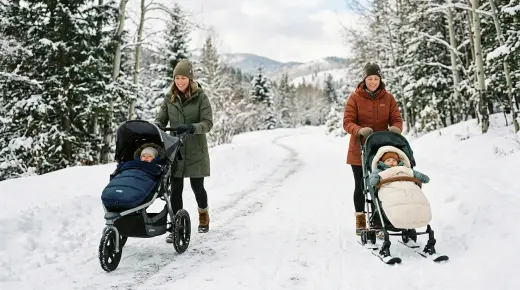
Jogging Strollers: Front-Wheel Locks, Swivel Wheels and Stopping the Wobble
Running with a pram? Why jogging strollers lock the front wheel, how to stop wheel wobble, when babies are old enough, and the safety checks to do before…
On this page
- What makes a jogging stroller different
- Why the front wheel locks
- Tracking adjustment: when it pulls to one side
- Stopping wobble: a checklist
- When is my baby old enough for running?
- Safety features to look for
- Standards by country
- Before every run
- Running in the heat and sun
- Choosing a safe route
- Tyres and maintenance
- Running with a stroller: tips for you
- By age and stage
- Running in cold, wind and rain
- Double jogging strollers
- Fitting it in the car and at home
- Buying second-hand
- How to choose a jogging stroller: checklist
- Jogging stroller vs all-terrain pram vs standard pram
- Common mistakes
- FAQ
- Sources
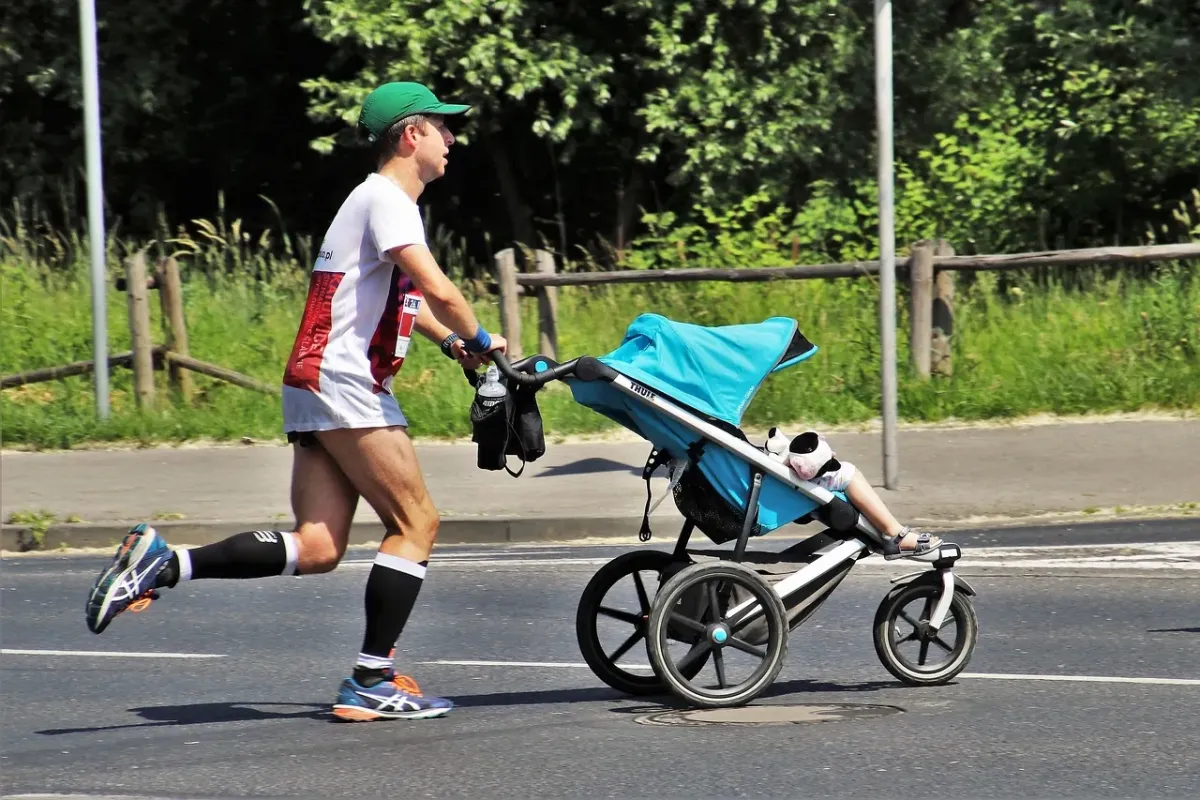
Short answer: A jogging stroller is a pram built for running, usually with three large air-filled wheels and suspension. The front wheel can swivel for easy turning when you walk, and lock straight for running. A locked front wheel keeps the stroller tracking straight at speed and stops the shaking "wobble" a swivel wheel can get when you go fast. Lock the front wheel every time you run, check the tyres and brakes, use the wrist strap, and wait until your baby is old enough. Most makers say not to run with a baby until somewhere between 6 and 8 months, when their neck and back are strong enough. Check your stroller's manual.
Key points
- Lock the front wheel for running. A swivel wheel can wobble or jerk at speed and tip the stroller.
- Always wear the wrist tether strap. Product Safety Australia lists a wrist tether as a key pram safety feature.
- Harness your child every time, with the harness snug.
- Follow the maker's minimum age for running, usually around 6 to 8 months.
- Check tyre pressure, brakes and quick-release wheels before each run.
- Avoid running in the heat of the day, and never cover the stroller with a cloth.
What makes a jogging stroller different
A standard pram has small wheels and is made for walking. A jogging stroller is made to move at running speed over paths and uneven ground. Typical features:
- Three large wheels, often air-filled (pneumatic), which roll easily and soak up bumps.
- A long frame with the front wheel well ahead of the child, so it's stable at speed.
- Suspension on the rear wheels, or all wheels, to smooth the ride.
- A front wheel that swivels or locks. Some older or "dedicated" running strollers have a fixed front wheel only.
- A hand brake on the handlebar, as well as a foot parking brake.
- A wrist tether strap so the stroller can't roll away if you trip or let go.
- A reclining seat with a 5-point harness and a large canopy.
Why the front wheel locks
A swivel wheel turns freely to follow the direction you push. That's great for walking around shops and tight corners. But at running speed, a swivel wheel can start to shake from side to side very fast. This is called wheel wobble or shimmy. It happens because small bumps make the wheel turn a little, then the stroller's movement pulls it back, and it overshoots, again and again.
Wobble can make the stroller jerk sideways, catch on a crack, or tip. Locking the front wheel straight takes away that freedom to swivel, so the stroller tracks in a straight line. That's why jogging strollers tell you to lock the front wheel for running and for rough ground.
Swivel vs locked
| Mode | Best for | Pros | Cons |
|---|---|---|---|
| Swivel | Walking, shops, tight spaces | Easy to turn with one hand | Can wobble at speed; less stable on rough ground |
| Locked straight | Running, fast walking, gravel and grass | Tracks straight; stable | Turning means pressing down on the handlebar to lift the front wheel slightly |
Tracking adjustment: when it pulls to one side
If your stroller drifts left or right when you run with the front wheel locked, the wheel may need a small adjustment. Many jogging strollers have a tracking dial or knob near the front wheel. Make small changes and test on a flat path until it runs straight. Check:
- Both rear tyres are at the same pressure. A soft tyre makes a stroller pull.
- The front wheel is fully clicked into its fork.
- Quick-release wheels are tightened properly.
- The frame isn't bent from a fall or being driven over.
Stopping wobble: a checklist
- Lock the front wheel before you start running.
- Check tyre pressure. Use the pressure printed on the tyre. Soft tyres make wobble worse.
- Check the front wheel is firmly fitted and the quick release is closed.
- Look for wear. A worn bearing or loose fork can cause shaking.
- Don't hang bags on the handlebar. Extra weight at the back lifts the front wheel and makes steering twitchy. Use the basket.
- Slow down on rough ground and downhill.
- Get it serviced if wobble continues. Bike shops can often check wheels and bearings.
When is my baby old enough for running?
Running is bumpier than walking, even with good suspension. Young babies don't yet have strong neck and back muscles. Most jogging stroller makers say not to run until your baby is around 6 to 8 months old, and some say older. Many families wait until their baby can sit up well without support. Until then, a jogging stroller can usually be used for walking only, often with a car seat adapter or bassinet the maker approves. Check your manual and, if unsure, ask your doctor or child health nurse.
Never run with a baby in a car seat clicked onto a jogging stroller unless the maker says the combination is approved for running. Most say walking only.
Prams & Strollers worth a look
Real products from our catalogue. We don't show star ratings or review counts; check the current price, stock and reviews on Amazon before you buy.
 Reviewed
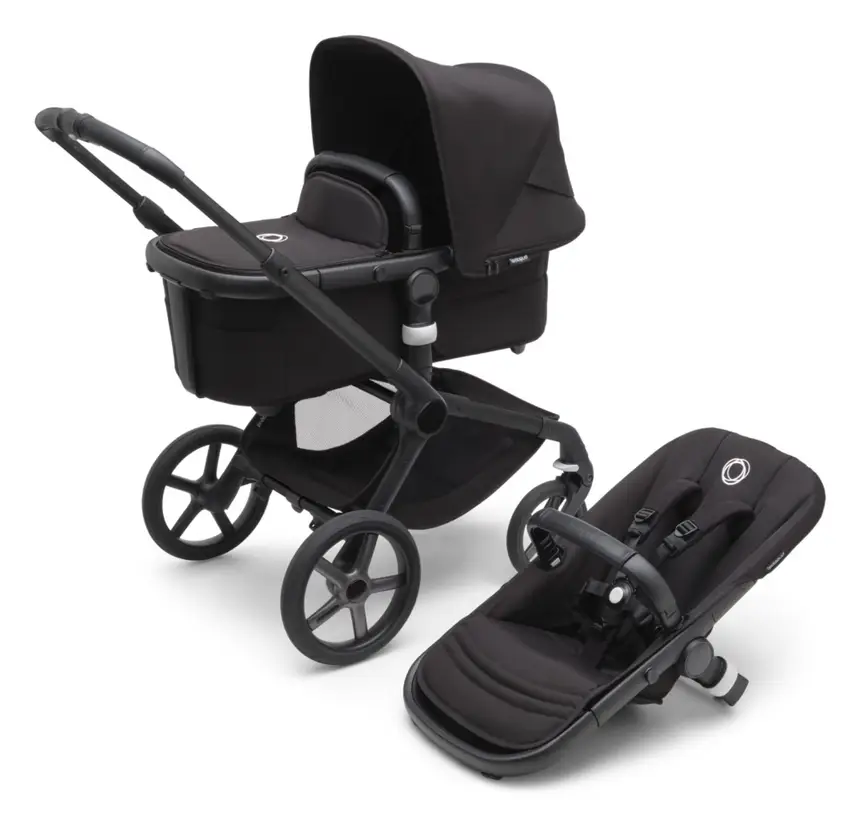
Bugaboo Fox 5
Bugaboo's flagship all-terrain pram: big-wheel suspension ride, one-piece fold, bassinet from birth and a seat rated to 22 kg.
Read our full review →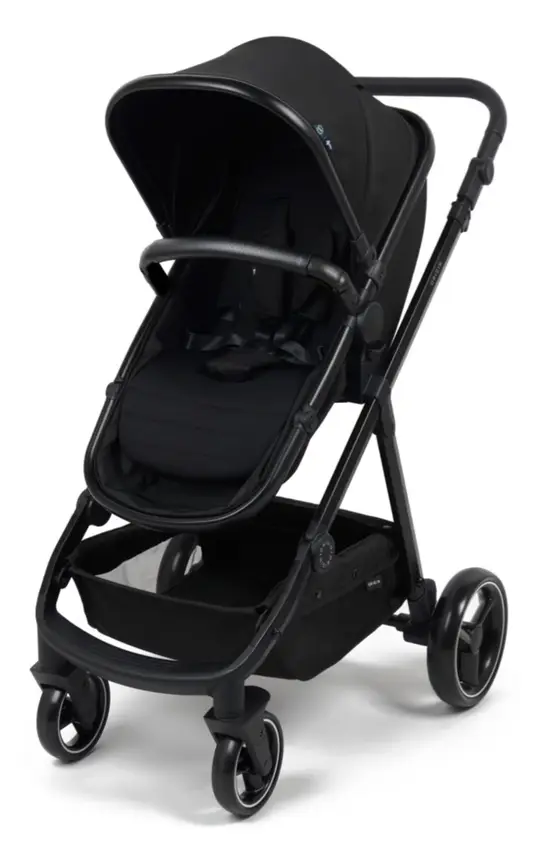
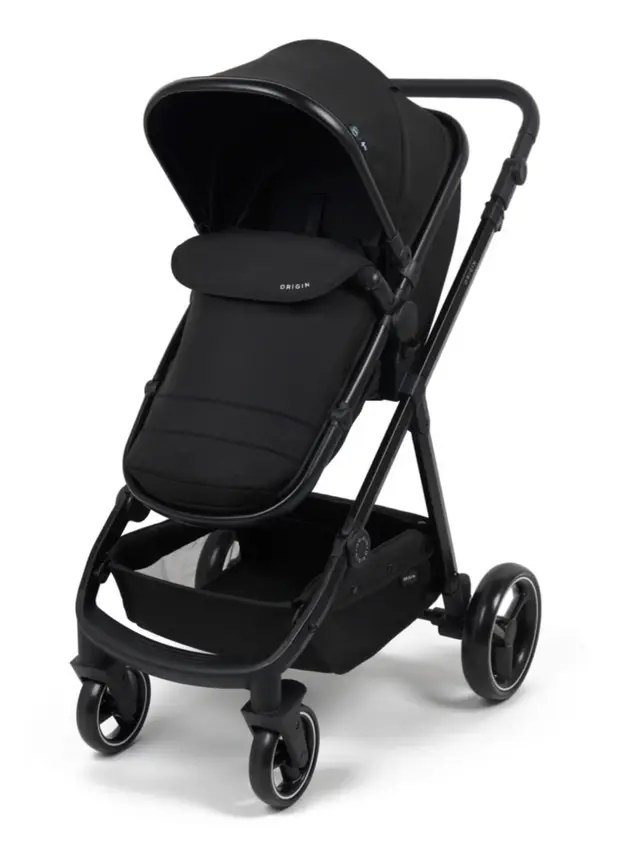
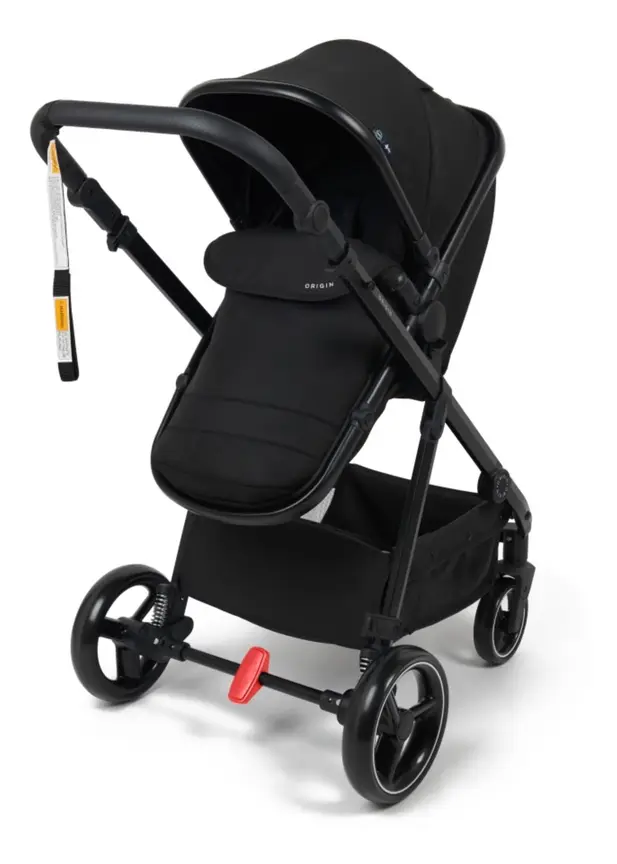
4baby Origin Stroller
A budget pram whose seat turns into a bassinet. The seat can face you or face the world.
Read our full review →
Baby Jogger City Mini GT2
Long-running, lighter all-terrain stroller with a famously simple one-hand strap fold.
 Reviewed
Baby Jogger City Tour 2
A 6.5 kg stroller with a near-flat recline. It folds small and comes with a carry bag.
Read our full review →Safety features to look for
Product Safety Australia's prams and strollers guide lists features that apply to jogging strollers too:
- Effective brakes and at least one red parking brake.
- A wrist tether strap on the handle.
- Mechanisms that stop the stroller folding by accident.
- A harness that fits your child.
- A headrest on strollers where the backrest reclines.
For running, also look for a hand brake, a lockable front wheel, adjustable handlebar height, good suspension and a canopy that gives shade without blocking airflow.
Standards by country
| Country | Rules for prams and strollers |
|---|---|
| Australia | Mandatory standard (based on AS/NZS 2088): brakes, a red parking brake, wrist tether, locking mechanisms and harness |
| United Kingdom | General product safety law; the European standard BS EN 1888 for wheeled child carriers |
| United States | Mandatory CPSC standard for carriages and strollers (ASTM F833) |
| Canada | Carriages and Strollers Regulations |
These standards cover strollers in general. They don't promise a stroller is suitable for running. Only use a stroller for running if the maker says it is designed for it.
Before every run
- Front wheel locked.
- Tyres at the right pressure.
- Wheels clicked in and quick releases closed.
- Hand brake and parking brake working.
- Folding locks clicked.
- Child harnessed snugly, with shoulder straps on.
- Wrist strap around your wrist.
- Canopy set for shade, with good airflow. No cloths draped over the stroller.
- Water for you and a drink or feed for your child.
Running in the heat and sun
Babies get hot fast. Pregnancy, Birth and Baby warns that an enclosed pram can get very hot and that you shouldn't cover a pram with a cloth, because it raises the temperature inside. Run early in the morning or later in the evening. Cancer Council Australia advises keeping babies under 12 months out of direct sun when UV levels are 3 or above. Use the canopy, choose shaded routes, and check your child often for signs of being too hot: hot, sweaty skin on the neck or chest, flushed cheeks, or being unusually floppy or grumpy.
Choosing a safe route
- Smooth paths, parks and running tracks are best.
- Avoid running on roads with traffic.
- Watch for kerbs, tree roots, potholes and drains.
- Slow right down for downhills. Use the hand brake gently.
- Be careful on shared paths with bikes and scooters. Keep left (or right, depending on your country) and stay predictable.
- Carry your phone in case you need help.
Tyres and maintenance
Air-filled tyres give a smooth ride, but they need care, just like bike tyres.
- Check pressure weekly. Use a bike pump with a gauge. The right pressure is usually printed on the tyre wall.
- Carry a puncture kit or spare tube on longer runs, or know how far you are from home.
- Look for wear: cracks in the rubber, bald patches or bulges.
- Clean the wheels and axles after muddy or sandy runs. Grit wears out bearings and brakes.
- Check the brakes: the hand brake should slow the stroller smoothly, and the parking brake should hold it still on a slope.
- Tighten loose bolts and check the harness and buckle for wear.
- Foam-filled tyres never go flat but give a slightly firmer ride. They suit people who'd rather not pump tyres.
Running with a stroller: tips for you
Running behind a stroller changes your stride and posture. Set the handlebar height so your elbows are slightly bent and you can stand tall. Push with one hand on flat ground if the maker allows, keeping the wrist strap on, and swap hands now and then. Start with short, slow runs to get used to the extra weight. If you've recently had a baby, check with your doctor or physiotherapist before you return to running; your pelvic floor and tummy muscles need time to recover after pregnancy and birth.
Side by side: more prams & strollers to compare
Real products from our catalogue. We don't show star ratings or review counts; check the current price, stock and reviews on Amazon before you buy.

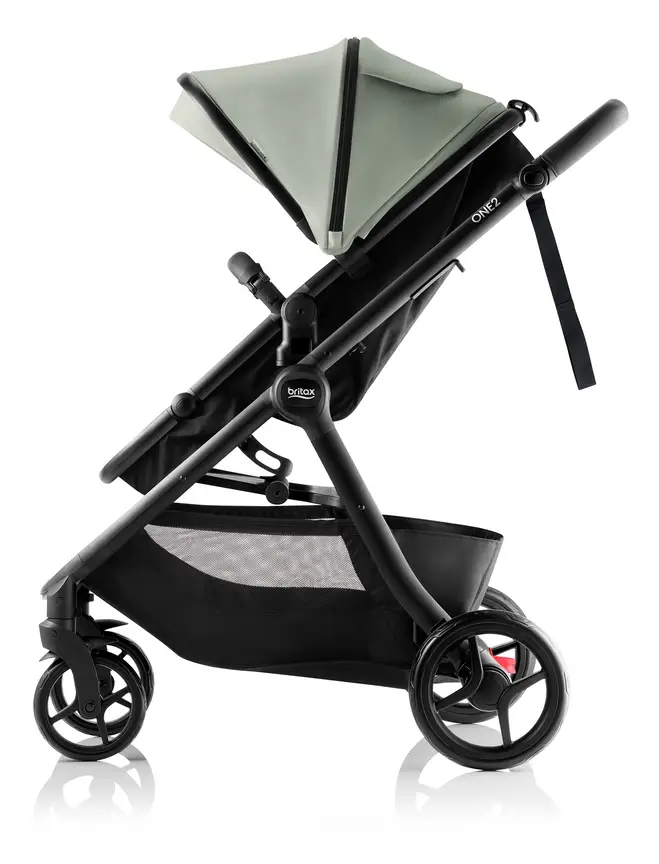
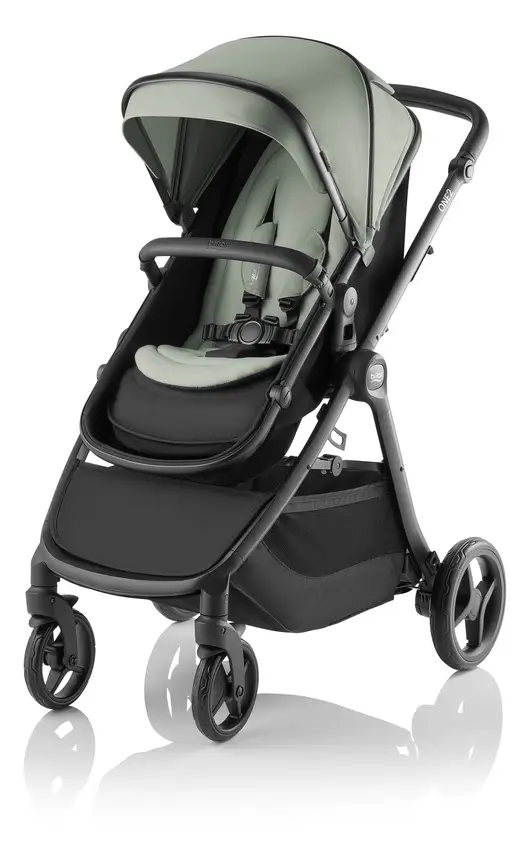


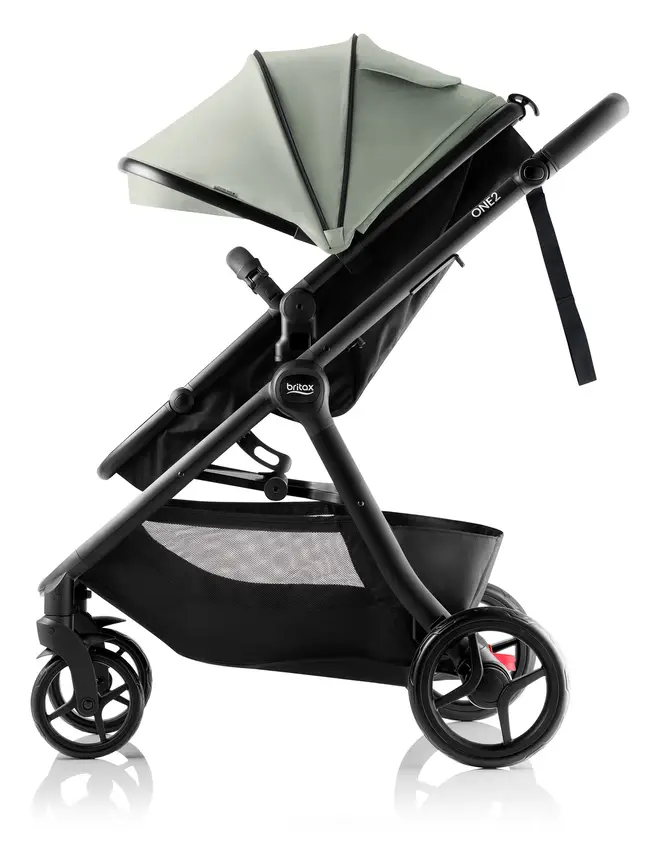


Britax One2
A pram that starts as a single and can take a second child. The seat turns into a lie-flat bassinet.
Read our full review →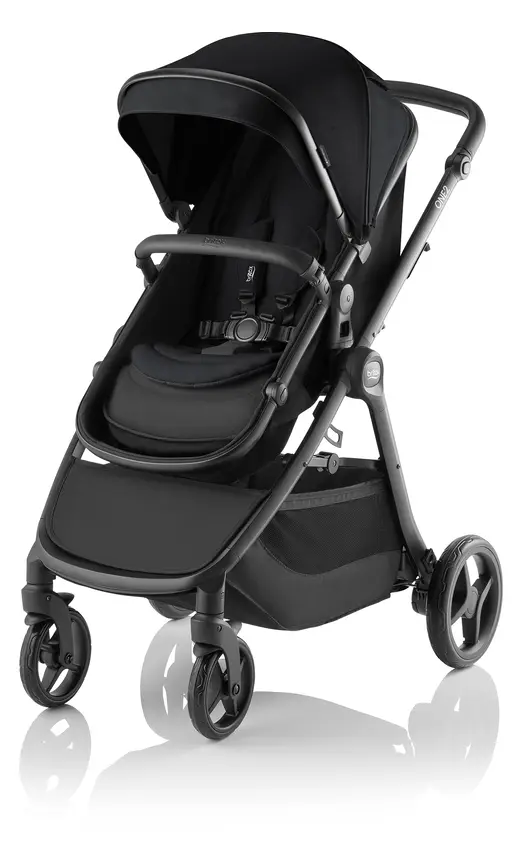
By age and stage
Newborn to about 6 months
Walk only. Use a bassinet or car seat attachment the maker approves, and keep your baby lying flat or well reclined as the manual says.
About 6 to 12 months
Once the maker's minimum age is reached and your baby sits well, you can start short, gentle runs on smooth paths. Keep the seat reclined a little and check how your baby handles the motion.
Toddlers
Toddlers often love stroller runs. Check the stroller's weight and height limits. Bring snacks and water, and plan breaks so they can get out and stretch.
Running in cold, wind and rain
Children sitting still in a stroller get cold much faster than the adult who's running. Dress your child in layers and use a footmuff or blanket placed over the buckled harness, never under it. Use a rain cover made for your stroller when it rains, and take it off when the rain stops; plastic covers trap heat and moisture. Check your child's neck and chest often to make sure they're comfortable, not too hot or too cold. In strong wind, slow down: a big canopy can catch the wind like a sail and push the stroller sideways.
Double jogging strollers
Side-by-side double joggers let you run with twins or two young children. They're wide, so check they fit through gates and paths you use. The front wheel lock matters even more with the extra weight. Balance matters too: if one child is much heavier, the stroller may pull to one side, so adjust the tracking. Make sure both children are harnessed, and check the combined weight is within the maker's limit.
Fitting it in the car and at home
Jogging strollers are big. Before you buy, measure your boot and check the folded size. Many have quick-release wheels so the frame fits in smaller cars. Store the stroller somewhere dry, out of the sun, so tyres and fabric last longer. Keep the parking brake on when it's parked, and fold it away from where children play, since folding mechanisms can pinch fingers.
Buying second-hand
Jogging strollers are often sold second-hand. Product Safety Australia suggests checking that a second-hand pram hasn't been recalled, comes with instructions, and has all its parts working. For jogging strollers, also check:
- the front wheel locks firmly and the tracking adjuster works;
- the hand brake and parking brake work;
- tyres hold air and aren't cracked;
- the frame isn't bent or cracked, especially around the front fork;
- the harness, buckle and wrist strap are all there and not frayed;
- the canopy and seat fabric aren't torn.
How to choose a jogging stroller: checklist
- The maker says it's designed for running, and gives a minimum age for running.
- A front wheel that locks firmly, with a tracking adjuster.
- Large air-filled or foam-filled tyres.
- Suspension that suits the paths you'll use.
- A hand brake plus a red foot parking brake.
- A wrist tether strap.
- An adjustable handlebar that suits your height.
- A 5-point harness, a reclining seat and a big, breathable canopy.
- A basket underneath for your gear, so you don't hang bags on the handle.
- A folded size that fits your car and your home.
- Meets your country's pram and stroller rules and isn't on a recall list.
Jogging stroller vs all-terrain pram vs standard pram
| Feature | Jogging stroller | All-terrain pram | Standard pram |
|---|---|---|---|
| Running | Yes, if the maker says | Usually walking only | No |
| Front wheel | Lockable or fixed | Often lockable | Swivel |
| Wheels | Large, air-filled | Large, air or foam | Small |
| Newborn use | Walking only, with approved bassinet or car seat | Often with bassinet | Often with bassinet |
| Fold size | Large | Medium to large | Smaller |
| Everyday shops | Bulky | OK | Easiest |
More options, from budget to premium
Real products from our catalogue. We don't show star ratings or review counts; check the current price, stock and reviews on Amazon before you buy.

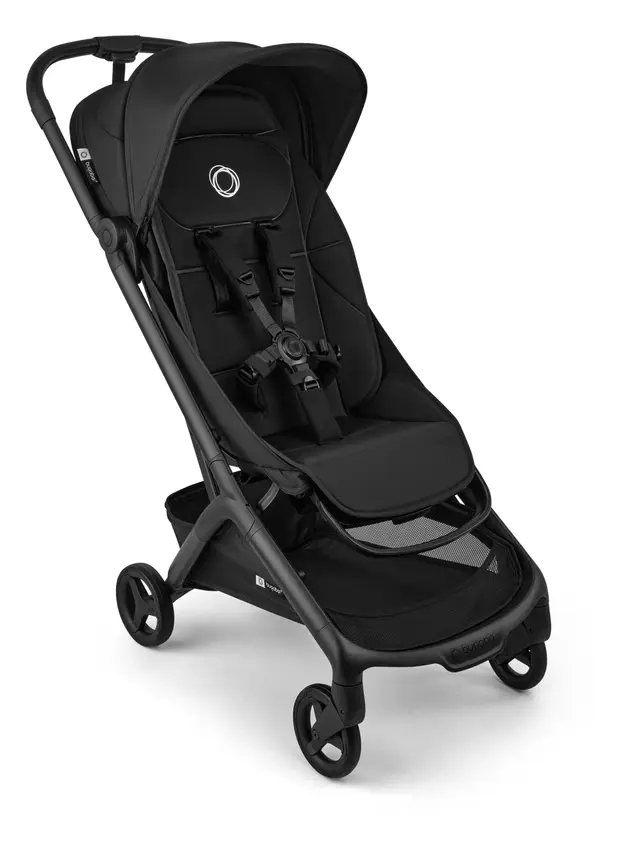
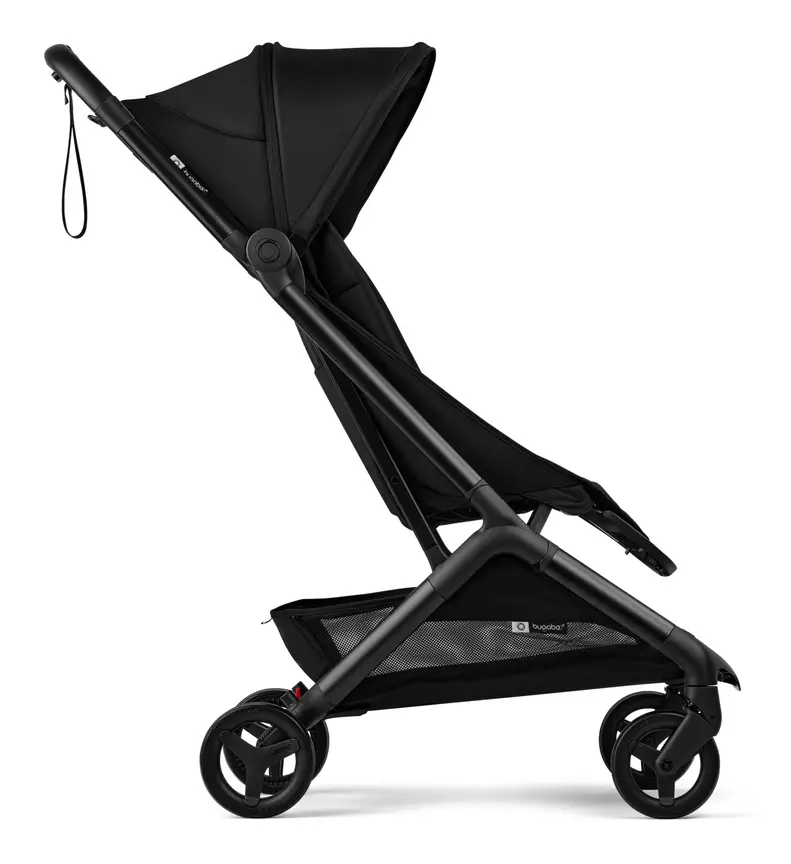


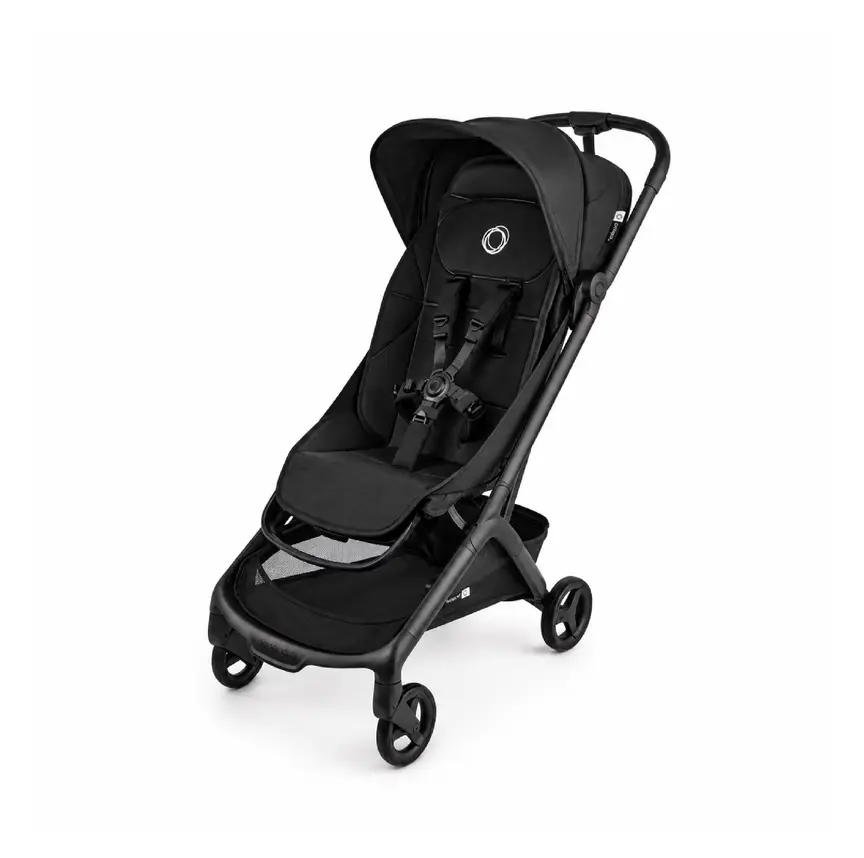
Bugaboo Butterfly
Bugaboo's cabin-friendly compact stroller with a one-second fold — the travel partner to a Fox, not a replacement for it.
Bugaboo Butterfly 2
The newer Butterfly. It folds in about one second, has a lay-flat seat and a bigger basket with a back pocket.
Read our full review →
Bugaboo Donkey 5
Converts from single to side-by-side double (siblings or twins) by widening the frame.
Common mistakes
- Running with the front wheel in swivel mode.
- Running with a baby who is too young.
- Skipping the wrist strap.
- Soft or uneven tyre pressure.
- Hanging bags from the handlebar.
- Covering the stroller with a blanket for shade.
- Going too fast downhill.
- Letting your child ride without the harness.
FAQ
Why does my jogging stroller wobble?
Usually because the front wheel is swivelling at speed, the tyres are soft, or the wheel is loose or worn. Lock the front wheel and check tyres and fittings.
What age can I start running with my baby?
Most makers say around 6 to 8 months, when your baby has good head and neck control. Check your manual.
Can I jog with a car seat on the stroller?
Usually not. Most makers say car seat attachments are for walking only.
Do I need a hand brake?
It's very useful for controlling speed downhill. You also need a working parking brake for stopping.
Is a three-wheeled stroller more likely to tip?
Three-wheelers can tip if you turn sharply at speed or hang weight on the handle. Slow down for turns and keep weight in the basket.
Should I lock the front wheel when walking on gravel or sand?
Yes. A locked front wheel helps the stroller roll straight over loose or bumpy ground. Unlock it when you need to turn tightly on smooth surfaces.
Can I use a normal pram for jogging?
No. Standard prams aren't designed for running speeds. Their small wheels can catch and tip. Only run with a stroller the maker says is made for running.
How fast can I run with a jogging stroller?
At a speed where you stay in full control and can stop quickly. There's no set speed limit, but slow down on bends, rough ground, downhill and busy paths.
Should my child wear a helmet in a jogging stroller?
Helmets aren't usually needed in a jogging stroller, and they can push the head forward in the seat. Follow the maker's advice. Helmets are needed for bike trailers in many places, which are different.
Can I attach the stroller to my bike?
Only if it's sold as a bike trailer conversion, using the maker's approved kit. Never tie a stroller to a bike.
My toddler wants to get out halfway. What do I do?
Plan runs around your child's routine, after a nap and a snack. Bring a favourite soft toy, point out things you pass, and stop for a short break at a park. If your child is upset, it's fine to walk or end the run early.
How do I turn a jogging stroller with a locked front wheel?
Slow down, press down gently on the handlebar so the front wheel lifts a little, then steer. For tight turns, stop and unlock the front wheel.
Do jogging strollers need servicing?
Yes, now and then. A bike shop can check bearings, brakes and tyres. Follow the maker's care guide, and clean off mud and sand after rough runs.
Sources
- Product Safety Australia – Prams and strollers guide
- Product Safety Australia – Prams and strollers mandatory standard
- Pregnancy, Birth and Baby (healthdirect) – Babies in hot weather
- Cancer Council Australia – Fact sheet: Sun protection and babies
- HealthyChildren.org (American Academy of Pediatrics) – Home safety: tips for families with young children
- NHS – Baby and toddler safety
Related guides
More Prams & Strollers →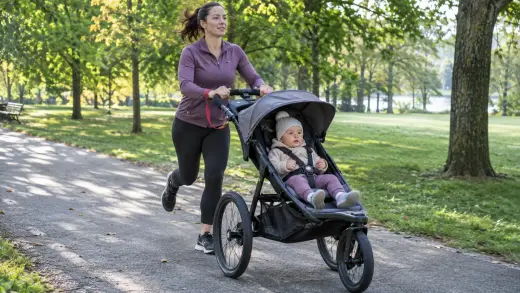
Jogging Strollers and Running Prams: Handbrakes, Swivel Locks and Safety Rules
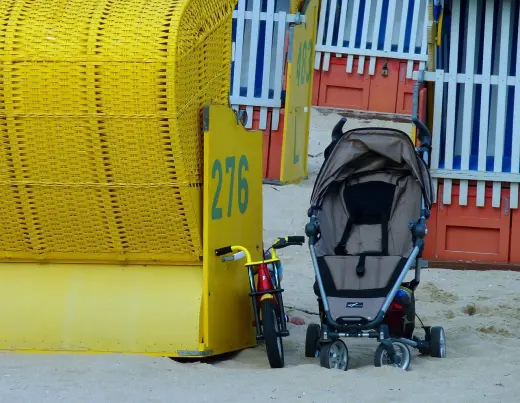
All-Terrain 3-Wheel Prams for Sand and Gravel: Tracking and Front Wheel Locks
Sealed Wheel Bearings vs Open Plastic Bushings: Fixing Stroller Wheel Wobble and Squeaks