














Nursery Night Lights: How to Choose and Use One Safely
Learn whether a nursery night light may help, how light can affect sleep, and how to choose and place one safely for babies and toddlers.
On this page
- What a nursery night light can and cannot do
- How light may affect sleep
- Choose a light that suits your room
- Compare common night light types
- Place and use the light safely
- Take extra care with batteries
- Smart features, privacy, and daily use
- Night lights and safe sleep spaces
- Use by age and stage
- Build a simple bedtime routine
- Common mistakes to avoid
- Frequently asked questions
- Sources and official guidance
- Final checks before using a night light
- Sources
Short answer: A night light can help you see during feeds and nappy changes. It does not make a baby sleep through the night. Keep the light dim and use it only when needed. Put it well away from the cot, bedding, and your child's reach. A night light is not a safe sleep device or a medical monitor.
Advice on safe sleep comes from different bodies in each country. In Australia, check Red Nose and Product Safety Australia. In the UK, check the NHS and The Lullaby Trust. In the US, check the American Academy of Pediatrics and the Consumer Product Safety Commission. In Canada, check Health Canada and the Canadian Paediatric Society.
What a nursery night light can and cannot do
A nursery night light gives a small amount of light after dark. It may help a parent find nappies, prepare for a feed, or walk across the room. Older children may like a soft light when they wake. These are practical uses.
A light cannot settle every baby. It cannot prevent waking, crying, or illness. It cannot prevent sudden infant death. Do not treat a night light as a safety product. Your baby still needs a safe sleep space and an adult who can respond to their needs.
Some products are called smart lights. They may connect to an app, follow a schedule, change colour, or respond to a voice assistant. These features can be handy. They also add setup and privacy questions. They do not replace safe placement or a calm bedtime routine.
Start with a simple question: what do you need the light to help you see? If a small lamp across the room works, extra features may not help. You can also use a dim lamp in the hallway and leave the nursery dark.
How light may affect sleep
Light tells the body whether it is day or night. Bright light at night can make it harder for some people to feel sleepy. Research on light and sleep in babies and children is still developing. It does not show that a particular night light will work for every family.
Use as little light as you need for the task. A low, steady light is often easier on sleepy eyes than a bright ceiling light. Turn it off when you finish. During the day, normal daylight and household activity help keep day and night distinct.
Colour alone does not tell you whether a light is suitable. A red or amber bulb can still be bright. A blue or white bulb can be dim. Look at the brightness and where the light falls. Avoid claims that a colour will guarantee better sleep.
Some lights project moving stars or patterns onto a ceiling. These can interest a child. They can also keep a child looking around instead of winding down. If you try one, use it briefly as part of the routine. Turn it off when it is time to sleep.
Choose a light that suits your room
There is no single best style. Think about the room, your child's age, and how you will use the light. Check the product label and instructions before buying. A product name such as “baby safe” does not prove that it is safe.
- Plug-in light: It stays in one place and does not need charging. Keep it far from the cot, curtains, and any place a child can reach. Check that the plug and cable are in good condition.
- Portable rechargeable light: You can move it for feeds or travel. Charge it away from the cot. Store it where a baby cannot reach it. Follow the charging instructions.
- Battery light: It can work where there is no nearby socket. Check how the battery compartment closes. Keep spare batteries away from children.
- Motion-sensing light: It can switch on when someone enters. Check that it does not turn on with every small movement or shine into the cot.
- App-connected light: It may allow remote control or schedules. It needs setup and may need a home network. Check the privacy and security settings before connecting it.
- Projection light: It shows shapes or colours. Use it only if it does not keep your child alert. Secure it out of reach and switch it off at sleep time.
A bedside lamp can be a simple option for a parent. Put it on a stable surface, away from the cot and your child's hands. Do not balance a lamp on a shelf above a sleep space.
Compare common night light types
| Type | Useful for | Things to check |
|---|---|---|
| Plug-in night light | A steady glow in one spot | Socket location, heat, and distance from the cot |
| Rechargeable portable light | Moving between rooms or a short feed | Charging steps, battery condition, and storage |
| Battery-powered light | Rooms without a handy socket | Secure battery cover and safe storage of spare batteries |
| Motion-sensing light | Finding a path without leaving a light on | Sensor position and whether it shines at the child's face |
| App-connected light | Schedules or control from a phone | Account security, network needs, and privacy settings |
| Projector light | A brief calming part of a routine | Whether the moving display keeps the child awake |
These are general types, not a ranking. No type is right for every room. The safest choice is one you can place securely and use as directed.
Place and use the light safely
Follow the maker's instructions. Place the light where your baby cannot touch, pull, chew, or knock it over. Keep it outside the cot and away from the mattress, sheets, blankets, and curtains. Do not attach it to cot rails unless the maker allows that use for your child's age.
Keep cords out of reach. A cord can create a strangulation risk. Do not run it across the cot, under a mattress, or where a child can pull it. If you cannot keep the cord safely away, choose a different place or a cordless light.
Check the light during regular room checks. Look for a loose plug, damaged cable, cracked case, or signs of heat. Stop using it if you notice damage. Do not cover the light with fabric or place it against soft furnishings. Follow the maker's advice on cleaning and replacement.
Use the light only for its intended purpose. Do not put it inside the cot or use it as a toy unless it is made for that use and suits your child's age. A product that looks soft or harmless can still have small parts, a cord, or a battery compartment.
Take extra care with batteries
Some small lights use button batteries. These are small, flat batteries. If swallowed, they can cause severe internal injury quickly. Choose a product with a battery compartment that stays shut. Check the cover after changing a battery.
Keep spare and used batteries locked away. Do not leave them on a bedside table or in a rubbish bin a child can reach. If a battery is missing or you think a child swallowed one, seek urgent medical help. Do not wait for symptoms.
Rechargeable lights also need care. Use the charger and charging method stated by the maker. Do not charge a light in the cot or on bedding. Keep it away from water. Stop charging if the unit becomes unusually hot, swollen, or damaged.
Product Safety Australia has guidance on button batteries and recalls. The CPSC in the US publishes product safety information. In the UK, check the Office for Product Safety and Standards. In Canada, check Health Canada's recalls and safety alerts. Search for a product recall if you have concerns about a particular light.
Smart features, privacy, and daily use
A smart light may connect to an app, a speaker, or other home devices. Before setting it up, ask whether you need those features. A basic light can be easier to use at night. It also does not need an account.
If you connect a device, use a unique password. Install software updates when offered. Review what information the app collects. Check whether it needs access to a microphone or location. Turn off features you do not use. Do not share a device login widely.
Put the controls somewhere an adult can reach. Test the brightness and schedule while the room is empty. Check that an automatic change will not startle your child. Make sure you can switch the light off without searching through several menus.
A voice assistant can mishear words or respond at the wrong time. Keep it from making loud sounds near a sleeping child. Do not rely on voice control for urgent care. You should still be able to switch the light on or off directly.
Night lights and safe sleep spaces
A light does not change the basic safe sleep advice. In Australia, Red Nose gives safe sleep guidance. In the UK, The Lullaby Trust and the NHS provide advice. In the US, the American Academy of Pediatrics and the Safe to Sleep campaign provide guidance. In Canada, Health Canada and the Canadian Paediatric Society share safe sleep information.
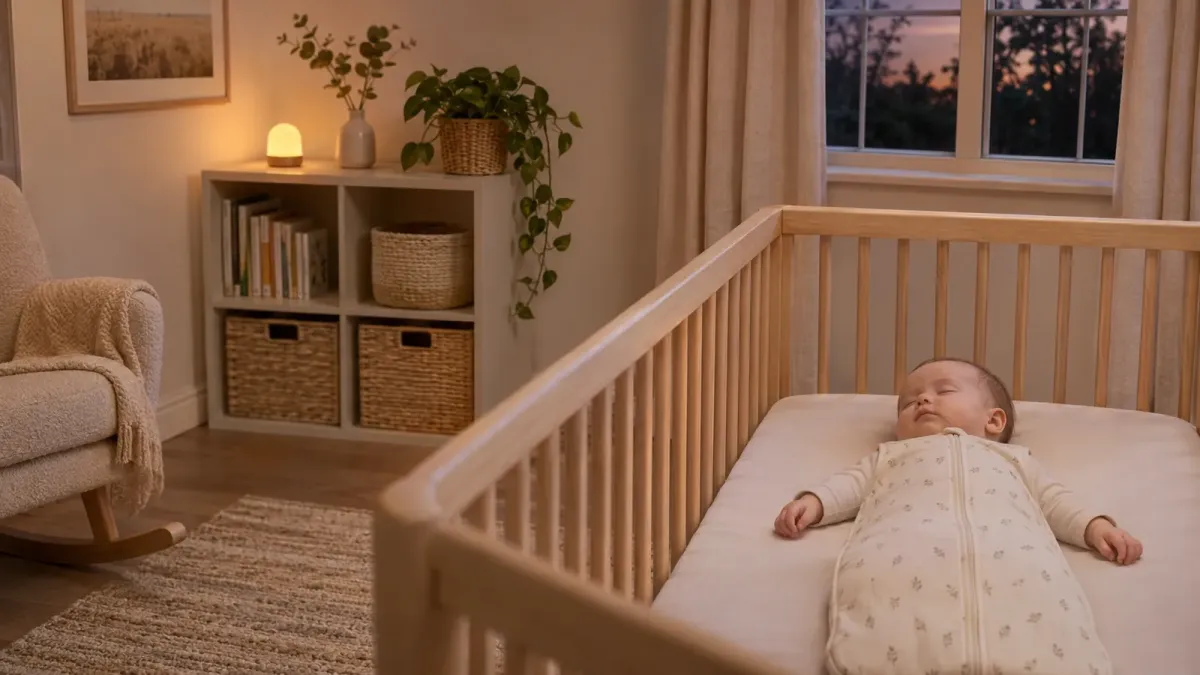
For babies, use a clear, firm, flat sleep surface made for infant sleep. Put your baby down on their back. Keep soft items and loose bedding out of the sleep space. Keep the light outside the cot. A night light is not a reason to add pillows, toys, or loose covers.
Do not use a light, monitor, or app as proof that a baby is safe. Consumer monitors do not replace adult care. If you have concerns about your baby's breathing or health, contact a health professional. Seek emergency help for urgent symptoms.
Check local advice for your country and your child's needs. If your baby was born early or has a health condition, ask their care team for advice that fits your situation.
Use by age and stage
| Stage | Possible use | What to watch |
|---|---|---|
| Newborn | A dim light can help an adult during care. | Keep it out of the sleep space and away from cords and bedding. |
| Older baby | A parent may use it for a quiet feed or change. | Keep the baby on a safe sleep surface and the light out of reach. |
| New crawler | An adult may use a path light when entering the room. | Move portable lights, chargers, and cords beyond reach. |
| Toddler | A low light may help with a familiar bedtime routine. | Check for small parts, loose batteries, and tip hazards. |
| Older child | A child may prefer a steady glow at night. | Choose a stable light and keep it away from bedding. |
These stages are broad guides. Children develop at different speeds. A child who can crawl or climb may reach items that were once out of reach. Recheck the room as your child grows.
Build a simple bedtime routine
A night light is only one small part of bedtime. A steady routine can help a child know what comes next. Keep the steps simple. Repeat them in the same order when you can.
- Lower bright room lights as bedtime gets closer.
- Finish active play before the sleep routine begins.
- Offer a feed or change when your child needs one.
- Read or sing quietly if that suits your family.
- Use the night light only for the task or comfort it provides.
- Switch it off or keep it very dim when the child is ready to sleep.
Babies wake for many reasons. They may need food, comfort, a clean nappy, or help when unwell. A night light cannot replace those needs. If sleep is very hard for your family, ask your health visitor, doctor, or child health nurse for support.
Common mistakes to avoid
- Expecting the light to fix sleep: It may help you see. It cannot promise longer sleep.
- Choosing by colour alone: A coloured light can still be bright. Check its brightness and direction.
- Leaving a projector on all night: Moving patterns may keep some children alert. Try a short use, then switch it off.
- Putting a light in the cot: Keep lights and other objects out of a baby's sleep space.
- Ignoring cords: Route cords so a child cannot reach or pull them.
- Leaving batteries within reach: Store spare and used batteries securely.
- Charging on bedding: Charge on a stable surface as the maker directs.
- Trusting every “smart” claim: Features do not prove a product is safer or better for sleep.
- Forgetting to check recalls: Look up safety notices if you have a concern about a product.
Frequently asked questions
Does a night light help babies sleep?
It may help an adult see during care. Some children like a soft glow. It does not make every baby sleep better or longer. Keep it dim. Use it in a way that does not distract your child.
Should a nursery light stay on all night?
There is no need to leave one on unless it helps your family. If you use one, choose a low, steady light. Keep it outside the cot and away from bedding. Turn it off if it seems to keep your child awake.
Is red light better than blue light?
Colour alone cannot show how bright a light is or how it will affect your child. Use the lowest brightness that lets you see. Avoid claims that one colour guarantees good sleep.
Can I put the light on the cot rail?
Keep it out of the cot and beyond your baby's reach. Only attach a product to a cot if its instructions clearly allow it for your child's age. Never let a cord hang near the cot.
Are smart night lights safe?
They can be used if installed and used as directed. Keep them away from the sleep space. Secure the app account and review its privacy settings. Smart features do not replace adult care or safe sleep advice.
Can a night light replace a baby monitor?
No. A light only provides light. A consumer monitor also cannot replace adult care. Follow safe sleep advice and check your baby in person as needed.
What should I do if a button battery is missing?
If a child may have swallowed a button battery, seek urgent medical help now. Do not wait to see if symptoms appear. Keep spare batteries locked away. Check that the battery cover stays secure.
What kind of light is best for night feeds?
Choose a dim light that lets you see what you are doing. A small lamp placed safely away from the cot may work. Keep cords and the lamp out of reach. Turn it off when the feed is over.
Should I use a projector to settle my toddler?
You can try a short, calm part of the bedtime routine. Some children may find moving images distracting. Watch how your child responds. Switch it off when it is time to sleep.
Sources and official guidance
Use current advice from the official bodies in your country. Product rules can differ between places. Check the maker's instructions and local recall notices for a specific product.
- Australia: Raising Children Network – Light, noise and baby sleep; Product Safety Australia – Button batteries guide.
- United Kingdom: The NHS and The Lullaby Trust provide safe sleep advice. Product safety information is available from the Office for Product Safety and Standards.
- United States: American Academy of Pediatrics – A parent's guide to safe sleep; CPSC – Safe sleep: cribs and infant products.
- Canada: Canadian Paediatric Society – Safe sleep for babies; Health Canada – Recalls and safety alerts.
Final checks before using a night light
- Read the product instructions and check its age guidance.
- Place it outside the cot and away from bedding and curtains.
- Keep plugs and cords out of your child's reach.
- Secure battery covers and store spare batteries safely.
- Use low light for as little time as needed.
- Stop using any light with damage, heat, or a loose battery cover.
- Keep following safe sleep advice in your country.
A night light can make night-time care easier for some families. Keep the choice simple, the light dim, and the device out of reach. A calm routine and a safe sleep space matter more than extra features.
This article is general information, not medical advice. Ask your doctor, midwife, health visitor, or child health nurse about your child's needs. Some links may be affiliate links. If you buy through them, BabyGearFinder may earn a commission at no extra cost to you.
Sources
- Raising Children Network – Light, noise and baby sleep: frequently asked questions
- Product Safety Australia – Button batteries guide
- Raising Children Network – Light, noise and baby sleep: frequently asked questions
- UK Office for Product Safety and Standards
- American Academy of Pediatrics (US) – A parent's guide to safe sleep
- CPSC (US) – Safe sleep: cribs and infant products
- Caring for Kids (Canadian Paediatric Society) – Safe sleep for babies
- Health Canada – Recalls and safety alerts
Related guides
More Sleep & Nursery →
Nursery Night Lights: Choosing a Gentle Light for Night Feeds

Baby Noise Machines: How to Choose One and Use It Safely
Smart Air Purifiers for Your Baby's Room: How to Choose and Use One Safely
