Bedside Sleepers and Co-Sleeper Bassinets: Safety Rules, Set-Up and What to Check
A bedside sleeper keeps your baby close on their own firm, flat bed. Safety rules, how to attach it with no gap, and the standards in AU, the UK, US and…
On this page
- Key points
- What a bedside sleeper is, and what it is not
- Why parents choose one
- Safety rules in each country
- How to choose a bedside sleeper
- Setting it up safely
- Attaching it to your bed, step by step
- What your baby should wear and sleep in
- Moving it around the house
- Is a bedside sleeper worth buying?
- Night feeds and everyday use
- Bedside sleeper vs bassinet vs cot
- Buying a bedside sleeper second-hand
- If you are thinking about bed-sharing instead
- When to move to a cot
- Common mistakes to avoid
- FAQ
- Sources
Short answer: A bedside sleeper (also called a co-sleeper bassinet or bedside crib) lets your baby sleep right next to your bed, on their own firm, flat mattress. It is not the same as sharing your bed. To use one safely, buy one that meets your country's safety rules. Attach it exactly as the instructions say, so there is no gap between it and your mattress. Use only its own mattress. Keep your pillows and quilt out of it. Always put your baby on their back.
Key points
- Health groups in Australia, the UK, the US and Canada all say your baby should sleep in their own safe space, in your room, for at least the first 6 months. A bedside sleeper is one way to do that.
- The biggest danger is a gap between the sleeper and your bed. A baby can slip into it and get stuck.
- The mattress must be firm, flat and fit snugly. Use only the one that came with it.
- Mesh or fabric sides must be firm enough that they cannot sag over your baby's face.
- Stop using it when your baby reaches the weight limit or starts to roll or push up, whichever the instructions say comes first.
- In Australia, co-sleepers must meet the ACCC's Infant Sleep Products Safety Standard from 19 January 2026.
What a bedside sleeper is, and what it is not
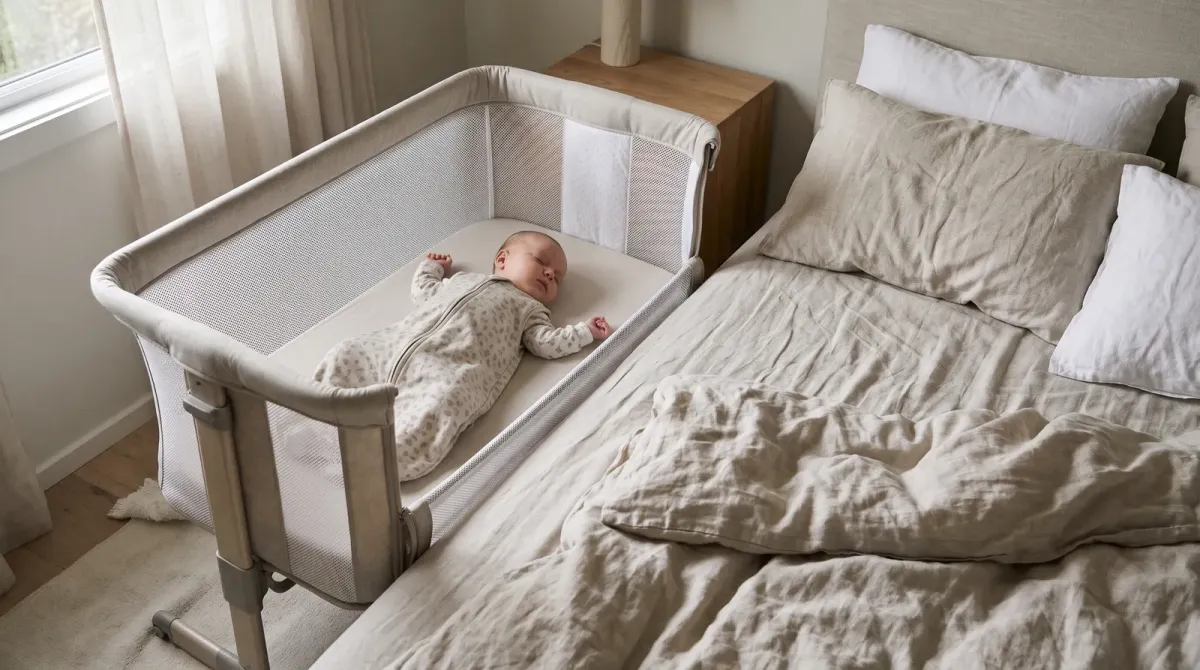
A bedside sleeper is a small bed for a baby, about the size of a bassinet. It is made to stand right next to an adult bed.
- Free-standing type: works like a normal bassinet. You put it beside your bed.
- Attaching type: one side folds down or slides open. Straps or brackets hold it tight against your bed. You can reach your baby for night feeds without getting up.
Either way, your baby has their own sleep surface. That is the key difference from bed-sharing. With bed-sharing, a baby sleeps on the adult mattress, among adult pillows and quilts. Health groups in all four countries say not to bed-share, because of the risk of smothering and overheating.
Why parents choose one
- Night feeds are easier. Your baby is within arm's reach.
- You can see and hear your baby easily. Many parents sleep better knowing their baby is close.
- It helps you follow the advice to room-share for at least 6 months.
- It can be a safer choice for parents who might otherwise end up bed-sharing because they are so tired.
A bedside sleeper is not needed for safe sleep. A normal cot or bassinet in your room is just as safe. Choose what fits your room, budget and night-time routine.
Safety rules in each country
Every country has rules for baby sleep products. These rules check things like gaps, how flat the bed is, and how strong it is. Here is what to look for.
| Country | Who sets the rules | What to look for |
|---|---|---|
| Australia | ACCC / Product Safety Australia | The Infant Sleep Products Safety Standard 2024. Suppliers must comply from 19 January 2026. |
| UK | Office for Product Safety and Standards | Bedside cribs made to the European crib and cradle standard (BS EN 1130). Check the label and instructions. |
| US | Consumer Product Safety Commission (CPSC) | Bedside sleepers must meet the federal bedside sleeper and bassinet rules. Look for a label showing it meets CPSC rules. |
| Canada | Health Canada | Bassinets and similar products must meet the Cribs, Cradles and Bassinets Regulations. |
What the Australian standard requires
The ACCC's Infant Sleep Products Safety Standard covers bassinets, cradles and co-sleepers. In short, it says:
- Flat: the sleep surface may tilt no more than 7 degrees, even when the product rocks.
- Firm: the mattress and base must be firm and fit snugly.
- Safe sides: bassinet sides at least 250 mm high, and no gaps that could trap a baby.
- No straps on the baby: no harnesses.
- Brakes: if it has wheels, at least two must have brakes.
- Warnings: safety warnings on the product, the box and online listings.
In the US, the CPSC also has a rule that infant sleep products must have a sleep surface tilted 10 degrees or less. Inclined sleepers were banned from sale under the Safe Sleep for Babies Act.
Cots, Bassinets & Bedside Sleepers worth a look
Real products from our catalogue. We don't show star ratings or review counts; check the current price, stock and reviews on Amazon before you buy.
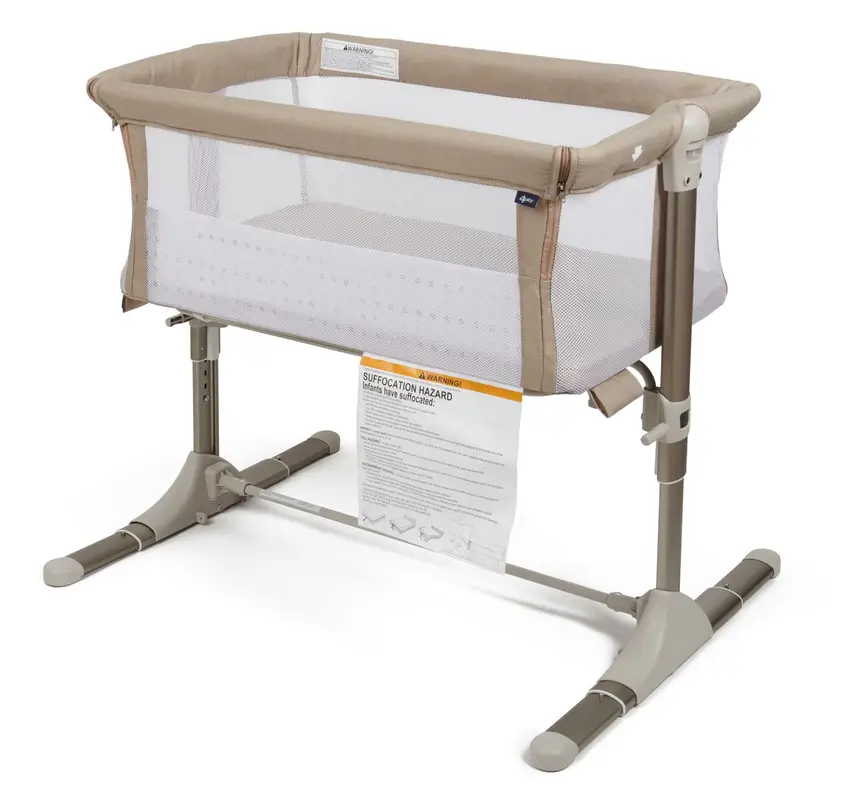
4baby Snuggle Cuddle Bedside Sleeper
A low-cost bassinet that turns into a bedside sleeper, with 4 heights and mesh sides.
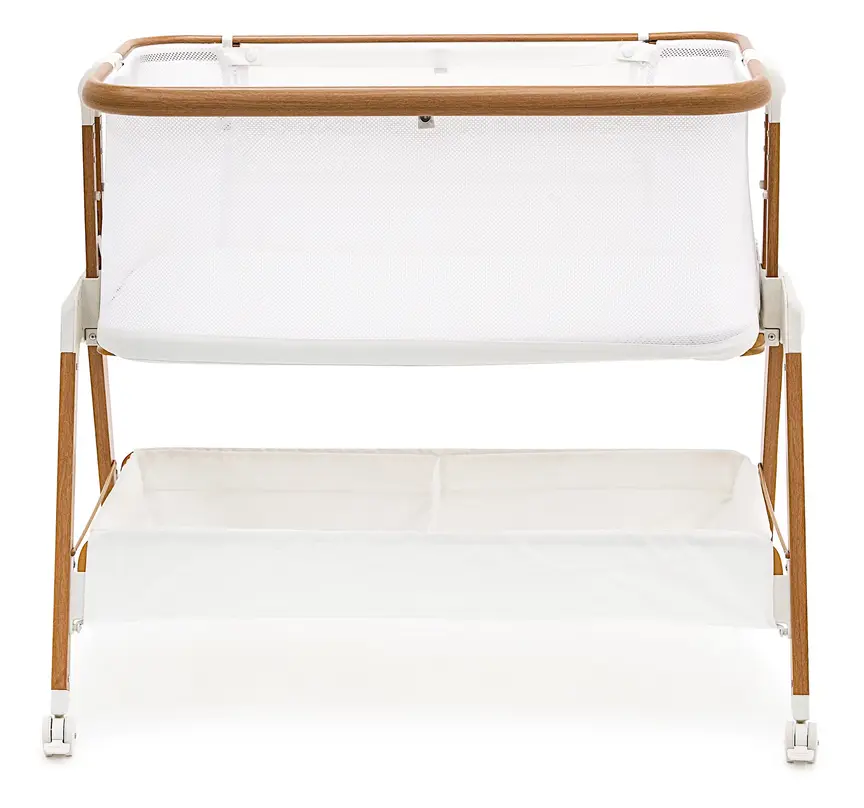
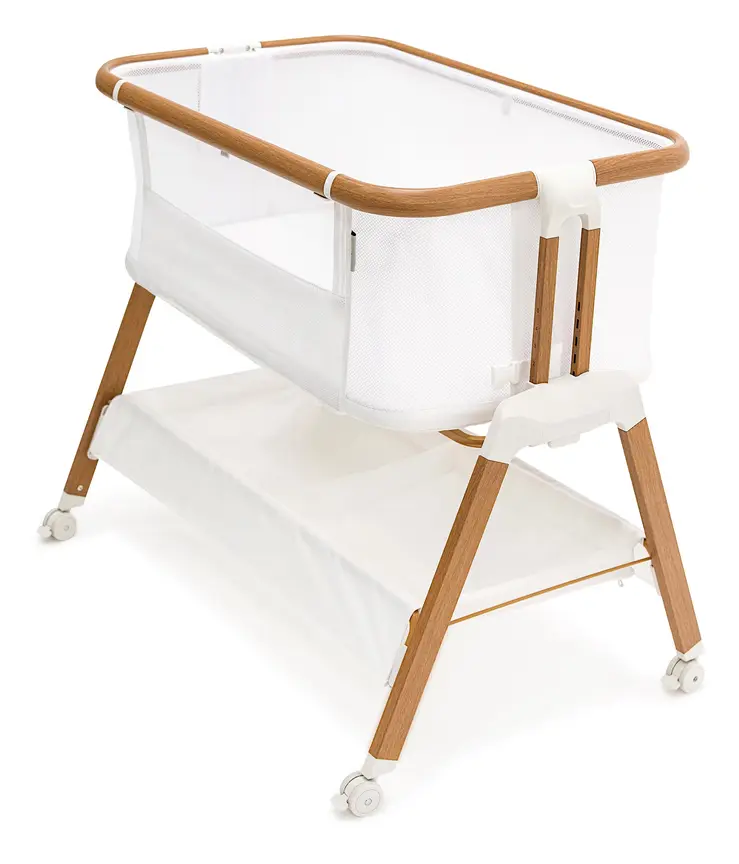
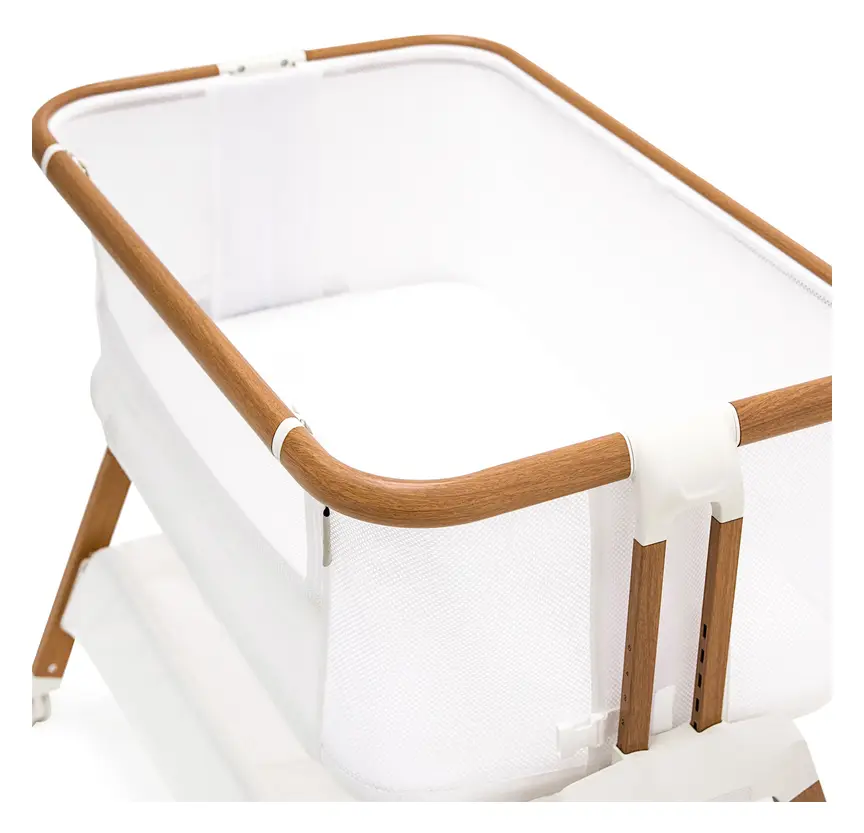
BabyRest Alfie2 Bedside Bassinet
A bedside bassinet with 5 heights, a drop-down side, wheels and an insect net.
Read our full review →

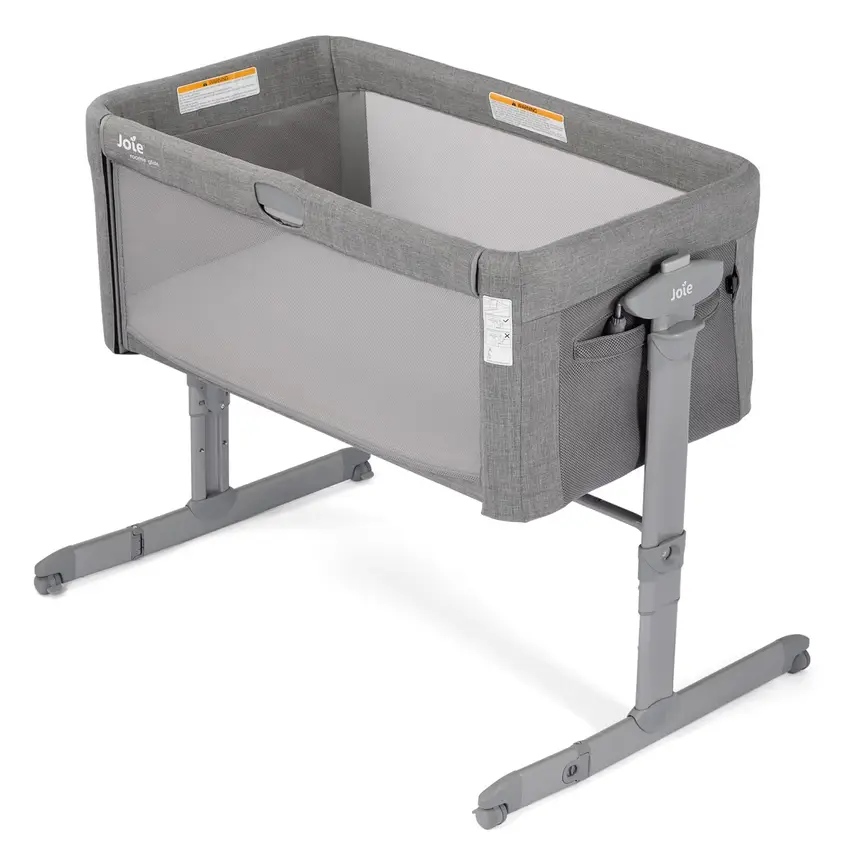
Joie Roomie Glide
A bedside sleeper that glides with one hand and has a gentle tilt.
Read our full review →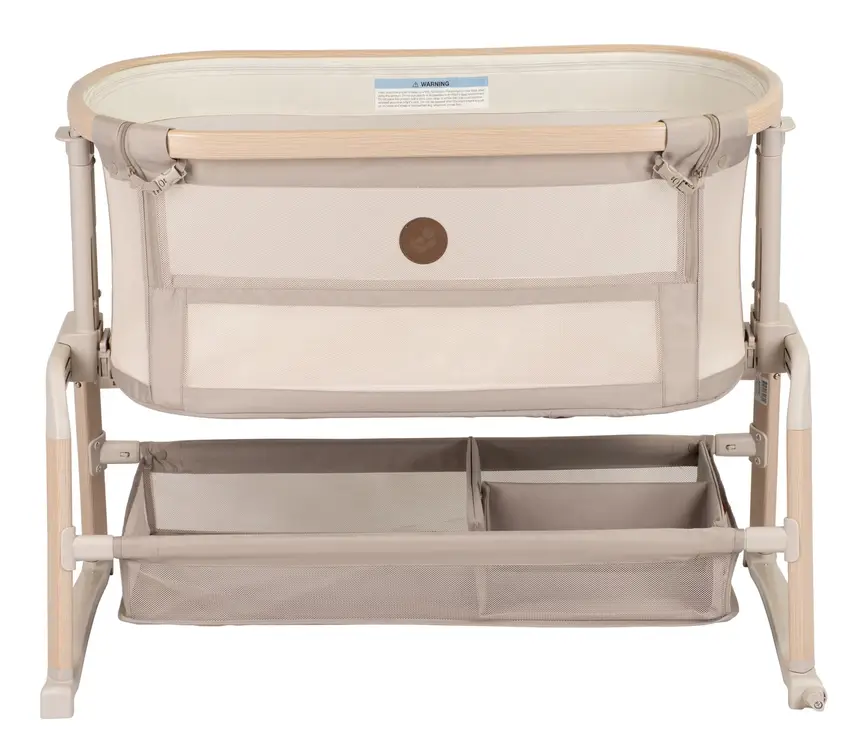 Reviewed
Maxi-Cosi Iora Lux
A bedside bassinet with 4 heights and 3 slide positions, with a 2-year warranty.
Read our full review →Compare all cots, bassinets & bedside sleepers in our reviews →
How to choose a bedside sleeper
- Check the safety label. The label, box or instructions should say it meets your country's rules.
- Check it fits your bed. Measure your mattress height from the floor. The instructions will say which bed heights it fits. The baby's mattress must sit level with or below yours, as the instructions say.
- Check the attachment system. Straps should go around or under your bed and pull the sleeper tight against it. Make sure it suits your bed frame. Some do not fit divans or platform beds.
- Press the sides. Mesh or fabric sides should be tight and firm. They should not sag or bulge.
- Check the mattress. It should be firm, flat and touch all sides, with no gaps.
- Check the limits. Find the maximum weight and the stage when you must stop, such as rolling or pushing up on hands.
- Think about your room. Can it sit on your side of the bed, away from curtains and cords?
Setting it up safely
- Close the gap. Attach the sleeper exactly as the instructions say. Push it hard against your mattress. You should not be able to fit your hand between the sleeper and your bed.
- Lock the side when it is not attached. If you move the sleeper away from the bed, raise and lock the lowered side before your baby goes in.
- Keep adult bedding back. Your pillows, quilt and blankets must not spill into the sleeper.
- Nothing extra inside. No pillows, bumpers, toys, wedges, or extra padding under or over the mattress. Red Nose warns against soft underlays like lambswool.
- Baby on their back. Feet near the bottom, in a sleeping bag or with light bedding tucked in firmly.
- Check the room. Keep the sleeper away from blind and curtain cords, heaters, lamps and power points.
- Lock the wheels. If it has wheels, put the brakes on.
Attaching it to your bed, step by step
Every model is a little different, so always follow your own instructions first. Most attaching sleepers work like this:
- Set the height. Adjust the legs so the sleeper's mattress sits at the height the instructions say, usually level with or just below the top of your mattress.
- Slide it in. Push the sleeper's legs under your bed frame if the design allows, so the edge sits right against your mattress.
- Fit the straps. Run the straps under your mattress or around the bed base, as shown. Clip them into the sleeper.
- Pull them tight. Tighten until the sleeper cannot be pulled away from the bed.
- Lower the side. Only now fold down or open the side next to your bed.
- Do the gap test. Press your hand down between the sleeper and your mattress. There should be no space your hand can slip into.
- Check it is level. If your floor slopes, some models have legs you can adjust. The baby's mattress must stay flat.
What your baby should wear and sleep in
- A sleeping bag that fits well, with a fitted neck, armholes and no hood, is the simplest choice. Or use one light blanket tucked in firmly at chest height, with your baby's feet near the bottom.
- A wrap (swaddle) is fine for young babies who are not rolling, as long as it is thin, loose at the hips and below the shoulders.
- Dress for the room. The Lullaby Trust says about 16 to 20°C is a comfortable room for a sleeping baby. Feel your baby's back or tummy to check they are not too hot.
- No hats for sleep indoors.
- One fitted sheet made for that mattress size. Loose or adult sheets can bunch up.
Moving it around the house
Many bedside sleepers can also be used as a bassinet in the living room or when travelling.
- Before you move it, take your baby out.
- Raise and lock the lowered side before your baby goes back in.
- Put it on a flat floor, away from stairs, pets, heaters and cords.
- Lock the wheels.
- If it folds for travel, check every lock clicks into place when you set it up again.
Side by side: more cots, bassinets & bedside sleepers to compare
Real products from our catalogue. We don't show star ratings or review counts; check the current price, stock and reviews on Amazon before you buy.

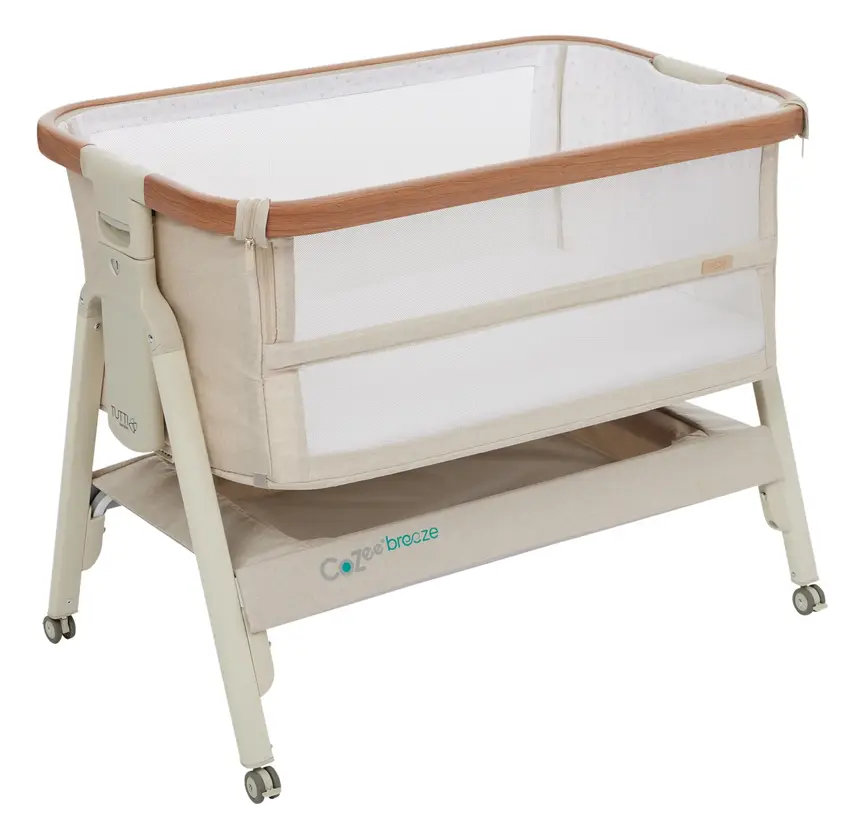
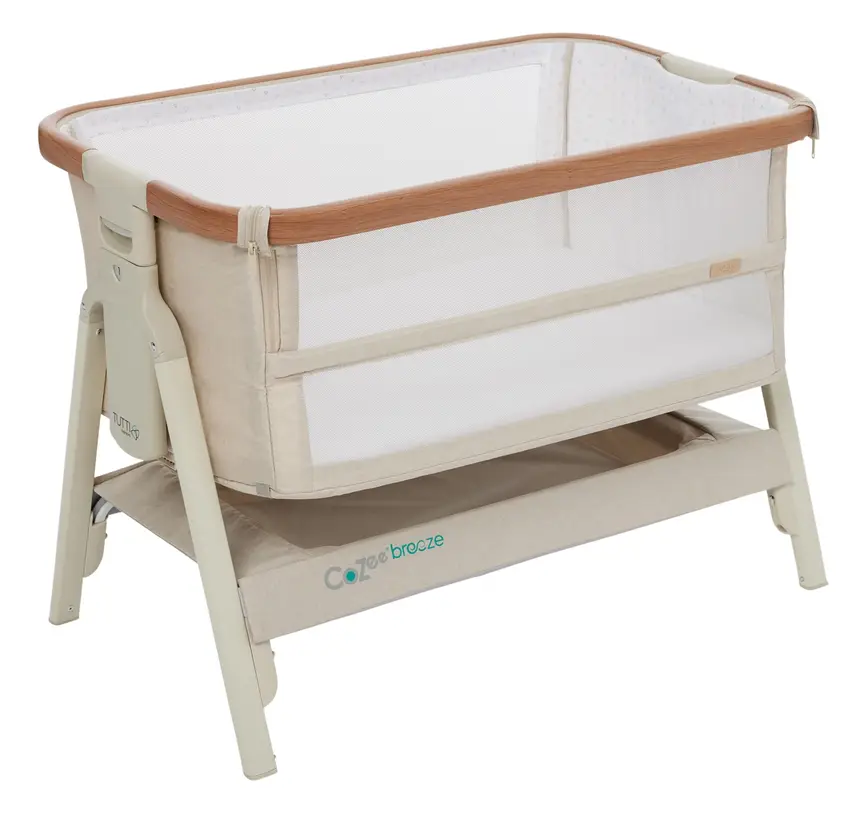
Tutti Bambini CoZee Breeze Lite
A bedside sleeper that opens or folds in about 30 seconds, with mesh sides and a travel bag.
Read our full review →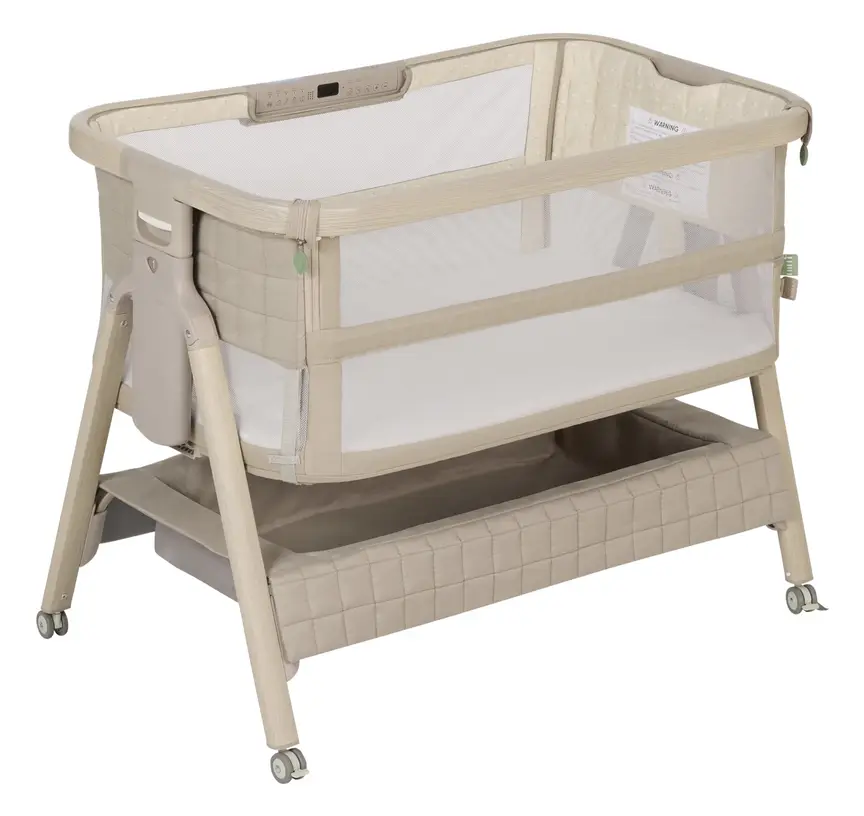
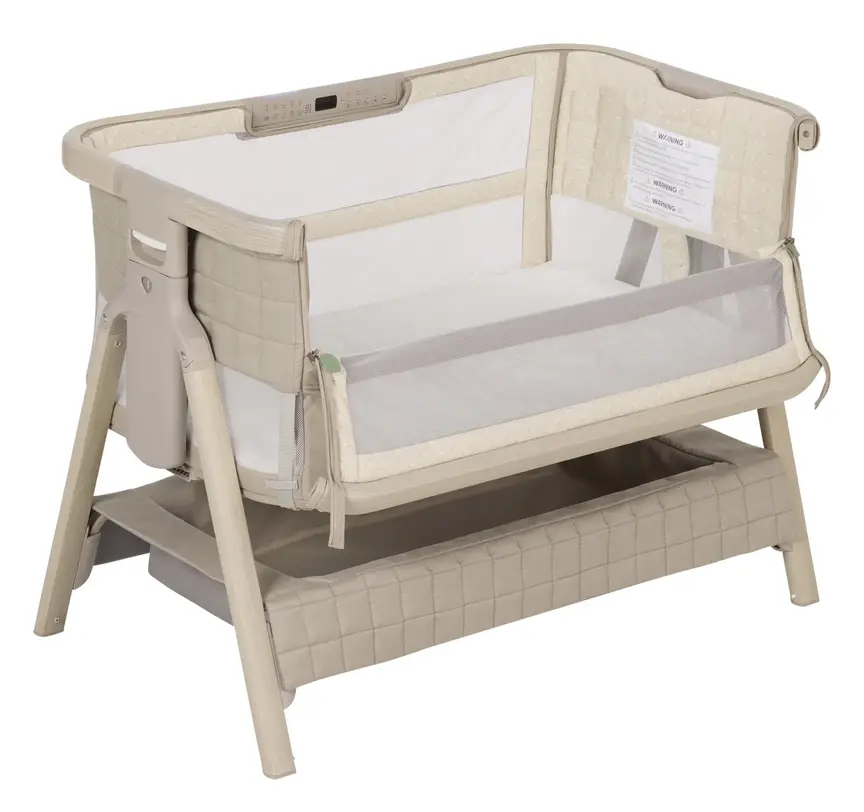


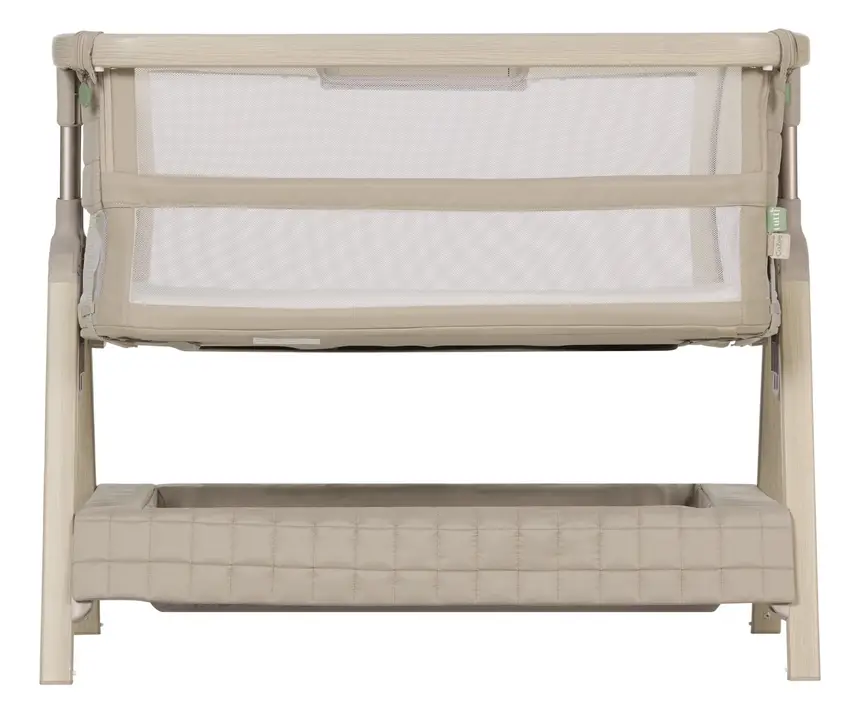


Tutti Bambini CoZee Sense
A bedside bassinet with a sensory bar for supervised awake time.
Read our full review →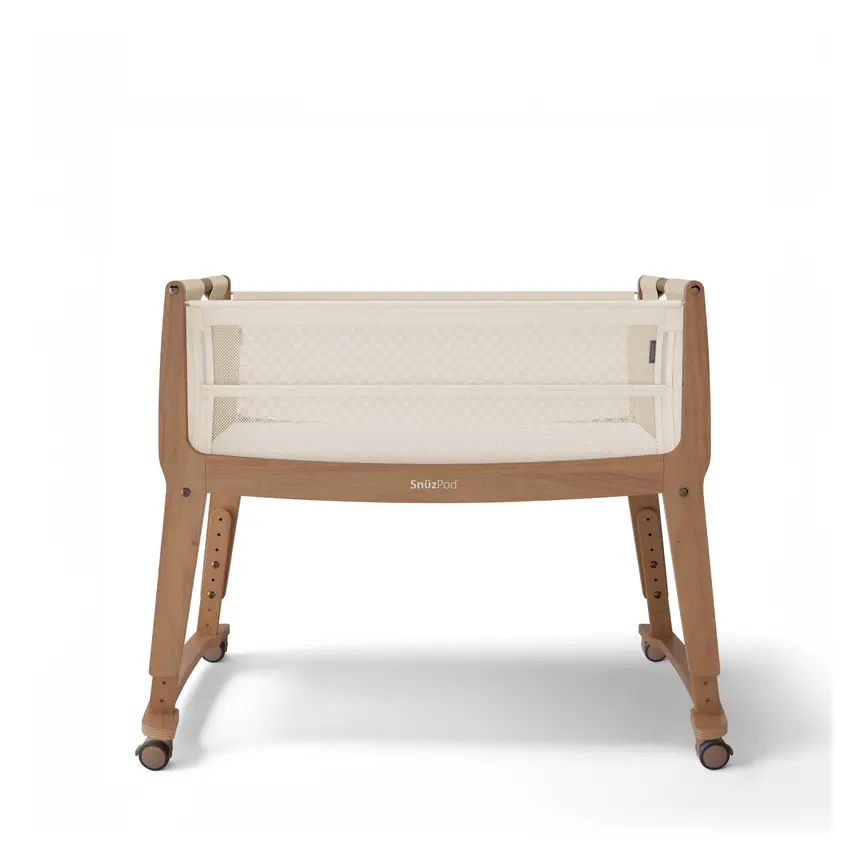 Reviewed
SnuzPod Studio
A bedside crib for night sleeps and naps, with panoramic mesh and a zip-down wall.
Read our full review →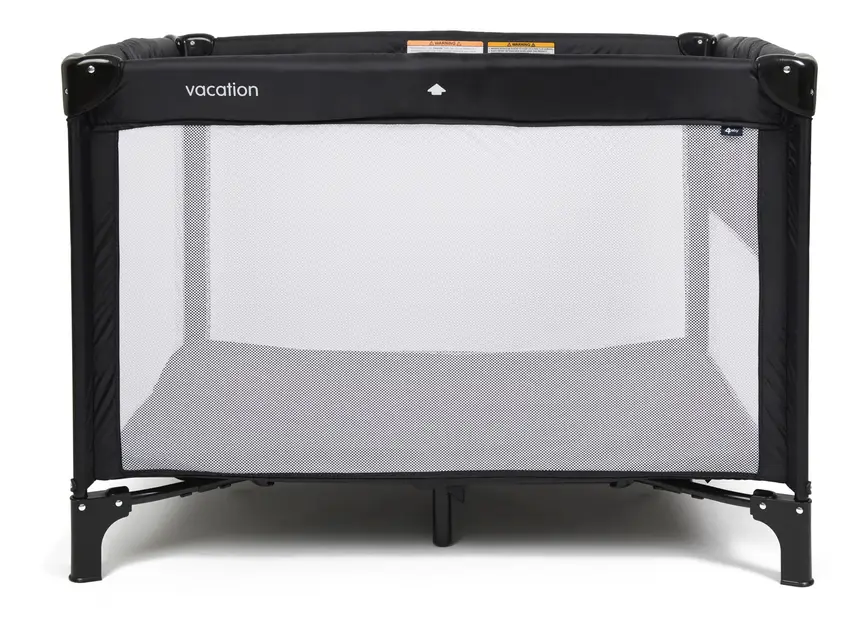
4baby Vacation Portacot
A low-cost portacot with a padded mattress and mesh sides.
Compare all cots, bassinets & bedside sleepers in our reviews →
Is a bedside sleeper worth buying?
It depends on your family. Ask yourself:
- Will you breastfeed or feed often at night? If yes, having your baby within reach can be a real help.
- Is your bed a suitable height and type? If not, a normal bassinet beside the bed may work better.
- How much space is beside your bed? You need room for the sleeper and a clear path to get up safely.
- How long will you use it? Most are used for only a few months. A cot lasts much longer.
- Could you borrow one? If you borrow, check it has every part, its instructions and its mattress, and that it has not been recalled.
Night feeds and everyday use
A bedside sleeper makes nights easier. These habits keep it safe:
- Feed sitting up where you can. When you finish, put your baby back in the sleeper on their back, before you lie down yourself.
- Plan for sleepy feeds. If you think you might fall asleep while feeding in bed, move pillows and the quilt well away from your baby first. Red Nose's co-sleeping guide explains how to lower the risks.
- Check the straps every few days. Straps loosen and beds move. Make sure there is still no gap.
- Clean it as instructed. Wash the mattress cover and sheet often. Let everything dry fully before you put it back together.
Bedside sleeper vs bassinet vs cot
| Bedside sleeper | Bassinet | Cot | |
|---|---|---|---|
| Where it goes | Right against your bed | Anywhere in your room | In your room, then their own room later |
| How long it lasts | Usually a few months | Usually a few months | Often until 2 to 3 years |
| Night feeds | Easiest. Baby is within reach | Need to sit up and lift baby | Need to get up |
| Main risk to manage | Gap between sleeper and bed | Rolling baby against soft sides | Old cots, gaps, soft items |
| Space needed | Small, but needs free space beside the bed | Small | Larger |
Many families use a bedside sleeper or bassinet for the first few months, then move to a cot in the same room.
Buying a bedside sleeper second-hand
- Check it has not been recalled. Search productsafety.gov.au (Australia), cpsc.gov (US), the UK product recalls list on gov.uk, or Health Canada's recalls site.
- Make sure it has its safety label, its instructions and every original part, including the straps.
- It should come with its original mattress. Do not use a different one.
- Older models may not meet today's rules. In Australia, many were made before the 2026 standard.
- Do not use it if the mesh is torn, the frame wobbles, or any lock does not hold.
If you are thinking about bed-sharing instead
Health groups in Australia, the UK, the US and Canada do not recommend bed-sharing. Some families do it anyway, and some groups, like Red Nose and the Lullaby Trust, publish ways to lower the risks.
Bed-sharing is especially dangerous if:
- you are very tired or unwell;
- you have had alcohol;
- you or your partner smoke or vape, even outside the bedroom;
- you take drugs or medicines that make you sleepy;
- your baby was born early or small.
Sleeping with a baby on a sofa, couch or armchair is very dangerous in every case. A bedside sleeper that meets the rules keeps your baby close without these risks.
When to move to a cot
Move your baby to a cot when they reach the sleeper's weight limit, or when they start rolling or pushing up on their hands, whichever the instructions say comes first. Keep the cot in your room for at least the first 6 months.
Signs it is time to move:
- Your baby rolls or rocks onto their side.
- Your baby pushes up on their hands and knees.
- Your baby looks squashed, or their head or feet touch the ends.
- Your baby has reached the weight on the label.
More options, from budget to premium
Real products from our catalogue. We don't show star ratings or review counts; check the current price, stock and reviews on Amazon before you buy.
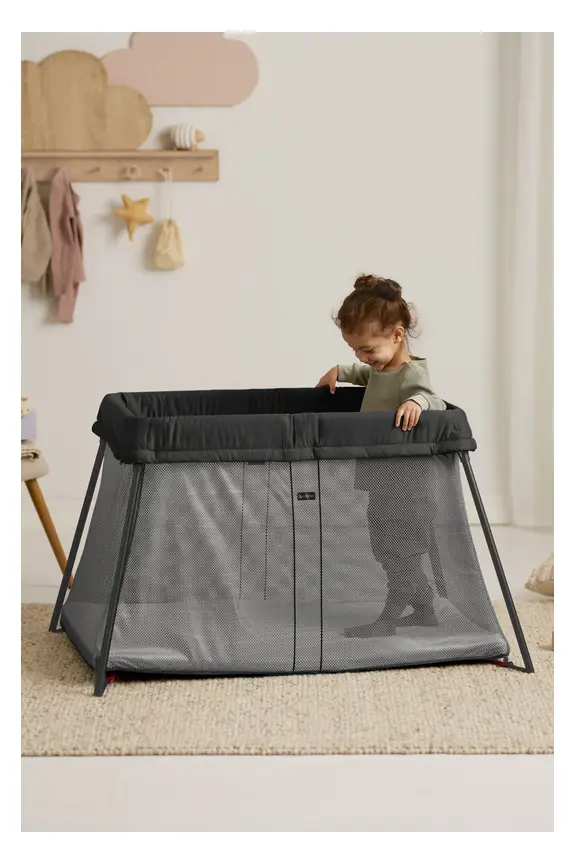
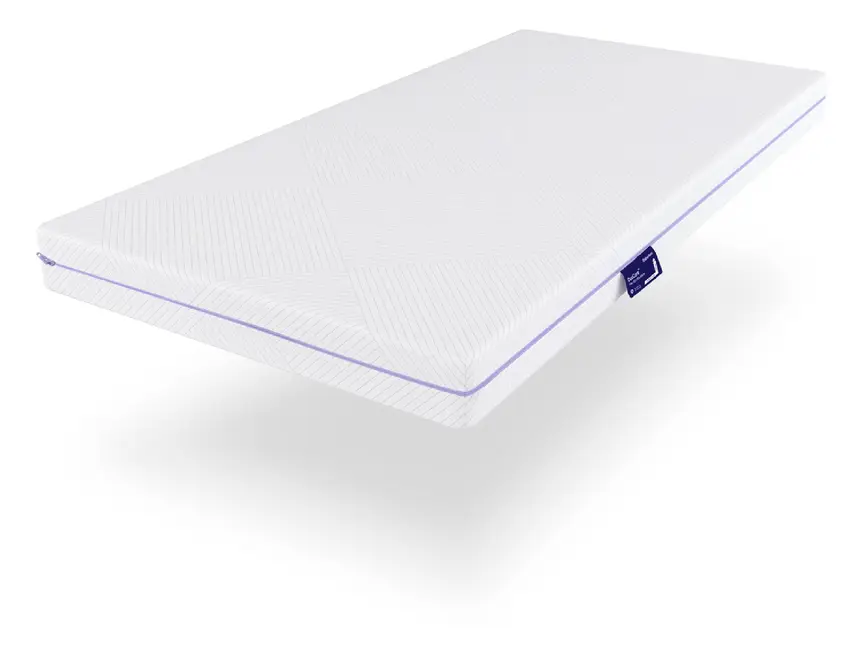
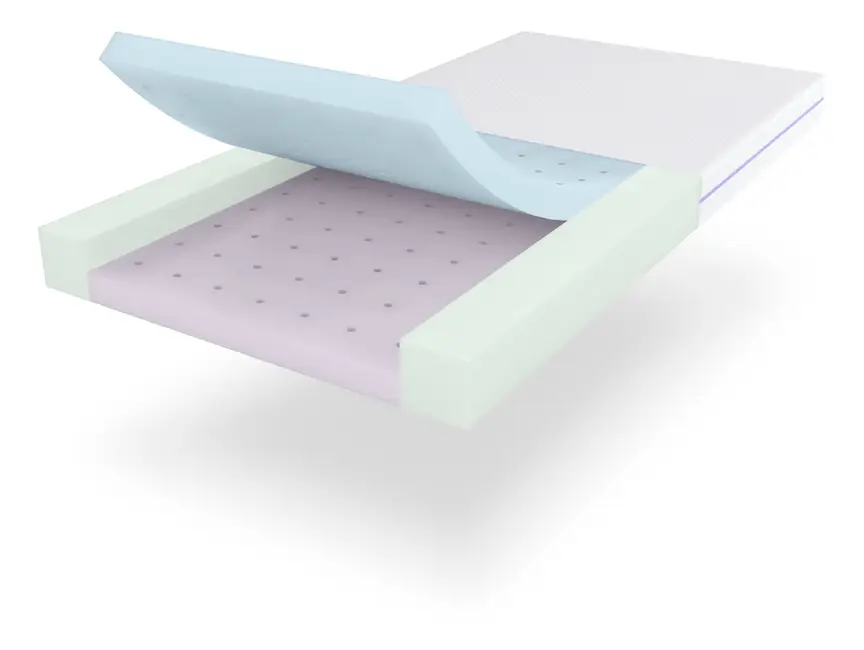

BabyRest Duocore Bamboo Cot Mattress
A two-sided mattress: a baby side to 12 kg and a toddler side from 12 kg to about 4 years.
Read our full review →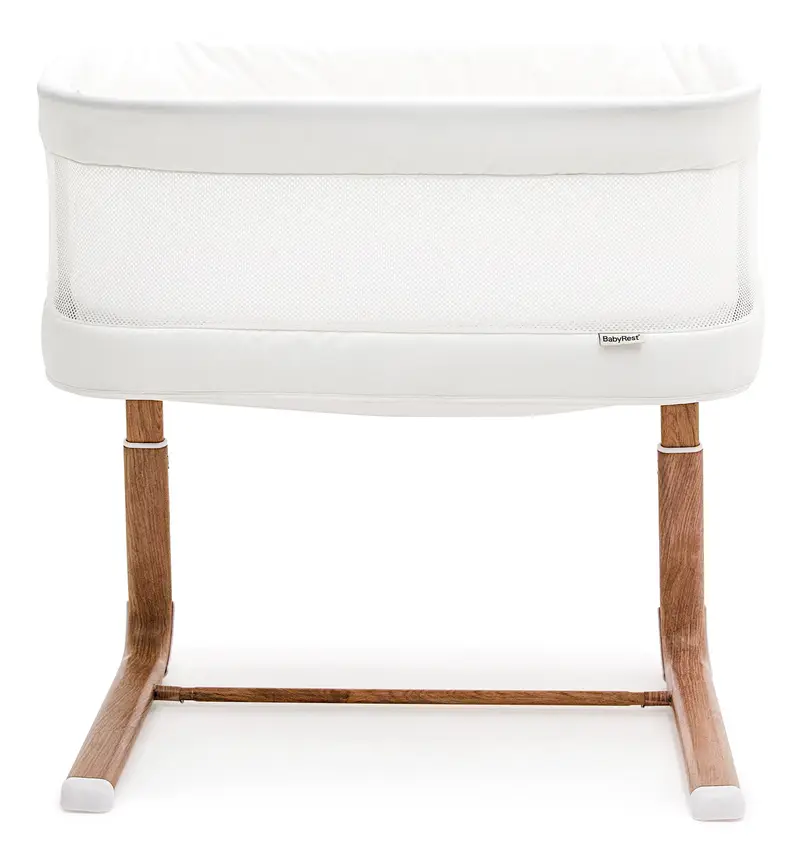
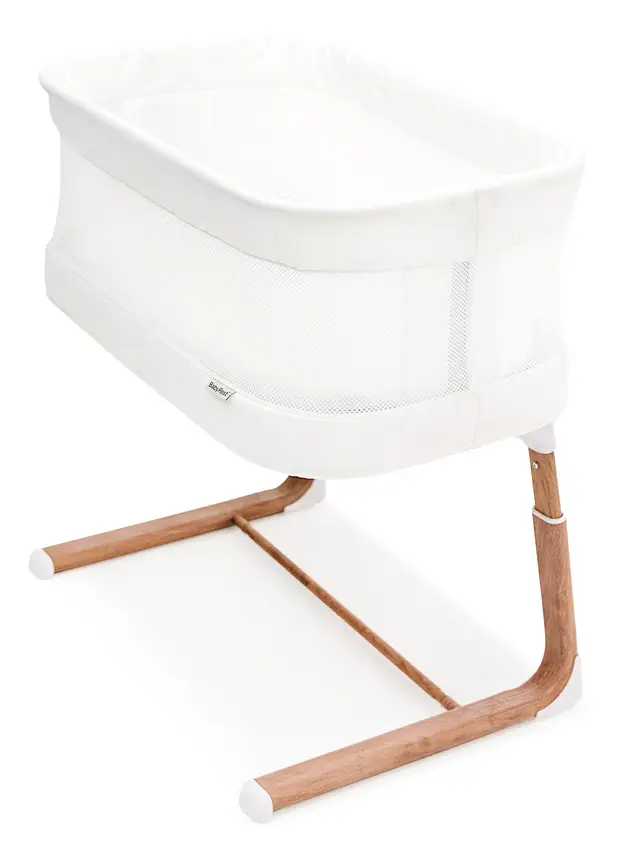
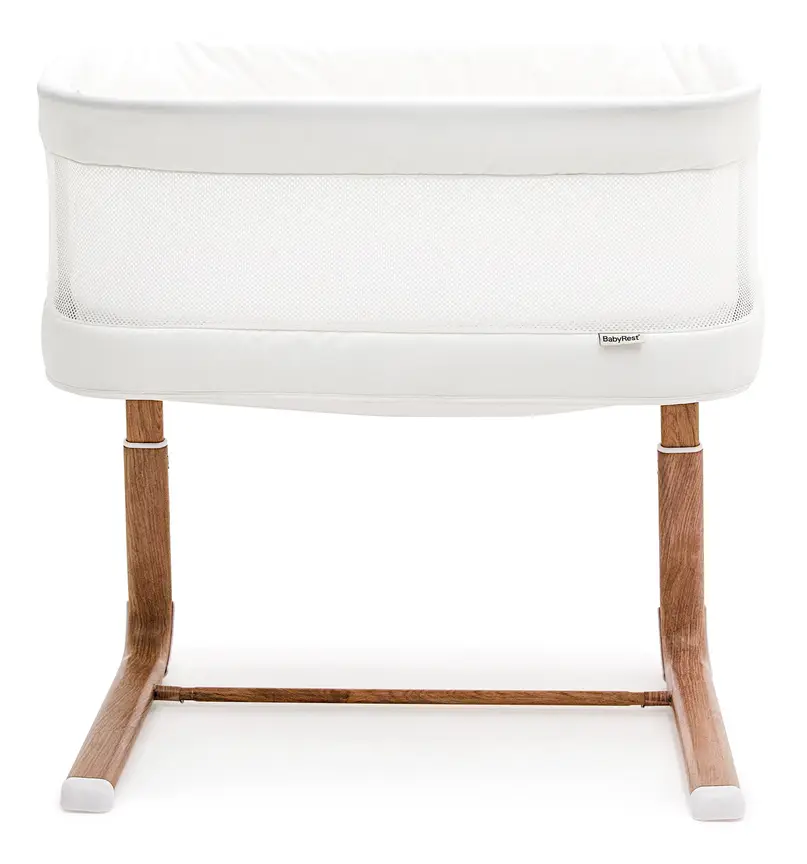


BabyRest Swan Smart Bassinet
A bassinet that rocks by itself when baby stirs, with 3 rocking levels, lullabies and a remote.
Read our full review →Compare all cots, bassinets & bedside sleepers in our reviews →
Common mistakes to avoid
- Leaving a gap. Even a small gap between the sleeper and your bed can trap a baby. Check it every night.
- Using the wrong bed height. If your bed is too high or low for the sleeper, it cannot be set up safely.
- Adding a softer mattress. Comfy for adults is dangerous for babies. Use the supplied firm mattress only.
- Letting your quilt spill over. Adult bedding can cover your baby's face.
- Keeping it too long. A baby who rolls or pushes up can tip against the sides or over the edge. Move to a cot on time.
- Using the dropped side when it is not attached. Always lock the side up if the sleeper is not strapped to your bed.
- Buying a cheap unbranded model online. Some products sold online do not meet any safety rules. Check the label and the seller.
FAQ
Is a bedside sleeper the same as co-sleeping?
No. A bedside sleeper gives your baby their own bed next to yours. Bed-sharing means your baby sleeps on the adult bed, which health groups do not recommend.
Can I leave the side down when it is not attached to my bed?
No. When the sleeper is not strapped to your bed as the instructions say, keep all sides up and locked.
Can I add a thicker mattress to make it comfier?
No. Use only the supplied mattress. It must be firm and fit snugly with no gaps.
How long can my baby use a bedside sleeper?
Until they reach the weight or stage limit in the instructions, often when they start rolling or pushing up. Then move them to a cot in your room.
Do bedside sleepers have to meet a standard?
Yes. In Australia, co-sleepers fall under the ACCC's Infant Sleep Products Safety Standard, with suppliers complying from 19 January 2026. The UK, US and Canada have their own rules for bassinets and bedside cribs. Look for the label.
Can I use a bedside sleeper for daytime naps?
Yes, if you keep the side up and locked when it is not attached to your bed, and follow the same safe sleep rules.
Which side of the bed should it go on?
Put it on the side of the parent who does most night feeds, and away from windows, cords and heaters. Never put it between two adults in the middle of the bed. It must attach to the outside edge of the bed.
My bed has a gap at the side because of the frame. What can I do?
Some bed frames stick out past the mattress, which stops the sleeper sitting flush. Check the instructions for your model. If you cannot close the gap fully, use the sleeper as a free-standing bassinet with the side up and locked instead.
Can twins share one bedside sleeper?
No. Each baby needs their own safe sleep space. Use two separate bassinets or cots.
Can I rock the sleeper?
Only if the instructions say it is made to rock. When your baby is asleep, stop the rocking and lock it flat if it has a lock.
Sources
- Product Safety Australia – Bassinets and cradles guide (includes bedside sleepers)
- Product Safety Australia (ACCC) – Infant sleep products mandatory standards
- Red Nose Australia – Six safe sleep recommendations
- Red Nose Australia – Co-sleeping with your baby: tips to reduce the risks
- Red Nose Australia – Co-sleeping on a sofa or couch
- The Lullaby Trust (UK) – Sleeping products
- NHS (UK) – Reduce the risk of sudden infant death syndrome
- CPSC (US) – Safe sleep: cribs and infant products
- CPSC (US) – Infant sleep products business guidance
- American Academy of Pediatrics (US) – A parent's guide to safe sleep
- Health Canada – Cribs, cradles and bassinets
- Health Canada – Safe sleep tips
Related guides
More Sleep & Nursery →
Bedside Bassinets After a C-Section: Safer Setup, Easier Reaches, and What to Check

Smart Cots and Connected Bassinets: What They Do, Safety Rules, and How to Choose
Smart Rocking Bassinets vs Manual Swivel Sleepers: Safety, Sound and Moving to a Cot