













8 to 10 Month Sleep Regression: Crawling, Standing in the Cot, and Separation Peaks
Sleep often gets bumpy at 8 to 10 months when babies crawl, pull to stand in the cot, and feel separation anxiety. Here is how to help safely.
On this page
- Key points
- What is the 8 to 10 month sleep regression?
- Why sleep changes at 8 to 10 months
- Safe cot setup for a standing baby
- How to handle standing and crawling in the cot
- Helping with separation anxiety at bedtime
- Comparing ways to settle your baby
- Daytime routines and nap balance at 8 to 10 months
- What to expect from 7 to 12 months
- Official safe sleep advice around the world
- Common mistakes to avoid
- When to talk to a doctor or nurse
- Frequently asked questions
- Sources
Short answer: Between 8 and 10 months, many babies wake more at night and fight naps. They are busy learning to crawl and pull up to stand. They also start to miss you when you leave the room. Lower your cot mattress to the bottom setting right away. Keep the cot completely clear of bumpers, pillows, and loose blankets. Practise sitting down from standing during daytime play. Stay calm and steady at night, and sleep usually settles again within a few weeks.
This safe sleep advice matches guidance from Red Nose Australia, The Lullaby Trust and NHS in the UK, the American Academy of Pediatrics (AAP) in the US, and Health Canada and the Canadian Paediatric Society.
Key points
- Lower the cot mattress now: Move it to the lowest level as soon as your baby can sit up or pull to stand.
- Keep the cot clear: Never use cot bumpers, pillows, quilts, or soft toys. Babies can step on them to climb out.
- Practise during the day: Teach your baby how to bend their knees and sit down from a standing position.
- Expect clinginess: Babies at this age know you still exist when you leave. Short, calm goodbyes help build trust.
- Keep two naps for most babies: Most 8 to 10 month olds still need two daytime naps. Moving to one nap too early can make nights worse.
- Stay steady: Try not to start new habits at 2:00 am that you do not want to keep doing for months.
What is the 8 to 10 month sleep regression?
A sleep regression is a short stage when a baby who slept well suddenly starts waking more. At 8 to 10 months, nights can feel messy again. Your baby may wake several times after bedtime. Naps may become short or hard to start.
You might walk into the nursery and find your baby standing at the cot rails, crying. Or your baby might roll over and crawl to the corner as soon as you lay them down. It feels like a step backwards. In truth, it is a sign of healthy brain and body growth.
Your baby's brain is working overtime right now. They are learning big physical skills and big emotional lessons all at once. Because their mind is busy, it is harder for them to switch off and drift back to sleep between light sleep cycles.
Why sleep changes at 8 to 10 months
Several big changes happen together around this age. Knowing what is driving the wake-ups makes it much easier to respond calmly.
Crawling and pulling to stand
Around 8 to 10 months, many babies start crawling, cruising along furniture, and pulling themselves up to stand. Babies love to practise new motor skills. They do not stop practising just because the lights are out.
In fact, a dark, quiet cot has fewer distractions. Your baby wakes slightly between sleep cycles, feels their legs work, and pulls straight up on the bars. The problem is that many babies learn how to pull up weeks before they learn how to sit back down safely. They get stuck standing, feel tired and scared, and cry for you to rescue them.
Separation anxiety
At this age, babies develop a new brain skill called object permanence. That is a simple way of saying they now know people and things still exist even when they cannot see them. Before this stage, out of sight often meant out of mind.
Now, when you walk out of the bedroom, your baby knows you are somewhere else in the house. They want you close. This is called separation anxiety. It is a normal, healthy sign of attachment. At bedtime or at 3:00 am, it means your baby may cry the moment you turn toward the door.
Shifting daytime naps
Most babies around 8 to 10 months are settling into two solid naps a day. Some babies who still took a short third catnap in the late afternoon start dropping it around 8 or 9 months. While their body adjusts to longer awake times, they can become overtired by evening. An overtired baby often fights bedtime and wakes more in the first half of the night.
Teething and minor illness
Top and bottom front teeth often come through between 6 and 10 months. Sore gums can wake a light sleeper. Babies at this age also put everything in their mouths, which brings more colds and ear bugs. Pain or a blocked nose makes it harder to settle.
Cots, Bassinets & Bedside Sleepers worth a look
Real products from our catalogue. We don't show star ratings or review counts; check the current price, stock and reviews on Amazon before you buy.
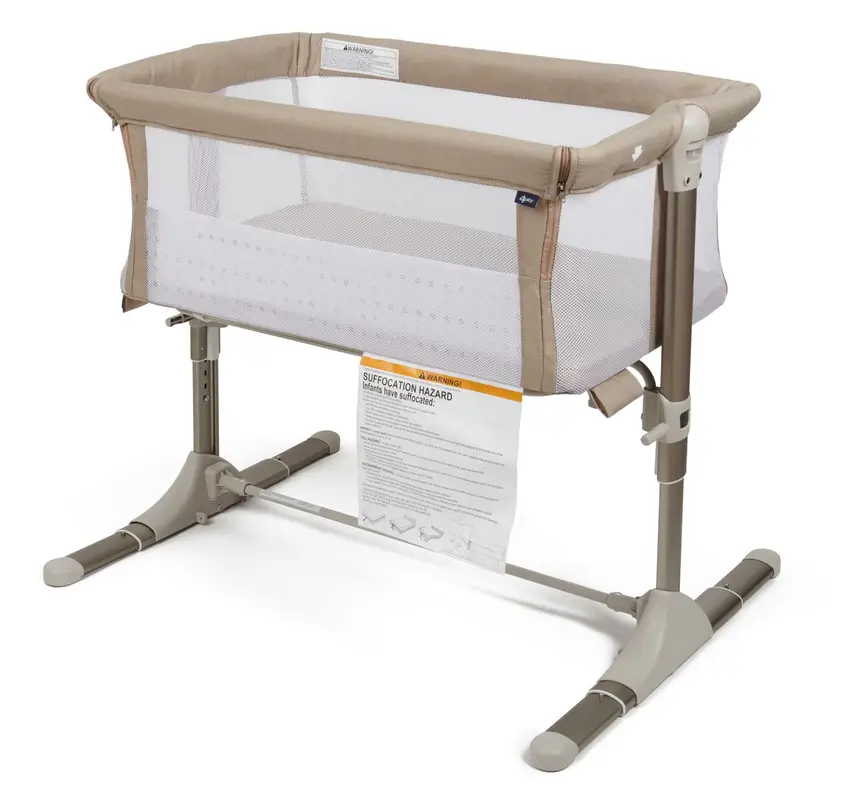
4baby Snuggle Cuddle Bedside Sleeper
A low-cost bassinet that turns into a bedside sleeper, with 4 heights and mesh sides.
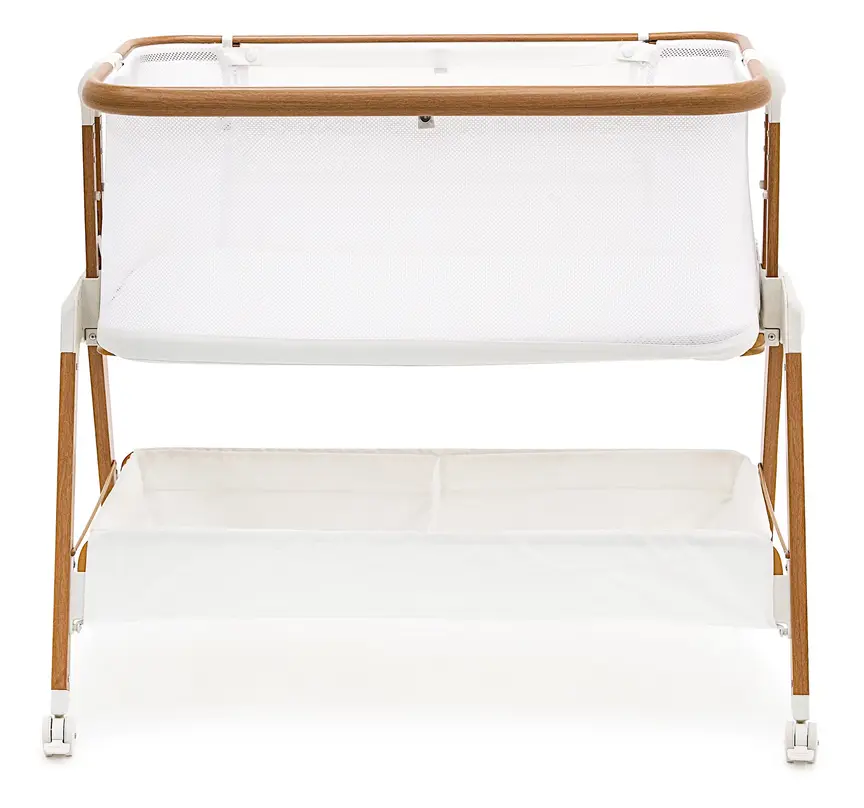
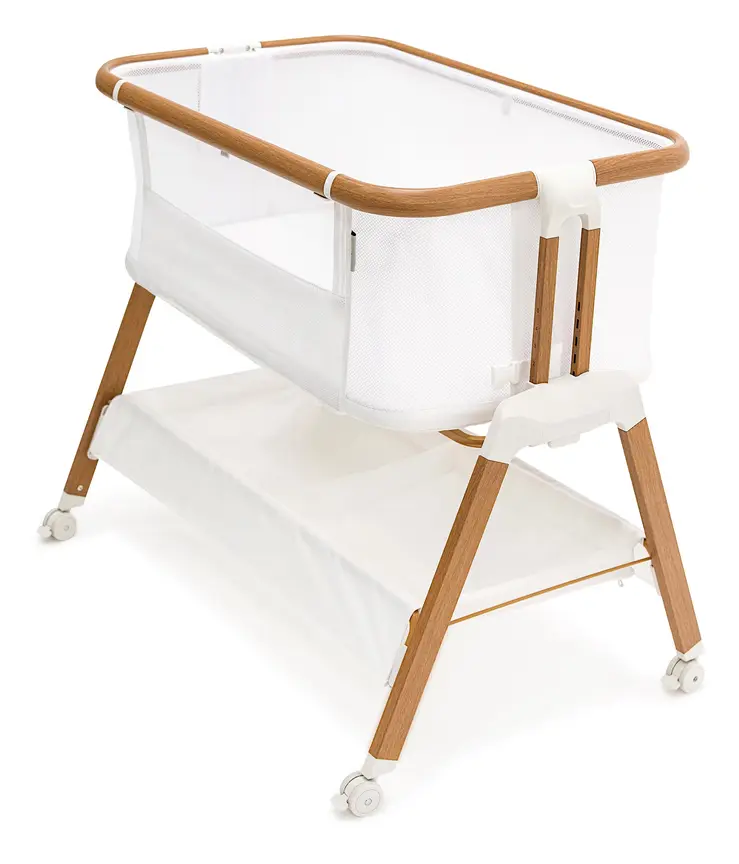
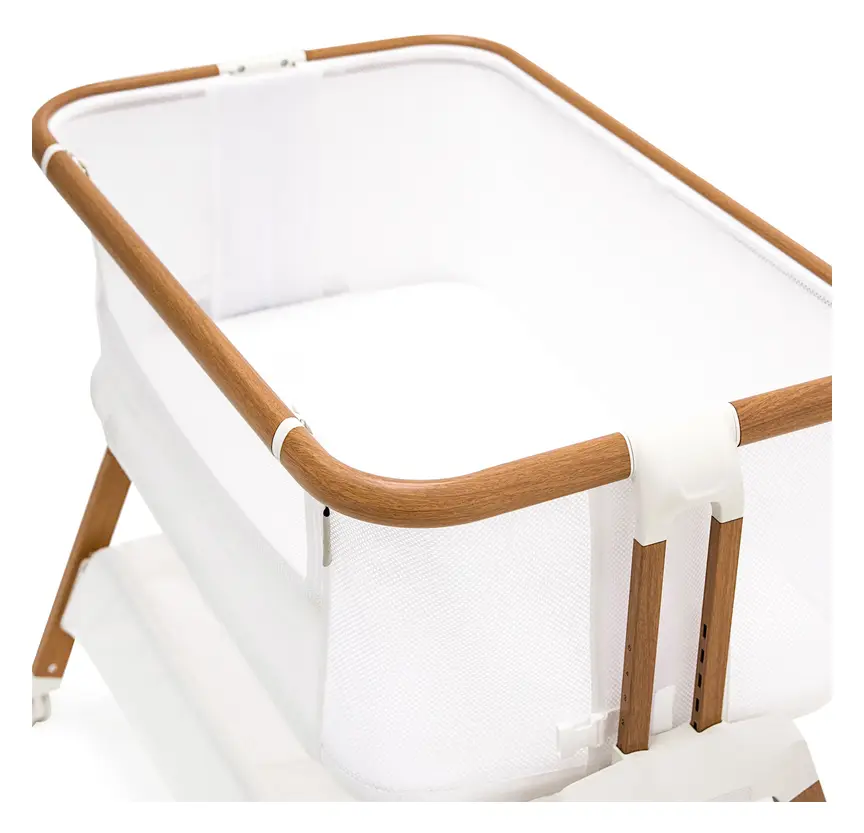
BabyRest Alfie2 Bedside Bassinet
A bedside bassinet with 5 heights, a drop-down side, wheels and an insect net.
Read our full review →

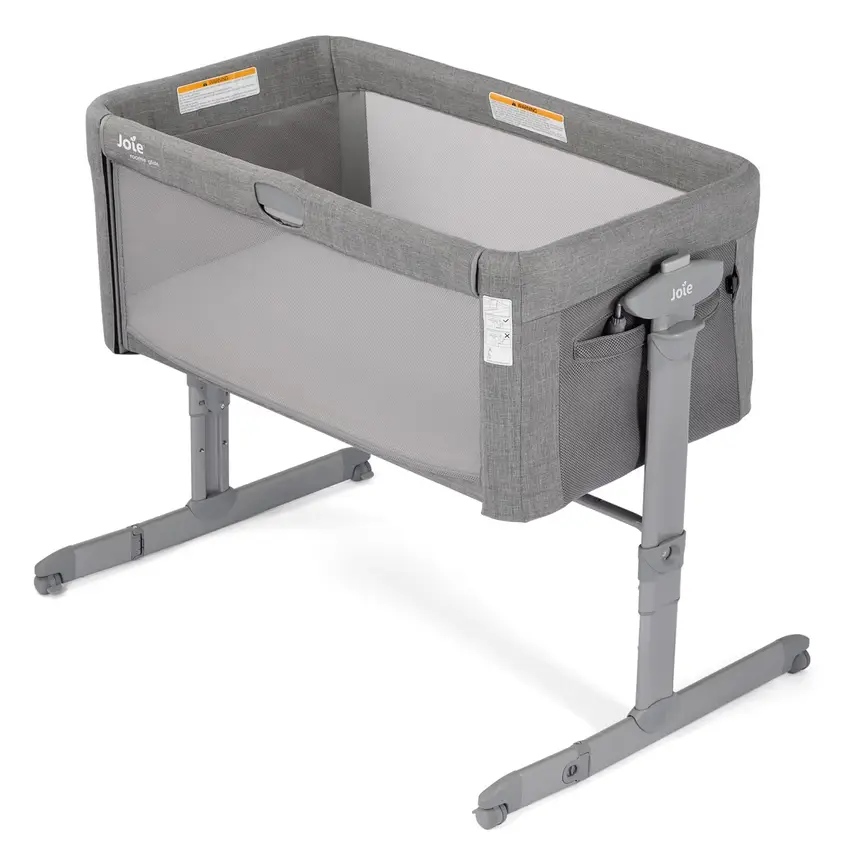
Joie Roomie Glide
A bedside sleeper that glides with one hand and has a gentle tilt.
Read our full review →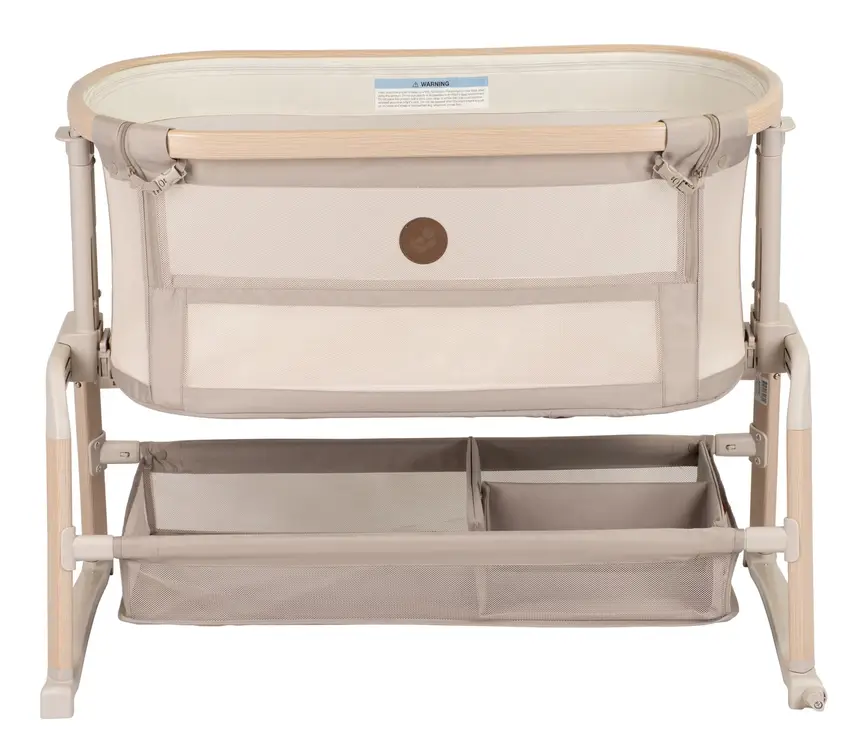 Reviewed
Maxi-Cosi Iora Lux
A bedside bassinet with 4 heights and 3 slide positions, with a 2-year warranty.
Read our full review →Compare all cots, bassinets & bedside sleepers in our reviews →
Safe cot setup for a standing baby
Before you work on sleep habits, check your baby's sleep space. Once a baby can sit up, crawl, and pull to stand, the cot (or crib) becomes a climbing risk if it is not set up right.
Follow these safety checks from Red Nose Australia, The Lullaby Trust, the AAP, and Health Canada:
- Drop the mattress base: Lower the mattress to its lowest setting as soon as your baby can sit without support or pull to stand. Do not wait until they try to climb.
- Check the rail height: The top of the cot rail should sit well above your baby's chest when they stand. If the rail is too low, they can tip over the top.
- Clear out every loose item: Take out cot bumpers, pillows, doonas, loose blankets, and large soft toys. A clever baby will stack or step on a toy or bumper to boost themselves over the side.
- Check the mattress fit: The mattress must be firm, flat, and fit snugly inside the cot frame with no wide gaps around the edges.
- Use a safe sleeping bag: Loose blankets get kicked off or tangled around standing legs. A fitted baby sleeping bag with armholes and no hood keeps your baby warm safely. Pick a fabric weight that suits the room temperature.
- Move the cot away from hazards: Keep the cot well away from windows, curtain or blind cords, power cords, shelves, and wall frames. Babies standing in a cot can reach much further than you think.
- Watch the baby monitor cord: Keep any monitor camera and power cord well out of reach of the cot. Cords are a serious strangulation risk.
If you are buying a cot or checking an older one, look for current national safety standards. In Australia, household cots must meet AS/NZS 2172. In the UK, look for BS EN 716. In the US, cribs must meet ASTM F1169 and federal crib safety rules. In Canada, cribs must meet Health Canada's crib and cradle safety rules. Avoid drop-side cots, which are banned in the US and Canada and linked to serious injuries.
How to handle standing and crawling in the cot
When your baby keeps popping up like a meerkat at bedtime, it is tempting to lay them down over and over again. That often turns into a frustrating game. Your baby stands, you lay them down, they laugh or cry, and they pop right back up.
Teach the sitting down skill by day
The fastest way to fix standing in the cot is to practise sitting down during the day. Stand your baby up beside a low sofa or inside their cot while you are both awake and smiling.
Hold a favourite toy near their feet. Show them how to bend their knees and lower their bottom gently onto the mattress or floor. Clap and cheer when they land on their bottom. Do this for a few minutes several times a day. Most babies master getting back down within a week or two.
What to do at bedtime and overnight
When your baby stands up at night, keep things boring and calm:
- Pause for a minute: Listen first. Some babies stand, look around, sit back down, and go back to sleep on their own.
- Lay them down once or twice: If they are crying and seem stuck, walk in calmly. Help them bend their knees and lie down. Say your calm sleep phrase, like "time for sleep".
- Do not get stuck in a loop: If they pop straight back up three times in a row, stop laying them back down. Gently pat the mattress and ask them to lie down, or place a calm hand on their back once they sit.
- Keep the room dark: Do not turn on bright lights, pick them up to play, or chat happily. Nighttime needs to stay quiet and predictable.
Helping with separation anxiety at bedtime
Separation anxiety peaks between 8 and 10 months for many babies. Your baby is not trying to manipulate you. Their brain is just learning that you can walk away, and that feels scary when they are tired.
Build trust during the day
Play simple games that teach your baby you always come back. Peek-a-boo behind your hands or a cloth is great for this. You can also play short hide-and-seek games around a doorway. Step out of sight for two seconds, call out in a happy voice, and step back in with a smile.
When you need to leave the room during the day, tell your baby where you are going instead of sneaking away. Say "I am going to the kitchen, I will be right back". Sneaking out when they are looking away can make them clingier at bedtime because they feel they have to watch you.
Keep a calm bedtime routine
A predictable 20 to 30 minute routine helps your baby feel safe. Do the same steps in the same order every night:
- A warm bath or gentle wash.
- Clean nappy and pyjamas or sleeping bag.
- A milk feed in calm light.
- One or two short board books.
- A quiet cuddle and a familiar song.
- Into the cot awake or drowsy, followed by your goodnight words.
Pregnancy, Birth and Baby (Australia) and Tresillian suggest responsive settling. This means you listen to your baby's cues and comfort them when they are truly upset, while still giving them a chance to learn how to settle in their cot.
Comparing ways to settle your baby
There is no single right way to settle an 8 to 10 month old. Different families prefer different levels of closeness. Here is how three common approaches compare.
| Approach | How it works | Best for | Things to watch |
|---|---|---|---|
| Responsive settling | Put baby down calm. Step out or stay nearby. Comfort with patting or your voice if they cry. Pick up only if very distressed, then put back down calm. | Babies who settle well with brief reassurance and parents who want steady sleep habits. | Needs patience and calm consistency for one to two weeks. |
| Chair or gradual retreat | Sit on a chair beside the cot until baby falls asleep. Move the chair closer to the door every few nights until you are outside. | Babies with strong separation anxiety who panic the moment you leave the room. | Can take two to three weeks. Some babies stay alert just watching you sit there. |
| Rocking or feeding to sleep | Hold, rock, or feed your baby until they are fully asleep, then transfer them gently to the cot. | Sick or teething nights, or families who are happy to soothe their baby fully each time. | Your baby may wake between cycles and need you to repeat the exact same help every time. |
Side by side: more cots, bassinets & bedside sleepers to compare
Real products from our catalogue. We don't show star ratings or review counts; check the current price, stock and reviews on Amazon before you buy.
 Reviewed
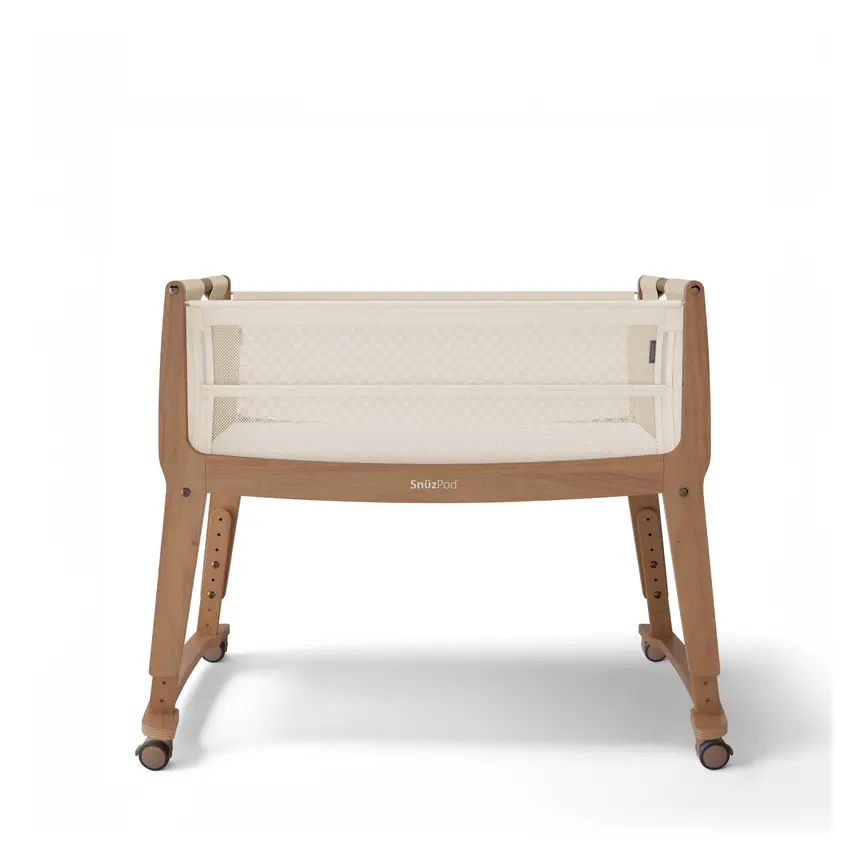
SnuzPod Studio
A bedside crib for night sleeps and naps, with panoramic mesh and a zip-down wall.
Read our full review →
Stokke Sleepi Mattress
A firm mattress with breathable mesh layers, made to fit the Stokke Sleepi bed.
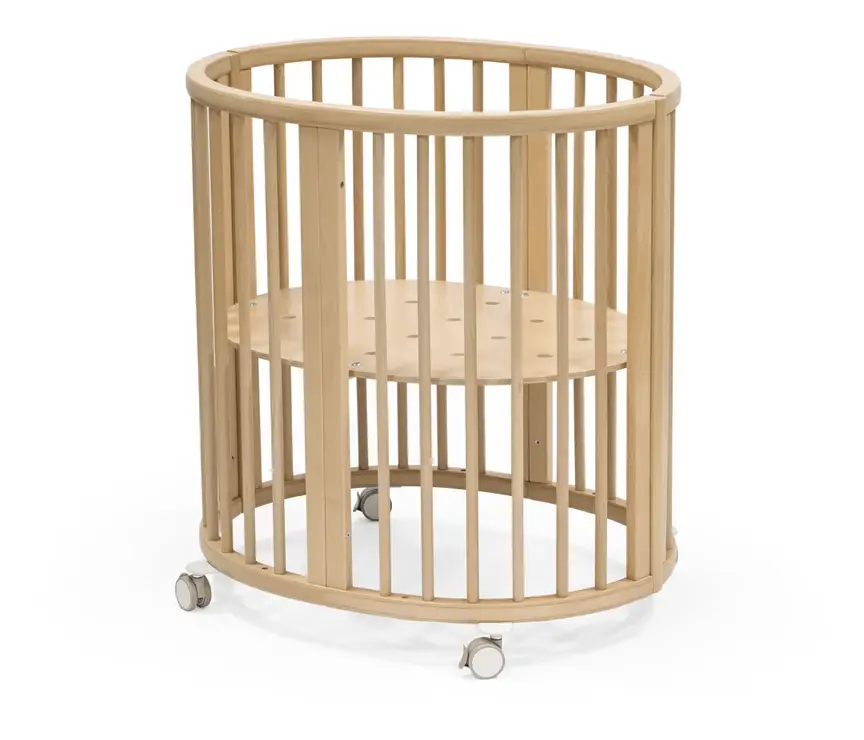


Stokke Sleepi Mini
A beech wood oval crib for newborns, with rods and a holed base for airflow.
Read our full review →
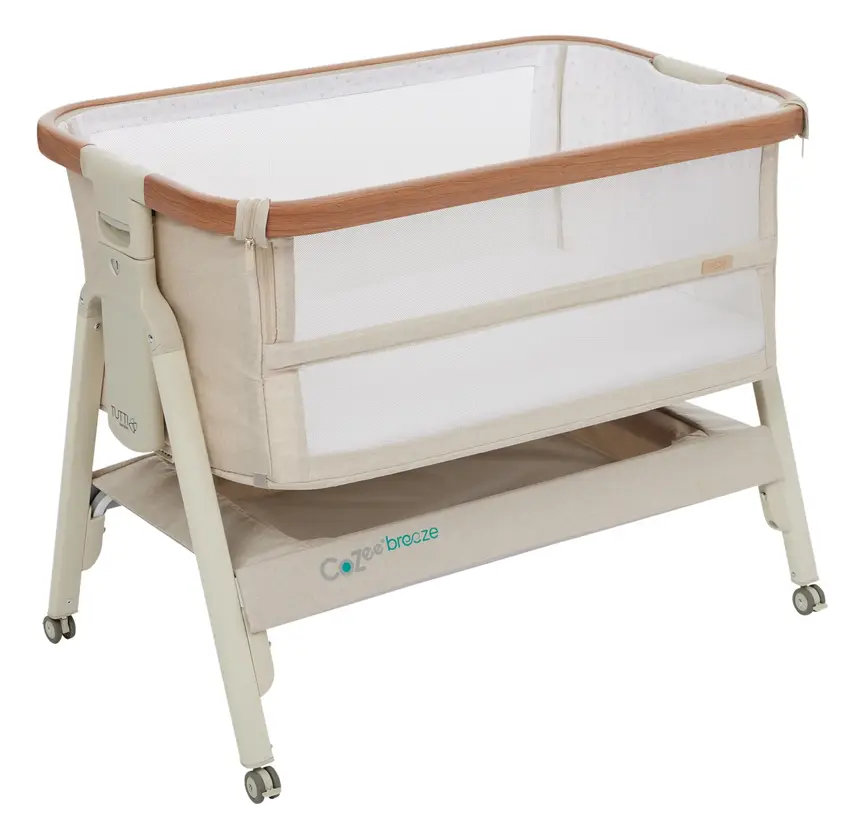
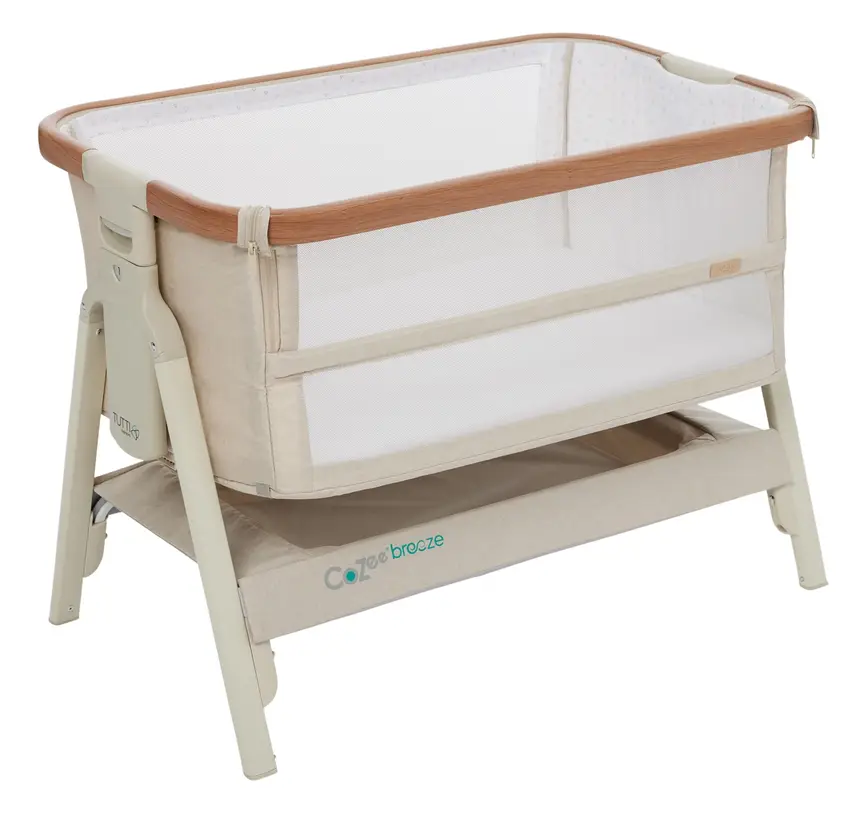
Tutti Bambini CoZee Breeze Lite
A bedside sleeper that opens or folds in about 30 seconds, with mesh sides and a travel bag.
Read our full review →Compare all cots, bassinets & bedside sleepers in our reviews →
Daytime routines and nap balance at 8 to 10 months
A steady daytime rhythm makes night sleep much easier. You do not need to watch the clock to the minute. Instead, aim for a rough flow that stops your baby getting overtired or under-tired.
How much sleep do 8 to 10 month olds need?
HealthyChildren.org (AAP) and the Canadian Paediatric Society note that infants aged 4 to 12 months generally need around 12 to 16 hours of total sleep in 24 hours, including naps. Every baby sits at a slightly different spot in that range.
At 8 to 10 months, most babies take two daytime naps. One is usually in the morning and one in the afternoon. Many babies can stay awake comfortably for about 2.5 to 3.5 hours between sleeps. Notice their tired signs—rubbing eyes, staring into space, or getting cranky—so you put them down before they hit a wall.
Use daylight and floor time
Take your baby outside in the morning light when you can. Natural daylight sets their internal body clock. Give them plenty of safe floor time to crawl, roll, and pull up on cushions. Active play during the day helps build healthy physical tiredness for bedtime.
Protect bedtime on short-nap days
If your baby skips an afternoon nap or only sleeps for 30 minutes, do not force them to stay up late. Staying up too late triggers stress hormones that make settling much harder. Move bedtime 20 to 30 minutes earlier instead. An early bedtime often leads to a calmer night.
Offer full feeds by day
At 8 to 10 months, babies are eating solid foods alongside breastmilk or infant formula. Breastmilk or formula is still their main drink until 12 months. Offering full milk feeds and three simple meals during the day helps ensure your baby is not waking from daytime hunger. Still, some babies genuinely need one night feed, especially during a growth spurt.
What to expect from 7 to 12 months
Sleep shifts fast across the second half of the first year. Here is how skills and sleep needs usually line up.
| Age stage | Common milestones | Typical nap pattern | Main sleep and safety focus |
|---|---|---|---|
| 7 to 8 months | Sitting well, rolling both ways, starting to rock on hands and knees. | Two to three naps (third catnap often fading out). | Lower cot mattress if sitting. Watch for signs of dropping the third nap. |
| 8 to 10 months | Crawling, pulling to stand, cruising, separation anxiety peaks. | Usually two solid naps. | Lowest cot setting. Practise sitting down by day. Calm bedtime routine. |
| 10 to 12 months | Standing alone, early steps, pointing, understanding simple words. | Two naps for most babies (a few fight the afternoon nap). | Keep cot clear. Keep two naps until around 12 to 15 months for most children. |
Official safe sleep advice around the world
Parenting tips online can contradict each other. Official health and safety bodies across Australia, the UK, the US, and Canada actually agree on almost every safe sleep rule for this age group.
| Topic | Australia | UK | US | Canada |
|---|---|---|---|---|
| Main bodies | Red Nose Australia, Pregnancy, Birth and Baby, Product Safety Australia | The Lullaby Trust, NHS, OPSS | American Academy of Pediatrics (AAP), CPSC, NICHD Safe to Sleep | Health Canada, Canadian Paediatric Society (Caring for Kids) |
| Sleep position | Put baby on their back to sleep. Once rolling both ways, let them find their own comfy position. | Always place on their back. Once they can roll back and forth, leave them to settle as they choose. | Place on their back for every sleep until age 1. No need to roll back if they roll both ways. | Always place on their back. When they roll on their own, you do not need to reposition them. |
| Cot space | Firm, flat mattress. Clear cot: no bumpers, pillows, or loose bedding. | Firm, flat, waterproof mattress. Clear cot with no bumpers, pillows, or toys. | Firm, flat surface. Bare crib: fitted sheet only, no bumpers or soft items. | Firm mattress, fitted sheet only. No bumpers, pillows, quilts, or toys. |
| Cot standard | AS/NZS 2172 | BS EN 716 | ASTM F1169 and federal crib rules | Health Canada crib regulations |
| Sleeping bags | Safe infant sleeping bag with fitted neck, armholes, no hood. | Baby sleeping bag matched to room temperature (16 to 20°C guide). | Wearable blanket or sleep sack. Never use weighted sleep sacks. | Light sleeper or fitted sleep sack instead of loose blankets. |
Common mistakes to avoid
When you are exhausted, it is easy to try quick fixes that make sleep harder or less safe. Watch out for these common traps.
- Leaving the mattress too high: Some parents forget to drop the mattress until they see their baby leaning over the rail. Drop it as soon as your baby sits or pulls up.
- Adding cot bumpers for head bumps: Seeing a baby bump their head on wooden bars is upsetting. However, padded bumpers and mesh liners are a suffocation and climbing risk. Red Nose, The Lullaby Trust, the AAP, and Health Canada all advise against them. Minor bumps on the bars are normal and pass quickly as balance improves.
- Dropping to one nap too early: When an 8 or 9 month old fights their afternoon nap, it is easy to think they only need one nap. Most babies still need two naps until at least 12 to 15 months. Fighting a nap at 9 months is usually just a phase caused by new skills, not a sign to cut a nap.
- Using sleep positioners or wedges: Never use straps, wedges, or rolled towels to stop a baby from rolling or standing in the cot. These products can trap a baby's face or cause suffocation.
- Changing your plan every two nights: Babies learn through repetition. If you try one settling method for two nights and then switch to another, your baby gets confused. Pick a calm plan and stick with it for at least a week.
- Letting your baby sleep in a car seat or pram at home: If your baby falls asleep in a car seat or stroller on the go, move them to their flat cot when you get home. Sleeping upright for long periods is not safe for babies.
When to talk to a doctor or nurse
Sometimes disrupted sleep is not just a developmental leap. Check in with your GP, paediatrician, maternal and child health nurse, or health visitor if you notice any of these signs:
- Your baby has a fever, pulls at their ears, or cries sharply as if in pain when lying flat.
- Your baby is breathing fast, wheezing, snoring loudly most nights, or seems to pause their breathing during sleep.
- Your baby is refusing milk feeds, having far fewer wet nappies, or looks very drowsy during the day.
- Sleep trouble goes on for many weeks without any improvement, or you feel overwhelmed and exhausted.
You do not have to tough it out alone. Health nurses and sleep services like Tresillian in Australia or your local health visitor in the UK can offer free, practical support.
More options, from budget to premium
Real products from our catalogue. We don't show star ratings or review counts; check the current price, stock and reviews on Amazon before you buy.
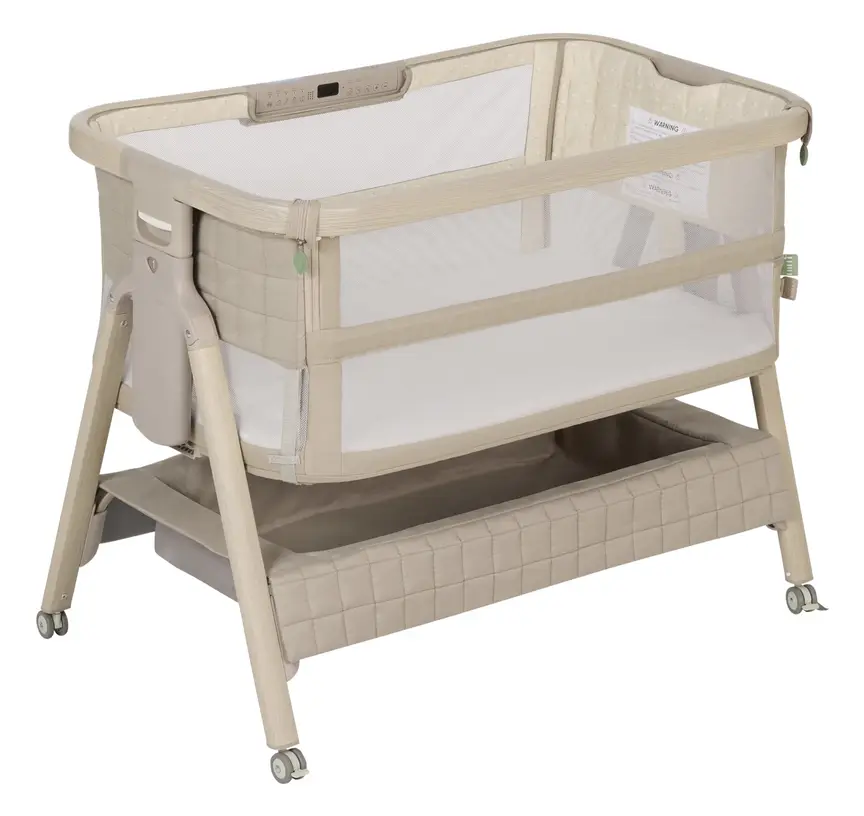
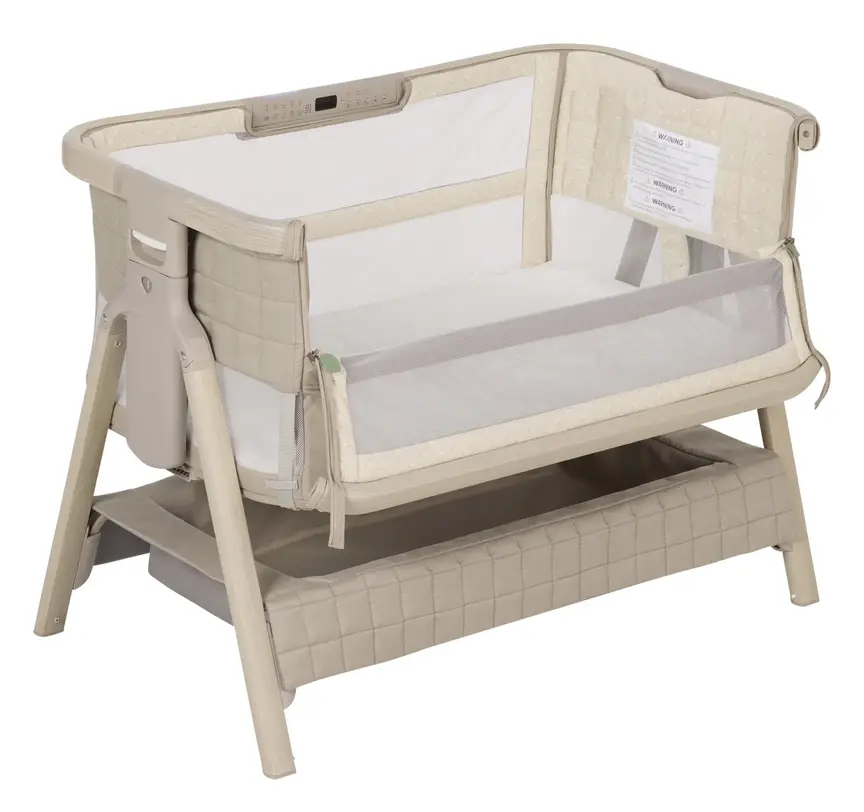


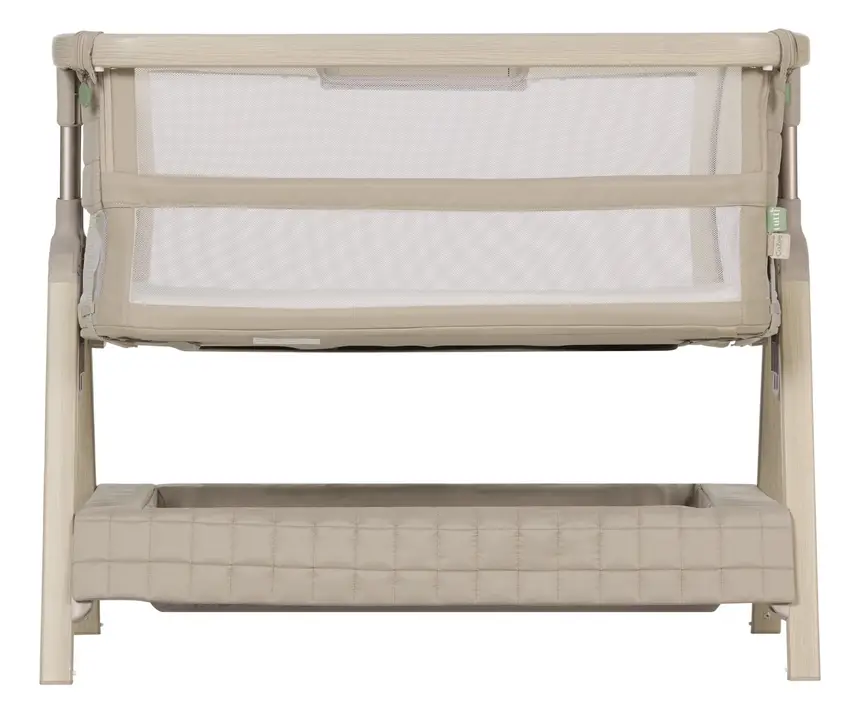


Tutti Bambini CoZee Sense
A bedside bassinet with a sensory bar for supervised awake time.
Read our full review →
4baby Vacation Portacot
A low-cost portacot with a padded mattress and mesh sides.

Compare all cots, bassinets & bedside sleepers in our reviews →
Frequently asked questions
How long does the 8 to 10 month sleep regression last?
For most babies, the worst of it lasts two to six weeks. It usually eases once your baby masters crawling, learns how to sit back down from standing, and feels more secure about you leaving the room. Keeping your bedtime routine steady helps it pass faster.
Should I keep lying my baby back down every time they stand up?
No. Helping them down once or twice is fine if they are stuck and upset. If they pop straight back up again, lying them down ten times turns into a game. Instead, wait a moment, pat the mattress to remind them to lie down, and focus on teaching them how to sit down during daytime play.
My baby hits their head on the cot bars. Can I use a cot bumper?
No. Health and safety groups in Australia, the UK, the US, and Canada all warn against cot bumpers, including mesh ones. Babies can get trapped, suffocate, or use bumpers as a step to climb out of the cot. A light knock on the bars while learning to stand rarely causes harm, and babies learn spatial awareness quickly.
Is it time to move from two naps to one nap?
Usually no. Most 8 to 10 month olds still need two naps a day. A sudden nap refusal at this age is normally caused by practising crawling or standing in the cot, not because they are ready for one nap. Keep offering the morning and afternoon nap for at least two weeks before changing their schedule.
Does my 8 to 10 month old still need a night feed?
Some babies can sleep through the night without a feed by 8 to 10 months, while others still wake once for a genuine feed. If your baby feeds well and goes straight back to sleep, they may still need it. If they wake every hour and only want a tiny sip for comfort, gentle settling without a feed at every wake-up can help.
When should I move my baby out of the cot into a bed?
Keep your baby in a cot for as long as they fit safely. Red Nose Australia and the AAP advise waiting until your child tries to climb out of the cot, or reaches the height limit marked on the cot (often around 89 cm to 90 cm, or roughly 2 to 3 years old). Moving an 8 to 10 month old to a bed is unsafe, as they can fall out or wander into unsafe rooms.
Sources
- Pregnancy, Birth and Baby – Baby sleep patterns by age
- Pregnancy, Birth and Baby – Responsive settling
- Red Nose Australia – What is a safe sleeping environment
- NHS – Helping your baby to sleep
- The Lullaby Trust (UK) – Keeping a clear cot
- AAP HealthyChildren.org – Getting your baby to sleep
- CPSC (US) – Safe sleep: cribs and infant products
- Caring for Kids (Canadian Paediatric Society) – Healthy sleep for your baby and child
Related guides
More Parental Tips →
The 12-Month Sleep Regression Explained: Why Not to Drop the Morning Nap Too Soon
The 18-Month Sleep Regression: Language Bursts, Molar Teething, and Bedtime Boundaries
The 4-Month Sleep Regression: Simple Nap and Bedtime Help for Tired Parents
