














Clever Headband Storage Ideas for Small Spaces
Simple ways to store headbands in drawers, baskets or on hooks. Compare options, keep them easy to find, and make wall storage safer around children.
On this page
- Start with the space you have
- Sort headbands before choosing storage
- Headband storage ideas compared
- Use a drawer without making a mess
- Make a basket or tray system
- Use vertical space with care
- Make a simple display holder
- Keep accessories clean and in good shape
- Storage around babies and young children
- Choose a setup for each age and stage
- Common storage mistakes
- A quick routine that keeps storage working
- Frequently asked questions
- Guidance by country
- Sources and further guidance
- Sources
Short answer: Keep headbands together in a clean, dry place that suits your room. A small basket or drawer divider works well for a few bands. A hanging organiser or fixed hooks can help when drawer space is tight. Choose a spot you can reach, sort bands by type, and put away loose clips or small parts. If young children use the room, secure wall storage and keep small items out of reach.
This guide is about organising headbands and hair accessories. It does not give child development or medical advice. A storage idea does not need special safety claims to be useful. Choose a simple setup that fits your collection, budget and home.
Start with the space you have
Look at where you get dressed or do your hair. That is often the best place to keep headbands. It saves time because you do not need to search several rooms.
Check the space before buying an organiser. Measure the inside of a drawer, shelf or cupboard. Note how much clear wall space is available. Think about whether you can reach the spot without standing on a chair.
Count the headbands you use often. Set aside damaged, uncomfortable or unwanted ones. A smaller collection is easier to store. You may be able to give away clean items that are still in good shape.
Choose a storage place based on your daily routine. If you wear one band most days, keep it in an easy-to-reach spot. If you use bands only for special events, a labelled box on a higher shelf may work.
Try the simplest setup first. You may already have a spare bowl, tray or small box. Use it for a week before buying anything. That trial can show whether you need more space or a different layout.
Measure before you choose
Measure the space in three directions. Check its width, depth and height. A container can look small in a shop but take up most of a drawer.
For a drawer, measure the clear space after you open it. Include any handles or rails that stick inside. For a shelf, check the height between shelves. Leave room to lift a box out.
For wall storage, check the door swing and nearby furniture. A hook should not block a cupboard or catch clothing. Do not put storage above a bed or cot.
Write the measurements on your phone or a note. Then compare them with the organiser's outside size. Allow a little spare room. That makes daily use easier.
Sort headbands before choosing storage
Headbands come in different shapes and materials. A wide padded band may not fit neatly beside a slim plastic one. Sorting first helps you choose storage that fits the items.
- Everyday bands: Put the ones you wear most often near the front.
- Soft fabric bands: These can sit in a shallow basket or drawer section.
- Hard bands: Store them with enough room to keep their shape.
- Decorated bands: Keep flowers, beads or bows from catching on other items.
- Hair ties and clips: Place these in a separate small container.
Grouping by colour can help when you choose an outfit. Grouping by use may be faster if you have only a few bands. Pick the method that makes sense to you. You can change it later.
Check every item as you sort. Look for cracked plastic, rough edges, loose decorations or stretched elastic. Put damaged items aside. Do not leave broken pieces where a child or pet can reach them.
Decide what to keep close
Separate the bands you wear each week from the rest. Put those daily choices in the easiest spot. Store occasional choices in a box or a less-used drawer.
Keep sets together when you use them together. For example, place a matching band and clip in one small section. Do not mix small clips with loose bands. They can get caught or lost.
You can also sort by activity. Keep soft bands for exercise together. Keep dressy bands in a separate box. This can make getting ready faster.
Headband storage ideas compared
Different storage choices suit different rooms. The table compares common options. It does not rate products or promise that one option is best for every home.
| Storage choice | Works well when | Good points | Things to check |
|---|---|---|---|
| Small basket | You have a few flexible bands | Easy to move and simple to use | Bands can tangle if crowded |
| Drawer divider | You have a spare drawer | Keeps groups apart and out of sight | Measure drawer depth and width first |
| Tray or shallow box | You want to see items at a glance | Fast to sort and easy to lift | Keep it on a stable surface |
| Hanging organiser | Drawer space is limited | Uses vertical space | Use a strong hanger and avoid crowding |
| Fixed wall hooks | You want bands visible and nearby | Each band can have its own place | Fit securely and keep small items high |
| Repurposed frame with ribbons | You enjoy a display project | Can show colourful bands together | Secure the frame and check for loose parts |
| Covered box | You have special occasion bands | Helps keep dust away | Label it so you can find it later |
Think about how you will use each option. A visible tray can help you choose quickly. A closed drawer can make a room look calmer. A wall holder can save drawer space, but it needs secure fitting.
Choose by room and collection size
For a small collection, start with a bowl or tray. For many bands, use sections or separate containers. If the collection is still growing, leave some empty space.
In a shared bathroom, keep bands away from splashes. A bedroom drawer may be better. In a small bedroom, a cupboard organiser can use space behind a door.
If several people share the items, give each person a section. A name label or colour label can help. Keep the labels simple and easy to read.
Use a drawer without making a mess
A drawer can keep headbands out of sight. It works best when the bands have their own space. A divider can separate them from brushes, jewellery or other small items.
You do not need a special organiser. Clean cardboard boxes or small containers can divide a drawer. Make sure they are dry and have no sharp edges. Replace them if they bend or become dirty.
Place the bands you use often near the front. Put occasional items at the back. Lay decorated bands flat if their parts might catch. Do not force wide bands into a narrow section.
Leave some room between groups. An overfilled drawer can make bands hard to remove. It can also press soft bands out of shape. If the drawer is crowded, remove items you no longer wear.
Close the drawer gently. If it sticks or opens into a walkway, move items around. A tidy drawer should be easy to open and close during a busy morning.
Make drawer sections from things at home
Small clean boxes can make useful dividers. Check that their edges are smooth. Remove staples, sharp corners or loose tape.
Use one section for soft bands and another for hard bands. Keep clips in a closed box within the drawer. Do not stack heavy items on top of delicate bands.
Check the drawer after a few days. If items slide around, add a divider. If the drawer feels crowded, remove a container. The best layout is one you can keep using.
Make a basket or tray system
A basket is a quick choice for a small collection. Pick one that is wide enough for bands to sit without bending. A soft lining can help keep decorated items from catching.
A tray makes it easy to see what you own. Place it on a dresser or shelf that stays dry and steady. If the tray slides, use a non-slip mat underneath or choose a heavier tray.
Separate hair ties and clips from headbands. A little cup or lidded box can hold the smaller items. This keeps them from falling into the gaps between bands.
Do not stack heavy items on top. Pressure can bend some bands or loosen decorations. If you have more items than the tray can hold, use a second container or sort the collection again.
Keep the tray easy to use
Arrange bands so you can lift one without moving all the others. Leave a little space around decorated pieces. Place the most-used bands at the front.
Choose a tray with a low edge if you want quick access. Choose a box with a lid if dust is a concern. Make sure the lid is easy for the intended user to open.
If the tray sits on a dresser, keep it away from the edge. Do not place it where a child can pull it down. Move it to a higher, stable shelf when needed.
Use vertical space with care
A hanging organiser can free up a drawer. Some organisers have pockets. Others have loops or bars. Pick a style that holds your bands without stretching them.
Hang it from a sturdy hook, rail or cupboard door. Check that the door can still close. Keep the organiser away from heat, water and sharp corners.
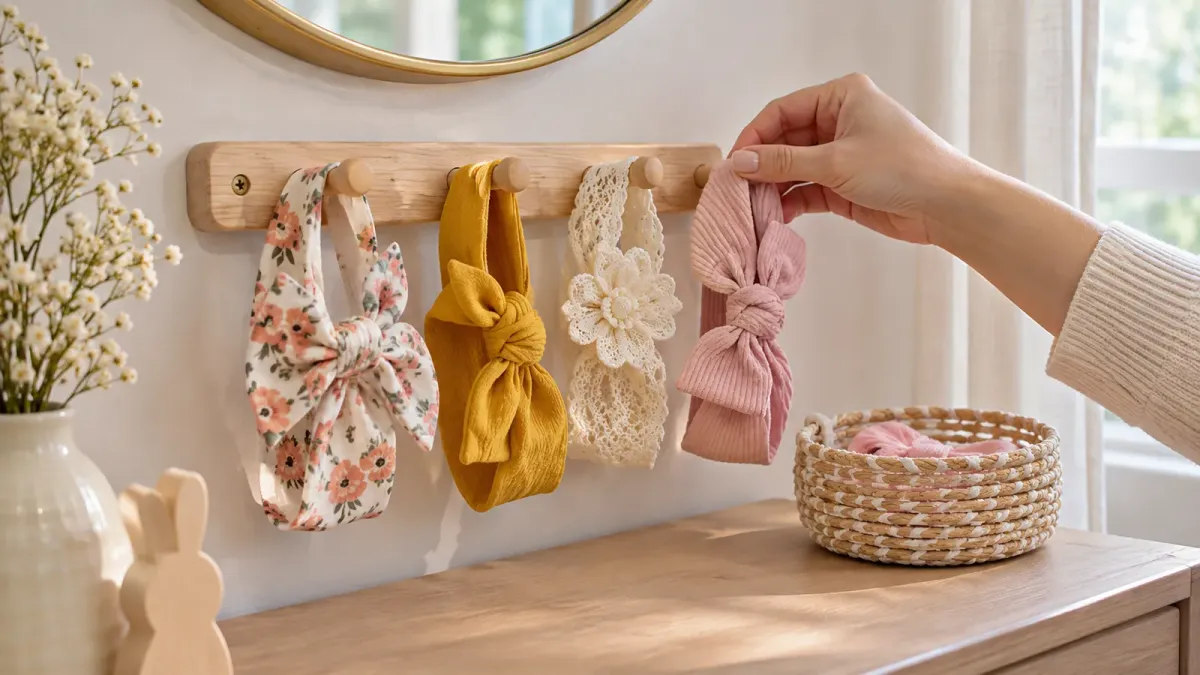
Wall hooks can make bands easy to see. Space them so bands do not overlap too much. A crowded row can look untidy and make it harder to remove one band.
Use fixings that suit the wall. A hook that works on a solid wall may not hold well on a hollow door. Follow the maker's directions for fitting. If you are unsure, ask someone who can help install it safely.
Keep wall storage away from a cot, change area or place where a child sleeps. Do not hang cords or long straps where a child could reach them. If children share the room, put the organiser where an adult can reach it but young children cannot.
Check hanging storage from time to time
Look for hooks that have shifted or screws that have loosened. Remove the bands before checking the holder. Stop using it if it feels unstable.
Keep the number of bands on each hook low enough for easy access. A heavy cluster can pull on the fixing. Use another hook or a drawer if the holder becomes crowded.
Do not rely on sticky pads for heavy items. Follow the maker's weight limit. Check the surface before fitting anything. Some paint or wallpaper can peel when a hook is removed.
Make a simple display holder
A frame and ribbons can turn storage into a display. Remove the glass and any sharp parts. Attach ribbons across the frame, then hang bands over them.
Use a frame that is light enough for the wall and secure it firmly. Check the ribbons and fasteners now and then. Stop using the holder if anything becomes loose or frayed.
This idea suits bands that can hang without stretching. It may not suit heavy, stiff or delicate pieces. Test one band first. If it slips or changes shape, use a basket or box instead.
You can also use a clean peg rail or a row of sturdy hooks. Keep the layout simple. A few well-spaced places are easier to use than a crowded display.
Keep a homemade holder simple
Use materials that are clean and in good condition. Do not leave exposed nails, staples or wire. Cover rough edges or choose another project.
Attach ribbons so they cannot sag under the bands. Keep the frame away from a child’s reach. Do not hang it above a bed or cot.
Check the holder when you dust the room. If a ribbon frays or a hook loosens, remove the bands. Repair the holder before using it again.
Keep accessories clean and in good shape
Store headbands only when they are dry. Damp items can smell musty or stain nearby fabric. Let a band air dry before putting it away after washing or exercise.
Follow the care label when washing a fabric band. If there is no label, check a small hidden area first. Avoid soaking decorated bands unless the maker says they can be washed.
Wipe a plastic or metal band with a soft cloth. Dry it before storage. Do not use a strong cleaner unless the maker says it is safe for that material.
Keep bands away from direct sunlight for long periods. Some colours and elastic materials can fade or weaken. A drawer or covered box can help protect special items.
Check stored items every so often. Remove dust and take out anything damaged. This quick check keeps the collection useful and prevents broken pieces from mixing with items you still wear.
Care for different materials
Fabric bands may need gentle hand washing. Check the care label first. Let them dry fully before putting them away.
Plastic bands may crack if bent too far. Do not force them into a small box. Metal bands can scratch other items, so store them apart.
Beads, bows and glued decorations need extra care. Do not pull on them while cleaning. If a part comes loose, stop using the band until it is repaired or discarded.
Storage around babies and young children
Headbands are usually small personal items. Some have clips, beads or other parts that could come loose. Keep them out of reach of babies and young children, especially when they are not being worn.
Do not leave hair accessories on a cot, change table, high chair or play mat. A baby may grab and mouth nearby objects. Put items away after use.
If a child wears a headband, stay close and check that it fits comfortably. Remove it for sleep. Do not use a band with loose decorations, sharp edges or damaged elastic.
Store small clips and hair ties in a closed container. Keep that container in a place young children cannot access. A high shelf is useful only if the container is stable and cannot fall.
Secure wall hooks, rails and frames. Do not put heavy storage above a bed or cot. Keep cords, ribbons and hanging loops away from areas where a child can reach them.
For general home safety, Australia's Product Safety Australia offers advice on furniture and household hazards. The UK's Office for Product Safety and Standards gives product safety guidance. In the US, the Consumer Product Safety Commission shares home safety advice. In Canada, Health Canada provides product safety information. These bodies do not set special headband storage rules. Use their general guidance for safe homes and products.
Keep routines simple for children
Older children can help return their own bands. Give them one clear place to use. A shallow box can be easier than a tall basket.
Keep small clips with an adult if a child still mouths small objects. Avoid placing loose accessories near play areas. Put items away before leaving the room.
Check the storage spot as your child grows. A low shelf may become reachable. Move small items higher when needed. Secure furniture that could tip if a child climbs on it.
Choose a setup for each age and stage
Your storage needs may change as children grow. A baby's accessories need adult handling and storage. An older child may be ready to choose and put away their own bands with help.
| Stage | Useful setup | Adult check |
|---|---|---|
| Baby in the home | Closed box or high drawer for accessories | Keep loose parts away from baby spaces |
| Toddler years | Adult-managed basket on a high shelf | Check for small parts and secure furniture |
| Preschool age | Low tray used with an adult nearby | Teach putting items away and check fit |
| School age | Drawer divider or hooks at a reachable height | Check hooks and storage remain secure |
| Teen or adult | Any system that fits the collection and room | Replace damaged bands and tidy regularly |
These are practical ideas, not age rules. Children develop at different rates. Keep small or breakable items under adult control when needed.
Make the setup fit the person using it
A child who can choose a band may still need help putting it away. Show the storage place and practise together. Keep the routine brief and calm.
For someone with limited reach or movement, place daily items within comfortable reach. Avoid a system that needs a stool or awkward lifting. Ask the person what feels easiest.
Adults may prefer hidden storage. Children may find visible choices easier. You can use both: keep daily bands in a small tray and special ones in a closed box.
Common storage mistakes
- Buying before measuring: Check the drawer, shelf or wall space first.
- Mixing everything together: Separate bands from clips and ties.
- Overfilling a holder: Leave room to lift out each band.
- Using a weak hook: Choose a fitting suited to the wall or door.
- Hanging storage above a cot: Move it to a safer place.
- Putting damp items away: Let them dry first.
- Keeping broken pieces: Remove cracked bands and loose decorations.
- Making the system too complex: Use a setup you can maintain every day.
Fix a system that no longer works
If bands spill out, the container may be too small. Remove unused items or add another section. Do not keep pushing items into a crowded space.
If you forget where items are, move them closer to where you get ready. Use a label if several boxes look alike. Keep labels short.
If a holder is hard to clean, choose a simpler one. Dusty cloth pockets may not suit your home. A wipeable tray may be easier to maintain.
A quick routine that keeps storage working
Put a band back after you take it off. Return clips and ties to their own container. This small habit prevents a pile from building up.
Once a week, take a quick look at the holder. Move bands back into their groups. Remove anything that is damaged or no longer used.
When the collection grows, make one change at a time. You might add a divider or move occasional bands to a box. Do not add more storage until you know what is causing the clutter.
A simple reset
- Put every band in one place.
- Remove damaged or unwanted items.
- Group the bands by type or use.
- Return clips and ties to a small container.
- Wipe the tray or drawer if it needs cleaning.
- Put daily choices where you can reach them.
This reset can take only a few minutes. Repeat it when the collection becomes hard to use. There is no need for a strict schedule.
Frequently asked questions
What is the easiest way to store a few headbands?
A small basket, tray or drawer section is often enough. Put it near where you get dressed. Keep clips and ties in a separate container.
How can I store headbands without using drawer space?
Try a hanging organiser or fixed hooks. Make sure the holder is secure and not crowded. Keep it away from a cot or child’s sleep space.
Will a basket stretch my headbands?
A basket should not stretch bands if they sit loosely inside. Do not pack them tightly or place heavy items on top. Use hooks only for bands that can hang without changing shape.
How do I keep decorated bands from catching?
Store them apart from plain bands. Lay them flat in a shallow box or tray. Check that beads, bows or flowers are firmly attached.
Can I make a headband holder from a picture frame?
Yes, if you remove the glass and sharp parts. Fix ribbons securely across the frame. Hang it firmly and check it for loose pieces.
Where should I keep headbands when a baby lives at home?
Use a closed container or a high drawer. Keep bands and small accessories away from cots, change tables and play areas. Put them away after use.
How often should I clean headbands?
Follow the care label. Clean a band when it is dirty or sweaty, then let it dry fully. Wipe hard bands with a soft cloth when needed.
What should I do with damaged bands?
Stop using a band with cracks, sharp edges or loose parts. Keep it away from children while you decide whether to repair or discard it. Do not store broken pieces with usable items.
Should I buy a special headband organiser?
Not necessarily. Try a clean container you already own first. Buy an organiser only if it solves a real space or access problem.
How do I store wide or padded headbands?
Give them enough room to keep their shape. A shallow box or open tray may work. Do not squeeze them into a narrow drawer section.
Can headbands be stored in a bathroom?
You can, if the storage spot stays dry and clean. Keep bands away from splashes and steam. A bedroom drawer may suit them better.
How do I keep a shared collection organised?
Give each person a small section or container. Use simple labels if needed. Keep small clips in a closed box.
Guidance by country
There are no special national rules for storing headbands. General safety advice can still help families choose secure storage and check household products.
| Country | Relevant official body | How its guidance relates |
|---|---|---|
| Australia | Product Safety Australia (ACCC) | General advice on safe products and home hazards |
| United Kingdom | Office for Product Safety and Standards | Consumer product safety information |
| United States | Consumer Product Safety Commission | Home safety and product hazard advice |
| Canada | Health Canada | Consumer product safety information |
Use common sense in every home. Keep small accessories away from young children. Secure wall storage. Follow the care instructions for each item.
Sources and further guidance
- Product Safety Australia – Toppling furniture and televisions guide
- Product Safety Australia – Blinds, curtains and window fittings guide
- UK Office for Product Safety and Standards
- American Academy of Pediatrics – Home safety
- Health Canada – Recalls and safety alerts
- RoSPA – Child safety at home
This information is general and does not replace advice from a qualified health or safety professional. BabyGearFinder may earn a commission from qualifying purchases. The price you pay does not change.
Sources
- Product Safety Australia – Toppling furniture and televisions guide
- Product Safety Australia – Blinds, curtains and window fittings guide
- UK Office for Product Safety and Standards
- HealthyChildren.org (American Academy of Pediatrics) – Home safety: tips for families with young children
- Health Canada – Recalls and safety alerts
- RoSPA – Child safety at home
Related guides
More Parental Tips →
Nappy Bag Hacks: Clever Ways to Organise, Save Space and Pack Safely

From Board Games to Outdoor Adventures: Simple Bonding Ideas for Parents and Children

How to Manage Baby Gear Clutter in a Small Home
