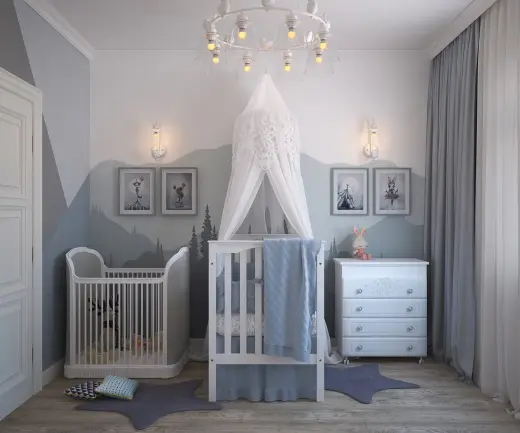
Second-Hand Baby Gear: What Is Safe to Buy, What to Skip, and How to Check It
Learn which second-hand baby items are safe to reuse, what to buy new, and how to check cots, prams, car seats, and toys against safety rules.
On this page
- Key points
- Why second-hand baby gear makes sense (and when it does not)
- What is safe to buy second-hand, and what to buy new
- Items you should almost always buy new
- How to check used cots, bassinets, and portable cots
- How to check used prams, high chairs, and carriers
- How to check toys, clothes, and electrical items
- Safety standards and recall checks by country
- How to clean and prepare second-hand gear
- Common mistakes parents make with second-hand gear
- Step-by-step inspection checklist before you pay
- Frequently asked questions
- Sources
Short answer: Many baby items are safe to buy or borrow second-hand. Good choices include clothes, wooden high chairs, change tables, and sturdy prams that pass a full safety check. Other items should almost always be bought new. These include cot mattresses, car seats with an unknown history, bike helmets, and bottle teats. Before you use any used item, check the label, look for recalls, and test every lock and strap.
This guide brings together advice from safety and health bodies in Australia (ACCC, Product Safety Australia, Red Nose, Kidsafe), the UK (OPSS, The Lullaby Trust, NHS, RoSPA), the US (CPSC, American Academy of Pediatrics, NHTSA), and Canada (Health Canada, Transport Canada, Canadian Paediatric Society).
Key points
- Buy new when safety wears out: always buy a new cot mattress, a new bike helmet, and new bottle teats or dummies.
- Know your car seat's past: never buy a used car seat or baby capsule from a stranger. Only reuse one if you know its full history, it is within its expiry date, and it has never been in a crash.
- Check for recalls first: search the brand and model number on your national recall website before you hand over money.
- Skip antique sleep gear: old cots and cradles often fail modern bar-spacing and drop-side safety rules.
- Read the manual: look up the maker's instructions online so you know how locks, brakes, and harnesses work.
- Clean gently: wash fabrics well, and wipe car seat straps with mild soap and water only. Never soak straps or use bleach.
Why second-hand baby gear makes sense (and when it does not)
Babies grow fast. A newborn outgrows a bassinet, tiny clothes, and a baby bath in just a few months. Because babies use these items for such a short time, many second-hand pieces still look almost new.
Reusing baby gear helps your budget. It also keeps good items out of landfill. Borrowing from friends or family, shopping at op shops, or buying from local parents can stretch your money further.
Still, not everything is safe to pass down. Safety rules change over time. Plastic gets brittle as it ages. Foam breaks down inside car seats and helmets, even when the outside looks fine. Mould and bacteria can hide inside old mattresses and breast pumps.
The trick is knowing which items are safe to reuse and which ones are not worth the risk.
What is safe to buy second-hand, and what to buy new
Use this table as a quick guide when you are offered hand-me-downs or browsing online marketplaces.
| Item | Safe second-hand? | What to watch out for |
|---|---|---|
| Baby clothes and muslin wraps | Yes | Check for loose buttons, broken zips, and drawstrings near the neck. Wash before use. |
| Baby sleeping bags | Yes, with checks | Check the zip, seams, and neck opening. Make sure there is no hood and no loose threads. |
| Wooden high chairs | Yes, with checks | Must have a wide, stable base, a five-point harness, and a crotch post or strap. |
| Prams and strollers | Yes, with checks | Test brakes, folding locks, wheels, tether strap, and harness. Check for recalls. |
| Change tables | Yes, with checks | Must be sturdy with raised sides and a working safety strap. Never leave baby alone on it. |
| Cots and bassinets | Only if modern | Must meet current standards. No drop-side rails in the US or Canada. Check all bolts and bars. |
| Portable cots | Only if modern | Check the top rail locks and mesh sides. Use only the thin base pad made for that model. |
| Baby carriers and slings | Yes, with checks | Inspect stitching, buckles, and rings. Check for recalls and learn safe carrying rules. |
| Toys and books | Mostly yes | Avoid tiny parts, button batteries, loose magnets, and peeling paint on old wooden toys. |
| Car seats and capsules | Usually buy new | Only reuse if from a trusted person, never in a crash, not expired, and all parts are there. |
| Cot mattresses | Buy new | Old mattresses can sag, hold mould, and raise the risk of sudden infant death. |
| Bike helmets | Buy new | One drop or crash can crack the inner foam, even if you cannot see any damage. |
| Bottle teats and dummies | Buy new | Soft silicone and latex perish over time. Tiny cracks can trap germs or break off. |
| Breast pumps | Depends on type | Closed-system pumps may be reused with new tubing and shields. Open-system pumps are single-user only. |
Items you should almost always buy new
Some baby items protect your child's head, airways, or life in an emergency. With these items, hidden damage is hard to spot. Buying new is the safest choice.
1. Cot mattresses
Health and safe-sleep groups in all four countries advise buying a new mattress for each baby when you can. The Lullaby Trust in the UK warns that second-hand mattresses carry a higher risk of sudden infant death syndrome (SIDS), especially if the mattress comes from outside your home.
A safe cot mattress must be firm, flat, and clean. Over time, used mattresses can sag in the middle or soften at the edges. A soft or dipping surface can let a baby's face press into the mattress and block their breathing.
Used mattresses can also hold dust mites, bacteria, and mould inside the foam or springs. Even a thorough surface wipe cannot clean deep inside the core.
If you truly cannot buy a new mattress and must reuse one from an older sibling, check it carefully. It should have a completely waterproof cover with no tears, cracks, or stains. It must still be firm and flat, with no dips. Press your hand into the centre and edges to check that it bounces back firmly. Make sure it fits the cot tightly with no big gaps around the sides.
2. Car seats and baby capsules
A car seat is the one item where strangers' hand-me-downs are never worth the gamble. Road safety bodies—including Child Car Seats Australia, RoSPA in the UK, the American Academy of Pediatrics (AAP) and NHTSA in the US, and Transport Canada—all warn against buying a used car seat if you do not know its history.
Here is why:
- Hidden crash damage: a seat that has been in a crash can have hairline cracks in the plastic shell or stretched harness webbing. You cannot always see this damage, yet the seat can fail in a second crash.
- Expiry dates: plastic weakens over years of hot summers and cold winters in a car. Most seats have an expiry date or a set lifespan stamped into the plastic. In Australia, rules advise replacing restraints once they are 10 years old, or sooner if damaged. Transport Canada sets expiry dates by each maker.
- Missing parts or manuals: without the manual, it is easy to thread the seatbelt or top tether the wrong way.
- Outdated standards: older seats may not meet current crash rules, such as AS/NZS 1754 in Australia, R129 or R44 in the UK, FMVSS 213 in the US, or CMVSS 213 in Canada.
When is a used car seat okay? Only if it comes from a close family member or trusted friend who bought it new. You must be certain it has never been in a crash, even a minor one. Check that it meets current local standards, is well inside its expiry date, has all parts and the manual, and has not been recalled.
3. Bike helmets
When your child starts riding a balance bike, trike, or bike trailer, they need a properly fitted helmet. Always buy bike helmets new.
A helmet protects the brain by crushing its inner foam layer during a knock. It is built to absorb one impact only. If a previous owner dropped the helmet on concrete or had a small fall, the foam may be compressed or cracked underneath the outer shell.
Check that any new helmet meets your local standard, such as AS/NZS 2063 in Australia or EN 1078 in the UK and Europe.
4. Dummies, bottle teats, and open-system breast pumps
Silicone and rubber teats and dummies break down with heat, washing, and chewing. Tiny splits can harbour germs or tear off and become a choking hazard. Always buy new teats, dummies, and toothbrush heads.
Glass or stainless-steel baby bottles can be reused if they have no chips or cracks. Plastic bottles can scratch and turn cloudy over time, so replace worn plastic bottles too.
Be careful with used breast pumps. An "open-system" pump does not have a barrier between the milk tubing and the motor. Milk mist can enter the motor, where mould or viruses can grow and cannot be cleaned out. Health bodies advise against sharing open-system pumps. A "closed-system" hospital-grade pump has a barrier, so it can be shared if you buy brand-new tubing, valves, and breast shields.
How to check used cots, bassinets, and portable cots
A baby spends many hours sleeping, often unsupervised. That is why sleep furniture needs the strictest checks.
Household cots and cribs
Standards for cots have improved a lot over the last 20 years. Many antique cots, heirloom cradles, and older second-hand cots have hazards that are now banned.
- Check the standard label: look for a sticker or stamp showing AS/NZS 2172 (Australia), BS EN 716 (UK), or ASTM F1169 (US).
- Check drop-side rails: drop-side cots are banned for sale in the US and Canada because babies have been trapped and suffocated when the rail broke or slipped. In Australia and the UK, fixed-side cots are the simplest and safest choice. If you look at an older drop-side cot, skip it if the latches stick, rattle, or feel loose.
- Measure bar gaps: bars must be close enough together that a baby's head or body cannot slip through, and far enough apart that tiny limbs do not get wedged. If a standard soda can fits easily between the bars, the gap is too wide.
- Check the corners and paint: there should be no tall corner posts or decorative knobs that could hook onto baby clothes or sleeping bag straps. Look for peeling or chipped paint, as very old cots may contain lead paint.
- Inspect every joint: shake the cot firmly. It should not wobble. Count every screw, bolt, and bracket to make sure none are missing or swapped out for wrong hardware.
- Check the mattress fit: when the mattress is centred, there should be no big gap between the mattress and the cot sides.
Bassinets and cradles
Bassinets are handy for the first few months, until your baby starts showing signs of rolling or pushing up. If you buy one second-hand, check that the base is wide and steady so it cannot tip over. Look for breathable mesh or vertical slats rather than solid padded walls. Make sure the mattress is firm, flat, and made to fit that exact bassinet. Skip any used inclined sleeper, hammock, or curved sleep pod. Regulators in Australia, the US, the UK, and Canada warn that babies must sleep flat on their backs, never at an angle.
Portable cots and travel cots
Portable cots (also called portacots or play yards) take a lot of wear when families fold and pack them for trips. Always open a used portable cot all the way before buying it.
- Pull down gently on all four top rails to confirm every hinge locks into place and stays locked.
- Check the mesh sides for holes, tears, or loose stitching where fingers or buttons could catch.
- Make sure the folding base pad is the original one, sits flat, and has no tears. Never add a second mattress on top of a portable cot pad, as a baby can get wedged between the extra mattress and the soft mesh side.
Look up the model to check it meets safety rules such as AS/NZS 2195 (Australia) or ASTM F406 (US).
How to check used prams, high chairs, and carriers
Moving and feeding gear works hard every day. Parts loosen, brakes wear down, and straps fray. Give these items a hands-on test before you buy.
Prams and strollers
Take the pram for a quick push outside on a flat path and over a bump. Watch for these things:
- Brakes: lock the parking brake and push the pram forward and back. The wheels must not slip or roll.
- Folding locks: fold and unfold the pram a few times. Check that the main frame lock clicks into place cleanly. Look for pinch points where little fingers could get caught.
- Harness: a safe pram has a five-point harness (two shoulder straps, two waist straps, and a crotch strap). Buckle and unbuckle it. Check that the plastic clip is not cracked and the webbing is not frayed.
- Tether strap: in Australia, prams under AS/NZS 2088 must have a wrist tether strap so the pram cannot roll away on a hill or train platform. Check that it is still attached and strong.
- Frame and wheels: look closely at welds, rivets, and plastic joints for cracks or rust. Spin the wheels to check they run straight and the tyres are not worn smooth or splitting.
- Recall check: check the model against AS/NZS 2088 (Australia), BS EN 1888 (UK), or ASTM F833 (US) and search the national recall list.
High chairs
Falls from high chairs are a common cause of head injuries in babies and toddlers. A good second-hand high chair needs three things: stability, a harness, and a crotch post.
- Push lightly on the top of the chair from all four sides. A wide base should feel steady and not tip easily.
- Check for a working five-point harness or a sturdy waist-and-crotch strap. Never rely on the food tray alone to hold your child in.
- Confirm the tray locks tightly on both sides and has no sharp plastic edges.
- Look for labels showing standards such as BS EN 14988 (UK) or ASTM F404 (US).
Baby carriers, wraps, and slings
Soft wraps, ring slings, and structured carriers are often passed between friends because babies only use them for a year or two. Check every seam, ring, and plastic buckle under bright light. Pull firmly on the shoulder and waist straps to test that the buckles do not slip.
Avoid older "bag-style" slings that curl a baby into a C-shape with their chin pressed onto their chest. When using any carrier, follow the TICKS rule shared by Red Nose and the NHS: keep your baby Tight, In view at all times, Close enough to kiss, Keep their chin off their chest, and give them a Supported back. Also check that the carrier holds your baby's legs in a wide "M" shape, with knees higher than their bottom, to protect their hips.
Change tables
Second-hand wooden change tables are usually great value. Check that the frame does not wobble, all screws are tight, and the raised edges are intact. Make sure the safety strap is still attached, and remember that no strap replaces your hand—always keep one hand on your baby on a change table.
Skip second-hand baby walkers
If someone offers you a wheeled baby walker (the kind a baby sits inside and pushes with their feet), say no thank you. Health and safety groups—including the AAP, Kidsafe, and the NHS—advise against wheeled baby walkers. They let babies move quickly toward stairs, hot drinks, and heaters, and they do not help babies learn to walk sooner. In Canada, wheeled baby walkers are banned altogether.
How to check toys, clothes, and electrical items
Smaller second-hand items are easy to overlook, yet they can hide small-part or battery hazards.
Toys and play mats
- Choking test: for babies and toddlers under three, no toy or loose part should fit inside a standard toilet-roll tube. Pull gently on stuffed toy eyes, noses, bells, and buttons to check they do not come off.
- Button batteries: check every musical toy, book, or remote. Battery doors must be held shut with a screw or a tool-only lock. If the battery cover slides off easily or is held with sticky tape, throw the toy away. Swallowing a button battery can cause life-threatening burns inside a child's throat within hours.
- Magnets: skip second-hand magnetic building sets if any piece is cracked or if small loose magnets are present. Swallowing more than one strong magnet can pinch and tear the gut.
- Old painted toys: very old wooden toys or painted furniture may have lead paint. If paint is flaking or chipped, leave it behind.
- Play mats: check foam puzzle mats for loose small pieces that a teething baby could bite off and swallow.
Modern toys sold in these regions meet toy safety rules such as AS/NZS ISO 8124 (Australia), EN 71 / BS EN 71 (UK), or ASTM F963 (US).
Clothes and sleepwear
Second-hand clothes are one of the best ways to save money. Before putting them on your baby, cut off any loose threads inside socks, mittens, or sleeves that could wrap around tiny toes or fingers. Check snaps and buttons so none are loose. Avoid hoodies or jackets with neck drawstrings, as cords can catch on playground gear or cot bars.
For second-hand baby sleeping bags, check the neck hole and armholes. If your baby's head could slip down inside the bag, it is too big. Look for labels such as BS EN 16781 in the UK, and check that the zip runs smoothly without pinching.
Baby monitors and electrical gear
If you buy a second-hand baby monitor, bottle warmer, or steriliser, inspect the power plug and cable from end to end. Look for bent pins, melted plastic, or frayed wires. Never use a monitor with a broken battery door or swollen battery.
For smart Wi-Fi baby monitors, do a full factory reset before you connect the camera to your home network. Change any default password right away. And remember: always keep monitor cords at least 1 metre (3 feet) away from the cot so a baby cannot grab the cord and wrap it around their neck.
Safety standards and recall checks by country
Rules and product names vary slightly between countries. You may see a pram called a stroller, a cot called a crib, or a dummy called a pacifier. This table shows the main safety bodies and key rules across Australia, the UK, the US, and Canada.
| Topic | Australia | UK | US | Canada |
|---|---|---|---|---|
| Product recalls & safety body | ACCC / Product Safety Australia | Office for Product Safety and Standards (OPSS) | Consumer Product Safety Commission (CPSC) | Health Canada |
| Safe sleep & child health advice | Red Nose / Kidsafe | The Lullaby Trust / NHS / RoSPA | American Academy of Pediatrics (AAP) | Canadian Paediatric Society (Caring for Kids) |
| Cot / crib standard | AS/NZS 2172 | BS EN 716 (cots) / BS EN 1130 (cribs) | ASTM F1169 (drop-sides banned) | Canadian crib rules (drop-sides banned) |
| Pram / stroller standard | AS/NZS 2088 | BS EN 1888 | ASTM F833 | Canadian carriage & stroller rules |
| Car seat rules & body | AS/NZS 1754 / Child Car Seats Australia | R129 or R44 / GOV.UK | FMVSS 213 / NHTSA | CMVSS 213 / Transport Canada |
How to run a two-minute recall check
Before you pick up any large second-hand item—like a cot, pram, high chair, carrier, or monitor—ask the seller for a photo of the white sticker or stamped label underneath. That label usually lists the brand, model name, model number, and date of manufacture.
Type the brand and model number into your national recall site:
- Australia: Product Safety Australia (productsafety.gov.au/recalls)
- UK: UK Government product recalls and alerts (gov.uk)
- US: CPSC recalls database (cpsc.gov)
- Canada: Health Canada recalls and safety alerts (recalls-rappels.canada.ca)
If a product has been recalled, do not buy it. Even if the seller offers it for free, walk away. Note that in the US, Canada, and the UK, it is illegal to sell a recalled product, and in Australia sellers must still meet consumer safety bans.
How to clean and prepare second-hand gear
Once you bring safe second-hand gear home, give it a proper clean before your baby touches it.
- Washable fabrics and clothes: wash in warm or hot water using mild, fragrance-free laundry detergent. Check the care tag first so you do not shrink wool or ruin waterproof layers. Dry items in direct sunlight when you can, as sunlight helps remove stains and mild smells.
- Hard wood and plastic: wipe down high chairs, cots, change tables, and plastic toys with warm soapy water. Rinse with a clean damp cloth and dry fully so moisture does not sit in joints. Avoid harsh chemical sprays on surfaces your baby might chew.
- Prams and fabric seats: remove any fabric liners that zip or clip off and hand-wash or machine-wash them gently. Brush dirt and crumbs out of wheel axles and folding hinges, then wipe the frame dry.
- Car seat harnesses (special rule): if you are reusing a trusted family car seat, never put the harness straps in a washing machine, never soak them in water, and never use bleach or harsh cleaners. Strong cleaners and soaking can weaken the webbing or damage flame-retardant coatings. Wipe straps gently with a damp cloth and mild soap, and check the manual for exact cleaning steps.
- Check for mould and smoke: sniff stored gear before you bring it inside. Musty smells often mean hidden mould inside foam. Cigarette smoke can cling to fabric and padding for years. If an item smells strongly of mould or smoke, skip it.
Common mistakes parents make with second-hand gear
Even careful parents can get caught out by a few common traps.
- Trusting a stranger's word on a car seat: a seller may say "never in an accident", but they might have bought it used themselves or had a minor bump they forgot about.
- Using an heirloom cradle or antique cot: family treasures look lovely in photos, yet old bar gaps, soft bases, and lead paint make them unsafe for daily sleep.
- Skipping the manual: guessing how a pram folds or how a portable cot locks can lead to a collapse while your baby is inside.
- Adding aftermarket extras: fluffy car seat strap pads, non-approved pram liners, or thick cot bumpers can stop harnesses from fitting snugly or block a baby's airflow.
- Accepting every hand-me-down: it is hard to say no to generous friends or relatives. You can always thank them warmly, then quietly recycle or bin anything that is broken, recalled, or unsafe.
Step-by-step inspection checklist before you pay
Save this short list on your phone when you go to view second-hand baby gear.
- Check the product label for the brand, model number, and date made.
- Search your national recall website for that model.
- Ask if the paper manual is included, or find the PDF manual on your phone.
- Test every lock, brake, latch, and hinge under gentle weight.
- Inspect all straps, buckles, and stitching for fraying, cracks, or slipping.
- Check wooden and plastic frames for cracks, splinters, rust, or missing screws.
- Check battery compartments on toys and monitors to make sure a screw holds them shut.
- Smell fabrics and padding for mould, dampness, or cigarette smoke.
- Check that no small parts can come loose on items for under-threes.
- Be ready to walk away if anything feels broken, wobbly, or unclear.
Frequently asked questions
Can I use a second-hand car seat from my sister or close friend?
Yes, as long as you can tick every safety box. You must know its full history from the day it was bought new. It must never have been in any crash, even a low-speed fender-bender. Check that it meets your country's current standard, is within its expiry date, has not been recalled, and comes with all straps, pads, and the instruction manual.
Is an antique wooden cot safe for my baby?
Usually no. Cots made before modern safety standards often have bars spaced too wide apart, decorative corner posts that catch clothes, lead-based paint, or weak drop-side latches. Use an antique cot for displaying soft toys if you like, and put your baby to sleep in a modern cot that meets current rules.
How do I clean a second-hand pram or car seat safely?
Check the maker's manual first. On a pram, you can usually remove fabric covers for a gentle wash and scrub the frame with warm soapy water. On a trusted car seat, only wash removable covers as directed in the manual. Never soak, machine-wash, or bleach the harness straps or buckle, as this can weaken them.
Can I use a second-hand cot mattress if it has a waterproof cover?
Safe-sleep experts advise buying a new cot mattress whenever possible. The Lullaby Trust notes a higher SIDS risk with used mattresses from outside the home. If you must reuse a family mattress from an older sibling, make sure its waterproof cover has no tears or stains, and check that the mattress is still completely firm, flat, and tight-fitting.
Where can I check if a used baby product has been recalled?
Search the brand and model number on your national government recall site. Use Product Safety Australia in Australia, GOV.UK in the UK, the CPSC website in the US, or Health Canada's recalls portal in Canada.
Are second-hand baby monitors safe to use?
Simple audio or non-Wi-Fi video monitors are usually fine if the wires, plugs, and battery door are undamaged. For Wi-Fi monitors, reset the device to factory settings and set a strong new password before using it. Always place any monitor and its power cord at least 1 metre away from the cot.
What should I do with outgrown baby gear that is no longer safe?
Do not donate or sell broken, expired, or recalled baby gear. Passing on an unsafe item puts another child at risk. Cut the harness straps on an expired or crashed car seat before putting it out for disposal or recycling, so nobody picks it up to reuse. Check with your local council or car seat fitter about car seat recycling programmes.
Sources
- Product Safety Australia – Recalls
- Product Safety Australia – Household cots guide
- Red Nose Australia – Product safety: how do I know what is safe
- UK Government – Buy safe, be safe
- The Lullaby Trust (UK) – Mattresses
- CPSC (US) – Safe sleep: cribs and infant products
- HealthyChildren.org (AAP) – Car seats: information for families
- Health Canada – Recalls and safety alerts
Related guides
More Parental Tips →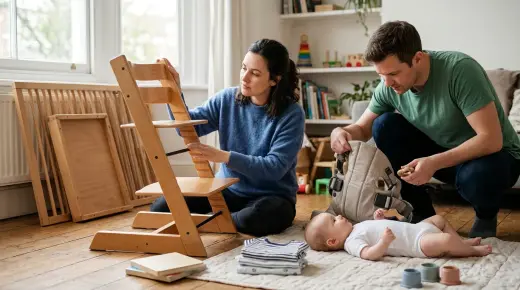
Buying Used Baby Gear Safely: What to Buy, What to Skip, and What to Check

Minimalist Baby Gear: What You Actually Need and What You Can Skip

Safe DIY Baby Gear Projects: What You Can Make and What to Buy Instead