














UV-C Cabinets vs Steam Sterilisers: What Can You Safely Clean?
Compare UV-C cabinets and steam sterilisers for baby items. Learn what each can clean, where claims fall short, and how to handle pump parts safely.

On this page
- What these machines do
- Start with cleaning and the item's instructions
- Steam sterilisers: strengths and limits
- UV-C cabinets: strengths and limits
- Which method suits common items?
- Plush toys need care, not a sterilising promise
- Breast pump parts and expressed milk
- Phones and other electronics
- Choosing a cabinet or steriliser
- Age stages and changing needs
- Safe handling before and after a cycle
- Official guidance in Australia, the UK, the US, and Canada
- Common mistakes to avoid
- Frequently asked questions
- Sources and further guidance
- Sources
Short answer: UV-C cabinets and steam sterilisers work in different ways. Steam uses heat and moisture. UV-C uses ultraviolet light. Neither method makes every item safe or clean. Follow the item's care instructions first. Wash away milk, dirt, and other residue before sterilising. Use a method approved for the item. Keep babies away from hot steam, hot surfaces, and UV-C light.
A steriliser does not replace washing. It also cannot make a dirty item clean. For feeding equipment, follow guidance from your health service and the maker's instructions. If a part cannot be safely sterilised, ask a health professional what to do.
What these machines do
A steam steriliser heats water until it makes steam. The heat can reduce germs on items that tolerate the process. Some models dry items after steaming. Drying does not mean an item is sterile forever. Germs can get onto it again when you handle or store it.
A UV-C cabinet shines a type of ultraviolet light onto items inside. The light may reduce germs on surfaces it reaches. It does not wash items. Dust, milk, folds, gaps, and shadows can block the light. A claim about one exposed surface does not prove every hidden surface is treated.
The word “sterilise” can be used loosely in product advertising. Check the maker's instructions and the evidence behind the claim. Do not assume a cabinet kills every germ or works on every material. Do not assume a steam cycle suits every item either.
These machines are tools for particular tasks. They are not a replacement for clean hands, careful washing, or safe storage. They do not remove every risk from feeding or play. Think about what the item touches, how it is used, and what its maker allows.
Start with cleaning and the item's instructions
Clean items before using either type of machine. For pump parts and feeding items, follow the equipment maker's cleaning steps. Use clean hands and a clean work area. Remove milk and visible residue. A steriliser cannot remove dried milk or dirt.
Check each item’s care label or manual. Look for clear instructions about steam, heat, water, and ultraviolet light. Some items may be damaged by high heat. Others may contain spaces or surfaces that light cannot reach. Do not put an item in a machine just because it fits.
If instructions are missing, contact the maker. Do not guess with a part that touches expressed milk or a baby's mouth. Replace damaged, cracked, cloudy, sticky, or worn parts as the maker directs. Damage can make cleaning harder.
Keep the instructions for each item together if several people help with care. A short note can say which parts may be steamed and which must stay dry. This can prevent a rushed mistake during a night feed. It also helps a babysitter follow the same steps.
Wash the machine itself as its manual says. Water tanks, trays, racks, doors, and seals can collect residue. Unplug the machine before cleaning it. Let all parts dry as directed. Never mix cleaning chemicals unless the maker says to do so.
Steam sterilisers: strengths and limits
Steam is a familiar method for items whose makers allow it. The cycle uses heat and moisture. That can be useful for compatible bottles and pump parts. The NHS guide to sterilising baby bottles describes several ways to sterilise feeding equipment. Follow local health advice and the product instructions.
Steam can burn. Keep the machine on a stable surface, away from a child's reach. Open the lid away from your face. Let items cool before handling. Do not touch the heating plate or hot water. Unplug the machine before cleaning it.
Some plastics can warp or become damaged with repeated heat. Silicone parts may also have specific care limits. Check each part's instructions, not just the steriliser's instructions. A machine that is safe for bottles may not be suitable for every pump part or toy.
Drying functions vary. They may leave droplets or moisture in small openings. Check items before use and store them as instructed. Do not treat “dry” as proof of safe storage or lasting sterility.
Mineral deposits can build up in a steam unit. They may affect how the unit works. Follow the maker's instructions for descaling. Do not scrape a heating plate with a sharp tool. Keep water below the fill line, and use only the water type the manual permits.
Steam cycles need time, power, and water. Check how long a full cycle takes. Check whether items must cool before you use them. Consider whether you can safely store clean items while waiting. A faster cycle is not automatically better if it does not suit the item.
UV-C cabinets: strengths and limits
UV-C cabinets avoid steam and can be useful for some heat-sensitive items, if their makers allow UV-C exposure. But light only works where it reaches. Place items as the cabinet manual says. Do not stack them or hide surfaces under another item.
Do not look at an operating UV-C lamp or defeat a door safety switch. UV light can harm eyes and skin. Keep the cabinet closed while it runs. Keep children away from the controls and the door. Stop using a cabinet with a broken latch, damaged seal, or failed safety feature.
Some cabinets also use heat or airflow. Read the full instructions. Do not assume every UV-C model is cool or suitable for phones, electronics, toys, or feeding parts. Ask the item's maker if the care instructions do not mention UV-C.
UV-C light cannot clean dirt away. It may not reach seams, cavities, textured surfaces, or areas shadowed by another object. A cycle display or timer does not prove that every surface received the right treatment.
Look for a clear explanation of the cabinet's cycle. Check what items it is meant to hold. Check how items should be spaced and turned. Ask what the safety lock does if the door opens. If the manual is vague, do not rely on broad advertising words.
Do not use a cabinet with a cracked door, damaged seal, loose hinge, or broken switch. Do not tape a switch down. Do not let a child load or unload the cabinet. Keep it out of reach, even when it is switched off.
Which method suits common items?
| Item | Steam method | UV-C cabinet | Safer next step |
|---|---|---|---|
| Breast pump parts | Only if the pump maker allows steam for each part. | Only if the pump maker allows UV-C and light can reach the surfaces. | Wash and follow the pump instructions. Ask a health professional if unsure. |
| Baby bottles and teats | Often used when the bottle maker allows it. | Use only with clear approval from the bottle maker. | Follow local feeding guidance and the bottle instructions. |
| Plush toys | May damage stuffing, fabric, glue, or trims. | Light may miss folds and inner surfaces. | Check the toy label. Wash or spot clean as directed. |
| Silicone toys or parts | Heat limits vary by product. | Material and shape can affect exposure. | Use only the care method named by the maker. |
| Mobile phones | Heat and moisture may damage electronics. | Use only if the phone maker permits UV-C exposure. | Use the phone maker's cleaning advice. Keep cleaning fluid out of openings. |
| Items with batteries | Heat and moisture can create damage or hazards. | Light may not reach covered areas; exposure may affect materials. | Do not sterilise unless both makers approve the method. |
This table gives starting points, not approval for a specific product. The exact model and material matter. Read the manual for every item. If two sets of instructions disagree, contact the makers before using the machine.
Plush toys need care, not a sterilising promise
Soft toys have seams, fur, stuffing, labels, and often small folds. A UV-C cabinet cannot show you that light reached every inner surface. Steam can soak or damage some fabrics and fillings. Heat may affect glue, dyes, or plastic eyes.
Check the toy label. If it can be machine washed, use the listed wash and drying steps. If it cannot, follow the maker's spot-cleaning advice. Let it dry fully before giving it back. Keep a toy with loose parts, torn seams, or exposed filling away from a baby.
For a toy used by a sick child, ask a health professional about extra cleaning needs. Do not rely on a cabinet's broad germ-killing claim. Keep toys that go in a baby's mouth clean and in good repair.
Some toys contain sound boxes, lights, batteries, or glued decorations. Remove these only if the instructions allow it. Do not soak an electronic toy. If the toy cannot be washed, use the stated surface-cleaning method and let it dry fully.
Check toys after cleaning. Look for loose stitching, small parts, peeling paint, or cracked plastic. Cleaning does not repair damage. Put a damaged toy aside until it can be fixed safely or replaced.
Breast pump parts and expressed milk
Milk residue can remain in small valves, membranes, and joins. Take the pump apart as its manual says. Wash each washable part carefully. Let parts dry as directed. Use a sterilising method only when the pump maker says it is suitable.
Do not put the pump motor, electrical parts, tubing, or batteries into water or a steriliser unless the maker explicitly allows it. Some tubing is not meant to be washed. Follow the manual for that model.
The Australian Breastfeeding Association explains how to prepare expressed breastmilk. Its guidance is useful alongside the pump's instructions. If your baby is premature, unwell, or has special feeding needs, ask your care team for personal advice.
Do not handle a clean part with dirty hands. Store it in a clean, dry place. If a part falls onto a dirty surface, clean it again before use.
Keep milk away from cleaning products and machine water. Never use a steriliser to warm or store expressed milk. Follow the milk storage advice from your local health service. Use clean containers that are meant for milk storage.
If a valve or membrane is hard to clean, check whether the maker sells a replacement. Do not cut, stretch, or alter a part to make it fit. A damaged part may affect how the pump works or make cleaning harder.
Phones and other electronics
A phone is not a feeding item. Do not treat it as one. Heat, moisture, and cleaning liquids can damage screens, seals, charging ports, and coatings. A UV-C cabinet may also affect materials or leave shaded areas untreated.
Read the phone maker's cleaning directions. Keep liquids out of openings. Do not use a method the maker forbids. Keep phones away from a baby's mouth and feeding equipment. Clean your hands before preparing milk or touching clean pump parts.
Do not place a phone in a steam unit, even if it seems to fit. Do not charge a phone while it is inside any cleaning cabinet. Keep chargers, cables, and power banks out unless their makers permit that use.
For shared phones, clean the outer surfaces in the way the phone maker allows. Use a clean cloth and the stated product, if one is recommended. Do not spray liquid directly onto the device. Let it dry before handling feeding items.
Choosing a cabinet or steriliser
First list the items you need to clean. Then check each item's manual. Choose a machine only if its method suits those items. A larger cabinet is not automatically more useful. A drying feature does not prove better cleaning.
- Instructions: Can you find clear steps for loading, cleaning, and safe use?
- Fit: Can items sit apart without blocking steam or light?
- Safety: Does the door close securely? Are hot parts and UV-C light contained?
- Care: Can you clean the water tank, tray, or inner surfaces as directed?
- Parts: Can you get replacement trays, seals, or other parts?
- Claims: Does the maker explain what was tested and what the cycle can do?
- Need: Does the machine solve a real problem in your routine?
- Space: Can it sit on a firm, dry surface with clear space around it?
- Power: Can you use it near a safe power point without a trailing cord?
Do not rely on a general “baby safe” label. Check the actual instructions for the item and the machine. If the claim is unclear, choose a cleaning method the item maker clearly supports.
Think about the whole routine. You may need to wash items, run a cycle, let them cool, and store them. Consider who will do each step during busy days and overnight feeds. A simple routine that you can follow matters more than extra features.
Read the warranty and cleaning rules before buying. Check how the maker handles repairs and replacement parts. Avoid a machine if you cannot find its manual or contact details. Keep the receipt and model name in case you need to check a recall.
Age stages and changing needs
Before birth: Read the pump, bottle, and steriliser instructions before buying extra equipment. Ask your midwife or feeding team what you will need for your situation.
Newborn period: Follow current local advice for feeding equipment. Clean parts after use. Keep clean items away from dirty surfaces. A steriliser is only one part of careful handling.
As feeding changes: You may use fewer bottles or pump parts. Keep following the care labels. Do not keep using parts that are worn or damaged.
When your child explores toys: Expect toys to reach floors, hands, and mouths. Wash toys as their labels allow. Inspect them for loose pieces and damage. A steriliser cannot make a broken toy safe.
When a child is sick: Ask a clinician if you need extra steps. The right approach can depend on the illness and the item. Do not use a stronger cycle unless both the item maker and machine maker allow it.
As your routine changes: You may no longer need a steriliser every day. Follow the advice that applies to your child and feeding method. Store the machine clean and dry if you stop using it.
Safe handling before and after a cycle
Set up a clean place for washed items. Keep it away from raw food, pets, and used dishes. Wash your hands before touching clean parts. If you need to move a clean item, hold it by the outside where possible.
Follow the machine's loading instructions. Do not crowd items or place them in a way that blocks a surface. Use only the racks and trays supplied or approved by the maker. Do not add cloths, toys, or loose objects without clear instructions.
Wait for the cycle to finish. Let hot items cool before touching them. Open a steam lid away from your face and hands. Keep the cabinet door shut until its cycle ends. If the cycle stops early, follow the manual before using the items.
Store items in the way the maker and health guidance advise. A closed machine may help keep items protected for a time, but handling can still transfer germs. Do not leave items damp in a sealed space unless the instructions specifically allow it.
If power fails during a cycle, do not assume it finished. Check the display and manual. Run the process again only as directed. If the machine smells burnt, leaks, or behaves oddly, unplug it and contact the maker.
Official guidance in Australia, the UK, the US, and Canada
Advice on feeding equipment can differ by item and family need. Use local health guidance together with the maker's instructions.
| Country | Official or peak body | Useful guidance |
|---|---|---|
| Australia | Australian Breastfeeding Association; National Health and Medical Research Council (NHMRC); Product Safety Australia | Advice covers expressed milk and infant feeding. Product Safety Australia shares recalls and product safety guidance. |
| UK | National Health Service (NHS); Office for Product Safety and Standards (OPSS) | The NHS explains sterilising baby bottles and making up formula. OPSS oversees consumer product safety. |
| US | Centers for Disease Control and Prevention (CDC); U.S. Food and Drug Administration (FDA); Consumer Product Safety Commission (CPSC) | The CDC gives formula preparation and storage guidance. Follow feeding equipment instructions too. |
| Canada | Health Canada; Canadian Paediatric Society | Ask a clinician about cleaning needs for your baby and feeding equipment. Check Health Canada's product safety alerts. |
These bodies do not approve every consumer cabinet or every product claim. Check the current advice that applies where you live. If your baby has medical needs, ask their care team.
Rules and advice can change. Check current local information when you buy or use equipment. A product sold in one country may not have the same instructions or support elsewhere. Keep the manual that came with your exact model.
Common mistakes to avoid
- Putting dirty items straight into a machine: wash first. Sterilising does not remove milk or dirt.
- Mixing parts from different products: follow each maker's directions.
- Overloading a cabinet: blocked surfaces may not receive steam or light.
- Opening a steam unit too soon: hot steam can burn skin.
- Looking into a UV-C unit: keep the door shut during a cycle.
- Using one cycle for everything: a toy, phone, and pump valve may need different care.
- Trusting a broad claim: ask what surfaces and germs were tested, and under what conditions.
- Storing damp items: follow drying and storage instructions.
- Ignoring damage: replace cracked or worn parts as the maker directs.
- Assuming “sterile” lasts: handling and storage can contaminate items again.
- Leaving a machine within reach: cords, hot water, and controls can attract children.
- Using a broken safety feature: stop using the unit until it is repaired or replaced.
Frequently asked questions
Is a UV-C cabinet better than a steam steriliser?
Neither is best for every item. Steam uses heat and moisture. UV-C uses light. Choose only a method that the item maker allows. Clean the item first.
Can I sterilise plush toys with UV-C?
Do not assume a cabinet treats every part of a plush toy. Folds, seams, and stuffing can block light. Follow the toy label's cleaning advice.
Can I put silicone pump parts in a steam steriliser?
Check the pump and part instructions. Silicone does not have one universal heat limit. Use steam only when the maker says it is suitable.
Can a UV-C cabinet clean my phone?
Only if the phone maker permits that method. Follow its cleaning advice. Keep liquids and heat away from openings and parts unless approved.
Does sterilising replace washing?
No. Wash away milk, dirt, and residue first. Then use an approved sterilising method if one is needed.
Can I use a steriliser for every baby item?
No. Toys, electronics, pump parts, and bottles have different care needs. Read the instructions for each item.
How should I handle items after a cycle?
Follow the machine instructions. Use clean hands. Store items in a clean, dry place. If they become dirty, clean them again.
What if my baby was born early or is unwell?
Ask your baby's care team for specific cleaning and feeding advice. Their needs may differ from general guidance.
Can I put a phone or toy in a steam unit if it is switched off?
No, unless its maker clearly allows steam. Heat and moisture can damage electronics, glue, fabric, and other parts. Use the stated cleaning method.
What should I do if a cycle stops early?
Do not assume the items are ready. Check the machine manual. Follow its steps for an interrupted cycle before using the items.
How do I know when to replace pump parts?
Check the pump maker's advice. Replace parts that are cracked, worn, cloudy, or hard to clean. Do not alter them to make them fit.
Sources and further guidance
- Australian Breastfeeding Association – Preparing expressed breastmilk
- NHS – Sterilising baby bottles
- CDC – Infant formula preparation and storage
- NHMRC – Infant Feeding Guidelines
- UK Office for Product Safety and Standards
- Health Canada – Recalls and safety alerts
This article provides general information, not medical advice. Follow your product instructions and seek advice from a qualified health professional for your baby's needs. BabyGearFinder may earn a commission from qualifying purchases. This does not change our guidance.
Sources
Related guides
More Feeding & Baby Food →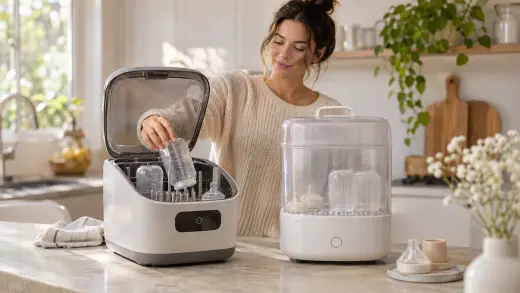
All-in-One Bottle Washers vs. Steam Sterilisers: Which Machine Suits Your Home?

Water-Bath and Steam Bottle Warmers: How to Warm Breast Milk Safely

UV Sterilisers vs Electric Steam Sterilisers: Which Is Better for Baby Bottles?
