Universal vs. Brand-Specific Car Seat Stroller Adapters: Click-Lock Checks and Folding Safety
Universal vs. brand-specific car seat stroller adapters: learn how to check click-lock latches, why to remove them before folding, and key safety rules.
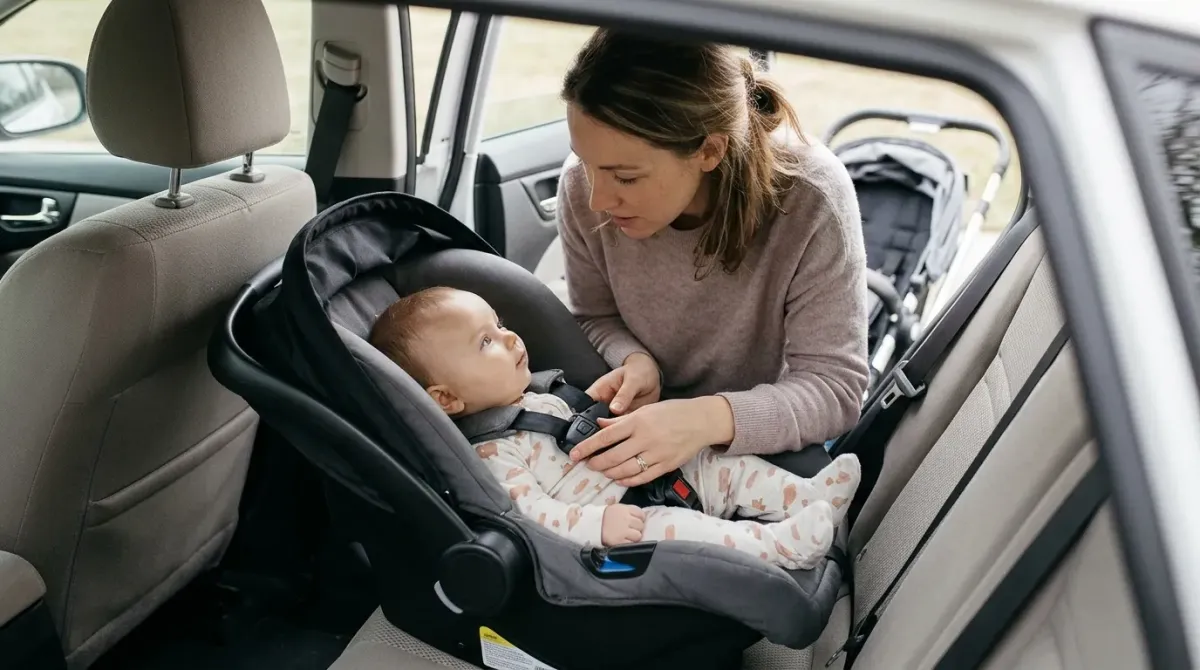
On this page
- Key points
- What a car seat stroller adapter is
- Brand-specific adapters vs. universal adapters
- Side-by-side comparison: brand-specific vs. universal adapters
- Audible click-lock indicators and how to test the latch
- Why you must remove adapters before folding your stroller
- Age stages and when to stop using a car seat on a stroller
- Safety standards and official advice in Australia, the UK, the US and…
- Common mistakes parents make with stroller adapters
- Frequently asked questions
- Sources
Short answer: Brand-specific car seat stroller adapters are made for one exact seat and stroller pair. They give the tightest fit and clear click-lock checks. Universal adapters use straps or wide cradles to fit several brands, but they can feel looser and take longer to fit. Whichever type you use, never trust a click sound alone. Pull up on the car seat and check both sides before you walk. Also take the adapters off before you fold the stroller, unless your manual says they can stay on.
This advice matches official child safety guidance in Australia (ACCC, Red Nose and Kidsafe), the UK (OPSS, The Lullaby Trust and RoSPA), the US (CPSC, AAP and NHTSA) and Canada (Health Canada, Transport Canada and the Canadian Paediatric Society).
Key points
- Fit matters most: Only use an adapter that lists both your exact stroller model and your exact infant car seat model.
- Brand-specific adapters: Click straight into the stroller frame. Usually smaller, lighter and steadier than universal frames.
- Universal adapters: Often use a bar, ring or strap system. Handy if you swap strollers, but bulkier and slower to attach.
- Check the lock twice: Listen for a sharp click, look for green lock flags if fitted, and give the car seat a firm upward tug.
- Remove before folding: Leaving adapters on when you fold a stroller can snap plastic clips, bend hinges or stop the frame lock from shutting.
- Not for long sleep: Car seats are for travel, not routine naps. Take a sleeping baby out of the capsule once you reach your destination, or keep stroller trips short.
What a car seat stroller adapter is
A car seat stroller adapter is a small bracket made of hard plastic, metal or both. It sits between your stroller frame and your rear-facing infant car seat.
In Australia, parents often call this kind of car seat a baby capsule. In the UK, US and Canada, people usually call it an infant car seat or infant carrier. When you clip that seat onto a stroller with adapters, the set is called a travel system.
Parents like travel systems for quick errands. You can lift a sleeping baby out of the car inside the seat. Then you click the seat onto the stroller wheels without unbuckling the harness.
Most strollers do not fit a car seat straight onto the frame. Each brand builds its own latch shape. An adapter bridges the gap so the two parts lock together safely.
How adapters attach to the stroller
Most strollers have two small sockets on the sides of the frame. You first take off the normal stroller seat or bassinet. Then you slide the left and right adapters into those sockets until they lock.
Some travel strollers keep the fabric seat on the frame. In that case, the adapters clip over the side bars, and the car seat rests above the folded fabric.
Every adapter set has a left side and a right side. Most are marked with an "L" and an "R". Putting them on backwards can stop the car seat from locking.
Car Seats & Capsules worth a look
Real products from our catalogue. We don't show star ratings or review counts; check the current price, stock and reviews on Amazon before you buy.

Maxi-Cosi Pria
A convertible seat that goes from rear-facing to forward-facing, with a belt lock to help get a firm fit.

Babylove ezymove Booster
A very light, low-cost booster for about 4 to 8 years. It folds flat for storage.
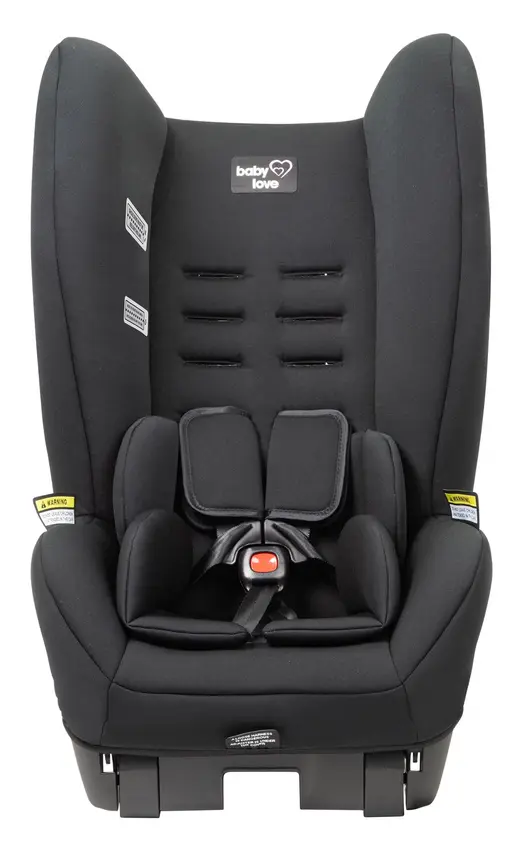
Babylove ezyone2
A very low-cost convertible seat. Rear-facing to about 12 months, then forward-facing to about 4 years.
 Reviewed
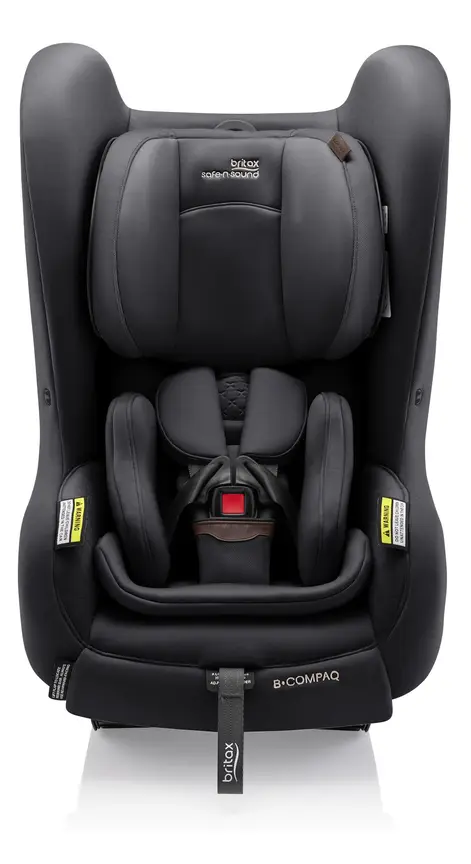
Britax Safe-n-Sound B-Compaq Lux
A convertible seat made for small cars with little room in the back.
Read our full review →Brand-specific adapters vs. universal adapters
When you shop for adapters, you will see two main kinds. Some are made by your stroller brand for one car seat brand. Others are sold as universal adapters.
What brand-specific adapters are
A brand-specific adapter is built for a named match. For example, a stroller maker designs a pair of clips for one capsule brand, or for its own infant seat.
Sometimes no adapter is needed at all. If your stroller and car seat are from the same brand, the seat may click straight into the stroller frame. Even then, always check the model list. A brand can change its latch shape from one year to the next.
Brand-specific adapters usually have two small arms, one on each side. They lock into the stroller sockets and hold the car seat at the exact angle the maker tested.
What universal adapters are
"Universal" does not mean the adapter fits every car seat ever made. It simply means the adapter can hold more than one brand or model of infant car seat.
Universal adapters usually work in one of two ways:
- Ring or bar frames: A metal or plastic hoop clicks onto the stroller. The car seat sits inside the ring and latches onto side hooks or rests on a support bar.
- Strap-down cradles: A tray or bar attaches to the stroller. You place the car seat on top and pull a safety strap over the seat base to hold it down.
Some universal adapters still only fit one brand of stroller at the bottom, while accepting several car seat brands at the top. Always read the compatibility chart before you buy.
Why compatibility lists matter
A car seat that sits at the wrong tilt on a stroller can be dangerous. If the seat tips too far forward, a newborn's heavy head can drop onto their chest. This can narrow their airway and make it hard to breathe.
Makers test their adapters with specific stroller and car seat pairs. They check that the weight sits over the wheels, not too far forward or back. They also check that the seat does not tip the stroller over.
If your car seat model is not on the adapter's approved list, do not force it to fit. A gap of even a few millimetres can let the seat pop loose on a bump or kerb.
Side-by-side comparison: brand-specific vs. universal adapters
The table below compares brand-specific adapters and universal adapters across the things that matter most in daily life.
| Feature | Brand-specific adapter | Universal adapter |
|---|---|---|
| Fit and stability | Made for one exact seat and stroller pair. Very little wobble when locked. | Built to fit several shapes. Can have slight side-to-side play. |
| Speed of use | Quick drop-in click on both sides. Easy with one hand once lined up. | Often needs extra steps, such as threading a strap or lining up a ring. |
| Size and weight | Usually two small, light clips that fit easily in a nappy bag or basket. | Often a large ring or bar that takes up more boot and basket space. |
| Click-lock feedback | Often includes loud clicks and colour lock windows on the clips. | May rely on strap tension or a single bar latch with fewer visual flags. |
| Seat tilt angle | Set by the maker for that exact seat to keep the baby's airway open. | Can vary slightly by seat shape. Needs careful checking on each use. |
| Future flexibility | Only works with that seat brand. Useless if you change capsules later. | May fit a second-hand or borrowed seat if it is on the approved list. |
| Folding the stroller | Often must be removed first, though a few slim clips fold with the frame. | Almost always must be removed before the stroller will fold flat. |
For most families, a brand-specific adapter is the safer and easier choice. It takes guesswork out of the tilt angle and saves space in the car boot.
A universal ring or cradle adapter can still make sense in a few cases. For example, your stroller maker may only sell a ring adapter for your car seat brand. Or you may own a stroller brand that builds one multi-brand cradle as its official option.
Audible click-lock indicators and how to test the latch
Many adapters advertise an "audible click-lock indicator". That simply means the latch makes a clear click sound when the metal pin snaps into place.
A click sound is helpful, but it is never enough on its own. Busy car parks are loud. Traffic, wind and a crying baby can easily drown out a quiet click.
Even worse, plastic parts can make a false click. A seat might rub against the edge of the bracket and snap lightly without locking both sides.
Visual lock flags and colour windows
Many modern adapters add a visual lock check next to the sound. You might see a small window on the side of the clip:
- Red or orange: The latch is open or only half locked. Do not push the stroller.
- Green: The locking pin has slid all the way home.
Some adapters do not use colours. Instead, a small button pops out or sits flush when locked. Check your manual so you know what "locked" looks like on your exact model.
The three-step lock check every time
Make this quick check a habit every single time you put the car seat onto the stroller:
- Listen for both sides: Lower the car seat straight down. Wait for a clear click on the left side and the right side.
- Look at both latches: Check the colour flags or lock pins on both adapters. Make sure the seat is level and not sitting crooked.
- Do the tug test: Grab the car seat handle or sides and pull firmly upward. The seat should lift the stroller frame slightly without coming loose.
If your universal adapter uses a strap, check the strap every time too. Pull it snug over the seat path shown in the manual. Tug the seat sideways and upwards to make sure it cannot slide out.
Keeping latches clean and smooth
Stroller adapters spend a lot of time in car boots, on footpaths and in parks. Sand, biscuit crumbs and grit easily get inside the spring slots.
Dirty springs can stick halfway. When a spring sticks, the latch may click softly without locking the pin all the way.
Wipe your adapters with a dry cloth every week or two. Brush out grit with a soft, clean paintbrush. Never spray oil or grease into plastic latches unless the maker tells you to. Oil attracts dust and can weaken some plastics.
Why you must remove adapters before folding your stroller
Parents are often in a hurry in car parks. You lift the baby out, fold the stroller with one hand and toss it in the boot. Leaving the adapters clipped onto the frame feels faster, but it causes real problems.
1. Cracked clips and bent frames
Most strollers fold inward like a clamshell or scissor. The side arms are designed to sit flush against each other. When hard plastic adapters stay on, they block the frame from closing properly.
If you push down hard to force the fold, the pressure lands right on the adapter joints. Over time, this can crack the adapter plastic or bend the stroller's metal hinge pins. A hairline crack inside an adapter may not show until it snaps under weight.
2. The frame lock will not catch
Almost every stroller has a side latch or auto-lock that holds it shut when folded. With adapters in the way, the frame often stops a few centimetres short of the lock.
An unlocked stroller can spring open when you lift it out of the car boot. That can hit your shins, drop onto a child nearby or pinch fingers in the hinges.
3. Lost or damaged parts
Adapters that stick out from a folded stroller catch on boot edges, suitcases and shopping trolleys. One sharp knock in the car boot can snap a release button or warp a locking tab.
Once an adapter has been dropped, cracked or forced during a fold, stop using it. Damaged latches cannot be trusted to hold a baby's weight.
4. When adapters can stay on
A small number of strollers are built to fold with their brand-specific adapters still attached. Even then, the manual usually sets strict rules. For instance, you may have to rotate the adapters inward first, or fold with the handlebar at a set height.
Check your stroller manual before you ever try folding with adapters attached. If you feel any resistance when folding, stop and take the adapters off.
A simple car-park routine
Keep a small cloth pouch or dedicated corner of the stroller basket for your adapters. When you get back to the car:
- Put the stroller brake on.
- Unhook the car seat and click it safely into the car base or belt path.
- Press the release buttons and pull both adapters straight up.
- Drop the adapters into their pouch or the stroller basket.
- Fold the stroller smoothly until the frame lock clicks shut.
Those extra ten seconds protect both your stroller and your baby.
Side by side: more car seats & capsules to compare
Real products from our catalogue. We don't show star ratings or review counts; check the current price, stock and reviews on Amazon before you buy.
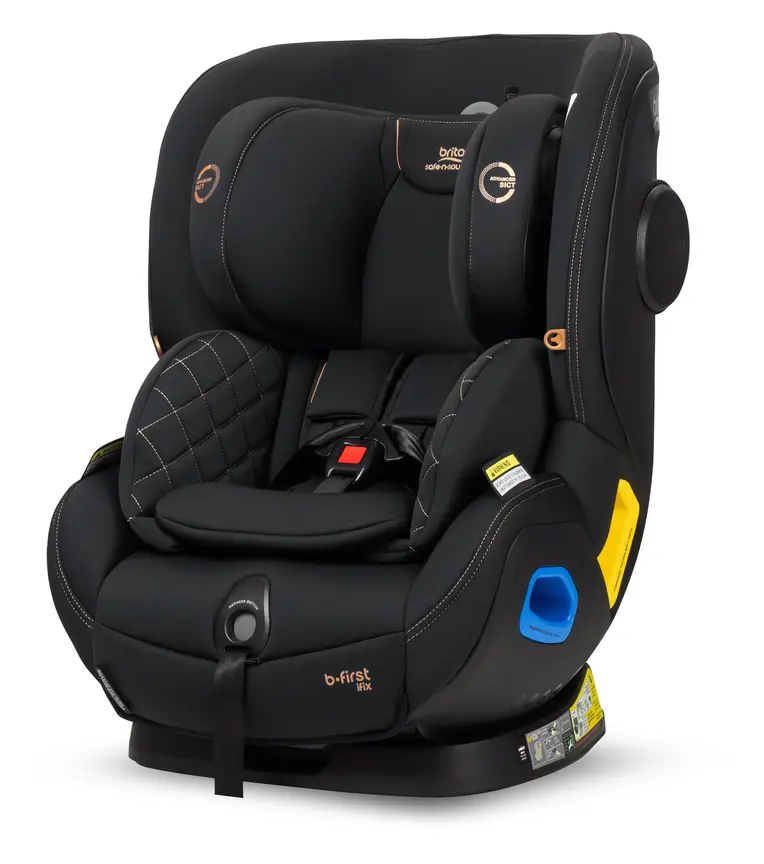
Britax Safe-n-Sound b-first+
Convertible seat from Britax's Australian Safe-n-Sound range with SICT deployable side-impact protection.
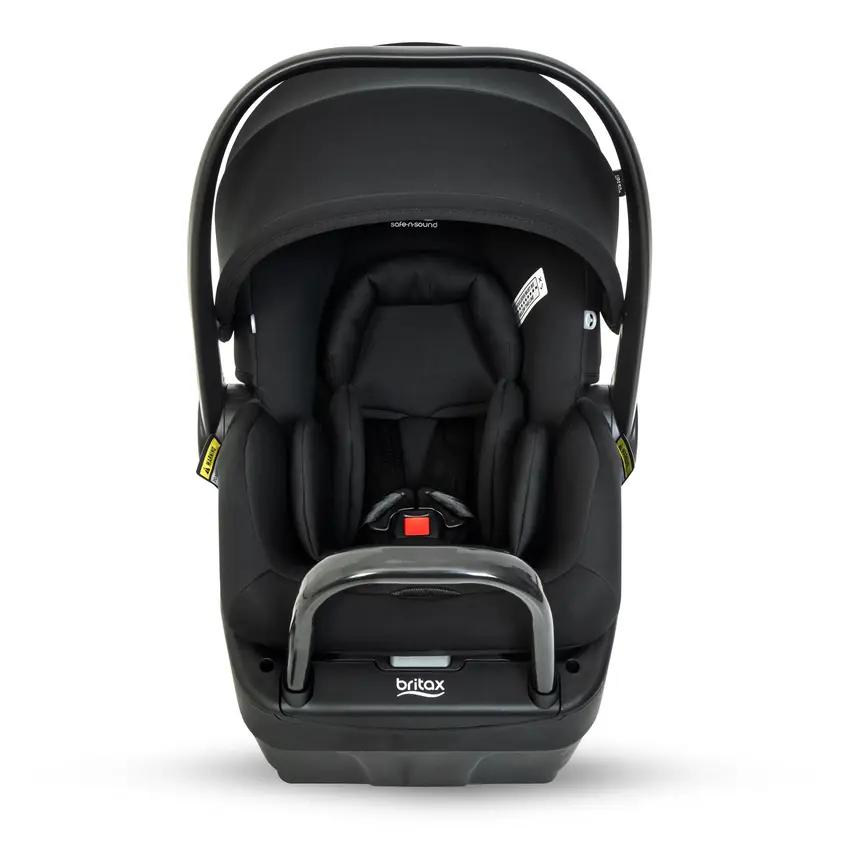
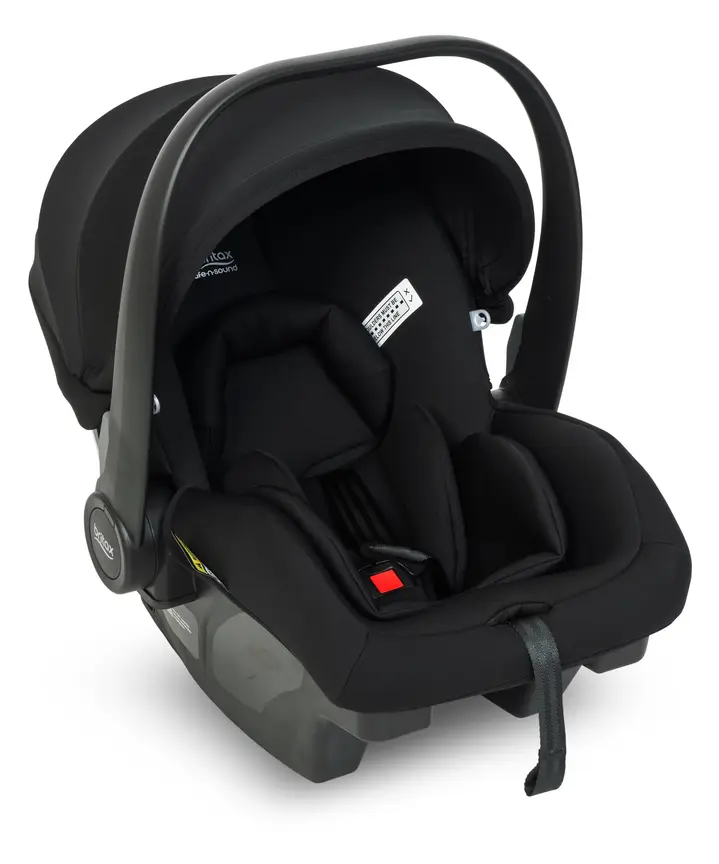
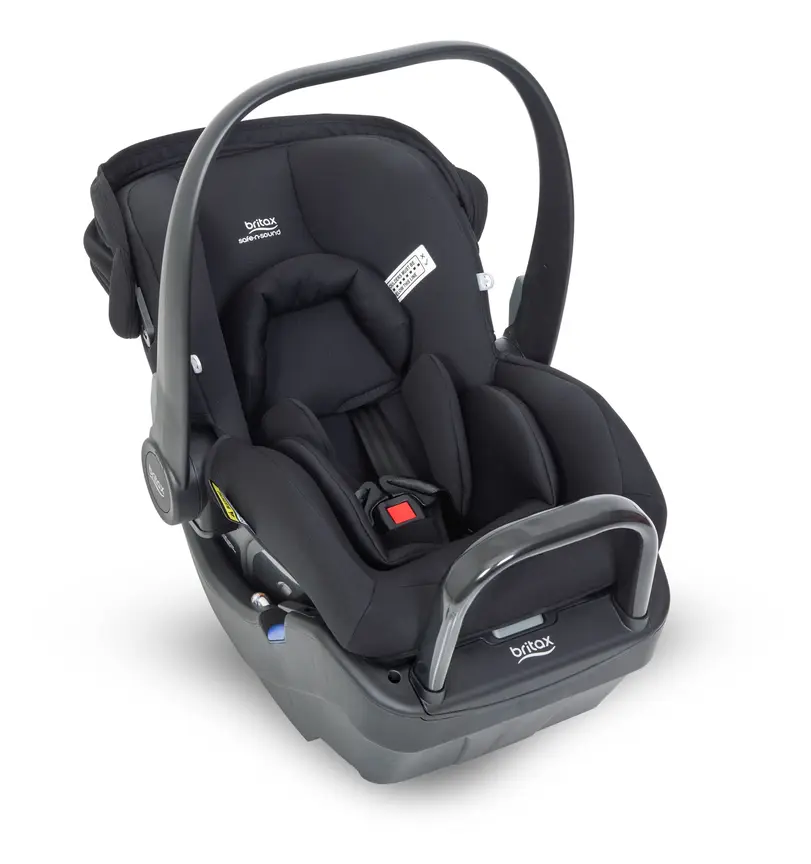
Britax B-Pod Lite
A newborn capsule with a ClickTight base, which makes a firm install simpler.
Read our full review →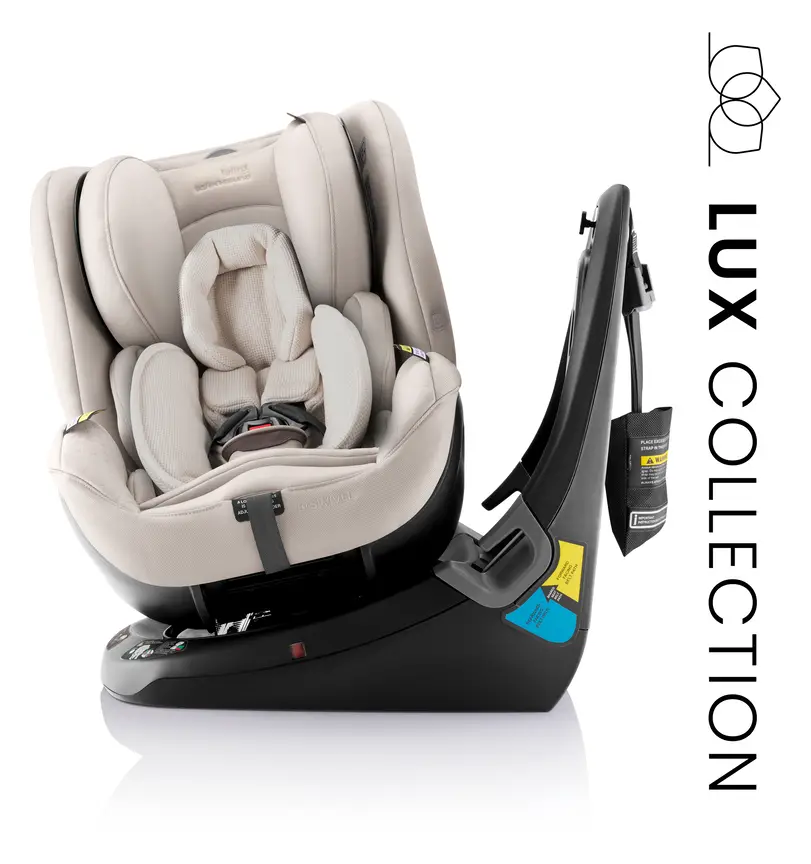
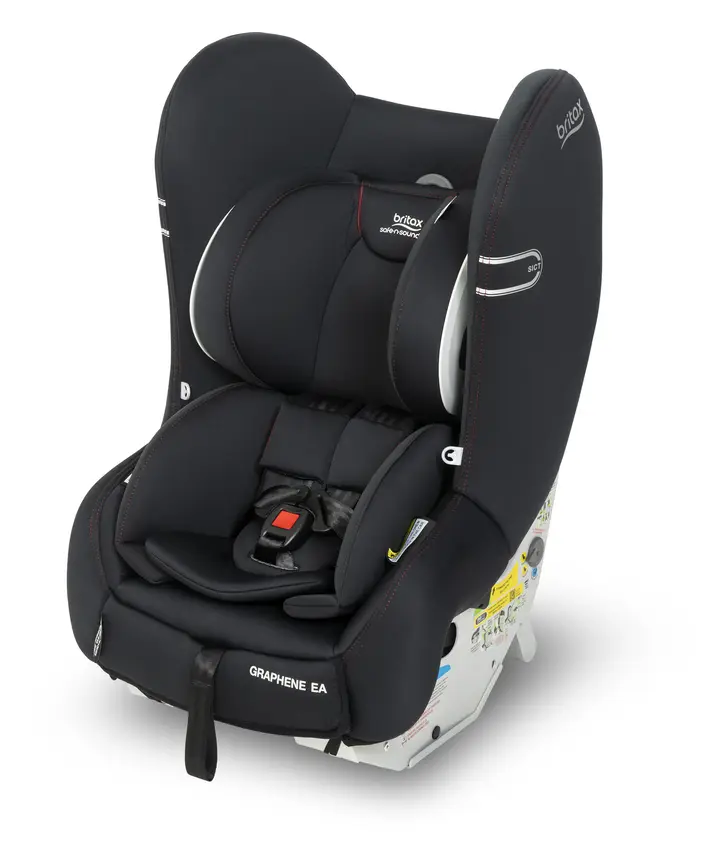
Britax Safe-n-Sound Graphene EA
Britax's Australian convertible seat with SICT side-impact technology, designed to reduce crash energy reaching your child's chest.
Age stages and when to stop using a car seat on a stroller
Car seat stroller adapters are only for the first stage of life. They are not meant to replace a normal stroller seat or bassinet.
| Stage | What is happening | Best stroller setup |
|---|---|---|
| Newborn to around 3 months | Very weak neck control. Heavy head. Sleeps often. | Flat stroller bassinet or lie-flat seat is best for walks. Keep car seat adapter trips short. |
| Around 3 to 6 months | Stronger neck control, starting to look around and reach. | Move to the stroller seat once your baby meets the stroller's age or head-control guide. |
| Around 6 to 12 months | Sits up well, gets heavier, outgrows infant capsule limits. | Normal stroller seat with 5-point harness. Pack the adapters away. |
Every infant car seat has strict height and weight limits, and sometimes shoulder-height markers. Once your baby reaches any one of those limits, they must stop using the infant car seat altogether. That also means stopping use of the stroller adapters.
Why car seats are not for long sleep
Health and safe-sleep groups across Australia, the UK, the US and Canada give the same clear warning. Car seats keep babies safe in moving cars, but they are not safe beds.
- Red Nose (Australia) warns parents to take a sleeping baby out of their car seat as soon as they get home, and not to leave babies to sleep in capsules for long periods.
- The Lullaby Trust (UK) advises taking breaks on long car trips and moving babies to a firm, flat sleep surface when not travelling.
- The American Academy of Pediatrics (US) says sitting devices like car seats and strollers are not recommended for routine sleep.
- Health Canada and the Canadian Paediatric Society also tell parents never to let a baby sleep unattended in a car seat outside the car, and to move them to a flat crib or bassinet as soon as possible.
In a semi-upright car seat, a young baby's head can tip forward. A flat bassinet or a fully reclined stroller seat lets your baby lie flat on their back with a clear airway. Save the adapter setup for short hops from the car into a shop or appointment.
Safety standards and official advice in Australia, the UK, the US and Canada
Strollers and infant car seats are covered by strict safety rules in all four countries. Adapters sit between these two products, so both sets of rules matter.
| Country | Stroller and adapter bodies & rules | Car seat bodies & rules | Key advice for parents |
|---|---|---|---|
| Australia | ACCC / Product Safety Australia, Standards Australia (AS/NZS 2088), Kidsafe, Red Nose | ACCC / Product Safety Australia, Standards Australia (AS/NZS 1754), Raising Children Network | Check for AS/NZS 2088 on prams and AS/NZS 1754 on capsules. Always use the stroller tether strap and brake. |
| United Kingdom | Office for Product Safety and Standards (OPSS), RoSPA (BS EN 1888) | UK Government, RoSPA, The Lullaby Trust, NHS (R129 and R44) | Look for BS EN 1888 on pushchairs and R129 (or valid R44) labels on car seats. Keep car-seat stroller trips short. |
| United States | Consumer Product Safety Commission (CPSC) (ASTM F833), AAP | NHTSA, CPSC, AAP (FMVSS 213) | Check CPSC recall lists and look for ASTM F833 on strollers and FMVSS 213 on car seats. Never use for routine sleep. |
| Canada | Health Canada (national stroller and carriage safety rules) | Transport Canada, Health Canada, Canadian Paediatric Society (CMVSS 213) | Buy seats sold for Canada with the national safety mark under CMVSS 213. Check Health Canada recalls before buying used gear. |
One rule catches many travellers and online shoppers out. Car seat standards differ by country. A capsule bought in the US under FMVSS 213 or in the UK under R129 is not legal to use in a car in Australia, which requires AS/NZS 1754. Likewise, an Australian capsule is not legal for road use in Canada under CMVSS 213.
Even if an adapter physically fits an imported car seat onto your stroller, never use an unapproved car seat in your car. Always buy a car seat certified for the country where you drive.
Product Safety Australia (ACCC), OPSS in the UK, CPSC in the US and Health Canada also publish product recall lists. Check those lists before you buy second-hand strollers, car seats or adapters. Some older adapters have been recalled because locking pins cracked or released without warning.
Common mistakes parents make with stroller adapters
Most adapter problems happen during busy days or when parents borrow gear. Watch out for these common mistakes:
- Forcing a near-miss fit: Two adapters can look almost the same. Never file down plastic, bend metal tabs or force a car seat that feels tight or crooked.
- Skipping the harness inside the stroller: Even on a smooth footpath, always buckle your baby into the car seat's 5-point harness. A bump or kerb can tip an unbuckled baby right out of the seat.
- Hanging heavy bags on the handlebar: A car seat sits higher on a stroller than a normal seat. That raises the centre of gravity. Hanging a heavy nappy bag on the handle can tip the whole stroller backwards.
- Buying cracked second-hand adapters: Plastic ages in hot car boots. Look closely at used adapters for white stress marks, hair-thin cracks, rusted springs or sticky release buttons. If you cannot check their history, buy new ones.
- Forgetting the brake before lifting the seat: Always lock the stroller parking brake before you click the car seat on or pull it off. Otherwise the stroller can roll away while your hands are full.
- Leaving the baby in the car seat all day: Moving a sleeping baby from car to stroller and back again can leave them curled up for hours. Move them to a flat surface as soon as you can.
- Using mismatched left and right clips: Many brand-specific adapters only lock one way. If one side clicks easily and the other side resists, check the "L" and "R" stamps.
More options, from budget to premium
Real products from our catalogue. We don't show star ratings or review counts; check the current price, stock and reviews on Amazon before you buy.

Britax Safe-n-Sound Hi Liner SG
A high-back booster for about 4 to 8 years. A clip keeps the seatbelt in the right place.

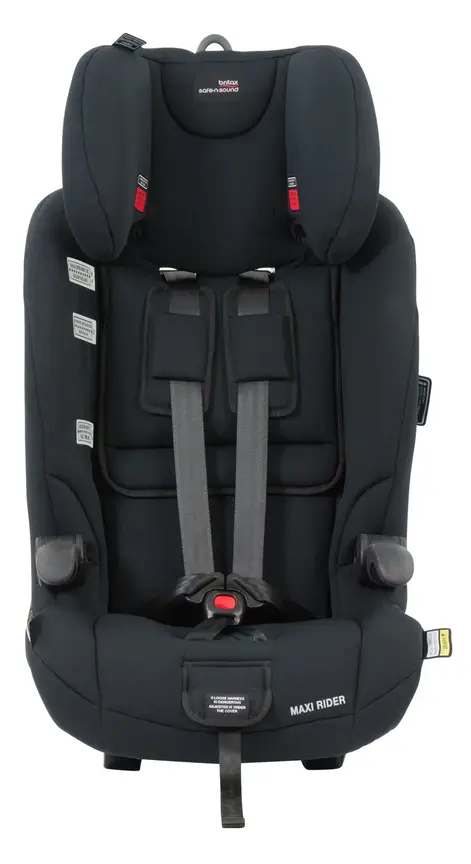
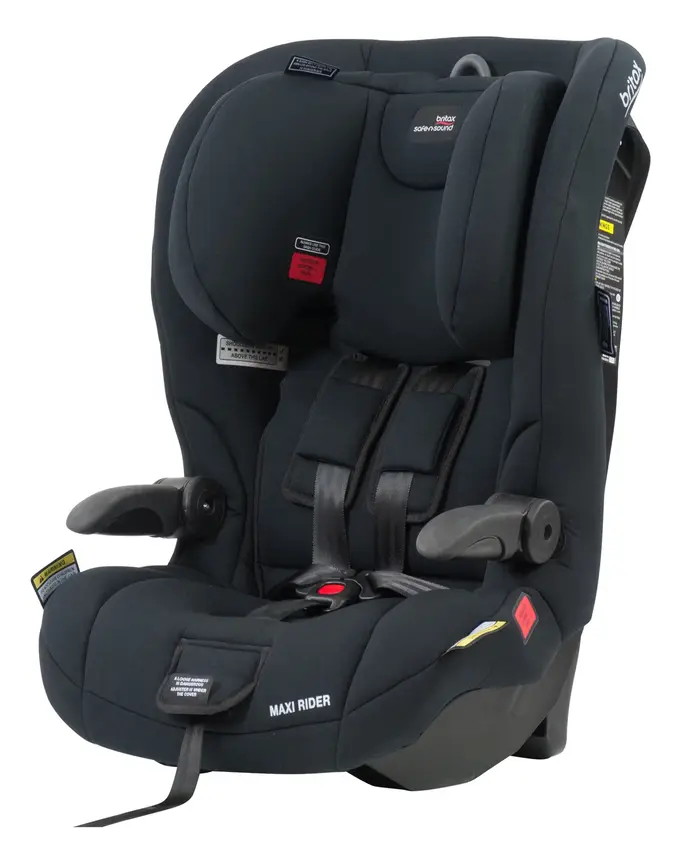
Britax Safe-n-Sound Maxi Rider
A seat with a harness from 12 months to about 4 years. Then it becomes a booster up to 6–8 years.
Read our full review →
Britax Safe-n-Sound Atlas-GRO II Harnessed Car Seat
Harnessed booster seat
Frequently asked questions
Can I use a universal car seat adapter with any infant car seat?
No. Even adapters labelled "universal" only fit a set list of car seat models. Each maker tests their universal bar or strap cradle with specific seats. Always check the maker's fit chart for both your stroller model and your car seat model before buying.
Why did my car seat click, yet still lift off the stroller?
A false click happens when only one side locks, or when dirt blocks the locking pin from sliding all the way in. A seat edge can also snap against the plastic housing without latching. Always look at both lock flags and pull firmly upward on the car seat before you walk.
Do I really need to take the adapters off before folding the stroller?
In most cases, yes. Most strollers are not designed to fold with adapters attached. Forcing the fold can crack the plastic adapters, bend the stroller frame or stop the folded latch from locking. Only leave them on if your stroller manual clearly says that exact adapter can stay on during folding.
Are brand-specific adapters safer than universal adapters?
Both types must pass safety checks when sold by a reputable maker as an approved match. However, brand-specific adapters usually give a tighter fit, less wobble, clearer lock flags and a preset seat angle. That makes them harder to fit wrong on a tired day.
How long can my newborn stay in a car seat clicked onto a stroller?
Keep trips short. Red Nose (Australia), The Lullaby Trust (UK), the American Academy of Pediatrics (US) and Health Canada all advise against leaving babies to sleep in car seats for long stretches. Use a flat bassinet or a lie-flat stroller seat for longer walks and daytime naps.
Can I use a car seat adapter that came from another country?
Be very careful. A stroller frame and car seat latch may differ between regions, even when the brand name looks the same. Also remember that a car seat must meet the legal car-seat standard of the country you drive in, such as AS/NZS 1754 in Australia, R129 in the UK, FMVSS 213 in the US or CMVSS 213 in Canada.
How do I know when to stop using car seat stroller adapters?
Stop using the adapters as soon as your baby outgrows their infant car seat by height, weight or shoulder-height markers. You can also stop earlier. Many parents switch to a flat bassinet or a reclined stroller seat well before the capsule is outgrown, especially once their baby enjoys looking around.
Sources
- Product Safety Australia – Prams and strollers guide
- Product Safety Australia (ACCC) – Car seats guide
- Red Nose Australia – Take your sleeping baby out of their car seat when you get home
- The Lullaby Trust (UK) – Car seats
- RoSPA (UK) – Child car seats
- HealthyChildren.org (AAP) – Car seats: information for families
- NHTSA (US) – Car seats and booster seats
- Transport Canada – Stage 1: rear-facing seats
Related guides
More Car Seats & Travel →
Taking a Travel Stroller on a Plane: Cabin Baggage Sizes, Folding and Safety

Overnight Sleep-Approved Stroller Bassinets: Breathable Bases, Stands, and Travel Safety
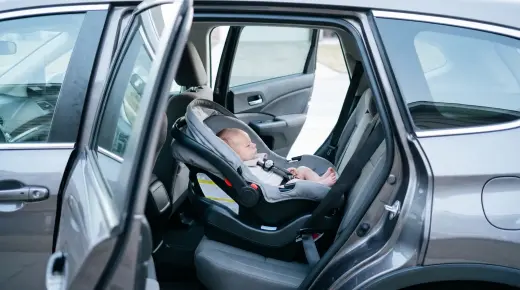
Convertible Car Seat vs Infant Capsule: Safety, Cost Per Year and Your Baby's Back