Dining Table Booster Seats: Chair Straps, Child Harnesses and Non-Slip Bases Explained
A dining booster seat lifts your toddler to table height. How chair straps, 3-point harnesses and non-slip bases work, when to switch from a high chair, and…

On this page
- What a dining booster seat is
- The three parts that keep a booster safe
- When is a child ready for a booster?
- Booster seat or high chair? Side by side
- Choosing the right adult chair
- Getting a good fit and posture
- Standards and advice by country
- Using a booster safely: step by step
- Eating safely in a booster
- Using a booster away from home
- Buying a second-hand booster
- By age and stage
- How to choose a dining booster: checklist
- Common mistakes
- Cleaning and care
- FAQ
- Sources
Short answer: A dining booster seat is a small seat that sits on an ordinary kitchen or dining chair and lifts your child up to table height. It has two sets of straps: chair straps that hold the booster tight to the adult chair, and a child harness (often a 3-point lap-and-crotch strap) that keeps your child from sliding or climbing out. A grippy, non-slip base helps it stay put. Use both sets of straps every time, put it only on a sturdy chair with four legs on the floor, and stay with your child while they eat.
Key points
- Falls are the most common injury with high chairs, often when a child tries to stand up or climb out. Product Safety Australia gives this warning, and the same risk applies to boosters.
- Strap the booster to the chair and strap your child into the booster, every meal.
- Use a solid, four-legged chair. Never use a booster on a stool, a folding chair, a chair with wheels, or a bench without a back.
- A 5-point harness gives the most protection; a 3-point harness stops sliding and standing in most toddlers.
- Your child should be able to sit up well on their own before using a booster.
- Sit with your child while they eat. Choking can happen fast and silently.
What a dining booster seat is
A dining booster seat (also called a feeding booster, chair booster or table booster) is a moulded plastic or foam seat that you place on top of a normal adult chair. It raises your child so they can reach the table and eat with the family. Many come with a removable tray, so you can use them before your child is ready to eat right at the table.
A dining booster is not the same as a car booster seat. Car boosters are tested for crashes and are used with a vehicle seatbelt. Never use a dining booster in a car, and never use a car booster at the table as a feeding seat.
Boosters are popular because they are small, cheap and portable. They take up much less space than a high chair, and you can take them to a grandparent's house or on holiday. They also let toddlers join the family at the table, which many children love.
The three parts that keep a booster safe
1. Chair straps
Most boosters have two straps: one goes around the back of the adult chair, and one goes under the seat of the chair. HealthLink BC in Canada describes booster seats as being set on a regular chair and held in place with a safety belt that normally goes around the back and bottom of the chair. Pull both straps tight, so the booster can't slide forward or tip off the side. Push the booster firmly with your hand after strapping: it shouldn't shift.
Some boosters have only a back strap. Two straps are better, because the bottom strap stops the front edge from lifting when your child leans forward.
2. The child harness
The harness holds your child in the booster. There are two common kinds:
- 3-point harness: a waist belt plus a strap between the legs. It stops your child from sliding down and out under the tray and makes standing up much harder.
- 5-point harness: adds shoulder straps. Product Safety Australia says the 5-point harness is the safest restraint for high chairs, because it stops a child from standing up or slipping down.
For younger toddlers who wriggle and try to stand, a 5-point harness is better. For older toddlers who sit well, a 3-point harness is common and works when it is fastened snugly every time. HealthLink BC also notes that any straps that cross over the chest should sit low enough that they can't reach the child's neck.
3. A non-slip base
A rubber or silicone base, or grippy feet, helps the booster stay in place on shiny wooden or vinyl chairs. It doesn't replace the chair straps, but it stops small slips and twists. Check the grip pads now and then; they wear and pick up crumbs.
When is a child ready for a booster?
There isn't one magic age. Look at your child's skills instead.
- Sits steadily without help. Health Canada says to use a high chair only once your child can sit upright on their own. The same goes for boosters.
- Can hold their head and trunk up through a whole meal. Slumping to the side is a sign they still need a high chair with more support.
- Fits the booster's age and weight limits. Check the label.
- Can stay seated with the harness on. If your child stands up in the booster despite the harness, go back to the high chair for a while.
Many families use a high chair for babies starting solids at around 6 months, then move to a booster in the toddler years, often somewhere between 18 months and 3 years. Others use a booster with a tray from earlier, once the baby sits well. Some children go straight from a high chair to a "grow with me" chair with an adjustable seat and footrest.
Booster seat or high chair? Side by side
| Feature | Dining booster seat | High chair |
|---|---|---|
| Best age | Toddlers who sit steadily | From starting solids |
| Space needed | None beyond the chair | Its own floor space |
| Portability | Easy to carry and travel with | Bulky (some fold) |
| Stability | Depends on the adult chair and straps | Depends on the base; wide bases are steadier |
| Harness | Usually 3-point; some 5-point | Often 5-point |
| Footrest | Rarely; feet often dangle | Many have adjustable footrests |
| Family meals | Child sits at the table | Child sits at a tray or pulled up to the table |
| Cleaning | Small and easy to wipe | More parts to clean |
| Price | Usually cheaper | Usually more expensive |
Car Seats & Capsules worth a look
Real products from our catalogue. We don't show star ratings or review counts; check the current price, stock and reviews on Amazon before you buy.
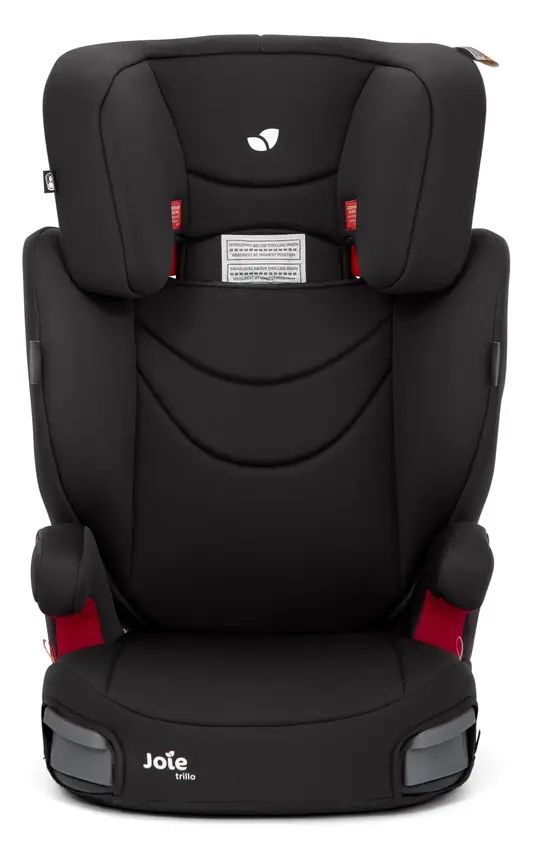
Joie Trillo
A high-back booster with a 7-position headrest that grows with your child.

Babylove ezymove Booster
A very light, low-cost booster for about 4 to 8 years. It folds flat for storage.
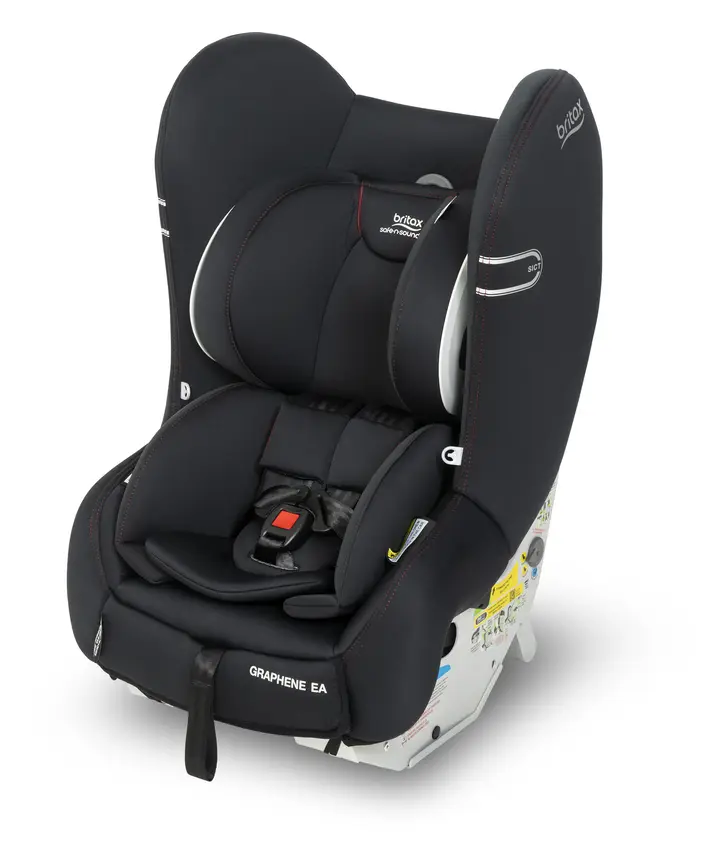
Britax Safe-n-Sound Graphene EA
Britax's Australian convertible seat with SICT side-impact technology, designed to reduce crash energy reaching your child's chest.

Britax Safe-n-Sound Hi Liner SG
A high-back booster for about 4 to 8 years. A clip keeps the seatbelt in the right place.
Choosing the right adult chair
The booster can only be as steady as the chair under it. Check the chair before you strap anything on.
- Four legs, flat on the floor. No wobbles. Test by rocking the chair gently.
- A solid, flat seat. Not padded so deep that the booster sinks or tilts.
- A back the straps can go around. Very wide or very tall chair backs may be too big for the strap.
- No wheels, no swivel, no folding. Office chairs, bar stools and folding chairs can roll, spin or collapse.
- Not too high. The booster should bring your child to table height. If the chair is a bar stool or counter stool, it's too high and the fall would be further.
- Away from walls and benches. Health Canada warns that children can tip a high chair by pushing against walls or cupboards. A booster chair can tip the same way. Leave space behind and beside it.
- Away from hazards. Keep it clear of the stove, kettles, hot drinks, windows and blind or appliance cords.
Getting a good fit and posture
A good seated position helps your child eat well and safely. Aim for:
- Elbows at about table height, so your child can reach their plate without stretching or hunching.
- Back supported against the booster's back.
- Hips and knees bent at about a right angle, if possible.
- Feet supported. Dangling feet are common in boosters. Some children sit better and fidget less with a small step or footrest under their feet. A few boosters have footrests; for others, a sturdy box on the floor can help, as long as it can't slide.
- Upright for eating. Children should always sit upright to eat, not reclined. healthdirect lists eating while moving or lying down among things that can raise choking risk in young children.
Standards and advice by country
| Country | Rules | Who to check |
|---|---|---|
| Australia | No mandatory standard for high chairs; Product Safety Australia gives a safety guide. CHOICE tests portable seats against parts of the voluntary high chair standard, AS 4684. | Product Safety Australia (ACCC) |
| United Kingdom | General product safety law; the voluntary European standard BS EN 14988 covers high chairs | OPSS, RoSPA |
| United States | Mandatory federal standards for high chairs (in force since 2019) and for booster seats, set by the CPSC | CPSC |
| Canada | General product safety law; Health Canada guidance on high chairs and fall and entrapment hazards | Health Canada, HealthLink BC |
Because the rules differ, look for a booster made for your market, with clear instructions, a strong harness and two chair straps. Check your country's recall site for the brand and model before you buy, especially if it is second-hand.
Using a booster safely: step by step
- Check the chair is sturdy and flat, with four legs on the floor.
- Place the booster right at the back of the chair seat.
- Fasten the back strap around the chair back and pull it tight.
- Fasten the bottom strap under the chair seat and pull it tight.
- Push the booster forward, back and sideways. It should not move.
- Lift your child in. Don't let them climb up on their own.
- Fasten the harness and adjust it so it's snug but comfortable. You should fit no more than a couple of fingers under the waist strap.
- Attach the tray, if you use one, and check it clicks into place. A tray is not a restraint; always use the harness too.
- Push the chair in so your child can reach the table, leaving a gap so they can't push off with their feet.
- Stay with your child the whole meal.
- Lift your child out when they've finished, before they try to get out themselves.
Eating safely in a booster
A booster helps with posture, but it doesn't make eating safe by itself. Young children are at higher risk of choking because they are still learning to chew and swallow. Sit with your child, keep mealtimes calm, and make sure they sit upright and don't eat while walking, playing or lying down. Cut round foods such as grapes and cherry tomatoes into quarters and avoid hard foods like whole nuts for young children, as health services in all four countries advise. healthdirect explains the signs of choking and what to do. Doing a first-aid course that covers babies and young children is one of the best things you can do before your child starts eating at the table.
Side by side: more car seats & capsules to compare
Real products from our catalogue. We don't show star ratings or review counts; check the current price, stock and reviews on Amazon before you buy.

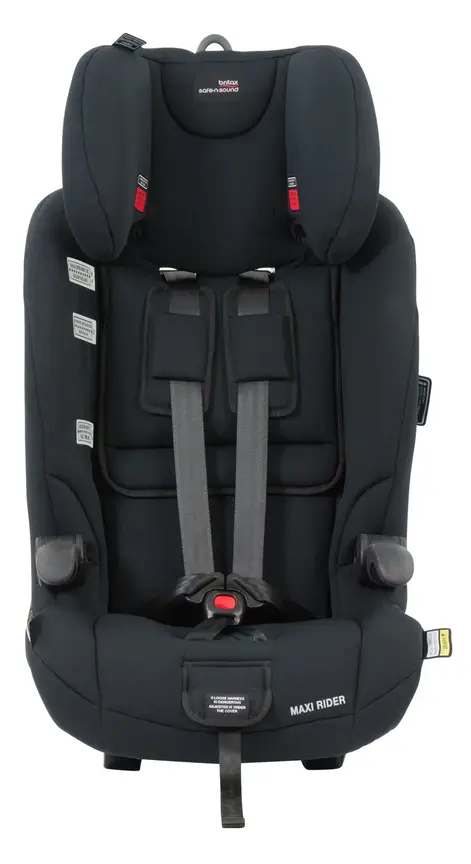
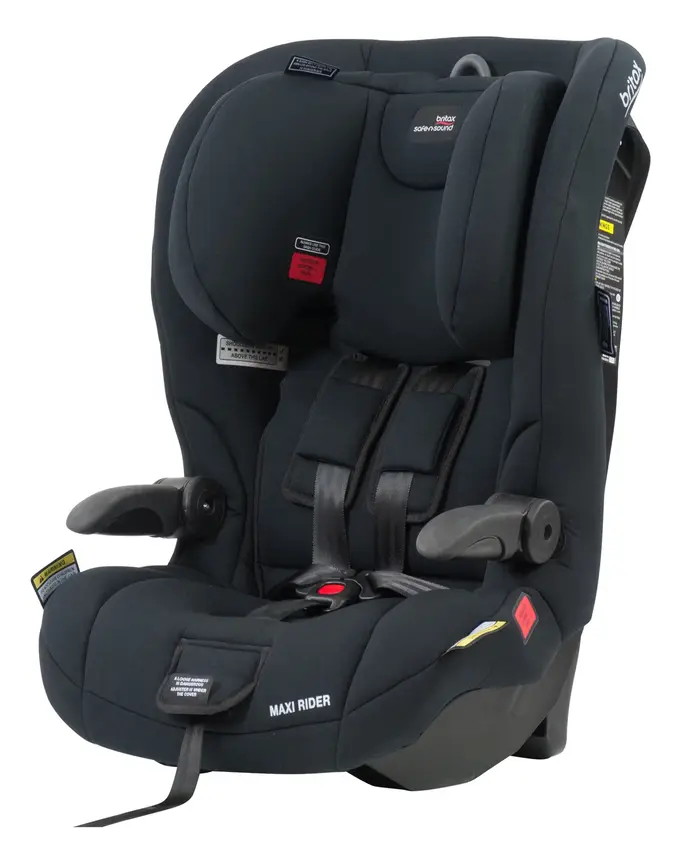
Britax Safe-n-Sound Maxi Rider
A seat with a harness from 12 months to about 4 years. Then it becomes a booster up to 6–8 years.
Read our full review →
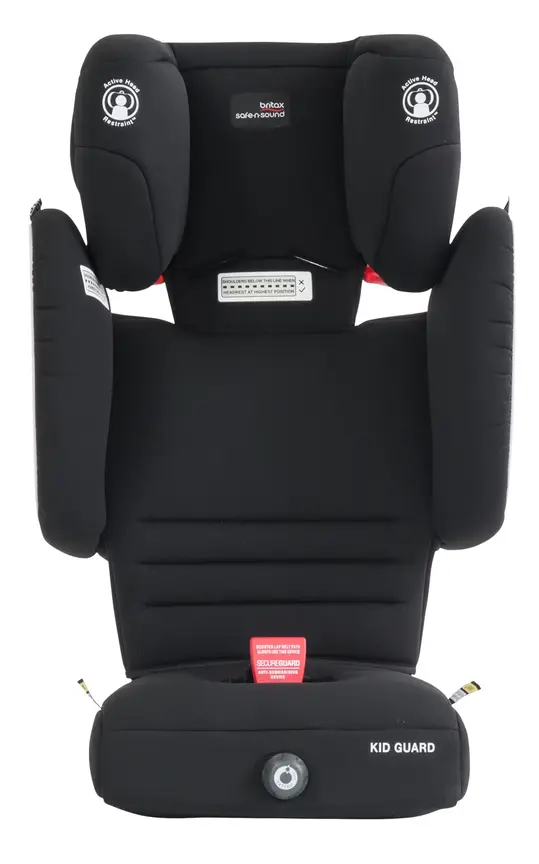
Britax Safe-n-Sound Atlas-GRO II Harnessed Car Seat
Harnessed booster seat

Using a booster away from home
A folding booster is handy at a grandparent's house, a café or a holiday rental. The same rules apply, but you'll meet more unknown chairs.
- Check each new chair. Café chairs can be light, tippy or on a slope. Choose the sturdiest chair in the room.
- Watch out for chair backs. Some modern chairs have very wide, thick or curved backs the strap won't fit around. If you can't strap it tightly, don't use it on that chair.
- Keep it away from walkways. In cafés and restaurants, staff carry hot drinks and food. Sit your child away from the aisle and push hot cups out of reach.
- Bring wipes for the buckles. Sticky buckles can stop clicking shut.
- Restaurant high chairs: if you use one instead, check it's stable, use the harness and wipe the tray. Not all restaurant high chairs have working straps.
Buying a second-hand booster
Second-hand boosters can be good value. Product Safety Australia's high chair guide says to check that a second-hand product hasn't been recalled, comes with instructions, and has all its parts in good working order, with a proper harness. Look for cracks in the plastic, straps that are frayed or won't tighten, buckles that don't click, and missing feet or grip pads. Search the brand and model on your country's recall site before you buy. If the harness is missing or broken, don't use the booster.
By age and stage
Around 6 to 12 months
Most babies are best in a high chair with a 5-point harness and footrest. Some boosters with a tray and 5-point harness suit babies who sit very well, but check the maker's minimum age.
About 1 to 3 years
The most common booster years. Toddlers are busy and want to climb, so a snug harness and two chair straps matter most. Expect your child to test limits; keep the harness on even if they protest.
About 3 years and up
Many children sit at the table in a booster without the tray. Some boosters remove the harness for older children who stay seated reliably. Follow the maker's age and weight limits, and move to an adult chair once your child can sit at the table at a good height and stay seated.
How to choose a dining booster: checklist
- Two chair straps (back and bottom) that are easy to tighten.
- A harness that suits your child: 5-point for younger toddlers, at least 3-point for older ones.
- A non-slip base or grippy feet.
- Height settings, so you can match it to your table.
- A removable tray if your child isn't ready for the table yet.
- Easy to wipe clean, with no deep crevices where food hides.
- Clear age and weight limits and instructions.
- No small parts that could come off.
- Folds flat if you want to travel with it.
- Not on any recall list.
Common mistakes
- Skipping the chair straps because the booster "seems fine".
- Skipping the child harness for a quick snack.
- Using a booster on a bar stool, folding chair or office chair.
- Letting your child climb in and out on their own.
- Using the tray as the only thing holding your child in.
- Pushing the chair right up to the table so your child can push off with their feet and tip the chair back.
- Leaving your child alone in the booster, even for a moment.
- Using a dining booster in the car.
More options, from budget to premium
Real products from our catalogue. We don't show star ratings or review counts; check the current price, stock and reviews on Amazon before you buy.
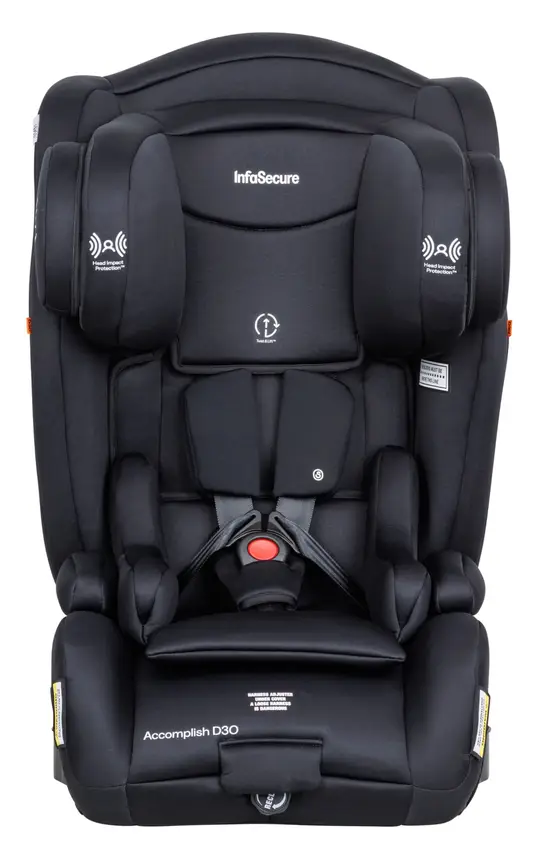
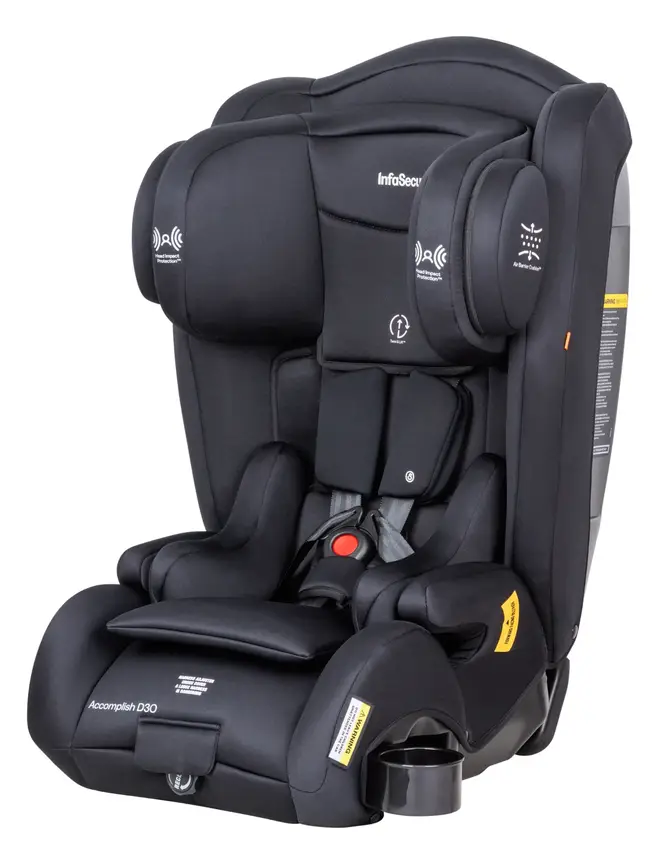
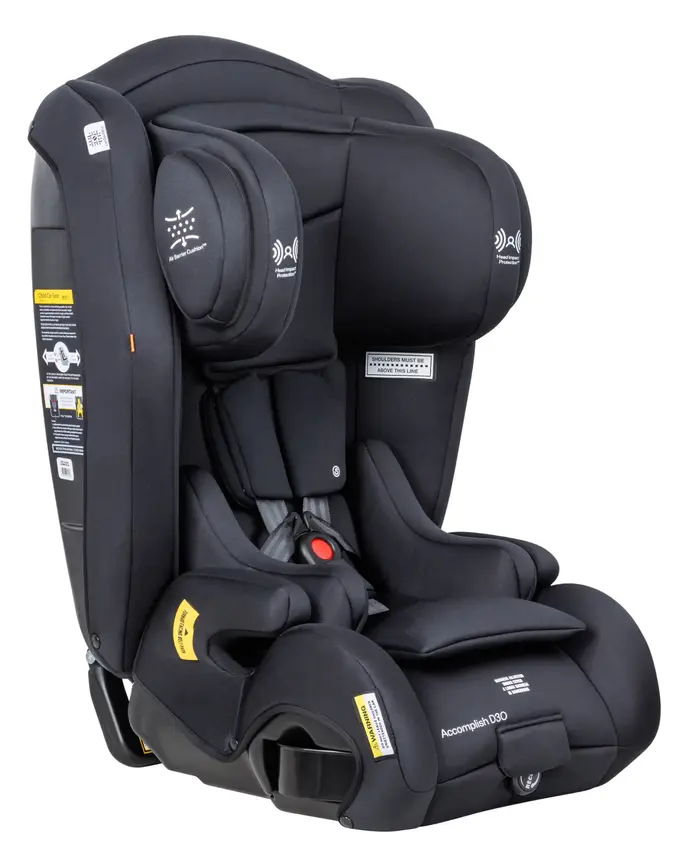
InfaSecure Accomplish D30
A seat with a built-in 6-point harness that can be used up to a large 8-year-old.
Read our full review →
InfaSecure Roamer II Convertible Booster Seat
Harnessed booster seat

Mother's Choice Kin AP Convertible Booster Seat
Harnessed booster seat
Cleaning and care
Wipe the booster and straps after each meal. Food stuck in buckles can stop them clicking shut. Once a week, take off the tray and any removable cover and wash them as the maker says. Check the straps for fraying and the buckles for cracks. Replace the booster if the straps won't tighten properly or the plastic cracks.
FAQ
Is a 3-point harness safe enough?
For many toddlers who sit well, a snug 3-point harness stops sliding and standing. For younger or very active toddlers, a 5-point harness is safer. Product Safety Australia says the 5-point harness is the safest choice for high chairs.
Can I use a booster without the chair straps?
No. The chair straps stop the booster from sliding or tipping off the chair. Use both straps every time.
What age can my child use a booster seat at the table?
When they can sit steadily on their own and fit the maker's age and weight limits. Many children use one between about 18 months and 4 years, but skills matter more than age.
Can I use a booster on a bench seat?
Only if the booster's straps can go securely around the bench and it has a back. Most benches don't, so a chair is better.
Are foam boosters safe?
Foam boosters are light and soft, but they need straps and a harness to be safe. Check they don't squash or tilt when your child sits in them.
Can I use a dining booster in the car?
No. Dining boosters aren't tested for crashes. In the car, use a car seat or car booster approved for your country.
Sources
Related guides
More Car Seats & Travel →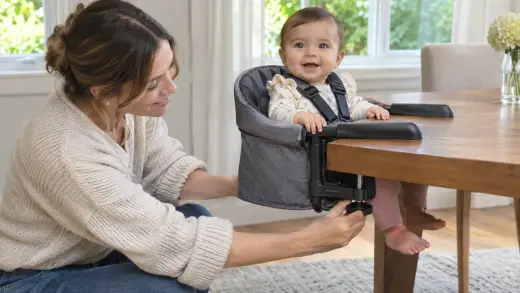
Clip-On Table High Chairs: Safe Clamping, Table Limits and Travel Dining

Convertible Car Seats from Birth to About 4: Rear-Facing for Longer, Explained Simply
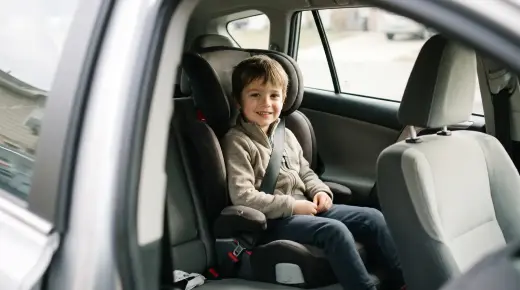
Booster Seats for Children Aged 4 to 8: Sash Guides, Side-Impact Tests and How Ratings Work