













Three-Wheel or Four-Wheel Stroller: How to Choose
Compare three-wheel and four-wheel strollers by handling, stability, folding and daily use. Check fit, age guidance and safety before choosing.
On this page
- What three-wheel and four-wheel mean
- How to choose for your daily routine
- Three wheels or four: side-by-side comparison
- Handling, turning and control
- Ride comfort and different surfaces
- Stability and safe use
- Newborns, babies and older children
- Jogging strollers need extra care
- Folding, lifting and storage
- How to test a stroller before buying
- Safety guidance in Australia, the UK, the US and Canada
- Second-hand strollers and recalls
- Common mistakes to avoid
- Frequently asked questions
- Simple final checklist
- Sources
Short answer: Choose a stroller by how you will use it. Three-wheel models often have a large front wheel and can be easier to steer over uneven paths. Four-wheel models come in many shapes, including compact city strollers and larger everyday prams. Wheel count alone cannot tell you which stroller is safer, lighter, smaller or right for your child. Try the exact model, check its instructions, and see how it fits your routes, home and car.
In Australia, Product Safety Australia (part of the ACCC) gives pram and stroller safety guidance. In the UK, check the Office for Product Safety and Standards and local product advice. In the US, the Consumer Product Safety Commission oversees product safety. In Canada, check Health Canada recalls and alerts. Rules and product standards can differ between countries.
What three-wheel and four-wheel mean
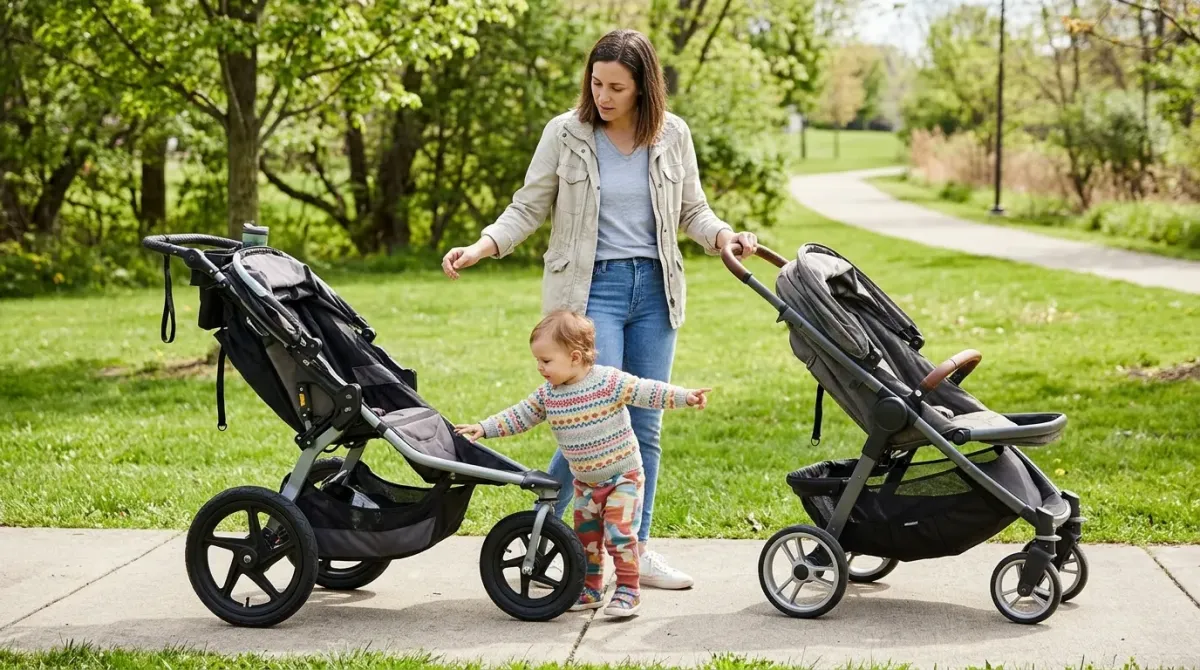
A three-wheel stroller usually has one wheel at the front and two at the back. The front wheel may swivel for turns. Some models let you lock it straight. The rear wheels are often larger than the front wheel.
A four-wheel stroller has two wheels at the front and two at the back. The front pair may swivel together. Wheel sizes and frame shapes vary. Some four-wheel models are built for small spaces. Others have larger wheels for everyday walks.
These are broad designs. They do not describe every stroller. Some three-wheel strollers are made for jogging. Others are made for ordinary walks. Many four-wheel models can handle park paths. Always check the maker's intended use and age limits.
The number of wheels does not prove quality. It does not prove that a stroller is suitable for running, sand, gravel or a newborn. Look at the whole design, the instructions, and your own needs.
How to choose for your daily routine
Start by listing where you expect to go. Think about pavements, public transport, lifts, shops, parks and rough paths. Consider how often you will lift the stroller into a car. Note where it will live at home.
- For narrow paths and busy shops: check the full width, turning space and handle position. A narrow four-wheel stroller may suit some routes. A three-wheel model may also fit. Measure doorways rather than guessing.
- For uneven paths: look at wheel size, tyres, suspension and the maker's terrain guidance. A larger front wheel can roll over bumps more easily. It does not make every model an all-terrain stroller.
- For buses and trains: check the folded size, weight, folding steps and whether you can lift it alone. Try the fold in a shop if possible.
- For a small home or car boot: measure the storage space. Check the folded stroller with its wheels and any seat attached. Some models let you remove parts; that adds steps.
- For more than one child: look at the exact model's child capacity and allowed arrangement. A toddler board or second seat can change balance and handling.
- For jogging: use only a stroller that its maker says is designed for jogging. Follow its age and head-control guidance. A three-wheel shape by itself does not make a stroller safe for running.
Write down the three things that matter most to your family. For example: fits a small lift, folds easily, and handles gravel. This makes comparisons clearer than choosing by appearance.
Three wheels or four: side-by-side comparison
| Feature | Three-wheel design | Four-wheel design | What to check |
|---|---|---|---|
| Turning | A single front wheel can feel easy to steer. | Two front wheels may turn together or move separately. | Try tight turns and check the turning circle. |
| Uneven ground | A large front wheel may roll over bumps well. | Some have small wheels; others have larger wheels. | Test on the type of path you use. |
| Stability | Depends on frame, wheel spacing, load and handle. | Depends on frame, wheel spacing, load and handle. | Use the basket and seat only as instructed. |
| Folded size | Large wheels may take more room on some models. | Some fold small; others remain bulky. | Measure the folded model yourself. |
| Weight | Varies by model and parts. | Varies by model and parts. | Lift it folded and unfolded before buying. |
| Newborn use | Only if the maker approves the seat or bassinet for newborns. | Only if the maker approves the seat or bassinet for newborns. | Check age, weight and recline instructions. |
| Running | Some are designed for jogging; many are not. | Some are designed for jogging; many are not. | Follow the maker's running guidance and age rules. |
| Best choice | May suit routes with bumps or longer walks. | May suit compact storage or everyday errands. | Choose by the exact model and your routine. |
This table describes common design features, not promises. Two strollers with the same wheel count can behave very differently.
Prams & Strollers worth a look
Real products from our catalogue. We don't show star ratings or review counts; check the current price, stock and reviews on Amazon before you buy.
 Reviewed
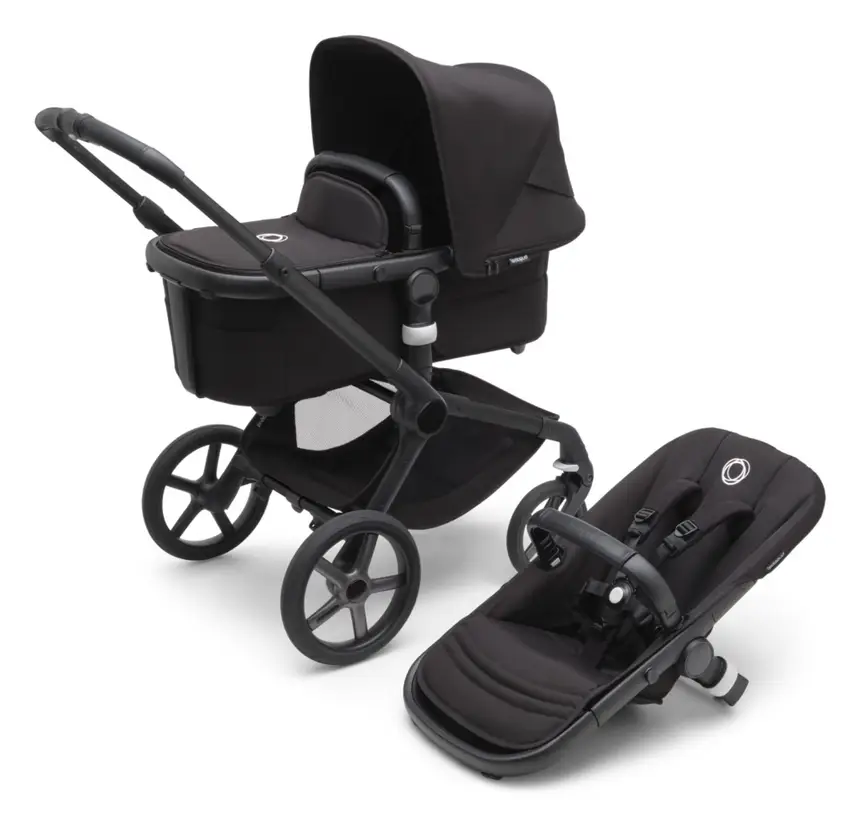
Bugaboo Fox 5
Bugaboo's flagship all-terrain pram: big-wheel suspension ride, one-piece fold, bassinet from birth and a seat rated to 22 kg.
Read our full review →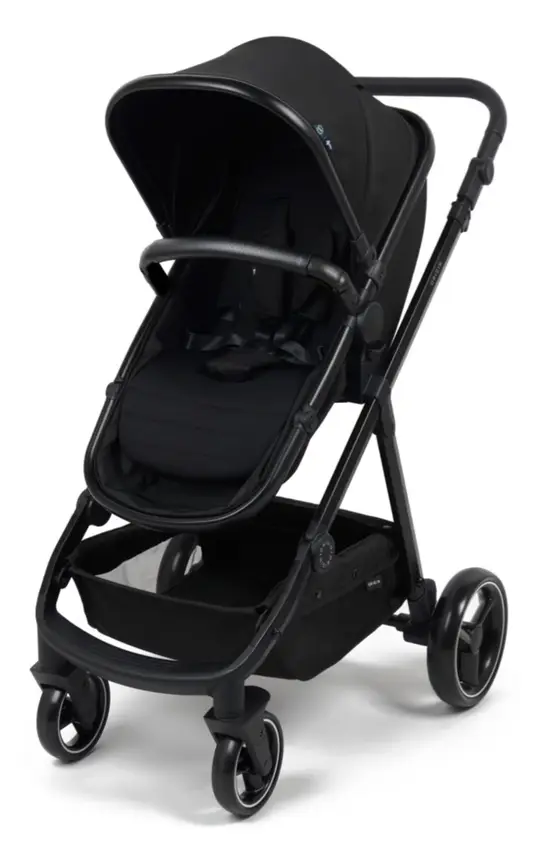
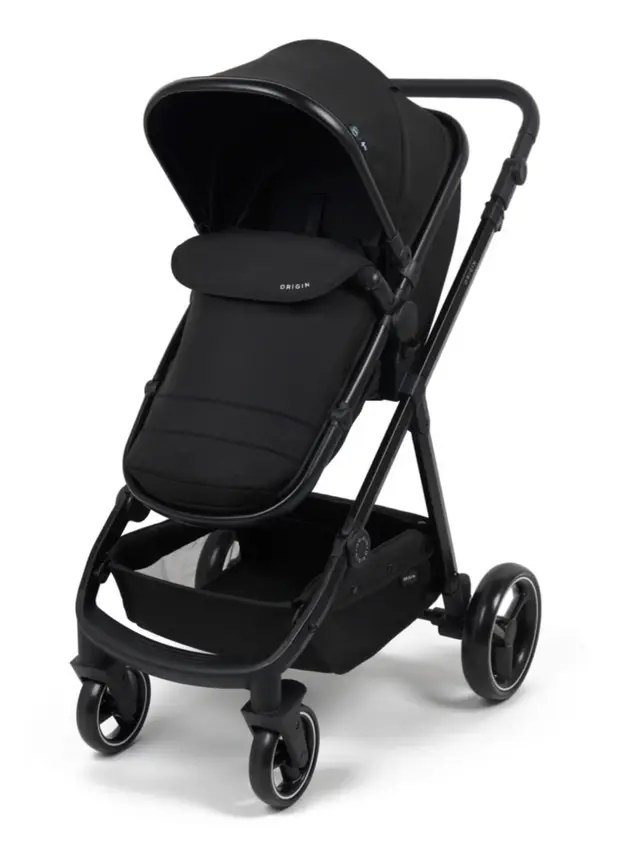
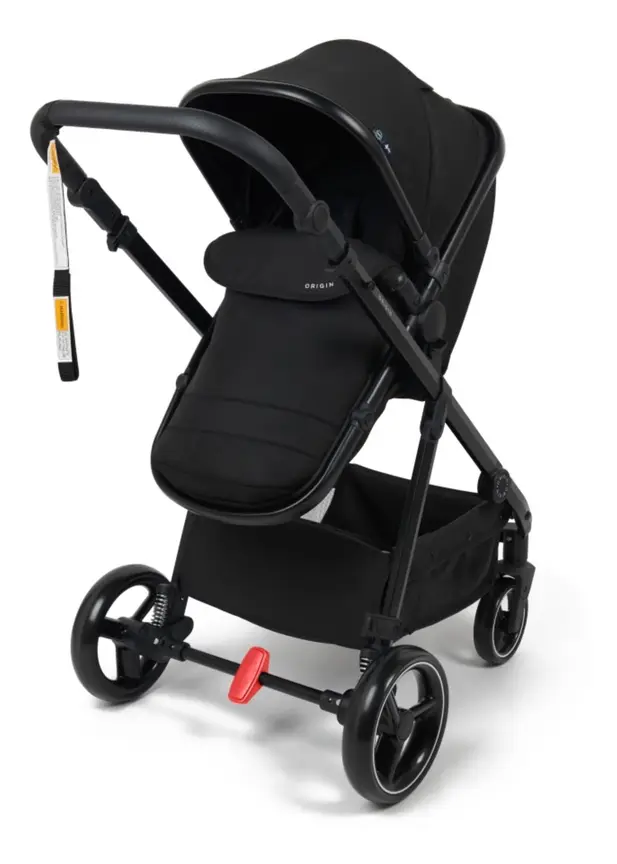
4baby Origin Stroller
A budget pram whose seat turns into a bassinet. The seat can face you or face the world.
Read our full review →
Baby Jogger City Mini GT2
Long-running, lighter all-terrain stroller with a famously simple one-hand strap fold.
 Reviewed
Baby Jogger City Tour 2
A 6.5 kg stroller with a near-flat recline. It folds small and comes with a carry bag.
Read our full review →Handling, turning and control
A single front wheel can make some three-wheel strollers feel nimble. The wheel may swivel for shopping and tight turns. Some models let you lock it in a forward position for longer, straighter routes.
Check how the front wheel locks and unlocks. Read the manual before changing its setting. A wheel left in the wrong mode may make the stroller harder to control on a route.
Four-wheel strollers vary just as much. Some have front wheels that swivel. Some let you lock them straight. A short wheelbase may turn easily, while a wide frame may feel steadier. Try a few turns with the stroller loaded as the maker allows.
Keep one hand on the handle while moving. Do not hang heavy bags from it unless the instructions allow them. Extra weight on the handle can affect balance and may tip the stroller back.
Ride comfort and different surfaces
Comfort depends on more than wheels. Tyres, suspension, seat padding, recline and frame design all matter. Your child's size and the path also change how the ride feels.
Large wheels may pass over cracks and bumps more easily. Air-filled tyres may need care and can lose air. Solid tyres do not need pumping, but may feel different on rough ground. Check the product instructions and maintenance needs.
Small wheels can be handy in shops and on smooth pavements. They may catch more on deep gravel, grass or broken paths. Test on a safe surface like the one you use often. Do not assume that a stroller called “all terrain” can handle every surface.
Sand is difficult for many strollers. A wide beach and soft sand can make pushing hard, whatever the wheel count. Check the maker's guidance and avoid taking a stroller where it could become difficult to control.
Look at the seat too. It should support your child in the way the maker describes. Check the harness fits and adjusts as your child grows. Use the recline only as instructed.
Stability and safe use
Wheel count alone does not tell you how stable a stroller is. Stability depends on its frame, wheel spacing, centre of weight, load and how it is used. A stroller can tip if it is overloaded or used on steep ground.
- Use the harness every time. Follow the manual for fitting and adjustment.
- Keep your child seated while the stroller is moving. Do not let them stand on the seat or footrest.
- Use the parking brake when stopped. Check that it holds before you let go.
- Do not hang shopping bags from the handle. Use the basket within its stated limit.
- Keep hands and fingers clear when folding or unfolding.
- Do not leave a child alone in a stroller, even with the brake on.
- Take care on slopes, kerbs and steps. Hold the handle firmly.
- Do not use a stroller with a broken wheel, loose part or faulty brake.
Follow the maker's weight limits for the seat and basket. Do not add a second child or a ride-on board unless the model permits it. Added weight can change balance and steering.
Newborns, babies and older children
Not every stroller seat is suitable from birth. Some seats do not recline enough for a newborn. Others need a separate bassinet or approved infant insert. Check the maker's instructions for the exact model.
Use only parts made for that stroller. Do not place a car capsule on a frame unless the maker lists that combination as suitable. Follow the instructions for fitting and use.
Many strollers set an age or development stage for sitting upright, jogging or using a seat. Follow those limits. If the guidance depends on head and neck control, ask a health professional if you are unsure about your child.
When your child is older, check the seat's weight and height limits. Adjust the harness as the child grows. Stop using the stroller when the maker's limits are reached.
A stroller is for transport and supervised outings. It is not a substitute for a safe sleep space. If your baby falls asleep, follow safe sleep advice and move them to a suitable flat sleep surface when practical. Do not add pillows or loose bedding to the stroller.
Jogging strollers need extra care
Some three-wheel strollers are designed for running. Their shape can include a fixed front wheel, hand brake or other features. These details differ by model. Three wheels alone do not make a stroller suitable for jogging.
Do not run with a regular stroller unless its maker says it is designed for that use. Follow the maker's minimum age and development guidance. Running can cause bumps and sudden movement. A young baby may need to wait until the maker says the stroller is suitable.
Before each run, check the tyres, brake, wheel locks, harness and frame. Secure your child with the harness. Keep a steady pace and choose a route you can manage. Avoid traffic, steep slopes and rough ground beyond the maker's guidance.
Use the hand strap if the stroller has one and its instructions require it. Keep a firm grip on the handle. Do not attach extra items that can catch or affect control.
Side by side: more prams & strollers to compare
Real products from our catalogue. We don't show star ratings or review counts; check the current price, stock and reviews on Amazon before you buy.


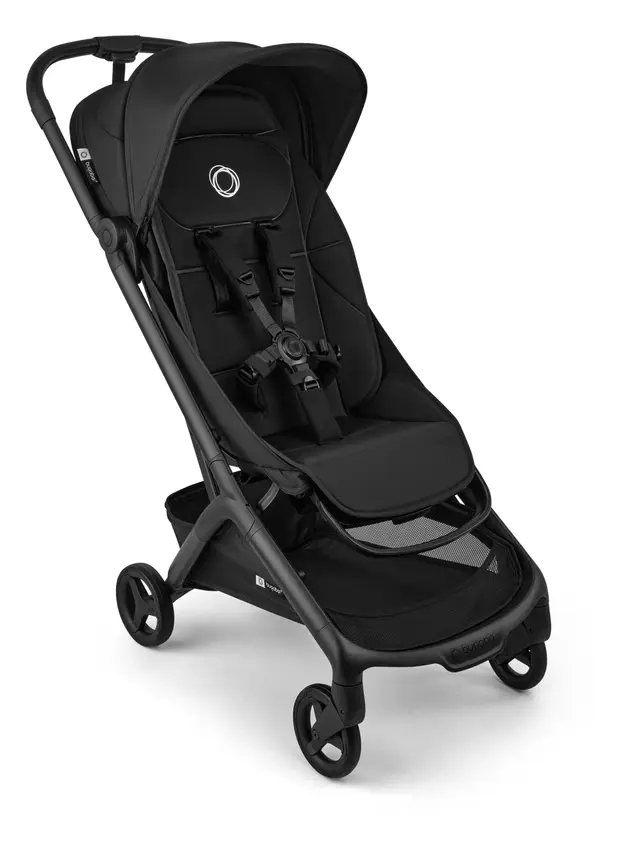
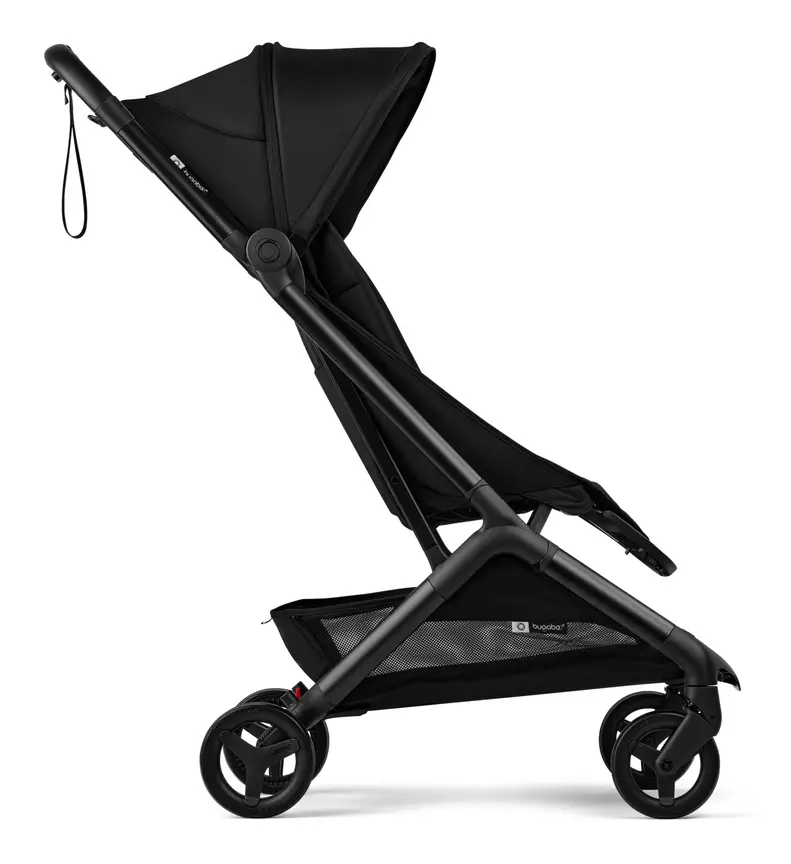


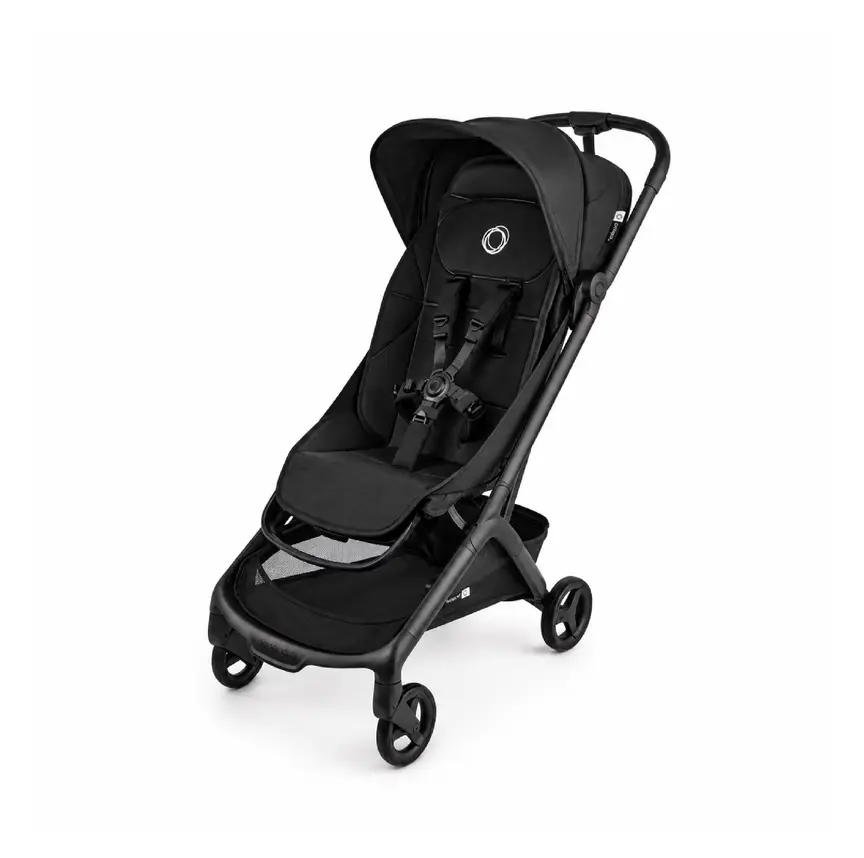
Bugaboo Butterfly
Bugaboo's cabin-friendly compact stroller with a one-second fold — the travel partner to a Fox, not a replacement for it.
Folding, lifting and storage
Try folding the stroller before you buy it. Ask to practise with the exact model. Some folds need two hands or several steps. Some can fold with the seat attached; others cannot.
Check the folded size, including wheels and handle. Measure your car boot, cupboard or hallway. Remember that a compact fold can still be heavy to lift.
Lift with care. Use the frame's intended grip points. Keep your fingers away from hinges and locks. If the stroller feels too heavy, ask whether another person can help or consider a lighter model.
When storing it, keep it where children cannot pull it over or trap their fingers. Make sure it is locked in its folded position if the maker provides a fold lock. Do not store heavy items on top of it.
How to test a stroller before buying
- Check the label and manual. Confirm the model name, age guidance, child limits and intended use.
- Open and fold it. Try the steps yourself. Check that the locks engage.
- Push and turn it. Test a tight corner and a straight line. Notice whether the handle suits your height.
- Test the brake. Set it on level ground and check that it holds.
- Check the harness. See how it adjusts and whether you can secure it correctly.
- Measure it. Compare the open width and folded size with your home and car.
- Try the basket. Check access and the stated load limit.
- Check upkeep. Find out how to clean the fabric and care for the tyres and moving parts.
- Look up recalls. Search the official recall service for your country and the exact model.
Bring your usual car boot measurements or doorway width. Do not rely on a shop display model to show the exact fold or parts included. Confirm what comes with the model you plan to buy.
Safety guidance in Australia, the UK, the US and Canada
Product rules differ by country. A stroller bought overseas may not meet local requirements. Check local guidance and recalls before buying or using a second-hand stroller.
| Country | Official body to check | Useful action |
|---|---|---|
| Australia | Product Safety Australia (ACCC) | Read pram and stroller safety advice. Check recalls and the applicable mandatory requirements. |
| UK | Office for Product Safety and Standards (OPSS) | Check product safety notices, recalls and seller information. |
| US | Consumer Product Safety Commission (CPSC) | Search recalls and review stroller safety information. |
| Canada | Health Canada | Check recalls and safety alerts before use. |
In Australia, the mandatory pram and stroller requirements apply to products sold there. Read Product Safety Australia's consumer guidance. Do not rely on a badge or seller claim alone. Check the product details and instructions.
In the UK, look for clear maker and seller details. Check current product notices through official channels. In the US and Canada, use the relevant national recall services. A recall may affect a particular model or date range.
Standards and rules can change. This guide does not list every legal requirement in each country. If you are buying across borders, ask the local product safety body or seller whether the model meets local rules.
Second-hand strollers and recalls
A used stroller can have hidden wear. Check the frame for cracks, bends or loose joints. Test every lock, wheel, brake and harness. Look for missing parts and damaged fabric.
Ask for the manual and model details. Search the official recall database in your country. Do not use a recalled stroller until the maker's remedy has been completed. If you cannot identify the model or confirm it is safe to use, choose another stroller.
Check that replacement parts are made for the model. Do not tie, tape or modify broken parts. Contact the maker for repair advice.
Common mistakes to avoid
- Choosing by wheel count alone. Try the actual stroller and match it to your routes.
- Assuming three wheels means jogging-ready. Check the maker's intended use and age guidance.
- Assuming four wheels means more stable. Stability depends on the full design and how you load it.
- Buying before measuring. Check doorways, lifts, car boot and storage space.
- Ignoring the fold. A fold that feels easy in a shop may be awkward while carrying a child. Practise it.
- Hanging bags from the handle. Use the basket within its limit. Handle weight can affect balance.
- Using it for a newborn without checking. Confirm that the seat or bassinet is approved for that age.
- Adding unapproved accessories. They can affect fit, balance or safe use. Follow the manual.
- Skipping maintenance. Check wheels, brakes, locks and harnesses regularly.
- Not checking recalls. Search official notices for the exact model before use.
More options, from budget to premium
Real products from our catalogue. We don't show star ratings or review counts; check the current price, stock and reviews on Amazon before you buy.
Bugaboo Butterfly 2
The newer Butterfly. It folds in about one second, has a lay-flat seat and a bigger basket with a back pocket.
Read our full review →

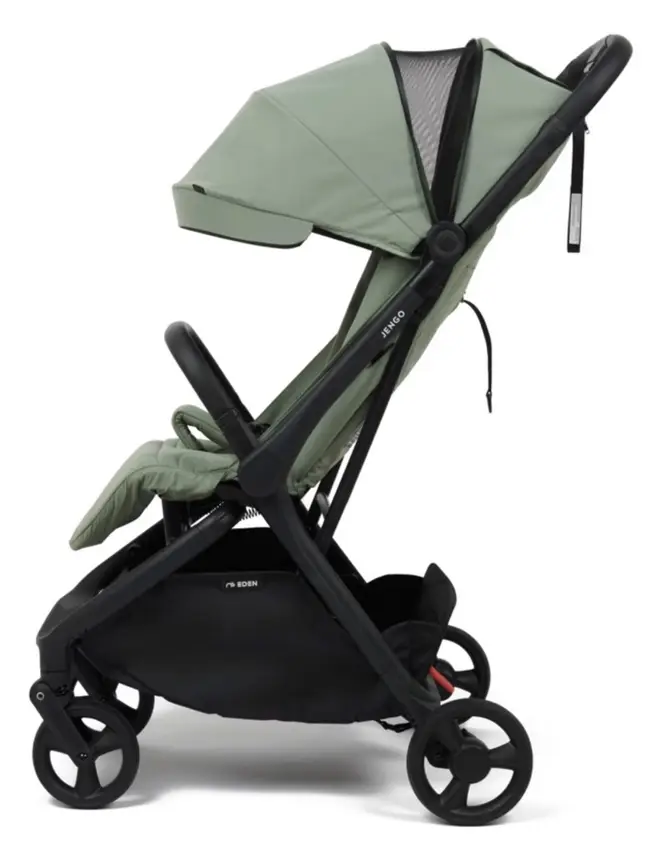
Jengo Eden Compact Stroller
A budget compact stroller from birth to 22 kg. It folds with one hand and has a big basket.
Read our full review →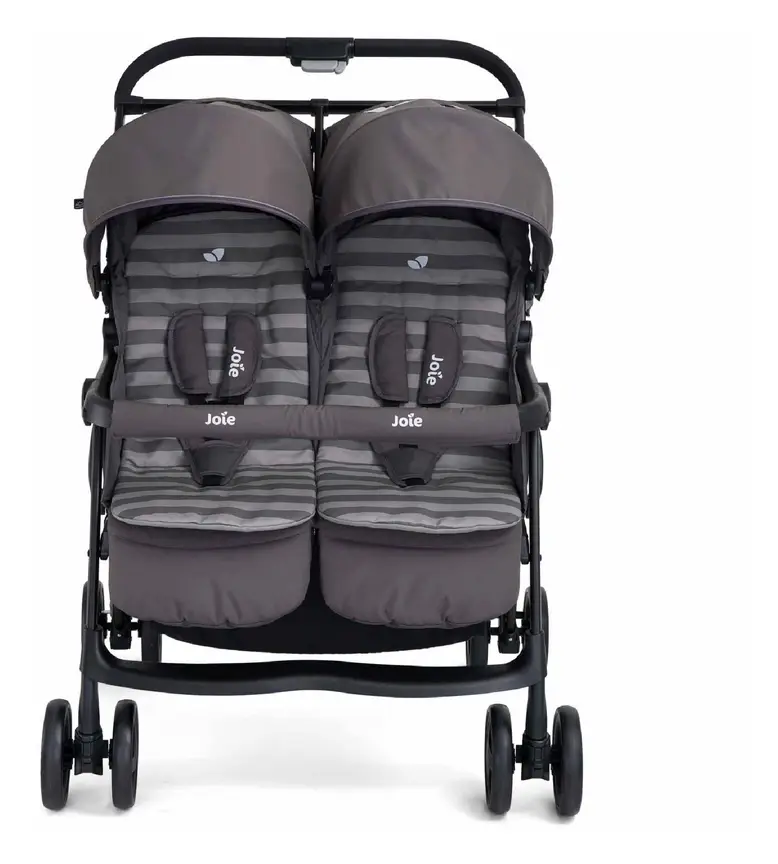
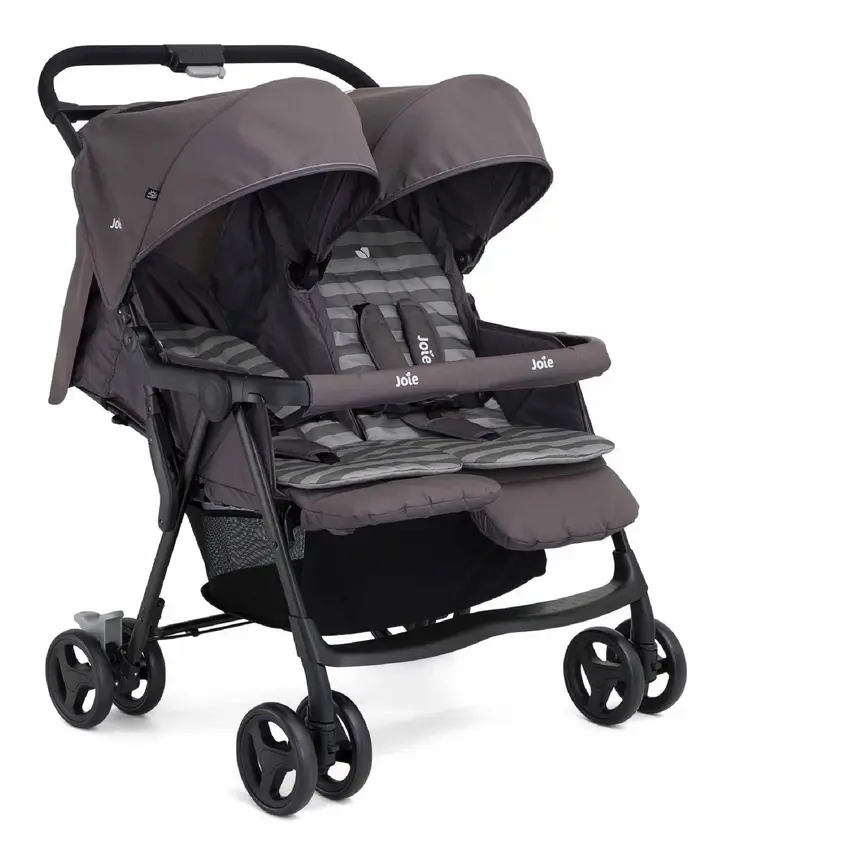

Joie Aire Twin
A lower-cost side-by-side double. Each seat lies flat and reclines on its own.
Read our full review →Frequently asked questions
Is a three-wheel stroller better on rough paths?
It may be easier to push if it has larger wheels and suitable tyres. The wheel count alone does not decide this. Check the maker's terrain guidance and try it on a similar path.
Is a four-wheel stroller safer?
Not just because it has four wheels. Safe use depends on the design, condition, correct assembly, load and the person pushing it. Use the harness and brake as instructed.
Can I jog with any three-wheel stroller?
No. Use only a model that the maker says is designed for jogging. Follow its age and development guidance. A three-wheel shape is not enough.
Can a newborn use a stroller seat?
Only if the maker says that exact seat is suitable from birth. Some models need a suitable bassinet or other approved setup. Check the manual before use.
Are three-wheel strollers always heavier?
No. Weight varies by model, materials and included parts. Check the listed weight, then lift the stroller yourself if possible.
Do four-wheel strollers always fold smaller?
No. Folded size varies. Measure the stroller and your storage space before buying.
Can I use a stroller on the beach?
Soft sand can make many strollers hard to push. Check the maker's advice. Keep control of the stroller and avoid ground where it may tip or become stuck.
What should I check on a used stroller?
Check its model, recall status, frame, wheels, brake, locks and harness. Look for missing parts and ask for the manual. Do not use it if you cannot confirm it is safe.
Simple final checklist
- It suits the paths and places your family uses.
- It fits your home, lift and car.
- You can fold, lift and steer it comfortably.
- The seat or bassinet suits your child's age and size.
- The brake, harness, wheels and frame work as instructed.
- You have checked local safety advice and recalls.
- You will use and maintain it according to the manual.
The best stroller is the one that fits your child, daily routine and local safety rules. Compare the exact models in person where possible. Read the instructions before first use. For health or development questions, speak with your child's health professional.
This article is general information, not medical or legal advice. Always follow the stroller maker's instructions and current guidance from your local product safety body. BabyGearFinder may earn a commission from qualifying affiliate links, at no extra cost to you.
Sources
Related guides
More Prams & Strollers →
Pushing a Stroller on Beach Sand and Winter Slush: Two-Wheel Pull Mode, Wide Tyres and Salt Rinsing
Sealed Wheel Bearings vs Open Plastic Bushings: Fixing Stroller Wheel Wobble and Squeaks
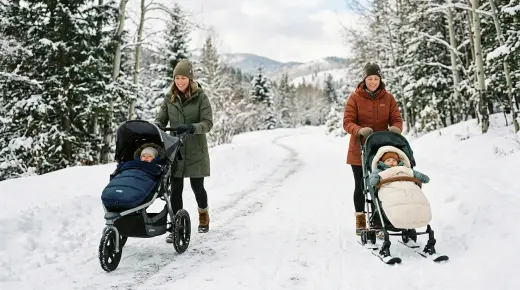
Stroller Snow Ski Kits vs Big-Wheel Jogging Prams: Which Is Better for Snowy Footpaths?
