













Sealed Wheel Bearings vs Open Plastic Bushings: Fixing Stroller Wheel Wobble and Squeaks
Learn the difference between sealed stroller wheel bearings and open plastic bushings, and how to fix front-wheel wobble, squeaks, and grit safely.

On this page
- Key points
- What wheel bearings and bushings actually are
- Why stroller front wheels wobble and squeak
- Sealed bearings vs open plastic bushings: side-by-side
- How wheel hardware affects daily use and child comfort
- How to check and fix front-wheel wobble and squeaks safely
- Safety standards and official guidance in Australia, the UK, the US a…
- Common mistakes parents make with stroller wheels
- Frequently asked questions
- Sources
Short answer: Sealed wheel bearings use tiny steel balls inside a closed ring. They roll smoothly and keep dirt and water out. Open plastic bushings are simple plastic sleeves that slide on a metal pin. They cost less and weigh less, but dirt wears them down faster. That wear often causes front-wheel wobble and loud squeaks. Cleaning the axle, locking the front wheels on rough paths, and using a light silicone spray can fix many squeaks. If the wheel still wobbles or feels loose, replace the wheel or contact the maker.
This guide explains how both wheel parts work. It also shows how to fix common wheel problems safely. Safety rules are compared for Australia (ACCC and Product Safety Australia), the UK (Office for Product Safety and Standards), the US (CPSC), and Canada (Health Canada).
Key points
- Sealed bearings: small steel balls sit inside a closed metal ring. Seals block sand, hair, and rain.
- Open plastic bushings: a hollow plastic tube spins around a metal axle. Grit can slip inside and grind the plastic down.
- Front-wheel wobble: fast side-to-side shaking often happens when a plastic sleeve wears out or a swivel joint gets loose.
- Squeaks: dry rubbing, wrapped hair, or sand inside the wheel hub usually causes squeaking.
- Safe cleaning: brush out hair and grit first. Use a tiny drop of silicone spray only if needed, and wipe off any extra.
- Safety first: never use a stroller with a cracked wheel, a missing axle cap, or a wheel that might fall off.
What wheel bearings and bushings actually are
Every stroller wheel spins around a metal rod called an axle. The centre of the wheel is called the hub. Inside that hub, something has to help the wheel turn without grinding against the axle. Stroller makers usually use one of two parts for this job: a sealed cartridge bearing or an open plastic bushing.
How sealed cartridge bearings work
A sealed cartridge bearing is a small, closed metal ring. Inside the ring sit tiny smooth steel balls. Those balls roll between an inner ring and an outer ring. Because the balls roll instead of sliding, there is very little drag. The wheel spins freely even when your child grows heavier.
The word "sealed" means the bearing has flat shields or rubber seals on both sides. These seals hold grease inside the ring. They also keep water, beach sand, mud, and pet hair out. You cannot see the steel balls from the outside. When you pop the wheel off, the bearing looks like a neat metal doughnut inside the wheel hub.
How open plastic bushings work
An open plastic bushing is much simpler. It is a small tube or sleeve made of hard plastic or nylon. The metal axle slides straight through the middle of this plastic sleeve. There are no steel balls inside. When the wheel turns, the plastic sleeve slides directly against the metal axle.
"Open" means there are no rubber seals blocking the gap between the axle and the sleeve. Dust, grit, and rainwater can slip right in. Makers use plastic bushings because they are cheap, light, and do not rust. You see them most often on light travel strollers and budget umbrella strollers.
Prams & Strollers worth a look
Real products from our catalogue. We don't show star ratings or review counts; check the current price, stock and reviews on Amazon before you buy.
 Reviewed
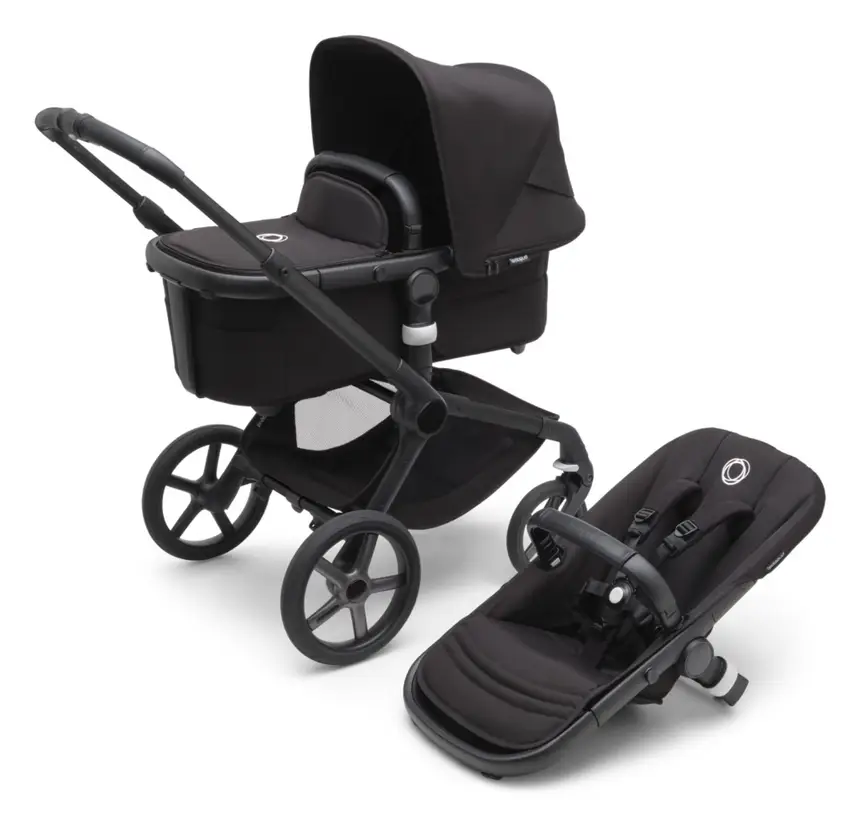
Bugaboo Fox 5
Bugaboo's flagship all-terrain pram: big-wheel suspension ride, one-piece fold, bassinet from birth and a seat rated to 22 kg.
Read our full review →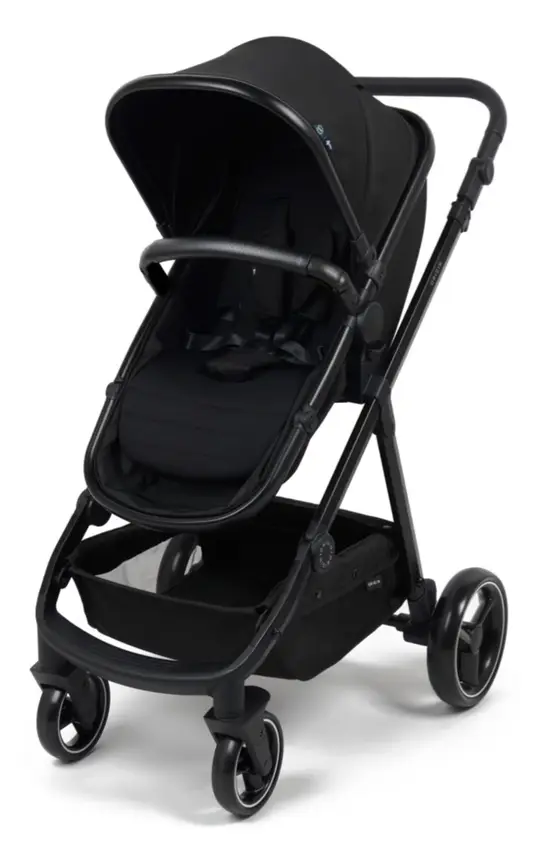
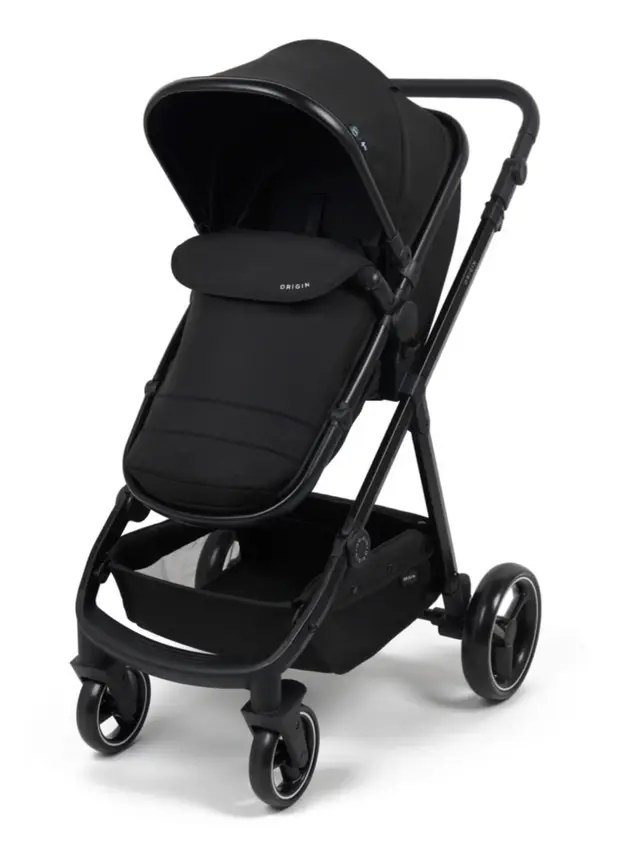
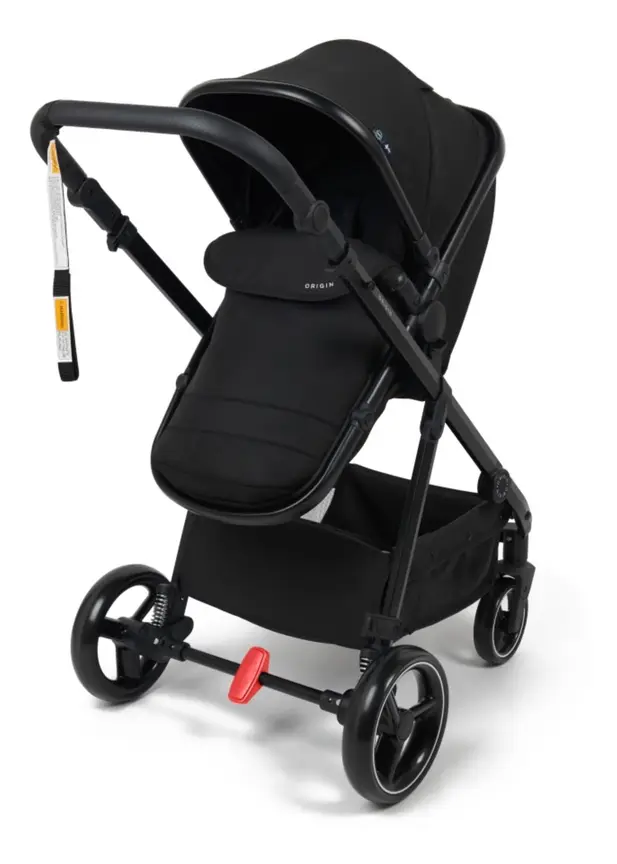
4baby Origin Stroller
A budget pram whose seat turns into a bassinet. The seat can face you or face the world.
Read our full review →
Baby Jogger City Mini GT2
Long-running, lighter all-terrain stroller with a famously simple one-hand strap fold.
 Reviewed
Baby Jogger City Tour 2
A 6.5 kg stroller with a near-flat recline. It folds small and comes with a carry bag.
Read our full review →Why stroller front wheels wobble and squeak
Front-wheel wobble is also called front-wheel shimmy. You push the stroller a bit faster on a flat footpath, and the front wheel starts shaking fast from left to right. It feels like a broken shopping trolley wheel. Squeaking and clicking often show up around the same time.
What causes front-wheel wobble
A front swivel wheel has two moving joints. One joint lets the wheel spin forward and backward. The other joint sits above the wheel fork and lets the whole wheel turn left and right. Play or looseness in either joint can start a wobble.
- Worn plastic bushings: as grit gets into an open plastic sleeve, it scrapes away the plastic. The hole gets slightly wider. Now the wheel tilts and shakes on the axle when you walk fast.
- Loose swivel stem: the upright pin that lets the front wheel turn left and right can wear down or come loose. When it has extra space, the wheel flutters at speed.
- Wrapped hair and string: long hair, grass, and threads wrap tightly around the axle. This clump pushes the wheel slightly sideways and makes it bind and hop.
- Bent axle or fork: hitting a kerb hard or dropping a stroller out of a car boot can bend the metal pin. Even a tiny bend makes the wheel wobble.
- Uneven air tyres: if your stroller has air-filled tyres and one tyre is soft, the stroller pulls and shakes.
- Too little weight on the front: hanging heavy bags on the handlebar lifts weight off the front wheels. Light front wheels bounce and shimmy much more easily.
What causes squeaks and clicking
A squeak means two dry surfaces are rubbing together. On a bushing wheel, dry plastic rubs against the metal axle. On a sealed bearing wheel, a squeak usually comes from the outside edge of the hub rubbing against the plastic fork, or from dirt trapped under a wheel cap.
Clicking sounds often come from a worn swivel lock, a tiny pebble stuck in the tyre tread, or a cracked plastic spacer. If you hear a sharp metallic crunching sound, grit has likely reached the metal balls inside a worn or damaged bearing.
Sealed bearings vs open plastic bushings: side-by-side
Both wheel parts can work well when matched to the right stroller. The table below compares them across daily use, upkeep, and lifespan.
| Feature | Sealed cartridge bearings | Open plastic bushings |
|---|---|---|
| What it is made of | Steel rings, steel balls, and rubber or metal seals | Hard plastic or nylon sleeve around a metal pin |
| How it rolls | Very smooth, even with a heavier toddler or shopping basket | Smooth when new and clean, but drags more under heavy loads |
| Dirt and water resistance | High. Seals block most sand, mud, and rain | Low. Gaps let dust, sand, and water enter easily |
| Noise and squeaks | Quiet for a long time | Squeaks often once dry or dusty |
| Front-wheel wobble risk | Low, as metal rings hold their shape well | Higher over time as the plastic sleeve wears wider |
| Upkeep needed | Wipe outside clean. Do not wash out factory grease | Needs regular cleaning and occasional safe spray |
| Weight and cost | Slightly heavier and costs more to build | Very light and keeps the stroller price low |
| Best suited for | Everyday walking, rough paths, heavy use, and multi-child families | Short trips, smooth floors, airports, and light travel strollers |
Think about where you walk most days. If you walk miles every week on footpaths, gravel, or park grass, sealed bearings save you a lot of hassle. If you mostly keep a tiny stroller in the car boot for quick shop trips, plastic bushings can do the job fine.
How wheel hardware affects daily use and child comfort
Wheel parts are not just about how fast a wheel spins in a shop. They change how the stroller feels for both you and your baby every single day.
Newborns and young babies
Young babies have weak neck muscles and soft, growing bodies. They need a smooth, steady ride, especially when lying flat in a bassinet or reclined seat. Wheels with worn bushings or sticky grit jerk and rattle over small cracks in the pavement. A front wheel that wobbles can shake the whole frame and wake a sleeping newborn.
Always follow safe sleep advice on the go as well. Health bodies such as Red Nose in Australia, the Lullaby Trust in the UK, the American Academy of Pediatrics in the US, and Health Canada remind parents that a stroller is for transport and supervised walks. Check on your baby often, keep harnesses snug, and move a sleeping baby to a firm, flat sleep surface when you get home.
Toddlers and heavier loads
As your child grows from a newborn to a toddler, the weight over the wheels doubles or triples. Add a nappy bag and groceries in the basket, and the axles carry a real load. Plastic bushings press harder against the metal pin under heavy weight. Steering feels stiff, and one hand pushing becomes hard work.
Sealed steel bearings handle heavy loads much better. The steel balls spread the weight around the ring. Even with a big toddler in the seat, the stroller turns smoothly with one hand.
Wet weather, sand, and mud
Rainwater washes away the thin film of factory grease on open bushings. Beach sand sticks to wet axles and acts like sandpaper. Within a few walks, sand can carve grooves into a plastic sleeve.
Sealed bearings are built to handle wet streets and dusty parks much better. Even so, you should never submerge any stroller wheel in deep water or blast it with a high-pressure hose. High-pressure water can force grit past rubber seals and trap moisture inside.
Side by side: more prams & strollers to compare
Real products from our catalogue. We don't show star ratings or review counts; check the current price, stock and reviews on Amazon before you buy.

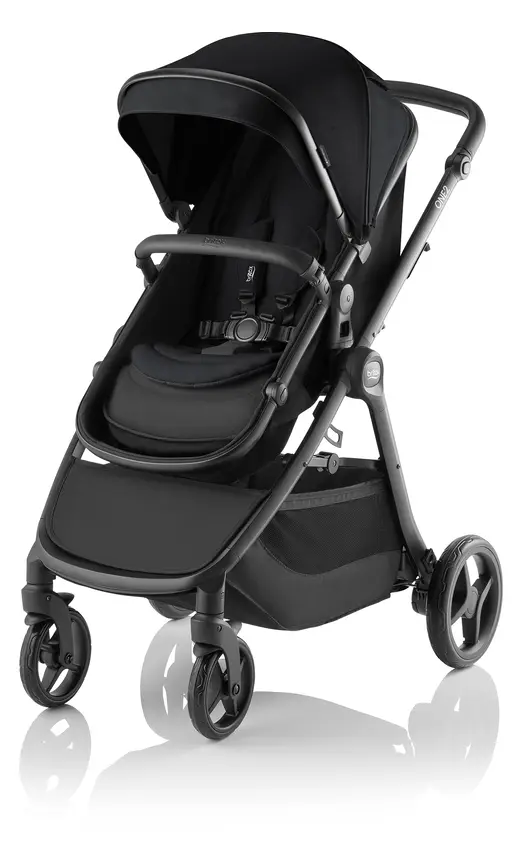
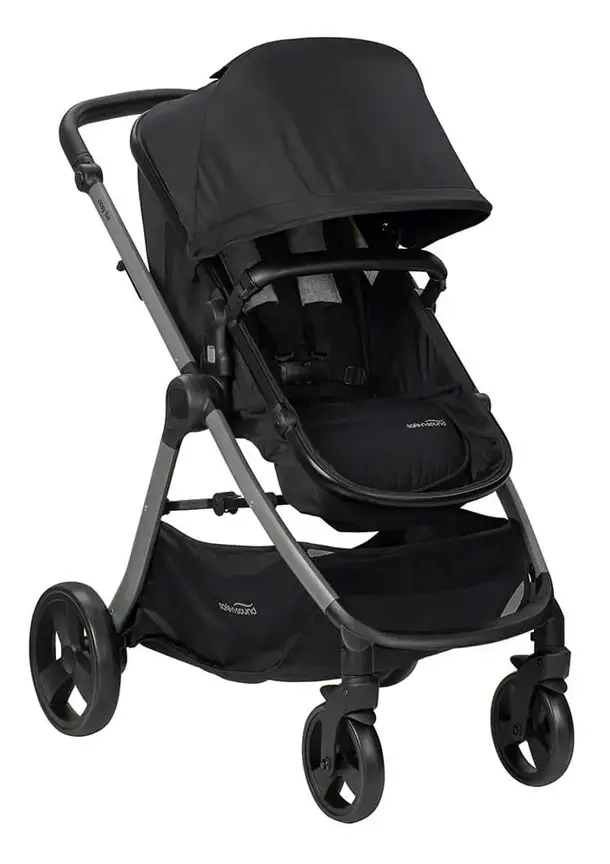

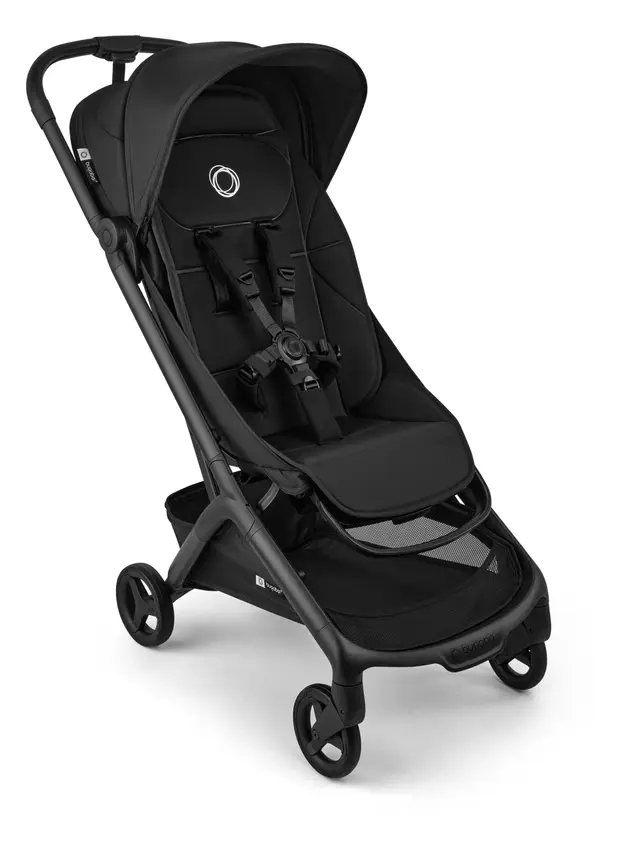
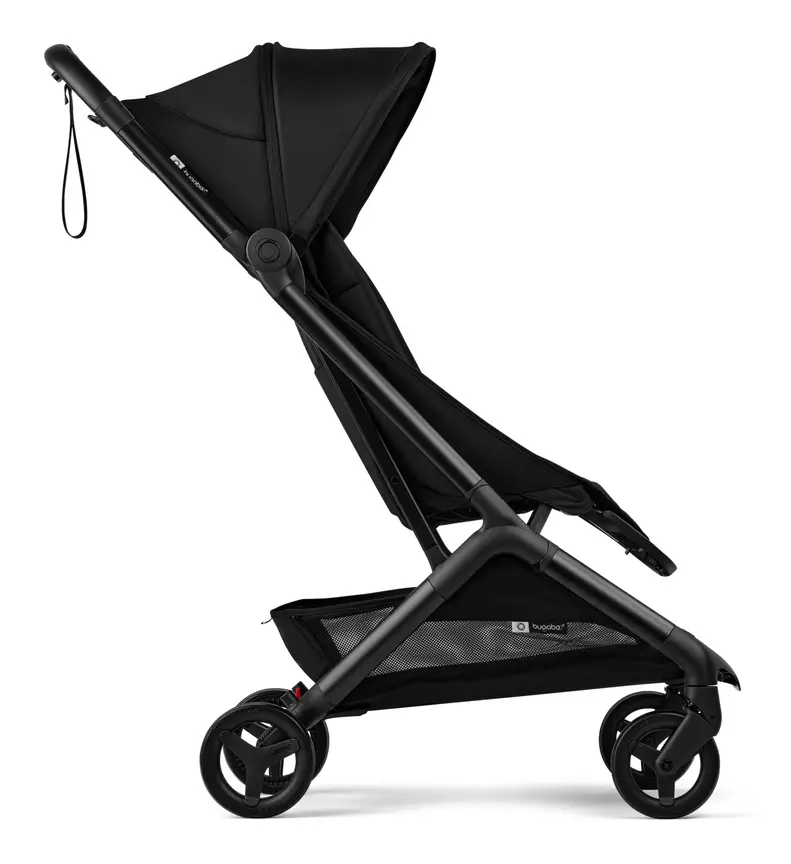


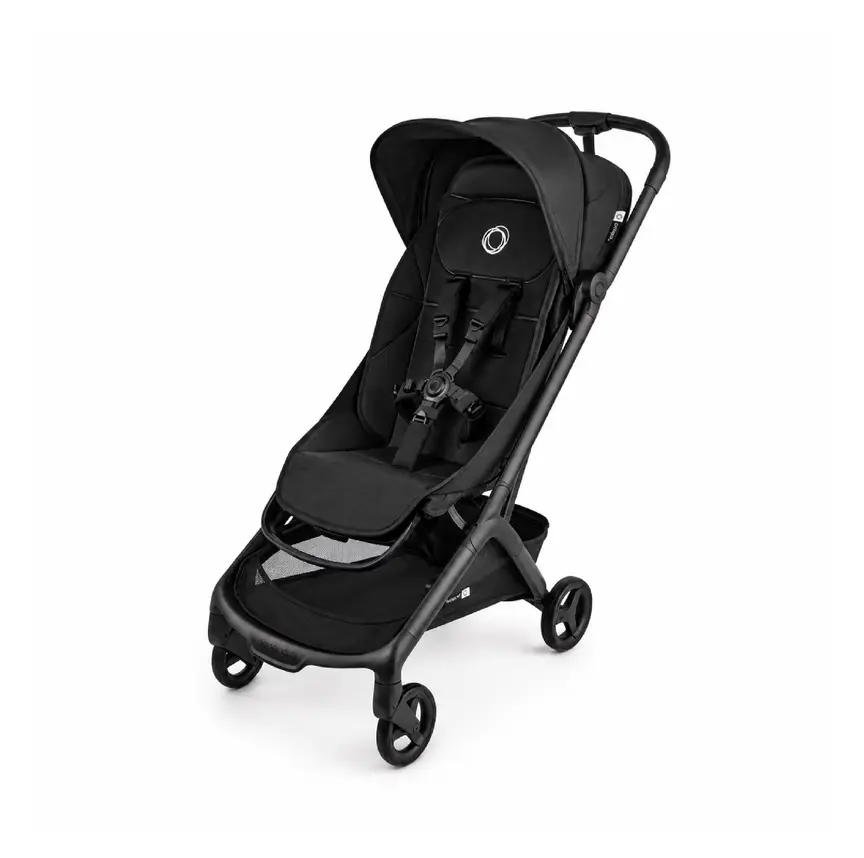
Bugaboo Butterfly
Bugaboo's cabin-friendly compact stroller with a one-second fold — the travel partner to a Fox, not a replacement for it.
How to check and fix front-wheel wobble and squeaks safely
You can fix many wheel squeaks and minor wobbles at home in ten minutes. Always take your child out of the stroller first. Park the stroller on a flat floor and put the rear brake on.
Step 1: Take the front wheels off and inspect them
Most strollers have a small release button or metal clip near the front wheel fork. Press the button and slide the wheel off. Look closely at the metal axle pin and the inside of the wheel hub.
- Check for hair, lint, grass, or thread wrapped around the pin.
- Look for dried mud or sand caked inside the swivel joint above the wheel.
- Check the plastic hub for cracks, chips, or melted spots.
- Look at the metal axle pin. Roll the stroller gently or hold a straight edge beside the pin to see if it looks bent.
Step 2: Clean out all hair, grit, and old grease
Use tweezers or blunt-nosed scissors to cut and pull off wrapped hair. Never scratch the metal axle with a sharp knife. Wipe the axle and the inside of the fork with a damp cloth and mild soapy water. Use an old toothbrush to scrub sand out of the swivel housing.
If your wheel has open plastic bushings, you can rinse the wheel hub with warm soapy water to flush out sand. Let every part dry completely before putting it back together. If your wheel has sealed metal bearings, wipe the outside seals with a damp cloth only. Do not soak sealed bearings in water.
Step 3: Check for loose parts
Put the wheel back on until you hear a clear click. Give the wheel a gentle tug to make sure it is locked in place. Hold the front fork and wiggle the wheel side to side. A tiny bit of movement is normal on some strollers, especially travel ones. A big clunk or visible gap means a bushing, spacer, or swivel stem is worn out.
If the wheel uses a nut or bolt instead of a quick-release button, check that it is snug. Do not overtighten a nut on a plastic hub, as you can crush the sleeve and stop the wheel from spinning.
Step 4: Lubricate carefully (and only with the right product)
Once everything is clean and dry, spin the wheel. If it still squeaks, use a tiny amount of silicone-based spray or dry PTFE lubricant. Both are safe for most plastics and do not leave a wet, sticky mess.
- Spray a small burst onto a cloth or cotton bud, or use the thin straw nozzle away from the stroller seat.
- Apply a light coat to the metal axle pin or the swivel stem.
- Wipe away every drop of extra spray with a clean rag.
- Wash your hands straight away, and keep spray cans well away from babies and children.
Never spray lubricant onto the wheel tread or the brake teeth. Slippery brakes are dangerous.
Step 5: Test the swivel lock and know when to replace parts
Click the front swivel lock on and off to check that it engages cleanly. Dirt inside the lock pin often stops it from seating properly, which can also cause rattle and wobble.
If a plastic bushing is worn oval, or if a sealed bearing feels gritty and rough when you spin it with your finger, cleaning will not fix it. Contact the stroller maker for a replacement wheel or bearing kit. If the fork is bent or the frame is cracked, stop using the stroller right away.
Safety standards and official guidance in Australia, the UK, the US and Canada
Stroller wheels do more than roll. They are part of the safety structure of the stroller. Government safety bodies in Australia, the UK, the US, and Canada set strict rules for prams and strollers. Wheel strength, wheel attachment, brakes, and small parts are all tested under these rules.
| Country | Main safety body | Stroller standard or rule | What it checks on wheels and frames |
|---|---|---|---|
| Australia | ACCC / Product Safety Australia | AS/NZS 2088 (mandatory safety standard) | Wheel retention, parking brakes, frame locks, stability, and tether straps |
| United Kingdom | Office for Product Safety and Standards (OPSS) | BS EN 1888 | Wheel strength, durability over bumps, brake hold on slopes, and small parts |
| United States | Consumer Product Safety Commission (CPSC) | ASTM F833 (federal stroller rule) | Wheel attachment, brake locking, stability, and pinch or choking hazards |
| Canada | Health Canada | Federal carriages and strollers regulations | Wheel detachment, brake strength, frame locking, and small-part choking risks |
Why small wheel parts matter for safety
Many wheels have small plastic hubcaps, metal clips, or rubber valve caps on air tyres. Babies and toddlers love to pick at wheels when sitting near a parked stroller. If a small cap pops off, a child can put it in their mouth and choke. Always check that wheel caps and clips are tight and cannot be pulled off by little fingers.
In Australia, mandatory rules under AS/NZS 2088 also require a tether strap on prams and strollers so the stroller cannot roll away from you. Keeping your wheels running straight and your brakes clean helps that system work as designed.
Check recalls before fixing or buying second-hand
Sometimes a wobbling or falling wheel is caused by a factory fault, not normal dirt. Before you buy a used stroller or try to repair an older one, check official recall lists for your country:
- Australia: Product Safety Australia recalls page
- UK: Office for Product Safety and Standards product recalls
- US: CPSC recalls database
- Canada: Health Canada recalls and safety alerts
If your stroller has an active recall for front-wheel failure or fork cracks, stop using it and follow the maker's recall instructions.
Common mistakes parents make with stroller wheels
Well-meaning fixes can sometimes ruin stroller wheels or create new safety risks. Avoid these common mistakes.
Using cooking oil, butter, or heavy grease
Never put olive oil, vegetable oil, or thick car grease on stroller axles. Cooking oil turns sticky and gummy as it dries. Heavy grease acts like a magnet for sand and dust. Within days, the oil and sand mix into a thick grinding paste that chews through plastic bushings even faster.
Using general penetrating sprays carelessly
Standard water-displacing sprays can loosen stuck rust, but they are not long-term lubricants. Some harsh solvents can also soften or weaken certain plastics over time, and they smell strong near a baby. If you use a cleaner to free a stuck pin, wipe it completely dry and follow up with a light silicone spray.
Overloading the handlebar
Hanging a heavy nappy bag or shopping bags on the stroller handlebar shifts the weight backward. This takes weight off the front wheels, making front-wheel wobble much worse. Even more importantly, heavy bags on the handle can tip the whole stroller backward with your child inside. Put heavy items in the lower basket instead.
Forcing mismatched aftermarket parts
Do not drill out a plastic wheel hub to jam in a random bearing from a hardware shop unless the maker sells a proper conversion kit. Changing the axle fit can weaken the wheel hub or stop the quick-release clip from locking. A wheel that comes off while crossing a road is a serious danger.
Ignoring a bad brake or cracked hub
If a squeaking wheel is rubbing against a bent brake bar, spraying oil will not fix the problem. Look at the brake teeth on the rear wheels too. Make sure the brake clicks firmly into place on both sides and holds the stroller still on a gentle slope.
More options, from budget to premium
Real products from our catalogue. We don't show star ratings or review counts; check the current price, stock and reviews on Amazon before you buy.
Bugaboo Butterfly 2
The newer Butterfly. It folds in about one second, has a lay-flat seat and a bigger basket with a back pocket.
Read our full review →

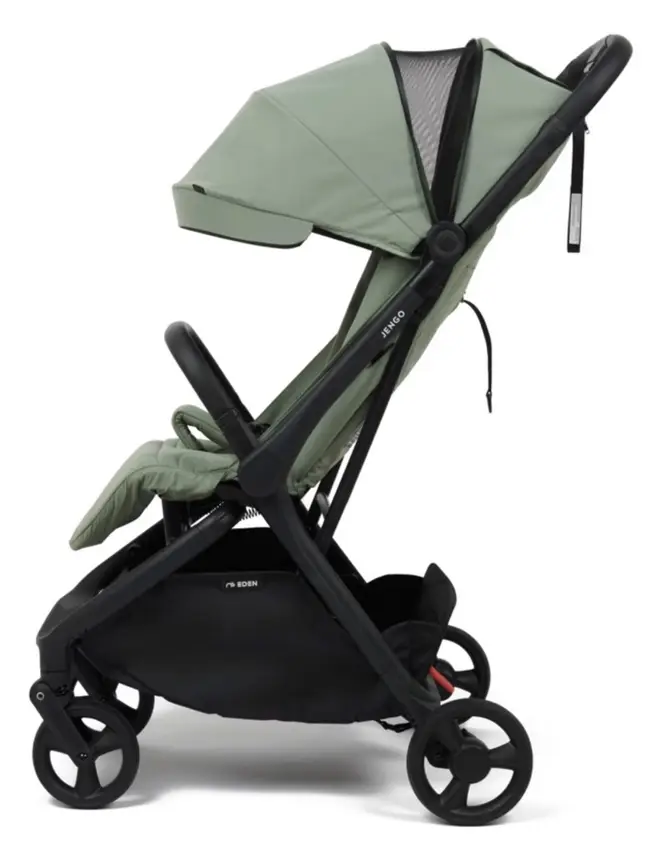
Jengo Eden Compact Stroller
A budget compact stroller from birth to 22 kg. It folds with one hand and has a big basket.
Read our full review →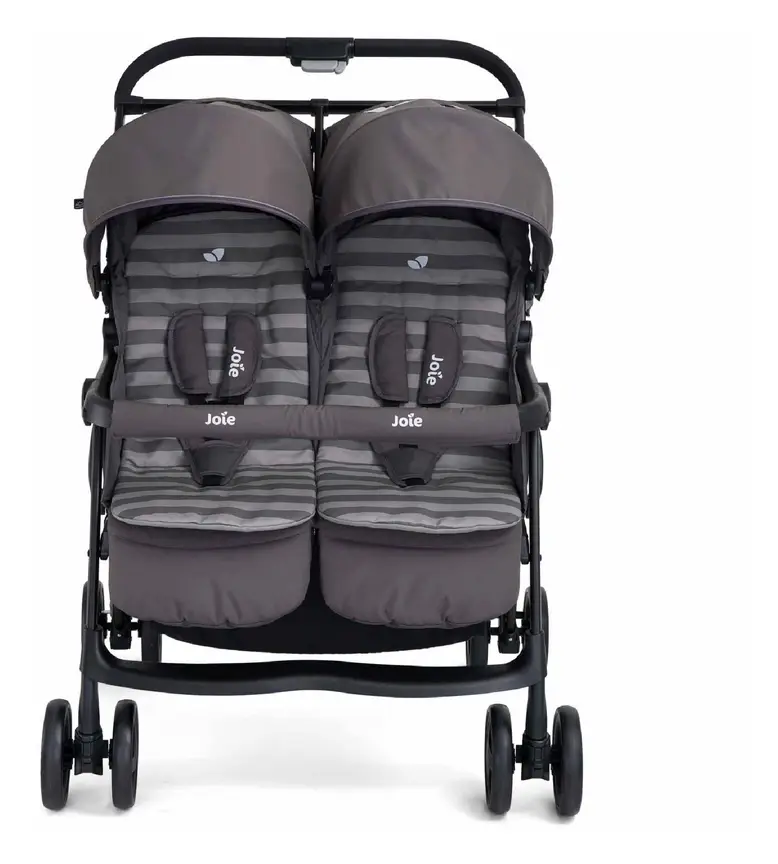
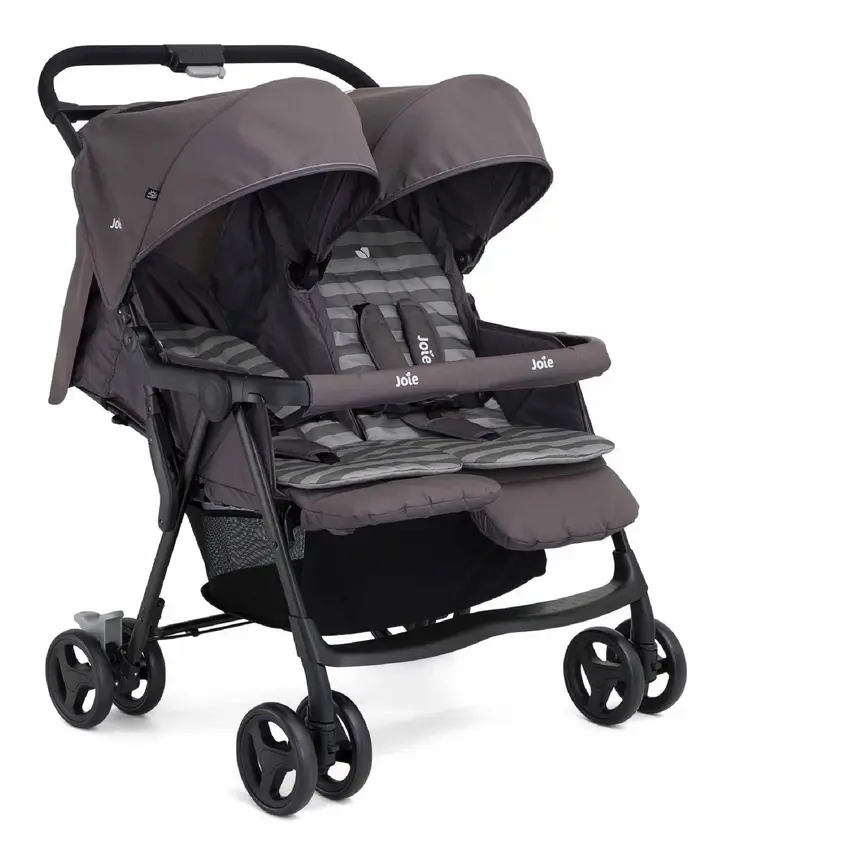

Joie Aire Twin
A lower-cost side-by-side double. Each seat lies flat and reclines on its own.
Read our full review →Frequently asked questions
Can I swap open plastic bushings for sealed wheel bearings?
Sometimes, yes, but only if the wheel hub is designed to fit standard bearing sizes or if the stroller maker sells an upgrade wheel kit. Many plastic-bushing wheels have a moulded plastic centre that will not hold a metal bearing safely. If you want sealed bearings, the safest option is to buy replacement wheel assemblies made for your exact stroller model.
Why does my stroller front wheel only wobble when I walk fast?
When you walk slowly, the front wheel stays steady under light pressure. When you walk fast, small bumps on the footpath bounce the wheel slightly off the ground. If there is any looseness in the plastic bushing or the swivel stem, that tiny bounce starts a fast side-to-side shake. Locking the front swivel wheel or slowing down usually stops it straight away.
What is the safest spray to stop a stroller wheel squeaking?
A dry PTFE spray or a pure silicone spray is the safest choice for most strollers. Both work well on plastic and metal, and they dry cleanly without attracting lots of dust. Always spray away from your child, apply only a small amount to the clean metal pin, and wipe off any extra before riding.
Is a squeaky or wobbling wheel dangerous for my baby?
A dry squeak on its own is mostly annoying, though it tells you that parts are wearing down. A strong front-wheel wobble can be risky if it makes the stroller hard to steer, stops abruptly on a kerb, or shakes a loose wheel off its pin. If a wheel wobbles badly, lock the swivel, check the axle clip, and replace worn parts promptly.
How often should I clean my stroller wheels and axles?
A quick wipe after muddy or sandy walks goes a long way. For everyday footpath use, popping the wheels off once every month or two to clear out hair and dust keeps both bearings and bushings lasting much longer. Always clean and dry the wheels straight after a trip to the beach.
Why do travel strollers often use plastic bushings instead of sealed bearings?
Travel strollers are built to be as light and compact as possible for overhead cabin bins and small car boots. Plastic bushings weigh almost nothing and keep the retail price lower. Because travel strollers are meant for smooth airport floors and short trips, makers often choose plastic sleeves over heavier steel bearings.
Should I lock the front swivel wheels on bumpy paths?
Yes. Most strollers have a switch or lever above the front wheels to lock them straight. Locking the front wheels stops them from twisting sideways when they hit gravel, grass, tree roots, or paving cracks. It also stops front-wheel wobble when you walk quickly or go down a gentle hill.
Sources
- Product Safety Australia – Prams and strollers guide
- Product Safety Australia – Prams and strollers mandatory standard
- Product Safety Australia – Recalls
- UK Office for Product Safety and Standards
- UK Government – Buy safe, be safe
- RoSPA – Child safety at home
- HealthyChildren.org (American Academy of Pediatrics) – Home safety: tips for families with young children
- Health Canada – Recalls and safety alerts
Related guides
More Prams & Strollers →
Stroller Snow Ski Kits vs Big-Wheel Jogging Prams: Which Is Better for Snowy Footpaths?

Pushing a Stroller on Beach Sand and Winter Slush: Two-Wheel Pull Mode, Wide Tyres and Salt Rinsing

Jogging Strollers: Front-Wheel Locks, Swivel Wheels and Stopping the Wobble
