













Tandem vs Side-by-Side Double Prams: Choosing for Doorways and Shops
Compare tandem and side-by-side double prams for doorways, shops, lifts and daily walks. Measure your routes and check each pram's safe-use instructions.

On this page
- What tandem and side-by-side mean
- Start with your family and your daily routes
- Measure doorways, aisles, lifts and storage
- Side-by-side comparison
- How each layout feels on everyday trips
- Seats, age stages and newborns
- Check the pram's safety information
- Country guidance side by side
- Harnesses, brakes and safe loading
- Shopping, storage and car travel
- Used prams, cleaning and upkeep
- Common mistakes when choosing a double pram
- A simple try-before-you-buy checklist
- Frequently asked questions
- Sources and official guidance
- Sources
Short answer: A tandem pram places one seat behind the other. A side-by-side pram places the seats next to each other. Tandems are usually narrower. Side-by-side prams give each child a similar view and space. The right choice depends on your children, routes, storage space and car. Measure the places you use before buying. Then try the pram with both children, if possible.
This guide covers general buying points. It does not claim that one style suits every family. Check the exact model's instructions, limits and recall status. Product features differ between models.
What tandem and side-by-side mean
A tandem double pram has two seats arranged one behind the other. Some models place the seats at different heights. Some let one seat face forward and the other face the adult. Others use a bassinet or a second seat attachment. The layout depends on the model.
A side-by-side double pram has two seats next to each other. Children may face the same way, though some models offer different seat positions. Check this with the model's instructions. Do not assume the seats adjust separately.
Some prams start as a single and can take another seat or bassinet. Other prams are doubles from the start. Conversion parts can change the width, length, weight and folding steps. Ask the seller to show the exact setup you plan to use.
The words “tandem” and “side-by-side” describe the seat layout. They do not tell you whether a pram is suitable for a newborn, how easily it folds, or whether it fits your home. Those details need a model-by-model check.
Start with your family and your daily routes
Think about who will ride in the pram. You might have twins, a newborn and an older child, or two children close in age. Their ages and needs can affect the seat setup you need.
Write down the places you visit often. Include your front door, building entrance, lift, car boot, local shops and public transport. Note any narrow paths, steps or tight turns. A pram that fits one doorway may still be hard to turn in a crowded shop.
Think about how you will travel. You may walk from home, load the pram into a car, or use buses and trains. Ask the relevant transport operator about its current rules for prams. Rules and space can differ between services.
Consider who pushes the pram. A caregiver may need to lift it into a car or carry it upstairs. Try lifting the folded pram if you can. A published weight does not tell you how easy a shape is to lift.
Also consider storage. Measure the space where the folded pram will live. Check whether it must stand upright, fit under a bench or sit in a shared hallway. Follow building rules for shared areas and keep exits clear.
Measure doorways, aisles, lifts and storage
Measure the narrowest doorway you use. Measure the clear opening with the door fully open. Include handles, door stops and any narrow turn just beyond the doorway. Write down the measurement and take it with you when you try prams.
Measure the pram at its widest point. This may be the wheels, handles or seat frame. Ask the shop to measure the exact configuration you want. A single-seat setup may be narrower than the double setup.
Doorway width is only one part of access. A long tandem may turn poorly in a small lift. A wide side-by-side pram may be awkward in a narrow aisle. Check the turning space at both ends of a route.
For shopping, measure the spaces you can predict. Check the gap between shelves at your regular shop if it is practical. Store layouts differ. Crowds, baskets, displays and other shoppers can make an open aisle harder to pass.
Try a real turning test. Walk the pram through a doorway, turn around in a small space and make a tight corner. Keep both children in their seats only if the retailer allows it and the instructions permit the setup.
Do not rely on a product photo or a single width number. A handle, wheel or attached bag can make the usable width greater. Ask whether the listed width includes the widest parts.
Prams & Strollers worth a look
Real products from our catalogue. We don't show star ratings or review counts; check the current price, stock and reviews on Amazon before you buy.

Bugaboo Donkey 5
Converts from single to side-by-side double (siblings or twins) by widening the frame.
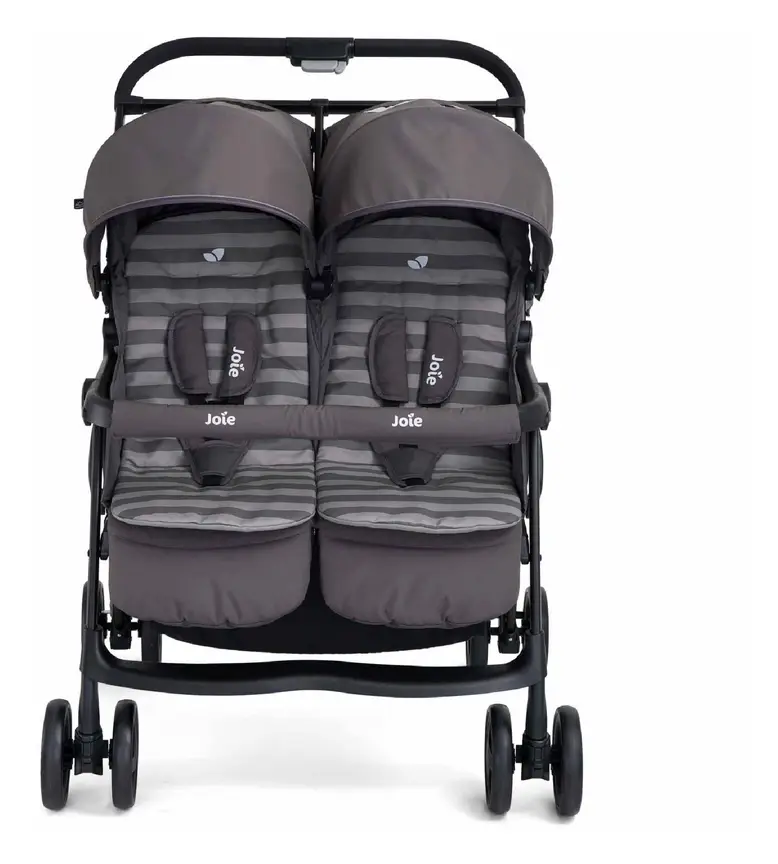
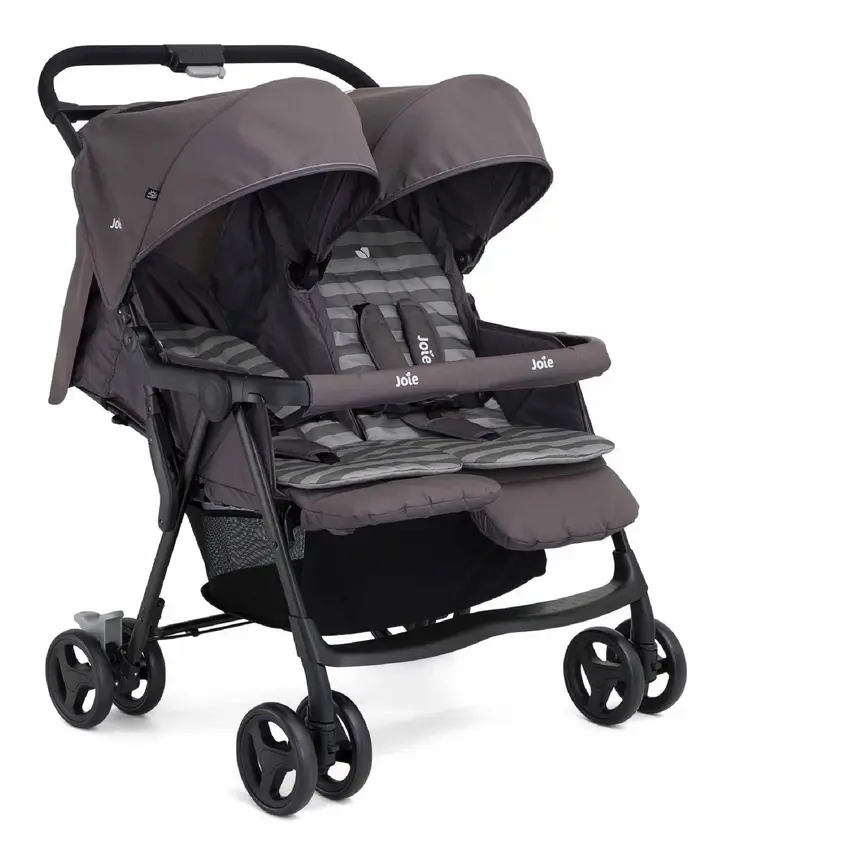

Joie Aire Twin
A lower-cost side-by-side double. Each seat lies flat and reclines on its own.
Read our full review →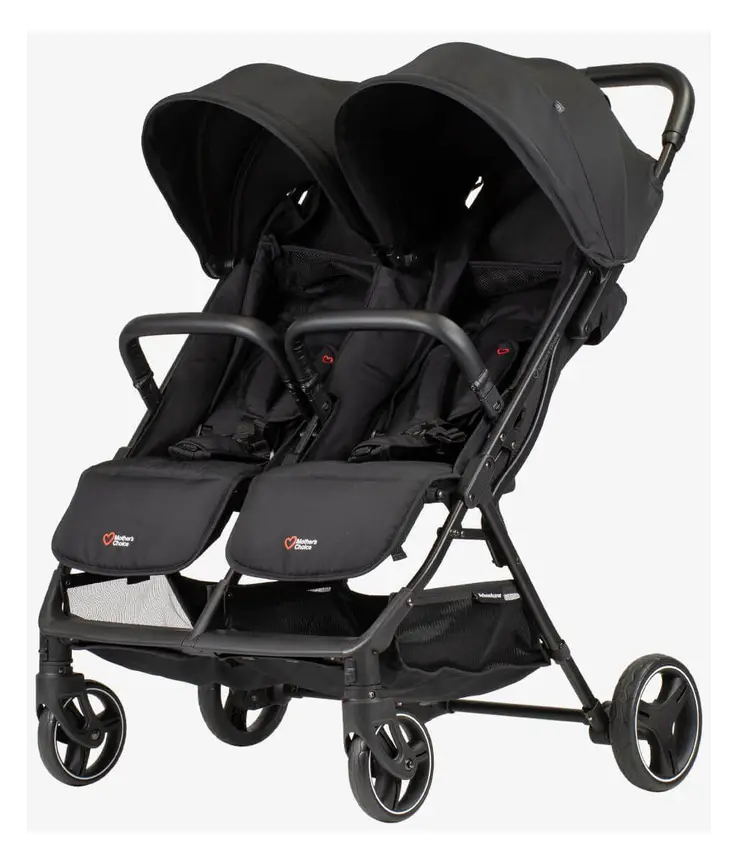
Mother's Choice Adventurer Side-by-Side Double Stroller
Side-by-side double stroller

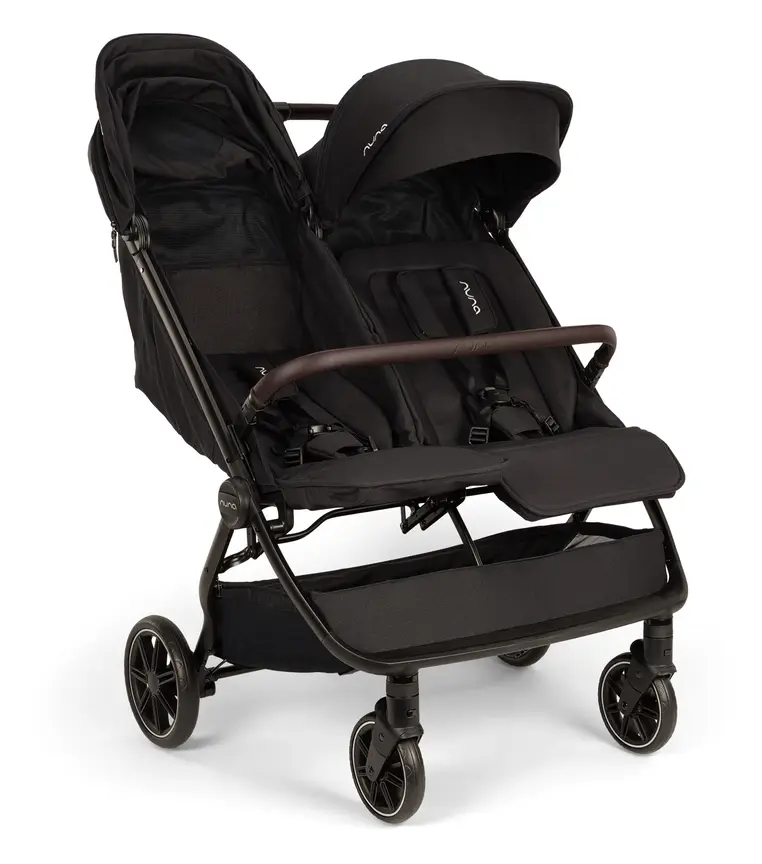
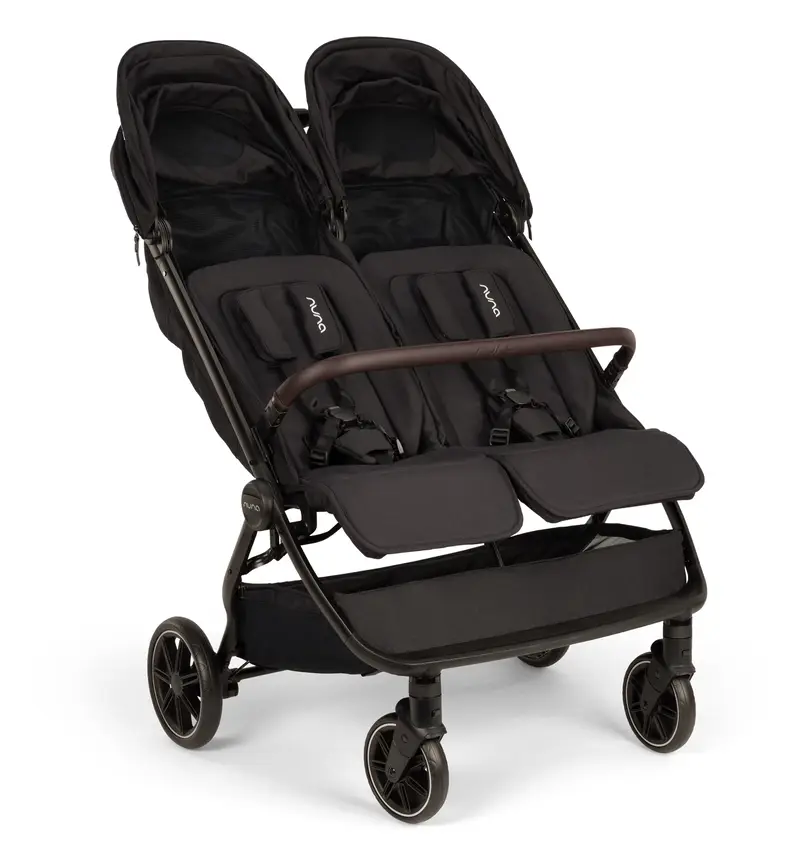
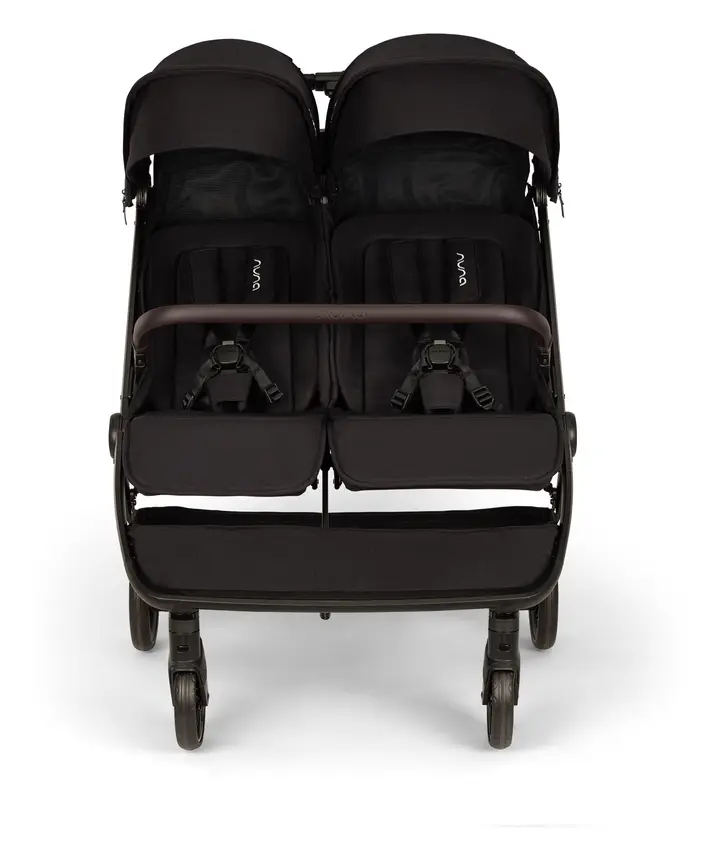
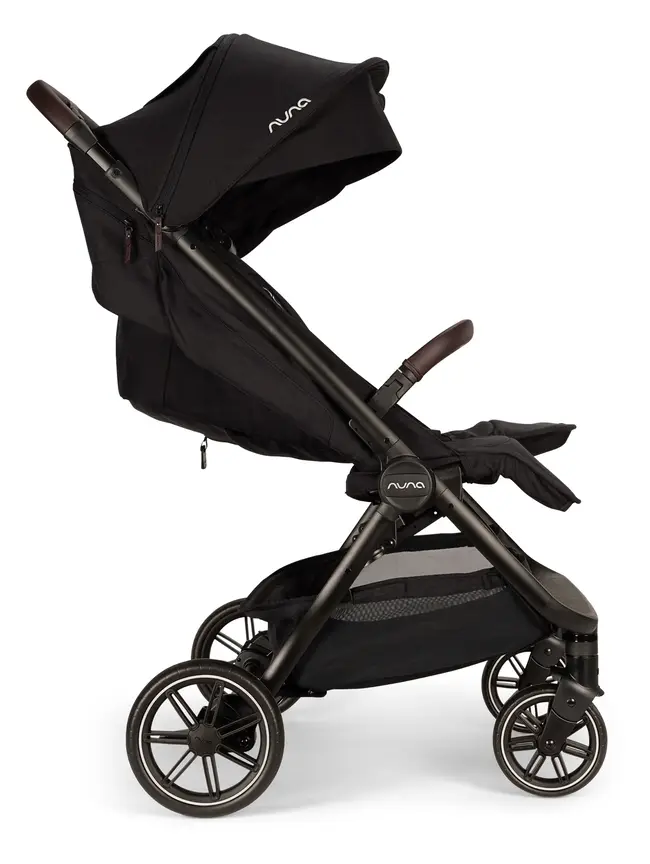
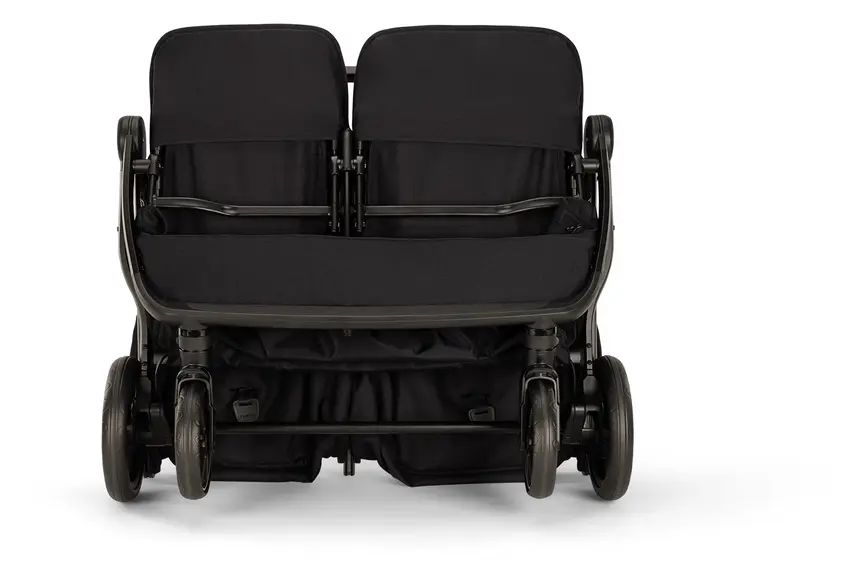
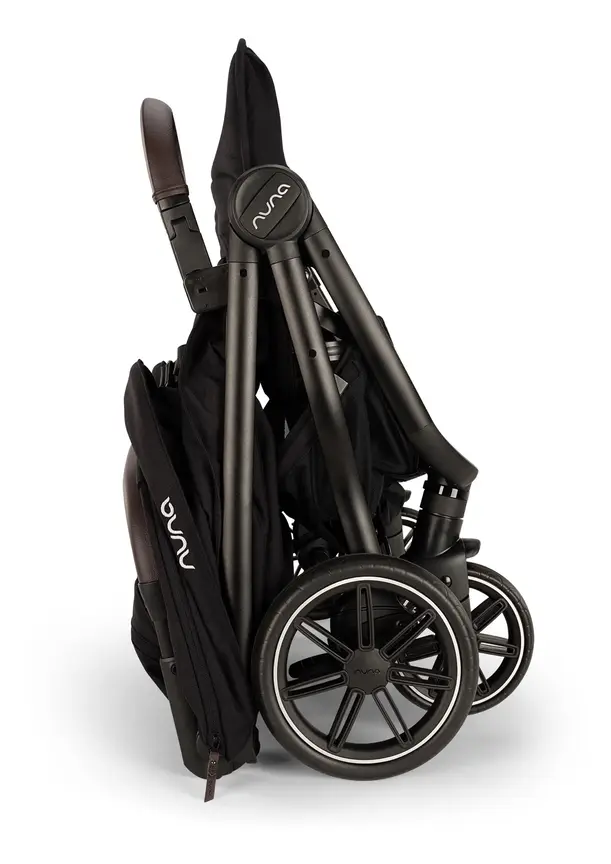
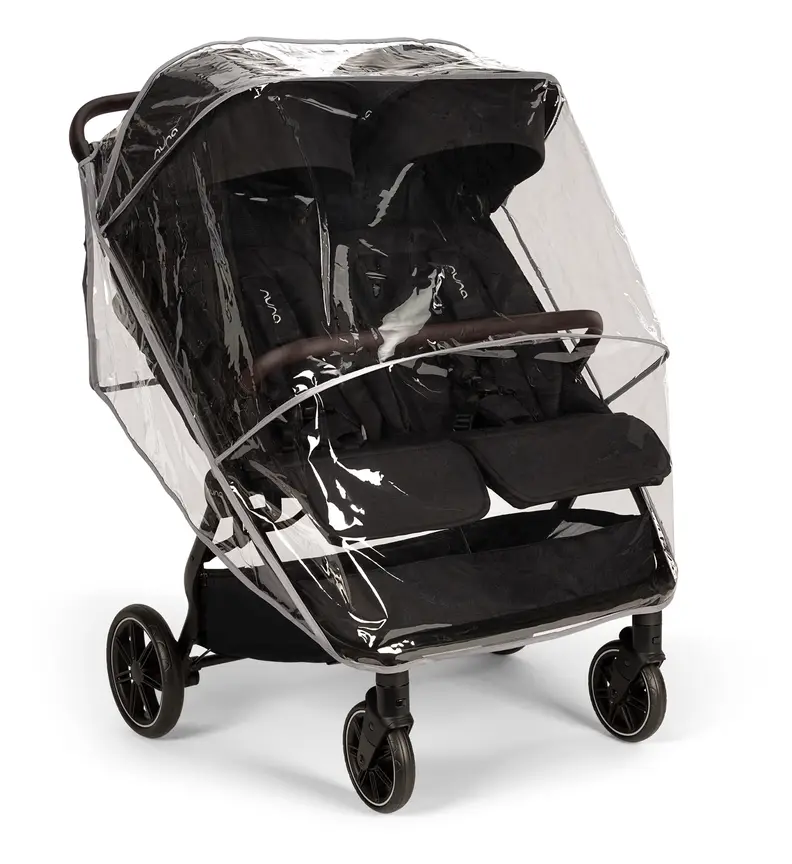
Nuna TRVL Dubl
A side-by-side double that folds with one hand and stands up. Each seat holds up to 22.7 kg.
Read our full review →Side-by-side comparison
| Point to compare | Tandem double pram | Side-by-side double pram |
|---|---|---|
| Seat layout | One seat behind the other | Seats next to each other |
| Width | Often narrower, but check the exact model | Often wider, so measure doorways and aisles |
| Length | Often longer, which can affect turning | Often shorter than a tandem, but varies by model |
| Children's view | One child may have a different view or position | Children sit alongside each other |
| Seat positions | May offer different positions or facing directions | May offer matching or separate seat settings |
| Newborn setup | Some models accept a bassinet or newborn seat | Some models accept a bassinet or newborn seat |
| Shopping route | Narrow width can help; length may make turns harder | Side width can be hard in tight aisles |
| Folding and storage | Check folded length, width and height | Check folded width, height and whether wheels detach |
| Car boot | Check folded shape and room for other items | Check folded shape and room for other items |
| Best way to decide | Test your narrow routes and turning points | Test your doorways, aisles and lift access |
This table describes common layout trade-offs. It is not a promise about every model. Measurements and features vary. Confirm the details for the pram you are considering.
How each layout feels on everyday trips
Doorways and narrow paths
A tandem may be easier to take through a narrow doorway because its seats line up front to back. That does not make every tandem suitable for every doorway. Wheels or a frame may still catch on the sides.
A side-by-side pram can need more width. Measure before you buy. Check the wheels, handle and any side storage. Some models may fit a route that looks tight. A careful test is more useful than guessing.
Supermarket aisles
A tandem may pass through some aisles more easily. Its longer shape can make sharp turns harder. A side-by-side pram may take up more of the aisle. It can also be easier to turn in some open spaces.
Shop layout matters. A pram can fit through the entrance and still block a narrow aisle. Try the route at a quiet time if the shop allows it. Leave space for other shoppers to pass. Do not force the pram through a tight gap.
Lifts and public transport
Measure the lift door and the space inside. Check where the lift buttons sit. A long pram can leave little room to turn or stand. A wide pram can be difficult to enter if the lift door is narrow.
For buses and trains, check access and boarding rules with the operator. Some services have limited space. A pram that fits may still need to be folded or parked in a certain place.
Walking and turning
Push a loaded pram around a corner before making a decision. A tandem's length may affect turning. A side-by-side pram's width may affect narrow paths. Look at how the wheels move and whether you can keep both hands on the handle.
Test small changes in direction, not just a straight push. Try a doorway, a corner and a short ramp where the retailer permits it. Never use a child as a test weight. Follow the model's instructions and age or size limits.
Seats, age stages and newborns
There is no single age rule for every double pram. The maker sets the permitted age, weight and setup for each seat. Read the manual for the exact model. Check whether each child can use the seat at the same time as the other.
For a newborn, check whether the pram has a bassinet or a seat that the maker says is suitable from birth. A seat that reclines is not automatically suitable for a newborn. Follow the instructions for the child's age and development.
Ask how the newborn will be supported. Check the head and body position in the approved setup. Do not add pillows, padding or other items unless the maker says they are allowed. Unapproved additions can change how the child sits.
An older child may need a seat with the right size and weight limit. Check the limit for each seat, not just the frame. Some models may have different limits for different positions. Do not guess from the pram's appearance.
Children can have different needs. One may nap while the other wants to look around. Check whether the seats recline separately. See if one seat's position blocks the other child's space or view.
Do not let one child climb into or out of the pram while it is moving. Stop on level ground first. Use the harness as the instructions say. Keep the pram's brakes on when loading or unloading children.
Check the pram's safety information
In Australia, the Australian Competition and Consumer Commission (ACCC) and Product Safety Australia provide guidance on prams and strollers. Australia has a mandatory product safety standard for prams and strollers. Check the current guidance and the product's instructions before buying or using it.
In the UK, the Office for Product Safety and Standards (OPSS) is the government body for product safety. In the US, the Consumer Product Safety Commission (CPSC) provides product safety information. In Canada, Health Canada provides product safety guidance and recall information.
These bodies serve different roles. Their guidance does not mean a pram sold in one country meets the rules in another. Check the rules where you live and use the pram. If you buy from overseas, check that the exact model is permitted for sale and use in your country.
Look for the maker's name, model and instructions. Check that the labels are readable. Confirm how to lock the frame, set the brakes and fit the harness. If a used pram has no manual, ask the maker for the correct instructions.
Use the pram only in the setups allowed by its maker. Do not attach a second seat, board, capsule or other part unless the instructions allow that exact combination. Extra parts can change how the pram handles.
Check the relevant country's recall pages before buying used. Search by both the maker and model name. A similar name may refer to a different version. If a recall notice applies, follow the maker's or regulator's instructions.
Country guidance side by side
| Country | Official body named here | Useful check |
|---|---|---|
| Australia | ACCC and Product Safety Australia | Read the prams and strollers guidance and check recalls. |
| UK | Office for Product Safety and Standards (OPSS) | Check product safety advice and any notice for the model. |
| US | Consumer Product Safety Commission (CPSC) | Check safety information and recall notices for the pram. |
| Canada | Health Canada | Check product safety information and recall notices. |
Use the official body for the country where you live. Follow the manual for your exact model. Ask the maker if the setup or label is unclear.
Side by side: more prams & strollers to compare
Real products from our catalogue. We don't show star ratings or review counts; check the current price, stock and reviews on Amazon before you buy.
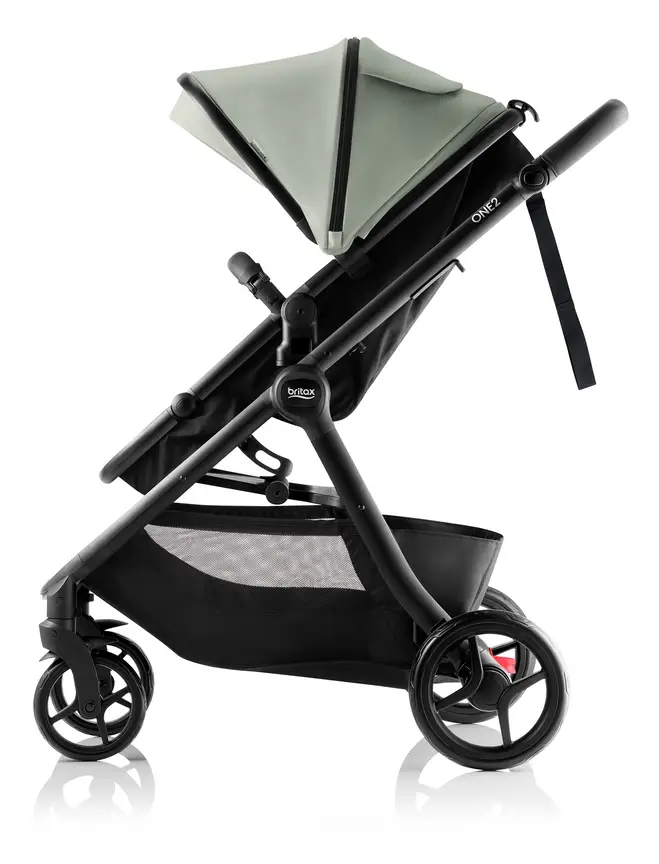
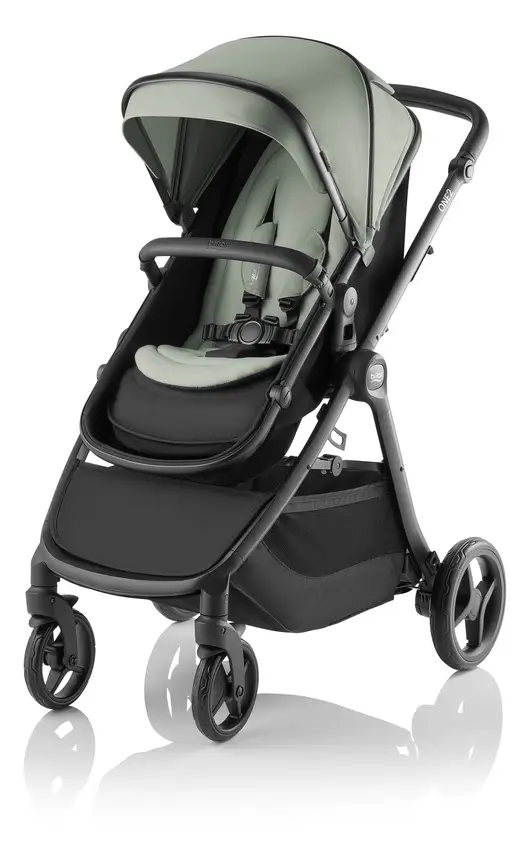


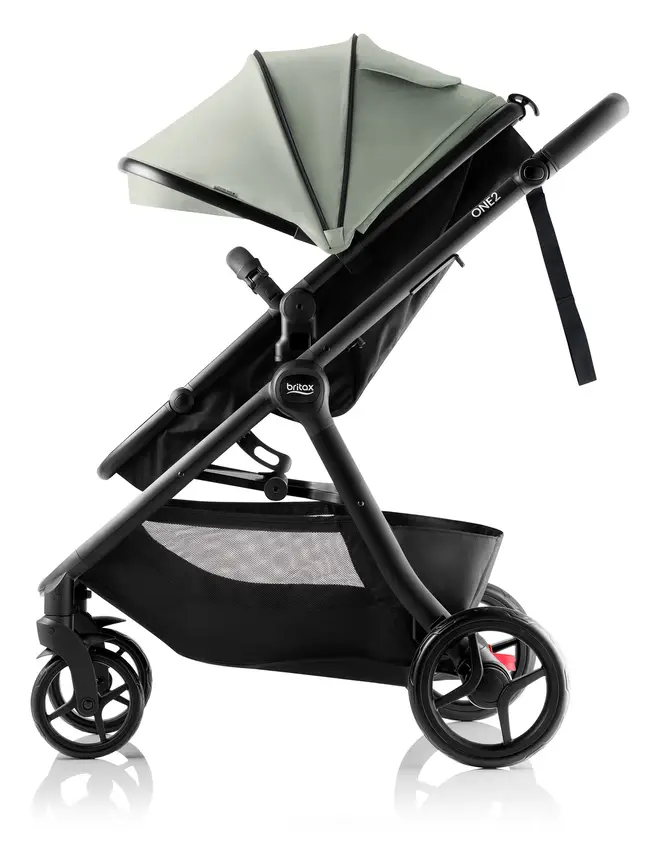


Britax One2
A pram that starts as a single and can take a second child. The seat turns into a lie-flat bassinet.
Read our full review →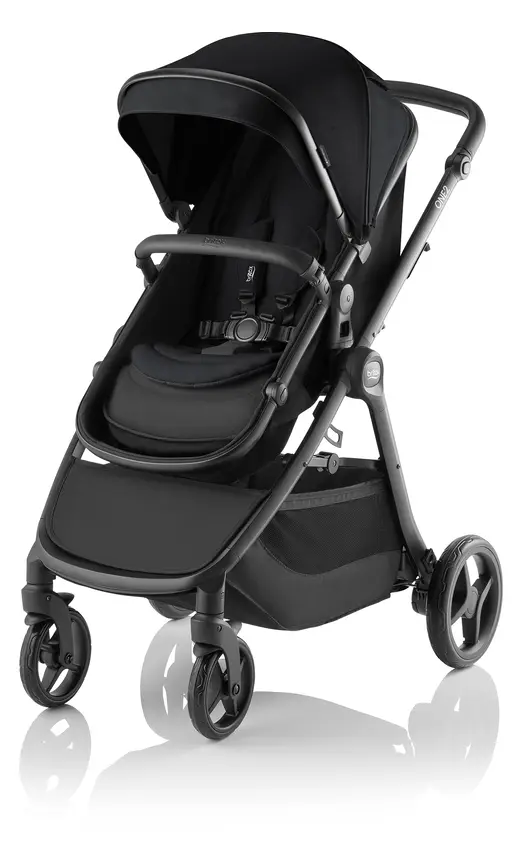
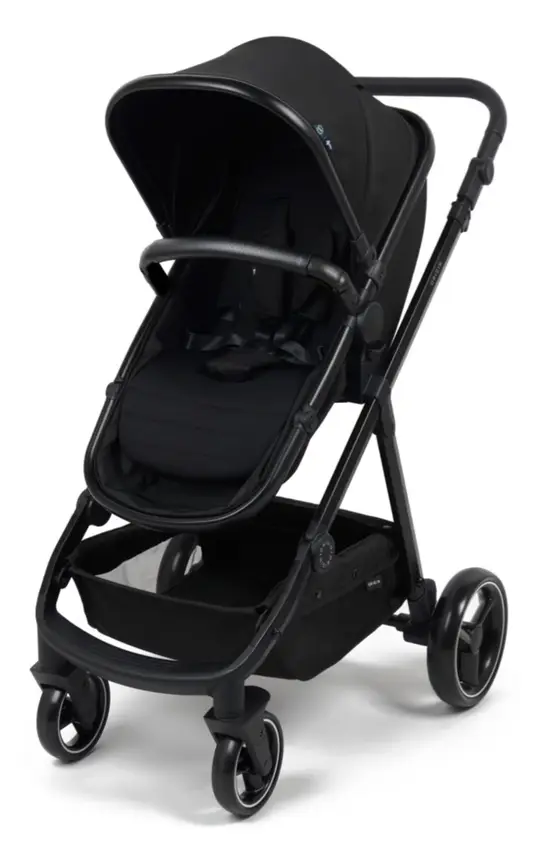
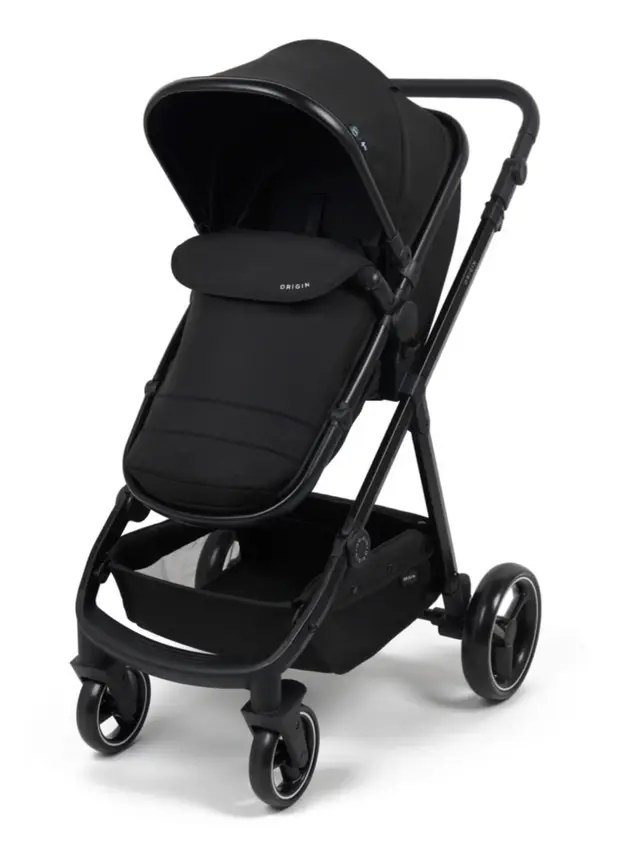
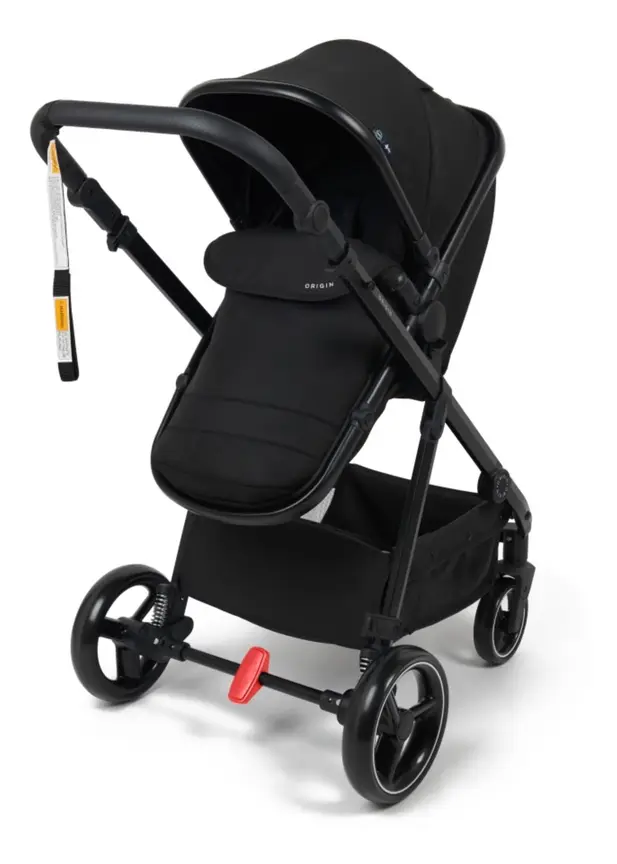
4baby Origin Stroller
A budget pram whose seat turns into a bassinet. The seat can face you or face the world.
Read our full review →
Baby Jogger City Mini GT2
Long-running, lighter all-terrain stroller with a famously simple one-hand strap fold.
Harnesses, brakes and safe loading
Use the harness for each child as the manual shows. Check that the straps sit correctly and fasten securely. Do not leave a child unattended in the pram. A harness does not make the pram a safe place to leave a child alone.
Apply the brake before placing a child in the seat or lifting one out. Use the brake whenever the pram is stopped. Do not assume the pram will stay still on a slope or rough ground.
Keep hands and fingers clear of folding joints. Follow the folding steps in order. Check that the frame locks before placing children in it. Keep children away while you open or close the pram.
Do not hang heavy bags from the handle unless the instructions allow it. Added weight can affect balance. Put shopping in the basket only within its stated limit. Keep items away from the wheels and brakes.
Do not use the pram on stairs or escalators unless the maker specifically allows that use. Lift or carry it only as directed. Get another adult's help if the folded pram is awkward or heavy.
Shopping, storage and car travel
Check the basket's size and access. A tandem's seats may cover some storage space. A side-by-side frame may leave different areas free. Look at the actual pram with both seats fitted.
Ask what can stay attached during folding. Some prams need a seat removed first. Others fold with the seats in place. Follow the exact steps. Do not force a frame that will not fold.
Measure your car boot's opening and inside space. Check the folded pram's width, length and height. Include any seat units or parts you must carry separately. Make sure the boot can close without pressing on the pram.
Keep the pram clear of the driver's view and vehicle controls. Secure loose parts before driving. A pram is not a child car seat. Use an approved car seat for travel in a vehicle.
For public transport, plan where children will sit while you fold the pram. Follow the operator's rules. Never leave a child alone while handling a folded pram or bags.
Used prams, cleaning and upkeep
A used pram can be an option if it is complete and safe to use. Check the frame for cracks, bends or loose joints. Check the wheels, brakes, locks and harness. Ask for the manual and confirm the model name.
Look for missing parts, frayed straps, torn fabric or sharp edges. Check that the folding lock works. Do not use a pram with a fault that could affect its safety. Ask the maker whether a damaged part can be replaced.
Confirm that the pram has not been recalled. Check the recall source for your country. Do this before paying, and again if you inherit a pram later. Keep a record of the model information.
Follow the maker's cleaning instructions. Some covers may be removable; others may need spot cleaning. Do not use harsh cleaners unless the instructions permit them. Let wet parts dry fully before storage.
Check the pram regularly. Look at the wheels, brakes, frame locks and harness. Tighten or replace parts only as the maker directs. Stop using it if a safety part fails.
Common mistakes when choosing a double pram
- Measuring only the doorway: Check the lift, turns, aisles and storage too.
- Assuming every tandem is narrow: Compare the exact model's widest point.
- Assuming a side-by-side cannot fit: Measure and test your real route.
- Forgetting the length: A long frame can make tight turns difficult.
- Trusting a product photo: Photos rarely show clear measurements or turning space.
- Ignoring the folded shape: Check the boot opening and storage spot.
- Guessing about newborn use: Read the seat and bassinet instructions.
- Adding unapproved parts: Use only combinations the maker allows.
- Buying without testing: Push, turn, fold and lift the pram if possible.
- Skipping recall checks: Search for the exact model before buying or using it.
A simple try-before-you-buy checklist
- Write down the ages and sizes of both children.
- List the approved seat setups you need.
- Measure your narrowest doorway and lift.
- Measure your car boot and storage space.
- Ask for the exact pram width, length, weight and folded size.
- Try a doorway, tight turn and narrow aisle.
- Test the brakes, harnesses, frame lock and folding steps.
- Check whether you can lift it safely into your car.
- Read the manual and check the recall page.
- Choose the layout that works for your regular routes.
If you cannot test the pram in person, ask the seller for measured dimensions. Ask whether those measurements include wheels and handles. Get the manual before you buy, if possible.
More options, from budget to premium
Real products from our catalogue. We don't show star ratings or review counts; check the current price, stock and reviews on Amazon before you buy.
 Reviewed
Baby Jogger City Tour 2
A 6.5 kg stroller with a near-flat recline. It folds small and comes with a carry bag.
Read our full review →
Frequently asked questions
Is a tandem double pram always narrower?
No. Tandems often have a narrower layout, but sizes differ. Measure the widest point of the exact model. Check the wheels, handle and any attachments.
Is a side-by-side pram too wide for shops?
Not always. Shop aisles vary, and pram widths vary. Measure the model and test it in the places you visit. Leave room for others to pass.
Which type is easier to push?
There is no answer that fits every family. A tandem can feel long in tight turns. A side-by-side can feel wide on narrow paths. Test both styles with the children seated, where allowed.
Can I use a double pram with a newborn?
Only use a seat or bassinet that the maker says is suitable for a newborn. Follow the manual for the exact model. A reclining seat is not automatically approved for newborn use.
Can two children face different ways?
Some models allow different seat positions. Others do not. Check the instructions for your chosen model. Do not assume that seats adjust independently.
Can I add a standing board for an older child?
Only if the maker allows that board with your pram model. Check the age and weight limits. An added board can affect balance and handling.
Will a double pram fit in my car boot?
Measure the boot opening and inside space. Compare them with the folded pram's measurements. Include separate seats and parts. Try a physical fit before buying if possible.
What should I check when buying a used double pram?
Check the model, manual, frame, wheels, brakes, locks and harness. Look for missing or damaged parts. Check the relevant recall page before use.
Do I need the same safety approval in every country?
Rules differ by country. Check the official product safety guidance where you live. A product sold overseas may not meet local requirements.
Can a pram replace a car seat?
No. A pram is for walking. Use a suitable, approved child car seat in a vehicle. Follow the car seat and vehicle instructions.
Sources and official guidance
- Australia: Product Safety Australia, Prams and strollers mandatory standard.
- Australia: Product Safety Australia, Prams and strollers guide.
- UK: Office for Product Safety and Standards, Office for Product Safety and Standards.
- UK: UK Government, Buy safe, be safe.
- US: Consumer Product Safety Commission, CPSC product safety information.
- Canada: Health Canada, Recalls and safety alerts.
Product features and rules can change. Check current instructions and official advice before buying or using a pram.
Disclaimer: This article is general information, not medical or product-specific advice. Always follow the pram maker's instructions and local safety guidance. BabyGearFinder may earn a commission from qualifying purchases. This does not affect our advice.
Sources
Related guides
More Prams & Strollers →
Side-by-Side vs Inline Tandem Double Prams: Doorways, Kerbs, and How to Choose

Double Tandem vs Side-by-Side Prams for Twins: Weight Balance, Lifting, and Boot Fit

Twin Newborns: How to Choose Bassinets and a Double Stroller (Side-by-Side or Tandem)
