













Stroller Snack Trays and Bumper Bars: How to Choose and Use Them Safely
Stroller snack trays and bumper bars explained: swing-away hinges, pinch guards, safe snacking, cleaning, and pram safety rules in AU, UK, US and Canada.

On this page
- Key points
- What stroller snack trays and bumper bars are
- Swing-away pivot hinges and finger-pinch guards
- Cup wells, food-safe plastics, and dishwasher care
- Bumper bar vs snack tray: side-by-side comparison
- Age stages: from newborn to toddler
- Safe snacking in a stroller
- Safety standards in Australia, the UK, the US and Canada
- How to check fit and compatibility before you buy
- Common mistakes to avoid
- How to clean and maintain hinges and latches
- Frequently asked questions
- Sources
Short answer: A bumper bar is a padded bar across the front of a stroller seat. A snack tray clips into the same spot and adds a flat tray and cup well. Neither one keeps your child safe on its own. Always buckle the five-point harness. Pick a tray or bar with a swing-away hinge and covered joints so little fingers do not get pinched. Park the stroller and sit your child upright before giving snacks.
This guide covers how trays and bars work, how to pick a safe one, and what safety bodies say in Australia, the UK, the US and Canada.
Key points
- Harness first: A bumper bar or snack tray never replaces the seat straps. Always buckle the harness on every trip.
- Swing-away hinges: A hinge that swings open from one side makes lifting a heavy toddler much easier.
- Pinch guards: Covered joints and shielded latches help stop small fingers from getting caught when the bar closes.
- Cup wells and cleaning: Removable, top-rack dishwasher-safe inserts save time. Always check the maker's heat limit first.
- Safe snacking: Stop the stroller and sit your child upright to eat. Eating while bouncing over kerbs raises choking risk.
- Never lift by the bar: Bumper bars are not carry handles. Pulling on one can snap the latch or tip the seat.
What stroller snack trays and bumper bars are
Most strollers have two small sockets on the sides of the seat frame. These sockets hold either a bumper bar or a snack tray.
A bumper bar is a curved bar that sits across your child's lap. Many brands call it a belly bar. It is often covered in foam, soft fabric, or faux leather. Babies like to hold onto it when sitting up. Older babies also use it to rest their arms or attach a toy strap.
A snack tray sits in the same place as a bumper bar. Instead of a simple bar, it has a flat surface with a raised rim. It also has one or two round cup wells. Some trays have a small lid over the snack area to stop crackers from spilling on bumpy paths.
What they do not do
A bumper bar or snack tray is not a restraint. A determined baby can slide under a bar or climb right over it. In Australia, Product Safety Australia warns that a harness must always be fitted and used. The bar is only a comfort feature and a handhold.
A bumper bar is also not a handle for lifting the pram up stairs or into a car boot. The plastic clips are built to hold gentle leans from inside the seat. They are not built to carry the full weight of the stroller and child.
Swing-away pivot hinges and finger-pinch guards
Older trays and bars had to be pulled off with both hands at the same time. That meant holding a wriggling toddler on one hip while trying to press two side buttons. Most newer designs fix this problem with a swing-away pivot hinge.
How a swing-away hinge works
A swing-away hinge lets you unclip one side of the bar or tray while the other side stays attached. The bar pivots outward like a little gate. You can lift your child straight into the seat or let an older toddler climb in on their own. Then you swing the bar back until it clicks shut.
Better designs let you open the bar from either the left or the right side. This helps when you are parked next to a wall or another car. Dual-action release buttons are also helpful. These need two small moves, like a squeeze and a pull, so a curious toddler cannot pop the bar open from inside.
Why finger-pinch guards matter
Any folding or swinging joint creates a scissor point. When the bar swings shut, a child's finger or palm can sit right near the socket. A finger-pinch guard is a plastic sleeve, collar, or raised lip that covers the moving metal or plastic hinge.
Before you buy a tray or bar, open and close the hinge yourself. Look closely at the gap where the bar meets the socket.
- Check the gap: There should be no wide opening that shrinks down to nothing as the bar closes.
- Feel the edges: Run a finger along the underside of the joint. Sharp mould seams can scratch small hands.
- Test the click: Close the bar with one firm push. It should lock cleanly with a clear click and no wobble.
- Pull test: Give the closed bar a gentle tug away from the seat. It should stay locked.
Stroller safety standards in Australia, the UK and the US include strict rules on shear and pinch points. Even so, dirt and dried food crumbs can jam a latch over time. Check the joint often to make sure it still closes smoothly.
Prams & Strollers worth a look
Real products from our catalogue. We don't show star ratings or review counts; check the current price, stock and reviews on Amazon before you buy.
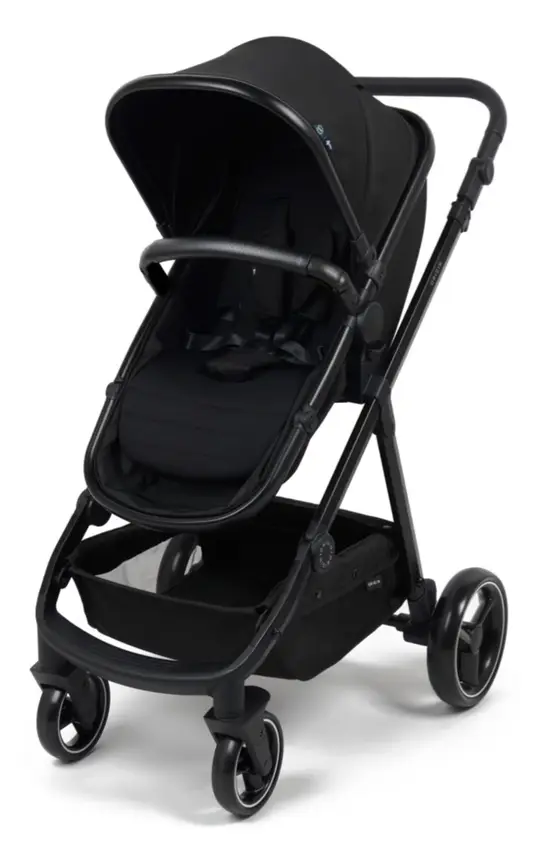
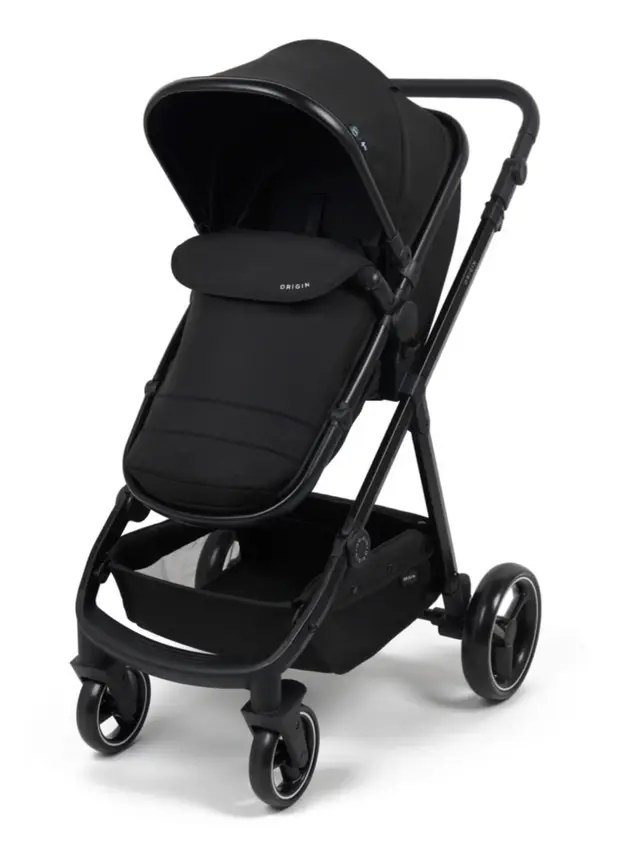
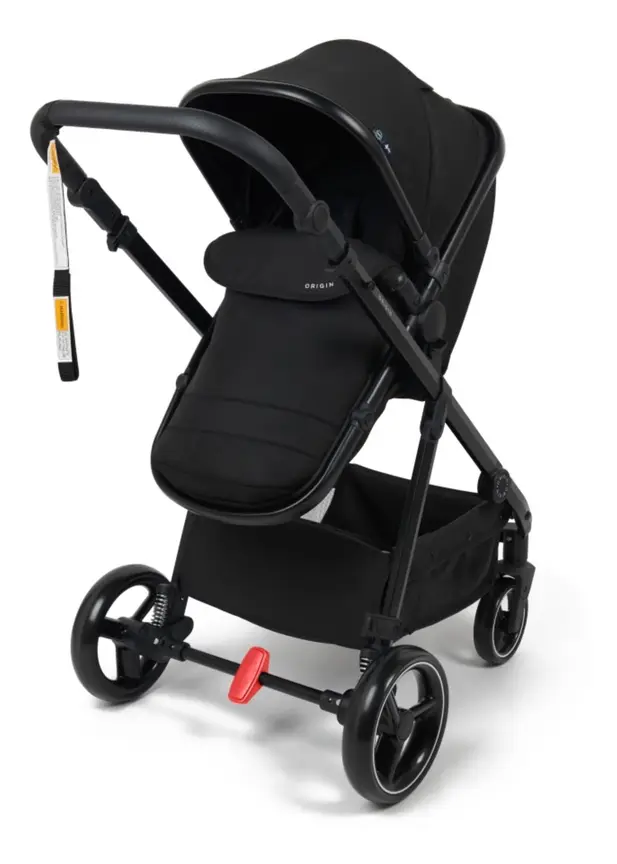
4baby Origin Stroller
A budget pram whose seat turns into a bassinet. The seat can face you or face the world.
Read our full review →
Baby Jogger City Mini GT2
Long-running, lighter all-terrain stroller with a famously simple one-hand strap fold.
 Reviewed
Baby Jogger City Tour 2
A 6.5 kg stroller with a near-flat recline. It folds small and comes with a carry bag.
Read our full review →
Cup wells, food-safe plastics, and dishwasher care
A snack tray gets messy fast. Milk spills, squashed fruit, and cracker crumbs end up in every corner. The design of the tray decides how much time you spend scrubbing it.
Cup wells that hold bottles steady
Shallow cup holders spill easily when you push a stroller over kerbs or gravel. Look for a cup well that is deep enough to hold at least half the height of a standard sippy cup or drink bottle. Some cup wells have soft rubber or silicone grip tabs inside. These flexible fingers hug smaller pouches and narrow bottles so they do not rattle and tip over.
Drain holes at the bottom of the cup well are a mixed blessing. They stop rainwater or spilled juice from pooling in the cup holder. On the other hand, sticky drinks can drip straight onto your child's knees or shoes. A removable cup insert without a hole at the bottom is often cleaner and easier to rinse in the sink.
Food-safe materials
Babies put their mouths on everything within reach. Many toddlers chew straight on the edge of a snack tray or gnaw on a foam bumper bar. Make sure the tray is made from food-contact plastic or food-grade silicone. Look for clear labels stating it is free from BPA and phthalates.
Food Standards Australia New Zealand (FSANZ) notes that BPA can move in tiny amounts from some plastics into food, especially when heated. The US FDA and Health Canada also restrict BPA in certain baby feeding products. Using BPA-free, food-grade materials and avoiding high heat keeps wear and chemical release low.
Check foam bumper bars often as well. If your baby bites chunks out of a foam bar, those bits become a choking hazard. Take the bar off or fit a washable zip-on fabric cover if your baby likes to chew on it.
What dishwasher-safe really means
Many brands advertise "dishwasher-safe" snack trays. Read the fine print before you put the whole unit into the machine. Often, only the removable top tray insert is safe for the dishwasher. The base frame usually holds metal springs, pivot pins, and plastic latches.
- Use the top rack only: Heating elements sit at the bottom of most dishwashers. High heat can warp thin plastic clips so they no longer lock into the stroller.
- Keep metal hinges out: Dishwasher detergent and steam can rust small steel springs inside the pivot joint. That makes the latch stiff or sticky.
- Skip the sanitise cycle: Very hot drying cycles can twist tray rims and fade colours. Warm water and mild dish soap in the sink are often gentler and just as clean.
- Dry the latch sockets: Shake water out of the hinge before snapping it back onto your stroller.
For a padded bumper bar, wipe it down with warm soapy water and a damp cloth. If it has a zip-off cover, wash the cover in cold or warm water and let it air-dry completely before zipping it back on. Trapped moisture inside a fabric sleeve can grow mould.
Bumper bar vs snack tray: side-by-side comparison
You do not always need both a bumper bar and a snack tray. Your choice depends on your stroller model and how you use it each day. The table below compares the four most common options.
| Feature | Standard bumper bar | Fixed snack tray | Swing-away snack tray | Universal clamp-on tray |
|---|---|---|---|---|
| Main job | Handhold and light toy attachment | Holds snacks and drinks in one piece | Holds snacks and drinks with easy gate access | Adds a tray to strollers without built-in sockets |
| Getting child in | Pull off one or both sides, or thread legs under | Must lift child up and over, or unclip whole tray | Unclip one side and swing open like a gate | Varies by clamp; often stays fixed in place |
| Folding with pram | Often folds flat with the seat | Usually must be removed before folding | Sometimes folds, but often sticks out | Almost always must be removed to fold |
| Cleaning | Wipe with damp cloth or wash zip cover | Wipe down; hard to soak if hinges are attached | Best if top insert pops off for sink or top rack | Easy to remove, though clamps trap crumbs |
| Best age | 6 months to 3 years | 9 months to 2 years | 9 months to 3 years | 1 to 3 years, as a backup option |
If your stroller folds small for car boots or buses, a bulky snack tray can get in the way. Many parents keep a slim bumper bar on the pram during the week and only clip on the snack tray for long park walks or zoo trips.
Age stages: from newborn to toddler
Your baby's needs change quickly in the first three years. A bar or tray that helps at 14 months is useless or even annoying at 2 months.
Newborn to 6 months
Young babies cannot sit up on their own. They need a flat bassinet or a fully reclined seat with a proper newborn insert. At this stage, you do not need a snack tray. Your baby is only drinking breastmilk or formula, and a tray across a reclined seat just blocks your view and gets in the way of lifting them out.
If your pram has a bassinet, some models come with a carry bar across the top. Check the manual carefully. Only lift a bassinet by its bar if the maker clearly states it is built as a carry handle and locks upright.
6 to 12 months
Around 6 months, many babies start sitting with support and tasting solid foods. If your baby can sit upright with good head and neck control, a padded bumper bar can give them something steady to grip. It also gives you a safe place to tether a soft rattle with a short strap.
Keep toy straps very short. Long cords or ribbons tied to a bumper bar can wrap around a baby's neck or catch on moving wheels. Do not hang heavy bags or clip fans with exposed blades onto the bar where tiny fingers can reach.
12 to 24 months
One-year-olds love to walk part of the way and ride the rest. Lifting a heavy toddler up and over a fixed bar gets tiring fast. This is where a swing-away hinge proves its worth. Open one side, let your child step in, and buckle the five-point harness before swinging the bar shut.
This is also the main stage for a snack tray. Toddlers often want water and small snacks during long errands. Having a dedicated cup well keeps water bottles off the footpath.
2 to 3 years and up
Older toddlers have longer legs and may feel cramped behind a low snack tray. Check that the tray does not press into your child's tummy or thighs. If their knees hit the underside of the tray, swap back to a slim bumper bar or take the bar off completely. At this age, most children can hold a water bottle themselves and wait until you stop at a bench for food.
Safe snacking in a stroller
A snack tray makes eating on the go look easy, yet moving strollers are not ideal dining chairs. Choking is quiet and fast. You cannot see your child's face clearly when you are walking behind a forward-facing seat.
Stop the stroller to eat
The safest habit is simple: park the stroller, put the brake on, and sit your child upright before handing over food. The American Academy of Pediatrics (AAP) and the NHS both advise that young children should sit upright and stay still while eating. Walking, running, or bouncing in a stroller makes it much harder for a child to swallow safely.
If your child is slumped back in a reclined seat for a nap, never give them food or a bottle propped up on the tray. Wait until they are wide awake and sitting straight.
Watch for choking hazards
Even when parked, keep high-risk foods off the stroller tray. Health bodies including the AAP, NHS, and Better Health Channel warn against hard, round, or sticky foods for babies and toddlers.
- Skip whole round foods: Whole grapes, cherry tomatoes, and large berries must be cut into tiny quarters lengthwise.
- Avoid hard snacks: Whole nuts, raw carrot sticks, and hard apple chunks are unsafe for under-fours.
- Watch dry crackers: Dry rice cakes or puffed snacks can stick to the roof of the mouth if a child does not have water nearby.
- Keep hot drinks away: Never put your own takeaway coffee or hot tea in a child's tray cup well. One bump can tip scalding liquid onto your child's lap.
Always stay within arm's reach while your child eats. If you are pushing the pram through a busy shop, wait until you find a quiet spot to stop for snack time.
Side by side: more prams & strollers to compare
Real products from our catalogue. We don't show star ratings or review counts; check the current price, stock and reviews on Amazon before you buy.
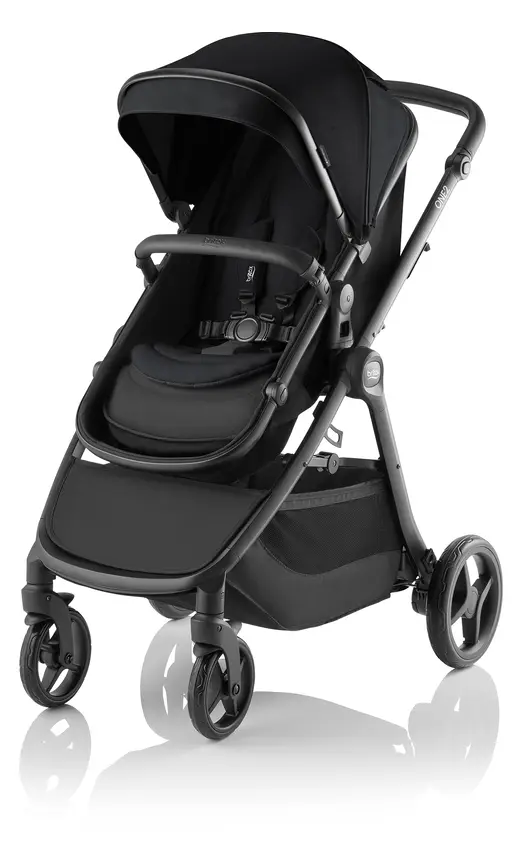
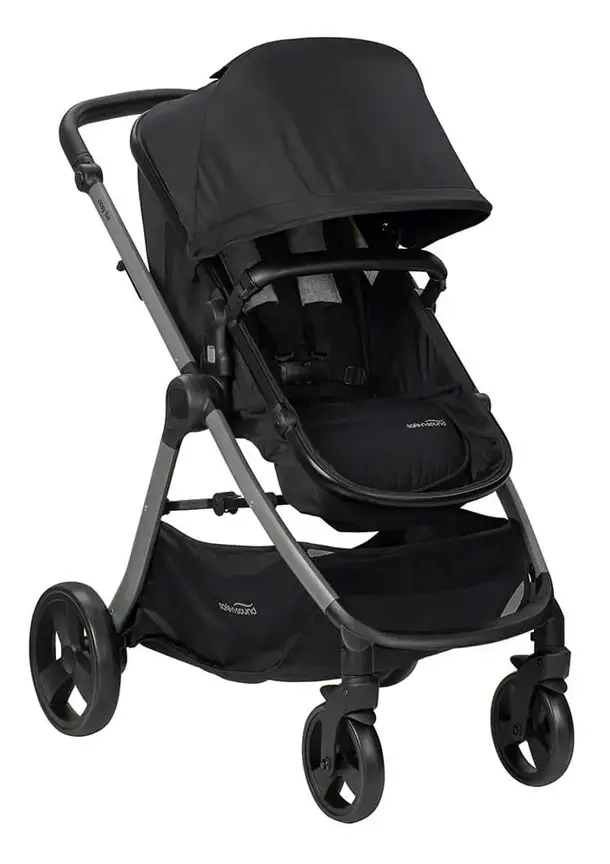

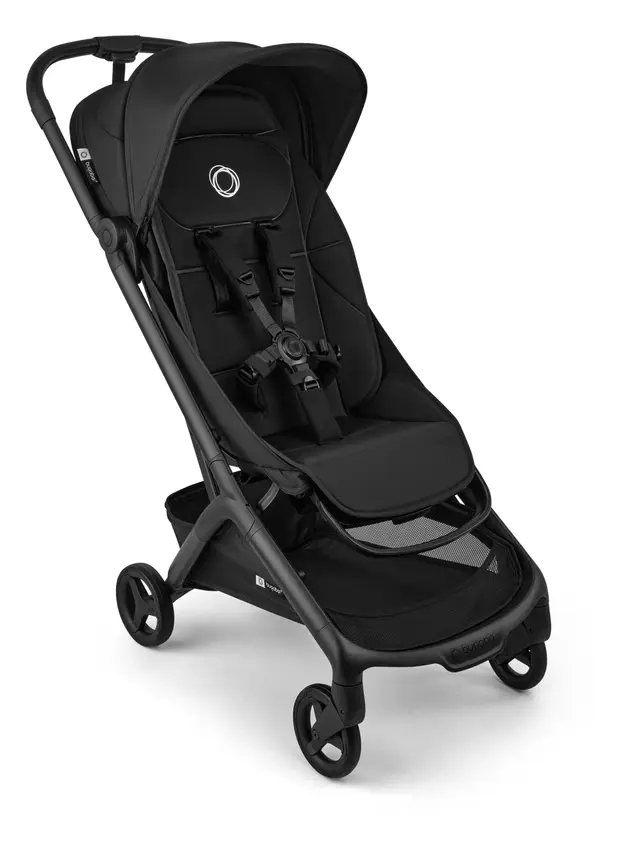
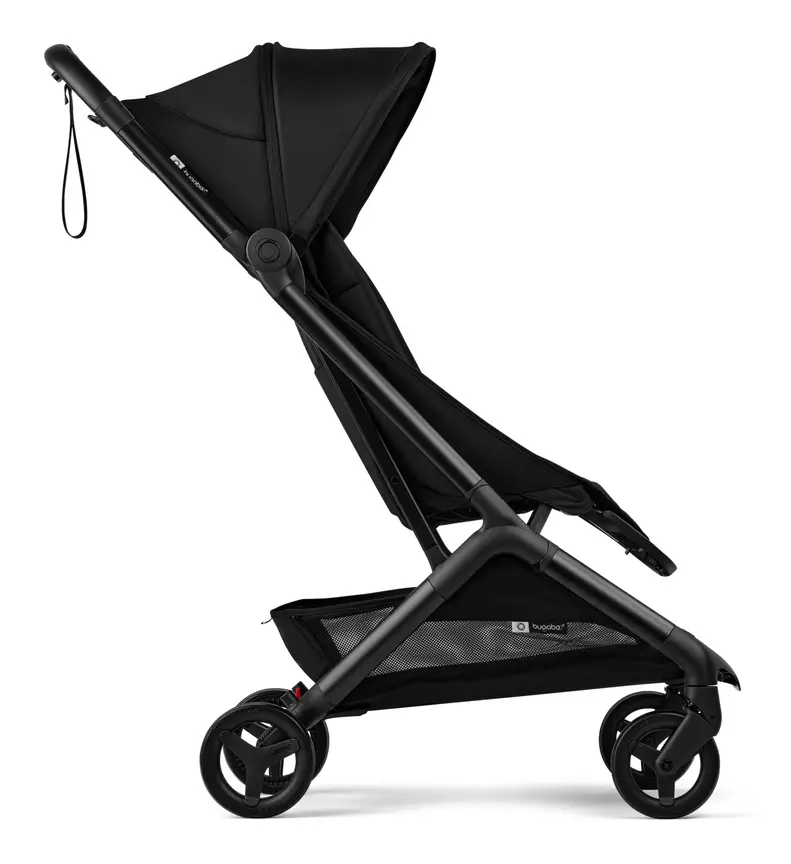


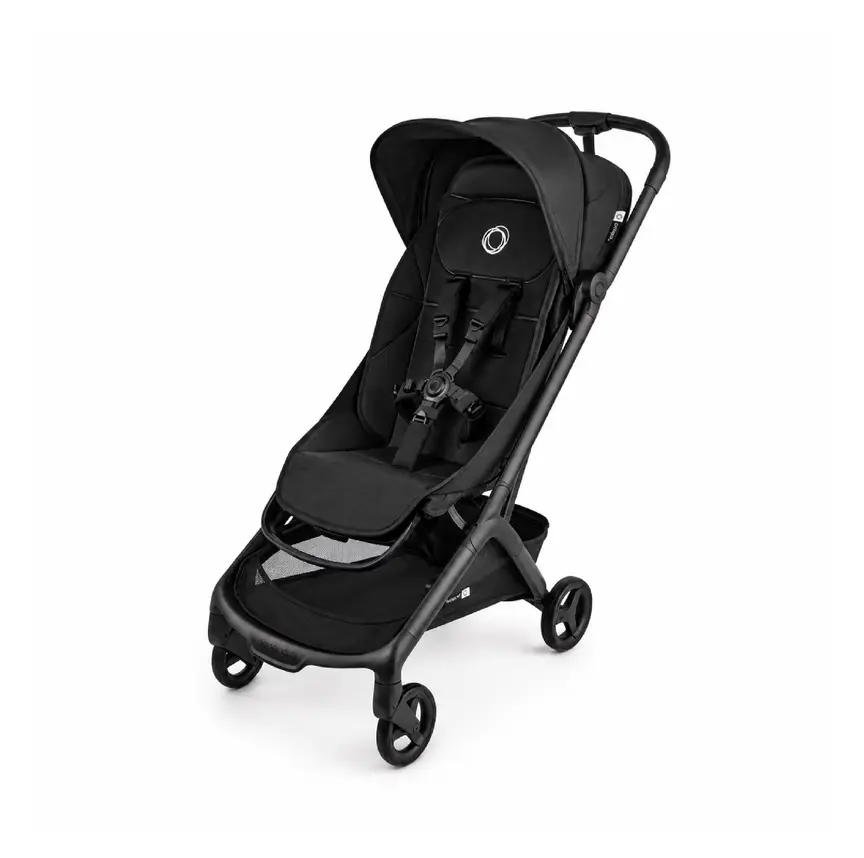
Bugaboo Butterfly
Bugaboo's cabin-friendly compact stroller with a one-second fold — the travel partner to a Fox, not a replacement for it.
Bugaboo Butterfly 2
The newer Butterfly. It folds in about one second, has a lay-flat seat and a bigger basket with a back pocket.
Read our full review →Safety standards in Australia, the UK, the US and Canada
Stroller accessories are usually tested as part of the stroller itself. A snack tray or bumper bar sold by the pram maker must pass the same safety checks as the main frame. That includes tests for sharp edges, pinch points, small detachable parts, and entrapment gaps.
Here is how the main safety rules and official bodies line up across Australia, the UK, the US and Canada.
| Country | Main stroller standard or rule | Key safety bodies | Where to check recalls |
|---|---|---|---|
| Australia | AS/NZS 2088 (mandatory pram and stroller standard) | ACCC / Product Safety Australia, Kidsafe Australia, Raising Children Network | Product Safety Australia recalls page |
| United Kingdom | BS EN 1888 (wheeled child conveyances standard) | Office for Product Safety and Standards (OPSS), RoSPA, NHS | UK Government product safety alerts |
| United States | ASTM F833 (carriages and strollers standard, federal rule) | Consumer Product Safety Commission (CPSC), American Academy of Pediatrics (AAP) | CPSC recalls database |
| Canada | Federal carriages and strollers regulations (safety rules for frames, brakes, and restraints) | Health Canada, Caring for Kids (Canadian Paediatric Society) | Health Canada Recalls and Safety Alerts |
What these rules mean for your tray or bar
In Australia, AS/NZS 2088 requires prams and strollers to have a proper restraint system, clear warning labels, and no dangerous finger traps or head-entrapment gaps. In the UK, BS EN 1888 covers similar checks for strength, locks, and pinch hazards. In the US, ASTM F833 sets rules for latch strength, small parts, and tray openings so a child's head or body cannot slip into a gap and get stuck. Health Canada enforces strict national rules on stroller stability, restraints, and small parts too.
Notice an important gap: third-party universal trays sold online by unknown brands are rarely tested against your specific stroller frame. If a universal clamp slips or creates a weird gap between the tray and the seat, it can become a pinch or entrapment risk. Stick to the tray made for your stroller model whenever you can.
Check for recalls before buying second-hand
Second-hand prams and trays are a great way to save money, provided nothing is broken or recalled. Over the years, several stroller brands have recalled bumper bars and trays because babies bit off foam pieces or caught fingers in exposed hinges. Before you buy used gear, search the brand and model name on your national recall site:
- Product Safety Australia (ACCC) for Australia.
- Office for Product Safety and Standards (OPSS) for the UK.
- Consumer Product Safety Commission (CPSC) for the US.
- Health Canada Recalls and Safety Alerts for Canada.
How to check fit and compatibility before you buy
Stroller parts are rarely one-size-fits-all. Even within the same brand, a tray made for a single stroller often will not fit the double version of that pram.
Brand-made click-in attachments
A tray or bar made by your stroller's brand clicks straight into the built-in frame sockets. This gives the cleanest fit. It sits at the right height for your child's tummy and usually leaves room for the harness buckles.
Before ordering, check the exact model name and year of your stroller. Brands sometimes change the shape of the socket between older and newer releases. Look on the frame sticker near the rear axle or under the seat to find your model code.
Universal clamp-on trays
Some lightweight travel strollers do not have sockets for a bumper bar or snack tray. In that case, parents sometimes look at universal clamp-on trays. These use plastic jaws or Velcro straps to grip the side tubes of the stroller frame.
If you try a universal tray, check four things right away:
- Tube shape: Most clamps grip round tubes well, yet slide off flat, square, or thick oval frames.
- Grip strength: Push down firmly on the front edge of the tray. If it tilts or twists, a toddler pushing on it can knock it loose.
- Harness clearance: Make sure the clamp does not block the shoulder or waist strap adjusters.
- Frame damage: Over-tightening a hard plastic clamp on a thin aluminium frame can dent the metal or scratch the paint.
Does it fold with the stroller?
Check whether your stroller folds with the bar or tray still clicked in. Many bumper bars pivot inward so the pram folds flat. Hard plastic snack trays rarely fold flat because the cup wells stick out. If you take the pram in and out of a car boot ten times a week, having to unclip and store a bulky tray every single time can get annoying quickly.
Common mistakes to avoid
Most stroller tray and bar problems come from everyday habits rather than faulty parts. Watching out for these five mistakes keeps your setup safe and makes it last longer.
1. Skipping the harness on short trips
It is tempting to just click the bumper bar shut for a two-minute walk from the car to the shop. Do not do it. A baby can slide down feet-first under the bar or stand up and topple over the front. Always clip the five-point harness, including the crotch strap and waist belt.
2. Lifting the pram by the bumper bar
When you hit a step or a high kerb, grabbing the front bar feels natural. Over time, pulling up on the bumper bar bends the side sockets or cracks the plastic release pins. Use the main frame tubing or the rear push handle to tilt and lift the stroller instead.
3. Hanging shopping bags on the bar
Hanging a heavy handbag or shopping tote from the bumper bar pulls the front of the seat forward. Even worse, hanging bags on the push handle tips the pram backward. Put heavy bags in the under-seat basket where the weight sits low between the wheels.
4. Walking fast while your toddler eats
Pushchairs bounce over tree roots, paving cracks, and road crossings. That sudden jolting makes it easy for a child to inhale a piece of cracker or fruit. Stop in the shade, put the brake on, and let them finish their snack before moving again.
5. Leaving food and damp crumbs in the hinge
Smashed banana and biscuit dust work their way into swing-away pivot hinges. Once they dry, the release button can jam half-open, which stops the bar from locking properly. Wipe the hinge pins with a damp cloth once a week and let them dry.
How to clean and maintain hinges and latches
A quick five-minute check once a month keeps your bumper bar or snack tray working smoothly.
- Unclip the whole unit: Take the tray or bar completely off the stroller frame.
- Brush out crumbs: Use an old dry toothbrush to sweep dry crumbs out of the frame sockets and pivot joints.
- Wash the food surface: Wash the tray or removable insert with warm water and mild dish soap. Rinse well and air-dry.
- Check the springs and buttons: Press each release button a few times. It should spring back cleanly without sticking.
- Inspect for cracks or chewed foam: Look at the plastic clips for white stress marks or hairline cracks. Replace any cracked clip or flaking foam bar right away.
Never spray thick cooking oil or heavy grease into a sticky plastic hinge. Grease attracts sand and grit, which grinds down the plastic parts faster. Warm water and a dry cloth are usually all you need.
More options, from budget to premium
Real products from our catalogue. We don't show star ratings or review counts; check the current price, stock and reviews on Amazon before you buy.


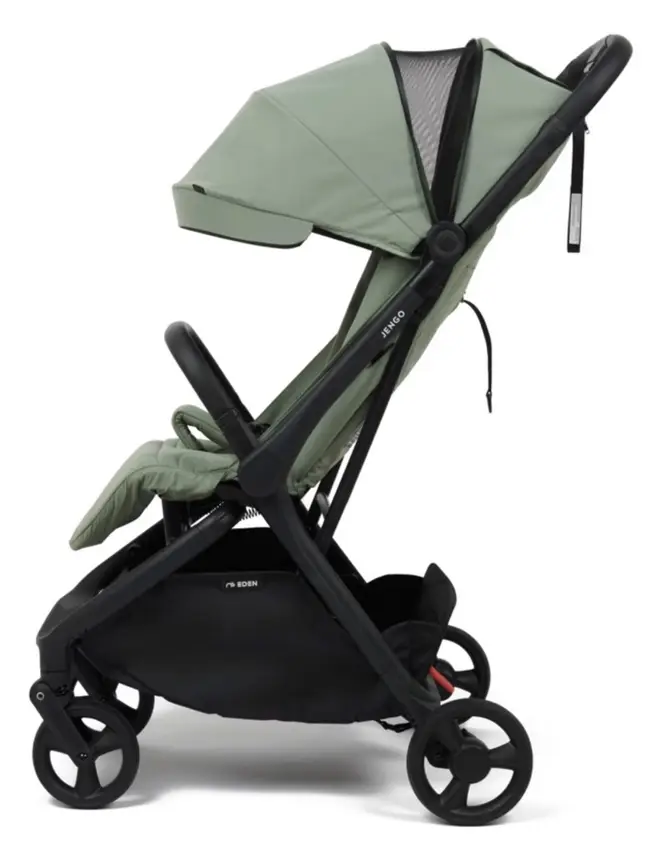
Jengo Eden Compact Stroller
A budget compact stroller from birth to 22 kg. It folds with one hand and has a big basket.
Read our full review →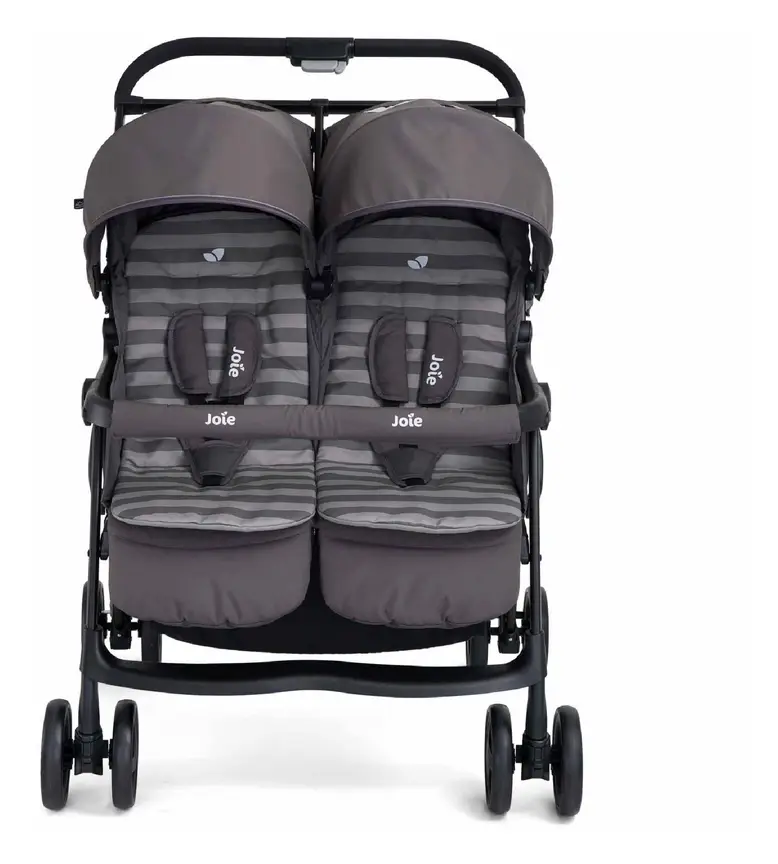
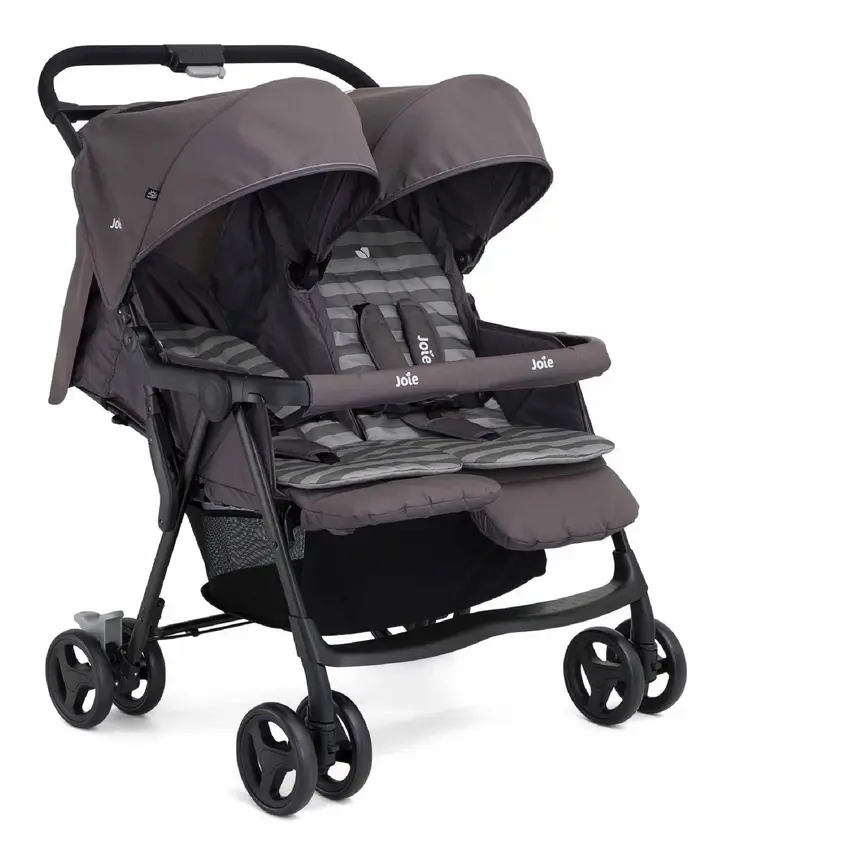

Joie Aire Twin
A lower-cost side-by-side double. Each seat lies flat and reclines on its own.
Read our full review →
Joie Nitro Stroller
A light, low-cost umbrella stroller with a flat recline, so it works from birth.
Frequently asked questions
Do I still need to use the harness if my stroller has a bumper bar?
Yes, every single time. A bumper bar or snack tray is not a safety restraint. Babies can slip under a bar or climb over the top in seconds. Product Safety Australia, the UK's RoSPA, the US CPSC and Health Canada all stress using the stroller's built-in harness on every trip.
Can my pram fold with a snack tray attached?
It depends on the stroller model. Many strollers fold with a slim bumper bar still attached, because the bar bends or tucks inward. Most rigid snack trays stick out too far and must be unclipped before folding. Check your stroller's user manual before you buy a tray.
Are all stroller snack trays dishwasher-safe?
No. Some trays are wipe-clean only. Others have a removable plastic insert that is top-rack dishwasher-safe, while the base with the hinge must be hand-washed. High dishwasher heat can warp clips and rust metal springs inside the pivot joint. Always follow the care label from the maker.
When can my baby start using a stroller snack tray?
Wait until your baby can sit upright well on their own and has started solid foods, usually around 6 to 9 months or older. Even then, only give snacks when the stroller is parked with the brake on and the seat is upright. Never offer food while your baby is reclined or while you are walking.
Are universal clip-on trays as safe as brand-made trays?
Brand-made trays are usually safer and fit much better. They lock into the stroller's own sockets and are tested with that frame. Universal clamp-on trays can slip on flat or oval frame tubes, pinch fingers near clamps, or block harness straps. If you use a universal tray, test that it locks tightly and leaves no unsafe gaps.
Can I lift my stroller by the bumper bar?
No. Bumper bars are not built to carry the weight of the stroller or your child. Lifting by the bar can snap the plastic latches or pull the bar out of the frame while your child is inside. Always lift from the main metal frame as shown in your stroller manual.
Sources
- Product Safety Australia – Prams and strollers guide
- Product Safety Australia – Prams and strollers mandatory standard
- UK Office for Product Safety and Standards
- RoSPA – Child safety at home
- American Academy of Pediatrics (US) – Choking prevention
- NHS – Children's food: safety and hygiene
- Health Canada – Recalls and safety alerts
- Food Standards Australia New Zealand – Bisphenol A (BPA)
Related guides
More Prams & Strollers →
Portable Stroller Toys: How to Choose and Use Them Safely
Stroller Cup Holders and Phone Bags: How to Choose and Use Them Safely

How to Choose and Use a Stroller Snack Tray Safely
