














Reversible Handle vs Reversible Seat Prams: Steering, Kerb Pop, and How to Choose
Reversible handle vs reversible seat prams explained simply. Compare steering, kerb pop, weight, and safety standards in AU, UK, US and Canada.

On this page
- Key points
- What reversible handle and reversible seat mean
- What "kerb pop" is and why it matters
- How steering and wheels change
- Side-by-side comparison: reversible handle vs reversible seat
- How your baby's age and stage affect your choice
- Safety standards in Australia, the UK, the US and Canada
- How to test both designs before you buy
- Common mistakes parents make
- Frequently asked questions
- Sources
Short answer: A reversible handle pram lets you flip the push bar over the seat in seconds. A reversible seat pram lets you unclip the seat, turn it around, and click it back in. Both let your baby face you or face forward. However, a reversible seat usually steers better and lifts up kerbs much more easily. A reversible handle is faster to switch when sun or wind hits your baby's face, but it can feel awkward when pushed in reverse.
Safety rules for prams and strollers are strict in Australia (ACCC and AS/NZS 2088), the UK (OPSS and BS EN 1888), the US (CPSC and ASTM F833), and Canada (Health Canada). Whichever style you pick, check that it meets your local safety standard and has a working brake, wrist strap, and five-point harness.
Key points
- Reversible handle: Fast to flip from back to front. No need to take the seat off.
- Reversible seat: Takes two hands to lift and turn. Keeps the big wheels at the back all the time.
- Kerb pop: Pushing down on the handle to lift the front wheels up a step. Reversible seats do this far better.
- Steering: Small front swivel wheels make turning easy. Flipping a handle puts those swivel wheels at the back unless the pram has four-wheel swivel.
- Frame feel: A reversible handle needs a hinge on the side arms. Over time, that hinge can add weight or slight rattle.
- Safety first: Never turn a reversible seat with your baby inside unless the manual clearly says you can.
What reversible handle and reversible seat mean
Parents often want two ways to push a pram. Young babies like to see your face. Older babies like to look out at trees, dogs, and people. Both designs give you those two views. They just work in very different ways.
How a reversible handle works
A reversible handle has hinges on the frame near the seat. You pull two latches on the handle, then swing the push bar right over the top of the canopy. Now you are standing at the other end of the pram.
The seat itself does not move. Your baby stays strapped in the same spot. You can do this in a few seconds while out on a walk. That is handy if the sun moves into your baby's eyes or a cold wind starts blowing.
How a reversible seat works
A reversible seat has a separate seat unit that clicks onto the main frame. To change direction, you press the release buttons on each side. You lift the whole seat off, turn it 180 degrees, and drop it back into the slots until it clicks.
The frame and wheels stay facing the same way. Only the seat turns around. Most manuals tell you to take your baby out before you lift and turn the seat. Doing it with a child inside can strain your back or cause a drop if one side slips.
Why parent-facing vs world-facing matters
In the first months, parent-facing helps you bond and keep watch. You can see if your baby's chin drops onto their chest. You can also talk to them, smile back, and check if they are too hot or cold.
Later on, many babies get curious and bored facing backwards. Turning them to face the world lets them see what is ahead. Having both options lets you match the pram to your baby's mood and stage.
Prams & Strollers worth a look
Real products from our catalogue. We don't show star ratings or review counts; check the current price, stock and reviews on Amazon before you buy.
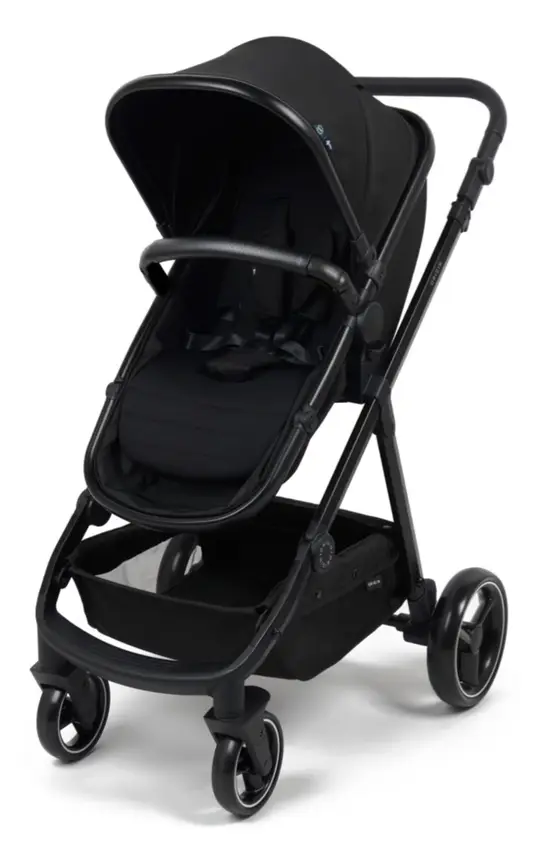
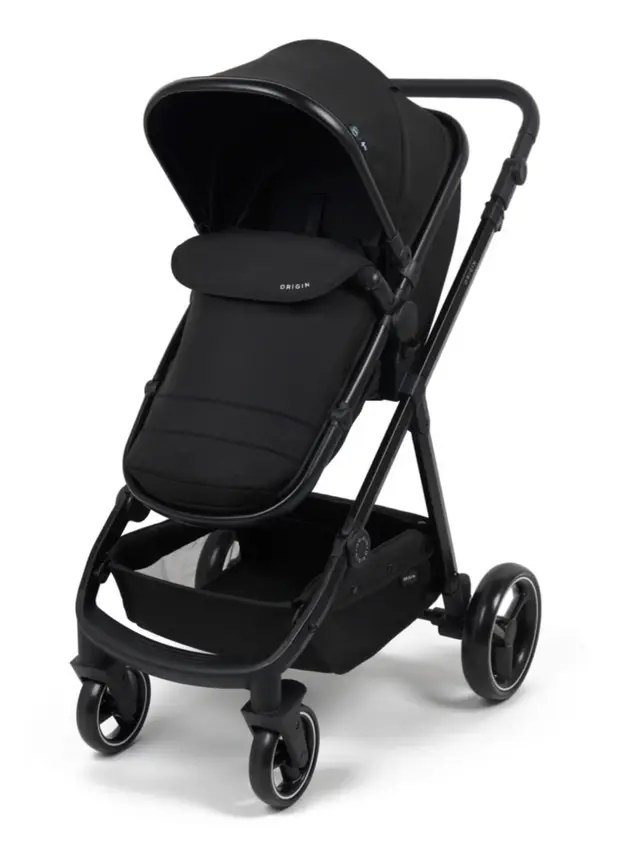
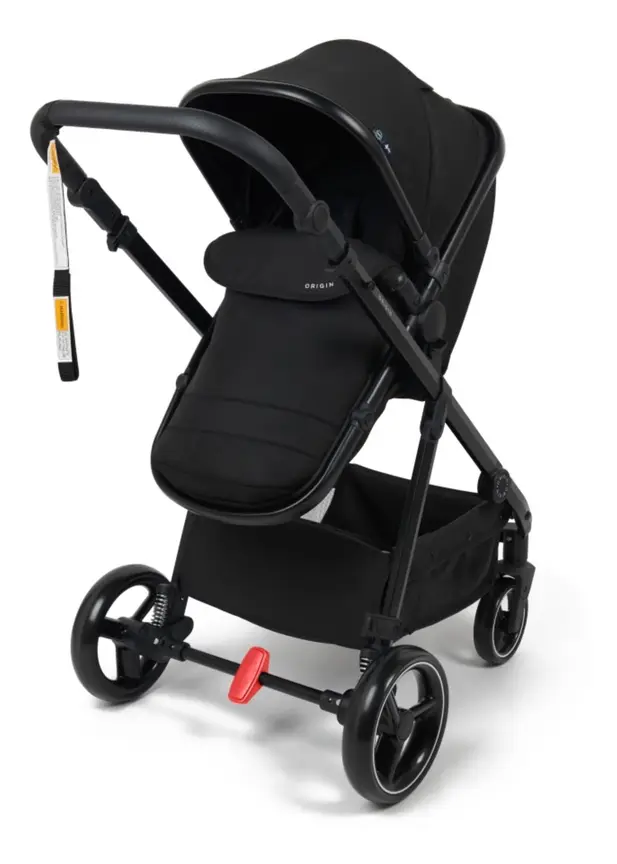
4baby Origin Stroller
A budget pram whose seat turns into a bassinet. The seat can face you or face the world.
Read our full review →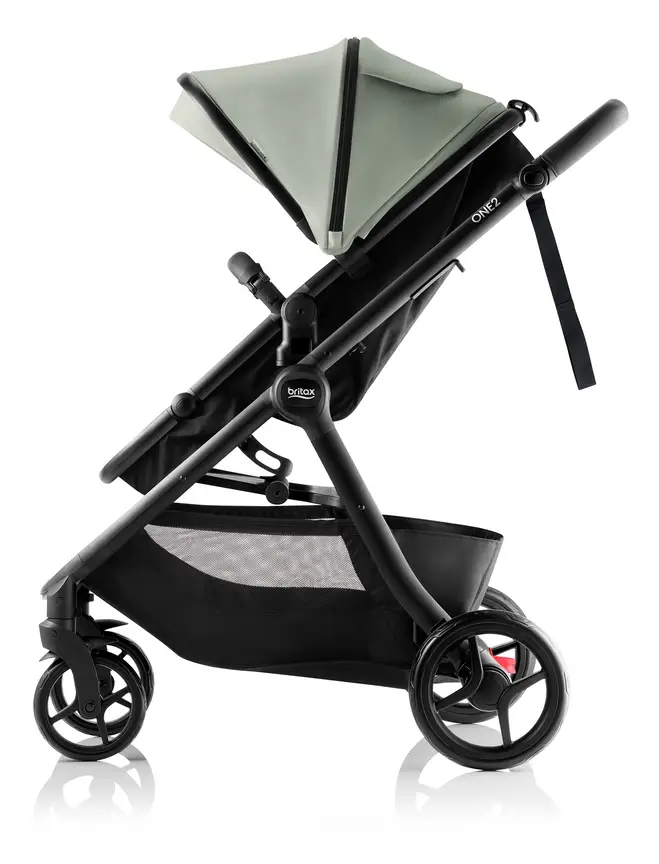
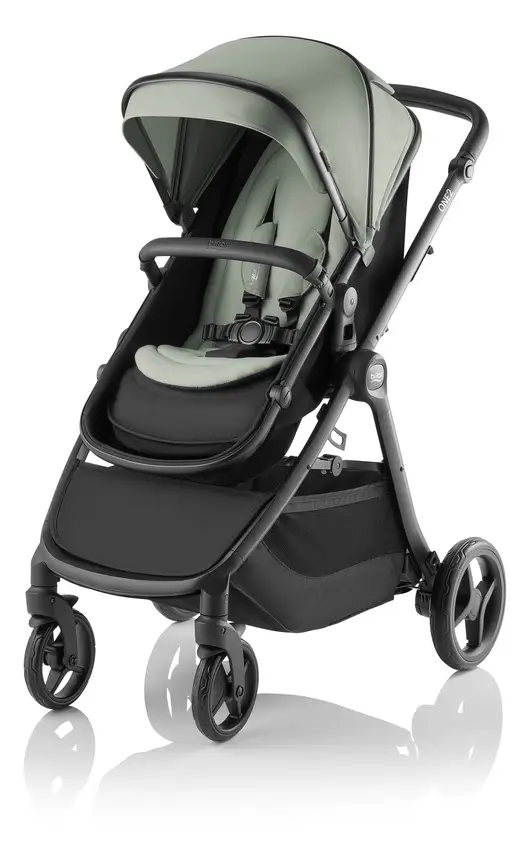


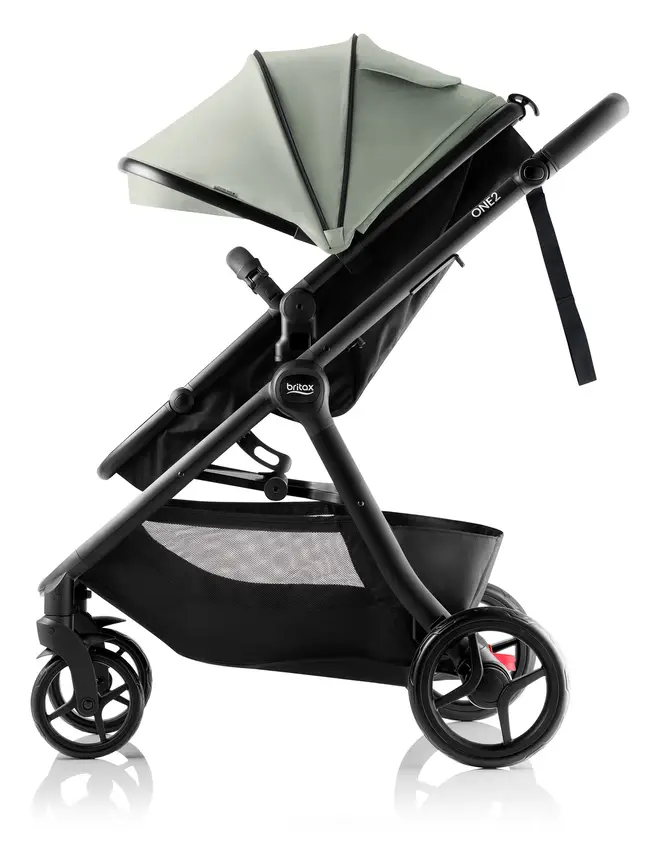


Britax One2
A pram that starts as a single and can take a second child. The seat turns into a lie-flat bassinet.
Read our full review →
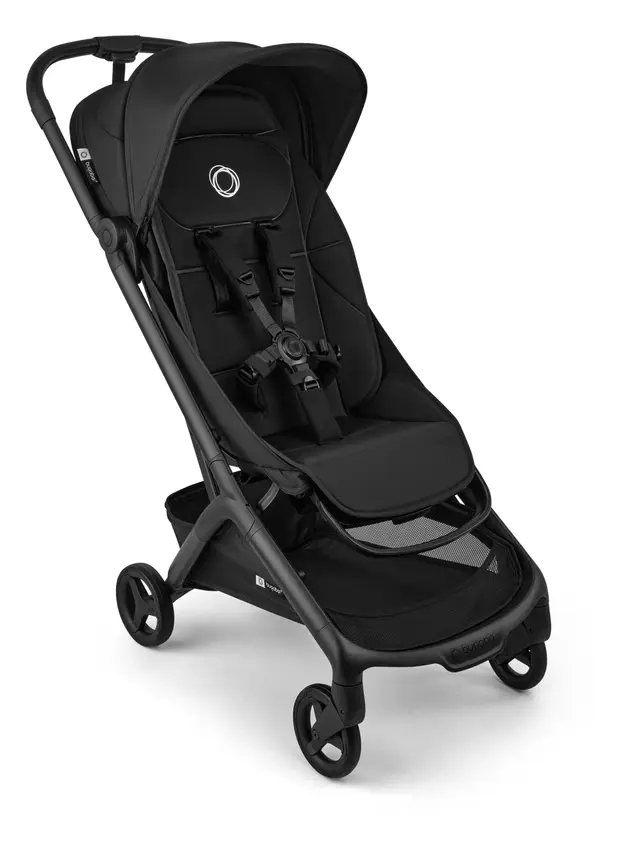
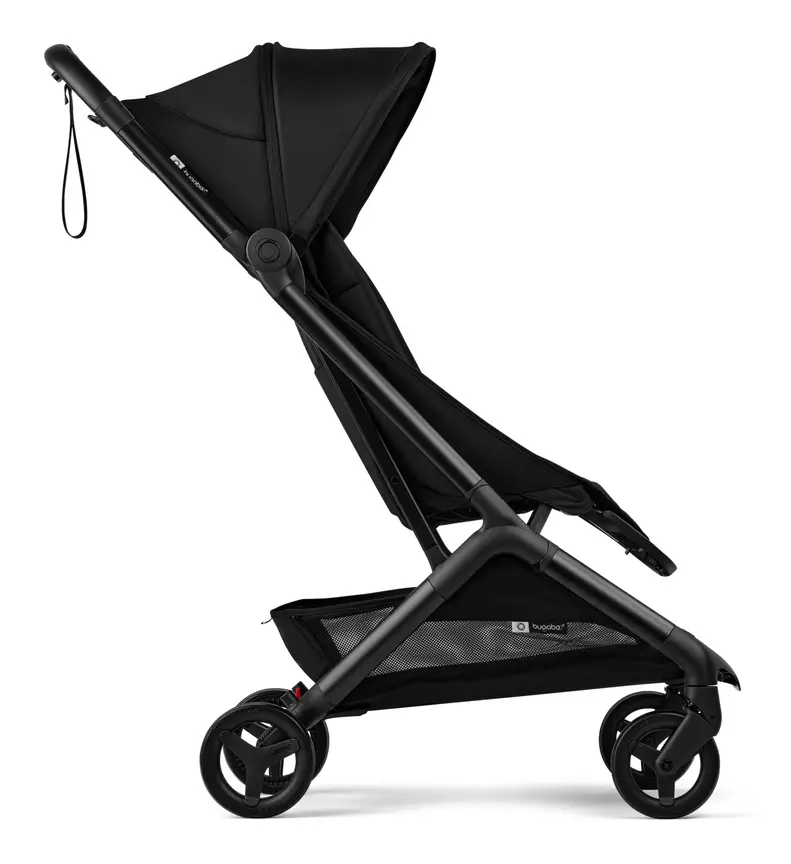


Bugaboo Butterfly 2
The newer Butterfly. It folds in about one second, has a lay-flat seat and a bigger basket with a back pocket.
Read our full review →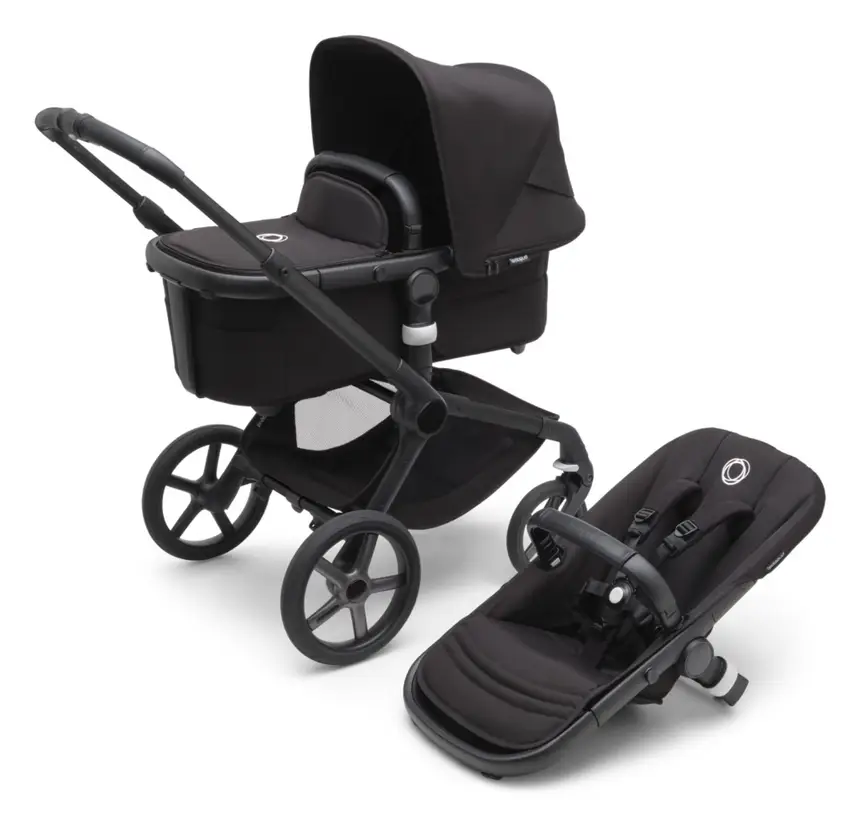 Reviewed
Bugaboo Fox 5
Bugaboo's flagship all-terrain pram: big-wheel suspension ride, one-piece fold, bassinet from birth and a seat rated to 22 kg.
Read our full review →What "kerb pop" is and why it matters
"Kerb pop" is a common pram term. It means pushing down on the handlebar to lift the front wheels off the ground. You do this every time you step up a footpath kerb, climb a shop step, or cross a raised tree root.
It sounds like a small thing. Yet you will do it dozens of times on a single walk. If kerb pop feels heavy, your wrists, shoulders, and lower back will feel sore fast.
How a pram works like a seesaw
Think of a pram like a seesaw on a playground. The back wheels are the middle pivot point. Your hands on the handle push down on one side. The baby's weight sits on the other side, mostly over the front and middle of the frame.
When the back wheels sit close to the baby's centre of weight, you need less force. A light push down on the handle lifts the front wheels right up. When the baby's weight sits far away from the back wheels, you have to push much harder.
Why kerb pop changes on a reversible handle
On a reversible handle pram, flipping the handle moves you to the front end of the frame. Now the wheels that used to be at the front are under your hands. Your baby's weight may now sit closer to the far wheels or further from your pivot point.
Even worse, many reversible handle prams have big wheels at one end and small wheels at the other. When you flip the handle, the big wheels end up at the front. Lifting heavy big wheels over a kerb while balancing on small back wheels feels clumsy. You often have to lift with your arms or step onto the back bar with your foot to help.
Why kerb pop stays steady on a reversible seat
On a reversible seat pram, the frame never flips. The big back wheels stay under your hands no matter which way your baby faces. The small wheels stay out in front.
There is still a small change when your baby faces you versus forward. A child's legs and bottom shift the weight slightly along the frame. Even so, the main seesaw setup stays in your favour. You can pop up kerbs smoothly in both seat directions.
How steering and wheels change
Wheel setup makes a huge difference to how a pram feels on footpaths, grass, and shop floors. Most modern prams use two big wheels at the back and two smaller swivel wheels at the front.
Swivel wheels spin around freely like shopping trolley wheels. This lets you steer around tight corners with one hand. Fixed back wheels only roll straight ahead, which keeps the pram tracking in a straight line.
The shopping trolley problem
Have you ever tried to push a supermarket trolley from the front end? The swivel wheels are now at the back near your feet, and the fixed wheels are at the front. The back end swings wildly side to side every time you try to turn.
That is exactly what happens on a basic reversible handle pram when you flip the handle. The small swivel wheels end up at your feet. The fixed wheels end up at the front. Steering around a café table or shop aisle suddenly takes wide, awkward swings.
How some reversible handle prams try to fix this
Some reversible handle prams put swivel locks on all four wheels. When you flip the handle, you lock the front pair straight and unlock the back pair to swivel. Or all four wheels swivel at once.
This helps steering, but it brings trade-offs. Four-wheel swivel mechanisms add weight and extra moving parts. You also have to bend down and click wheel locks with your hands or feet every time you flip the handle. On wet or muddy days, touching wheel locks is messy.
Frame stiffness and hinge rattle
A reversible handle has a joint in the middle of each side arm. Every time you push down to pop a kerb, force travels through those joints. Over months of heavy use, hinges can develop slight play or rattle.
A reversible seat pram usually has solid side rails from the handle straight down to the back axle. Because there is no handle hinge, the frame feels stiffer. Your downward push goes straight to the back wheels without flexing.
Side-by-side comparison: reversible handle vs reversible seat
Both designs have real strengths. The right pick depends on where you walk, what car you drive, and how often you want to switch your baby's view. Here is how they compare side by side.
| Feature | Reversible handle pram | Reversible seat pram |
|---|---|---|
| How you switch view | Pull latches and swing the handle bar over the seat. | Unclip the seat, lift it off, turn it, and click it back in. |
| Speed of switching | A few seconds. | Takes longer and needs two hands. |
| Switching with baby inside | Often allowed if you lock the brake first. Check your manual. | Usually not safe. Most makers say take your baby out first. |
| Kerb pop | Often heavy or awkward in reverse mode. | Consistent and easy in both parent-facing and world-facing modes. |
| Steering | Can feel like a backwards trolley unless all four wheels swivel. | Easy one-hand steering in both directions. |
| Frame feel | Handle hinges can flex or rattle over time. | Solid side frame with better push response. |
| Storage basket access | Can be tight from one end when the handle is flipped. | Basket stays at the back under your hands, though a low seat can block some space. |
| Folding | Usually folds in one piece with the seat attached. | Some fold in one piece; others need the seat removed first. |
Think about your daily routine as you read this table. If you mostly walk on smooth shopping centre floors and flip the handle to dodge bright sun, a reversible handle is very handy. If you walk on uneven paths, step up lots of kerbs, or carry a growing toddler, a reversible seat usually feels much better to push.
How your baby's age and stage affect your choice
A pram has to work for a tiny newborn and a heavy toddler. Your needs change fast over the first three years.
Newborn to 6 months
Newborn babies have weak neck muscles and heavy heads. Their airways are soft and narrow. If a newborn slumps forward with their chin on their chest, it can block their breathing. This is why babies under 6 months need a completely flat bassinet or a seat that reclines flat.
At this age, parent-facing is best. You can watch your baby's chest rise and fall and check their face easily. Both reversible handles and reversible seats work well here, because a newborn is light. Kerb pop feels easy with a small baby in either style.
6 to 12 months
Around 6 months, most babies can hold their head steady and start sitting with support. They get very curious about the world around them. Many babies start fussing if they can only stare at the hood or your chest.
This is the stage where parents switch between parent-facing and world-facing most often. A baby might face forward at the park, then face you when they get tired or overstimulated. A reversible handle lets you switch mid-walk without waking a sleepy baby. A reversible seat takes more effort, so most parents pick one direction before leaving home.
12 months to 3 or 4 years
Toddlers are much heavier. Every extra kilogram makes kerb pop harder if the pram's balance is off. On a reversible handle pram, pushing a heavy toddler in reverse mode can make steering sluggish and kerbs a real workout.
Most toddlers prefer facing forward full time anyway. On a reversible seat pram, you leave the seat facing out and enjoy the full strength of the frame. You will also want to check the weight limit of the seat, because some reversible handle prams are lighter-duty models with lower weight caps.
| Age stage | What your baby needs | How each pram style fits |
|---|---|---|
| Birth to 6 months | Flat surface for airway safety. Easy eye contact with you. | Both styles work well. Baby is light, so kerb pop is still easy. |
| 6 to 12 months | Mix of looking out and checking in with you for comfort. | Reversible handle wins for quick mid-walk switches. Reversible seat wins on bumpy paths. |
| 12 months and up | Sturdy frame for heavier weight. Forward view most of the time. | Reversible seat handles toddler weight and kerb pop much better. |
Side by side: more prams & strollers to compare
Real products from our catalogue. We don't show star ratings or review counts; check the current price, stock and reviews on Amazon before you buy.
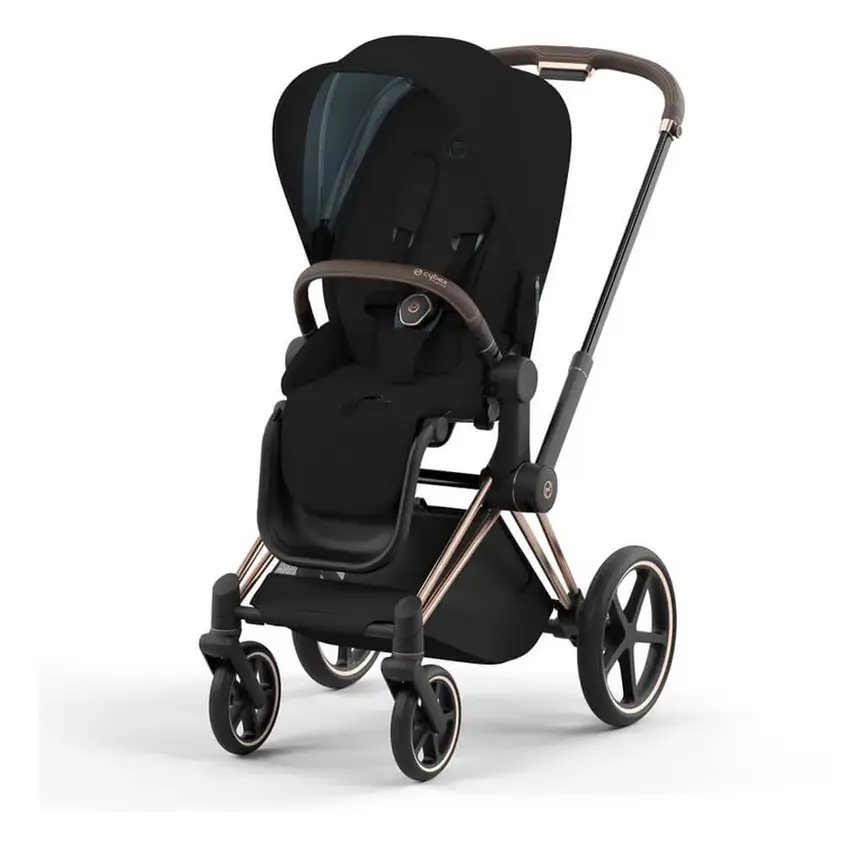
Cybex Priam
Fashion-forward luxury pram with interchangeable seat/bassinet units and an all-terrain option.
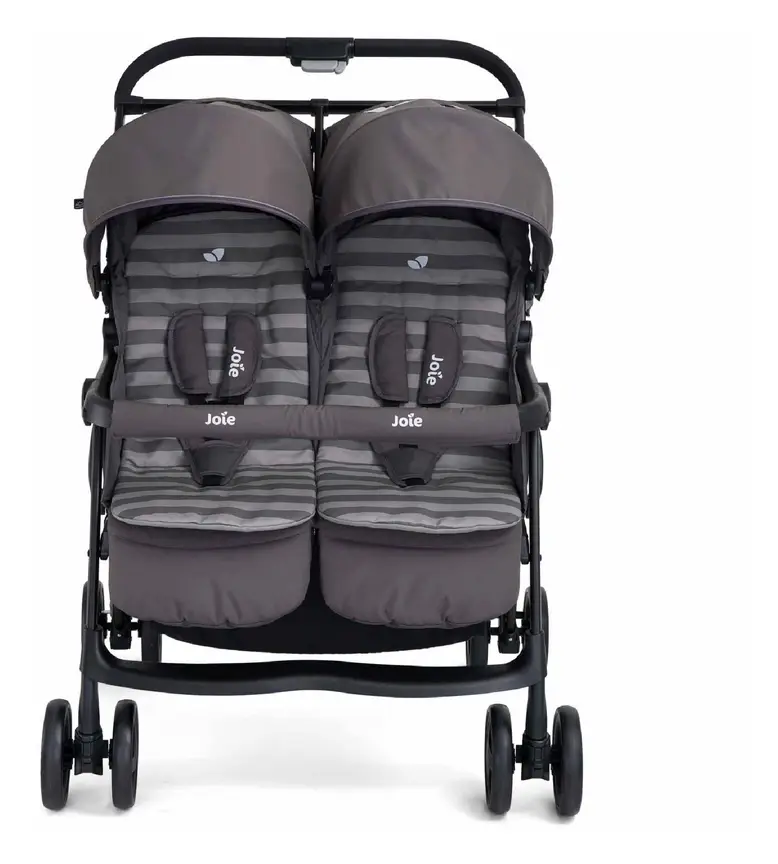
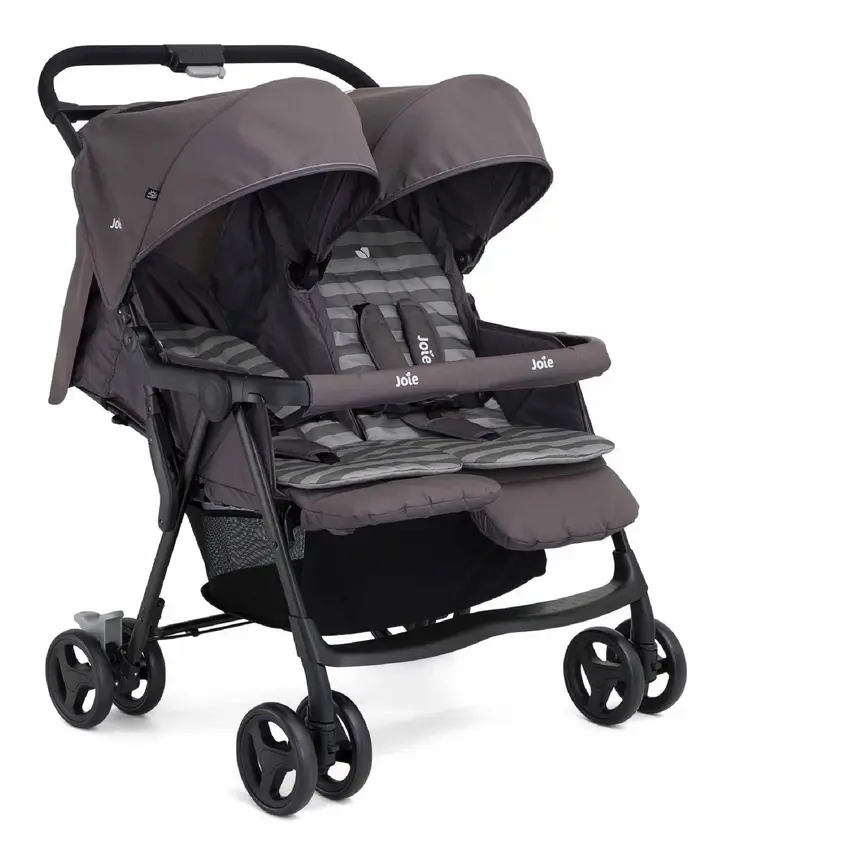

Joie Aire Twin
A lower-cost side-by-side double. Each seat lies flat and reclines on its own.
Read our full review →
Maxi-Cosi Zelia 3
A mid-price pram with a carrycot that changes into a seat, so one frame covers birth to toddler.

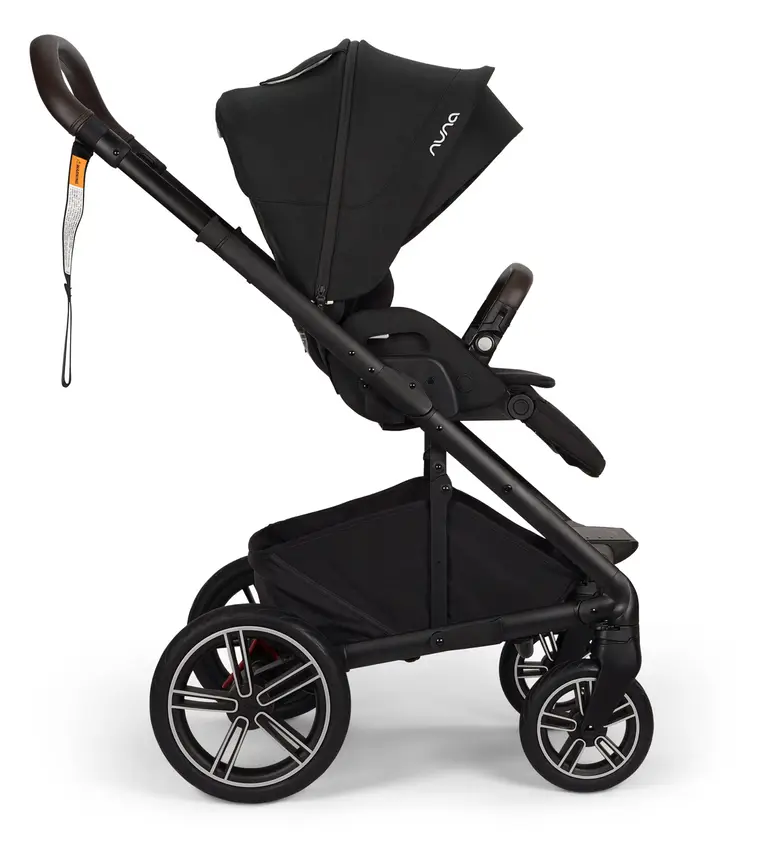
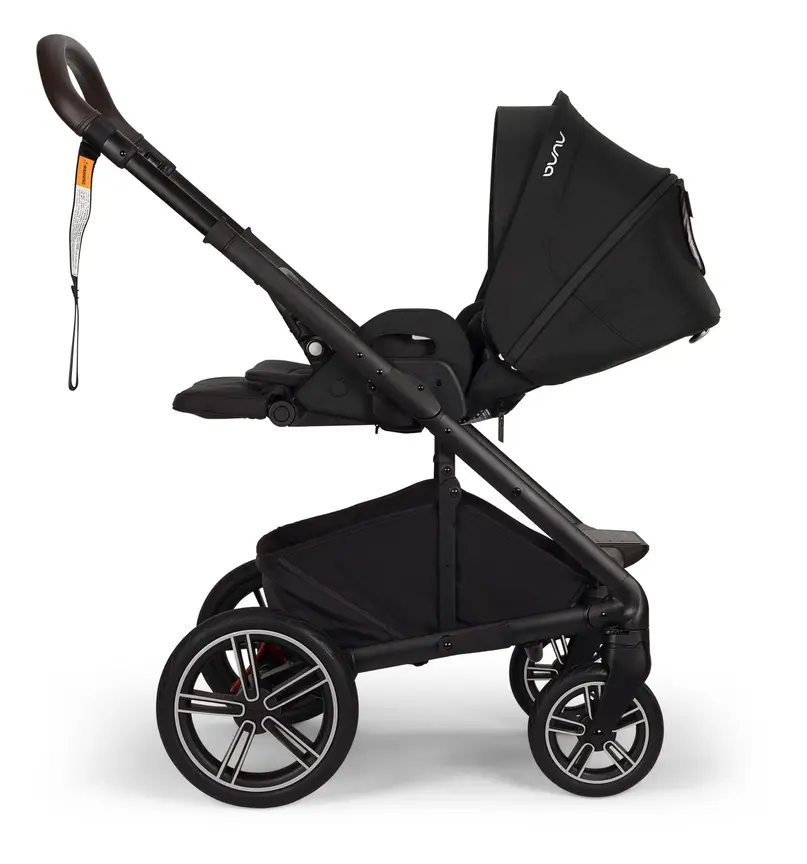
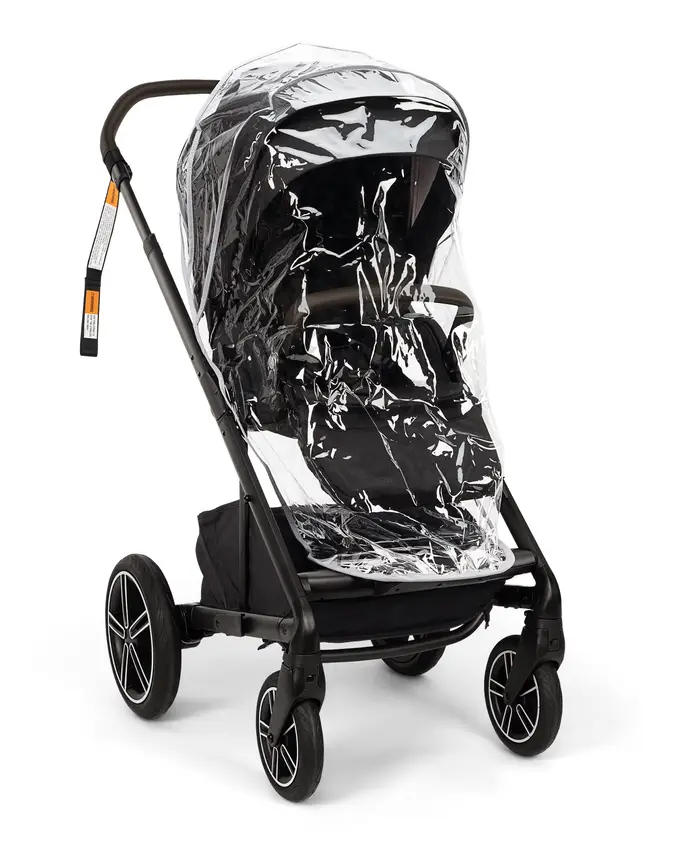

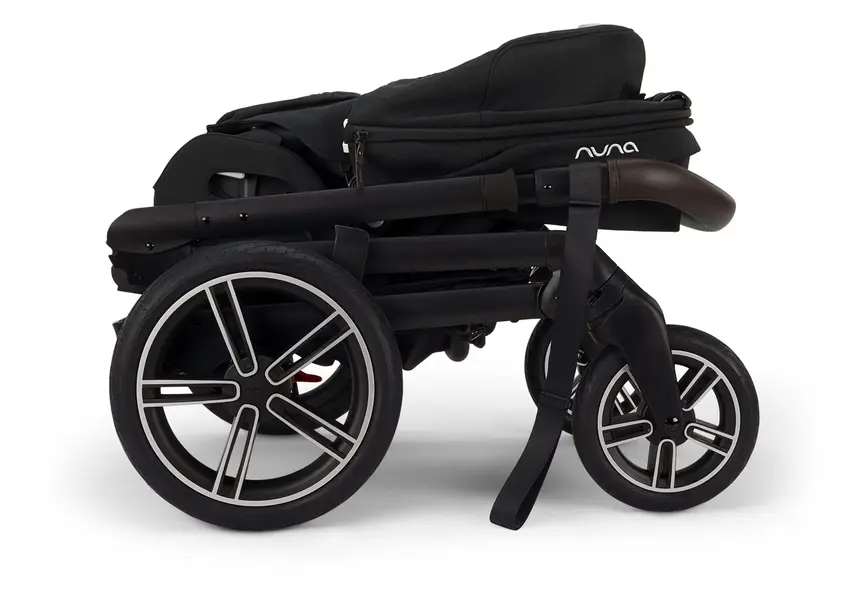

Nuna MIXX Next
A full-size pram with four ways to ride: capsule, bassinet, parent-facing seat or world-facing seat.
Read our full review →Safety standards in Australia, the UK, the US and Canada
Prams and strollers are regulated in all four countries to prevent falls, finger traps, tip-overs, and brake failures. Always buy from a trusted seller and check the label on the frame or box.
| Country | Main safety body | Standard or rule | What it checks |
|---|---|---|---|
| Australia | ACCC (Product Safety Australia) | AS/NZS 2088 (mandatory standard) | Brakes, harness, tether strap, locking latches, stability, warning labels. |
| UK | Office for Product Safety and Standards (OPSS) | BS EN 1888 | Frame strength, brakes, harness, pinch points, stability, folding locks. |
| US | Consumer Product Safety Commission (CPSC) | ASTM F833 | Brakes, restraint system, latching mechanisms, stability, finger traps. |
| Canada | Health Canada | Federal carriages and strollers rules | Brakes, harness, locking devices, stability, sharp edges, small parts. |
Look closely at the rules that matter most for reversible prams:
- Dual-action locks: Any hinge that flips a handle or releases a seat must need two separate actions to open, or be out of a child's reach. This stops the handle or seat unlocking by accident while you walk.
- Five-point harness: Use all five straps—shoulders, waist, and crotch—every single time. Kidsafe Australia warns that falls from prams often happen when parents skip the shoulder straps or leave the harness loose.
- Parking brake: Check that the brake locks firmly on a slope. On some reversible handle prams, the brake pedal only sits at one end, so you may have to walk around the pram to reach it in reverse mode.
- Wrist tether strap: In Australia, AS/NZS 2088 requires a tether strap that loops around your wrist. It stops the pram rolling away into traffic or water if you trip or let go. Use it on hills and near roads, no matter which country you live in.
- Safe sleep warning: Red Nose Australia, The Lullaby Trust in the UK, and the American Academy of Pediatrics all warn that prams and strollers are not safe for long, unsupervised sleep. Keep the seat flat for newborns, never cover the hood with a thick blanket that traps heat, and move your baby to a safe cot when you get home.
How to test both designs before you buy
Never judge a pram by pushing it empty on a smooth shop carpet. An empty pram always feels light and smooth. Bring a heavy bag—about 8 to 10 kg, like a bag of rice or a full nappy bag—and ask the staff if you can test it in the seat.
- Test kerb pop in both directions. Put the weight in the seat. Face it towards you, then push down on the handle to lift the front wheels. Now flip the handle or turn the seat around, and try again. Notice how hard your wrists have to work.
- Steer with one hand. Pretend you are holding a coffee or holding an older child's hand. Walk in a figure-eight around a display table. Try it in both parent-facing and world-facing modes.
- Listen to the frame. Push down hard on the handle and wiggle it side to side. Does the handle hinge click, flex, or rattle? A tiny rattle in the shop often gets louder after months on rough footpaths.
- Check your stride length. Walk at your normal speed behind the pram in both modes. Do your toes kick the brake bar, the back axle, or the swivel wheels? Tall parents often bump their feet on reversible handle prams when the handle flips in closer to the seat.
- Practise the fold and boot lift. Fold the pram yourself without help from the sales staff. See if the seat has to come off first. Lift the folded frame into your car boot to check the weight and space.
- Check the basket access. Try sliding a full backpack into the under-seat basket while the seat is facing you and while it is facing out. Some reversible seats sit low and block the basket opening.
Common mistakes parents make
Even a safe, well-built pram can cause trouble if it is used the wrong way. Watch out for these everyday mistakes.
- Flipping a handle without locking the brake. Always put the parking brake on before you unlatch a reversible handle or seat. On a slope, an unbraked pram can roll as you shift your hands.
- Turning a reversible seat with the baby inside. Most reversible seats are not built to be lifted with a child in them. If one side latch misses the slot, the seat can tip. Take your baby out first.
- Hanging heavy bags on the handle. Hanging shopping bags or a heavy handbag on the push bar pulls the centre of weight backwards. On a reversible handle pram, it can also strain the handle hinges or tip the whole pram over backwards. Put heavy items in the under-seat basket instead.
- Forgetting to lock swivel wheels in reverse mode. If your reversible handle pram has four-wheel swivel locks, leaving the wrong pair unlocked makes steering erratic. Check the wheel locks after every flip.
- Using an upright seat too early. Wait until your baby has good head and neck control—usually around 6 months—before sitting them upright. Newborns need a flat bassinet or a fully flat recline.
- Draping a muslin or towel over the hood. Parents often hang a cloth over the pram to block sun or help baby sleep. This traps hot air inside and blocks airflow, which can make your baby dangerously hot. Use a clip-on mesh shade made for prams, or flip the handle or seat away from the sun.
More options, from budget to premium
Real products from our catalogue. We don't show star ratings or review counts; check the current price, stock and reviews on Amazon before you buy.

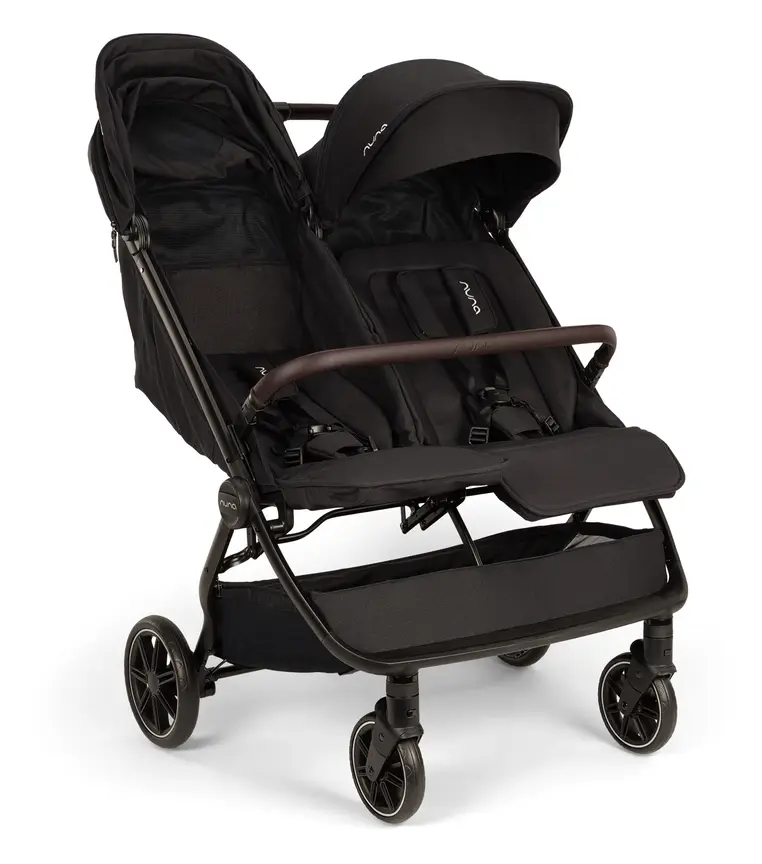
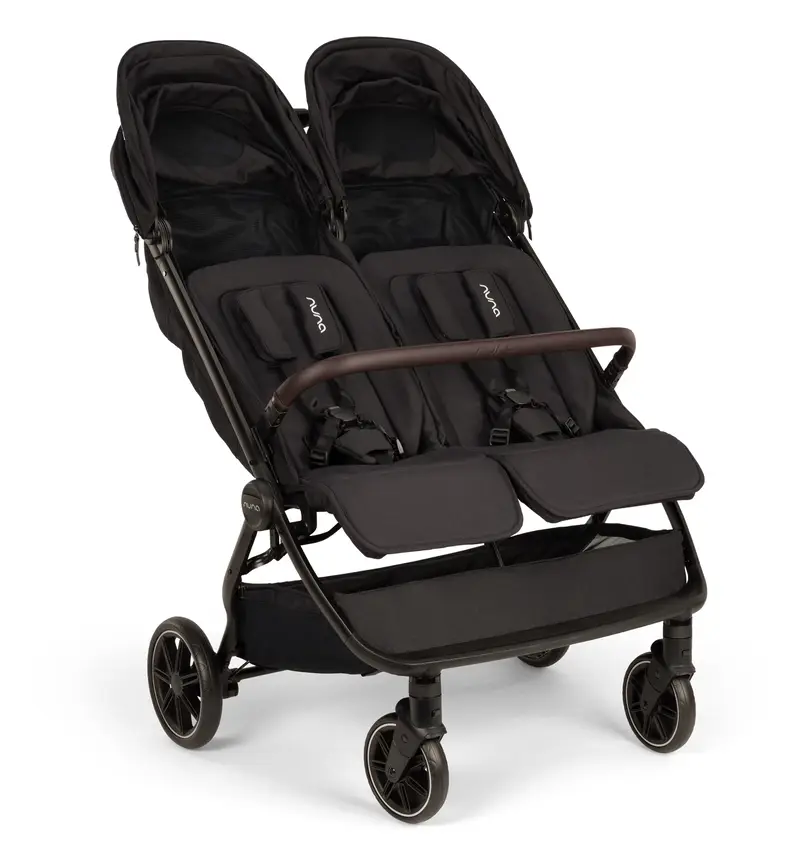
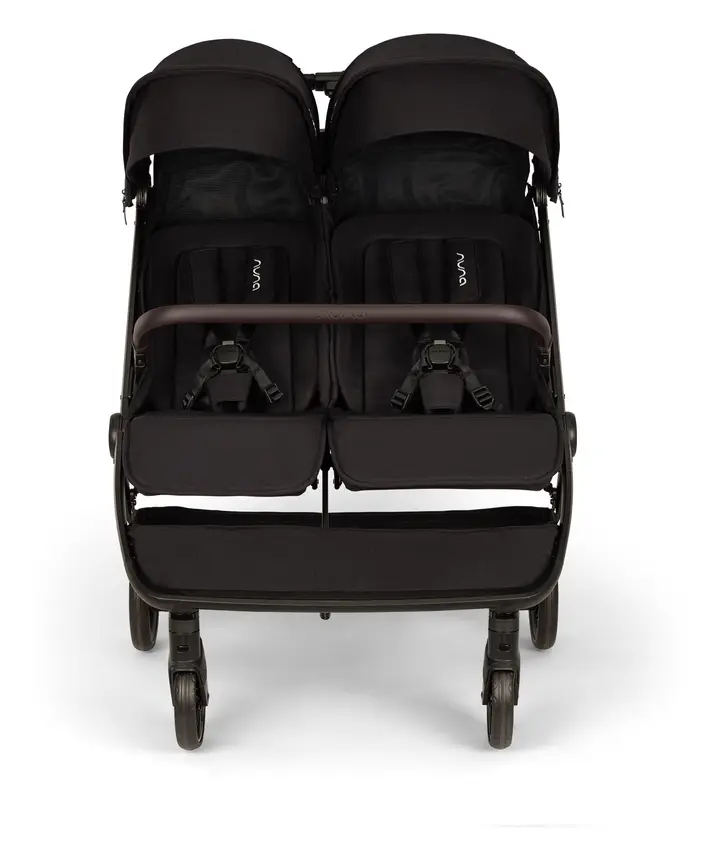
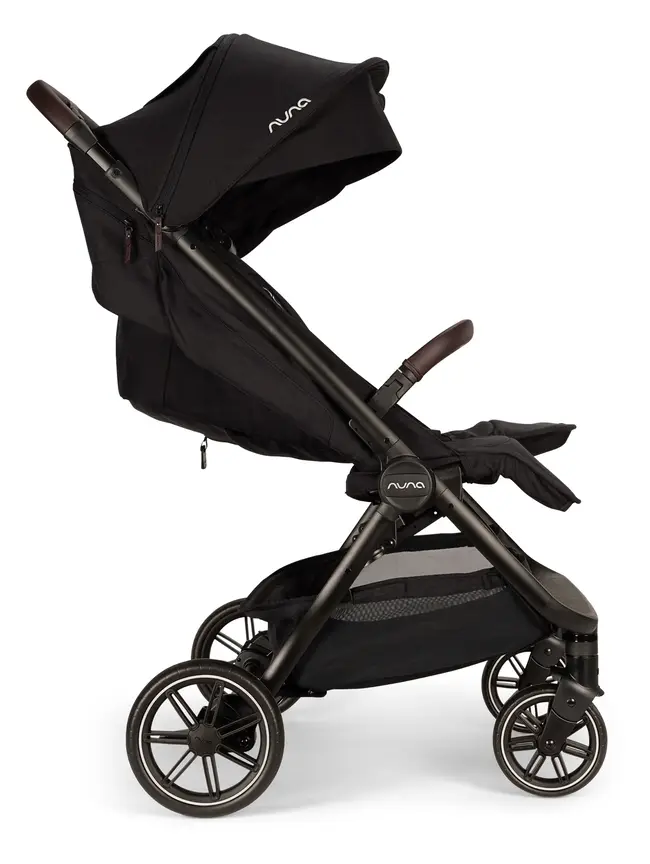
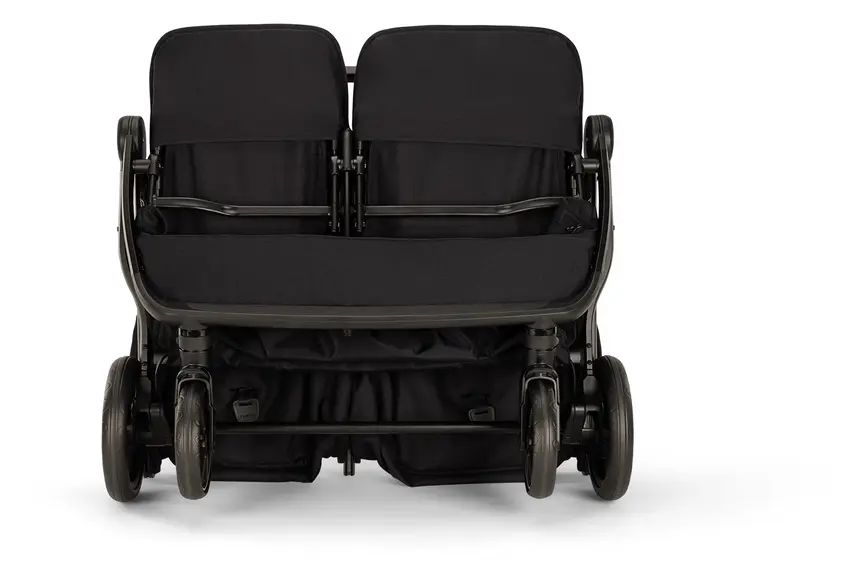
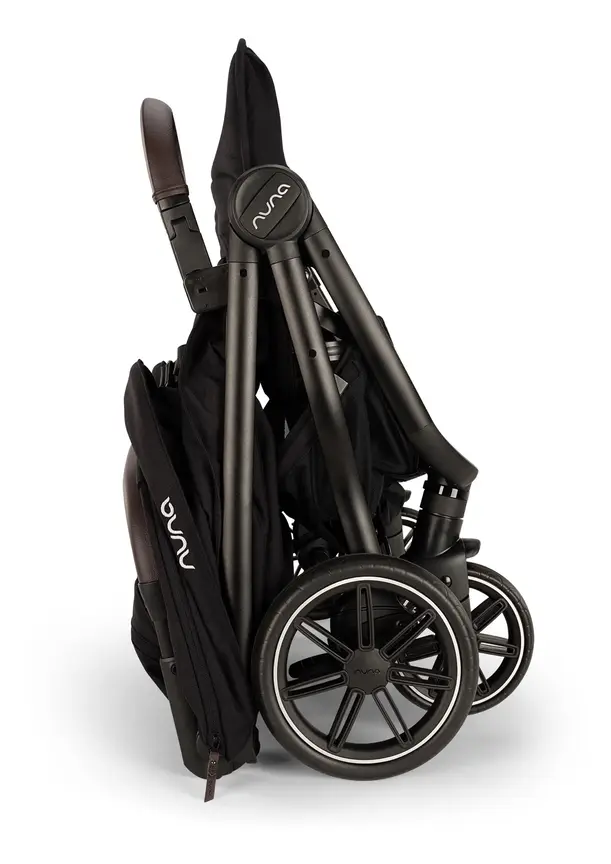
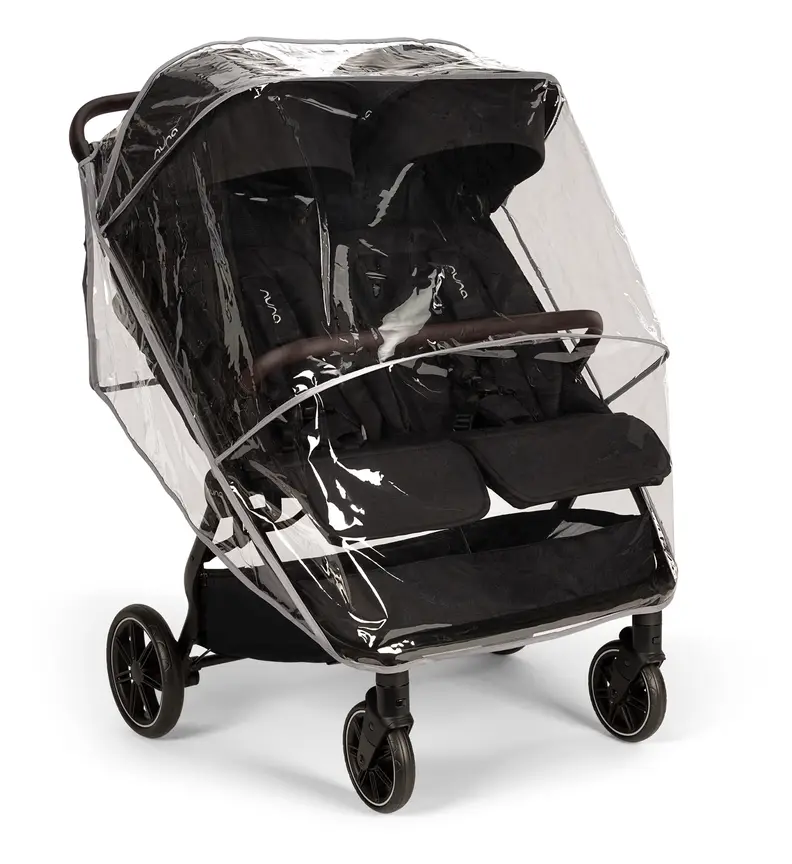
Nuna TRVL Dubl
A side-by-side double that folds with one hand and stands up. Each seat holds up to 22.7 kg.
Read our full review →


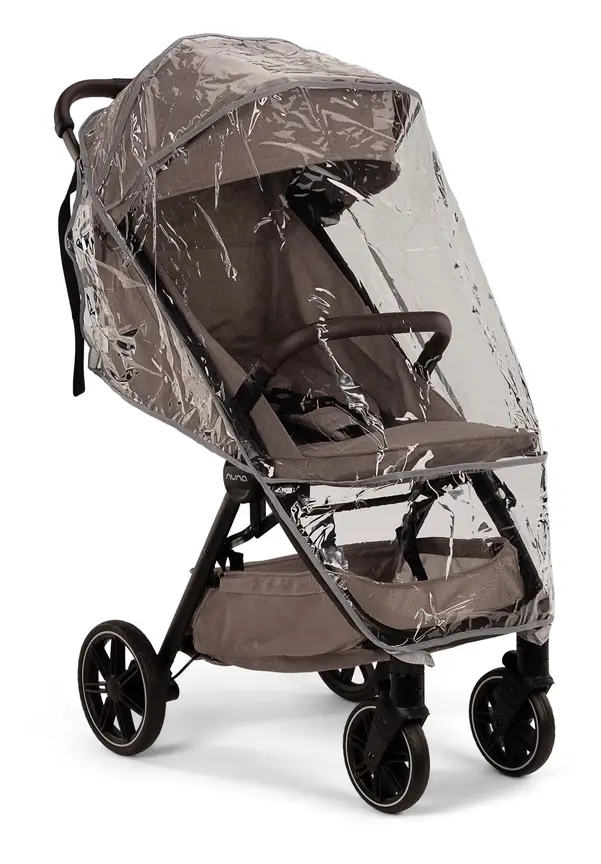

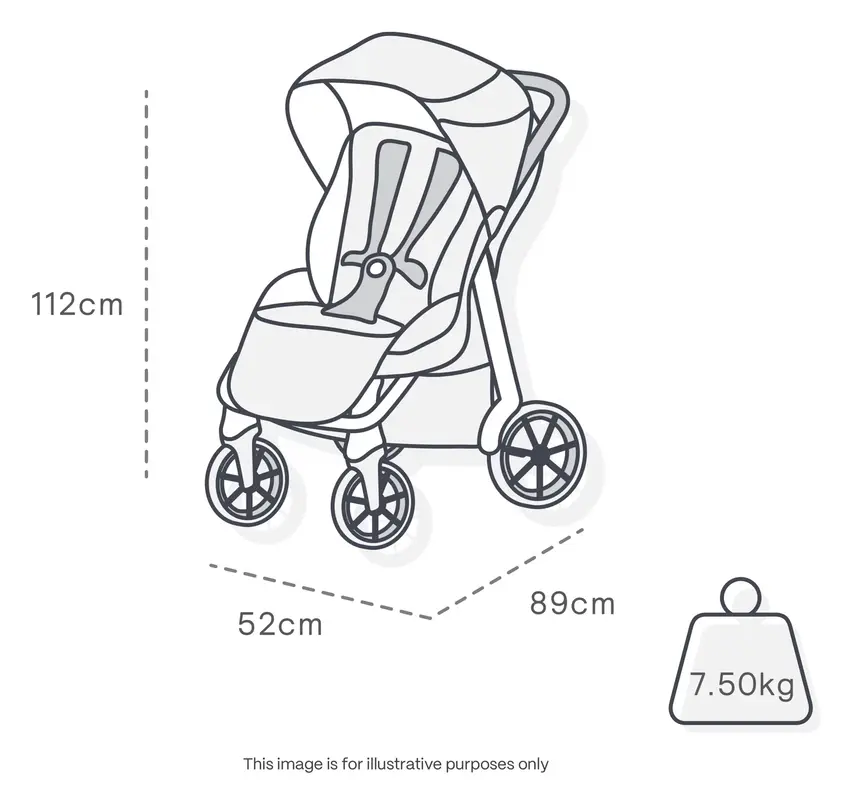
Nuna TRVL LX
A premium compact stroller with a lie-flat seat. It takes the Nuna KLIK Plus capsule on the armbar.
Read our full review →
Baby Jogger City Mini GT2
Long-running, lighter all-terrain stroller with a famously simple one-hand strap fold.
Frequently asked questions
Can I flip a reversible handle while my baby is in the pram?
On most reversible handle prams, yes, you can flip the handle while your baby stays strapped in. Lock the parking brake first, keep one hand near the frame, and make sure both handle latches click shut before you start walking again. Always check your pram's manual first, as rules vary by model.
Can I turn a reversible seat while my baby is sitting in it?
No, on almost all prams you should take your baby out before lifting and turning the seat. A loaded seat is heavy and awkward to balance. If your grip slips or one side does not click in, your baby could fall. Set your baby down safely, turn the seat until both sides click, and then strap them back in.
Why does a reversible handle pram feel harder to steer in reverse?
When you flip a reversible handle, you put the small swivel wheels at the back near your feet and the fixed wheels at the front. Pushing from the swivel end makes the back of the pram swing sideways when you turn, much like pushing a shopping trolley backwards. Prams with four-wheel swivel locks avoid this, though they add extra steps.
Which type is better for rough paths, grass, and gravel?
A reversible seat pram is usually much better for rough ground. Its frame stays rigid, the big back tyres stay under your hands to help lift the front, and the front wheels stay out ahead to roll over bumps. Reversible handle prams are best suited to smooth footpaths, flat parks, and indoor shops.
Do I really need a parent-facing option at all?
You do not strictly need it, because many travel strollers only face forward once a baby outgrows a newborn bassinet. Still, parent-facing is very useful from birth to around 9 to 12 months. It lets you watch your baby's face, soothe them easily, and talk to them face to face on walks.
Which design folds smaller for a small car boot?
Reversible handle prams often fold in one piece because the seat stays fixed to the frame. Many reversible seat prams also fold with the seat on, though some only fold neatly when the seat faces forward or is taken off first. Always fold the pram yourself and measure it against your car boot before buying.
Sources
- Product Safety Australia – Prams and strollers guide
- Product Safety Australia – Prams and strollers mandatory standard
- Kidsafe Australia – Falls
- Red Nose Australia – What is a safe sleeping environment
- UK Office for Product Safety and Standards
- The Lullaby Trust (UK) – Sleeping products
- CPSC (US) – Safe sleep: cribs and infant products
- Health Canada – Recalls and safety alerts
Related guides
More Prams & Strollers →
Single-to-Double Modular Prams: How to Choose, Safety Rules and Setup Guide for Growing Families
High-View Prams and Strollers: Seat Height, Cafe Tables, Street Air, and Stability

Reversible Stroller Seats: Parent-Facing vs World-Facing
