






Traveling with Babies: A Practical Gear Checklist for Safer, Easier Trips
Plan trips with a baby using a simple gear checklist for car seats, sleep, feeding, nappies, flights, weather and safer days away from home.
On this page
- Start with the trip, not the shopping list
- The basic checklist
- Car seats and road trips
- Prams, strollers and baby carriers
- Safe sleep away from home
- Feeding and keeping milk or food safe
- Nappies, clothes and comfort
- Flights and public transport
- Health, medicines and weather
- What to leave at home
- Common travel mistakes
- Country guidance at a glance
- Frequently asked questions
- Sources and further guidance
- Sources
Short answer: Pack for your route, your baby's age and the length of your trip. Bring a correctly fitted car seat when travelling by car. Plan a safe sleep space for every nap and night. Keep feeds, nappies, medicine and spare clothes easy to reach. Ask your airline or transport provider about its current rules before you leave. You do not need every baby travel product. A few familiar, safe items can cover most needs.
Advice for families is available from official bodies in Australia, the UK, the US and Canada. Australia has Product Safety Australia, the Australian Competition and Consumer Commission (ACCC), Red Nose and Pregnancy, Birth and Baby. The UK has the Office for Product Safety and Standards (OPSS), the National Health Service (NHS) and The Lullaby Trust. The US has the Consumer Product Safety Commission (CPSC), the National Highway Traffic Safety Administration (NHTSA) and the American Academy of Pediatrics (AAP). Canada has Health Canada, Transport Canada and the Canadian Paediatric Society.
Start with the trip, not the shopping list
Before packing, write down where you are going and how you will get there. A car journey needs a safe car seat. A flight may need a plan for milk, food and screening. A visit with family may need a safe place to sleep. A short walk may only need a carrier or pram, nappies and a change of clothes.
Think through the day in order. Ask what your baby will need on waking, during travel, at meals, at rest and before bed. This simple check can stop you packing items that do not suit the trip.
- Length: How long will you be away from your usual supplies?
- Travel time: How many feeds, changes and rest stops might you need?
- Weather: Will you face heat, cold, rain, sun or smoke?
- Sleep: Where can your baby sleep on a firm, flat surface?
- Food: How will you safely carry breastmilk, formula or solids?
- Help: Where can you get medical care if your baby becomes unwell?
Use your baby's usual routine as a guide, but leave room for changes. A delayed flight or traffic can shift a nap or feed. Keep essential items in your hand luggage or day bag. Do not pack all nappies, milk or medicine in checked luggage.
The basic checklist
Use this list as a starting point. Add items your baby needs for health or comfort. The right amount depends on trip length, access to shops and laundry, and your baby's feeding needs.
| Need | Useful items | Pack where |
|---|---|---|
| Travel | Correct car seat, pram or carrier, travel documents | Ready before departure |
| Nappy changes | Nappies, wipes or cloths, changing mat, bags for soiled clothes | Top of day bag |
| Feeding | Breastfeeding cover if wanted, expressed milk or formula plan, clean bottles, bibs | Easy to reach, stored safely |
| Clothes | Spare outfit, layers for weather, spare top for the adult | Day bag |
| Sleep | Safe cot or travel cot plan, fitted sheet, familiar sleep sack if used | With sleep gear |
| Health | Regular medicines, health details, care provider contacts | Hand luggage, in original packaging |
| Comfort | One familiar toy or comfort item, dummy if used | Day bag |
| Weather | Hat for awake outdoor time, shade, suitable layers | Day bag |
Keep the list short enough to use. A bag with many small pockets can help, but it is not essential. Put the items you need first near the top. Store wet or dirty items in a separate bag.
Car seats and road trips
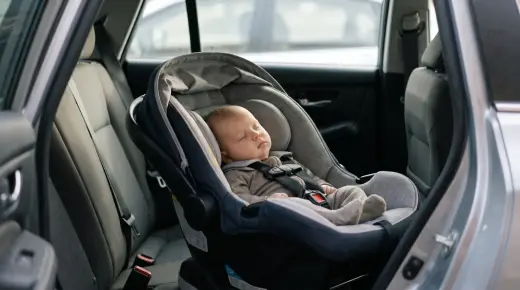
A baby must travel in a car seat that suits their size and the rules where the car is used. Pick a seat that fits the vehicle and can be installed correctly. Read the car seat and vehicle instructions. If you are hiring a car, check the seat plan before booking. Do not assume a rental company will have the right size or a safe, correctly fitted seat.
Keep a baby rear-facing for as long as the seat's limits allow. Follow the seat maker's height and weight limits. The exact rules differ between countries. A seat approved for one market may not be approved for another. Check local guidance before using a seat across borders.
- Install the seat as its instructions show. Ask a trained local fitting service for help if needed.
- Check the harness sits snugly and lies flat. Follow the seat maker's steps.
- Take bulky coats off before fastening the harness. A thick layer can leave the straps too loose.
- Do not add inserts, toys or covers unless the seat maker allows them.
- Never leave your baby alone in a parked car.
- Plan stops so an adult can check the baby and meet their needs.
A car seat is made for travel, not as a regular sleep space. If your baby falls asleep during a journey, move them to a safe, flat sleep space when you reach your stop. Red Nose advises taking a sleeping baby out of the car seat after arriving. Do this as soon as it is practical and safe.
Do not put a loose mirror, toy or heavy item where it could strike a passenger during a sudden stop. Keep luggage secured. A small bag can become dangerous if it flies forward.
Car travel by age and stage
Newborns need close attention to fit and position. Follow the seat instructions for newborn inserts and harness height. Ask a health professional or trained car seat fitter if your baby was born early or has a medical need.
As your baby grows, check the seat limits and adjust the harness as directed. Do not move to a forward-facing seat just because your baby looks bigger. Use the rear-facing mode until the seat's rear-facing limits are reached, where local rules allow.
Older babies may need planned breaks for feeds, changes and movement. A stop does not replace a correctly fitted seat. Never hold a baby on an adult's lap in a moving car.
Prams, strollers and baby carriers
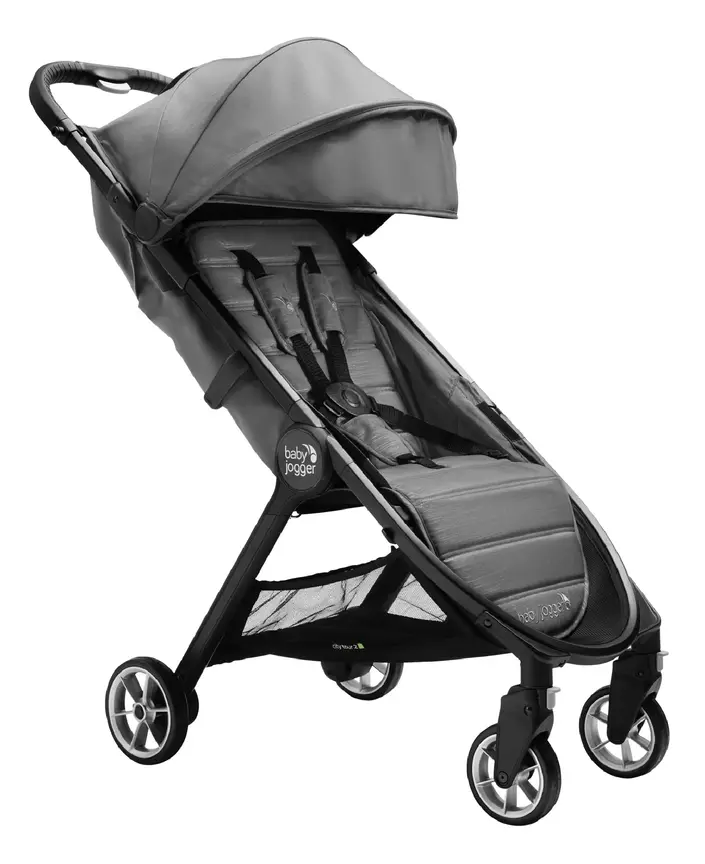
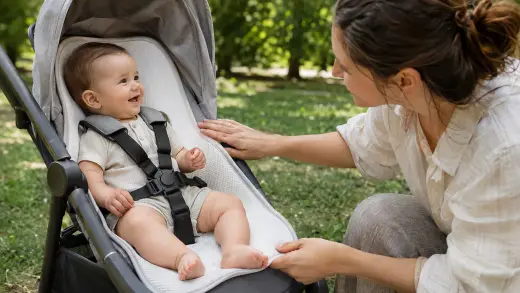
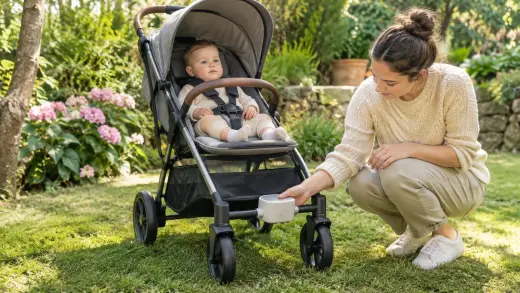
A pram or stroller can help with longer walks and carry the day's supplies. Check its instructions, age limits and weight limits. Use the harness each time. Lock the brakes before placing your baby in or lifting them out. Keep bags low and balanced. A heavy bag on the handles can tip some prams backwards.
Use a seat position that suits your baby's age and head control. Follow the maker's instructions about when a baby can use a more upright seat. Do not add a cushion or head support unless the maker says it is safe.
A baby carrier can be useful where stairs, crowds or rough paths make a pram hard to use. Choose a carrier that supports your baby and fits the wearer. Keep your baby's face visible and their chin clear of their chest. Check often that they can breathe freely. Follow the carrier instructions and seek help with fit if you are unsure.
Take care when feeding, bending or cooking with a baby in a carrier. A hot drink can spill onto the baby. A baby in a carrier can also become too warm. Dress them for the weather and check their temperature.
Never use a stroller or carrier as a car seat. These products have different jobs. A baby who falls asleep in a sitting device should be moved to a safe sleep surface when you can do so safely.
Safe sleep away from home
Plan where your baby will sleep before you travel. Ask your host or accommodation what sleep equipment is available. Check it yourself when you arrive. A safe sleep space should have a firm, flat mattress and a clear surface. Lay your baby on their back for every sleep. Keep pillows, loose blankets, soft toys and other loose items out of the sleep space.
A travel cot can be useful if it meets the rules where you live and is used as its maker directs. Check the frame, locks, fabric and mattress. Use only the mattress supplied or approved for that cot. Do not add another mattress or padding. A gap between the mattress and cot side can trap a baby.
Do not let a baby sleep overnight in a car seat, pram, swing or carrier. These are not a replacement for a cot or bassinet. Move a sleeping baby to a safe, flat sleep space as soon as you can. Red Nose, The Lullaby Trust, the AAP and the Canadian Paediatric Society give safe sleep advice for families.
Bring a familiar sleep sack if your baby already uses one. Choose the right size and warmth for the room. Do not cover a baby's head. Avoid overheating by changing clothing layers to suit the room and weather.
If you are staying in a home, check the sleep area for cords, loose bedding, pets and other hazards. Ask for the cot to be placed away from heaters, windows and blind cords. Keep the sleep space close enough for an adult to check the baby.
Feeding and keeping milk or food safe
Plan feeds around the way your baby usually eats. Breastfeeding parents may want water, a cloth and a comfortable place to feed. If you carry expressed breastmilk, use clean containers and keep it at a safe temperature. Follow advice from your local health service about storage and transport.
For formula, follow the instructions on the product and the guidance in your country. Do not guess how much water or powder to use. Bring clean feeding equipment and a way to wash it. If you need ready-to-feed formula, check the label and storage directions. Do not leave prepared feeds warm for long periods.
Air travel rules for milk, formula and baby food can differ by airport and airline. Check the current rules before leaving. Keep baby feeds easy to reach during screening. Tell staff what you are carrying if needed. Allow time for checks.
For babies who have started solids, pack familiar foods that are safe for their age. Bring a clean spoon and bib. Avoid foods that can cause choking. Keep your baby seated and watched while eating. Do not feed while walking, riding in a car or lying down.
Carry a bottle or cup only if your baby uses one. Check that drinking water is safe at your destination. If you are unsure, ask a health service or use sealed water suitable for your baby's needs. Do not change formula mixing directions to suit the water source without medical advice.
Nappies, clothes and comfort
Pack enough nappies for the travel time, plus a few extra for delays. Add wipes or reusable cloths, a changing mat and a bag for used clothes. Keep one complete change of clothes near the top of your bag. A spare shirt for the adult can help after spills.
Dress your baby in layers that are easy to add or remove. Take weather and indoor temperatures into account. A light hat can help outdoors, but remove it for sleep indoors. Keep the baby's face clear in a pram or carrier. Never cover the pram with a blanket in a way that traps heat or blocks airflow.
Bring one or two familiar items, such as a small toy or dummy if used. Keep small objects away from babies who can mouth them. Avoid attaching toys or cords where they could wrap around the baby's neck.
For a long trip, pack a simple changing kit in a small pouch. This can include one nappy, wipes, a mat and a clean outfit. It saves you from searching through the full bag at a stop.
Flights and public transport
Check airline rules before booking and again before travel. Ask about bassinets, seats, pushchairs, car seats, baggage and boarding. Rules can vary by airline, aircraft and route. A bassinet request may not guarantee a particular seat or bassinet.
When flying, decide whether your baby will sit on an adult's lap or in their own seat. Follow airline safety instructions. If using a car seat on board, check that the airline accepts that seat and that it fits the aircraft seat. A car seat used in a plane must be approved for that use by the relevant authority.
During take-off and landing, feeding or offering a dummy may help some babies with ear pressure. Do not force a feed. Ask your health professional for advice if your baby has an ear problem or other health need.
Keep nappies, wipes, milk, a change of clothes and any medicine in your cabin bag. Pack enough for delays. Put important documents and emergency contacts where you can reach them. Keep formula and expressed milk packed in a way that follows current airport rules.
For trains and buses, ask about pram storage and access. Keep your baby secured in the pram or held safely as the operator advises. Do not block exits or aisles with bags. On crowded transport, keep hands on the pram and use its brake when stopped.
Health, medicines and weather
Bring any medicine your baby needs, in its original packaging. Check expiry dates and storage directions. Keep medicine out of your baby's reach. Do not give a new medicine just for travel without advice from a health professional.
Save the address and phone number of a local health service at your destination. Bring your baby's health record if it may help with care. If your baby has a medical condition, ask their clinician how to manage travel and what signs need urgent help.
In hot weather, seek shade and offer feeds as usual. Never leave a baby in a parked car, even briefly. Dress your baby lightly and check often for signs of overheating. Ask a health professional for advice about fluids for young babies.
For cold weather, use layers and keep the baby's face clear. In a car seat, bulky coats can stop the harness fitting closely. Use thin layers under the harness and add warmth over the secured straps if needed.
Sun protection matters outdoors. Use shade, clothing and a suitable hat. Follow health guidance on sunscreen for your baby's age. A pram canopy can help, but it must allow airflow and a clear view of the baby.
If smoke or poor air quality is present, reduce time outdoors and check local health advice. A cloth over a pram does not make smoky air safe. Contact a health service if your baby has breathing trouble or seems unwell.
What to leave at home
Many products marketed for travel are optional. You may not need a special bottle warmer, travel steriliser, large playpen, multiple toys or a second pram. First check what your destination provides and what you can safely do without.
Do not bring sleep products that tilt or prop a baby up. Avoid soft nests, positioners and extra padding in a cot. Do not use a product as a sleep space unless its maker and local safety guidance say it is suitable for that use.
Leave loose, heavy items out of the car cabin. Avoid unapproved accessories for a car seat or stroller. Do not use a baby monitor as a replacement for safe sleep or adult care.
Common travel mistakes
- Packing too late: check transport and sleep plans before the day of travel.
- Relying on borrowed gear: inspect it, read its instructions and check recalls.
- Assuming a car seat fits: confirm the seat suits the vehicle and local rules.
- Using a car seat for sleep: move the baby to a safe, flat sleep space after travel.
- Overloading the pram: heavy bags on handles can affect balance.
- Taking too much: bring the items your baby needs, not every item sold for travel.
- Forgetting delays: keep extra feeds, nappies and clothes within reach.
- Covering a pram fully: keep airflow and visibility clear.
- Leaving a baby in a car: never leave a baby alone in a parked car.
- Missing the return plan: keep enough supplies for the journey home too.
Country guidance at a glance
Product rules and travel rules can change. Check official guidance for the place where you will use the item. A product sold in one country may not meet another country's requirements.
| Place | Useful official bodies | What to check |
|---|---|---|
| Australia | Product Safety Australia and ACCC; Red Nose; Pregnancy, Birth and Baby | Car seat rules, pram safety, safe sleep, recalls, feeding and airport screening. |
| United Kingdom | OPSS; NHS; The Lullaby Trust | Car seat rules, product safety, safe sleep and hand luggage for baby milk. |
| United States | CPSC; NHTSA; AAP; Federal Aviation Administration | Product recalls, car seats, safe sleep and airline rules for travelling with children. |
| Canada | Health Canada; Transport Canada; Canadian Paediatric Society; CATSA | Car seat rules, product recalls, safe sleep and airport screening for families. |
Use a local car seat that is approved for the country where you will travel. For air travel, ask the airline and airport about current screening rules. For sleep advice, follow a trusted health body in the country you are visiting. If advice differs, ask your baby's clinician which steps suit your baby.
Frequently asked questions
What is the most important thing to pack?
Pack the items your baby needs for safe travel, feeding, changes and sleep. For a car trip, the car seat is essential. For an overnight stay, plan a safe sleep space. Keep food, nappies and medicine easy to reach.
Can my baby sleep in a car seat after we arrive?
A car seat is for travel. It is not a regular sleep space. Move your baby to a safe, flat sleep surface as soon as you can do so safely.
Do I need to bring a travel cot?
Bring one if you cannot confirm that safe sleep equipment will be available. Check the cot's instructions, condition and mattress. Use it only as its maker directs.
How many nappies should I pack?
Pack enough for the journey and likely delays, with a few extra. The amount depends on your baby's usual needs and access to shops. Keep some in your day bag.
Can I take breastmilk or formula on a plane?
Airport rules vary by country and route. Check current airport and airline guidance before travel. Keep feeds easy to reach and allow extra time for screening.
Should I buy a special travel stroller?
Not always. Use a stroller that suits your route, your baby's age and the maker's instructions. Check its weight limits, harness and brakes before leaving.
Is a baby carrier safe for a long walk?
It can be useful when fitted and used as directed. Keep your baby's face visible and airway clear. Check often for comfort and warmth. Take breaks when your baby needs them.
What should I do if my baby becomes unwell away from home?
Contact a local health service for advice. Seek urgent help for severe symptoms or breathing trouble. Keep your baby's medicine and health details with you.
Should I bring a baby monitor?
A monitor is optional for many trips. It does not make an unsafe sleep space safe. Choose one only if it suits your stay, and keep cords away from the baby's sleep area.
How can I keep travel simple?
Plan the key needs first: a safe seat, feeds, nappies, sleep and weather. Pack a small day bag with essentials. Check rules and equipment before departure.
Sources and further guidance
- Pregnancy, Birth and Baby – Car travel with babies and children
- Red Nose Australia – Take your sleeping baby out of their car seat when you get home
- The Lullaby Trust – Safer sleep on holiday
- HealthyChildren.org (AAP) – Flying with baby
- Transport Canada – Child car seat safety
- CATSA (Canada) – Families
- Federal Aviation Administration – Flying with children
This article shares general information, not personal medical or travel advice. Ask your baby's health professional about your child's needs. Check current rules with the relevant safety body, airport, airline or transport provider before travel.
Affiliate disclosure: BabyGearFinder may earn a commission if you buy through some links on this site. This does not change the price you pay. We only include products that fit the topic. Always check product details and safety guidance before buying.
Sources
Related guides
More Parental Tips →
Travelling with a Baby: Practical Gear and Tips for a Smoother Journey

Road Trips with Babies and Toddlers: Car Seat Breaks, Feeding Stops and Keeping Kids Happy

Stylish and Safe Baby Gear: A Practical Guide for Modern Mums and Dads
