Smart Cots and Connected Bassinets: What They Do, Safety Rules, and How to Choose
A plain-English guide to smart cots and connected bassinets. See how rocking, noise, and sensors work, plus safety rules in the AU, UK, US, and Canada.
On this page
- Key points
- What is a smart cot or connected bassinet?
- What smart cribs can and cannot do for safety
- How smart features affect baby sleep
- Smart bassinet vs smart full-size cot vs standard cot
- Safety standards and rules: Australia, the UK, the US, and Canada
- Age stages and when to stop using smart features
- Electrical, cord, and battery safety
- Privacy, Wi-Fi, and cyber security for smart nursery gear
- How to choose a smart cot: a buyer's checklist
- Common mistakes to avoid
- Frequently asked questions
- Sources
Short answer: A smart cot or connected bassinet is a baby bed with built-in motors, speakers, or sensors. Some rock your baby when they cry. Others play white noise or send sleep logs to a phone app. They can help tired parents settle a fussy newborn. However, they do not replace safe sleep rules. No smart bed or sensor can prevent sudden infant death. Always place your baby on their back on a firm, flat mattress. Keep all loose bedding out of the cot. Keep power cords well out of reach.
This core safe sleep advice is the same in four countries. In Australia, it comes from Red Nose and Product Safety Australia. In the UK, it comes from The Lullaby Trust, the NHS, and the Office for Product Safety and Standards. In the US, it comes from the American Academy of Pediatrics and the Consumer Product Safety Commission. In Canada, it comes from Health Canada and the Canadian Paediatric Society.
Key points
- First job: A smart bed is still a baby bed first. It must have a firm, flat, level mattress. It must also meet national cot or bassinet safety standards.
- What they do well: Gentle rocking and quiet white noise can help soothe a waking baby. You do not have to get out of bed every single time they stir.
- What they cannot do: Consumer sleep trackers and breathing sensors are not medical devices. They do not prevent sudden unexpected death in infancy.
- Restraint clips: Some rocking bassinets use a clip-in swaddle sack to hold the baby flat. Stop using these beds as soon as your baby shows signs of rolling, or reaches the weight limit.
- Sound safety: Built-in white noise speakers sit very close to your baby's ears. Keep the volume low. It should be no louder than a quiet conversation.
- Cord safety: Connected cots plug into the wall. Keep all cables, adapters, and cameras at least one metre (three feet) away from the cot.
- Cyber security: Put smart baby gear on a strong Wi-Fi password. Turn on two-factor login. Install app updates straight away.
What is a smart cot or connected bassinet?
A traditional cot or bassinet is a simple frame with a firm mattress. A smart cot or connected bassinet adds electronics to that frame. Most connect to your home Wi-Fi or Bluetooth. You can control them from a smartphone app.
Not every smart bed does the same job. Most fall into one of three groups:
- Responsive rocking bassinets: These have small motors in the base and microphones in the frame. When your baby stirs or cries, the bed gently sways or glides from side to side. It also plays soft shushing or white noise. If the baby keeps crying after a few minutes, the bed stops moving. It then sends an alert to your phone so you can check on your baby.
- Camera and sensor cots: These are full-size cots or bassinets with an overhead camera rail or a mattress pad sensor. They track how long your baby sleeps and when they wake up. They also check the temperature of the room. Some use cameras to spot when a baby rolls over or stands up.
- All-in-one smart cots: These combine both ideas. They start as a rocking bassinet for a newborn. Later, they convert into a larger cot with a built-in monitor, nightlight, and sound machine.
Parents look at these beds for one main reason: exhaustion. Newborns wake often for feeds, nappy changes, and comfort. Sometimes a baby is not hungry or wet. They just need a minute of gentle rocking to link their sleep cycles. A smart bassinet can do that gentle rocking automatically while you stay in bed.
What smart cribs can and cannot do for safety
Many older blogs and ads make big promises about connected cribs. They claim these beds give parents total peace of mind by watching a baby's breathing. It is very important to separate marketing claims from medical facts.
Why sleep and breathing sensors are not medical guards
Some smart cots come with under-mattress movement pads or camera breathing trackers. Others pair with wearable ankle or sock sensors. Health bodies in all four countries warn parents not to rely on these tools to keep a baby safe.
In Australia, Red Nose states that there is no evidence that home baby monitors or breathing sensors prevent sudden infant death. In the UK, The Lullaby Trust gives the exact same advice. In the US, the American Academy of Pediatrics (AAP) tells parents not to use home cardiorespiratory monitors or wellness trackers to reduce the risk of sudden infant death syndrome (SIDS). In Canada, the Canadian Paediatric Society shares this view.
Researchers at the Children's Hospital of Philadelphia explain why consumer monitors struggle. Healthy babies breathe in uneven patterns. They take fast breaths, slow breaths, and normal brief pauses. Consumer sensors often misread these normal pauses. They set off false alarms in the middle of the night. A 2018 study in the medical journal JAMA tested two popular consumer pulse oximetry baby monitors. One monitor failed to detect low oxygen levels. The other monitor gave frequent false alarms. False alarms make parents anxious and cause unneeded hospital trips. Worse, they can tempt tired parents to change safe sleep habits just to make the alarm stop.
Some babies are born very early or have a serious medical condition. In those cases, a hospital doctor may prescribe a medical-grade apnoea monitor. Medical teams test and set up those hospital monitors. Parents are also trained in infant CPR before going home. A shop-bought smart cot is never a substitute for a hospital monitor.
Safe sleep basics still do the real work
Whether a cot costs a little or a lot, the things that truly protect your baby cost nothing at all:
- Always place your baby on their back for every sleep, day and night.
- Use a firm, flat, clean mattress. It must fit the bed snugly with no gaps at the edges.
- Keep the sleep space completely bare. Never add pillows, quilts, doonas, cot bumpers, sheepskins, soft toys, or sleep positioners.
- Share a room with your baby for at least the first six months. Your baby should sleep in their own separate cot or bassinet next to your bed.
- Keep your baby smoke-free before and after birth.
- Avoid overheating. Dress your baby for the room temperature. Keep their head and face uncovered.
Cots, Bassinets & Bedside Sleepers worth a look
Real products from our catalogue. We don't show star ratings or review counts; check the current price, stock and reviews on Amazon before you buy.
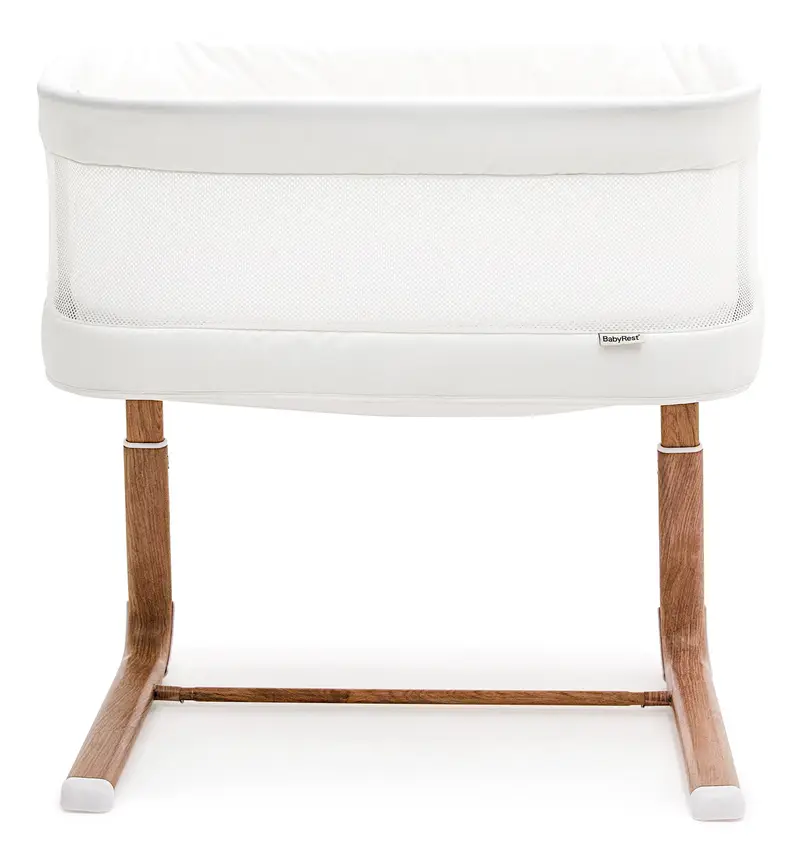
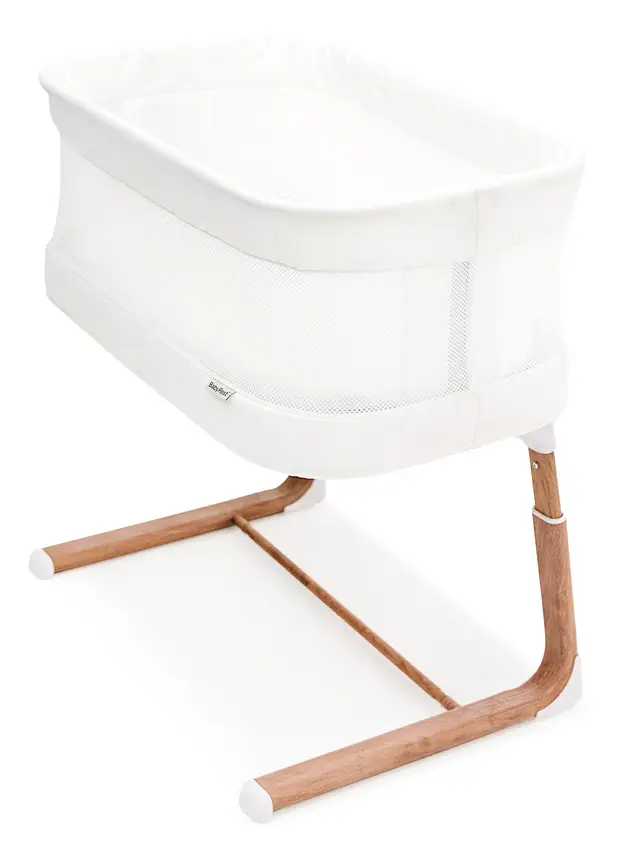
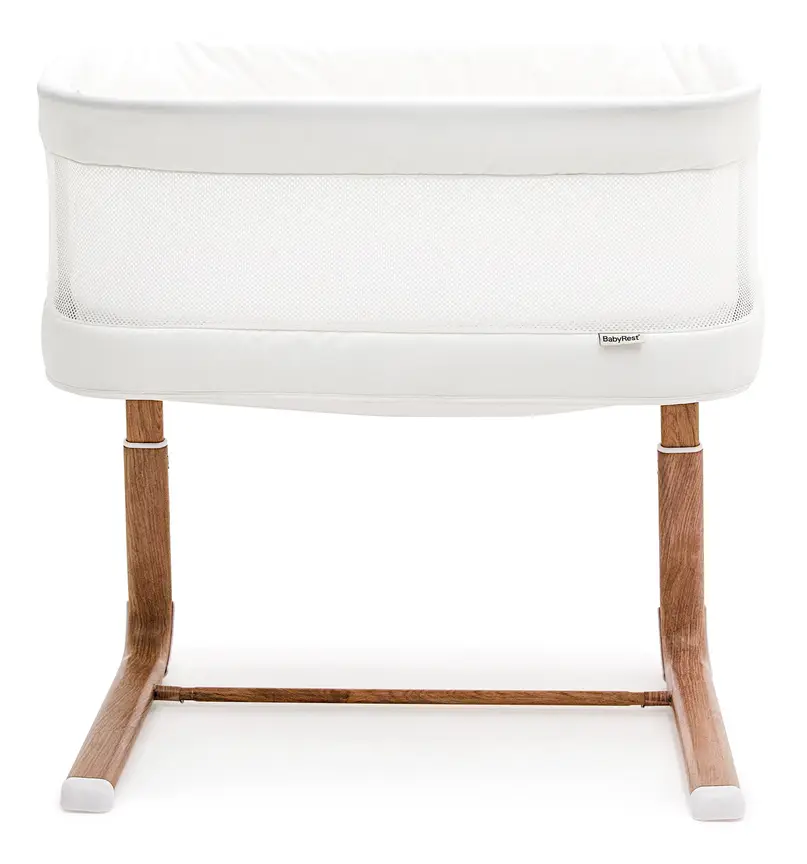


BabyRest Swan Smart Bassinet
A bassinet that rocks by itself when baby stirs, with 3 rocking levels, lullabies and a remote.
Read our full review →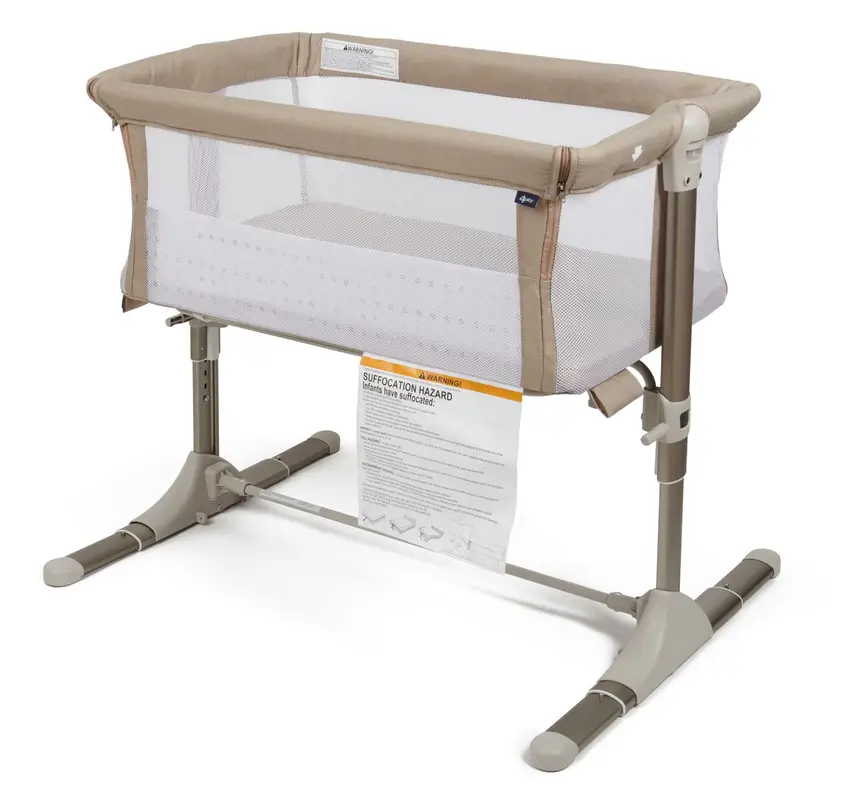
4baby Snuggle Cuddle Bedside Sleeper
A low-cost bassinet that turns into a bedside sleeper, with 4 heights and mesh sides.
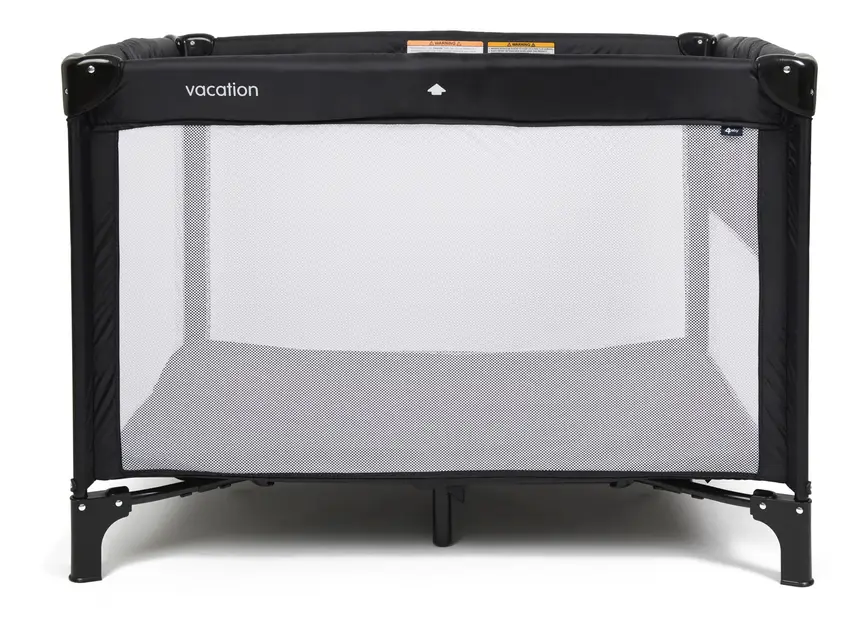
4baby Vacation Portacot
A low-cost portacot with a padded mattress and mesh sides.
Compare all cots, bassinets & bedside sleepers in our reviews →
How smart features affect baby sleep
Smart cots bundle several tools into one frame. These include motion, sound, light, and data logs. Each tool works best when used gently and safely.
Automated rocking and soothing motion
Gentle rhythmic rocking is one of the oldest ways to calm a baby. In the womb, a baby feels constant motion whenever their mother walks and breathes. A rocking bassinet copies that gentle sway.
Most smart bassinets have several motion levels. Level one is a slow, steady sway. Higher levels move faster with a tiny jiggling motion to soothe crying. Good smart beds have a built-in safety timer. If your baby cries hard for a few minutes and the rocking does not calm them, the motor turns off. The app then tells you to pick your baby up. A machine cannot feed a hungry baby, burp trapped wind, or change a wet nappy.
Some parents worry that a baby will get stuck needing motion forever. Most smart bassinets include a "weaning mode" in the app. You turn this on a few weeks before moving your baby to a standard cot. In weaning mode, the bed plays sound continuously. However, it only rocks for a short moment if the baby cries. This helps your baby get used to a still mattress.
Built-in white noise and volume limits
Almost every smart cot has a speaker built into the base or mattress frame. It plays white noise, rain sounds, or heartbeat rhythms. These sounds mask household noise like barking dogs, older siblings, or traffic.
Because the speaker is built right into the bed, it sits very close to your baby's head. A standalone sound machine usually sits much further away on a dresser across the room. Sound gets much louder the closer you are to the speaker. A 2014 study by Hugh and colleagues in the journal Pediatrics tested infant sleep machines. They found that many machines could produce very loud sound levels when placed right next to the cot. Those high levels can risk damaging infant hearing.
Follow these steps to protect your baby's ears:
- Set the smart cot's volume to the lowest level that still calms your baby.
- Raising Children Network in Australia notes that white noise should stay soft. Keep it around 50 decibels, which sounds like a quiet shower or a low conversation.
- Do not let the speaker play at high volume all night long.
- Check which end of the bassinet holds the speaker. If the maker allows it, place your baby's feet near the speaker end and their head at the opposite end.
Nightlights and your baby's body clock
Many connected cribs have an under-frame glow light or a ring light on the camera stand. These lights are handy for midnight feeds and nappy changes. You do not have to switch on the bright ceiling light.
Newborns do not have a set day-and-night body clock (circadian rhythm) yet. They develop it over the first few months of life. Research published in PubMed Central shows that bright white or blue LED light at night can suppress melatonin. Melatonin is the hormone that helps children feel sleepy. Keep these rules in mind when setting up your smart cot:
- Choose a dim, warm amber or red light setting in the app if available.
- Keep the nightlight switched off while your baby is sleeping.
- Only turn the light on when you are feeding, changing, or checking on your baby in the dark.
Room temperature readings
Smart cots often show the nursery temperature on your phone screen. While this looks helpful, do not rely on it alone. A small sensor on a plastic frame can read slightly warm because of the cot's own motor. It can also read slightly cool if it sits near a draught.
The Lullaby Trust in the UK suggests a comfortable room temperature of 16 to 20°C (61 to 68°F). In Australia, Red Nose says you do not need to heat or cool a room to a fixed number. Instead, dress your baby to match the room. The best way to check if your baby is too hot or too cold is with your own hand. Feel your baby's chest or the back of their neck. Their skin should feel warm and dry. It should never feel hot, sweaty, or clammy. Hands and feet often feel cool, which is normal.
Smart bassinet vs smart full-size cot vs standard cot
Before spending money on a connected bed, compare the main setups side by side. A standard cot paired with a simple audio monitor is still the most common and budget-friendly choice.
| Feature | Smart rocking bassinet | Smart full-size cot | Standard cot + standalone monitor |
|---|---|---|---|
| Typical age range | Birth to 4–6 months (or until rolling starts) | Birth to 2 years (up to 3–4 years if it converts to a toddler bed) | Birth to 2–4 years |
| Main benefit | Rocks and shushes automatically when baby stirs | Long lifespan with built-in camera, sound, or bounce motor | Simple, reliable, easy to repair or replace parts separately |
| Footprint in bedroom | Small; fits easily next to the parents' bed for room-sharing | Larger; check bedroom door and bedside space first | Standard cot size (or start with a small basic bassinet) |
| Mattress upgrades | Must use the exact thin custom pad supplied by the maker | Usually uses a custom or standard firm cot mattress | Wide choice of firm mattresses tested to national standards |
| What happens in a power cut? | Motor and sound stop; works as a flat stationary bassinet | Camera and bounce stop; works as a normal safe cot | Cot is unaffected; battery monitors keep running |
| Hidden ongoing costs | Special clip-in swaddle sacks, fitted sheets, and app subscriptions | Cloud video storage or sleep coaching app subscriptions | None if you buy a non-Wi-Fi audio or video monitor |
Safety standards and rules: Australia, the UK, the US, and Canada
A smart cot is regulated as nursery furniture first and an electronic appliance second. Every country has strict rules for baby beds. Never buy a smart cot from an unverified overseas seller if it has not been tested for your region.
| Safety area | Australia | United Kingdom | United States | Canada |
|---|---|---|---|---|
| Product safety regulator | ACCC / Product Safety Australia | Office for Product Safety and Standards (OPSS) | Consumer Product Safety Commission (CPSC) | Health Canada |
| Safe sleep peak body | Red Nose Australia | The Lullaby Trust & NHS | American Academy of Pediatrics (AAP) | Canadian Paediatric Society (Caring for Kids) |
| Full-size cot standard | AS/NZS 2172 (mandatory) | BS EN 716 | ASTM F1169 (mandatory federal rule) | Cribs, Cradles and Bassinets Regulations |
| Folding / portable cot standard | AS/NZS 2195 (mandatory) | BS EN 716 | ASTM F406 (mandatory federal rule) | Cribs, Cradles and Bassinets Regulations |
| Bassinet and cradle rules | Consumer Goods (Infant Sleep Products) Safety Standard (mandatory) | BS EN 1130 (cribs and cradles) & BS EN 16890 (mattresses) | ASTM F2194 (bassinets/cradles) & Safe Sleep for Babies Act | Strict federal ban on inclined sleepers; max 7-degree tilt |
| Smart device cyber security | Department of Home Affairs smart device guidance | Product Security and Telecommunications Infrastructure (PSTI) regime | FCC U.S. Cyber Trust Mark program | Get Cyber Safe federal guidance |
Australia
In Australia, all full-size household cots must meet the mandatory standard based on AS/NZS 2172. Folding portable cots must meet AS/NZS 2195. In July 2024, the Australian Government also introduced the mandatory Consumer Goods (Infant Sleep Products) Safety Standard. The ACCC oversees this law. It covers bassinets, bedside sleepers, and smart rocking cradles. It requires a firm, flat sleep surface with a tilt of no more than 7 degrees. It also requires stable frames that cannot tip over, breathable zones, and clear safety warnings. For mattress firmness testing, Australia uses AS/NZS 8811.1. You can also test a mattress at home using the Consumers' Federation of Australia firmness check. That simple check uses a two-litre milk carton and two CDs.
United Kingdom
In the UK, full-size cots are tested to BS EN 716. Domestic cribs, cradles, and bedside bassinets are tested to BS EN 1130. Cot mattresses are covered by BS EN 16890. That standard checks firmness, exact sizing so limbs cannot get trapped, and durability. Smart cots also connect to the internet. Because of this, they must follow the UK Government's Product Security and Telecommunications Infrastructure (PSTI) rules. These rules ban weak default passwords. They also require makers to state how long a smart product will get security updates.
United States
In the US, the CPSC enforces mandatory federal safety standards for baby beds. Full-size cribs must meet ASTM F1169. Non-full-size cribs and play yards must meet ASTM F406. Bassinets and cradles must meet ASTM F2194. Crib mattresses must also pass federal firmness and fit testing. In addition, the federal Safe Sleep for Babies Act bans inclined sleep products with an angle greater than 10 degrees. It also bans all padded crib bumpers nationwide. Any smart crib or rocking sleeper sold in the US must keep the baby flat on their back.
Canada
Health Canada enforces some of the strictest nursery rules in the world. These rules sit under the federal Cribs, Cradles and Bassinets Regulations. In Canada, any sleep product must have a sleep surface angle of 7 degrees or less. Drop-side cribs and inclined sleepers are banned. Be careful when shopping across the border. A smart bassinet or bedside sleeper approved in the US is not automatically legal to sell or bring into Canada. It must meet Health Canada's exact structural and warning label rules.
Age stages and when to stop using smart features
Babies grow quickly in the first year. A smart bed that is safe for a newborn can become a hazard a few months later. You must adjust how you use the bed as your baby grows.
| Stage | What your baby is doing | How to set up your smart cot or bassinet |
|---|---|---|
| Newborn (0 to 8 weeks) | Sleeping 14–17 hours in short bursts; strong startle reflex. | Bassinet or highest cot mattress setting. Gentle rocking and soft white noise (under 50 dB). Always place on the back. |
| 2 to 4 months | Startle reflex fades; kicking legs and trying to roll onto side. | Stop arms-in swaddling at the first sign of rolling. Switch to an arms-free sleeping bag. Turn on motion weaning mode if moving to a still cot soon. |
| 4 to 6 months (rolling) | Rolling back to tummy and tummy to back; pushing up on hands. | Stop using any bassinet once baby can push up on hands or knees, or hits the weight limit. Move to a full-size cot. |
| 6 to 12 months (sitting & standing) | Sitting up unassisted; pulling up to stand on cot rails. | Drop the full-size cot mattress to its lowest base position before baby can sit up. Move overhead cameras higher so baby cannot grab the mount or cord. |
| 18 months to 3 years | Climbing and trying to swing a leg over the top rail. | Move to a toddler bed once the top rail sits below your child's chest or they try to climb out. Remove all camera stands attached to the bed frame. |
A special note on clip-in swaddle sacks
Some smart rocking bassinets use a special sleep sack with elastic wings. These wings slide onto clips attached to the sides of the bassinet. This system holds the baby flat on their back in the middle of the mattress while the bed rocks.
Follow these rules if your smart bassinet uses a clip-in system:
- Never place your baby in the bassinet in an unclipped swaddle or loose blanket while the motor is on.
- Only use the exact sack made for that bed. Pick the right size for your baby's weight. Fasten the inner velcro or zip properly so the fabric cannot ride up over the chin.
- Open the shoulder snaps so your baby's arms are free once they show signs of rolling. You can also open them earlier if your baby prefers their hands out.
- Stop using the bassinet completely as soon as your baby hits the maker's weight or length limit. You must also stop as soon as your baby can push up on their hands and knees, or reaches six months of age. Follow whichever limit comes first.
Side by side: more cots, bassinets & bedside sleepers to compare
Real products from our catalogue. We don't show star ratings or review counts; check the current price, stock and reviews on Amazon before you buy.
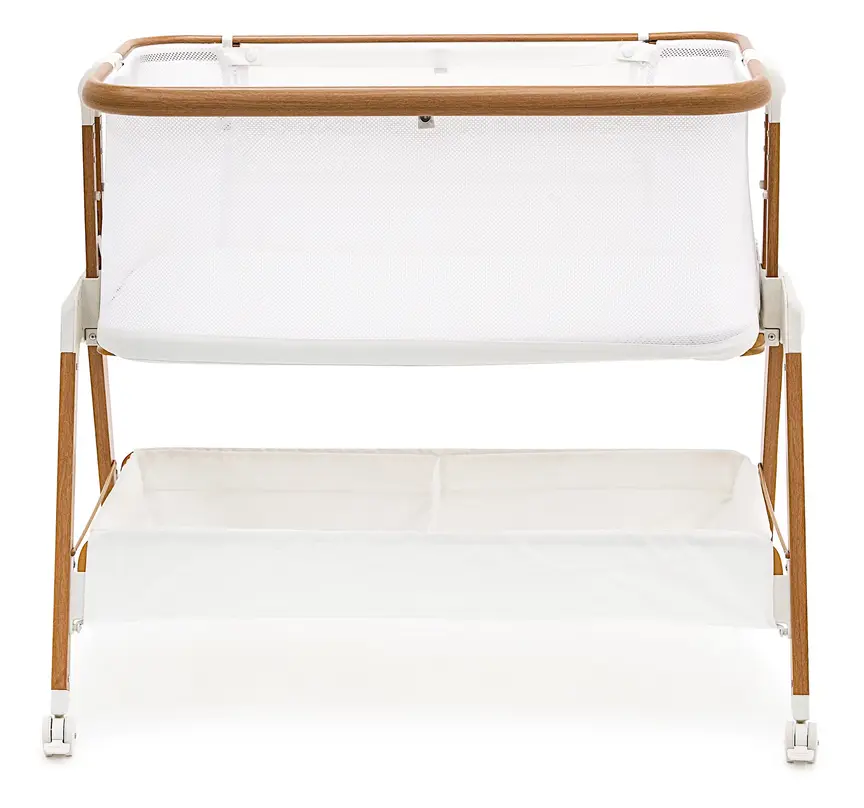
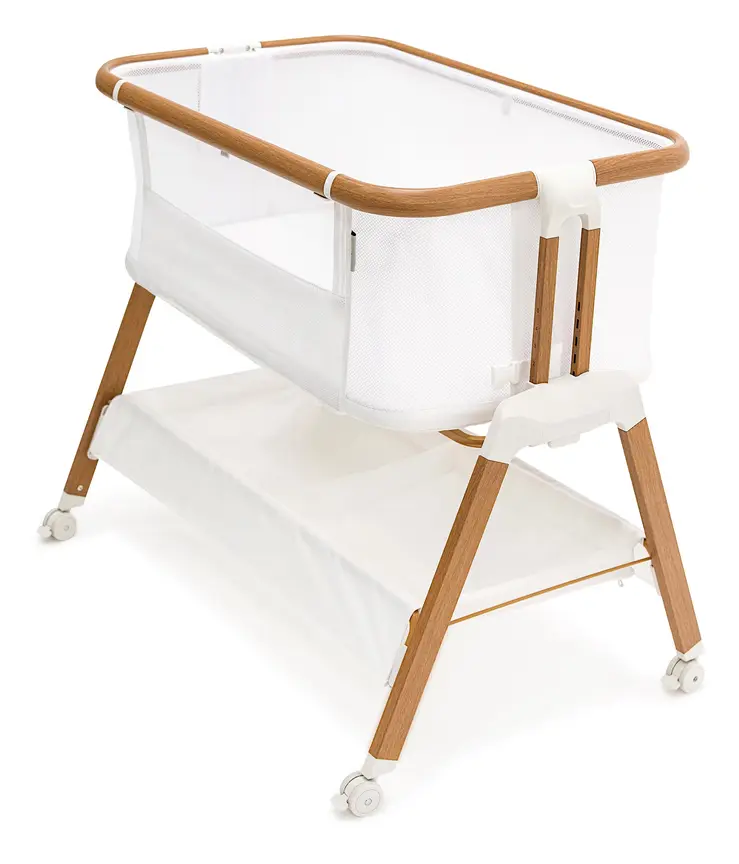
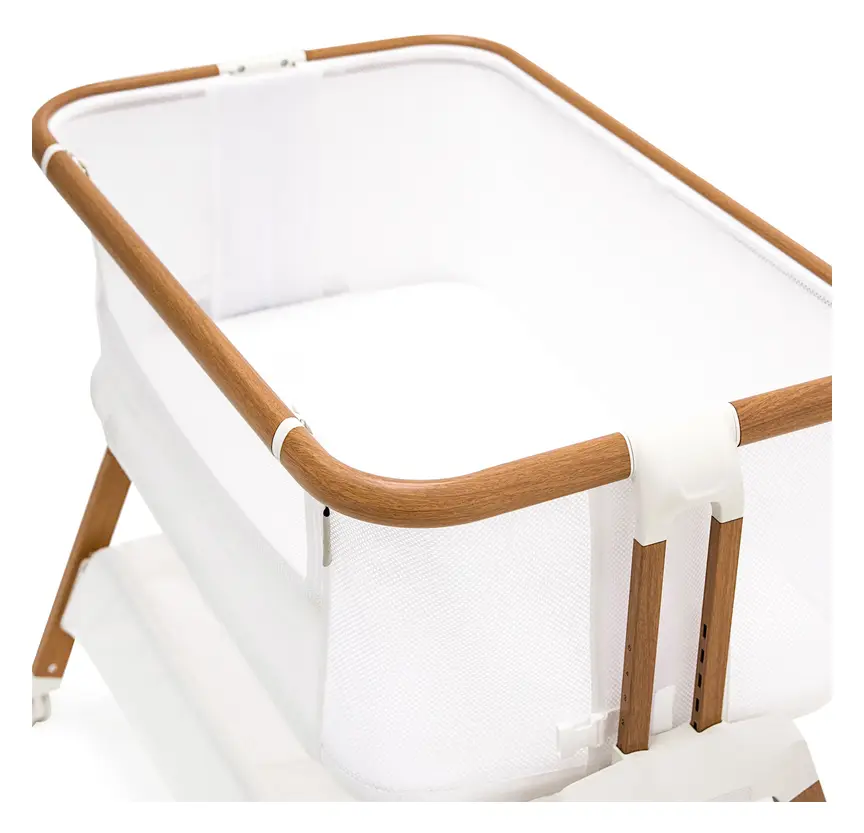
BabyRest Alfie2 Bedside Bassinet
A bedside bassinet with 5 heights, a drop-down side, wheels and an insect net.
Read our full review →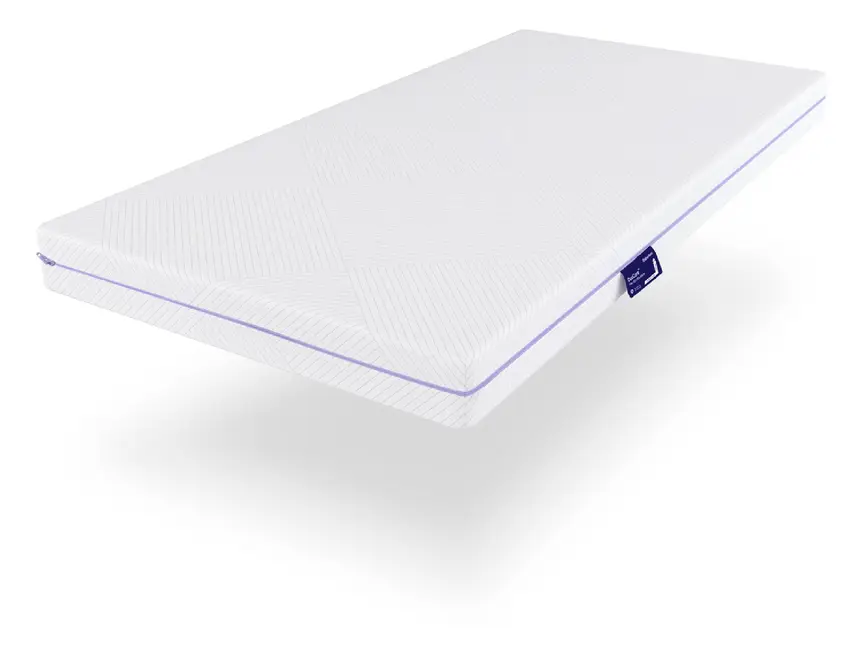
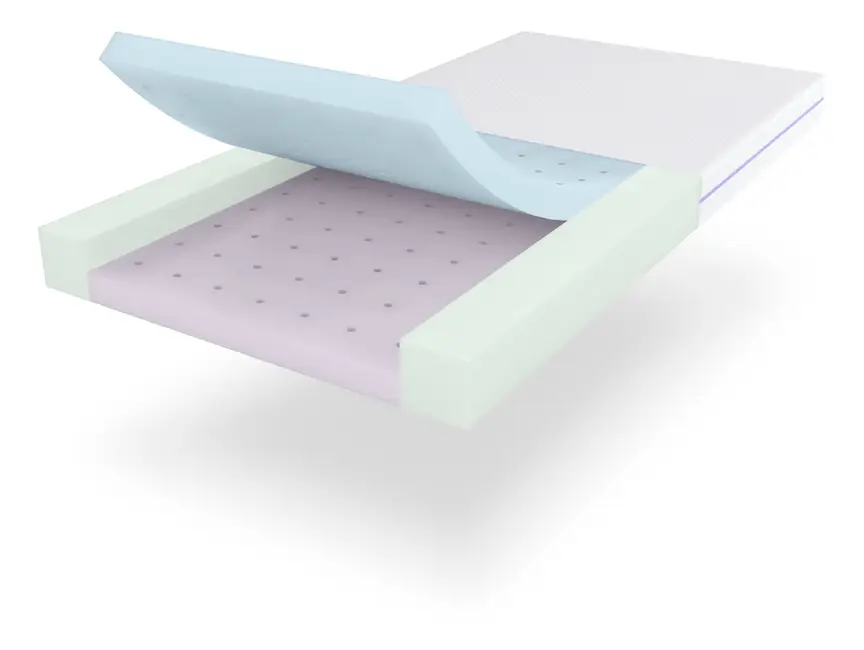

BabyRest Duocore Bamboo Cot Mattress
A two-sided mattress: a baby side to 12 kg and a toddler side from 12 kg to about 4 years.
Read our full review →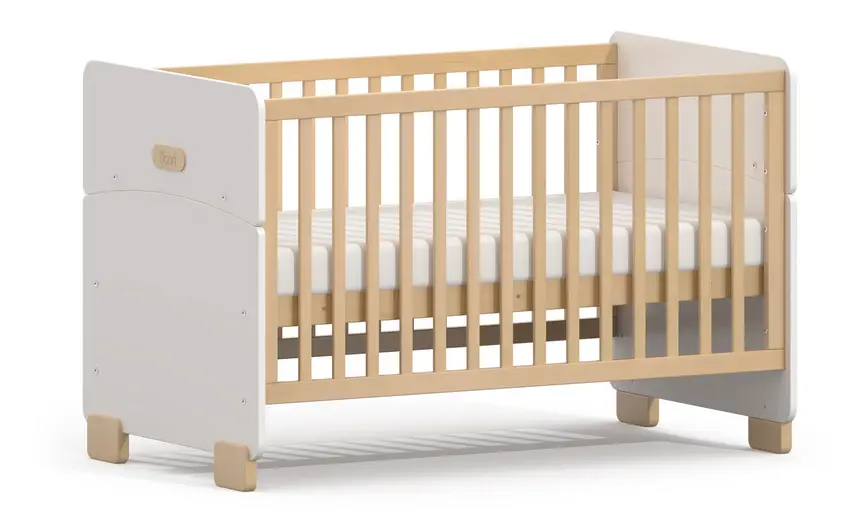

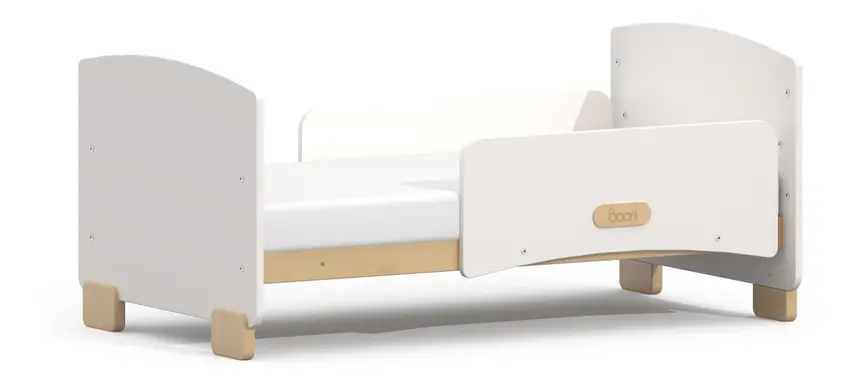

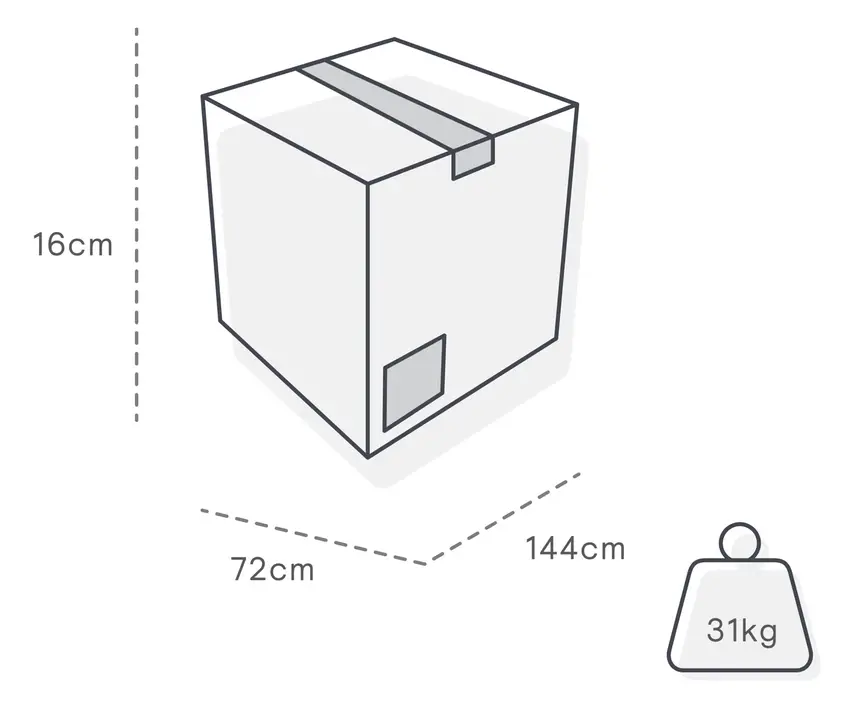
Boori Matilda Cot Bed
A cot that turns into a toddler bed using its own end panels. No extra kit needed.
Read our full review →
Boori Oasis Oval Cot
A curved solid beech cot on lockable wheels, with two base heights.
Compare all cots, bassinets & bedside sleepers in our reviews →
Electrical, cord, and battery safety
Unlike a basic wooden cot, a connected crib uses mains electricity, cables, and sometimes batteries. Follow these three safety checks in your baby's sleep zone.
1. Keep power cords at least 1 metre (3 feet) away
Loose baby monitor and appliance cords are a serious strangulation hazard. The US CPSC has published safety alerts after babies pulled loose monitor cords into their cribs. Tragically, those cords wrapped around their necks. ACCC, Red Nose, The Lullaby Trust, and Health Canada all issue the exact same warning.
- Route the smart cot's power cable straight down under the centre of the frame. Tape it down or cover it with hard plastic cord covers along the skirting board.
- Keep any wall power adapter, extension lead, or camera cable at least 1 metre (3 feet) away from every outside edge of the cot.
- Check under the cot each week. Moving the cot to vacuum can pull a tucked-away cord loose. A sitting baby can then reach through the slats and grab it.
2. Plan for power cuts
Most smart cots plug into the wall and do not have a backup battery. If a storm causes a blackout at 2:00 AM, the motor, speaker, and Wi-Fi app will turn off right away.
- The bed itself remains a safe, flat place for your baby to sleep during a power cut.
- Keep a simple battery-powered audio monitor or a charged phone torch in your bedroom drawer. That way, you can still hear and check on your baby if the home Wi-Fi drops out.
- Never connect a baby's cot to a makeshift battery pack or unapproved power inverter.
3. Check remotes for button batteries and lithium cells
Some connected bassinets come with a small handheld remote control. This lets you change the rocking speed without opening your phone. Many small remotes run on coin-sized lithium button batteries.
Product Safety Australia warns that button batteries are extremely dangerous for children. If swallowed, a button battery can get stuck in a child's throat. It can cause life-threatening internal burns in as little as two hours. Check that any remote control has a battery door locked with a screw. Keep the remote out of reach of toddlers. Put flat batteries in an outside bin straight away. Some monitor handsets use rechargeable lithium-ion batteries instead. Fire and Rescue NSW advises charging these on a hard, flat surface. Never charge them on a bed, pillow, or sofa where they can overheat.
Privacy, Wi-Fi, and cyber security for smart nursery gear
A connected crib often has a microphone listening for cries. Many also have a camera streaming video of your bedroom or nursery. Without basic security steps, strangers could access internet-connected baby gear.
The Australian Department of Home Affairs, the UK Government, the US Federal Communications Commission (FCC), and Canada's Get Cyber Safe campaign all recommend these simple steps:
- Use a unique, strong password: Never reuse your email or banking password for your baby cot app. Use a long passphrase made of three or four random words.
- Turn on two-factor authentication (2FA): Check if the cot's app offers a login code sent to your phone or an authenticator app. Switch it on right away. Even if someone guesses your password, they cannot view your camera feed.
- Install firmware updates: The app will sometimes ask to update the cot's software. Run the update during the daytime when your baby is awake and out of the bed. Updates fix security bugs.
- Check what the camera sees: Angle the cot camera so it points only down into the mattress. If the cot is in your bedroom for room-sharing, avoid wide-angle lenses that record your own bed.
- Factory reset before selling or passing on: Your baby will eventually outgrow the smart cot. Before you sell it or give it away, unlink it from your account. Then run a full factory reset in the settings menu. This wipes your Wi-Fi details and sleep logs.
How to choose a smart cot: a buyer's checklist
If a connected cot or bassinet fits your budget, test it against this practical checklist before buying:
- Can it work without Wi-Fi or an app? Look for a cot with a physical power button on the leg or frame. You do not want to unlock your phone and load an app at 3:00 AM just to turn the rocking on or off.
- Is the app subscription optional? Several smart cot makers now charge a monthly fee for extra app features. They may lock daily sleep charts, cry detection, or weaning modes behind a paywall. Check what features stay free before you buy.
- How loud is the motor in a quiet room? Read parent feedback or test the floor model in a quiet corner of the shop. A squeaky or grinding motor right next to your pillow will keep you awake.
- Are the fabrics easy to wash at midnight? Babies spit up and leak through nappies. Make sure the mesh liner, mattress cover, and clip-in sacks come off easily for machine washing. Buy at least two spare fitted sheets made for that exact mattress size.
- What is the return or rental policy? Not every baby likes a rocking bassinet. Some babies settle straight away, while others prefer a still mattress. Many parents rent a smart bassinet by the month or buy one with a 30-day trial period.
- Is it safe to buy second-hand? If you buy a used smart cot, check that the model has not been recalled. You can check the recall lists on Product Safety Australia, OPSS, CPSC, or Health Canada. Inspect the frame for cracks and test the motor on all levels. Buy a brand-new firm mattress if the old one is saggy or stained. Finally, make sure the previous owner unlinked their account from the cot.
Common mistakes to avoid
- Using the rocking motor to ignore prolonged crying: A smart bassinet is meant to soothe light stirring or brief fussing. If your baby is crying hard, always pick them up. Check for hunger, wind, temperature, discomfort, or illness.
- Adding soft padding to make the thin mattress "cosier": Smart bassinet pads look very thin to adults. They are thin and firm on purpose so your baby's face cannot sink in. Never place a folded towel, lambskin, pillow, or sleep nest under your baby.
- Propping one end of the smart cot up for reflux: Some brands sell leg lifters to tilt the head of the bassinet. Red Nose, the AAP, The Lullaby Trust, and Health Canada all warn against tilting a cot. An incline does not help reflux. Instead, it can cause your baby to slide down into a chin-to-chest position that blocks their airway. Keep the bed completely flat.
- Leaving a rolling baby in a low-sided bassinet: Once a baby can push up on their hands and knees, they can tip over the low side of a bassinet. Move them to a deep full-size cot straight away.
- Worrying over app sleep scores: Smart apps love to give your baby's night a score out of 100. Remember that waking up for night feeds is normal and healthy for young babies. It keeps them fed and actually helps protect them during sleep. If the app charts make you anxious, turn off the alerts and watch your baby instead of the screen.
More options, from budget to premium
Real products from our catalogue. We don't show star ratings or review counts; check the current price, stock and reviews on Amazon before you buy.
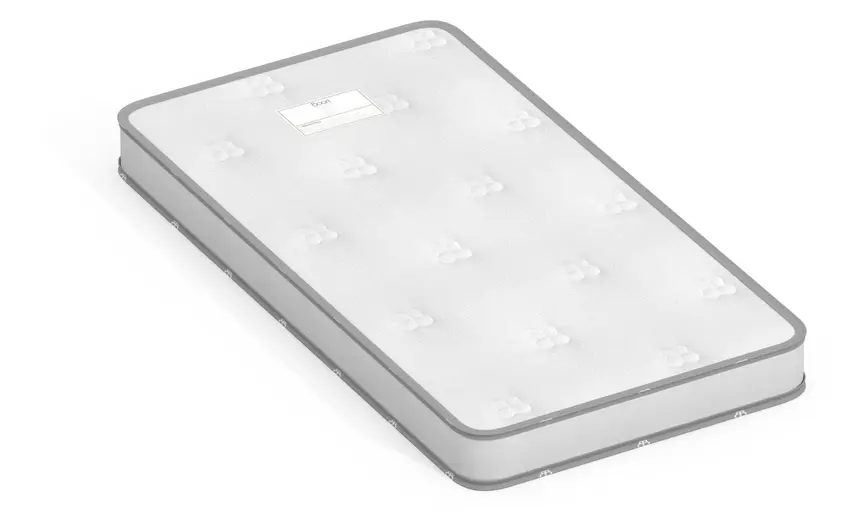
Boori Pocket Spring Mattress (standard cot)
A pocket spring cot mattress that comes rolled. Let it expand for up to 24 hours.


Bugaboo Stardust Plus
A pop-up portacot with a bassinet, for naps at home or away.
Read our full review →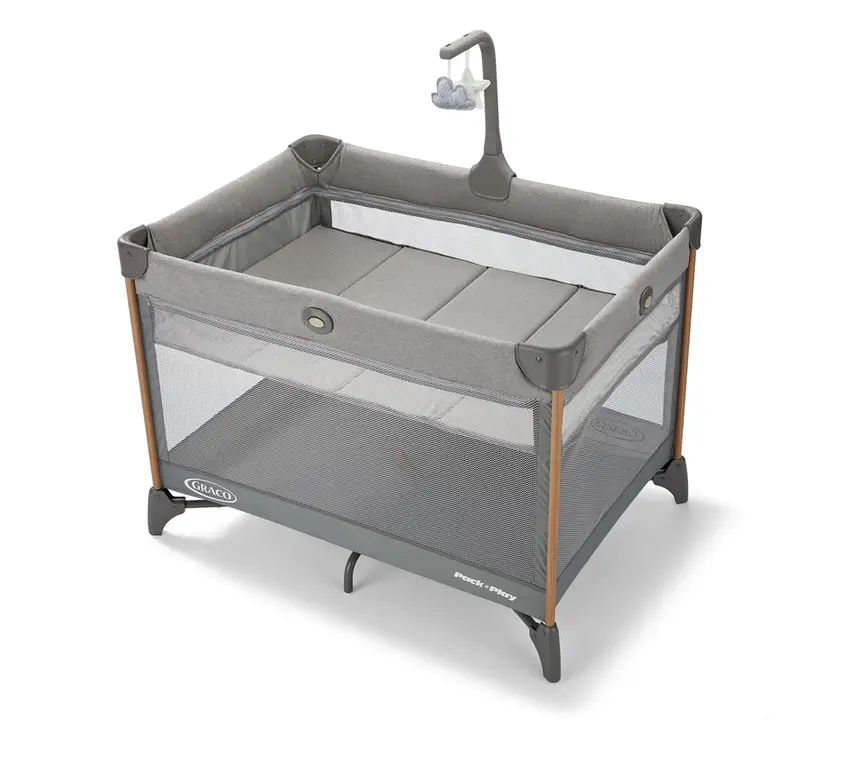
Compare all cots, bassinets & bedside sleepers in our reviews →
Frequently asked questions
Do paediatricians and safe sleep charities recommend smart cots?
Safe sleep groups like Red Nose, The Lullaby Trust, the AAP, and the Canadian Paediatric Society do not endorse specific smart cot brands. They state that any baby bed is safe only if it meets mandatory national safety standards. It must have a firm, flat mattress with no loose bedding or soft objects. They also advise against relying on built-in breathing or heart-rate sensors to prevent SIDS.
Are smart bassinets safe for a newborn from day one?
Yes, a smart bassinet is safe from birth if it meets your country's safety standard and sits completely flat. You must also follow the maker's weight and age rules. Always place your newborn on their back in the centre of the firm mattress. Keep the white noise volume low, and keep the bassinet in your bedroom for the first six months.
Can a smart cot help a baby with colic or reflux?
Gentle rhythmic rocking and soft white noise can sometimes help calm a crying baby during an evening fussy spell. However, a smart cot cannot cure colic or medical reflux. Never raise or tilt one end of the cot to treat reflux. Sleeping on an incline is unsafe for babies. Speak to your GP, child health nurse, or health visitor if your baby is in pain during feeds.
Do smart cribs give off harmful Wi-Fi radiation?
Smart cots use standard household Wi-Fi or low-energy Bluetooth. These signals sit well below international radiofrequency safety limits. If you want to reduce wireless signals near your baby, look for a smart cot with a Wi-Fi off switch. You can also place a standalone Wi-Fi camera a couple of metres away from the cot.
When must my baby move out of a smart bassinet?
Most babies outgrow a smart bassinet between 4 and 6 months of age. You must move your baby to a full-size cot as soon as they hit the maker's weight or length limit. You must also move them as soon as they can push up on their hands and knees, sit up, or roll over in an unclipped bed. Follow whichever milestone happens first.
Is a smart cot worth the money if we are on a tight budget?
No. You do not need a smart cot to be a great parent or to keep your baby safe. A basic wooden cot or portable cot that meets national safety standards (like AS/NZS 2172 in Australia, BS EN 716 in the UK, ASTM F1169 in the US, or Health Canada's rules) gives your baby the exact same level of sleep safety for a fraction of the price.
Sources
- Red Nose Australia – Baby monitors
- Product Safety Australia (ACCC) – Infant sleep products mandatory standards
- The Lullaby Trust (UK) – Baby monitors
- UK Government – Security rules for smart devices (PSTI)
- American Academy of Pediatrics (US) – A parent's guide to safe sleep
- U.S. Consumer Product Safety Commission – Infants and toddlers can strangle in baby monitor cords (Publication 5066)
- Caring for Kids (Canadian Paediatric Society) – Safe sleep for babies
- Get Cyber Safe (Government of Canada) – Cyber security tips for your baby gear
Related guides
More Sleep & Nursery →
Smart Bassinets: How They Work, Safety Rules, and How to Choose One
Smart Bassinets: How They Work, Safety Rules, and Whether You Need One

Bedside Sleepers and Co-Sleeper Bassinets: Safety Rules, Set-Up and What to Check