














Playard Bassinet Inserts vs. Standalone Bassinets: Footprint, Folding, and Support Bars
Compare playard bassinet inserts and standalone bassinets: floor space, folding speed, support bars, and safe sleep rules across AU, UK, US, and CA.

On this page
- Key points
- What playard bassinet inserts and standalone bassinets are
- Floor footprint and bedroom space
- Folding speed and daily portability
- Mattress support bars, firmness, and flat sleep
- Playard bassinet insert vs. standalone bassinet: side-by-side
- Age stages and when to stop using a bassinet
- Safety standards in Australia, the UK, the US, and Canada
- How to check your bassinet or playard before use
- Common mistakes to avoid
- How to choose the right one for your home
- Frequently asked questions
- Sources
Short answer: A standalone bassinet takes up less floor space and is easier to move around your home. A playard bassinet insert sits inside a larger folding frame that you can keep using for toddlers later. Both must give your baby a flat, firm sleep surface with no gaps or loose parts.
In Australia, a playard is usually called a portacot. In the UK, it is called a travel cot. No matter which type you pick, safe sleep rules are the same in Australia (Red Nose), the UK (The Lullaby Trust), the US (American Academy of Pediatrics), and Canada (Health Canada and the Canadian Paediatric Society).
Key points
- Floor space: Standalone bassinets are smaller and fit beside most beds. Playards need more room.
- Folding speed: A playard insert must be stripped down before the frame folds. Many standalone bassinets fold in seconds or stay set up.
- Support bars: Playard inserts rely on metal bars to hold the pad flat. Missing or bent bars make the bed sag.
- Mattress fit: Only use the firm, thin mattress made for your model. Never add extra foam or blankets.
- When to stop: Stop using any raised bassinet as soon as your baby starts to roll or push up, or hits the weight limit.
- Room sharing: Health bodies in all four countries advise keeping your baby in your room for the first 6 to 12 months.
What playard bassinet inserts and standalone bassinets are
Parents often choose between two ways to sleep a newborn in the bedroom. You can buy a standalone bassinet made just for tiny babies. Or you can buy a playard (portacot or travel cot) that comes with a raised bassinet insert.
A standalone bassinet is a small bed on legs or a stand. It is built only for newborns and young babies. Most have mesh or slatted sides so air can move freely. Some models sit right next to your bed as a bedside sleeper. Others have wheels so you can roll them into the living room during the day.
A playard bassinet insert is a fabric sling or raised floor that clips onto the top rails of a playard. It lifts the mattress higher so you do not have to bend all the way down to the bottom. When your baby outgrows the top level, you take the insert out. You then use the lower level as a travel cot or safe play space.
Both options aim to keep your baby safe and close to you at night. Yet they work very differently in daily life. Their size, folding steps, and mattress support can make one a much better fit for your home.
Floor footprint and bedroom space
Floor space is often the first surprise for new parents. A baby looks tiny, so you might expect their bed to be tiny too. That is not always true.
A standalone bassinet has a small footprint. Most are narrow and oval or rectangular. They are made to tuck into the space between your bed and the wall. In a small bedroom or apartment, that narrow shape matters a lot. You still need room to walk past the bed without tripping in the dark.
A playard has a much larger footprint. Even with the bassinet insert clipped in, the base frame stays the same full size. It is closer to the size of a compact cot. In a tight bedroom, a playard can block cupboard doors or squeeze the walkway around your bed.
Doorways and moving between rooms
Think about where your baby will sleep during the day. Many parents like to keep the newborn near them in the lounge or kitchen. Then they move the bed back to the bedroom at night.
- Standalone bassinets: Many are narrow enough to wheel or carry through a standard doorway without folding.
- Playards: Most are too wide to pass through a bedroom door while open. You have to tilt them sideways or fold them first.
Clearance around the sleep space
Whichever bed you choose, it needs safe clear space around it. Product Safety Australia (ACCC) and the US Consumer Product Safety Commission (CPSC) both warn parents to keep baby beds away from windows. Never place a bassinet or playard near blind cords, curtain cords, or power leads. Keep it away from heaters, fans, and shelves where things could fall in.
If your bedroom is very small, measure the gap beside your bed first. Check that you can open your bedroom door fully. Make sure you can get out of bed safely at night without bumping the bassinet frame.
Cots, Bassinets & Bedside Sleepers worth a look
Real products from our catalogue. We don't show star ratings or review counts; check the current price, stock and reviews on Amazon before you buy.
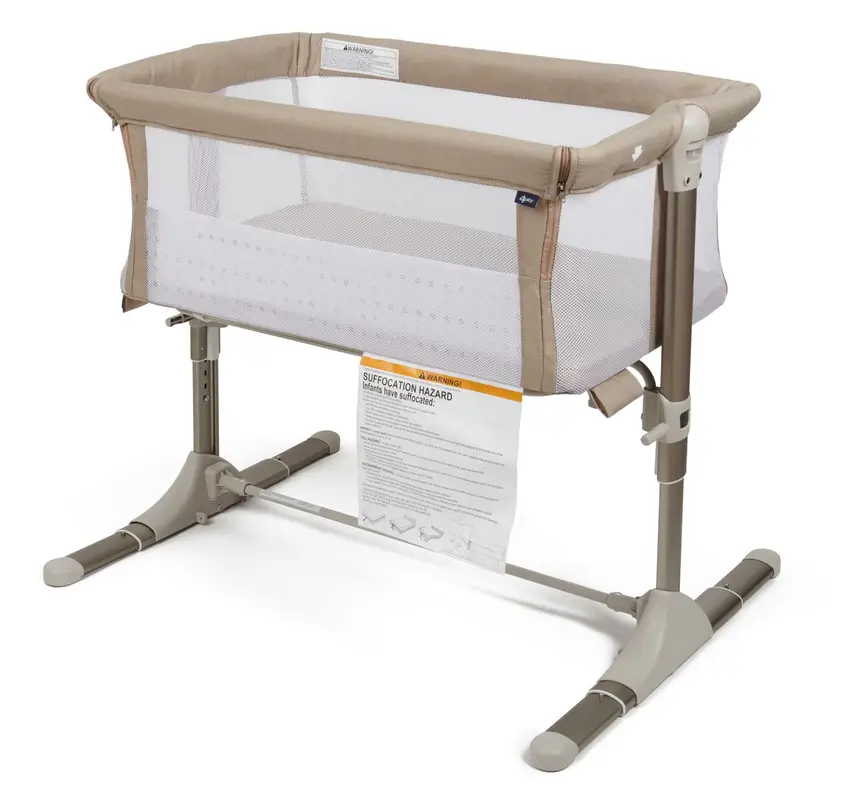
4baby Snuggle Cuddle Bedside Sleeper
A low-cost bassinet that turns into a bedside sleeper, with 4 heights and mesh sides.
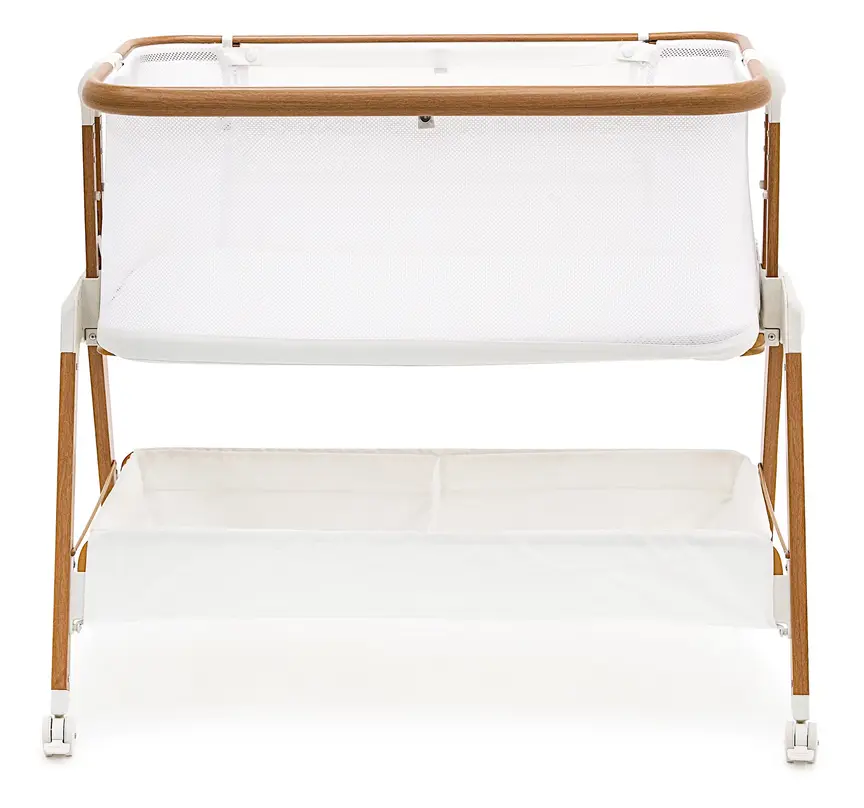
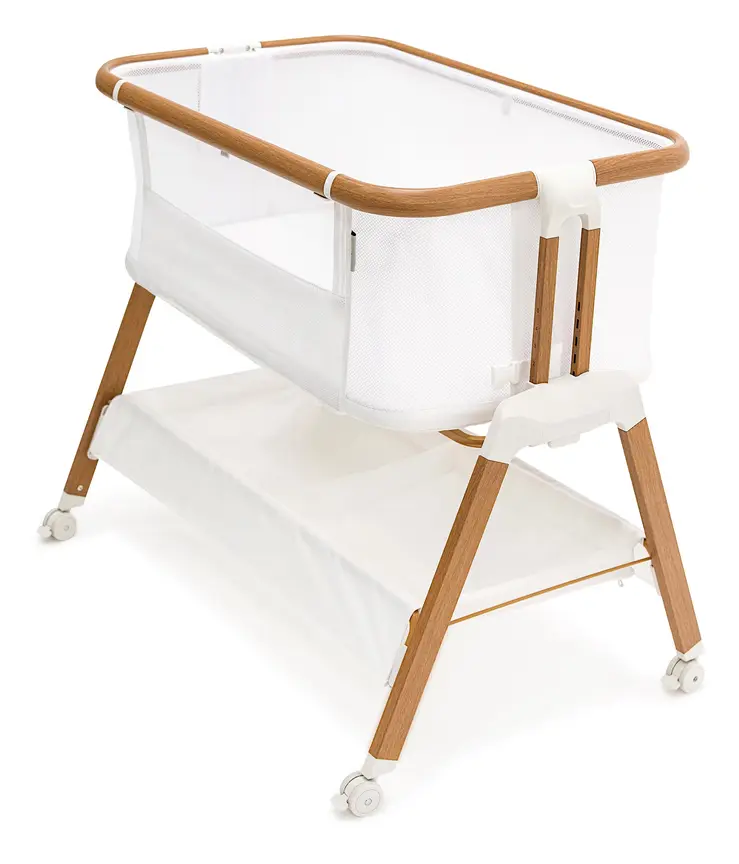
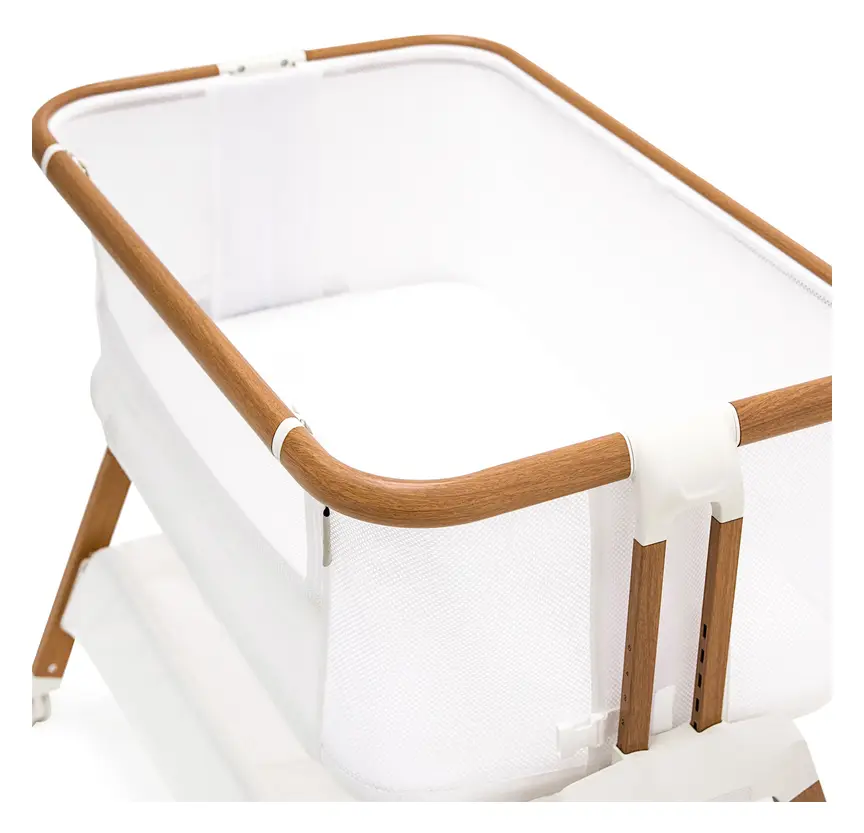
BabyRest Alfie2 Bedside Bassinet
A bedside bassinet with 5 heights, a drop-down side, wheels and an insect net.
Read our full review →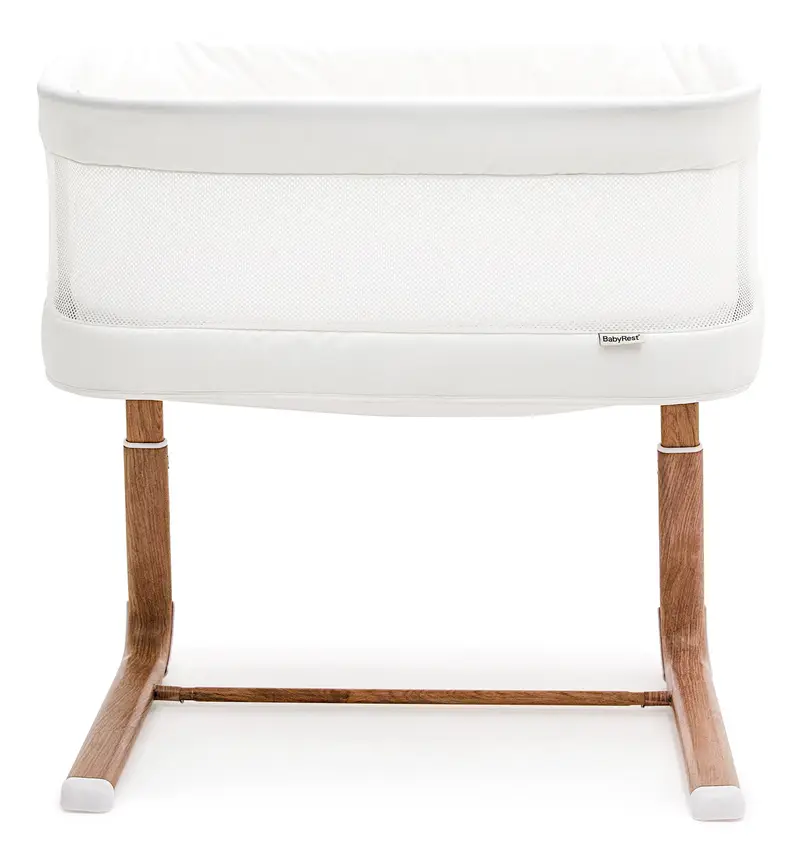
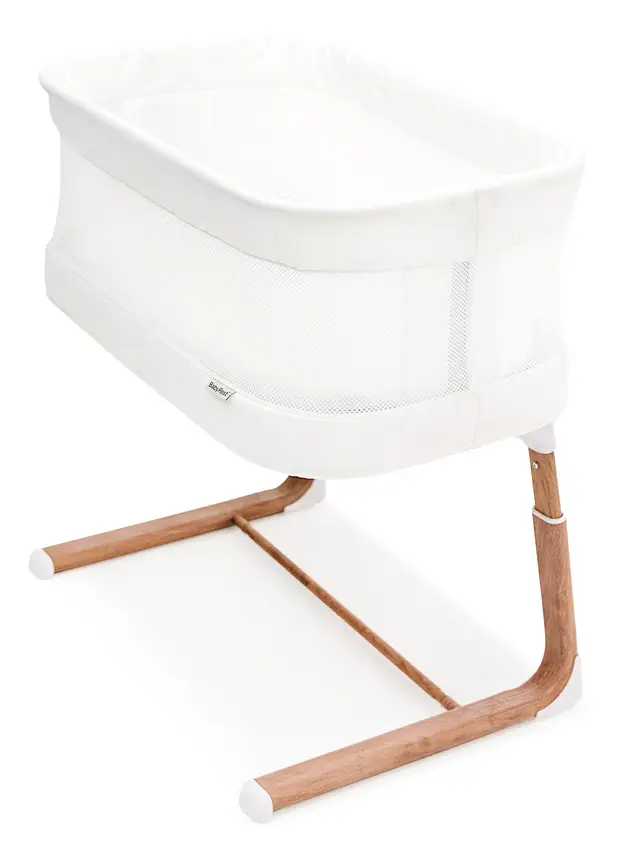
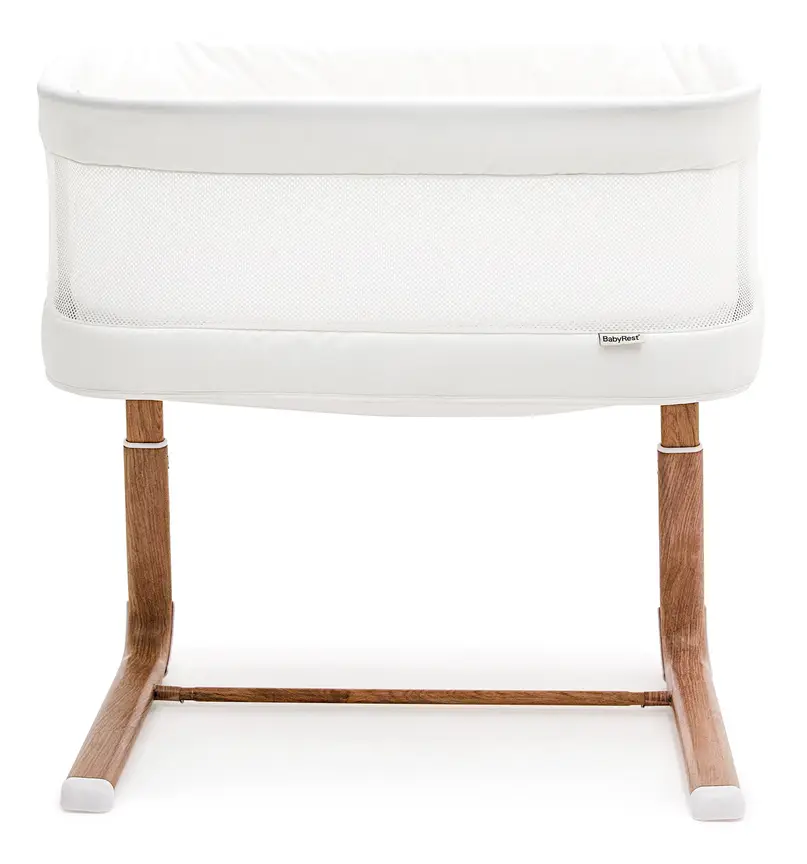


BabyRest Swan Smart Bassinet
A bassinet that rocks by itself when baby stirs, with 3 rocking levels, lullabies and a remote.
Read our full review →


Bugaboo Stardust Plus
A pop-up portacot with a bassinet, for naps at home or away.
Read our full review →Compare all cots, bassinets & bedside sleepers in our reviews →
Folding speed and daily portability
How fast a bed folds matters if you travel, visit grandparents, or store the bed during the day. Many parents assume a playard with a bassinet is quick to pack up. In practice, the bassinet insert adds extra steps.
How a playard bassinet insert folds
A basic playard frame often folds in under a minute once you learn the latch order. With a bassinet insert fitted, the job takes longer. You usually have to do these steps every time:
- Take out the folding mattress pad.
- Pull the metal support bars out of their fabric sleeves.
- Unclip or unzip the bassinet sling from all four top rails.
- Pull the centre strap on the floor of the playard.
- Unlock the four side rails so they collapse inward.
- Wrap the mattress pad around the folded frame and fasten the straps.
If you forget to unlock the rails in the right order, they can jam. Packing up a playard with an insert takes space and both hands. It is fine for weekend trips, but tiring to do every morning and night.
How a standalone bassinet folds
Standalone bassinets vary a lot in how they fold:
- Fixed-frame bassinets: Some do not fold at all. You build them once and leave them in place until your baby outgrows them.
- Travel bassinets: Some pop open or fold flat into a carry bag in seconds. They are light and easy to carry on a plane or in a car boot.
- Tool-free leg frames: Some let you click off the legs or fold the stand flat for storage under a bed.
If you want a bed that packs away in ten seconds for short trips, a folding travel bassinet is faster. If you want one product that stays set up in a spare room and travels only now and then, a playard works well.
Mattress support bars, firmness, and flat sleep
This is the most important safety difference between the two styles. A newborn must sleep on a firm, flat surface. Red Nose Australia, The Lullaby Trust in the UK, the American Academy of Pediatrics (AAP), and Health Canada all agree on this rule.
How playard mattress support bars work
In a playard, the bassinet insert hangs from the top rails like a shallow hammock. On its own, fabric sags in the middle. To stop that sag, makers include thin metal mattress support bars. You slide these bars into pockets or sleeves underneath the bassinet floor, or clip them into plastic brackets.
The thin, folding playard mattress then sits on top of the bars. When every bar is locked in place, the surface stays level and firm. When a bar is missing, bent, or not pushed all the way in, the centre can dip. Even a small dip can cause a baby to roll into a corner or press their face against the side.
How standalone bassinet bases work
A standalone bassinet usually has a solid base board or a tight, rigid frame built directly under the mattress. There are no loose metal tubes to slide in and out each time you pack it up. Because the base is one fixed piece, it is less likely to sag from a missed assembly step.
Still, you must check that a standalone bassinet sits level on your floor. Uneven floorboards, thick rugs, or a broken leg lock can tilt the bed. A tilted sleep surface is unsafe. If a baby's chin drops onto their chest, it can block their airway.
Why firmness and fit matter
A soft mattress can mould around a baby's face and block their breathing. Raising Children Network and the Consumers' Federation of Australia explain that a safe mattress must be firm and flat. In Australia, Standards Australia sets a firmness test under AS/NZS 8811.1.
Follow these mattress rules for both playards and standalone bassinets:
- Use only the mattress that came with the product.
- Never add an extra foam pad, pillow, sheepskin, or folded blanket under your baby.
- Check the edges. There should be no gaps between the mattress and the mesh or walls where a baby's head, arm, or leg could get stuck.
- Keep the sleep space bare. No loose blankets, bumpers, soft toys, or sleep positioners.
Playard bassinet insert vs. standalone bassinet: side-by-side
This table compares the two options across daily use, space, and safety parts.
| Feature | Playard bassinet insert | Standalone dedicated bassinet |
|---|---|---|
| Floor footprint | Larger. Takes up roughly the space of a small cot. | Smaller. Narrow design fits beside most adult beds. |
| Folding speed | Slower. You must remove the mattress, support bars, and sling first. | Varies. Travel models fold in seconds; fixed models stay built. |
| Mattress support | Uses metal support bars under a thin folding pad. | Uses a solid base board or built-in rigid frame. |
| Moving between rooms | Harder. Often too wide for doorways without tilting or folding. | Easier. Many fit through doorways or roll on lockable wheels. |
| Breathable sides | Full mesh walls on all four sides. | Mesh sides or spaced slats, depending on the model. |
| How long you use it | Bassinet level ends early, but the lower playard lasts into toddlerhood. | Stops once baby rolls, pushes up, or hits the weight limit. |
| Storage after use | Folds into a carry bag for travel or storage. | Flat-fold models store easily; rigid frames take more cupboard space. |
| Main safety check | All support bars installed and locked; side rails fully latched. | Frame locks secure; base flat; mattress fits snugly with no gaps. |
Age stages and when to stop using a bassinet
Neither a standalone bassinet nor a playard bassinet insert lasts for the whole first year. Babies grow fast, and their movement changes quickly.
Newborn to 3 months
This is the main stage for both beds. A newborn cannot roll or pull up yet. They wake often to feed at night, so having them right beside your bed makes night care easier. Always place your baby on their back for every sleep, day and night. Keep their face and head uncovered.
Around 3 to 5 months (rolling or pushing up)
You must stop using a raised bassinet as soon as your baby shows signs of rolling, starts pushing up on their hands and knees, or reaches the maker's weight limit. Follow whichever happens first. Do not wait for a set birthday.
Why is this rule so strict? Raised bassinets and playard inserts have shallow walls. Once a baby can push up or roll, they can tip over the edge and fall. A fall from a raised insert onto a hard floor can cause serious head injuries. In a playard insert, a rolling baby can also get wedged between the sling wall and the frame.
Moving to the next sleep space
When your baby outgrows the raised level, you have two safe next steps:
- If you have a playard: Remove the bassinet insert and support bars completely. Place the mattress flat on the bottom floor of the playard, and lock it down as the manual shows. Check the weight and height limits for the lower playard level. For everyday home sleep, a full-size household cot is usually stronger and more comfortable long term.
- If you have a standalone bassinet: Move your baby into a standard cot in your bedroom. Health groups recommend room-sharing for at least the first 6 months, and up to 12 months if you can.
Side by side: more cots, bassinets & bedside sleepers to compare
Real products from our catalogue. We don't show star ratings or review counts; check the current price, stock and reviews on Amazon before you buy.
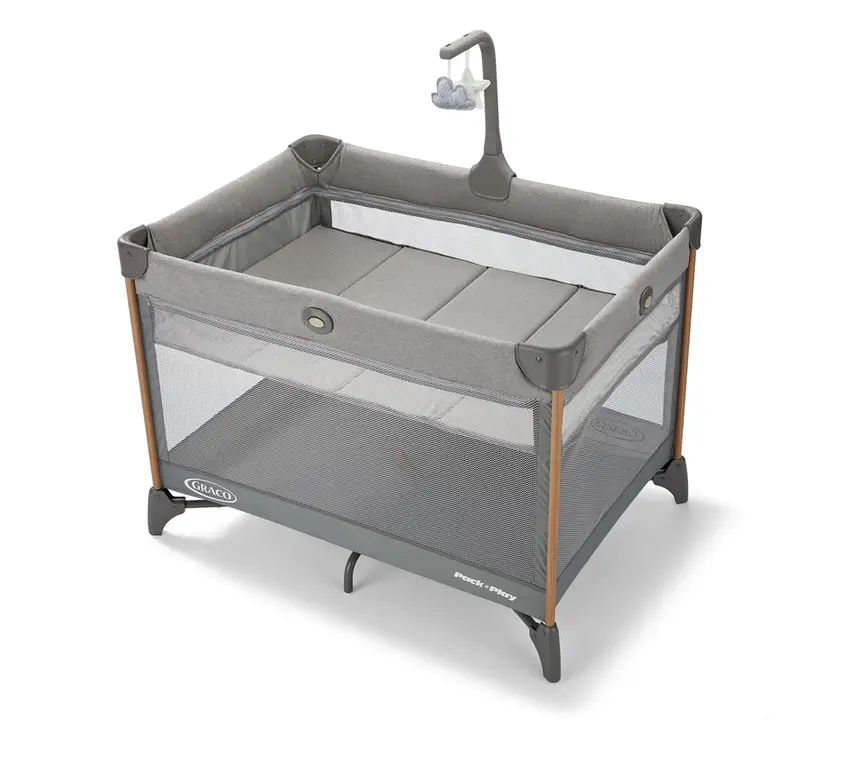

Jengo Voyager 3-in-1 Portacot
A portacot with a newborn bassinet level and a changer on top.
 Reviewed
Maxi-Cosi Iora Lux
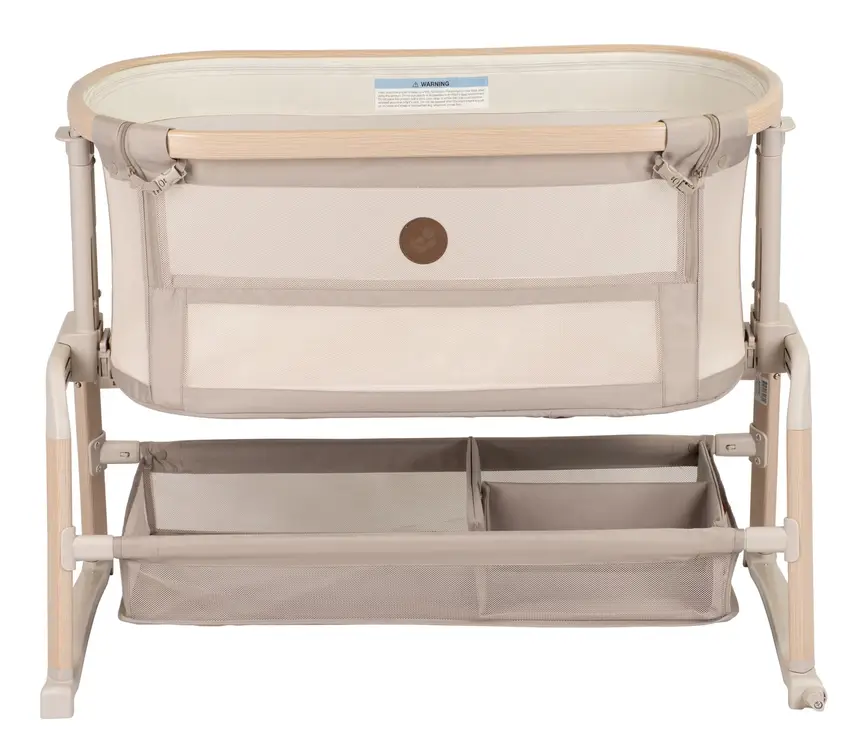
A bedside bassinet with 4 heights and 3 slide positions, with a 2-year warranty.
Read our full review →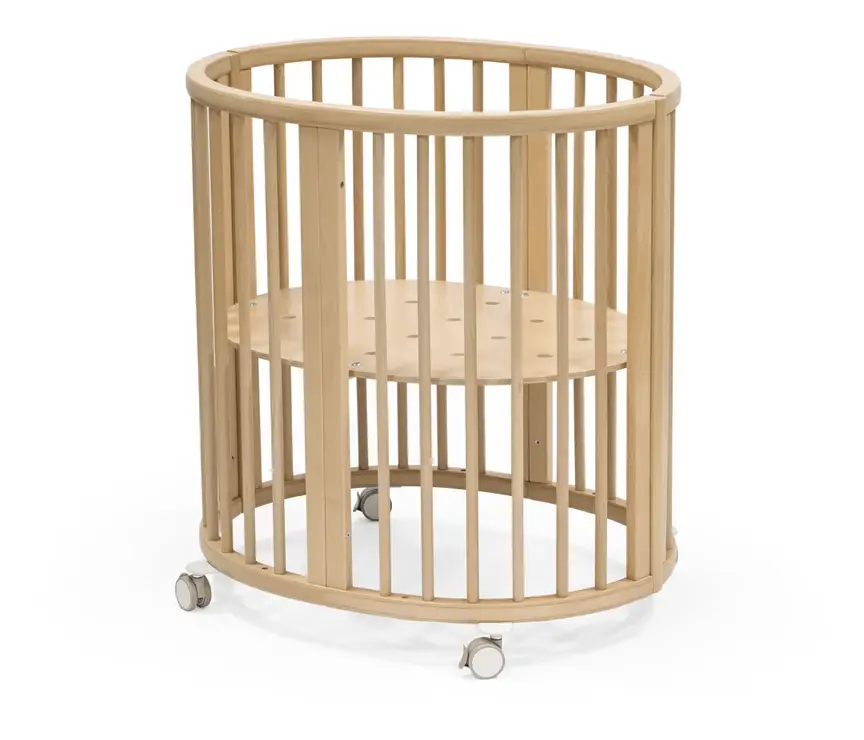


Stokke Sleepi Mini
A beech wood oval crib for newborns, with rods and a holed base for airflow.
Read our full review →Compare all cots, bassinets & bedside sleepers in our reviews →
Safety standards in Australia, the UK, the US, and Canada
Rules for baby sleep products differ slightly around the world. Always buy gear that meets the rules where you live. Never import cheap, uncertified baby beds from overseas websites that skip local safety checks.
| Country | Official bodies | Key standards and rules to check |
|---|---|---|
| Australia | ACCC (Product Safety Australia), Standards Australia, Red Nose, Raising Children Network | Mandatory folding cot standard based on AS/NZS 2195. Household cots follow AS/NZS 2172. Mattress firmness test is AS/NZS 8811.1. Australia also enforces mandatory information and safety rules for infant sleep products, including warning labels against soft bedding and inclined sleep. |
| United Kingdom | Office for Product Safety and Standards (OPSS), The Lullaby Trust, NHS | Cribs and bassinets follow BS EN 1130. Travel cots and folding cots follow BS EN 716. Cot mattresses follow BS EN 16890. OPSS advises buying from trusted sellers and checking that products are firm, flat, and clear of loose items. |
| United States | Consumer Product Safety Commission (CPSC), American Academy of Pediatrics (AAP), NICHD Safe to Sleep | Bassinets and cradles must meet federal rules based on ASTM F2194. Play yards must meet federal rules based on ASTM F406. Full-size cribs follow ASTM F1169. US law also bans inclined sleepers and crib bumpers. |
| Canada | Health Canada, Canadian Paediatric Society (Caring for Kids) | Cribs, cradles, and bassinets must meet strict Canadian federal safety rules. Playpens must meet Canadian playpen rules. Health Canada warns parents to check if a playpen bassinet attachment meets bassinet rules before using it for unsupervised sleep. |
Notice the special note in Canada. Health Canada has warned that some playpen accessories do not meet the same rules as standalone bassinets. In all four countries, always check the manual and the product label. Make sure the raised insert is rated for overnight, unsupervised sleep, not just short supervised naps.
How to check your bassinet or playard before use
Before you put your baby down to sleep, run through a quick safety check. Do this when you first build the bed, and again after any trip or fold.
- Test every rail lock: Push down gently on all four top rails of a playard. A half-locked rail can fold inward when weight presses on it.
- Count and feel the support bars: Make sure every metal bar is inside its sleeve and clicked into place. Run your hand across the middle of the mattress. It should feel flat and firm, with no dip or ridge.
- Check the mattress fit: Press around all four sides of the pad. Your fingers should not slip easily into a gap between the pad and the mesh.
- Inspect the mesh and seams: Look for small holes, loose threads, or torn fabric. A baby's fingers can catch in torn mesh.
- Check bedside straps (if using a bedside sleeper): If your standalone bassinet attaches to an adult bed, lock the straps tightly. There must be zero gap between the bassinet and your mattress.
- Look up recalls: If you bought the bed second-hand or got it from a friend, check your national recall list first. Use Product Safety Australia Recalls, the UK OPSS product recall site, the US CPSC recall list, or Health Canada Recalls.
Common mistakes to avoid
Even careful parents can make small mistakes with baby sleep gear. Avoiding these habits keeps your baby much safer.
- Adding a thicker mattress: Playard pads feel thin to adults, so parents often buy an extra foam mattress to put on top. This is dangerous. A baby can push their face into a soft pad or get trapped in the gap at the side.
- Leaving the insert in too long: Do not wait until your baby climbs out. As soon as your baby rolls or pushes up, take the bassinet insert out.
- Skipping a support bar after travel: It is easy to lose one metal bar in a car boot or cupboard. Never use a playard insert if a bar is missing or bent.
- Putting the bassinet on a bed, table, or sofa: Always place a standalone bassinet on a flat, clear floor, or on its own locked stand. Never set a travel bassinet on top of an adult bed or kitchen counter.
- Using tilted or inclined settings: Some bedside bassinets have legs that adjust to different heights. Always keep both ends at the exact same height so the bed stays flat. Do not prop one end up for reflux unless a doctor tells you to use a specific medical plan, and remember safe sleep groups advise flat backs for sleep.
- Leaving loose items inside: Keep soft toys, pillows, rolled towels, and loose blankets out of the bassinet. Dress your baby in a safe baby sleeping bag or light sleepwear instead.
How to choose the right one for your home
Both options can be safe and practical. Your choice comes down to your room size, travel plans, and budget.
Choose a standalone dedicated bassinet if:
- Your bedroom is small and you need a narrow bed beside yours.
- You want to wheel or carry the bassinet from room to room during the day.
- You want a rigid base with no support bars to assemble.
- You already have a full-size cot ready for later months.
Choose a playard with a bassinet insert if:
- You have plenty of floor space in your bedroom.
- You want one item that converts into a travel cot and toddler play space later.
- You travel by car often and want a single bag to pack.
- You plan to buy a standard cot later, or use the playard as a spare bed at grandparents' houses.
Many families find a simple mix works best. They use a compact standalone bassinet beside their bed for the first few months, and keep a basic folding playard for trips away. Others save space and money by using one good playard from day one. As long as the bed meets local safety rules and stays firm, flat, and clear, your baby will have a safe place to rest.
More options, from budget to premium
Real products from our catalogue. We don't show star ratings or review counts; check the current price, stock and reviews on Amazon before you buy.


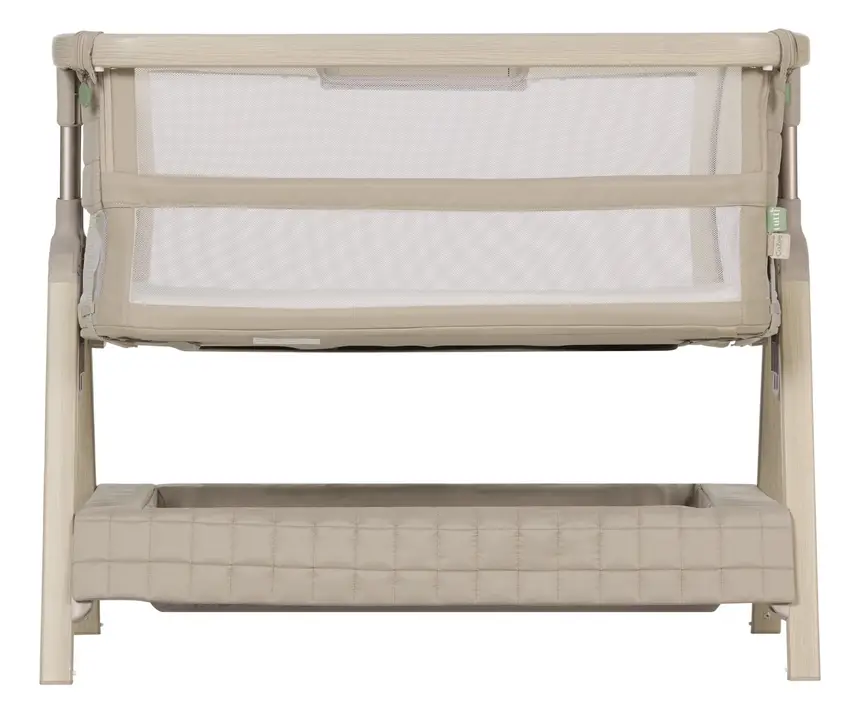


Tutti Bambini CoZee Sense
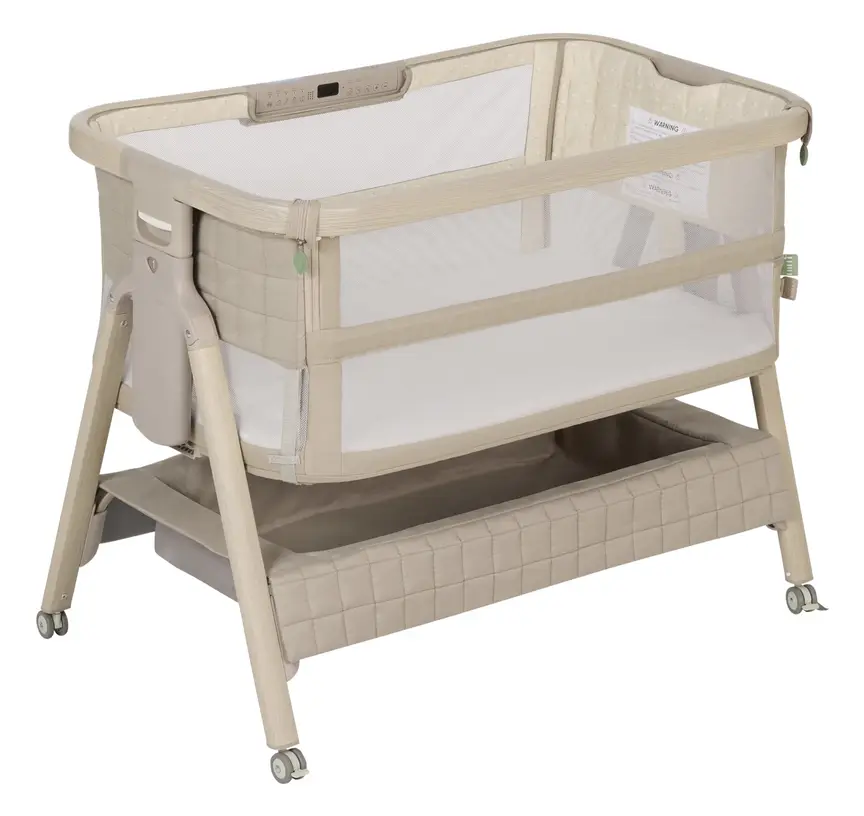
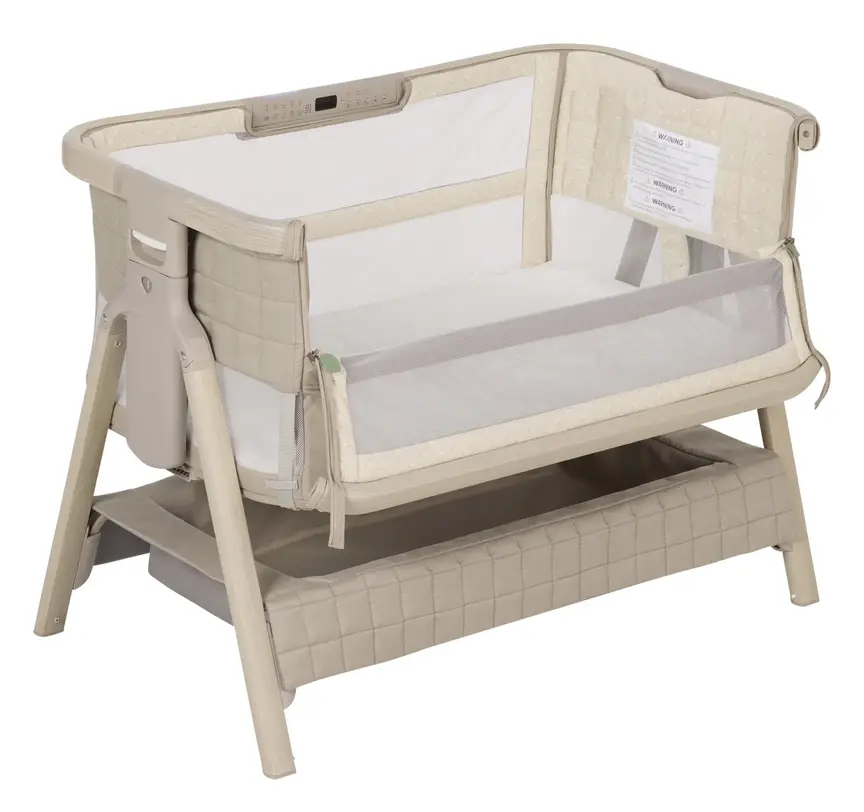
A bedside bassinet with a sensory bar for supervised awake time.
Read our full review →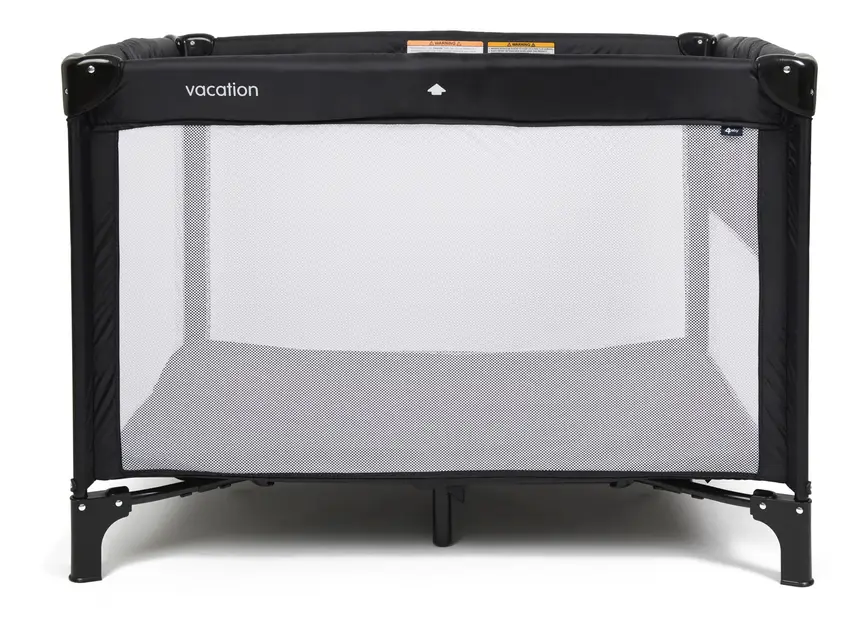
4baby Vacation Portacot
A low-cost portacot with a padded mattress and mesh sides.
Compare all cots, bassinets & bedside sleepers in our reviews →
Frequently asked questions
Can a newborn sleep in a playard bassinet insert every night?
Check the maker's manual and local rules first. In Australia, the UK, and the US, a certified playard with a fitted bassinet insert is generally safe for overnight sleep if it is built right, flat, and clear of soft items. In Canada, Health Canada warns that you should only use a playpen bassinet attachment for unsupervised sleep if it meets Canadian bassinet safety rules.
Are playard mattress support bars safe?
Yes, when every bar is intact and fitted the way the manual shows. The bars hold the fabric insert flat so your baby does not sag into the middle. They become unsafe if a bar is missing, bent, or not clicked into its bracket.
Why is a playard mattress so thin and hard?
Playard mattresses are thin and firm on purpose. A soft or thick mattress raises the risk of suffocation if a baby turns their face into it. A baby also cannot get trapped between a thin fitted pad and the mesh sides. Never add an extra mattress or foam topper.
When should I take the bassinet insert out of the playard?
Take it out as soon as your baby starts to roll, pushes up on their hands or knees, or reaches the weight limit on the label. Stop at whichever happens first. After that, move your baby to the bottom level of the playard or to a standard cot.
Which one is better for a C-section recovery?
Both raise the baby up so you do not have to bend deep into a cot. A standalone bedside bassinet is often easier after a C-section because it sits closer to your mattress and takes up less room. Look for a firm, flat bedside model with a low drop-down side that locks safely.
Can I use a second-hand bassinet or playard?
You can, but check it carefully first. Make sure it meets current safety standards and has not been recalled. Check that all support bars, rail locks, and screws are present, and that the mesh has no tears. If the mattress is worn, soft, or stained, replace it only with a genuine firm mattress made for that exact model.
Sources
- Product Safety Australia – Bassinets and cradles guide
- Product Safety Australia (ACCC) – Folding cots mandatory standard
- Red Nose Australia – Portable and folding cots
- Raising Children Network – Safe cots, portacots and mattresses
- The Lullaby Trust (UK) – Sleeping products
- CPSC (US) – Safe sleep: cribs and infant products
- American Academy of Pediatrics (US) – A parent's guide to safe sleep
- Caring for Kids (Canadian Paediatric Society) – Safe sleep for babies
Related guides
More Sleep & Nursery →
Dome Canopy Bassinets for Homes with Cats and Pets: Are Zip-Shut Covers Safe?

Bassinets with Storage Baskets: Night-Time Nappy Changes Made Easier and Safer
Height-Adjustable Bedside Bassinets: Fitting High Platform Beds and Low Floor Frames