Convertible Cots and Cribs: From Baby Bed to Toddler Bed and Beyond
How convertible cots and cribs work, when to lower the base, when to switch to a toddler bed, and safety rules in Australia, the UK, the US and Canada.

On this page
- Key points
- What is a convertible cot or crib?
- Convertible cot vs standard cot vs mini cot: how they compare
- Do convertible cots actually save money?
- Every stage of a convertible cot, step by step
- Safety standards and official rules in Australia, the UK, the US and …
- How to choose the right mattress for a convertible cot
- What to look for when shopping for a convertible cot
- When to convert from a cot to a toddler bed
- Making the bedroom safe before you take the side off
- Common mistakes to avoid with convertible cots
- Step-by-step: how to make the switch to toddler bed mode smooth
- Frequently asked questions
- Sources
Short answer: A convertible cot is a baby bed that changes shape as your child grows. People in the US and Canada call it a convertible crib. Parents in the UK and Australia often call it a cot bed. It starts as a normal cot with four high barred sides. Later, you take off one or both long sides. That turns it into a low toddler bed. Some models also turn into a small sofa or a full-size single bed. Every stage must meet the national cot safety standard in your country. You also need a firm, flat mattress that fits tightly with no gaps. Keep the cot bare while your baby is young. Never put pillows, bumpers, duvets or soft toys in with a baby.
This guide explains how convertible cots work in real family homes. We look at whether they actually save you money over time. We also show you when to lower the mattress base. And we explain when to take the side rail off. Finally, we cover the safety rules across four countries. In Australia, these come from Product Safety Australia (ACCC) and Red Nose. In the UK, they come from the Office for Product Safety and Standards (OPSS), the NHS and The Lullaby Trust. In the US, they come from the Consumer Product Safety Commission (CPSC) and the American Academy of Pediatrics (AAP). In Canada, they come from Health Canada and the Canadian Paediatric Society.
Key points
- Names change by country: Australians say convertible cot or cot bed. British parents say cot bed. Americans and Canadians say convertible crib. They all do the exact same job.
- Check the safety label first: Look for AS/NZS 2172 in Australia. Look for BS EN 716 in the UK. Look for ASTM F1169 in the US. Look for the federal crib rules in Canada.
- Lower the base early: Drop the mattress base to its lowest level before your baby can sit up. Do not wait until they pull up to stand.
- Switch to a toddler bed for safety: Take the side off when your child tries to climb out. For most children, this happens between 2 and 3.5 years old.
- Buy extra rails at the start: Some cots need a separate toddler guard rail or full bed kit. Buy those parts on the day you buy the cot. Models go out of stock fast.
- Make the whole bedroom safe: A toddler in an open bed can walk around at night. Bolt heavy furniture to the wall first. Lock away blind cords before the first night.
What is a convertible cot or crib?
A standard baby cot does just one job. It holds your baby safely until they start climbing out. Then you pack the cot away or sell it.
A convertible cot is built to stay in your child's room for longer. The wooden or metal panels bolt together in different ways. Most models have two mattress base heights. They also have side rails that unbolt when your child grows.
Shops use labels like 2-in-1, 3-in-1, 4-in-1, or 5-in-1. Those numbers tell you how many shapes the frame can make. Here is what each label means in plain words:
- 2-in-1 (cot to toddler bed): The bed starts as a baby cot with high sides. Later, you unbolt one or both long side rails. Your child still sleeps on the same cot mattress close to the floor.
- 3-in-1 (cot, toddler bed, and day bed): This adds a third stage after the toddler bed. You take off one long side and leave the back rail on. It works like a small reading couch in a playroom.
- 4-in-1 or 5-in-1 (adds a full-size bed): The two solid ends of the cot become a headboard and footboard. You bolt long wooden or metal bed rails between them. You then buy a new adult-sized mattress for an older child.
- Mini convertible cot (starts as a bassinet): Some compact models start as a small round or oval bassinet on wheels. You then add extension panels to build a full cot. Later, it turns into a small toddler bed.
Why cot sizes vary between countries
Be very careful when buying cot mattresses and fitted sheets online. Cot sizes are not the same around the world. They are not even the same across one shop floor.
In the US and Canada, full-size cribs follow a set inside size by law. Because of this rule, almost all standard US crib mattresses fit all standard US cribs. In Australia and the UK, cots and cot beds come in several sizes. A UK or Australian cot bed is usually longer and wider than a standard cot. Never guess the mattress size. Read the warning label stamped onto the wooden base of your cot. It tells you the exact length, width, and maximum thickness you must use.
Convertible cot vs standard cot vs mini cot: how they compare
You do not have to buy a convertible cot to be a good parent. A plain cot followed by a normal single bed later works very well too. This table compares the main bed types side by side.
| Feature | Standard cot / crib | 2-in-1 or 3-in-1 cot bed | 4-in-1 or 5-in-1 convertible | Mini / compact cot |
|---|---|---|---|---|
| Stages included | Baby cot only | Cot, toddler bed, and day bed | Cot, toddler bed, day bed, and full bed | Small cot; some convert to a tiny toddler bed |
| Typical age range | Birth to about 2–3 years | Birth to about 4–5 years | Birth into primary school years | Birth to about 12–18 months |
| Space needed in room | Medium | Medium to large | Large, especially as a full bed | Small; fits tight bedrooms |
| Extra kits needed? | No | Sometimes a low toddler guard rail | Usually needs a toddler rail and bed rails | Rarely, unless it expands |
| Mattresses needed | 1 cot mattress, then a single bed later | 1 cot mattress for all stages | 1 cot mattress, then 1 full mattress later | 1 mini mattress; sheets are harder to find |
| Best for | Simple setups or passing the cot to a new sibling | Using one mattress from birth until age 4 or 5 | Keeping matching bedroom furniture for many years | Small flats and room-sharing with parents |
Cots, Bassinets & Bedside Sleepers worth a look
Real products from our catalogue. We don't show star ratings or review counts; check the current price, stock and reviews on Amazon before you buy.
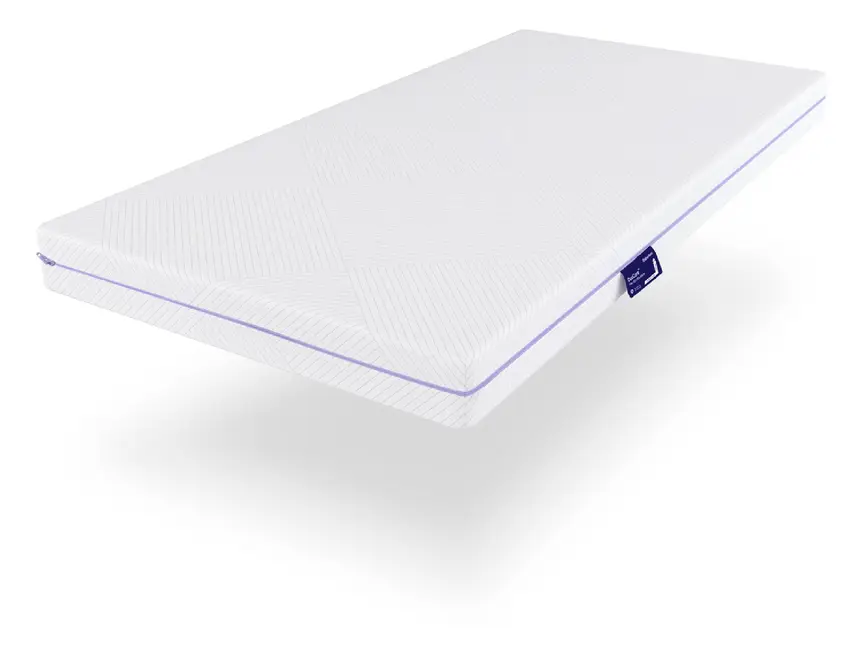
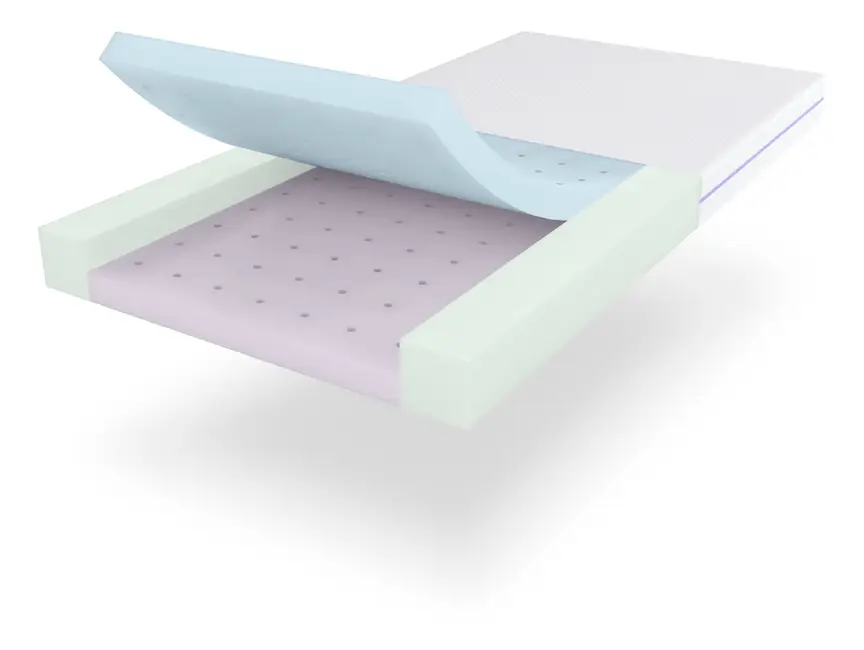

BabyRest Duocore Bamboo Cot Mattress
A two-sided mattress: a baby side to 12 kg and a toddler side from 12 kg to about 4 years.
Read our full review →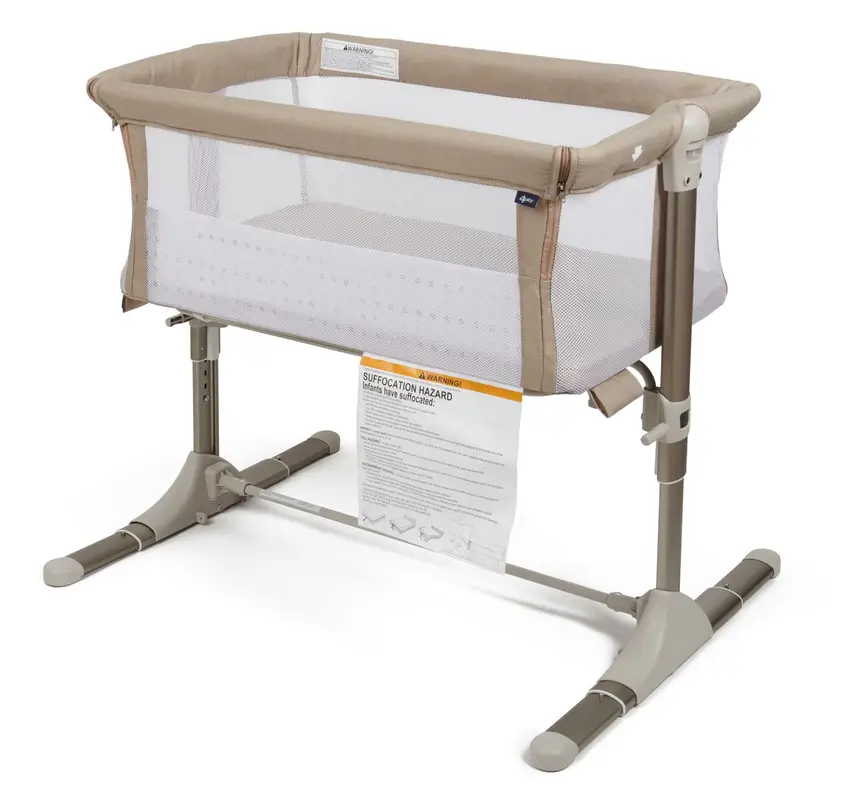
4baby Snuggle Cuddle Bedside Sleeper
A low-cost bassinet that turns into a bedside sleeper, with 4 heights and mesh sides.

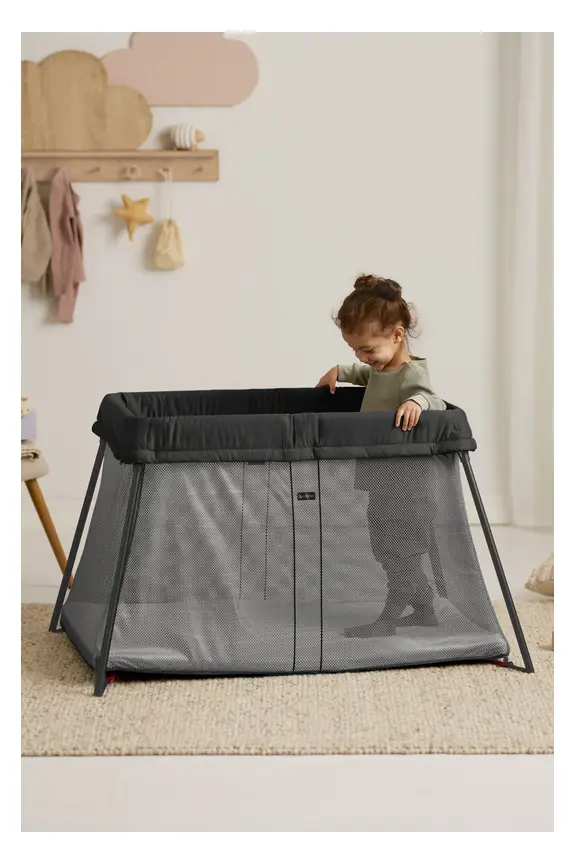
4baby Vacation Portacot
A low-cost portacot with a padded mattress and mesh sides.
Compare all cots, bassinets & bedside sleepers in our reviews →
Do convertible cots actually save money?
Shop signs often promise that one convertible cot saves you buying three beds. Sometimes that is true. Often, though, parents spend extra money on features they never use. Check these five real-world traps before you buy.
1. Hidden conversion kit costs
Many convertible cots do not include every part in the main box. A box might say 4-in-1 on the front label. Inside the fine print, the toddler guard rail costs extra. The long rails for the full-size bed cost extra too. Always ask the shop for the total price of the cot plus every kit. Compare that full total against a simple cot and a basic toddler bed.
2. The second baby problem
Think about whether you plan to have another baby in two or three years. If a new baby arrives, who gets the convertible cot? If your two-year-old is using it as a toddler bed, the new baby has nowhere to sleep. You will have to buy another bed anyway. Most families keep the cot as a baby cot for the newborn. Then they buy a normal single bed for the older child.
3. Teething marks and everyday wear
Babies love to chew on wooden cot rails when their teeth come through. Some cots come with clear plastic strips on the top rails. Even with strips, soft pine wood gets dents, chips and bite marks over three years. Ask yourself an honest question. Will you want a chewed cot side as the footboard of a ten-year-old's bed?
4. Discontinued parts and lost bolts
Baby brands change their cot designs every couple of years. Colours and bolt patterns change too. If you wait three years to buy the toddler rail, it may be sold out forever. Safety regulators warn you never to make homemade brackets or force mismatched parts together. Buy all the kits on day one if you plan to use them. Put the spare screws and instruction book in a strong zip bag. Tape that bag firmly underneath the mattress base. That way, you never lose it when moving house.
5. Heavy frames are hard to move
Convertible cots are built from thick timber or dense board to support older children. That makes them much heavier than a basic cot. If you rent and move house often, a heavy cot takes longer to unbolt. It is also harder to carry up stairs and through doorways.
Every stage of a convertible cot, step by step
A convertible cot changes in step with your child's physical skills. You do not change modes based on your child's birthday. You change modes based on how your child moves.
Stage 1: Newborn mode (high mattress base)
When you first bring your baby home, bolt the mattress base into the highest position. All four barred sides stay locked up. The high base saves your back during night feeds. You can lay your sleeping newborn down gently without bending down to the floor.
Newborns cannot sit up or pull on the bars. Even so, the cot must stay completely bare. Put your baby on their back. Place their feet close to the bottom end of the cot. That way, they cannot wriggle down under any covers.
Stage 2: Active baby mode (low mattress base)
Watch your baby closely from around 3 to 5 months old. Soon they will roll strongly, push up on hands and knees, or start trying to sit. As soon as you see these signs, unbolt the mattress base. Drop it to the lowest setting right away. Do this before your baby learns to sit alone or pull up to stand.
Why act so early? Many babies pull themselves up to stand for the very first time alone at night. If the base is still high, the side rail only comes up to their tummy. They can tip right over the top and fall onto the floor. With the base on the bottom setting, the side rails stand tall above the mattress. In Australia, AS/NZS 2172 requires at least 600 mm of barrier height above the mattress in this low position.
At this same stage, take down any hanging cot mobiles or cot toys. An active baby can pull a mobile down and get tangled in the strings.
Stage 3: Toddler bed mode (side rail removed)
Keep your toddler in the deep cot with all four sides up while they stay safe there. There is no rush to make a bed change at 18 months. However, once your child tries to climb over the top rail, high bars become dangerous. Falling from the top of a high cot rail is a long drop.
Now it is time to convert the cot into a toddler bed. Follow your manual carefully. On some cots, you remove one long side rail. Then you bolt on a short, low toddler guard rail. That guard rail leaves a gap at one end so your child can climb in and out. On other cot beds, you take off both long sides. Then you swap the tall end panels for low end panels. The mattress stays at the lowest level near the floor. If your toddler rolls out, they only drop a few centimetres.
Stage 4: Day bed or full-size bed
Most cot mattresses are around 130 cm to 140 cm long. By around age 4 or 5, your child will grow too tall for that mattress. If you have a 3-in-1 cot bed, its job as a night bed is now done. You can put one side rail back on the rear edge. Then you can use it as a little playroom couch.
If you bought a 4-in-1 or 5-in-1 model with the full bed rail kit, you can build the big bed. You remove the cot base and side panels. Next, you bolt the long bed rails between the headboard and footboard. Finally, you lay down bed slats and add a standard single or double mattress.
| Stage | Child's milestone | Base height | Side rails | Safe bedding to use |
|---|---|---|---|---|
| 1. Newborn cot | Birth until starting to push up or sit | Highest setting | All four sides locked up | Tight fitted sheet and safe sleeping bag or light wrap |
| 2. Deep cot | Pushing up, sitting, crawling, standing | Lowest setting | All four sides locked up | Tight fitted sheet and arms-out sleeping bag |
| 3. Toddler bed | Trying to climb out, or chest above top rail | Lowest setting | One or both sides off; official guard rail on | Fitted sheet, light blanket or cot duvet, flat pillow (over 12 months) |
| 4. Full-size bed | Outgrown length of cot mattress (around 4+ years) | Full bed frame slats | Converted with brand's full bed rails | Normal children's sheets, pillow and quilt |
Safety standards and official rules in Australia, the UK, the US and Canada
Cot safety laws are written in detail for a serious reason. In the past, poorly made cots caused terrible injuries and infant deaths. Bars spaced too far apart let a baby's body slip through while trapping their head. Soft mattresses or wide edge gaps caused babies to suffocate. High corner posts caught children's pyjamas around their necks when they climbed out.
Every convertible cot must pass strict strength and gap tests before sale. Always look for your country's safety standard on the box and manual. Never buy an uncertified cot shipped straight from an overseas bargain website.
Australia
In Australia, household cots and convertible cots must follow a mandatory law enforced by the Australian Competition and Consumer Commission (ACCC) and Product Safety Australia. This mandatory rule is based on the Australian and New Zealand standard AS/NZS 2172.
- Bar spacing: Vertical slats must sit between 50 mm and 95 mm apart. This stops a baby getting their head or body wedged between bars.
- Smooth inside walls: The inside of the cot must have no horizontal bars or footholds that help a toddler climb out.
- No snag points: Corner posts cannot stick up more than 5 mm above the side rails. This stops clothing loops or dummy chains catching on corners.
- Mattress firmness and fit: Mattresses are tested for firmness under AS/NZS 8811.1. Red Nose Australia and the Raising Children Network state that the mattress must be firm, flat, and fit snugly. There must be no gap bigger than 20 mm at the sides or ends when the mattress sits in the middle.
United Kingdom
In the UK, the Office for Product Safety and Standards (OPSS) oversees nursery furniture safety. Full-size cots and cot beds in cot mode must meet British and European standard BS EN 716. Smaller cribs and cradles must meet BS EN 1130. Cot mattresses must meet BS EN 16890, which tests for firmness, edge support, and choking hazards.
- The clear cot rule: Both the NHS and The Lullaby Trust advise that a clear cot is a safe cot. Use a firm, flat mattress with a waterproof cover. Keep the cot free of cot bumpers, pillows, duvets, wedges, and soft toys.
- The two-finger gap test: The Lullaby Trust advises checking the gap around the mattress. You should not be able to fit more than two fingers between the mattress edge and the cot frame.
- Room sharing: The NHS and The Lullaby Trust recommend keeping the cot or bassinet in the parents' bedroom for the first 6 months.
United States
In the US, the Consumer Product Safety Commission (CPSC) enforces strict federal crib laws. Full-size cribs (including convertible cribs) must comply with federal rules incorporating ASTM F1169. Smaller non-full-size cribs and play yards fall under ASTM F406. Crib mattresses and after-market mattresses must meet federal rules incorporating ASTM F2933.
- Complete ban on drop-side cribs: The US banned drop-side cribs after sliding hardware broke and trapped babies. Every full-size crib sold in the US must have four fixed sides in baby mode.
- Ban on padded bumpers and inclined sleepers: Under the US Safe Sleep for Babies Act, padded crib bumpers and inclined infant sleepers are banned across the country.
- Safe sleep advice: The American Academy of Pediatrics (AAP) and the NICHD Safe to Sleep campaign tell parents to put babies on their backs. Use a firm, flat, non-inclined crib mattress with only a fitted sheet.
Canada
In Canada, Health Canada enforces the federal Cribs, Cradles and Bassinets Regulations. The Canadian Paediatric Society (through its Caring for Kids resources) publishes safe sleep advice for families.
- Drop-side ban: Drop-side cribs are banned in Canada. It is illegal to sell, import, advertise, or give away a drop-side crib, even second-hand.
- Strict bar and post limits: Crib slats cannot be more than 6 cm apart. Corner posts must not stick up more than 3 mm above the top rail unless they are tall bedposts over 40 cm high.
- Mattress thickness and gap rules: Health Canada states that a crib mattress must be no thicker than 15 cm. It must fit tightly so there is no gap wider than 3 cm when pushed firmly against any side.
| Country | Regulator & health bodies | Cot & mattress standard codes | Drop-side cots | Maximum mattress gap rule |
|---|---|---|---|---|
| Australia | ACCC (Product Safety Australia), Red Nose, Raising Children Network | AS/NZS 2172 (cots), AS/NZS 8811.1 (firmness) | Allowed only if they pass AS/NZS 2172 two-action lock tests; fixed sides preferred | No more than 20 mm gap when centred |
| United Kingdom | OPSS, NHS, The Lullaby Trust, RoSPA | BS EN 716 (cots), BS EN 16890 (mattresses) | Rare; modern cot beds use fixed sides | No more than two fingers' width |
| United States | CPSC, American Academy of Pediatrics (AAP), NICHD | ASTM F1169 (full cribs), ASTM F2933 (mattresses) | Banned nationwide by federal law | No more than two fingers' width |
| Canada | Health Canada, Canadian Paediatric Society (Caring for Kids) | Canada Cribs, Cradles and Bassinets Regulations | Banned nationwide by federal law | No more than 3 cm when pushed to one side |
How to choose the right mattress for a convertible cot
The wooden frame is only half of the sleep system. A safe cot becomes unsafe if you put a soft or loose mattress inside it. Take your time choosing the mattress. Your child may sleep on it for four or five years.
1. Firmness is non-negotiable
A baby mattress must feel very firm and flat. Press your palm hard into the middle of the mattress. Your hand should barely sink in at all. If a baby rolls onto their tummy on a soft surface, the foam can cup around their nose and mouth. That traps breathed-out air and blocks breathing.
In Australia, check that the mattress passes the AS/NZS 8811.1 firmness test. Consumers' Federation of Australia and CHOICE also explain simple home firmness checks using household weights. In the UK, look for BS EN 16890 on the label. In the US, look for the CPSC compliance tag referencing ASTM F2933.
2. Single-sided vs dual-sided mattresses
Because convertible cots last into the toddler years, some brands sell dual-sided mattresses. One side has a very firm layer for babies under 12 months. The flip side has a slightly softer foam layer for toddlers over 12 months.
Dual-sided mattresses are safe only if you use the right side at the right age. Check the fabric label every single time you wash the sheets or flip the mattress. Make sure the firm infant side stays on top for the whole first year. What if a babysitter or tired parent flips it to the soft side by mistake? If that worries you, skip dual-sided models. A standard firm mattress is very comfortable for a three-year-old too.
3. Exact length, width and thickness
Measure the inside of your cot frame with a tape measure before shopping. Also check the maximum mattress thickness printed on the cot base. Never buy an extra-thick mattress to make the bed look plush. A thick mattress raises your toddler higher inside the cot. That makes it easier for them to fall over the rail.
4. Waterproofing and easy cleaning
Over four years, a mattress will face leaky nappies, spit-up, illnesses and toilet training accidents. Red Nose and The Lullaby Trust advise keeping the mattress clean, dry and free of mould. Pick a mattress with a wipe-clean waterproof surface. Or use a thin, tight waterproof protector under the fitted cotton sheet. Never leave plastic shop wrapping on a mattress. Never put padded quilts, wool underlays or sheepskins under a baby sheet.
Side by side: more cots, bassinets & bedside sleepers to compare
Real products from our catalogue. We don't show star ratings or review counts; check the current price, stock and reviews on Amazon before you buy.
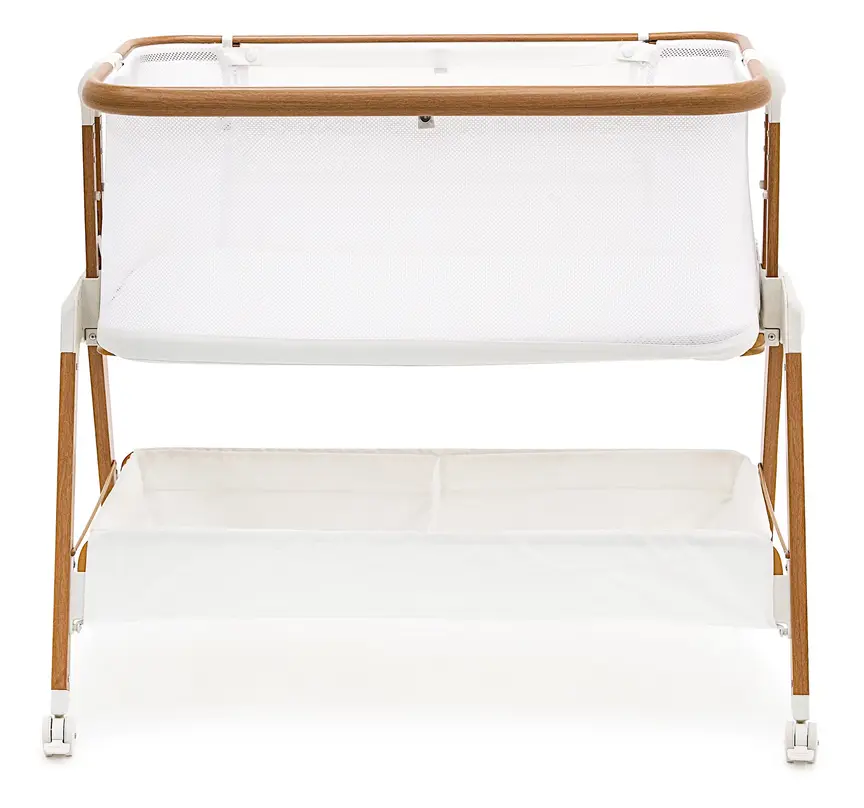
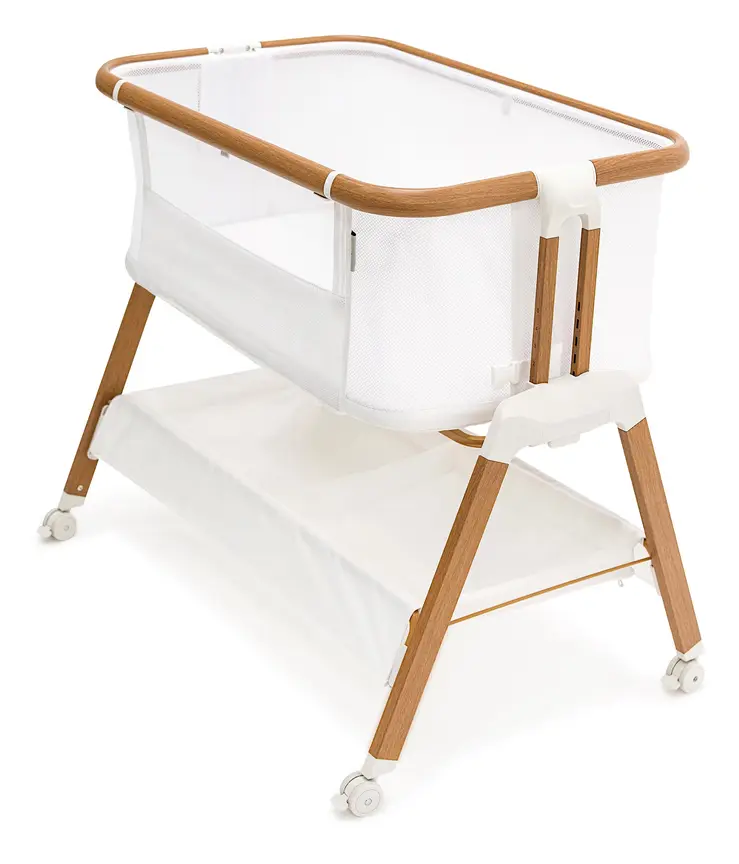
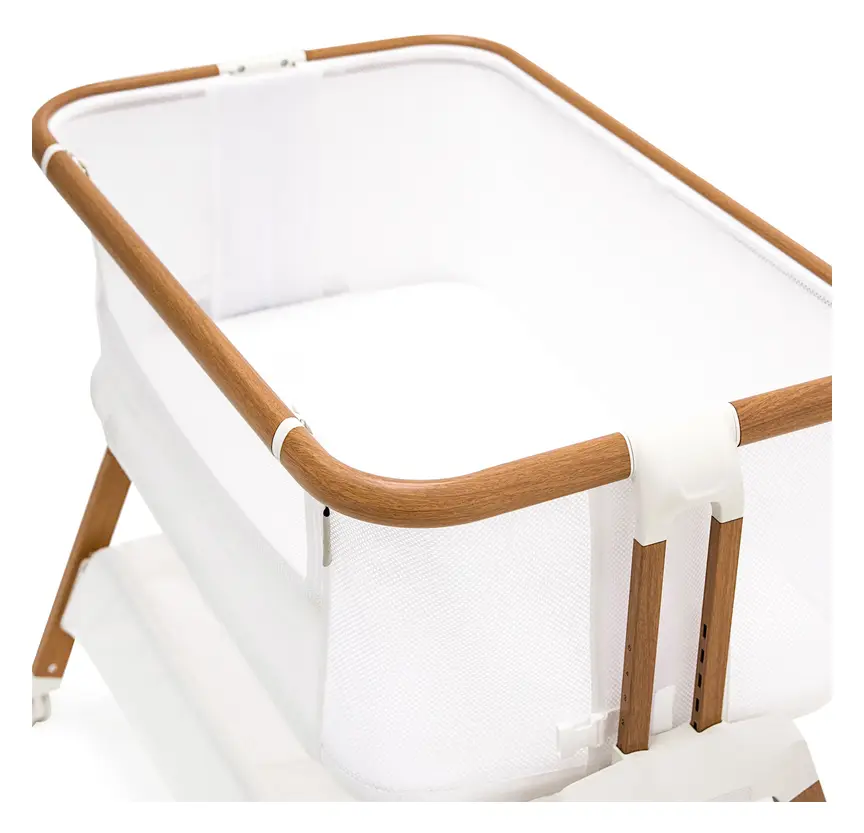
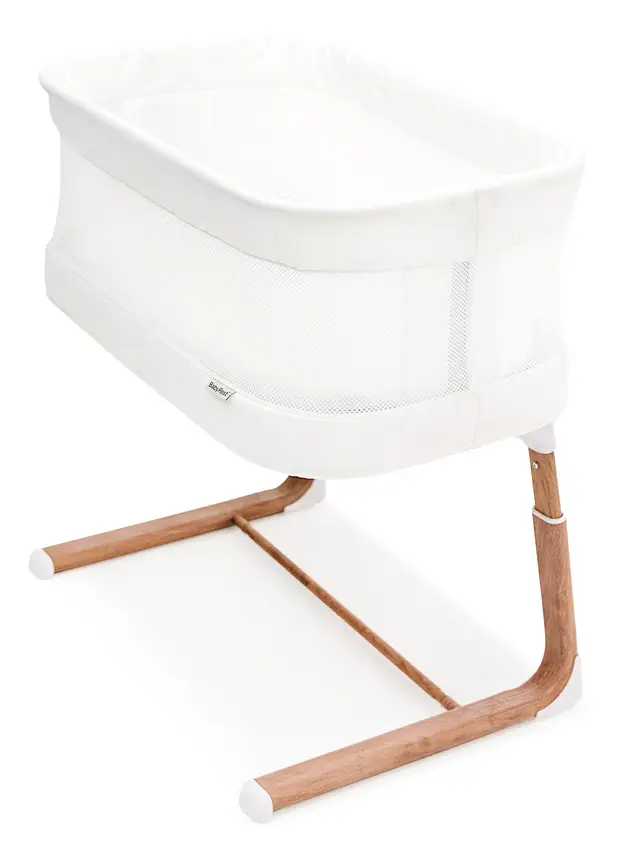
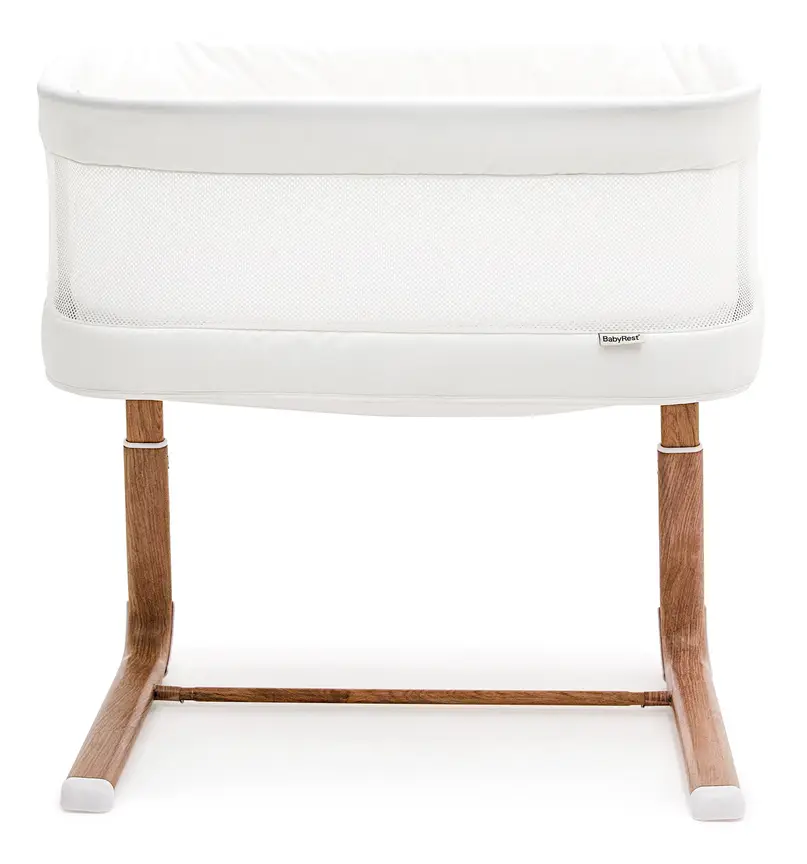
BabyRest Alfie2 Bedside Bassinet
A bedside bassinet with 5 heights, a drop-down side, wheels and an insect net.
Read our full review →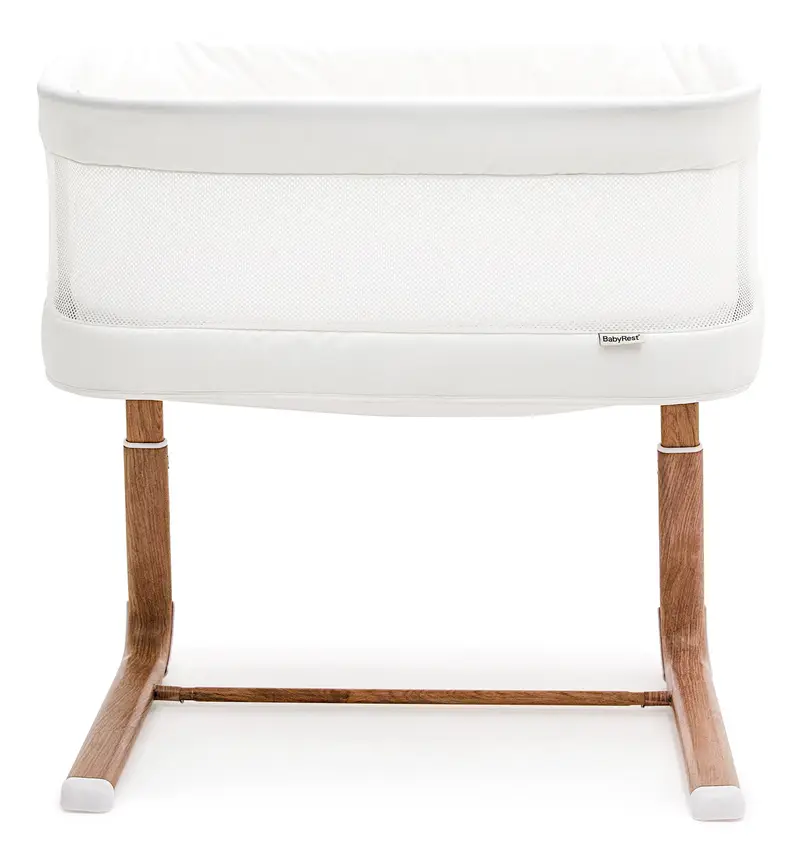


BabyRest Swan Smart Bassinet
A bassinet that rocks by itself when baby stirs, with 3 rocking levels, lullabies and a remote.
Read our full review →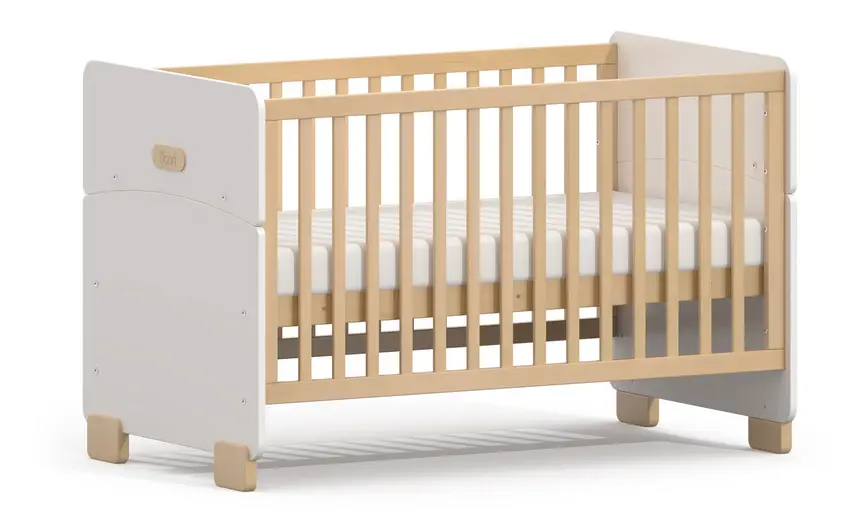

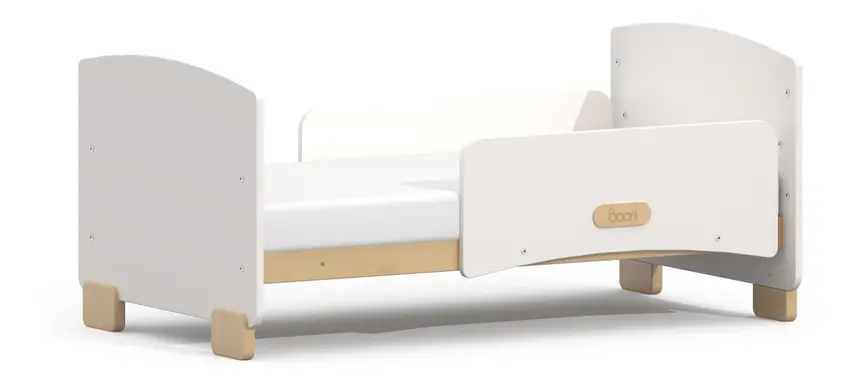

Boori Matilda Cot Bed
A cot that turns into a toddler bed using its own end panels. No extra kit needed.
Read our full review →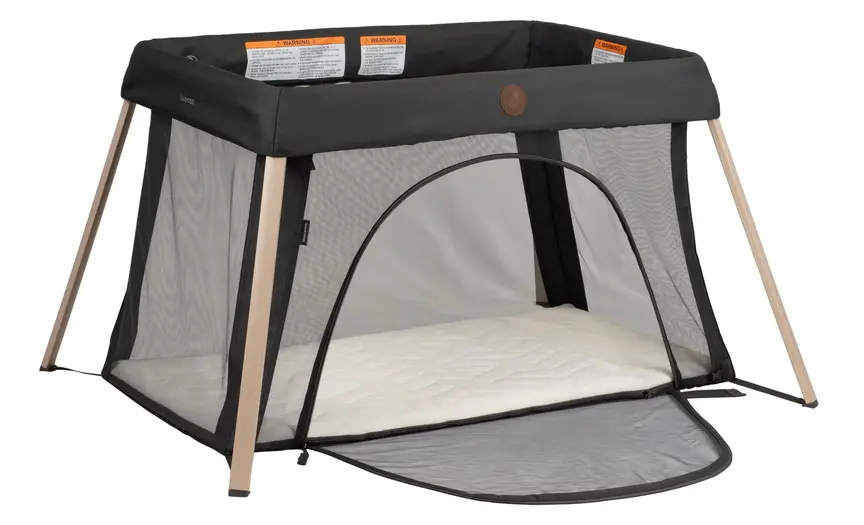
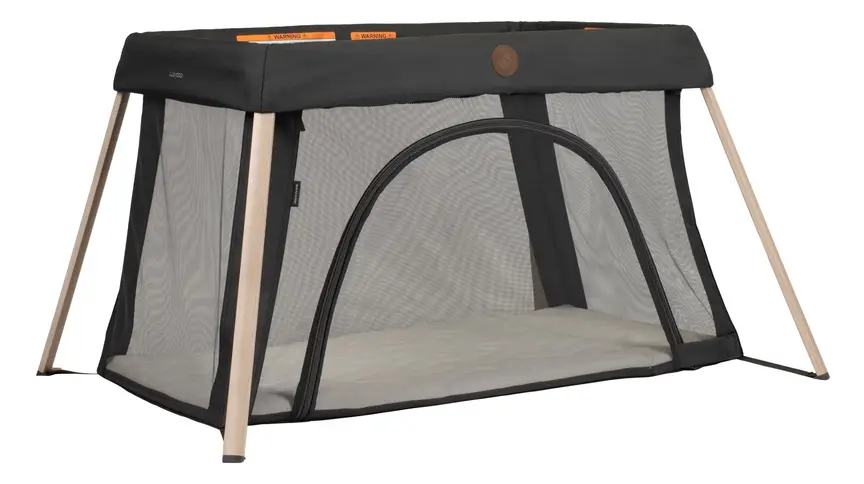

Maxi-Cosi Calao Light Travel Cot
A light travel cot with a newborn level and a toddler level, a side zip and a travel bag.
Read our full review →Compare all cots, bassinets & bedside sleepers in our reviews →
What to look for when shopping for a convertible cot
Walk around any baby shop and you will see dozens of convertible cots. Use this simple checklist to test the build quality in person.
- Fixed sides vs drop sides: Choose a cot with four fixed sides. Drop-side mechanisms have moving plastic tracks and latches that wear out over years of daily use. Fixed sides are stronger, quieter, and safer across all stages.
- Solid base slats: Look underneath the cot. The mattress base should be made of strong wooden slats or a sturdy board with air holes. It must bolt into metal brackets on the frame, not rest on thin plastic pins.
- Teething rails: Check if the top edges of the long side rails have non-toxic plastic guards. These stop a teething baby chewing paint or wood splinters off the rail.
- Safe paints and finishes: Babies lick and chew their cot bars. Make sure the maker uses lead-free, non-toxic paints and low-fume finishes.
- Easy-to-reach bolts: Look at how the base lowers and how the side panel comes off. Recessed hex bolts that sit flat with the timber are best. Avoid cots with sticking-out wingnuts or rough metal parts that could scratch a child.
- Fits through your bedroom door: Measure your nursery doorway and hallway width. Many cot beds are wider than a standard inside door frame. That means you must build the cot inside the room where it will stay.
When to convert from a cot to a toddler bed
One of the most common mistakes parents make is converting the cot too early. When a toddler turns 18 months or 2 years old, parents often feel excited to build the big kid bed. Health groups in Australia, the UK, the US and Canada all give the same advice here. Do not rush the move if your child is still safe and happy in the cot.
Why wait? A child under two and a half rarely has the self-control to stay in an open bed. Once the side rail comes off, they may walk out of the room twenty times a night. Red Nose Australia notes that most children move from a cot to a bed between 2 and 3.5 years old.
Clear signs it is time to convert the cot
- Climbing attempts: Your toddler puts a foot on the rail or tries to swing a leg over the top bar.
- Height limit reached: When your child stands flat on the lowest mattress base, the top rail sits below their chest or nipples. In the US and Canada, the AAP and Health Canada state that children over 35 inches (about 89–90 cm) tall should move out of a crib.
- Night-time toilet training: Your child is out of night nappies and needs to get out of bed alone to use the potty.
What if your toddler tries to climb out before age 2?
Some active toddlers try to climb the cot bars at 15 or 18 months. Before you take the side rail off, check these four things:
- Check the base height: Make sure the mattress base is bolted to the lowest holes.
- Clear the cot completely: Toddlers step on pillows, large cuddly toys, or thick blankets to boost themselves over the bar. Take everything out so the mattress is bare.
- Use a safe baby sleeping bag: A well-fitted arms-out sleeping bag stops a toddler lifting one knee high enough to hook their foot over the top rail.
- Turn the cot around (if one side is higher): Some cots have a slightly higher back rail than front rail. Put the lower rail against the wall so the higher rail faces out into the room.
What if your toddler still climbs over the bar with a bare cot and a sleeping bag? Do not wait. Convert the cot into a toddler bed that same day. A fall from the top of a cot rail can break an arm or cause a head injury. A fall from a low toddler bed is just a tiny roll onto the floor rug.
Making the bedroom safe before you take the side off
While your child is in a cot, the four barred walls keep them safe inside while you sleep. The moment you remove the side rail, the whole bedroom becomes their cot. A quiet toddler can get out of bed at 5:00 AM and explore every corner of the room.
Red Nose Australia, Product Safety Australia, RoSPA in the UK, the US CPSC, and Health Canada all urge parents to childproof the bedroom from floor to ceiling before the first night in a toddler bed.
1. Anchor all heavy furniture to the wall
Toddlers love to pull open bottom drawers and climb up chests of drawers like a ladder. When drawers open, the weight shifts forward. A chest of drawers, wardrobe, bookcase or change table can tip over and crush a child in seconds. Do not trust furniture just because it feels heavy. Use metal L-brackets or furniture wall straps screwed straight into the wall studs. Product Safety Australia and the US CPSC Anchor It campaign warn that toppling furniture is one of the deadliest home hazards for toddlers.
2. Remove or lock down window blind cords
Looped cords on blinds and curtains are a severe strangulation hazard. Children can wrap a dangling cord around their neck while looking out a window. The safest choice is cordless blinds or curtain wands. If your windows have corded blinds, fit safety tension devices or cleats screwed tightly to the wall at least 1.6 metres (63 inches) above the floor. Never put a cot or toddler bed underneath a window with cords.
3. Check windows, heaters and electrical cords
Fit window locks or safety catches so windows cannot open wide enough for a child to fall through. Move the toddler bed well away from radiators, portable heaters, wall lamps and power points. Check your baby monitor camera too. Never mount a baby monitor on the cot rail. Keep the camera and its power cord at least 1 metre (3 feet) away from every edge of the bed.
4. Clear out choking, poisoning and battery hazards
Get down on your hands and knees and look around the room from a toddler's eye level. Clear off low shelves and bedside tables. Put away nappy rash creams, medicines, vapour rubs, coins, small plastic toys and hair clips. Check every electronic item in the room for button batteries. These hide inside digital thermometers, nightlights, musical books and remote controls. Swallowing a button battery can cause life-threatening internal burns within two hours. Make sure every battery door is locked with a screw.
5. Fit a safety gate at the doorway
At night, you do not want your toddler walking alone into the kitchen, bathroom or down the stairs. Fit a certified safety gate in the bedroom doorway or at the top of the stairs. Look for gates that meet BS EN 1930 in the UK, or the national safety gate standards in Australia, the US and Canada. Always use a hardware-mounted gate screwed into the wall frame at the top of stairs. Never use a pressure-mounted gate at the top of stairs.
| Bedroom zone | Hidden hazard for a wandering toddler | How to make it safe before removing the cot side |
|---|---|---|
| Chests & wardrobes | Tipping over when a toddler climbs open drawers | Screw wall anchors into wall studs; fit drawer catches |
| Windows & blinds | Strangulation in blind cords; falls from open windows | Switch to cordless blinds or high cleats; fit window locks |
| Baby monitors & lamps | Strangulation in power leads pulled into the bed | Keep all cords and cameras at least 1 metre (3 feet) from the bed |
| Bedside shelves | Swallowing button batteries, creams, medicines or coins | Empty low drawers; lock all medicines and battery items away |
| Heaters & power points | Burns from hot surfaces; poking fingers into sockets | Keep the bed away from heaters; use safe outlet covers |
| Bedroom doorway & stairs | Wandering into the kitchen, bathroom or down stairs at night | Fit a certified safety gate; screw top-of-stair gates into the wall |
Common mistakes to avoid with convertible cots
Even a top-quality cot can become dangerous if set up the wrong way. Watch out for these eight common mistakes.
1. Using third-party toddler bed rails on a cot
Only use the toddler guard rail made by your cot's brand for your exact model. Universal clip-on bed rails sold for adult single beds are not tested for convertible cots. They can leave dangerous gaps between the rail and the mattress where a toddler's head or chest can get trapped.
2. Pushing a toddler bed tightly against the wall
Many parents push a converted toddler bed against the bedroom wall so the child cannot roll out that side. Red Nose Australia warns that a child can roll into the narrow gap between the mattress and the wall and suffocate. Either leave a clear walk-through space of at least 30 cm around the bed, or pack the bed frame flush against the wall with zero gap around the mattress.
3. Adding cot bumpers or mesh liners
Never tie padded cot bumpers, braided pillows, or breathable mesh liners to the cot bars. Babies can press their faces into pads and suffocate. Older babies can get tangled in the ties or use bumpers as a step to climb out. They are banned by law in the US and strongly opposed by Red Nose, The Lullaby Trust, the AAP and Health Canada.
4. Buying a second-hand cot without checking its history
Second-hand convertible cots often miss bolts, brackets or instruction manuals. In Canada, the US, the UK and Australia, safety authorities warn against using cots that are more than 10 years old, have drop sides, have broken slats, or lack a safety compliance sticker. Never reuse an old, second-hand mattress from another family. Research cited by The Lullaby Trust and Red Nose links used mattresses from outside the family home to a higher risk of sudden infant death.
5. Leaving tools or loose screws weak
Wood shrinks and expands as bedroom temperatures change through winter and summer. Every three months, grab your hex key and check every bolt on the cot frame and mattress base. Make sure nothing has worked loose from your toddler jumping on the mattress.
6. Putting pillows and duvets in too early
Even if your cot looks like a little bed, keep pillows, duvets, doonas and loose quilts out for at least the first 12 months. In Australia, Red Nose advises waiting until your child is over 2 years old and in a toddler bed before introducing a flat pillow or light quilt. A safe sleeping bag keeps a baby and young toddler warm without covering their face.
Step-by-step: how to make the switch to toddler bed mode smooth
Taking the side rail off is a big milestone for a small child. A few calm habits help your toddler settle into their open bed without bedtime battles.
- Pick a quiet week: Do not convert the cot during a family holiday, house move, new baby arrival, or illness. Pick a normal, quiet week at home.
- Let your toddler help: Let your child watch you unbolt the side panel during the daytime. Let them help put their favourite fitted sheet on the mattress so they feel proud of their bed.
- Keep the bed in the exact same spot: If the cot is already in a safe spot away from windows and cords, leave it there. Familiar walls help your child feel secure at lights-out.
- Keep your bedtime routine identical: Do the exact same bath, pyjamas, story and cuddle routine at the exact same time.
- Use a calm return rule: Many toddlers get out of bed several times on the first few nights to test their new freedom. Walk them calmly back to bed with almost no talking or eye contact. Praise them warmly in the morning when they stay in bed.
More options, from budget to premium
Real products from our catalogue. We don't show star ratings or review counts; check the current price, stock and reviews on Amazon before you buy.


Boori Oasis Oval Cot
A curved solid beech cot on lockable wheels, with two base heights.
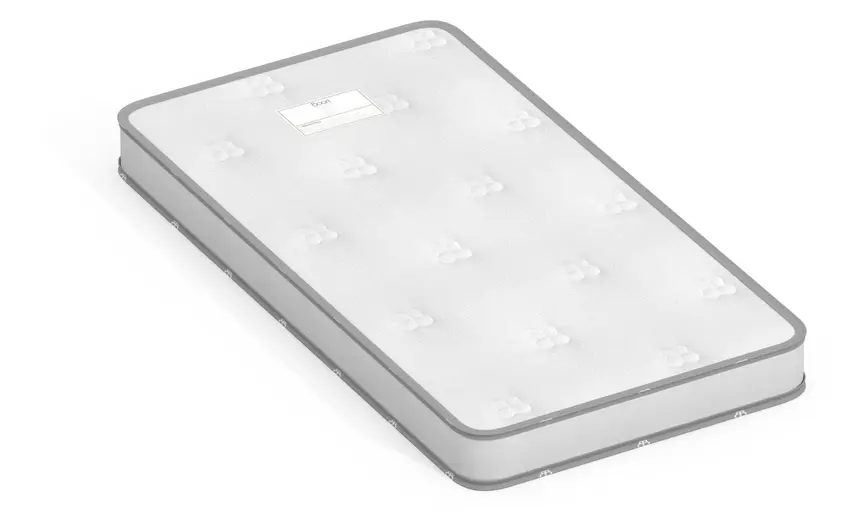
Boori Pocket Spring Mattress (standard cot)
A pocket spring cot mattress that comes rolled. Let it expand for up to 24 hours.
Compare all cots, bassinets & bedside sleepers in our reviews →
Frequently asked questions
What is the difference between a cot bed and a convertible crib?
There is no difference in how they work. Cot bed is the common name used in the UK, Australia and New Zealand. Convertible crib is the name used in the US and Canada. Both start as a baby bed with high barred sides and convert into a low toddler bed when you remove the side rails.
When should I lower the mattress base in a convertible cot?
Lower the mattress base to the bottom position as soon as your baby can roll smoothly, push up on hands and knees, or start trying to sit. This usually happens between 3 and 5 months of age. Never wait until your baby can pull up to stand, as they may stand up for the first time unattended at night and fall over the rail.
Do I have to convert the cot as soon as my child turns two?
No. Age alone is not a reason to remove the side rail. Red Nose, The Lullaby Trust, the AAP and Health Canada all advise keeping your toddler in the cot until they show signs of climbing out, reach the height limit (top rail below their chest, or 89 cm tall in North America), or need open access for night-time toilet training. Many children sleep safely in a cot until age 3.
Can my toddler keep using their baby sleeping bag in a toddler bed?
Wait until you choose the right bag style. Once the side rail is off, your child can get out of bed and walk across the floor. A normal closed-bottom sleeping bag can trip a walking toddler and cause a fall. Either switch to a toddler sleeping suit with separate leg holes and grip pads on the feet, or move to a fitted sheet and a light cellular blanket or toddler quilt (if your child is over 12 to 24 months old).
Is it safe to buy a second-hand convertible cot?
A second-hand cot is only safe if you can verify every part. Check that it meets current national standards (such as AS/NZS 2172, BS EN 716 or ASTM F1169), has fixed sides (drop-side cribs are illegal to sell or give away in the US and Canada), has all original manufacturer bolts and instructions, and has no cracks, splinters or peeling paint. Always buy a brand-new, firm mattress that fits the frame with no gaps.
What size mattress does a convertible cot take?
In the US and Canada, full-size convertible cribs take a standard full-size crib mattress by law. In Australia and the UK, cot beds vary in size—many take a 140 cm by 70 cm mattress, while others take 130 cm by 69 cm or brand-specific sizes. Always check the permanent warning label printed on the cot's mattress base for the exact length, width and maximum depth before buying a mattress.
Sources
- Product Safety Australia – Household cots guide
- Red Nose Australia – When to move from cot to bed
- Red Nose Australia – Making your home safe before moving a child from a cot to a bed
- Raising Children Network – Safe cots, portacots and mattresses
- The Lullaby Trust (UK) – Mattresses and bedding
- CPSC (US) – Safe sleep: cribs and infant products
- American Academy of Pediatrics (US) – A parent's guide to safe sleep
- Caring for Kids (Canadian Paediatric Society) – Safe sleep for babies
Related guides
More Sleep & Nursery →
Convertible Cribs and Cots: How They Work and How to Turn One into a Full-Size Bed

Convertible Cots as Full-Size Beds: Hidden Limits, Costs and Safety Rules

Dual-Stage Cot Mattresses Explained: Firm Baby Side, Softer Toddler Side