













Baby Sound Soothers and White Noise: How to Use Them Safely in Your Baby's Sleep Routine
How to use a baby sound soother safely: low volume, well away from the cot, clear sleep space, and simple bedtime habits for better rest.
On this page
- Key points
- What a baby sound soother is and how it works
- Do babies actually need a sound soother to sleep?
- Safe volume and placement rules for baby ears
- Types of baby sound soothers compared
- How to choose a safe sound soother
- Using a sound soother by age stage
- How a sound soother fits into a safe sleep routine
- Guidance in Australia, the UK, the US and Canada
- Common mistakes parents make with sound soothers
- Frequently asked questions
- Sources
Short answer: A baby sound soother can help some babies settle and stay asleep. It works by masking sudden house noises with a soft, steady hum. To use one safely, keep the volume low. Place the unit across the room, never inside the cot. Keep cords and small batteries well out of reach.
A sound soother is a simple helper, not a magic fix. It works best alongside a calm bedtime routine and a safe sleep space. Health groups in Australia, the UK, the US and Canada all agree on the main rule. A clear, flat cot on the back always comes first.
Key points
- What it does: A sound soother plays steady noise, like rain or shushing. This softens sudden bangs and chatter.
- Not a must-have: Many babies sleep well without one. You do not need to buy a gadget if your baby settles fine.
- Keep it quiet: Loud sound machines can harm tiny ears. Set the volume no louder than a soft shower.
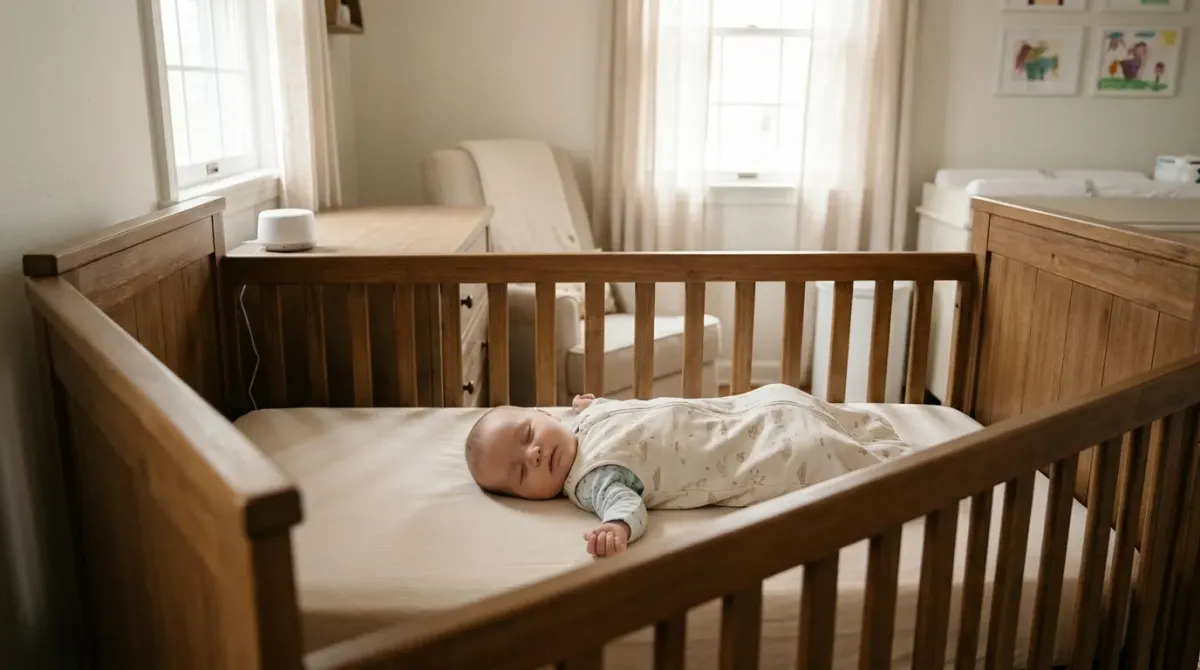
- Keep it far away: Put the soother across the room. Never place it inside the cot or near your baby's head.
- Clear the cot: No loose toys, cords or clip-on gadgets belong inside your baby's sleep space.
- Check batteries: Avoid units with loose button batteries. Keep charging cables far from the cot.
- Check recalls: Always look up national product safety recalls before buying secondhand sleep gear.
What a baby sound soother is and how it works
A baby sound soother is a small speaker made for nurseries and prams. Models like the Wooshh and other portable units play calming tracks on a loop. Common sounds include white noise, rainfall, ocean waves, heartbeats and gentle shushing.
White noise is a steady sound that blends many pitches together. It sounds a bit like soft static or a running fan. Pink noise is similar, but it softens the sharp high pitches. It sounds deeper and warmer, much like steady rain on a roof.
Some machines also offer brown noise. Brown noise lowers the high pitches even more. It sounds like a distant waterfall or low wind. Most babies do best with simple, steady sounds rather than tunes with changing beats.
Why steady sound can calm a baby
Before birth, the womb is not silent. A baby hears blood flow, breathing and muffled voices all day and night. After birth, a quiet bedroom can feel strange at first.
Steady background sound gives your baby something familiar to focus on. It also acts like a soft blanket over sudden noises. When a dog barks or a door shuts, the jump in sound is smaller. Your baby is less likely to startle awake.
This matters most during light sleep. Babies spend a lot of time in light sleep, especially in the early months. A sudden clatter in the kitchen can easily wake them up. Soft background sound smooths out those sharp peaks.
How it fits into a sleep routine
Babies learn through simple daily patterns. When you turn on the same soft sound before each nap and bedtime, your baby notices. Over time, their brain links that sound with sleep.
Hearing the sound tells your baby it is time to wind down. It works just like dimming the lights or putting on a sleeping bag. None of these steps force sleep on their own. Together, they give your baby clear, calm cues.
Do babies actually need a sound soother to sleep?
No baby needs a sound soother to sleep safely. Despite marketing claims, no sound gadget is essential for every family. Plenty of babies sleep well in a quiet room or with normal house sounds around them.
In fact, Raising Children Network in Australia notes that you do not need to tip-toe around a sleeping baby. Everyday house sounds help many babies learn to sleep through normal life. A baby who gets used to normal daytime noise often sleeps more easily when out and about.
Still, a sound soother can be handy in a few real-life situations:
- Noisy homes: You have older children playing, barking dogs or busy street traffic outside.
- Light sleepers: Your baby wakes at small sounds like footsteps or floorboards creaking.
- Shared rooms: Parents and baby share a bedroom, and adult movement might wake the baby.
- Travel and naps out: A familiar sound helps a baby settle in a new room on holiday.
- Daytime naps: The rest of the house is awake and busy while your baby tries to nap.
If your baby sleeps well without extra sound, skip the gadget. You will save money and have one less thing to charge or pack. Use a sound soother only if it genuinely helps your family.
Safe volume and placement rules for baby ears
Sound volume matters much more than most parents realise. A baby's ear canals are small, and their hearing is still growing. Sound that feels mild to an adult across the room can be much louder right next to a baby's ear.
Volume is measured in decibels. Decibels are simply a unit for how loud a sound is. A quiet whisper is very low. A busy street, hairdryer or vacuum cleaner is much higher.
What research found about infant sleep machines
A 2014 study published in the medical journal Pediatrics tested several infant sleep machines. Researchers measured how loud the machines could play at different distances. They tested them at cot-rail distance and across the room.
The study found that many units could reach unsafe levels when turned up high and placed near the cot. Some machines played louder than safe workplace limits for adults. Playing loud noise close to a baby's head for hours can put delicate hearing at risk.
The researchers shared clear, simple advice for parents. Place any sound machine as far from the baby as you can. Never put it inside the cot or clipped to the cot rail. Always keep the volume low, and do not leave it blasting all night.
Simple safety checks you can do at home
You do not need special lab gear to check your nursery setup. Use these easy home checks every time you set up a soother:
- The distance rule: Place the soother at least two metres from the cot. Across the room on a dresser is ideal.
- The conversation test: Stand beside the cot with the machine running. You should be able to talk in a soft, normal voice without raising it.
- Lowest setting first: Start on the quietest level that softens sudden bumps outside the door.
- Check from the mattress: Lean your own ear down to where your baby's head rests. If the sound feels sharp or tiring, turn it down.
- Use a timer if you wish: If your baby only needs help falling asleep, set a fade-out timer. Turning it off after settling lowers total sound time.
- Be careful with phone apps: Sound-level apps on phones are only rough guides. Trust your ears and always stay on the quiet side.
Cord, strap and battery safety
Power cords near a cot are a serious strangulation hazard. As babies grow, they reach through cot bars and grab anything nearby. A baby can pull a loose charging wire into the cot.
Keep plug-in sound machines and charging cords at least one metre away from the cot. Tuck extra wire behind heavy furniture so it cannot be pulled. If you use a portable unit, keep any hanging wrist strap or clip well out of reach.
Battery type is another key check. Button batteries are small, round, shiny cells found in many small electronics. If a child swallows one, it can burn through tissue inside the body in just two hours.
Product Safety Australia warns parents to keep button batteries away from young children. Check the battery door on any portable soother. If it takes replaceable cells, the cover must lock shut with a screw. Better yet, choose a USB-rechargeable unit with a sealed battery.
When charging a rechargeable unit, use the cable that came with it. Charge it on a hard, flat surface away from bedding and curtains. Do not leave it charging inside a cot, bassinet or pram.
Types of baby sound soothers compared
Parents have several ways to play gentle sleep sounds. Each option has pros and cons for safety, ease of use and travel. Here is how the main types compare.
| Type of soother | Best for | Power source | Safety watch-outs |
|---|---|---|---|
| Portable clip-on sound soother | Prams, travel and short naps out | Rechargeable battery or replaceable cells | Never clip inside a cot; check battery door locks with a screw |
| Plug-in nursery sound machine | Home bedroom use every night | Wall power cord | Keep unit and cord well out of reach of the cot; keep volume low |
| Smart app or Wi-Fi speaker | Parents who want remote volume control | Wall power cord | Avoid bright screens; keep cords away; check smart device security |
| Plush toy with built-in sound box | Older toddlers for comfort | Small battery pack inside toy | Never place inside a baby's cot; Red Nose advises a clear cot |
| Simple household fan | Steady background hum in warm rooms | Wall power cord | Point airflow away from baby; keep cords and blades out of reach |
For a young baby, a simple rechargeable unit or quiet plug-in machine across the room works best. You do not need a smart speaker with a screen. You also should not put a plush toy inside a baby's cot.
How to choose a safe sound soother
Shop shelves are full of sleep gadgets with bright lights, ceiling projectors and dozens of songs. Most of those extras do not help a baby sleep better. Some can even wake a baby up. Focus on a few practical features instead.
1. Easy, fine volume control
Look for a unit with many small volume steps. Avoid cheap machines that only have "low, medium and high" buttons. Some basic units jump straight from barely audible to far too loud. Smooth volume control lets you set a gentle hum that stays safe for baby ears.
2. Simple, steady sound choices
Steady sounds like shushing, rain or soft white noise work best. Lullabies with changing tunes or chimes can alert a baby between sleep cycles. Listen to the track for two minutes in the shop or at home. Check that the loop restarts smoothly without a loud click or gap.
3. Safe power and battery design
A USB-rechargeable battery removes the risk of loose button cells. If a unit takes normal batteries, the battery door must need a screwdriver to open. Check that the charging port sits snugly and does not heat up while charging. Buy from trusted local stores so the charger meets local electrical safety rules.
4. No bright blue or white lights
Many sound machines double as nightlights or star projectors. Bright white or blue-tinted light at night can trick a baby's brain into thinking it is daytime. Research shows night lighting can lower melatonin, the hormone that helps us feel sleepy.
If you need a tiny bit of light for night feeds or nappy changes, pick a very dim, warm red or amber glow. Even better, keep the room dark for sleep and switch on a dim lamp only while feeding. Turn the light back off when you lay your baby down.
5. Easy to wipe clean
Nursery gear collects dust and sticky handprints quickly. Choose a smooth plastic or silicone body you can wipe with a damp cloth. Avoid furry fabric covers. They trap dust, hold moisture and cannot go inside a cot anyway.
6. Simple controls you can use in the dark
At 2:00 AM, you do not want to squint at a tiny phone app. Raised buttons you can feel by touch are much easier to use half-asleep. Check whether the machine remembers your last volume setting when you turn it back on.
7. Smart device privacy if Wi-Fi enabled
Some modern nursery speakers connect to home Wi-Fi and phone apps. If you buy a connected unit, change any default passwords right away. Turn on updates so the device stays secure. If you do not need app control, a plain offline unit is simpler and has zero privacy risk.
Using a sound soother by age stage
Your baby's sleep needs change fast during the first year. How you use a sound soother should change with them. Here is a simple guide from newborn days to toddlerhood.
| Age stage | What is happening with sleep | How to use a sound soother |
|---|---|---|
| Newborn (0 to 3 months) | Short sleep stretches, frequent feeds, strong startle reflex | Low, steady shushing or soft noise across the room during settle time |
| 3 to 6 months | Longer night stretches, baby notices lights and voices more | Keep across the room at low volume; use only as part of a calm routine |
| 6 to 12 months | Baby sits, pulls up and grabs anything within reach | Check cords and shelf height; never hang near the cot |
| Toddlers (1 to 3 years) | More active imagination, possible bedtime stalling | Keep volume soft; start lowering it or using a short timer if you wish to phase it out |
Newborns (0 to 3 months)
Newborns wake often to feed, day and night. Their sleep cycles are short, and their startle reflex is strong. A soft shushing sound can soothe fussiness while you hold and comfort your baby. Once your baby is settled in their bassinet or cot, keep the sound low and across the room.
Babies (3 to 6 months)
Around 3 to 4 months, sleep patterns begin to shift. Babies notice lights, voices and movement around them much more. A steady sound still helps mask sudden noises from the hallway or kitchen. Keep your bedtime steps calm and predictable.
Babies (6 to 12 months)
By 6 to 12 months, most babies can roll, sit and pull up to stand. They love grabbing anything within arm's reach. Walk around the cot and check what your baby can touch from a standing position. Make sure the sound soother, shelves and power cords stay far out of reach.
Toddlers (1 to 3 years)
By toddlerhood, many children no longer need white noise. If your toddler likes it, there is no rush to stop as long as the volume stays low. If you want to phase it out, turn the volume down a little every few nights. Within a week or two, you can switch it off completely.
How a sound soother fits into a safe sleep routine
A sound soother is only one small part of bedtime. Safe sleep habits protect your baby far more than any gadget. Health bodies in Australia, the UK, the US and Canada all share the same core rules for every sleep, day and night.
- Always on the back: Place your baby flat on their back for every sleep. Never put them down on their tummy or side.
- Clear sleep space: Keep the cot free of pillows, loose blankets, quilts, cot bumpers and soft toys.
- Firm, flat mattress: Use a firm, clean mattress that fits the cot tightly with no gaps around the edges.
- Room sharing: Keep your baby's cot in your bedroom for the first 6 to 12 months.
- Smoke-free air: Keep your home and car completely free of tobacco smoke.
- Avoid overheating: Dress your baby for the room temperature, with their head and face uncovered.
A simple 15-minute bedtime routine
You do not need a long or complicated bedtime plan. Try the same calm steps in the same order each night:
- Give a warm bath or a gentle wipe-down with a warm cloth.
- Put on a clean nappy, light sleepwear and a safe baby sleeping bag if needed.
- Dim the room lights and turn on the sound soother at low volume.
- Give a calm feed and a quiet cuddle.
- Place your baby awake or drowsy on their back in their clear cot.
Doing the same steps each night helps your baby know what comes next. Over weeks, the whole routine becomes the main cue for sleep. The sound machine is just one small helper in that calm pattern.
Responding when your baby wakes
All babies wake during the night. Young babies wake to feed, for comfort or because they need a nappy change. If your baby cries, respond calmly and check what they need. Never turn up a sound machine to drown out crying instead of comforting your baby.
Guidance in Australia, the UK, the US and Canada
Advice from peak health and safety groups lines up closely across all four countries. None of these bodies say a sound machine prevents sudden infant death syndrome (SIDS). All of them focus on a clear, safe cot, low noise and safe products.
| Country | Main health and safety bodies | Key advice on sleep space and sound |
|---|---|---|
| Australia | Red Nose, Raising Children Network, ACCC (Product Safety Australia) | Keep the cot clear, back to sleep, keep cords and button batteries away, and keep noise low. |
| United Kingdom | The Lullaby Trust, NHS, Office for Product Safety and Standards (OPSS) | Clear cot with no loose items, firm flat mattress, back to sleep, and buy safe electrical products. |
| United States | American Academy of Pediatrics (AAP), Consumer Product Safety Commission (CPSC) | Back to sleep on a firm flat surface; AAP notes machines should stay far from the cot and at low volume. |
| Canada | Canadian Paediatric Society (Caring for Kids), Health Canada | Safe sleep on the back in a clear crib, follow safe sleep routines, and check Health Canada recalls. |
Before you buy any secondhand sleep gear, check your country's official recall site. In Australia, check Product Safety Australia. In the UK, check the Office for Product Safety and Standards. In the US, check the CPSC, and in Canada, check Health Canada. A two-minute check keeps unsafe products out of your nursery.
Common mistakes parents make with sound soothers
Most problems with baby sound machines come from how they are used, not the machine itself. Watch out for these common traps in everyday life.
1. Putting the soother inside the cot
Some parents tuck a small portable soother into the corner of the bassinet or clip it to the cot bars. This puts loud sound right next to your baby's ears. It also adds a loose object to the sleep space. Red Nose, The Lullaby Trust, the AAP and Health Canada all say the cot must stay completely clear.
2. Turning the volume up too high
When a baby cries, it is tempting to crank the sound machine up to hush them. Very loud noise can stress a baby and harm hearing over time. Instead, pick your baby up, comfort them, and keep the machine at a gentle background level.
3. Using a sound soother instead of checking your baby
Babies cry for real reasons. They may be hungry, wet, too hot, too cold or unwell. Never rely on a sound machine to quiet a baby who needs feeding or comfort. Always check your baby's needs first.
4. Leaving charging cords within reach
A baby who can roll, sit or pull up can grab a cord hanging near the cot. Plug the unit in across the room. If you use a cordless battery unit, place it high on a dresser away from the cot.
5. Clipping a portable unit inside a pram
If you use a travel soother on a pram, clip it to the outside frame. Keep it well away from your baby's face, ears and hands. Make sure the clip is tight so it cannot drop onto your baby over bumpy paths. Also, never drape a blanket or cover over the pram hood, as that traps heat and blocks airflow.
6. Buying unverified cheap imports
Cheap unbranded electronics from unknown online sellers may have weak battery doors, faulty chargers or poor wiring. Buy from a trusted retailer in your country. Check that the charger and battery design meet local safety rules.
7. Using bright nightlights all night
Many sound machines have built-in nightlights that glow bright blue or white. Leaving bright light on all night can confuse your baby's day and night body clock. Keep the room dark for sleep, and use dim warm light only when checking or feeding your baby.
Frequently asked questions
Can a baby sound soother damage my baby's hearing?
Yes, if it is too loud or placed too close. Studies show some infant sleep machines can play above safe limits when turned up high right beside the cot. Keep your machine across the room at least two metres away. Set the volume low, about as quiet as a soft shower or calm talk.
Where should I put a sound soother in the nursery?
Place it on a sturdy shelf or dresser at least two metres away from the cot. Point the speaker slightly away from the cot if it still sounds strong. Never place it on the mattress, under a sheet or clipped to the cot rails.
Should white noise play all night or turn off on a timer?
Either can work, as long as the volume stays low. Some babies wake up when a timer clicks off suddenly after 30 minutes. If that happens, a low continuous sound or a longer fade-out timer can help. If your baby stays asleep after a short timer stops, turning it off limits total sound time.
What is the difference between white noise, pink noise and shushing?
White noise mixes all sound pitches evenly and can sound a bit hissy, like static. Pink noise lowers the sharper high pitches, so it sounds softer and deeper like steady rain. Shushing is a rhythmic human-like sound that mimics someone standing beside the baby. Pick whichever soft sound your baby seems most relaxed with.
When should we stop using a baby sound soother?
There is no strict age to stop. Many families phase it out between 1 and 2 years old, once big sleep changes pass. To stop gently, lower the volume a little every few nights over a week or two. Soon your child will sleep just as well without it.
Is it safe to clip a portable sound soother to a pram or car seat?
Use care with prams and car seats. On a pram, keep the unit well away from your baby's ears and hands, and check it cannot fall inside. In a car, never attach hard objects to a car seat handle or harness. Loose items can become hazards in a crash, and car rides already have natural road hum.
Can a sound soother prevent SIDS?
No. There is no proof that white noise or sound soothers prevent SIDS. Safe sleep depends on placing your baby on their back in a clear, firm cot in a smoke-free home. A sound soother is only a comfort tool for settling, never a safety device.
Sources
- Raising Children Network – Light, noise and baby sleep: frequently asked questions
- Red Nose Australia – What is a safe sleeping environment
- Product Safety Australia – Button batteries guide
- NHS – Helping your baby to sleep
- The Lullaby Trust (UK) – Keeping a clear cot
- Hugh et al. – Infant sleep machines and hazardous sound pressure levels, Pediatrics 2014 (PubMed)
- American Academy of Pediatrics (US) – A parent's guide to safe sleep
- Caring for Kids (Canadian Paediatric Society) – Healthy sleep for your baby and child
Related guides
More Parental Tips →
Baby Sound Soothers and White Noise: How They Work and How to Use Them Safely

Portable Baby Sleep Soothers: How to Use Them Safely at Bedtime

Portable Baby Sound Spa: How It Helps Sleep and How to Use It Safely
